Introduction
Endoscopic ear surgery continues to evolve and become more sophisticated. The use of an endoscope confers the advantages of providing clear high quality images,Reference Sarkar, Banerjee, Chakravarty, Singh, Sikder and Bera1 and improved visualisation of blind spots in the middle ear and mastoid that would be difficult to visualise with the microscope.Reference Balasubramanian and Venkatesan2,Reference Presutti, Gioacchini, Alicandri-Ciufelli, Villari and Marchioni3
Endoscopic ear surgery was introduced to Singapore about five years ago and has been increasingly incorporated into daily otological practice.Reference Yadav, Aggarwal, Julaha and Goel4 While not every hospital in Singapore has adopted endoscopic ear surgery, a growing number of ENT surgeons are undergoing training in endoscopic ear surgery. The increasing use of endoscopy in otology means that ENT residents are becoming more exposed to endoscopic ear surgery during residency, as attending surgeons learn and incorporate these procedures into their practice. As attending surgeons scale the learning curve of this new technique, there will likely be an impact on the training of residents.
Assessing residents’ perceptions regarding the introduction of endoscopic ear surgery is important, to determine its impact on training. For instance, it may affect residents’ and faculty members’ satisfaction on the training programme,Reference Nadol5 which has implications for recruitment and training.Reference Ko, Escarce, Baker, Sharp and Guarino6 Only with better understanding of the situation, can optimisation of the curriculum and learning environment be achieved. This knowledge could improve the training of ENT residents, or, at least, reduce any detrimental effects on residents’ training.
Against this backdrop, we believe it is timely to study residents’ perceptions regarding endoscopic ear surgery. This study aimed to: (1) understand the resident's perception regarding endoscopic ear surgery; (2) determine their perspective of its usefulness in comparison to using a microscope; and (3) assess the impact that introducing endoscopic ear surgery has on residents’ training.
Materials and methods
Questionnaire design
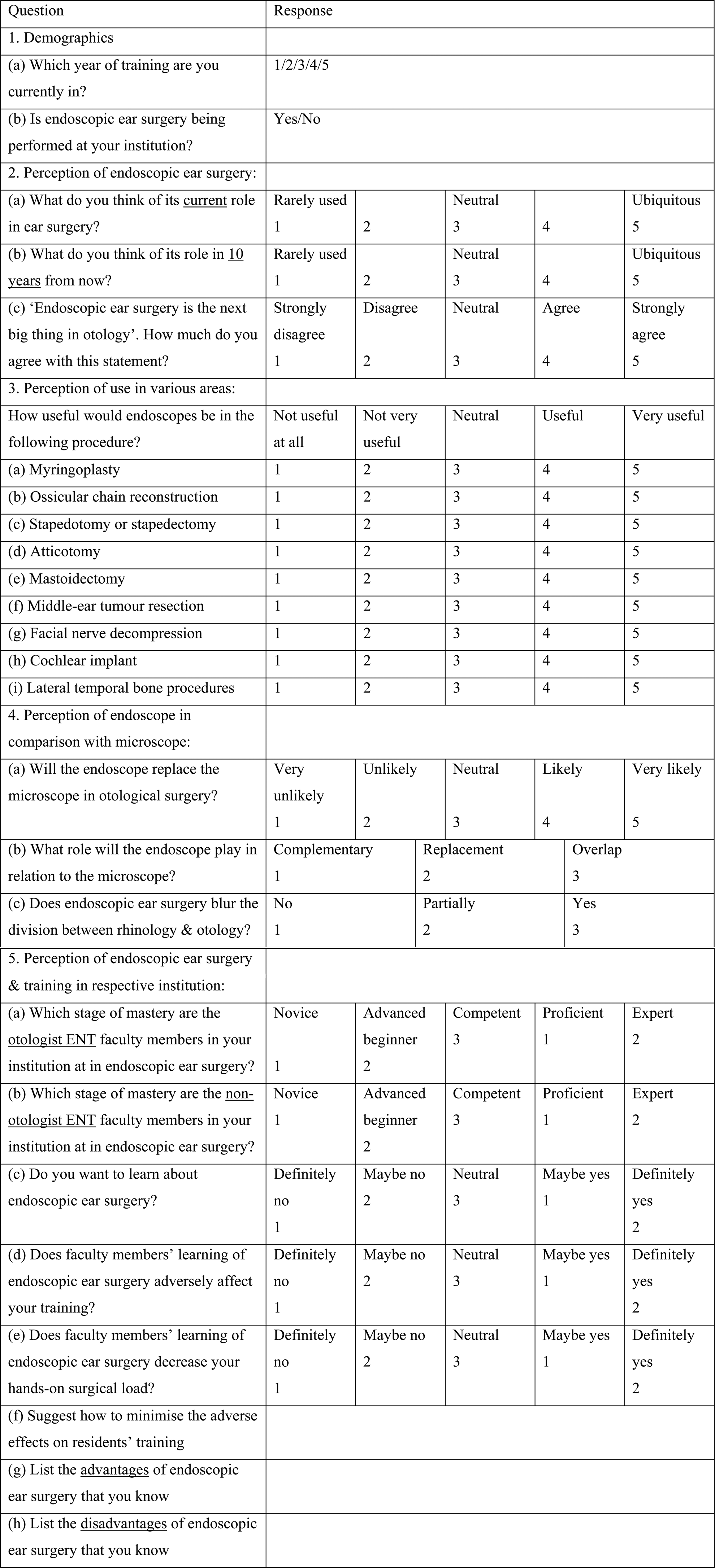
An anonymous questionnaire-based survey was conducted amongst Singaporean ENT residents to assess their perceptions of endoscopic ear surgery. This survey comprised 22 multiple-choice questions and 3 open-ended questions (Figure 1).
Study questionnaire.

The survey was divided into four sections. Section 1 concerned demographics information, including year of residency and whether their institution practises endoscopic ear surgery. Section 2 comprised 12 Likert scale response questions, divided into 2 subsections, assessing the residents’ perceptions of endoscopic ear surgery (items 3–5), and their views regarding the use of endoscopes for various procedures (items 6–14). Section 3 examined the residents’ perceptions of endoscopic ear surgery in comparison with conventional microscope assisted procedures. The last section consisted of quantitative and qualitative questions concerning residents’ views regarding: faculty members’ endoscopic mastery (items 18 and 19), the current learning environment, and endoscopic ear surgery advantages and disadvantages.
Participants
The survey was conducted in March 2015 during a National ENT Teaching Session, at which all Singapore ENT residents (first to fifth years) were required to be present. The residents were informed of the study's purpose, and were reassured that participation in the survey was strictly voluntary and anonymous. No identifying information was collected. The paper-based questionnaire was handed out prior to the start of the session and collected after 15 minutes, before the teaching session began.
Statistical analysis
Statistical analysis was performed using statistical software (SPSS® version 20.0). Differences between groups were analysed with the student's t-test for parametric variables and the Mann–Whitney U test for non-parametric variables. Dichotomous variables were compared using the chi-square or Fisher's exact test. Qualitative responses were analysed for recurring themes. Statistical significance was established at a p-value of less than 0.05.
Ethics approval
Our study was reviewed by the Domain-Specific Review Board, National Healthcare Group, Singapore, and was granted a waiver (number: NHG DSRB 2015/00675).
Results
Thirty-four out of the 42 residents present completed the questionnaire, constituting a response rate of 81.0 per cent. Six residents (17.6 per cent) were in the first year of residency, 5 (14.7 per cent) were in the second year, 10 (29.4 per cent) were in the third year, 9 (26.5 per cent) were in the fourth year and 4 (11.8 per cent) were in the fifth year. Half of the respondents (50 per cent) were from institutions that performed endoscopic ear surgical procedures at the time of the survey.
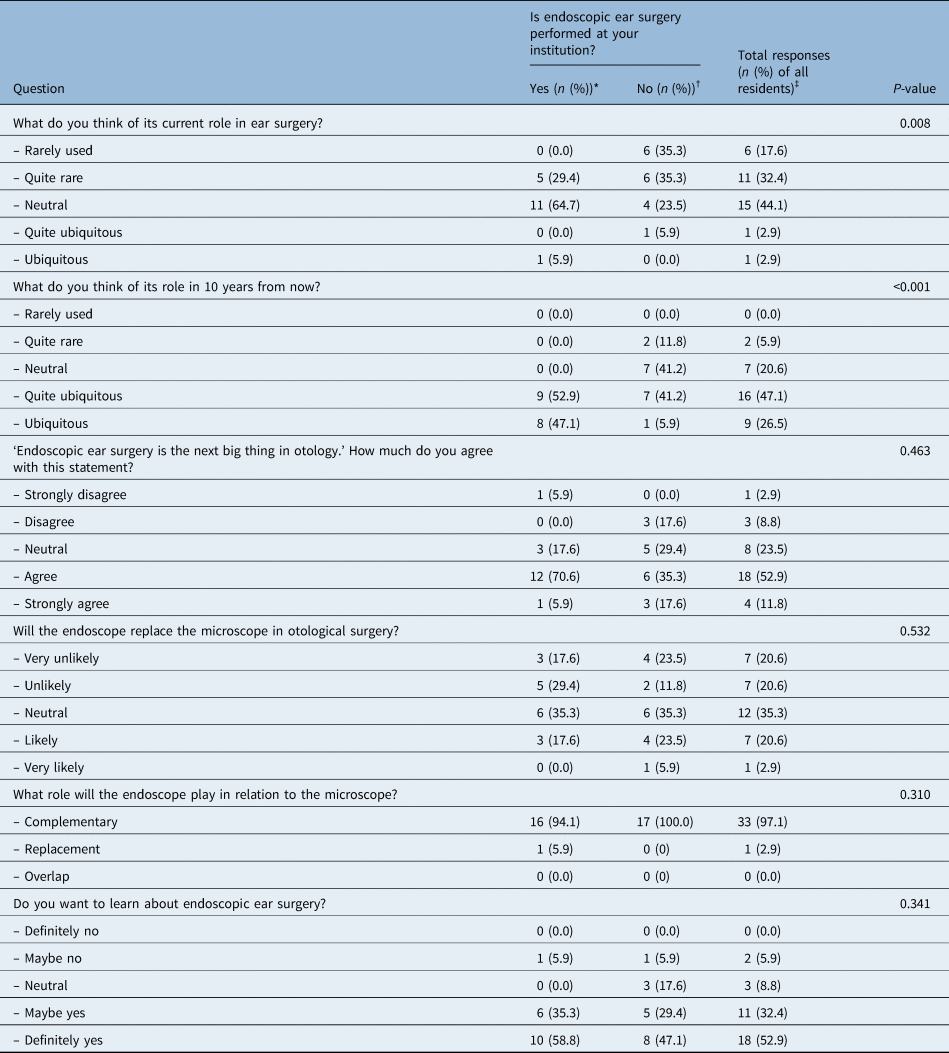
Residents from institutions that performed endoscopic ear surgical procedures had a more positive and optimistic attitude regarding the efficacy of endoscope use in various otological surgical procedures. Only 29.4 per cent of residents in that group reported that endoscopic ear surgery is not commonly used, as compared to 70.6 per cent from institutions that did not perform endoscopic ear surgery (p = 0.008 (Table 1). There was also a significant difference in terms of their perspectives regarding the future prospects of endoscopic ear surgery, with 100 per cent of residents from institutions performing endoscopic ear surgical procedures feeling that it will be at least quite ubiquitous in the next 10 years, compared to 47.1 per cent of residents from institutions not performing endoscopic ear surgery (p < 0.001). The majority of residents from both groups agreed or strongly agreed (scores of 4 or 5) that endoscopic ear surgery would be ‘the next big thing in otology’ (64.7 per cent overall).
Residents’ perspectives of endoscopic ear surgery

* n = 17;
† n = 17;
‡ n = 34
Most of the residents in both groups were unsure whether the endoscope would replace the microscope in otological surgery, with the highest percentage (35.3 per cent) answering ‘neutral’ (score of 3). When asked about the role of the endoscope in relation to the microscope, 97.1 per cent of residents felt that the endoscope is complementary to the microscope in ear surgery. Only one resident (2.9 per cent) thought that the endoscope would replace the microscope. Despite differing opinions on endoscopic ear surgery, the majority of residents (85.3 per cent) want to receive training in endoscopic ear surgery.
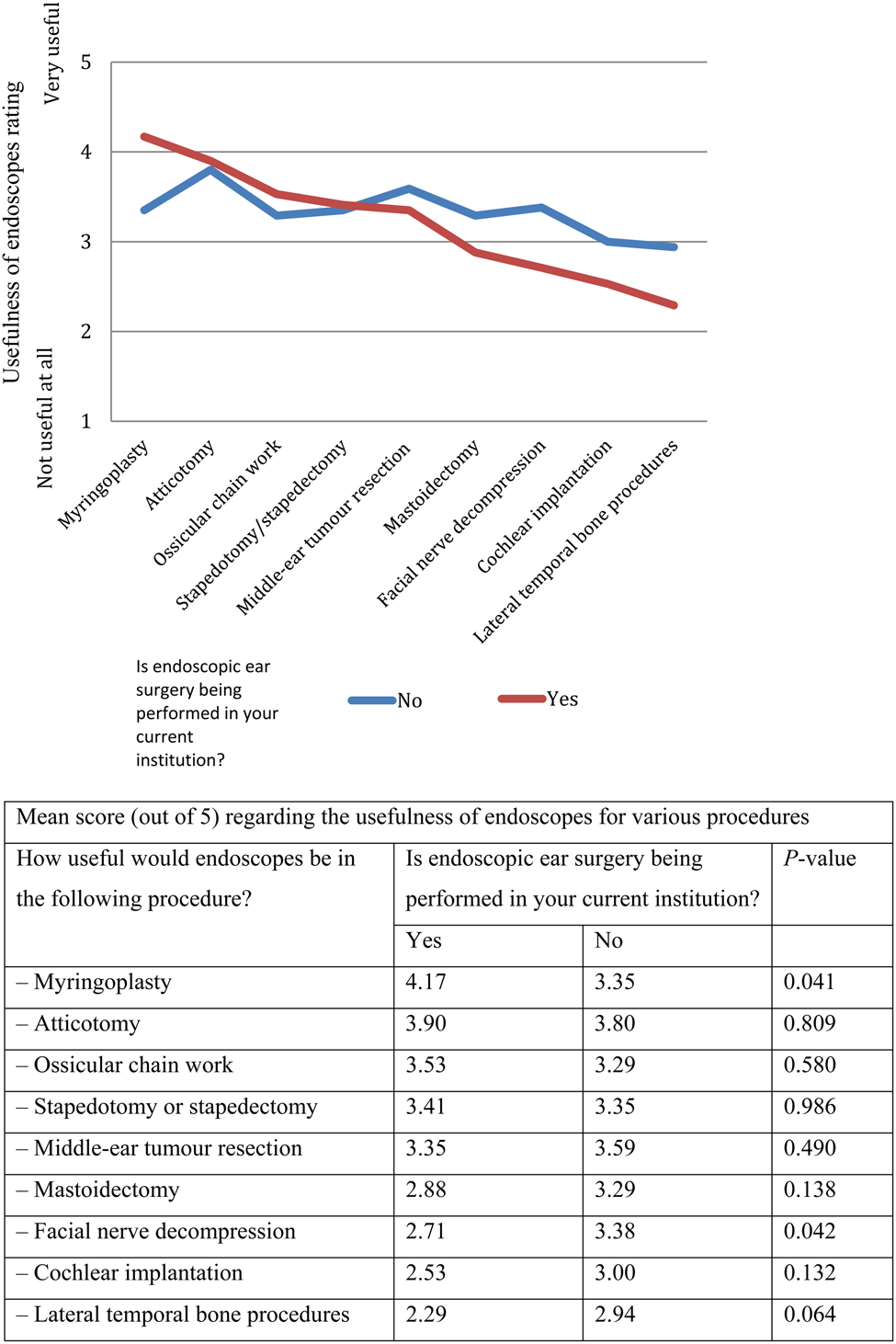
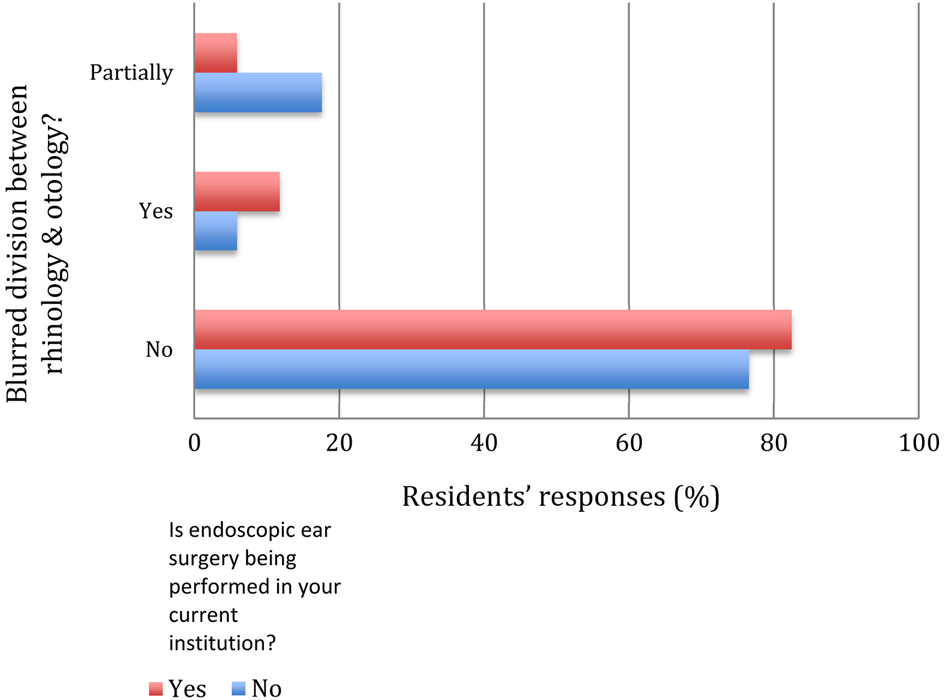
The group of residents from institutions that performed endoscopic ear surgical procedures showed greater variation in their opinion of how useful they perceived endoscopy was for various otological procedures (±1.9 out of 5), compared to the group from institutions that did not perform endoscopic ear surgery (±0.8 out of 5) (Figure 2). The former group of residents perceived endoscopic ear surgery to be most useful for myringoplasty (score of 4.17 out of 5), followed by atticotomy (3.90 out of 5). In contrast, the group from institutions that did not perform endoscopic ear surgery felt that endoscopy was most useful for atticotomy (score of 3.80 out of 5) and middle-ear tumour resection (3.59 out of 5). Residents’ responses to the question ‘does endoscopic ear surgery blur the division between rhinology and otology?’ are shown in Figure 3.
Residents’ responses to the question ‘how useful would endoscopes be in the following procedure?’, distinguishing between residents from institutions that perform or do not currently perform endoscopic ear surgery.

Residents’ responses to the question ‘does endoscopic ear surgery blur the division between rhinology and otology?’, distinguishing between residents from institutions that perform or do not currently perform endoscopic ear surgery (p = 0.504).

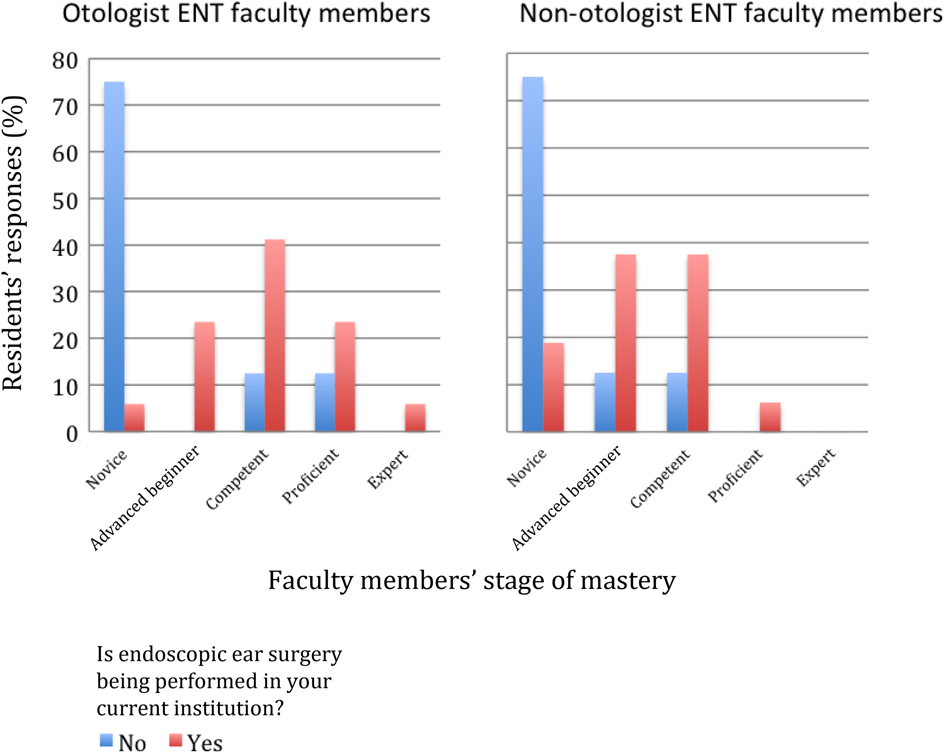
Regarding the perceived level of proficiency of endoscopic ear surgery, residents from institutions performing endoscopic ear surgical procedures rated higher mastery skills amongst otologists and non-otologist faculty members, with 70.6 per cent and 41.2 per cent of respondents, respectively, rating them as competent, proficient or expert, compared to only 10.8 per cent and 5.9 per cent amongst residents from institutions not practising endoscopic ear surgery (Figure 4).
Residents’ responses to the question ‘which stage of mastery are the ENT faculty members in your institution at in endoscopic ear surgery?’, regarding otological (p = 0.010; statistically significant) and non-otological faculty members (p = 0.063), distinguishing between residents from institutions that perform or do not currently perform endoscopic ear surgery.

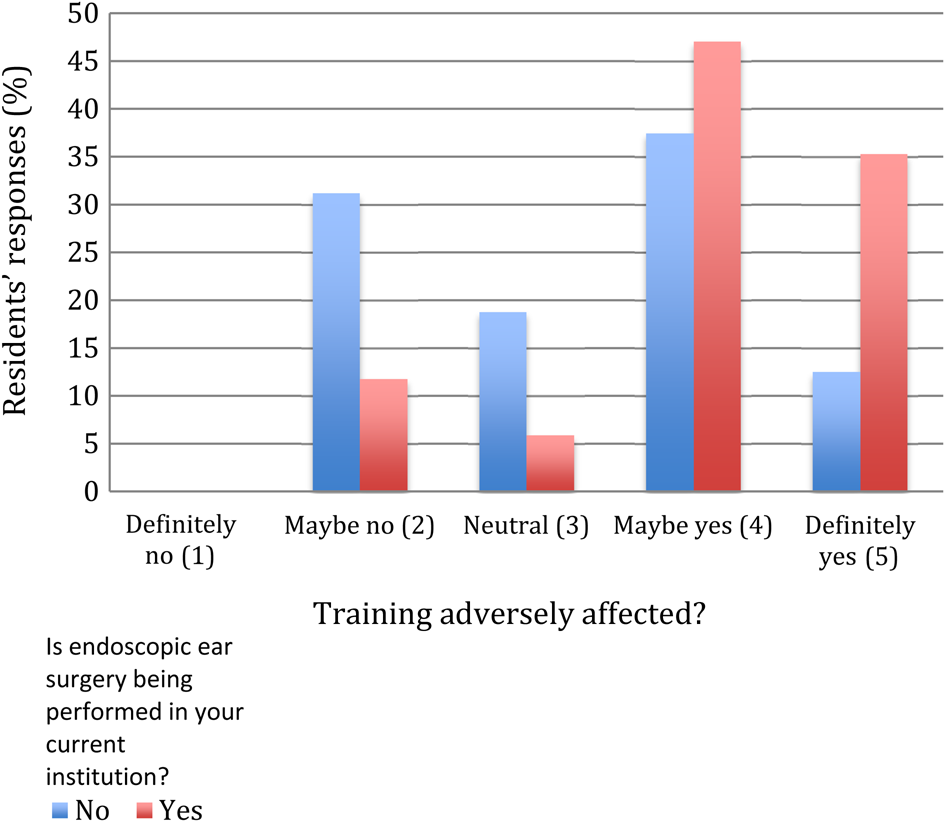
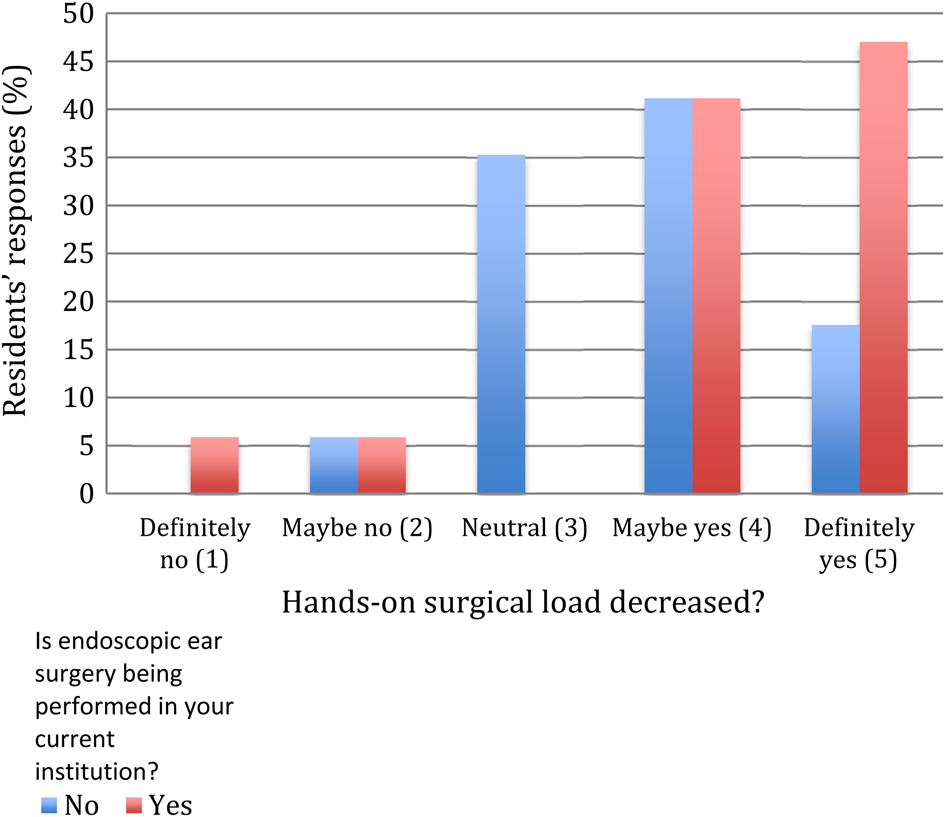
With regard to the perceived impact that endoscopic ear surgery has on residents’ training, 82.4 per cent (14 out of 17 residents) from institutions with faculty members who were learning endoscopic ear surgery felt that the introduction of endoscopy had adversely affected their training, as compared to 50 per cent of residents (8 out of 16) from institutions that did not perform endoscopic ear surgery (p = 0.04) (Figure 5). The majority of residents agreed that faculty members’ learning of endoscopic ear surgical procedures had decreased the residents’ hands-on surgical load (Figure 6); a significantly greater percentage of the residents agreeing with this were from institutions that perform endoscopic ear surgical procedures (88.3 per cent, vs 58.1 per cent of residents from institutions not practising endoscopic ear surgery; p = 0.05).
Residents’ responses to the question ‘does faculty members’ learning of endoscopic ear surgery adversely affect your training?’, distinguishing between residents from institutions that perform or do not currently perform endoscopic ear surgery (p = 0.042; statistically significant).

Residents’ responses to the question ‘does faculty members’ learning of endoscopic ear surgery decrease your hands-on surgical load?’, distinguishing between residents from institutions that perform or do not currently perform endoscopic ear surgery (p = 0.050; statistically significant).

Discussion
Our study showed that endoscopic ear surgery has not been adopted in all institutions in Singapore. The majority of residents surveyed felt that endoscopic ear surgery is currently quite rarely used or gave a neutral response (scores of 2–3). However, most residents (73.6 per cent) felt that its role in ear surgery would increase over the next 10 years. In addition, 64.7 per cent of the residents agreed that endoscopy will be the ‘next big thing’ in otology. This implies that most residents are optimistic about the potential and utility of endoscopes, and realise their future importance. Exposure to endoscopic ear surgery appears to have a significant impact on residents’ perceptions regarding the new technique. This is shown in the significantly different views concerning the prevalence of endoscopic ear surgery currently and within 10 years.
Residents exposed to endoscopy also appeared to have a better appreciation of the advantages and limitations of endoscope use in various otological procedures, with more of them giving non-neutral answers when asked how useful endoscopy will be in various procedures; residents not exposed to endoscopic ear surgery gave more neutral answers skewed towards 3 on the 5-point Likert scale. This resulted in a lower variation of scores amongst the residents not exposed to endoscopic ear surgery. For instance, both groups of residents felt that the endoscope was useful in myringoplasty. However, residents exposed to endoscopic ear surgery felt this more strongly (median, 4.17 out of 5) than residents from institutions that did not perform endoscopic ear surgery (median, 3.35 out of 5) (p = 0.041). Scores for the perceived usefulness of endoscopes for facial nerve decompression were also statistically different (p = 0.042), with the group exposed to endoscopic ear surgery perceiving endoscopes to be far less useful (median, 2.71 out of 5) than the non-exposed group (median, 3.38 out of 5).
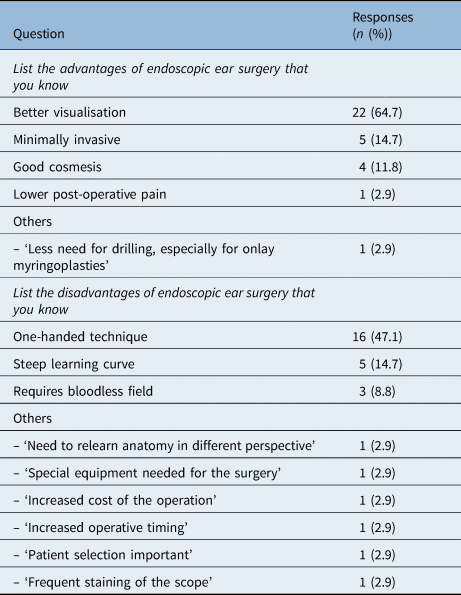
The greatest perceived advantage of the endoscope is improved visualisation (Table 2). Indeed, the high definition images from the endoscope camera allow the identification of fine anatomical detail, and make the sometimes complex three-dimensional anatomical relations of the ear easier to teach to all participants. The trainees’ visual involvement and interest are enhanced with the improved visualisation, especially as the system allows for easy photographic and video documentation for subsequent review. Various education models have shown that a real-time video-assisted modality and non-real-time surgical trainingReference Allori, Marcus, Daluvoy and Bond7 are strongly favoured, with an improved learning curve, increased satisfaction with the learning process, and greater future opportunities to perform critical aspects of procedures.
Residents’ knowledge of advantages and disadvantages of endoscopic ear surgery

The greatest perceived disadvantage of using an endoscope is that a one-handed technique is required (Table 2), as the other hand is, in most instances, used to hold the scope. In the authors’ experience, the one-handed technique in endoscopic ear surgery contributes to the learning curve. In order to overcome the disadvantages of losing one hand to scope holding, instruments with dual functions have been developed, such as suction incorporated into dissectors. With the advent of such instruments, endoscopic ear surgery could potentially be easier to learn and perform. However, although endoscope use has proven to be of value, particularly in procedures where areas are difficult to access with the microscopic technique, it is still viewed as a complementary method of performing ear surgery, used to augment existing methods. This is demonstrated by the finding that 97.1 per cent of the residents felt the endoscope plays a complementary role in relation to the microscope, with only one resident viewing the endoscope as a replacement for the microscope.
Our study results suggest that although the majority of residents are interested in learning endoscopic ear surgery, a significant proportion are concerned that its introduction would interfere adversely with their training, and many felt that the learning of endoscopic ear surgery by faculty members resulted in decreased hands-on surgical experience for them. This response was more prevalent in residents at institutions where endoscopic ear surgery is performed, compared to those residents not exposed to endoscopic ear surgery, suggesting that the exposed residents are currently experiencing this issue. This finding is most likely explained by the learning curve associated with this new technique. As with any new device or technique, most attending surgeons or faculty members need to acquire proficiency before they are able to teach using it.Reference McMasters, Wong, Chao, Woo, Tuttle and Noyes8 As a result, cases that are usually assigned to residents, in whole or in part, are attended to by faculty members using the endoscope while they build up their proficiency. About 75 per cent of residents in institutions not currently performing endoscopic ear surgery perceived their faculty members (otologists and non-otologists) to be novices in endoscopic ear surgery. In institutions performing endoscopic ear surgery, almost 70 per cent of residents perceived otologists to be at least competent in endoscope use, with a lower percentage for the non-otologists.
This is a common phenomenon with the introduction of new surgical platforms. For instance, Brenot and GoyertReference Brenot and Goyert9 examined the effect that the introduction of robotics has had on the training of obstetrics and gynaecology residents, and found a significant decrease in the number of hysterectomy cases available to residents after the introduction of the robotic system, and an increase in attending physician's experience, at the expense of residents’ training. However, one would expect residents’ opinions to become more favourable as faculty members’ proficiency in the new technique improves; they are soon able to better teach residents and involve them in more aspects of the surgery.Reference Robinson, Macneily, Goldenberg and Black10
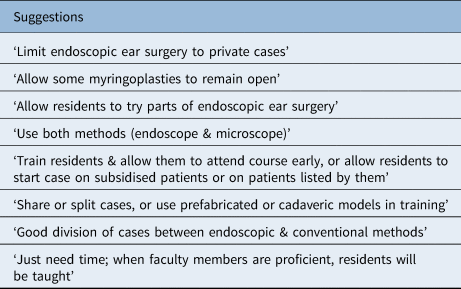
Residents’ suggestions for minimising the adverse effects on residents’ training related to the introduction and learning of endoscopic ear surgery by faculty members are shown in Table 3. Overall, the results demonstrated that the introduction of endoscopic ear surgery had an impact on residents’ training. The extent of the impact and how the situation can be mitigated warrant further investigation.
Residents’ suggestions for minimising adverse effects on residents’ training*

* Related to the introduction and learning of endoscopic ear surgery by faculty members
One possible way of minimising the impact of the decreased hands-on surgical experience during the transition period is via the introduction of simulation technology. Several studies have shown that individuals trained with simulators have a measurable improvement in terms of operating efficiency, speed and number of errors.Reference Seymour, Gallagher, Roman, O'Brien, Bansal and Andersen11–Reference Chang, Satava, Pellegrini and Sinanan13 Devices that use simulation technologyReference Piromchai, Avery, Laopaiboon, Kennedy and O'Leary14,Reference Arora, Lau, Awad, Darzi, Singh and Tolley15 have been used previously to teach various kinds of common ENT operations and procedures, and could be similarly used for residents to experience and train for endoscopic ear surgery. The use of virtual reality surgery may potentially increase residents’ exposure to endoscopes, and enhance their understanding and perception of the new technique in institutions that do not currently practise endoscopic ear surgery. It would also allow residents to familiarise themselves with the devices, and improve their confidence when given the opportunity to assist or operate on real patients.
Some limitations need to be considered in the interpretation and application of the study results. Firstly, the sample size is small, and is limited by the small number of ENT residents in Singapore. However, we did manage to obtain a respectable response rate of 81 per cent. Secondly, the study utilised a self-report questionnaire, which comes with inherent limitations. While surveys are commonly used for needs assessments, the results are heavily dependent on the content and context of the questionnaire,Reference Pugh, DaRosa, Glenn and Bell16 and the results must be considered from this standpoint. The perspectives of faculty members and trainers can be a topic for a future study, as the perceptions of residents and attending staff are known to vary significantly.Reference Yap, DeLair, Tanaka and Kurzrock17 A study of their views is important for a complete understanding of the educational environment surrounding endoscopic ear surgery.
• Endoscope use is increasingly being incorporated into daily otological practice
• Its introduction has implications on the training of otolaryngology residents
• Most residents viewed endoscopic ear surgery as an expanding field with potential, and expressed desire to learn the technique
• However, many also felt that faculty members’ learning of endoscopic ear surgery had adversely affected their training
• Mitigating measures need to be implemented to minimise its negative impact on residents’ training
Conclusion
Residents’ overall exposure to endoscopic ear surgery is varied. The majority of residents viewed endoscopic surgery as an expanding field with potential, and expressed a desire to learn the technique. Most residents felt that faculty members’ learning of endoscopic ear surgery had adversely affected their training. Further analysis of the impact on residents’ training is warranted, so that mitigating measures can be implemented to minimise the adverse impact on residents’ training and optimise the training environment. However, we expect that residents’ exposure and perceptions are likely to improve in the coming years as faculty staff progress past the learning stage, allowing for greater involvement of residents.
Competing interests
None declared