




No CrossRef data available.
Article contents
Early exposure to lead and neuropsychological outcome in adolescence
Published online by Cambridge University Press: 01 March 2004
Abstract
One hundred and ninety-five participants in the Cincinnati Lead Study were neuropsychologically evaluated in mid-adolescence. The neuropsychological measures yielded five factors labeled Memory, Learning/IQ, Attention, Visuoconstruction, and Fine-Motor. Prenatal, Average Childhood, and 78 month blood lead (PbB) levels were used in a series of multiple regression analyses. Following rigorous covariate pretesting and adjustment, a significant main effect of 78 month PbB on the Fine-Motor factor was found (p < .004). Significant interactions were also found between gender and lead exposure parameters for both Attention and Visuoconstruction indicating heightened risk in males. Finally, a trend toward significance was found for the PbB × SES interaction for Learning/IQ, consistent with previous evidence of increased educational and cognitive vulnerability for youth from more disadvantaged backgrounds. These results provide new evidence from the longest continuing prospective study of the remote effects of early lead exposure. They indicate the presence of selective neuropsychological effects in this population, and also that males and females are not uniformly affected. These results also underscore the complexity of models of neurobehavioral development, and the modest predictive power of any single determinant. (JINS, 2004, 10, 261–270.)
Information
- Type
- Research Article
- Information
- Journal of the International Neuropsychological Society , Volume 10 , Issue 2 , March 2004 , pp. 261 - 270
- Copyright
- © 2004 The International Neuropsychological Society
INTRODUCTION
The toxic effects of lead have been appreciated since antiquity (Major, 1931). During the first half of the 20th century, more systematic evidence accumulated as to the negative effects of lead on children's development, and also the environmental sources of lead. Brisbane, Australia ophthalmologist, J. Lockhart Gibson's efforts resulted in a ban on lead in paint in that country in 1922 (Gibson, 1917). In the United States, the work of a Boston neurologist, Randolph Byers resulted in an increased appreciation for the longer term impact of early lead encephalopathy (Byers & Lord, 1943). However, public policy changes were slow to develop in the United States, and it was not until 1976 that lead began to be eliminated from gasoline, and not until 1978 was lead banned from paint for interior domestic use. In the 1960's, the Centers for Disease Control and Prevention considered levels below 60 μg/dL to be safe. Over the next 30 years, this underwent a number of downward revisions until in 1991, levels above 10 μg/dL were considered hazardous to health (US Centers for Disease Control, 1991).
These public policy decisions were driven by evidence accumulating from a number of cross-sectional and prospective studies throughout the world documenting ill effects on children's development of “low” lead exposure—exposures up to 30 μg/dL. This modern era of sophisticated research on lead effects was initiated by Needleman's (Needleman et al., 1979) study of middle class children in the Boston suburbs of Chelsea and Sommerville. Large-scale longitudinal studies were subsequently initiated at a number of sites internationally, those with follow-ups at least into school-age were in Cincinnati (Dietrich et al., 1993a), Kosovo in the former Yugoslavia (G.A. Wasserman et al., 2003), Port Pirie, Australia (Baghurst et al., 1992), and Boston (Bellinger et al., 1994).
All of these studies involved pre- or perinatal recruitment, measured whole blood lead concentration, used standardized measures of child development/cognition, and incorporated multiple covariates into their statistical models. They differed in a number of respects including socioeconomic status (SES), exposure sources and patterns of their samples (e.g., residence near lead smelters, deteriorating housing with lead paint), and timing of developmental follow-up. While the results forthcoming were not totally consistent, published reports during the 1980's and 1990's from these studies converged on some central themes—that long-term effects of low-lead exposure on intelligence were measurable, and that these appeared to be related to postnatal and not prenatal exposures. A distinct neurobehavioral phenotype for early low lead exposure has not emerged, although there is some evidence that certain abilities are more vulnerable than others (World Health Organization, 1995)
Estimates of the size of the lead effect on IQ have varied somewhat, but recent meta-analyses have set the effect size at about .25 IQ points per μg/dL increase in blood lead level (Schwartz, 1994). Thus, an increase in exposure from 10–20 μg/dL would entail a 2–3 point loss in IQ. This has been deemed insignificant by some and unworthy of all of the attention that lead effects continue to attract, scientifically and in terms of public policy (Ernhart, 1995). Other critics have argued that it is psychometrically and conceptually nonsensical to consider intellect in such minute amounts (Kaufman, 2001). These arguments have been countered by those from an epidemiological perspective who point out that what is trivial or nonsensical at the individual level may still have meaning and pronounced impact at the population level. For example, Nation & Gleaves (2001) have drawn the analogy with morbidity from obesity, “Perhaps ½ pound would have little meaning to the individual, but an average of ½ pound … across thousands of people might have enormous meaning in terms of preventing heart disease, type II diabetes, etc.” (p. 384).
More recently, there have been some reports of measurable lead effects well below the current CDC guideline of 10 μg/dL. An analysis of the NHANES III data found that reading scores were inversely related to lead levels below 10 μg/dL (Lanphear et al., 2000). Canfield et al. (2003) also found a similar relationship for IQ for children in the Rochester Longitudinal Study whose blood lead levels were under 10 μg/dL. There is some evidence that the slope of the bivariate curve may actually be steeper at lower blood lead concentrations than at higher ones (Dudek & Merecz, 1997; Schwartz, 1994). If this relationship between very low levels of lead exposure and intellectual development proves robust, then the public health problem encompasses far more children than the 2.2% with PbB > 10 μg/dL.
Multiple neurobiological mechanisms have been proposed for these detrimental effects of early exposure to environmental lead. For example, it is known through animal research that low levels of lead activate phosphokinase C in the brain, thereby potentially upsetting a delicate interplay between the developing brain and exogenous stimulation, processes described by Greenough as experience-expectant and experience-dependent plasticity (Greenough et al., 1987). Disturbances in dopaminergic systems have also been found in primates exposed to lead (Cory-Slechta, 1997). There is also pre-clinical evidence of interruption by lead of N-methy-D-aspartate (NMDA)-activated long-term potentiation (LTP; Lasley et al., 1999). Still, there are no studies in humans that have as yet specified the precise mechanism(s) accounting for the developmental effects found at the behavioral level, and this remains an important area of research as in vivo methods (e.g., MR Spectroscopy, Quantitative MRI) of estimating subtle neurochemical and structural aberrations are applied (Trope et al., 2001).
The results reported below are distinctive in several respects. First, they represent the latest outcome of a prospectively followed, large cohort of children recruited prenatally. Second, the extent of life-long medical, biological, developmental and sociodemographic information available on this cohort is unparalleled in lead research. Third, the use of an extensive neuropsychological battery provides a unique opportunity to detect late outcome in a much more differentiated way than is possible with the IQ-focused research of the past. Finally, the Cincinnati sample has long been unique in that it consists of urban, poor, largely African-American children/youth. While this complicates the process of understanding the effects of a single risk factor (lead) embedded in so many other risk factors (e.g., poverty), it can also be argued that this is the most important type of sample to study since this is the setting in which the lead hazard remains the greatest, and these are the children who are most vulnerable because of the unfavorable risk-to-protective factors ratio.
The Cincinnati Lead Study (CLS)
The CLS is a birth cohort of approximately 300 subjects that has been followed since prenatal recruitment began in 1979 and concluded in early 1985 (Dietrich et al., 1987). Women were recruited from obstetrical clinics located in the catchment area. Women known to be addicted to drugs, alcoholic, diabetic or those with proven neurologic disorders, psychoses or mental retardation were excluded. Infants less than 35 week gestation or less than 1,500 g birth weight were excluded. Infants with defined genetic syndromes or other serious medical conditions at birth were also ineligible for follow-up. Subjects were seen for blood lead determinations, medical examination, and developmental follow-up on a quarterly basis until 5 years of age and again at 5.5, 6 and 6.5 years. Children were also examined at 10 years and most recently when they were between 15–17 years-old. A great deal of sociodemographic and biomedical data have been collected on a regular basis including measures of child health (e.g., infections, iron status), social class, family structure, parental IQ, and quality of caregiving and the home environment (Dietrich et al., 1991).
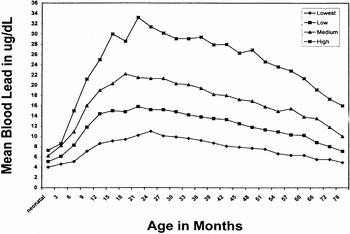
Among the international prospective studies of lead and child development, the CLS has assessed PbB concentrations with the highest frequency. Figure 1 presents average blood lead concentrations obtained quarterly for children divided into four quartiles based on average lifetime PbB concentrations (i.e., the mean of 20 quarterly PbB concentrations from 3 to 60 months). Blood lead was also measured at 5.5, 6, and 6.5 years of age. Maternal prenatal and neonatal blood lead concentrations were obtained as well. As Figure 1, illustrates, a wide range of exposures exist, thus permitting the examination of dose-response/dose-effect relationships within the sample. This is a critical feature of this cohort study because so-called “unexposed controls” cannot be identified and matched to samples of this nature. Postnatal blood lead concentrations began to rise after 6 months following the beginnings of prewalking progression and coordinated hand-to-mouth behaviors. Approximately 30% of the subjects had blood lead concentrations equal to or in excess of 25 μg/dL during the first 5 years of life. Eighty percent of the cohort had at least one blood lead concentration in excess of 15 μg/dL.

Sample blood leads by quartile, neonate to 78 months of age.
METHODS
Research Participants
The subjects of this investigation were recruited from the CLS. The study succeeded in recalling 195 CLS subjects for follow-up examinations between 1997 and 1999. The research protocol was approved by the University of Cincinnati Institutional Review Board, and all participants provided informed written consent. Reasons for attrition since the last published follow-up assessment at 6.5 years (n = 253) included refusals (n = 4), chronically missed appointments (n = 6), inability to determine the current location of the subjects' families (n = 38), long-term incarceration (n = 4), homicide (n = 2), severe developmental disability (n = 2), and the lack of a psychometrician on the day of the appointment (n = 2). Subjects in the analysis did not differ significantly from those lost to follow-up in terms of measures of Pb exposure, perinatal health, early school-age intelligence, or socioeconomic status. All blood samples were analyzed for lead by anodic stripping voltammetry. The performance of the Kettering Laboratory in measuring low levels of lead in blood specimens has been outstanding (Roda et al., 1988).
Sample characteristics are presented in Table 1. Participant ages ranged from approximately 15 to 17 years, 92% were African American, 53% were male, and 74% of the subjects' families were in the lowest two of the five levels on Hollinghead's Four-Factor Index of Social Position. Average parental IQ was low in this cohort but has been highly predictive of child IQ throughout the study.
Sample characteristics

Covariate Adjustment and Statistical Analyses
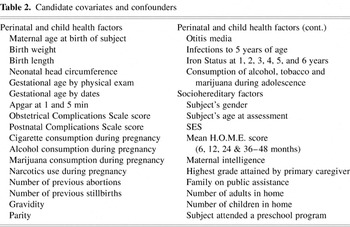
Our analytic strategy consisted of three stages; factor analysis of the neuropsychological battery, pretesting of covariates, and stepwise multiple regression modeling. Table 2 presents the candidate covariates and confounders used in the subsequent analyses. Covariate adjustment in correlational research must be approached carefully to avoid the multiple pitfalls inherent in this process (Greene & Ernhart, 1991). The data analytic strategy employed by the CLS has been described previously in considerable detail (Dietrich et al., 1993b). Covariates were pretested for their confounding potential by examining their bivariate relationship with both PbB and neuropsychological factor scores. Following backward elimination and forward inclusion step-wise multiple regression analyses, those covariates that were independently related to the neuropsychological factor scores at p ≤ .10 were included in all subsequent multiple regression analyses. Three covariates, maternal IQ, SES, and average total Home Observation for Measurement of the Environment (HOME) score were included in all models for substantive reasons.
Candidate covariates and confounders

As in previous analyses of data from the CLS, we examined two interactions that have previously been shown to be important in the lead literature. For every factor, the PbB × Gender and PbB × SES interactions were tested.
Neuropsychological Battery
All testing took place at a pediatric clinic located in the heart of the catchment area.
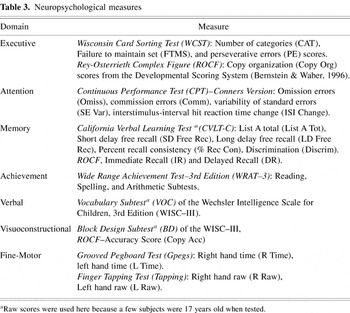
Tests were given in a fixed order by a trained psychometrist or psychologist (KND), alternating active and passive measures in order to maintain interest and alertness. The neuropsychological measures are listed in Table 3 and were selected based upon the extensive literature on the neurodevelopmental effects of lead. This literature indicates that exposed children are at risk for problems in executive functions (Stiles & Bellinger, 1993), attention (Bellinger et al., 1994; Needleman et al., 1979) memory (Stiles & Bellinger, 1993), academic achievement (Needleman et al., 1990), verbal skills (Fergusson & Horwood, 1993), visuoconstructional skills (Baghurst et al., 1995; Dietrich et al., 1993b; Stiles & Bellinger, 1993), and fine-motor coordination (Dietrich et al., 1993a; Wasserman et al., 2000).
Neuropsychological measures

Blood Lead Levels
Among the large number of PbB taken from this sample over the years, we elected a priori to focus on three representative indexes: prenatal maternal PbB, average childhood PbB (from the first 5 years), and 78 month PbB, since late measures of body burden have been particularly predictive of neuropsychological outcomes (Baghurst et al., 1992; Dietrich et al., 1993b; Wasserman et al., 2000).
RESULTS
Factor Analysis
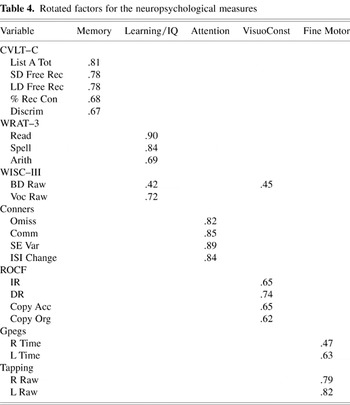
The scores in Table 3 were subjected to a principal components factor analysis with varimax rotation. Five orthogonal factors emerged that were named Memory, Learning/IQ, Attention, Visuoconstruction, and Fine Motor Coordination (see Table 4). Three of the five factors consisted of scores from more than one test, indicating that these factors reflected more than method variance. Furthermore, these factor loadings were consistent with conventional notions about the inter-relatedness of these tests and the functions they are believed to measure, thus adding to the interpretability of the factors. The WCST did not load significantly on any factor, and so was not included in the subsequent analyses. Factor scores were used as dependent variables in a series of multiple regression analyses. Since they were found not to be normally distributed, the factor scores were transformed to normal scores computed from the ranks using the BLOM Formula from the SAS RANK procedure.
Rotated factors for the neuropsychological measures

Regression Models
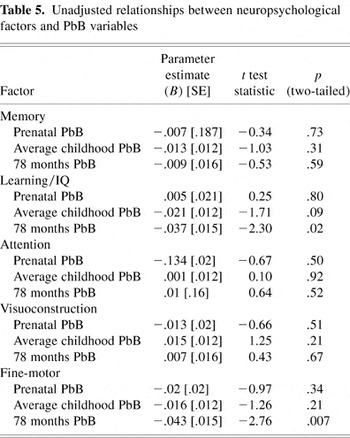
Table 5 shows that prior to adjustment, lead variables were unrelated to Memory, Attention, and Visuoconstruction. A significant relationship was found between 78 month PbB and Learning/IQ, and between 78 month PbB and Fine-Motor.
Unadjusted relationships between neuropsychological factors and PbB variables

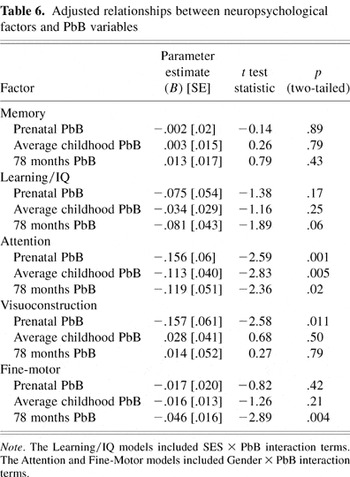
Table 6 shows the adjusted models, all of which were adjusted for maternal IQ, SES, total average HOME scores, and adolescent marijuana consumption. The models for Memory were further adjusted for gender, age at assessment, education of primary caregiver, and yielded a model R2 = .12, p < .01. The increased significance in the adjusted versus unadjusted models was likely attributable to the inclusion of the interaction terms in the adjusted models.
Adjusted relationships between neuropsychological factors and PbB variables

The models for Learning/IQ were further adjusted for obstetrical complications and yielded model R2 = .20 to .21, p < .0001. A trend toward significance was found for the interaction of prenatal and 78 month PbB with SES (p < .07), children in the lower two SES ranks only showing a marginal relationship with these two indexes of lead exposure.
The models for Attention were further adjusted for birth weight, gender, and average total HOME score. A significant PbB × Gender interaction was included yielding model R2 = .13–.14, p < .003–.0004, with statistically significant associations between Attention and lead observed in males only (p < .02 for prenatal PbB and average childhood PbB, and p < .06 for 78 month PbB).
The models for Visuoconstruction were further adjusted for birth weight and gender. A significant Prenatal PbB × Gender interaction was included, yielding model R2 = .05–.10, p < .27–.03. Statistically significant associations between Visuoconstruction and prenatal PbB was observed in males only (p < .05).
The models for Fine-Motor were further adjusted for gender, yielding model R2 = .14–.18, p < .0001. PbB from 78 months was significantly related to this factor.
DISCUSSION
These results tend to support earlier results from this cohort and other samples attesting to the deleterious effects of early lead exposure. They add additional information to this large body of literature by demonstrating that these effects persist into mid adolescence for dimensions of neuropsychological functioning other than intelligence.
Interactions characterized the relationship between lead exposure and both Attention and Visuoconstruction. Being mindful of the potential instability of such relationships in multiple regression models (Greene & Ernhart, 1991), these findings are offered as exploratory and not confirmatory in nature. The obtained gender interaction suggests that neuro-mechanisms sub-serving attention are affected by lead for boys but not girls. This is not surprising given the heightened vulnerability of males for a wide range of developmental perturbations. A substantial gender difference in the incidence of Attention Deficit/Hyperactivity Disorder (ADHD) is well established, and one could speculate that early exposure to lead exacerbates a latent potential for such problems. In the lead literature, some studies have observed a gender difference in apparent lead effects on global measures of intellectual functioning, while others have not. Indeed, in some studies males appeared to be most affected (Bellinger et al., 1990; Dietrich et al., 1987; Pocock et al., 1987), while in others the effect was greatest in female subjects (Baghurst et al., 1992; Rabinowitz et al., 1993). The reasons for this inconsistency could be many and might include contextual factors that result in one gender being more sensitive than another under different environmental circumstances(Bellinger, 2000). Nevertheless, as opposed to the assessments of global attainment such as IQ noted above, we observed a greater male vulnerability to lead in an outcome for which a vulnerability to functional difficulties is already known to exist.
Seventy-eight month PbB was more often related to neuropsychological functioning than Average Childhood PbB. Blood lead concentrations are most labile in infancy and tend to become more stable with age (Mushak, 1989). In older children, this stability is mainly in the form of preservation of rank order, perhaps reflecting the degree to which the blood compartment has come into equilibrium with lead sequestered in deep physiological depots, such as bone. So it may only be until later childhood that stable estimates of prior exposures are possible, resulting in stronger relationships with outcome variables.
Effects were shown on measures of fine-motor speed and dexterity. It has previously been demonstrated that motor abilities are affected by lead exposure, perhaps as a result of the sensitivity of the cerebellum to lead-induced developmental perturbations (Dietrich et al., 1993a; Freedman et al., 1990). Our results indicate that such effects are not transient. Recent research on the contribution of the cerebellum to cognitive functions (Allen et al., 1997) raises the possibility that the motor and attention relationships found in this study could have a common neural substrate in the cerebellum. However, this is conjecture since the present study did not allow us to determine which of the many pathways subserving these functions were affected by lead.
With our sample being highly skewed toward the lower end of the SES scale, this restriction of range may have attenuated any relationships with this variable thus providing an insufficient test of the association between SES and lead effects. Nevertheless, it is worth commenting on the observed trend toward a significant interaction between Learning/IQ and SES. This is consistent with previous reports that children in the lower social strata may be most vulnerable to general effects on cognitive development and learning (Bellinger, 2000; Winneke & Kraemer, 1984). Animal research, as well, indicates that environmental enrichment imparts a degree of protection from the deleterious effects of lead (Schneider et al., 2001).
It is also noteworthy that these results indicate neurodevelopmental effects of prenatal exposure to lead. The preponderance of evidence indicates that prenatal exposure is only related to early development. By the preschool years, such effects are typically absent while postnatal exposure assumes a more prominent role in models of developmental effects. This may be related to the lower exposures prenatally (5–27 μg/dL prenatally vs. 10–85 μg/dL postnatally in our sample) as well as the fact that prenatal estimates derive from maternal blood, and so are indirect estimates of fetal exposures. Our results would suggest a latent effect, at least for males, of prenatal exposure consistent with the notion of “growing into a lesion,” but only for certain neuropsychological functions (attention and visuoconstruction). Within the heuristic offered by Dennis (1989), this might be construed as a “shortfall” in which these skills do not attain full mastery.
Our data-reduction strategy could be criticized for risking obscuring important neuropsychological–lead relationships by combining measures into factor scores, a strategy that also resulted in certain tests and variables being excluded from the modeling procedures. However, we believe that our approach, compared to others, resulted in outcome variables that were more reliable and construct-valid. Although highly specific relationships may have thus been obscured, to “unpack” the factors in search of such relationships would have been to court spuriousness of the Type 1 kind.
These results should be placed in the appropriate context. Following covariate adjustment, the best model accounted for only 21% of the variance. Therefore, the majority of variance in neuropsychological outcome is related to factors either not reliably measured or not included in these models. Indeed, the maximum variance in any neuropsychological domain accounted for by any lead variable was 5% (Attention for males). Nevertheless, as has been argued previously, small effects across large numbers of children can have far-reaching implications that cannot be appreciated at the level of the individual (Nation & Gleaves, 2001). And, it must be kept in mind that multicollinearity can result in over-correction (when shared variance between a lead exposure variable and covariate is removed), and thus an underestimation of the influence of lead on outcome variables (Pedhazur, 1982).
The cross-sectional analyses of neuropsychological outcomes reported here are limited in their ability to appreciate change over time. We have previously reported on an application of growth curve modeling that seems to indicate non-linear trajectories, with verbal but not perceptual–organizational development being related to lead exposure (Coscia et al., 2003). Change over time as a function of early lead exposure has not been thoroughly investigated, but promises to offer new insights into the long-term impact of this prevalent environmental toxicant.
In an earlier publication (Dietrich et al., 2001) we reported an increased lead-related risk for antisocial behavior in this sample. Combined with the results reported here, there would appear to be multiple types of neurobehavioral risks in children exposed early in life to environmental lead. Whether these forms of risk act independently or in a mediational manner is a question we are currently studying using hierarchical linear modeling.
In conclusion, the results of this study qualify and extend our knowledge of the remote effects of a common environmental toxicant. While causal inferences about the effects of early lead exposure on development must be made with discretion, the correlational nature of the evidence does not in and of itself preclude one from drawing such inferences (Ris, 2003). Our longitudinal design and extended follow-up offer evidence of subtle and specific neuropsychological effects of lead into mid-adolescence. This is particularly true for males where the effects are seen most clearly on measures of attention and visuoconstruction. Interestingly, both prenatal and postnatal PbB levels predicted these effects. While SES did not significantly moderate lead effects, the trend was in the direction of increased vulnerability for adolescents from disadvantaged homes, consistent with previous human and animal research. The modest R2 achieved with these regression models also underscore the importance of factors other than lead that influence the neuropsychological development of children.
ACKNOWLEDGMENTS
This research was supported by a grant from the National Institute of Environmental Health Sciences, National Institutes of Health (RO1ES08158).
References
REFERENCES
Allen, G.,
Buxton, R.B.,
Wong, E.C., &
Courchesne, E.
(1997).
Attentional activation of the cerebellum independent of motor
involvement.
Science,
275,
1940–1943.CrossRefGoogle Scholar
Baghurst, P.A.,
McMichael, A.J.,
Tong, S.L.,
Wigg, N.R.,
Vimpani, G.V., &
Robertson, E.F.
(1995).
Exposure to environmental lead and visual-motor integration at 7
years: The Port Pirie Cohort Study.
Epidemiology,
6,
104–109.CrossRefGoogle Scholar
Baghurst, P.A.,
McMichael, A.J.,
Wigg, N.R.,
Vimpani, G.V.,
Robertson, E.F.,
Roberts, R.J., &
Tong, S.L.
(1992).
Environmental exposure to lead and children's intelligence at
the age of seven years. The Port Pirie Cohort Study.
New England Journal of Medicine,
327,
1279–1284.Google Scholar
Bellinger, D.,
Leviton, A.,
Allred, E., &
Rabinowitz, M.
(1994).
Pre- and postnatal lead exposure and behavior problems in
school-aged children.
Environmental Research,
66,
12–30.Google Scholar
Bellinger, D.,
Leviton, A., &
Sloman, J.
(1990).
Antecedents and correlates of improved cognitive performance in
children exposed in utero to low levels of lead.
Environmental Health Perspectives,
89,
5–11.Google Scholar
Bellinger, D.C.
(2000).
Effect modification in epidemiologic studies of low-level
neurotoxicant exposures and health outcomes.
Neurotoxicology and Teratology,
22,
133–140.CrossRefGoogle Scholar
Bellinger, D.C.,
Stiles, K.M., &
Needleman, H.L.
(1992).
Low-level lead exposure, intelligence and academic achievement: A
long-term follow-up study.
Pediatrics,
90,
855–861.Google Scholar
Bernstein, J.H. &
Waber, D.P.
(1996).
Developmental scoring system for the Rey-Osterreith Complex Figure:
Professional manual.
Odessa, FL:
Psychological Assessement Resources.
Byers, R.K., &
Lord
(1943).
Late effects of lead poisoning on mental development follow-up
reassessment.
Pediatrics,
67,
911–919.Google Scholar
Canfield, R.L.,
Henderson, C.R.,
Cory-Slechta, D.A.,
Cox, C.,
Jusko, T.A., &
Lanphear, B.P.
(2003).
Intellectual impairment in children with blood lead concentrations
below 10 microg per deciliter.
New England Journal of Medicine,
348,
1517–1526.CrossRefGoogle Scholar
Cory-Slechta, D.A.
(1997).
Relationships between Pb-induced changes in neurotransmitter system
function and behavioral toxicity.
Neurotoxicology,
18,
673–688.Google Scholar
Coscia, J.M.,
Ris, M.D.,
Succop, P.A., &
Dietrich, K.N.
(2003).
Cognitive development of lead exposed children from ages 6 to 15
years: An application of growth curve analysis.
Child Neuropsychology,
9,
10–21.CrossRefGoogle Scholar
Dennis, M.
(1989).
Language and the young damaged brain. In
T. Boll and
B.K. Bryant (Eds.),
Clinical neuropsychology and brain function: Research, measurement,
and practice (pp.
89–123).
Washington, DC:
American Psychological Association.
Dietrich, K.N.,
Berger, O.G., &
Succop, P.A.
(1993a).
Lead exposure and the motor developmental status of urban
six-year-old children in the Cincinnati Prospective Study.
Pediatrics,
91,
301–307.Google Scholar
Dietrich, K.N.,
Berger, O.G.,
Succop, P.A.,
Hammond, P.B., &
Bornschein, R.L.
(1993b).
The developmental consequences of low to moderate prenatal and
postnatal lead exposure: Intellectual attainment in the Cincinnati Lead
Study Cohort following school entry.
Neurotoxicology and Teratology,
15,
37–44.Google Scholar
Dietrich, K.N.,
Krafft, K.M.,
Bornschein, R.L.,
Hammond, P.B.,
Berger, O.,
Succop, P.A., &
Bier, M.
(1987).
Low-level fetal lead exposure effect on neurobehavioral development
in early infancy.
Pediatrics,
80,
721–730.Google Scholar
Dietrich, K.N.,
Ris, M.D.,
Succop, P.A.,
Berger, O.G., &
Bornschein, R.L.
(2001).
Early exposure to lead and juvenile delinquency.
Neurotoxicology and Teratology,
23,
511–518.CrossRefGoogle Scholar
Dietrich, K.N.,
Succop, P.A.,
Berger, O.G.,
Hammond, P.B., &
Bornschein, R.L.
(1991).
Lead exposure and the cognitive development of urban preschool
children: The Cincinnati Lead Study cohort at age 4 years.
Neurotoxicology anl Teratology,
13,
203–211.Google Scholar
Dudek, B. &
Merecz, D.
(1997).
Impairment of psychological functions in children environmentally
exposed to lead.
International Journal of Occupational Medicine and Environmental
Health,
10,
37–46.Google Scholar
Ernhart, C.B.
(1995).
Inconsistencies in the lead-effects literature exist and cannot be
explained by “effect modification”.
Neurotoxicology and Teratology,
17,
227–233.CrossRefGoogle Scholar
Fergusson, D.M. &
Horwood, L.J.
(1993).
The effects of lead levels on the growth of word recognition in
middle childhood.
International Journal of Epidemiology,
22,
891–897.CrossRefGoogle Scholar
Freedman, R.,
Olson, L., &
Hoffer, B.J.
(1990).
Toxic effects of lead on neuronal development and function.
Environmental Health Perspectives,
89,
27–33.CrossRefGoogle Scholar
Gibson, J.L.
(1917).
The diagnosis, prophylaxis, and treatment of plumbic ocular neuritis
amongst Queensland children.
Medical Journal of Australia,
September 8,
201–204.Google Scholar
Greene, T. &
Ernhart, C.B.
(1991).
Adjustment for cofactors in pediatric research.
Journal of Developmental and Behavioral Pediatrics,
12,
378–385.Google Scholar
Greenough, W.T.,
Black, J.E., &
Wallace, C.S.
(1987).
Experience and brain development.
Child Development,
58,
539–559.CrossRefGoogle Scholar
Kaufman, A.S.
(2001).
Do low levels of lead produce IQ loss in children? A careful
examination of the literature.
Archives of Clinical Neuropsychology,
16,
303–341.CrossRefGoogle Scholar
Lanphear, B.P.,
Dietrich, K.,
Auinger, P., &
Cox, C.
(2000).
Cognitive deficits associated with blood lead concentrations <10
microg/dL in US children and adolescents.
Public Health Reports,
115,
521–529.CrossRefGoogle Scholar
Lasley, S.M.,
Green, M.C., &
Gilbert, M.E.
(1999).
Influence of exposure period on in vivo hippocampal glutamate and
GABA release in rats chronically exposed to lead.
Neurotoxicology,
20,
619–629.Google Scholar
Major, R.H.
(1931).
Some landmarks in the history of lead poisoning.
Annals of Medical History,
3,
218–227.Google Scholar
Mushak, P.
(1989).
Biological monitoring of lead exposure in children: Overview of
selected biokinetic and toxicological issues. In
M.A. Smith,
L.D. Grant, &
A.I. Sors (Eds.),
Lead exposure and child development: An international assessment (pp.
129–145).
London:
Kluwer Academic Publishers.
Nation, J.R. &
Gleaves, D.H.
(2001).
Low-level lead exposure and intelligence in children.
Archives of Clinical Neuropsychology,
16,
375–388.CrossRefGoogle Scholar
Needleman, H.L.,
Gunnoe, C.,
Leviton, A.,
Reed, R.,
Peresie, H.,
Maher, C., &
Barrett, P.
(1979).
Deficits in psychologic and classroom performance of children with
elevated dentine lead levels.
New England Journal of Medicine,
300,
689–695.Google Scholar
Needleman, H.L.,
Schell, A.,
Bellinger, D.,
Leviton, A., &
Allred, E.
(1990).
The long-term effects of low doses of lead in childhood: An 11-year
follow-up report.
New England Journal of Medicine,
322,
83–88.CrossRefGoogle Scholar
Pedhazur, E.J.
(1982).
Multiple regression in behavioral research.
New York:
Holt.
Pocock, S.J.,
Ashby, D., &
Smith, M.A.
(1987).
Lead exposure and children's intellectual performance.
International Journal of Epidemiology,
16,
57–67.CrossRefGoogle Scholar
Rabinowitz, M.,
Wang, J.D., &
Soong, W.T.
(1993).
Lead and classroom performance at seven primary schools in Taiwan.
Research in Human Capital and Development,
7,
253–272.Google Scholar
Ris, M.D.
(2003).
Casual inference in lead research: Introduction to the special section on
the neurobehavioral effects of environment lead.
Child Neuropsychology,
9,
1–9.Google Scholar
Roda, S.M.,
Greenland, R.D.,
Bornschein, R.L., &
Hammond, P.B.
(1988).
Anodic stripping voltammetry procedure modified for improved
accuracy of blood lead analysis.
Clinical Chemistry,
34,
563–567.Google Scholar
Schneider, J.S.,
Lee, M.H.,
Anderson, D.W.,
Zuck, L., &
Lidsky, T.I.
(2001).
Enriched environment during development is protective against
lead-induced neurotoxicity.
Brain Research,
896,
48–55.CrossRefGoogle Scholar
Schwartz, J.
(1994).
Low-level lead exposure and children's IQ: A meta-analysis and
search for a threshold.
Environmental Research,
65,
42–55.CrossRefGoogle Scholar
Stiles, K.M. &
Bellinger, D.C.
(1993).
Neuropsychological correlates of low-level lead exposure in
school-age children: A prospective study.
Neurotoxicology and Teratology,
15,
27–35.CrossRefGoogle Scholar
Trope, I.,
Lopez-Villegas, D.,
Cecil, K.M., &
Lenkinski, R.E.
(2001).
Exposure to lead appears to selectively alter metabolism of
cortical gray matter.
Pediatrics,
107,
1437–1442.Google Scholar
US Centers for Disease Control.
(1991).
Preventing lead poisoning in young children–A statement by the
United States Centers for Disease Control.
Atlanta, GA:
United States Department of Health and Human Services, Public Health
Service, Center for Disease Control.
Wasserman, G.A.,
Facgtor-Litvak, P.,
Liu, X.,
Todd, A.,
Kline, J.K.,
Slavkovich, V.,
Popovac, D., &
Graziano, J.H.
(2003).
The relationship between blood lead, bone lead and child
intelligence.
Child Neuropsychology,
9,
22–34.Google Scholar
Wasserman, G.A.,
Musabegovic, A.,
Liu, X.,
Kline, J.,
Factor-Litvak, P., &
Graziano, J.H.
(2000).
Lead exposure and motor functioning in 4(1/2)-year-old
children: The Yugoslavia prospective study.
Journal of Pediatrics,
137,
555–561.CrossRefGoogle Scholar
Winneke, G. &
Kraemer, U.
(1984).
Neuropsychological effects of lead in children: Interactions with
social background variables.
Neuropsychobiology,
11,
195–202.CrossRefGoogle Scholar
World Health Organization.
(1995).
Environmental Health Criteria 165: Inorganic lead.
W.H.O. International Programme on Chemical Safety. Geneva:
Author.
Sample blood leads by quartile, neonate to 78 months of age.

Sample characteristics
Candidate covariates and confounders
Neuropsychological measures
Rotated factors for the neuropsychological measures
Unadjusted relationships between neuropsychological factors and PbB variables
Adjusted relationships between neuropsychological factors and PbB variables
 You have
Access
- 157
- Cited by