Introduction
Medical emergencies in lower middle-income countries (LMICs) do not receive adequate care and contribute to a considerable, preventable burden of disease.1 This emergency burden includes some communicable diseases, chronic diseases, and injuries.Reference Hsia, Thind and Zakariah2 However, to date, emergency health services in LMICs have attracted little research. This study updates Hsia and colleagues’ results from 2012 to 2015 for the 59 countries classified by the World Bank (Washington, DC USA) as LMICs, and it emerged that some 11 million lives were lost that year due to conditions responsive to prehospital emergency care. 1, Reference Hsia, Thind and Zakariah2 This translated in 2015 to more than 441 million disability-adjusted life years lost. 1, Reference Hsia, Thind and Zakariah2 Given this enormous and growing health burden, and its sensitivity to prehospital care, such emergency care is an essential focus for future reforms in LMICs’ health systems.
Prehospital emergency care can reduce mortality from medical emergencies and is highly cost-effective. Reference Hsia, Thind and Zakariah2, Reference Kobusingye, Hyder, Bishai, Jamison, Breman and Measham3 For example, a comparative study on health outcomes of similarly seriously injured patients in three countries at different economic levels – Ghana (low income), Mexico (middle income), and the United States (high income) – revealed a monotonic mortality decline by 10% to 20% as prehospital time shrunk by 30 to 40 minutes with each increase of income level. The decline was attributed to better prehospital services.Reference Mock, Jurkovich and Arreola-Risa4 Compared to high-income countries (HICs), prehospital care in LMICs would be directed more towards young people and treatable injuries so it would potentially save more lives. Also, it would confer considerably larger benefits in terms of life years saved and productivity increased.Reference Obermeyer, Abujaber and Makar5 Kotagal, et al estimated that by lowering injury mortality rates in lower- and middle-income countries to the current level in HICs, more than two million lives could be saved annually.Reference Kotagal, Agarwal-Harding and Mock6
In the past 15 years, reviews of prehospital care in LMICs have focused on assessing needs, Reference Henry and Reingold7, Reference Razzak and Kellermann8 investigating the effectiveness of initiatives, Reference Callese, Richards and Shaw9, Reference Callese, Richards and Shaw10 or providing general overviews of the health system status including system capacity or development using a vertical analytical approach. Reference Hsia, Thind and Zakariah2, Reference Mock, Kobusingye and Joshipura11–Reference Suryanto, Plummer and Boyle13 Consistently, these studies found that many LMICs lack an organized Emergency Medical Services (EMS) system, with health system managers attributing most of the problems to the lack of resources or political commitment. People’s expectations of EMS and the sociocultural contexts in which it operates are often not considered. Enhancing health systems’ responsiveness to these factors would be expected to improve utilization of services, ultimately resulting in better outcomes.
Traditionally, studies of EMS systems have heavily emphasized quantitative, biomedical aspects with little attention to social and cultural context. However, medical systems are a manifestation of the social order and values of the societies in which they exist.Reference Helman14 Social contexts, including the political, economic, and environmental arrangements of power, money, and resources that affect “the conditions in which people are born, grow, live, work, and age” are well-known determinants of health.15 Culture is defined by the Lancet Commission on Culture and Health (London, UK) as:
The shared, overt, and covert understandings that constitute conventions and practices, and the ideas, symbols, and concrete artefacts that sustain conventions and practices, and make them meaningful.Reference Napier, Ancarno, Butler, Calabrese, Chater and Chatterjee16
Culture therefore constructs the very definition of health and well-being, the experience of illness, the appropriate treatments, and the perceptions of risks. The two concepts are closely inter-related through the argument that political, economic, and environmental conditions are cultural expressions, hence the term sociocultural is used.Reference Sobo17
In the health sector, emergency medicine is unusual for the abrupt and immediate nature of the health conditions to which it responds. Even so, culture plays a central role, especially in countries where mistrust of the system affects bystander and patient perceptions of risk, leading to corresponding health-seeking practices that delay care. This study examines the sociocultural dimensions of prehospital emergency care in LMICs and reviews relevant theories and related qualitative literature published over the last 20 years. Reports of the experiences of injured victims, affected families and communities, bystanders, Good Samaritans, transport operators, police, and health care providers were the focus in the paper. Following the methods of Calvello and colleagues,Reference Calvello, Skog and Tenner18 the study focused on three delays: seeking care, reaching hospital, and receiving treatment. As well, using Kleinman’s theory to divide the health system into popular, folk, and professional sectors,Reference Kleinman19 the EMS systems were analyzed to better understand patient experiences. The information emerging should help to improve the quality and impact of emergency care in LMICs.
Methods
Literature Search
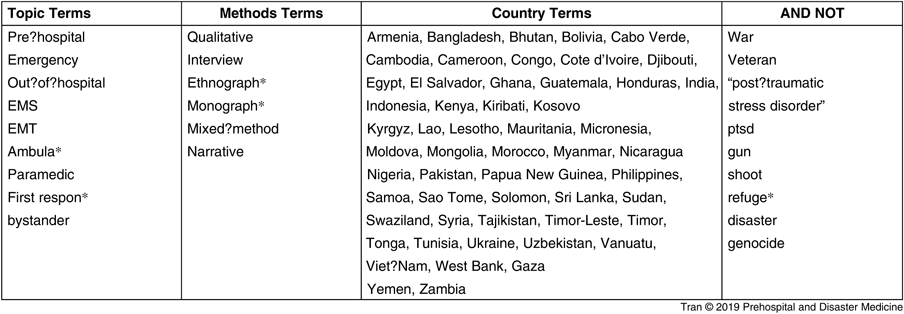
This systematic narrative review followed the method of Mays, et alReference Mays, Pope and Popay20 and of the Cochrane GuidelineReference Noyes, Hannes and Booth21 to gather and analyze published materials bearing on prehospital emergency care. First, Google Scholar (Google Inc.; Mountain View, California USA) was used to scan the literature, and a knowledge gap on emergency prehospital care in LMICs was identified. For a deeper search, guided by a university librarian, four leading electronic databases were selected and a large array of relevant search terms were devised (Table 1). Inclusion and exclusion criteria were developed and an extraction flowchart to select the publications for eventual review was designed (Figure 1).
List of Search Terms Used

Note: LMIC = Lower-Middle-Income Countries as defined by World Bank (2017) – countries with a GNI per capita between $1,026 and $4,035. Search symbols: * truncation; ? wild card.
Abbreviations: EMS, Emergency Medical Services; EMT, emergency medical technician; PTSD, posttraumatic stress disorder.
Flow Diagram of Literature Search.

The four databases were: Web of Science (Thomson Reuters; New York, New York USA); Scopus (Elsevier; Amsterdam, Netherlands); PubMed (National Center for Biotechnology Information, National Institutes of Health; Bethesda, Maryland USA); and ProQuest (Ann Arbor, Michigan USA). Individual and combined search terms were used to search for prehospital and emergency care and qualitative methods in LMICs, as defined by the World Bank.22 Reports relating to war and genocide were excluded because such a circumstance involves a different emergency care system that is beyond the scope of the current research aim. The inclusion criteria were restricted to papers published from 1998 to the day of the search (June 20, 2017). All citations identified in the search were digitally extracted, stored, and manipulated using bibliographic software (EndNote version X8; Clarivate Analytics; Philadelphia, Pennsylvania USA) to eliminate duplicates and facilitate the reviewing process.
Data Extraction and Selection Criteria
One author (TT) made an initial examination of titles and abstracts of all papers to identify for relevance. Additional relevant publications were found by checking the cited references. Papers that did not adopt a qualitative study design or only described the overall system (eg, for capacity, preparedness, or planning) were excluded. As well, reports on conditions that were chronic, anticipated (child birth), or family-adult managed (pediatric) were excluded. Each of these involved practiced or planned responses, or included at least one assisting adult relative, and in such circumstances, the experience would be substantially modified and less-dependent on community and bystander responses. A repeat reading of the full-text of each of the remaining eligible studies was then completed independently by two authors (TT and JL). The conclusions for each author were compared and any discrepancies were resolved until an agreement was reached. Inadequate studies were removed at this stage, leaving the final group for analysis.
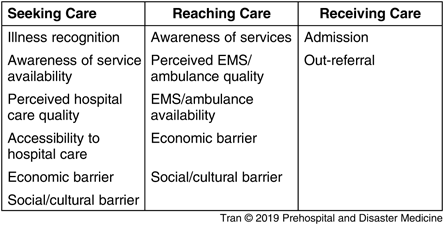
Studies analyzed had at least one of the following components: (1) an account of the first-hand experiences of victims, family, bystanders, or various first responders; or (2) a description of the community’s experiences and perceptions of emergency care. Analysis proceeded in three phases. First, all the studies were thoroughly examined to obtain general themes and related patterns. The patterns were then condensed to develop a coding schema according to views, attitudes, and perceptions identified in the studies. Finally, the coding schema was applied to the studies tabulated in three groups according to the three-delay model (Table 2 shows coding schema).
Three Delays by Themes/Codes Used to Analyze Findings

Abbreviation: EMS, Emergency Medical Services.
Quality Appraisal
Most papers were excluded due to duplication or irrelevance. No paper was excluded based on quality appraisal because there is currently no consensus on the best way to appraise the quality of non-clinical, qualitative research for inclusion in a systematic review.Reference Dixon-Woods, Sutton and Shaw23 Furthermore, the intention of the research was to include all voices and experiences of the EMS systems, hence, as many papers were included as possible to avoid missing any key concepts. Unless the paper did not have a clear research design or methodology (for example, did not report the settings or participants, or whether it conducted an interview or focus group discussion [FGD]), all studies that met inclusion criteria were included. The Critical Appraisal Skills Programme (CASP)24 for qualitative research was consulted, not as exclusion criteria, but as a basis for reflexivity and awareness of the analytical focus of the original authors’ interpretations of the data.
Data Synthesis
Narrative synthesis involves juxtaposition of findings from multiple qualitative studies to identify common themes across the studies.Reference Mays, Pope and Popay20 This involved integrating the information connecting the events and components into a narrative synthesis. Kleinman’s health system modelReference Kleinman19 is applied to shed light on patients’ experiences and cultural determinants. This systematic thematic analysis provided a novel perspective and contributed to a theoretical understanding of a wide-spread public health problem. Guided by the health system theory,Reference Kleinman19 further analysis revealed aspects of the cultural forces driving both the patients and the system, with special attention to the point of view of those targeted for study.Reference Atkins, Lewin and Smith25
Theoretical Considerations
Several theories inform this study. One is that sociocultural contexts influence people’s interaction with medical care.Reference Kleinman19According to Kleinman,Reference Kleinman19 sickness is experienced and responded to within three social sectors – the popular, the folk, and the professional. These sectors constitute most health care systems. In the popular sector, patients rely on their personal network of family and friends to make sense of their illnesses and make decisions on appropriate treatment. Following the popular sector are the folk and the professional sectors, where illnesses are understood and treated based on different explanatory models and social reality.Reference Kleinman19 For example, traditional cultural healing practitioners, such as bonesetters, fall under the folk sector. Meanwhile, the EMS typically sits mainly within the professional sector that emulates a Western, biomedical model. However, it operates in LMICs where traditional explanatory models of illness prevail at a community level. A cross-cultural approach to the study of prehospital emergency care draws attention to the movement of people from traditional communities to biomedically run hospitals. When people transition from one to the other, a “transaction” between the two conceptual explanatory models occurs. If these models are substantially different, the patient may experience poorer health outcomes.Reference Kleinman19
Another theory concerns the delay to care and the role of “time” for survival in medical emergencies.Reference Nielsen, Mock and Joshipura26 Prehospital trauma care in the professional sector focusses on saving time, first by quickly detecting the injuries, then by providing speedy and appropriate interventions, and finally bringing the correct patient to the right hospital. The faster that care is administered to an injured patient, the higher the chance of survival. Reference Kobusingye, Hyder, Bishai, Jamison, Breman and Measham3, Reference Bouillon, Oestern, Trentz and Uranues27 By understanding three temporal delays – seeking care, reaching care, and receiving careReference Calvello, Skog and Tenner18 – it becomes possible to recognize complex problems of health care access and to develop targeted programs or policies addressing those issues.
Results
Processing Information
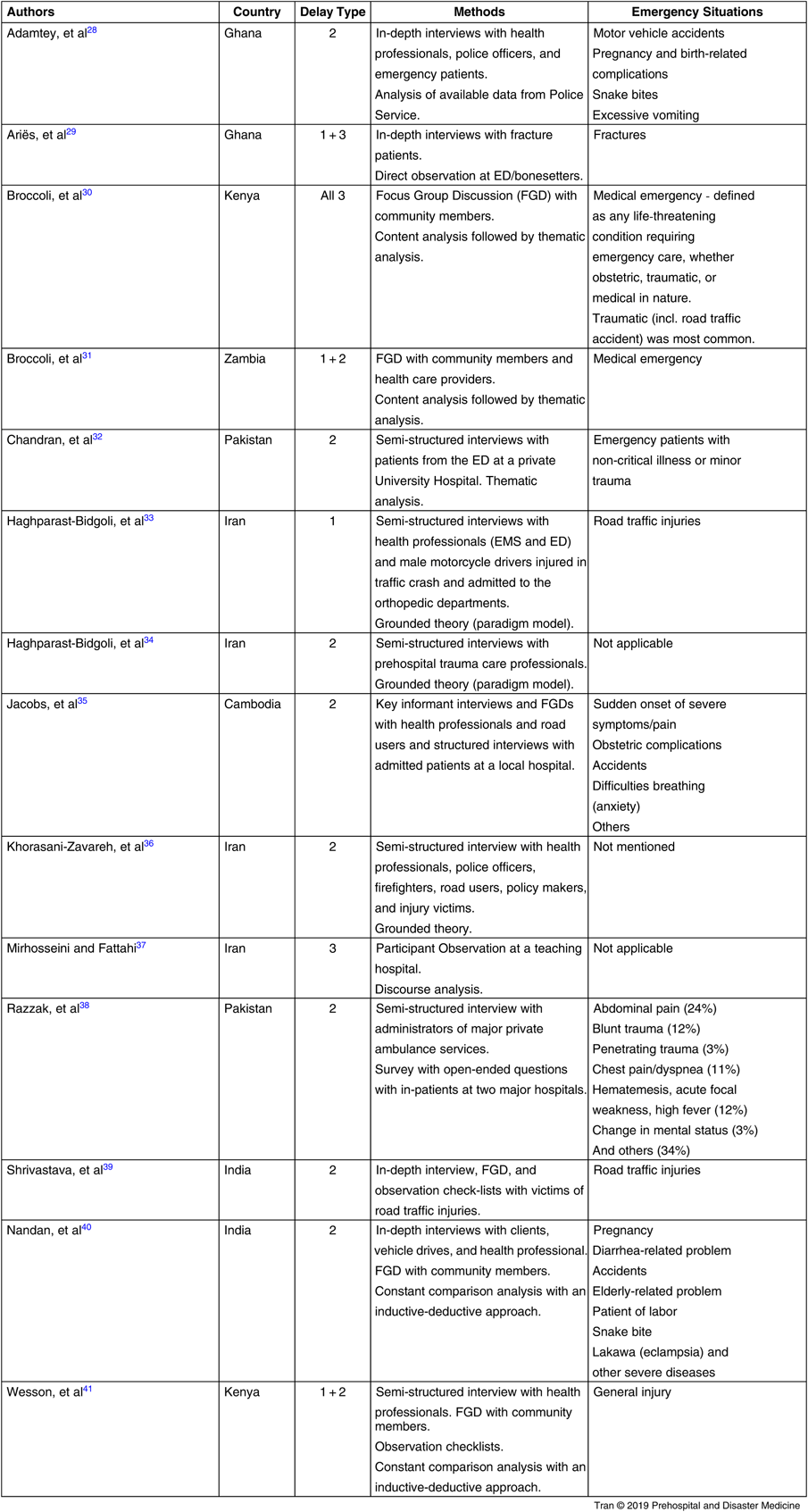
A search of electronic databases identified 3,666 potentially relevant articles and each was examined (Figure 1). After reviewing abstracts and titles, 2,017 duplicates and the 1,490 irrelevant papers were removed. Further selection followed, and finally 14 papers were included in the narrative synthesis (Table 3). Reference Adamtey, Frimpong and Dinye28–Reference Wesson, Stevens and Bachani41
Features of the 14 Studies Synthesized

Note: 1 – Delay in seeking care; 2 – Delay in reaching care; 3 – Delay in receiving care.
Abbreviations: ED, emergency department; EMS, Emergency Medical Services; FGD, Focus Group Discussion.
Overview of Analyzed Studies
Of the 14 studies that were included in this review, most were concerned with emergency transport, especially ambulances. Study settings varied across reports from Asia (India, Pakistan, and Cambodia), the Middle East (Iran – most common), and Africa (Ghana – West, Zambia – South, and Kenya – East). The majority of the studies employed a mixed-methods approach, including semi-structured interviews and FGDs as the most frequent qualitative methods used. Data processing also varied and included thematic analysis, content analysis, and grounded theory. Key features of the studies in this synthesis are summarized in Table 3.
Pathway to Emergency Care
Delays arise at various time points during the pathway to care. This section synthesized the findings from the literature and outlined the main determinants of delay that were reported at the three critical time points: seeking care, reaching care, and receiving care. Figure 2 outlines a patient pathway to emergency care, starting with the recognition or perception of illness. The sequence of events that follows depends on the patients’ sociocultural characteristics as well as emergency system performance, as recalled and perceived by the public. Patients in LMICs have multiple pathways that they may follow. They can stay at home, self-medicate, or do nothing. If the illness progresses or the patients’ situations change in some other relevant ways (eg, funds obtained from relatives), they might reconsider seeking treatment. Initial options for treatment usually included traditional healers and may include professional health care centers; patients might move back and forth between the two care sectors. Once patients reached the professional health system, they might find that the first clinic has no capacity to provide for them. Then patients must travel to other health care facilities via private means or hospital ambulance. As in-hospital emergency care was not the focus of the study, this transferring process formed the basis of the third delay – receiving care.
Pathway Diagram.

The Three Delays
Delay 1: Seeking Care—Effective emergency care is dependent upon the patient’s or caregiver’s ability to recognize that an abnormal condition exists, that the condition has a level of severity warranting intervention, and that an intervention is available to treat the condition. As most of the conditions reported in this study were acute and severe (eg, road traffic injuries or snake bites), recognizing the existence of the illness was not a problem. Indeed, the most important determinant of care seeking was the severity of illness: Reference Ariës, Joosten and Wegdam29, Reference Wesson, Stevens and Bachani41
I would [go to the hospital] immediately if it is a matter of life and death.
If the injury is small, then I would not go to the hospital since I need to continue working.Reference Ariës, Joosten and Wegdam29
As the patients and their supporters navigated through the health system, they were constantly faced with choices that had both benefits and costs. The more severe the illness, the more likely the benefits of getting it treated over-rid the costs of doing so. Financial cost was commonly mentioned; however, social costs should not be overlooked. The decision to seek care engages both social and cultural processes, involving not only the patients, but also their supporters:
[There are] many different advices from other people; so you cannot decide easily for yourself. You have to listen to others.Reference Ariës, Joosten and Wegdam29
Ariës, et al reported that the decision for the patient to leave the hospital and seek a bonesetter’s treatment was mainly made by other people, usually family members.Reference Ariës, Joosten and Wegdam29 Their decision could bring positive outcomes for the patient’s illness, but that depended on the family’s health knowledge. Involvement of the entire family, given their different schedules and opinions, meant that it often took hours before a final decision was made.Reference Ariës, Joosten and Wegdam29 This contributed significantly to the delay in seeking care.
The perceived quality of care the patient received at the hospital and the availability of care facilities had a strong effect on decisions to seek care and the types of treatment to pursue. The quality of care in public hospitals may be considered inadequate, while private hospitals may be too expensive.Reference Broccoli, Calvello and Skog30 Research in Iran, Reference Haghparast-Bidgoli, Khankeh and Johansson33, Reference Haghparast-Bidgoli, Hasselberg and Khankeh34 Kenya,Reference Broccoli, Calvello and Skog30 and ZambiaReference Broccoli, Cunningham and Twomey31 found community mistrust of the hospital and staff was a significant barrier to their decision to seek care at that facility. Hospital-based corruption, unfair fees, missing or inexperienced staff due to moonlighting, and a generally negative attitude were common complaints across the studies. Reference Ariës, Joosten and Wegdam29–Reference Broccoli, Cunningham and Twomey31, Reference Haghparast-Bidgoli, Khankeh and Johansson33–Reference Jacobs, Men and Sam35 Higher level care centers were thought to be generally better than centers at lower levels. Reference Ariës, Joosten and Wegdam29, Reference Broccoli, Cunningham and Twomey31, Reference Jacobs, Men and Sam35 This meant that patients had to bypass the local health centers in order to obtain “satisfactory” levels of care. The effort and the cost associated with this process demotivated the patients from seeking care.
Traditional or alternative medicine was a popular choice among the people living in LMICs. Reference Ariës, Joosten and Wegdam29, Reference Wesson, Stevens and Bachani41 For example, Ariës and colleagues found that a large proportion of Ghanaians with bone fractures preferred to go straight to bonesetters, for they were believed to have more expertise in fracture treatments compared to Western-trained doctors.Reference Ariës, Joosten and Wegdam29 In their study, patients reported that their wound healed faster using a bonesetter’s treatments. The sight of “all those people with metal sticking out of their limbs” and the thought of “metal inside the leg” added to the overwhelming fear that the patients already had and further motivated them to choose the bonesetters over the hospital.Reference Ariës, Joosten and Wegdam29
The convenience and the cheaper price of bonesetters offered additional incentives,Reference Ariës, Joosten and Wegdam29 considering that patients living in LMICs are often poor. Reference Ariës, Joosten and Wegdam29–Reference Broccoli, Cunningham and Twomey31, Reference Jacobs, Men and Sam35, Reference Razzak, Cone and Rehmani38, Reference Nandan, Singh and Mukherjee40, Reference Wesson, Stevens and Bachani41 Bonesetters were often situated closer to home and patients were able to leave straight after treatment, allowing them and their family to continue with their daily life. Meanwhile, hospital treatments of fracture often required extended periods of in-patient stay at a hospital. The “bad and impersonal organization of hospital care” only worsened this predicament.Reference Ariës, Joosten and Wegdam29
Delay 2: Reaching Care—The delay in identifying and reaching a medical facility was dependent upon the planning and organization of prehospital emergency services in the setting involved. In LMICs, it is well-known that the capacity of the EMS is not well-developed, and indeed is inadequate when compared to developed countries where years of experience and good resources lead to a well-functioning EMS. Generally, the lack of a functional EMS meant that the victims depend on the assistance of untrained laypeople for initial stabilization before they went to the hospital. Thus, the overall success of an EMS in an LMIC unofficially relies on bystanders to bring in injured patients for formal care while doing minimum harm.
Three studies highlighted great willingness from the community to help with emergency care. Reference Broccoli, Calvello and Skog30, Reference Broccoli, Cunningham and Twomey31, Reference Khorasani-Zavareh, Khankeh and Mohammadi36 These reports noted a culture that held humanitarian assistance in high esteem had a sense of moral obligation and a desire to relieve suffering. As well, there was a sense of community with neighbors and desire to receive help from others. These features combined to motivate assistance to others in an emergency. Reference Broccoli, Calvello and Skog30, Reference Broccoli, Cunningham and Twomey31, Reference Khorasani-Zavareh, Khankeh and Mohammadi36 However, despite their good intentions, lay people’s actions were not always seen in a positive light by health professionals. This was discussed in a number of studies claiming that bystanders’ lack of experience and knowledge of emergency care made their actions detrimental rather than helpful. Reference Adamtey, Frimpong and Dinye28, Reference Haghparast-Bidgoli, Khankeh and Johansson33, Reference Khorasani-Zavareh, Khankeh and Mohammadi36, Reference Wesson, Stevens and Bachani41
Although the involvement of lay people was usually necessary to alert emergency services, their lack of knowledge on what information should be provided to the service hampered the system, especially if they provided misleading, incomplete, or incorrect information. Reference Haghparast-Bidgoli, Khankeh and Johansson33, Reference Khorasani-Zavareh, Khankeh and Mohammadi36 Lay people also did not know how to behave at a crash scene. Reference Adamtey, Frimpong and Dinye28, Reference Haghparast-Bidgoli, Khankeh and Johansson33, Reference Haghparast-Bidgoli, Hasselberg and Khankeh34, Reference Khorasani-Zavareh, Khankeh and Mohammadi36, Reference Wesson, Stevens and Bachani41 They often formed a large, uncoordinated, obstructive crowd of curious onlookers that impeded the traffic flow, created opportunities for theft, and made it harder for ambulance access to the scene. At worst, the bystander’s behavior may have led to new crashes and new injuries. Reference Khorasani-Zavareh, Khankeh and Mohammadi36, Reference Wesson, Stevens and Bachani41
The large majority of patients traveled to hospital via private forms of transport, such as private vehicles, taxis, buses, or motorcycles, rather than ambulance. The Adamtey, et al study in rural Ghana found that less than 10% of road traffic injury victims were brought to the hospital in an ambulance; most used taxis or private vehicles.Reference Adamtey, Frimpong and Dinye28 Notably, 10% of respondents were carried to the hospital on-foot.Reference Adamtey, Frimpong and Dinye28 Similar situations were reported in Kenya,Reference Broccoli, Calvello and Skog30 Zambia,Reference Broccoli, Cunningham and Twomey31 Pakistan, Reference Chandran, Ejaz and Karani32, Reference Razzak, Cone and Rehmani38 rural Cambodia,Reference Jacobs, Men and Sam35 and India.Reference Shrivastava, Pandian and Shrivastava39
This phenomenon could be attributed to the general lack of awareness in the community regarding EMS. Many people did not know of the existence of an EMS system in the region; furthermore, most of those who knew about it did not know the service phone number or were unsure when to call for an ambulance. Reference Chandran, Ejaz and Karani32, Reference Jacobs, Men and Sam35, Reference Khorasani-Zavareh, Khankeh and Mohammadi36, Reference Razzak, Cone and Rehmani38, Reference Nandan, Singh and Mukherjee40, Reference Wesson, Stevens and Bachani41 Jacobs, et al reported the most extraordinary situation in Cambodia where the general population did not have the contact number of the ambulance services;Reference Jacobs, Men and Sam35 as such, they needed to contact the village chief first, who in turn had to contact health center staff members to call the ambulance. In many places, rather than a central calling system, there were different emergency numbers of different organizations (fire brigade, ambulance, and police) and multiple ambulance services with different numbers. This caused considerable confusion to people about which number they should call in a medical emergency. Reference Khorasani-Zavareh, Khankeh and Mohammadi36, Reference Razzak, Cone and Rehmani38 Razzak, et al proposed that the lack of telephone access and illiteracy may contribute to the lack of awareness of EMS services in LMICs.Reference Razzak, Cone and Rehmani38
The lack of awareness of ambulance services reflected ignorance about the service and about its importance in emergency care. Most people emphasized speed as the over-riding concern in decisions regarding transport to the hospital, yet very few people were aware of the medical care that may be provided in an ambulance.Reference Chandran, Ejaz and Karani32 Lay people felt that removing victims from the crash scene and taking them to hospital quickly was better for the victims; however, there was “potential of spinal cord injuries caused by the victim being moved too fast.”Reference Khorasani-Zavareh, Khankeh and Mohammadi36 Haghparast-Bidgoli, et al reported complaints from health professionals that the involvement of lay people at the crash scene often interfered with EMS work; their emotional behaviors and mistrust of the system could lead to conflicts with the EMS personnel.Reference Haghparast-Bidgoli, Khankeh and Johansson33 One of the reasons for such interference and mistrust was that “people did not know what emergency care means and what EMS was doing.”Reference Haghparast-Bidgoli, Khankeh and Johansson33
There are cultural considerations regarding ambulance usage in emergency care. With respect to contacting the authorities to report the need for an ambulance, Broccoli, et al discussed “blame” that bystanders may attract when assisting in emergency situations.Reference Broccoli, Calvello and Skog30 This included being involved in legal proceedings, being accused of being the perpetrator, or being a victim of a staged incident set up for looting bystanders.
In some cultures, ambulances were not considered as suitable transport for many people as they were used for the dead or the critically ill only. In Ghana, the people refused to engage ambulance services for fear that on-lookers would think it was a dead relative being carried away.Reference Adamtey, Frimpong and Dinye28 Although this may appear odd, the author gave credence to this noting the recent increase in hearse services operating as if they were ambulances for the transportation of bodies from morgues.Reference Adamtey, Frimpong and Dinye28 Meanwhile, in Pakistan, the pervasive view was that ambulances were reserved for the critically ill, Reference Chandran, Ejaz and Karani32, Reference Razzak, Cone and Rehmani38 because the cultural understanding of what was “sick enough” differed when comparing a Western setting to Pakistan.Reference Razzak, Cone and Rehmani38 In the West, when a patient presents with at least one potentially unstable medical symptom, it justifies the need for urgent medical attention. However, this is not so in Pakistan, as the rationale for being “sick enough” to warrant a need for ambulatory care is when patients are “unable to walk or stand on their feet and need to be carried by others.”Reference Razzak, Cone and Rehmani38
There was also a view that ambulances were only for use by a special class of people; however, the constitution of this class varied between studies. The Nandan, et al study in India found that the community often viewed ambulances as being specific for the use of very important persons (doctors).Reference Nandan, Singh and Mukherjee40 Meanwhile, Chandran, et al encountered participants who believed that only those “who maybe have issues with their own [form of transport] … use an ambulance, other than that, no one.”Reference Chandran, Ejaz and Karani32
Another reason for the lack of ambulance usage in LMICs was the fact that the service was often unavailable or delayed. Seven studies reported this problem in six countries: Cambodia,Reference Jacobs, Men and Sam35 Ghana, Reference Adamtey, Frimpong and Dinye28, Reference Wesson, Stevens and Bachani41 India,Reference Nandan, Singh and Mukherjee40 Kenya,Reference Broccoli, Calvello and Skog30 Pakistan,Reference Razzak, Cone and Rehmani38 and Zambia.Reference Broccoli, Cunningham and Twomey31 Three common themes could be identified in the discussion of service unavailability in these studies. First were the logistic issues that prevent contacting the service. These include telephone connection problems Reference Adamtey, Frimpong and Dinye28, Reference Nandan, Singh and Mukherjee40, Reference Wesson, Stevens and Bachani41 and calls made from not-in-service zones.Reference Adamtey, Frimpong and Dinye28 Second, small numbers of ambulances and staff led to the patient being told to arrange their own transport or made to wait for a long time. Reference Adamtey, Frimpong and Dinye28, Reference Broccoli, Cunningham and Twomey31, Reference Jacobs, Men and Sam35, Reference Nandan, Singh and Mukherjee40, Reference Wesson, Stevens and Bachani41 Third, there were also issues with the traffic: bad road conditions, traffic congestion, uncooperative road users delaying ambulance response and negatively affecting services, and increasing maintenance costs. Reference Adamtey, Frimpong and Dinye28, Reference Broccoli, Cunningham and Twomey31, Reference Jacobs, Men and Sam35, Reference Razzak, Cone and Rehmani38
Generally, people have a low perception of EMS quality. Reference Adamtey, Frimpong and Dinye28, Reference Broccoli, Cunningham and Twomey31, Reference Chandran, Ejaz and Karani32, Reference Jacobs, Men and Sam35, Reference Khorasani-Zavareh, Khankeh and Mohammadi36, Reference Razzak, Cone and Rehmani38, Reference Nandan, Singh and Mukherjee40, Reference Wesson, Stevens and Bachani41 In addition to the well-known problems of untrained staff, barely functional ambulances, lack of appropriate equipment, and high and non-transparent user costs, studies also found other problems. These included fear of reckless driving, robbery by ambulance drivers,Reference Chandran, Ejaz and Karani32 and mechanical faults exhibited during transportation that “scared” people away from using the service): Reference Adamtey, Frimpong and Dinye28, Reference Nandan, Singh and Mukherjee40
The pitiful breakdown of the ambulance once got one client of the Primary Health Centre ambulance stuck in the mid journey so most people are now scared of using it. Then also he was charged exorbitantly.Reference Nandan, Singh and Mukherjee40
Delay 3: Receiving Care—This section focused on two processes of hospital emergency care that delayed patient access to definitive treatment, namely hospital admission and transfer. Broccoli, et al discussed the effect of the patient creating a good first impression on the likelihood of being admitted.Reference Broccoli, Calvello and Skog30 In his Kenyan study population, this reflected a person of high social standing and attracted better quality service and easier access to hospital care:Reference Broccoli, Calvello and Skog30
[In this country] to be treated well and survive, you need to shave neatly and wear a suit.Reference Broccoli, Calvello and Skog30
Problems with admission often led to out-referral to another service. Mirhosseini and Fattahi used discourse analysis to study out-referral, reporting that it was a common practice for public teaching hospitals to send the patients elsewhere, thus “out-referring as many patients as possible.”Reference Mirhosseini and Fattahi37 Using various framings for the discourse analysis, Mirhosseini and Fattahi described deep institutional corruption that was rooted in a vicious cycle of dissatisfaction revolving around the hospital, as blame and responsibility shifted from higher managers to the most juniors doctors and interns, and finally adversely affecting patient care.Reference Mirhosseini and Fattahi37 They found four categories of strategies used by doctors to encourage and legitimize inappropriate out-referral (called “circule”), namely: Sympathy, Mystification, Intimidation, and Procrastination. Under the Sympathy approach, the doctors used an expert tone to dissuade the patient from staying at the hospital “to their own benefit” – “Private hospitals staff are better, here the staff bark at patients.” With the Mystification approach, doctors used meaningless technical terms to confuse the patient’s family and manipulated them into circule. Some doctors Intimidated patients to create an overwhelming sense of worry and fear that coerced the patients to seek a higher level or private care. Finally, some doctors simply Procrastinated and ignored the patient. When faced with questions by angry family members, they usually resorted to the notion of triage to justify their action:
When there are several patients with various complaints, we must take care of the most serious ones. You are at the bottom of the list.Reference Mirhosseini and Fattahi37
If you want to be treated here you have to wait, and God knows how long it would take before we can treat you.Reference Mirhosseini and Fattahi37
Please don’t cry or shout here, and if you don’t like it, sign the personal consent and go to another hospital.Reference Mirhosseini and Fattahi37
These were not the only reasons why many patients transferred out of the hospitals. Many patients who first pursued treatment at health care centers engaged further services with traditional healers. Again, cost was the important factor. Bonesetters charge less than 1/20th of the average hospital’s fee, and patients do not have to pay anything if the treatment of the bonesetter fails.Reference Obermeyer, Abujaber and Makar5 Adamtey, et al reported 80% of emergency patients in Bibiani Anhwiaso Bekwai District of Ghana struggled to pay the hospital fee.Reference Adamtey, Frimpong and Dinye28 As hospitals have no effective cost-recovery mechanism in place, they are often left with no choice but to detain the patient until they can pay the hospital bill. Many patients “escaped the hospital in their stitches” because they “had no hope of settling their medical bills.”Reference Adamtey, Frimpong and Dinye28
Patients also had different ideas on what kind of injuries were best treated at the hospital or by traditional healers, such as bonesetters. Some chose to go to Western hospitals for initial diagnosis (for example, with an X-Ray) and emergency care such as wound repair, bleeding control, and pain management. After the condition had been stabilized and a diagnosis made, they departed for traditional healers. Patients with compound fractures, for example, were more likely to stay, as bonesetters are unable to cure this problem:Reference Ariës, Joosten and Wegdam29
Tissue inhibits the healing of the fracture, because it is between the two bone pieces. The fracture pieces are smooth; I am unable to cure the fracture. (Bonesetter)Reference Ariës, Joosten and Wegdam29
Some patients sought bonesetter treatment to complement hospital treatment – “A surgeon repairs the bones; a bonesetter strengthens those.” Such a combination not only resulted in stronger bones, but also had the advantage of allowing patients to recover in private and conveniently at home. However, not everyone believed in this combination; some patients renounced combining different treatments for they found it to be unnecessary, even potentially dangerous.Reference Ariës, Joosten and Wegdam29 Likewise, many patients who first pursued traditional healer remedies then sought treatment in-hospital, mainly as a result of failed traditional treatment or to evaluate the result via X-ray. Some found the bonesetter’s therapy to be ineffective or they developed adverse effects, leading them to seek treatment from formal health care centers.24
Discussion
The pathways to emergency care for patients in LMICs demonstrated interconnections between the popular, the folk, and the professional health sectors identified by Kleinman.Reference Kleinman19 Each sector is unique in its explanation and treatment of illness, differs in its definition of the roles of healers and patients, and varies in its approach to the therapeutic encounter.Reference Helman14 Generally, seeking care and reaching care sit in the popular sector as potential patients draw upon personal connections and popular discourses to assess their maladies and explore treatment options. Reference Helman14, Reference Winkelman42 They often follow this by consulting either folk specialists or biomedical services. By definition, reaching care refers to the professional sector, but the fluidity of decision making means that patients might move between sectors, depending on their immediate circumstances and their own personal priorities. As such, seeking, reaching, and receiving care is not a linear process, but instead comprises of complex social process that includes patients’ experiences and negotiations over the entire course of the health problem.
The Popular Sector
Family is the nucleus of the popular sector.Reference Helman14 It is through the family that the patients first make sense of their illnesses and obtain information on how to treat them.Reference Helman14 Influenced by matters of control order, financial condition, health insurance, and collective reputation, a family system may restrict or facilitate access to care.Reference Winkelman42 For instance, families are less-inclined to use an ambulance as it might create the wrong impression of the family’s economic status Reference Chandran, Ejaz and Karani32, Reference Nandan, Singh and Mukherjee40 and patient’s health condition. Reference Adamtey, Frimpong and Dinye28, Reference Chandran, Ejaz and Karani32, Reference Razzak, Cone and Rehmani38
The role of family has been cited as a cause of delay and bad judgement in previous studies. Reference Abang, Asuquo and Ngim43, Reference Zehir, Zehir and Şahin44 Individuals in a family live in symbiotic relationships where resources are shared and members are bound by emotions.Reference Ross, Mirowsky and Goldsteen45 While it is true that family can impede health care, it can also nurture health by protecting against external threat.Reference Ross, Mirowsky and Goldsteen45 One cannot simply remove family from an individual’s decision-making process. By pooling the family members’ knowledge, patients develop a detailed understanding of their local environment. By incorporating family into its design, an EMS system is better aligned with the patients’ cultural perspectives.Reference Kleinman46
The popular sector includes networks of friends and neighbors who share assumptions about health and illness.Reference Helman14 Like family, involvement of local communities in EMS has been overlooked. For under-resourced LMICs, utilizing community knowledge is effective and cost-saving. Reference Hsia, Thind and Zakariah2, Reference Suryanto, Plummer and Boyle13 Most people reported willingness to help, and such behavior is deeply rooted in many cultures. Reference Broccoli, Calvello and Skog30, Reference Broccoli, Cunningham and Twomey31 However, this eagerness may be constrained by political and legal issues. Reference Broccoli, Calvello and Skog30, Reference Broccoli, Cunningham and Twomey31 Laws are needed to protect and reinforce Good Samaritan behaviors. Education of the public on ambulance services would also be very helpful.
The Folk Sector
The biomedical system is demanding for emergency medicine in general, and injury care more specifically, as treatments are often invasive and require a long time to heal. Hospital care does not align with people’s expectations, and misunderstandings between patients and physicians are frequent and substantial. In contrast, traditional folk healers offer a holistic care approach, Reference Helman14, Reference Winkelman42 incorporating ritual and spiritual belief with scientific methods (eg, the use of X-ray for evaluating the illness and treatment).Reference Ariës, Joosten and Wegdam29 As a consequence, compared to professional biomedical services, the folk sector offers a more desirable option for many people in LMICs, irrespective of patients’ socioeconomic status or level of education. Reference Abang, Asuquo and Ngim43, Reference Dada, Yinusa and Giwa47
Scientific studies on bonesetters highlight the inadequacy of biomedicine (expensive, inaccessible, frequent delay, or poor staff attitudes) as a compelling reason for using traditional healers. Reference Ariës, Joosten and Wegdam29, Reference Abang, Asuquo and Ngim43, Reference Dada, Yinusa and Giwa47 Folk healing has many merits. It engages with the family in the diagnosis and treatment, providing much needed emotional support, alleviating fear, and giving a general sense of security.Reference Helman14 Situated in the community, folk healers share core cultural values and a world view with their patients. Reference Siahpush48, Reference Astin, Shapiro and Lee49 They provide a culturally acceptable explanation of misfortunes and their remedies. Reference Helman14, Reference Winkelman42 Folk healers are also similar to their patients in terms of social class and economic position; thus offering the kind of closeness, humanity, and informality that is typically absent in the biomedical professional system.Reference Helman14 As such, despite the hegemony of biomedicine, the folk sector persists and is considered superior by many. Reference Ariës, Joosten and Wegdam29, Reference Abang, Asuquo and Ngim43, Reference Dada, Yinusa and Giwa47
Folk medicine also has its disadvantages. Onuminya found that bonesetters help in mending closed fractures of bony shafts but are less-helpful for peri-articular and compound fractures.Reference Onuminya50 Inappropriate bonesetter treatment has been reported as a major cause of osteomyelitis and limb gangrene. Reference Dada, Yinusa and Giwa47, Reference Onuminya50 A major problem of the folk sector is that it is still unregulated or poorly regulated in many countries.Reference Dada, Yinusa and Giwa47 However, most LMICs have poor professional care coverage,51 hence, the folk sector usually presents a viable alternative care. If its practitioners were formally trained and better regulated to ensure quality of care, the folk sector would help to alleviate the cost burden for patients and the health system.Reference Chi52 There have been successful examples of integrating traditional medicine into the biomedical education system. For example, in Taiwan, many physicians have two medical licenses having completed courses in Chinese Medicine and Biomedicine.Reference Chi52
The Professional Sector
There is a wide-spread assumption that Western biomedicine is the best choice for emergency care, but this is far from the actual experience of many patients in LMICs. The shortcomings of the biomedical system for emergency care relate to its invasiveness and the slow healing.Reference Ariës, Joosten and Wegdam29 Biomedical treatments are cold, daunting, and alien,Reference Ariës, Joosten and Wegdam29 and LMICs with limited resources have hospital overloads, long waiting times, poor services, Reference Broccoli, Calvello and Skog30, Reference Broccoli, Cunningham and Twomey31, Reference Haghparast-Bidgoli, Khankeh and Johansson33, Reference Haghparast-Bidgoli, Hasselberg and Khankeh34 and issues with transparency and accountability.Reference Mirhosseini and Fattahi37 The EMS systems are not understood by the public,Reference Adamtey, Frimpong and Dinye28 leading to a severe misalignment of healer-patient transaction.Reference Kleinman19 In LMICs, there is no consensus on the best method for reaching care. Ambulances are often promoted but are usually unsatisfactory with unreliable services and high costs. Reference Hsia, Thind and Zakariah2, Reference Suryanto, Plummer and Boyle13 Therefore, patients and their families usually rely on their personal (popular sector) means to reach emergency care.
There are some good examples of integration of popular, folk, and biomedical sectors, such as programs to train traditional birth attendants (TBAs). The World Health Organization (Geneva, Switzerland) promotes training of TBAs to reduce maternal and child deaths.Reference Sibley, Sipe and Brown53 A Cochrane review has found TBA programs to be beneficial.Reference Sibley, Sipe and Brown53 It is important to recognize that accepting supernatural theories of illness and admitting the validity of lay knowledge do not mean rejecting biomedicine.Reference Lepowsky54 Rather, they help to bring professional healers closer to their patients and improve public trust on the system. With higher levels of trust, health care transactions are more effective because there is better information exchange and stronger healer-patient relationships, which means that patients are more likely to seek health care and follow its recommendations, thus achieving better outcomes at lower costs.Reference Armstrong, Rose and Peters55
Limitations
This review has some limitations. Researchers in non-English speaking or LMICs may publish their findings in local journals instead of international, English-language journals. The language restriction and the databases chosen in this review may have missed those studies. Another limitation of this review is the heterogeneity of the included studies. In qualitative research, the researchers make sense of data and provide meaning to it. Given that the included studies varied widely in both their methodological and analytical frameworks, ranging from mixed methods to grounded theory to discourse analysis, the challenge was to ensure that the differences did not compromise the comparability of the studies. The researchers in this study employed the CASP as a qualitative appraisal tool as a remedy to this challenge.
Conclusion
In this narrative review, culture was noted as a major determinant of quality of emergency care. Culture in this review is viewed neither positively nor negatively. On one hand, it might account for the delays in seeking care or promote unsafe practices or sub-par treatments from alternative medicine (for example, bonesetters) in some cases. On the other hand, by being culturally sensitive, clinicians can better communicate with patients, improve patients’ experiences, and build trust. As well-being is not only biological, but also socioculturally constructed; health can only be improved by understanding the sociocultural conditions of everyday life. Instead of relying purely on the biomedical sector, the health system should acknowledge and show respect for popular knowledge and folk belief. Such strategies will improve trust, facilitate information exchange, and enable stronger healer-patient relationships. By developing strategies to formally incorporate popular knowledge and folk belief into its framework, the health system can uncover and modify negative practices while endorsing positive aspects.
Acknowledgement
The authors would like to thank Dr. Melanie Pescud, Dr. Christine LaBond, and A/P David Harley for their comments and inputs.
Conflicts of interest
none