Although the annual incidence of congenital heart disease per 1,000 live births in the United Kingdom appears constant at 1.5 cases for complex abnormalities and 4.5 cases for simple conditions (27), pressures are mounting on the nation's 15 pediatric cardiology (congenital cardiac) units as substantial improvements in survival rates for complex cases have resulted in a sustained expansion in cohorts of children requiring long-term monitoring. Pediatric cardiologists have an expanding role as they follow up these children and triage other children with murmurs (which usually prove to be innocent [23]). They also assess fetuses with suspected congenital heart disease and fetuses in high risk groups of pregnant women (11).
Pediatric cardiologists from most congenital cardiac units hold outreach clinics in district hospitals on a monthly, bimonthly, or quarterly basis (21), thus waiting times for new nonurgent appointments may be many weeks (33). Tertiary fetal medicine centers, where cardiologists specializing in fetal echocardiology hold sessions (11), do not usually provide outreach services, so women in their second trimester often make lengthy journeys for an assessment. Early recognition of congenital heart disease in babies is essential, because deterioration may be sudden and some treatable defects may cause death if diagnosis is delayed. Pediatricians in district hospitals can have difficulty in arranging the urgent transfer of a sick baby if the nearest cardiac center has no suitable cot available. Another receiving center has to be found, causing further delays in diagnosis and treatment.
In the late 1990s, telemedicine and telecare were seen as having a key role in the British government's plans to modernize the National Health Service (NHS) by helping to eliminate unnecessary travel and delay for patients (25). Reliability of the technology for sharing cardiac information between clinicians about children, neonates, and unborn babies had been demonstrated (2;5;9;10;26), but there was no robust information on the cost-effectiveness of pediatric telemedicine services (13), and the situation was unchanged in 2003 (12).
In England in 2001, the Royal Brompton Hospital, which already had pediatric telecardiology links with hospitals in Greece and Portugal (30), introduced a telemedicine service for district hospitals in southeast England that was designed for use in pediatric departments, neonatal units, and obstetric departments. The clinicians and managers decided on the precise role for this service within their hospital. An independent observational study was conducted to see how the service would be used in different hospitals, and to compare the costs and outcomes of patients referred to specialists by means of the service or by conventional methods.
METHODS
Setting
The Royal Brompton Hospital in west London and four hospitals in the towns of Basildon, Colchester, Gillingham, and Southend, between 35 and 65 miles from central London, participated in the project. Pediatric cardiologists from the Royal Brompton held outreach clinics in the hospitals: monthly in Gillingham, and every 3 or 4 months in the other towns. The hospitals recorded between 3,100 and 3,800 deliveries annually. Gillingham had a Level III neonatal intensive care unit providing comprehensive medical neonatal care, and the units in the other hospitals provided Level II high dependency care and short-term intensive care (3). According to the hospitals' established referral patterns, pregnant women were referred to three fetal medicine centers in London, one being linked to the Royal Brompton; babies were referred to three pediatric cardiology units including the Royal Brompton; and infants and children usually attended outreach clinics.
The telemedicine equipment packages installed in the district hospitals included a Tandberg video conferencing system for use with six integrated services digital network (ISDN-6) lines, additional monitors, a video recorder, an object camera visualizer, and an electronic stethoscope sender. Staff were trained to use the equipment. Clinicians could hold face-to-face teleconsultations with specialists at the Royal Brompton with the patients being present and live ultrasound images transmitted as necessary, or prerecorded video ultrasound images could be transmitted (the “store and forward” approach) in the absence of patients. The specialists provided advanced tutoring in fetal heart scanning and pediatric echocardiography.
The telemedicine service complemented the existing outreach services. Basildon and Gillingham hospitals were randomized to begin using the new service 6 months before the other two hospitals to undertake a comparative evaluation of intervention versus control sites. Multicenter and local research ethics committees approved the project.
Patients
Three patient groups were considered for teleconsultations: pregnant women referred for ultrasound examination of the fetal heart after an anomaly scan (performed usually between 18 and 22 weeks gestation); newborn babies with a suspected heart problem; and older infants and children referred for cardiac assessment. Project facilitators in the hospitals identified all eligible patients over a 15-month period, including 3 months when the telemedicine equipment was being installed. Babies and children were followed up for a maximum of 12 months. Women were followed up until delivery.
Evaluation
The economic evaluation adopted a cost consequences approach from the dual viewpoints of NHS acute service providers, and patients, and their families. Clinical outcomes after the patients' initial consultation with the specialists were recorded. Postal surveys conducted over 10 months assessed the health-related quality of life of women and children after their initial consultation and the costs incurred by families on hospital visits.
Hospital resource use events were audited by the project facilitators. The items covered babies' and childrens' hospital attendances and admissions relating to their heart problems, women's antenatal attendances and prenatal admissions, the patients' clinical care (tests, investigations, cardiac procedures and cardiac drugs), and the status of NHS personnel who were consulted. Details of ambulance journeys and teleconsultations were recorded, and fieldwork was undertaken in the outreach clinics to estimate mean times for conventional consultations.
Health Service Costs
Hospital Unit Costs
Finance departments in the hospitals supplied unit costs, including overhead, for the relevant resource items at 2001–02 financial year prices. A pharmacy department priced the pharmaceutical items. As there were wide interhospital variations both in the submitted costs and the caseloads of patients, weighted unit costs rather than mean costs were applied to all district items for which information had been supplied by two or more finance departments (17). The weights were derived according to the total number of referrals in each patient group for each hospital.
Telemedicine Service Costs
An annual equivalent cost for the telemedicine items in each hospital, including installation of the ISDN-6 lines and 17.5 percent value added tax (VAT), was calculated, with an expected lifetime for the equipment of 5 years (15), and an annual discount rate of 3.5 percent (14). Telephone bills provided details of ISDN-6 line rental, call charges, and VAT. A mean components cost per telemedicine patient was then derived (Table 1).

Other Cost Components
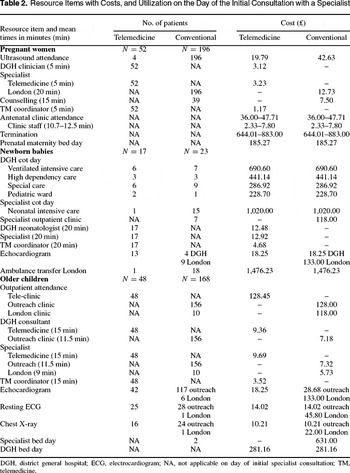
Staff time was costed using NHS salary scales (6–8) and Netten and Curtis (24), and pro rated according to the mean number of minutes for completing relevant tasks. NHS ambulance trusts provided costs for transferring babies, taking account of distances traveled when making return journeys between hospitals, and time spent waiting (16). A hospital with a retrieval team provided staffing and equipment costs for a neonatal transfer team. Because the distances from the hospitals to London varied by 30 miles, a weighted cost for an ambulance transfer was derived. Postcode data were used to calculate mileages of car journeys made by patients when attending hospital (22), and motoring costs were applied to the mileage (1). The main resource items with costs and patient utilization on the day of the initial specialist consultation are shown in Table 2.
Analytical Perspective
A cohort approach was adopted for the economic analysis, whereby the costs (mean and 95 percent confidence intervals [CI]) of patients referred by means of telemedicine from all four hospitals were compared with the costs of patients referred conventionally over 15 months. Three sets of mean costs per patient were generated: the initial consultation with a specialist, 14 days inclusive of the initial consultation, and a maximum period of 6 months or, for women, until admission before delivery.
Two NHS cost analyses are presented. The primary analysis compares the alternative referral methods for all patients, and for each of the three patient groups. The secondary analysis focuses on the two hospitals that had access to the telecardiology service for 12 months and established regular, although different, usage patterns. Family costs associated with hospital visits are also presented. A sensitivity analysis assesses the likely impact on costs if a telemedicine service in a hospital is shared with other users.
The statistical packages of S-PLUS and Stata Version 8 (28;29) were used to explore differences between referral methods using Kruskal–Wallis test, t-tests, Chi-squared tests, and Fisher's exact tests. All statistical tests were two-sided. A p value of ≤ .05 was considered to be statistically\break significant. As the distributions of the patient costs were skewed, bias adjusted nonparametric bootstrapping, taking 5,000 iterations of the data, were performed to generate CIs around the means (20).
RESULTS
Over the 15-month period, 504 new patients were assessed by specialists, of whom 117 (23.2 percent) were referred by means of the telemedicine service. However, during the periods when the service was available to the individual hospitals (Table 3), more than half of the 206 patients who became eligible for the new service had a teleconsultation (56.8 percent, 117 of 206). Within the patient groups over 15 months, telemedicine was used for 52 of 248 women, 17 of 40 newborn babies, and 48 of 216 older children.

Demographic and Clinical Attributes
Statistically significant differences were observed only among the women. The telemedicine women were younger by an average of 3.4 years, no one was pregnant with twins, and most had a high risk of conceiving a fetus with congenital heart disease (11) (78.8 percent, 41 of 52: Chi-squared test, p < .001). The purpose of most referrals (telemedicine 90.4 percent, 47 of 52; conventional 81.1 percent, 159 of 196) was to screen the fetus rather than to confirm a suspected anomaly. With the babies, although no statistically significant difference was observed, 34.8 percent (8 of 23) of the London transfers had symptoms suggestive of critical congenital heart disease compared with 11.8 percent (2 of 17) of the telemedicine babies (p = .234). The two groups of children were similar in age, mean 4.4 years (standard deviation [SD] 5.2) for telemedicine users and 5.1 (4.5) for clinic attendees, and most children were asymptomatic (telemedicine 79.2 percent, 38 of 48; clinic referrals 67.9 percent, 114 of 168; p = .344).
Outcome of the Specialist Assessment
A fetal diagnosis of severe or moderately severe congenital heart disease was made for four telemedicine women and thirty-three women seen in London, and there was no statistically significant difference in the referral methods used for the women diagnosed in this way (p = .126). There was no significant difference either in the outcomes for the children: three quarters were assessed for heart murmurs (40 seen by means of telemedicine and 126 in clinics; p = .227) and most were normal or had self-correcting congenital heart lesions (telemedicine, 90.0 percent (36 of 40); outreach, 81.7 percent (103 of 126); p = .218). Not surprisingly, 41.7 percent (20 of 48) of the telemedicine children and 44.6 percent (75 of 168) of the clinic attendees were discharged immediately. Patterns of care for the newborn babies were significantly different. Among the twenty-three babies transferred directly to a cardiac center, nine (39.1 percent) were returned to their referring hospital for medical management, whereas fifteen (88.2 percent) of the seventeen telemedicine babies remained in the district units (Fisher's exact test, p = .007).
Health-Related Quality of Life
The EuroQol EQ-5D instrument (4) was completed by twenty-six women assessed by means of telemedicine and eleven who traveled to London from the hospitals in Gillingham and Colchester. The EQ-5D mean (SD) tariff of .72 (.22) for the London travelers, derived from five physical and psychological dimensions, was significantly lower than the tariff for telemedicine women of .86 (.14) (Kruskal–Wallis, p = .031). Parents of children referred from the four hospitals completed either an English translation of the QUALIté de vie du Nourrisson (QUALIN) instrument for infants between 4 and 24 months of age (18;19) or the Pediatric Quality of Life Questionnaire (PedsQL™ Generic Core Scales version 4.0 [31;32]) for older children. Twelve telemedicine children had a slightly better, although not significantly better, quality of life than forty-six clinic attendees.
Analyses of NHS Costs (Table 4)
All Referred Patients
No statistically significant difference was found in the mean NHS cost for all 504 patients using the alternative referral options in any time period, although the telemedicine service was always more costly.

Pregnant Women
Assessments of women by means of the fetal telecardiology service, which was only used in Gillingham, were significantly more costly, but the cost of the technology of £131.68 per referral (see Table 1) accounted for most of the difference. The comparative 14-day mean costs were relatively similar. Over the months until delivery, care experienced by the telemedicine cohort bordered on being significantly more costly (p = .052). However, there were wide variations in the frequencies (and numbers) of antenatal visits made by women and prenatal inpatient admissions in all four hospitals, which resulted in large variations in their costs as reflected in the large standard deviations at 6 months.
Newborn Babies
The mean cost for teleconsultations involving babies was significantly cheaper, because only one baby incurred the additional cost of an ambulance transfer later the same day. The London-referred babies spent an average of 5.5 days receiving specialist care, at a cost per neonatal cot day of £1,020, in the 13 days after their transfer. Nevertheless, the mean cost per telemedicine baby over 14 days was not significantly lower. After 6 months, telemedicine remained the cheaper option.
Older Children
Teleconsultations for children were significantly more costly than clinic attendances because of the costs of the technology. The mean 14-day cost for the telemedicine cohort was also significantly higher, even though nearly 90 percent of the children assessed remotely were either discharged immediately or booked for a follow-up appointment. This mean cost of £834 (95 percent CI, £487–£2,187) included an outlier who received emergency treatment valued at over £15,000, but even when the patient was excluded, the 14-day cost for the cohort remained significantly higher (£508, 95 percent CI, £454–£581; p = .009). After 6 months, there was relatively little difference between the referral strategies, telemedicine being cheaper.
Telemedicine Service Costs in Two Hospitals
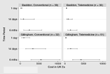
The telemedicine service was used over 12 months for babies and children in Basildon and for women and babies in Gillingham. Figure 1 indicates the magnitude of the hospitals' mean patient costs for the three time periods. In each hospital after 6-months follow-up, the telemedicine mean was lower than the mean for conventional referrals, although the cost differences were not statistically significant. The higher costs for Gillingham generally were attributable to neonatal case severity in the Level III unit.

Bootstrapped mean cost per patient for conventional referrals and telemedicine referrals in Basildon hospital, covering newborn babies and older children, and Gillingham hospital, covering pregnant women and newborn babies. Dots, mean costs; brackets, 95 percent confidence intervals.
Family Costs
The median cost of hospital visits, inclusive of travel, incidental expenses, and any loss of income, for six Gillingham women who journeyed 35 miles to London was significantly higher than the median cost for twenty-six women who attended the local hospital where their ultrasound scan was recorded for telemedicine transmission: £50.36 (interquartile range [IQR], £38.00–£77.20) versus £12.59 (IQR, £2.52–£15.60; Kruskal–Wallis, p = .002). Local visits were mostly completed within 2.5 hours compared with 5.5 hours for London visits. Children usually traveled by car to the four district hospitals for either an outreach clinic appointment or a teleconsultation, so the median costs were similar: £8 (IQR, £5–£12) for sixteen telemedicine families and £6 (IQR, £3–£16) for fifty clinic families. A median of 2.5 hours was spent on the visits by both groups of families.
Sensitivity Analysis
In Colchester hospital, the telemedicine equipment was installed in a central suite and made available to other users. In 2004–05, the suite was used once or twice a week for cancer network teleconferences, with approximately 10 cases discussed each session (R. Emslie, personal communication). For the sensitivity analysis, the costs of the telemedicine service were shared among the eleven cardiac children who used the service (Table 3) and 300 cancer cases. After adding the telephone charges for the cancer network to the observed costs of setting up and operating the telemedicine service, the re-attributed service cost per child was £18.94. According to this scenario, the mean cost of the eleven teleconsultations was slightly lower than the mean for 48 consultations in the hospital's outreach clinics: £240 (95 percent CI, £178–£515) versus £268 (95 percent CI, £168–£712; p = .901).
DISCUSSION
The economic evaluation was designed as an observational study with four hospitals randomized as “early” or “delayed” users of the telecardiology service. Uptake of the service was slower than anticipated and for fewer numbers of referrals. So, instead of comparing the telemedicine cases from the “early” hospitals with the conventionally referred cases from the “delayed” hospitals as originally intended, a cohort approach was adopted for the primary analysis whereby the attributes and costs of patients referred by means of the telemedicine service were compared with patients referred conventionally over 15 months. Williams et al. (38) observed that conventional methods for conducting biomedical research, such as randomized controlled trials, may not be suitable for evaluating telehealthcare systems because of the emergent nature of these systems and their uncertain impact on organizational and professional structures.
Telemedicine patients were generally in a better state of health, although no statistically significant difference in the presenting clinical circumstances was observed. The patient cost results over 6 months for babies and children also indicated that the telemedicine cohorts had lower utilization levels of NHS hospital resources, although not significantly so, than the conventionally referred cohorts. The district clinicians, when deciding on the methods of referral for their patients, may have been influenced by the relatively short distances of 35 to 65 miles between their hospitals and London, even though emergency teleconsultations were easily arranged, particularly on weekdays. Our equivocal 6-month cost results differ from those of a randomized controlled trial of a telemedicine (virtual outreach) service for routine outpatient consultations in two NHS hospitals, in which the virtual outreach 6-month mean cost was significantly greater than the standard outpatient clinic cost (15). The virtual outreach system linked primary care physicians with consultants in eight specialties by means of personal computers and ISDN-2 lines (15;34).
In both projects, the equivalent annual costs of the video conferencing systems and ISDN line rental and call charges were key resource components for the initial consultation, while the key variable for assigning these costs to individual patients was the number of consultations conducted using the systems (15). However, the extent to which the cost of the technology impacted on the overall mean teleconsultation cost for an individual hospital in our project depended upon the case mix of patients being referred in this manner. For ambulatory patients (children or pregnant women), teleconsultations were more costly. With sick babies, the converse applied: transferring a baby by ambulance to a specialist center at a cost of £1,476 was a far more expensive strategy. Sharing the technology with other users in one hospital reduced the mean teleconsultation cost for a child to £240, but the volume of additional users needed to achieve this target cost over 6 months was considerable: 300 patients over 30 hours.
For this single-specialty project, the equipment packages had to be of sufficient quality to transmit color Doppler ultrasound images of the heart for diagnostic purposes, which necessitated ISDN-6 lines. The clinical benefit of this capital investment was apparent in the outcome data from the initial consultations. Discharge rates were similar for the two cohorts of cardiac children. Only two of the forty-seven telemedicine women whose prerecorded fetal images were assessed as normal were followed up by a specialist, and all the women gave birth to healthy babies. In the area of neonatal care, the district doctors relied on the telemedicine service for problem solving; that is, when they were uncertain about the diagnosis of a heart problem or the management of a baby who was failing to thrive.
The district clinicians found learning to use the telemedicine system was less difficult than acquiring sufficient expertise in scanning the heart for remote diagnosis. It was important that trust and professional respect existed between specialists and district staff, who valued the educational benefits (36). Parents commended the telemedicine service because of its potential for reducing waiting times for appointments for children referred for screening, and its convenience for pediatricians requiring advice for patients about whom they were particularly concerned, so reducing the need for families to travel to London. As for the technology itself, patients and parents found remote consultations acceptable as long as transmission difficulties did not arise, which happened very infrequently (35).
The role adopted for the telecardiology service in the district hospitals was to supplement, rather than substitute, existing services provided from the Royal Brompton Hospital. The three hospitals that used the service for pediatric referrals continued as before to host outreach clinics. By allowing the district clinicians as providers (37), in collaboration with the specialists, to determine the roles locally for the telemedicine service, patterns in the use of the technology for perinatal and pediatric care of new and review patients were permanently established in all four hospitals.
POLICY IMPLICATIONS
For asymptomatic children, our results confirm that there are numerous patients requiring assessment with a low yield of abnormality. In the future, this workload will be best handled by training local pediatricians in the use of echocardiography as a screening tool with the back up of a telemedicine link up when uncertainty over the presence of pathology arises. Consideration should be given to introducing remote diagnostic facilities in neonatal units for triaging babies for specialist care. Teleconsultations would provide diagnostic confirmation in infants with questionable heart disease, thus avoiding costly ambulance journeys. Most women referred for perinatal echocardiography have a normal fetus. As standards of second trimester fetal heart imaging improve, higher detection rates of equivocal and unequivocal cardiac anomalies will lead to higher rates of women journeying to fetal medicine centers for evaluation. Transmitting prerecorded ultrasound images during telemedicine sessions is an efficient and economic method of providing this important service.
CONTACT INFORMATION
Robin Dowie, PhD (robin.dowie@brunel.ac.uk), Senior Research Fellow, Hema Mistry, BA, MSc (hema.mistry@brunel.ac.uk), Research Fellow in Health Economics, Health Economics Research Group, Brunel University, Uxbridge, Middlesex, UB8 3PH, UK
Tracey A. Young, BSc, MSc, (CStat) (t.a.young@sheffield.ac.uk), Lecturer, Health Economics and Decision Science, School of Health and Related Research (ScHARR), University of Sheffield, 30 Regent Street, Sheffield S1 4DA, UK
Gwyneth C. Weatherburn, PhD (gweath01@bcuc.ac.uk), Reader in Medical Imaging, Research Centre for Health Studies, Buckinghamshire Chilterns University College, Gorelands Lane, Chalfont St Giles, Buckinghamshire, HP8 4AD, UK
Helena M. Gardiner, PhD (helena.gardiner@imperial.ac.uk), Senior Lecturer and Director of Perinatal Cardiology, Institute of Reproductive and Developmental Biology, Faculty of Medicine, Imperial College, Hammersmith Campus, Du Cane Road, London W12 0NH, UK; Honorary consultant in Perinatal Cardiology, Department of Pediatric and Fetal Cardiology, Royal Brompton & Harefield NHS Trust, Sydney Street, London SW3 6NP, UK
Michael Rigby, MD (m.rigby@rbht.nhs.uk), Senior Lecturer, Department of Pediatrics, National Heart and Lung Institute/Imperial College, Cale Street; Consultant Pediatric Cardiologist, Department of Pediatric Cardiology, Royal Brompton Hospital, Sydney Street, London SW3 6NP, UK
Giselle V. Rowlinson, MBBS (giselle72@doctors.org.uk), Specialist Registrar, Department of Pediatric Cardiology, Royal Brompton Hospital, Sydney Street, London SW3 6NP, UK
Rodney C. G. Franklin, MD (r.franklin@rbht.nhs.uk), Honorary Senior Lecturer in Paediatric Cardiology, Department of Pediatric Cardiology, National Heart & Lung Institute, Dovehouse Street; Consultant Pediatric Cardiologist, Pediatric Cardiology Directorate, Royal Brompton Hospital, Sydney Street, London SW3 6NP, UK
Funding for this study was from the Department of Health and the Charitable Funds Committee of the Royal Brompton and Harefield NHS Trust. The Health Economics Research Group at Brunel University receives funding from the Department of Health Policy Research Programme. The views expressed in the publication are those of the authors and not necessarily those of the Department of Health. We thank the staff for their generous support in Basildon Hospital, Colchester General Hospital, Southend General Hospital, Medway Maritime Hospital in Gillingham, and the Royal Brompton Hospital in London. Liz Evans, Val Asker, Sulie Anstis, Daphne Brown, and Nuala Brady-Murphy, and Tom Carter facilitated the project in these hospitals.