Anomalous origin of the left coronary artery from the pulmonary artery is an particularly rare but very serious congenital malformations, occurring in approximately 0.25% to 0.5% of patients with CHD. Reference Hoffman, Kaplan and Liberthson1 Anomalous origin of the left coronary artery from the pulmonary artery may cause progressive myocardial ischaemia, left ventricular enlargement, mitral regurgitation, ventricular arrhythmias, and even sudden cardiac arrest. Among patients with this disease, up to 90% die from left ventricular failure in the first year of life. Reference Wesselhoeft, Fawcett and Johnson2,Reference Kakou-Guikahue, Sidi and Kachaner3 With improved medical care and economic conditions, the diagnostic rate of children suffering from anomalous origin of the left coronary artery from the pulmonary artery has increased significantly, and surgical treatment has also improved in China. The purpose of this study is to report our experience with the surgical treatment of anomalous origin of the left coronary artery from the pulmonary artery with coronary reimplantation in children, with emphasis on the surgical techniques applied and time course for post-operative recovery of left ventricular function.
Patients and methods
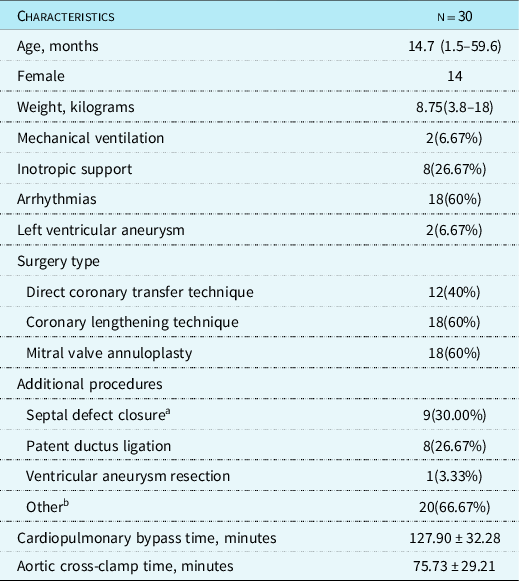
From April 2005 to December 2019, 30 consecutive patients with anomalous origin of the left coronary artery from the pulmonary artery underwent surgery at Beijing Children’s Hospital affiliated to Capital Medical University. Data were obtained retrospectively by reviewing medical records from initial admission until last cardiology follow-up. The demographic variables included sex, age, weight at surgical operation, preoperative arrhythmias, use of mechanical ventilation, and inotropic drugs (Table 1). The operative variables analysed included the type of the coronary transfer technique, mitral valve intervention, additional surgical procedures performed, duration of mechanical ventilation, duration of intensive care unit stay, post-operative complications, and discharge status. Left ventricular function was assessed by standard echocardiographic methods: ejection fraction and left ventricular end-diastolic dimension index (left ventricular end-diastolic dimension adjusted for surface area). Mitral regurgitation was graded using a semiquantitative method according to the length and maximum width of the regurgitant jet relative to the left atrium as follows: grade 0 (no regurgitation), grade 1 (mild), grade 2 (moderate), grade 3 (significant), and grade 4 (severe). Reference Samuel, Curi-Curi and Calderón-Colmenero4 Patients were then divided into an infant group (≤1 year) and a noninfant group (>1 year) for further statistical analysis, with recognition that these were two clinically distinguishable groups of patients with anomalous origin of the left coronary artery from the pulmonary artery. The study was approved by the hospital Medical Ethics Review Committee, and no personal consent is required for this study.
Characteristics of patients who underwent repair of anomalous left coronary artery from pulmonary artery

a Includes atrial septal defect and patent foramen ovale.
b One each, pulmonary artery takedown, aorta repair, pulmonary valvuloplasty with coronary ostiotomy, left coronary artery patch augmentation, and pericardial patch reconstructions. Values are n (%), median (range), or mean ± SD
There were 14 female patients in total. The median age at the time of repair was 14.7 months (range, 1.5–59.6 months). Eighteen patients were less than 12 months old. Seventeen patients presented with failure to thrive and clinical features of cardiac failure, and 13 patients presented with sweating with feeds, and 9 patients presented with an asymptomatic murmur. Cardiomegaly, defined as a cardiothoracic ratio greater than 0.55, was observed in 22 (73.33%) patients. Echocardiography with colour Doppler was used to diagnose anomalous origin of the left coronary artery from the pulmonary artery and associated lesions (Table 1). Multidetector computed tomography angiography was performed to confirm the diagnosis.
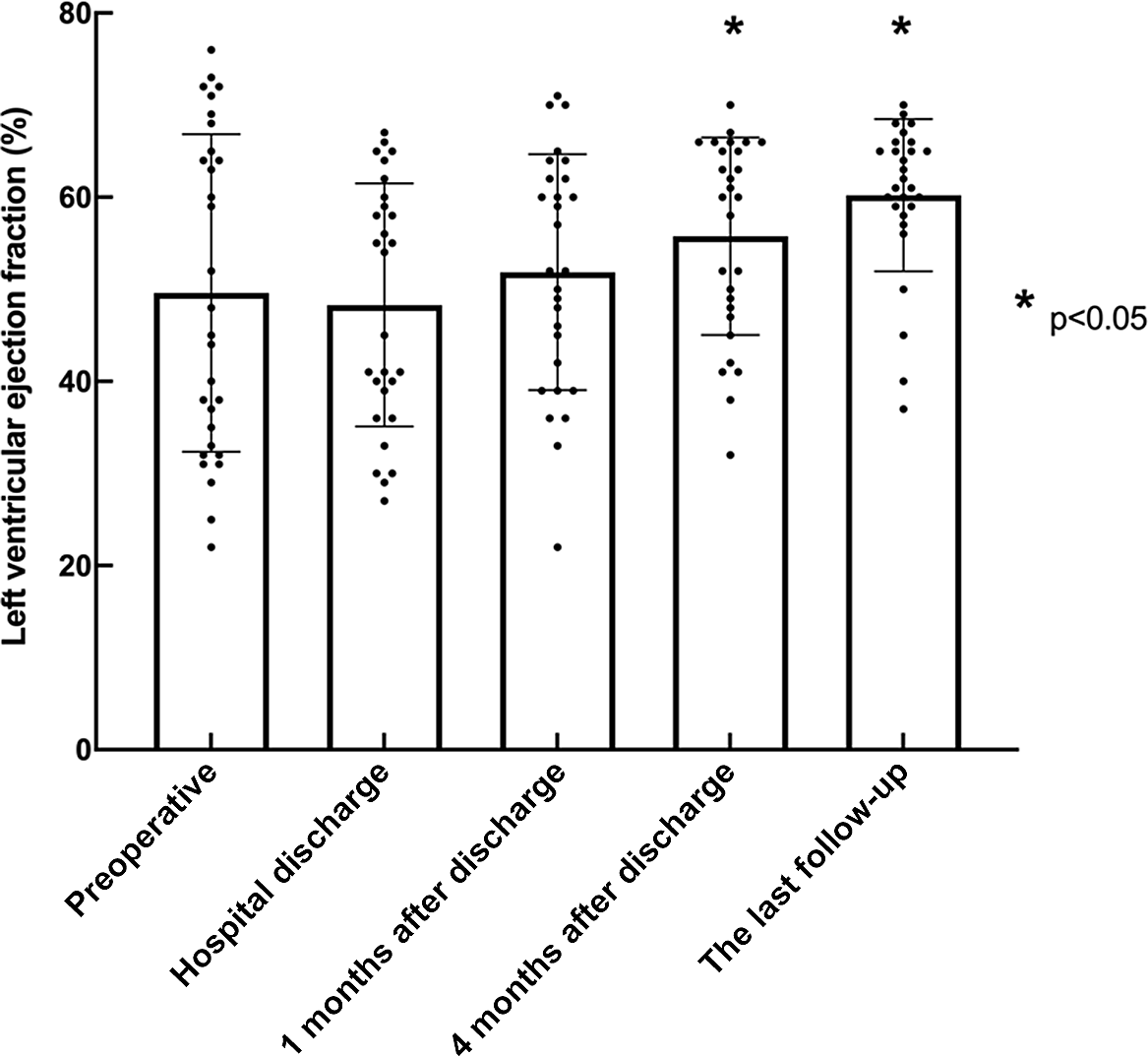
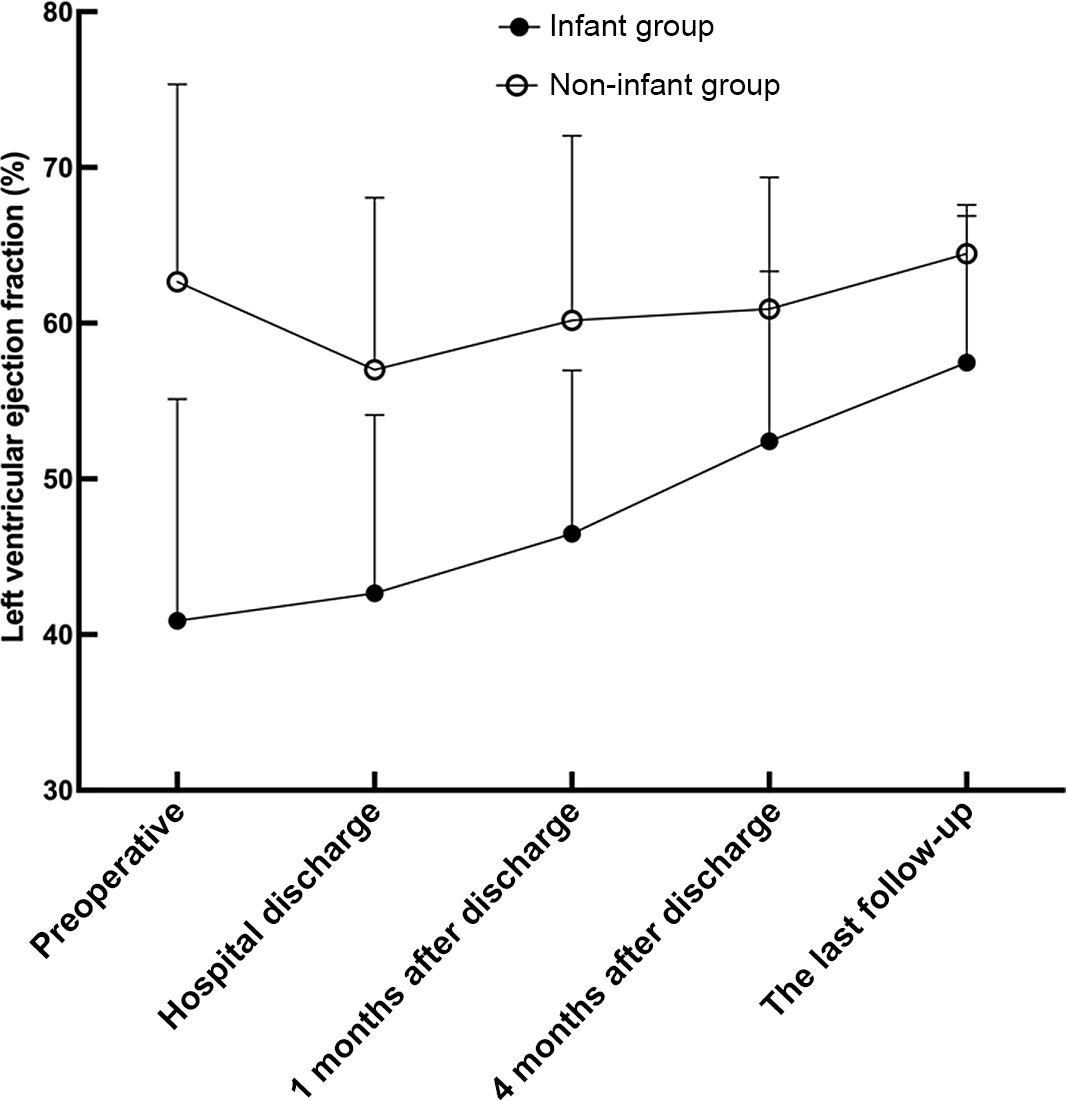
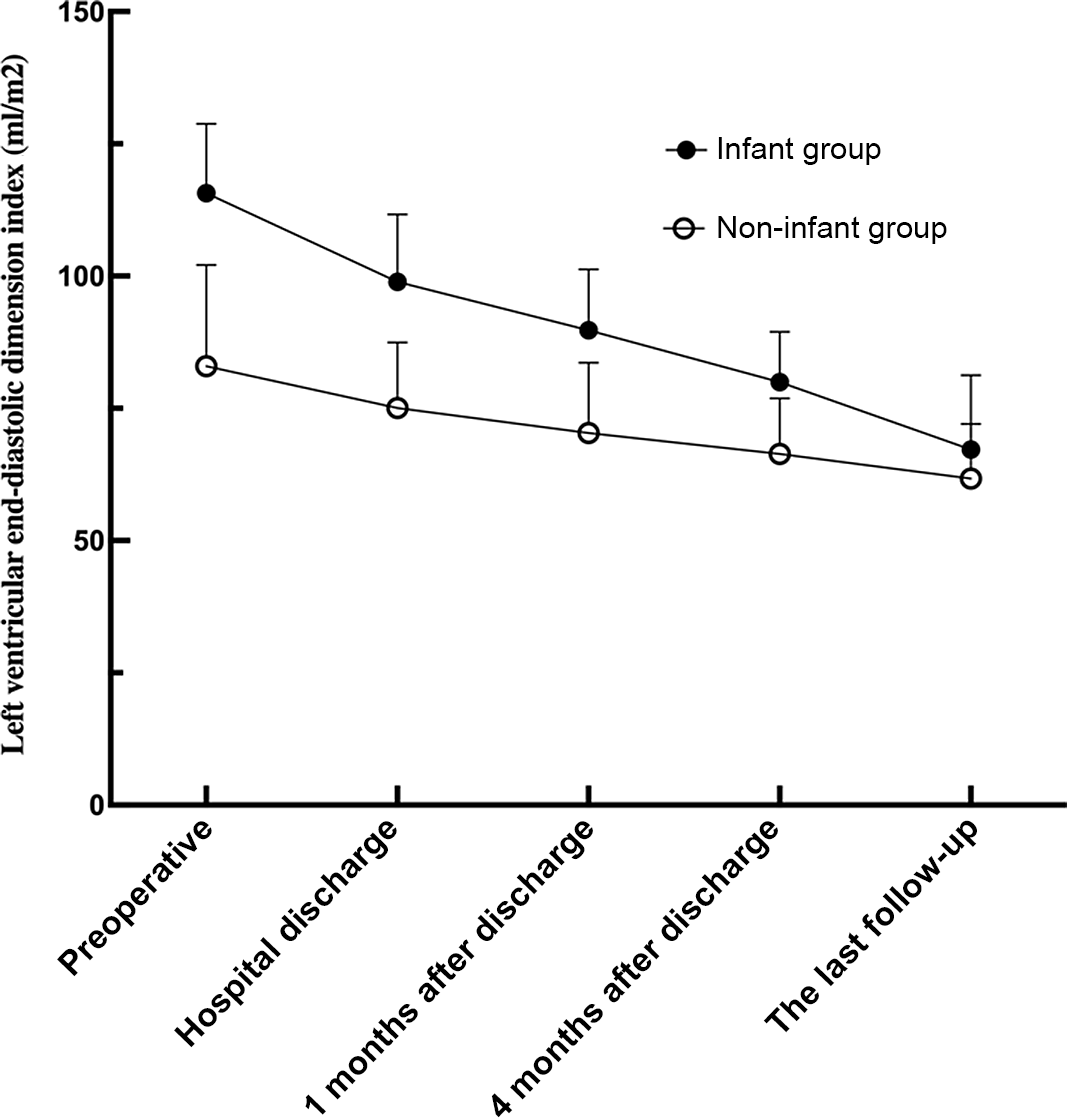
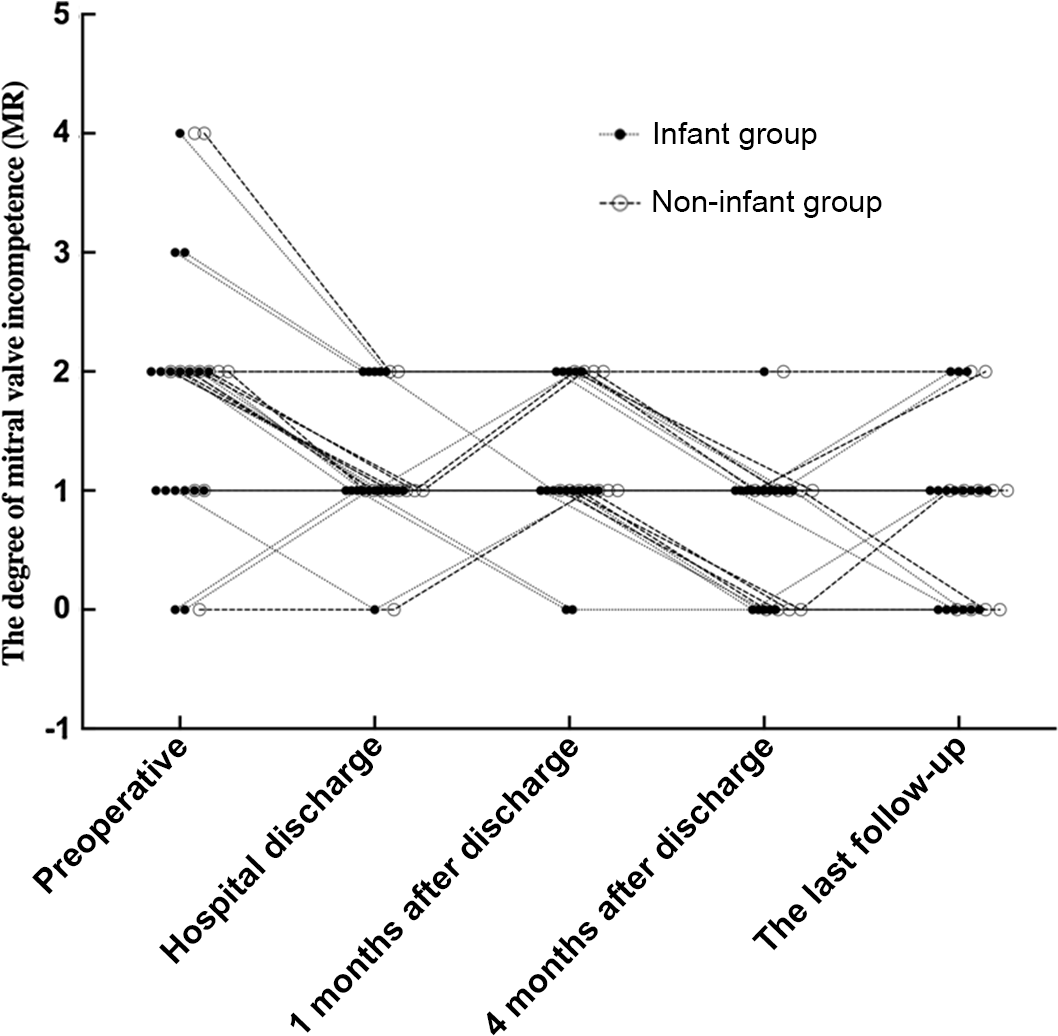
All patients were examined by echocardiography before the operation. The preoperative ejection fraction of the left ventricle ranged from 22% to 76%. Left ventricular ejection fraction was severely impaired (≤30%) in 3 patients, impaired (31%–40%) in 10, mildly impaired (41%–50%) in 3, and normal (≥51%) in 14 (Fig 1). The preoperative mean left ventricular end-diastolic dimension index was significantly higher (115.68 ± 13.09 VS 82.99 ± 19.13, p < 0.01) and left ventricular ejection fraction was significantly lower in the infant group than in the noninfant group (40.89 ± 14.23 VS 62.67 ± 12.67, p < 0.01) (Figs 2 and 3). The preoperative degree of mitral regurgitation was grade 0 in 3 patients, grade 1 in 8, grade 2 in 14, grade 3 in 2, and grade 4 in 3. Therefore, preoperative moderate to severe mitral valve incompetence was detected in 19 patients (63.33%) (Fig 4). Preoperatively, 2 patients (6.7%) required mechanical ventilation, and 8 (26.67%) received inotropic support (Table 1). Early mortality was defined as death within 30 days of the operation or during initial hospitalisation. Any subsequent deaths were defined as late mortality.
Longitudinal assessment of left ventricular ejection fraction (LVEF) and corresponding p values are depicted.

Outcomes of left ventricular ejection fraction between infant group and non-infant group at repair.

Outcomes of left ventricular end-diastolic index between infant group and non-infant group.

Outcomes of mitral valve (MV) between infant group and non-infant group at repair.

Surgical technique
All patients’ operations were performed by median sternotomy, including bicaval cannulation and cardiopulmonary bypass with moderate hypothermia (rectal temperature 20°C to 30°C). The left ventricle was decompressed through drainage of the right superior pulmonary vein. After cardiopulmonary bypass was initiated, the left and right pulmonary arteries were snared to prevent myocardial ischaemia secondary to coronary blood flow into the pulmonary arteries. The aorta was cross-clamped, and the heart was arrested with antegrade cold crystalloid cardioplegia infused into the ascending aorta and into the main pulmonary artery. If needed, additional doses of cold crystalloid cardioplegia can be directly infused into the orifice of the left or right coronary artery.
Two surgical techniques were used in our series. In our early experience, the direct coronary transfer technique was used when the anomalous left coronary artery originated from the posterior pulmonary sinus. The coronary ostium was resected with a cuff of the pulmonary arterial wall to form a coronary button. The coronary button was extensively mobilised to achieve a tension-free anastomosis. Similarly, an incision for anastomosis was made in the posteromedial wall of the aorta. When the abnormal coronary artery originated from the main pulmonary artery or the right pulmonary sinus close to the commissure with the non-facing sinus, we used a modified coronary lengthening technique, which has been described previously by Belli and Alsoufi. Reference Belli, Roussin and Ly5,Reference Alsoufi, Sallehuddin and Bulbul6 In this technique, the abnormal left coronary ostium was excised as a button together with a tongue of tissue from the anterior pulmonary artery wall. This tongue was used to form a tunnel for lengthening the left coronary artery. Then the left coronary ostium was anastomosed to the ascending aorta without tension. The resultant defect in the pulmonary artery was repaired with autologous pericardium, and the integrity of the pulmonary artery was restored. According to the perspective from the nonfacing sinus to the aorta, the pulmonary sinuses were designated right, left, or nonfacing. Reference Monge, Eltayeb and Costello7
Follow-up data collection
Recovery of left ventricle (LV) function after surgical repair was evaluated by echocardiography at regular intervals for all hospital survivors in the outpatient department. Echocardiogram data were recorded at hospital discharge, at 1 month and 4 months after discharge and at the last follow-up. Patients status at last follow-up was recorded.
Statistical analysis
Continuous variables are expressed as the mean and standard deviation if normally distributed or median and range if they had a non-normal distribution. Categorical variables are reported as frequencies with percentages and were analysed using the Pearson X2 test. The characteristics and outcomes of patients in the preoperative period vs those at the follow-up were compared using paired t tests and/or Fisher’s exact test, as appropriate. Logistic regression was used to analyse the risk factors for hospital death. A p-value <0.05 was considered statistically significant. All analyses were performed with the Statistical Package for the Social Sciences 25.0.0 (SPSS Inc., Chicago, IL, USA).
Results
Early post-operative results
Surgery was performed with the direct coronary transfer technique in 12 patients (40%) and the coronary lengthening technique in 18 (60%). All patients were able to be weaned off cardiopulmonary bypass. The aortic cross-clamp time and cardiopulmonary bypass time were 75.73 ± 29.21 and 127.90 ± 32.29 minutes, respectively (Table 1). These times were somewhat longer when coronary lengthening implantation techniques were used than when the simple direct coronary transfer technique was applied: the mean cardiopulmonary bypass duration was 111.58 ± 17.96 minutes for direct transfer vs 138.78 ± 35.44 minutes for coronary lengthening procedures (p = 0.021), and the mean cardiac ischaemic duration was 63.83 ± 17.99 minutes for direct transfer vs 83.67 ± 32.86 minutes for coronary lengthening techniques (p = 0.067). No patients received extracorporeal membrane oxygenation or left ventricular assist devices after anomalous origin of the left coronary artery from the pulmonary artery repair. The left coronary artery originated from the right-facing sinus in 18 patients, from the left-facing sinus in 6 patients, and from the main pulmonary artery in 6 patients.
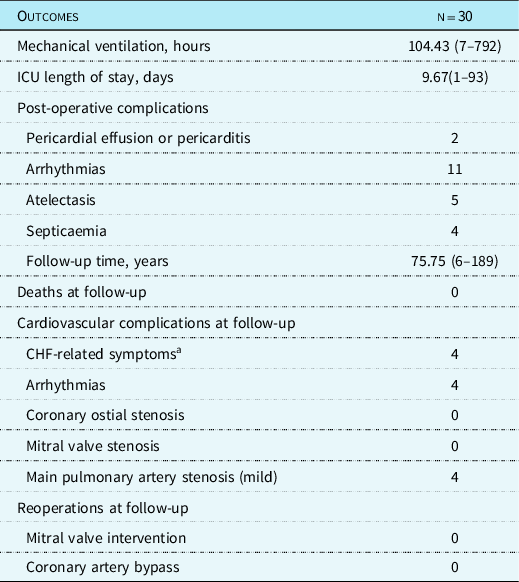
Concomitant mitral valve repair was undertaken in 12 patients, including 7 with moderate mitral regurgitation, 2 with significant mitral regurgitation, and 3 with severe mitral regurgitation. The median age of our 12 patients who underwent mitral valve repair was 14.83 months (range, 6.6 months–10.5 years), and only 6 patients were infants. There was no significant difference in aortic cross-clamp time or cardiopulmonary bypass time between patients who had mitral annuloplasty and patients who did not (87.58 ± 35.07 vs 67.83 ± 22.25, p = 0.069; 136.83 ± 37.21 vs 121.94 ± 28.08, p = 0.222, respectively). After the operation, the chest was left open in 12 patients: in 4 cases because of severe ventricular arrhythmia and in 8 cases because of haemodynamic instability that developed after temporary sternal closure. The sternotomy was closed in the ICU (mean, 4.87 days) postoperatively. One patient had severe bleeding while in the ICU and underwent rethoracotomy, and the chest was left open for 7 hours after surgery. All patients required inotropic support for 22 to 127 hours after the operation. The mean mechanical ventilation time was 104.43 hours (range, 7 to 792 hours), and the mean duration of ICU stay was 9.67 days (range, 1 to 93) (Table 2). Other post-operative complications in the hospital are also shown in Table 2.
Outcomes of patients who underwent repair of

a Includes respiratory distress, volume overload status. Values are median (range) or n (%). CHF = congestive heart failure; ICU = intensive care unit; MR = mitral valve regurgitation
There were two early deaths in the hospital. The first patient was 5 months old and had a left ventricular aneurysm before the operation. He died on the 6th day after surgery because of persistent low cardiac output, unmaintainable blood pressure, and recurring ventricular fibrillation, which was ineffective after treatment. Another patient was aged 1 year and 6 months and was admitted to the hospital due to poor spirits and appetite. After admission, he entered the ICU with respiratory failure due to poor cardiac function. After his cardiopulmonary function improved, he underwent surgery. Rethoracotomy was performed due to bleeding after the operation. The child stayed in the intensive care unit for more than 90 days, suffered irreversible brain damage and died of sudden ventricular arrhythmia, heart failure, and acidosis more than 3 months after surgery.
Late post-operative results
All the surviving patients (28) completed follow-up, with a median time of 75.75 months (range, 6–189 months). There were no late mortalities after discharge, and no patients required surgical or catheter reintervention. The overall survival rate was 93.3%. At the last follow-up, 27 of these patients presented as New York Heart Association class I, and one patient was New York Heart Association class II. All patients had patency of the proximal left coronary artery confirmed by echocardiography at the last follow-up. Because all 28 survivors are currently asymptomatic, no routine coronary angiography was performed. Cardiovascular complications at follow-up occurred in 8 patients (28.57%), arrhythmias in 4 (14.29%), and mild main pulmonary artery stenosis in 4 (14.29%, systolic gradient 8–21 mmHg) (Table 2). There were no signs of aortic valve incompetence in any patients at the last follow-up.
Changes in the ejection fraction associated with the operation in the group are shown in Figure 1. The mean preoperative left ventricular ejection fraction was 49.60%. At 1 month after discharge, the mean ejection fraction increased to 51.24%±13.00%; by 4 months, it was 55.34%±10.75%, reaching 60.10%±8.14% at the last follow-up. There was no significant difference among the values at discharge, 1 month after surgical repair ejection fraction and before the operation. However, at 4 months and the last follow-up after surgical repair, the ejection fraction increased significantly (p < 0.05 or p < 0.001, respectively) compared with the preoperative ejection fraction (Fig 1). Patients in the infant group at repair showed worse preoperative ejection fraction and better ejection fraction recovery than the non-infant group, according to repeated-measures analysis of variance (Fig 2). Moreover, three patients presented at the final follow-up with an ejection fraction less than 0.5. Paired mean comparisons showed a significant reduction in left ventricular end-diastolic dimension index at all follow-up timepoints after repair compared with the preoperative values. The reduction in left ventricular end-diastolic dimension index was more pronounced in the infant group, according to repeated-measures analysis of variance (Fig 3). Mitral regurgitation decreased both at the time of discharge (none in 2, mild in 19, moderate in 7) and at the last follow-up (none in 10, mild in 13, moderate in 5) compared with that before the operation. All outcomes of mitral valve repair are shown in Figure 4.
For these patients, age, weight, high degree of mitral regurgitation, and preoperative ejection fraction and left ventricular end-diastolic dimension index at the time of surgery did not predict mortality. Univariate logistic regression identified the presence of preoperative left ventricular aneurysm as the only independent predictor of in-hospital mortality (odds ratio, 27.00; 95% confidence interval, 0.887 to 821.790; p = 0.011); nevertheless, surgical techniques and concomitant mitral valve repair were not identified as risk factors for mortality.
Discussion
Anomalous origin of the left coronary artery from the pulmonary artery is a rare but life-threatening CHD that usually appears in infancy. Most symptoms and signs are not detected at birth because the blood pressure in the pulmonary arteries is still similar to that of the systemic circulation. A few months later, as the pulmonary vascular resistance decreases, perfusion of the ventricular wall supplied by the anomalous coronary artery is obviously damaged by a stealing mechanism, which leads to severe myocardial ischaemia and left ventricular dysfunction in the left coronary artery territory. Both papillary muscle damage and changes in the mitral annulus caused by left ventricular dilation can cause mitral valve regurgitation. Reference Dodge-Khatami, Mavroudis and Backer8
With improvements in diagnostic techniques, the number of patients undergoing surgery for anomalous origin of the left coronary artery from the pulmonary artery has increased, and these patients present at a younger age than previously reported. Reference Straka, Gauvreau and Allan9 Echocardiography can directly visualise the anomalous left coronary artery originating from the pulmonary artery with retrograde flow by two-dimensional and colour Doppler assessments. Reference Khanna, Torigian, Ferrari, Bross and Rosen10 These methods are also able to identify indirect signs of anomalous origin of the left coronary artery from the pulmonary artery, including abundant collaterals, an dilated right coronary artery, and mitral regurgitation, and may provide additional information about anatomy and haemodynamics. However, imaging the coronary arteries in uncooperative infants and children may be challenging. Misdiagnosis occurs most frequently in children, who were often diagnosed with primary endocardial fibroelastosis, coronary-pulmonary artery fistula, or dilated cardiomyopathy,etc. In our cases, there were also six patients who were misdiagnosed before admission. Consequently, for any severe or persistent decrease in left ventricular ejection fraction value, repeated echocardiography is necessary. Computed tomography angiography provides excellent spatial resolution with less examination time, and may not require anaesthesia, which may be an ideal choice for infants. At the same time, it is complex and expensive, and requires more radiation exposure. Reference Khanna, Torigian, Ferrari, Bross and Rosen10 Therefore, all patients in our group underwent coronary computed tomography angiography before surgery. Cardiac angiography and MRI can better clarify the condition of the coronary artery, collateral circulation and ventricular function but require anaesthesia. These approachs are generally recommended in our hospital when anomalous origin of the left coronary artery from the pulmonary artery is combined with other cardiac malformations or when the diagnosis is unclear.
Currently, it is widely believed that the direct implantation of an anomalous coronary artery into the ascending aorta is the best way of repairing . Reference Naimo, Fricke and d’Udekem11 However, this procedure may be difficult when the anomalous left coronary artery is far from the ascending aorta, especially in infants. In these cases, direct coronary metastasis can lead to tension imposed on the aortocoronary anastomosis, resulting in an increased incidence of stenosis and obstruction, accompanied by the risk of persistent ventricular ischaemia and post-operative cardiac arrest. Others have described methods involving the construction of a tubular extension of the coronary artery with a pulmonary arterial wall flap, a trap door technique, or a combination of both. Reference Belli, Roussin and Ly5,Reference Alsoufi, Sallehuddin and Bulbul6 Because it is easy to master, avoids extensive mobilisation and allows for a tension-free anastomosis, the coronary lengthening technique is the routine approach in our hospital when the anomalous left coronary artery arises a long way from the ascending aorta. As we have gained more experience with this technique, this technique has become our operative strategy of choice regardless of the origin of the anomalous coronary artery.
Due to mixed evidence, there are currently no standard guidelines to determine which patients can benefit from concomitant mitral valve repair during anomalous origin of the left coronary artery from the pulmonary artery surgery. Furthermore, adequate exposure of the mitral valve in a small infant may require a transseptal approach, thereby increasing ischaemic time in the damaged myocardium. Reference Kudumula, Mehta and Stumper12 Mitral valve intervention was performed in only 40% (12/30) of the patients with significant mitral regurgitation in our cases. However, 50% (6 of 12) of the mitral valvuloplasties performed were in infants. There was no significant difference in cardiopulmonary bypass time or aortic cross-clamp time between patients who had mitral annuloplasty and patients who did not. Our data also show that mild and moderate mitral regurgitation usually improves concomitantly with the post-operative recovery of LV function without valvuloplasty. Thus, our results likely reflect some variation in practices among institutions in the management of mitral regurgitation in patients with anomalous origin of the left coronary artery from the pulmonary artery . Reference Kudumula, Mehta and Stumper12,Reference Alexi-Meskishvili, Nasseri and Nordmeyer13 The decision to correct mitral regurgitation should be flexible and be based on the pathological changes of the mitral valve and the degree of mitral regurgitation. Our policy has been to repair structurally abnormal mitral valve anatomy and moderate or more severe functional mitral regurgitation. Furthermore, simultaneous mitral valvuloplasty in these cases is a reasonable way to support cardiac output during the critical post-operative period.
Children with anomalous origin of the left coronary artery from the pulmonary artery are a special population with severe LV dysfunction. The LV function of these patients often deteriorates temporarily after cardiopulmonary bypass. Therefore, when separation from the bypass is not possible, these patients are ideal candidates for extracorporeal membrane oxygenation or left ventricular assist devices. In our series, all patients were weaned off cardiopulmonary bypass successfully, and no patients received extracorporeal membrane oxygenation, which is different from the rates of post-operative mechanical support reported in several other series. Reference Straka, Gauvreau and Allan9,Reference Alexi-Meskishvili, Nasseri and Nordmeyer13,Reference Azakie, Russell and McCrindle14 One patient died due to persistent low cardiac output 6 days postoperatively and did not receive extracorporeal membrane oxygenation; however, the patient’s operation was in 2009, before the wide use of extracorporeal membrane oxygenation for post-operative cardiac support at our institution. We believe that good intraoperative protection of an already depressed ventricular function and coronary anastomosis may help avoid the use of extracorporeal membrane oxygenation even in patients with an ejection fraction value less than 30% before surgery. The use of repeated antegrade crystalloid cardioplegia with simultaneous administration to both great vessels, combined with appropriate post-operative inotropic support, may allow for favourable results in the majority of cases without the need for mechanical circulatory support. However, we still believe that extracorporeal membrane oxygenation or left ventricular assist device can be used to assist post-operative recovery of left heart function or as a bridge for heart transplantation.
There was no significant difference in mortality due to the factors of early age at operation, preoperative ejection fraction value, left ventricular end-diastolic dimension index, or an elevated degree of mitral regurgitation in our study. However, a preoperative left ventricular aneurysm is a significant risk factor for early mortality. These findings are in contrast to other investigators’ findings. Reference Straka, Gauvreau and Allan9 However, to clarify factors that influence mortality, an analysis of more cases is required, such as through a multi-institutional study. In patients undergoing anomalous origin of the left coronary artery from the pulmonary artery repair, the recovery of left ventricular function may vary depending on the efficiency of surgery and medical treatment, and it may take months or even years after the repair. A normal ejection fraction and left ventricular end-diastolic dimension index cannot fully and accurately convey the myocardial dysfunction of these patients, and it is still necessary to continuously monitor their left ventricular function. Reference Qiu, Li and Yan15–Reference Fudulu, Dorobantu and Azar Sharabiani17
In conclusion, good surgical outcomes for anomalous origin of the left coronary artery from the pulmonary artery can be achieved by re-establishing a dual coronary system. The coronary lengthening technique can achieve tension-free anastomosis with a minimal risk of distortion and seem to have a low rate of reoperation. Although the incidence of late coronary occlusion is low, the left coronary artery blood supply and left ventricular function need to be continuously monitored.
Acknowledgements
Not applicable.
Financial support
The study did not receive funding.
Conflicts of interest
On behalf of all authors, the corresponding author states that there is no conflict of interest.
Declaration of competing interest
We declare that we have no conflict of interest.