1. Introduction
After almost three decades, the WTO dispute between Mexico and the US concerning the latter's Dolphin-Safe labelling scheme for tuna has finally been resolved in the multilateral trade system. Disagreements about access to the US market for Mexican tuna technically date back to the early 1930s and have resulted in many reports crossing both the GATT 1947 and the WTO systems. This paper examines the latest instalment of that long history: the final second compliance reportsFootnote 1 on the 2008 WTO case filed by Mexico against the US complaining that the requirements for tuna to be labelled as dolphin-safe on the US market discriminated against Mexican producers. These requirements were more stringent for tuna fished in the Eastern Tropical Pacific Ocean (ETP) where the association between dolphins and tuna is particularly high and where Mexican vessels operate, thereby limiting Mexican access to the US tuna market. The targeting of the ETP was claimed problematic because scientific evidence showed that tuna fishing also presented some risks to dolphins outside of the ETP. After a first amendment in 2013 was still found to be unjustifiably discriminatory against Mexico, the US enacted a rule change in 2016 which was finally considered compliant with WTO rules. The change notably consisted of new administrative mechanisms to guarantee the dolphin-safe practices of tuna fished outside of the ETP.
According to the WTO's second compliance reports, the difference in the stringency of certification requirements for fishermen in and out of the ETP is now calibrated with the risk that tuna fishing poses to dolphins in each region, and the new rule thus adequately achieves the twin goals of protecting dolphins and informing consumers. Regarding the environmental objective, we find that the label was indeed motivated by the need to protect dolphins and the 2016 rule change does grant additional protection to the mammals. However, the WTO adjudicators should have accepted the challenge to qualify the US Dolphin-Safe labelling scheme under the principle of sustainable development, also contemplated in the Preamble of the WTO Agreement. With respect to consumer information, while the label does require more accurate information about dolphin protection, we argue that with no change to the appearance of the label or an informational campaign, the improved credibility of the label may hardly be passed-through to the average consumer and is therefore unlikely to change consumption decisions.
This paper examines the effects of the new rules for the competitiveness of Mexican tuna producers on the US market. While theoretically the rule improves access for Mexico by imposing a higher burden on its competitors, Mexican tuna producers have responded to this dispute by diversifying their export destinations rather than changing their methods to increase their US market share. Finally, we also examine the fact that in failing to support the first-ever decision to grant partially open panel meetings, the Appellate Body missed an opportunity to reinforce the transparency of the WTO system.
2. Historical Context
The US–Mexico tuna dispute dates back to 1933 when the US increased custom duties on tuna. Mexico retaliated immediately by prohibiting foreign boats from catching tuna within 12 miles of its coastline, expanding the zone to 200 miles in 1976. Following the 1980 seizure of US fishing boats operating within the Mexican exclusive maritime zone, the US imposed the first embargo on Mexican tuna until 1986.
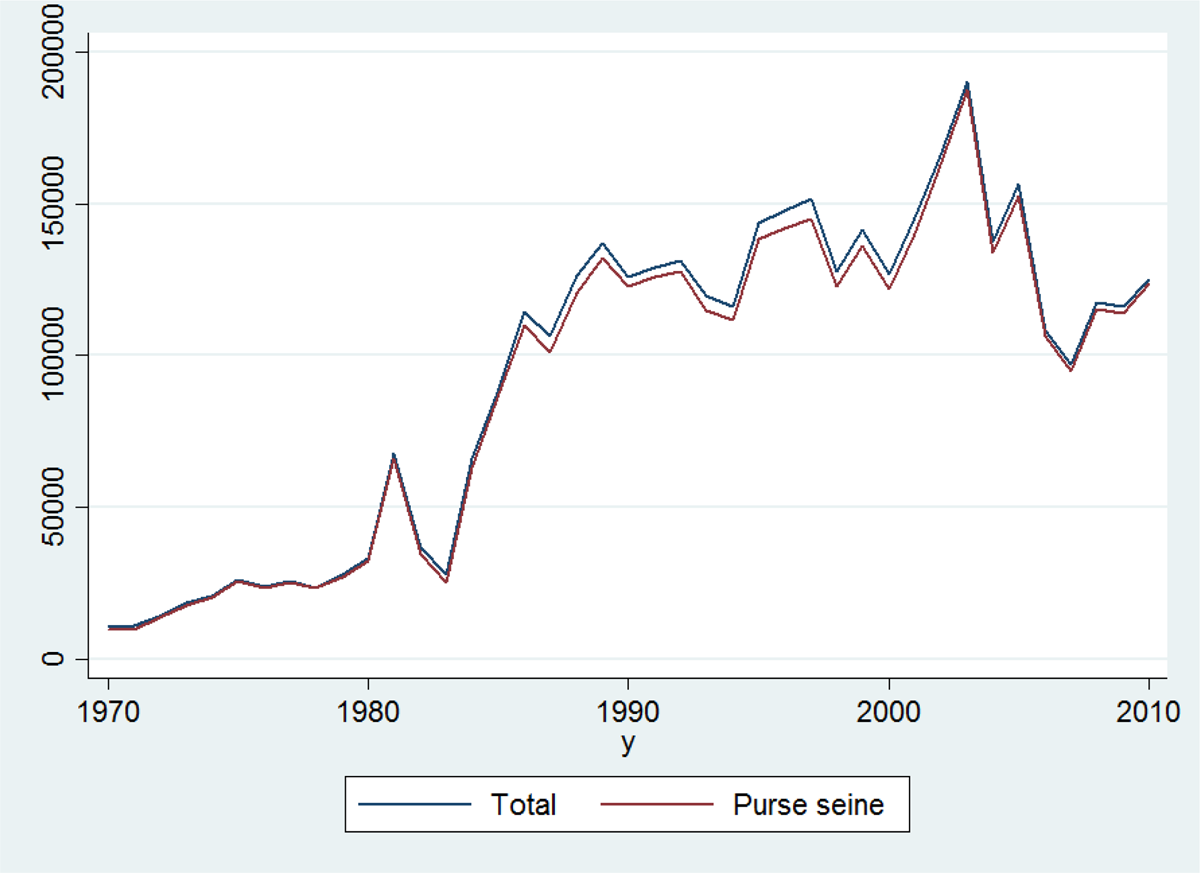
At the same time, the detrimental effects of purse-seine fishing techniques were exposed to the public through the international release of a video showing drowned dolphins in purse-seine nets. According to the Inter-American Tropical Tuna Commission (IATTC), the number of dolphin deaths reached 132,000 in 1986. Tuna fishing is particularly harmful to dolphins in the ETP, where there is a unique association of dolphins swimming below tuna so the risk of by-catch is high. The Food and Agriculture Organization (FAO) has estimated the near totality of Mexican tuna fishermen operated – and still operate – in the ETP. They catch principally yellowfin tuna, as well as some pacific Bluefin and skipjack,Footnote 2 using the purse-seine method in over 95% of cases (see Figure 1).
Mexican tuna catch by fishing technique, 1970–2010

A large consumer outcry ensued, which motivated the top 3 tuna canners to voluntarily commit in 1990 to not purchase tuna harvested using methods that endangered dolphins (USITC, 1990). Within a couple of years, most US tuna fisheries had moved to the Western Pacific where dolphin risks were much lower (USITC, 1992). And the environmental NGO Earth Island Institute (EII)Footnote 3 won a case in US courtsFootnote 4 to enforce the criteria protecting dolphins enshrined in the 1972 Marine Mammal Protection Act (MMPA).Footnote 5 This led to the US imposition of the 1990 embargo on imports of tuna fished with purse-seine nets in the ETP.Footnote 6 Concurrently, the US Congress adopted the Dolphin Protection Consumer Information Act (DPCIA),Footnote 7 codifying the requirements of the Dolphin-Safe label, the private standard devised by the EEI, to protect consumers against deceptive information by introducing sanctions against its inappropriate use. While not compelling all tuna to be labelled on the US market, the DPCIA discipline imposed a single standard of dolphin-safety.
The 1990 embargo together with the DPCIA were the subject of the first international legal dispute brought by Mexico under the GATT 1947. The ensuing 1991 Panel report, though not adopted, became one of the most famous document of international trade law. The Panel concluded that the US embargo infringed upon Article XI of the GATT 1947 and could not be justified under Article XX of the GATT 1947. The result provoked strong feelings within the US environmental community who criticized the multilateral trade system for not dealing with non-trade values. The decision notably considered dolphin-safe and non-dolphin-safe products as comparable, a result rejected by the empirical evidence on consumer demand (Crowley and Howse, Reference Crowley and Howse2014). This comparability also opened the thorny issue of whether the non-product related process and production methods (NPR-PPMs; Conrad, Reference Conrad2011; Marceau, Reference Marceau, Prévost, Alexovicova and Hillebrand Pohl2018) should be considered when assessing products likeness or justifying obstacles to trade under the GATT general exceptions clause. Despite the 1991 Panel Report being considered a huge victory against the US embargo, Mexico never asked the GATT 1947 Council to adopt the Report. The Report, in fact, also found the original Dolphin-Safe labelling scheme as compatible with Article I:1 of the GATT 1947 – but it should be noted that it was not challenged at that time the voluntary nature of the labelling scheme. Mexico nevertheless understood that US consumer preferences leaned strongly towards Dolphin-Safe labelled tuna so that, even with the embargo revoked, Mexican tuna would be difficult to sell in the US.
Yet, instead of changing fishing methods, Mexico engaged in intensive negotiations to modify the definition of dolphin-safety from ‘no encirclement of dolphins’ to ‘no dolphin mortality or serious injury’, which happened in the 1995 Panama Declaration.Footnote 8 Within the Agreement on International Dolphin Conservation Programme (AIDCP),Footnote 9 the 2001 AIDPC scheme was then adopted, allowing for tuna to be considered as dolphin-safe independently of the fishing method, provided that the capture did not involve mortality or serious injury of dolphins as observed by independent experts on board of the vessels.Footnote 10
In 1997, implementing its new international obligations, the US lifted the embargo and committed to extend the Dolphin-Safe label to the future AIDPC scheme.Footnote 11 Subsequent to the scientific reports of the National Oceanic and Atmospheric Administration (NOOA), which the US administration considered as positive for dolphin-safety, the Secretary of Commerce was willing to broaden the use of the label to Mexican tuna. However, the EII intervened again by challenging the NOOA reports in domestic courts for being scientifically weak and incomplete. The famous Hogarth ruling, issued in 2007, concluded to ‘vacate the Secretary's Final Finding of no adverse impact’, with the consequence that ‘[w]ithout such a finding, the agency [was] without Congressional authority to change the qualifications for labelling tuna as dolphin-safe’.Footnote 12
Therefore, Mexican tuna products could indeed enter the US market, but still had no access to the label, which meant they struggled to compete on the US market since by 1992 virtually all canned tuna sold in the US was dolphin-safe.Footnote 13 In 2008, Mexico hence filed a WTO request for consultations with the US, claiming that the Dolphin-Safe labelling scheme was incompatible with the Marrakech system, thus starting the WTO case recently resolved.Footnote 14
2.1 The Original AB Report and the TBT Agreement
The litigation brought before the multilateral arena contributed to the landmark WTO jurisprudence on the interpretation of key concepts and rules of the TBT Agreement, until then almost unexplored by WTO case-law. Beyond the DPCIA, Mexico attacked its implementing regulationsFootnote 15 and the Hogarth ruling, underlining the ‘significant commercial value’ of the Dolphin-Safe label for tuna products sold on the US market.Footnote 16 The AB indeed found that the US label, in spite of being voluntary, was in reality a binding technical regulation since dolphin-safety declaration was allowed in the US only by fulfilling DPCIA requirements.
The AB then identified two main objectives of the US Dolphin-Safe label – (a) consumer information, and (b) dolphin protectionFootnote 17 – considering that they both fell into two of the legitimate objectives listed in Article 2.2 of the TBT Agreement – in particular ‘the consumer information objective … within the broader goal of preventing deceptive practices, and … the dolphin protection objective [within the purpose of preserving] animal life or health or the environment’.Footnote 18 These two objectives are in line with economic theory which considers government intervention – such as the Dolphin-Safe label – as justified in the case of a market failure, i.e. when the outcome of the free market does not yield the most efficient allocation of resources. In this context, the regulation aims to fix two market failures: the environmental externality in the form of dolphin deaths from purse-seine fishing techniques, and incomplete information since it is difficult for consumers to obtain information about the production processes of the goods they consume.
In identifying these two goals, the AB implicitly settled the sensitive issue of the admissibility of NPR-PPMs into the scope of the TBT Agreement. Mexico argued that since NPR-PPMs are not linked to the final composition of tuna products, they could not be justifiable under Article 2.2 of the TBT Agreement, and that the US rule ‘coerce[d] another WTO Member to change its practices to comply with a unilateral policy of the United States’.Footnote 19 Applying the same logic as in the US–Shrimp case,Footnote 20 the AB replied that the mere fact that a WTO Member adopts a measure requiring the exporting country to comply with its domestic policy is inherent in any technical regulation and may involve a burden on trade, which has to be tolerated under the conditions established also by the TBT Agreement.Footnote 21
The AB also rejected the Mexican claim that the US Dolphin-Safe discipline was unnecessary under Article 2.2 of the TBT Agreement because the AIDPC scheme should have been considered as sufficient to preserve dolphins in the ETP zone. The WTO Tribunal found, on the contrary, that the AIDPC scheme ‘would allow more tuna harvested in conditions that adversely affect dolphins to be labelled “dolphin-safe”’,Footnote 22 hence impeding both the consumer information and dolphin protection objectives of the US legislation.
The AB however concluded that the Dolphin-Safe label did infringe Article 2.1 of the TBT Agreement. It considered that tuna captured with or without setting on dolphins were like products, and the US legislation unjustifiably discriminated among like products because the ‘less favourable treatment’ for ETP tuna did not ‘stem … exclusively from a legitimate regulatory distinction’ since it did not ‘address mortality (observed or unobserved) arising from fishing methods other than setting on dolphins outside the ETP’.Footnote 23
2.2 The 2013 Final Rule and the First Compliance Proceedings
In the 2013 Final Rule,Footnote 24 the US amended the implementing regulations of the DPCIA by maintaining the requirements for ETP vessels to keep an independent observer on board the ship to certify that no dolphins were killed or injured during the trip, and adding a requirement that ships outside the ETP have the captain certify not only that ‘no purse-seine net was intentionally deployed on or used to encircle dolphins during the same fishing trip’, but also that ‘no dolphins were killed or seriously injured in the sets in which the tuna was caught’.Footnote 25 However, the observer certification was still not systematically required for non-ETP tuna. In a non-ETP fishery, the observer certification was necessary only where the National Marine Fisheries Service (NMFS) Assistant Administrator had determined that a regular and significant association occurred between dolphins and tuna, similar to the association in the ETP. In the other cases, for tuna caught outside the ETP, the observer certification was generally required only ‘when the observer is [already] on board the vessel for other reasons’.Footnote 26
It was because of this different treatment that the Appellate Body concluded in the first compliance report that the 2013 amendments moved the US discipline towards compliance but were still WTO incompatible. In fact, the Appellate Body found ‘the existence of risks outside the ETP large purse-seine fishery that are comparably high to the risks existing in the ETP large purse-seine fishery’,Footnote 27 and consequently the different treatment with reference to the requirement of the observer certification for declaring dolphin-safety was not calibrated to those risks, infringing Article 2.1 of the TBT Agreement, as well as the chapeau of GATT Article XX.
2.3 The 2016 Tuna Measure and the Second Compliance Proceedings
On 23 March 2016, the US adopted further modifications to the implementing regulations of the DPCIA,Footnote 28 again strengthening dolphin protection outside of the ETP. In particular, the rule change took into consideration the first compliance WTO adjudicators finding that ‘captains, in comparison to observers, do not necessarily and always have the technical skills required to certify that no dolphins were killed or seriously injured’.Footnote 29 Under the new 2016 Tuna Measure, the captains of the vessels in all non-ETP fisheries now have to certify that they have completed the Tuna Tracking and Verification Program Dolphin-Safe Training Course.Footnote 30 The observer certification requirement was also expanded beyond the 2013 Rule – a determination by the Assistant Administrator of regular and significant association between dolphins and tuna in a certain non-ETP fishery – to include also situations when the US official has established that ‘a regular and significant mortality or serious injury of dolphins is occurring’Footnote 31 in the non-ETP zone. While still requiring different conditions for declaring the dolphin-safety of tuna coming from ETP or non-ETP zones, the second compliance AB report concluded that the 2016 Tuna Measure is compatible with the WTO system, as the detrimental impact on Mexican products now originates exclusively from a legitimate distinction, mirroring the different risks for dolphin welfare characterizing the different tuna fishing methods and the various fishery areas.
The analysis of the 2016 Tuna Measure by the second compliance adjudicators is an application of the legal methodology previously developed to establish whether the original Dolphin-Safe label violated Article 2.1 of the TBT Agreement. Therefore, there are no new developments on the very much debated interpretative TBT standards (see Coglianese and Sapir, Reference Coglianese and Sapir2017; Crowley and Howse, Reference Crowley and Howse2014; Mavroidis, Reference Mavroidis2019), or on the concept of like products. Both the 2017 Panels and the 2018 AB reports reached the conclusion that under the new US legislation, better consumer information and dolphin protection is now achieved through the improved administrative mechanism of certification and monitoring of dolphin-safety outside the ETP.
In the next sections, we examine whether the 2016 rule change does indeed improve consumer information and dolphin protection, discussing notably the only two new legal issues handled in the second compliance proceedings, i.e. the Mexican effort to enlarge the scope of the parameters through which evaluate the WTO legitimacy of the 2016 Tuna Measure, and the transparency decision of authorizing a partially open panel meeting. The answers provided, in particular by the Appellate Body, on these two novel aspects luckily do not have negative effects on the overall positive result of the evaluation of WTO compatibility of the 2016 Tuna Measure, but they are nevertheless problematic from the perspective of the WTO legal framework, and consequently require to be considered.
3. The Environmental Angle
3.1 Protecting Dolphins
Evidence that tuna fishing using the encircling technique leads to dolphin deaths is clear. Any measure that attempts to reduce this negative externality – i.e. an effect on third parties that is not taken into account in market decisions – would therefore be a positive outcome from an environmental perspective. The motivation behind the US label appears to have been the previously discussed consumer outcry and NGO advocacy for dolphin protection from the 1980s and 1990s. The label was aimed at forcing fishermen to internalize the societal costs of dolphin deaths not only for US fishermen but also trying to distort foreign markets through the imposition of the same rules on the imports of tuna.
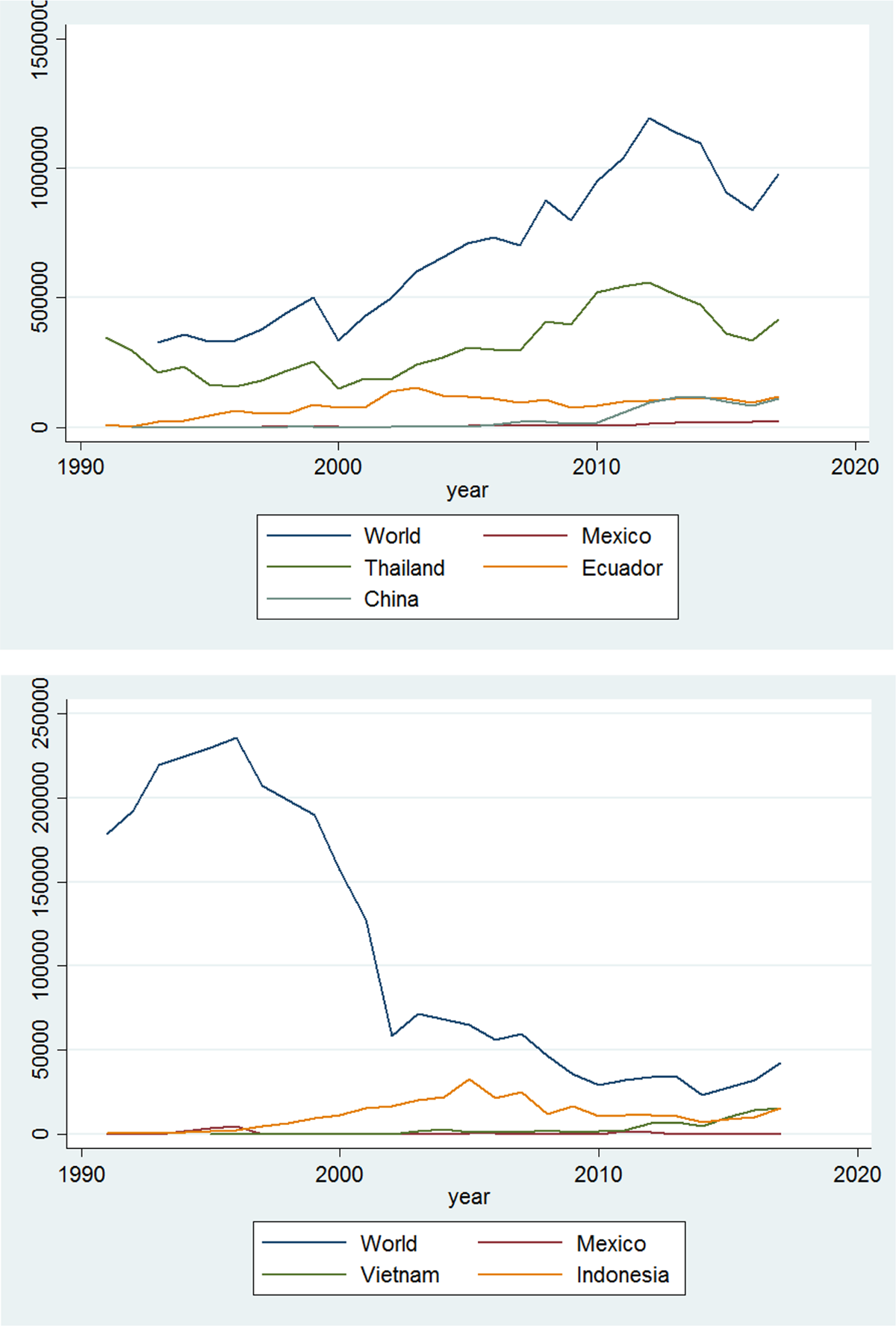
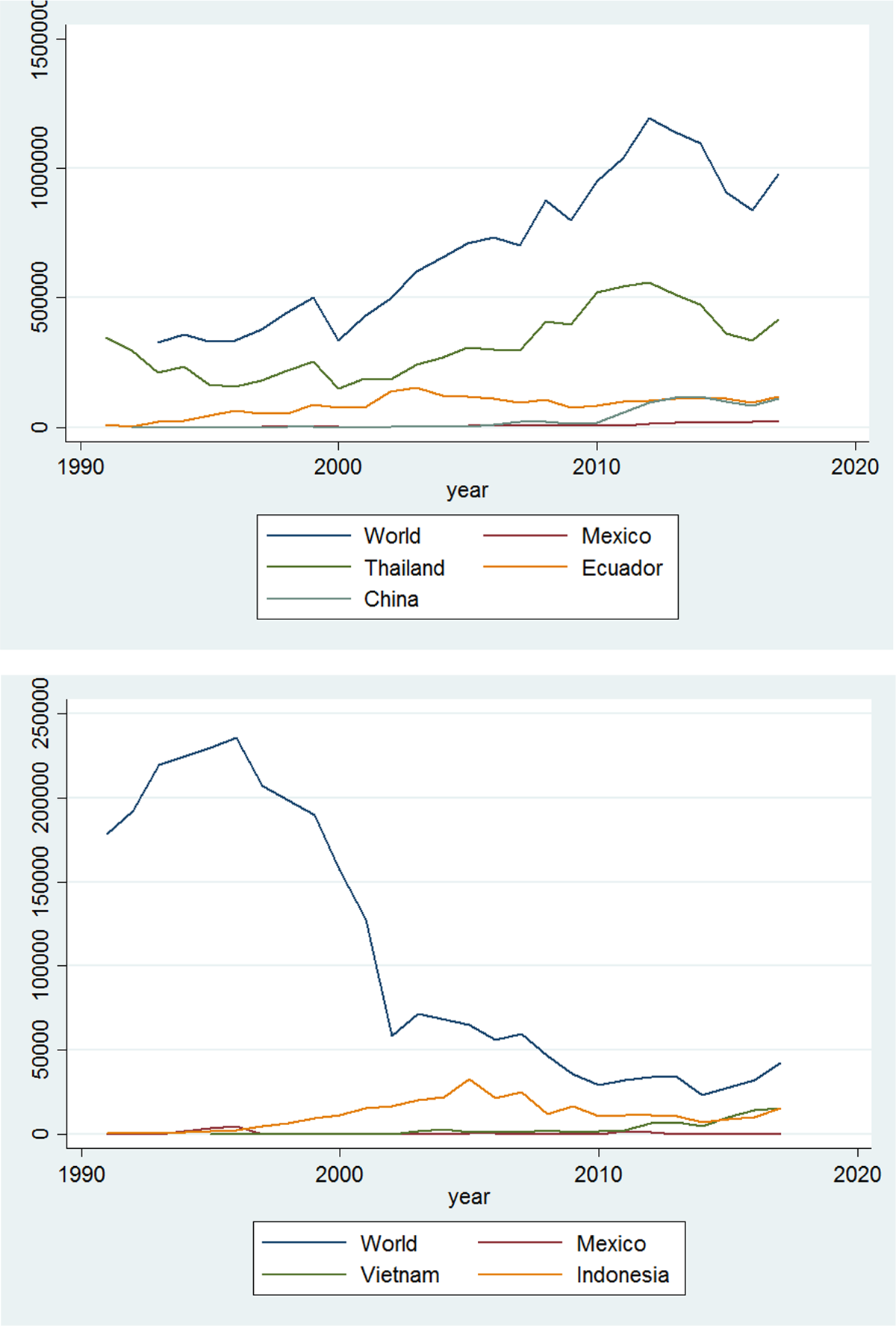
It is possible that environmental goals were not the sole motivator for this regulation. Applying the rule to extra-territorial fishing could be both environmental and also protectionist. However, the small market share of Mexico in the US does not lend credibility to the US government imposing the dolphin-safe regulation for protectionist purposes. As shown in Figure 2, in the early 1990s the Mexican share of US imports of prepared tuna is near zero and, although it increases in the following years, the share remains below 3% in 2017. The main suppliers of prepared tuna in the US are Thailand – which is also the top supplier on the world market – Ecuador and China. Mexico is therefore facing strong competition for access to the US market.
US imports of processed (a) and frozen (b) tuna from select countries, 1991–2017
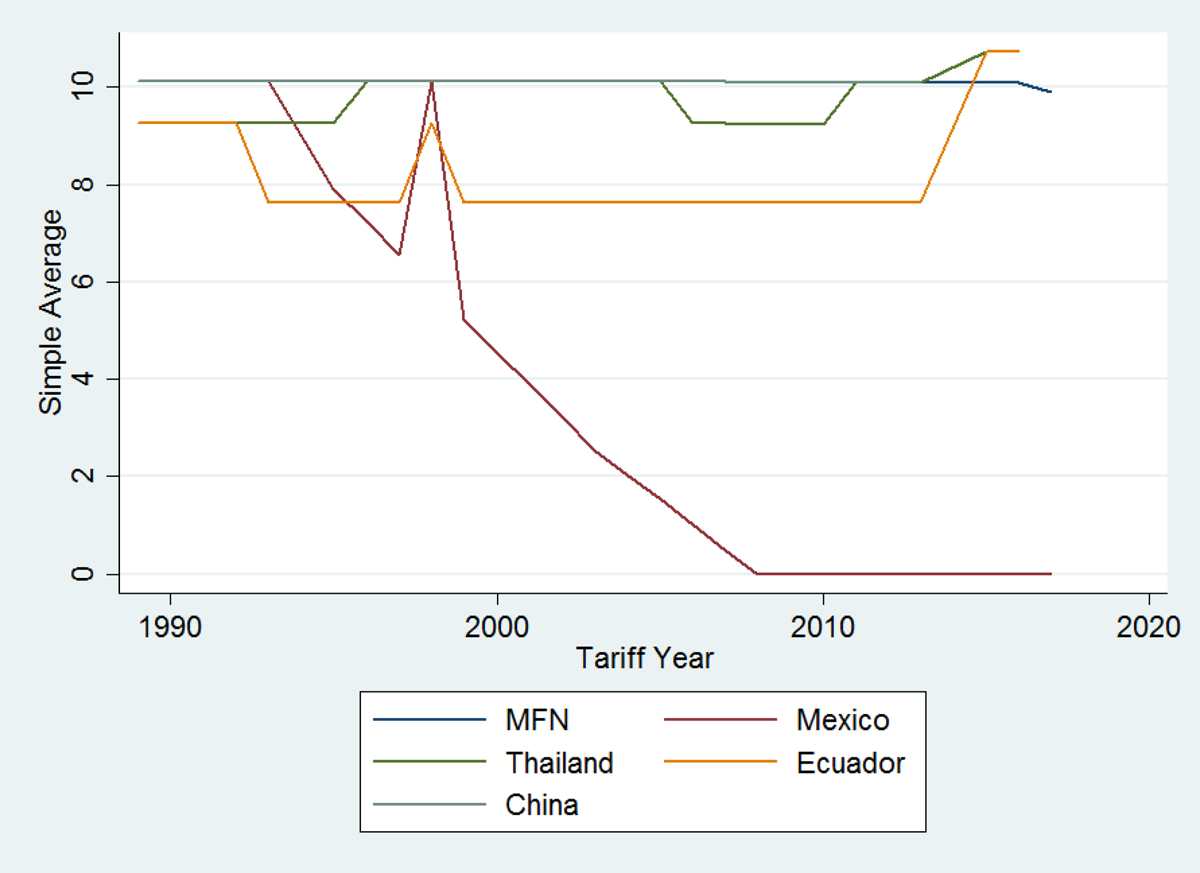
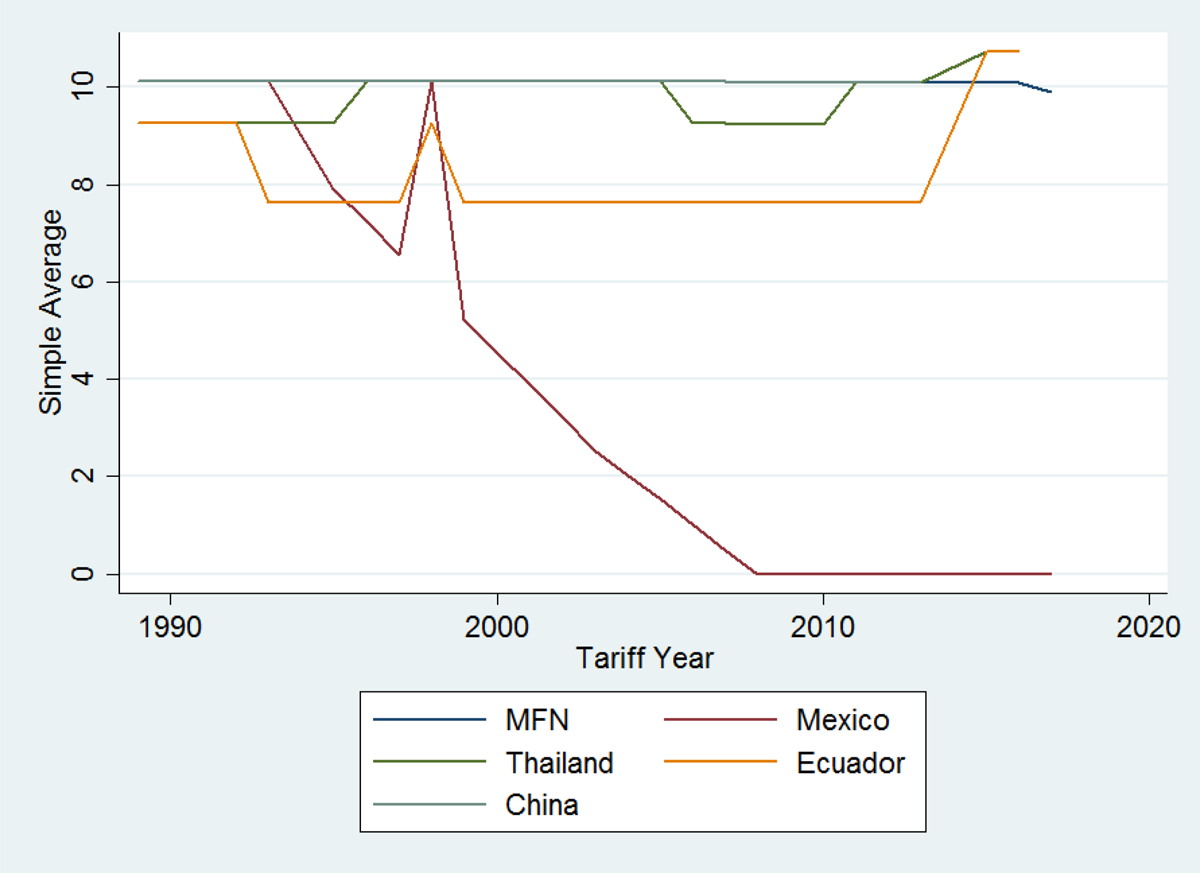
Nonetheless, in the early 1990s Mexico was negotiating the North American Free Trade Agreement, which grants preferential market access between Mexico, the US, and Canada. Figure 3 shows the evolution of US tariffs on prepared tuna from the top exporters to the US – Thailand, Ecuador, and China as described above – and Mexico. As opposed to the other countries, tariffs on Mexican prepared tuna decreased significantly in the late 1990s and in the 2000s, reaching a rate of zero in 2008. This planned preferential access to the US market for Mexican exporters could have led to trade diversion with Mexico gaining a larger share of the US market. At the time, Mexico was leading the tuna industry in Latin America and believed to have the second largest purse sein fleet after the US (USITC, 1990). Fear of Mexican production gaining a large advantage due to lower tariffs could have been an impetus for US producers to seek protection in other forms, for example through environmental standards.
US tariffs on prepared tuna from select partners, 1993–2017
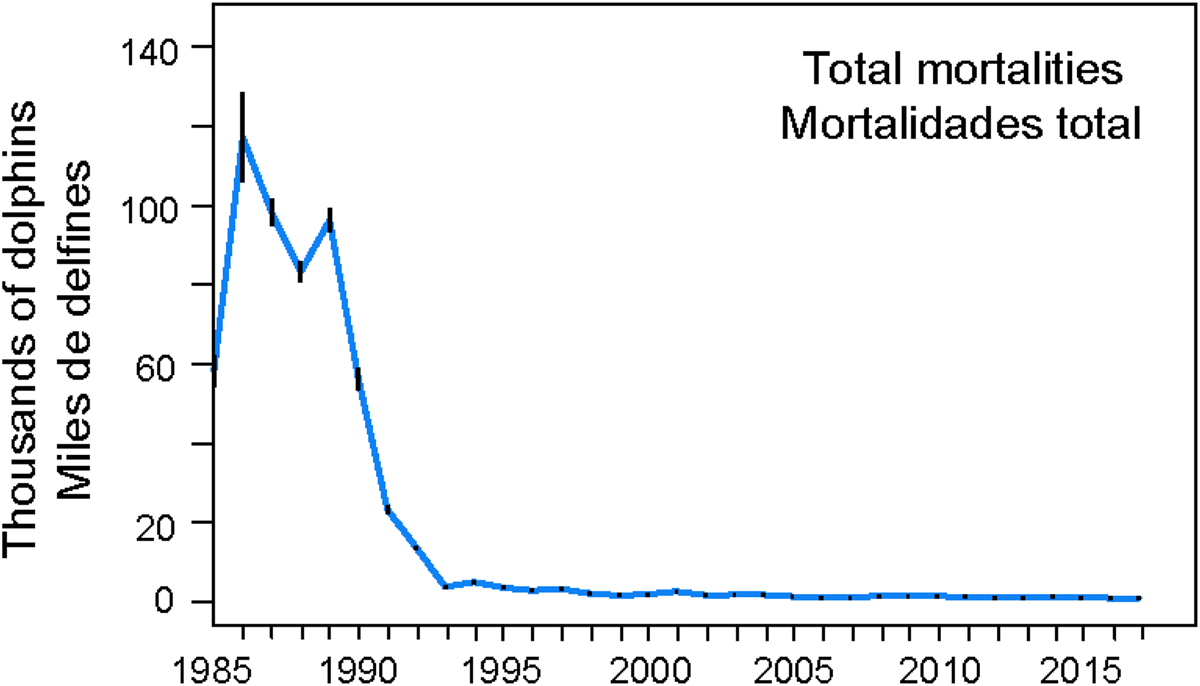
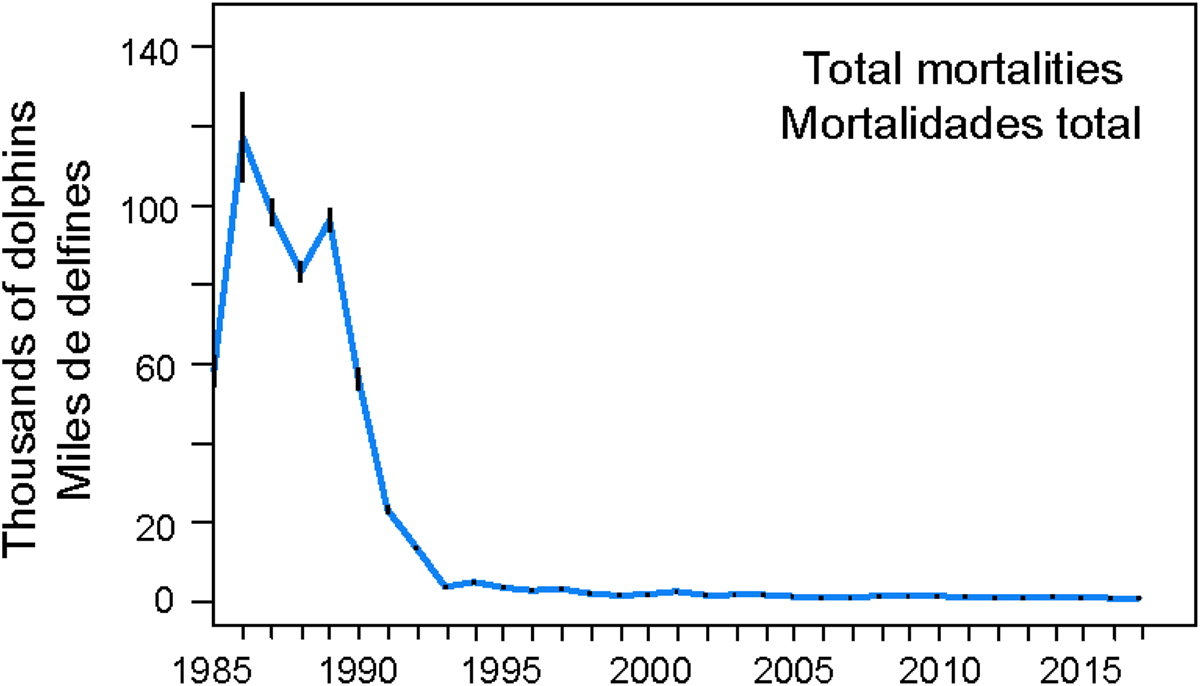
However, this does not put into question that the primary motivation of the label was environmental and that even with protectionists goals, the label still has environmental consequences. According to the IATTC, the number of dolphin deaths decreased sharply around the implementation of the label, from a high of 132,000 in 1986 to a low of 683 in 2017 (see Figure 4). It is difficult to know how much of this decline should be attributed to the label given other concurrent events – for example the consumer boycott of the late 1980s (USDA, 2001) – but it likely contributed in part. Rather than withdrawing the contested measure or amending it in a way more favorable to Mexican producers, to comply with WTO rules the US continued to reinforce the protection of dolphins in the 2013 and 2016 rule changes, particularly expanding the protection to zones outside of the ETP.
World dolphin mortality, 1985–2017
3.2 The Broader Principle of Sustainable Development
Faced with US authorities committed to strengthening the rules, in the second compliance proceedings Mexico changed a part of its legal strategy, trying to convince the WTO adjudicators that the purpose to be fulfilled by the 2016 Tuna Measure went beyond the two legitimate objectives of consumer information and dolphin protection. Mexico argued that the US measure had also to ‘be interpreted consistently with the objective of sustainable development’,Footnote 32 claiming that for the WTO legitimacy of the US measure, also its sustainability for ‘fisheries and … the overall marine ecosystem’ had to be demonstrated, without which the Dolphin-Safe label requirements would remain incompatible with the TBT Agreement.Footnote 33 The US rightly pointed out that by so claiming, Mexico was ‘“forced to substantially change the objectives of the 2016 measure” and transform the dolphin-protection and consumer information objectives of the measure into labelling requirements that relate to “the sustainability of tuna stocks and of the marine ecosystem generally”’.Footnote 34
The Panels stated: ‘we do not consider that the 2016 Tuna Measure is concerned with sustainable development. Rather, it is concerned with the protection and well-being of dolphins’.Footnote 35 However, as for example indicated by Goal 12 of the UN 2030 Agenda for Sustainable Development,Footnote 36 devoted to ‘[e]nsure sustainable consumption and production patterns’, the protection of a natural resource – as dolphins – is a sustainability issue, similarly to consumer information, the other target of the Dolphin-Safe label. The WTO adjudicators should have simply stated, as done by the US before the DSB, that the 2016 Tuna Measure is ‘an environmental measure’,Footnote 37 to be assessed only in the light of its two sustainability purposes of dolphin protection and consumer information, and not the universal sustainability target indicated by Mexico.
Furthermore, they should have recalled what was stated in the first compliance Panel report – and accepted by Mexico since it did not appeal this finding – with reference to the scope of Article XX(g) of the GATT 1994. In fact, the first compliance Panel concluded that
nothing in either the ordinary meaning of the term ‘conservation’ or Appellate Body jurisprudence indicates that conservation under subparagraph (g) of Article XX covers only measures that have as their primary goal the conservation of dolphins on a population-wide scale. To the contrary … the preservation of individual dolphin lives is just as much an act of conservation as is a program to encourage recovery of a particular population. Indeed … there is an essential and inextricable link between the protection of dolphins on an individual scale and the ‘replenishment of [an] endangered species’, for it is only through protecting individual dolphins that a population itself can be protected, replenished, and maintained. Accordingly … the fact that the amended tuna measure is more concerned with the effects of tuna fishing on the well-being of individual dolphins rather than on the state of a particular dolphin population, considered globally or statistically, does not in itself negate the nexus between the measure and the goal of conserving exhaustible natural resources.Footnote 38
Nor was the situation fixed by the Appellate Body. Assessing the Mexican argument, the WTO Tribunal should have underlined that the US measure did not aim at preserving the entire marine environment, but, more humbly, at protecting individual dolphins during fishing operations. Such contained purpose of the Dolphin-Safe label does not diminish its conservation – and thus sustainability – nature, as we have just seen in the above reported paragraph of the first compliance Panel report. The WTO Tribunal decided not to examine whether the US measure infringed Article 2.1 of the TBT Agreement because it did not realize the very large purpose of sustainability for tuna stocks and, more generally, the overall marine ecosystem, a purpose claimed by Mexico, but never characterizing the Dolphin-Safe labelling scheme. However, the AB should have gone further, and clearly qualify the 2016 Tuna Measure as a sustainability discipline, fully respecting the principle of sustainable development, while refusing to use such a principle, already considered as ‘one of the objectives of the WTO Agreement’,Footnote 39 in the manner proposed by Mexico, i.e. to indefinitely and unpredictably enlarge the aims on the basis of which to evaluate the WTO legitimacy of a domestic measure.
Besides being too cautious on the sustainability nature of the US measure, the Appellate Body unfortunately made some erroneous statements on the value of the Preamble of the WTO Agreement (enshrining the objective of sustainable development) for the legal framework of the multilateral trade system. It stated, in fact, as follows:
[w]e consider that the preamble of the WTO Agreement may also inform interpretations of the covered agreements in appropriate circumstances. In this regard, the Appellate Body has found that the preamble of the WTO Agreement ‘add[s] colour, texture and shading’ to the interpretation of the covered agreements … Thus, while the preamble of the WTO Agreement does not itself create substantive obligations, it can provide important context for the interpretation of the covered agreements, for example, by shedding light on the kinds of policy objectives a Member may pursue.Footnote 40
The AB incorrectly considered the function of the preamble in the interpretation of a treaty, and erroneously read the paragraph quoted from its land marking report in the US–Shrimp case. In fact, pursuant to the international customary rules for treaty interpretation, codified in Article 31, paras. 1 and 2, of the Vienna Convention on the Law of Treaties, an agreement ‘shall [not may or can!] be interpreted in good faith in accordance with the ordinary meaning to be given to the terms of the treaty in their context and in the light of its object and purpose’, having in mind that the ‘context’ of a treaty ‘includ[es] its preamble’, i.e. that part of an agreement usually disclosing the purpose and mission assigned by the contracting parties to the treaty. Correctly implementing such international binding criteria of interpretation in the famous US–Shrimp case, the appellate judges stated in 1998 that ‘[t]he preamble of the WTO Agreement … informs not only the GATT 1994, but also the other covered agreements’,Footnote 41 where the indicative time of the verb ‘inform’ expresses a duty, as opposed to the optional language used in the US –Tuna II above reported paragraph (‘may inform’ or ‘can provide’). Moreover, such a duty to take into consideration the WTO Preamble and the objectives therein stated is to be observed not only ‘in appropriate circumstances’ as declared in the recalled contested paragraph of the second compliance appellate report: ‘this preambular language – rightly observed in 1998 the WTO Standing Tribunal– reflects the intentions of negotiators of the WTO Agreement … [and thus] must add colour, texture and shading to [the] interpretation of the agreements annexed to the WTO Agreement’.Footnote 42 Such a mandatory treaty interpretation perspective is hence constant, not linked to any circumstances.
4. Consumer Information
For the regulation to be effective in protecting dolphins, consumers must choose to not purchase tuna caught with harm to dolphins, which encourages companies to use dolphin-safe methods in order to sell more. Once the effect of tuna fishing practices on dolphins was known of consumers through the video in the 1980s, some developed a preference for tuna fished without the unnecessary harm to dolphins. However, to act on that preference consumers need to have information about how the tuna is fished. For an individual to collect information on where the canned tuna brand sources their tuna and the fishing practices of the company providing the raw tuna would be very costly. The preference consumers have is on a characteristic of the product that is unobservable at the time of purchase. The regulation attempts to fix this issue by providing consumers with the information through a label.
In theory, labeling could affect consumer choice by both increasing the number of attributes a consumer must consider, and by potentially changing the weights the consumer assigns to each attribute. Despite the abundance of food labels related to the health and environmental benefits of products, literature documenting the effectiveness of these labels is still relatively scarce. Studies have been more successful at estimating consumer response to nutritional labels, but these differ from eco-labels as nutritional labels provide information about the characteristics of a products, while eco-labels inform consumers about the production process of that good (Teisl et al., Reference Teisl, Roe and Hicks2002).
The question of whether environmental food labels are effective does not yield a clear answer. A large part of this ambiguity comes from the difficulty of assessing consumer's attitudes towards eco-labelled products (Muller et al., Reference Muller, Lacroix and Ruffineux2019). Many studies use Contingent Valuation methods which survey consumers about their willingness-to-pay to avoid environmental damages. These surveys famously suffer from a variety of biases. For example, consumers are asked to state hypothetical amounts to help a specific environmental cause but they sometimes inflate these amounts superficially or deflate them to zero – ‘protest zeros’ – to pass along a message about how much they care about the environment more broadly. Moreover, the way and order in which the amounts are presented to the consumers can also make significant differences to their willingness to pay. On the other hand, observational studies are much more difficult to find. A large share of them focus on valuing the organic label (see, for example, Onyango et al., Reference Onyango BM and Bellows2007; Wier and Calverley, Reference Wier and Calverley2002). These studies however are not able to distinguish between the consumer's valuation of the label's environment benefits or health benefits, and thus confound the two into a single number. As a result of the above limitations, many studies have focused on the experimental methods, but here again there are mixed results about whether or not consumers pay a premium for eco-labeled goods. Marrette et al. (Reference Marette, Messean and Millet2012) find a premium for organic apples, but Muller et al. (Reference Muller, Lacroix and Ruffineux2019) conclude that labelling on emissions does not affect the price across a basket of goods.
An additional challenge to measuring the consumer response to the US Dolphin-Safe labels is that after the regulation there are essentially no unlabeled canned tuna products in the US (Johnston, Roheim, and Donath, Reference Johnston, Roheim and Donath2001). As a result Teisl, Roe, and Hicks (Reference Teisl, Roe and Hicks2002) attempt to measure the effect of the regulation by comparing the demand for canned tuna before and after the regulation took place. Using retail level data on canned tuna and 3 substitutes (luncheon meats, other canned seafood, and canned red meat), the authors estimate a demand system which takes into account quality characteristics, prices, income, and how informed consumers are about the label. In particular, the model controls for the media coverage of the tuna– dolphin issue, the timing of the aforementioned ‘viral’ video, and a diffusion function which accounts for the delay in information propagation as well as the fact that it may have taken time for consumers to trust the information provided by the label.
The results suggest that, in the early 1990s, canned tuna sales declined significantly. This decrease cannot be entirely attributed to media coverage of dolphin by-catch, and can instead reflect changing consumer preferences or a decrease in the quality of canned tuna due to the dolphin-safe criteria which leads to fishing smaller tuna, a point we return to in the next section. Concurrently, the sales of substitutes such as luncheon meats increases. The label does appear to have contributed to the subsequent increase in tuna market share, though it did take time for consumers to either obtain or learn to trust the information.
The above studies focus, due to data constraints, on relatively short-term effects. However, the label was first implemented in 1991 and we are interested in the economic effects 28 years later. Other works have shown that the price premium for goods with eco-labels can wane over time as the supply of labeled products becomes more abundant (Udomkit and Winnett, Reference Udomkit and Winnett2002). In fact, an ITC report explains that the price premia regularly observed for organic products can be explained by the small number of suppliers and the organization predicts a fall in prices as the number of suppliers rises (ITC, 2003).
Moreover, the label in itself matters only in as much as the population knows what information is embodied in said label. The 2016 rule change strengthened the certification, tracking, and verification, as well as the determination provisions that can impose stricter requirements to regions beyond the ETP. As such, it should provide more credible information to the consumers and thus may improve consumer confidence in the label. However, the question remains about whether the consumers are aware that the information embodied in the label is now more credible.
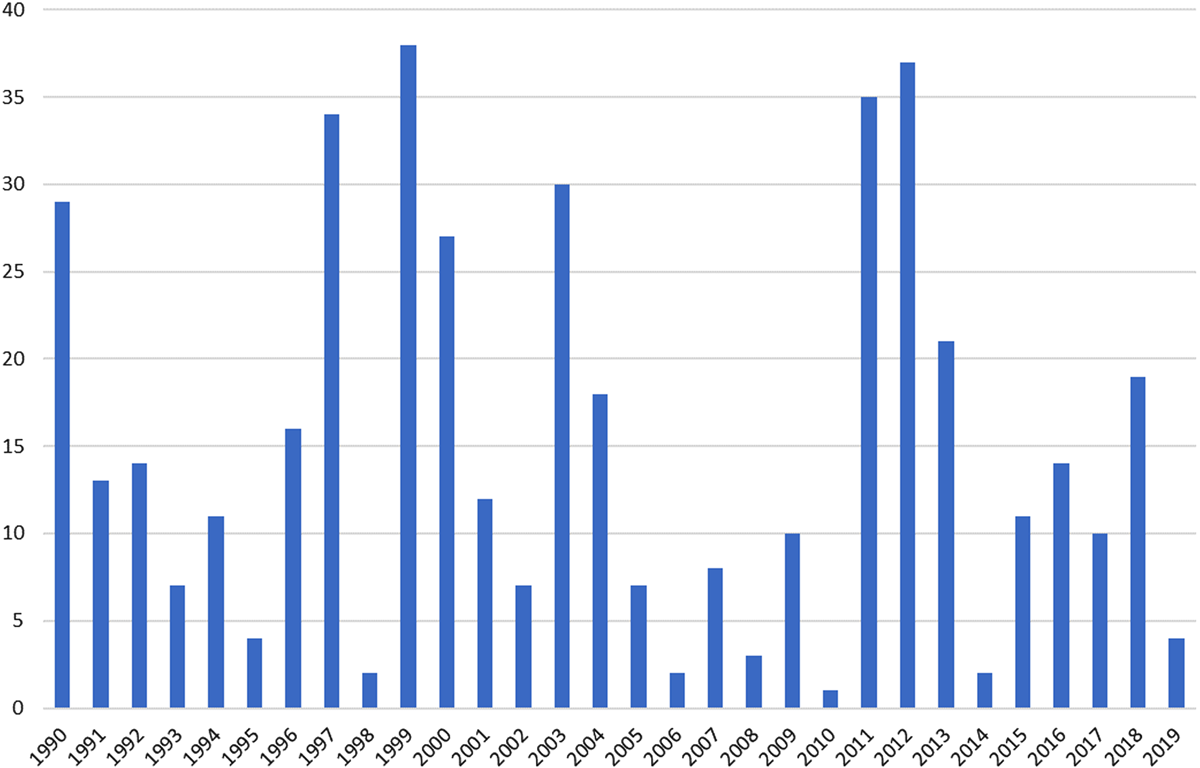
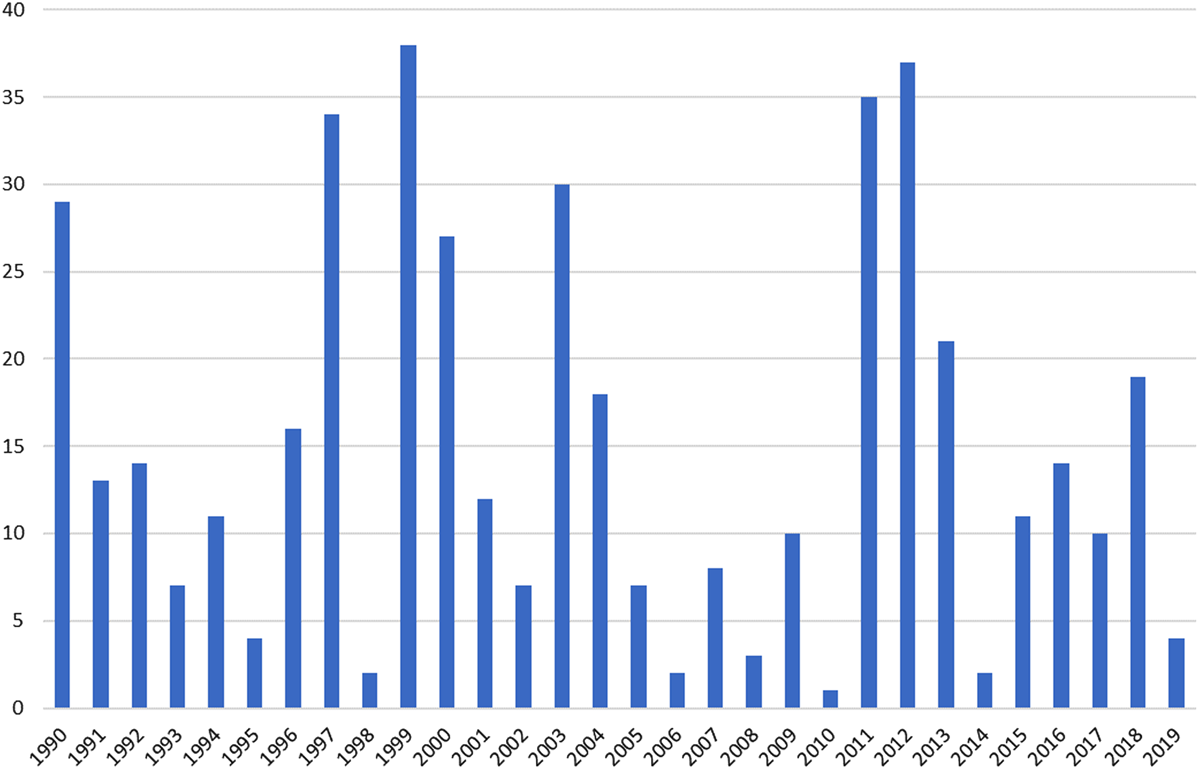
Two elements bring this into question: the label has been in operation for nearly three decades, and virtually all canned tuna sold in the US is labeled. The average consumer might therefore be used to seeing the label on tuna cans, making its presence inconspicuous. Additionally, a search on Factiva for dolphin-safe tuna shows that media coverage of the last two WTO reports (2017 and 2018) fell by more than half compared to coverage of other major events until 2013 (Figure 5). Therefore, it is not clear that the consumers are truly aware of the added credibility of this label.
Media coverage of ‘dolphin-safe tuna’, 1990–2019
It should also be noted that the Dolphin-Safe label is the one and only label allowed. There are benefits to having a single label in terms of simplifying the information for the consumers. However, the downsides are that either firms satisfy the conditions of this label or they are not able to provide any other information about their techniques. The label therefore only provides limited information.
In sum, while the 2016 rule change does embody new information more calibrated to the risk to dolphins by WTO standards, we would argue that information is not salient because the label, which has not been aesthetically changed, is a long-standing feature of the vast majority of tuna cans and most consumers are not aware of the additional credibility of the label. As a result, it is doubtful that the average consumer will change their consumption behavior as a result of this rule change. To be sure, there is a group of consumers deeply invested in the safety of dolphins that are informed on the latest developments, but they appear to be highly dubious of the credibility of the label. Indeed, just a few months after the final WTO report a group of US consumers announced a class action suit against three major US canned tuna brands for misleading consumers about the level of harm to dolphins.Footnote 43
However, even with no change to consumption choices, to maintain their current market shares non-ETP fisheries will have to be more mindful of their effects on dolphins and to provide additional certification. Therefore the 2016 rule change still does force non-ETP fisheries to improve dolphin protection unless they decide to focus on non-US markets which, as described in the next section, is the direction that Mexico appears to have taken.
5. Competitiveness of the Mexican Industry
The main way through which the change in US regulation affects the competitiveness of Mexico on the US market is by imposing stricter regulation on tuna fished outside of where Mexico fishermen operate. In other words, Mexico did not succeed in relaxing the rules for their own tuna, but instead obtained that the regulation on tuna fished in other regions be stringent as well. This, in turn, puts Mexican fishermen on a more level-playing field compared to their competitors.
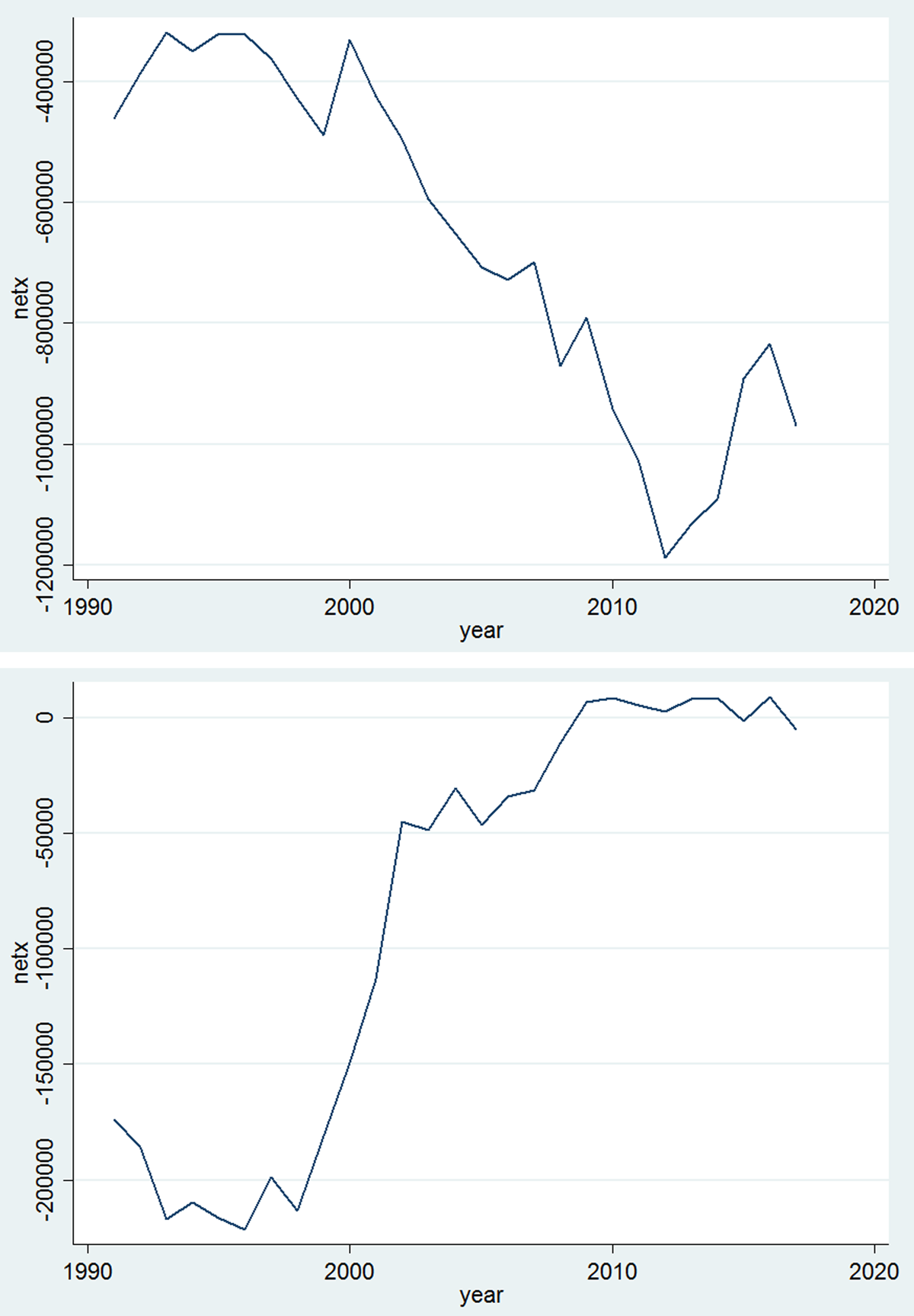
But who are those competitors? Quantitative evidence of the effects of labels on trade flows do not exist, mostly because trade statistics do not differentiate between labeled and unlabeled products (UNEP, 2005). Here we provide a descriptive overview of the competitive conditions that Mexican producers face on the US market. The US is a large market for both canned and fresh tuna. In 1989, right before the US passed the regulation, the US market was the largest in the world for canned tuna, and accounted for 20% of canned tuna consumption in the world in the 2000s, second only to the European Union (USITC, 1990; Poseidon, 2016). Still today, the US remains the largest import market for air-flown fresh tuna.Footnote 44 The US is both the world's largest canned tuna producer and the largest importer (USITC, 2007). Imports represented about 23% of total consumption in 1989 and 46% in 2005 (USITC, 1990, 2007), and the US is a net importer of processed tuna while trade of frozen tuna is nearly balanced (Figure 6).
US net exports of processed (a) and frozen (b) tuna, 1991–2017
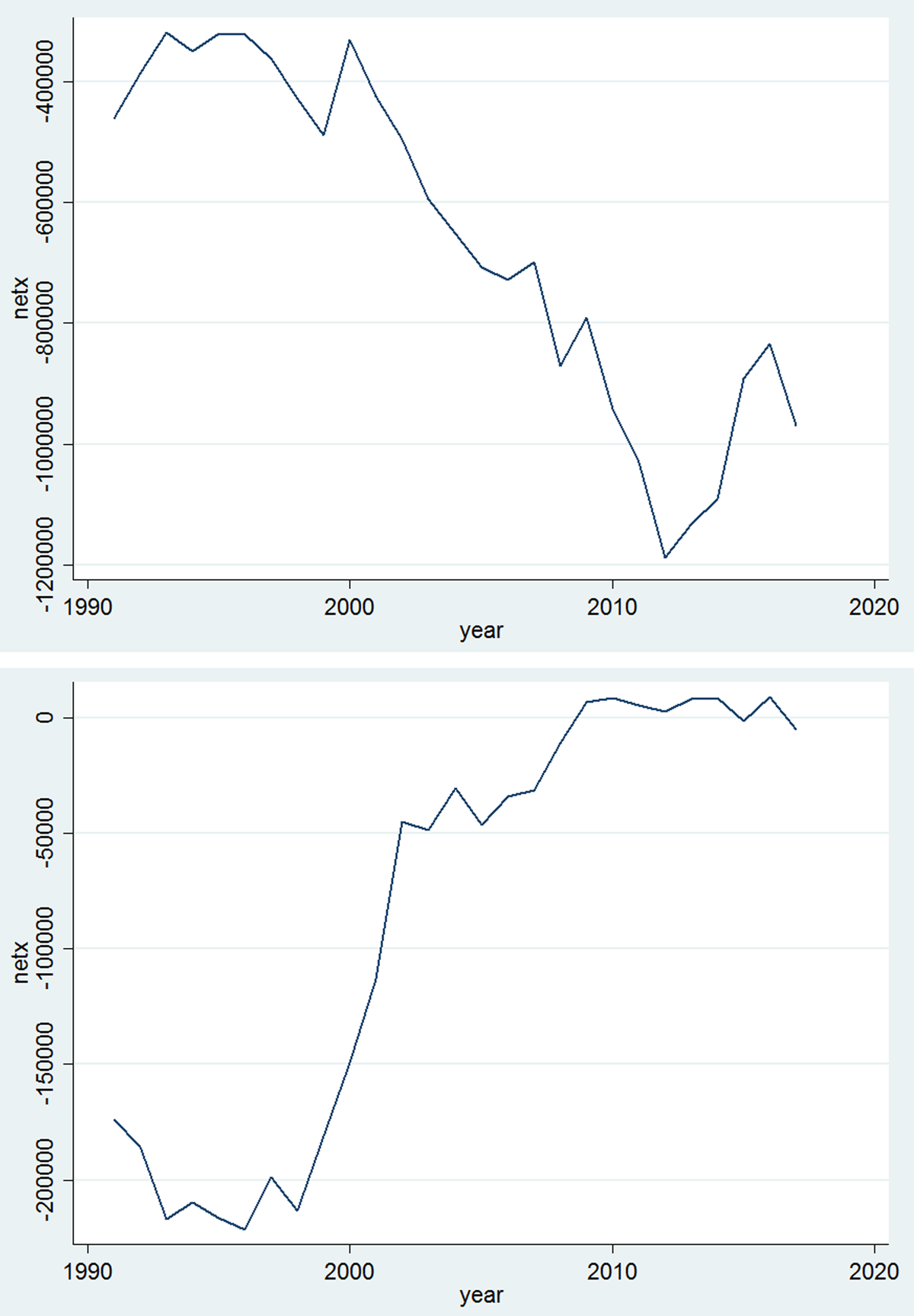
About half of US imports of processed tuna originate from Thailand, with Ecuador and China in second and third positions. For the frozen tuna market, the major foreign suppliers to the US market are Vietnam and Indonesia. Interestingly, while imports of processed tuna have increased since the early 1990s, imports of frozen tuna experience a sharp decline in the 1990s and remain small thereafter. The timing of the sharp frozen tuna decline right after the US regulation was passed could indicate that the regulation might have had a negative effect on total US imports. In the 2017 decision of the arbitrator on the amount of retaliation Mexico could charge, the report states that US imports of Mexican canned yellowfin tuna decreased by a factor of 4 between 1989 and 1990. Sluggish US demand can be partially explained by the uncertainty created by the dolphin-safe policy but also by firm ownership changes (USITC, 1992). In any case, the share of US imports from Mexico has remained consistently small since the 1990s for both processed and frozen tuna and so has not bounced back since the implementation of the rule.
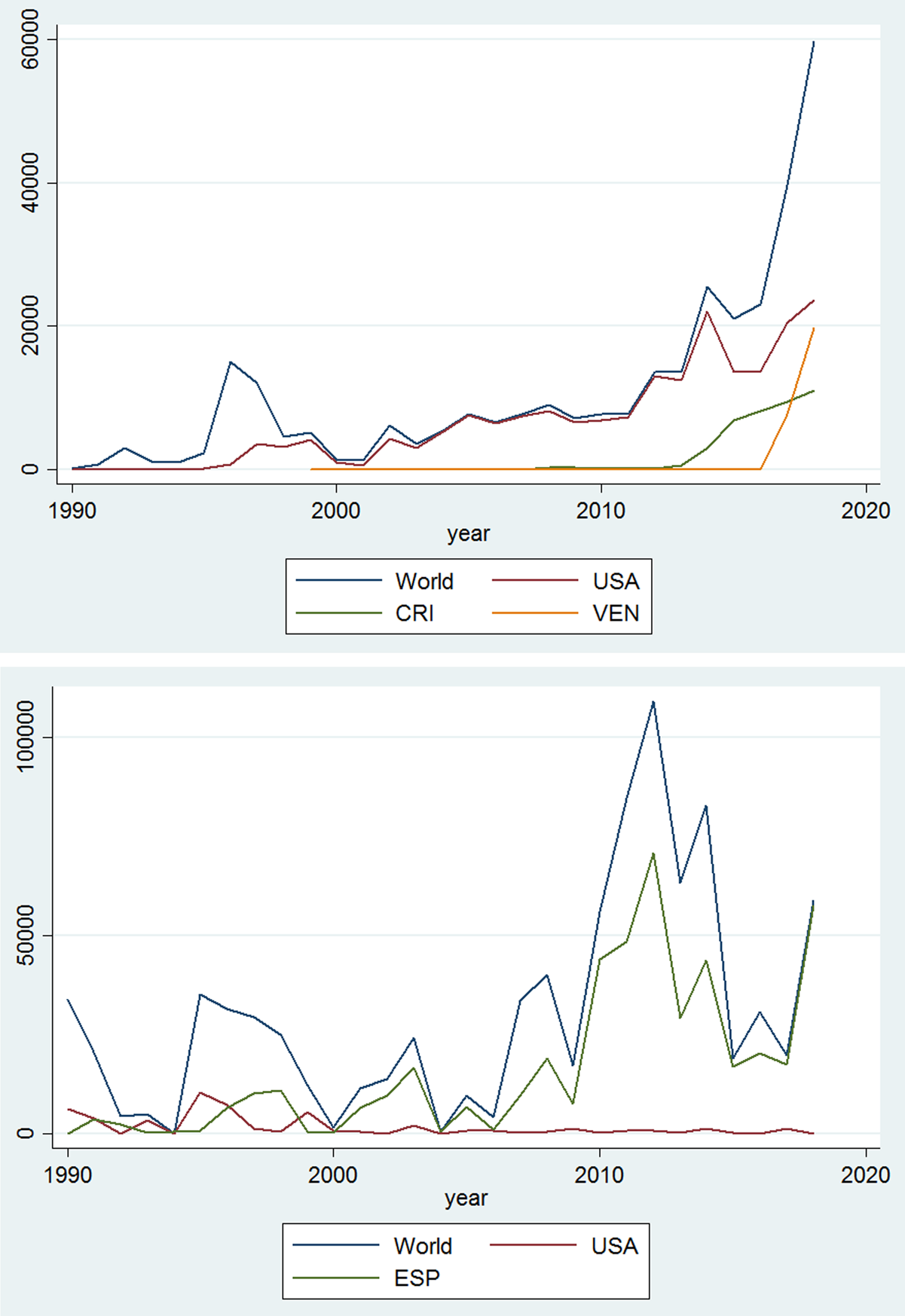
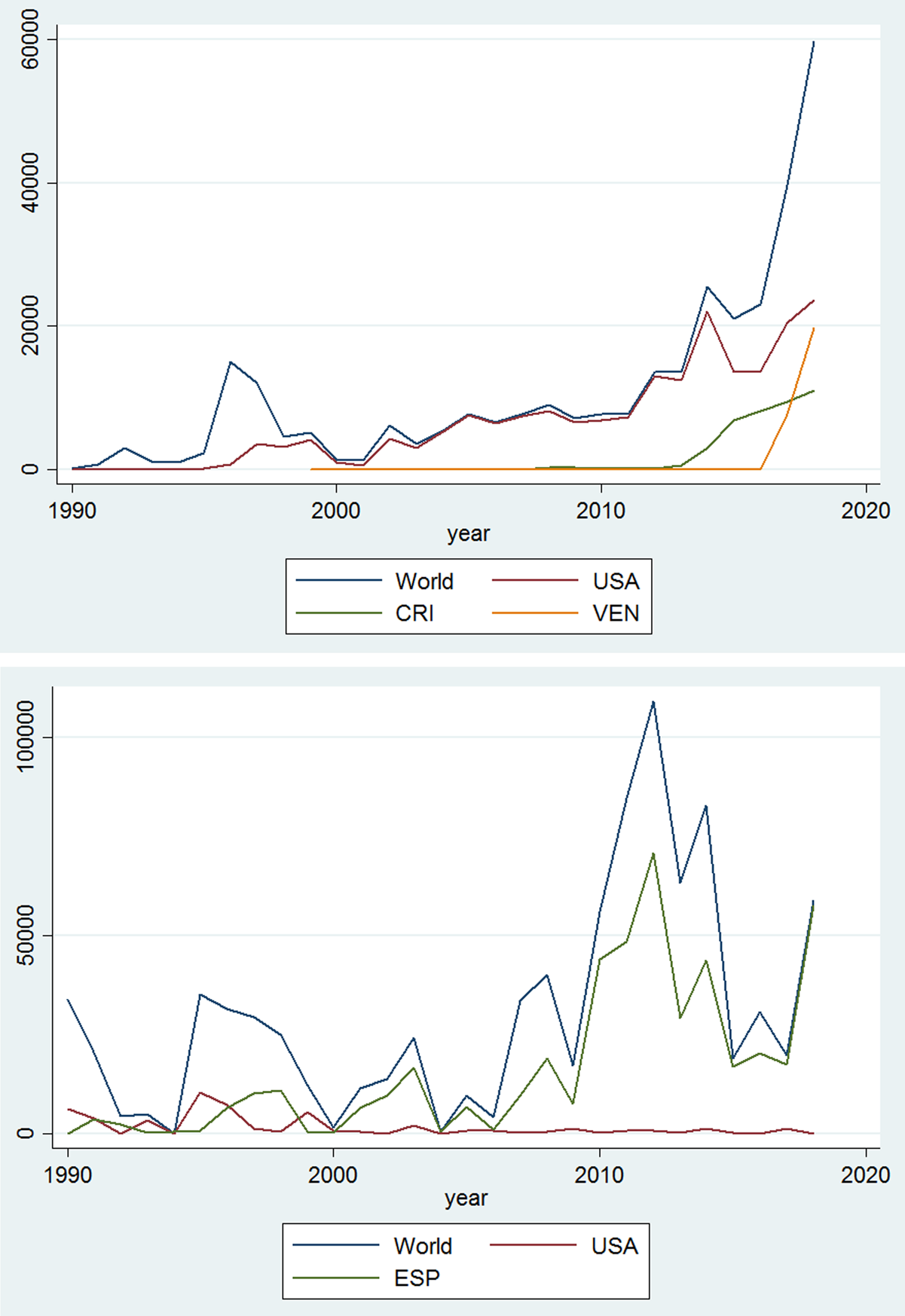
Do the Mexicans depend a lot on the US market? The US becomes the top export destination for Mexican processed tuna in 1998 – after the label was implemented – and accounts for almost 100% of exports through 2010. After 2010, the quantity of exports to the US keep increasing but the US share declines due to the emergence of new export destinations, notably Costa Rica and Venezuela (Figure 7). This graph indicates a diversification of Mexico's export partners, and the timing coincides with the 2013 rule change for Costa Rica and the 2016 rule change for Venezuela. Therefore, it could be that this diversification is motivated, at least in part, by developments in the label. For frozen tuna, the trends are similar though the diversification is towards Spain. It should also be noted that total Mexican exports to the world are much less than what other countries provide to the US, which puts into question whether Mexico has the capacity to become a top supplier for the US regardless of the label. Still, the increasing trend in Mexican tuna exports and the recent diversification to new destinations might indicate that Mexico has additional capacity they could tap to export more to the US market if they gained increased access.
Mexican exports of processed (a) and frozen (b) tuna to select countries, 1991–2017
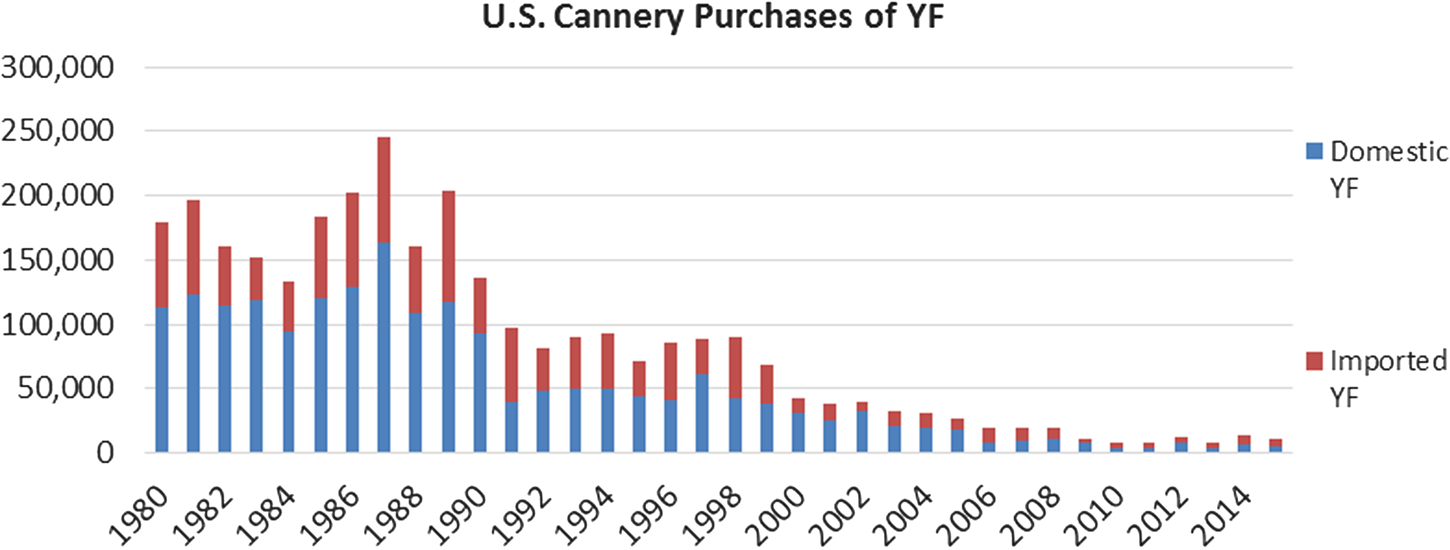
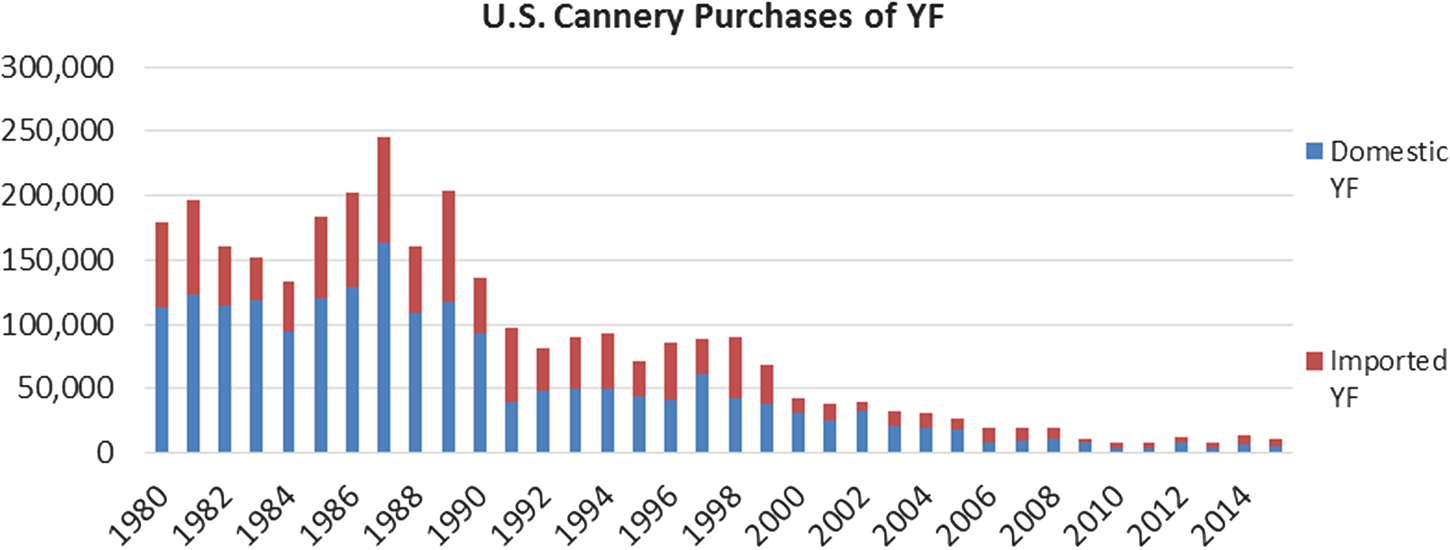
The US argues that their demand has decreased steadily since the 1980s so that the label cannot explain all of it (Figure 8), though the 2017 WTO arbitration award concluded that the tuna measure was the main factor behind the decline. And in fact, in 2017 the WTO award estimated the damages of the label to the Mexican tuna industry at $163 million annually based on a scenario where the US would have eliminated the rule completely, giving full access to the US market for Mexican tuna.
US demand for canned yellowfin tuna, 1980–014
The main difficulty in assessing the damage to Mexican tuna exporters lies in determining what market effects are due to the label versus other factors. As previously explained, econometric studies on the effect of the label are limited in number, and focus – due to data limitations – on the short-term effects of the label, which we are far past. Mavroidis (Reference Mavroidis2019) poses two important related questions. First, is the damage arising exclusively from the Dolphin-Safe label? A large part of the impetus behind the label was activism by the EII and the large consumer outcry following the release of the video. This would indicate that consumer preferences for dolphin-safe tuna existed before the US regulation and that at least some of the damages suffered by Mexican producers would have occurred even without the implementation of the tuna measure. Second, what is going on in other markets that could affect the demand for tuna in addition to the label? Here one important element would be to determine the substitutes for canned tuna. Across different studies, a number of substitutes have been suggested: other canned seafood, luncheon meats, canned red meat, ground beef, and fresh and frozen chicken parts (Teisl et al., Reference Teisl, Roe and Hicks2002; USITC, 1990). Each of these different goods have seen price fluctuations and changes in consumer preferences due to their own ethical considerations, notably the treatment of animals and environmental impacts. It is thus very difficult to provide a comprehensive picture of all factors affecting tuna demand.
In light of the large estimated damages to Mexican tuna fisheries and given the importance of the US market for Mexico in general, one could ask why Mexican fisheries did not change their methods in order to gain greater access to US consumers. There are a number of costs associated with switching from purse seine to other techniques, ranging from the costs of new materials to higher processing costs. In an USITC analysis published in 1990, the US tuna industry expressed a number of concerns about the potential regulation. Dolphins associate with the larger yellowfin tunas, so dolphin-safe practices imply catching smaller tuna, which fetch a lower unit price, incur higher cleaning and processing costs, and have lower yields per ton of fish. In addition, dolphin-safe techniques involve catching larger amounts of other tuna types such as skipjack, which are considered of lower quality. Teisl et al. (Reference Teisl, Roe and Hicks2002) explain that in fact there was a significant change in the quality of canned tuna which contributed to lower demand in the US. Generally, the majority of tuna fisheries have very low profit margins so even a small increase in costs due to higher processing costs or lower quality fish could force fisheries out of business. Global fishing cost estimates indicate that pole and line or longline tuna fishing methods incur costs that are higher than purse-seine fishing by 27% and 150% respectively (Lam et al., Reference Lam, Sumaila, Dyck, Pauly and Watson2011). These large costs differentials, combined with the successful diversification of their exports towards Costa Rica and Venezuela, likely explain why Mexican fishermen have not changed methods so far. After the final WTO reports, foreign trade sub-secretary Luz Maria de la Mora said that Mexico would now focus on growing exports to other markets, implying that certainty about the permanency of the US tuna measure would not incite the industry to alter their methods.Footnote 45
How will third countries be affected and could that impact Mexico? The latest regulatory changes to the US tuna measure increased the stringency of criteria imposed on Mexico's competitors. With only one year of trade data since the 2016 rule change was implemented, we do not have enough information to see trends. In theory, these countries now face higher costs to exporting to the US market with the Dolphin-Safe label and their exports to the US might therefore decline. The US is a large economy for canned tuna: with 15–18% of world imports, the US has been the second largest market for imported canned tuna, second only to the European Union and five times larger than Australia in third position. The ‘excess’ inventory would then result in a lower price of canned tuna in the rest of the world, to the detriment of Mexican producers exporting to non-US markets.
6. Transparency
The last aspect to be considered concerns the Panels’ decision to allow a partially open meeting, and the failure of the AB report to support and therefore entrench that choice. Because of the high level of sensitivity of this dispute, the US manifested its intention to ask the second compliance Panels to open to the public their meetings with the parties. As Mexico expressed its opposition to the transparency measure sought by Washington, the latter decided to request the Panels to hold a partially open meeting, limiting the public access uniquely to the statements of the US and third parties wishing to lift the confidentiality of their declarations. Asking for partially rather than fully open meetings was aimed at avoiding a rejection like in the EU–Biodiesel (Argentina) case, where Argentina did not support the EU's request for fully open meetings.Footnote 46
The partially open meeting request of the second compliance US–Tuna II proceedings was the first ever in WTO history, and was granted by the WTO panelists with a sound and convincing legal reasoning also considering that, because of the non-trade values involved, this case was the type of dispute where ‘even a partially open meeting is apt to enhance understanding of, and confidence in, the WTO dispute settlement process’.Footnote 47 Ad hoc Additional Working Procedures were adopted where the statements of the disclosing participants were video-recorded, redacted to respect the confidentiality of the non-disclosing Members, and then made available for public viewing.Footnote 48
Mexico appealed the Panels’ decision to authorize a partially open meeting, but the appellate judges considered that the legitimacy of partially open panel meetings was not directly related to the matter at issue in the second compliance Article 21.5 proceedings, thus finding unnecessary to rule on it.Footnote 49 The decision not to rule on this issue is questionable as the WTO adjudicators, beyond the substantive aspects of a controversy, also have to guarantee the respect of the DSU procedural rules, including due process. In our view, it is unfortunate that the appellate judges declined to rule on the issue. In fact, by evaluating the legitimacy of a partially open panel meeting without the consent of both the disputants, the Appellate Body could have strengthened the inclusive approach it has traditionally been promoting for the management of the WTO case-law. Since the beginning of its activity, the Appellate Body has shaped an open, informed, participative and transparent ruling activity for the WTO judges. It stated that WTO law should not be read in clinical isolation;Footnote 50 accepted on a systematic basis the wide participation of third parties and developed the enhanced third-party status (see Van den Bossche and Zdouc, Reference Van den Bossche and Zdouc2017: 275–276 and 282–283); framed the artisanal channel for presenting amicus curiae submissions;Footnote 51 and opened to the public panel meetings and AB hearings, overcoming the letter on the duty of confidentiality enshrined in Article 18 of the DSU.Footnote 52 In the present dispute, the Appellate Body could have added another piece to its inclusive approach by promoting partially open meetings in the absence of the consent of all the disputants.
On the contrary, the World Trade Court not only declined to judge the Mexican claim, but also explicitly stated that this lack of judgment was not an endorsement of the Panels’ decision.Footnote 53 Unfortunately, this unnecessary remark could be considered as a non-positive appreciation of the Panels’ choice at a time when transparency is increasingly important for the legitimacy of the WTO dispute settlement mechanism and should therefore be promoted and strengthened.Footnote 54 The additional cost in terms of redaction work for the WTO Secretariat and the WTO adjudicators is in our view a –relatively small– price to pay for a public forum with a jurisdictional pillar attracting so much interest from civil society, an interest requiring to be respected.
7. Conclusions
At the end of such an epic legal marathon it may be asserted that the US–Mexico confrontation, together with the activity of the WTO adjudicators and the interaction between the latter and the American authorities, strengthened the non–trade values of dolphin protection and consumer information. However, the 2016 Tuna Measure better performs its environmental objective than the target of effective market communication. In fact, in order to fully realize consumer information, the US legislator should have accompanied the recent modifications with an informational campaign for US consumers on the new more severe requirements for dolphin-safety outside the ETP, and / or change the appearance of the traditional Dolphin-Safe label.
Notwithstanding the just considered consumer information incompleteness, the most attentive US consumers have already started to challenge the consolidated practice of some traditional tuna companies operating on the US market and catching outside the ETP when declaring the dolphin-safety for their tuna products. In May 2019, class actions have been started before the US judges against inter alia Bumble Bee, Chicken of the Sea, and StarKist, alleging that their non-ETP tuna, caught with no setting on dolphins, is nevertheless not dolphin safe as marine mammals would have been killed or seriously injured during the fishing operations (Stempel, Reference Stempel2019). In their submissions, the plaintiffs made reference to the relevant parts of the WTO reports, where, in spite of some parts kept secret as confidential business information, so much important scientific evidence was openly produced and discussed;Footnote 55 and, in the development of those US court proceedings, the plaintiffs may now rely, to collect evidence, on the more severe requirements on dolphin-safety outside the ETP demanded by the 2016 Tuna Measure.
Many aspects of the legal methodology developed in particular for the TBT Agreement have been harshly criticized and should be reconsidered, not only by the WTO adjudicators, but hopefully by the WTO membership exercising its exclusive power to adopt authoritative interpretations under Article IX:2 of the WTO Agreement. The sensitive activity of construing the WTO Agreements, challenged by the WTO Members on likewise sensitive national disciplines and policies, should nevertheless not impede us from seeing what is positive in the final result of the Tuna–Dolphin saga: at the end of the day, albeit through troubled waters and with adjustments to be made to WTO interpretations, there is a strengthening of dolphin-safety outside as well as inside the ETP.