

We are truly sincere in helping Africa speed up economic and social development for the benefit of the African people and its nations.
Wen JiabaoFootnote 1INTRODUCTION
Chinese companies are a rapidly growing presence in many African countries, yet our understanding of what role Chinese investment will play in the continent's sustainable development remains limited.Footnote 2 Scholarly efforts to understand the development impacts of China's rise on Africa are nascent; contributions to date emphasise the economic impacts of Chinese trade and foreign direct investment (FDI)Footnote 3 flows (Broadman Reference Broadman2006; Goldstein et al. Reference Goldstein, Pinaud, Reisen and Chen2006; Jenkins & Edwards Reference Jenkins and Edwards2006; Kaplinsky & Morris Reference Kaplinsky and Morris2008) and the political context of China–Africa relationships (Alden Reference Alden2005; Pham Reference Pham2006; Taylor Reference Taylor1998, Reference Taylor2006b; Taylor & Williams Reference Taylor and Williams2004; Tull Reference Tull2006), including energy policy (Taylor Reference Taylor2006a). There is also growing interest in issues surrounding Chinese foreign aid and governance (Davies Reference Davies2007; Davies Reference Davies2008; Reisen Reference Reisen2007). To date not much has been said about the interface between Chinese investors and local regulatory institutions, and how this interaction influences policy relevant to the ongoing operations of foreign investors.
For policy makers charged with the dual objective of maximising investment inflows whilst providing a regulatory environment that maximises benefits to society, what new challenges might the influx of Chinese investment on the continent herald? The paper explores the ability of African host country regulators and other stakeholders to effectively regulate Chinese FDI. It does so using the case of Chinese FDI in the copper mining sector of Zambia, where Chinese investment became a key political issue during the country's 2006 elections (Gould Reference Gould2007; Larmer & Fraser Reference Fraser and Lungu2007).Footnote 4 The key finding is that certain corporate governance features prevalent among Chinese investors, combined with the already weak regulatory frameworks of many African countries, risk undermining host country regulation and by extension sustainable development.
The emphasis on ongoing regulation of established foreign-owned operations is motivated by the observation that Chinese investment often targets the extractive industries (Broadman Reference Broadman2006), sectors with characteristically large social and environmental externalities. Thus, while development practitioners have been emphasising the potential for private-sector investment in promoting development (OECD 2002; UN 2002; UNCTAD 1999),Footnote 5 this potential must be understood in relation to the effectiveness of local business regulation. Unfortunately, in many African countries the capacity to regulate effectively is seriously undermined by weak political and regulatory institutions. To answer the question of whether Chinese FDI heralds new challenges for host countries to regulate effectively, the paper first reviews the political and economic context of Chinese investment in Africa. It argues that state-led corporate governance of Chinese investors introduces objectives and constraints that shape their strategies of engagement vis-à-vis local regulators. Equally important in answering our question is to understand the local economic, political and regulatory contexts of individual recipient countries. The paper thus proceeds to present the regulatory context of Zambia, an African country with multi-party democracy, where formal regulatory and monitoring institutions exist, but where a pervasive lack of capacity, transparency and independence tends to undermine the effectiveness of such institutions. The need to understand the host country regulatory environment follows Alden's (Reference Alden2007: 44) observation that Chinese investment seems perfectly capable of following international-standard rules and norms when operating in developed countries with strong systems of corporate regulation.
This paper has six sections. First it places Chinese FDI into Africa within the context of China's foreign policy towards Africa, highlighting key issues such as Beijing's (in)famous ‘non-intervention policy’ and reviewing the available evidence. The second section reviews the case for FDI's contribution to sustainable development, concluding that we must look at both the institutional characteristics of Chinese investment in Africa and particular characteristics of the local regulatory context. Section three presents the context for Chinese investment, including the influential role of the state as owner and finance provider, while section four presents the Zambian regulatory context and its political and economic constraints. The fifth section discusses the potential for effective regulation at the intersection of Chinese firms' corporate governance, on the one hand, and Zambian regulations, on the other. The discussion explores the potential for civil society organisations to complement weak government regulatory institutions. Finally, the paper concludes with some tentative policy recommendations.
CHINA–AFRICA TRADE AND INVESTMENT UNDER CHINA'S AFRICA POLICY
The Forum on China–Africa Cooperation (FOCAC) Summit held in Beijing on 3–5 November 2006 confirmed the current and expected future relevance of Africa to China's foreign policy objectives. The event attracted high-level representatives of forty-eight African nations, including over forty heads of state and government (People's Daily 2.11.2006). Chinese and African leaders used the event to promote pragmatic cooperation in an array of arenas, including trade, investment and development assistance as well as cooperation in health, education and science (Xinhua 5.11.2006a). During the summit China announced plans to double aid to Africa by 2009 and bilateral trade by 2010, and implement $1.9bn worth of immediate trade and investment deals (BBC News 6.11.2006).Footnote 6
China's foreign policy in Africa is based on five principles: mutual respect for sovereignty and territorial integrity; mutual non-aggression; non-interference in each other's internal affairs; equality and mutual benefit; and peaceful coexistence (People's Daily 28.6.2004). These principles have underpinned China's foreign relations since the 1950s (Taylor Reference Taylor1998: 451), but were articulated only in January 2006 in a Chinese government white paper titled China's Africa Policy (PRC-MFA 2006a), the first ever public statement on Chinese foreign policy in Africa (Alden Reference Alden2007: 118). The principles frame the Chinese–African relations within which China seeks to achieve two interrelated strategic objectives.
The first and possibly most immediate objective is to maintain resource security, essential for continued economic growth. China's per capita endowments of natural resources (e.g. oil, natural gas, copper and aluminium) are well below world averages (see Zheng Reference Zheng2005), which coupled with an average economic growth rate of 9·8% between 1980 and 2006 (World Bank 2006) creates an ever-increasing demand for inputs. Consumption of energy and raw materials has skyrocketed over the last twenty years. China is now the second largest importer of oil, behind the United States (Tull Reference Tull2006: 465), imports which constituted over a third of its total consumption in 2003. In 2005, 30% of China's imported oil came from Africa (People's Daily 19.10.2006), a share that is expected to grow in the future (Sautman & Hairong Reference Sautman and Hairong2007: 8). In terms of minerals, Chinese consumption of various base metals accounted for between 76% and 100% of the global increase in demand between 2000 and 2003 (Kaplinsky Reference Kaplinsky2005). An important motivation for Chinese firms to venture abroad is to secure such natural resources (UNCTAD 2006a: 161).
A second objective is to secure political support in the geopolitical arena. Some scholars place the current era of active Chinese foreign policy as beginning with the Tiananmen Square massacre in 1989, which led to fierce reactions from Western states. This event resulted in a US and EU arms embargo on China and increasing criticisms of its human rights record, prompting Beijing to seek support for its international agenda elsewhere (Taylor Reference Taylor1998: 449–50). An additional factor was the end of the Cold War, which left the US in a position of unchecked hegemony. China looked to the developing world for support, rekindling old relationships with African countries: China has a long history of political involvement in Africa, where it presented itself as an alternative to the USSR model for many socialist groups seeking liberation from Western colonial powers (Pham Reference Pham2006: 240; Taylor Reference Taylor2006b: 121). African nations represent the largest single voting bloc in multilateral settings and had been instrumental for the People's Republic of China (PRC) to regain its seat at the UN Security Council in 1971. They are also less likely than East and Southeast Asian countries to have strategic points of contention with China (Alden Reference Alden2005: 153). Fostering diplomatic ties with African nations through engagement with aid, trade and investment thus provided China with leverage in the international community. China's close relationships with African nations have meant it can count on their supportive votes at the UN, enabling China to avoid criticisms of its human rights record (Taylor Reference Taylor2006b: 200). This arrangement is reciprocal: the action plan endorsed at the FOCAC summit includes commitments by China to help lobby for a larger African role at the UN (Xinhua 5.11.2006b).
Growing trade and investment
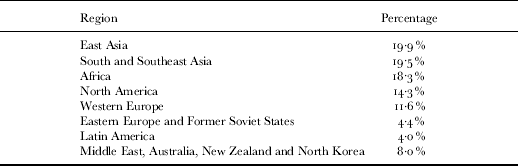
Economic transactions provide the most visible evidence of greater China–Africa integration. China–Africa trade in 2006 was $55.5bn, twice the figure reported for 2004. Double-digit growth rates are expected to continue: Chinese Premier Wen Jiabao has publicly announced the aim for China–Africa trade to reach US$100bn by 2010 (Xinhua 4.11.2006). Chinese exports reach most African countries, and consist almost exclusively of manufactured goods (Jenkins & Edwards Reference Jenkins and Edwards2006: 216). Chinese imports, on the other hand, are geographically concentrated and heavily focused on oil and other primary commodities: in 2004 just four countries (Angola, South Africa, Sudan and Congo-Brazzaville) accounted for 71·2% of all Chinese–African imports (Taylor Reference Taylor2006a: 938). Turning to Chinese outward investment, statistics issued jointly by China's Ministry of Commerce and the National Bureau of Statistics indicate that, by 2003, 3,439 Chinese enterprises had established 7,470 companies in 139 countries (People's Daily 22.10.2004). Unfortunately, detailed data on China–Africa FDI is limited.Footnote 7 According to a recent World Bank survey of Chinese outward investors (henceforth referred to as the FIAS/MIGA survey),Footnote 8 the main destination of Chinese FDI was East and Southeast Asia, followed by Africa (see Table 1).
Destinations of Chinese outward FDIFootnote *
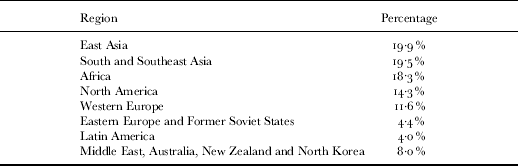
* Based on FIAS/MIGA Survey on China's outward investment, 2005 using a sample of 131 investing firms (of which 40% reported multiple investments).
Source: Battat (Reference Battat2006:5).
China's FDI stock in Africa is estimated to be $6.3bn, covering over 800 ‘non-financial investment projects’ in forty-nine African countries (PRC-MFA 2006b). Chinese oil companies have aggressively acquired concessions and exploration rights in oil-rich countries such as Angola, Sudan and Nigeria (Pham Reference Pham2006: 243). Other natural resources extracted from Africa by Chinese firms include minerals in Democratic Republic of Congo (DRC), Zambia, Namibia and Mozambique and, increasingly, agricultural products in Zambia, Tanzania and Zimbabwe (Alden Reference Alden2005; Pham Reference Pham2006: 244; Taylor Reference Taylor2006b). Chinese firms are also heavily present in the textile sectors of South Africa, Mozambique and Botswana (Taylor Reference Taylor2006b), and construction sectors of Zambia, Angola, Tanzania, Mozambique and Sierra Leone (Burke & Corkin Reference Burke and Corkin2006; Taylor Reference Taylor2006b). In 2007 a memorandum of understanding was signed between the government of the DRC and a Chinese consortium, outlining a vast $6.5bn project of three motorways, a railway, thirty-two hospitals and two universities (Financial Times 23.1.2008). These infrastructure projects, as well as the concurrently announced plan to invest $3bn into DRC's mining sector, are resource-backed by toll-infrastructure rights and mining concessions (Africa-Asia Confidential 2008: 3).
Some African rulers may find Chinese investment attractive because the Chinese discourse of development, unlike that of the West, does not embed pressures to reform and strengthen participatory democracy, good governance and human rights. On the contrary, it emphasises the principles of sovereignty and non-interference in states' internal affairs, notions which have underpinned self-perceptions of African political elites since decolonisation (Clapham Reference Clapham1999). A hands-on approach and reputation for ‘getting things done quickly’ present additional attractions to many resource-constrained African countries. African elites thus have little difficulty in legitimising engagement with China, and Tull notes that ‘a good number of African elites and intellectuals appear to regard China as both an appealing economic model worth emulating and a potential catalyst for socio-economic development’ (2006: 471). China carefully labels itself a ‘developing country’ and boasts an empirical track record of lifting hundreds of millions of people out of poverty in two decades. This gives Chinese political and economic engagement a face-value legitimacy that Western post-colonial interests cannot aspire to.
FDI AND SUSTAINABLE DEVELOPMENT
The potential contribution of FDI to host countries' development was emphasised at the UN Conference on Financing for Development in Monterrey, Mexico in 2002, highlighting the ability of FDI to ‘transfer knowledge and technology, create jobs, boost overall productivity, enhance competitiveness and entrepreneurship, and ultimately eradicate poverty through economic growth and development’ (UN 2002: 5). Governments across the world have liberalised capital controls, often coupled with financial incentives such as tax holidays and stability clauses (IIED 2005), in the hope of attracting FDI. However, the relationship between FDI and sustainable development will vary across sectors and institutional conditions of the host country (Görg & Greenaway Reference Görg and Greenaway2004; Meyer Reference Meyer2004; Nunnenkamp Reference Nunnenkamp2004: 671; see also UNCTAD 1999: ch. 11), in particular where governments provide investor-specific incentives (Blomstrom & Kokko Reference Blomstrom and Kokko2003). FDI may also undermine development where negative external costs (be they environmental, social or economic) are generated but not captured by the investor, such as pollution, migration and infrastructure dilapidation. These issues are of particular concern in the oil/gas, mining and infrastructure sectors (World Bank 2003), all of which receive significant Chinese investment. This suggests a need for caution in drawing the link between FDI and sustainable development. With regards to Chinese investment in particular, media reports have been quick to highlight what they see as challenges and risks to the African continent, some using a discourse of Chinese neo-colonialism (AsiaTimes 5.1.2007; BBC News 14.12.2006; Servant Reference Servant2005). Such criticisms, though ‘spurious and overblown’ according to Alden (Reference Alden2007: 127), often centre on the Chinese principle of non-interference in what is considered to be their international partners' internal affairs. This ‘state-centred orthodoxy’ (Tull Reference Tull2006: 466) underpins China's Africa policy and dictates that, the issue of Taiwan aside, no political conditions are to be attached to international cooperation, including trade and investment.
The European Commission has voiced concerns that China's no-strings-attached approach to development cooperation and investment may undermine private sector accountability and efforts by the international community to promote anti-corruption and governance reforms (Manning Reference Manning2006). More specifically, the head of the European Investment Bank (EIB), Philippe Maystadt, has claimed that Chinese banks ‘apply lower ethical and environmental standards’ compared to the EIB (Financial Times 8.2.2007).Footnote 9 Maystadt raised controversy when in December 2006 he suggested that the EIB lower its standards to compete for projects with the Chinese financing institutions (BIC 7.12.2006). Corruption is another oft-voiced issue, although we lack empirical evidence as to whether Chinese engagement is affecting African corruption. Critics point to Transparency International's Bribe Payer's Index 2006 ranking of Chinese firms as the most corrupt out of thirty nationalities of firms (followed by India, then Russia) (TI 2006: 4). Finally, criticisms of Chinese investors' conduct are not limited to rich outside observers; concerns are also being voiced within Africa (Alden Reference Alden2005: 160; Taylor Reference Taylor2006a: 954), including mobilisation by local civil society.Footnote 10
The relevance and challenges of government regulation
Governments are tasked with the regulation of economic interests within their borders, aimed at aligning the interests of industry with those of wider society. Regulation is defined here as the government directly prescribing or proscribing what the private sector can and cannot do, through the provision of incentives and disincentives, to prevent the private sector from contradicting or undermining the ‘public interest’ (Chang Reference Chang2003: 157). In addition to the formulation of such rules, the extent and nature of enforcement mechanisms constitute a key element of private sector regulation (North Reference North1990: 54; Scott Reference Scott2001:52–3).Footnote 11 In practice, the challenges of effective regulation may be formidable. The global trend towards reduced capital controls and less direct involvement of the state in the economic sphere has been coupled with broader systemic changes. Information sharing systems and cross-border diffusion of accounting, financial and legal practices enable transnational corporations (TNCs) to rapidly traverse borders in search of investment locations. These developments have generally not been matched by greater capacity of government institutions in the host country to oversee rapidly growing and increasingly complex investment. The result is what Newell (Reference Newell2001: 908, see also UNCTAD 2003) refers to as a ‘governance deficit’. More cooperative approaches to regulation are emerging in an attempt to overcome such constraints. The World Bank and other donors have promoted greater self-reporting and the use of incentives, rather than direct command and control regulation (World Bank 2000), giving greater room for firm-specific characteristics to influence what companies report.
When policy makers develop environmental, health and safety, and other regulation, the firm is not a passive bystander. Political economists have argued that both formulation and enforcement of regulation can be seen as dynamic and context-sensitive two-way processes (Grindle Reference Grindle2004; Grindle & Thomas Reference Grindle and Thomas1991). The relevance of firms' agency in influencing regulatory outcomes has also been central to the state-firm bargaining literature of management theory (Eden et al. Reference Eden, Lenway, Schuler and Grosse2005; Ramamurti Reference Ramamurti2001; Stopford & Strange Reference Stopford and Strange1991). According to these perspectives, the firm has the capacity to shape such rules through access to agendas and decision-makers: by lobbying government ministries, through stakeholder consultations, or indirectly via a firm's compliance (or lack thereof) with environmental, labour and health regulators. If we take the view of the policy process as interactive and at least partly shaped by foreign investors' preferences, it follows that we need to understand the context and special features of ‘both sides of the coin’. This section concludes with a brief introduction to the Zambian setting and the Chinese mining interests to which it plays host. It is followed by two sections that explore first the institutional context and constraints of Chinese investors, and second the capacity and constraints characterising Zambia's regulatory environment.
China in Zambia's mining sector
In 1965 Zambia was the first Southern African country to establish diplomatic relations with China. Both sides like to stress the historical role of the Chinese in Zambia, emphasising China's 1970–6 construction of the TAZARA railway linking Zambia and the Tanzanian coast. By the end of 2006 there were officially 145 Chinese projects in Zambia (IRIN News 23.11.2006). Chinese investment into Zambia can be grouped into smaller private entrepreneurs, usually in the trading sector, and Chinese multinationals with medium-to-large operations. The latter are concentrated in mining (NFC Africa's copper mines, Collum Coal mines, and manganese processing by Chiman Manufacturing in Kabwe) and construction (Burke & Corkin Reference Burke and Corkin2006). Within the mining sector, NFC Africa is the largest investor, having acquired the Chambishi mines at privatisation in 1997 (Craig Reference Craig2001). Its parent company China Nonferrous Metal Mining Group (CNMC) is a state-owned enterprise (SOE) under direct supervision of State-owned Assets Supervision and Administration Commission (SASAC), boasting the largest overseas operations among Chinese non-ferrous mining companies.Footnote 12
Chinese investment figures highly on the Zambian political agenda, and during President Hu's seven-nation tour of Africa in early 2007 it was announced that one of the five preferential trade and industrial ‘special economic zones’ mentioned in the FOCAC Action Plan would be established in Chambishi in Zambia's Copperbelt Province. The main project of the $800m initial investment in this Chambishi Special Economic Zone (CSEZ), the area of which corresponds to NFC Africa's vast mining surface right, is a copper smelter to service the ore produced at NFC Africa's mines. This will later be complemented by additional Chinese investment mainly in mining-ancillary production (Mineweb 4.4.2008). Although the China Exim Bank-funded CSEZ is presented as Chinese development aid to improve Zambia's industrial productivity (Davies Reference Davies2008: 26), there is very limited public information regarding this investment. Lena Hasle (2007 int.), governance specialist at the Norwegian Embassy in Lusaka, notes that ‘no one here knew about it, including all those people in the donor community who speak to the Ministry of Finance every day … It was completely unannounced beforehand, nobody knew that Zambia was to have export-processing zones where you had no taxes.’ The commercial ties between NFC Africa and other investments in the CSEZ are not coincidental, and are mirrored in organisational governance structures. The CSEZ will be managed by a ‘Zone Development Company’, headed by former NFC Africa CEO Tao Xinghu, which will select what companies are to invest (Sun 2007 int.).
Alden (Reference Alden2007) describes Zambia as ‘China's perfect storm’, in reference to the multiple challenges faced by Chinese political and economic interests. During Zambia's 2006 election, the conduct of Chinese investors was a major issue in the opposition Patriotic Front party's campaign, tapping into wide-spread antagonistic feelings over Chinese labour and supply practices (Fraser & Lungu Reference Fraser and Lungu2007: 16; Gould Reference Gould2007; Larmer & Fraser Reference Fraser and Lungu2007; Washington Post 25.9.2006). A much-publicised incident in April 2005 appeared to validate popular misgivings over inadequate standards among Chinese investors and served to catalyse anti-Chinese sentiment. The explosives-manufacturing plant BGRIMM, a subsidiary of NFC Africa, was levelled to the ground in a huge explosion that killed all fifty-four people working in the plant (BBC News 21.4.2005). The aftermath highlighted breaches in labour regulations, as it emerged that the company had not kept adequate records of workers. One employee recounts how identification of those perished required company representatives going into the nearby township to search for weeping families.
corporate governance characteristics of chinese investment
To understand a foreign investor's predispositions towards engagement with local stakeholders one can look at its corporate governance, conceptualised here as the ‘the structure of rights and responsibilities among the parties with a stake in the firm’ (Aoki Reference Aoki2000: 11). It includes relationships with all external parties which provide the firm with tangible (financing, inputs into the production process) as well as intangible (political legitimacy and managerial skills) resources. These external parties constrain and enable corporate conduct through institutional arrangements that allocate objectives, monitor behaviour, and sanction non-compliance (Aoki Reference Aoki2001; Greif Reference Greif1998; Hall & Soskice Reference Hall, Soskice, Hall and Soskice2001; see also Aguilera & Jackson Reference Aguilera and Jackson2003). In this section I discuss two dimensions of corporate governance that may shape Chinese firms' engagement with host country regulators and their rules: the role of the Chinese state in financing outward investment into Africa, and the monitoring mechanisms through which Chinese policy makers in Beijing attempt to control such investment.
State-led corporate governance
The Chinese government plays a prominent role in Chinese investors' corporate governance through its wide-ranging provision of financial and other support. Such support affords the Chinese government an element of control over Chinese firms present in Africa's private sector, resulting in what Tull (Reference Tull2006: 469) has called an ‘interconnectedness of political, diplomatic and economic interests’. At a time when most multinationals operating in Africa are private,Footnote 13 large Chinese investors in strategic sectors such as energy, mining and construction are frequently state-owned (Frost & Ho Reference Frost and Ho2005). Financial support for Chinese firms takes the form of equity, debt or other financial incentives such as investment insurance (Pham Reference Pham2006: 244; Schuller & Turner Reference Schuller and Turner2005: 4; see also UNCTAD 2006a: 210). Debt-financing and other financial incentives are provided largely through the Chinese government-owned Exim Bank, which in 2005 disbursed funding in excess of $15 billion (Moss & Rose Reference Moss and Rose2006). The relevance of such assistance is reflected in survey rankings showing ‘government support’ as the second-most important reason for Chinese firms to go abroad (Broadman Reference Broadman2006: 305).
In contrast, when companies get financing from international capital markets, shareholder oversight is afforded through corporate governance arrangements which include significant commitments to disclose financial and other information. Shareholders who invest through stock exchanges cannot monitor their investments directly, leading to corporate governance practices whereby companies are required to submit to financial audits. Firms must provide verifiable financial data that allow reputable accounting firms such as Deloitte&Touche and PricewaterhouseCoopers to audit and sign off on annual financial statements as giving a ‘true and fair view of the company's affairs’. Failure to get this sign-off (resulting in so called ‘auditor qualifications’) may compromise relationships with lenders and reduce future access to capital markets. Among the five international mining companies operating in Zambia for which annual financial statements were available for the last three years, only NFC Africa's accounts had received any auditor qualifications (and did so in every year). NFC Africa's auditors Deloitte&Touche cite unavailability of information that makes them ‘unable to determine whether proper accounting records have been maintained’ (NFC Africa Annual Accounts 2005). Concerns over access to financing, a key driver for Western companies, may be lower among Chinese firms in strategic sectors to the extent they can ‘rely on China's state-controlled banks for financial support regardless of their economic performance’ (Gill & Reilly Reference Gill and Reilly2007: 49). For NFC Africa, there appears to be significant flexibility, and a superintendent of finance at the firm (2007 int.) describes the China Exim Bank financing as not constituting a hard constraint; repayment rather ‘depends on company performance’.
Monitoring and oversight
As Alden (Reference Alden2007) illustrates, over time, as Chinese investors become established and enmeshed in local political and economic structures, the potential for conflicts with local stakeholders is bound to increase. It is thus a growing imperative for Chinese policy makers to monitor firms, to ensure that they do not undermine wider diplomatic goals by fuelling anti-Chinese sentiment. However, growing tensions between the economic and political elements of Chinese engagement in Africa appear to exacerbate Chinese policy makers' principal-agent dilemma. For instance, decentralisation policies in China in the 1990s (Saich Reference Saich2004: 167) have given rise to growing conflicts between central and provincial governments. The challenge of effective oversight is complicated by overlapping and multi-faceted structures through which Chinese SOEs are regulated, the geographical distance, as well as the incentives for companies on the ground to hide information about any conflicts with local stakeholders. Gill & Reilly (Reference Gill and Reilly2007) have argued that present-day Chinese investment in Africa operates within an institutional structure that embodies conflicts of interest between Chinese state agencies promoting foreign investment for economic gains (e.g. SASAC, Ministry of Commerce), and those more concerned with diplomatic objectives (Ministry of Foreign Affairs). Within the host country, oversight of Chinese firms is one of the mandates of the local Economic and Commercial Council (ECC), operating as a local arm of the Ministry of Commerce. However, the ECC's capacity to monitor ‘on-the-ground’ activity may be limited; in Zambia, for instance, the ECC has only six staff. The official I met simply argued that Chinese companies must follow local laws, and that responsibility for identification and sanctioning of non-compliance should rest with the Zambian government.
CHARACTERISTICS OF THE ZAMBIAN REGULATORY CONTEXT
Zambia presents an interesting location for the study of state–business relations. Unlike most of its neighbours, Zambia has managed to avoid violent political conflict despite poor economic growth. Social stability has engendered institutional development, while pervasive poverty continues to undermine the effectiveness of these institutions. Governance data collected under the World Bank's Governance Matters series (Kaufmann et al. Reference Kaufmann, Kraay and Matruzzi2007) reflect this, generally placing Zambia close to the median among fifty-three African countries.Footnote 14 The regulatory context can thus be described as one with a relative respect for property rights and well-developed legislation providing mandates for regulatory agencies. However, it is also characterised by significant shortfalls in institutional capacity, weak reporting and accountability, and pervasive political interference. I discuss these three characteristics of the Zambian regulatory environment and how they explain the challenges to effective oversight of foreign investors, with reference to fiscal, environmental, and health and safety regulation.
Institutional capacity
The ministry responsible for the mining sector in Zambia is the Ministry of Mines and Minerals Development (henceforth the Ministry of Mines), under which the Mines Safety Department (MSD) is mandated to monitor health and safety performance of the mining companies. Environmental impacts are assessed and monitored by the Environmental Council of Zambia (ECZ), established in 1990 by the Environmental Prevention and Pollution Control Act (henceforth the Environmental Act). Collection and verification of taxes and duties payable by the mines are the responsibility of the Zambia Revenue Authority (ZRA).
The effectiveness of mining sector regulation is hampered by a shortage of skilled inspectors and the resources required to physically inspect a sprawling mining sector, with the MSD in particular suffering from chronic underfunding. The mining and environmental ministries were not part of the World Bank's public sector pay reform programme for Zambia,Footnote 15 and salaries remain low and uncompetitive. This makes it difficult for regulatory bodies to hire and retain skilled inspectors, and makes inspectors more prone to rent-seeking. The situation is exacerbated by an industry-wide skills shortage, driven by the rapid growth of mining investment into Zambia. Engineers at the ECZ and the MSD are routinely poached by foreign mining companies, with an inspector at MSD referring to his organisation as a ‘training ground’. A senior mining engineer at the Ministry of Mines recalls how he attempted to recruit eighteen geologists in early 2007, but was unable to recruit a single one (Ndalama 2007 int.). The greater extent of personalised relationships, resulting from inspectors moving from regulatory to regulated organisations, further increases the possibilities for rent-seeking.
Outdated legislation fails to incentivise firms to be compliant. For example, the ECZ has the right to issue on-the-spot fines, but these equate to just Kwacha 144,000 ($37), and proposed revisions to environmental regulations envisage only a doubling of this (Sakala 2007 int.). The MSD also recognises the weak deterrence of fines, with a senior inspector commenting on Chinese mining investors that ‘we are fining them all the time’ (Senior inspector, MSD 2007 int.). Capacity issues extend to tax collection and fiscal regulation, with one donor representative noting that ‘the problem is that there is almost no capacity in government to validate what mining companies pay is actually what they should pay [in taxes and duties]. The ZRA does not have any special competence on the mining sector’ (Lundstol 2007 int.).
Reporting and accountability
Zambia's Environmental Act and associated statutory instruments place the onus on companies to self-report, semi-annually, their performance against environmental standards to the ECZ. Emphasising self-reporting may serve to overcome capacity constraints, but also reflects a broader ideological shift (Graham & Woods Reference Graham and Woods2006) as to what constitutes an appropriate role for the regulator. According to an increasingly common view the regulator is seen principally as an enabling agent for investment, assisting with conflict-resolution and brokering the investor-society relationship. Thus, the ECZ sees its explicit aim as ‘working with companies, in partnership’ (Sakala 2007 int.). However, across-the-board self-reporting is complicated by a lack of common standards and reporting formats for different investors. During privatisation in the late 1990s, the Zambian government was advised that it would be prohibitively expensive for incoming firms, who mostly inherited old and poorly maintained technology, to immediately upgrade their systems to achieve compliance with Zambia's statutory standards (Chibesakunda 2007 int.). Consequently, environmental standards that apply to privatised mining companies were set in negotiation with incoming investors, and vary between firms: concessions are asset-specific and result in a lack of standardised self-reporting protocols. Regulation based on firm-specific standards thus complicates matters for monitoring agents, while the ideological self-perception of agencies may prevent them from being too heavy-handed. Together with capacity constraints discussed above, these factors result in limited follow-ups on foreign mining companies' cases of either incomplete self-reporting or outright non-submission of reports.
Centralisation and interventionism
Centralised control over the affairs of the state remains a hallmark of African countries. Among forty-five African countries with multi-party systems in 2003, forty had presidential rather than parliamentary constitutions (van de Walle Reference van de Walle2003), in part reflecting the highly centralised administrative structures inherited at independence (Wunsch & Olowu Reference Wunsch, Olowu, Wunsch and Olowu1990: 4–5). Parliamentary oversight is often limited, ministries may be filled with loyalists, and ‘the presidency emerges as the dominant arena for decision-making, to the point that regular ministerial structures are relegated to an executant's role’ (van de Walle Reference van de Walle2003: 310). Many African countries are presidential also in the sense that power is personalised in the figure of the president, who has significant influence over policy issues. This centralised decision-making within government, combined with highly personalised linkages with the private sector, engenders an interventionist political culture. For instance, in Zambia the permanent secretaries of ministries are political appointments, rather than career civil servants who represent the ‘institutional memory’ of a ministry, and are periodically reshuffled by the president (Senior technical assistant, MSDP 2007 int.). The Permanent Secretary of the Ministry of Mines has direct insight into the finances and performance of foreign mining companies through a seat on privatised copper mines' Boards of Directors, as provided for by the ‘golden share’ that government has retained in the privatised mines. This opens up a channel for firms who so wish to engage with senior political decision-makers through personal and informal relationships.
In the case of environmental regulations in Zambia, the interventionist tradition is facilitated by clauses in the Environmental Act that allow the Minister of Environment to overrule ECZ decisions. In May 2007, the Zambian parliament questioned ECZ Director Edward Zulu about two projects that were going ahead despite ECZ opinion that project plans were environmentally unsound. Zulu referred to the clause in the Environmental Act giving firms the right of appeal to the Ministry of Environment if unhappy with ECZ decisions, noting that ‘we rejected them but the minister has powers to overrule ECZ and direct otherwise. Our hands are tied’ (Times of Zambia 15.5.2007).
Direct links between the executive and the private sector are also fostered through executive and ministerial visits to companies (Times of Zambia 10.7.2007). Pronouncements made by President Mwanawasa during a visit to Chambishi in early 2007 gave the go-ahead for the re-establishment of the BGRIMM explosives manufacturer, despite significant opposition raised in stakeholder consultations (Sinkamba 2007 int.). Conversely, executives of large mining firms are expected to visit and brief the president on their investments plans (Senior technical assistant, MSDP 2007 int.). Nascent research on South-South FDI argues that developing-country investors may have a preference for personalised ways of managing stakeholder relationships (Aykut & Ratha Reference Aykut and Ratha2003; Battat & Aykut Reference Battat and Aykut2005), as agents accustomed to less-developed formal property rights opt for alternative, personalised and informal means of contracting (North Reference North1990: 34). The risk is that, although it may enable the Chinese and other developing-country investors to ‘get things done’ in a complex social and economic African context (Gelb Reference Gelb, Teunissen and Akkerman2005), it may undermine the effectiveness of already weak regulatory institutions.
THE POTENTIAL FOR EFFECTIVE REGULATION
In this section I first present two examples of how Chinese firms can undermine Zambian environmental, safety and fiscal regulations, based on the previous discussion of Chinese investment characteristics and features of the Zambian regulatory context. I then proceed to discuss the potential for civil society to address these (and other) regulatory gaps. Lastly, this section explores the potential for international regulatory pressures to complement pressures arising within the host country.
The first example concerns the potential for unchecked profit-seeking to undermine local regulations. The imperfect oversight of Chinese regulatory agencies creates uncertainties for Chinese companies, who may respond to an opaque regulatory environment and the risks of corruption by pursuing short-term returns and diversification strategies (The Economist 6.1.2005). In Zambia, people who deal with large-scale as well as smaller Chinese businesses frequently stress what they see as a profit-first mentality among the Chinese. At NFC Africa the high turnover of Chinese managers (who are generally replaced every three years) is likely to contribute to an emphasis on short-term profits. Such a human resources policy may be part of an operational strategy for head office to retain control of the business and ensure strategic direction, given a limited reliance on formal reports and international accounting standards. Yet this practice also aligns managers' own goals to strictly short-term operational targets, thereby increasing incentives to cut costs. In dangerous working conditions such as mining, where state capacity for monitoring is weak, uninhibited cost-cutting can have fatal consequences. The BGRIMM accident of 2005 exposed the failure of the MSD to inspect and enforce safety and labour standards. The government of Zambia never held NFC Africa to account over the BGRIMM scandal, although an investigation concluded it was the result of negligent safety measures (Chibesakunda 2007 int.). Patriotic Front Vice-President Guy Scott (2007 int.) was in parliament when the issue was raised with fervour, but notes that there was no costly punishment for NFC Africa. Findings of the investigation, such as information regarding the degree of NFC Africa's negligence or the inadequacy of laws and their enforcement, were never made public.
The second example emphasises fiscal regulation and relates to tax evasion. A finance professional at NFC Africa explains that concerns among auditors centre on the firm's corporate structure, in particular how NFC Africa's excavation operations (their ‘Mining Department’) are run separately and semi-autonomously (Superintendent of finance 2007 int.). However, this nonchalance towards auditor opinions also allows the company to operate parallel accounting systems. Anonymous informants at NFC Africa report that there are two invoices for all orders from China: one with a lower value which is attached to the container and used to calculate duties at the border, and another that is used for paying the seller. This practice, which has yet to affect the company's relationship with the ZRA, enables tax evasion through the underpayment of duties. The practice of procuring the vast majority of supplies directly from the parent company CNMC permits additional tax evasion through transfer pricing. The combination of an apparent lax attitude among home-country lenders, the short-term profit motives discussed above, and weak capacity of the ZRA to assess and enforce the ‘arms-lengthness’ of transactions, all reduce the potential of FDI to contribute to national revenues.
The role of civil society in regulatory enforcement
In response to overstretched and underfunded enforcing agencies, the idea of leveraging the capacity and interests of NGOs, church groups, think-tanks and other non-state stakeholders holds promise for narrowing the gap between regulatory content and enforcement (Blowfield Reference Blowfield2005; Blowfield & Frynas Reference Blowfield and Frynas2005; Fox Reference Fox2004; O'Rourke Reference O'Rourke2003; Scholte Reference Scholte2000: 151). For instance, non-state actors can make use of companies' self-reporting to compare companies and advocate for increased accountability where compliance is lacking (Utting Reference Utting2005). However, the extent of critical engagement by African civil society over Chinese investment has so far been limited (Obiorah Reference Obiorah, Manji and Marks2007), and ActionAid's post-FOCAC offer to work with China on implementing projects in Africa has largely been ignored (OneWorld UK 4.11.2006). In Zambia the potential of civil society to independently engage with and support monitoring activities may be limited, for four reasons. First, government agencies may not be able or willing to share monitoring information with non-state actors. Where official reporting by mining firms tends to be varying and incomplete (for reasons discussed above), regulatory agencies such as the ECZ may not wish to ‘open their books’ to NGOs. Doing so might undermine relationships with mining companies and could subject monitoring agencies to criticism if it turns out that regulatory agencies' collection efforts have been inadequate. Second, a pervasive lack of government information precludes any substantive analysis in the public debate, and ministerial claims of the ‘tremendous’ benefits of the Chambishi Special Economic Zone (Times of Zambia 10.7.2007) can only be taken at face value. Thus, despite the enabling condition of a relatively free media, it becomes difficult for civil society to present a comprehensive case, over and above criticising ex post events. Third, the Mwanawasa administration has been reluctant to support a greater ‘watchdog’ role for civil society. Rather it appeared to be looking for greater control over non-state actors. The ‘NGO Bill’ put forward to the Zambian Parliament in July 2007 represented the first attempt at regulating civil society since the introduction of multiparty democracy in 1991, and would give the government powers to register and deregister NGOs (IRIN News 19.7.2007). Finally, local NGOs tend to see themselves as advocates or activists rather than monitoring agents, and may not have the technical and administrative resources required to conduct analysis to a high standard.
The role of international capital markets
Having looked at the deficiencies of local state regulation and the mixed potential of local civil regulation, we now turn to the international sphere. Financing for extractive industries projects raised on international capital markets increasingly includes provisions for minimum company standards for environmental and social performance vis-à-vis local stakeholders. Such standards include the International Finance Corporation (IFC) Performance Standards for environmental and social screening of projects, which in 2003 were adopted by ten international project finance providers in the guise of the Equator Principles (EPs) (Amalric Reference Amalric2005). The EPs are a voluntary initiative under which members commit to ensure that their debtors follow specific social and environmental standards of conduct (Wright & Rwabizambuga Reference Wright and Rwabizambuga2006).Footnote 16 Membership has grown rapidly and signatory banks now account for 75% of the global project finance market. The EPs' prevalence means that firms who are not willing to comply with its standards increasingly face supply constraints on accessing funding from international capital markets. Firms thus need to demonstrate what Richard Gannon (2008 int.), Executive Director at Macquarie Bank in London, calls ‘social approval’:
Sophisticated [financial] institutions will look at a mining company's development projects and ask will these companies have social approval? I'm not saying it's a certificate, but it's a concept … is this thing embraced by the local community? Do they say there's jobs, revenue, infrastructure, all these good things, or can they not imagine anything worse? That's a huge point for a potential investor, without that social approval you are wasting your time.
However, for most Chinese firms, which do not raise capital on OECD stock exchanges, access to capital for future operations will not depend on this form of ‘social approval’. International standards such as the EPs hold potential for complementing local regulations in Zambia: an environmental manager at First Quantum Ltd Zambia notes that the only difference between the Equator Principles and the Environmental Impact Assessment legislation in Zambia is that ‘the former is enforced’ (Spivey 2007 int.).
There are two reasons why EP-signatory finance providers wish to limit unethical behaviour among borrowers. First, lenders want to minimise the reputational risks associated with NGO and media campaigns against financiers of extractive industries projects, such as those targeting the World Bank (Pegg Reference Pegg2003; Taylor & Williams Reference Taylor and Williams2004) and the EIB (Colajacomo Reference Colajacomo2006). Media attention generates uncertainty and can drive down share prices (Melville & Owen Reference Melville and Owen2005: 2). Second, lenders are wary of conflicts with local stakeholders, which may lead to withdrawal of concessions, operational disruption, or other risks to project viability and future capital returns.
Until recently no Chinese banks monitored lending in this manner, but in January 2008 it was announced that the Chinese environmental watchdog, the State Environmental Protection Administration (SEPA), had signed an agreement with the IFC to introduce the EPs in China, with the support of major commercial banks (China Daily 25.1.2008). The background to this move is that Chinese banks have faced mounting credit risks as recovery of loans to ‘dirty factories’ is put at risk following the government's closing of thousands of pollution-intensive plants (Worldwatch 11.2.2008). It is as yet unclear whether these new regulations will apply to overseas projects, as there have been no indications that China Exim Bank intends to join other banks in adopting EPs.
This is unsurprising, as the main benefit to signatory banks of EP-like initiatives is to manage risk. The value of EPs as a risk-mitigating measure will be greater for banks facing reputational risks because they themselves, and/or their investment projects, are prone to scrutiny. This applies to banks with well-established brand names and which are based in countries with strong civil society organisations (Amalric Reference Amalric2005: 6). However, the limited civil society in China is unlikely to be able to hold businesses to account, for instance over environmental issues (Taylor Reference Taylor2007; UNCTAD 2006a: 233). In addition there is a general lack of transparency within China surrounding operations of firms and their financing circumstances, as most firms are not subject to any stock market disclosure requirements. Among the Chinese firms surveyed by the FIAS/MIGA, a majority (71%) are owned through privately held (not listed) equity, and 18% are publicly listed on a stock exchange.Footnote 17 These factors mean that the EPs may be of limited value for China Exim Bank's risk management of its overseas projects.
***
This paper has highlighted some corporate governance issues associated with Chinese investment, placing these issues within the regulatory context of Zambia, one of many African countries now receiving much attention from China. It has explored how state-led financing and limited oversight provide firms with incentives to minimise costs, which in conjunction with an interventionist political culture, limited capacity and lack of transparency in African host countries creates a perilous situation. Granted, tax evasion, patchy adherence to local laws and conflicts with local stakeholders are also pervasive issues among Western investors. The challenges facing African regulators are thus not about regulation of Chinese investment per se, but rather about regulation of any investment exhibiting certain characteristics. Indeed, capitalist investors will strive to maximise profits within a given set of risk (and time) preferences and comply with regulations only where they believe it to be in their self-interest. Charles Husband, mining specialist at the World Bank (2007 int.), acknowledges that ‘companies will be as honest as they have to be’, and a Zambian manager at NFC Africa in Zambia affirms that a central reason for his firm's non-compliance with local regulations is the lack of effective enforcement (Fraser & Lungu Reference Fraser and Lungu2007: 52).
Where environmental and social reporting are unstandardised, and there is limited capacity and will to follow up on less extreme cases of non-compliance, companies have significant freedom to choose what they report. In this situation each company is likely to report according to its own pre-existing procedures and data collection requirements, and one would expect complementary institutions and governance structures to play a larger role in shaping the firm's compliance with local regulations. The case of Chinese mining investment in Zambia merely serves to illustrate the dangers associated with weak oversight in an investor's host as well as home countries. For instance, the state-led financing of Chinese mines in Zambia, combined with weak oversight by the Chinese government, affords firms significant flexibility. This reduces their need to demonstrate strict compliance with accounting systems, and in turn appears to promote transfer pricing and tax evasion.
As Alden (Reference Alden2007) has noted, Chinese firms export what they know, and it would be naïve to expect any dysfunctions of their home regulatory setting not to be reflected in the behaviour of Chinese firms abroad. In the final analysis, responsibility thus rests with host country governments. The challenge for Zambian policy makers is to reform the institutions that enable regulatory enforcement by increasing the capacity and independence of inspectors, improving reporting mechanisms and formalising state–firm relationships. This discussion provides two lessons for Zambian policy makers and development practitioners. First, we have seen how environmental regulatory efforts are characterised by capacity constraints, the threat of intervention, and a partnership approach to engaging with industry. These factors mean that the ECZ tends to give significant leeway to companies in remedying compliance shortfalls and may not prioritise follow-up inspections, both of which reduce the expected costs of non-compliance. In light of Chinese companies' sensitivity to short-term costs, this suggests that reforms aiming to expedite and give more ‘teeth’ to punitive measures such as on-the-spot fines may improve regulatory effectiveness. Second, African host governments could with limited resource requirements enable domestic and international civil society to hold firms accountable by underwriting information exchange. This could take the form of making reporting requirements and records public (for instance through freedom of information legislation), establishing complaints mechanisms, and publishing contract and payment details.
As investors become increasingly embedded in the local business environment, they will be more prone to conflicts with stakeholders. Where social discontent leads to popular pressures for regime change, such developments may jeopardise relationships with key resource suppliers. This risk was driven home to Beijing during Zambia's 2006 elections. Anti-Chinese sentiment was harnessed by the populist Patriotic Front party to the extent that Chinese diplomats felt compelled to publicly deviate from the position of non-interference by threatening a suspension of all investment until after the election (CNSNews 6.9.2006). There is evidence that Beijing policy makers are recognising that unchecked short-term profit-seeking among Chinese investors may undermine longer-term political and diplomatic interests. On 31 August 2006 the Ministry of Commerce released a set of policy guidelines ‘to strengthen regulations in order to avoid conflicts’ that included six suggestions for ‘Chinese overseas enterprises and organisations’, and five suggestions for ‘government agencies’ that ‘authorise’ overseas projects (PRC-MC 2006). The recommendations stress the need for subsidiaries abroad to report to home government and to firm headquarters on any risks or issues that increase the potential for economic or social conflict. These may appear to be ‘soft’ regulations, given a lack of reference to specific laws. However, the Ministry of Commerce suggestions and President Hu's subsequent pronouncements during his February 2007 African tour, although not binding, have real implications for Chinese managers. In the event of future accidents due to lacking safety standards, local managers will be held responsible and are well aware that they can be easily replaced. A Deputy CEO of NFCA notes that ‘we have to follow their order to stay here, to take away less, and to give back, contribute, more. That is a general request for all the Chinese companies in Zambia by President Hu Jintao, that is what he told us. That is one of the six policies, for all the projects and enterprises in Zambia’ (Gao 2007 int.).
Beijing's concern about Chinese companies becoming a liability for wider Chinese political interests holds the potential for greater alignment of China-host country policy objectives. This presents African governments with an opportune window, in which calls for greater transparency surrounding Chinese deals can be legitimised, including by reference to the views and concerns of the Chinese president and Ministry of Commerce discussed above. By doing so, host governments can support China's objective of managing reputational risks associated with its overseas projects, and simultaneously promote greater scrutiny and compliance with local regulations. In the case of Zambia, this would enable the ruling party to diffuse some of the social issues from which the opposition has been drawing support since the 2006 election. But greater alignment of China's and host countries' political interests will only be possible if Beijing itself is willing to take a long-term view, accepting that difficult questions will be asked during the process of opening up to scrutiny. If China is sincere about its wish to promote African development, it must first publicly acknowledge the legitimacy of popular concerns. Improving the availability of information would be a first step, in particular regarding large investment projects such as the Special Economic Zone in Chambishi, Zambia. Indeed, interviews with officials at Zambia's ministries and regulatory agencies stress the rapid learning of Chinese firms when put under pressure. This suggests that any step-change in increased scrutiny of these investors, although they may find it painful, should be far from insurmountable.