Introduction
The current surgical strategy for patients with a univentricular heart consists of staged Fontan completion. Reference Ohye, Schranz and D’Udekem1–Reference Schwarzbart, Burri and Kido4 After the initial stage I palliation, including the Norwood procedure, aortopulmonary shunt, pulmonary artery banding, and interventional ductal stent, patients have parallel systemic and pulmonary circulation. Most of them were shunt/stent-dependent, resulting in an unstable physiology until stage II palliation. Previous studies have demonstrated shunt-related complications, re-coarctation, and heart/respiratory failure after hospital discharge and certain interstage mortality between stage I palliation and stage II palliation. Reference Ghanayem, Allen and Tabbutt5–Reference Kaplinski, Ittenbach and Hunt7 Therefore, many institutes, including our tertiary centre, have introduced a home monitoring program, similar to the one proposed by Ghanayem et al. to reduce the interstage mortality before stage II palliation. Reference Ghanayem, Hoffman and Mussatto8 This program involves the regular surveillance of patients to identify critical changes in their condition, such as a decrease in pulse oxymetric oxygen saturation (SpO2), a failure to thrive, and a loss or an excessive increase of body weight, to intervene promptly if necessary and to reduce interstage morbidity and mortality. Additionally, the program is intended to support parents and guardians in providing care for critically ill children. Families of selected patients contacted experienced paediatric cardiologists at our institution at least twice a week for early detection of decreased SpO2, acute weight loss, excessive weight gain, or lack of weight gain. Several studies have shown positive effects on reducing interstage mortality by implementing similarly structured programs. Reference Ghanayem, Hoffman and Mussatto9–Reference Rudd, Ghanayem and Hill13
In May 2013, our institute established a home monitoring program and has since then aimed to include all patients with single ventricle physiology for the assessment of adverse events before stage II palliation. Our previous study reported the impact of home monitoring program on outcomes in patients after the Norwood procedure. Reference Staehler, Schaeffer and Wasner14 In this study, we aimed to evaluate outcomes of home monitoring program in all patients with an univentricular heart who underwent various types of stage I palliation in the last decade, to analyse the events during the interstage period, the prevalence of unanticipated hospital readmission, and the details of catheter/surgical re-interventions during the interstage period.
Methods
Ethical statement
Approval of The Institutional Review Board of the Technical University of Munich was obtained to assess the efficacy of the home monitoring program (approved number 2023-638-S-SB on 7 December 2023). Because of the retrospective nature of the study, the need for individual patient consent was waived.
Patients and data collection
All patients with a functional univentricular heart who underwent stage I palliation including Norwood procedure, aortopulmonary shunt, pulmonary artery banding, and ductal stent at the German Heart Center Munich between April 2013 and December 2022 were reviewed. Patients who were subsequently discharged from the hospital with parallel systemic and pulmonary circulation (shunt/ductus-dependent physiology) were included in this study. Patients who underwent stage I palliation and stage II palliation during the same hospital stay (stage II palliation without being discharged from the hospital), who died in the hospital after stage I palliation (in-hospital death), and who were transferred to another clinic after stage I palliation were excluded from the study. A flow chart of patient inclusion/exclusion criteria is shown in Figure 1. Pre- and postoperative data were obtained by reviewing the patient’s medical records. Data during home monitoring program were obtained from the home monitoring program records system.
Flow chart of patients with univentricular heart who underwent the initial palliation.

Operative techniques
The techniques of stage I palliation, including the Norwood procedures, aortopulmonary shunt, pulmonary artery banding, and ductal stent, were described in our previous reports. Reference Schwarzbart, Burri and Kido4,Reference Piber, Ono and Palm15,Reference Grozdanov, Osawa and Borgmann16 The Norwood procedure is performed under standard cardiopulmonary bypass with hypothermic circulatory arrest. Selective cerebral perfusion has been performed since 2009. Reference Piber, Ono and Palm15 The surgical techniques of aortopulmonary shunt and pulmonary artery banding were also described previously, Reference Schwarzbart, Burri and Kido4 as were the techniques of ductal stent. Reference Grozdanov, Osawa and Borgmann16 The operative techniques for stage II (bidirectional cavopulmonary shunt) and stage III (total cavopulmonary connection) were described in our previous studies as well. Reference Ono, Burri and Mayr17,Reference Ono, Kasnar-Samprec and Hager18
Home monitoring program
The home monitoring program team consists of an experienced paediatric cardiologist and a nurse. Caregivers were instructed in measuring and documenting the patient’s daily SpO2 and body weight. Parents should contact the home monitoring at least twice a week. Surveillance criteria were measured using pulse oximeters and sensitive digital infant scales. Parents were informed that a resting SpO2 less than 70%, or SpO2 more than 10% less than normal, a body weight loss of 30 g, or failure to gain 20 g of body weight within 3 days or a weight gain more than 30 g per day were to be considered critical and that in the respective case, a call to home monitoring program team or the hospital would have to be made. Reference Staehler, Schaeffer and Wasner14 Furthermore, parents received the usual discharge information to recognise warning signs for respiratory or gastrointestinal illness, respiratory distress, such as tachypnoea and nasal flaring, or changes in perfusion. Regardless of any conditional deterioration, parents contacted expert paediatric cardiologists at least twice a week to assess the child’s condition. If problems arose, any necessary action was decided upon depending on the severity of the symptoms. Parents without home monitoring program received the usual discharge instructions, advising them to contact their local physician in the case of any change in the clinical status of their child which concerned the parents. Almost all of them were living outside of Germany.
Follow-up data
Apart from the home monitoring program, all patients obtained regular outpatient follow-up with paediatric cardiologists, and follow-up times per patient were defined as the time from the initial stage I palliation to the time of the bidirectional cavopulmonary shunt, death, or the last visit. For patients who died, the endpoint of the survey was marked at the time of death. A cardiac catheterisation was regularly planned for patients 8 to 12 weeks after stage I palliation, to evaluate the indication for bidirectional cavopulmonary shunt.
Statistical analysis
Categorical variables are presented as absolute numbers and percentages. A chi-square test was used for categorical data. Continuous variables are expressed as medians with interquartile ranges. An independent sample t-test was used to compare approximately normally distributed variables. The Mann–Whitney U test was used for variables that were not normally distributed. Survival after hospital discharge following stage I palliation, survival after bidirectional cavopulmonary shunt, and freedom from readmission under home monitoring program were estimated using the Kaplan–Meier method, and differences between groups were determined using the log-rank test. Data analysis was performed using SPSS version 28.0 for Windows (IBM, Ehningen, Germany) and R version 4.0.0 (R Foundation for Statistical Computing, Vienna, Austria). A p-value of less than 0.05 was considered significant.
Results
Patient inclusion and characteristics
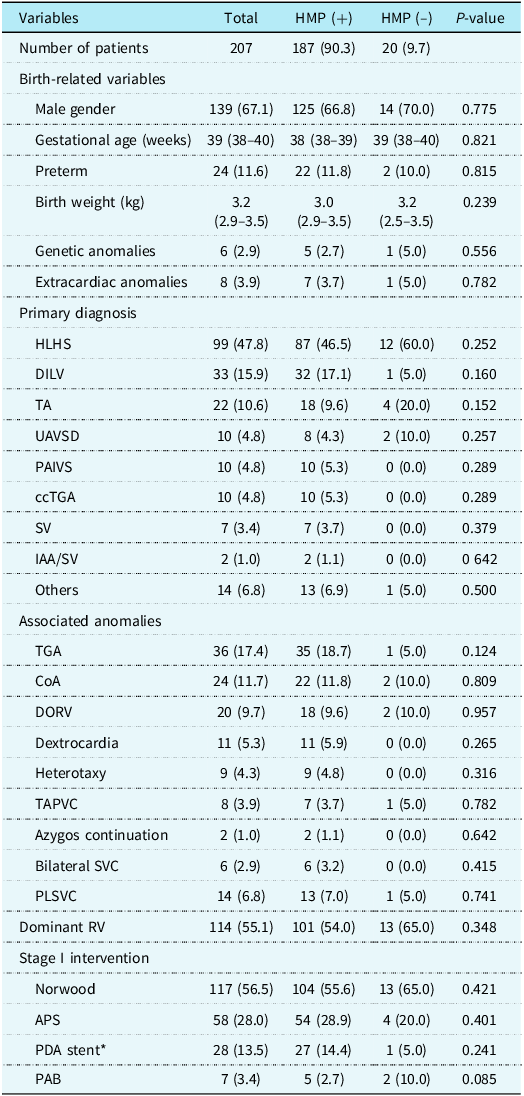
A total of 289 patients underwent stage I palliation during the study period. There were 16 patients who underwent stage II palliation before hospital discharge (both stage I palliation and stage II palliation during the same hospital stay), 47 hospital deaths, and 19 patients who were transferred to other clinics and never discharged before stage II palliation. The remaining 207 patients were discharged with stage I physiology and were included in this study (Figure 1). Home monitoring program could be performed in 187 of 207 discharged patients (90.3%). However, the remaining 20 patients (9.7%) could not enroll in the home monitoring program. The main reason for this was that the patients came from outside Germany. This was either because they were not resident in Germany or because they were unable to provide consistent updates on their health status for different reasons. Patients’ characteristics including birth-related variables, primary diagnosis, and associated anomalies, and stage I procedure were similar between the patients with and without home monitoring program (Table 1).
Patient characteristics

HMP = home monitoring program; HLHS = hypoplastic left heart syndrome; PAB = pulmonary artery banding.
*Three patients were switched to APS.
Clinical findings at hospital discharge and survival after hospital discharge
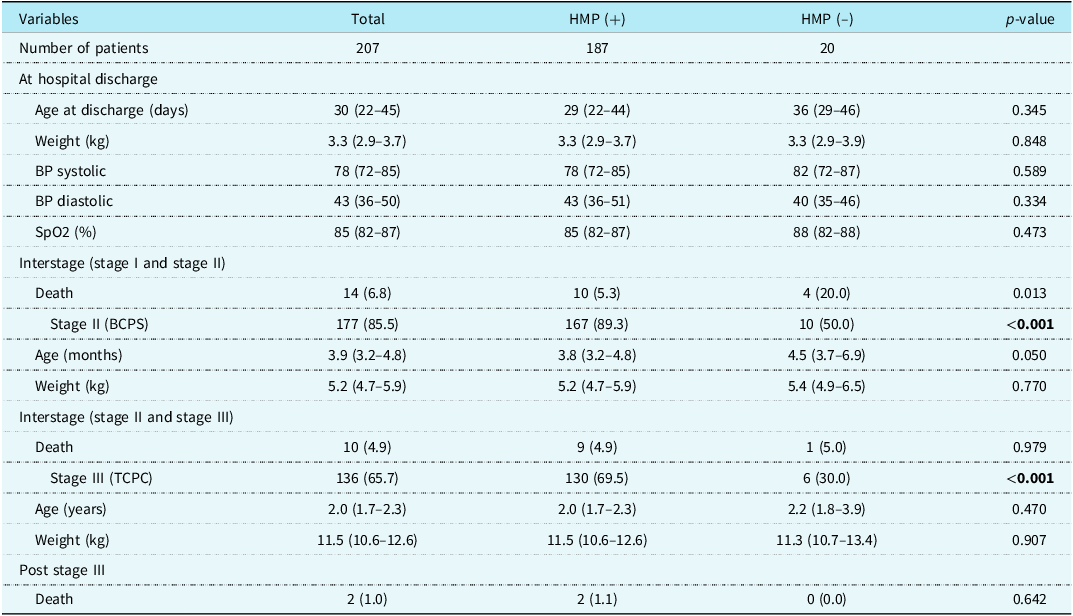
Clinical findings at discharge were similar between infants with and without home monitoring program (Table 2). Among 207 patients discharged with stage I physiology, 14 cases (6.8%) of interstage mortality with a median of 79 (46–130) days were observed during the period between hospital discharge and the next stage of the bidirectional cavopulmonary shunt procedure (10 patients (5.3%) with home monitoring program and 4 patients (20.0%) without home monitoring program, p = 0.013). The causes of the 4 deaths in patients without home monitoring program were progression of heart failure in 3 patients and progressive hypoxaemia in 1 patient. Survival after hospital discharge (93.0 vs. 82.9% at 180 days, p = 0.012) was higher in patients with home monitoring program compared to those without (Figure 2).
Survival after the hospital discharge in patients with and without HMP. Survival was significantly better in patients who received HMP, compared to those who did not. HMP = Home Monitoring Program.

Post discharge and staged palliations data

HMP = home monitoring program; BCPS = bidirectional cavopulmonary shunt; TCPC = total cavopulmonary connection.
Stage II and stage III palliations
A total of 177 patients (85.5%) underwent bidirectional cavopulmonary shunt (Table 2). The rate of bidirectional cavopulmonary shunt was higher in patients with home monitoring program compared to those without (89.3 vs. 50%, p < 0.001). The median age and body weight at bidirectional cavopulmonary shunt were 3.9 (3.2–4.8) months and 5.2 (4.7–5.8) kg, respectively, and did not differ significantly between the groups (p = 0.050 and p = 0.770). Between stage II and stage III procedures, 10 cases (4.9%) of interstage mortality were observed (9 patients (4.8%) with home monitoring program and 1 patient (5.0%) without home monitoring program, p = 0.979). Stage III by means of total cavopulmonary connection was performed in 136 patients (65.7%) with a median age of 2.0 (1.7–2.3) years and a median body weight of 11.5 (10.6–12.6) kg. The age and body weight at total cavopulmonary connection were similar between the groups (p = 0.470 and p = 0.907). Death after total cavopulmonary connection was observed in 2 patients in the home monitoring program groups.
Events during home monitoring program and interstage interventions
In 187 patients with home monitoring program, the median survey period (hospital discharge to stage II palliation, last follow-up waiting for stage II palliation, or interstage death) was 85 (62–114) days. Stage II palliation was performed in 167 (89.3%) patients with a median age of 117 (99–147) days. The median period between hospital discharges to stage II palliation was 88 (66–117) days. There were 10 interstage deaths with a median of 55 (23–95) days after hospital discharge. Among these, only 3 patients died due to the sudden worsening without any censoring by home monitoring program, and 7 patients were censored by home monitoring program and readmitted to the hospital but died due to the progression of heart failure or after reoperations/reinterventions of residual lesions. The remaining 10 patients were waiting for stage II palliation.
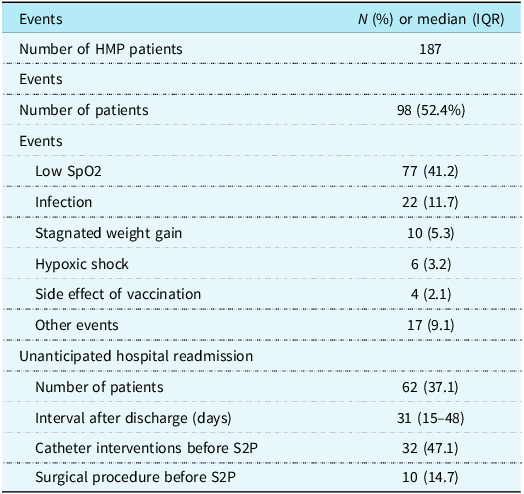
During the home monitoring program period, 98 (52.4%) patients experienced at least one event. The events that occurred within the home monitoring program during the interstage period are shown in Table 3. The most frequent event was low percutaneous oxygen saturation (SpO2 < 70%) in 77 patients (41.2%), followed by infection (n = 22, 11.7%), stagnating body weight (n = 10, 5.3%), hypoxic shock (n = 6, 3.2%), and side effects of vaccinations (n = 4, 2.1%). Unanticipated interstage readmissions to the hospital were required in 62 (33.1%) patients with a median of 31 (15–48) days after hospital discharge. Freedom from unanticipated readmission after discharge at 30, 60, and 90 days was 82.7%, 65.9%, and 59.9%, respectively (Figure 3). Among 62 patients who had unanticipated readmission, 32 (47.1%) needed catheter interventions, and 10 patients (14.7%) underwent surgical procedures. Eight patients received conservative and medical therapy only and were again discharged home. Eighteen patients stayed in the hospital and waited for bidirectional cavopulmonary shunt.
Freedom from unanticipated readmission after hospital discharge in patients who received HMP. HMP = Home Monitoring Program.

Events during home monitoring program (HMP) between stage I and II

IQR = interquartile range; HMP = home monitoring program; SpO2 = percutaneous oxygen saturation; S2P = stage II palliation.
Comparison of patients with and without unanticipated readmission
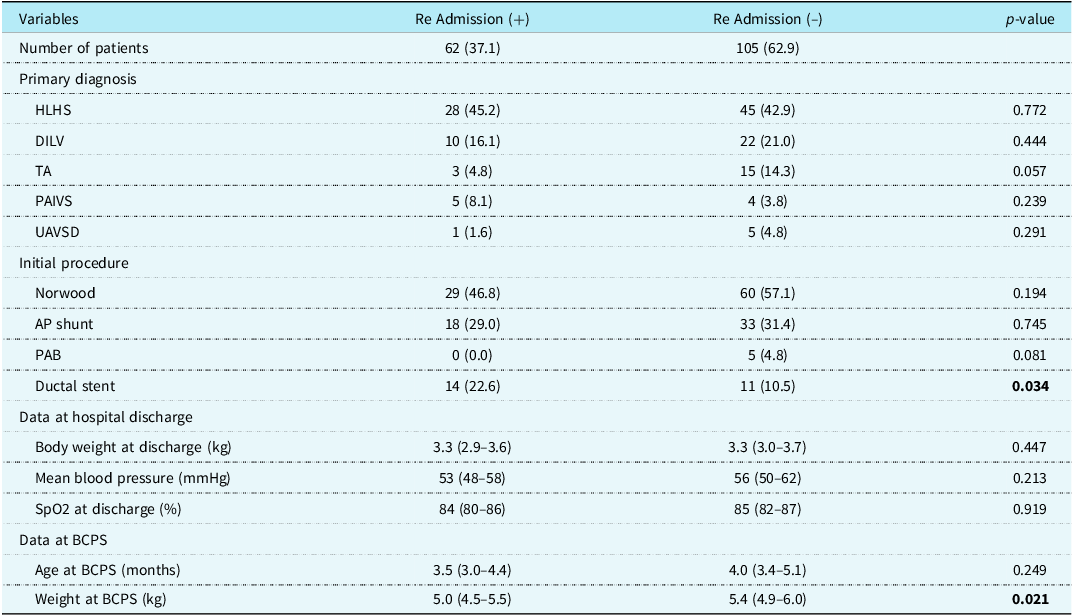
In order to evaluate the effects of interstage readmission, patient characteristics and survival after bidirectional cavopulmonary shunt were compared between patients with and without unanticipated hospital readmissions (Table 4). The primary diagnoses were similar between the groups. As for the initial palliation, patients who underwent ductal stent placement had unanticipated hospital readmission more frequently compared to those who did not (22.6% vs. 10.5%, p = 0.034). Median age at bidirectional cavopulmonary shunt was similar (p = 0.249) between the groups, but weight at bidirectional cavopulmonary shunt was lower in patients who needed readmission compared to those who did not (5.0 vs, 5.4 kg, p = 0.021). Survival after bidirectional cavopulmonary shunt was similar between patients who needed readmission and those who did not (94.4 vs. 96.6% at 360 days, p = 0.807, Figure 4).
Survival after BCPS in patients with and without unanticipated readmission during interstage HMP. Survival was similar in patients who had unanticipated readmission and those who did not. BCPS = Bidirectional Cavoplumonary Shunt; HMP = Home Monitoring Program.

Characteristics in BCPS patients with and without unanticipated resubmission

BCPC = bidirectional cavopulmonary shunt; HLHS = hypoplastic left heart syndrome; PAB = pulmonary artery banding.
discussion
Summary of the results
In this study, we investigated the availability of home monitoring program and its outcomes including the events that occurred in the interstage period as well as the frequency of unanticipated hospital readmissions. Interstage home monitoring program was feasible in over 90% of patients with univentricular hearts during the study. Interstage events, such as infection, low SpO2, and weight loss or failure to thrive, were experienced by 50% of the patients. Additionally, over one-third of the patients required unexpected hospital readmissions. Patients with ductal stenting needed unanticipated hospital readmission more often than the other patients with shunt or pulmonary artery banding. After readmission, two-thirds of the patients needed catheter/surgical interventions. The age at bidirectional cavopulmonary shunt was similar between patients with and without unanticipated hospital readmission; however, the body weight at bidirectional cavopulmonary shunt was lower in patients who needed readmission compared to those who did not. Survival after bidirectional cavopulmonary shunt was similar between patients with and without unplanned readmission in the interstage period between stage I palliation and stage II palliation.
Home monitoring program and interstage mortality
Most of the interstage deaths occurred in patients with shunt-dependent physiology between stage I palliation and stage II palliation. Reference Ohye, Schranz and D’Udekem1 Ghanayem et al. demonstrated that interstage mortality after the Norwood procedure was 12% in a multicentre trial. Reference Ghanayem, Allen and Tabbutt5 Kaplinski et al. reported the improvement of interstage mortality after the Norwood procedure in their 30 year’ experience. Their overall interstage mortality was 10.8% but could be reduced in the latest era (2011–2017) to 4.6% after the introduction of home monitoring program. Reference Kaplinski, Ittenbach and Hunt7 In patients after various types of stage I palliation, Gardner, et al. demonstrated an interstage mortality rate of 5.4% in patients with home monitoring program vs. 13.0% in patients without home monitoring program. Reference Gardner, Mercer-Rosa and Faerber19 Many other studies including ours demonstrated a reduced interstage mortality through home monitoring program [5–7, 9–14]. In this study, the overall interstage mortality of 187 patients with home monitoring program was 10 (5.3 %), which is consistent with previous studies. In detail of the interstage deaths, sudden death was observed only in 3 patients (1.6%), and the remaining 7 patients were censored by home monitoring program, readmitted to the hospital, and subsequently died in spite of medical, interventional, and surgical treatment. Home monitoring program facilitates the early detection of residual or recurrent lesions, including shunt stenosis, re-coarctation, and atrioventricular valve regurgitation, as shown in previous studies. This is achieved through the frequent monitoring of the patient’s status. The majority of patients were able to access optimal therapies for significant residual/recurrent lesions and progress to stage II palliation. In this study, survival differed between patients with and without home monitoring program. Most of the patients without home monitoring program came from outside of Germany. We consider that some of them could not be rescued by the medical resources available in the city or in areas outside Germany, even if the home doctors or parents were aware of the patient’s problem. This could contribute to the survival difference between HMP and non-home monitoring program.
Interstage events and unanticipated readmission during home monitoring program
As for interstage events, numerous studies reported that hypoxia (reflected by a decrease of SpO2) was reported as the most common event and indication of readmission. Reference Rudd, Frommelt and Tweddell6,Reference Ghanayem, Hoffman and Mussatto8,Reference Siehr, Norris and Bushnell11,Reference Staehler, Schaeffer and Wasner14 Our results were consistent with these previous studies. Therefore, diminished SpO2 may be particularly sensitive and will discriminate patients with anaemia, respiratory infections, decreased total cardiac output, as well as decreased pulmonary to systemic flow ratio. However, it is more difficult to develop a home surveillance strategy to reliably detect recurrent arch obstruction (re-coarctation). Recurrent arch obstruction might be identified through the more subtle symptom of slow weight gain.
As for the readmission, previous studies demonstrated a high incidence of unanticipated readmissions during home monitoring program. Gardner, et al. demonstrated that 63% of the patients needed interstage admission, Reference Gardner, Mercer-Rosa and Faerber19 and Hanke, et al. reported the rate of readmission as 66%. Reference Hanke, Joy and Riddle20 They reported that most readmissions were prompted by minor changes in clinical status, whereas only 6% were major adverse event readmissions. Unanticipated hospital readmissions were observed in 37% of the patients in this study. We hypothesise that the disparity in readmission rates was a result of the varying readmission criteria (thresholds) between the clinics.
Timing of and outcomes after stage II palliation
Early stage II palliation was the primary strategy used to treat this subgroup of patients who appeared to be in jeopardy during the interstage period. It is clear from our experience and that of others that although stage II palliation can be successfully accomplished in patients as young as 6 weeks, the postoperative course in these patients is prolonged relatively to older patients. In this study, several patients were readmitted to the hospital before 3 months of age and waited in the hospital to reach an age of 3 months, as we assume that very young patients before 90 days are at an increased risk for mortality after stage II palliation. Therefore, our results showed a similar age at bidirectional cavopulmonary shunt between patients with and without unanticipated readmission.
At the time of bidirectional cavopulmonary shunt, infants who had undergone unanticipated readmission had significantly lower body weight than those who did not require readmission prior to bidirectional cavopulmonary shunt. Barron, et al. have shown that an earlier bidirectional cavopulmonary shunt is safe for infants who are thriving; however, those with poor weight gain are at a higher risk. Reference Barron, Haq and Crucean21 A low weight at the time of bidirectional cavopulmonary shunt was identified as a risk factor for survival. Reference Carlo, Carberry and Heinle22–Reference Staehler, Schaeffer and Ruf24 Therefore, infants who experienced unanticipated readmission had a higher risk for bidirectional cavopulmonary shunt, but survival after bidirectional cavopulmonary shunt was comparable to those without unanticipated readmission. We assume that interstage medical treatment, interventions after readmission, and our weighting strategy until 90 days old might reduce the risk and enable us to achieve a good condition for bidirectional cavopulmonary shunt. Nonetheless, earlier relief of volume overload and improvement in cyanosis may be especially important in patients with univentricular heart with limited ability to increase cardiac output.
Refining of the home monitoring program and future prospective
Home monitoring program identifies physiologic disturbances before decompensation, providing an early warning system for prompt interventions. Our results demonstrated a significant reduction of interstage mortality, demonstrated frequent events and unanticipated readmission in our population. The most frequent events included imbalanced systemic and pulmonary circulation (low SpO2), congestive heart failure, shunt stenosis, and recurrent aortic arch stenosis. Refining of home monitoring program is crucial to further improvement of the interstage mortality rate. Hehir, et al. demonstrated that infants enrolled in an home monitoring program experienced normal growth velocity during the interstage period after stage I palliation, and daily observation of oxygen saturation, weight change, and enteral intake, together with implementation of a multidisciplinary feeding protocol, is associated with excellent interstage growth and survival. Reference Hehir, Rudd and Slicker25 The success of a home monitoring program requires dedicated family participation, as well as collaboration among multidisciplinary health care providers. Training of parents before hospital discharge after stage I palliation is crucial to improve understanding of potential problems their child might encounter at home and to emphasise the importance of using the monitor continuously in situations where they are not directly interacting with the child. The refinement of monitoring equipment might be one of the methods. Introducing continuous monitoring using wearables such as a smart watch for the detection of vital signs might be an alternative.
Study limitations
This study was limited by its retrospective and single-centre design. Surgical and medical management may have changed during the study period, probably influencing the outcomes. Because most non-home monitoring program patients had special backgrounds of “the patients came from outside Germany”, there was a bias in the comparison of mortality in patients with and without home monitoring program. We had insufficient information regarding critical events in patients without home monitoring program throughout the interstage period, and only parents or local physicians reported the cause of death. None of the infants were subjected to post-mortem examinations. Despite these limitations, the criteria selected to prompt examination were not different from those that would have triggered investigation in either group if identified at a routine clinic visit.
Conclusions
Daily home surveillance of peripheral percutaneous oxygen saturation according to pulse oximetry and body weight in patients with univentricular physiology permitted timely readmission and reintervention and was associated with improved interstage survival after the first stage of palliation. The survival rate after bidirectional cavopulmonary shunt was not adversely affected by the earlier bidirectional cavopulmonary shunt in the unanticipated readmission group.
Financial support
This study was supported by grants from the Förderverein des Deutschen Herzzentrums München.
Competing interests
The authors declare no potential conflicts of interest with respect to the research, authorship, or publication of this article.
Ethical standard
Approval of The Institutional Review Board of the Technical University of Munich was obtained to assess the efficacy of the home monitoring program (approved number 2023-638-S-SB on 7 December 2023). Because of the retrospective nature of the study, the need for individual patient consent was waived.