Introduction
Care for underserved populations is an inherently complex issue that the United States health system has sought to address to varying degrees of success since its inception.Reference Adler, Glymour and Fielding1 There are many logistical concerns that must be overcome to care for these patients, and one of the most noted barriers is known as “social determinants of health” (SDOH). SDOH, as defined by the World Health Organization, are the “conditions in which people are born, grow, work, live, and age, and the wider set of forces and systems shaping the conditions of daily life.”2 This rather broad definition has its roots in the Whitehall studies from the 1960s–1980s, in which a direct linear correlation was found for the health of individuals based on income, social factors, and external stress.Reference Marmot3 Examples of SDOH include transportation, housing security, food access, income, and structural racism.Reference Yearby4 In the 21st century, SDOH have been found to be largely responsible for the disproportionate disease burden that low income, historically oppressed, or marginalized populations face in comparison to a wealthier populace.Reference Daniel, Bornstein and Kane5
The disproportionate burden of disease faced by populations due to SDOH is of no surprise, considering that conservative estimates describe SDOH as responsible for 50–80% of the health of an individual, where only 10–20% is accounted for by medical care.6 Health equity is directly impacted by SDOH as well, as SDOH have documented effects that create a poor starting point for a patient’s health and worsen health outcomes for a given treatment.Reference Daniels7 Given these facts, SDOH can worsen existing health and economic disparities between communities.8 Furthermore, SDOH can limit an individual’s ability to fully participate in society, which subsequently restricts the life opportunities of individuals.Reference Daniels9
The economic, health, and equity implications of SDOH are incredibly broad. Not only can these issues be disastrous to a patient’s health outcomes, but they also play a major role in the cost crisis in health care.Reference Riegler10 The World Health Organization has defined SDOH as a leading cause of the cost crisis felt by health systems around the world.11 By increasing the cost burden, SDOH further complicate the care of those with high health related social needs (HRSN), adding another financial barrier to care.Reference Wang, Bai and Anderson12 This again raises a concern for health equity, as a financially driven health system now faces passive disincentives to improving the SDOH a patient experiences.13 While there are some incentives to addressing SDOH, such as saving costs in the long-term, many health plans cite that due to high beneficiary churn, forecasting savings on SDOH is generally inaccurate and difficult to perform.14
Although there may be some controversy regarding addressing SDOH as a health system, the fact of the matter is that health care organizations (HCOs) are already tasked with addressing these issues. Specifically, the burden of the task generally falls upon safety net facilities that see those least well off within a general area and have a high proportion of charity (i.e., free or reduced price) care.Reference Bazzoli, Thompson and Waters15 These facilities generally have a low operating income and adopt an additional financial burden of solving the HRSN. Reasons for doing so include a mission driven approach, or simply because “no one else will do it.”16 For example, in the Boston area, while there are many financially successful hospital networks capable of caring for socially complex or low income patients, the bulk of this care is done at the two safety net facilities of Cambridge Health Alliance and Boston Medical Center.17 While much of this may be due to historical forces such as segregation practices in the 20th century, the fact of the matter remains that these modern facilities now must accept more financial risks, adopt costlier practices, and invest a higher amount of resources to achieve the same outcomes for patients as seen in low-SDOH-burden populations.Reference Hudson18
This disproportionate resource investment is mostly met with no reimbursement for extra, nonclinical activities meant to address SDOH. Some institutions have gone as far as adding a “prescription food pantry,” so that patients may eat a diet supportive of their medical condition when they do not have access to healthy food.19 Others have built housing for housing insecure patients.20 These actions are central to managing conditions in these populations, but alas, they only incur a cost without reimbursement. While payers have been hesitant to finance such initiatives due to poor long-term cost saving visibility or frequent beneficiary membership changes, there is a growing need to recoup these costs and improve the financial viability of safety net facilities.21 Furthermore, modern payment models, such as bundled value-based payments, where payments are made based on condition outcomes divided by costs over a care cycle, pose a unique opportunity to mitigate financial risk while incentivizing SDOH intervention.Reference Ayers22
The structure of a value-based payment need not conflict with financial risk concerns. In fact, adding a payment modifier or separate section of a bundled payment may isolate this risk entirely.Reference Freeman, Coyne and Kingsdale23 This puts payers in a unique position to directly incentivize SDOH initiatives. Safety net hospitals deserve reimbursement for their care of HRSN in a complex patient population. There are also massive costs to be saved on a population level should these implementations be successful.Reference Berenson and Cassel24 Furthermore, the issue of member churn cited by payers may be better mitigated with a test case in the Medicare population of this model before expansion to commercial payers. From an equity standpoint, this also has the potential to incentivize care for vulnerable populations at medical centers that historically see a low proportion of these patients.
Within this work, I will argue that social care must be reimbursed by payers to address historical care inequities and rightfully reimburse safety net facilities for expected functions. I will outline the structure of a value-based, condition-bundled payment that includes provisions for SDOH initiatives as a payment modifier to provide a solution for logistical concerns regarding reimbursing social care. I begin by describing the ethical necessity for this payment through an appeal to distributive justice principles and follow with an argument for the responsibilities of payers to adopt such payments. Given that the structure of payment inherently will concern paying more for certain population members, I will review the ethical hazards of such a plan (e.g., market competition, care inequities, etc.) and suggest solutions. I will then briefly give an overview of prior attempts of modern payment models to address SDOH and display common pitfalls. This will then be contextualized with my proposition for a value-based bundled payment inclusive of SDOH initiatives. I will use modern measurement systems for outcomes and costs to provide guidance on rewarding process outcomes (i.e., service connection rates) as well as patient-reported outcome measures per unit cost. This work will close with an ethical solution for implementing this model through an HCO option to accept or decline such payments and an alignment of payment with patient values.
Section 1: A Moral Framework
Ethical Reasoning: Why is Payment for SDOH a Moral Question?
For better or worse, payments have directed financial incentives and have shaped the United States healthcare system. This can be seen plainly in the structuring of the US health system to prioritize higher volumes of treatments without financial accountability for outcomes or costs.Reference Heath25 Predominantly, volume-based incentives exist under fee-for-service (FFS), in which discrete payments are made for each diagnosis and treatment given.26 Given that such a rudimentary payment model was never intended to address issues of health equity, incentives have driven a market force that reinforces inequitable societal distribution of health to the detriment of those least well-off.27
While older forms of payments such as FFS lack formal reasoning for incentive structures, subsequent alternative payment models (APMs) were designed specifically with incentives in mind. Capitation, where a set dollar amount is paid for a patient’s care in a given time frame, incentivizes cost control and subsequently may lead to care under provision.28 More recently, value-based payments (VBPs) were created to align incentives with patient values.Reference Cattel and Eijkenaar29 This includes payment for outcomes per unit cost, which incentivizes provision of the highest outcome care at the lowest care cycle cost per condition.30 However, none of these major payment models adequately address concepts of distributive justice or health equity. Even VBPs, which have the opportunity to incentivize any ancillary care necessary to deliver high outcomes and may include social care, generally have little to no impact on health disparities and are slow to roll out in low-resource communities.31
Whether intended or not, payments are clearly a distributive tool in healthcare.32 By predominantly selecting high-resource communities for VBPs, the intercommunal gap between payment innovation worsens. Furthermore, these payments reflect a systematic prioritization of high-resource communities, even when the potential for VBPs to be modified for health justice is rather high.33 While some payment models have begun to address certain aspects of social care for patients, none fully reimburse social care that is generally considered to be a necessary component of the treatment or preventative process in certain populations.Reference DeCamp and Tilburt34 For example, food insecurity is something that notably affects the treatment course of a wide range of medical conditions such as diabetes, heart failure, and even depression.Reference Bryce35 In response, the prescription food pantry has become an evidence-based treatment for those with food insecurity and related disorders.36 However, such innovations generally are seen as a component of philanthropic endeavors rather than treatment modes, and thus are counted as non-reimbursable components of care.37 In doing so, payers systemically underprioritize necessary components of care for socially complex (i.e., patients with multiple compounding social determinants of health such as transportation issues, homelessness, geographic isolation etc.) patients, which adds an undue cost burden to safety net facilities. This is an especially important point given that safety net hospitals work with operating margins that are on average six times lower than other hospital networks.Reference Popescu38 With uncompensated care rates of up to 38%, these hospitals are in need of compensation for services that are otherwise expected for high outcome care.39
While this is clearly a disproportionate burden and inequality in payment, is it an equitable deviation from equality? Viewing this from a perspective of Rawlsian distributive justice, it would appear not. Rawls describes permissible deviations from strict equality through his difference principle, stating that it is not inequitable if the deviation minimally does not leave those least well-off in society in a worse position and ideally leaves them in a better position.Reference Daniels40 With payments disproportionately inhibiting the actions of safety net facilities, this is an inequitable deviation from strict equality. Furthermore, the procedure of such actions, on average, leads to unjust outcomes in which disparities can be heightened and disproportionate non-reimbursable costs are accrued. Some have argued that healthcare ought to hope minimally for imperfect procedural justice, in which the procedure is likely to produce a just outcome, or pure procedural justice, in which there is no way to assess the outcome.Reference Daniels41 The current process of payment does not cover either of these factors and reinforces existing health disparities.
Support for viewing payments as a moral issue can also be constructed from the lessons of the work of Norman Daniels. Broadly speaking, his account for justice in healthcare centers around the idea that healthcare protects an individual’s ability to participate in society as an extension of Rawlsian justice.42 In turn, healthcare acts as a protection of fair equality of opportunity, meaning individuals have a fair chance at beneficial life opportunities.43 As a component of any health system, payment ought to reflect such moral priorities as well.
Such concepts are especially true when considering the resource intensive, yet necessary, process of safety net facilities addressing certain SDOH for patients. Daniels specifically expands his concept of health justice to cover inequalities due to SDOH, stating that such issues are mostly unjust as they are the result of specific exclusionary practices aimed at vulnerable populations.44 In distinctly covering this principle for SDOH, Daniels further supplements his points with work from Dahlgren and Whitehead by contending that SDOH cause inequitable differences in health when they are avoidable, unnecessary, and unfair.Reference Whitehead45 In the case of inequalities reinforced by payment models, namely, that non-reimbursable care creates a cost burden that negatively impacts patient care, this is an entirely avoidable situation that leads to unfair outcomes on average. However, the necessity of payment for such activities has been debated in the literature, citing complaints regarding health plan beneficiary churn and difficulty with financial forecasting which creates a higher degree of financial risk.Reference Melzer46 While these logistical complaints are worthy ones, this does not eliminate financial risk for safety net hospitals. In fact, this is a cost-shifting measure in which both initiative cost and risk are quarantined to safety net facilities and other care-providing organizations. The lack of payment for such services is not morally justifiable on the grounds of financial risk if the risk is isolated through unjust cost distribution. Furthermore, lack of payment oftentimes reinforces care inequities that are driven by older payment models such as FFS and capitation, in which complex social care is oftentimes avoided by major hospitals due to the non-reimbursable costs.Reference Tummalapalli47
Responsibility and Accountability
Thus far, I have discussed the moral issues that classify paying for SDOH as an ethical concern. However, such a classification does not confer responsibility for fixing such issues to any institution or individual. Perhaps the largest criticism of such a classification is the question of whether payers are in any way uniquely responsible for financially incentivizing or paying for SDOH initiatives. Furthermore, there are additional arguments that health systems should not be conducting SDOH initiatives and that such care should be relegated to larger governmental forces or non-medical corporations.Reference Dimmler48 While these questions are important ones, they remain external to the fact that not only are care-providing organizations currently providing care, those payers may expect such social services to be provided for socially complex patients without plans to reimburse these actions. To fully assign responsibility to payers in this unique interaction, counterarguments of individual and institutional responsibility must be addressed.
The consortium of players that are responsible for the creation of SDOH has been widely studied and is extremely extensive. One area which has received extraordinary attention is the culpability of individuals in creating their own SDOH.Reference Marmot49 However, it is widely held that the majority of SDOH are not due to individual action, but rather to structural pressures that shape behavior.Reference Wilker50 This may implicitly limit the autonomy of individuals in certain scenarios.51 This is especially important to acknowledge given many liberal egalitarian arguments for justice conclude that outcomes are not inequitable if they are due to personal choice.Reference Young52 Individualism can be an important factor to consider, although the responsibility for SDOH ought not be placed on individuals whose liberty may be disproportionately limited by social structure to begin with.53
As previously discussed, there is active debate about whether or not healthcare organizations should be providing extensive social care such as prescription food pantries or housing initiatives to begin with. Furthermore, the question of whether these organizations even have a moral obligation to do so is one with substantial merit. Given that these organizations do voluntarily engage in these services, this is an important consideration. However, while individuals who experience SDOH experience societal pressure, it is important to note that healthcare workers and safety net facilities similarly face pressure to provide these services. Oftentimes, the funding for such initiatives comes from a charitable source or these initiatives are a method of financial survival in a minimally quantifiable form.54 Furthermore, for safety net hospitals such as Boston Medical Center, the mission of their organization to meet the health needs of all patients is a driving force behind such initiatives.55 Subsequently, whether or not these organizations ought to be providing this care is external to the consideration of payer responsibility, as such actions are oftentimes performed as a necessary component of care that go without reimbursement.
A useful framework for determining the scope of responsibility for SDOH payments by payers is provided through an analysis of the work of Iris Marion Young. Simply put, her work defines the responsibility for rectifying past injustice to be on actors responsible for creation or reinforcement of inequities.56 Payers, whether governmental or commercial, otherwise drive inequities in care when expected acts of social care go without reimbursement by placing undue financial burden on these facilities. It is important to note that this framework does not exclude individual responsibility. In fact, much of Young’s work focuses on maintaining the same line of responsibility for the individuals acting within a system that perpetuates inequities.57 She asserts in her critique of Murphy, for example, that it is not only the action of just institutions that is important, but just outcomes for individuals as conferred by just actors.58
Within Young’s work, there is a shared responsibility model for those (both individuals and institutions) that contribute to structural processes that produce injustice. Such injustices are undone through collective action.59 In viewing payers as morally responsible, the moral responsibility of other actors, such as care-providing organizations or individual patients, is irrelevant. The matter remains that care-providing organizations and healthcare workers are distinct moral actors that are a portion of this collective action. The structure that reinforces injustice within healthcare largely includes payers, who are responsible for the existing volume prioritization by the United States health system.60 This confers a unique moral responsibility to readdress created market forces with new payments and incentives, of which the disparities created by not reimbursing social care are distinct structural inequities perpetuated by payers. Other players have created momentum through their acts of social care, yet payers have largely lagged behind in addressing these issues to contribute to collective action. Such an account of responsibility towards payers is hitherto undescribed in the literature.
Approaching an Imperfect Procedural Justice
I have largely described payment for social interventions as a necessary component of an ethical health system. While this remains true, the method of payment can still influence market forces that lead to deleterious outcomes for patients. For example, VBPs may be touted as the most just current payment model, but these still suffer from misaligned incentives in some cases. For example, there is a possibility that such payments lead to selection of patients who have a higher odds ratio of accomplishing higher outcomes at a lower cost. This subsequently may lead to a prioritization of healthier and more socially supported patient populations through the “healthy patient selection bias.”Reference Groenewoud and Kremer61 This suggests that such payments will have direct effects on the distribution of monetary health resources, and such a distribution should minimally be done through an imperfect procedural justice, in which the outcome is likely to be just. Many of the hazards of paying for social care have to do with maldistributed finances and fostering unfair competition between organizations.
To begin, it is important to further examine how such a value-based payment system for social care fosters an imperfect procedural justice rather than an injustice. This is an important distinction, as the predominant payment model of FFS has been seen as an injustice to patients, with an application of VBPs to social care offering a more just route of health system financing. As it currently stands, the lack of a monetary incentive for addressing SDOH either makes organizations who do not do so averse to engaging in these practices, or it punishes organizations which view this as a necessary component of care.62 The most frequent criticism of healthcare organizations engaging in such practices has been that such actions are nonintuitive or external to the care of patients.Reference Sullivan63 Many such criticisms mimic arguments against having beyond a decent minimum right to care. However, including payment for social services is a unique operation meant to meet the needs of the structural reality of US healthcare. This financially driven health system often conflicts with principles of justice, and consequently, any operations within this system may produce unjust outcomes. This is why actions that may be in excess of decent minimum standards are necessary, as the decent minimum amount of care vulnerable populations need is different than those with low SDOH burden need to achieve the same treatment outcomes.Reference Baum64
In pursuit of an imperfect procedural justice meant to address the higher need of vulnerable populations, particular actions towards these patients may conflict with key concepts of distributive justice. The veil of ignorance is a central point of Rawlsian distributive justice in which resources ought to be allocated to populations through a blinded vision of the nation based on need.65 In paying for social interventions, the veil of ignorance is circumvented by specifically targeting populations based on SDOH burden. These groups can contain populations that were historically excluded from fair opportunities, and different populations will require newer innovations to address their needs. This does not make for a perfect distributive system, but it does notably target historically disadvantaged groups. Notable support for targeted interventions comes from Iris Marion Young. She critiques the idea of a veil of ignorance by arguing that the structural reality that causes injustice is the result of intentional historical actions by institutions and individuals, which means that these groups are owed more specific interventions on the individual and population levels.66 In this regard, a financial incentive is within the scope of action of payers and has the opportunity to improve justice for these patients through targeted actions. However, it is noteworthy that prior payment models have been held at least partially responsible for worsening disparities.67 Repeat outcomes are still possible regardless of intention if incentives are designed poorly.
The complaint of maldistributed resources is anchored in a communitarian concern for worsening intercommunal disparities. To briefly show an example of maldistributed finances, the 2017 initiative by the Centers for Medicare and Medicaid Innovations (CMMI) launched the Accountable Health Communities (AHC) in an effort to address HRSN by connecting patients to local community resources.Reference Billioux, Conway and Alley68 These organizations were funded via grant, and awards were determined in part by screening protocols in place, portion of CMS beneficiaries in the community, and existing resource availability to address HRSN.69 This demonstrates a key issue of prioritization. High-resource communities are generally favored for receiving monetary investment when it comes to SDOH initiatives, even though low-resource communities (rural or isolated urban areas) face higher logistical barriers due to a higher SDOH burden and require higher investment to overcome logistical barriers.Reference Singh70 This feeds into the aforementioned hesitancy of payers to become involved due to higher degrees of financial risk. Despite the fact that initiatives in low-resource communities would likely have a higher impact on patient health, financial prioritization is still towards high-resource communities.Reference Kaufman71 The current SDOH ecosystem in the US does not reflect financial prioritization of those least well off, and intercommunal disparities can be worsened if payments do not reflect the needs of vulnerable populations and competition is driven in favor of high resource communities.
The Issue of Competition
A separate, but crucial ethical issue concerns the matter in which market forces fostered by payments drive competitive forces. Financial payments can simultaneously give organizations an edge over others and structurally reinforce incentives.72 Nonprofits and safety net facilities strongly feel these forces as well, and this is not an issue isolated to for-profit healthcare. The market forces created by value-based healthcare and VBPs are meant to drive the “Centers of Excellence” model of care, in which competition favors dedicated centers to deliver specialty care.Reference Elrod and Fortenberry73 This is widely held as beneficial for specific treatment processes, like extremely successful surgical or medical interventions on prostate cancer that drive the popularity of Martini Klinik in Germany, which draws worldwide attention.Reference Reitblat74 However, there is significant concern over such practices on the community health center scale, which can drive the growing healthcare access crisis.75
Economic competition in healthcare, while truly American in spirit, may not always be fair competition. When adding a specific payment for social care based on outcomes and cost, it is intuitive to believe that centers which provide the best outcomes at the lowest costs will receive a larger payment. Once again, this may not be reflective of the barriers to overcome the lack of resources within a given community.76 Lacking resources is not only an issue for performing social interventions to begin with but is also a barrier to accurately tracking outcomes and costs when implementing value-based healthcare.Reference Porter, Pabo and Lee77
Implementing value-based practices is a highly resource-intensive information technology process. This can create a threshold effect for value-based healthcare participants, where a minimum amount of resources is needed to have this structure. Imposing a VBP on organizations which do not meet these resource requirements, or otherwise are unwilling to participate, can put these organizations at extreme financial risk and will minimally impose restrictions on organizational and community liberty. Otherwise, it could lead to unintended penalization of low-resource organizations. However, if competitors are able to participate, this can lead to low-resource organizations being outcompeted. To balance these issues, a potential solution is to make the payment structuring to be optional for participation with clear explanation that cost and outcome data would need to be stringently tracked. With this opt-in inclusion, the organizations themselves can make the decision on whether they offer eligible services to begin with or whether they have the resources to participate.
Section 2: Applying Value-Based Payments to Social Care
The Opportunity of Value-Based Payments
Beyond the ethical opportunity of using payments to drive health equity in populations with high SDOH burden, there is a significant benefit as well. This is not the first recognition of the logistical benefits of paying for SDOH related initiatives, as many attempts have been made in the past, but have largely fallen short. The majority of such payment initiatives were done under FFS, but the focus was largely on identification of SDOH and using billing codes in the electronic medical record.Reference Pollak78
The use of billing codes, namely ICD 9/10, Z, and CPT codes, conferred no payment for addressing SDOH, and the spirit of these payments was largely to identify high-cost patients and reimburse using uniform charges for simply documenting SDOH.79 Ideally, this would make up for some of the costs of caring for these patients. However, these codes were generally underutilized across acute, ambulatory, and surgical practices.80 Recent studies have shown most hospitals have used these codes at least once (89%) with the highest percentage being in safety net hospitals.81 These codes generally are underutilized to accurately identify SDOH for individual patients. The accuracy of these diagnostic codes has been called into question due to concerns of overmedicalization given payment was made on number of diagnostic codes used, creating a financial incentive to diagnose more SDOH.Reference Lantz82 Furthermore, many of these codes underestimate systems’ SDOH costs by focusing solely on costs attributable to medical care in the acute setting, rather than ambulatory services.83 While studies have shown that FFS payments made on these codes can eliminate underpayment for specific complex patients in 72% of cases, there is still no reimbursement for social care initiatives or financial accountability for delivering high outcomes.84 Regardless of intent, this is still an inaccurate measure of costs attributable to the full care cycle of a patient, which oftentimes is far beyond the strict medical treatment reimbursed in FFS.85
Capitation and managed care models also lean heavily on identification and screening processes for any form of reimbursement.Reference Kushner and McConnell86 Instead of direct reimbursement, capitated models generally rely on passive incentives to cut costs through SDOH interventions. Generally, this leads to no significant difference in SDOH burden experienced by patients.87 However, some recent innovations have targeted the extra costs incurred by facilities due to SDOH in capitated models through adjusting the capitated payment rate at the end of each period.88 This has been done in Oregon using retrospective claims data from Medicaid to forecast cost attributable to SDOH for the upcoming period. Unfortunately, the amount of reimbursement given was generally less than the true costs incurred.89
Other programs have specifically targeted funding initiatives for SDOH at individual facilities through discrete program payments. For example, Medicaid recently launched an initiative where community health worker salary could be specifically reimbursed.90 These payments begin to address some of the issues with current SDOH funding arrangements since it aims to pay for what is otherwise an expected action within treatment of vulnerable populations. However, there still were no provisions to hold facilities financially accountable to delivering outcomes on SDOH interventions for patients. Additionally, the Oregon initiative indicated that the practice of SDOH investment and poorly clarified attributable costs had high variability between facilities, which created a substantial challenge for negotiating capitated rates. The Oregon initiative also demonstrated that there was difficulty in determining which SDOH initiatives should be eligible for payments, as equity was envisioned to be affected through incentive directions. Furthermore, the lack of standardized data collection between facilities cast doubt on the ability to equitably distribute payments.91
The problems experienced by both FFS and capitated models in approaching SDOH intervention reimbursement may be solved through methods common to VBPs. FFS falls short on incentivizing actual social care provision, VBPs directly incentivize care that leads to improved outcomes.92 Capitation lacks strong direct incentives to identify or address SDOH and has an issue with choosing which initiatives to directly fund, VBPs can be applied to any service provided it improves patient outcomes that are tracked.Reference VanLare, Blum and Conway93 Furthermore, VBPs adopt the strong points of capitated models, in which both individual patient payment amounts and population level global payments can be adjusted to incentivize specific action and reward performance.Reference Leao94 Much of the success in VBPs has been done through bundled payment models, in which the entire care cycle is paid with one global payment that has line items addressing outcomes and costs as compared to internal facility data as well as regional and national benchmarks. This rewards individual facility improvement at a lower rate than absolute improvement, but still incentivizes both nevertheless.95
The main benefits attributable to VBPs have to do with the evidence-based methods of outcomes and cost data tracking. These methods mostly consist of tracking outcomes that matter to patients with patient reported outcome measures (PROMs), objective clinical outcomes, and detailing patient care (or social care) processes through time-driven activity-based costing (TDABC).Reference Bernstein96 This best aligns payment incentives with accountability for delivering on beneficial actions to vulnerable populations, rather than simply financing their existence. By doing so, a payment for social care can create market forces in synergistic directions for patients. Using this method can create a logistically coherent payment model that best fulfills the moral responsibility of payers to finance social care. Interestingly enough, PROMs have already been shown to give insight on patient experience of SDOH during a treatment course, which can lead to targeted intervention based on sociodemographic factors and outcome improvement directly attributable to these processes.97 TDABC will be expanded upon in later sections, but it is important to note that such an accounting method has been shown to accurately identify costs, improve the patient care logistical process in low resource settings, and suggest changes to care plan that matches the needs of socially complex patients.Reference Kaplan98
Defining a Scope of Practice for a Bundled Payment
To develop a bundled payment, a proper scope of practice must be defined for a given condition. Under this scope, all those involved directly in a patient’s care must be detailed, and this routinely consists of an interdisciplinary team (nurses, social workers, physicians, medical assistants, etc.).99 In all settings, this truly means a practice must be designed around a patient’s needs for a given condition.Reference Keswani, Koenig and Bozic100 Organizing care in VBHC practices is done with integrated practice units (IPUs), which simply refers to a dedicated care team that is oriented by condition rather than specialty.101 For example, the Joslin Diabetes Center in Boston, MA, has a dedicated diabetes clinic that consists of endocrinologists, primary care physicians, nephrologists, and ophthalmologists that work in tandem to provide care specifically to diabetic patients.Reference Porter, Teisberg and Wallace102 This also includes social workers who specifically address social barriers patients have to care, which is also a common component of full “integrated care” models for diabetes (which, although confusingly named, are separate from IPUs).Reference Zarora103
To fully maximize the targeted effectiveness of an SDOH VBP, a test case must be selected that satisfies the following two requirements:
-
1. A given patient population is selected. This can include CMS beneficiaries, geographical patient populations, commercially insured individuals, etc. The reason this is necessary is to reduce the variability of treatment modalities and establish a reasonable group for self-comparison of outcomes along with global benchmarks. This can be done across multiple populations simultaneously to improve the level of detail seen in the collected data, which is especially important when measuring the change in health disparities.
-
2. A condition is selected. Condition-oriented care, rather than specialty-oriented care, is essential to the VBHC model. Having a dedicated interdisciplinary team addressing a single condition makes data collection easier and reduces variability in patient outcomes. Furthermore, there are defined care cycles for conditions such as diabetes which allows for a timely bundled payment to be created that includes all services a patient receives rather than disjointedly billing a patient for individual actions.
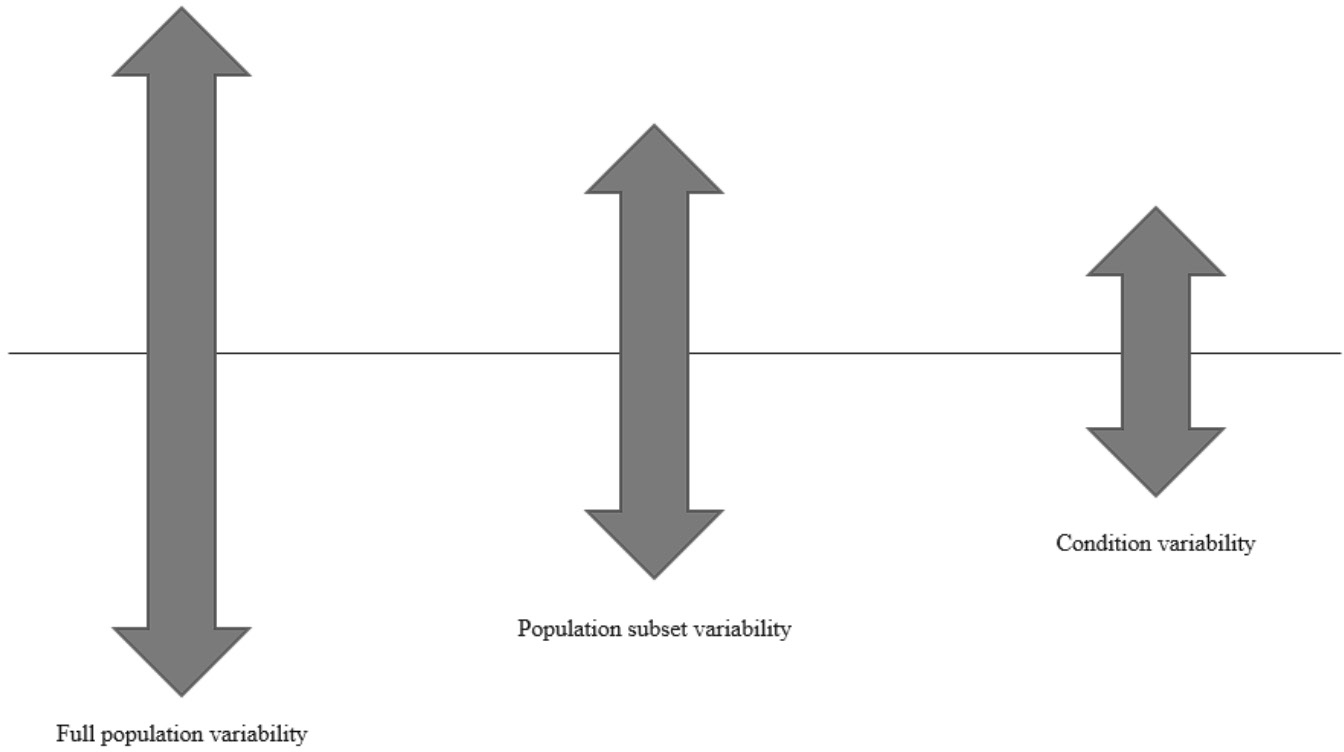
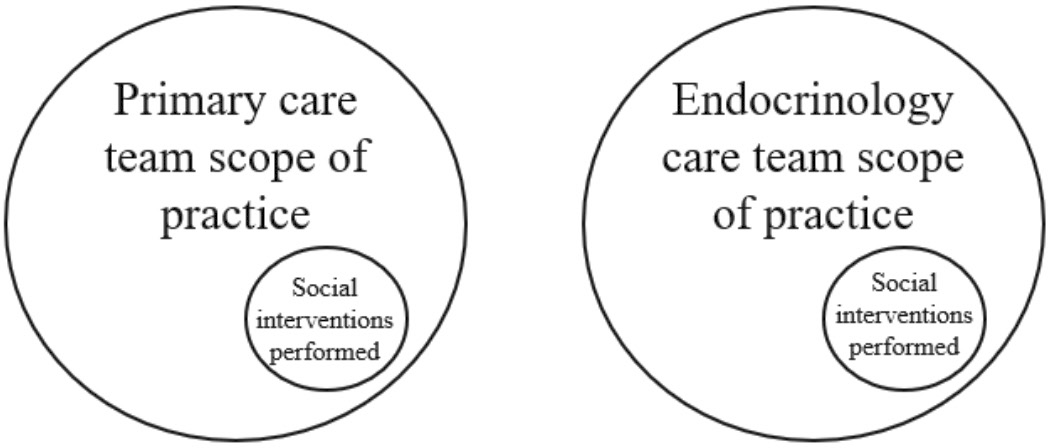
In the core of caring for socially complex patients, both of these selection criteria are essential to reduce the variability of patient outcomes ( Figure 1 ). As it currently stands, social care is often a part of an IPU’s approach to managing a patient’s social needs that goes without reimbursement.104 Furthermore, current care structuring for conditions such as diabetes frequently has a duplication of efforts in addressing SDOH for patients between primary and specialty care settings (Figure 2). Reference Ward105 This leads to care inefficiencies and confusion for patients.Reference Kutz106
By selecting a particular condition within a population segment, outcome data and data collection variability is reduced. Populations are generally defined by beneficiary grouping (i.e., Medicaid, Medicare population versus commercially insured).

Social interventions in teams that are not integrated are typically divorced from one another without any joint accountability for performing these actions.

There is a growing need for a truly integrated approach to social care that is clearly defined for a given condition. For example, integration between a primary care group and endocrinology practice can greatly streamline the process in getting diabetic patients the social resources they need.107 In a VBP model, the primary care team and specialists would have overlapping responsibility and financial accountability for delivering social care for patients ( Figure 3 ). To return to the prescription food bank example, this would involve primary care and specialist collaboration to determine food needs for patients, which can be done via collaboration between physicians, dieticians, and social workers.108 A bundled VBP directly incentivizes collaboration and condition orientation for an organization because it holds the organization financially accountable for delivering outcomes within these bounds, and this can easily be expanded to have a line item for social care. However, team-based care must be in place for joint accountability on delivering outcomes to exist.
In a value-based payment model, there is joint financial accountability for delivering outcomes to patients between specialists and primary care teams.

If restructuring care for socially complex patients around condition-based teams sounds like a resource intensive process, it is because the process indeed requires much investment. However, many modern initiatives through community health centers and the patient-centered medical home models have begun to drive team orientation this way specifically for socially complex patients. In the patient-centered medical home model, there is immense interdisciplinary collaboration with a uniquely socially oriented set of interventions meant to deliver better outcomes for a patient’s condition.Reference Jackson109 Such an initiative, which mimics outpatient IPUs, has been relatively successful so far.110 While community health centers are generally still oriented around specialty care, social interventions are almost always interdisciplinary and ample communication between key stakeholders is frequent to reduce redundancies.Reference Adashi, Geiger and Fine111 In sum, the test case for a VBP bundled payment that is inclusive of social interventions readily exists, and specific population segments and conditions must be selected for targeted studies.
Measuring Outcomes that Matter to Patients
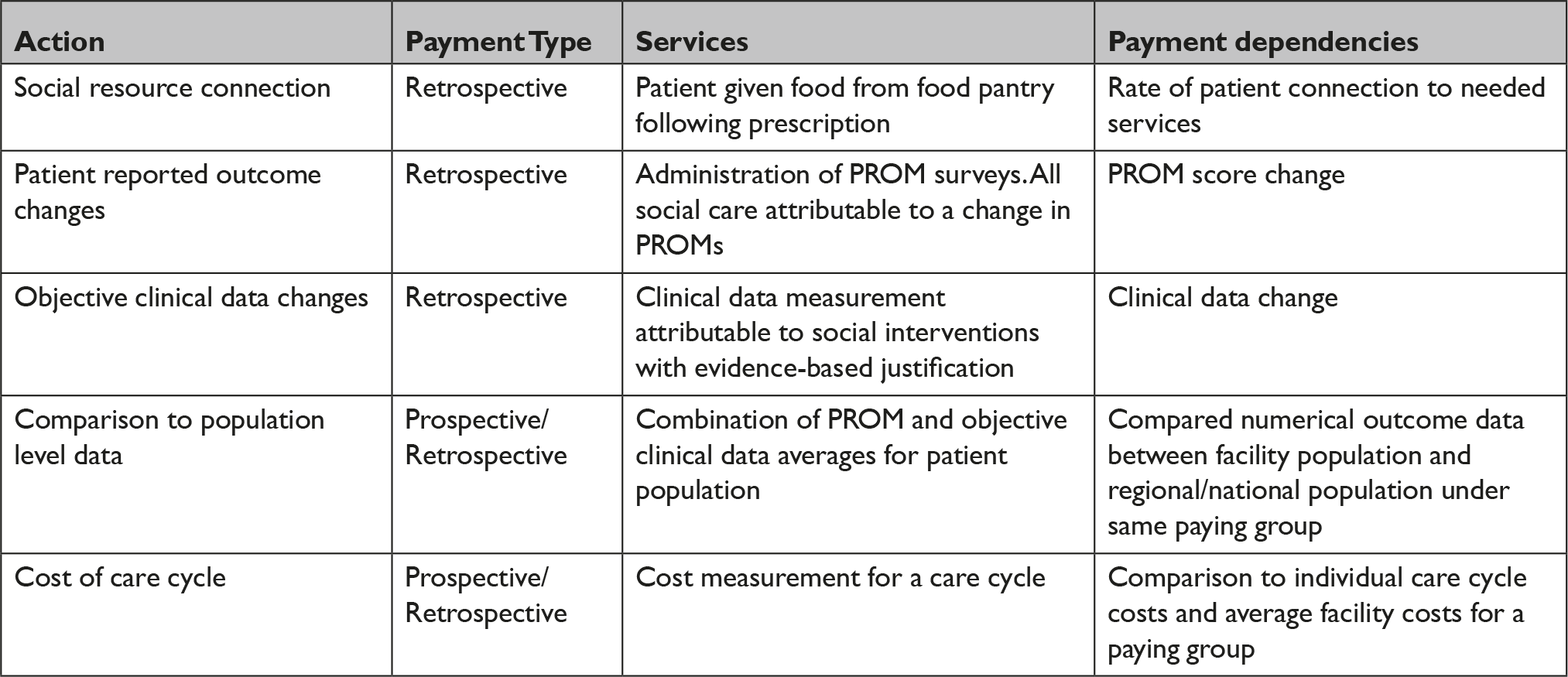
Measuring outcomes that matter to patients and tethering these metrics to payment is one of the most important components of structuring a VBP. Without this, there is little to no financial accountability based on results. This is the forcing function that rewards organizations for providing care that is both in line with patient needs and values and objectively improves their health status. In payments for social care this is especially important, as the social intervention matters little if it is not producing the outcomes that matter to the patient. This has significant moral worth as well, as this notion supports the feasibility of financing social care in a way that is in the best interests of patients. Beyond tethering accountability with intervention outcomes, this also incentives a group to organize around care for the patient’s condition. For example, the IPU identified in the previous section would have all services bundled under a payment and would subsequently have joint accountability for delivering outcomes. However, there are multiple outcomes that are important to patients, and each of these must be accounted for and measured to drive value in a direction that can impact a patient’s social setting and disease state. Outcomes can fall into many categories, but the ones that will be focused on in this section include identification measurements, process measurements, and health status outcomes ( Figure 4 ).
Outcome measurements for social interventions and reimbursement scheme.

Identification metrics are the same as using billing codes to document SDOH patients are experiencing. Given prior discussion of these metrics and the complication of overmedicalization when organizations are paid by number of diagnoses, these outcome metrics ought not be financially incentivized.112 The following step illustrated in Figure 4 is measuring the outcomes of a process, which includes measurements such as “patient was/was not connected to social service” or “patient received x food from food pantry.”113 These metrics are more important in a social intervention rather than medical, as much of the focus in VBHC currently is on objectively delivering outcomes which matter to patients through invasive medical procedures or treatments.Reference Larsson114 In the case of medical treatments, including process measurements to be financially rewarded can unintentionally reward inappropriate medical or surgical intervention and cause misaligned incentives as seen in FFS.115 However, this criticism does not hold true for social interventions. Much of the issue regarding social interventions is that they are deemed necessary, expected acts of care towards socially complex patients that go unrewarded. Additionally, being connected with social services and having food given to food insecure patients obviously matters to these patients and minimally has the potential to improve quality of life.
Perhaps it is more of a moral concern than logistical, but some amount of financial incentive must be aligned with process outcomes and delivering social services for patients to make up for the overall lack of reimbursement and underutilization of available social care tools.116 The added benefit to this is the mitigation of financial risk for safety net facilities in adopting such payments, as there is minimally some reward to be gained for completing the acts independent of outcomes. This facilitates development and innovation of better social interventions by providing some minimal guaranteed amount of compensation for engaging in social care. Furthermore, mitigating such financial risks makes these payments more appealing for payers to adopt, as there is less risk of inadvertently punishing groups who are under-resourced, which would be detrimental to the long-term financial viability of any payment modicum.
Beyond the mid-level process outcome payments, the clinical outcomes are certainly the highest priority in patient care. VBPs ought to reward care that improves outcomes that matter to patients at a higher level. To capture the subjective, yet crucial, influence on patient quality of life, PROMs offer unique opportunities. These measures are generated after patient population surveys and can be tailored to individual communities or used on an international scale depending on the scope of intervention.Reference Davis117 By capturing patient population and individual preference in a form that quantifies and adds financial weight to these issues, it adds an extra, protective layer of patient agency. Furthermore, such measures have been shown to be useful in identifying patient progress in the context of their social situation.118 Specific PROMs, such as “do you continue to feel chest pain when thinking about bills, having a place to live, or getting your next meal” have been shown to be clinically predictive factors of worsening outcomes.Reference Kostelanetz119 The act of measuring outcomes that matter to patients improves both PROM measures and objective clinical outcomes.Reference Cornec120 In further evidence of the need for PROM reporting, these measures have already been shown to improve objective patient outcomes when used for diabetics post-discharge specifically when SDOH were included as a large component of the measure.121 In this study, clinicians found the metrics clinically useful as it allowed for tailored social interventions and patient care satisfaction metrics improved.122
While subjective measures are newer, innovative ways to add to the patient experience and improve financial accountability, they still must be supplemented with objective clinical data. When performing data collection on objective clinical data in the context of a social intervention, metrics must be selected that have a strong evidence base for social influence. For example, one of the most studied socially influenced clinical factors is hemoglobin A1C measurements in diabetic patients.Reference Casagrande123 Food insecurity in diabetic patients can more than double the risk for patients to have HbA1C measurements in uncontrolled ranges, regardless of diet quality.124 This makes a social intervention for food insecurity in diabetic patients a relatively easier starting point, as there is strong evidence suggesting social influence and there are benchmarks of expected clinical improvement if food insecurity is resolved. However, it is still important to use objective patient outcomes that matter to patients to maintain relevance for payment. It would make little sense to reward scar tissue buildup of three mm more financially than four mm if this does not impact the patient’s life in any meaningful way. Subsequently, before objective outcome measures are rewarded, they ought to be selected with relevance to PROMs. To summarize, objective measures need to be selected if and only if they affect function that matters to patients, clinical status, or risk of complication stratification.
Cost Accounting for the Bioethicist
Tracking healthcare costs is essential to the viability of any payment system. Intuitively, payments ought to meet or exceed the costs of treatment to insure the financial sustainability of a health system. This can be done through a variety of methods for a VBP, including tracking an institution’s spending on a specific treatment (spend costing) or more nuanced cost accounting practices. All of these methods are compatible with a VBP, as long as they meet payer criteria for cost reporting, which often includes provisions for accuracy as benchmarked against other facilities in the community. For example, if one hospital’s reported costs are less accurate (e.g., inappropriately high or low for a treatment) compared to others, then it can be comparatively penalized if there is no justification for the extra costs for a single condition in a specific segment of the patient population.125 This creates a competitive force on cost accuracy, which is especially important for safety net facilities focused on social initiatives, given accurate costs can aid managerial decisions in low-resource settings. Furthermore, accurate cost accounting is a form of self-advocacy from an organization to a payer, as pricing and reimbursement rates may be more accurately determined. This gives the necessary information for a payer to fulfill its ethical duty of reimbursing social care. Additionally, as costs are described more accurately, there is a lower risk of inappropriate reimbursement, mitigating financial risk for payers while also fulfilling the moral duty to reimburse care.
The most predominant form of cost measurement in healthcare is done through the ratio of cost to charge (RCC) method.Reference Orloff126 In this, all of the costs for a hospital (no granularity by procedure or treatment) are divided by all of charges (prices patients and payers experience) to create a multiplier. This multiplier is then multiplied by the charge (price), and the reimbursement (actual amount paid) is subtracted from this to determine margin. The problem with the world’s most popular healthcare accounting system is that it is often completely inaccurate.Reference Carroll and Lord127 Again, such an accounting system can be implemented for a VBP, but this may be inadvertently penalized through accuracy provisions or competitive forces that drive efficiency prioritization, which can be dually achieved through certain cost accounting methods outside of RCC.
VBPs are most successful when paired with process costs for a given care cycle, meaning 0 when the costs are accurately determined for all treatment options included in a patient’s treatment. By far, the most accurate evidence-based accounting method in healthcare is time-driven activity-based costing (TDABC).Reference Kaplan and Anderson128 The center point of TDABC involves process mapping, which includes listing the time for each step in a given treatment process and determining the cost based on personnel involved and resource (e.g., equipment, room usage) cost ( Figure 5 ). For example, a clinic visit might be mapped by listing check-in at front desk, vitals check by a medical assistant, and examination by a provider. These maps can also include clinical decisions, as some treatment processes will involve sending patients to receive imaging if indicated or meet with a dietician/on-site food bank. These data are generally collected through either a prospective process (interviewing care team members or shadowing a care team) or retrospective (generally reserved for surgeries, involves gathering time and personnel data from the electronic medical record). Process mapping provides extremely granular and generally accurate costs. These maps are also massive opportunities for process improvement, as costly and time-intensive issues that do not produce value for patients are quickly identified and can be edited for efficiency.
Example of ambulatory process map for time-driven activity-based costing in a family health clinic in Pakistan from Khan et al. (BMJ Open)

There is no logistical reason as to why TDABC cannot be used for social care. Many of the steps in social care, as elaborated on extensively earlier, are the same as medical treatment. Providers may screen a patient for a SDOH; if they are positive for food insecurity, the patients may be referred to the on-site food bank. Using TDABC, in general, has unique benefits for low-resource settings.129 Studies from both rural clinics in Haiti and urban surgical settings in Pakistan showed that TDABC increased cost accuracy, process understanding, and ultimately care efficiency.130 There have been arguments made that TDABC is far too resource intensive or complicated for low-resource facilities to adopt such an accounting measure, but it would appear that the reality is that the practice of TDABC is not frequently taught or discussed, leading to underutilization.Reference Keel131
I would contend that the largest benefit of including provisions for cost accuracy and competition on costing would be the incentive to adopt a process such as TDABC. Even in safety net facilities, this model has the opportunity to refine processes and identify value-added treatment steps in the social care of a patient by eliminating wasteful steps or redundancies. The lack of coordination in social care is a large complaint held by patients.132 This also supports the financial profile of safety net facilities, which often operate with low or negative margins. While there are arguments that such processes would require upfront investment, the largest barrier to implementing TDABC in modern care settings is an active disincentive against adding a process that does not contribute to patient volume reimbursed under FFS.133 In volume driven payment models, TDABC cannot be a priority in a safety net facility, again with low margins, when the upfront investment is not rewarded, nor will continued process improvements created by TDABC be directly incentivized. By paying for cost accuracy with provisions for clinical and patient reported outcomes, safety net facilities can be given the breathing room to improve upon the unique social services that they offer, and payers can create a payment that most reflects the needs of facilities and patients alike.
In implementing the cost portion of a VBP, TDABC ought to be suggested as the most accurate costing method to all involved parties. The competitive benefit is clear, and by setting this expectation at the beginning of a trial run for payments, facilities are allowed to compete on the continued improvement of process to benefit all patients. Again, this must be done in settings with established costs and process maps for treatments. This is not in an effort of standardization, as these organizations deserve the room to innovate on their own accord, but it provides general clinical cost benchmarks that can be compared to initiative cost and projected saved clinical costs. However, the prioritization of costs ought to be lower than the prioritization of patient outcome improvement, as the attributable improvement to outcomes is far better documented in the literature, giving more justification for its financial prioritization.
Section 3: Discussion and Conclusion
Creating the Test Case for a Value-Based Social Care Payment
To select the right facility to engage in a VBP bundled payment inclusive of social care, one must meet some minimum information technology requirements. Given that there are notable risks to vulnerable communities when payment incentives are changed, a practical test case must be created and studied before implementing this on a wide scale. This does not absolve payers of the overall obligation to finance performed acts of social care but is a necessary component of this obligation to best serve these populations. Payers must innovate, design, and study modes of payment for social care before implementation. Herein, I provide a potential test case to defend the feasibility of this moral framework while offering an initial blueprint.
For a test case, the facility must at minimum have an electronic medical record that is capable of outcome measurement tracking and some form of accounting system. This threshold minimizes financial risk for both the facility and payer. Ideally, this facility is already engaging in other aspects of VBHC, and the social care inclusion is an addition to an existing process. In order to maintain a prioritization of lower resource settings, this ought to be done in a safety net facility that historically serves vulnerable populations. Other necessary infrastructure for a VBP partnership includes a facility that already engages in interdisciplinary team-oriented care around a particular condition. While this is not a hard requirement for most VBPs, it minimizes the financial risk to the facility and payer as it adds a redundant layer of joint accountability between specialty and primary care teams.134 Many such teams already exist in safety net facilities as well. Perhaps the most well studied and integrated interdisciplinary team-oriented care by condition in safety net facilities is the diabetic clinic.Reference Riordan, Antonini and Murphy135 This makes targeting a clinic that specializes in diabetic care in low resource settings the ideal test case, as social interventions such as a prescription food pantry are rather common initiatives that go without reimbursement.136
Diabetes is an ideal condition for a test case not only because of the large history of integrated care, but also because evidence-based PROMs and objective clinical outcomes already exist for medical and social care.137 Furthermore, these measurements have been vetted by the International Consortium on Health Outcome Measurements (ICHOM), which adds a high level of verification to them. This is an extremely important factor that highly mitigates risk as facilities will have guidance in implementation and payers will have benchmarks to evaluate outcomes against. Additionally, it lowers the initial investment cost for all parties by having established practices.
Perhaps the most logistically intense or relatively novel portion of implementing this VBP would be the application of TDABC in a low-resource setting. However, this has been shown to improve cost insights in low-resource settings already with very little investment costs attributable to the initative.138 Furthermore, TDABC has the additional benefit of being a process improvement tool, which can help safety net facilities cut costs. While there may be hesitancy from a facility in implementing TDABC within their diabetic clinics, there have already been calls for further research on TDABC in the outpatient setting for diabetes.139 This creates an opportunity for the test case to partner with an academic facility that specializes in TDABC work, which can mitigate the information barrier to entry and financial risk.
For the bundled payment to work, it ought to be started as a component of an existing payment agreement between facility and payer. This can be added as a VBP additional bundle for a single condition’s care cycle that is inclusive of social care, regardless of if the rest of the payment to the facility is done through capitated or FFS modes. Ideally, the facility and payer have experience with VBPs already, and this would simply be a new line in an existing bundle, but this need not be required. The bundle itself should be done around an existing diabetic care cycle, created with consensus between facility and payer, and structured around episodes of care that are stratified for clinical risk (e.g., low, moderate, high risk diabetic patients receive different bundled payments) ( Table 1 ).140 Experienced payers must be recruited to this VBP plan, ideally CMS, as there is a longstanding history of studying innovative alternative payment models through CMMI. The percentage weight for each line item in a bundled payment, such as medical or social care interventions and personnel, is an important factor. However, these percentages generally vary heavily depending on negotiation with payers. Therefore, such classifications remain external to the focus of this work.
A heavily abbreviated items list for a value-based bundled payment.

Conclusion: Make the Payment Work for Vulnerable Patients
As it currently stands, safety net facilities invest disproportionate amounts of resources in social care in comparison to other facilities as a service to their patients who may deal with a high SDOH burden.141 These initiatives often go without reimbursement, which places a comparative strain on resources at safety net facilities. Furthermore, the expectation of these facilities to invest in social care as a necessary component of patient care without any compensation for such actions limits the ability of the facility to innovate and improve the process of social care delivery.
Payers are in a unique position to address the gap in payment for safety net facilities. Subsequently, per Iris Marion Young’s social connection model of responsibility for justice, payers are also charged with a moral responsibility in addressing social care.142 While the entire health system has been involved in some form of historical injustice over the course of American history, care-providing organizations have already begun initiatives to target the SDOH that came from these injustices. Payment models themselves have shaped the healthcare market in the US and have fostered disparities over time, yet initiatives from payers generally lag behind initiatives from care-providing organizations.143 To approach a conception of imperfect procedural justice for safety net facilities in providing necessary social care services, payment must be made a moral priority. While involving payers through a value-based payment plan in incentivizing and rewarding social care is morally necessary, it is not without its ethical hazards. At scale, financially incentivizing social care for particular populations has the opportunity to worsen intercommunal disparities and drive access issues through consolidation as a result of economic competition. In this work, I offer a value-based payment model to mitigate the logistical and moral issues associated with financing social interventions. Such a model has the potential to provide a measurable and scalable model for improving health disparities and health outcomes for vulnerable populations while lowering health systems costs.
Disclosures
The author reports no relevant disclosures.