INTRODUCTION
Heliophilous herbaceous and shrubby species typically colonize and dominate early successional sites in the tropical region. Over time, these plants are replaced by woody species that have a short lifespan, are shade-intolerant and which will also be reduced in abundance in the community when shade-tolerant species start to get established. These latter species typically have a long lifespan and predominate in the late stages of the succession (Guariguata & Ostertag Reference GUARIGUATA and OSTERTAG2001). According to Zangaro et al. (Reference ZANGARO, BONONI and TRUFEM2000), arbuscular mycorrhizal fungi (AMF) are one of the main biotic factors involved in the establishment of plants during succession in the tropics. These fungi establish symbiosis with more than 80% of terrestrial plants (Smith & Read Reference SMITH and READ2008) and their hyphae increase considerably the amount of surrounding soil that can be explored for nutrient acquisition (Smith et al. Reference SMITH, JAKOBSEN, GRØLUND and SMITH2011). As a result, mycorrhizal plants produce more biomass, flowers and seeds than non-mycorrhizal plants (Koide & Dickie Reference KOIDE and DICKIE2002, Stanley et al. Reference STANLEY, KOIDE and SHUMWAY1993). In return, AMF receive photoassimilates from the host for their metabolism, production of internal and external hyphae and propagation structures (Smith & Read Reference SMITH and READ2008).
Plant species belonging to different successional groups have different relationships with AMF, since higher densities of spores in soil (Mangan et al. Reference MANGAN, EOM, ADLER, YAVITT and HERRE2004, Stürmer & Siqueira Reference STÜRMER and SIQUEIRA2011) and higher intensity of root infection (Zangaro et al. Reference ZANGARO, ALVES, LESCANO, ANSANELO and NOGUEIRA2012a, Reference ZANGARO, ROSTIROLA, SOUZA, ALVES, LESCANO, RONDINA, NOGUEIRA and CARRENHO2013, Reference ZANGARO, ALVES, SOUZA, ROSTIROLA, LESCANO, RONDINA and NOGUEIRA2014) have been found in sites colonized by plants at early successional stages, like herbaceous and shrubby species, compared with sites colonized by woody species at later stages. Such high maintenance of AMF by early-successional plant species can be a crucial condition for sustaining their high nutritional demands, survival and growth especially in low-fertility soils (Zangaro et al. Reference ZANGARO, ROSTIROLA, SOUZA, ALVES, LESCANO, RONDINA, NOGUEIRA and CARRENHO2013). Although low-fertility soils are common at the beginning of tropical succession, this process can also occur in fertile or fertilized soils, such as abandoned agricultural fields, where plants may not be reliant on AMF for their nutritional requirements. When plants colonized by AMF grow in high-fertility soils, the energetic cost of the symbiosis can be greater than the nutritional benefits, leading to plant growth depression (Johnson et al. Reference JOHNSON, GRAHAM and SMITH1997). Many studies have shown that plants grown in high-fertility soils, especially phosphorus-rich soils may decrease AMF root infection (Grman Reference GRMAN2012, Johnson Reference JOHNSON2010, Johnson et al. Reference JOHNSON, GRAHAM and SMITH1997) to reduce the C expense. However, Zangaro et al. (Reference ZANGARO, ROSTIROLA, SOUZA, ALVES, LESCANO, RONDINA, NOGUEIRA and CARRENHO2013) quantified high AMF infection intensity (about 90%) in roots of herbaceous and shrubby plants that grew spontaneously in a tropical abandoned agricultural field, which contained high levels of phosphorus and where soybean was cultivated 5 y before. It is possible that this high maintenance of AMF in roots may provide nutritional benefits to this plant functional group even in fertile soils, since AMF increase mineral nutrient transfer in roots that provide high amounts of carbohydrates (Kiers et al. Reference KIERS, DUHAMEL, BEESETTY, MENSAH, FRANKEN, VERBRUGGEN, FELLBAUM, KOWALCHUK, HART, BAGO, PALMER, WEST, VANDENKOORNHUYSE, JANSA and BÜCKING2011).
Several studies have been conducted assessing the importance of AMF on the growth and reproduction of herbaceous and shrubby species of temperate regions, which predominate in several stages of the succession in prairie and grassland ecosystems (Busby et al. Reference BUSBY, GEBHART, STROMBERGER, MEIMAN and PASCHKE2011, Klironomos Reference KLIRONOMOS2003, Koide & Dickie Reference KOIDE and DICKIE2002, Wilson & Hartnett Reference WILSON and HARTNETT1998). However, little is known on the importance of AMF for vegetative and reproductive development of heliophilous herbaceous and shrubby tropical species that occur in the early-successional stages in both low- and high-fertility soils. Therefore, a trial was carried out to assess the influence of AMF on the growth and flowering of 27 herbaceous and shrubby early-successional species grown in a low- and high-fertility soil. We hypothesized that (1) plants exhibit high levels of AMF root infection in both soils; (2) mycorrhizal plants exhibit higher shoot dry mass than non-mycorrhizal plants in low-fertility soil, but lower or not different shoot dry mass in high-fertility soil; (3) AMF are crucial for plant survival in low-fertility soil, but not in high-fertility soil; (4) AMF increase plant flowering in both levels of soil fertility.
METHODS
Plant species
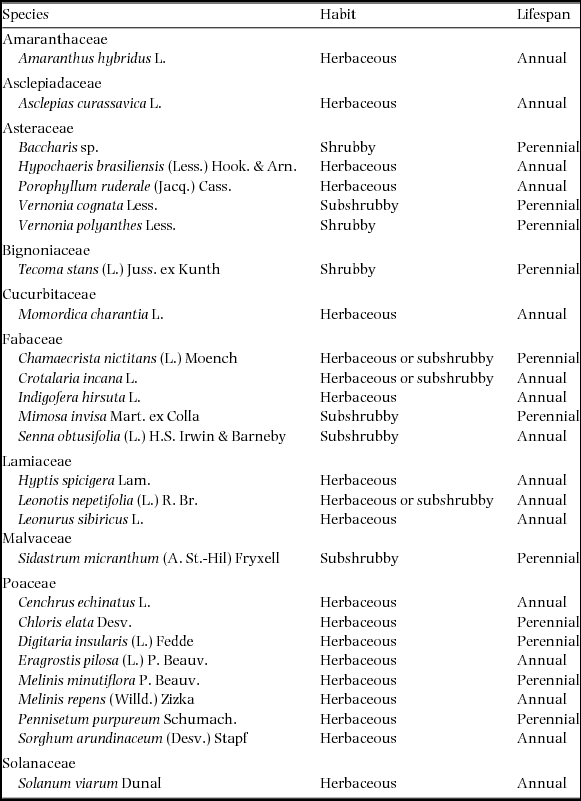
Seeds were collected during 2010, according to their availability, at sites with a predominance of herbaceous and shrubby vegetation (e.g. pastures, abandoned fields under initial succession, border of forest fragments) in the municipality of Londrina (23°27′S, 51°15′W), Paraná State, Southern Brazil, then stored at 5 ºC until the sowing, performed in February 2011. All species were identified and characterized according to Kranz et al. (Reference KRANZ, FONSECA JUNIOR, PASSINI and MARTINS2009), Leitão Filho et al. (Reference LEITÃO FILHO, ARANHA and BACCHI1972) and Lorenzi (Reference LORENZI2000) (Table 1). We considered the plant species as belonging to the same ecological group because they naturally occur and grow at the same time in earlier-successional sites and have very similar niches.
Habit and lifespan of the studied tropical plant species commonly found at early successional sites in southern Brazil.

Soil sampling and preparation
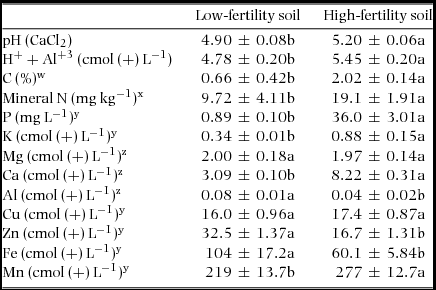
The soil was a clay Rhodic Ferralsol (FAO 1994), collected at the Universidade Estadual de Londrina (State University of Londrina), at sites with low and high fertility. The high-fertility soil was taken from a former garden that received constant organic manure, had been abandoned for 10 y and had this practice ended prior to abandonment. Currently, this area is predominantly colonized with Paspalum notatum Flüggé and other herbaceous species. The low-fertility soil was collected about 250 m away from the sample points of high-fertility soil, at a site that had the A horizon and part of the B horizon removed 25 y ago, resulting in a low-fertility soil now colonized by P. notatum. At each site, four points, 20 m apart, were randomly selected and soil samples were taken at 0–10 cm depth, homogenized and sieved (4 mm). These soils were sterilized with steam for 72 h to eliminate AMF propagules. After that, the soils were transferred to plastic pots (1500 cm3), rewetted and kept moist and without plants for 150 d. To restore the original microbial flora of the sterilized soils, we added 100 mL of a filtrate obtained from each of the original fresh soils, without AMF propagules, every 30 d until planting. The soils were chemically analysed for mineral N according to Keeney & Nelson (Reference KEENEY, NELSON, Page, Miller and Keeney1982), for micronutrients according to Defilippo & Ribeiro (Reference DEFILIPPO and RIBEIRO1997) and for other attributes according to Pavan et al. (Reference PAVAN, BLOCH, ZEMPULSKI, MIYAZAWA and ZOCOLER1992) (Table 2).
Mean (± SD) for chemical attributes of the substrates used for plant growth from low- and high-fertility soils. Means followed by the same letter do not differ by Student's t-test at P < 0.05 (n = 4). Mineral N = ammonium + nitrate. w = Walkley–Black method; x = extraction with 2 M KCl; y = extraction with Mehlich-1; z = extraction with 1 M KCl.
AMF inoculum preparation, inoculation, sowing and early growth
A mixture of spores of AMF native species was obtained from the rhizosphere of P. notatum and other herbaceous species in the lawn of State University of Londrina to preparation of AMF soil inoculum. These spores were removed from soil by wet sieving, inoculated in roots of P. notatum and cultivated for 5 mo in pots with previously sterilized soil.
Each plant species was grown in the combination of soil fertility (low and high) with mycorrhizal condition (with and without AMF), in five replicates. The cultivation pots had a volume of 1500 cm3. In half of the cultivation pots containing low- and high-fertility soils, 2 g of fresh AMF soil inoculum (with approximately 1430 spores, along with colonized roots and hyphae) were added in a hole in the centre of the pot, 2 cm below the surface. In the other half of the pots, 2 g of the AMF soil inoculum previously sterilized (control group) were added in the hole. About 20 seeds of each plant species were sown in the hole on top of the soil inoculum and covered with 1 cm of the respective soil. Three days after emergence, five seedlings from each pot were collected for evaluation of the initial dry biomass to be used in the estimation of the relative growth rate. Seedlings were thinned to one per pot and kept in a greenhouse for 100 d, under 75% sunlight, without air temperature control and received water daily. During the growth period, the time to flowering was recorded.
Plant growth, flowering and nutrient concentration
After 100 d of growth in the greenhouse, plants were separated into shoot and root. The total root length (Tennant Reference TENNANT1975), number of flowers and total leaf area were recorded for the fresh material. All leaves of each plant were collected, scanned and the total leaf area was calculated using Digital Areas Determiner software, except for Poaceae species, in addition to Chamaecrista nictitans and Mimosa invisa. The five most expanded leaves were used for determination of the response to AMF in terms of leaf area expansion by the equation 100 × (AMFA – NAMF)/AMFA, where AMFA represents the leaf area of the five most expanded leaves from each mycorrhizal plant, and NAMF corresponds to the area of the five most expanded leaves from each non-mycorrhizal plant. Roots and shoots were oven-dried at 65 ºC, weighed and the root/shoot ratio was calculated. The dry weight of flowers was recorded separately. The relative growth rate (RGR) was determined according to Hunt (Reference HUNT1982), using the equation RGR = (ln Wt2 – ln Wt1)/t2 – t1, where W is the average of total plant dry mass and t is the time measured in days (t1 = 3 d after plant emergence, and t2 = days elapsed after plant emergence until the end of experiment). The specific root length was the ratio between total root length and root dry mass. The concentrations of P, K, Ca and Mg in the shoots were quantified in nitric-perchloric digests, while N was determined in sulphuric acid digests (Silva Reference SILVA1999). Due to the small amount of biomass, it was not possible to analyse the nutrients in the shoots of plants grown in the low-fertility soil.
Mycorrhizal infection intensity and plant biomass response to AMF
Before drying roots, subsamples of fine roots were collected from each plant and mycorrhizal root infection intensity was determined after clarifying (10% KOH), acidifying (1% HCl) and staining (0.05% trypan blue) according to Brundrett et al. (Reference BRUNDRETT, BEEGHER, DELL, GROOVE and MALAJCZUK1996). Then, the intersection method on gridded plates (McGonigle et al. Reference McGONIGLE, EVANS and MILLER1990) was employed, considering the presence of fungal structures (coenocytic hyphae, arbuscules and vesicles) at ×100 magnification. Plant biomass response to AMF was calculated by the equation 100 × (SBAM – SBNM)/SBAM, where SBAM represents the shoot dry mass of mycorrhizal plant, and SBNM corresponds to shoot dry mass of non-mycorrhizal plant (Plenchette et al. Reference PLENCHETTE, FORTIN and FURLAN1983).
Data analyses
Data were first tested for normality by Shapiro–Wilk's test and homoscedasticity by Levene's test. The chemical attributes of soils and the mycorrhizal effects within each level of soil fertility were compared by Student's t-test. Mycorrhizal infection intensity, plant biomass response and leaf area expansion were transformed to arcsine (×/100) before analysis. The averages of plant biomass response to AMF, mycorrhizal infection intensity and leaf area expansion considering all species in the low- and high-fertility soil were calculated and compared between each soil fertility level by Student's t-test. In all tests, P < 0.05 was considered significant.
RESULTS
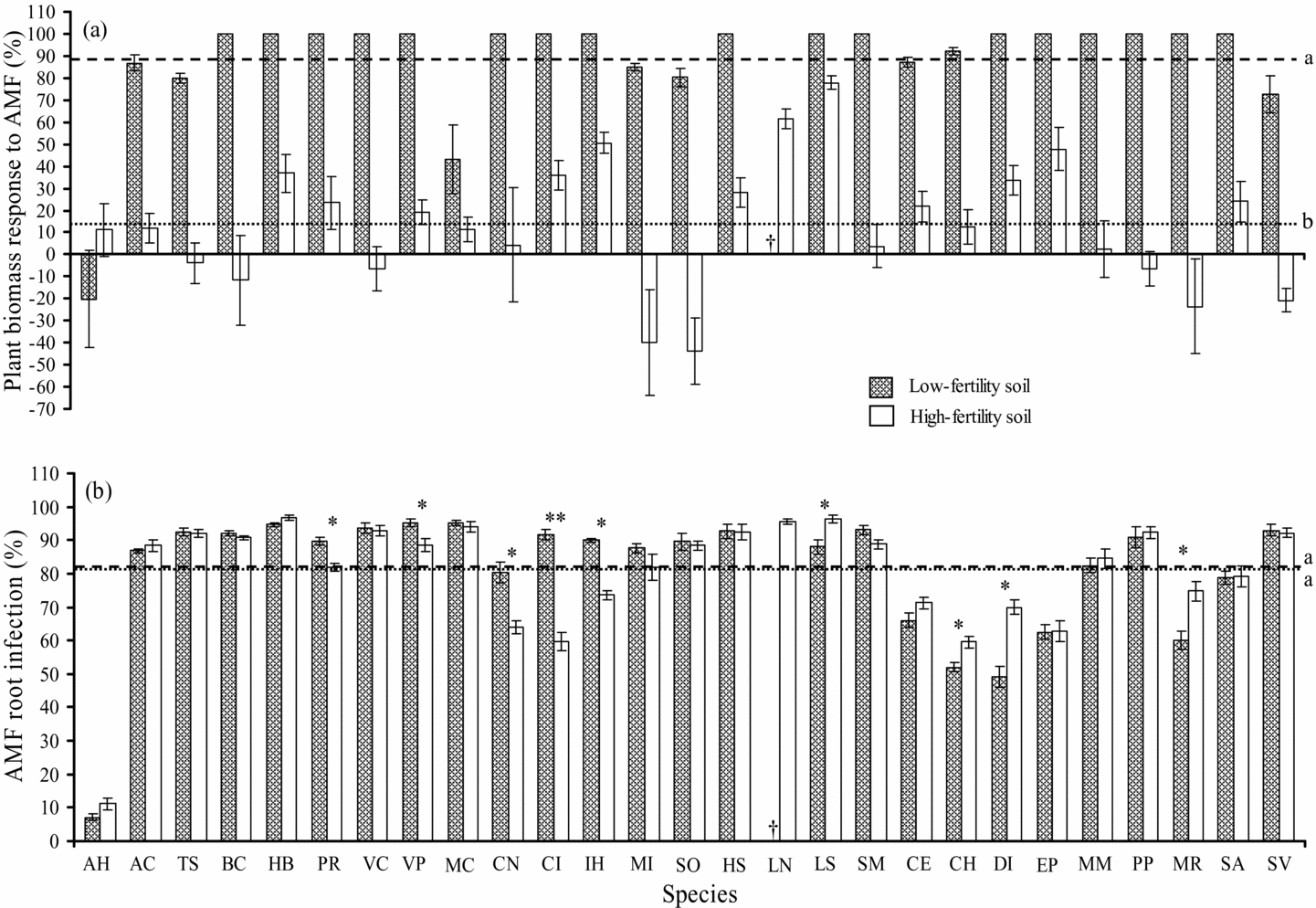
The soil's chemical attributes were markedly higher in the high-fertility soil, except Mg and Cu, which were similar, and Al, Fe and Zn, which were higher in the low-fertility soil (Table 2). Plant biomass response to AMF (Figure 1a) changed according to soil fertility. In the low-fertility soil, 17 out of 27 species exhibited 100% biomass response to AMF, given that the non-mycorrhizal plants died between 50–70 d after emergence. Amaranthus hybridus exhibited negative biomass response to AMF, while Leonotis nepetifolia did not survive in either treatment. The other species exhibited high biomass response to AMF, but below 100%. The average plant biomass response to AMF in the low-fertility soil was 88% (n = 26). On the other hand, in the high-fertility soil, plant biomass response to AMF varied according to plant species. Eight species had negative response, between −44% and −4%; eight had positive response, between 2% and 19%; nine had response between 21% to 50%; while only L. nepetifolia and Leonurus sibiricus had response of above 60%. The average plant biomass response to AMF in the high-fertility soil was 13% (n = 27), which significantly differed from the average response of the plants grown in the low-fertility soil (Figure 1a).
Difference in shoot biomass production between mycorrhizal and non-mycorrhizal plants expressed as a percentage of biomass for mycorrhizal plants (plant biomass response to AMF) (a) and AMF root infection intensity (b) of herbaceous and shrubby species of early stages of tropical succession grown in low- and high-fertility soils. Vertical bars indicate the standard error (n = 5). Dashed lines represent the average of plants response to AMF and mycorrhizal infection intensity considering all species in the low-fertility soil (n = 26); dotted lines represent the same in the high-fertility soil (n = 27). Means followed by the same letter do not differ from each other by Student's t-test at P < 0.05. * Indicates significant differences in mycorrhizal infection intensity between soil fertilities within species by Student's t-test (*P < 0.05; **P < 0.01). † Represents death of the plants in the treatment. Species: AH = Amaranthus hybridus, AC = Asclepias curassavica, BC = Baccharis sp., HB = Hypochaeris brasiliensis, PR = Porophyllum ruderale, VC = Vernonia cognata, VP = Vernonia polyanthes, TS = Tecoma stans, MC = Momordica charantia, CN = Chamaecrista nictitans, CI = Crotalaria incana, IH = Indigofera hirsuta, MI = Mimosa invisa, SO = Senna obtusifolia, HS = Hyptis spicigera, LN = Leonotis nepetifolia, LS = Leonurus sibiricus, SM = Sidastrum micranthum, CE = Cenchrus echinatus, CH = Chloris elata, DI = Digitaria insularis, EP = Eragrostis pilosa, MM = Melinis minutiflora, MR = Melinis repens, PP = Pennisetum purpureum, SA = Sorghum arundinaceum, SV = Solanum viarum.
Mycorrhizal root infection intensity was generally high (Figure 1b), except in A. hybridus, which was between 7% and 11%. All the other species had more than 50% infection intensity, including more than 80% in 16 species, in both soils. Nine species differed in mycorrhizal infection for the two levels of soil fertility. Four species had higher AMF root infection in the low-fertility soil and five species exhibited higher values in the high-fertility soil. The average mycorrhizal infection across the two levels of soil fertility was about 80% (Figure 1b). Plants grown without AMF inoculation did not exhibit mycorrhizal infection in roots.
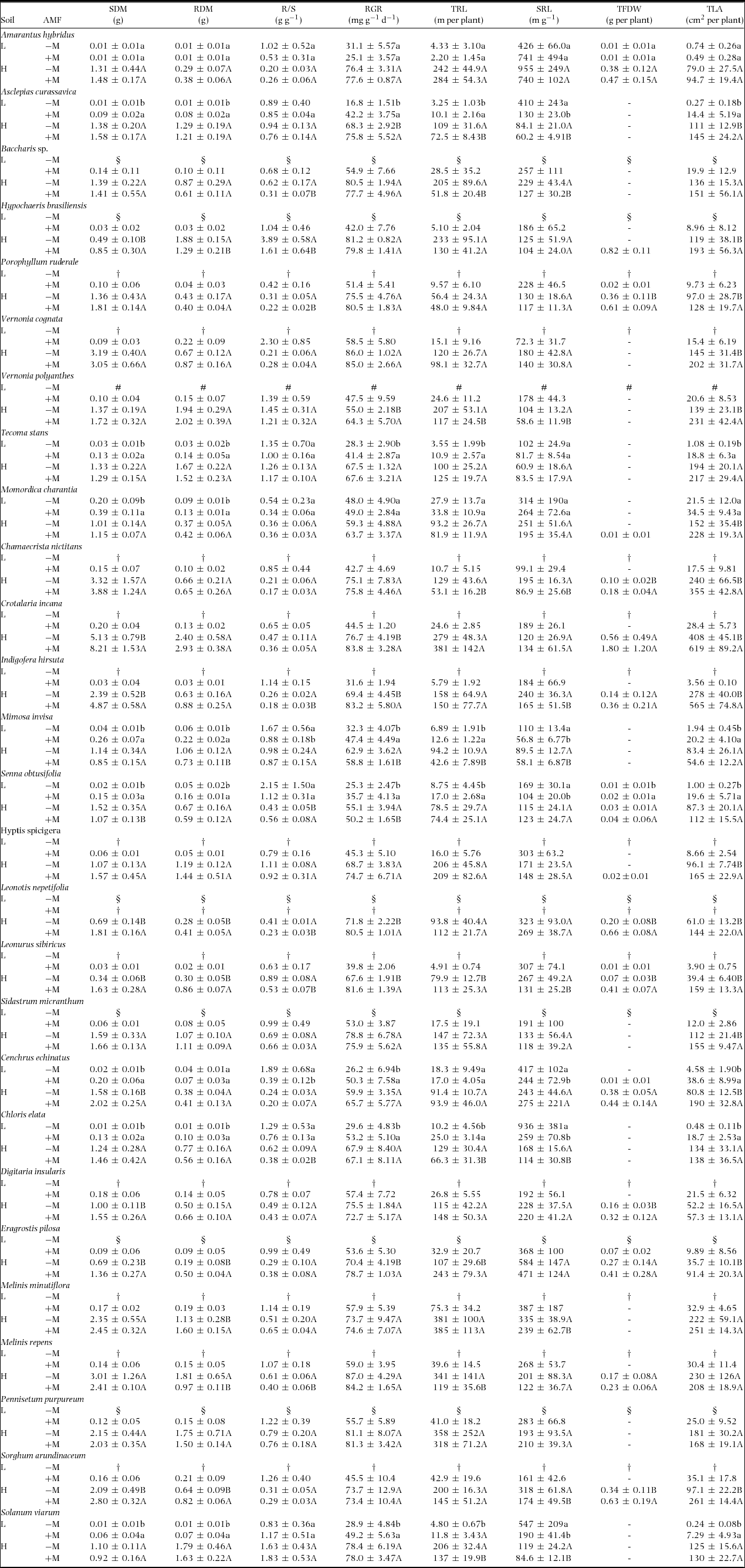
Non-mycorrhizal plants grown in the low-fertility soil had markedly lower shoot dry mass than mycorrhizal plants, except A. hybridus, which did not respond to the absence of AMF (Appendix 1). In the high-fertility soil, the majority of species did not respond to non-AMF condition; only nine species had reduced shoot biomass with non-mycorrhizal treatment. One species, Senna obtusifolia, displayed significant increase in shoot dry mass when non-mycorrhizal. Regarding root dry mass, except A. hybridus and Cenchrus echinatus, all species showed decreases in response to the non-AMF treatment in the low-fertility soil. On the other hand, most species did not respond to the absence of AMF in the high-fertility soil; five species responded negatively and three species responded positively to non-AMF. The root/shoot ratio changed with non-AMF in 11 species in both soils. In the low-fertility soil, M. invisa and C. echinatus exhibited an increase in the root/shoot ratio under the non-mycorrhizal condition. In the high-fertility soil, only S. obtusifolia had a decreased root/shoot ratio with non-mycorrhizal treatment, while eight species had an increased root/shoot ratio. The relative growth rate was reduced in the absence of AMF for most species grown in the low-fertility soil, while only A. hybridus and Momordica charantia exhibited no difference. In the high-fertility soil, most species displayed no effects of non-AMF treatment on relative growth rate. Only seven species had a decreased relative growth rate, while S. obtusifolia and M. invisa had a higher relative growth rate when non-mycorrhizal.
Total root length was increased without AMF for the majority of species grown in the low-fertility soil, except C. echinatus, M. charantia and A. hybridus, which exhibited no difference (Appendix 1). In the high-fertility soil, most of the species exhibited no change with the non-AMF treatment, eight species displayed an increase, whereas Eragrostis pilosa and L. sibiricus exhibited a decrease with no AMF. The specific root length was increased in the absence of AMF for most species grown in the low-fertility soil, except A. hybridus, M. charantia and Tecoma stans, which exhibited no difference. In the high-fertility soil, 11 species had increased specific root length with non-mycorrhizal treatment, with no effect in the other species.
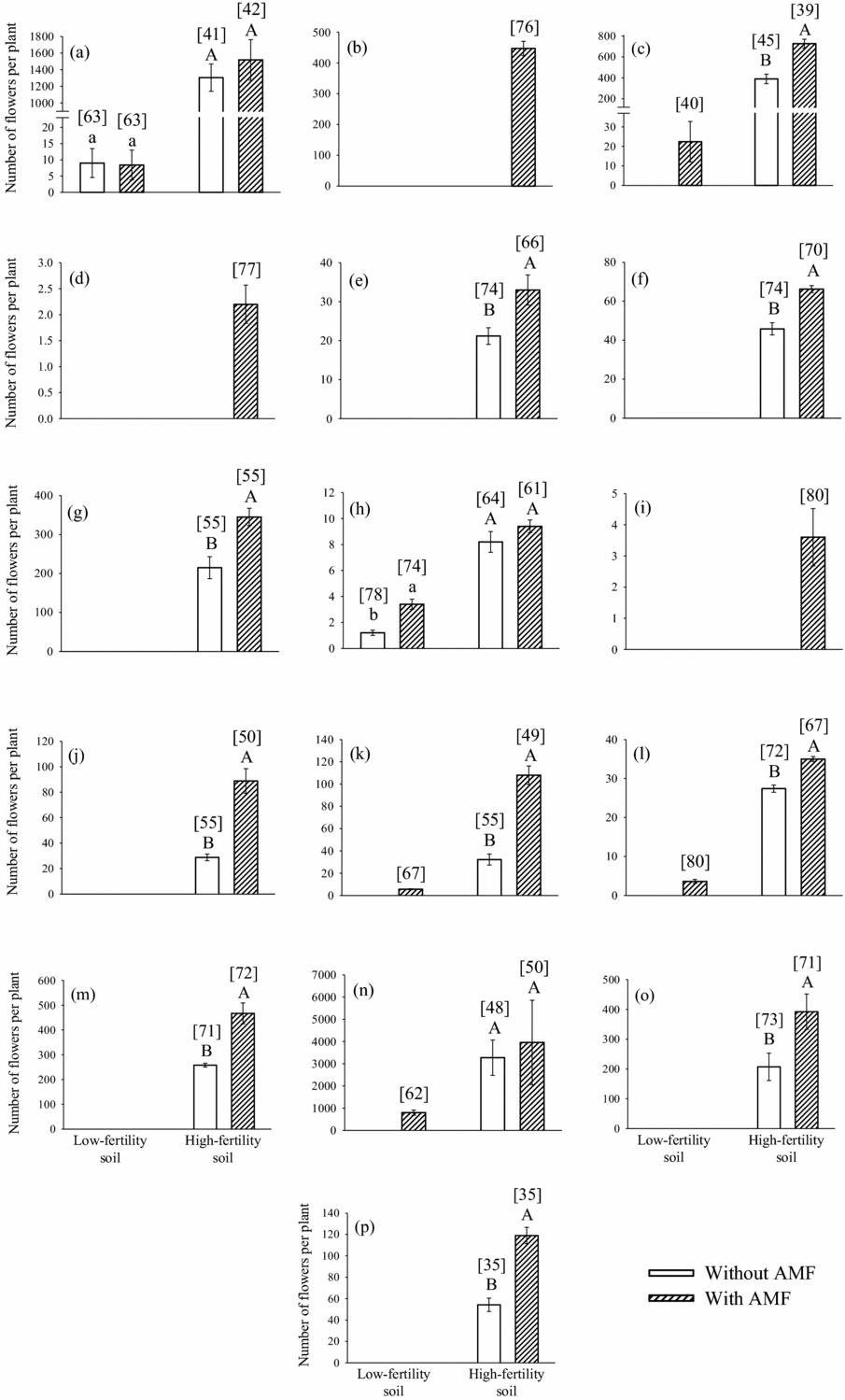
Only six species flowered in the low-fertility soil, four of which only flowered with mycorrhizal treatment (Figure 2). Senna obtusifolia and A. hybridus flowered in mycorrhizal and non-mycorrhizal conditions, but the first species produced fewer and later flowers under the non-mycorrhizal condition. In the high-fertility soil, 16 species flowered, three of which (Hypochaeris brasiliensis, Hyptis spicigera and M. charantia) only flowered when associated with AMF. Amaranthus hybridus, S. obtusifolia and E. pilosa flowered equally under mycorrhizal and non-mycorrhizal conditions, while 10 species had fewer flowers under the non-mycorrhizal condition. Among the 13 species that flowered in both conditions, eight flowered later under the non-mycorrhizal condition. Only Indigofera hirsuta and Sorghum arundinaceum flowered simultaneously under mycorrhizal and non-mycorrhizal conditions. However, A. hybridus, Digitaria insularis and E. pilosa flowered earlier without AMF (Figure 2). The non-mycorrhizal condition decreased the total flower dry weight (Appendix 1) of S. obtusifolia grown in the low-fertility soil, but there was no effect for A. hybridus. In the high-fertility soil, among the 13 species that flowered under mycorrhizal and non-mycorrhizal conditions, six had lower total flower dry weight with non-AMF treatment, whereas the remaining seven displayed no difference.
Number of flowers per plant and days elapsed for appearance of the first flower buds after plant emergence (number in brackets) of herbaceous and shrubby plant species of early stages of tropical succession grown in low- and high-fertility soils, with or without AMF. Vertical bars indicate the standard error (n = 5). Means followed by the same lowercase (low-fertility soil) or uppercase (high-fertility soil) letter do not differ by Student's t-test at P < 0.05. Species: Amaranthus hybridus (a), Hypochaeris brasiliensis (b), Porophyllum ruderale (c), Momordica charantia (d), Chamaecrista nictitans (e), Crotalaria incana (f), Indigofera hirsuta (g), Senna obtusifolia (h), Hyptis spicigera (i), Leonotis nepetifolia (j), Leonurus sibiricus (k), Cenchrus echinatus (l), Digitaria insularis (m), Eragrostis pilosa (n), Melinis repens (o), Sorghum arundinaceum (p).
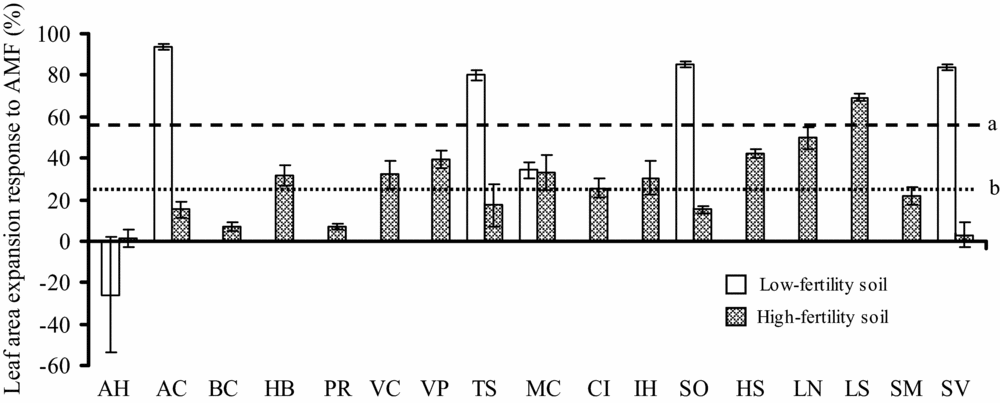
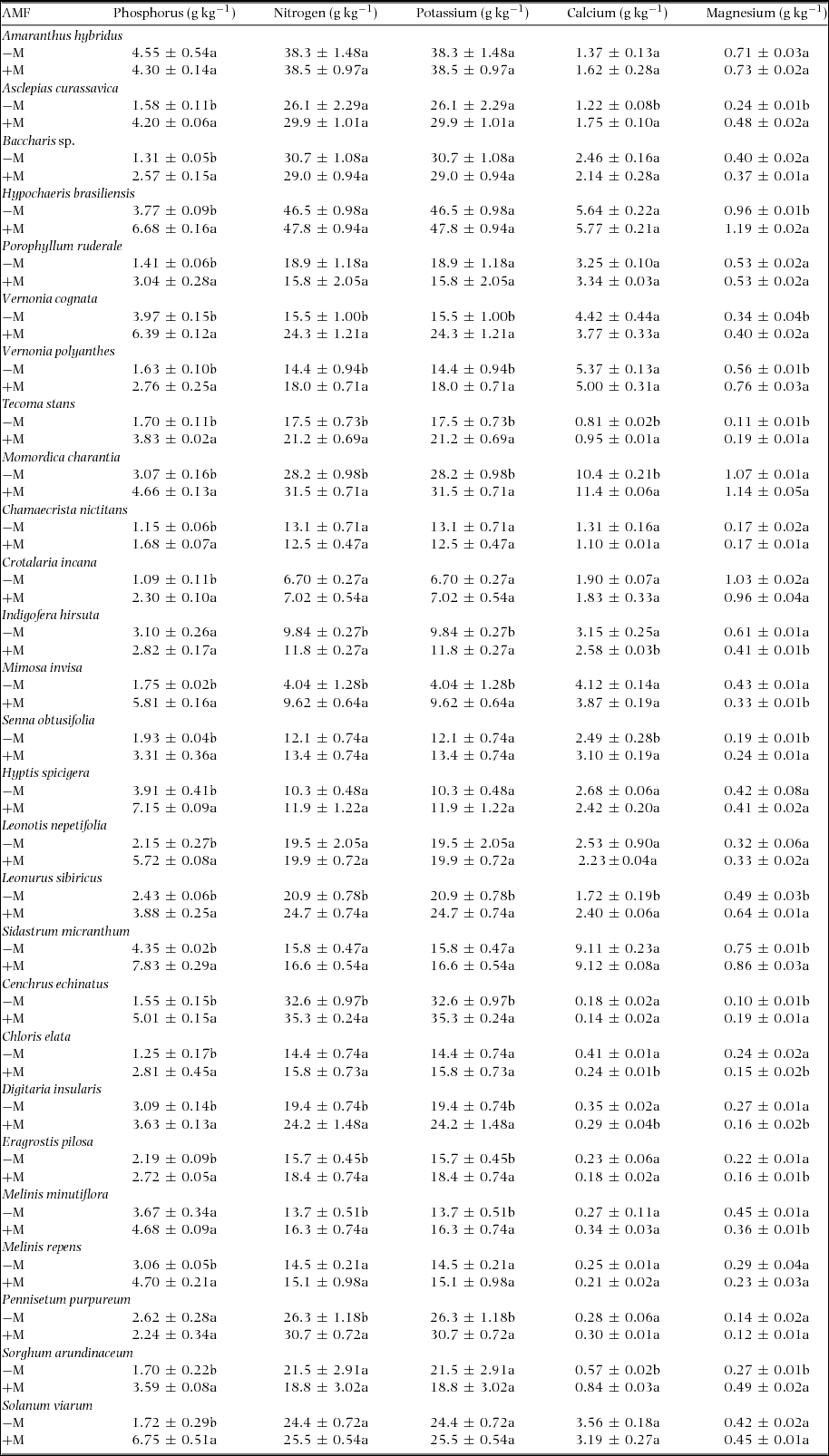
The non-AMF treatment decreased the total leaf area for the majority of species grown in both soils, except A. hybridus and M. charantia in the low-fertility soil, and 11 species in the high-fertility soil that exhibited no differences (Appendix 1). On average, leaf expansion was 58% (n = 6) and 26% (n = 17) reduced due to non-AMF condition in the low- and high-fertility soils, respectively, and these values are significantly different (Figure 3). In general, the nutritional status was negatively affected in the non-mycorrhizal plants. N decreased significantly in the shoots of 16 species, P in 24, K in 12, Ca in 6, and Mg in 10 species (Appendix 2). However, the non-AMF condition increased the nutrient concentration in some species, like Mg in M. invisa, E. pilosa and Melinis minutiflora, and Ca and Mg in I. hirsuta, Chloris elata and D. insularis.
Difference in leaf area expansion between mycorrhizal and non-mycorrhizal plants expressed as a percentage of leaf area expansion for mycorrhizal plants (leaf area expansion response to AMF) of herbaceous and shrubby species of early stages of tropical succession grown in low- and high-fertility soils, without or with AMF. This variable could not be calculated for Chamaecrista nictitans, Mimosa invisa and the plant species of Poaceae. Vertical bars indicate the standard error (n = 5). Dashed lines represent the average of leaf area expansion considering all species in the low-fertility soil (n = 6); dotted lines represent the same in the high-fertility soil (n = 17). Means followed by the same letter do not differ from each other by Student's t-test at P < 0.05. Plant species abbreviations as in Figure 1.
DISCUSSION
Mycorrhizal root infection
The high values of mycorrhizal root infection in both levels of soil fertility suggest that the plant's habit can be more important in determining the intensity of AMF root infection than soil fertility. Previous studies have found high intensity of mycorrhizal root infection in herbaceous and shrubby species all over the tropical region (Kalinhoff et al. Reference KALINHOFF, CÁCERES and LUGO2009, Lekberg et al. Reference LEKBERG, KOIDE and TWOMLOW2008, Muthukumar & Prakash Reference MUTHUKUMAR and PRAKASH2009, Zangaro et al. Reference ZANGARO, ASSIS, ROSTIROLA, SOUZA, GONÇALVES, ANDRADE and NOGUEIRA2008, Reference ZANGARO, ANSANELO, LESCANO, ALVES, RONDINA and NOGUEIRA2012b, Reference ZANGARO, ALVES, SOUZA, ROSTIROLA, LESCANO, RONDINA and NOGUEIRA2014). Irrespective of soil fertility, herbaceous and shrubby species that predominate at the initial stages of tropical succession were highly receptive to AMF. Busby et al. (Reference BUSBY, GEBHART, STROMBERGER, MEIMAN and PASCHKE2011) and Wilson & Hartnett (Reference WILSON and HARTNETT1998) have shown that temperate prairie and grassland herbaceous and shrubby species usually exhibit AMF root infection less than 50% and the variation range of mycorrhizal infection between these species is high. We contend that such differences may be a result of the combination of plant habit and climatic characteristics typical of the tropics, like high light incidence, temperature and soil moisture (Zangaro et al. Reference ZANGARO, ROSTIROLA, SOUZA, ALVES, LESCANO, RONDINA, NOGUEIRA and CARRENHO2013, Reference ZANGARO, ALVES, SOUZA, ROSTIROLA, LESCANO, RONDINA and NOGUEIRA2014). These characteristics improve plant photosynthetic capacity (Khurana & Singh Reference KHURANA and SINGH2006, Lusk et al. Reference LUSK, REICH, MONTGOMERY, ACKERLY and CAVENDER-BARES2008, Poorter & Rozendaal Reference POORTER and ROZENDAAL2008, Reich Reference REICH, Cambers, Porter and van Vuuren1998) and the amount of photoassimilates exported to the roots (Lynch & Ho Reference LYNCH and HO2005) for the maintenance of AMF. However, the mycorrhizal condition differentially affected plant growth, depending on the soil fertility level.
Influence of AMF on plants grown in the low-fertility soil
Plant growth was limited in the low-fertility soil, especially in the absence of AMF, resulting in a lack of plant growth and death in a few weeks. The few plant species that survived without AMF in this soil exhibited a severely limited shoot growth, but had high root/shoot ratio, and fine roots with high specific length. These changes in root morphological traits represent an investment of photoassimilates in roots, aimed at better soil exploration for nutrients (Comas & Eissenstat Reference COMAS and EISSENSTAT2004, Zangaro et al. Reference ZANGARO, NISHIDATE, VANDRESEN, ANDRADE and NOGUEIRA2007). Herbaceous and shrubby species typically have a short lifespan (Lorenzi Reference LORENZI2000) and high metabolic and growth rates (Reich Reference REICH, Cambers, Porter and van Vuuren1998). To meet their high nutritional demands and reach the reproductive stage before the end of their short lifespan, these species developed a fine-root system morphologically adapted for a high potential for acquisition of water and nutrients, exhibiting high total and specific length, low diameter and high incidence of absorbing hairs (Zangaro et al. Reference ZANGARO, ASSIS, ROSTIROLA, SOUZA, GONÇALVES, ANDRADE and NOGUEIRA2008, Reference ZANGARO, ALVES, LESCANO, ANSANELO and NOGUEIRA2012a, Reference ZANGARO, ALVES, SOUZA, ROSTIROLA, LESCANO, RONDINA and NOGUEIRA2014). In this study, such root morphological traits were not enough for these plants to meet all the nutritional requirements for shoot growth in the low-fertility soil. Nevertheless, except L. nepetifolia, all plants in symbiosis with AMF survived, and exhibited moderate growth due to the hyphal net associated with the fine-root system (Smith et al. Reference SMITH, JAKOBSEN, GRØLUND and SMITH2011). The increase in nutrient uptake via AMF enabled plant survival and growth in the low-fertility soil. Under this condition, most of the herbaceous and shrubby species were highly dependent on AMF for survival and growth. Amaranthus hybridus was the only species in which we observed a negative biomass response to AMF in the low-fertility soil. This may be due to the low mycorrhizal infection intensity exhibited in its roots. When mycorrhizal, plants may have the P uptake by root epidermis partially or totally inhibited, and AMF become the main way by which plants obtain P from soil (Li et al. Reference LI, SMITH, DICKSON, HOLLOWAY and SMITH2008, Smith et al. Reference SMITH, GRACE and SMITH2009). Therefore, A. hybridus plants, that had low mycorrhizal root infection, exhibited growth depression in the low-fertility soil because they may have been unable to absorb P via root epidermis and AMF in suitable amounts.
Considering that these herbaceous and shrubby species typically predominate in the early tropical succession in low-fertility and degraded soils (Zangaro et al. Reference ZANGARO, ALVES, LESCANO, ANSANELO and NOGUEIRA2012a, Reference ZANGARO, ANSANELO, LESCANO, ALVES, RONDINA and NOGUEIRAb, Reference ZANGARO, ROSTIROLA, SOUZA, ALVES, LESCANO, RONDINA, NOGUEIRA and CARRENHO2013), and that the cost of C for the maintenance of the hyphal net is at least two orders of magnitude smaller than producing the same length of fine roots (Smith & Read Reference SMITH and READ2008), the investment in C for the maintenance of high intensity of AMF infection can be understood as a highly attractive option for these species to more efficiently acquire nutrients from low-fertility soils. Moreover, mycorrhizal root infection intensity is correlated with the number of spores in soil (Zangaro et al. Reference ZANGARO, ANSANELO, LESCANO, ALVES, RONDINA and NOGUEIRA2012b), which are the main AMF propagules (Smith & Read Reference SMITH and READ2008). As seen, the herbaceous and shrubby species at the early tropical succession are efficient multipliers of AMF, enriching the soil with propagules, which may help: (1) their own growth; (2) the establishment of their offspring; (3) the further establishment of woody pioneer and early-secondary species in the succession, which are highly responsive to AMF and structure the initial phases of the tropical secondary forest (Zangaro et al. Reference ZANGARO, BONONI and TRUFEM2000, Reference ZANGARO, NISHIDATE, VANDRESEN, ANDRADE and NOGUEIRA2007, Reference ZANGARO, ANSANELO, LESCANO, ALVES, RONDINA and NOGUEIRA2012b). The crucial importance of AMF for survival and growth of herbaceous and shrubby species that occupy the same early-successional stages in the tropics places them as obligate partners to help plants to colonize sites with low-fertility or degraded soils, commonly found in tropical environments. In the absence of AMF, the early stages of succession may not occur, negatively affecting the subsequent successional stages.
Among the few species that flowered in the low-fertility soil, most of them did so only in the presence of AMF, which was attributed to a better nutritional status of mycorrhizal plants. For species with a short lifespan, flowering is quick and the investment in terms of energy in the reproductive organs is high (Newell & Tramer Reference NEWELL and TRAMER1978). Thus, species grown in low-fertility soil, besides obtaining benefits from AMF, may also have a stimulated photosynthetic rate (Yolanda et al. Reference YOLANDA, CERRATO and SANTAMARÍA2012) that allows better allocation of photoassimilates and nutrients for producing flowers (Stanley et al. Reference STANLEY, KOIDE and SHUMWAY1993).
Influence of AMF on plants grown in high-fertility soil
In the fertile soil, the high intensity of mycorrhizal root infection had only slight effects on plant growth, shoot and root biomass, total and specific root length, and root/shoot ratio. Only a few species had high response to AMF, whereas the response was low or negative for the majority of plant species, resulting in low average biomass response of the plants in the high-fertility soil, as previously observed by Peng et al. (Reference PENG, EISSENSTAT, GRAHAM, WILLIAMS and HODGE1993), Perner et al. (Reference PERNER, SCHWARTZ, BRUNS, MÄDER and GEORGE2007) and Veiga et al. (Reference VEIGA, JANSA, FROSSARD and VAN DER HEIJDEN2011). The slight accumulation of plant biomass was probably a consequence of a C sink under high AMF root infection intensity (Lynch & Ho Reference LYNCH and HO2005, Ryan et al. Reference RYAN, VAN HERWAARDEN, ANGUS and KIRKEGAARD2005). In this fertile soil, most of the plant species that had a low biomass increase under the mycorrhizal condition also had an increase in the total leaf area and leaf expansion, providing a probable increase in photosynthetic potential compared with non-mycorrhizal plants. Thus, the increase in leaf area and photosynthetic rate can be a plant's response to the increased demand for C due to high intensity of AMF root infection, as observed for Trifolium repens (Wright et al. Reference WRIGHT, SCHOLES and READ1998). Despite the low plant biomass response to AMF in the high-fertility soil, there was an increase in nutrient concentrations in the shoots, which might have compensated the C sink.
The better nutritional status of mycorrhizal plants may result in further benefits beside the increase in biomass, like resistance to pathogens (Wehner et al. Reference WEHNER, ANTUNES, POWELL, MAZUKATOW and RILLING2010) and drought (Augé Reference AUGÉ2001). However, it is possible that the improvement in the nutritional status of herbaceous and shrubby species, at the expense of dry matter production, may be related to a better performance in flowering. In the high-fertility soil, some species flowered only when associated with AMF and the majority of plant species had earlier and more abundant flowering with AMF. Moreover, in some species, the total dry mass of flowers was also increased when associated with AMF. As a result, AMF may influence at least three features of the sexual reproduction of herbaceous and shrubby tropical species in fertile soils: (1) earlier flowering; (2) higher allocation of biomass to flowers; (3) increase in the number of flowers per plant. Previous studies have shown a positive influence of AMF on the flowering of fast-growing herbaceous species (Gange & Smith Reference GANGE and SMITH2005, Lu & Koide Reference LU and KOIDE1994, Perner et al. Reference PERNER, SCHWARTZ, BRUNS, MÄDER and GEORGE2007, Stanley et al. Reference STANLEY, KOIDE and SHUMWAY1993), which has been attributed mainly to the increase in P and K uptake (Koide & Dickie Reference KOIDE and DICKIE2002, Perner et al. Reference PERNER, SCHWARTZ, BRUNS, MÄDER and GEORGE2007). Thus, AMF modulate the pattern of C use in herbaceous and shrubby tropical species. Lower C accumulation in shoots makes more C available to AMF in roots, improving the plant's nutritional status, which results in earlier and more abundant flowering.
Short-lived plants are usually highly prolific, which increases their competitiveness, especially in already occupied sites (Aarssen & Taylor Reference AARSSEN and TAYLOR1992, Norris Reference NORRIS2007). In the fertile soil of this study, the herbaceous and shrubby species survived, grew and flowered even without AMF. However, when associated with AMF, the plants accumulated more nutrients in a shorter time, so that they could bloom earlier in their life cycle (Perner et al. Reference PERNER, SCHWARTZ, BRUNS, MÄDER and GEORGE2007), and also increase flower production, both of which can be advantageous in competition at the beginning of tropical succession. Furthermore, AMF can also improve reproductive capacity of plants because they make some floral attributes more favourable to pollination. For example, tomato plants associated with AMF had flowers with more pollen, which had a higher formation rate of the pollen tube (Poulton et al. Reference POULTON, BRYLA, KOIDE and STEPHENSON2002); and in two Asteraceae herbaceous species, AMF led to an increase in the size of inflorescence and sugar content in nectar, which stimulated a higher visitation of flowers by pollinators (Gange & Smith Reference GANGE and SMITH2005). The increased flowering in mycorrhizal plants can also improve the efficiency of pollination as well as seed production (Gange & Smith Reference GANGE and SMITH2005), whereas the seeds produced by plants colonized by AMF commonly have a higher nutrient content (Gange & Smith Reference GANGE and SMITH2005, Stanley et al. Reference STANLEY, KOIDE and SHUMWAY1993) and generate more vigorous, competitive and reproductive offspring (Heppell et al. Reference HEPPELL, SHUMWAY and KOIDE1998). We contend that the mobilization of C to maintain high intensity of AMF root infection, even resulting in low accumulation of shoot biomass, which is equilibrated by leaf expansion, can be an advantage for plants because it improves their nutritional status, fecundity and seed quality, which results in offspring that is more effective in colonizing the environment. Moreover, the lower production of shoot biomass by plants with AMF, in some cases, may not be a competitive disadvantage, because the herbaceous and shrubby heliophilous species, with low height and short lifespan, have a tendency to compete more for space among them than for light.
In summary, herbaceous and shrubby heliophilous species make a functional group in tropical succession that has high association with AMF. However, the influence of AMF root infection intensity in these species depends on soil fertility. In low-fertility soils, the mycorrhizal symbiosis is crucial for plant survival, growth and reproduction. On the other hand, in fertile soils the high AMF root infection intensities, despite not resulting in high plant response, are advantageous because they improve the nutritional status that results in early flowering and higher production of flowers. Thus, assessing the importance of mycorrhizal symbiosis for this plant functional group based only on responses in terms of biomass accumulation may not be appropriate and may lead to erroneous conclusions in the ecological sense.
ACKNOWLEDGEMENTS
The authors would like to thank Osmar Rodrigues Brito for assistance in nutrient determination. Thanks to Edson Mendes Francisco for assistance during the seed collecting and Valdecir A. Castilho for soil sampling. Waldemar Zangaro and Marco A. Nogueira are CNPq scholars.
Mean (± SD) for shoot dry mass (SDM), root dry mass (RDM), root/shoot ratio (R/S), relative growth rate (RGR), total root length (TRL), specific root length (SRL), total flower dry weight (TFDW) and total leaf area (TLA) of herbaceous and shrubby species of early stages of tropical succession grown in soils with low (L) and high (H) fertility, without (−M) or with (+M) AMF. Means followed by the same lowercase (for the low-fertility soil) or uppercase (for the high-fertility soil) letter do not differ by Student's t-test at P < 0.05 (n = 5). #, § and † indicate death of the plants in the treatment after 50, 60 and 70 d of emergence, respectively.
Mean (± SD) for nutrient concentration in shoots of herbaceous and shrubby species of early stages of tropical succession grown in the high-fertility soil, without (−M) or with (+M) AMF. Means followed by the same letter do not differ by Student's t-test at P < 0.05 (n = 3).