In spring of the year 721, an armed rebellion took place in northern China, in what were then called the Six Hu Prefectures 六胡州 in the Ordos region. By that time the ethnonym Hu had come to be used almost exclusively to refer to the mostly Iranian-Sogdian-speaking Central Asians.Footnote 1 This usage was certainly borne out by the names of the revolt's five ringleaders as listed in Chinese records, that is, Kang Daibin 康待賓, An Murong 安慕容, He Heinu 何黑奴, Shi Shennu 石神奴, and Kang Tietou 康鐵頭, all of whom had surnames of unmistakably Central Asian origin.Footnote 2
This rebellion took place at what was undoubtedly the peak of the Tang dynasty, and it was thus quickly and unceremoniously pacified in just a few short months.Footnote 3 The throne nevertheless was surprised, as admitted by a court decree that “these Lanchi Hu have long been registered households; being all simple and gentle folk, they are treated the same as the Four Occupations (literati, farmers, artisans, and merchants) of (Han) Chinese 蘭池胡久從編附, 皆是淳柔百姓, 乃同華夏四人”. Indeed, despite the Hu surnames, the five given names all sounded as though they could be Chinese, with Chinese meanings, except for Murong, another ethnonym, designating an old Xianbei 鮮卑 group.
But were they? After closer examination, none of these names, including the most Sinitic-sounding one, Daibin, ‘waiting for [a] guest’, could be considered traditional Chinese given names, and each could be a good subject for in-depth study of pre-Islamic Sino-Iranian cultural exchanges. For instance, Shennu, ‘god's slave’, though recorded in authentic Chinese characters, never appeared in pre-medieval Chinese nomenclature. It was simply a translation of the typical Iranian-Sogdian name Bagabande/βaγavandak.
More than sixty years ago, Edwin Pulleyblank,Footnote 4 in the first study of these six Hu prefectures in a Western language, took note of this issue. He solicited the help of the famous Iranologist W. B. Henning. The latter stated in a cited footnote that “Slave of God” was a “[c]ommon western type of name, e.g., Hebrew ‛Abdī-Ēl, Arabic ‛Abdu'llāh, Persian Khudā-bande; in Iran usually with the name of a divinity as the first part of compound, e.g., Armenian Mehrevandak ‘slave of Mithra,’ or Sogdian Nanai-vandak ‘slave of Nanai’ (among the Sogdians of western China at the beginning of the 4th century)”.
What Pulleyblank (Henning was not a Sinologist) failed to recognise is that ‘slave of god'was just a specific example of the general genre of theophoric names prevalent in almost all Old World civilisations, especially the Near East, but one that had been completely absent in the early Chinese world ever since the Shang, the first verifiable Chinese dynasty.
The Iranisation of Chinese Nomenclature
Many years ago, the famous modern Chinese scholar Hu Shi 胡适Footnote 5 described the introduction of Buddhism to China as the ‘Indianisation of China’. This rather sensational proposition may have stretched the religio-cultural borrowing a little too thin. Along the same line, however, it would seem no less legitimate to characterise a nearly simultaneous socio-cultural import, namely the arrival of theophoric names in China during early medieval times, as the Iranisation of Chinese nomenclature. In a short time span after the collapse of the Western Jin 晋 dynasty (265-316), all principal types of theophoric names found in the Near East, namely verbal-sentence, nominal-sentence, one-word, genitive-construct, and even hypocorism, were attested in China.Footnote 6 The long-ignored historical fact is that the Iranians-Sogdians spearheaded the introduction of theophoric names into China. Moreover, the ‘Indianisation’ and the ‘Iranisation’ were intimately intertwined in two important aspects. First, for many centuries, the spread of Buddhism to China was almost exclusively via Iranian-speaking Central Asian intermediaries. Second, the critical notion of ‘personal god’ closely associated with theophoric namesFootnote 7 has since deeply affected and changed the religious beliefs of the Chinese population. But both are too major a topic to be elaborated in this essay.
The Iranisation of Chinese nomenclature is amply demonstrated by the vast onomastic data discovered and unearthed since early last century at Turfan and Dunhuang,Footnote 8 where local Han residents adopted a great number of theophoric names from their Central Asian immigrant neighbours. A particular example is the aforementioned Iranian-Sogdian name Bagabande/βaγa-vandak, ‘slave of god’, which did not have a direct Indo-Buddhist equivalent (the closest Indo-Buddhist equivalent is Devadāsa—Chinese 天奴). According to Ilya Gershevitch,Footnote 9 the earliest attestation of this Iranian name goes back to Elamite tablets of Persepolis dated circa 500 bce. Its Chinese version, Shennu 神奴, was assumed by not only Sogdian immigrants but also people bearing authentic Han Chinese surnames.Footnote 10
Many other Chinese theophoric names can easily be linked to an Iranian-Sogdian original. For instance, the name Shenzuo 神祚 (‘god's blessing’) found in DunhuangFootnote 11 was apparently a transcription of the popular Iranian name Bagafarn going back to Elamite tablets of Persepolis.Footnote 12
As would be expected, the abundant Buddhist theophoric names emerging in contemporary China also reflect this Iranic influence. Most indicative is the use of character fu 伏 instead of the normal fo 佛, ‘Buddha’, in these names. There is ample evidence to show that fu came from the transliteration fudi 伏帝 of the Sogdian name pwty for the Buddha.Footnote 13
It should be mentioned that the Sogdians seemed to have had a particular predilection for ‘slave of deity’ names. In addition to ‘Nanai-vandak’ cited in Henning's note, the famous ‘Sogdian Ancient Letters’ included at least three more –vandak names. It is also evident in the Turfan-Dunhuang onomastic data which have an abundance of such names, either in translated –nu 奴 form or transcribed –pantuo 畔陁 (early medieval Chinese pronunciation ban-da) form. This tradition became so deeply engrained that one finds the Turkic version Burxan Qulï, ‘Buddha's slave’, among the Uighurs who displaced the largely Han population in Turfan from the ninth century on.Footnote 14
An interesting cultural issue in China's adoption of theophoric names is the length constraint. Traditionally, a Chinese given name allowed a maximum of only two characters/syllables. Though, or rather because, this limit was so often breached by the many “barbarian” individuals who dominated China militarily and politically at the time, any personal names longer than two characters were ridiculed by Han gentry. This is typified by Cui Jian 崔鑒 of the Northern Wei dynasty (386-556), from the famous Cui clan of Boling 博陵,Footnote 15 and also apparently a not-very-willing father-in-law to a young Tuoba 拓跋 noble. While acknowledging that his son-in-law was “not an obnoxious character 才度不惡”, Cui could not help complaining bitterly about the latter's “longish and repetitive family and given names 恨其姓名殊為重複”, which had a combined total of six characters.Footnote 16 Another example, not surprisingly, is the bearer of the very first ‘heaven-given’ theophoric name in official records, that of Zhang Tianxi 張天錫 (346-406), a warlord in the Dunhuang region. His original three-character-style name, Gongchungu 公純嘏 was in fact elegantly lifted from the Confucian canon Book of Poems 詩經,Footnote 17 but became the butt of ridicule nonetheless due to its three-character length.Footnote 18
Consequently, most Chinese theophoric names had to observe this length limit, a restriction that helped force the shortening, truncation, or literate translation into Chinese of many foreign theophoric names, undoubtedly including those borne by the ringleaders of the Hu rebellion in 721. This restriction often resulted in a theophoric name containing only the predicate. For example, in Turfan-Dunhuang onomastics we often read theophoric names like 保祐, 相祐, 保救, ‘protect, shield, salvation’, etc., without specifying any deity or deified element. Many Iranian-Sogdians with various ‘slave of deity’ names were simply called in Chinese Pantuo 畔陁, which means ‘slave’ in Iranian-Sogdian. Cases include the Iranian-Sogdian guide Shi Pantuo 石槃陀, who was hired by the famous Tang Buddhist pilgrim Xuanzang 玄奘 at Dunhuang.Footnote 19 Such abridged usage even spread to native residents, as exemplified by the rebel leader Jing Pantuo 敬盤陀 of the Sui dynasty.Footnote 20
Another innovation is that, comparable to the perennial Indo-European verbal-phrase ‘god-given’ or ‘heaven-given’ names corresponding to Pali/Sanskrit –datta, Iranian –dāta and Greek –doros/dotus (as well as the modern French name Dieudonné),Footnote 21 the Chinese versions often take the genitive-construct ‘deity's son’ or ‘deity's daughter’. Similar ‘-son/daughter’ constructs were rare in contemporary Indo-Iranian theophoric nomenclatures, with the exception of Iranian – duχt ‘daughter’.Footnote 22 This is an important development in the naturalisation or “Sinification” of the originally alien genre of theophoric names, leading to a mini-explosion of given names in Chinese nomenclature using the ‘–son/daughter’ construction. Most of them should not be regarded as, or confused with, the generic –zi/er 子/兒 suffix. For instance, there exists strong evidence to show that common zoological personal names like Huzi 虎子, Hu'er 虎兒, etc., were in fact theophoric, corresponding to the simultaneous deification of the twelve-animal cycle as revealed by archeological findings,Footnote 23 and supported by such names as Shenhu 神虎, Hubao 虎保 and Huyou 虎祐.Footnote 24
‘Black Slaves’ and ‘Black Children’
Let us go back to the rebellion of the Six Hu Prefectures. While Henning is certainly correct in noting the Iranian origin of the name Shennu, by that time the name had been long Sinified and adopted by many ethnic Han Chinese as well. Only in the ethnically mixed areas in Turfan and Dunhuang could one still find the original form transcribed as Pohepantuo 婆何畔陁 and possibly also as Mopantuo 莫畔陁.Footnote 25
The main focus of this study is seen in another ringleader's name, Heinü 黑奴 ‘black slave’. This is apparently yet one more Sinified ‘slave of deity’ name. The theophoric nature of this name is amply confirmed not only by the frequency of the name in the Turfan-Dunhuang data,Footnote 26 with the added female version Heibi, 黑婢 ‘black slave girl’,Footnote 27 but also no less importantly through several other forms.
The most prominent is ‘black child/son/daughter’, or in Chinese Hei'er 黑兒,Footnote 28 Heizi 黑子,Footnote 29 and Heinü 黑女.Footnote 30 Taken individually, they may be regarded as representing the generic -zi/er suffix, perhaps even related to the much-speculated existence of people of African origin in medieval western China and Central Asia, with virtually no biological or genetic evidence.Footnote 31 They may also refer to some physical traits of the name-bearers. The fact that virtually all native Chinese children had black hair makes it hard to attribute the name to a physical trait. However, once put together with other apparently theophoric names, especially those containing the Triratna ‘Buddhist trinity’, namely the Buddha, the Dharma, and the Sangha, such as Fuzi 伏(佛)子, Fazi 法子, and Sengzi 僧子,Footnote 32 the theophoric nature of these ‘black child’ names becomes clear. We may compare them with another common name, Xiangzi 像子, ‘son of image’, in Turfan-Dunhuang. The theophoric nature of this name can be clearly seen in connection with related names like Xiangnu 像奴, ‘slave of image’, and Xiangyou 像友, ‘friend of image’.Footnote 33 Here Xiang 像 in all likelihood refers to the sacred image of the Buddha, as Buddhism was commonly called Xiangjiao 像教, ‘teachings of image’.Footnote 34 Other theophoric names using the -zi/er suffix, such as Shenzi 神子 and Tian'er 天兒, abounded in Turfan-Dunhuang.Footnote 35
To further disprove the ‘physical traits'interpretation, we may compare the ‘black child’ names to other sources. For instance, in medieval Buddhist literature, heizi 黑子 was frequently used to mean ‘mole, birthmark’.Footnote 36 But an exhaustive search of the digitised Taishō databaseFootnote 37 fails to reveal a single onomastic usage in this context.
The theophoric character of these ‘black’ names is further strengthened by such forms as Heiren 黑仁 ‘black benevolence’, Heifeng 黑豐 ‘black abundance (and/or harvest)’, and Heisu 黑粟 ‘black millet’.Footnote 38 There is hardly any apparent way to link these names to some physical or bodily trait. Characters ren 仁 and feng 豐 are interrelated onomastic predicates as shown by numerous Fengren 豐仁 names.Footnote 39 Their theophoric values are amply demonstrated by such names as Shenfeng 神豐, Sengfeng 僧豐, Furen 伏仁, Faren 法仁, and Sengren 僧仁.Footnote 40 The name Heisu can be interpreted both as ‘black gift'or ‘black (bumper) harvest’.
There are several intriguing cases of Heixiang 黑相.Footnote 41 This can be superficially read as ‘black appearance’. However, in Turfan-Dunhung onomastics, the character xiang 相 serves as an important theophoric predicate, nearly synonymous with bao 保 and you 祐, ‘protect, guard, help’. In other words, xiang was used as a verb, ‘to help, to assist’, and pronounced xiàng. This usage is amply shown by dozens of such personal names as Youxiang 祐相, Xiangyou 相祐, Baoxiang 保相, and Xiangbao 相保,Footnote 42 and there are further examples of Chinese theophoric names without the deified element, due to the length constraint. Thus, we have multiple cases of Shenxiang 神相/申相, used as an alternative form of Shenyou 神祐.Footnote 43 One such name was borne by the Iranian-Sogdian An Shenxiang 安神相. There is also an interesting group of names—Shanu 沙奴, Shazi 沙子, and Shaxiang 沙相—to be discussed later. Therefore, Heixiang could only mean “protected/helped by black” in local nomenclature.
There is also an unmistakable Heixian 黑仙 ‘black immortal/celestial being’.Footnote 44 Here we note an instance of the rather heavy use of the character xian 仙 ‘immortal’ in Turfan-Dunhuang onomastics. This does not have an Indo-Buddhist equivalent, but it corresponds well to Iranian/Zoroastrian traditions.Footnote 45
Reflecting another popular tradition in Turfan-Dunhuang—that orthography was not rigorously observed—the character 黑 sometimes was written 嘿,Footnote 46 a homophone in vernacular yet also pronounced mo in literary use, a fact that suggests these two characters as well as 默 cited below once had the same or similar archaic pronunciations. We thus find Heihei 嘿嘿 (as well as many cases of 黑黑),Footnote 47 a reduplicative hypocorism that is equivalent to Heizi 嘿子/黑子. Similar Turfan-Dunhuang theophoric constructs include Xianxian 仙仙 (not always a female name), Shenshen 神神, and Fofo 佛佛.Footnote 48 There is also the case of Touliuliu 頭六六,Footnote 49 meaning Touliuzi 頭六子, to be examined later. And we have two cases of Heishi 黑是, ‘black-yes, black-being’,Footnote 50 which was also attested in an inscription preserved in Xi'an, to be discussed later.
The above variations and the rampant lack of interest in orthographyFootnote 51 also lead to another substitution of the character mo 默 for hei 黑. This equivalence is attested by two cases of the name Heimo 黑默.Footnote 52 In addition, we have names formed with mo 默 in striking parallel to previously cited ‘black’ names: Monu 默奴, Mozi 默子, Mobi 默婢, Moren 默仁, Moshi 默是, and Momo 默默.Footnote 53
Not surprisingly, many of the associated surnames, if given, were Iranian-Sogdian, represented by the ‘nine Zhaowu clans 昭武九姓’.Footnote 54 But a great number of these ‘black’ names were borne by authentic Han Chinese or other non-Iranic families. A particular instance can be noted in the year 525, when an armed insurgency launched by a Qiang (proto-Tibetan) leader named Mozhe Niansheng 莫折念生 dispatched a force lead by a certain Du Hei'er 杜黑兒 to attack the fort of Chouchi 仇池 in Gansu.Footnote 55
An example of the influence of the Sinitic length restriction mentioned earlier is the name of one Wu Heituo 吳黑陁Footnote 56 in a list dated 734, whose given name was apparently a shortened form of Hei-pantuo 黑畔陁, a Sino-Iranian hybrid meaning ‘black slave’. This is supported by the instance of a Dunhuang personal name, Cao Luohantuo 曹羅漢陀, ‘Arhat's servant’.Footnote 57 Unlike Cao, one of the Zhaowu clans, the surname Wu was not known to have Central Asian or Steppe-origin bearers.
In view of the parallel yet apparently theophoric names found in the same region and period, especially the Buddhist names, which mostly used one of the Triratna, as well as the Iranian-Sogdian Ātar ‘fire (god)’ names examined below, the above ‘black’ names were undoubtedly theophoric. In other words, these names should be read as mostly genitive structures, e.g., ‘Black's slave’, ‘Black's son/daughter/child’, ‘Black's benevolence’, etc.
Now the key question is: what was the origin of this ‘black worship’ or ‘black cult’? More specifically, what divinity/deity did the ‘black celestial being’ refer to?
The Turfan-Dunhuang region represented the crossroads of four major cultures, namely Chinese-Sinitic, Indo-Buddhist, Iranian-Sogdian, and Steppe-Altaic (Tibetan influence and then domination did not arrive until the mid-eighth century). All four have to be examined carefully as possible sources of this ‘black cult’.
First to be considered is the Sinitic culture, which possesses the largest corpus of original materials, yet its data reveal no trace of such a cult, either before or after the period of concern. Given the aforementioned history of Chinese theophoric names and the numerous cited onomastic records, this ‘black cult’ simply could not be Sinitic.
One may argue, perhaps, that a ‘black emperor 黑帝’ indeed exists in medieval Taoism, a deity evolved from Xuanwu 玄武, the heavenly reptile representing a constellation in the northern sky.Footnote 58 However, widespread popular worship of this Taoist god did not predate the Northern Song dynasty (960-1127), in which this ‘Great Sage of Dark Sky 玄天大聖’ was said to have been born only in the first year of Kaihuang 開皇元年 (581 ce).Footnote 59 While this popular worship has continued all the way to the modern era, we have no trace of related ‘black’ Taoist theophoric names, whether ancient or near-modern. In addition, we have to deal with the thorny question of why so many Iranians-Sogdians would also have adopted this Taoist ‘black god’, as their Chinese names showed. The famous Laozi huahu jing 老子化胡經 (Classic on Laozi Converting the Barbarians) was no more than self-serving latter-day propaganda, hardly tangible proof of Iranians converting to Taoism en masse.
Second, in the vast Indo-Buddhist literature, the only possible ‘black deity’ is the Hindu/Tantric Buddhist god Mahākāla, transcribed into Chinese as 摩訶伽羅, 摩訶葛剌, etc., and also called ‘Big Black Deva 大黑天’. However, extensive modern studiesFootnote 60 show that Tantric or Esoteric Buddhism (密宗 or 密教) did not arrive in China (including the Dunhuang region) until the mid-Tang dynasty, whereas a large number of Chinese ‘black cult’ theophoric names, both cited earlier and to be quoted below, were from the Northern Dynasties (386-581). In addition, beginning in the Tang era, Mahākāla worship continued in China until the end of the Qing dynasty (1644-1911),Footnote 61 yet no ‘black’ theophoric name has ever been attested in Tantric and other Buddhist literatures. Moreover, while Buddhist theophoric names flourish in China to this day, ‘black cult’ theophoric names completely disappeared after the Tang dynasty. Neither could we find any such theophoric names in the volumes of Sanskrit/Pali onomasticons.Footnote 62
Third, there is scant evidence of Turkic-Altaic influence on the contemporary nomenclature, or in any aspect of what one might consider high culture, in this region. In fact, among the vast Dunhuang written treasures sealed away, to be discovered several centuries later, one can find only a few dozen fragmentary Turkic documents. For the period of our major concern, namely the Northern dynasties to the mid-Tang dynasty, the only plausible ‘black’ Turkic name was that proposed by Etienne de la Vaissière for Qaghan Keluo 科羅 of the First Türk empire,Footnote 63 when the nomenclature of the Turkic aristocracy was, interestingly, heavily Indo-Iranian.Footnote 64 In a personal communication, de la Vaissière agreed that attested Turkic ‘black’ names were practically nonexistent for that period.
The situation was somewhat different in Turfan, a region colonised by the Turkic Uighurs from the mid-ninth century on, after the collapse of their old khanate in Mongolia. In Turfan Uighur documents, we do find the Turkic word qara, ‘black’, often used in personal names.Footnote 65 However, because the metaphoric meanings of the word qara were (and still are to this day) “often pejorative”,Footnote 66 qara was typically used in personal names of commoners in a physical sense (e.g., Qara-buqa, ‘black bull’) or a collective sense (e.g., Ming-qara, ‘thousand-black’). Except in a Buddhist case (buyun-qara ‘merit-black’), none of these names had a religious or theophoric meaning. The Turfan Uighur documents postdate early Chinese ‘black cult’ theophoric names by more than three centuries, and they show strong influences from the pre-existing Chinese culture. There was no post-Tang trace of this ‘black cult’ when the region was progressively Turkicised (yet not immediately Islamicised). In fact, the most comprehensive collection of Turkic Onomasticon compiled by Rásonyi and Baski has included hundreds of historical personal names containing the element Qara. Yet not a single case of ‘black slave’ theophoric name is found there.Footnote 67
Within the Altaic family, one may also consider a possible Xianbei origin of the ‘black’ names. The name Xianbei refers to a fairly extensive conglomerate, of which the most prominent group par excellence was the Tuoba. While scholarly consensus seems to regard the Xianbei as generally proto-Mongolian, many leading experts including Paul Pelliot, Wolfram Eberhard, Peter Boodberg, Sir Gerard Clauson, and others, regard Tuoba language as mostly Turkic.Footnote 68 Aside from the fact that the Turkic and Mongolian words for ‘black’ are generally considered “almost identical” cognates,Footnote 69 there have been serious studies of Xianbei nomenclature. The long article by Louis BazinFootnote 70 is a good example. One may debate the various interpretations of these authors, but they include hardly any trace of theophoric constructs, much less ‘black’ ones. Let us cite the two-volume Onomasticon Turcicum by László Rásonyi and Imre Baski again, which, given the timespan of coverage, includes a large amount of Mongolian data as well. Most of the theophoric names found there, overall a fairly small fraction of the collection, are of relatively late vintage. One cannot help drawing the conclusion that, like in the early Sinitic world, early Turco-Mongol people including the Xianbei did not give theophoric names.
The above evidence, or rather its lack, thus leaves us with only one possible origin: the largely forgotten pre-Islamic Iranian-Sogdian ‘black cult’, which very likely originated in or was associated with Sāma, mentioned in Yasht Hymn 13 (61 and 136) of the Avesta as the father of the holy Keresaspa (Karsāsp), or collectively as the latter's family name (“Hause Sāma”).Footnote 71 In the second context, in Pahlavi literature, Karsāsp, the son and Avestan dragon-slayer himself is also called Sahm/Sāma, Sām, or Sāmān.Footnote 72 Sāma, Jr., so to speak, enjoyed (and still enjoys) much greater fame than his father, especially later when he morphed into the hero of the epic Garšāsp-nāma. The superhero Rostam of the epic Shāh-nāma is said to be the grandson or great-grandson of Karsāsp. Thus the cult may well be directly centered on this eschatological hero.
Theophoric Names Related to the Iranian/Zoroastrian Fire God Ātar
Before presenting the evidence for a pre-Islamic Iranian ‘black cult’, we would like to discuss briefly another large group of Chinese theophoric names pertaining to Ātar, the ancient Iranian-Zoroastrian fire god.Footnote 73
This group appeared in Turfan-Dunhuang onomastics, with Atouliu 阿頭六 (early medieval pronunciation a-dəw-luwk) as the divinity, transcribing Iranian Ātar. The Chinese transcription, especially the voiced initial of the second character, suggests a Middle Persian original ādur rather than the Sogdian ātar. Here we also have a perfect case of an “entering tone” character liu 六 representing a single consonant as Pulleyblank has convincingly demonstrated with ample attestations, including the transcription aliudun 阿六敦 for altun ‘gold’.Footnote 74 These names mostly took the form of ‘Ātar's child/son/daughter’ (阿頭六子, 頭六子, 頭六兒, etc.) and ‘Ātar's slave’ (頭六奴),Footnote 75 strikingly similar to the above ‘black’ names. Due to the aforementioned Chinese name length limit, this deity component was often shortened, abbreviated, or truncated to 頭六 or 阿六 or 阿頭, or simply 頭, with possible later versions expressed by Aduo 阿朵.Footnote 76 The most-shortened version, Tounu 頭奴,Footnote 77 ‘Tou's slave’, precludes the possibility that the character tou 頭 here might have signified ‘firstborn’. Similarly, on a name list dated 539 found in a Dunhuang grotto, the name Tounü 頭女 appears after the names of two other sisters of the same family, indicating that the name-bearer was not a firstborn daughter.Footnote 78 It may not be coincidental that this list was headed by a patriarch named Hua Heinü 滑黑奴. Even the direct form Atouliu 阿頭六,Footnote 79 exceeding as it does the normal Chinese name length limit, was in line with Heixian, ‘black celestial being’. We also have Toude 頭德 and Tousheng 頭勝,Footnote 80 reminiscent of the common ‘god's favour’ and ‘god-victorious’ types in Iranian nomenclatures.Footnote 81
Ātar-related theophoric names were amply attested in the ancient Iranian world, with apparent connections to Zoroastrian beliefs and even primordial Indo-European fire worship. GershevitchFootnote 82 has identified such a name in Elamite tablets. One may find a great many more cases in, say, Justi's classic Iranische Namenbuch. Given the abundance of their Chinese versions in Turfan-Dunhuang, one is a little surprised by their relative scarcity in the Sogdian volumeFootnote 83 of the Iranisches Personennamenbuch series.
This intricate involvement with Sogdian data is reflected in the case of the Tang dynasty general An Lushan 安祿山, who was born to a Sogdian father and a Turkic shaman mother. The prevailing interpretation, generally attributed to W. B. Henning (via Pulleyblank),Footnote 84 of An's given name, Lushan, was that it represented a Sogdian original rwxšn, ‘light’, ‘luminous’, and was related to the name Roxana, the Bactrian wife of Alexander the Great.Footnote 85 An aggravating problem with this equation is that Lushan was one of the most popular personal names found among Sogdian-Iranian immigrants in Chinese records, with at least nine other attested bearers.Footnote 86 But the alleged Sogdian original name does not have a single attested case, except a questionable partial suspect, -xšn.Footnote 87 This awkward void leads us first to question the accuracy of Henning's equation, and then to consider a truly attested (albeit in a Uighur Turkic document) Sogdian alternative, Rôχš-yân,Footnote 88 ‘favour of light’, as a better solution. Secondly, this void or asymmetry highlights the fragmentary and incomplete nature of the existing native sources on pre-Islamic Iranian cultures and societies, and shows that much additional information needs to be extracted from non-Iranian records.
What is of particular interest to us is a Sassanian theophoric name collected by Phillipe Gignoux:Footnote 89
Sām-Ādur m. B s'm ’twr’. P. Possesseur du sceau . . . . Nom à deux divinités, apparemment formé de Sām et du descendant de l'av. ātr-.
It is therefore clear that the ancient Iranian fire god could be juxtaposed with Sāma ‘black’, in personal names, whether or not one also agrees with Gignoux's identification of “deux divinités”. It is thus striking to find numerous cases of a perfectly parallel name, Heitou 黑頭, in the Turfan-Dunhuang regions,Footnote 90 because the same Chinese onomastic data show Tou to be an abbreviated form of Ātar.
Iranian-Sogdian Linguistic and Onomastic Data
The German pioneer in Avestan studies Christian BartholomaeFootnote 91 long ago pointed out that the Avestan hero's family name, Sāma, represented the ancient Iranian word for ‘black/schwarz ’, with variants. It is worth noting that according to native speakers, one such variant, Syamak, is still a popular name for boys in modern Iran, whereas the Farsi word seiah for ‘black’ has deviated considerably from its Avestan roots.
This also raises the issue of medieval Iranian-Sogdian terms for the same. Most of them seem to have evolved from the Avestan variation syāva listed by Bartholomae (apparently related to Sanskrit śyavā “black, blackish brown”).Footnote 92 Mary Boyce lists as examples the Parthian words sy'w [syāw] and sy'wg [syāwag] for ‘black’; she gives the Pahlavi equivalent syā, etc.Footnote 93
On the Sogdian side, the word was primarily represented by š’w [šaw], in Manichaean and Buddhist as well as Christian documents.Footnote 94 This Sogdian form was maintained by the Khwarezmians.Footnote 95
Next, let us review the critical onomastic data. Admittedly, recorded theophoric names pertaining to the ancient Iranian ‘black’ hero or heroes are not as numerous as those associated with the fire god Ātar. But such is consistent with the unsurpassed significance of fire in Zoroastrianism, in comparison with the at-best secondary status of Sāma in the ancient Iranian pantheon.
Nonetheless, and despite the sporadic, residual, and fragmentary nature of extant pre-Islamic Iranian religio-cultural data, theophoric names associated with the Iranian ‘black’ hero appear in numerous places, suggesting an ancient ‘black cult’.
Let us first go back to Justi's Iranisches Namenbuch. It is true that many of the several dozens of ‘black’ names collected there do not show apparent theophoric values.Footnote 96 But quite a few did. Here is an incomplete list in their original transcriptions (with the page number given in parentheses).
Ātūrsām (52). This is the same ‘dual-divinity’ name as Sām-Ādur, cited earlier, albeit in reversed order.Footnote 97 It fits the general rule of the interchangeability of the two divine elements in these names as summarised by Gignoux.Footnote 98
Sambos (269). Justi includes (489) a religious suffix -bōz ‘Erlösung’.
Σαμαναζος (281). Justi states (484) that the component -anaoša in ancient Iranian names going back to the Avesta, with variations –anōš, -nōš, -nūš, etc., means ‘unsterblich, gesegnet, glücklich, schön’, etc. The listed examples include such apparent theophoric names as Āδarnüš and Mihrnüš. It is interesting to compare Justi's ‘unsterblich’ interpretation with the Chinese name Heixian, ‘black immortal’.
Σαμβάρης (281). Justi interprets –bara, -bar as ‘tragend, bringend’, and juxtaposes Sambares with the Iranian theophoric name par excellence, Bagabara.
Σαμβαύλας (281). Again, Justi compares –bal, -balis, -balos with the Latin word valor. As such, the name was palpably theophoric as shown by Justi's many examples.
Σαμβατίων (281). If the suffix can be linked to -bates, -pāta, etc., then the name means ‘protected by Sām’.
Abarsām (509). Justi cites this name after Sāma and interprets it as “der über Sām”. One may also follow Gignoux, who reads the same name as Ābursām.Footnote 99 He further suggests that the first component be read Āb- “water”, which frequently appeared in Sassanian names as a divinity.
In the Sassanian volume of Iranisches Personennamenbuch compiled by Phillipe Gignoux we find several ‘black’ names.Footnote 100 One of them, Sām-Ādur, was a typical ‘dual-divinity’ name as mentioned above. Another one, Gyān-Sām (#424), with the proposed interpretation ‘âme de Sām’ also has an unmistakable theophoric halo. Gignoux suggests that yet another name, Sāmēnād, may be similarly theophoric.
We are much obliged to Nicholas Sims-Williams for advance manuscript pages of his Bactrian volume of Iranisches Personennamenbuch. This volume contains, in addition to the general form σαμο, the following two important cases: σαμοσιτο (#411), likely ‘the spirit of Sam’, and σαμοβοραγο (#410), which Sims-Williams interprets as the ‘Son of σαμο’, with βοραγο < *puθra-ka. The former is clearly theophoric, and the latter would be a perfect mapping of the Chinese ‘black son’ forms prevalent in the Turfan-Dunhuang region. As such, it would be a rare case of the Indo-Iranian puθra root used in a theophoric context. But this is not surprising in view of the fact that Bactria also produced the great Kushan king Kanishka, who was hailed as a Devaputra,Footnote 101 the only case in which a sovereign outside the Central Kingdom is known to have called himself a ‘son of heaven’.Footnote 102
In another volume of the Iranisches Personennamenbuch, Philip HuyseFootnote 103 cites the name Σαμβάς. Here -βάς should be linked to -bassis, which, according to Justi,Footnote 104 is a variation of -baχš ‘gift/Geschenk’, a theophoric suffix.
In the Hedin Collection of materials unearthed at Khotan, the personal name Sāmadatti is attested at least twice.Footnote 105 This is a clear case of a ‘black-given’ name with the standard Indo-Iranian theophoric suffix -datti, from the same region and period of those of our main interest.
We may also add Sāmān-Khudāh,Footnote 106 ‘Sāmān the god’, the founder of the first native Iranian dynasty after the Arab conquest. As a descendant of the house of Mihrān,Footnote 107 he was originally a Zoroastrian.
There are numerous other likely cases. For example, Justi also considers Šam to be a variant of Sahm/Sāma, “nach einer andern Ueberlieferung”.Footnote 108 Then there are Šāmvār,Footnote 109 ‘protector of Šām’, and Šamasās,Footnote 110 which was listed as a somewhat questionable case for the suffix sās, ‘beautiful/schön’. It could well be understood in a theophoric context: ‘Black [is] beautiful’. Bailey has listed the Khotanese names Śādatti and Śāmdatti, and what were transcribed in Tibetan as Sabdad and Savdad.Footnote 111
To us, this data constitutes a substantive body of evidence that no other alternative possibilities can match. One would be hard pressed to cite a single ‘black cult’ name from the earlier and the post-Tang Sinitic world, nor from an Altaic or Buddhist milieu. Take the possibility of an Indo-Buddhist origin of Chinese ‘black slave’ and ‘black child’ names, for instance. Such names are conspicuously missing in other Buddhist societies. More conclusive is the chronological evidence: while Buddhist theophoric names continued to flourish, and there were new waves of Turco-Mongol incursions, the ‘black slave’ and ‘black child’ names were never seen again after the Tang, in line with the disappearance of other pre-Islamic Iranian influences in China.
Nevertheless, regarding the alternative forms in which the character 黑 was replaced by 默/嘿, the latter having an early medieval pronunciation mǝk,Footnote 112 a reviewer has raised the possibility that these Chinese ‘black’ names may simply be related to the Sogdian/Iranian word max/māh, ‘moon’. The Sogdian/Iranian term was indeed rather productive in respective onomastics. This suggestion has nonetheless some major difficulties on both the Chinese and Iranian sides.
First, the contemporary Chinese writing forms, especially the abundant ‘borrowed'and other ‘vulgar’ characters due to the lack of a stable orthography, have been a well-developed area of both premodern and modern scholarship. In various compendiums and dictionaries on this subject, we could not find a single case of the character 黑 being used to replace 默/嘿, thus assuming the latter's pronunciation,Footnote 113 while the opposite appears true as shown by the onomastic data. Second, among the ‘black’ names, we have a direct name-style name correspondence: Xuan 玄- Heinü 黑女,Footnote 114 confirming the ‘dark’ interpretation of the character 黑. In addition, Mao Yuanming's dictionary also lists 黑暗 ‘dark’ as a major connotation of the characters 默/嘿, against the possibility of allusion to a bright object like the moon. Moreover, likely for the special characteristic of Sogdian-Iranian onomastics noted below, Chinese theophoric names directly relating to the moon as a deity are extremely rare – for instance, to our knowledge there is not a single attested case of Yuenu 月奴 ‘moon's slave’,Footnote 115 in contrast to thousands of – 奴 names in contemporary Chinese nomenclature that make reference to ‘black slaves’.
On Sogdian-Iranian onomastics, while the moon did figure directly in some theophoric names, it is important to note, as Lurje emphasizes, “[t]he calendrical explanation of the names containing m'x”.Footnote 116 In other words, it may not represent the moon-god per se, but “the name of the twelfth day of the month, Monday or of the fourth day of the Epagomenae (five supplementary days at the year-end)”. It may also complement the reference to a particular calendar month as shown by multiple cases in Justi's Iranisches Namenbuch.Footnote 117 This is related to the so-called Zoroastrian calendar(s), in which all twelve month and thirty day-of-the-month names are deified as yazatas, “beings worthy of worship”. In addition, to helping explain the scarcity of Chinese theophoric names describing moon worship, this general calendrical dimension of Sogdian-Iranian onomastics was intriguingly also imported to China, demonstrating the depth of the ‘Iranisation’ of Chinese nomenclature. This is however, a subject too extensive to be elaborated here.Footnote 118
It is therefore our deduction that there once existed a pre-Islamic Iranian ‘black worship’ or ‘black cult’, likely related to the Avestan hero, a conclusion corroborated and augmented by the Chinese onomastic data. In addition to their implications for the Central Kingdom (to be elaborated below), we call attention to this pre-Islamic religio-cultural tradition, now largely forgotten. The exact relationship of this tradition, abundantly attested in onomasticons, to Zoroastrianism, must be left to the erudition of Iranologists. A particular issue is whether this cult was related to the still popular Noruz character Hāji Firuz (Blackface) with supposed links to the legendary prince Siyavash (Siyāvush), in view of several Chinese ‘black’ names concerned with the grain harvest.Footnote 119
One may argue that Sāma is but one (or a clan) among many Avestan heroes, hardly a major deity in the pre-Islamic Iranian pantheon. The fragmentary condition of information on these ancient beliefs notwithstanding, Yarshater, in The Cambridge History of Iran, has called Keresaspa, with the epithet Sāma or Sām, “the most celebrated warrior of Avestan legends”, whereas Albert Carnoy has observed that the hero's story “takes a very important place in Middle Persian times” (emphasis added), with an extensive literature devoted to the subject.Footnote 120 This is exactly the period of our ‘black cult’ names. Moreover, we note that, as recorded by Mary Boyce, after more than a millennium, the name Sām is still used by surviving Zoroastrians in modern Iran.Footnote 121
The Iranian onomastics also certainly included theophoric names based on other minor sacred characters. GignouxFootnote 122 points out that even names of (deified) Sassanian kings appeared in theophoric constructs. We note, in particular, that another minor Avestan hero, Varāza (Yt 13.96), “boar”, was repeatedly used in theophoric names, such as Waraz-bandeh, Warazdat, Warazden, Waraz-Mihr, Mihr-Varāz, and Varāz-Ohrmazd.Footnote 123
Below, we consider a few points regarding the considerable phonetic distance between Avestan Sāma and the medieval Sogdian word šaw for ‘black’.
First, we note that there seems to be a growing tendency among historians to characterise the great majority of the Central Asian diaspora in Tang China as Sogdian. Given that the Turfan region has provided numerous documents in Middle Persian,Footnote 124 the official language of the Sassanids, such a view needs qualification. In the evidence we have presented, the Chinese rendition Atouliu for the Iranian fire god suggests a Middle Persian instead of a Sogdian original. In addition, a recent study examines a Middle Persian word used by the famous Tang dynasty poet Bai Juyi 白居易 and another, nameless, author in Dunhuang, for which no Sogdian cognate has been identified.Footnote 125
Second, we have found in the same Chinese onomastic data that produced the bulk of the ‘black’ names several cases of Shanu 沙奴 and Suonu 娑奴.Footnote 126 These two forms were in all likelihood semi-transcriptions of a Sogdian original *šaw-vandak.Footnote 127 This is further supported by the names Shazi 沙子 and Shaxiang 沙相.Footnote 128
‘Black Slaves’ in the Northern Dynasties
The Chinese names pertaining to the fire god Ātar, while vouching for Zoroastrian beliefs among local Han inhabitants, are rarely attested beyond the Turfan-Dunhuang regions. The old Iranian fire deity was probably a little too exotic to be adopted by mainstream Chinese society. Intriguingly, this was not the case with ‘black slave’ and ‘black child’ names. The latter were frequently also found in ‘China proper’ during the Northern dynasties, among both lower and upper classes.
But first we digress to address two more ‘colour-slave’ names of the time, namely Huangnu 黃奴 ‘yellow slave’ and Bainu 白奴 ‘white slave’.Footnote 129 Other than being extremely rare in comparison to ‘black slave’ names, both allow rather plain interpretations due to the lack of orthography and the enormous number of interchangeable characters based on similarities in sound or shape. As we have cited earlier, this phenomenon has become an active subject of scholarly studies and is shown in variations of ‘black-slave’ names. In this context, Huangnu 黃奴 is likely a variant of another attested personal name Huangnu 皇奴 ‘Emperor's slave’, a perfect demonstration of sacred kingship, and a parallel of the Sogdian name xwt'wβntk, ‘King's slave’.Footnote 130 The interchangeability of the two homophones 黃 and 皇 is widely attested in contemporary data ranging from stone inscriptions to Tang editions of classics and Buddhist writings.Footnote 131
As for Bainu 白奴, it is simply a variant of the much more popular name Bonu 伯奴,Footnote 132 with further variations Bainu 百奴 and Monu 陌奴.Footnote 133 The latter and a group of personal names headed by the character 伯 were apparently theophoric. But their interpretation is likely related to the deification of deceased ancestors and forefathers, especially the time-honoured tradition of designating a boy as the heir to an uncle who had died without (male) issue. The interchangeability of these characters has an even longer history going back to pre-Qin times, and was particularly pronounced in that era.Footnote 134 The mix-up of 伯 and 白 in personal names persisted to the Qing dynasty.Footnote 135
We now list the numerous cases of ‘black slave’ names in the Northern Dynasties. The following examples are certainly not exhaustive. Among the lower classes, the earliest case that we find is a Dunhuang woman named 黑奴 who died in the year 338, predating the Southern and Northern dynasties.Footnote
136
Another early case is a son's name 黑奴 in a document preserved in St Petersburg, Russia, likely unearthed at Turfan, which has been dated by multiple scholars to 378, under the reign of the Former Qin 前秦 dynasty (350-394).Footnote
137
Then we have from inscriptional data the following cases: Ma Heinü 麻黑奴 (year 502),Footnote
138
Wu Heibao 吳黑寶 (year 518), Qi Heinü 錡黑奴 (year 520), Tian Heinü 田黑女 (year 521), Footnote
139
Liu Heishi 劉黑是 (year 522),Footnote
140
Shi Heinü 石黑奴 (year 467 or 527), Heinü 黑奴 (year 538),Footnote
141
Shao Heinü 邵黑奴 (year 538), Ji Heizi 姬黑子 (year 539), Hua Heinü 滑黑奴 (year 539), Wang Heinü 王黑奴 (the Northern Wei dynasty [386-556]),Footnote
142
Yang Heinü 楊黑女 and Chen Heinü 陳黑奴 (final years of the Northern Wei dynasty [386-556]), Yin Heiren 尹黑仁 (year 540), Guo Heinu 郭黑奴 (year 549), Sun Heisi 孫黑侍 (year 549), Heinü 黑女 (year 549), Qi Heiren 岐黑仁 (year 550), Zhai Hei'er 翟黑兒 (the Eastern Wei dynasty [534-550]), Li Heizi 李黑子 (the Western Wei dynasty [535-556]),Footnote
143
Zhang Heinu 張黑奴 (year 554),Footnote
144
Cheng Heinu 程黑奴 (year 557),Footnote
145
Zhang Heinü 張黑女 (year 559 and 562; might well be two different persons),Footnote
146
Cheng Heinü 程黑女 (year 560), Zhang Heiren 張黑仁 (year 561), Tongdi Heinu 同
 黑奴 (year 562),Footnote
147
Lei Heinu 雷黑奴 (year 561), Zhang Hei'er 張黑兒 and Zhang Heipo 張黑魄 (in the same inscription of year 563), Guo Heinü 郭黑女 (year 567),Footnote
148
Wu Heinu 仵黑奴 (year 583), Heinü 黑女 (year 585),Footnote
149
Zhang Hei'er 張黑兒, Yang Heinu 楊黑奴 (both year 585),Footnote
150
Yang Heiren 楊黑仁, and Guo Heilang 郭黑郎 (year 504 or 586).Footnote
151
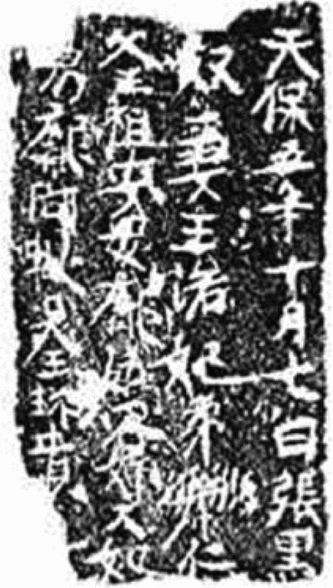
Fig. 1 is a rubbing of a brick tomb inscription; it is a good example of a ‘black’ name.
A clearly dated (554, the fifth year of Tianbao 天保, ‘heaven-protect’, a theophoric reign title and part of the ‘Iranisation of Chinese nomenclature’) case of a ‘black slave’ name, Zhang Heinu, from the Northern Qi dynasty.Footnote 157

During the Tianping 天平 “heavenly peace” era—yet another theophoric reign title— (534-537) of the rump Eastern Wei dynasty, there was a rebellion in today's Hebei province, led by a local resident named Lu Heinu 路黑奴.Footnote 152
Now we move on to the upper classes. Under the reign (423-452) of the emperor Taiwu 太武帝拓拔燾 of the Tuoba Wei dynasty (usually known as the Northern or Later Wei), there was a corrupt sometime-favourite courtier called Zhai Heizi 翟黑子 who had been enfeoffed as a duke 遼東公.Footnote 153 His surname strongly suggests a northern nomadic ancestry.Footnote 154
One of the most distinguished examples of calligraphy of the Tuoba Wei era is the tomb inscription of a certain gentleman named Zhang Heinü 张黑女 who died in the year 493. The complex issue of assigning a boy a feminine name notwithstanding, the circumstance that Heinü’s father, father-in-law, and grandfather were all cited as having served in prominent positions, certainly indicates that the family had close links to the pre-Sinified Tuoba court.Footnote 155
During the Northern Zhou dynasty (557-581), the student roll of the famous Confucian scholar-teacher Xiong Ansheng 熊安生 included the name Zhang Heinu 張黑奴.Footnote 156 The latter was later recruited together with five other scholars by the succeeding Sui dynasty as erudites at the National University 太學博士. The group was disparaged as being “lowly, uncultivated and lacking proper etiquette 鄙野無儀範”. Looked down upon by the court 朝廷不之貴, Zhang and two other scholars were soon condemned to death 譴亡.Footnote 159 One wonders if Zhang's non-Confucian name contributed to the group's ‘uncultivated’ repute and misfortune.
But most significant is another tomb inscription of the era, that of the Xianbei royal dame Lou Heinü 婁黑女, who died in the year 554 at age 58.Footnote 160 This lady was the sister-in-law of Gao Huan 高歡 (496-547), the actual founder of the Northern Qi dynasty (550-577). The surname Lou in fact was the shortened form of the Xianbei clan name Pilou 匹婁. Her powerful younger sister,Footnote 161 Zhaojun 昭君, as the empress-dowager 婁太后 (501-562), played a dominant role in the early years of the dynastyFootnote 162 and was an active participant in what can be termed the Xianbei revival movement, which reversed many of the Tuoba rulers’ earlier Sinification reforms.
Looked at in their entirety, including the Turfan-Dunhuang onomastics, the Northern Dynasties cases, and the two last such names we can find in Tang tomb inscriptions, dated 809 and 842 respectively,Footnote 163 these ‘black slave’ and ‘black child’ names constitute a spatial and temporal continuum, coinciding nearly perfectly with the advent, flourishing, and disappearance of the pre-Islamic Iranic influence in northern China, in both geographic and periodic terms.
The above cases of ‘black slave’ and ‘black child’ names thus demonstrate that the Iranian-Sogdian ‘black cult’ that can be linked to the Zoroastrian pantheon not only had a considerable native following on the northwest frontier, but also penetrated various walks of society in China proper, including the ruling echelons of the Northern dynasties.
An eleventh-century Persian source, Tārīkh-i Sīstān, claimsFootnote 164 that the Avestan ‘black’ hero Sāma Keresaspa, under the later variant name Garšāsp, went to and conquered China. The medieval Chinese ‘black cult’ indicates that such a conquest did take place, albeit figuratively. The same source, by the way, shows that, until the eleventh century, the name Garšāsp was still closely linked to Zoroastrian fire worship.
Correspondence to Other Archeological Data
Based solely on onomastic data, we can deduce that the medieval ‘black slave’ and ‘black child’ names assumed by both Iranian-Sogdian immigrants and native Chinese reflected the popularity of Iranian Zoroastrian beliefs and traditions, especially among the latter, a heritage now largely forgotten. This conclusion is further supported by other archeological data. We present two important cases of such correlation.
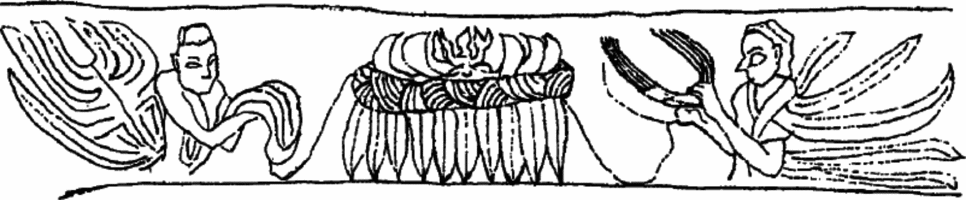
The first regards the case of the name of Liu Heishi 劉黑是 that appeared in a stone inscription dated 522, now preserved in Xi'an. As mentioned earlier, the same given name is attested twice in Turfan. The inscription belongs to the genre of monuments commemorating the construction of statues 造像碑, erected mostly by Buddhists, but also by Taoists and other religious groups, during that period. This particular monument contains no Buddhist images and icons, and it clearly states that the erection of the monument was for “persuading local residents to set up a monthly temple, lighting up fires of fragrant grass at its center, to enlighten people's hearts 勸化鄉人, 月設一盦, 復寘心火菣, 解悟心田”.Footnote 165 Based on this statement and multiple carved images (one of them shown in Fig. 2), Shi Anchang has rightly pointed out the strong Zoroastrian character of this monument, though his attribution of most of the people listed to Rouran 柔然 ethnicity is debatable.Footnote 166
Image of worshipping the sacred fire inscribed on monument, 522 ce.Footnote 158

Next is the case of the Xianbei royal dame Lou Heinü, ‘black daughter’. Her nephew Lou Rui 婁叡 (?-570) was a highly positioned courtier enfeoffed with a princedom who rose to the rank of Defender-in-Chief 太尉, allegedly thanks largely to nepotism, of the Northern Qi dynasty. Lou Rui's tomb, located in the suburb of Taiyuan 太原, was excavated from 1979 to 1981.Footnote 167 Despite having been robbed in the past, the tomb still yielded an enormous amount of artifacts and superbly preserved colour murals, many in a decidedly non-Sinitic style, and caused quite a sensation in archeology circles. Years later, with new discoveries of contemporary tombs of Yu Hong 虞弘 and Xu Xianxiu 徐顯秀, both in Taiyuan,Footnote 168 Shi Anchang re-examined the Lou Rui case and found many similarities and common aspects among the three tombs, and they all reveal strong Zoroastrian characteristics and customs. In particular, what was conventionally described as a ‘lamp’ in these tombs is in fact a fire altar. Such pre-Islamic Iranian icons as the senmurv/simurgh are also identified.Footnote 169 In this context, it is small wonder that Lou Rui's aunt was given a Zoroastrian ‘black daughter’ name.
Iranians-Sogdians as the Predecessors of the Semu of the Mongol Era
The ‘black slave’ names thus suggest a heavy Iranian cultural and religious influence in the Northern dynasties that is far from apparent in Chinese records, both official and unofficial. They may also help demonstrate the long-ignored political role played by the Iranian-Sogdian immigrants known largely for their extraordinary commercial and trading aptitudes.
Simply put, these early medieval Central Asian immigrants were attracted to China not only by the opportunity for commercial profit, the characterisation of them to be found in Xin Tang shu (New History of the Tang Dynasty),Footnote 170 but also probably more importantly by the political opportunities offered by the nomadic conquerors of northern China at the time. In other words, they were the predecessors of the mostly Muslim Semu 色目 immigrants of Yuan China under the Mongols, and came to serve the Tuoba and other Xianbei masters as “assistant conquerors”.
If one examines the situation more closely, it becomes apparent that this profound Iranic influence in northern China in fact preceded the Northern Dynasties. Chinese records on the bloody military coup in the year 349 that toppled the ethnic (Jie 羯) Later Zhao 後趙 regime, for example, incidentally reveal the existence of a Hu (Iranian) heaven 胡天 temple or altar in the palace.Footnote 171
Though largely suppressed and ignored by the Confucian monopoly of East Asian historiography of the period, the fact that the Tuoba rulers of the Northern Dynasties deliberately appealed to Zoroastrian Iranian-speakers to come to northern China for political reasons can still be detected in occasional passages in Chinese records. Here are some examples.
Wei shu (History of the [Northern] Wei Dynasty)Footnote 172 records that the powerful Tuoba empress dowager 胡氏 endeavoured to demolish all non-Buddhist temples and altars, with the sole exception of the “Hu heaven god” 廢諸淫祀, 而胡天神不在其列.
Sui shu (History of the Sui Dynasty) states, from a Sinocentric viewpoint:Footnote 173
Toward the end of his rule, the last monarch [of the Northern Qi] made sacrifice to the wrong spirits. He even presented himself in drum dances honouring the Hu heaven god. This led to many profane temples in the city of Ye (Northern Qi capital), a custom that has lasted to this day. The Later Zhou, in its scheme to appeal to people of the Western Regions, also established worship of the Hu heaven god. The emperor participated in person in these rites. The ceremony completely followed foreign custom, and was too obscene and obscure to describe. 後主末年, 祭非其鬼, 至於躬自鼓舞, 以事胡天. 鄴中遂多淫祀, 茲風至今不絕. 後周欲招來西域, 又有拜胡天制, 皇帝親焉. 其儀並從夷俗, 淫僻不可紀也.
The rival Northern Qi and Northern Zhou dynasties were evidently in fierce competition to attract Iranian Zoroastrians to their respective polities.
The famous Luoyang qielan ji 洛陽伽藍記 (translated as Mémoire sur les monastères bouddhiques de Luoyang by Jean-Marie Lourme)Footnote 174 describes the net result of such deliberate policies of the Tuoba rulers:Footnote 175
From the west of Congling (the Pamirs), all the way to the Great Qin (widely recognised as the Chinese epithet for the Roman Empire), hundreds of cities and states happily submit [to the Tuoba empire]. Hu merchants rush to the [Chinese] border passes every day. Countless foreigners from all over the world have fallen in love with the customs of the Central Kingdom and settled [in Luoyang], to the extent that there are more than ten thousand households of such naturalized immigrants in the city. 自蔥岭已西, 至於大秦, 百國千城, 莫不歡附, 商胡販客, 日奔塞下, 所謂盡天地之區矣. 樂中國土風, 因而宅者, 不可胜數. 是以附化之民萬有餘家.
While a detailed exposition of the Iranians’ political role in the Northern dynasties is beyond the scope of the present investigation, we may point out two apparent consequences.
First is the popularity of Iranian-Sogdian languages among non-speakers. There are accounts showing that average northern Chinese had a familiarity with common Iranian-Sogdian words and terms similar to modern Chinese urbanites’ knowledge of English. The Tuoba rulers’ preference in this regard was such that the mastery of the Hu (Iranian) script 胡書 became an important asset to bureaucratic aspirants.Footnote 176
Second to be noted is the popularity of Iranian-Sogdian religion or religious beliefs. The promotion of the Iranian-Zoroastrian ‘heaven god’ worship by the Northern Qi and Northern Zhou emperors and empresses would hardly have discouraged their subjects from seeking out the same exotic faith. Small wonder that the Iranic ‘black cult’ would find many followers among non-Iranians in northern China, as shown by the ‘black slave’ and ‘black child’ names.
Finally, let us revisit the Rebellion of the Six Hu Prefectures in the year 721, which had a Sogdian ‘black slave’ 何黑奴 among its ringleaders. The Tang court's puzzlement notwithstanding — it had, after all, treated the Sogdians the same as Han Chinese — the gradual Sinicisation of the originally semi-‘barbarian’ Tang ruling house would certainly have eroded the Sogdians’ political advantages under the Tuoba rulers, hence their rebellious resentment. It may not be coincidental that, thirty-four years later, the much more serious An-Shi Rebellion 安史之亂, which almost toppled the Tang dynasty, was started by the half-Sogdian general An Lushan.