This report is in recognition of the many clinical, methodological, and developmental contributions to child and family psychology made by Dr. Thomas Dishion (Shaw, Forgatch, Fishbein, & Sandler, Reference Shaw, Forgatch, Fishbein and Sandler2018), whose work focused on the prevention of coercive family process and subsequent child behavior problems (see Dishion & Snyder, Reference Dishion and Snyder2016), including the unique influences of fathers (Dishion, Owen, & Bullock, Reference Dishion, Owen and Bullock2004; Patterson & Dishion, Reference Patterson, Dishion, Hinde and Stevenson-Hinde1988). Using a social interaction learning model (SIL) of parent management training, we tested the efficacy of the Fathering Through Change (FTC) online preventive intervention program for recently divorced or separated single fathers. In general, this research was a cascading result of the rich mentoring and collaborative relationships among Drs. Gerald Patterson, Tom Dishion, John Reid, Marion Forgatch, Patricia Chamberlain, and Beverly Fagot at the Oregon Social Learning Center during the development and testing of the social interactional–social learning model (Patterson, Reid, & Dishion, Reference Patterson, Reid and Dishion1992), later known as the SIL (Reid, Patterson, & Snyder, Reference Reid, Patterson and Snyder2002). The FTC prevention program was a direct result of Dr. Forgatch's Parent Management Training–Oregon Model (PMTO) work with divorce and remarried families, Parenting Through Change (PTC; Forgatch, Reference Forgatch1994), which explicated how family structure transitions interfere with effective parenting and how parent management training can prevent parent and child adjustment problems (Forgatch & DeGarmo, Reference Forgatch, DeGarmo, Reid, Patterson and Snyder2002; Patterson, Forgatch, & DeGarmo, Reference Patterson, Forgatch and DeGarmo2010).
A recent systematic review found that at least 25% of parents in need of behavioral parent training (BPT) do not enroll or engage in treatment when offered, and of those who do initially engage, 26% prematurely drop out, leaving fewer than half of the parents who had been identified as likely to benefit from BPT actually receiving appropriate treatment (Chacko et al., Reference Chacko, Jensen, Lowry, Cornwell, Chimklis, Chan and Pulgarin2016). In addition, fathers are uniquely more challenging to engage in BPT (DeGarmo, Nordhal, & Fabiano, Reference DeGarmo, Nordahl, Fabiano, Dishion and Snyder2016). Advantages of intensive individual- or group-based BPT include effectiveness, direct monitoring and feedback, normalization and support through participation in group interventions, and troubleshooting. Some disadvantages of intensive behavioral interventions are costs, the need to train staff and maintain fidelity, scheduling that is inconvenient to families and staff, location of services, and stigma for families. As a result, researchers, clinicians, and service providers often struggle with striking an adequate balance between implementation resources and intensity of parenting training or services; that is, if a program is too brief and too cost effective, it may not be effective enough for successful learning and uptake by clients. To address these issues, interventionists are increasing the use of online and digital parent training. As such, with the growing number of interactive modular interventions being developed and adopted, evaluation of evidence for their effectiveness is imperative.
Two recent meta-analyses suggest online programs have potential for effectiveness. Using studies with direct comparison of in-person BPT versus digital online BPT, Baumel and colleagues found that reduced professional support compared with full-contact conditions was not inferior and showed slight improvement in comparison with usual care (Cohen's d = .34; Baumel, Pawar, Kane, & Correll, Reference Baumel, Pawar, Kane and Correll2016). For children younger than age 9 years, digital parent training programs have obtained Cohen's d ranging from .41 to .80 (Baumel et al., Reference Baumel, Pawar, Kane and Correll2016), and for adolescents, Cohen's d has ranged from .17 to .20 (Baumel, Pawar, Mathur, Kane, & Correll, Reference Baumel, Pawar, Mathur, Kane and Correll2017). We therefore chose to use an evidence-based theoretical model to tailor a prevention program with a cost-effective accessible format that would meet the needs of single fathers, who are challenging to engage in BPT.
The SIL Model and Fathers
The SIL model focuses on how the family social environment shapes and establishes overlearned patterns of behavior that can generalize across social settings for a developing child. Parenting practices are the key agent of child socialization. Parent–child social interaction patterns are the behavioral mechanism that reinforces a child's likelihood of engaging in future prosocial or antisocial behaviors (i.e., SIL perspective). Relatedly, the coercion model more specifically focuses on how antisociality and harsh, punitive, and ineffective discipline are associated with growth in children's aggression and comorbid problem behaviors. For example, unskilled and antisocial parents may use hitting, yelling, and harsh punishment to discipline a child to stop an aversive child behavior. Coercive discipline works in the short run; however, in the long run, a child can learn that coercion among family members can be used to terminate the aversive behaviors of other family members. A child may then learn to apply aggression and coercion in relationships with peers and other adults. In the absence of skilled parenting, a child may progress from trivial displays of aversive behaviors to growth in aggression and future delinquency (Dishion, French, & Patterson, Reference Dishion, French, Patterson, Cicchetti and Cohen1995).
In 1988, Patterson and Dishion tested the assumption that antisocial behaviors in children reflect equal contributions of maternal and paternal coercive parenting practices and parental antisocial traits. Using 202 families from the Oregon Youth Study (OYS), Patterson and Dishion used multiple-method measures of antisocial traits indexed by arrests, driving records, and personality inventories; direct observation of parent–child interactions; and parent, teacher, and child reports of child problem behaviors. They found significant associations for both mothers and fathers from antisocial traits to coercive discipline, and in turn, to young boys' antisocial behaviors. They also found that fathers' inept discipline explained twice the variance in children's problem behaviors than did mothers' discipline methods (Patterson & Dishion, Reference Patterson, Dishion, Hinde and Stevenson-Hinde1988). They were surprised by this finding given the 10 years of clinical observation research they had done showing that mothers engaged in higher rates of irritability, nagging, and coercive discipline with children than did fathers (Patterson, Reference Patterson1982). Further validating these findings, subsequent meta-analyses had provided additional evidence that harsh coercive fathering explains greater variance in child adjustment problems relative to mothers' harsh parenting (Hoeve et al., Reference Hoeve, Dubas, Eichelsheim, van der Laan, Smeenk and Gerris2009; Hoeve et al., Reference Hoeve, Stams, Put, Dubas, Laan and Gerris2012).
Later in his career, Dishion worked on the independent role of deviant peer association as a predictor of adolescent problem behaviors. He tested a set of competing models to further understand the role of fathers in deviancy training. Using OYS longitudinal data, Dishion et al. (Reference Dishion, Owen and Bullock2004) tested whether parenting behaviors (a family management perspective) versus a direct effect of fathers' own deviance (a cultural deviance model) predicted adolescent deviance. Controlling for parenting, they found a direct link between father antisocial behaviors and the selection of deviant peers, suggesting that fathers have an important leadership and modeling role in the socialization of sons with respect to norms, values, and deviance, with antisocial fathers likely encouraging deviance. Subsequent studies with resident and nonresident fathers also found that both fathers' antisocial traits and coercive parenting predict problem behaviors in adolescence (Jaffee, Moffitt, Caspi, & Taylor, Reference Jaffee, Moffitt, Caspi and Taylor2003) and early childhood (DeGarmo, Reference DeGarmo2010), whereas quality father involvement for nonresident fathers predicts decreases in child adjustment problems (Coley & Medeiros, Reference Coley and Medeiros2007). Taken together, these data underscore how salient fathers' coercive discipline is for child development and underscore the importance of preventing fathers' inept parenting behaviors. From the SIL perspective, treatment and prevention of coercive process entails teaching parents how to rearrange and manage consequences to decrease aggressive behavior and to increase more prosocial behaviors through effective parenting practices (Patterson, Reference Patterson2005). This work involving fathers and the role of family structure transitions laid the theoretical foundation for Fathering Through Change (FTC).
The FTC Program
It is well established that quality fathering behaviors matter in the lives of children before and after marital separation for both resident and nonresident father–child relationships. Noncoercive father involvement is associated with reduced internalizing and externalizing behaviors (Dunn, Cheng, O'Connor, & Bridges, Reference Dunn, Cheng, O'Connor and Bridges2004; King & Sobolewski, Reference King and Sobolewski2006; Leidy, Schofield, & Parke, Reference Leidy, Schofield, Parke, Cabrera and Tamis-Lemonda2013). Quality father–child relationships are also directly associated with children's physical health independent of interparental conflict (Fabricius & Braver, Reference Fabricius and Braver2006; Fabricius & Luecken, Reference Fabricius and Luecken2007). Although effective parenting and quality involvement are critical for children's postseparation adjustment, very few evidence-based programs are designed for at-risk separated or divorced fathers.
Following divorce, in contemporary court systems, the majority of mothers and fathers are assigned mandated or voluntary mediation, conflict resolution, or some form of literature-based parent education. One review of father involvement programs with respect to divorce and mediation indicated that the majority of interventions for low-income families focused on father involvement only, and middle-class father programs focused on interparental conflict (Cowan, Cowan, & Knox, Reference Cowan, Cowan and Knox2010). In a 12-year follow-up of 71 divorced families randomized to mediation or litigation, Emery and colleagues (Reference Emery, Laumann-Billings, Waldron, Sbarra and Dillon2001) showed parents who mediated were more involved with their children 12 years following divorce than were those who did not. However, all parents declined in satisfaction over time and only mothers remained significantly more satisfied with dispute resolutions and their influence on coparenting.
Notable exceptions to the lack of father-focused interventions include Supporting Father Involvement (Cowan, Cowan, Pruett, Pruett, & Wong, Reference Cowan, Cowan, Pruett, Pruett and Wong2009) and Dads for Life (Braver, Griffin, & Cookston, Reference Braver, Griffin and Cookston2005), both of which focus on parent education and cooperation. Notably, including these evidence-based programs, conflict resolution is the predominant focus of mediation and court-based programs, with experimental trials showing these components lead to less conflict, greater involvement for fathers, and reduced litigation (Cowan, Cowan, Pruett, & Pruett, Reference Cowan, Cowan, Pruett and Pruett2007; Cowan et al., Reference Cowan, Cowan, Pruett, Pruett and Wong2009; McIntosh, Wells, Smyth, & Long, Reference McIntosh, Wells, Smyth and Long2008).
The SIL model is relevant for divorced fathers because it has shown that father–child interactions have developmental effects on child adjustment (DeGarmo, Reference DeGarmo2010), and both resident and nonresident father relationships have effects on child development independent of mothers' influence (Simons, Whitbeck, Beaman, & Conger, Reference Simons, Whitbeck, Beaman and Conger1994). Moreover, standard BPT using Triple P (Frank, Keown, & Sanders, Reference Frank, Keown and Sanders2015) and PMTO (DeGarmo & Forgatch, Reference DeGarmo and Forgatch2007) have shown that intervention-induced changes in father behaviors predict changes in child behaviors independent of intervention-induced changes in mother behaviors.
The FTC was funded by a Phase 2 small business innovation research grant (R44 HD075499) and was adapted from the evidence-based BPT program PMTO and the PTC for single mothers (Forgatch, Reference Forgatch1994). Based on focus group data from key stakeholders, including fathers, judges, and court administrators, the FTC was tailored to the needs of divorced and separating fathers, with a major focus on the relevance of the fathering role and its influence on children (Fabiano, Reference Fabiano2007). Translation and tailoring of PMTO for FTC involved formal consultation with several PMTO-certified trainers and consultation with the director of the Association of Families and Conciliation Courts. The FTC was designed to improve parenting skills, strengthen the father–child relationship, and reduce stress in the lives of fathers. In turn, these outcomes were intended to decrease child adjustment problems during and after the separation and divorce process.
The FTC intervention program uses a number of instructional processes, including video sequences, web-based interactivity, web-based social connectivity and networking, and email and phone text instructional prompting. The modules use several instructional methods including explicit instruction, modeling, and practice. The theory of instruction (Engelman & Carnine, Reference Engelmann and Carnine1991) relies on clear presentation of conceptual material, skill-based material presented through instructional pacing, use of positive and negative examples, and cumulative review of previously taught materials. The program also includes an electronic journal to tailor progress, note challenges and successes, and provide evaluation with checks for fidelity.
The FTC program curriculum includes 10 content modules. The first 6 weeks include sequentially ordered core cumulative program content that are precedent ordered, meaning fathers are required to complete one assigned module per week in order to proceed to new content. The first 6 weeks include the modules Introduction to the Program, Give Effective Directions, Teach Through Encouragement, Recognize and Regulate Emotions, and Use Discipline That Works. Week 6 consists of review and refinement designed to review and troubleshoot. Weeks 7 through 10 include Solve Problems, Protect Children From Conflict, Active Communication, and Strengthen Your Relationship.
Hypotheses
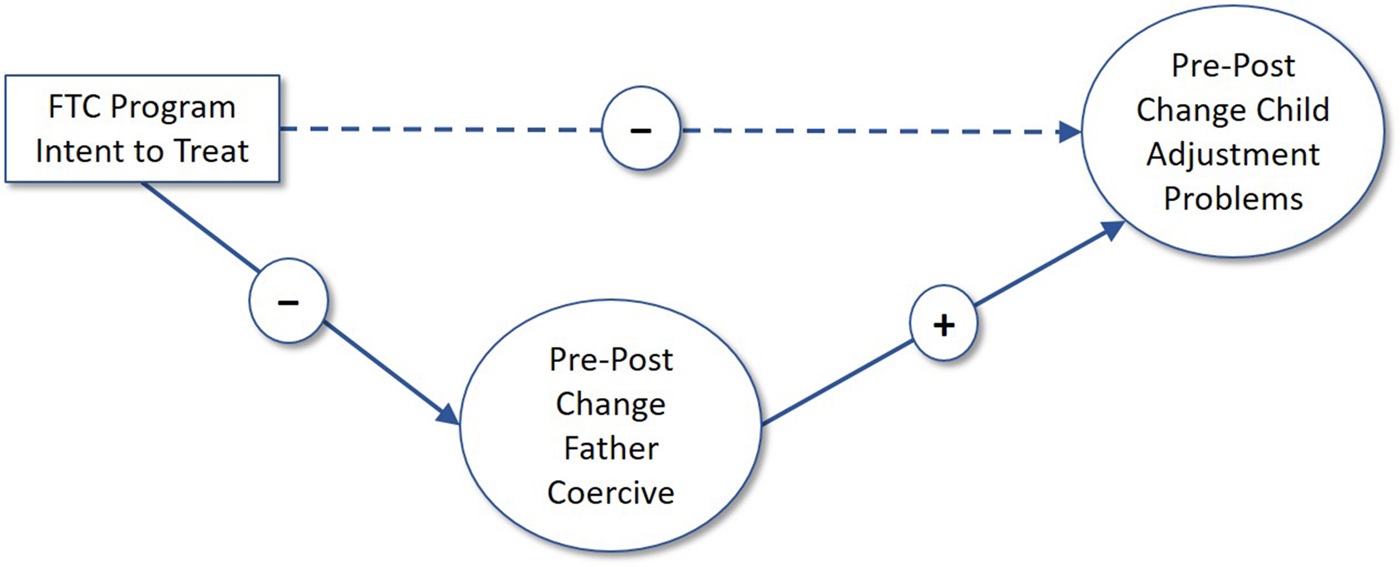
Based on the SIL model for divorced families (Forgatch & DeGarmo, Reference Forgatch and DeGarmo1999), we expected to observe greater improvements for FTC fathers relative to the control condition in the targeted domains of the intervention, including indicators of fathers' parenting skill and fathers' report of child adjustment. More specifically, the SIL posits that change in proximal targeted outcomes (parenting practices) mediate changes in child adjustment. Child adjustment factors are considered distal and mediated because the intervention is provided directly to parents and not to children. Therefore, intervention effects on child adjustment should operate indirectly through the putative parenting mechanisms. As such, we hypothesized that fathers in the FTC group would show greater improvements in pre–post parenting skill relative to the control condition and that pre–post change in parenting skill would be associated with improvements in child adjustment (see Figure 1). We hypothesized that children in the FTC program would show greater declines in problem behaviors postintervention, represented as the direct effect of the intervention. We also hypothesized that fathers in the FTC program would show greater pre–post reductions in coercive fathering behaviors relative to fathers in the control condition. The dashed line in Figure 1 implies the hypothesis that pre–post change in fathering behaviors will mediate any direct effect of the intervention on child adjustment.
Mediational hypothesis for FTC effectiveness evaluation.

Method
Study Sample
Divorced and separated fathers were recruited through several online advertising strategies, including regional and national postings on Facebook, craigslist, and community listservs, with the majority of fathers enrolled through Survey Sampling International. Eligibility included having been divorced or separated within the past 24 months and having a focal child between ages 4 and 12 years.
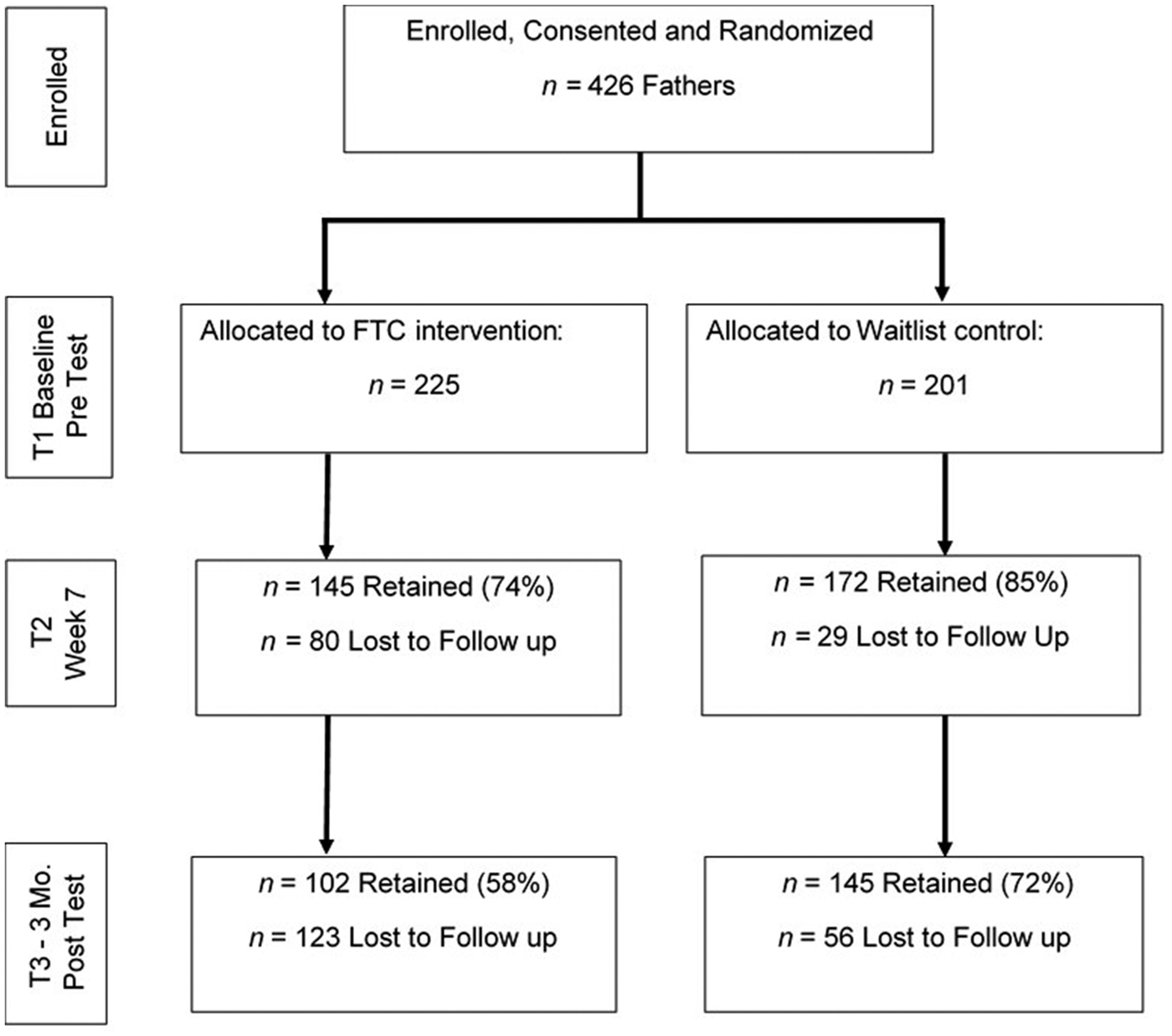
The final study sample included 426 participating fathers; 225 were randomly assigned to the FTC intervention condition and 201 to the waitlist control condition. Among the fathers, 74% were legally married prior to separation; 61% had joint legal custody, 14% had full legal custody, 6% reported that the coparent had legal custody, and 19% reported custody had not yet been finalized. The average age of the fathers was 37.24, and the average age of the focal child was 7.88 years. Boys comprised 56% of the sample of focal children. Regarding fathers' employment, 79% were employed full time and 6% part time. Among the sample of fathers, 82% identified as European American, 7.5% African American, 2% Asian American, and 1% Native American or Pacific Islander; 11% identified as multiracial and 11% identified as Hispanic. On average, fathers had received some post–high school education; among the binned categories, 28% had received a high school diploma, 30% community college or associate's degree, and 24% a 4-year bachelor's degree. The average annual income ranged from $40,000 to $49,999.
FTC Efficacy Trial
The efficacy study was a 12-week, two-arm, randomized controlled trial design. Fathers were randomly assigned to the FTC online parent training or to the waitlist control condition (see Figure 2). The study included three assessments periods: preintervention Time 1 (T1); Week 7 assessment Time 2 (T2); and Week 12 postintervention Time 3 (T3), follow-up. At the end of T3 all fathers were provided access to the online parenting materials. In total, 74% of the sample was retained at T2 (n = 317) and 58% at T3 (n = 247). There were differential rates of attrition by group condition, with 85% of controls retained at T2 compared with 64% of the FTC condition, and 72% of controls at T3 compared with 45% of FTC condition. Among 54 baseline demographic variables and key outcome study scales, attrition analyses indicated only one significant difference observed between those retained and those lost to follow-up, fewer than expected by chance false discovery. Fathers lost to follow-up were lower in reported education compared with those retained (T2 M = 4.46 and 4.11, n = 317 and 104, respectively, t = 2.19*; T3 M = 4.54 and 4.14, n = 247 and 174, respectively; t = 2.83**). We therefore controlled for father education in all analyses. Moreover, although not the focus of this report, mean comparisons revealed no differences between intervention and waitlist control on measures of mental and physical health, emotion regulation, mindfulness, and parental efficacy.
CONSORT flow of study participants.

In the intervention condition, 31% of the fathers did not engage in any of the modules. Focusing on the 10 core weekly modules, the average completion rate was 47%, or a mean of 4.77 modules. In addition to the video BPT sessions, considering all interactive components (e.g., printable materials, knowledge tests, goal-setting modules), the average completion rate was 43%, with a mean of 21.43 components of 50 possible.
Measures
The coercive parenting latent variable was measured with three subscale indicators from the Parenting Practices Interview (PPI; Webster-Stratton, Reid, & Hammond, Reference Webster-Stratton, Reid and Hammond2001): harsh discipline, inept discipline, and positive parenting. The PPI is a validated self-report measure of prosocial and coercive parenting behaviors based on global observational coding systems developed at the Oregon Social Learning Center.
Harsh Discipline
This subscale included 11 items. Three items were rated on a 7-point Likert scale ranging from 1 (not at all) to 7 (extremely likely) in response to the stem, “If your child refused to do what you wanted him/her to do, how likely is it that you would use each of the following discipline techniques: raise your voice (yell), give your child a spanking, slap or hit.” Three items were rated in response to, “If your child hit another child, how likely is it that you would discipline your child in the following ways: raise your voice (yell), give your child a spanking, slap or hit.” Frequency of harsh discipline was assessed on 7-point scale ranging from 1 (never) to 7 (always). Two items asked, “How often do you show anger when you discipline your child?” and “How often do arguments with your child build up and you do or say things you don't mean to?” Three items were in response to, “How often do you do each of the following things when your child misbehaves: raise your voice (yell), give your child a spanking, slap or hit.” Chronbach's alpha was .84 at .86 for T1 and T3, respectively.
Prosocial Parenting
This subscale included 15 items rated on a 7-point scale. Seven items focused on frequency in general, frequency in the past 2 days, and frequency per day. Sample items from the stem included, “How often do you do each of the following things when your child behaves well or does a good job: praise or compliment your child; give your child a hug, kiss, pat, handshake or “high five”; give him/her an extra privilege (such as cake, go to the movies, special activity for good behavior); give points or stars on a chart, etc.” Eight items were rated on a 7-point scale ranging from 1 (strongly disagree) to 7 (strongly agree). Sample items included the following: “I believe in using rewards to teach my child how to behave”; “Giving children a reward for good behavior is bribery”; “I would like to praise my child more often than criticize him/her but it is hard to find behaviors to praise”; “If I give my child praise or rewards to encourage good behavior, he/she will demand rewards for everything”; “I shouldn't have to reward my children to get them to do things they are supposed to do.” Chronbach's alphas were .74 and .81 at T1 and T3, respectively.
Inept Discipline
This subscale was also rated on a 7-point scale for frequency and likelihood and included nine items. Sample items were the following: “How often is your child successful in getting around the rules that you have set?”; “How often does the kind of punishment you give your child depend on your mood?”; “If you ask your child to do something and he/she doesn't do it, how often do you give up trying to get him/her to do it?”; If you have decided to punish your child, how often do you change your mind based on your child's explanations, excuses or arguments?” Chronbach's alpha was .67 at .68 for T1 and T3, respectively.
The child adjustment latent variable was measured with three indicators. The first two indicators were from the Eyberg Child Behavior Inventory T scales with a mean of 50 and a standard deviation of 10 (Burns & Patterson, Reference Burns and Patterson2000). The Intensity scale included 36 items and assessed the frequency with which the child displays the behaviors rated on a 7-point scale ranging from 1 (never) to 7 (always) in response to the question, “How often does this occur with your child?” Sample items were the following: (a) has poor table manners, (b) refuses to do chores when asked, (c) refuses to go to bed on time, (d) does not obey house rules on own, (e) hits parents, (f) has temper tantrums, (g) steals, (h) lies, (i) physically fights with friends own age, (j) physically fights with sisters and brothers. Chronbach's alpha was .91 at .96 for T1 and T3, respectively. The Problem T scale included the same 36 items and was a summative index of dichotomous items rated 1 (yes) and 0 (no) ranging from 0 to 36 in response to the question, “Is this behavior a problem for you?” The Kuder–Richardson (KR-20) alpha reliability for dichotomous items was .92 and .93 for T1 and T3, respectively.
The third child adjustment indicator was the Prosocial Behavior scale of the Strengths and Difficulties Questionnaire (Ford, Hutchings, Bywater, Goodman, & Goodman, Reference Ford, Hutchings, Bywater, Goodman and Goodman2009). The prosocial scale included five items rated on a 3-point scale ranging from 0 (not true) to 2 (certainly true) and was computed as a summative index. Items were the following: (a) considerate of other people's feelings; (b) shares readily with other children (e.g., toys, treats, pencils); (c) helpful if someone is hurt; (d) upset or feeling ill; (e) kind to younger children; (f) often offers to help others (parents, teachers, other children). Chronbach's alpha was .74 at .81 for T1 and T3, respectively.
Control variables
Fathers' education was measured in years of schooling ranging from 1 (8th grade or less) to 8 (doctoral/professional degree: PhD, MD, JD). Fathers' monthly contact with his child was the mean of items, the amount of weekday contact ranging from 1 (0 weekdays per month) to 5 (21–30 weekdays per month), and the count of, “On average how many weekend days per month?” (ranging from 0 to 8). From the SIL perspective, the amount of interaction potential is more salient than is custody status (DeGarmo, Reference DeGarmo2010). Both scores were rescaled 1 to 5 and averaged. Time since separation was computed as the difference in months from the date of the divorce or separation and the date of the Time 1 baseline assessment. Biological sex of the child was coded 1 (boy) and 0 (girl). Child age was measured in years.
Analytic Strategy
The results were examined using an intent-to-treat analysis (ITT). The main effectiveness hypotheses and indirect effects analyses were tested with structural equation path modeling (SEM) using Mplus 8.2 (Muthén & Muthén, Reference Muthén and Muthén1998–2018). SEM is a latent variable regression technique that simultaneously combines factor analyses with path analyses under the assumptions of multivariate normality. SEM models were specified as autoregressive change models, using the baseline T1 data and the postintervention T3 data (i.e., a pre–post intervention analysis of covariance approach). We specified across-time error covariances for pre–post indicators as is recommended for repeated measures and correlated error (Byrne, Reference Byrne2011). Model fit was evaluated using the recommended fit indices (Byrne, Reference Byrne2011; McDonald & Ho, Reference McDonald and Ho2002) of a chi-square minimization p value greater than .05; a comparative fit index (CFI) greater than .95; a chi-square ratio (χ2/df) less than 2.0; and a root mean square error of approximation (RMSEA) less than .08.
Effectiveness hypotheses were tested using mediation analysis (MacKinnon Reference MacKinnon2008). Mediation requires a direct intervention effect on the distal child adjustment outcome as well as on the proximal target of the intervention, parenting practices. Change in parenting is required to be associated with change in child adjustment and also required to render the direct effect on child adjustment nonsignificant. To estimate indirect effects, the use of bias-corrected bootstrapped standard errors and confidence intervals is recommended to address the asymptotic distribution of the multiplicative indirect term (Preacher & Hayes, Reference Preacher and Hayes2008).
Missing Data and Compliance
All models were estimated using full information maximum likelihood (FIML), which uses all available information from the observed data in the SEM analyses. FIML estimates are computed by maximizing the likelihood of a missing value based on observed values in the data. Compared with mean-imputation, list-wise, or pair-wise models, FIML provides more statistically reliable standard errors (Brown et al., Reference Brown, Wang, Kellam, Muthén, Petras, Toyinbo and Windham2008), and it is still recommended for SEM when missingness is nonignorable, particularly with a covariate associated with missingness (Graham, Reference Graham2003), in this case, fathers' education. Moreover, a missing-values analysis using Little's test for missing completely at random (MCAR) testing missing data patterns in the covariance matrix, including T1 and T3 indicators for child adjustment, fathers' coercive parenting, and all covariates specified in the models below, revealed that the data met criteria for missing at random (Little's MCAR χ2[57] = 75.15, p = .054).
However, because differential rates of attrition were observed between randomized conditions, intervention effects could be overestimated if higher functioning fathers were retained in the treatment condition. Therefore, we also estimated CACE models to provide a better estimate of the intervention effect to adjust for compliers and noncompliers in the intervention group and would-be compliers in the control group. CACE uses mixture models, or estimated categorical profiles, to provide unbiased estimates of intervention contrasts by modeling unknown compliance status as missing data (Jo, Reference Jo2002; Little & Yau, Reference Little and Yau1998). The unknown compliance status in the control condition is then estimated based on the known compliance status in the intervention condition. This unbiased estimate provides a better understanding of how a program works by estimating what would happen to the control group had they been offered the intervention by directly comparing characteristics of participants in the intervention group that complied with treatment (observed compliance) with estimates of would-be compliers or noncompliers in the control condition, based on their study matched characteristics (estimated compliance).
Results
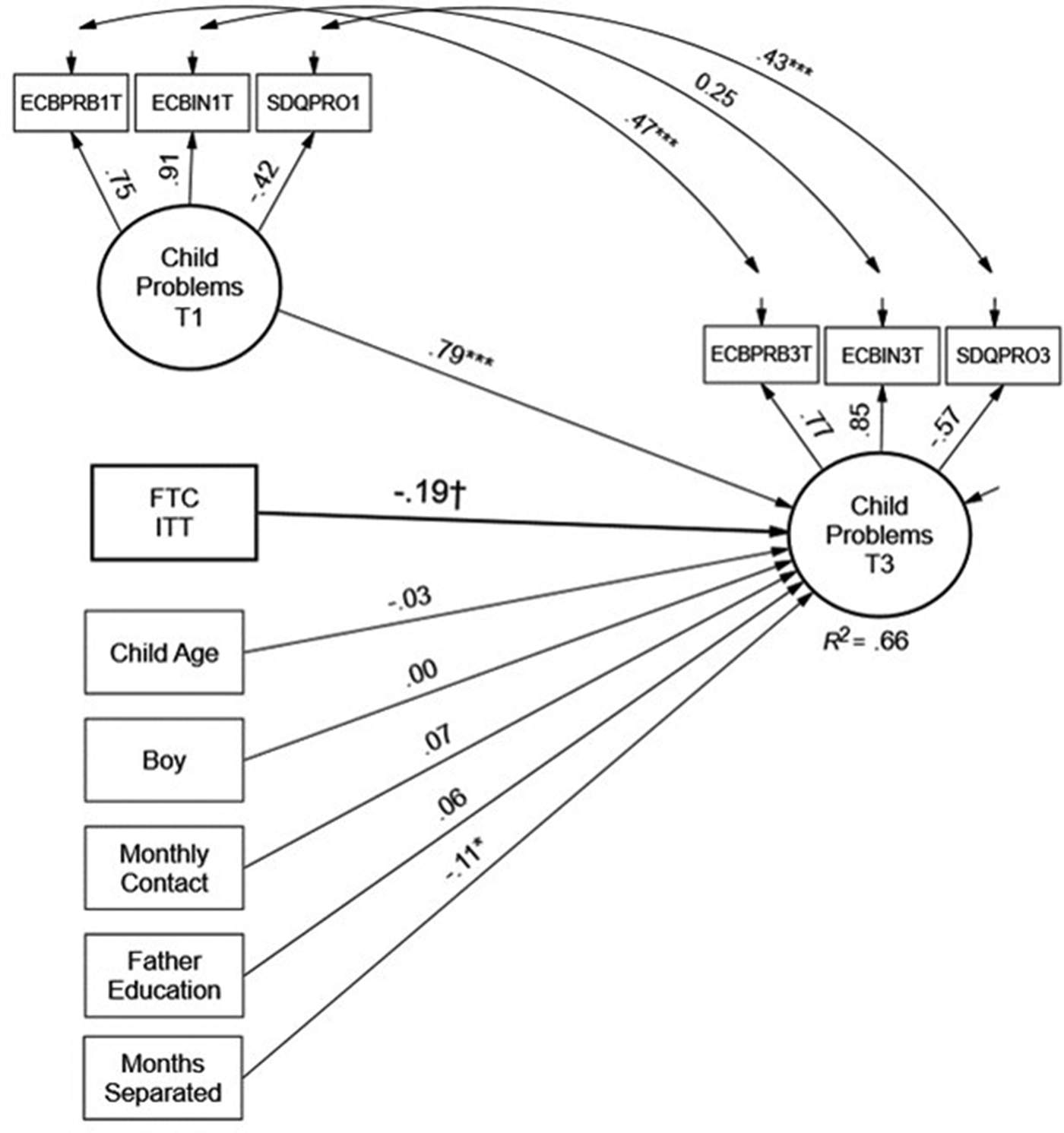
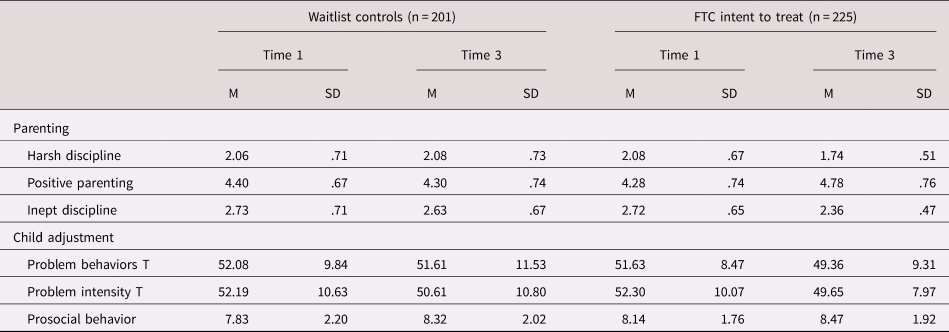
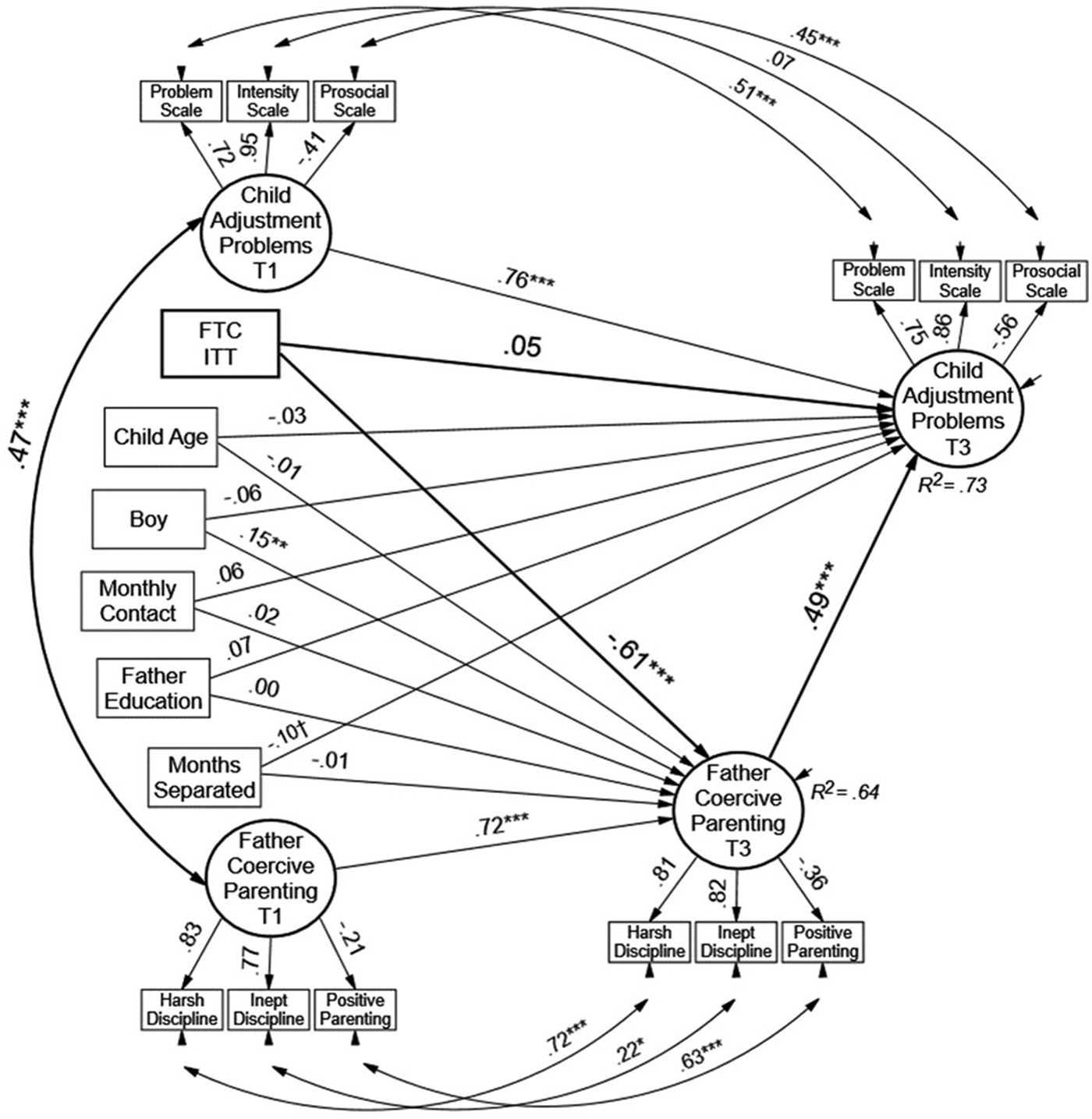
Means and standard deviations for the key study variables are shown in Table 1. The primary hypothesis focused on whether FTC had a direct effect on 3-month pre–post changes in child behavior problems and whether that effect was mediated by FTC-induced pre–post changes in fathers' coercive parenting. Overall, the data supported the mediation hypothesis. The first step in evaluating mediation was a test of a direct effect of the FTC program on the distal outcome of child adjustment problems. Findings are shown in Figure 3 in the form of standardized path coefficients, except the FTC contrast path.
Structural equation path model for test of intent to treat (ITT) effect of FTC fathers' parent training intervention on pre–post child adjustment. Paths are standardized estimates. Intervention contrast is Y factor standardized to equal effect size. Model fit: χ2 (35) = 53.44, p = .02, CFI = .98, RMSEA = .04; χ2/df = 1.52. FTC effect size d = .19, a small effect.

Means and standard deviations for outcome variables by group condition

The FTC path was Y standardized to estimate the effect size (see Muthén & Muthén, Reference Muthén and Muthén1998–2018). After controlling for age of the child, biological sex, fathers' monthly contact, and father education, the FTC intervention was shown to be marginally associated with decreases in the child adjustment problems construct, β = −.19, p < .06. The FTC intervention accounted for 1% of the explained variance, a small effect (d = .20). The model obtained adequate fit to the data. Although the chi-square minimization p value was < .05, the model obtained a high CFI, a chi-square ratio less than 2, and an RMSEA less than .08, χ2 (35) = 53.44, p = .02, CFI = .98, RMSEA = .04. None of the control variables was associated with change in child adjustment.
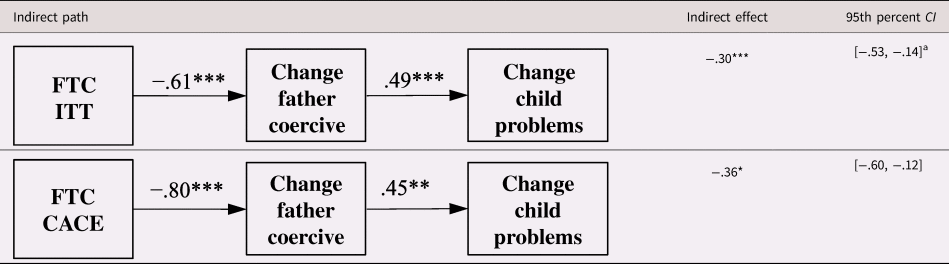
In the next step of the analyses we tested mediation, including pre–post changes in father coercive parenting. Findings are shown in Figure 4. Supporting mediation, the model estimates showed that the direct effect of FTC on child adjustment was rendered nonsignificant when changes in coercive parenting were entered in the model. The FTC intervention was associated with reductions in father coercive behaviors, β = −.61, p < .001, d = .61, medium effect size, and finally, changes in coercive fathering in turn predicted increases in child behavior problems, β = .49, p < .001. Controlling for baseline levels, the FTC intervention accounted for 9% of the variance in change in fathers' parenting behaviors, χ2 (103) = 241.01, p = .00, CFI = .93, RMSEA = .05; χ2/df = 2.33. Among the control variables, fathers of boys increased in coercive parenting relative to fathers of girls, β = .15, p < .01. As recommended, we estimated the bootstrapped indirect effect and bias-corrected confidence intervals by using 1,000 bootstrap draws (Preacher & Hayes, Reference Preacher and Hayes2004). The bootstrapped indirect effect of the intervention was significant (FTC → change father coercive →change child problems) = −.30, p < .001; 95% CIs [−.53, −.14]; d = .30.
Structural equation path model for test of mediation hypothesis. Paths are standardized estimates. Intervention contrast is Y factor standardized to equal effect size. Model fit: χ2 (103) = 241.01, p = .00; CFI = .93; RMSEA = .05; χ2/df = 2.33. FTC effect size on change in father coercive parenting, d = .61, a medium effect. Bias-corrected bootstrapped Y standardized indirect effect (FTC → change father coercive →change child problems) = −.30***, 95% CI [−.53, −.14], d = .30.

In the final step of the analyses, we also estimated compliance status for the control condition based on matched characteristics of the compliers in the FTC condition. Compliance status was defined as fathers who completed six or more sessions. Prior group-based PMTO studies considered four or more sessions as the minimum number needed for successful uptake of the 12-week programs (Patterson et al., Reference Patterson, Forgatch and DeGarmo2010). Because FTC is a brief online program, we chose six or more sessions as the criterion for compliance, given that the foundation for the final four modules requires uptake of the first five core content sessions followed by review.
The bootstrapped indirect effect and the CACE indirect effect and their respective 95th percent confidence intervals are summarized in Table 2. The complier models indicated that after adjusting for compliance and attrition in the FIML estimates, the FTC intervention maintained a significant indirect effect on child adjustment. The direct effect to fathers' coercive parenting, as expected, was a strong effect, d = .80, and the overall indirect effect had a moderate influence, d = .36. In summary, both the ITT and CACE modeling tests of mediation indicated that reductions in child behavior problems were attributed to intervention-induced improvements in parenting skill of the FTC fathers.
Y standardized indirect effects and confidence intervals

a Bias-corrected bootstrapped confidence intervals with 1,000 draws.
***p < .001, **p < .01, *p < .05.
Discussion
The majority of BPT for separated fathers involves mothers and fathers, and very few studies have been designed to focus on the father−child relationship independent of mothers while using a child-focused perspective to instill the relevance and salience of fathering effects on their children. Our study was the first effectiveness evaluation of the FTC online parent training intervention. Tailored for recently separated single fathers, the FTC uses video-vignette interactive online modules adapted from the PMTO evidence-based BPT program. Our study sample was a relatively large randomized, controlled trial sample of single fathers of young children.
Intent to treat analyses supported a mediational hypothesis, with the FTC observed to have a small direct effect on father-reported pre–post changes in child adjustment problems, a medium effect on pre–post changes in fathers' coercive parenting, and a moderate indirect effect on changes in child adjustment. Complier modeling observed larger effects after controlling for noncompliers and would-be noncompliers. Only one control variable was associated with changes in fathers' coercive parenting: fathers of focal boys in the study were more coercive with their sons over time than with daughters, underscoring the importance of preventing father coercion with sons (Patterson & Dishion, Reference Patterson, Dishion, Hinde and Stevenson-Hinde1988).
There were several limitations to our study. Although the program tested was an SIL-informed model, the online assessment relied solely on self-report measurement, which can be susceptible to monomethod reporting bias in the estimates as well as threats of social desirability. Nonetheless, the gold standard randomized trial evinced changes in reported behaviors for the intervention group relative to the control group. Among self-report measures of parenting, reports of coercive harsh parenting tend to be reliable indicators of observed coercive behaviors in fathers (DeGarmo, Reference DeGarmo2010), and analogue vignette data of coercion in fathers (DeGarmo, Reid, & Knutson, & Reference DeGarmo, Reid, Knutson, Feerick, Knutson, Trickett and Flanzer2006) are not likely to overreport verbal or physical aggression with children.
Although this program was designed to promote greater access with the convenience of completing precedent-ordered modules per the fathers' own schedule, there was less retention for the intervention group than for the waitlist control. Further, 31% of fathers in the intervention condition did not engage in the first component, which is a slightly higher rate than the 25% estimate by Chacko et al. (Reference Chacko, Jensen, Lowry, Cornwell, Chimklis, Chan and Pulgarin2016) for standard treatment involving mothers and/or fathers. Therefore, another potential threat to internal validity was the differential rates of attrition by group and noncompliance. To partially address this issue, we adjusted for would-be compliers in the control condition. CACE models indicated intervention effects were robust compared with findings from the ITT models. These models address fathers who were retained but did not engage. Unfortunately, threats to internal validity remained because of potential dropouts of the study. However, attrition analyses of all outcome and baseline demographics revealed only one difference for fathers' education, which was controlled for in the analyses. Ideally, we could address this further in future research by conducting a noninferiority test of in-person standard treatment versus online FTC.
Evidence is also inconclusive on whether father-only groups are more effective than mixed-parent groups. The Supporting Father Involvement study provided evidence that mother–father groups are more effective than father-only groups (Cowan et al., Reference Cowan, Cowan and Knox2010), while others have argued that father groups can be more effective because they provide greater salience and support for validation of fathering roles (Gearing, Colvin, Popova, & Regehr, Reference Gearing, Colvin, Popova and Regehr2008). Future research on coparenting, postdivorced families could compare the relative benefits of engaging coparents in treatment with the benefits of father-only groups. Furthermore, systematic reviews have suggested that several factors in practice may enhance fathers' engagement in BPT. They include raising fathers' awareness of their influence on their children and focusing attention on improving children's lives rather than on father deficits. Other strategies include defining clear expectations that fathers will be involved in the treatment, collecting treatment data from both parents, and most importantly, making content relevant for fathers (DeGarmo et al., Reference DeGarmo, Nordahl, Fabiano, Dishion and Snyder2016; Fabiano, Reference Fabiano2007).
FTC engagement may also be improved by including motivational components. There is substantial agreement that motivation may be the most salient yet overlooked component in family-based intervention (Patterson & Chamberlain, Reference Patterson and Chamberlain1994). Motivational support by program personnel is increasingly recognized as a core component of the design and implementation of effective family-based interventions (Dishion & Stormshak, Reference Dishion and Stormshak2007). For example, the Family Check-Up (FCU; Dishion & Stormshak, Reference Dishion and Stormshak2007) has reported retention rates as high as 90% and 85%, respectively, for 1-year and 2-year follow-ups of a large multisite test of the EcoFIT model. The EcoFIT model is predicated on the brief FCU parenting intervention that emphasizes motivation to change (Dishion et al., Reference Dishion, Shaw, Connell, Gardner, Weaver and Wilson2008).
We also note that the mediation process was limited in that it involved a short-term follow-up of 3 months, with hypothesized mediator and distal outcome measured concurrently. Advances in mediation analyses have moved beyond the classic three-variable model and criteria originally proffered by Baron and Kenny (Reference Baron and Kenny1986), with recommendations for evidence of mediation requiring temporal ordering of mediators and outcomes (Kraemer, Kiernan, Essex, & Kupfer, Reference Kraemer, Kiernan, Essex and Kupfer2008) as well as repeated measures of X, M, and Y, to rule out reverse causality of changes in X, M, and Y (Judd, Kenny, & McClelland, Reference Judd, Kenny and McClelland2001). Efficacy would be greater supported with longer term follow-up and further specification involving temporal ordering of the mediation process.
At the same time, we note that a strength of our study's mediation analyses is the theoretical model and prior replications underpinning the mediation hypothesis (Dishion, Forgatch, Chamberlain, & Pelham, Reference Dishion, Forgatch, Chamberlain and Pelham2016). In the PMTO model, parents are the agent of change of family interaction, not the children. The intervention is randomly assigned and is a fixed-effect exogenous variable, thereby eliminating concern for reverse causality of X and M and X and Y. Parenting practices by design must be the presumed mediator because they are the target of the intervention; the FTC did not involve participation of the children in the distal outcome. Rather, it is predicated on changing parenting behaviors as a precursor to changes in children's behavior. There may be changes in child behavior that lead to future changes in parenting behavior that can be tested with cross-lagged, within-subject mediation analyses (Judd et al., Reference Judd, Kenny and McClelland2001). However, the model has no theoretical agency for mechanisms changing children's behavior via the intervention other than parenting. Recent recommendations for mediation analyses are now emphasizing the importance of the multiplicative indirect effect more so than the traditional steps of Baron and Kenny's significance levels of direct effects and independent main effects pathways (c.f., Hayes & Rockwood, Reference Hayes and Rockwood2017).
Acknowledgments
We would like to acknowledge and thank Drs. Marion Forgatch and Gerald Patterson for their consultation on the Fathering Through Change (FTC) clinical content as well as Brian Marquez and Nell Caraway of IRIS Media for developing the video-based and related media-based materials for the FTC.
Financial Support
Research supported by grant R43 HD075499 funded by the National Institute of Child Health and Human Development, and in part, by grant P50 DA 035763 funded by the National Institute on Drug Abuse.
Ethical Standards
All informed consent procedures and assessment protocols were in accordance with the ethical standards of the 1964 Helsinki Declaration and its later amendments, and with the ethical standards of the American Psychological Association.