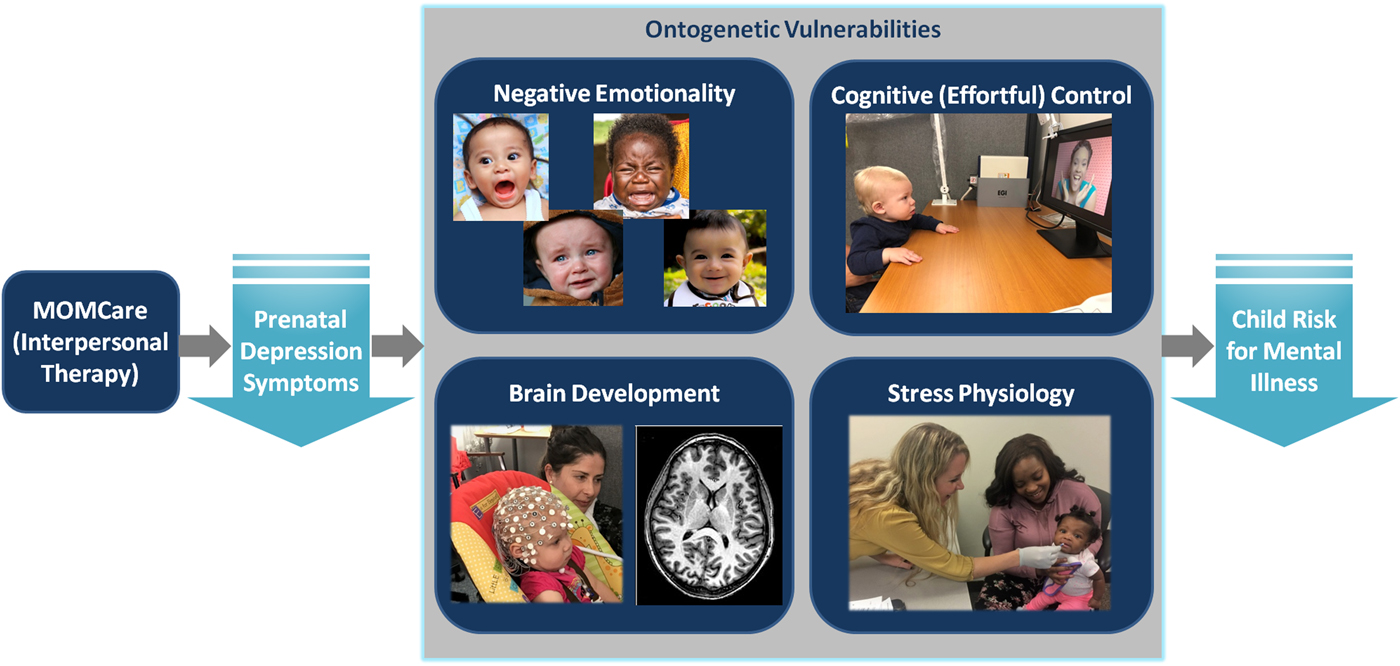
Maternal depression is one of the strongest, most well-replicated risks for increased vulnerability to many negative child outcomes, including a wide range of psychopathologies (Goodman & Gotlib, Reference Goodman and Gotlib1999). Meta-analytic evidence suggests that children of depressed mothers have a substantially elevated likelihood of developing general psychopathology (k = 39, r = .24) including higher levels of internalizing (k = 121, r = .23) and externalizing (k = 111, r = .21) disorders (Goodman et al., Reference Goodman, Rouse, Connell, Broth, Hall and Heyward2011). While this link between maternal depression and poor mental health in her children is well established, the vulnerabilities and mechanisms that explain this intergenerational transmission of risk remain unclear. The most commonly cited processes related to the intergenerational transmission of risk typically include genetic inheritance; neuroregulatory mechanisms; learning from and exposure to maternal behaviors, cognitions, and affect; and the stressful context of children's lives (Goodman & Gotlib, Reference Goodman and Gotlib1999). These factors certainly contribute to the intergenerational transmission of risk, but do not fully account for the impact of maternal depression on her offspring. A likely and yet rarely considered pathway is the impact of maternal prenatal depression on the intrauterine environment (i.e., fetal programming) and the ensuing consequences for the developing fetus. The fetal programming hypothesis posits that during sensitive windows of fetal development, the environment can exert lasting influences on health and well-being across the life span (Barker, Reference Barker1998). This paper articulates the role of maternal depression as a programming agent that may influence mental health via ontogenetic vulnerabilities in the offspring.
The Perinatal Depression Taskforce of the American College of Obstetricians and Gynecologists highlighted the high rates of maternal depression during pregnancy and the need for early screening and targeted intervention. An estimated 8.5% to 11% of women meet diagnostic criteria for major or minor depression during pregnancy (Gaynes et al., Reference Gaynes, Gavin, Meltzer-Brody, Lohr, Swinson, Gartlehner and Miller2005). Even more women report elevated levels of prenatal depressive symptoms as demonstrated in a large study of women screened (n = 3,472) with the Center for Epidemiologic Studies Depression Scale in obstetric clinics, of whom 20% reported symptoms above the cutoff (Marcus, Flynn, Blow, & Barry, Reference Marcus, Flynn, Blow and Barry2003). Rates of depression vary based on the population investigated and are higher among high-risk samples of pregnant women, such as those exposed to contextual risk factors such as poverty, racism, and violence. For example, one study found that 25% of impoverished pregnant women who resided in inner-city areas met diagnostic criteria for minor or major depression (Hobfoll, Ritter, Lavin, Hulsizer, & Cameron, Reference Hobfoll, Ritter, Lavin, Hulsizer and Cameron1995). Depression is one of the most common prenatal complications, and rates of depression may be even higher during pregnancy as compared to postpartum. In a longitudinal sample of over 9,000 women, more scored above the cutoff on the Edinburgh Postpartum Depression Scale during pregnancy (13.5%) compared to postpartum (9.1%; Evans, Heron, Francomb, Oke, & Golding, Reference Evans, Heron, Francomb, Oke and Golding2001).
The pervasiveness of prenatal depression presents a major public health challenge, as prenatal depressive symptoms have profound and persisting consequences for both the mother and her offspring. Longitudinal naturalistic studies illustrate that fetal exposure to maternal depressive symptoms predicts multiple child ontogenetic vulnerabilities and risk mechanisms that may contribute to later child psychopathology (Barker, Jaffee, Uher, & Maughan, Reference Barker, Jaffee, Uher and Maughan2011; Buss et al., Reference Buss, Davis, Shahbaba, Pruessner, Head and Sandman2012; Davis & Pfaff, Reference Davis and Pfaff2014; Davis & Sandman, Reference Davis and Sandman2012; Korhonen, Luoma, Salmelin, & Tamminen, Reference Korhonen, Luoma, Salmelin and Tamminen2012; O'Donnell, Glover, Barker, & O'Connor, Reference O'Donnell, Glover, Barker and O'Connor2014; Sandman, Buss, Head, & Davis, Reference Sandman, Buss, Head and Davis2015). Scientific inquiry into the impact of prenatal maternal depressive symptoms on her child can shed light on the mechanisms, which drive the development of offspring psychopathology across the life course, and can inform interventions to reduce such risk to offspring.
Many excellent observational longitudinal studies have demonstrated that maternal prenatal depression predicts an increased risk of her offspring developing manifold manifestations of psychopathology. However, this body of knowledge “is inherently limited for drawing causal conclusions” given reliance on correlational designs; “experimental control gained through intervention” is thus needed (O'Connor, Monk, & Fitelson, Reference O'Connor, Monk and Fitelson2014). In this paper, we address the question of whether experimentally reducing maternal prenatal depressive symptoms, using a randomized controlled trial (RCT) design, can reduce ontogenetic vulnerabilities and the development of risk mechanisms for subsequent psychopathology in the offspring. We review literature relevant to this question. We focus on research evaluating prenatal maternal depression, although we recognize and acknowledge that depression strongly co-occurs with a myriad of other psychopathologies and stressful contexts (Hammen, Reference Hammen2005; Kessler et al., Reference Kessler, Berglund, Demler, Jin, Merikangas and Walters2005). There are undoubtedly many factors and pathways (multifinality and equifinality) associated with maternal depression that contribute to offspring risk. It is unlikely that maternal depression is the sole avenue transferring intergenerational risk and ontogenetic vulnerability to offspring. In this paper we focus on maternal depression, and we do not explicitly consider co-occurring maternal anxiety, contextual stress, or other comorbid psychopathologies, because the preponderance of empirical attention has investigated maternal depression as the primary independent predictor of offspring risk and psychopathology.
First, we review evidence showing that maternal prenatal depression predicts offspring mental health outcomes. Second, we introduce the fetal programming hypothesis and its empirical support across species that guides our experimental test of the impact of prenatal maternal depression on child development. Third, we review four candidate pathways through which maternal prenatal depression may affect the propensity of offspring to develop later psychopathology across the life span: brain development, physiological stress regulation via the hypothalamic–pituitary–adrenocortical (HPA) axis, negative emotionality, and cognitive (effortful) control. Fourth, we review evidence that mental health interventions can decrease maternal depressive symptoms and may, in turn, have a salubrious effect on offspring. To date, the vast majority of clinical trials have shown that treating mothers’ depression can reduce children's symptoms, but most studies have not examined development of risk mechanisms in offspring. The extent to which ameliorating prenatal depressive symptoms can reduce early emergence of offspring ontogenetic vulnerabilities, and thus later development of psychopathologies, is important but largely unknown. Fifth, we review interventions for prenatal maternal depression (antidepressant medication and psychotherapy) and present evidence for interpersonal psychotherapy (IPT) as a specific intervention approach that holds promise for reducing maternal prenatal depressive symptoms. Sixth and finally, we introduce the Care Project, the RCT we are conducting presently, which is an empirical test of the question: Does reducing prenatal maternal depressive symptoms benefit child ontogenetic processes thereby reducing subsequent risk for psychopathology.
Prenatal Maternal Depression and Offspring Psychopathology
Compelling evidence from several prospective studies demonstrates prenatal maternal depression as a pathway contributing to the intergenerational transmission of psychopathology (Barker et al., Reference Barker, Jaffee, Uher and Maughan2011; Clemens et al., Reference Clemens, Castro, Blumenthal, Rosenfield, Murphy, Fava and Robinson2015; Hay, Pawlby, Waters, Perra, & Sharp, Reference Hay, Pawlby, Waters, Perra and Sharp2010; Korhonen et al., Reference Korhonen, Luoma, Salmelin and Tamminen2012; Luoma et al., Reference Luoma, Tamminen, Kaukonen, Laippala, Puura, Salmelin and Almqvist2001; Plant, Barker, Waters, Pawlby, & Pariante, Reference Plant, Barker, Waters, Pawlby and Pariante2013). These studies assess maternal depressive symptoms during pregnancy and then prospectively ascertain offspring psychiatric outcomes later in adolescence and adulthood. This corpus of research illustrates that prenatal maternal depression (diagnosis as well as subclinical symptom elevations) forecasts both internalizing and externalizing psychopathology in the offspring even after accounting for paternal depression, postnatal maternal depression, and other contextual risk factors. Capron et al. (Reference Capron, Glover, Pearson, Evans, O'Connor, Stein and Ramchandani2015) followed participants from a large longitudinal birth cohort (n = 4,303). Elevated maternal report of prenatal depressive symptoms predicted increased likelihood of experiencing an anxiety diagnosis in the offspring (adj. odds ratio; OR = 1.75). Prenatal paternal depression was not associated with child outcomes. This study covaried paternal and maternal postnatal depression as well as sociodemographic factors, and showed that these alternative pathways did not account for these findings. Similar increases in offspring vulnerability to depression have been observed in several large longitudinal cohort studies. Prenatal maternal depression increased the likelihood that her offspring would be diagnosed with depression at age 18 (n = 2,847) even after accounting for postnatal maternal depressive symptoms (Pearson et al., Reference Pearson, Evans, Kounali, Lewis, Heron, Ramchandani and Stein2013). Similarly, Plant, Pariante, Sharp, and Pawlby (Reference Plant, Pariante, Sharp and Pawlby2015) report that offspring exposed to clinical maternal depression in pregnancy were 3.4 times more likely to have a diagnosed depressive disorder at 18 to 25 years of age after accounting for postnatal maternal depression and sociodemographic risk factors.
Prenatal maternal depression is associated not only with internalizing problems but also with externalizing disorders, including antisocial behavior, conduct disorder, and attention-deficit/hyperactivity disorder (ADHD). Prenatal maternal diagnosis of depression in either the second or third trimester predicted a diagnosis of conduct disorder in the offspring at 16 years of age after covarying indices of the family environment, the child's later exposure to maternal depression, the mother's smoking and drinking during pregnancy, and the parents’ antisocial behavior (Hay et al., Reference Hay, Pawlby, Waters, Perra and Sharp2010). When prenatal maternal depressive symptoms were prospectively assessed in a large sample of 3,298 mother–child dyads, prenatal maternal depressive symptoms predicted externalizing behavior problems at 7 to 8 years of age (Barker et al., Reference Barker, Jaffee, Uher and Maughan2011), a finding that replicates prior research with a smaller sample (Luoma et al., Reference Luoma, Tamminen, Kaukonen, Laippala, Puura, Salmelin and Almqvist2001). Consistent with these prospective longitudinal studies, a large Finnish population-based study found that mothers’ reports of depression during pregnancy predicted antisocial behavior in offspring 30 years later (Mäki et al., Reference Mäki, Veijola, Räsänen, Joukamaa, Valonen, Jokelainen and Isohanni2003). When adjusted for mother's marital status, smoking, wantedness of the pregnancy, place of residence, socioeconomic status, and perinatal complications, maternal depression predicted likelihood of engaging in violent crimes (adj. OR = 0.6 females and 1.4 males) and nonviolent crimes (adj. OR = 1.7 females and 1.6 males). Finally, a large population-based study showed that prenatal exposure to maternal major depressive disorder (MDD) is associated with increased risk for an ADHD diagnosis during childhood (Clemens et al., Reference Clemens, Castro, Blumenthal, Rosenfield, Murphy, Fava and Robinson2015).
In summary, the evidence shows that maternal depression broadly predicts offspring risk to multiple forms of psychopathology (Downey & Coyne, Reference Downey and Coyne1990; Goodman et al., Reference Goodman, Rouse, Connell, Broth, Hall and Heyward2011), including many of the individual putatively discrete DSM-defined psychiatric disorders. Thus, there is not a simple, one-to-one prediction from maternal depression to youth depression, but rather to youth psychopathology broadly. It is well known that many psychiatric disorders, especially depression, overlap and co-occur with other emotional and behavioral disorders, and this comorbidity is not organized and classified effectively in current categorical psychiatric nosological systems, such as DSM (Rutter & Uher, Reference Rutter and Uher2012). Newer structural models that represent dimensional psychopathology have emerged showing that a bifactor model of psychopathology best represents the organization of common emotional, behavioral, and thought problems in psychopathology in children, adolescents, and adults (Caspi et al., Reference Caspi, Houts, Belsky, Goldman-Mellor, Harrington, Israel and Poulton2014; Hankin et al., Reference Hankin, Snyder, Gulley, Schweizer, Bijttebier, Nelis and Vasey2016; Lahey, Krueger, Rathouz, Waldman, & Zald, Reference Lahey, Krueger, Rathouz, Waldman and Zald2017; Snyder, Young, & Hankin, Reference Snyder, Young and Hankin2017). Briefly, the bifactor model of psychopathology includes all of the covariance that is in common across all measured forms of emotional, behavioral, and thought problems in one general, latent psychopathology factor (i.e., p factor; Caspi et al., Reference Caspi, Houts, Belsky, Goldman-Mellor, Harrington, Israel and Poulton2014), and independent latent internalizing and externalizing factors then capture the remaining unique variance. This new latent dimensional bifactor model (hereafter referred to as the “p factor model”) can more succinctly and parsimoniously organize the many discrete categorical psychiatric disorders into a simpler, empirically supported structural model. We highlight this point concerning the p factor model, which includes the p factor as well as independent, unique internalizing and externalizing dimensions, because having a reliable, valid, and optimal classification system for psychopathology is important for advancing understanding of processes by which maternal depression affects offspring risk to later psychopathology. Our review of evidence regarding the four ontogenetic vulnerabilities and associations with youth psychopathology summarizes research that has predominantly been conducted using DSM-oriented syndromes and diagnoses because most extant research has used a DSM-based psychopathology outcome system, although we note newer research that specifically relates these vulnerabilities to the psychopathology dimensions identified in the p factor model when possible. As maternal depression is broadly related to many manifestations of DSM-oriented psychopathologies in offspring, and not merely to depression specifically, the p factor model offers a promising structural framework to study these questions.
Fetal Programming Hypothesis as an Organizational Framework: How Does Prenatal Maternal Depression Contribute to Ontogenetic Vulnerabilities and Offspring Psychopathology?
These studies provide compelling evidence for the influence of prenatal maternal depression, both at diagnostic and subclinical levels, on subsequent emergence of psychopathology in the offspring. Analytic approaches that covary prenatal and postnatal paternal depression, postnatal maternal depression, and sociodemographic factors lend support to the likelihood that in utero exposure to maternal depressive symptoms shapes the development of fetal neural systems, and in turn leads to increased risk of subsequent psychopathology. These studies highlight the need for prospective investigations of prenatal maternal depression and its impact on child ontogenetic processes and mechanisms that contribute to subsequent psychopathology.
What is fetal programming?
A key motivation for focusing on the prenatal period to understand pathways by which maternal depression influences the development of psychopathology in her children derives from the fetal programming hypothesis. Broadly, during periods of rapid fetal development or change, the organism is hypothesized to be particularly susceptible to environmental influences, and these effects are postulated to have persisting consequences for health and disease risk across the life span (Barker, Reference Barker1998). The genesis of this hypothesis emerged from Dr. David Barker's observations, in which birth records were linked with death records, and he noted that a disproportionate number of deaths from coronary heart disease occurred among individuals with low birth weight (Barker, Reference Barker2003). A large literature now indicates that small size at birth is associated with increased risk for a range of health outcomes including heart disease, diabetes, and obesity (Barker, Eriksson, Forsen, & Osmond, Reference Barker, Eriksson, Forsen and Osmond2002; Nathanielsz, Reference Nathanielsz1999) as well as multiple psychopathologies later in life (Class, Rickert, Larsson, Lichtenstein, & D'Onofrio, Reference Class, Rickert, Larsson, Lichtenstein and D'Onofrio2014; Somhovd, Hansen, Brok, Esbjorn, & Greisen, Reference Somhovd, Hansen, Brok, Esbjorn and Greisen2012). Size at birth, however, is only a gross indicator of prenatal perturbations, and prospective investigations are needed to understand the processes and mechanisms by which the prenatal environment influences subsequent health. Both experimental animal research and observational human studies have demonstrated that nutrition is one such programming signal and illustrate lifelong consequences of malnutrition during the prenatal period (Gluckman & Hanson, Reference Gluckman and Hanson2004; Lumey, Stein, & Susser, Reference Lumey, Stein and Susser2011). Prenatal maternal mental health, and specifically depression, likely serve as an additional programming signal that influences birth outcomes and risk processes for subsequent psychopathology in offspring.
Prenatal maternal depression contributes to adverse birth outcomes
Maternal mental health, and specifically maternal depression, impacts the fetal environment and shapes the fetal developmental trajectory in ways that contribute to both adverse birth outcome and subsequent vulnerability to psychopathology (Accortt, Cheadle, & Schetter, Reference Accortt, Cheadle and Schetter2015; Hoffman, Mazzoni, Wagner, Laudenslager, & Ross, Reference Hoffman, Mazzoni, Wagner, Laudenslager and Ross2016; Sandman, Class, Glynn, & Davis, Reference Sandman, Class, Glynn, Davis and Rosenfeld2016). Several recent meta-analyses provide important evidence that prenatal maternal depression is associated with preterm birth (Grigoriadis, VonderPorten, Mamisashvili, Tomlinson, et al., Reference Grigoriadis, VonderPorten, Mamisashvili, Eady, Tomlinson, Dennis and Cheung2013; Grote et al., Reference Grote, Bridge, Gavin, Melville, Iyengar and Katon2010) and low birth weight (Grote et al., Reference Grote, Bridge, Gavin, Melville, Iyengar and Katon2010). In a test of the impact of prenatal depression, a recent meta-analysis specifically assessed untreated prenatal maternal depression and found that prenatal maternal depression is associated with a significantly increased risk of preterm delivery (adj OR = 1.56) and low birth weight (adj OR = 1.96; Jarde et al., Reference Jarde, Morais, Kingston, Giallo, MacQueen, Giglia and McDonald2016). While important and suggestive as evidence, small size at birth is not likely to be a direct mechanism contributing to subsequent psychopathology. Rather, small birth size serves as a proximal marker that reflects perturbations to the intrauterine environment that impact developing fetal physiological systems that may confer risk to the emergence of subsequent psychopathology.
Animal models illustrate ways that early life environmental signals influence developmental trajectories in ways that confer adaptation to the subsequent environment as well as risks and vulnerabilities. The western spade foot toad displays a remarkable developmental adaptation to early adversity (Denver, Reference Denver1997). When its pool of water desiccates rapidly, the tadpole adapts to this harsh environment by accelerating metamorphosis into a toad that is able to survive outside of water. However, a consequence of this accelerated developmental trajectory is that the toad is both smaller and less successful at foraging and reproducing as compared to a toad that had a more optimal environment allowing for a protracted developmental course. The human fetus similarly incorporates signals from the maternal host environment into its developmental trajectory. Maternal stress signals are associated with fetal growth restriction, but also accelerate development of systems necessary for survival (e.g., lungs) in the face of shortened gestation (Dunkel Schetter, Reference Dunkel Schetter2009; Glynn, Dunkel Schetter, Hobel, & Sandman, Reference Glynn, Dunkel Schetter, Hobel and Sandman2008). These adaptations are advantageous if the fetus is born preterm, but may also have long-term costs (Davis, Glynn, Waffarn, & Sandman, Reference Davis, Glynn, Waffarn and Sandman2011; Stout, Espel, Sandman, Glynn, & Davis, Reference Stout, Espel, Sandman, Glynn and Davis2015). In this review, we focus on maternal prenatal depression as a maternal signal that may influence the trajectory of fetal development. We discuss the specific ontogenetic processes and risk mechanisms that may be impacted by prenatal maternal depression and contribute to the increased vulnerability to psychopathology among offspring exposed to prenatal maternal depression.
Processes and Risks by Which Prenatal Maternal Depression May Affect Offspring Ontogenetic Vulnerabilities and Risk Mechanisms That May Contribute to Later Psychopathology
Fetal brain development
The transformation from a zygote to the human newborn is a dramatic process involving rapid cell division and differentiation to produce all biological systems including the brain. Human brain development begins early in gestation and follows an orchestrated series of events including processes such as proliferation, migration, and differentiation (Cowan, Reference Cowan1979). By the end of the second trimester, 200 billion neurons have been produced (Bourgeois, Reference Bourgeois1997; Bourgeois, Goldman-Rakic, & Rakic, Reference Bourgeois, Goldman-Rakic and Rakic1994). Cell migration initiates during the first trimester, and when neurons reach their final destination, they arborize and branch in an attempt to establish appropriate connections (Sidman & Rakic, Reference Sidman and Rakic1973). Synaptogenesis commences around 16 gestational weeks, and neural circuits begin to organize (Bourgeois et al., Reference Bourgeois, Goldman-Rakic and Rakic1994; Kostovic, Judas, Rados, & Hrabac, Reference Kostovic, Judas, Rados and Hrabac2002). The rapid pace of fetal brain development continues during the last third of human pregnancy as the fetal brain forms secondary and tertiary gyri and exhibits neuronal differentiation, dendritic arborization, axonal elongation, synapse formation and collateralization, and myelination (Bourgeois, Reference Bourgeois1997; Volpe, Reference Volpe2008). Synaptogenesis accelerates during the third trimester to a rate of 40,000 synapse per minute (Bourgeois et al., Reference Bourgeois, Goldman-Rakic and Rakic1994). Transcriptome studies indicate that the majority of genes are expressed in the human brain during the fetal period and that there is approximately twofold greater gene expression in the fetal brain compared with the adult (Johnson et al., Reference Johnson, Kawasawa, Mason, Krsnik, Coppola, Bogdanovic and Sestan2009). These findings clearly illustrate that prenatal life is a time of enormous change and, thus, is a sensitive window of increased plasticity and vulnerability to environmental signals.
Prenatal maternal depressive symptoms and fetal brain development
Family history of depression strongly predicts neural signatures of risk for psychopathology even prior to the onset of the disorder (Chen, Hamilton, & Gotlib, Reference Chen, Hamilton and Gotlib2010; Swartz, Williamson, & Hariri, Reference Swartz, Williamson and Hariri2015). The fetal programming hypothesis suggests the possibility that alterations to developing brain systems during the prenatal period may be one of the key processes underlying this intergenerational transmission of neural risk mechanisms underlying vulnerability to psychopathology.
In order to evaluate the specific impact of prenatal maternal depression on brain structure and function, it is necessary to assess the brain during the prenatal or neonatal periods, before the potentially confounding impact of postpartum experiences. A cutting-edge approach that could provide new insight into the impact of prenatal maternal depression on fetal brain development involves the use of imaging techniques to assess the fetal brain. Using functional magnetic resonance imaging (fMRI), developmental changes in functional connectivity of the human fetus have been characterized (Thomason et al., Reference Thomason, Grove, Lozon, Vila, Ye, Nye and Yeo2015). During the third trimester, left amygdala connectivity is characterized first by local circuitry and then by the formation of connections to ipsilateral regions in the frontal and temporal lobes followed by connections to the contralateral amygdala. The rapid development of these neural circuits during the third trimester likely renders this circuitry particularly susceptible to maternal signals, including maternal depression (Scheinost et al., Reference Scheinost, Sinha, Cross, Kwon, Sze, Constable and Ment2017). Of note, individual differences in brain development that predict meaningful birth outcomes can be observed during the prenatal period. Fetuses that go on to deliver preterm display reduced connectional integrity as compared to age-matched fetuses who go on to deliver at term (Thomason et al., Reference Thomason, Scheinost, Manning, Grove, Hect, Marshall and Yeo2017). The detection of connectivity differences among at-risk fetuses prior to birth provides important evidence that the fetal brain may be susceptible to prenatal influences.
To our knowledge, prenatal maternal depressive symptoms have not been directly linked to neuroimaging indices of fetal brain development. However, recent studies that imaged the infant shortly after birth reveal that prenatal maternal depressive symptoms predict brain structure and function during infancy. Demonstration of an association between prenatal maternal depressive symptoms and neonatal brain development is important as it provides evidence for an association between prenatal maternal depression and brain development independent of the postnatal environment. Elevated prenatal maternal depressive symptoms are associated with microstructure of the right and left amygdala (lower fractional anisotropy and axial diffusivity) during the neonatal period (Rifkin-Graboi et al., Reference Rifkin-Graboi, Bai, Chen, Hameed, Sim, Tint and Qiu2013). Further, elevated levels of prenatal maternal depression predicted connectivity between prefrontal and limbic regions in the newborn (Posner et al., Reference Posner, Cha, Roy, Peterson, Bansal, Gustafsson and Monk2016). Both diffusion tensor imaging and resting state fMRI revealed atypical amygdala–prefrontal cortex (PFC) connectivity in the newborn. Fetal heart responses to a laboratory challenge (a maternal stress task) mediated the association between prenatal maternal depression and newborn neural functioning (Posner et al., Reference Posner, Cha, Roy, Peterson, Bansal, Gustafsson and Monk2016), a finding that is consistent with the hypothesis that the prenatal environment contributed to this association as neurodevelopmental associations with maternal depression are observed before birth. Further, evidence with 6-month-old infants indicates that even after covarying postnatal maternal depressive symptoms, elevated prenatal maternal depression is associated with functional connectivity of the amygdala to the temporal cortex, insula, anterior cingulate, and medial orbitofrontal and ventromedial prefrontal cortices (Qiu et al., Reference Qiu, Anh, Li, Chen, Rifkin-Graboi, Broekman and Meaney2015). These studies provide evidence that fetal exposure to maternal depressive symptoms shapes the trajectory of brain development and that developing prefrontal and limbic regions may be particularly susceptible.
Prospective longitudinal studies show that the impact of prenatal maternal depressive symptoms on brain structure and function extends beyond infancy and into childhood. Prenatal maternal depressive symptoms predict elevated amygdala response to negative emotional stimuli in 6- to 9-year-old children (Van der Knaap et al., Reference van der Knaap, Klumpers, El Marroun, Mous, Schubert, Jaddoe and White2017). Prenatal maternal depressive symptoms predict a thinner frontal cortex during childhood, primarily in the right frontal cortex, a finding that has now been replicated in two independent samples and after covarying postnatal depression (Lebel et al., Reference Lebel, Walton, Letourneau, Giesbrecht, Kaplan and Dewey2016; Sandman et al., Reference Sandman, Buss, Head and Davis2015). This pattern of reduced right cortical thickness is one that has been observed in children, adolescents, and adults with depression as well as those at risk for depression (Boes, McCormick, Coryell, & Nopoulos, Reference Boes, McCormick, Coryell and Nopoulos2008; Ducharme et al., Reference Ducharme, Albaugh, Hudziak, Botteron, Nguyen, Truong and Byars2013; Foland-Ross, Gilbert, Joormann, & Gotlib, Reference Foland-Ross, Gilbert, Joormann and Gotlib2015; Peterson et al., Reference Peterson, Warner, Bansal, Zhu, Hao, Liu and Weissman2009). Further evidence for the importance of prenatal exposure comes from a study assessing both maternal and paternal depression during the prenatal and postnatal periods (El Marroun et al., Reference El Marroun, Tiemeier, Muetzel, Thijssen, der Knaap, Jaddoe and White2016). Maternal, but not paternal, depression predicted child brain morphology at 6 to 9 years after covarying postnatal maternal depression and paternal depression. Specifically, prenatal maternal depressive symptoms predicted a thinner superior frontal gyrus in the left hemisphere in childhood. Determining a direct impact of prenatal maternal depressive symptoms on fetal brain development is a critical next step. We will test this in our RCT by evaluating the degree to which reducing prenatal maternal depressive symptoms influences offspring brain development from birth to 1 year of age.
Neural mechanisms and links with subsequent offspring psychopathology
The literature associating neural mechanisms with child, adolescent, and adult psychopathology is voluminous, and a full review of this extensive literature is beyond the scope of this paper. We briefly summarize key points from this corpus of research with a focus here on structure, function, and connectivity across brain areas and multiple forms of common psychopathologies (e.g., depression, anxiety, ADHD, and conduct problems). Our primary conclusion is that some of the same neural regions in offspring that may be affected by fetal exposure to maternal prenatal depressive symptoms are regions that are commonly observed and indicated as likely neural mechanisms contributing to risk for the development of psychopathology. Moreover, an intriguing possibility supported by newer inquiries is that many of these brain areas do not show a one-to-one specific correspondence with unique DSM-defined psychiatric disorders. Rather, compelling recent research suggests that a few brain areas may be broadly, transdiagnostically associated with risk to general, common forms of psychopathology (p factor), and some other neural regions may show some relative specificity to particular aspects of psychopathology. The newer work that supports this possibility is particularly notable in light of the evidence that maternal depression broadly predicts offspring risk to multiple forms of psychopathology (Downey & Coyne, Reference Downey and Coyne1990; Goodman et al., Reference Goodman, Rouse, Connell, Broth, Hall and Heyward2011). The p factor model is particularly intriguing in light of the established finding that maternal depression predicts many forms of psychopathology broadly, and not one specific discrete psychiatric disorder, and newer, suggestive data illustrating that a few neural areas confer risk to many discrete psychiatric disorders more generally. In sum, these different lines of scholarship and evidence point to the possibility that maternal prenatal depression may affect offspring neurodevelopment of key brain areas and networks, and in turn, these neural components may confer risk to general psychopathology broadly (i.e., the p factor) as well as some specific psychopathology dimensions (e.g., unique internalizing factor).
A few neural areas have demonstrated relations with various DSM-defined traditional categorical psychiatric disorders. When groups of adult psychiatric patients are compared to healthy controls, meta-analyses generally show reduced gray matter volume in certain common areas, including the prefrontal cortex (e.g., dorsolateral, ventrolateral, and orbitofrontal areas) and limbic regions (e.g., amygdala, medial temporal lobe structures, and anterior insula) across disorders including major depression, bipolar disorder, schizophrenia, anxiety, conduct problems, and antisocial behavior problems (Aoki, Inokuchi, Nakao, & Yamasue, Reference Aoki, Inokuchi, Nakao and Yamasue2013; Haijma et al., Reference Haijma, Van Haren, Cahn, Koolschijn, Hulshoff Pol and Kahn2012; Rogers & de Brito, Reference Rogers and de Brito2016; Shang et al., Reference Shang, Fu, Ren, Zhang, Du, Gong and Zhang2014; Wise et al., Reference Wise, Radua, Via, Cardoner, Abe, Adams and Perico2017). The implicated prefrontal regions are part of a network involved in cognitive control/executive functioning (Niendam et al., Reference Niendam, Laird, Ray, Dean, Glahn and Carter2012). Limbic and paralimbic areas are involved in affective processes, including detecting and responding to affectively salient information (amygdala), emotional memory (medial temporal lobe structures), and visceral/autonomic functions (anterior insula). These neural networks interact, and dysregulation in either system (affective or cognitive control) may contribute to psychopathology (Cole, Repovš, & Anticevic, Reference Cole, Repovš and Anticevic2014). In addition to brain structure, functional imaging shows dysregulation in many of these neural areas. Meta-analyses and reviews of functional connectivity in common forms of psychopathology similarly show abnormal activity in circuits that include many of these brain regions (e.g., prefrontal and limbic areas; Etkin & Wager, Reference Etkin and Wager2007; Grupe & Nitschke, Reference Grupe and Nitschke2013; Kaiser, Andrews-Hanna, Wager, & Pizzagalli, Reference Kaiser, Andrews-Hanna, Wager and Pizzagalli2015; McCarthy, Skokauskas, & Frodl, Reference McCarthy, Skokauskas and Frodl2014; Miller, Hamilton, Sacchet, & Gotlib, Reference Miller, Hamilton, Sacchet and Gotlib2015).
These many studies show a pattern in which reduced activity in the PFC and greater activity in limbic areas is associated with various discrete DSM-determined psychopathologies. More recent research suggests that a more limited number of brain areas may be implicated in risk to multiple forms of psychopathology. Of particular interest, a recent meta-analysis focused on gray matter volume reductions showed that only a few common neural substrates, namely, the dorsal anterior cingulate and the insula, were related to multiple, supposedly discrete, psychiatric disorders in adults, including schizophrenia, bipolar disorder, depression, anxiety disorders, and substance use disorders (Goodkind et al., Reference Goodkind, Eickhoff, Oathes, Jiang, Chang, Jones-Hagata and Korgaonkar2015). In addition to this meta analysis, recent evidence suggests that common neural regions are associated with manifestations of multiple psychopathologies in a transdiagnostic manner (Buckholtz & Meyer-Lindenberg, Reference Buckholtz and Meyer-Lindenberg2012; Zald & Lahey, Reference Zald and Lahey2017). We recently provided a direct test of this hypothesis with children (ages 6–9). We found that the general psychopathology latent p factor was associated with reduced gray matter volume in PFC areas, whereas the specific internalizing factor was related to reduced gray matter volume in limbic areas (Snyder, Hankin, Sandman, Head, & Davis, Reference Snyder, Hankin, Sandman, Head and Davis2017).
These findings in children provide the first direct demonstration that latent dimensional psychopathology factors, as parsimoniously organized via the p factor model, relate to key neural regions known to confer risk to broad forms of common psychopathologies. Moreover, these prefrontal and limbic regions are both associated with prenatal exposure to maternal depression and implicated in the other ontogenetic vulnerabilities and risk mechanisms highlighted in this paper (stress physiology, negative emotionality, and cognitive control). Taken together, such work supports the intriguing possibility of linkages across levels and units of analysis (e.g., emotionality, executive functioning, cognition, stress physiology, and neural risk) that may more parsimoniously connect maternal prenatal depression with offspring ontogenetic vulnerabilities and risk to general, broad psychopathology.
Stress physiology: HPA axis regulation
The HPA axis is one of the body's primary stress regulatory systems that broadly impacts physiological systems contributing to physical and mental health. The HPA axis is a commonly proposed mechanism by which the prenatal environment is thought to impact health and development across the life span. HPA axis dysregulation may serve as one pathway by which prenatal maternal depressive symptoms transfer risk for psychopathology to the offspring. The orchestrated response of the HPA axis is initiated by the stress-activated neuropeptide corticotropin-releasing hormone (CRH). CRH was first discovered in the hypothalamus, and it is now known to also be expressed in neuronal populations in the amygdala and hippocampus (Joëls & Baram, Reference Joëls and Baram2009). CRH is released in response to stress from axon terminals in the hypothalamic median eminence and acts on receptors in the pituitary where CRH promotes the release of adrenocorticotropin releasing hormone (ACTH) from the pituitary, which activates the release of the glucocorticoid cortisol from the adrenal cortex. The HPA axis is regulated by a negative feedback loop, such that circulating cortisol inhibits further secretion of CRH and limits the magnitude and duration of the stress response (Smith & Vale, Reference Smith and Vale2006). During pregnancy, CRH additionally is released from the placenta into both the maternal and fetal circulations and plays a central role in integrating maternal stress signals and regulating fetal development and timing of birth (Smith, Mesiano, & McGrath, Reference Smith, Mesiano and McGrath2002).
HPA axis dysregulation as a consequence of prenatal maternal depression and as a risk to psychopathology can be studied across all components of the HPA axis. CRH and ACTH have been examined, although the majority of research has focused on cortisol, which can be measured noninvasively in saliva and, thus, is well suited to studies with children and with repeated sampling (e.g., Gunnar & Vazquez, Reference Gunnar, Vazquez, Cicchetti and Cohen2006). Here we consider typically studied approaches that evaluate HPA regulation, including diurnal cortisol rhythms (cortisol typically peaks 30–45 min after awakening and then declines across the day), the cortisol awakening response (CAR), and cortisol reactivity to challenge. Before considering empirical work demonstrating cortisol dysregulation, we note that both under (hypo) and over (hyper) activity of the HPA axis are associated with psychopathology and disease (Gunnar & Vazquez, Reference Gunnar, Vazquez, Cicchetti and Cohen2006; McEwen, Reference McEwen2004).
Prenatal maternal depressive symptoms and HPA axis regulation
The animal literature has been fairly consistent in demonstrating that prenatal and early life stress impacts HPA axis functioning over the lifetime, even when postnatal experiences and genetics are experimentally controlled (Glover, O'Connor, & O'Donnell, Reference Glover, O'Connor and O'Donnell2010). In humans, postnatal maternal depression, experienced during infancy, predicts HPA axis dysregulation in offspring assessed in adolescence and adulthood (Barry et al., Reference Barry, Murray, Pasco Fearon, Moutsiana, Cooper, Goodyer and Halligan2015; Murray et al., Reference Murray, Arteche, Fearon, Halligan, Croudace and Cooper2010). Prenatal maternal depression was not measured in these studies, and less is known about the consequences of maternal depressive symptoms during the prenatal period. Existing research evaluating the link between prenatal maternal depression and offspring HPA axis regulation has evaluated the offspring baseline or diurnal regulation as well as responses to stress. Although this review focuses on prenatal maternal depression, it is worth noting that when maternal prenatal distress broadly is considered, prenatal distress is linked to disruptions in both baseline and circadian HPA axis functioning from the neonatal period through adolescence (O'Donnell et al., Reference O'Donnell, Glover, Jenkins, Browne, Ben-Shlomo, Golding and O'Connor2013; van den Bergh, van Calster, Smits, van Huffel, & Lagae, Reference van den Bergh, van Calster, Smits, van Huffel and Lagae2008). Several studies report that neonates of mothers with prenatal depression or with any mental health diagnosis during pregnancy have higher cortisol concentrations as compared to neonates born to mothers without a psychiatric diagnosis (Field et al., Reference Field, Diego, Dieter, Hernandez-Reif, Schanberg, Kuhn and Bendell2004; Kaplan, Evans, & Monk, Reference Kaplan, Evans and Monk2008; Lundy et al., Reference Lundy, Jones, Field, Nearing, Davalos, Pietro and Kuhn1999). Associations with baseline HPA axis regulation are observed in childhood as well. In a prospective longitudinal investigation, prenatal maternal depressive symptoms were associated with a larger CAR in the offspring at 10 to 12 years of age, after covarying for postnatal factors including maternal depression (Vänskä et al., Reference Vänskä, Punamäki, Lindblom, Tolvanen, Flykt, Unkila-Kallio and Tiitinen2016).
In addition to relations with baseline and circadian functioning, maternal prenatal psychological distress has been linked to heightened cortisol reactivity in response to stress in offspring (Grant et al., Reference Grant, McMahon, Austin, Reilly, Leader and Ali2009; Tollenaar, Beijers, Jansen, Riksen-Walraven, & de Weerth, Reference Tollenaar, Beijers, Jansen, Riksen-Walraven and de Weerth2011). A study of 6-month-olds showed that perinatal MDD predicted greater cortisol reactivity in response to laboratory challenge (Brennan et al., Reference Brennan, Pargas, Walker, Green, Newport and Stowe2008). Similarly, in a prospective investigation, children of mothers who experienced more severe depressive symptoms during pregnancy were more likely to display a larger cortisol response to a painful stressor (i.e., inoculation; Fernandes, Stein, Srinivasan, Menezes, & Ramchandani, Reference Fernandes, Stein, Srinivasan, Menezes and Ramchandani2015). Although this association is not observed in all studies (Braithwaite, Murphy, & Ramchandani, Reference Braithwaite, Murphy and Ramchandani2016; Davis et al., Reference Davis, Glynn, Waffarn and Sandman2011), the combination of animal and human research indicates that the prenatal environment impacts the development of stress regulatory systems.
HPA axis regulation and links with subsequent offspring psychopathology
Dysregulated HPA axis activity is associated, concurrently and longitudinally, with various expressions of psychopathology across the life span including depression, anxieties, posttraumatic stress disorder (PTSD), and externalizing problems. Depression (both symptoms and diagnosis) in adolescents and adults has been associated with CAR (e.g., Burke, Davis, Otte, & Mohr, Reference Burke, Davis, Otte and Mohr2005; Guerry & Hastings, Reference Guerry and Hastings2011; Lopez-Duran, Kovacs, & George, Reference Lopez-Duran, Kovacs and George2009; Pariante & Lightman, Reference Pariante and Lightman2008). More recent longitudinal studies show that cortisol dysregulation predicts the subsequent emergence of internalizing disorders. A higher CAR in adolescence predicts first onset and recurrence of major depressive episode (Adam et al., Reference Adam, Doane, Zinbarg, Mineka, Craske and Griffith2010; Vrshek-Schallhorn et al., Reference Vrshek-Schallhorn, Doane, Mineka, Zinbarg, Craske and Adam2013) as well as future anxiety (Adam et al., Reference Adam, Vrshek-Schallhorn, Kendall, Mineka, Zinbarg and Craske2014). In contrast, PTSD is associated with attenuated cortisol production (Yehuda, Reference Yehuda2002). Hypocortisolism is not only found in adults with a PTSD diagnosis but also in offspring of mothers with a PTSD diagnosis (Danielson, Hankin, & Badanes, Reference Danielson, Hankin and Badanes2015). Hypocortisolism also has been demonstrated in children at risk for antisocial personality disorder (Susman, Reference Susman2006), and low CAR predicted longitudinal trajectories of externalizing behaviors from ages 5 to 15 (Haltigan, Roisman, Susman, Barnett-Walker, & Monahan, Reference Haltigan, Roisman, Susman, Barnett-Walker and Monahan2011). Finally, moving past a focus on specific mental health disorders, a recent meta analytic review demonstrated that a flatter diurnal cortisol slope is associated with multiple psychopathologies, including depression, general externalizing and internalizing problems, and broad mental health problems across ages; these significant associations were found for both concurrent and prospective relations with most mental health syndromes (Adam et al., Reference Adam, Quinn, Tavernier, McQuillan, Dahlke and Gilbert2017).
In summary, considerable evidence across multiple psychopathologies, age groups, and patterns of abnormal cortisol response show that HPA axis dysregulation is an ontogenetic vulnerability for psychopathologies later in life and may be implicated in the pathophysiology linking prenatal maternal depressive symptoms to later risk for psychopathology in offspring. Longitudinal research demonstrates that maternal prenatal emotional distress and internalizing problems predict a pattern of high, flattened diurnal cortisol in adolescent offspring (ages 14 to 15), which in turn was related to depressive symptoms in adolescent girls (van den Bergh, van Calster, Pinna Puissant, & van Huffel, Reference van den Bergh, van Calster, Pinna Puissant and van Huffel2008). Thus, the available evidence suggests that HPA axis dysregulation may be a risk process by which prenatal exposure to maternal depression may impact offspring risk for subsequent psychopathology.
Negative emotionality
Negative emotionality may be another pathway by which prenatal maternal depression confers risk for the development of psychopathology in the offspring. Negative emotionality is a broad temperament factor that has been called the single most important individual difference risk factor in behavioral public health, given the general and nonspecific linkages with diverse physical and mental health outcomes (Lahey, Reference Lahey2009). Similar to its related adult personality trait counterpart of neuroticism in standard trait models, negative emotionality is conceptualized as a tendency toward experiencing negative emotions (e.g., fear, sadness, frustration, and anger) more quickly and intensely and to react more easily to stressful life events (Rothbart & Bates, Reference Rothbart, Bates, Eisenberg, Damon and Lerner2006). Conceptually and empirically, the broad temperament factor of negative emotionality overlaps with similar individual difference constructs, such as negative affectivity (Rothbart, Ahadi, Hersey, & Fisher, Reference Rothbart, Ahadi, Hersey and Fisher2001) and behavioral inhibition (Kagan, Reznick, & Snidman, Reference Kagan, Reznick and Snidman1987). Broadly, individual differences in temperament, such as negative emotionality, are traditionally hypothesized to emerge in early life and are expected to exhibit relative stability across development (Rothbart & Bates, Reference Rothbart, Bates, Eisenberg, Damon and Lerner2006).
Associations of negative emotionality with prenatal maternal depression
The presence of elevated maternal depressive symptoms during pregnancy has been shown to shape negative emotionality in the offspring (Bhat et al., Reference Bhat, Chowdayya, Selvam, Khan, Kolts and Srinivasan2015; Davis et al., Reference Davis, Glynn, Schetter, Hobel, Chicz-Demet and Sandman2007; Werner et al., Reference Werner, Myers, Fifer, Cheng, Fang, Allen and Monk2007). Prospective longitudinal studies show that prenatal maternal depressive symptoms predict greater negative emotionality in the offspring, assessed by both laboratory observation and maternal report (Davis et al., Reference Davis, Snidman, Wadhwa, Dunkel Schetter, Glynn and Sandman2004, Reference Davis, Glynn, Schetter, Hobel, Chicz-Demet and Sandman2007). Further, these studies demonstrate that these associations are not fully accounted for by postnatal exposures, as these associations remain after controlling for pertinent postnatal factors, such as maternal postpartum psychological state. For example, in a longitudinal study of 247 maternal–child dyads assessed from pregnancy through 2 months postpartum, prenatal maternal depressive symptoms predict maternal report of greater offspring negative affectivity at age 2 after covarying current maternal depression (Davis et al., Reference Davis, Glynn, Schetter, Hobel, Chicz-Demet and Sandman2007). Similarly, within a sample of 123 mothers and their infants, maternal reports of depressive symptoms during pregnancy, but not postpartum, were associated with maternal ratings of greater negative affectivity in her child (Huot, Brennan, Stowe, Plotsky, & Walker, Reference Huot, Brennan, Stowe, Plotsky and Walker2004). Further, in a high-risk sample of women with a history of MDD a similar association between prenatal depression and child negative emotionality was observed after covarying postnatal influences including maternal depression and sociodemographic factors (Rouse & Goodman, Reference Rouse and Goodman2014). These studies indicate an association between prenatal maternal depressive symptoms and infant negative emotionality that cannot be fully explained by the postnatal environment.
Negative emotionality and links with subsequent offspring psychopathology
Neuroticism, as the adult personality trait, as well as negative emotionality, as the temperament factor in infants, children and adolescents, are well-established and long-studied individual differences that have been shown to associate with and predict many aspects of poor physical and mental health (Lahey, Reference Lahey2009). Consistent with the view that negative emotionality broadly confers risk to many mental health problems, a meta-analytic review of cross-sectional associations between neuroticism and the most common 11 mental disorders, as defined by DSM, found that individuals carrying these diagnoses reported higher negative emotionality (mean Cohen's D = 1.65, a large effect size; Kotov, Gamez, Schmidt, & Watson, Reference Kotov, Gamez, Schmidt and Watson2010). Still, there was variability in the effects, such that anxiety disorders demonstrated the strongest relation with neuroticism (e.g., panic disorder: d = 1.92), with depressive disorders next (e.g., major depressive disorder: d = 1.33), and substance use disorders considerably lower (e.g., alcohol abuse: d = 0.77).
Consistent with a vulnerability model of temperament as a predisposing factor, Ormel et al. (Reference Ormel, Jeronimus, Kotov, Riese, Bos, Hankin and Oldehinkel2013) conducted a meta-analytic review of the prospective data. Negative emotionality clearly predicts later mental health disorders, especially for internalizing symptoms and disorders and broad psychological distress (mean d = 0.63, range 0.48–0.87), whereas longitudinal relations with substance use symptoms and disorders are considerably weaker (d = 0.26). Conceptually related to negative emotionality, behavioral inhibition (Hirshfeld-Becker et al., Reference Hirshfeld-Becker, Micco, Henin, Bloomfield, Biederman and Rosenbaum2008) and inhibited-approach traits (Caspi, Henry, McGee, Moffitt, & Silva, Reference Caspi, Henry, McGee, Moffitt and Silva1995) predict the later development of anxiety disorders. Negative emotionality prospectively predicts not only later depression and anxiety but also behavior problems, such as aggression, conduct disorder, and oppositional defiant disorders (e.g., Bates, Pettit, Dodge, & Ridge, Reference Bates, Pettit, Dodge and Ridge1998; Olson, Bates, Sandy, & Lanthier, Reference Olson, Bates, Sandy and Lanthier2000; Renken, Egeland, Marvinney, Mangelsdorf, & Sroufe, Reference Renken, Egeland, Marvinney, Mangelsdorf and Sroufe1989). Individuals characterized by life-course persistent antisocial behavioral problems exhibit high negative emotionality early in childhood (Moffitt, Caspi, Dickson, Silva, & Stanton, Reference Moffitt, Caspi, Dickson, Silva and Stanton1996) and extending into adulthood (White, Bates, & Buyske, Reference White, Bates and Buyske2001). Other longitudinal studies have noted prospective associations connecting earlier negative emotionality with later broad internalizing and externalizing problems, such as observed in a 4-year follow-up of 6-year-old children (Eisenberg et al., Reference Eisenberg, Valiente, Spinrad, Cumberland, Liew, Reiser and Losoya2009) and in longitudinal predictions of externalizing behaviors across childhood and into adolescence (Gjone & Stevenson, Reference Gjone and Stevenson1997). Late adolescents’ self-reported ratings of high negative emotionality at age 18 predicted higher rates of diagnosed affective, anxiety, substance use, and antisocial personality disorders at age 21 (Krueger, Reference Krueger1999). Observed temperament in preschool-aged children predicts later psychopathology. For example, temperamental dysphoria at 3 predicted later depression and oppositional behavior, and fear at 3 predicted anxiety disorders (Dougherty, Klein, Durbin, Hayden, & Olino, Reference Dougherty, Klein, Durbin, Hayden and Olino2010). Extending over a longer prospective interval, Caspi, Moffitt, Newman, and Silva (Reference Caspi, Moffitt, Newman and Silva1996) followed a cohort of children from age 3 to 21 years of age and found that observations of negative emotionality at age 3 predicted diagnoses of depressive disorder and alcohol use in adulthood.
Finally, this brief review clearly shows that negative emotionality is associated with multiple forms of common psychopathologies. Consistent with this general predictive linkage, recent research has demonstrated that negative emotionality is related to general psychopathology, as instantiated via the latent p factor, as well as unique latent psychopathology dimensions. Negative emotionality is associated with the p factor in children and adolescents ages 9–17 (Tackett et al., Reference Tackett, Lahey, van Hulle, Waldman, Krueger and Rathouz2013) and preschoolers (Olino, Dougherty, Bufferd, Carlson, & Klein, Reference Olino, Dougherty, Bufferd, Carlson and Klein2014). Among adults, higher negative emotionality was associated with the p factor (Caspi et al., Reference Caspi, Houts, Belsky, Goldman-Mellor, Harrington, Israel and Poulton2014), and after taking into account the p factor, there was no longer any association between negative emotionality and externalizing problems, whereas the association between negative emotionality and internalizing problems remained significant. Finally, in two samples of youth, one of preadolescents (ages 5–11) and the second composed of children and adolescents (ages 9–17), negative emotionality related to the p factor as well as the specific internalizing dimension (Hankin et al., Reference Hankin, Davis, Snyder, Young, Glynn and Sandman2017). Thus, in addition to serving as a broad transdiagnostic risk factor (i.e., associating with the p factor), negative emotionality also serves as risk for the specific internalizing psychopathology dimension, and these patterns appear robust across different ages. Negative emotionality may serve as an ontogenetic vulnerability for psychopathology and be one pathway by which prenatal exposure to maternal depression leads to subsequent psychopathology in the offspring.
Cognitive (effortful) control
Cognitive, or effortful, control, describes an interrelated set of processes whereby the individual seeks to modify internal emotional states and thoughts as well as adaptively change behavior to achieve goals (Nigg, Reference Nigg2017). Although effortful control, cognitive control, executive function, and self-regulation are terms that convey somewhat distinct constructs and processes from disparate foundational literatures, at the same time these terms convey sufficient overlap and characterize conceptually similar core processes (Nigg, Reference Nigg2017). Cognitive (effortful) control plays an important role in self-regulating emotions and affecting risk to emergence of psychopathology through executive functioning constituent processes, such as attentional processes, inhibitory control, planning, updating, and shifting. Given this strong conceptual overlap, we selectively review literature showing that maternal prenatal depression predicts offspring's cognitive (effortful) control and that youth cognitive (effortful) control deficits confer risk to the development of psychopathology broadly.
Prenatal maternal depression and cognitive (effortful) control
Various lines of evidence support the connection between maternal depression and children's cognitive functioning, although few longitudinal investigations of maternal prenatal depression on children's cognitive control exist. Several large prospective investigations have demonstrated that prenatal maternal depression is associated with measures of general cognitive functioning, such as the presence of developmental delays at 18 months and child IQ at 8 years of age, independent of postnatal maternal depression (Evans et al., Reference Evans, Melotti, Heron, Ramchandani, Wiles, Murray and Stein2012). Few existing studies evaluate a link between prenatal depression and cognitive control. Infants born to women diagnosed with prenatal depression (Gerardin et al., Reference Gerardin, Wendland, Bodeau, Galin, Bialobos, Tordjman and Cohen2011) or elevated depressive symptoms (Pacheco & Figueiredo, Reference Pacheco and Figueiredo2012) show poorer state regulation measured with the Neonatal Behavioral Assessment Scale providing evidence for an impact of prenatal maternal depression on infant self-regulatory abilities. Parallel findings from two large cohort studies (the Avon Longitudinal Study of Parents and Children and generation R) show that prenatal maternal depression predicted child attentional problems at 3 years of age after covarying postpartum maternal depression and paternal depression (Van Batenburg-Eddes et al., Reference Van Batenburg-Eddes, Brion, Henrichs, Jaddoe, Hofman, Verhulst and Tiemeier2013). Similarly prenatal maternal depression predicted executive function problems and problems shifting attention at 4 years of age (El Marroun et al., Reference El Marroun, White, Fernandez, Jaddoe, Verhulst, Stricker and Tiemeier2017). These large population studies provide evidence for an association between prenatal maternal depression and child cognitive control. Additional evidence supporting a link between prenatal maternal depression and cognitive control comes from a large population-based study showing that prenatal exposure to maternal MDD is associated with increased risk for an ADHD diagnosis during childhood (Clemens et al., Reference Clemens, Castro, Blumenthal, Rosenfield, Murphy, Fava and Robinson2015). Although our focus is on prenatal maternal depression, it is worth noting that prospective longitudinal studies have linked prenatal maternal anxiety to cognitive control abilities, including behavioral measures of attentional control, through adolescence (van den Bergh & Marcoen, Reference van den Bergh and Marcoen2004; van den Bergh et al., Reference van den Bergh, Mennes, Oosterlaan, Stevens, Stiers, Marcoen and Lagae2005). These large population studies provide evidence for an association between prenatal maternal depression and child cognitive control.
Poor cognitive (effortful) control and links with subsequent offspring psychopathology
An extensive literature has demonstrated longitudinal associations between effortful control and later emotional and behavioral psychopathologies in children and adolescents (for reviews, see Hankin et al., Reference Hankin, Snyder, Gulley, Schweizer, Bijttebier, Nelis and Vasey2016; Nigg, Reference Nigg2017; Snyder, Miyake, & Hankin, Reference Snyder, Miyake and Hankin2015). This body of research shows that poor cognitive (effortful) control predicts all common forms of psychopathology, including ADHD, depression and mood disorders (e.g., bipolar disorder), anxiety disorders, conduct problems and broader externalizing disorders, substance use and alcohol problems, and thought disorders (e.g., schizophrenia).
With respect to cognitive control, it is notable that low cognitive (effortful) control is associated with most forms of individual psychopathologies, and this replicated pattern suggests that poor cognitive control may be a transdiagnostic risk and, thus, linked with the general, broad latent psychopathology p factor (e.g., Beauchaine & Thayer, Reference Beauchaine and Thayer2015; Hankin et al., Reference Hankin, Snyder, Gulley, Schweizer, Bijttebier, Nelis and Vasey2016; Snyder, Hankin, et al., Reference Snyder, Hankin, Sandman, Head and Davis2017). Recent evidence suggests this is the case. Two independent samples of youth showed that poor effortful control associates with the p factor, capturing broad common psychopathology, as well as unique externalizing behaviors (Hankin et al., Reference Hankin, Davis, Snyder, Young, Glynn and Sandman2017). Moreover, considerable research shows that poor cognitive control is significantly related with reduced structural and neural activity in prefrontal cortices (Banich, Reference Banich2009), and numerous studies show that reduced activity in the PFC correlates with various discrete psychopathologies (Buckholtz & Meyer-Lindenberg, Reference Buckholtz and Meyer-Lindenberg2012; Goodkind et al., Reference Goodkind, Eickhoff, Oathes, Jiang, Chang, Jones-Hagata and Korgaonkar2015). Taken together, these studies suggest linkages between poor cognitive (effortful) control with general, broad psychopathology across levels of analysis (e.g., temperament, executive function tasks, and neural indices).
Are Reductions in Maternal Depression Associated With Improvements in Children's Symptom Level and Functioning?
It has only recently been considered that treating maternal depression could have a positive influence on the well-being and functioning of her children (Gunlicks & Weissman, Reference Gunlicks and Weissman2008). Although longitudinal studies show that variations in parents’ depressive symptoms across time are prospectively associated with changes in children's depressive symptoms and functioning (e.g., Garber, Ciesla, McCauley, Diamond, & Schloredt, Reference Garber, Ciesla, McCauley, Diamond and Schloredt2011), experimental designs are needed to determine if reducing maternal depression causes changes in child outcomes. RCTs, in which participants are randomized to either intervention or a comparison condition, are considered the gold standard to evaluate potential causality. Several RCTs have now demonstrated that reducing maternal depressive symptoms via intervention can affect her children's psychopathological symptoms. A recent meta-analysis of nine RCTs, primarily focusing on postpartum depression, compared the effect of psychotherapy versus control groups (treatment as usual or a waiting list) for mothers’ depression and her offspring's mental health outcomes (Cuijpers et al., Reference Cuijpers, Karyotaki, Weitz, Andersson, Hollon and van Straten2014). Psychotherapy conducted only with the mother both reduced her depression levels (Hedge's g = 0.66; medium effect size) and improved mental health outcomes in her children (g = 0.40, small effect size). For example, a RCT focused on clinically depressed mothers and their children showed that depressed mothers treated with IPT had lower depressive symptoms and better functioning at 3 and 9 months after treatment. Of note, the children of mothers in the IPT group exhibited significantly lower depressive symptoms at the 9-month follow-up (Swartz et al., Reference Swartz, Frank, Zuckoff, Cyranowski, Houck, Cheng and Shear2008). In this trial, they demonstrated that maternal depression improvement preceded the depressive symptoms change in the children. The available evidence supports the notion that treating maternal depression is associated with positive outcomes (e.g., reduced symptoms) in her offspring. It is important to note that the preponderance of these studies were conducted with postpartum depressed women; few have studied the effect that reducing maternal depression during pregnancy has on offspring outcomes.
Research investigating prenatal interventions focused on reducing maternal depression is limited (O'Connor et al., Reference O'Connor, Monk and Fitelson2014). In our current research, we are building logically on the prior empirical work demonstrating that psychotherapeutic interventions aimed at reducing mothers’ depressive symptoms can have a salubrious effect on her children's mental health and symptom reduction. The current evidence base shows that treating maternal depression is associated with positive outcomes, especially depressive symptom reduction in the children, but these studies have not evaluated change in the four vulnerabilities and risk mechanisms in the offspring we have highlighted in this review. Moreover, the fetal programming hypothesis suggests that the fetal period is critical for conferring ontogenetic vulnerability to the child, beyond those due to postnatal experiences. Thus, it follows that the influence of prenatal maternal depression on the offspring must involve risks and mechanisms other than postnatal psychosocial exposures (e.g., parental sensitivity and family conflict). Our trial will test the hypothesis that treating depression during pregnancy has independent effects apart from postpartum experiences. In our trial, we will reduce prenatal distress and measure (a) effects on the neonate before parenting could plausibly have an influence and (b) control for potential improvements in mother–child relationships or parenting in analyses looking at outcomes later in infancy. At present, reasons for the children's reduction in symptoms as a result of treating maternal depression are not well understood. It is possible, and perhaps even likely, that complex interactions between postnatal (e.g., mother–infant attachment) and prenatal influences (maternal stress physiology) synergistically influence youth outcomes (e.g., Bergman, Sarkar, Glover, & O'Connor, Reference Bergman, Sarkar, Glover and O'Connor2010). An enhanced understanding of the processes through which elevated risk is transmitted intergenerationally, consistent with a fetal programming hypothesis perspective, is needed.
We advocate inquiry focused on improving knowledge on potential mechanisms and moderators (cf., Goodman & Gotlib, Reference Goodman and Gotlib1999) that may augment intergenerational risk transmission, especially during the prenatal period when maternal risk for developing depression is high (Evans et al., Reference Evans, Heron, Francomb, Oke and Golding2001; Gavin et al., Reference Gavin, Gaynes, Lohr, Meltzer-Brody, Gartlehner and Swinson2005) and fetal neurodevelopment is rapidly changing. We seek to extend such work to distressed pregnant women and examine empirically whether by reducing prenatal maternal depression we can impact infant risk factors and mechanisms, such as those reviewed earlier (e.g., neural circuitry, stress physiology, negative emotionality, and cognitive control), that past work suggests contributes to the emergence of psychopathology in children and adolescents. Our primary notion is that experimentally reducing maternal depression during the prenatal period, a time of rapid fetal development, will reduce ontogenetic vulnerabilities in the offspring and, thus, diminish the likelihood that these offspring will develop subsequent psychopathology. With this in mind, we now turn to considering pharmacological and psychotherapeutic options that have been investigated.
Interventions to Reduce Maternal Prenatal Depression
Antidepressant medications
CDC data show that antidepressants are the third most prescribed medication of all medications prescribed and used in the United States, with 9% of the total US population (11.8% of women) having an antidepressant prescription in the last 30 days (National Center for Health Statistics, 2015). Antidepressant medication has demonstrated efficacy in reducing depressive symptoms among adults (Hollon, Reference Hollon2016; Psychiatry Online, http://www.psychiatryonline.com/pracGuide/pracGuideTopic_7.aspx accessed 2017). Consistent with the studies described above using psychotherapy, postnatal reduction of maternal depression using antidepressant medication has benefits for her children. In the longitudinal Sequenced Treatment Alternatives to Relieve Depression (STAR*D) trial, depressed women were treated to remission through a sequenced set of pharmacological interventions. Women's depression remission was associated with reductions in offspring symptoms and diagnoses (Weissman et al., Reference Weissman, Pilowsky, Wickramaratne, Talati, Wisniewski, Fava and King2006). A 1-year follow-up showed that the children of women whose depression remitted exhibited significant decreases in internalizing and externalizing symptoms, whereas those children whose mothers’ depression did not remit did not display symptom reduction (Pilowsky et al., Reference Pilowsky, Wickramaratne, Talati, Tang, Hughes, Garber and Sood2008; Wickramaratne et al., Reference Wickramaratne, Gameroff, Pilowsky, Hughes, Garber, Malloy and Alpert2011).
In contrast to the generally accepted benefit of postnatal antidepressant treatment, considerable debate, among scholars and clinicians as well as the general public, exists regarding the safety of antidepressant medication usage during pregnancy for the developing fetus and later child outcomes. Antidepressant medication use and prescription is prevalent and the most common treatment for depression among women of childbearing age (Ko, Farr, Dietz, & Robbins, Reference Ko, Farr, Dietz and Robbins2012). Antidepressants cross the placenta and the fetal blood brain barrier (Mulder, Ververs, De Heus, & Visser, Reference Mulder, Ververs, De Heus and Visser2011; Nulman et al., Reference Nulman, Koren, Rovet, Barrera, Pulver, Streiner and Feldman2012). SSRIs, the most commonly used antidepressants, impact serotonin transmission in the developing fetal brain (Hendrick et al., Reference Hendrick, Stowe, Altshuler, Hwang, Lee and Haynes2003; Olivier et al., Reference Olivier, Åkerud, Kaihola, Pawluski, Skalkidou, Högberg and Sundström-Poromaa2013). Serotonin receptors are present as early as 5 gestational weeks. Therefore, it is plausible that prenatal antidepressants affect fetal development. Here, we briefly review the impact that antidepressant medication use has on the developing fetus and later child outcomes. We seek to provide a balanced perspective on the potential risks and benefits of antidepressant usage during pregnancy. There are known consequences of maternal depression on birth and child outcomes. Much of the controversy in the literature centers around whether antidepressant medication increases adverse outcomes for the developing fetus and then the child beyond the direct, main effect impact that exposure to maternal depression confers.
Observational human research has linked prenatal SSRI exposure to adverse outcomes including preterm birth, shortened gestation, lower birth weight, congenital malformations, persistent pulmonary hypertension, septal heart defects, poor neonatal adaptation syndrome, and respiratory distress (Grigoriadis, VonderPorten, Mamisashvili, Eady, et al., Reference Grigoriadis, VonderPorten, Mamisashvili, Tomlinson, Dennis, Koren and Ross2013). These findings have raised concern about the impact of prenatal antidepressant use among pregnant women. Recent meta-analyses, as well as a large cohort study comparing siblings with and without exposure to antidepressant medication, document a link between antidepressant use and birth outcomes, particularly gestational length and preterm birth (Eke, Saccone, & Berghella, Reference Eke, Saccone and Berghella2016; Ross et al., Reference Ross, Grigoriadis, Mamisashvili, VonderPorten, Roerecke, Rehm and Mousmanis2013; Viktorin et al., Reference Viktorin, Lichtenstein, Lundholm, Almqvist, D'Onofrio, Larsson and Magnusson2016). Notable associations remain, even when a stringent comparison of depressed and medicated mothers to depressed and nonmedicated mothers was employed. Overall these meta-analyses and findings from a genetically informed population-based study suggest a small, but meaningful impact of prenatal antidepressants on preterm birth and gestational length. It is worth noting that a recent cohort study found that although overall maternal depression was associated with preterm birth, maternal depression was not related to gestational length or preterm birth among the 160 (of the 831 total) who screened positive for depression and also received prenatal treatment with antidepressant medication (Venkatesh, RIley, Castro, Perlis, & Kaimal, Reference Venkatesh, Riley, Castro, Perlis and Kaimal2016), thus supporting the need for further research to elucidate this issue.
Perhaps even more controversial than the impact on birth outcome is the question of whether there are consequences of prenatal antidepressant medication for neurodevelopmental disorders such as ADHD and autism spectrum disorders in the offspring (Man et al., Reference Man, Chan, Ip, Coghill, Simonoff, Chan and Wong2017; Sujan et al., Reference Sujan, Rickert, Öberg, Quinn, Hernández-Díaz, Almqvist and D'Onofrio2017). A possible link between prenatal antidepressant exposure and autism spectrum disorders has proved particularly controversial. Several large studies and meta-analyses report significant associations (Boukhris, Sheehy, Mottron, & Berard, Reference Boukhris, Sheehy, Mottron and Berard2016; Croen, Grether, Yoshida, Odouli, & Hendrick, Reference Croen, Grether, Yoshida, Odouli and Hendrick2011), whereas other large studies fail to replicate (Harrington, Lee, Crum, Zimmerman, & Hertz-Picciotto, Reference Harrington, Lee, Crum, Zimmerman and Hertz-Picciotto2014; Hviid, Melbye, & Pasternak, Reference Hviid, Melbye and Pasternak2013). These studies have raised concern that antidepressant use during the prenatal period impacts fetal brain development and could affect subsequent emergence of child neurodevelopmental disorders. Recent studies have shown that prenatal SSRI exposure is linked to neonatal brain development (Jha et al., Reference Jha, Meltzer-Brody, Steiner, Cornea, Woolson, Ahn and Styner2016) and alterations in sensitive windows (Weikum, Oberlander, Hensch, & Werker, Reference Weikum, Oberlander, Hensch and Werker2012). In contrast to the conflicting or limited evidence in the human literature, rodent research using pharmacological manipulations provides compelling evidence that serotonin exposure early in life exerts persisting effects on neural functioning as well as on stress physiology (Avitsur et al., Reference Avitsur, Grinshpahet, Goren, Weinstein, Kirshenboim and Chlebowski2016; Borue, Chen, & Condron, Reference Borue, Chen and Condron2007; Gingrich et al., Reference Gingrich, Malm, Ansorge, Brown, Sourander, Suri and Weissman2017).
Given the impact of prenatal maternal depression on both maternal and infant morbidity, the literature is struggling to characterize the risks and benefits of antidepressant medication. Psychotherapy provides an alternative treatment option that may alleviate the consequences of maternal depression without the concerns related to antidepressant medication.
Psychotherapy
Approximately 75% of patients report a preference for psychotherapy as compared to medication (Cuijpers, Cristea, Karyotaki, Reijnders, & Huibers, Reference Cuijpers, Cristea, Karyotaki, Reijnders and Huibers2016), and specifically with respect to pregnant women, the majority (62%) report a preference for psychotherapy (Battle, Salisbury, Schofield, & Ortiz-Hernandez, Reference Battle, Salisbury, Schofield and Ortiz-Hernandez2013). It is well known that multiple psychotherapies, including cognitive behavioral therapy (CBT), IPT, and brief psychodynamic therapy (as well as others) have demonstrated efficacy for treating depression among adults (e.g., Cuijpers et al., Reference Cuijpers, Cristea, Karyotaki, Reijnders and Huibers2016; Hollon, Reference Hollon2016; Solomonov & Barber, Reference Solomonov and Barber2016). The large depression treatment literature indicates that evidence-based interventions have similar efficacy. Although CBT is frequently discussed as the “gold standard” psychotherapy treatment for depression, this notion has been questioned and challenged (Leichsenring & Steinert, Reference Leichsenring and Steinert2017).
Despite the availability of evidence-based and efficacious interventions for perinatal women, only a minority of clinically depressed women (18%; Marcus, Reference Marcus2009) seek treatment during the prenatal and postpartum periods. A recent meta-analysis for the US Preventive Services Task Force (O'Connor, Rossom, Henninger, Groom, & Burda, Reference O'Connor, Rossom, Henninger, Groom and Burda2016) reviewed 18 trials, the majority of which included RCTs that recruited women with postpartum depression (only 3 trials were included that recruited women during pregnancy). They demonstrated a medium to large effect size in decreasing depressive symptoms. This meta-analysis included mostly interventions using CBT or nondirective counseling; no interpersonally based intervention was included. An earlier meta-analysis of treatments for perinatal depression, which included IPT, (Sockol, Epperson, & Barber, Reference Sockol, Epperson and Barber2011), showed that women assigned to intervention conditions reported significantly less depression compared to controls (Hedge's G = 0.65). Moreover, Sockol et al.’s (Reference Sockol, Epperson and Barber2011) review concluded that psychological interventions that included interpersonal components more significantly reduced depression compared to control conditions and CBT-based interventions. Similarly, a recent Cochrane review of 28 preventive interventions aimed at postpartum depression showed that women who receive a psychosocial or psychological intervention, compared to standard care, were significantly less likely to experience depressive symptoms; interventions based on IPT were particularly promising (Dennis & Dowswell, Reference Dennis and Dowswell2013).
IPT
In our ongoing RCT to reduce prenatal maternal depressive symptoms, we are implementing IPT for several reasons. First, women prefer psychotherapy to medication (Cuijpers et al., Reference Cuijpers, Cristea, Karyotaki, Reijnders and Huibers2016). Second, numerous published RCTs testing IPT reveal that women with perinatal depression, or those at risk (e.g., high distress), who received IPT showed a significant reduction in depressive symptoms compared to controls (Clark, Tluczek, & Wenzel, Reference Clark, Tluczek and Wenzel2003; Grote et al., Reference Grote, Swartz, Geibel, Zuckoff, Houck and Frank2009, Reference Grote, Katon, Russo, Lohr, Curran, Galvin and Carson2015; Johnson et al., Reference Johnson, Price, Kao, Fernandes, Stout, Gobin and Zlotnick2016; Lenze & Potts, Reference Lenze and Potts2017; Mulcahy, Reay, Wilkinson, & Owen, Reference Mulcahy, Reay, Wilkinson and Owen2010; O'Hara, Stuart, Gorman, & Wenzel, Reference O'Hara, Stuart, Gorman and Wenzel2000; Spinelli & Endicott, Reference Spinelli and Endicott2003; Swartz et al., Reference Swartz, Frank, Zuckoff, Cyranowski, Houck, Cheng and Shear2008; Zlotnick, Miller, Pearlstein, Howard, & Sweeney, Reference Zlotnick, Miller, Pearlstein, Howard and Sweeney2006; Zlotnick, Tzilos, Miller, Seifer, & Stout, Reference Zlotnick, Tzilos, Miller, Seifer and Stout2016). In particular, recently published studies show that IPT is efficacious (medium effect size) with socioeconomically disadvantaged pregnant women of diverse cultural backgrounds, especially after the women participate in an initial engagement session to problem solve common barriers to treatment (Grote et al., Reference Grote, Katon, Russo, Lohr, Curran, Galvin and Carson2015; Lenze & Potts, Reference Lenze and Potts2017). IPT significantly reduced depressive symptoms, compared to an active control group (parenting education program), among depressed pregnant women (Spinelli, Endicott, Goetz, & Segre, Reference Spinelli, Endicott, Goetz and Segre2016). Third, interpersonal conflict and poor social support predict prenatal depression (Westdahl et al., Reference Westdahl, Milan, Magriples, Kershaw, Rising and Ickovics2007), and IPT focuses on reducing these interpersonal contributors to depression. In summary, while CBT and other interventions can effectively reduce depressive symptoms in pregnant women, we selected IPT because of the strong evidence base in studies of pregnancy and its goal at targeting interpersonal skill building.
Although the corpus of research demonstrates that IPT reduces maternal depression during pregnancy (Grote et al., Reference Grote, Katon, Russo, Lohr, Curran, Galvin and Carson2015; Melville et al., Reference Melville, Reed, Russo, Croicu, Ludman, LaRocco-Cockburn and Katon2014), it is not known whether decreasing prenatal maternal depression will impact fetal neurodevelopment and infant ontogenetic vulnerability. Thus, our RCT serves as an experimental test of fetal programming of maternal depression. The efficacious intervention we are employing is known as “MOMCare” (Grote et al., Reference Grote, Katon, Russo, Lohr, Curran, Galvin and Carson2015). MOMCare is a culturally relevant, collaborative care intervention that provides brief IPT via approximately eight sessions after an initial engagement session. In their most recent and largest study, Grote et al. completed a RCT that establishes efficacy of MOMCare, a version of brief IPT designed for pregnant women, with socioeconomically disadvantaged pregnant women of diverse cultural backgrounds. MOMCare (n = 83) was compared to enhanced usual care (n = 85). Women randomized to MOMCare showed significantly higher rates of depression remission and lower depressive symptom severity as compared to controls. These effects persisted through 18 months postpartum (effect sizes = 0.35 for severity of depressive symptoms and 0.36 for depression remission).
The Care Project: An Experimental Test of Fetal Programming of Maternal Depression
The authors (Davis and Hankin as co-Primary Investigators) are presently conducting a RCT (called the Care Project). This study will reduce pregnant women's levels of depressive symptoms via an established intervention to more rigorously test the fetal programming hypothesis with respect to the impact of exposure to maternal depressive symptoms and its influence on later development of infant risk mechanisms. Specifically, this project will implement MOMCare, as compared to enhanced usual care, to examine empirically the impact of reducing maternal depressive symptoms on offspring ontogenetic vulnerabilities and risk mechanisms (see Figure 1). Prior to beginning IPT sessions, a manualized pretherapy engagement session is implemented to help resolve barriers to care (e.g., logistical, emotional, and cultural). Thereafter, MOMCare providers continue with manualized brief IPT. Brief IPT focuses on psychoeducation and interpersonal skill building to decrease interpersonal conflict and increase interpersonal support and competence. Women are educated about the link between feelings and interpersonal interactions and are taught communication and interpersonal strategies that they can apply to different people in their lives. Moreover and consistent with a collaborative care model, women in MOMCare may be prescribed antidepressant medications, as needed and as determined based on women's preference and in collaborative consultation with medical experts (e.g., maternal fetal medicine obstetrician and psychiatrist). In this project at the hospital sites with whom we are collaborating, enhanced usual care includes maternity support services, such as ongoing monitoring by a behavioral health specialist, referrals to mental health services or a speciality perinatal mental health clinic, as well as psychological (not IPT or CBT) and pharmacological interventions.
The Care Project: A schematic overview of the study design of the Care Project. The Care Project is a randomized controlled trial in which women with elevated levels of depressive symptoms (operationalized as Edinburgh Postnatal Depression Scale scores >9) are recruited early in pregnancy. At baseline and prior to the intervention, maternal measures are collected. Then half of the women are randomized to the interpersonal psychotherapy intervention group (MOMCare) and the other half receive enhanced usual care. Maternal measures will be collected longitudinally during pregnancy through 12 months postpartum. Infants will be evaluated during the neonatal period and at 6 and 12 months. Infants will be assessed across four risk processes: brain development, physiological stress regulation, negative emotionality, and cognitive (effortful) control as well as multiple infant psychopathological symptoms.
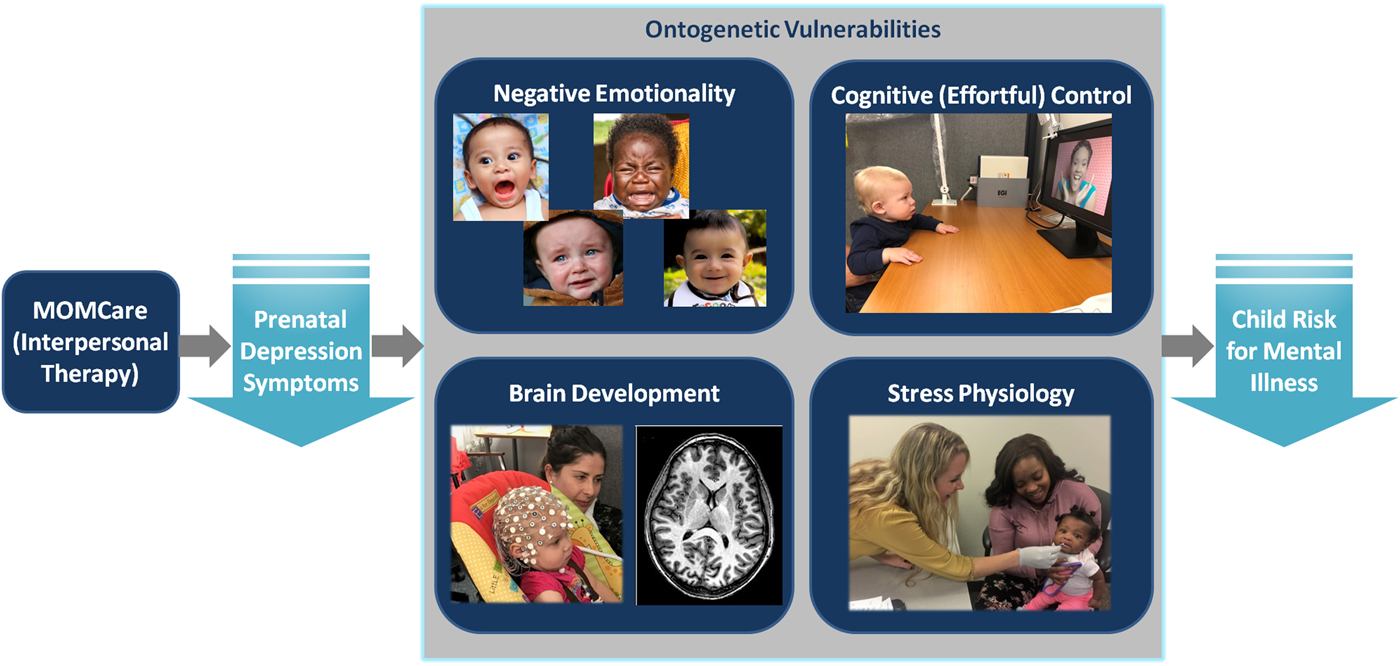
In the Care Project, we plan to recruit 240 socioeconomically and ethnically diverse pregnant women with elevated levels of depressive symptoms (operationalized as Edinburgh Postpartum Depression Scale scores >9). At baseline and prior to the intervention, maternal measures are collected. Then half of the women are randomized to MOMCare, including an initial engagement session, and the other half receive enhanced usual care. Maternal measures will be collected longitudinally during pregnancy through 12 months postpartum. Infants will be evaluated during the neonatal period and at 6 and 12 months, adjusted for gestational length for infants born preterm. Infants will be assessed across four risk processes: (a) brain development (volume and thickness via structural MRI; white matter fiber tracts via diffusion tensor imaging; functional connectivity via resting state MRI; and EEG/ERP measures); (b) physiological stress regulation (cortisol); (c) negative emotionality (eye-tracking tasks, observation of negative emotionality, and maternal report of negative emotionality); and (d) cognitive (effortful) control (eye-tracking tasks, observation of effortful control, and maternal report of infant effortful control) as well as multiple infant psychopathological symptoms. The prospective evaluations from birth to 1 year will allow for a direct test of the impact of fetal experiences on development. The inclusion of neonatal assessments (e.g., MRI and cortisol) will allow for a direct test of the impact of our prenatal intervention on the fetus before postnatal influences are expected to exert a strong influence. Continuous assessments over the first postnatal year will allow for longitudinal assessment of the persisting impact of the prenatal intervention.
We recognize that prenatal IPT may influence child outcomes via both prenatal and postnatal (e.g., parenting) pathways. Thus, we will assess postnatal factors, such as parenting, maternal mood, and contextual factors, that may mediate or moderate the impact of the prenatal intervention on child outcomes. Further, we note that even with an experimental manipulation via a randomized clinical trial approach, there can remain unmeasured confounds, such as genetic factors, that may affect outcomes, such as fetal brain development and other developmental processes. Finally, we also appreciate that depression co-occurs extensively with other psychopathological syndromes (e.g., anxiety disorders, PTSD, etc.), so we are assessing various co-occurring symptoms and syndromes and will include those as covariates in analyses.
We emphasize that the Care Project is an empirical test of a set of a priori hypotheses grounded in the fetal programming hypothesis with translational implications regarding offspring ontogenetic vulnerability and mental health outcomes. As such, this project represents a “risky test” (Meehl, Reference Meehl1978) of these specific hypotheses. Still, as is the case in most scientific investigations, we may be wrong. However, we as a field learn from failure, and from disconfirmation of our a priori hypotheses, so long as the research investigation is well designed and executed (Firestein, Reference Firestein2015). In this vein, our project is sufficiently powered to detect reliable, robust findings and, thus, provide meaningful conclusions regarding our specific project aims, whether the hypotheses are corroborated or not. We believe that the findings, whether supportive (or not) of our hypotheses, will provide useful information for the literature, especially the fields of fetal programming and developmental psychopathology. We further note that if our eventual findings refute our a priori hypotheses, these study-specific results do not necessarily disconfirm the larger fetal programming model that has been studied and well supported across species and for other developmental processes and outcomes.
In summary, the Care Project, by using a RCT with an evidence-based intervention to reduce depressive symptoms in a sample of distressed women during pregnancy, will provide an experimental test of aspects of the fetal programming hypothesis. We anticipate being able to make inferences with respect to important infant outcomes and a select set of key ontogenetic vulnerabilities and risk mechanisms in offspring that have been shown to enhance vulnerability to the development of later psychopathology. A pillar of developmental psychopathology is the study of normal development informing abnormal functioning and processes, and investigation of abnormal populations likewise informing normal development. Our hope is that the Care Project will not only inform basic developmental science, by providing an experimental test of aspects of the fetal programming hypothesis, but also enlighten translational knowledge and hold potential policy implications regarding how intergenerational transmission of psychopathology through development of key risk mechanisms may be reduced among offspring of distress women.