The quality of prenatal maternal mental health, from psychological stress (e.g., Beydoun & Saftlas, Reference Beydoun and Saftlas2008; Charil, Laplante, Vaillancourt, & King, Reference Charil, Laplante, Vaillancourt and King2010; Graignic-Philippe, Dayan, Chokron, Jacquet, & Tordjman, Reference Graignic-Philippe, Dayan, Chokron, Jacquet and Tordjman2014) and depressive symptoms (e.g., Field, Reference Field2011; Gentile, Reference Gentile2017; Mulder et al., Reference Mulder, Robles de Medina, Huizink, Van den Bergh, Buitelaar and Visser2002; Waters, Hay, Simmonds, & van Goozen, Reference Waters, Hay, Simmonds and van Goozen2014), to anxiety (e.g., Van den Bergh, Mulder, Mennes, & Glover, Reference Van den Bergh, Mulder, Mennes and Glover2005) and other nonpsychotic mental disorders (Howard et al., Reference Howard, Molyneaux, Dennis, Rochat, Stein and Milgrom2014), profoundly affects fetal neurodevelopment. Such effects are apparent in terms of neural structure and organization (Buss et al., Reference Buss, Davis, Shahbaba, Pruessner, Head and Sandman2012; Qiu, Tuan, Li, et al., Reference Qiu, Tuan, Li, Chen, Rifkin-Graboi, Broekman and Meaney2015; Qiu, Tuan, Ong, et al., Reference Qiu, Tuan, Ong, Li, Chen, Rifkin-Graboi and Meaney2015; Rifkin-Graboi et al., Reference Rifkin-Graboi, Kong, Sim, Sanmugam, Broekman, Chen and Qiu2015), cognitive and emotional function, as well as the subsequent risk for psychopathology (Baibazarova et al., Reference Baibazarova, van de Beek, Cohen-Kettenis, Buitelaar, Shelton and van Goozen2013; Goodman et al., Reference Goodman, Rouse, Connell, Broth, Hall and Heyward2011; Graignic-Philippe et al., Reference Graignic-Philippe, Dayan, Chokron, Jacquet and Tordjman2014; O'Donnell & Meaney, Reference O'Donnell and Meaney2017; Pluess et al., Reference Pluess, Velders, Belsky, van IJzendoorn, Bakermans-Kranenburg, Jaddoe and Tiemeier2011). The effects of maternal conditions can even be transmitted to the third generation (e.g., Babenko, Kovalchuk, & Metz, Reference Babenko, Kovalchuk and Metz2015; Bowers & Yehuda, Reference Bowers and Yehuda2016; Gröger et al., Reference Gröger, Matas, Gos, Lesse, Poeggel, Braun and Bock2016). The effects of prenatal maternal mental health persist even after controlling for postnatal maternal status (Glover, Reference Glover2014; Huizink, Mulder, & Buitelaar, Reference Huizink, Mulder and Buitelaar2004; Pearson et al., Reference Pearson, Evans, Kounali, Lewis, Heron, Ramchandani and Stein2013). In the case of depression, the effects of prenatal maternal states appear to be statistically more strongly associated with the later risk of depression in the offspring than are those of postnatal maternal depressive symptoms (Pearson et al., Reference Pearson, Evans, Kounali, Lewis, Heron, Ramchandani and Stein2013). A “prenatal cross-fostering” study in humans where pregnant mothers were related or unrelated to their child as a result of in vitro fertilization, which served to distinguish maternally inherited effects from those directly associated with the maternal phenotype, showed that maternal stress and emotional well-being were directly associated with socioemotional function in the child (Rice et al., Reference Rice, Harold, Boivin, Van den Bree, Hay and Thapar2010).
While about 12%–15% of pregnant women screen positively for depression (e.g., Bennett, Einarson, Taddio, Koren, & Einarson, Reference Bennett, Einarson, Taddio, Koren and Einarson2004; Gavin et al., Reference Gavin, Gaynes, Lohr, Meltzer-Brody, Gartlehner and Swinson2005; Karmaliani et al., Reference Karmaliani, Asad, Bann, Moss, Mcclure, Pasha and Goldenberg2009; Le Strat, Dubertret, & Le Foll, Reference Le Strat, Dubertret and Le Foll2011), there is substantial variation in the psychological well-being among the remaining mothers (Keyes, Reference Keyes2002). Neuroimaging studies, including those performed with neonates, show that the influence of symptoms of anxiety and depression cuts across the entire population and are not unique the offspring of mothers with confirmed clinical disorders (Buss et al., Reference Buss, Davis, Shahbaba, Pruessner, Head and Sandman2012; Qiu, Tuan, Li, et al., Reference Qiu, Tuan, Li, Chen, Rifkin-Graboi, Broekman and Meaney2015; Qiu, Tuan, Ong, et al., Reference Qiu, Tuan, Ong, Li, Chen, Rifkin-Graboi and Meaney2015; Rifkin-Graboi et al., Reference Rifkin-Graboi, Kong, Sim, Sanmugam, Broekman, Chen and Qiu2015). The same finding emerges from studies of a wide range of neurodevelopmental outcomes. Despite the compelling evidence for the broad influence of maternal emotional well-being, the existing literature focuses almost exclusively on the effects of stress or symptoms of depression or anxiety, and does therefore not capture the full range of mental well-being. The potential effect of positive antenatal mental health on neurodevelopment in the offspring will allow us to examine the broader spectrum of mental health and consider promoting health rather than merely preventing mental disorders.
Positive Mental Health
Health is a continuum that includes a sense of well-being and is not merely defined by the absence of illness or disability (World Health Organization, 2004). Positive and negative mental health, though correlated, are distinct constructs (Huppert & Whittington, Reference Huppert and Whittington2003). Effective interventions may reduce depressive symptoms, but do little to increase mental well-being (Newnham, Hooke, & Page, Reference Newnham, Hooke and Page2010), again suggesting the independence of both constructs (de Cates, Stranges, Blake, & Weich, Reference de Cates, Stranges, Blake and Weich2015). Furthermore, positive mental health and mental illness symptoms have different antecedents including various demographics and socioemotional variables (Hu, Stewart-Brown, Twigg, & Weich, Reference Hu, Stewart-Brown, Twigg and Weich2007).
While positive antenatal mental health has been largely neglected, existing studies show that a higher level of mental well-being serves as a protective factor against future mental disorders (Keyes, Dhingra, & Simoes, Reference Keyes, Dhingra and Simoes2010; Lamers, Westerhof, Glas, & Bohlmeijer, Reference Lamers, Westerhof, Glas and Bohlmeijer2015). This protective factor is apparent in children; while paternal depression strongly predicted depressive symptoms, this effect was not seen in children with positive mental health traits (Tam et al., Reference Tam, Yuk-Ching, Hay-Ming, Yiu-Tsang, Yeung and Ip-Ki2017). Positive mental health in young adulthood can even predict a range of health outcomes (Aspinwall & Tedeschi, Reference Aspinwall and Tedeschi2010; Howell, Kern, & Lyubomirsky, Reference Howell, Kern and Lyubomirsky2007) as well as mortality in late adulthood (Danner, Snowdon, & Friesen, Reference Danner, Snowdon and Friesen2001). Despite the evidence for the influence of positive mental well-being on health, there is, to our knowledge, no research examining the possible effects of positive antenatal mental health on the development of the offspring.
Bifactor Model of Maternal Mental Health Symptoms
While large-scale birth-cohort studies emphasize the importance of maternal mental health problems, measures of positive mental health in the study design are rarely considered. The most commonly used measures of maternal mental health focus on symptoms of depression (e.g., Edinburgh Postnatal Depression Scale [EPDS] and Center for Epidemiologic Studies Depression Scale) or anxiety (e.g., State-Trait Anxiety Inventory [STAI] and anxiety subscale of Crown Crisp Experiential Index). While such measures are used to screen for symptoms of mental disorders, it may nevertheless be possible to detect aspects of positive mental health. For example, though the General Health Questionnaire is a psychiatric disorder screening tool, Hu et al. (Reference Hu, Stewart-Brown, Twigg and Weich2007) used factor analyses to show that the positively worded items can be indicators of positive mental health and not merely absence of symptoms of mental disorders. The STAI has likewise been used to reflect positive mental health or well-being as well (Hernández-Martínez, Val, Murphy, Busquets, & Sans, Reference Hernández-Martínez, Val, Murphy, Busquets and Sans2011; Kvaal, Laake, & Engedal, Reference Kvaal, Laake and Engedal2001). Thus psychiatric disorders screening tools appear to contain items that reflect positive mental health.
Bifactor modeling is increasingly used to factor analyze the multidimensional nature of mental health. The premise of bifactor modeling is that there is an overarching general mental health or psychopathology dimension or factor that reflects responses to the mental health measures regardless of the nature of disorder (e.g., Caspi et al., Reference Caspi, Houts, Belsky, Goldman-Mellor, Harrington, Israel and Poulton2014; Simms, Grös, Watson, & O'Hara, Reference Simms, Grös, Watson and O'Hara2008). There is therefore considerable value to the inclusion of multiple measures of mental health within a single bifactor latent model. There is heterogeneity in antenatal mental health, even if only focused on antenatal depression (Castro et al., Reference Castro, Anderman, Glover, O'Connor, Ehlert and Kammerer2016; Santos, Tan, & Salomon, Reference Santos, Tan and Salomon2017). Mental health instruments are often checklists of symptoms that are commonly associated with specific disorders. However, even within measures of depression, there is substantial breadth to the features that are examined (Fried, Reference Fried2017), which provide a more comprehensive analysis of maternal mental health. In this paper, we report the results of bifactor analysis using data from a longitudinal birth cohort with multiple, commonly used measures of the symptoms of anxiety or depression in women at midgestation. The results yielded coherent measures of antenatal positive mental health that predicted developmental outcomes in the children, especially those focusing on social behaviors and communication.
Method
Participants
This study was part of a prospective birth cohort study, Growing Up in Singapore Towards Healthy Outcomes (GUSTO; see Soh et al., Reference Soh, Lee, Hoon, Tan, Goh, Lee and Saw2012). The GUSTO sample (n = 1,066) included women who conceived naturally (i.e., not through in vitro fertilization), did not have any medical conditions before or during pregnancy, and gave birth to single full-term babies (i.e., non-twins) with normal birth weight (i.e., >2500 g). After delivery, the participants and their children were invited to the study clinic when the child was 12, 18, and 24 months old. At the clinic, the child was administered a battery of neurocognitive and behavioral tasks. The mothers were also given measures about their child's behavior.
Scales
Maternal mental health
Three maternal mental health measures were administered during the 26th week of pregnancy during the participants' regular clinic visit. The responses to the individual items of the measures were used in the bifactor models.
The Beck Depression Inventory—Second Edition (BDI-II; Beck, Steer, & Brown, Reference Beck, Steer and Brown1996) is an inventory of 21 clusters of items describing common depressive symptoms. Each cluster contains four to seven statements describing varying severity of a common depressive symptom (e.g., feeling worthless). Participants selected the statement that best described how they felt for the past 2 weeks. The EPDS (Cox, Holden, & Sagovsky, Reference Cox, Holden and Sagovsky1987) has 10 items of depressive symptoms, and participants indicated how much each item described how they were feeling for past 7 days on a 4-point Likert scale. The STAI (Spielberger, Gorsuch, & Lushene, Reference Spielberger, Gorsuch and Lushene1970) consisted of 40 items that are associated with anxiety (or lack of). For the first 20 items, participants responded to how much each item described how they felt right now on a 4-point Likert scale; for the next 20 items, they responded to how much the item described how they generally felt.
Child measures
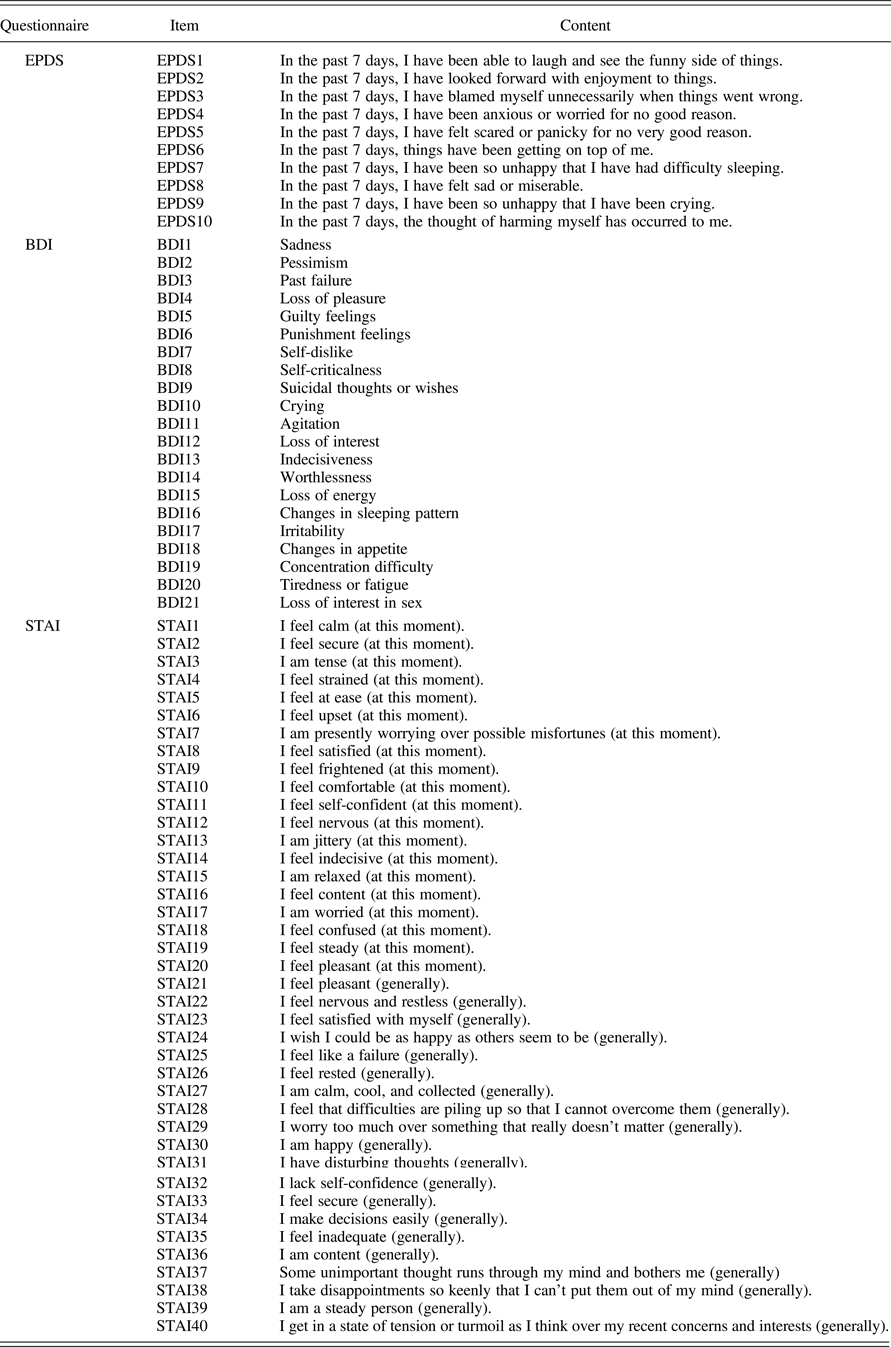
When the child was 12 months old, mothers rated their child's socioemotional behavior on the Infant Toddler Socio-Emotional Assessment questionnaire (Briggs-Gowan & Carter, Reference Briggs-Gowan and Carter1998). Twenty-one behaviors on four domains (internalizing, externalizing, dysregulation, and competence behaviors) were assessed (see Table 1 for the list of behaviors).
Contents of all items used in the bifactor exploratory analysis

Note: EPDS, Edinburgh Postnatal Depression Scale; Beck Depression Inventory—II; STAI, State-Trait Anxiety Inventory.
At 18 months of age, mothers rated their child's behavior on the 25-item Quantitative Checklist for Autism in Toddlers (QChat; Allison et al., Reference Allison, Baron-Cohen, Wheelwright, Charman, Richler, Pasco and Brayne2008). Other than a total score, there were two subscores corresponding to the behavioral and social factors of autism traits.
At 24 months of age, the Bayley Scales of Infant and Toddler Development, Third Edition (Bayley, Reference Bayley2006), was used to assess the child's development in the domains of cognition, language, motor skills, socioemotional behaviors, and adaptability. The cognitive, language (i.e., receptive and expressive communication), and motor skills (i.e., fine and gross motor) components were assessed via standardized laboratory tasks. The socioemotional and adaptability (i.e., communication behavior, community use, functional pre-academic, home living, health and safety knowledge, leisure activities, self-care, self-direction skills, social skills, and motor skills) were rated by their caregiver.
Statistical analyses
Bifactor models
An exploratory bifactor model was fitted with the individual items of the mental health scales as manifest variables. Number of factors was determined with parallel analysis. In parallel analysis, eigenvalues from randomly generated correlation matrices were computed. A factor will be retained if the eigenvalue from the observed data is larger than the corresponding eigenvalue from parallel analysis (Hayton, Allen, & Scarpello, Reference Hayton, Allen and Scarpello2004). The exploratory bifactor model was estimated with Bi-Geomin rotation, which allowed the subfactors to correlate with each other. Parallel analysis was done with 1,000 randomly generated matrices. The best fitting exploratory bifactor model was then used to estimate a confirmatory bifactor model in order to compute the factor scores for subsequent analyses. Model fit indices were also used to evaluate the fit of the exploratory model.
Low factor loadings (i.e., <0.30) were set to 0 in the confirmatory model. The subfactors were allowed to correlate with each other but not with the general factor. All models were estimated using Mplus 7.4 (Muthén & Muthén, Reference Muthén and Muthén1998–2012) with maximum likelihood robust estimation.
Correlations
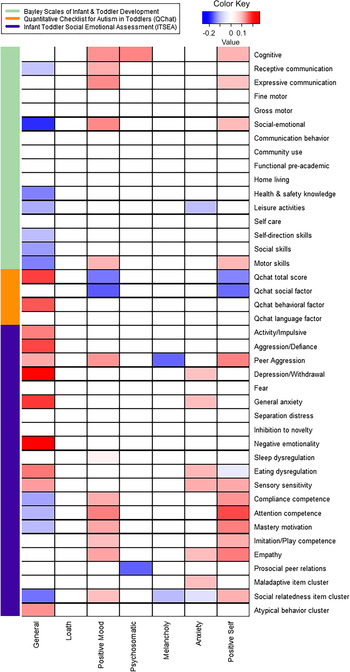
The factor scores derived from the confirmatory bifactor model were used in the correlation analyses with the child's behavioral outcome measures. Heatmap was plotted to illustrate the patterns of significant correlations between the latent factor scores and outcome measures.
Results
Bifactor model
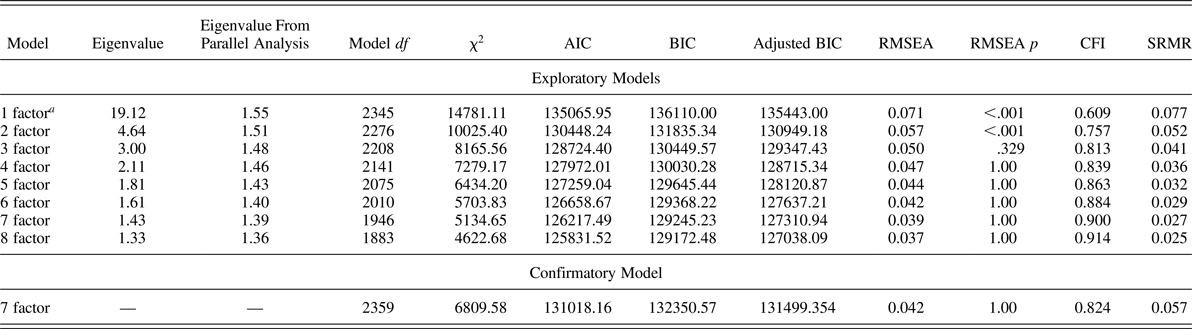
Eigenvalues derived from the parallel analysis were used to determine the number of factors. The eigenvalues and fit indices of all the exploratory bifactor models are summarized in Table 2. The eigenvalues of seven factors were higher than the randomly generated eigenvalues. Furthermore, the difference in Bayesian information criteria coefficients of the seven-factor versus eight-factor models was merely 72.75 (0.06%), suggesting little improvement in fit by increasing the number of factors to eight. The comparative fit index, root mean square error of approximate information, and standardized root mean square residual of the seven-factor model also showed an acceptable fit of data to the model. The general factor explained 62.6% of the common variance extracted and 37.4% were explained by the subfactors, which corroborated with the results that maternal mental health during pregnancy was multidimensional (Reise, Reference Reise2012).
Bifactor model fit statistics
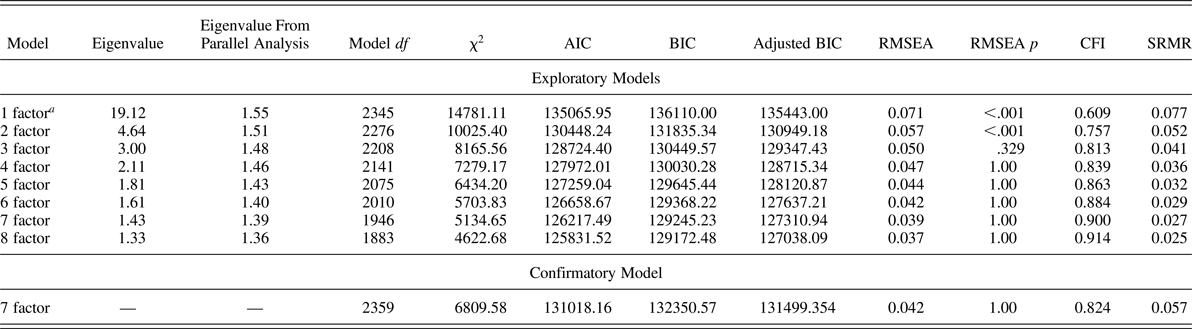
Note: AIC, Akaike information criteria; BIC, Bayesian information criteria; RMSEA, root mean square error of approximation; CFI, comparative fit index; SRMR, standardized root mean square residual.
a This is a unidimensional model, not a bifactor model that requires at least two factors (1 general & 1 specific).
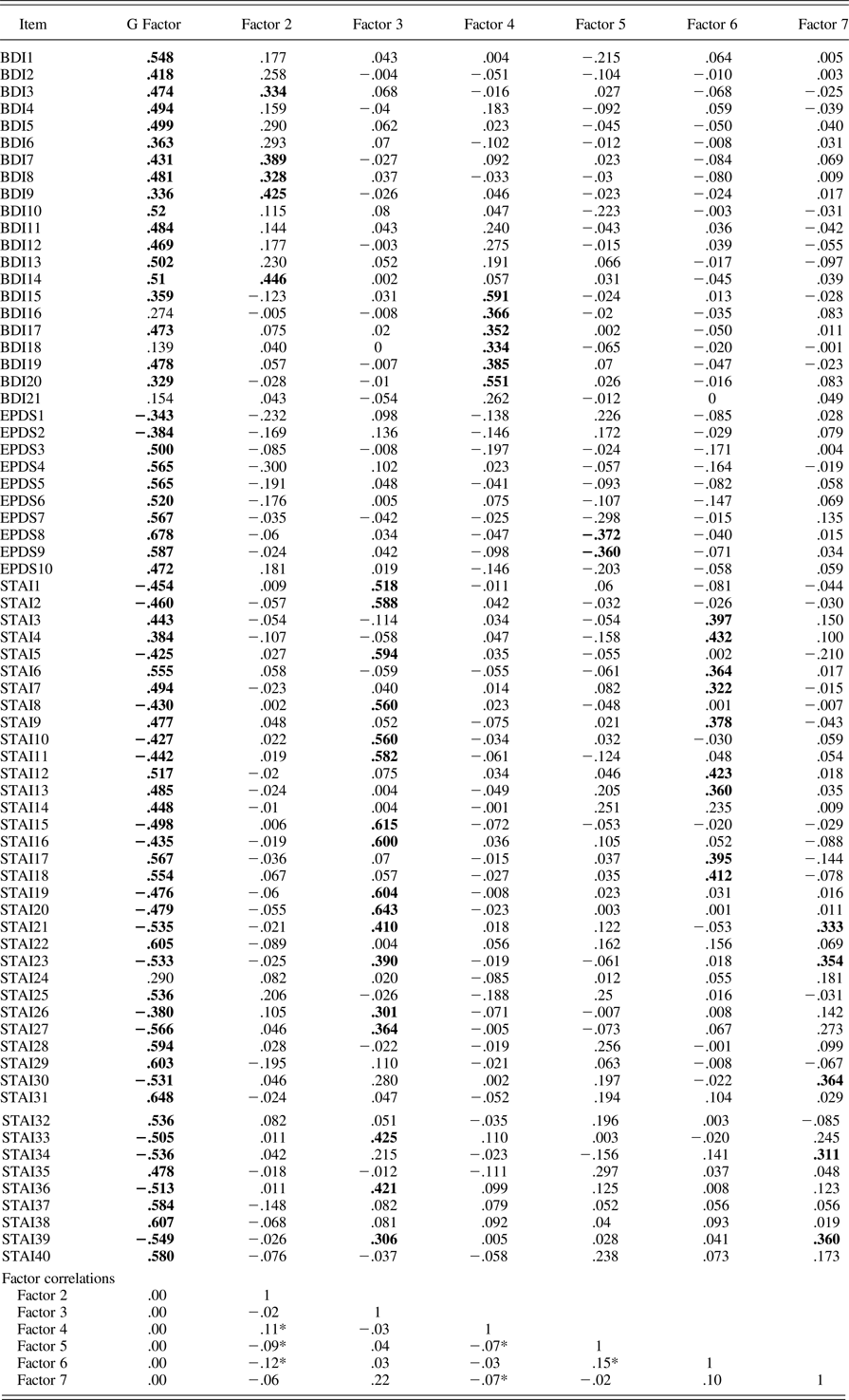
The factor loadings of items on the seven-factor model are summarized in Table 3. Factor loadings of >0.30 suggested the item loaded significantly on factor (Hair, Black, Babin, Anderson, & Tatham, Reference Hair, Black, Babin, Anderson and Tatham2009). The items that loaded on Factors 3 and 7 are of interest to the current study and will be discussed in greater details here. Items that loaded on Factor 3 pertained to the STAI items about feeling positive (e.g., feeling pleasant, self-confident, content, and satisfied). This factor was thus labeled as positive mood. Items that loaded on Factor 7 were fewer and pertained to how participants felt or perceived themselves in general (e.g., feeling happy or perceived self as a person who makes decision easily). Factor 7 was labeled as positive self. Two items crossed-loaded on these two factors. Factors 3 and 7 also had the highest correlation (r = .24) as compared to other pairs of factors (rs ≤ |.15|).
Factor loadings and correlations from seven-factor exploratory bifactor model
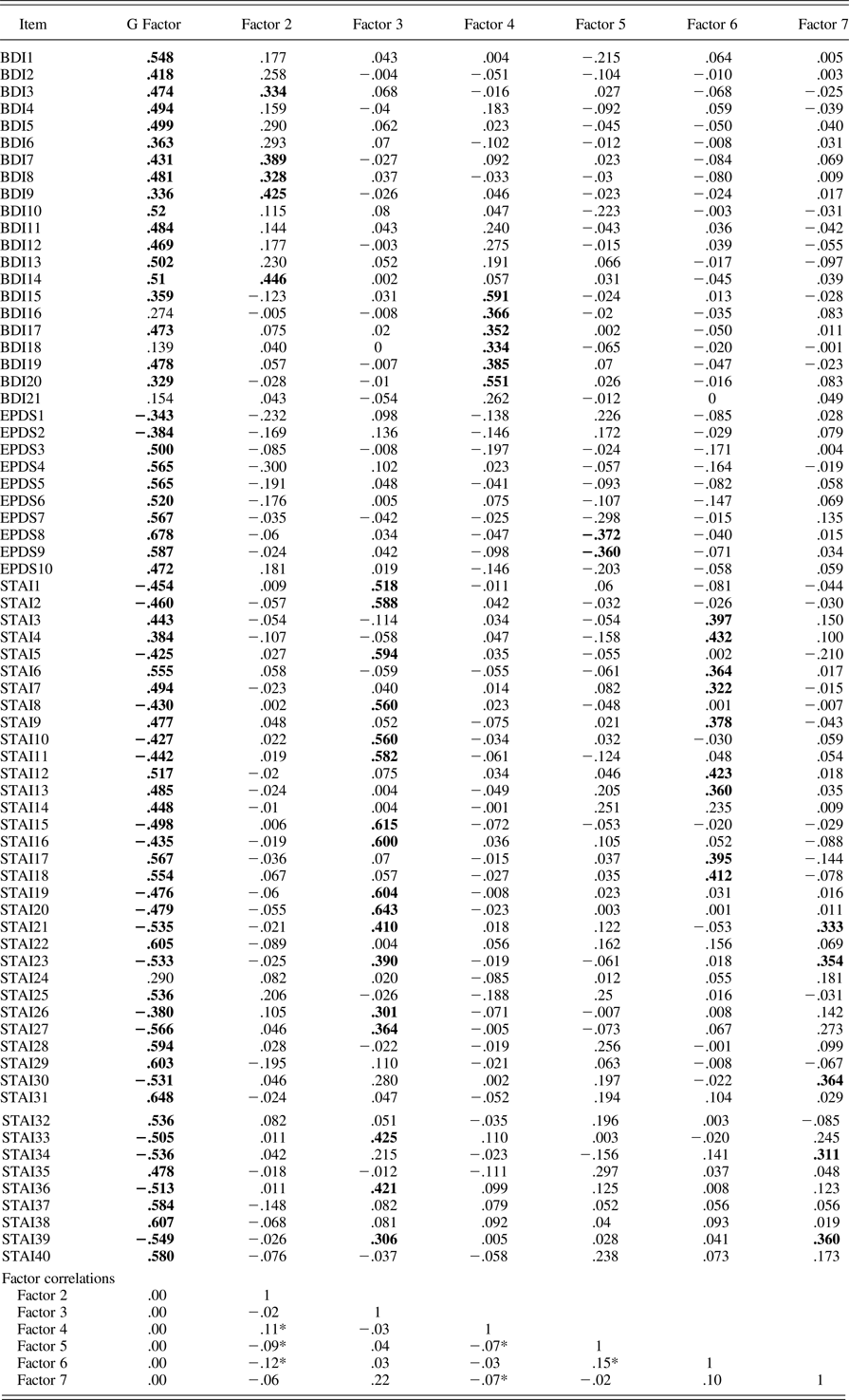
Note: Bold indicates factor loading > |.30|. G Factor, general factor; BDI, Beck Depression Inventory—II; EPDS, Edinburgh Postnatal Depression Scale; STAI, State-Trait Anxiety Inventory.
*p < .05.
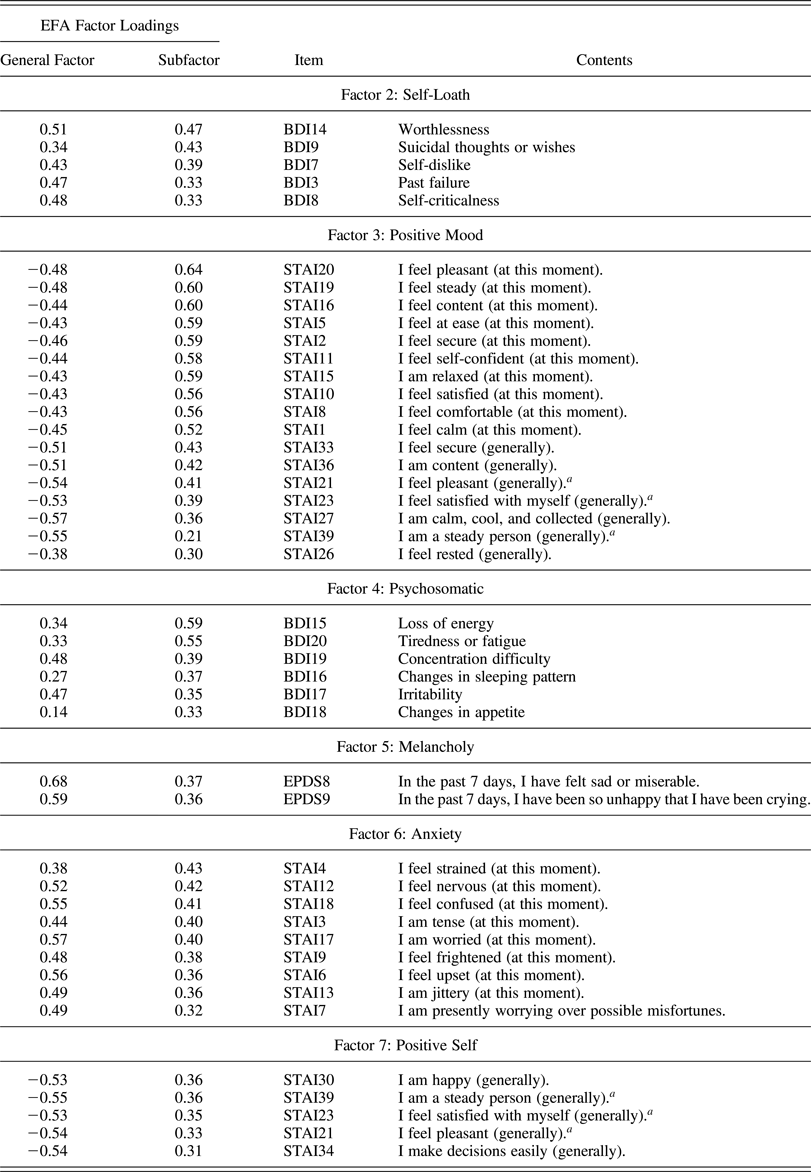
The seven-factor bifactor model was estimated using confirmatory bifactor modeling to obtain the factor scores. The fit indices showed acceptable fit of the confirmatory factor analysis model to data (root mean square error of approximation = 0.042, comparative fit index = 0.824, standardized root mean square residual = 0.057). Table 4 summarized the items for each factor and the corresponding factor loadings from the confirmatory model.
Specific latent factors and contents of items
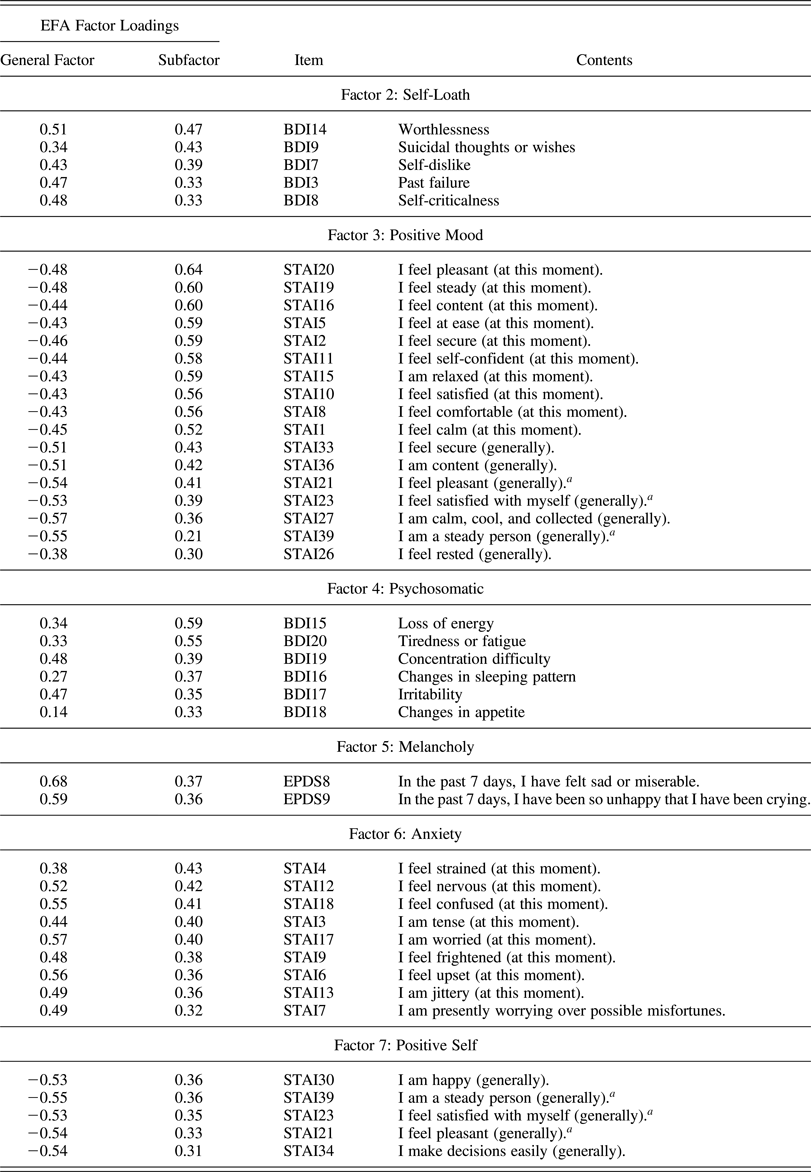
Note: BDI, Beck Depression Inventory—II; STAI, State-Trait Anxiety Inventory; EPDS, Edinburgh Postnatal Depression Scale.
a Item is cross-loaded on Factors 3 and 7.
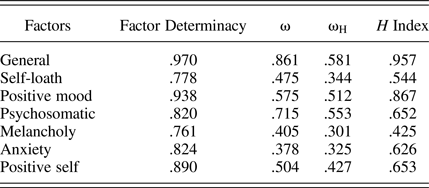
Reliability indices for the general and subfactors were also computed (see Table 5) with the Excel-based Bifactor Indices Calculator (Dueber, Reference Dueber2016), as previously suggested (Rodriguez, Reise, & Haviland, Reference Rodriguez, Reise and Haviland2016). Factor determinacy (FD) is the correlation between factor scores and the factors and estimates the reliability the estimated factor score. A high FD coefficient (i.e., ≥ 0.80) suggests high reliability of factor score (Gorsuch, Reference Gorsuch1983). Both the factor scores of positive mood (FD = 0.938) and positive self (FD = 0.89) passed the threshold and were thus used for subsequent analyses. However, according to the ωH coefficient, which reflect the unique variance associated with subfactor score once partitioning out general factor's variance, positive mood (ωH = 0.512) was more reliable than positive self (ωH = 0.427). The seemingly low ωH coefficients were not surprising as all the items in these two subfactors loaded on the general factor as well (Rodriguez et al., Reference Rodriguez, Reise and Haviland2016), which also accounted for the higher ωH coefficient that does not control for variance accounted for by general factor. Construct reliability (i.e., H index) reflects how well the items represent the latent factor that they load on. With a criterion of 0.70 (Hancock & Mueller, Reference Hancock, Mueller, Cudeck, Toit and Sörbom2001), positive mood (H = 0.867) was well represented by the corresponding sets of items, with positive self (H = 0.653) slightly below the threshold. As such, results pertaining to the positive self factor score should be interpreted with some caution Nevertheless, these findings suggest that the positive mental health construct can be reliably extracted from screening tools for depression and anxiety.
Reliability indices from confirmatory bifactor model
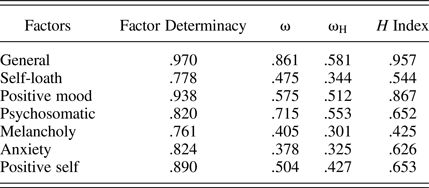
Note: ω, omega coefficient; ωH, omega hierarchical coefficient; H, construct reliability.
Correlations
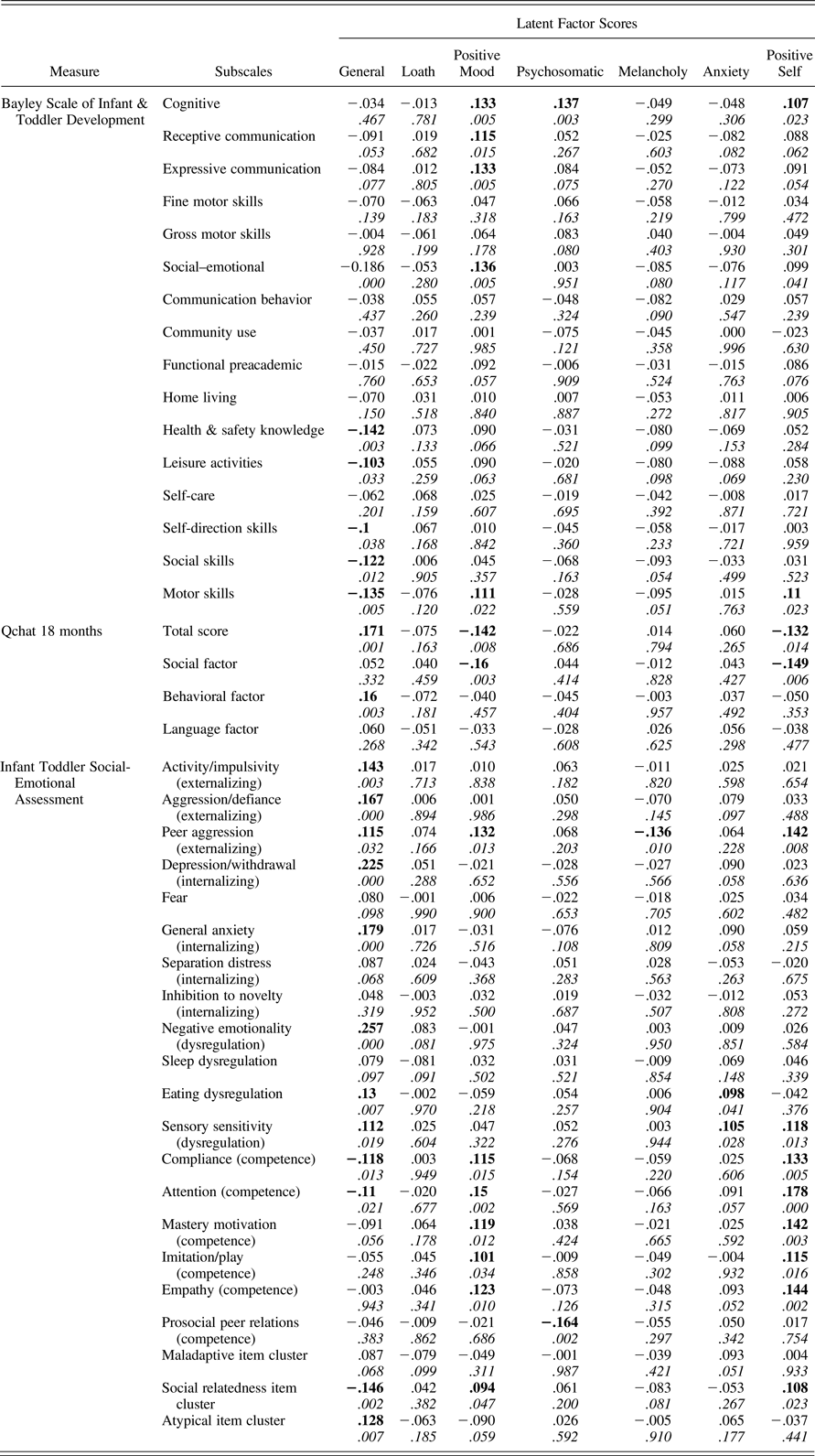
The factor scores estimated from the confirmatory model were used in subsequent correlation analyses with the child behavioral outcomes. As this was an exploratory study, Bonferroni correction was not implemented to avoid inflation of Type II errors. While spurious results may occur without correction, what is of interest is not any particular significant finding, but the pattern of responses, which is less likely to be due to chance (Moran, Reference Moran2003).
The Pearson correlation coefficients and the corresponding p values are summarized in Table 6. A heatmap (Figure 1) was plotted to better illustrate the pattern of significant correlations of positive mood and positive self on child behavioral outcomes. Positive mood and/or self were positively associated with the cognitive, language (i.e., receptive and expressive languages), social–emotional, and motor components of the Bayley scales. There were negative association with the total score and social component of the QChat; there was no significant association of positive mood or self on the behavioral component. The positive factors were positively associated with most of the competence subscales of the ITSEA. There was also a positive association with peer aggression. In general, positive maternal mood during pregnancy was associated with the behaviors in children that are associated with sociability, communication, and parentally rated competence.
(Color online) Heat map illustrating significant correlations between maternal mental health factors and child behavioral outcomes.

Pearson correlations and p values (in italics) of latent factor scores and child behavioral outcomes
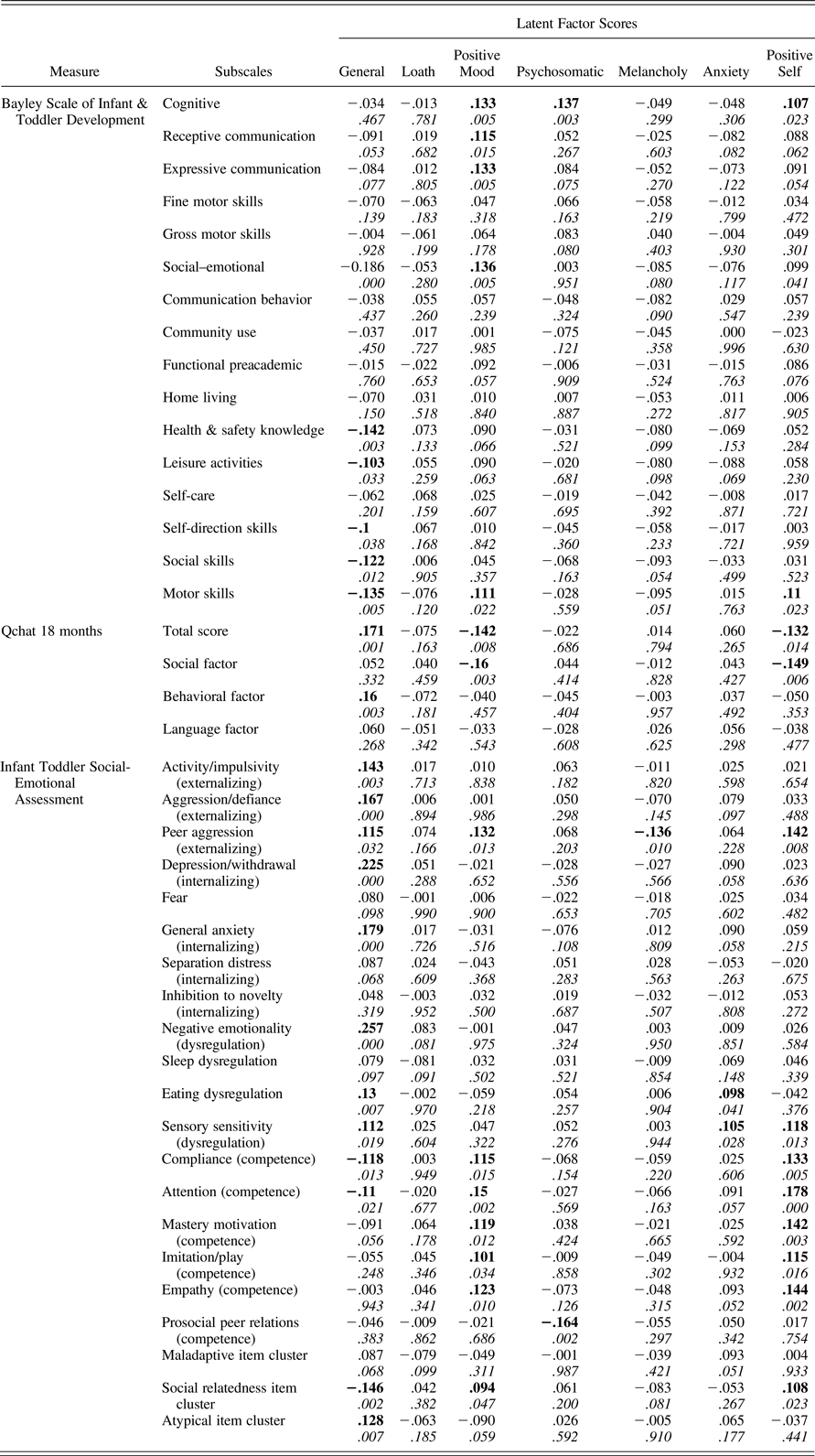
Note: Bold indicates significant correlation at the α = 0.05 level.
Discussion
We used a bifactor modeling approach to demonstrate the feasibility of using common screening instruments for mental disorders to examine positive maternal mental health. An exploratory analysis revealed associations between our measures of antenatal positive maternal mental health and specific domains of child development. These associations were strongest in measures of social behavior and communication, which were apparent on both maternal-report measures as well as those that employ an independent observer (i.e., Bayley scales). These findings suggest that data from past or existing birth-cohort studies can be examined for potential effects of positive maternal mental health, even in the absence of scales directly intended to examine this construct.
Most of the items on the three mental health questionnaires loaded strongly on the general factor, suggesting an underlying general psychopathology factor that affected the responses of all the items regardless of questionnaires. This could also reflect the comorbidity often found between depression and anxiety measures. Existing research has interpreted this general factor as either general propensity to develop psychopathology symptoms (Caspi et al., Reference Caspi, Houts, Belsky, Goldman-Mellor, Harrington, Israel and Poulton2014) or general level of distress (Simms et al., Reference Simms, Grös, Watson and O'Hara2008). Items about punishment feelings, self-criticalness, and loss of interest in sex did not load highly on the general factor.
The subfactors did not contain items from multiple measures. This finding suggests that mental health measures are checklists of different psychopathology symptoms with little overlap. While this may not be surprising, as the STAI and BDI-II are measures of anxiety and depression, respectively, there was also no overlap between the two depression measures (BDI-II and the Edinburgh Postnatal Depression Scale). Inclusion of multiple mental health measures does have added value as they may provide a more comprehensive capture of individuals' mental health. This thought is also in line with the understanding that mental health, even within a single mental disorder such as depression, is highly heterogeneous across the population (e.g., Chekroud et al., Reference Chekroud, Gueorguieva, Krumholz, Trivedi, Krystal and McCarthy2017; Fried, Nesse, Zivin, Guille, & Sen, Reference Fried, Nesse, Zivin, Guille and Sen2014; Santos et al., Reference Santos, Tan and Salomon2017).
The positively worded items in the battery loaded negatively on the general factor, suggesting that positive mental health could be a protective factor against psychopathology symptoms. Moreover, these items loaded on two subfactors that were interpreted as positive mood and positive self, the latter containing fewer items and is more similar to self-esteem. These two factors are correlated with expected cross-loading of items. The parsing of positively worded items as distinct factors suggests that it is possible to study positive mental health using commonly used psychiatric screening measures. This finding implies that existing birth cohorts or epidemiological studies with standard screens for maternal psychopathology could be exploited for more comprehensive study of mental health in the general population with the existing data used to reveal variations in positive mental health across community samples.
The presence of two separate, but correlated, factors also suggests that positive mental health can be examined from different perspectives. This finding is consistent with existing theoretical conceptualization of psychological well-being that goes beyond merely positive feelings. Psychological well-being has been operationalized into six dimensions: purpose in life, personal growth, environmental mastery, autonomy, self-acceptance, and relations with others (Ryff, Reference Ryff1989). While positive mood is not one of the six traditionally defined dimensions of well-being, it may be a consequence of fulfillment in one or more of the six aspects. Factor analyses of other common psychiatric screening tools have also found a factor of positive affect that comprises the positively worded items (Hernández-Martínez et al., Reference Hernández-Martínez, Val, Murphy, Busquets and Sans2011; Hu et al., Reference Hu, Stewart-Brown, Twigg and Weich2007; Iwata et al., Reference Iwata, Mishima, Shimizu, Mizoue, Fukuhara, Hidano and Spielberger1998; Shafer, Reference Shafer2006). Deeper research into positive mental health will require a distinction of the different aspects of psychological well-being. However, this does not negate the value of using positive mood, particularly in epidemiological studies that have practical limitations on the measures that can be included.
Effect of positive mental health
Positive antenatal mental health revealed specific associations with child outcomes. Specifically, positive antenatal mental health was significantly associated with cognitive, language/communication, social, and competence development. The receptive and expressive language and cognitive abilities were assessed through objective laboratory tasks, which minimize the possibility that parents who were more positive might have rated their child's cognitive and language more positively. In addition, the parent-rated language component of the QChat had no associations with antenatal maternal mental health. Taken together with the associations with the competence measures, positive antenatal mental health may affect the positive spectrum of a child's development instead of socioemotional vulnerabilities more commonly associated with measures of maternal depression and anxiety. The specificity of the effect of positive mental health is underscored by the finding that most of these same measures were not associated with either the subfactors that reflected a poorer quality of maternal mental health or, in certain instances, even the general factor, despite the liberal p value threshold used in this exploratory analysis. Positive maternal mental health may thus have very specific influences on child development.
The pattern of correlations with language, sociability, and competences aligns with what is known about children's positive affect, language ability, and social traits. Infant positive affect or joyful expressions predict receptive and expressive language abilities in toddlerhood (Dixon & Smith, Reference Dixon and Smith2000; Laake & Bridgett, Reference Laake and Bridgett2014; Moreno & Robinson, Reference Moreno and Robinson2005). Moreover, a behavioral genetics analysis showed some heritability for sociability and positive affect (Eid, Riemann, Angleitner, & Borkenau, Reference Eid, Riemann, Angleitner and Borkenau2003), thus supporting the link between positive affect and sociability.
The effects of positive antenatal mental health on child's language and social abilities may have other long-term indirect benefits. Children who are more sociable may be more accepted by peers, which protects against psychopathological and antisocial behaviors (Parker & Asher, Reference Parker and Asher1987; Szekely et al., Reference Szekely, Pappa, Wilson, Bhamidi, Jaddoe, Verhulst and Shaw2016). Being more accepted by peers may also contribute to less peer victimization or bullying, which has been found to have serious psychological effects (e.g., Gini & Espelage, Reference Gini and Espelage2014; Kawabata, Tseng, & Crick, Reference Kawabata, Tseng and Crick2014; Schwartz, Lansford, Dodge, Pettit, & Bates, Reference Schwartz, Lansford, Dodge, Pettit and Bates2015). These detrimental effects can even last into adulthood as the victimized child enters adolescent and adulthood (McDougall & Vaillancourt, Reference McDougall and Vaillancourt2015). Taken together with our results, promoting positive antenatal mental health may serve as preventive measures against mental health issues in the next generations.
Promoting positive mental health during pregnancy can also protects against high antenatal stress (see Graignic-Philippe et al., Reference Graignic-Philippe, Dayan, Chokron, Jacquet and Tordjman2014, for review on antenatal stress and detrimental effects on fetal development). Positive mental health has been associated with better self-care (Giltay, Geleijnse, Zitman, Buijsse, & Kromhout, Reference Giltay, Geleijnse, Zitman, Buijsse and Kromhout2007; Steptoe, Wright, Kunz-Ebrecht, & Iliffe, Reference Steptoe, Wright, Kunz-Ebrecht and Iliffe2006), higher adherence to medical advice (Cooper, Lloyd, Weinman, & Jackson, Reference Cooper, Lloyd, Weinman and Jackson1999), healthier regulation of immune and neuroendocrine systems during stress (Antoni, Carver, & Lechner, Reference Antoni, Carver, Lechner, Park, Lechner, Antoni and Stanton2009; Antoni et al., Reference Antoni, Lutgendorf, Cole, Dhabhar, Sephton, McDonald and Sood2006; Creswell et al., Reference Creswell, Welch, Taylor, Sherman, Gruenewald and Mann2005; Sherman, Bunyan, Creswell, & Jaremka, Reference Sherman, Bunyan, Creswell and Jaremka2009; Taylor, Lerner, Sherman, Sage, & McDowell, Reference Taylor, Lerner, Sherman, Sage and McDowell2003), and lower likelihood of developing clinical depression after experiencing a crisis (Fredrickson, Tugade, Waugh, & Larkin, Reference Fredrickson, Tugade, Waugh and Larkin2003). Childbirth is a life-changing experience that can be highly stressful or anxiety provoking, particularly for first-time mothers. Promoting positive antenatal mental health may thus be a more proactive approach to prevent stress-related pregnancy issues before they become severe enough to warrant attention.
Limitations and future research
This exploratory study reveals specific associations between antenatal positive mental health and child development. As such, future research on positive maternal mental health should use measures or laboratory tasks that assess normal development and competences rather than deficient or atypical development. However, current findings are not conclusive and should be interpreted with caution. The mechanisms of how maternal positive mental health affect fetal and child development is unknown. While this study suggests the plausible effects of antenatal positive mental health on fetal and child development, this is an exploratory study with liberal thresholds for significant findings. As such, results require replication.
Another limitation is the lack of postnatal maternal mental health data in this study. As such, we are not able to parcel out the effect of postnatal positive mental health on the child's outcomes. It is possible that antenatal positive mental health persisted into postnatal mental health, which in turn affected child outcomes. Nevertheless, this does not negate the importance of antenatal positive mental health. If the effect of antenatal positivity is mediated by postnatal positivity, it then may suggest the importance of intervention or mental health promotion to begin prenatally. Finally, it is important to note the correlational nature of these analyses. This approach cannot discount the possibility of a maternally inherited effect. A recent genome-wide association study (Okbay et al., Reference Okbay, Baselmans, De Neve, Turley, Nivard, Fontana and Derringer2016) described the genetics of emotional well-being, although genetic variation accounted for only a small percentage of the variation in well-being.
Conclusion
This study demonstrates the feasibility of using common psychiatric disorder screening tools to examine the effect of positive mental health. With this, it is possible for data from past or existing birth-cohort studies to be reexamined from the perspective of positive mental health. Moreover, the effects of positive mental health are likely to be specific and different from the lack of mental disorders. As such, a deeper understanding of positive mental health will allow for more comprehensive understanding of fetal and child development. This also highlights the need to promote mental health among the general population in addition to preventing mental disorders.