Introduction
Globally, cardiovascular diseases account for a significant proportion of disabilities and deaths (GBD 2015 DALYs and HALE Collaborators, 2016; GBD 2015 Disease and Injury Incidence and Prevalence Collaborators, 2016; GBD 2015 Mortality and Causes of Death Collaborators, 2016). Hypertension is the primary risk factor for the vast majority of cardiovascular diseases, and one of the single highest contributors to these disabilities and deaths (GBD 2015 Risk Factors Collaborators, 2016). Recent estimates show that this condition is becoming an epidemic in developing countries (GBD 2015 DALYs and HALE Collaborators, 2016; GBD 2015 Disease and Injury Incidence and Prevalence Collaborators, 2016; GBD 2015 Mortality and Causes of Death Collaborators, 2016; GBD 2015 Risk Factors Collaborators, 2016). According to the World Health Organization (WHO), the estimated age-adjusted global prevalence of hypertension was 24.1% among males and 20.1% among females in 2015 (NCD Risk Factor Collaboration, 2017). In 2013, a target was set in the World Health Assembly to reduce the prevalence of hypertension by a quarter of its 2010 level by 2025 (WHO, 2017). To achieve this target, it is particularly important to consider the countries where the prevalence is increasing at an alarming rate compared to other parts of the world; low- and middle-income countries (LMIC) are essential in this context (NCD Risk Factor Collaboration, 2017).
Several behavioural risk factors contribute to high blood pressure and its complications, including unhealthy eating habits, tobacco use, sedentary lifestyle and excessive alcohol consumption. Behavioural risk factors are influenced by socioeconomic factors including education level, wealth status and place of residence (WHO, 2009). Though the association of different factors with blood pressure has been well-studied in high-income countries, little is known about the prevalence and risk factors for hypertension in many LMICs of South Asia in recent years as per recent guidelines, including in Bangladesh (NCD Risk Factor Collaboration, 2017).
The Bangladesh Demographic and Health Survey 2011 (BDHS 2011) estimated the overall prevalence of hypertension in the country (NIPORT et al., 2013). The estimated prevalence of hypertension was found to be 25.7% among people who were 35 years or older. In addition, a number of studies found that prevalence and likelihood of hypertension vary according to their place of residence (Harshfield et al., Reference Harshfield, Chowdhury, Harhay, Bergquist and Harhay2015; Rahman et al., Reference Rahman, Islam, Mostofa and Saadat2015a, Reference Rahman, Gilmour, Akter, Abe, Saito and Shibuyab; Tareque et al., Reference Tareque, Koshio, Tiedt and Hasegawa2015; Biswas et al., Reference Biswas, Islam, Linton and Rawal2016; Chowdhury et al., Reference Chowdhury, Uddin, Haque and Ibrahimou2016). For instance, from the BDHS 2011 data, Rahman and colleagues estimated the prevalence of hypertension by place of residence and observed prevalences of 23.2% and 32.7% in rural and urban areas, respectively (Rahman et al., Reference Rahman, Gilmour, Akter, Abe, Saito and Shibuya2015b). Variations in behavioural characteristics could contribute to these differences in prevalence and the likelihood of this condition according to place of residence (Neuman et al., Reference Neuman, Kawachi, Gortmaker and Subramanian2013). For instance, compared with people living in rural locations, people living in urban regions consume more calorie-dense foods and follow sedentary lifestyle patterns that may contribute to a higher body mass index, thereby increasing the risk of high blood pressure (Neuman et al., Reference Neuman, Kawachi, Gortmaker and Subramanian2013; Rahman et al., Reference Rahman, Gilmour, Akter, Abe, Saito and Shibuya2015b). Furthermore, substantial differences in socio-demographic characteristics have been demonstrated between rural and urban people, including other health indicators (NIPORT et al., 2013).
Since numerous socio-demographic factors may play a significant role in the prevalence of hypertension, stratifying the association by rural–urban residence may improve existing strategies for the prevention of hypertension in the country. It is also important to understand the differences in distribution of factors that could contribute to the differences in overall prevalence of hypertension between rural and urban regions. Though earlier studies have investigated socioeconomic and other risk factors for hypertension in Bangladesh, no study has stratified and examined prevalence and determinants of hypertension by place of residence (Harshfield et al., Reference Harshfield, Chowdhury, Harhay, Bergquist and Harhay2015; Rahman et al., Reference Rahman, Islam, Mostofa and Saadat2015a, Reference Rahman, Gilmour, Akter, Abe, Saito and Shibuyab; Tareque et al., Reference Tareque, Koshio, Tiedt and Hasegawa2015; Biswas et al., Reference Biswas, Islam, Linton and Rawal2016; Chowdhury et al., Reference Chowdhury, Uddin, Haque and Ibrahimou2016). This study attempted to fill these gaps in existing knowledge by investigating the prevalence and determinants of hypertension according to rural–urban place of residence by examining data from the nationally representative BDHS 2011. The purpose of the study was two-fold: to stratify the prevalence of hypertension by rural–urban place of residence, and to obtain the determinants per this stratification.
Methods
Data source
A secondary analysis was conducted on cross-sectional BDHS 2011 data. Mitra and Associates, a private research firm in Bangladesh, implemented this survey from July 2011 to January 2012. The BDHS 2011 aimed to estimate the prevalence of hypertension and diabetes among women and men aged 35 years and over, in addition to indicators related to maternal and child health. The 2011 BDHS was designed to cover both rural and urban regions in all seven administrative divisions in Bangladesh (NIPORT et al., 2013).
The survey had a two-staged cluster sampling design. First, 600 primary sampling units (PSUs) were selected, with 207 and 393 PSUs from urban and rural regions, respectively. From these chosen PSUs, a total of 17,964 households were selected. Final data were collected from 17,141 households. Among these households, one-third was selected by simple randomization for biomarker collection and blood pressure measurements. The survey design, data collection method, questionnaires, sample size calculation and results have been published in the BDHS 2011 report (NIPORT et al., 2013).
Measures
A LIFE SOURCE® UA-767 Plus blood pressure monitor was used to record the blood pressure levels of the selected participants. Blood pressure was measured three times at an interval of 10 minutes with small, medium and large cuff sizes depending on the cuff size of the respondent. The average of the second and third measurements was used to report the final blood pressure level (NIPORT et al., 2013). The Joint National Committee 7 (JNC 7) guideline cut-off points for blood pressure measurements were used to categorize hypertension (Chobanian et al., Reference Chobanian, Bakris, Black, Cushman, Green and Izzo2003). Briefly, a person was classified as hypertensive if s/he had a systolic blood pressure (SBP) ≥140 mmHg or diastolic blood pressure (DBP) ≥90 mmHg or if the person was taking prescribed anti-hypertensive drugs at the time of the survey.
Potential risk factors were selected based on published reports and the data structure of the BDHS 2011. A person with a fasting plasma glucose of ≥7.0 mmol/l, or who was on anti-diabetic medication to reduce blood sugar levels during the survey period, was considered diabetic. Body mass index (BMI) was obtained by dividing weight (in kg) by height squared (m2); a person with a BMI ≥25 kg/m2 was considered ‘overweight or obese’. The BMI cut-off used for this analysis was the same as that used by the BDHS 2011 to follow a consistent reporting format (NIPORT et al., 2013). Participants reported their age, sex, education level and household components, including basic household construction materials. The BDHS 2011 employed principal component analysis to calculate the wealth index score for the households by stratification into wealth quintiles. A person who was living in a municipal or city corporation was considered to be living in an urban region. The Bangladesh administrative division of residence was also recorded. Bangladesh had seven administrative divisions during the period of survey (NIPORT et al., 2013).
Statistical analyses
The background characteristics of the study participants were stratified by place of residence at the time of the survey. Categorical variables were reported with numbers and percentages, while continuous variables were reported with median and inter-quartile ranges (IQR). The weighted percentage (with 95% confidence interval (CI)) was calculated to obtain the prevalence of hypertension by place of residence in the sample.
Next, crude odds ratios (CORs) were obtained for all study factors. Variables with a predetermined significance level (0.20) in unadjusted analyses were included in the multivariable adjustment (Maldonado & Greenland, Reference Maldonado and Greenland1993). Multivariable logistic regression analysis was carried out to obtain adjusted odds ratios (AORs). Odds ratios with 95% confidence intervals (CIs) were reported separately for rural and urban areas. Forward and backward stepwise selection procedures were applied to select variables for final models. To check for multi-collinearity among variables before adjusting for other confounders, variance inflation factors (VIFs) were assessed. Stata 14.0 (Stata Corp, College Station, TX, USA) was used to analyse all the study data. The ‘svy’ command allowed adjustments of the cluster sampling design in the survey and calculation of the weighted frequency for selected variables. For adjustment purposes and categorizing, categorical variables were created from continuous variables such as age.
Results
Table 1 shows the background characteristics of the study participants stratified by rural–urban residence and hypertension status. A total of 7839 participants (1830 from urban areas and 6009 from rural areas) were included in the analysis. Of these, 597 (32.6%) urban participants and 1419 (23.6%) rural participants had hypertension. The median systolic and diastolic blood pressures in the two regions were similar. Overall, rural participants were slightly older than their urban counterparts, with mean ages of 49 (IQR 41–60) and 48 (IQR 40–58) years, respectively. Although the proportions of males and females were roughly equal, the survey found a higher proportion of hypertensive females in both the urban (61.1%, n=365) and rural (63.3%, n=898) regions. The proportion of diabetic hypertensive participants was higher in the urban regions (23.5%, n=135) compared with the rural regions (13.5%, n=185). Similar to diabetes, the proportion of people with overweight/obesity was higher in urban regions (42.6%, n=756) than rural regions (20.0%, n=1162). The proportion of participants with any formal education was higher in urban regions than rural regions. About half of the respondents from urban regions were from Dhaka (47.2%, n=864). Most urban participants were from the two highest wealth quintiles (79.7%, n=1458), while less than one-third of the rural participants were from these two quintiles (29.9%, n=1798). Although the proportions of people from different wealth quintile groups were roughly equal in rural regions, the vast majority of the urban hypertensive people were from the top two wealth quintile groups (88.1%, n=525).
Characteristics of the total sample and hypertensive participants stratified by place of residence, BDHS 2011

IQR: inter-quartile range; NA: Not applicable.
a Numbers with column percentages unless otherwise specified.
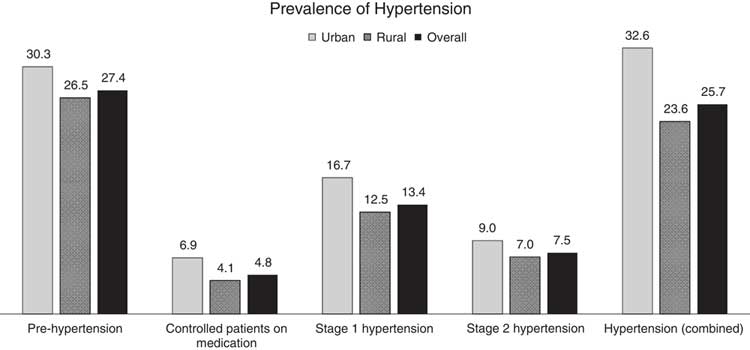
The prevalences of hypertension by stages of blood pressure level are summarized in Figure 1. The prevalences of all four stages beyond normal level (i.e. pre-hypertension or above) were higher in urban regions compared with rural regions. The percentages of people with pre-hypertension, controlled patients on medication, Stage 1 and Stage 2 hypertension were 26.5%, 4.1%, 12.1% and 7.0%, respectively in rural regions; while these percentages were 30.3%, 6.9%, 16.7% and 9.0%, respectively, in urban regions. With an overall prevalence of 25.7% in the study sample, the total prevalence of hypertension was 32.6% in urban regions and 23.6% in rural regions.
Prevalence of hypertension by blood pressure stages and rural–urban region of residence.
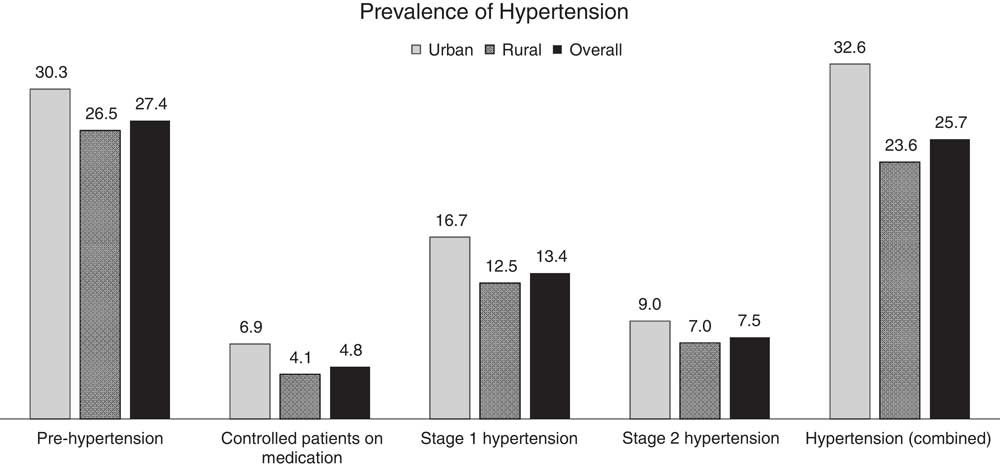
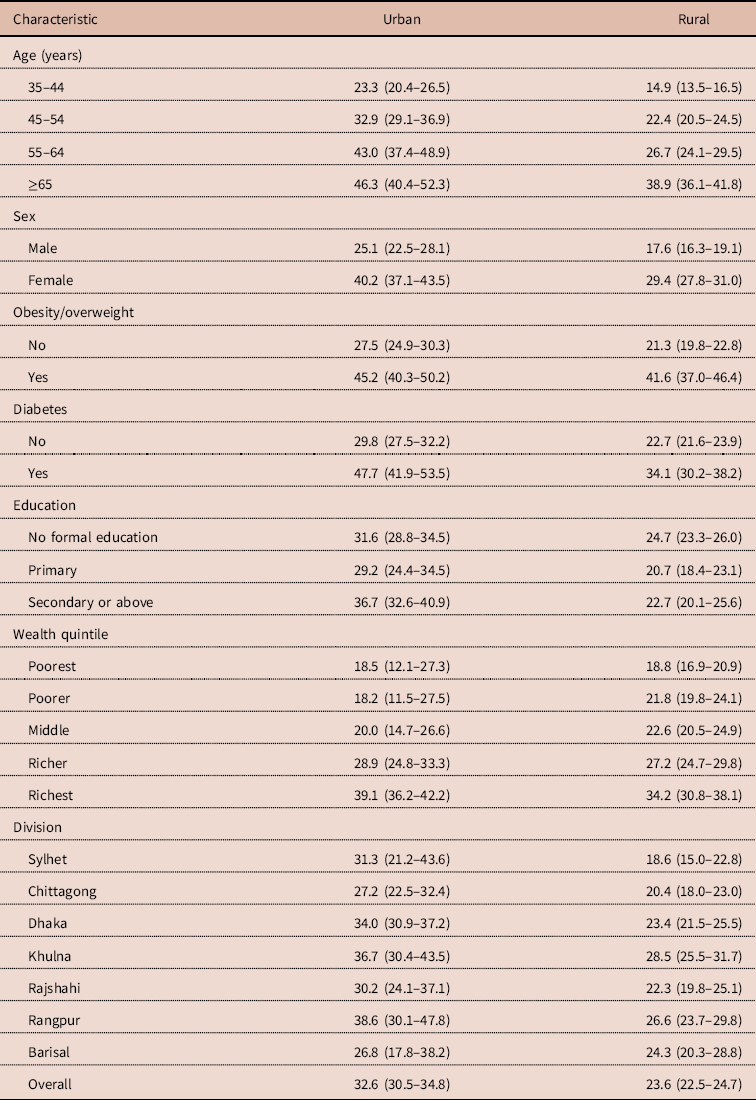
Table 2 shows the prevalence (with 95% CI) of hypertension by different background characteristics and rural–urban residence. Urban respondents had higher prevalences according to the majority of the characteristics compared with their rural counterparts. In both regions, older people had a higher prevalence of hypertension compared with younger people, with the highest prevalence being among people ≥65 years in urban regions (46.3%; 95% CI: 40.4–52.3). The prevalence was greater among females: 40.2% (95% CI: 37.1–43.5) and 29.4% (95% CI: 27.8–31.0) in urban and rural areas, respectively. Nearly half of the overweight/obese and diabetic people in urban areas had hypertension. Although people with no formal education had a slightly greater prevalence in rural regions compared with the other two education groups (i.e. primary and secondary or above), the opposite was the case in urban areas. Khulna division had the highest prevalence in both urban and rural regions: 36.7% (95% CI: 30.4–43.5) and 28.5% (95% CI: 25.5–31.7), respectively. People from the richest wealth quintile in both regions had the highest prevalence, with 39.1% (95% CI: 36.2–42.2) in urban regions and 34.2% (95% CI: 30.8–38.1) in rural regions.
Prevalence (with 95% CI) of hypertension by background characteristics and rural–urban residence, BDHS 2011Footnote a
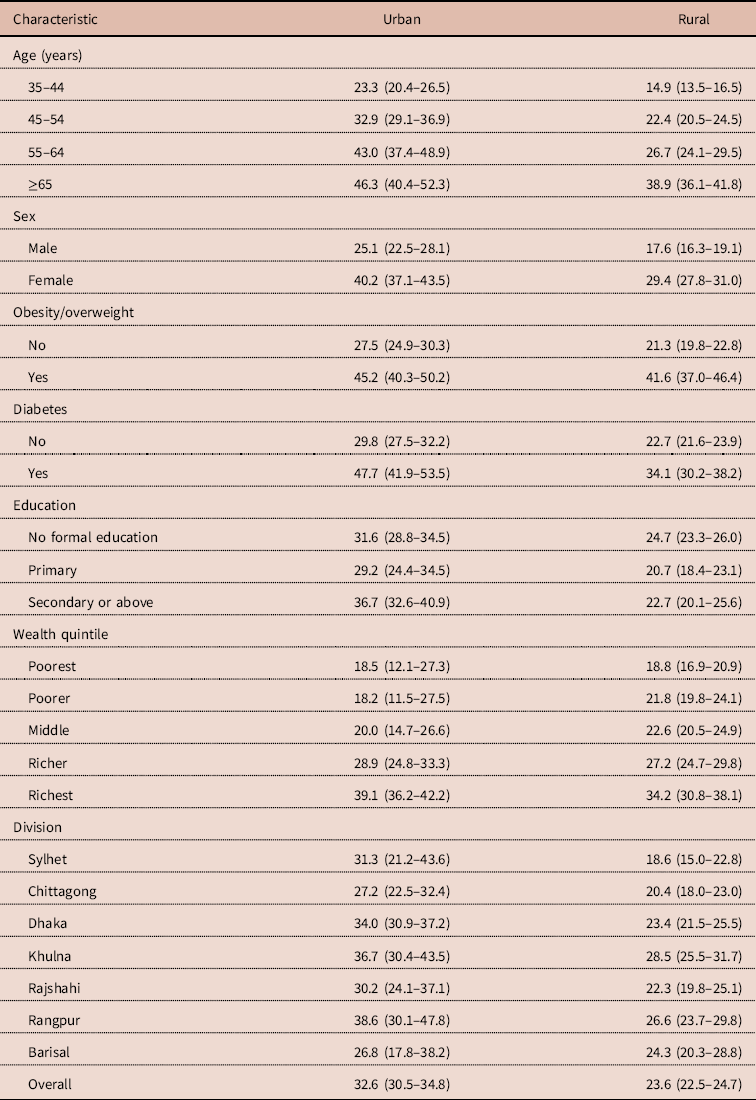
CI: confidence interval.
a Row percentage.
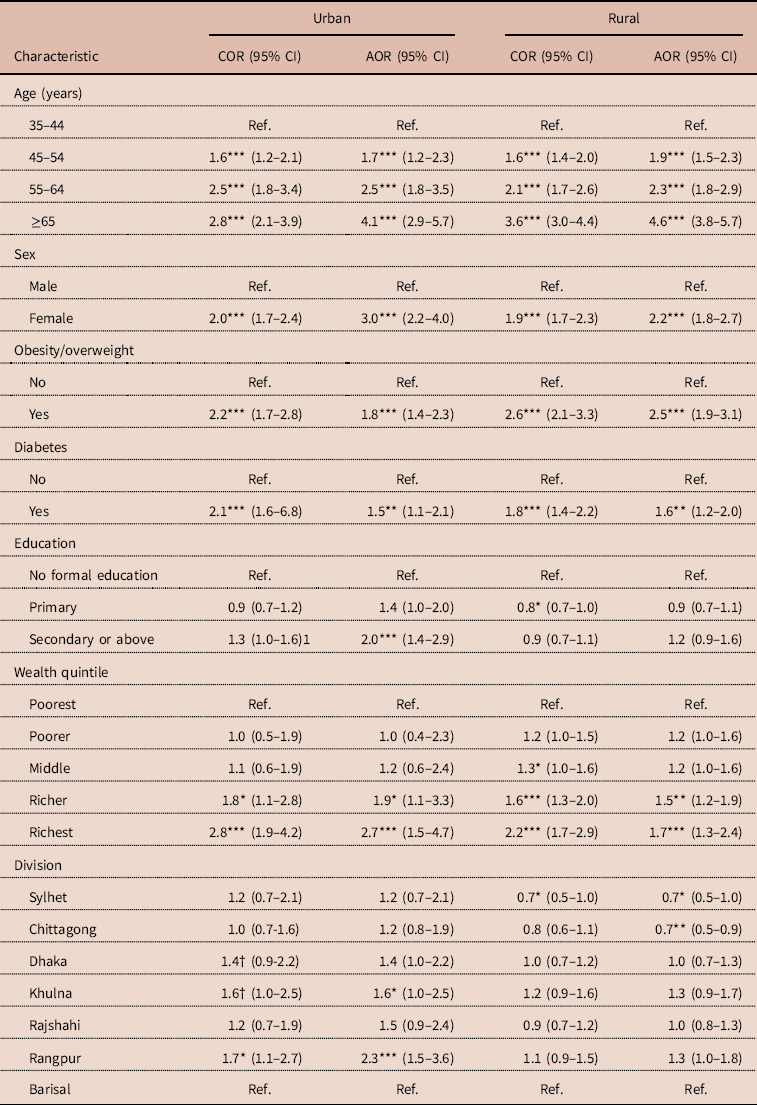
Table 3 shows the crude and adjusted odds ratios of the stratified determinants of hypertension. Participants in the oldest (i.e. ≥65 years) age group had greater odds of being hypertensive compared with younger participants (i.e. 35–44 years) in both urban (AOR: 4.1; 95% CI: 2.9–5.7) and rural (AOR: 4.6; 95% CI: 3.8–5.7) regions. A dose–response relationship was observed in relation to age group in both regions. Similarly, female, diabetic and overweight/obese participants, and those in the two highest wealth quintile groups, had higher odds of hypertension than male, non-diabetic and under/normal weight participants and those from the poorest wealth quintile groups in both regions. Although secondary or above education level was significantly associated with increased odds of hypertension in urban regions (AOR: 2.0; 95% CI: 1.4–2.9), this association was not observed in rural regions (AOR: 1.2; 95% CI: 0.9–1.6). People living in Khulna (AOR: 1.6; 95% CI: 1.0–2.5) or Rangpur (AOR: 2.5; 95% CI: 1.4–4.5) had a positive association with hypertension in urban regions, while the two divisions had an inverse association in rural regions of Sylhet (AOR: 0.7; 95% CI: 0.5–1.0) and Chittagong (AOR: 0.7; 95% CI: 0.5–0.9).
Factors associated with hypertension by rural–urban place of residence, BDHS 2011
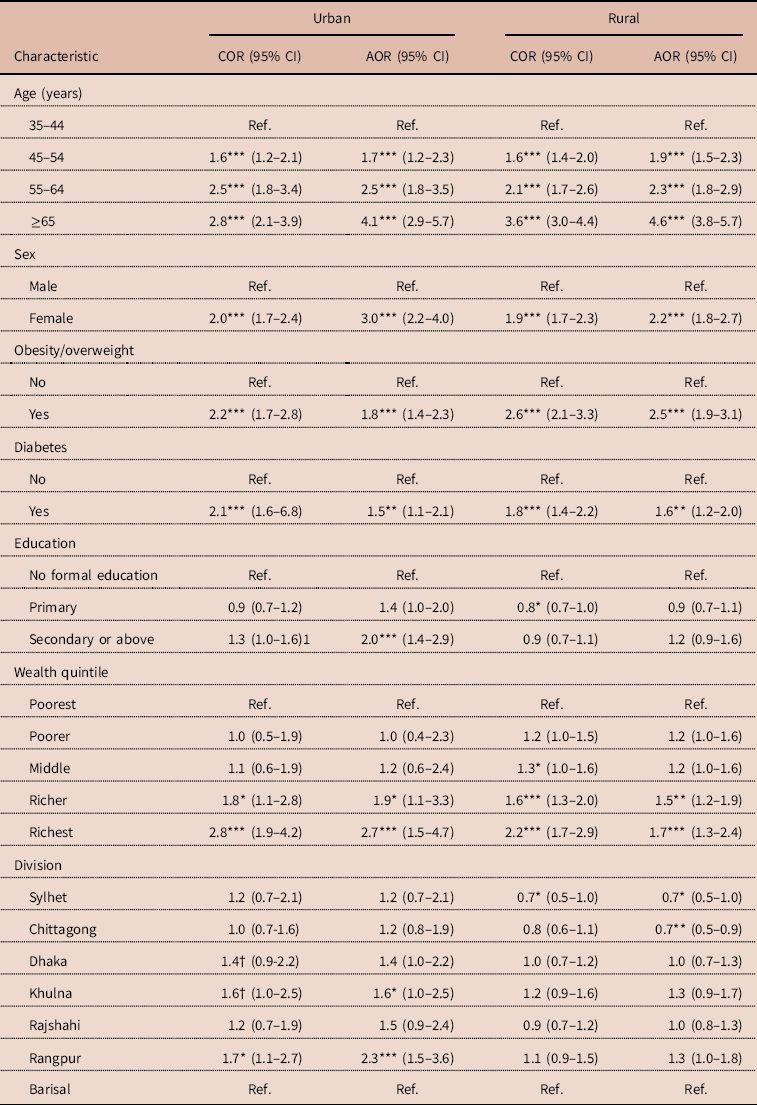
AOR: adjusted odds ratio; CI: confidence interval; COR: crude odds ratio; Ref.: reference category.
† p<0.2; *p<0.05; **p<0.01; ***p<0.001.
Discussion
This study analysed a nationally representative sample of people aged over 35 years from Bangladesh to investigate the prevalence of hypertension, and associated factors, by rural–urban residence. People who were of older age, female, diabetic, overweight/obese and of higher wealth status had a relatively higher prevalence and odds of hypertension in both rural and urban regions. On the other hand, education level and division of residence had significant positive associations with hypertension in urban regions only. Furthermore, two divisions had an inverse association with hypertension in rural regions only.
After stratifying the risk factors by place of residence, the study found a difference in the level of education not observed in prior studies investigating the determinants of hypertension without stratification; these found level of education to be a predictor of higher blood pressure in both rural and urban regions (Khanam et al., Reference Khanam, Lindeboom, Razzaque, Niessen and Milton2015; Rahman et al., Reference Rahman, Gilmour, Akter, Abe, Saito and Shibuya2015b; Chowdhury et al., Reference Chowdhury, Uddin, Haque and Ibrahimou2016). This significant association and higher prevalence among educated people in urban regions might result from having a sedentary lifestyle, and the higher wealth status of urban educated people (Barnes, Reference Barnes2012; Jiang et al., Reference Jiang, Lu, Zong, Ruan and Liu2016). As a majority of the urban respondents were educated, and these had a higher prevalence of hypertension, educated individuals in urban areas need to receive more public health awareness information to control raised blood pressure levels.
Khulna had a higher prevalence of hypertension than other divisions in both rural and urban regions. On the other hand, two divisions (i.e. Sylhet and Chittagong) had lower odds in rural regions. Besides the socioeconomic inequalities reported by earlier studies (Tareque et al., Reference Tareque, Koshio, Tiedt and Hasegawa2015; Biswas et al., Reference Biswas, Islam, Linton and Rawal2016), salinity in drinking water in Khulna could be a contributing factor to its observed higher prevalence (Benneyworth et al., Reference Benneyworth, Gilligan, Ayers, Goodbred, George and Carrico2016), as salt is a known risk factor for hypertension (Feng et al., Reference Feng, Dell’Italia and Sanders2017). Increases in the salinity of drinking water are a known consequence of climate change, thus this risk may increase over time (Benneyworth et al., Reference Benneyworth, Gilligan, Ayers, Goodbred, George and Carrico2016; Talukder et al., Reference Talukder, Rutherford, Phung, Islam and Chu2016; Scheelbeek et al., Reference Scheelbeek, Chowdhury, Haines, Alam, Hoque and Butler2017). In addition, several other divisions had a higher prevalence or likelihood of hypertension, similar to the findings of previous studies (Tareque et al., Reference Tareque, Koshio, Tiedt and Hasegawa2015; Biswas et al., Reference Biswas, Islam, Linton and Rawal2016). This could also result from the differences in socioeconomic status of the people in these regions (Chowdhury et al., Reference Chowdhury, Uddin, Haque and Ibrahimou2016). However, this finding warrants further investigation of causes for the increased prevalence or odds of hypertension in several divisions of Bangladesh.
The study found a higher prevalence and likelihood of hypertension among diabetic and overweight/obese individuals in all regions, although rural regions had a lower proportion of diabetes and overweightness/obesity compared with urban regions. A number of studies have investigated the risk factors for diabetes (Harshfield et al., Reference Harshfield, Chowdhury, Harhay, Bergquist and Harhay2015; Rahman et al., Reference Rahman, Islam, Mostofa and Saadat2015a; Tareque et al., Reference Tareque, Koshio, Tiedt and Hasegawa2015) and obesity in Bangladesh (Hossain et al., Reference Hossain, Bharati, Aik, Lestrel, Abeer and Kamarul2012; Biswas et al., Reference Biswas, Garnett, Pervin and Rawal2017; Chowdhury et al., Reference Chowdhury, Adnan and Hassan2018); these risk factors are similar to the factors associated with hypertension (Harshfield et al., Reference Harshfield, Chowdhury, Harhay, Bergquist and Harhay2015; Rahman et al., Reference Rahman, Islam, Mostofa and Saadat2015a; Tareque et al., Reference Tareque, Koshio, Tiedt and Hasegawa2015). Moreover, similar to hypertension, diabetes and overweight/obesity are important emerging epidemics in LMICs and studies have reported clustering of the risk factors for these conditions in many settings (Osei, Reference Osei2003; Hu, Reference Hu2011; Neuman et al., Reference Neuman, Kawachi, Gortmaker and Subramanian2013; Bhurosy & Jeewon, Reference Bhurosy and Jeewon2014). Considering the common determinants of these conditions and similar prevention strategies (Harshfield et al., Reference Harshfield, Chowdhury, Harhay, Bergquist and Harhay2015; Rahman et al., Reference Rahman, Islam, Mostofa and Saadat2015a; Tareque et al., Reference Tareque, Koshio, Tiedt and Hasegawa2015), this study highlights the importance of implementing an awareness and control programme to incorporate these three conditions covering both rural and urban areas within the country. Furthermore, as these risk factors are more concentrated in urban regions, these could contribute to the overall difference in prevalence, and urban people need more awareness to minimize the proportion of overweight/obesity and diabetes.
Another principal finding of this study was that wealth status of the respondents had a relationship with hypertension in both rural and urban regions, and the proportion of participants from two upper wealth quintiles was higher in urban areas. This greater proportion of people from the two upper wealth quintiles could also be associated with the overall difference in hypertension prevalence. This finding has been supported by previous studies from Bangladesh (Rahman et al., Reference Rahman, Gilmour, Akter, Abe, Saito and Shibuya2015b; Tareque et al., Reference Tareque, Koshio, Tiedt and Hasegawa2015; Biswas et al., Reference Biswas, Islam, Linton and Rawal2016) and other LMICs (da Costa et al., Reference da Costa, Barcellos, Sclowitz, Sclowitz, Castanheira and Olinto2007; Fateh et al., Reference Fateh, Emamian, Asgari, Alami and Fotouhi2014; Christiani et al., Reference Christiani, Byles, Tavener and Dugdale2015) that have investigated this association without stratification. However, this is contrary to the findings from high-income countries, where people with lower socioeconomic conditions have an increased risk of hypertension (Scholes et al., Reference Scholes, Bajekal, Love, Hawkins, Raine, O’Flaherty and Capewell2012; Sampson et al., Reference Sampson, Edwards, Jahangir, Munro, Wariboko and Wassef2014; Fan et al., Reference Fan, Strasser, Zhang, Fang and Crawford2015). In LMICs, people of higher socioeconomic status follow more sedentary lifestyle patterns and engage in less physical activity than people of a lower socioeconomic status (Bernabe-Ortiz et al., Reference Bernabe-Ortiz, Benziger, Gilman, Smeeth and Miranda2012; Tareque et al., Reference Tareque, Koshio, Tiedt and Hasegawa2015). Additionally, people of higher socioeconomic status can usually purchase more consumable resources with a large amount of calories (Doak et al., Reference Doak, Adair, Bentley, Monteiro and Popkin2005; Popkin et al., Reference Popkin, Adair and Ng2012). As a result, they tend to consume more calories, which ultimately makes them overweight or obese and puts them at a greater risk of hypertension than those of lower socioeconomic status (Bernabe-Ortiz et al., Reference Bernabe-Ortiz, Benziger, Gilman, Smeeth and Miranda2012; Tareque et al., Reference Tareque, Koshio, Tiedt and Hasegawa2015). Socioeconomic factors not only play a major role in developing hypertension, but also have an association with treatment, control and awareness of the condition (Rahman et al., Reference Rahman, Islam, Mostofa and Saadat2015a). Since people of higher socioeconomic status in both rural and urban regions are at an increased risk of having hypertension after adjusting for age and other factors, increasing awareness, adoption of a healthier lifestyle that includes regular physical exercise (Hypertension Prevention Trial Research Group, 1990), reducing the dietary calorific intake (Langford et al., Reference Langford, Blaufox, Oberman, Hawkins, Curb and Cutter1985; Hypertension Prevention Trial Research Group, 1990) and restricting salt intake (Costa et al., Reference Costa, Ambrosioni, Montebugnoli, Paccaloni, Vasconi and Magnani1981; Erwteman et al., Reference Erwteman, Nagelkerke, Lubsen, Koster and Dunning1984) are crucial factors for the prevention and control of hypertension among these populations.
Similar to earlier studies without stratification, this analysis found that old age was associated with higher prevalence and odds of hypertension (Harshfield et al., Reference Harshfield, Chowdhury, Harhay, Bergquist and Harhay2015; Rahman et al., 2015Reference Rahman, Islam, Mostofa and Saadata, Reference Rahman, Gilmour, Akter, Abe, Saito and Shibuyab; Tareque et al., Reference Tareque, Koshio, Tiedt and Hasegawa2015; Biswas et al., Reference Biswas, Islam, Linton and Rawal2016; Chowdhury et al., Reference Chowdhury, Uddin, Haque and Ibrahimou2016). Older people have an increased risk of diabetes, obesity and other co-morbid diseases, including high lipid levels (Rahman et al., 2015Reference Rahman, Islam, Mostofa and Saadata, Reference Rahman, Gilmour, Akter, Abe, Saito and Shibuyab; Tareque et al., Reference Tareque, Koshio, Tiedt and Hasegawa2015). Age is a non-modifiable risk factor for hypertension, and since Bangladesh is undergoing a demographic transition, with an increasing proportion of older people (NIPORT et al., 2013), early diagnosis, appropriate management and control of hypertension are crucial to reducing the prevalence, risk and other complications associated with hypertension among the older population.
Despite having an equal proportion of males and females in this survey, females had a higher prevalence and likelihood of hypertension compared with their male counterparts in both regions of residence. The BDHS 2011 reported the prevalence of hypertension after stratifying by sex; the prevalence of hypertension was higher among females across all background characteristics (NIPORT et al., 2013). Both biological and behavioural characteristics could cause this sex difference, as females have a higher risk of obesity and diabetes compared with men (Chowdhury et al., Reference Chowdhury, Uddin, Khan and Haque2015; Biswas et al., Reference Biswas, Garnett, Pervin and Rawal2017). This contrast signifies that females may require more awareness and public health information to control hypertension and to minimize the negative complications resulting from it.
To the best of the authors’ knowledge, this is the first epidemiological study to investigate the prevalence and determinants of hypertension after stratifying by rural–urban residence in Bangladesh. This survey covered rural and urban regions in all administrative divisions throughout the country, thus making this a nationally representative sample. The large sample size and high response rate enabled a representative approximation of population-level risk factors to be obtained. Additionally, the highly trained survey staff and standard validated method of data collection increased the precision of these findings.
The study had its limitations. First, blood pressure was recorded for only one day; longitudinal measurement of blood pressure is required to confirm a precise diagnosis of hypertension (Chobanian et al., Reference Chobanian, Bakris, Black, Cushman, Green and Izzo2003). Similar to blood pressure, blood glucose was also measured only one time; this method of collection may misclassify some persons as diabetic. Data from the BDHS 2011 were cross-sectional; causality cannot be established because a temporal relationship cannot be established between explanatory and outcome variables. Furthermore, due to the limitations of the 2011 BDHS dataset, the studied factors were not adjusted for several confounders or known risk factors of hypertension, including genetic factors, smoking, physical inactivity and dietary habit, hyperlipidaemia or psychological stress (Costa et al., Reference Costa, Ambrosioni, Montebugnoli, Paccaloni, Vasconi and Magnani1981; da Costa et al., Reference da Costa, Barcellos, Sclowitz, Sclowitz, Castanheira and Olinto2007; Longo et al., Reference Longo, Neves, Luciano and Peres2009; Bernabe-Ortiz et al., Reference Bernabe-Ortiz, Benziger, Gilman, Smeeth and Miranda2012; Heck et al., Reference Heck, Marcotte, Argos, Parvez, Ahmed and Islam2012; Global Burden of Metabolic Risk Factors for Chronic Diseases Collaboration, 2014; Sampson et al., Reference Sampson, Edwards, Jahangir, Munro, Wariboko and Wassef2014; Fan et al., Reference Fan, Strasser, Zhang, Fang and Crawford2015; Harshfield et al., Reference Harshfield, Chowdhury, Harhay, Bergquist and Harhay2015). Despite these limitations, this study illustrates the need for further evaluation of the unexamined risk factors for the development of hypertension in Bangladesh.
In conclusion, this study stratified the prevalence and determinants of hypertension in Bangladesh according to rural–urban place of residence. As diabetes and overweight/obesity were found to be associated with this condition in both regions, people with higher prevalence and likelihood of hypertension should adopt a healthier lifestyle to control blood glucose level and body weight to minimize complications. Public health information campaigns need to be tailored differently for urban and rural regions, based on the different distribution of these significant factors in the two areas. Furthermore, older people, females and people of higher wealth status need more public health awareness to control hypertension and prevent the negative consequences associated with it.
Acknowledgment
The authors are grateful to ICF International, Rockville, MD, USA, for giving them permission to use the survey data. The data are available upon request from ICF International, MD, USA.
Ethical Approval
Secondary data from BDHS 2011 were analysed for this study, and the survey data were anonymized. The Institutional Review Boards (IRBs) of the ICF International, Rockville, MD, USA, and Bangladesh Medical Research Council, Dhaka, Bangladesh, approved the BDHS 2011 protocol. This dataset is available for scientific and academic use upon approval from ICF International; permission to use the data was obtained in May 2018.
Conflicts of Interest
The authors declare that they have no competing interests.
Funding
No financial support was received for this study.