Introduction
The wearable electronics industry is rapidly expanding, particularly in the healthcare sector, due to its significant importance. Utilizing sensors strategically positioned across the body, wearable electronics capture and transmit vital information. This technology finds extensive application in sports, patient monitoring, and defence environments, facilitating continuous monitoring of individual health parameters. Antennas play a pivotal role in enabling remote communication within wearable electronics and establishing connections with external devices. Wireless body area networks (WBANs) facilitate communication with sensors, cluster nodes, or base stations located both inside and outside the body accordingly classified into on-body, in-body, and off-body communications [Reference Zhang, Li, Wang, Yan, Xu and Luyen1]. This article introduces an innovative antenna solution developed on an ultrathin microwave laminate for on-body communications. These antennas are typically embedded externally to the human body, facilitating communication with neighboring sensor nodes. While textile antennas have been widely explored in literature, they often face manufacturing challenges. Therefore, the development of antennas on ultrathin microwave laminates represents a significant advancement in antenna production capabilities. Recent research has introduced a diverse range of flexible dual-band wireless body area network (WBAN) antennas tailored for industrial scientific medical (ISM) bands at 2.45 GHz and 5.8 GHz, ideally suited for WBAN applications. These antennas utilize a variety of materials including cotton jeans, Rogers Duroid, polydimethylsiloxane (PDMS), and felt ensuring both flexibility and comfort. Notable characteristics include compact dimensions, dual-mode operation (on-/off-body), broad bandwidth, minimal mutual coupling, elevated gain, and adherence to stringent regulatory standards. Additionally, they exhibit versatile radiation pattern rendering them adaptable for a myriad of wearable applications [Reference Musa, Shah, Majid, Mahadi, Rahim, Yahya and Abidin2–Reference Ayyappan, Arulappan and Austin Dharma Raj5]. Some of the interesting WBAN antennas are presented in the following paragraphs.
A wearable dual band antenna with a dimension of 0.23λo × 0.21λo operating at 2.5 GHz and 4.5 GHz is presented in reference [Reference Haerinia and Noghanian6] for wireless power transfer applications. A circular patch radiator with a star-shaped slot developed on a semi-flexible Rogers material is presented in reference [Reference Khan, Sethi, Malik, Jabbar, Khalid, Almuhlafi and Himdi7] with a footprint of 0.38λo × 0.25λo. A multiband antenna with a low specific absorption rate (SAR) targeted for WBAN communications is presented in reference [Reference Abdulkawi, Masood, Nizam-Uddin and Alnakhli8]. The antenna is developed on a 1.8 mm thick Kapton material and has a footprint of 0.79λo × 0.61λo. In reference [Reference Sid, Cresson, Joly, Braud and Lasri9], biopolymer material is used for the development of a dual-band antenna operating at 2.45 GHz and 5.8 GHz. Laser structuring and copper adhesive tapes are used for the development of the flexible antenna. A dual-band antenna operating at 2.5 GHz and 5.2 GHz is presented in reference [Reference Ashfaq, Faisal, Ullah and Choi10] with a small fractional bandwidth of 5.2 MHz and 33.6 MHz using electromagnetic bandgap structures. The dual-band wearable antenna in reference [Reference Shirvani, Khajeh-Khalili and Neshati11] is designed to operate at the Global System for Mobile Communications (GSM)bands for telemedicine applications. The research work on WBAN antennas has been extended towards the development of multiple-input–multiple-output (MIMO) antennas. A four-port WBAN antenna operating at 2.45 GHz and 3.5 GHz is reported in reference [Reference Mashagba, Rahim, Adam, Jamaluddin, Yasin, Jusoh, Sabapathy, Abdulmalek, Al-Hadi, Ismail and Soh12] using textile technology. The antenna in reference [Reference Mashagba, Rahim, Adam, Jamaluddin, Yasin, Jusoh, Sabapathy, Abdulmalek, Al-Hadi, Ismail and Soh12] split-ring bar slotted configuration with a small footprint of 47.2 × 31 mm2. In reference [Reference Zhou, Leng, Pan, Abdalla, Novoselov and Hu13], the researchers have demonstrated the development of a graphene-based four-element MIMO antenna using screen printing technology. A two-element and four-element MIMO antenna is illustrated in reference [Reference Roy, Biswas, Ghosh, Chakraborty and Sarkhel14] for 5G communications using textile technology. A four-element MIMO antenna developed on a rigid substrate is detailed in reference [Reference Ananda Rao and Bhavani Konkyana15] with centre frequency at 2.16 GHz and 4.25 GHz. A few more interesting contributions on WBAN MIMO antennas are reported in references [Reference Althuwayb, Alibakhshikenari, Virdee, Rashid, Kaaniche, Atitallah, Armghan, Elhamrawy, See and Falcone16–Reference Ali, Sovuthy, Noghanian, Ali, Abbasi, Imran, Saeidi and Socheatra20]. In references [Reference Thaiwirot, Hengroemyat, Kaewthai, Akkaraekthalin and Chalermwisutkul21, Reference Abdelghany, Ahmed, Ibrahim, Desai and Ahmed22], the authors have demonstrated a dual-band antenna using textile material. PDMS based dual-band dual-mode antenna is described in reference [Reference Samal, Chen and Fumeaux23]. Further the researchers in references [Reference Jaglan, Gupta, Kanaujia and Sharawi24–Reference Naveen, G, Thakur, Kumar, Kanaujia and Srivastava26] have demonstrated the antenna design strategies to obtain enhanced diversity characteristics in the sub-6 GHz 5G frequency bands.
In this paper, a dual-band antenna developed on an ultrathin microwave laminate operating at 2.45 GHz and 3.5 GHz suitable for WBAN communications is presented. The dual-band antenna design is extended to develop a six-element MIMO antenna. The antenna elements are distributed along the sides of a hexagon to get good antenna coverage in a highly cluttered WBAN environment. Further, the proposed antenna configuration provides central connectivity to several antennas deployed on the surface of the human body. The rest of the manuscript is organized as follows: the “MIMO antenna design” section presents the antenna design and the MIMO development; the “Results and discussion” section details the results and discussions along with the specifics of the MIMO performance metrics. The conclusion of the paper is presented in the “Conclusion” section. All the simulations reported in this paper are performed using the CST Microwave Studio Suite.
MIMO antenna design
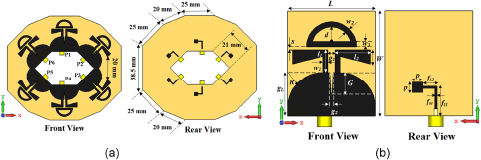
The geometry of the six-element MIMO antenna is described in Fig. 1(a) and the detailed geometrical parameters of each element in the MIMO scheme are described in Fig. 1(b). The antenna is designed on a 50 μm thin polyimide substrate with an electric permittivity of 3.5 and a power loss tangent of 0.0027. The MIMO antenna is constructed using a quasi-yagi antenna with a semicircular loop-like director. The quasi-yagi antenna has a dipole-like configuration and is excited through a microstrip line to modified slot-line transition. Further, the arms of the dipole are flared to enhance the operational features of the quasi-yagi antenna. A more detailed description of the antenna during the developmental stages is given below.
(a) Proposed MIMO antenna (b) Detailed geometrical parameters of the quasi-yagi antenna.

Antenna evolution
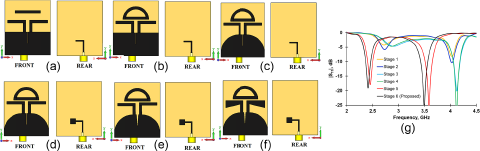
The evolution of the antenna geometry and the corresponding |S11| characteristics are presented in Fig. 2. The antenna design is initiated with a conventional geometry having dipole-like radiating arms attached to a rectangular ground plane (Stage 1) as shown in Fig. 2(a). The dipole arms are excited using a microstrip line to slot-line transition. The microstrip line on the rear side is configured as a L-shaped probe to achieve good impedance bandwidth. The antenna exhibits a resonance around 4 GHz with a weak additional resonance centerd around 2.6 GHz. The electromagnetic coupling between the dipole radiator and the director is enhanced by reducing the separation “s”. Further, the strip-line director is modified into a semicircular loop (Stage 2) as described in Fig. 2(b) to introduce additional resonant modes through electromagnetic coupling effects. There was a marginal improvement in the reflection coefficient behavior which is further enhanced through the attempts to modify the ground plane of the quasi-yagi antenna. Figure 2(c) shows the ground-modified quasi-yagi antenna wherein the top corners of the ground plane are shaped through a blend radius R (Stage 3). The optimum value of R is 10 mm to achieve strong resonance at the upper frequency. The ground plane modifications did not contribute to performance enhancement in the lower frequency edge. Hence, further structural modifications are performed to improve the antenna performance at the lower resonant frequency. Broadband impedance matching can be obtained using stepped impedance feed. Hence, in the next developmental stages, the L-feed is terminated with a square patch (Stage 4) and the rectangular slot-line in the front portion of the antenna is modified into a tapered slot (Stage 5) as shown in Fig. 2(d) and (e), respectively. The modifications in the feedline and the tapered slot have contributed to two strong resonances centerd at 2.5 GHz and 3.6 GHz. The optimum size of the square patch termination on the L-feed is fixed at “p” mm. In the final optimization stage, the dipole arms are tapered (Stage 6) to achieve necessary impedance matching at the intended dual frequencies. The resultant antenna geometry is shown in Fig. 2(f). The simulated return loss of the antenna at the ISM and 5G wireless local area network frequencies are 19 dB and 26 dB, respectively as shown in Fig. 2(g). The estimated bandwidth of the dual-band quasi-yagi antenna is 110 MHz and 125 MHz which are 4.5% and 3.5% at 2.45 GHz and 3.5 GHz, respectively. The proposed antenna has a realized bandwidth greater than the bandwidth required for the intended standards. Further, the data exchanged in WBANs typically requires a smaller bandwidth, unlike the information and entertainment systems. Hence, the realized bandwidth is sufficient for the said application. The optimized dimensions of the antenna are given in Table 1. Owing to the geometry, the antenna has a unidirectional radiation pattern which is a critical aspect for on-body antennas. The antenna is positioned on the human body to produce tangential radiation to perform on-body sensor communication.
Evolution of the dual-band antenna (a) Stage 1: Conventional quasi-yagi antenna (b) Stage 2: Modified reflector configuration (c) Stage 3: Modified ground plane configuration (d) Stage 4: Modified feed line with square patch termination (e) Stage 5: Modified slot-line (f) Stage 6: Modified dipole arms (Proposed antenna geometry) (g) Reflection coefficient characteristics during the developmental stages.

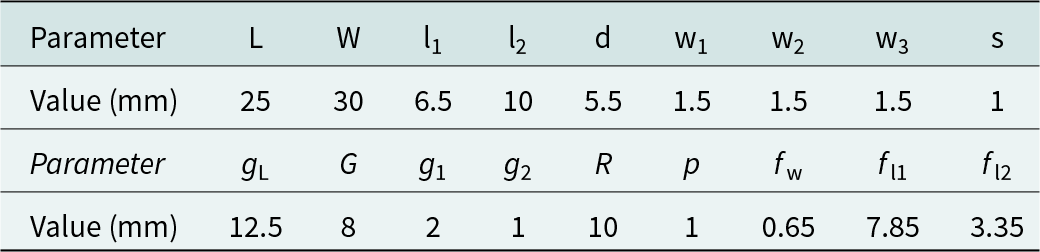
Optimized geometrical parameters

Approximate equivalent circuit
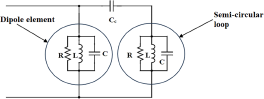
The presented antenna has a quasi-yagi configuration with a dipole radiator as a driven element and a semicircular loop-like director element. The approximate equivalent circuit of the antenna is presented in Fig. 3. The equivalent circuit has two RLCcircuits. One of the RLCs represents the radiation equivalent corresponding to the dipole element while the other RLC represents the radiation emanating from the semicircular loop. Both the RLCs are coupled through a coupling capacitor C c. The radiation from the dipole radiator is modelled as a series RLC circuit where the low-frequency and high-frequency characteristics are dominated by capacitive and inductive reactance respectively. At the resonant frequency, the antenna has a resistive property. Hence at both the resonant frequencies, the net impedance is resistive yielding the dual-band property in the proposed antenna element.
Approximate equivalent circuit of the proposed dual-band antenna.

MIMO antenna development
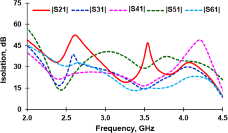
The quasi-yagi antenna is used to develop the flexible MIMO antenna. The antenna elements are distributed along the sides of the hexagon as shown in Fig. 1(a) to realize the MIMO scheme. The antenna elements are edge-to-edge separated by 20 mm and each element is tilted to the corner to realize the proposed six-element MIMO antenna. The ground plane of all the antennas is connected to form a single ground configuration. Further, a hexagonal cavity is created in the middle to run the cables without disrupting the antenna performance. The diagonal length of the proposed six-element MIMO antenna is fixed as 104 mm to keep the mutual coupling better than −20 dB at both lower- and upper-frequency bands. Figure 4 illustrates the isolation characteristics between the different ports of the antenna in the MIMO scheme. The higher isolation between the antenna elements is attributed to the feedlines which are oppositely oriented for each antenna element. This has created only a small surface current penetrating from one antenna to another antenna owing to the repelling characteristics of the electromagnetic fields. The ground plane of the antenna is shaped to reduce spurious currents which has significantly contributed to undesired port-to-port coupling. The shape slot line transition is another contributing factor to the enhanced isolation in the proposed MIMO antenna.
Simulated isolation characteristics between different ports with reference to Port 1.

Results and discussion
S-parameter characterization
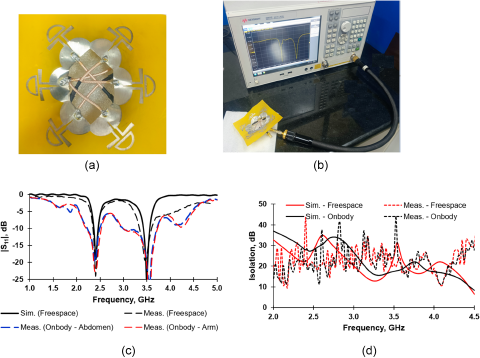
The prototype six-element antenna is developed using the photolithography technique and the prototype is subjected to testing for validation of the simulation results. The photograph of the fabricated six-element MIMO antenna and the measurement setup are shown in Fig. 5(a) and (b) respectively. The antenna is tested using the E5071C ENA series vector network analyzer (VNA) from Keysight. The VNA is fully calibrated using a mechanical calibration kit using the short-open-load-\through method to eliminate the cable-induced losses. The real-time |S11| characteristics of the six-element antenna are described in Fig. 5(c). The measurement results are in good agreement with the simulation results. The measured impedance bandwidth of the antenna is 4.25% and 4.5% at the lower and upper frequency bands.
(a) Prototype of the fabricated antenna (b) Measurement scenario (c) Measured reflection coefficient characteristics (d) Measured isolation (S21) characteristics during free space and on-body conditions.

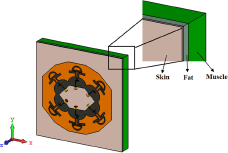
Furthermore, the antenna functionality is tested under on-body conditions. The simulation of the on-body performance is carried out using a three-layer human body model of dimensions 60 × 60 mm with skin (1 mm) on the top, fat (10 mm) in the middle and muscle (100 mm) at the bottom as shown in Fig. 6. The simulated S-parameters under on-body conditions are presented in Fig. 5(c) and (d). Due to the increased complexity involved in the calculation of S-parameters for eight ports and the lack of computational resources, the source considered for the calculation is limited to Port 1 and Port 2. The simulated reflection coefficient characteristics are maintained by introducing an air gap between the antenna and the human body model. The simulated results are validated through experimental measurements. The MIMO antenna is positioned in the arm of a female subject with an arm diameter of 120 mm and the measurements are carried out. To avoid body-induced detuning effects, the human body and the MIMO antenna are separated by 1 cm using a Styrofoam spacer. The sensors in the WBAN come in a module and the module has the embedded electronics over which the antennas are loaded. Hence, in reality, the antennas are not directly positioned on the human body. Considering this, the 1 cm spacing is used. Owing to the high flexibility of the microwave laminate used for the development of the MIMO antenna, the antenna characteristics remained stable under body-induced conditions. The measured S-parameters showed an improved bandwidth compared to the free-space conditions to perform the necessary WBAN communications. The MIMO antenna is further subjected to on-body studies by locating the antenna in the abdomen region of the chosen female subject. The abdomen is chosen since the cluster note can be centrally positioned to establish communication with the neighbour nodes. The measured impedance bandwidth of the MIMO antenna during on-body implementation is 12% and 17% at the lower and upper-frequency bands. The proposed MIMO antenna exhibited good isolation characteristics. The estimated isolation is greater than 20 dB within both the operating bands of the proposed MIMO antenna.
Simulation setup for the on-body analysis.

Radiation characterization
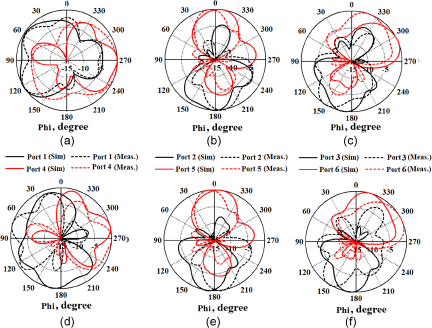
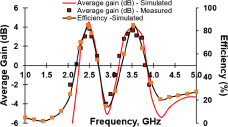
The radiation performance of the proposed six-element MIMO antenna is tested in an anechoic chamber with standard gain horn antennas. The simulated and measured radiation pattern is described in Fig. 7. The radiation pattern depicted in Fig. 7 is the total gain of the antenna calculated along the θ plane. During the measurement of one antenna element, the other antenna elements are terminated in a 50-Ω load. As evident from Fig. 7, the antenna exhibits a directional radiation pattern where the patterns are oriented along different directions for each port resulting in the realization of pattern diversity. The radiation pattern calculated through Port 1 and Port 4 offers antenna coverage along theta = 90 degrees and θ = 270° respectively. The radiation pattern observed from antennas connected to Port 2 and Port 5 cover θ = 0° and θ = 180°, respectively. Slant polarization is realized using antenna excitation through the remaining Port 3 and Port 6 respectively. The antenna hence covers all spatial coordinates with high directionality behavior. Hence it can be concluded that the proposed antenna is a promising candidate for networks that involve the deployment of sensors at different regions in the WBAN scheme. The average gain and total efficiency of the antenna are plotted in Fig. 8. The average gain calculated across all six ports of the MIMO antenna is above 3.5 dBi in both operating bands. The simulated average efficiency of the antenna is greater than 75% at 2.45 GHz and 3.5 GHz. The efficiency of the antenna could not be measured due to the lack of a measurement facility.
Normalized radiation pattern (a) Port 1, 4 at 2.45 GHz (b) Port 2, 5 at 2.45 GHz (c) Port 3, 6 at 2.45 GHz (d) Port 1, 4 at 3.5 GHz (e) Port 2, 5 at 3.5 GHz (f) Port 3, 6 at 3.5 GHz.

Gain and efficiency characteristics of the proposed antenna.

MIMO characterization
The MIMO performance of the proposed six-element antenna is evaluated using the standard equations presented in reference [Reference Sharawi27]. The far-field equation-based calculation for envelope correlation coefficient (ECC, ρe), apparent diversity gain (ADG, Gapp), effective diversity gain (EDG, Geff) and the ratio of mean effective gain (MEG) are calculated and presented. The equations used for the calculation of the above metrics are presented in Equations (1–4).
 \begin{equation}{\rho _e} = \frac{{|\iint {\left( {\mathop {\mathop F\nolimits_1 }\limits^ \to (\theta ,\phi ) \bullet \mathop {\mathop F\nolimits_2 }\limits^ \to (\theta ,\phi )} \right)d\Omega }{|^2}}}{{\iint {|\mathop {\mathop F\nolimits_1 }\limits^ \to (\theta ,\phi ){|^2}d\Omega \iint {|\mathop {\mathop F\nolimits_2 }\limits^ \to (\theta ,\phi ){|^2}d\Omega }}}}\end{equation}
 \begin{equation}{G_{app}} = 10 \times \sqrt {1 - \left| {{\rho _e}} \right|} \end{equation}
 \begin{equation}{G_{eff}} = {\eta _{total}} \times {G_{app}} = {\eta _{total}} \times 10 \times \sqrt {1 - \left| {{\rho _e}} \right|} \end{equation}
 \begin{equation}MEG = \int\limits_0^{2\pi } {\int\limits_0^\pi {\left[ \begin{gathered}
\frac{{XPR}}{{1 + XPR}}{G_\theta }(\theta ,\phi ){P_\theta }(\theta ,\phi ) \hfill \\
+ \frac{1}{{1 + XPR}}{G_\phi }(\theta ,\phi ){P_\phi }(\theta ,\phi ) \hfill \\
\end{gathered} \right]} } \sin \theta d\theta d\phi \end{equation}
In Equation (1), the F 1 and F 2 are the field components along the azimuth (ϕ) and elevation (θ) directions corresponding to the two elements between which the ECC is calculated. The ADG is computed from the ECC using Equation (2). The radiation losses are included in the ADG value as given in Equation (3) to estimate the true diversity performance of the proposed six-element MIMO antenna. The MEG is a critical parameter that is used to establish the antenna gain properties in the MIMO arrangement. The calculation of MEG involves the fixation of cross-polarization ratio (XPR) which is assumed as 0 dB for isotropic conditions while for indoor and outdoor situations, the XPR is fixed as 1 dB and 5 dB, respectively. The power distribution is assumed as a normal distribution with mean and standard deviation equal to 10°.
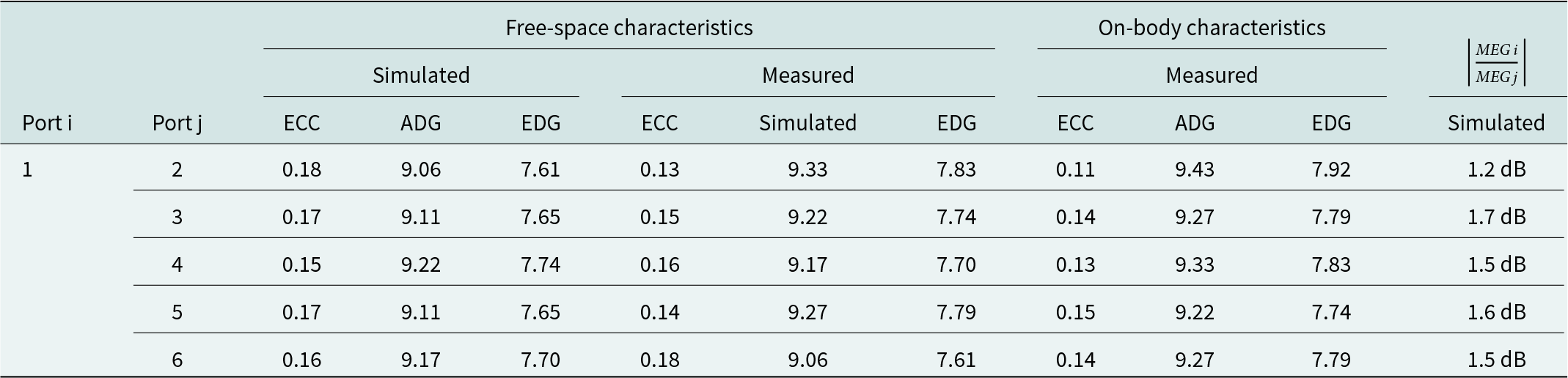
The computed MIMO parameters are tabulated in Table 2. It is inferred that the field equation-based ECC is far less than the acceptable threshold of 0.5. The ADG and EDG values are within the critical limits of 7.0 and the ratio of MEG is much smaller than the acceptable value of 3 dB.
MIMO parameters

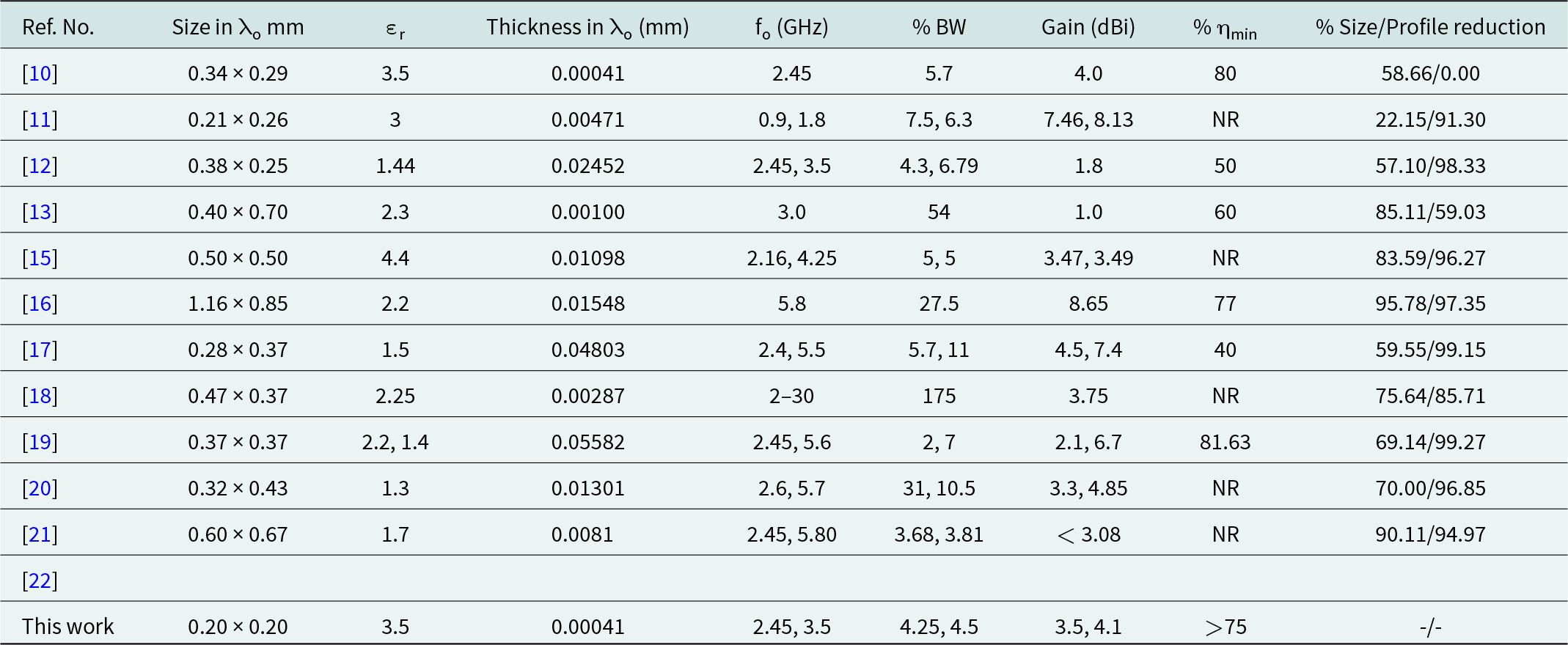
The MIMO antenna performance is compared with the existing research works and presented in Table 3. The following are the merits of the proposed MIMO antenna.
1. The proposed MIMO antenna is a low-profile solution unlike the research presented in references [Reference Shirvani, Khajeh-Khalili and Neshati11–Reference Zhou, Leng, Pan, Abdalla, Novoselov and Hu13] and [Reference Ananda Rao and Bhavani Konkyana15–Reference Ali, Sovuthy, Noghanian, Ali, Abbasi, Imran, Saeidi and Socheatra20]. The percentage profile reduction is more than 90% compared to references [Reference Shirvani, Khajeh-Khalili and Neshati11, Reference Mashagba, Rahim, Adam, Jamaluddin, Yasin, Jusoh, Sabapathy, Abdulmalek, Al-Hadi, Ismail and Soh12, Reference Ananda Rao and Bhavani Konkyana15–Reference Noghanian17] and [Reference Ali, Sovuthy, Noghanian, Ali, Abbasi, Imran, Saeidi and Socheatra20].
2. The proposed antenna has a compact geometry and is more than 50% smaller compared to references [Reference Ashfaq, Faisal, Ullah and Choi10, Reference Mashagba, Rahim, Adam, Jamaluddin, Yasin, Jusoh, Sabapathy, Abdulmalek, Al-Hadi, Ismail and Soh12, Reference Zhou, Leng, Pan, Abdalla, Novoselov and Hu13] and [Reference Ananda Rao and Bhavani Konkyana15–Reference Ali, Sovuthy, Noghanian, Ali, Abbasi, Imran, Saeidi and Socheatra20].
3. Bandwidth performance of the antenna is directly proportional to the substrate thickness. Despite the low-profile nature of the proposed antenna, the on-body bandwidth performance of 12% and 17% at 2.45 GHz and 3.5 GHz.
4. The gain performance of the proposed MIMO antenna is better than references [Reference Ashfaq, Faisal, Ullah and Choi10, Reference Mashagba, Rahim, Adam, Jamaluddin, Yasin, Jusoh, Sabapathy, Abdulmalek, Al-Hadi, Ismail and Soh12, Reference Zhou, Leng, Pan, Abdalla, Novoselov and Hu13, Reference Ananda Rao and Bhavani Konkyana15, Reference Kumkhet, Rakluea, Wongsin, Sangmahamad, Thaiwirot, Mahatthanajatuphat and Chudpooti18] and [Reference Ali, Sovuthy, Noghanian, Ali, Abbasi, Imran, Saeidi and Socheatra20] without using additional electromagnetic bandgap structures and artificial magnetic conductors.
5. The proposed MIMO antenna encompasses more elements unlike references [Reference Mashagba, Rahim, Adam, Jamaluddin, Yasin, Jusoh, Sabapathy, Abdulmalek, Al-Hadi, Ismail and Soh12–Reference Ali, Sovuthy, Noghanian, Ali, Abbasi, Imran, Saeidi and Socheatra20] within a small footprint resulting in improved pattern diversity characteristics.
Comparison with WBAN antennas in literature

Conclusion
The paper introduced a novel flexible dual-band antenna designed specifically for ISM/5G enabled MIMO systems within WBANs. The proposed antenna is engineered to operate effectively across both ISM (2.45 GHz) and 5G frequency bands (3.5 GHz), catering to the evolving needs of modern wireless communication systems. Leveraging its flexibility by a 50 μm thin microwave laminate, the antenna ensures seamless integration into wearable devices, offering enhanced mobility and comfort for users. This paper presented comprehensive simulation results and experimental validations, demonstrating the antenna’s suitability for real-world scenarios with a realized average gain of over 3.5 dBi and efficiency of more than 75%. In summary, the proposed flexible dual-band antenna represents a significant advancement in the development of robust and adaptable communication systems for next-generation WBAN applications.
Data availability statement
Data not available and no new data generated.
Author contributions
Sini Namath – Simulation, Paper Writing and Journal Correspondance; Kumudham Rajamohan – Simulation and Measurements; Ramesh Subramaniam – Main Supervisor, Paper revision; Vijayalakshmi Alagarsamy – Conceptualization, Paper wirting and revisions.
Funding statement
This research is not supported by any funding agencies.
Competing interests
The author declare that there is no conflict of interest in this submission.

Sini Namath is a dedicated researcher and engineer with a strong academic background. She obtained her Bachelor’s degree in Electronics and Communication Engineering from Cochin University of Science and Technology (CUSAT). Building upon her foundation, she went on to complete her Master’s degree in Communication Engineering from the University of Calicut. Currently, she is pursuing her Ph.D. degree in an exciting journey of research at VEL’S University, Chennai. Throughout her academic and professional career, Sini has showcased a passion for advancing knowledge in the fields of Antennas & Propagation and Biomedical Engineering. Her research contributions have been recognized in prestigious Scopus indexed journals, where her papers have been published.

Kumudham Rajamohan is working as Associate professor in Department of Electronics and Communication Engineering at Vels Institute of Science Technology and Advanced studies (VISTAS), Chennai. She completed her B.E. Electronics and Communication Engineering in the year 2002 under Periyar university and M.E. (Communication Systems) in the year 2013 under Anna university. She has completed her M.B.A (HRM) in Indira Gandhi National Open University, 2008. She completed her Ph.D. in VISTAS in the year 2020. She has 13+ years of experience (Teaching, Research and Industrial). Her area of interest is Image processing, Machine learning, Biomedical applications, Electromagnetic Waves. She has published papers in IEEE Explore Digital Library, Web of science, Scopus indexed and other reputed journals. She has won the best paper award for her research work in the International Conference, VICFCNT 2021, SIST-SHE 2022. She has published 3 patents. She is a member of Editorial Board in International Journal of Engineering Trends and Technology.

Ramesh Subramaniam received his B.E., in Electronics and Communication Engineering from University of Madras, M.Tech., in Communication Engineering from VIT University, Vellore and received his Ph.D. degree on from SRM University, Chennai, in April 2001, June 2004 & March 2015 respectively. He is currently, working as a Professor in the department of Electronics and Communication Engineering, SRM Valliammai Engineering College, Chennai with experience of 21.9 years. He is a senior member (S’10-M’17-SM’18) of IEEE Antennas & Propagation Society, Life member in IETE, ISTE, SEMCE, BES, CSI. He has authored 20 papers in SCI journals, 38 papers in Scopus journals, 54 papers in international/national conferences cum journals, 5 chapters and 2 patents. He is having one international patent and one national patent. Centre for Research, Anna University, Chennai recognized as a Supervisor for guiding Ph.D. and M.S. (By Research) scholars of this university under the Faculty of Information & Communication Engineering in the field of Antennas, RF & Microwave, Wireless Communication and Wireless Networks. He is supervised 5 & supervising 5 research scholars in the field of antennas & RF Filter under Anna University, Chennai. He is associated with IEEE AP-S Madras chapter as a member in executive committee during 2018-2019 and IEEE MTT-S Madras Chapter for the year 2017. Associating with IETE Chennai Center Executive Council as co-opted member from May 2021. Received “ISTE Best Chapter Chairman Award for Engineering College” award during the 19th ISTE TN section students Convention-2019. He acted as a reviewer for various reputed international journals and conferences.

Vijayalakshmi Alagarsamy received her B.E. in Electronics and Communication Engineering from Madurai Kamaraj University, M.E. in Embedded System Technologies and Ph.D. in Information and Communication Engineering from Anna University, Chennai, India. She is currently working as Professor in the Department of Electronics and Communication Engineering, Vels Institute of Science, Technology and Advanced Studies, Chennai. India. She has rich teaching and research experience of 22 years. Her area of research interest includes 5G Internet of Things, Deep learning, Robotics, Embedded System Design and Wireless AdHoc & Sensor Networks. She is a recognized research supervisor in VISTAS. She has produced two Ph D under her guidance and guiding seven research scholars. She is DC member for research scholars from various reputed universities including Anna University. She has received Faculty Excellence Award twice in recognition of her Meritorious role in Academic and Research Activities. She has published several Journal articles and book chapters in reputed journals/publishers including SCI, WoS and Scopus. She has 3 Indian Patents which are published, one Australian Patent, 4 design patents which were granted. She is presently an Editorial member of International Journal of Computer Networks & Communications (IJCNC). She has been a reviewer member for many reputed journals, International and National Conferences. She is also served as Chief Guest for Conferences conducted in reputed institutions and a member in many professional societies including IETE-Fellow member, MISTE- Life member, CSTA and IAENG-member.