





Introduction
Symptoms of attention-deficit / hyperactivity disorder (ADHD) are heterogeneous and fall onto a continuum with no clearly defined cut-off point of diagnostic severity. Moreover, ADHD symptom domains, particularly hyperactivity–impulsivity, can be understood as part of a broader externalizing spectrum where the core component is behavioral disinhibition (Peng et al., Reference Peng, Stanton, Dominguez-Alvarez and Watts2024; Perkins et al., Reference Perkins, Joyner, Foell, Drislane, Brislin, Frick, Yancey, Soto, Ganley, Keel, Sica, Flor, Nees, Banaschewski, Bokde, Desrivières, Grigis, Garavan, Gowland, Heinz, Ittermann, Martinot, Paillère Martinot, Artiges, Papadopoulos Orfanos, Poustka, Hohmann, Fröhner, Smolka, Walter, Whelan, Schumann and Patrick2022). Also relating to disinhibition, clinical ADHD is associated with increased risk for antisocial personality disorder (ASPD) (Storebø & Simonsen, Reference Storebø and Simonsen2016) and criminality (Erskine et al., Reference Erskine, Norman, Ferrari, Chan, Copeland, Whiteford and Scott2016; Mohr-Jensen & Steinhausen, Reference Mohr-Jensen and Steinhausen2016). Even subclinical symptoms of ADHD in adolescence appear to be a risk factor for antisocial behavior later in life (Pardini & Fite, Reference Pardini and Fite2010; Selinus et al., Reference Selinus, Molero, Lichtenstein, Larson, Lundström, Anckarsäter and Gumpert2015). However, not all adolescents with subclinical ADHD symptoms develop antisocial tendencies later in life, so more research on the nature of this association as well as risk and protective factors (Farrington et al., Reference Farrington, Ttofi and Piquero2016) is needed.
First, it remains unclear whether subclinical ADHD symptoms are associated with antisocial behavior independently of shared familial factors. The externalizing psychopathology spectrum in general has a significant genetic background (Beaver et al., Reference Beaver, Nedelec, Rowland and Schwartz2012; Tielbeek et al., Reference Tielbeek, Uffelmann, Williams, Colodro-Conde, Gagnon, Mallard, Levitt, Jansen, Johansson, Sallis, Pistis, Saunders, Allegrini, Rimfeld, Konte, Klein, Hartmann, Salvatore and Posthuma2022). On the other hand, ADHD symptoms may also be causally related to an increased risk for antisocial behavior, as ADHD medication use has been found to be associated with a reduced risk of criminality (Lichtenstein et al., Reference Lichtenstein, Halldner, Zetterqvist, Sjölander, Serlachius, Fazel, Långström and Larsson2012; Zhang et al., Reference Zhang, Zhu, Sjölander, Nourredine, Li, Garcia-Argibay, Kuja-Halkola, Brikell, Lichtenstein, D’Onofrio, Larsson, Cortese and Chang2025). Further, a population-based study of twin pairs determined screen-positive for ADHD suggested that ADHD symptoms were associated with later antisocial behavior over and above psychiatric comorbidities (Selinus et al., Reference Selinus, Molero, Lichtenstein, Larson, Lundström, Anckarsäter and Gumpert2015). Twin studies can provide information on the potential role of familial background (i.e., shared genetic and environmental factors) in the relationship between ADHD symptoms and antisocial behavior. Currently, population-based twin research on the topic is scarce, and, to our knowledge, no studies have investigated the risk for future antisocial behavior by directly comparing co-twins in the general population differing in subclinical ADHD symptoms. Such co-twin designs can clarify whether ADHD symptoms have an independent association with future antisociality or whether shared familial factors explain the association (McGue et al., Reference McGue, Osler and Christensen2010). This information could be useful, for example, in designing and targeting interventions. In a world of limited resources, it is important to know whether interventions aiming to reduce later antisocial behavior should target ADHD symptoms specifically (such as ADHD medication or neuropsychological rehabilitation) or more generally address the wellbeing of families with a genetic predisposition to ADHD symptoms.
Second, it is not well known whether and how other individual characteristics may counteract the elevated risk for antisocial behavior in the presence of ADHD symptoms. Potential factors moderating the association between a risk factor (e.g., ADHD symptoms) and antisocial behavior can be examined using interaction models. For example, in the social compensation model of biopsychosocial criminology, protective factors are defined as positive influences counteracting biopsychosocial risk factors (Barnes et al., Reference Barnes, Raine and Farrington2020). In the case of ADHD symptoms, one potential protective factor could be cognitive performance. General cognitive ability (i.e., intelligence) seems to act both as a protective factor and a risk factor: there is evidence that higher intelligence protects against criminal offending in high-risk populations (Oskarsson et al., Reference Oskarsson, Tuvblad, Lichtenstein, Larsson and Latvala2025; Ttofi et al., Reference Ttofi, Farrington, Piquero, Lösel, DeLisi and Murray2016), while poor cognitive ability increases the risk for future criminality in the general population (Frisell et al., Reference Frisell, Pawitan and Långström2012; Schwartz et al., Reference Schwartz, Savolainen, Aaltonen, Merikukka, Paananen and Gissler2015) as well as in adolescents with externalizing symptoms (Border et al., Reference Border, Corley, Brown, Hewitt, Hopfer, Stallings, Wall, Young and Rhee2018; Breuer et al., Reference Breuer, von Wirth, Mandler, Schürmann and Döpfner2022). In line with the (social) compensation model (Barnes et al., Reference Barnes, Raine and Farrington2020), it could be hypothesized that better cognitive performance acts as an interactive protective factor against future antisociality, counteracting the effects of adolescent ADHD symptoms. However, there are currently no population-based studies directly exploring this potential interaction.
Besides general cognitive ability, executive functions (EFs) could moderate the relationship between ADHD symptoms and antisocial behavior, with the effects potentially transmitted via factors such as improved academic outcomes and reduced risk of impulsive crimes. EFs are a set of cognitive abilities that are not fully captured by typical intelligence measures (Friedman & Miyake, Reference Friedman and Miyake2017). They include planning, problem-solving, working memory, inhibitory control, and cognitive flexibility, developing through childhood into young adulthood (Anderson et al., Reference Anderson, Anderson, Northam, Jacobs and Catroppa2001; Theodoraki et al., Reference Theodoraki, McGeown, Rhodes and MacPherson2020). EF deficits are at the core of ADHD: poorly developed inhibitory control and planning skills closely link to behavioral disinhibition, the shared psychopathological component of ADHD and ASPD (Knecht et al., Reference Knecht, Alvaro, Martinez-raga and Balanza-martinez2015; Miura & Fuchigami, Reference Miura and Fuchigami2017; Pingault et al., Reference Pingault, Côté, Lacourse, Galéra, Vitaro and Tremblay2013; Storebø & Simonsen, Reference Storebø and Simonsen2016). Meta-analyses have also suggested that ADHD symptoms may moderate the association between EF test performance and antisocial behavior (Ogilvie et al., Reference Ogilvie, Stewart, Chan and Shum2011). However, it remains unclear whether the risk for future antisocial behavior associated with ADHD symptoms is related to EF deficits specifically (rather than e.g., emotional dysregulation), and, accordingly, whether stronger EF abilities could be protective against antisocial development among those with subclinical ADHD symptoms.
We used data from a longitudinal population-based twin study to explore the association between subclinical ADHD symptoms in adolescence and later antisocial behavior. We aimed to clarify, first, whether the associations are independent of shared familial factors, and second, whether general cognitive ability and EF performance moderate the associations. While participants in general population samples typically show relatively low levels of antisocial behavior, our data include a long-term follow-up from adolescence to early midlife, covering different forms of antisocial behavior as well as relevant risk factor measures in a twin study design, providing a unique possibility to study the association between subclinical ADHD symptoms and the development of antisocial behavior. Thus, the research questions of our study were as follows:
-
1. Are adolescent ADHD symptoms associated with symptoms of ASPD in young adulthood and self-reported criminal behavior across the lifespan?
Hypothesis 1: Having more ADHD symptoms in adolescence is associated with a higher number of ASPD symptoms in young adulthood and more self-reported criminal behavior across the lifespan.
-
2. Are the associations of adolescent ADHD symptoms with later symptoms of ASPD and self-reported criminal behavior independent of shared familial factors (i.e., genetic and environmental factors shared between co-twins)?
Hypothesis 2: The associations are not completely explained by shared familial factors, i.e., we expect an association between adolescent ADHD symptoms and later antisocial behavior independent of genetic and environmental factors shared by co-twins.
-
3. Does cognitive performance moderate the associations of adolescent ADHD symptoms with later symptoms of ASPD and overall criminal behavior?
Hypothesis 3: Cognitive performance moderates the associations so that individuals with ADHD symptoms combined with higher cognitive performance have lower risk for later antisocial behavior compared to those with lower cognitive performance.
Method
Participants
The data were drawn from the population-based, longitudinal FinnTwin12 (FT12) study, which includes repeated questionnaires, inventories, measurements of neuropsychological test performance, and polydiagnostic psychiatric interviews from monozygotic (MZ) and dizygotic (DZ) twin pairs (Rose et al., Reference Rose, Salvatore, Aaltonen, Barr, Bogl, Byers, Heikkilä, Korhonen, Latvala, Palviainen, Ranjit, Whipp, Pulkkinen, Dick and Kaprio2019). The study included both same-sex and opposite-sex twin pairs. The overall aim of FT12 is to examine genetic and environmental determinants of health-related behaviors, particularly the use and abuse of alcohol, and the role of these behaviors in health in adulthood. FT12 has a multi-staged sampling design. The first-stage study was an epidemiological investigation enrolling all eligible 11–12-year-old twins born in Finland during 1983–1987 as well as their parents. Questionnaire-based research was conducted at multiple stages during the follow-up: the participants were sent questionnaires at ages 11–12, 14, 17, 20–24 (hereafter, young adulthood), and 35–40 (hereafter, early midlife). As the second stage, a subset of twins was invited to participate in a more intensive study at ages 14 and 20–24. Most of the intensively studied subset were selected at random, but the sample was enriched with twins at elevated familial risk for alcoholism (Rose et al., Reference Rose, Salvatore, Aaltonen, Barr, Bogl, Byers, Heikkilä, Korhonen, Latvala, Palviainen, Ranjit, Whipp, Pulkkinen, Dick and Kaprio2019).
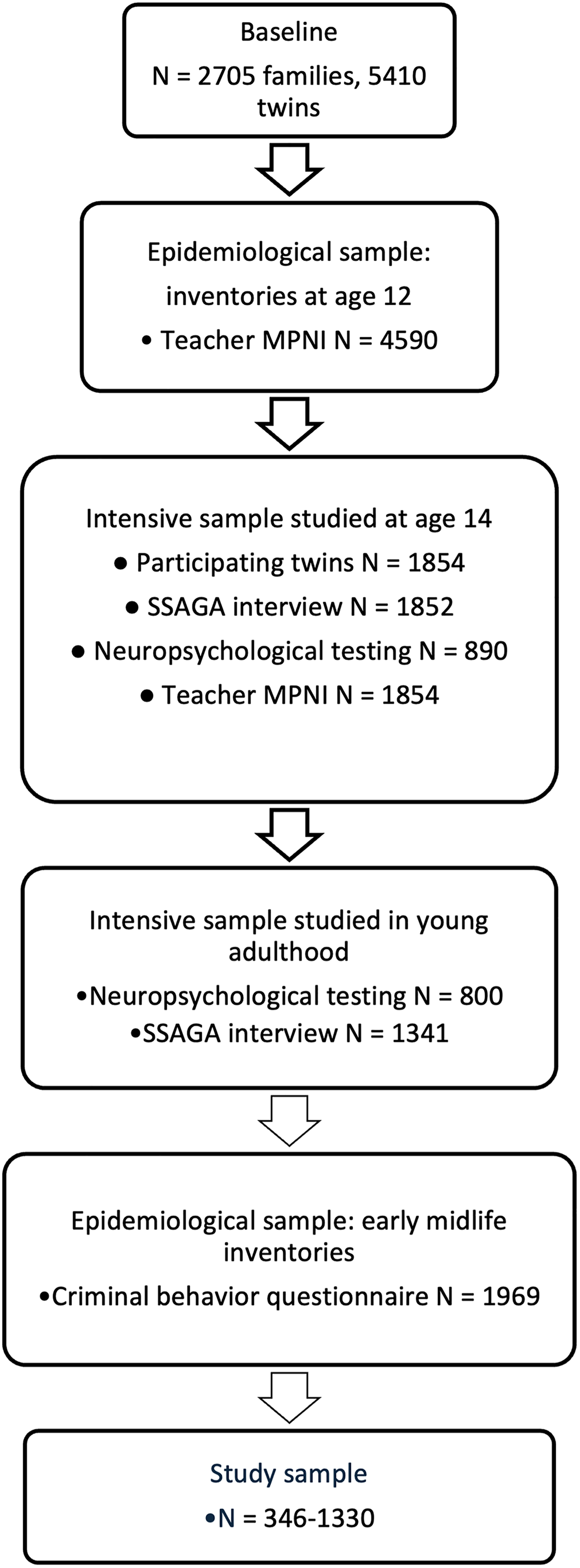
In the present study, we used data from this intensively studied subsample at four measurement points: at ages 12 and 14, in young adulthood, and in early midlife (see Figure 1 for details). The measures considered in the present study included teacher ratings and polydiagnostic interview data at age 14, neuropsychological testing and a polydiagnostic interview in young adulthood, and an inventory including a criminal behavior questionnaire in early midlife; additionally, supplementary analyses included teacher ratings at age 12 as well as neuropsychological testing and information on academic performance at age 14 (Cooke et al., Reference Cooke, Lumpe, Stephenson, Urjansson, Aliev, Palviainen, Brislin, Piirtola, Rabinowitz, Latvala, Barr, Vuoksimaa, Maes, Viken, Rose, Kaprio, Dick, Aaltonen and Salvatore2025). The participation rate in the epidemiological sample decreased in early midlife, limiting the sample size of criminal behavior data (see Figure 2 for details on participant flow). All participants were Finnish-speaking and Swedish-speaking Finns, which was largely representative of Finland’s population at the time. In 88% of the participants, zygosity was determined using DNA markers. For those without DNA data, zygosity was assessed using a validated questionnaire (Sarna et al., Reference Sarna, Kaprio, Sistonen and Koskenvuo1978) with additional questions asked of young twins (Goldsmith, Reference Goldsmith1991).
Timeline of relevant measurement points in the FinnTwin12 study used in the present study. Note: DSM = the Diagnostic and Statistical Manual of Mental Disorders; ASPD = antisocial personality disorder; MPNI = the Multidimensional Peer Nomination Inventory; SSAGA = the Semi-Structured Assessment for Genetics of Alcoholism; TMT = Trail Making Test.

Participant flow of the study sample.
The ethics committee of the Department of Public Health of the University of Helsinki (Helsinki, Finland) and the Institutional Review Board of Indiana University (Bloomington, Indiana, USA) approved the FT12 study protocol from the start of the cohort. The ethical approval of the HUS Regional Committee on Medical Research Ethics (Helsinki, Finland) is the most recent and covers the most recent data collection (early midlife) (HUS/2226/2021, dated September 22, 2021). Parents gave permission to assess their children and to contact their teachers, and the participants gave informed consent to participate later as adults.
Measures
Diagnostic and Statistical Manual III-R (DSM)-based symptoms of ADHD were assessed with the Semi-Structured Assessment for Genetics of Alcoholism (SSAGA; Bucholz et al., Reference Bucholz, Cadoret, Robert Cloninger, Dinwiddie, Hesselbrock, Nurnberger, Reich, Schmidt, Schuckit and Hesselbrock1994) interview at age 14. Similarly, adult antisocial behavior was assessed with the SSAGA interview using DSM-IV-criteria for ASPD in young adulthood. SSAGA provides symptom counts and diagnoses for a range of psychiatric disorders, and criteria for ADHD and ASPD are listed in Supplements 1 and 2, respectively. Even though diagnostic criteria for ADHD have changed between DSM-III-R and the current version DSM-5, continuity between different DSM systems is high and the core of the disorder has remained unchanged (Biederman et al., Reference Biederman, Faraone, Weber, Russell, Rater and Park1997).
Inattention and hyperactivity–impulsivity were assessed with the Multidimensional Peer Nomination Inventory (MPNI; Pulkkinen et al., Reference Pulkkinen, Kaprio and Rose1999) by the twins’ teachers at age 12 and age 14. Teacher-assessments of inattention and hyperactivity–impulsivity have previously been shown to have the best predictive value in this sample compared to parent-, self- or co-twin reports (Ketvel et al., Reference Ketvel, Vuoksimaa, Pulkkinen, Rose, Vedenkannas, Rapeli, Raevuori and Latvala2024). The MPNI is an inventory covering different externalizing and internalizing behaviors, and the scales used in this study have been shown to have high reliability and good discriminative and concurrent validity (Pulkkinen et al., Reference Pulkkinen, Kaprio and Rose1999). The MPNI included seven items measuring hyperactivity–impulsivity (e.g., “Is restless”) and four items measuring inattention (e.g., “Cannot concentrate on anything”). The items in MPNI were presented as statements, which the informant rated on a 4-point scale where 0 = does not apply, 1 = applies sometimes, but not consistently, 2 = certainly applies, but not in a pronounced way, and 3 = applies in a pronounced way. A mean (ranging from 0 to 3) of the items was calculated separately for inattention and hyperactivity–impulsivity. Individual MPNI items are provided in Supplement 3.
Criminal behavior was assessed with self-reports in early midlife: participants answered ten yes/no questions on whether they had ever committed (1) speeding, (2) illegally downloading material from the Internet, (3) theft, (4) selling illegal drugs, (5) burglary, (6) robbery, (7) assault, or (8) sexual assault. Additionally, the participants reported on their history of (9) criminal convictions and (10) incarceration. If the participant answered “no” to the first five questions regarding less severe crimes, the remaining five questions regarding more serious offences were skipped.
Cognitive performance was assessed with cognitive tests in young adulthood. We created two separate measures for intelligence and EF performance (see Statistical analyses for details on the variables). The neuropsychological test battery included the California Stroop Test (Homack & Riccio, Reference Homack and Riccio2004), the Trail Making Test (Reitan, Reference Reitan1955), three subtests of the Wechsler Adult Intelligence Scale Revised (Block Design, Vocabulary, and Digit-Symbol Test) and the Digit Span test from the Wechsler Memory Scale Revised. The California Stroop Test included four subtests: color naming (part 1), word reading (part 2), the traditional Stroop task (part 3) measuring inhibition (word-color interference task), and an additional task (part 4) measuring set-shifting and inhibition, where the participant is asked to alternate between naming the color of the ink and reading the word aloud. The Trail Making Test (TMT) is widely used in clinical neuropsychology and typically includes two subtests: the A part measuring processing speed, visual search, and simple attention, and the B part measuring set-shifting (Lezak, Reference Lezak2004). In all subtests of the TMT and Stroop, performance time was used as a measure of cognitive performance, so that greater values indicated worse performance on the task. The Wechsler Scale subtests (Vocabulary, Block Design, Digit-Symbol Test, and Digit Span) are standard clinical neuropsychology tests and have been widely used in studies examining ADHD symptoms, antisocial personality traits, and criminal behavior (Basten et al., Reference Basten, van der Ende, Tiemeier, Althoff, Rijlaarsdam, Jaddoe, Hofman, Hudziak, Verhulst and White2014; Hare et al., Reference Hare, Leslie, Bodell, Kaufman, Morton, Nicolson, Kelley, Jones, Ayub, Crosbie, Schachar, Anagnostou, Segers and Stevenson2024; Isen, Reference Isen2010; Lau et al., Reference Lau, Bagby, Pollock and Quilty2023). Vocabulary is a test of verbal reasoning, specifically assessing knowledge of meanings of words, and poorer performance in the test has been associated with antisocial behavior (Isen, Reference Isen2010). Block Design measures visuospatial problem-solving, Digit-Symbol Test processing speed and visuomotor ability, and Digit Span auditory working memory. Higher scores indicated better performance in all Wechsler Scale subtests.
Statistical analyses
Population-level models
Mean counts of inattention and hyperactivity–impulsivity from the teacher-rated MPNI as well as DSM-criteria of ADHD from the SSAGA interview at age 14 were treated as continuous variables in the analyses. Diagnostic criteria for ASPD from the young adult version of SSAGA (ranging from 0 to 7) were treated as a count variable. A sum score of different types of crimes reported in the self-report questionnaire (ranging from 0 to 10) was counted to depict overall criminal behavior across the lifespan and was treated as a count variable. Due to the structure of the criminal behavior questionnaire, missing values in the items depicting more serious crimes were assumed to indicate not having committed such crimes and were recoded into 0. Additionally, a dichotomous measure of violent crimes was created based on three separate items of the criminal behavior questionnaire: 1 denoted that the participant had answered “yes” to committing robbery, assault, or sexual assault, and 0 denoted answering “no” to all three questions. Lastly, the item concerning criminal convictions was used as a separate dichotomous variable, where 0 denoted no self-reported convictions and 1 denoted one or more court convictions across the lifespan.
To investigate the associations of inattention and hyperactivity–impulsivity as well as DSM-based symptoms of ADHD at age 14 with symptoms of ASPD in young adulthood and self-reported criminal behavior across the lifespan, multiple sets of Poisson and logistic regression analyses were conducted. Each ADHD symptom measure was used to predict the outcome measures in separate models: Poisson regression models were used for the counts of symptoms of ASPD in young adulthood and overall self-reported crimes across the lifespan. Additionally, two sets of logistic regression models were conducted to predict the dichotomous measures of self-reported violent crimes and criminal convictions. Incidence rate ratios (IRRs) and odds-ratios (ORs) were reported for each Poisson and logistic regression model, respectively.
In these population-level regression models, twins were analyzed as individuals but cluster-robust standard errors were used to account for the sampling of twin pairs. The continuous variables for symptoms of ADHD and ASPD as well as teacher-rated inattention and hyperactivity–impulsivity were standardized, and each model was adjusted for sex. To maximize sample size, the regression analyses were performed using all available data, meaning that partly different participants may have contributed to different regression models. To ensure this did not affect our results, the main models were also conducted using only participants with non-missing data on all ADHD measures in adolescence and cognitive measures in young adulthood. To correct for Type II errors, a false discovery rate (FDR) correction using the Benjamini–Hochberg procedure (Glickman et al., Reference Glickman, Rao and Schultz2014) with a 5% FDR was performed for all p-values of the population-level, within-pair, and interaction regression models.
Within-pair models
First, we examined within-pair intra-class correlations in all ADHD measures, ASPD symptoms, and overall criminality to explore the similarity of co-twins in these variables. Second, we examined the number of co-twins discordant for ADHD symptoms and calculated the mean differences between co-twins in all ADHD measures. Third, to investigate the contribution of familial (i.e., genetic and shared environmental) factors to the association of adolescents’ ADHD symptoms with ASPD symptoms in young adulthood and self-reported criminal behavior over the lifespan, we performed fixed-effects Poisson regression analyses within twin pairs comparing co-twins differing in teacher-rated inattention and hyperactivity–impulsivity as well as DSM-symptoms of ADHD. By design, these analyses account for factors that are constant within twin pairs (Allison, Reference Allison2009), that is, all genetic and environmental factors shared between co-twins. MZ twins share 100% of their genome, while DZ twins on average share 50% of segregating genes, and both twin types equally share their rearing environment. Heuristically, these models analyze the association of within-pair differences in ADHD symptoms with within-pair differences in antisocial behavior, thus ruling out all factors that are shared by co-twins, whether measured or unmeasured. The fixed-effects Poisson models were estimated using the xtpoisson command (with the fe option) in Stata 18. Results from the within-pair models were then compared to individual-level regression models to examine whether previously observed associations attenuate when all factors shared between co-twins are controlled. If associations were attenuated, this would be interpreted as familial factors contributing to the association observed in individual-level models (McGue et al., Reference McGue, Osler and Christensen2010). All twins contributed to these models, but the estimates are based only on twin pairs in which co-twins differ in the independent variable (see e.g., Gunasekara et al., Reference Gunasekara, Richardson, Carter and Blakely2014). We conducted separate models for MZ and DZ twin pairs as well as a combined model with both zygosities.
Interaction models
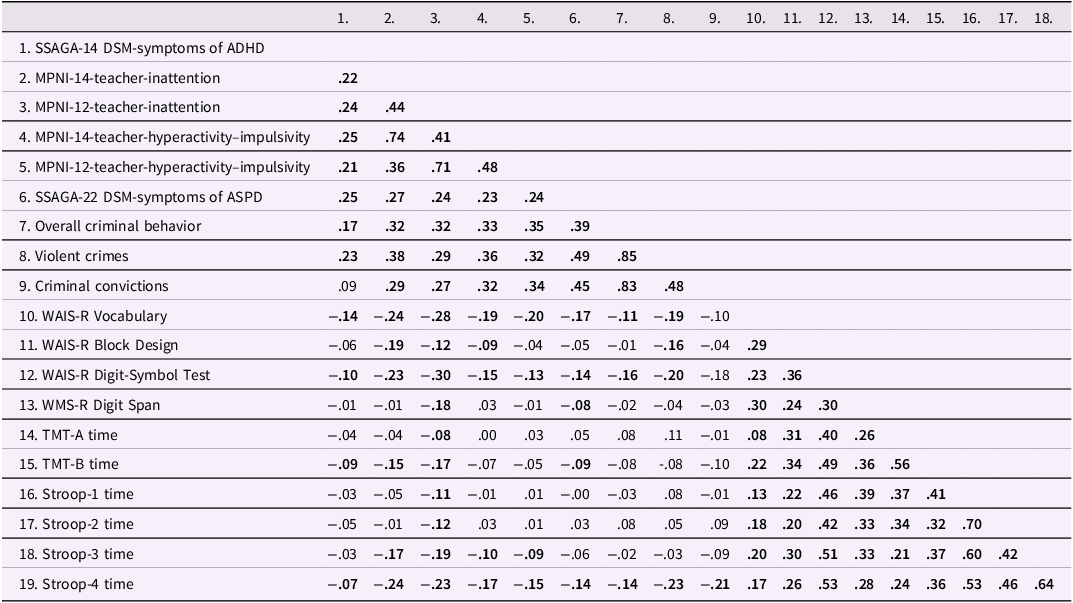
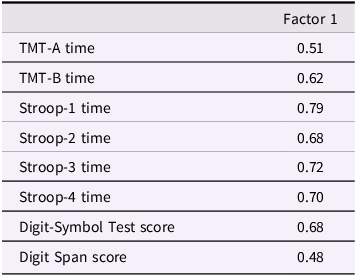
To investigate potential protective moderating effects of cognitive performance in young adulthood, two cognitive performance variables were used in interaction analyses: an estimated full-scale IQ variable and a factor score variable for EF performance. Initially, to explore latent constructs behind cognitive measures, correlations between all tests were explored (see Table 1) and an exploratory factor analysis was performed for all cognitive test measures (see Supplementary Table 1). Since Vocabulary and Block Design, typically high-loading measures on the general intelligence factor, had comparatively weaker loadings on the primary factor, we treated them separately and created a factor score variable for EF performance using all TMT and Stroop subtests, Digit-Symbol Test, and Digit Span (see Table 2 for details). Vocabulary and Block Design were used separately as a measure of general intelligence by calculating a proxy full-scale IQ measure. This was done because a factor score variable could not be derived as at least three indicators (observed variables) are required for model identifiability in factor analysis. First, raw scores of each subtest were transformed into age-adjusted standardized scores based on the Finnish WAIS-R normative data. Next, to derive the estimated verbal and performance IQ standardized scores, we multiplied the Vocabulary score by 6 (since WAIS-R consists of 6 verbal subtests) and the Block Design score by 5 (since WAIS-R consists of 5 performance subtests). Similarly, an estimated full-scale IQ score was calculated, and this score was transformed into an IQ score based on the WAIS-R manual (Wechsler, Reference Wechsler1981).
Pairwise and polychoric/polyserial (for dichotomous variables) correlations between different ADHD symptom measures, symptoms of ASPD, criminal behavior measures, and all original cognitive measures

Table 1. Long description
The table presents pairwise and polychoric/polyserial correlations between different ADHD symptom measures, symptoms of ASPD, criminal behavior measures, and all original cognitive measures. It consists of 19 rows and 18 columns. The rows are labeled with different measures and tests, including SSAGA-14 DSM-symptoms of ADHD, MPNI-14-teacher-inattention, MPNI-12-teacher-inattention, MPNI-14-teacher-hyperactivity-impulsivity, MPNI-12-teacher-hyperactivity-impulsivity, SSAGA-22 DSM-symptoms of ASPD, overall criminal behavior, violent crimes, criminal convictions, WAIS-R, WMS-R Digit Span, TMT-A time, TMT-B time, Stroop-1 time, Stroop-2 time, Stroop-3 time, and Stroop-4 time. The columns are numbered from 1 to 18. Each cell in the table contains a correlation value. Row 1: SSAGA-14 DSM-symptoms of ADHD. Row 2: MPNI-14-teacher-inattention, .22. Row 3: MPNI-12-teacher-inattention, .24, .44. Row 4: MPNI-14-teacher-hyperactivity-impulsivity, .25, .74, .41. Row 5: MPNI-12-teacher-hyperactivity-impulsivity, .21, .36, .71, .48. Row 6: SSAGA-22 DSM-symptoms of ASPD, .25, .27, .24, .23, .24. Row 7: Overall criminal behavior, .17, .32, .32, .33, .35, .39. Row 8: Violent crimes, .23, .38, .29, .36, .32, .49, .85. Row 9: Criminal convictions, .09, .29, .27, .32, .34, .45, .83, .48. Row 10: WAIS-III Vocabulary, -.14, -.24, -.28, -.19, -.20, -.17, -.11, -.19, -.10. Row 11: WAIS-III Block Design, -.06, -.19, -.12, -.09, -.04, -.05, -.01, -.16, -.04, .29. Row 12: WAIS-III Digit-Symbol Test, -.10, -.23, -.30, -.15, -.13, -.14, -.16, -.20, -.18, .23, .36. Row 13: WMS-R Digit Span, -.01, -.01, -.18, .03, -.01, -.08, -.02, -.04, -.03, .30, .24, .30. Row 14: TMT-A time, -.04, -.04, -.08, .00, .03, .05, .08, .11, -.01, .08, .31, .40, .26. Row 15: TMT-B time, -.09, -.15, -.17, -.07, -.05, -.09, -.08, -.10, .22, .34, .49, .36, .56. Row 16: Stroop-1 time, -.03, -.05, -.11, -.01, .01, -.00, -.03, .08, -.01, .13, .22, .46, .39, .41. Row 17: Stroop-2 time, -.05, -.01, -.12, .03, .01, .03, .08, .05, .09, .18, .20, .42, .33, .34, .70. Row 18: Stroop-3 time, -.03, -.17, -.19, -.10, -.09, -.06, -.02, -.03, .09, .20, .30, .51, .33, .21, .37, .60. Row 19: Stroop-4 time, -.07, -.24, -.23, -.17, -.15, -.14, -.23, -.21, .17, .26, .53, .28, .24, .36, .53, .46, .64.
Note: Bold font = p < .05, for polychoric and polyserial correlations Pearson chi2 likelihood was used as a test of statistical significance.
N = 715–1,417.
All participants with non-missing data on relevant measures are included.
DSM = the Diagnostic and Statistical Manual of Mental Disorders; ADHD = attention-deficit/hyperactivity disorder; ASPD = antisocial personality disorder; MPNI = the Multidimensional Peer Nomination Inventory; SSAGA = the Semi-Structured Assessment for Genetics of Alcoholism; WAIS-R = Wechsler Intelligence Scale Revised; TMT = Trail Making Test.
Factor loadings of the factor variable of EF performance in young adulthood
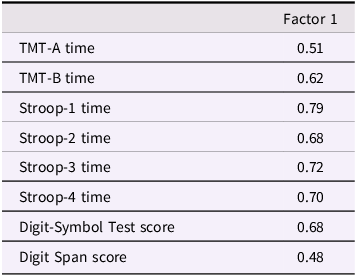
Table 2. Long description
A table with two columns and eight rows. The first column lists cognitive tests: TMT-A time, TMT-B time, Stroop-1 time, Stroop-2 time, Stroop-3 time, Stroop-4 time, Digit-Symbol Test score, and Digit Span score. The second column, labeled Factor 1, shows the corresponding factor loadings: 0.51, 0.62, 0.79, 0.68, 0.72, 0.70, 0.68, and 0.48 respectively.
These two variables were then used in separate interaction regression models, where each ADHD measure, cognitive performance (estimated IQ / EF performance) measure, and the interaction between ADHD measures and cognitive performance measures were used to predict ASPD symptoms in young adulthood and overall criminal behavior across the lifespan. In the interaction and within-pair models, we included only the count measures of ASPD symptoms and overall criminal behavior, because they offered greater variability than the dichotomous outcomes of violent crime and criminal convictions.
Supplementary analyses
A set of supplementary analyses was conducted to examine whether the results were affected by the selection of the sample, different measurement points, and sources of information. First, all main analyses were conducted using only participants with non-missing data on all ADHD measures in adolescence and cognitive performance data in young adulthood (in contrast to using all available data). Second, teacher-rated inattention and hyperactivity–impulsivity at age 12 (in contrast to age 14 in the main analyses) were used in Poisson and logistic regression models to predict later symptoms of ASPD and criminal behavior similarly to the main analyses. Third, EF performance and academic performance at age 14 (in contrast to cognitive performance in young adulthood) were used in a set of interaction regression models to investigate the potential interaction effects with ADHD measures (see Supplement 4 for details on the measures and variables).
Results
Sample characteristics and correlations
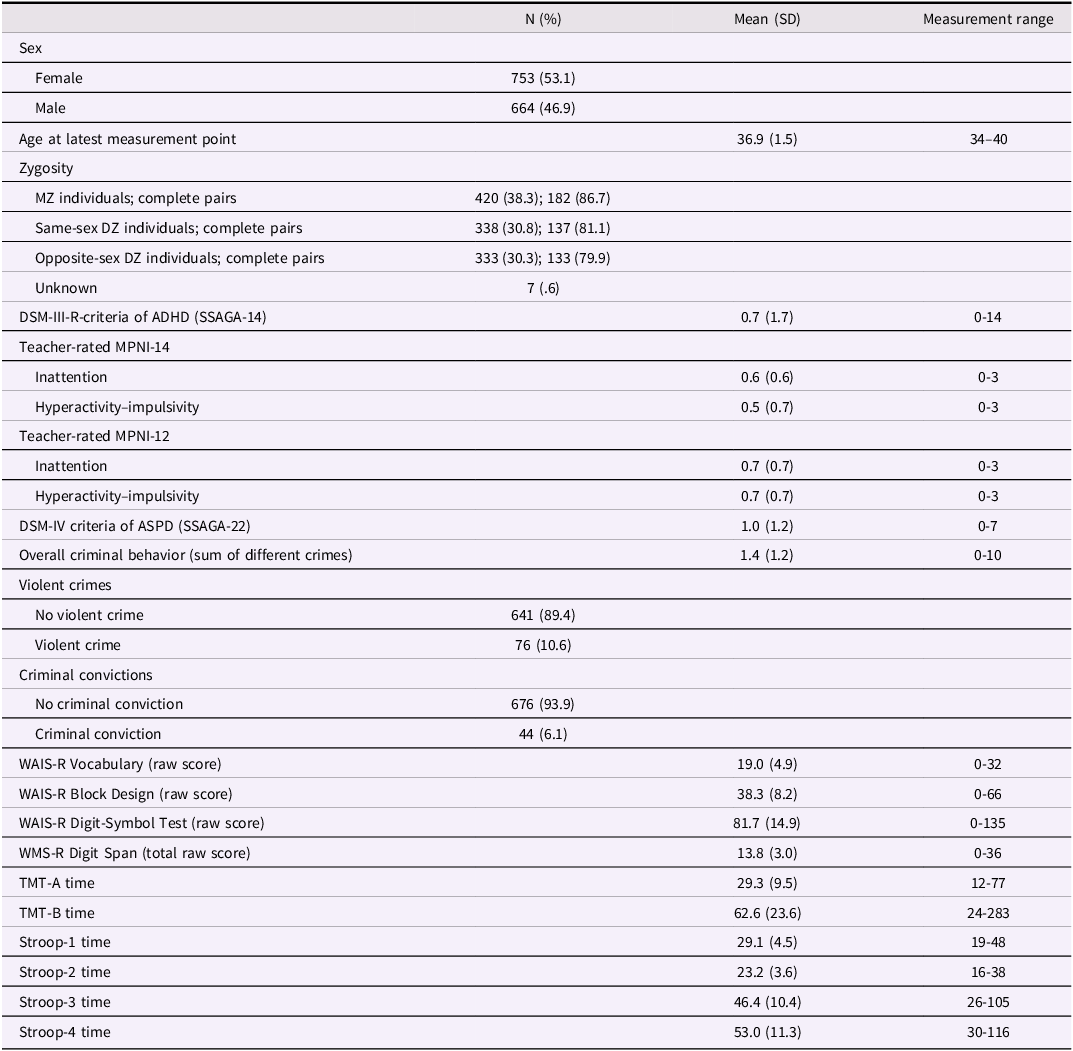
Table 3 summarizes the descriptive characteristics of the sample. Mean scores of all ADHD symptom measures, the number of ASPD symptoms, and the count measure of different types of crimes were all relatively low: the mean number of ASPD criteria fulfilled was 1.0, and the mean number of self-reported crime categories over the lifespan was 1.4. The mean scores of all cognitive measures were in line with expectations for a population-based sample of young adults: the distributions of all Wechsler Scale tests were close to normal, while the distributions of all TMT and Stroop subtests were skewed to the left, indicating that most participants performed relatively well.
Descriptive statistics
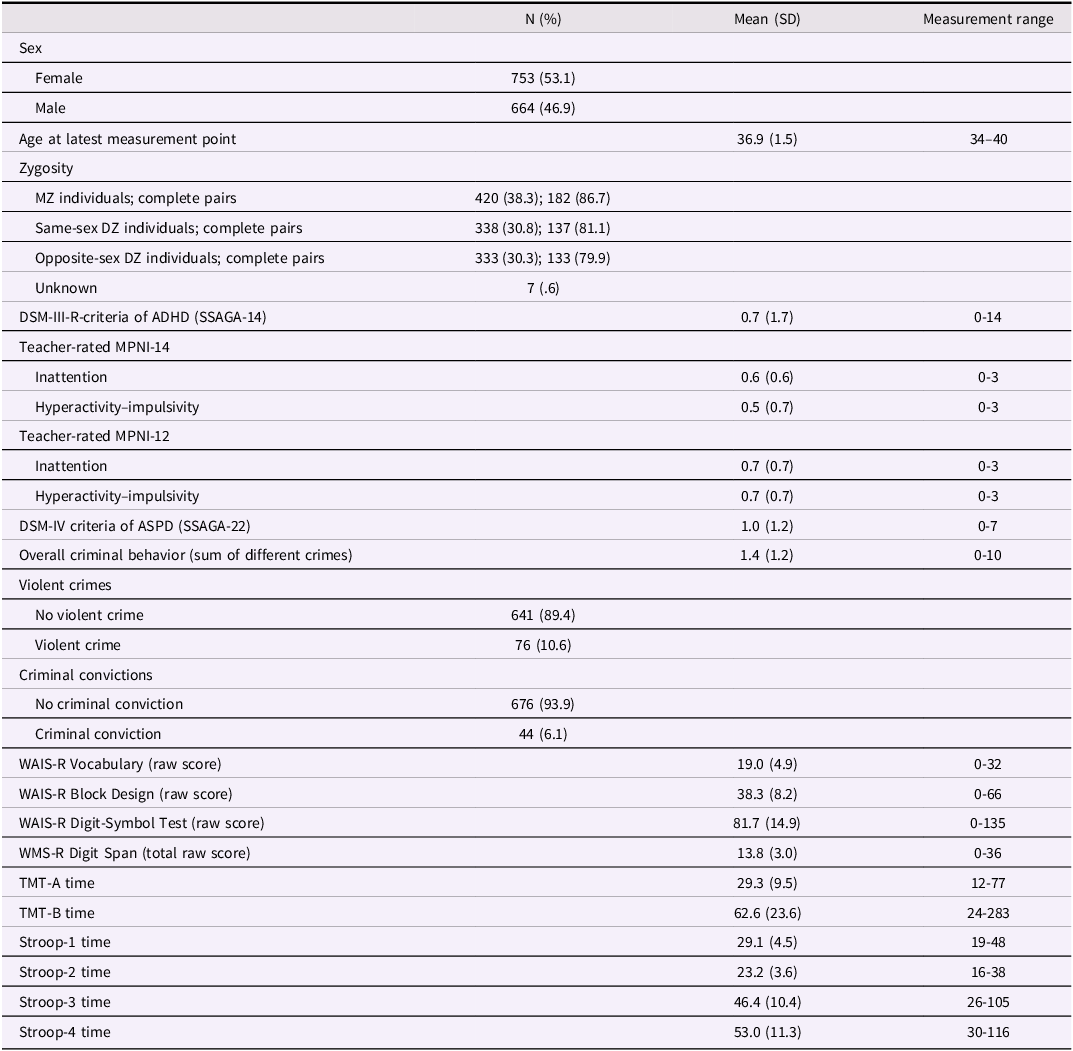
Table 3. Long description
The table presents descriptive statistics for a sample, organized into several categories. It includes data on sex, age at the latest measurement point, and zygosity. The table also details scores for ADHD symptoms, ASPD criteria, and various cognitive measures. Key columns include N (%), Mean (SD), and Measurement range. Notable trends include relatively low mean scores for ADHD symptoms, ASPD criteria, and criminal behavior, as well as cognitive measures that align with expectations for a population-based sample of young adults.
N = 715–1,417.
The numbers are based on all participants included in at least one regression model.
SD = standard deviation; MZ = monozygotic; DZ = dizygotic; DSM = the Diagnostic and Statistical Manual of Mental Disorders; ADHD = attention-deficit/hyperactivity disorder; ASPD = antisocial personality disorder; MPNI = the Multidimensional Peer Nomination Inventory; SSAGA = the Semi-Structured Assessment for Genetics of Alcoholism; WAIS-R = Wechsler Intelligence Scale Revised; TMT = Trail Making Test.
Table 1 displays correlations between all study variables. All correlations were in the expected direction. Different ADHD symptom measures had moderate to high (r = .21–.74) intercorrelations, and the highest correlations were observed between inattention and hyperactivity–impulsivity measures assessed by teachers at the same measurement point. Cognitive measures also had mostly moderate intercorrelations: the Wechsler Scale tests were most strongly correlated with each other (r = .23–.36) and the Stroop and TMT subtests with each other as well as the Digit-Symbol Test (r = .25–.70).
We examined attrition using independent samples t-tests comparing ADHD symptom levels between participants with and without data on criminal behavior (from early midlife). Overall, missingness was associated with having higher levels of ADHD symptoms in adolescence: participants with missing data on criminal behavior had significantly higher levels of DSM symptoms of ADHD [M = 0.94, SD = 1.96 vs. M = 0.65, SD = 1.53; t(1850) = −3.44, p = .001], teacher-rated inattention [M = 0.72, SD = 0.72 vs. M = 0.53, SD = 0.59; t(2980) = −7.45, p < .001] and hyperactivity–impulsivity [M = 0.59, SD = 0.72 vs. M = 0.41, SD = 0.57; t(2980) = −7.28, p < .001).
Associations of ADHD symptoms with symptoms of ASPD and criminal behavior: Population-level models
Table 4 displays the results of Poisson and logistic regression analyses, where ADHD symptom measures at age 14 were used to predict symptoms of ASPD in young adulthood as well as overall criminal behavior, violent crimes, and criminal convictions over the lifespan. All ADHD symptom measures were associated with a higher number of ASPD symptoms in young adulthood (IRR = 1.18–1.27, p < .001), a higher number of different self-reported crimes committed across the lifespan (IRR = 1.16–1.20, p < .001), and a higher likelihood of having committed violent crimes (OR = 1.62–1.91, p < .001). Higher teacher-rated inattention and hyperactivity–impulsivity at age 14 were also associated with having criminal convictions (OR = 1.56–1.58, p < .05), while DSM-symptoms of ADHD as measured by a psychiatric interview were not.
The results of Poisson regression models and logistic regression models (separate models for each ADHD measure and outcome measure), where ADHD symptoms (standardized measures of SSAGA symptom count and teacher-rated MPNI scores) were set as independent variables to predict symptoms of ASPD in young adulthood, overall criminal behavior across the lifespan, self-reported violent crimes, and criminal convictions across the lifespan. All analyses were adjusted for sex

Table 4. Long description
A table with four rows and five columns. The columns are labeled ‘Symptoms of ASPD in young adulthood’, ‘Overall criminal behavior across the lifespan’, ‘Violent crime’, and ‘Criminal conviction’. Each column has sub-columns for IRR, CI, OR, and CI. The rows are labeled ‘DSM-III-R based symptoms of ADHD at 14 y’, ‘Teacher-rated inattention at 14 y’, and ‘Teacher-rated hyperactivity-impulsivity at 14 y’. Each cell contains values for IRR, CI, OR, and CI. The table shows the results of Poisson regression models and logistic regression models, where ADHD symptoms at age 14 were used to predict symptoms of ASPD in young adulthood, overall criminal behavior across the lifespan, violent crimes, and criminal convictions across the lifespan. All analyses were adjusted for sex.
*p < .05,**p < .01,***p < .001.
Notes: N = 1,011–1,330 for models predicting symptoms of ASPD; N = 602–746 for models predicting overall criminal behavior; N = 603–748 for models predicting violent crime; N = 605–751 for models predicting criminal convictions.
All participants with non-missing data on relevant measures are included.
IRR = incidence rate ratio; OR = odds ratio; DSM = the Diagnostic and Statistical Manual of Mental Disorders; ADHD = attention-deficit/hyperactivity disorder; ASPD = antisocial personality disorder.
Contribution of familial factors: within-pair models
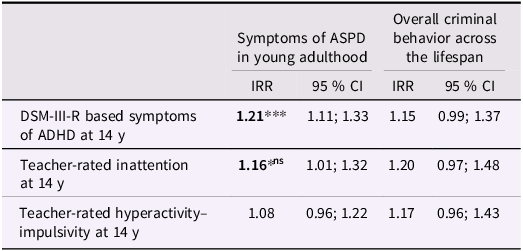
Intra-class correlations of all measures of ADHD symptoms and antisocial behavior are displayed in Supplementary table 2. MZ twins had higher intra-class correlations (r = .50–.69) in most study variables than did DZ twins (r = .07–.36). In the sample used in the within-pair models, 484 co-twins were discordant for the number of DSM-symptoms of ADHD (mean within-pair difference in discordant pairs: MD = 2.6), 592 for teacher-rated inattention (MD = 0.68), and 594 for teacher-rated impulsivity (MD = 0.67). The results of within-pair analyses using fixed-effects Poisson regression models are shown in Table 5. Most estimated associations of adolescent ADHD symptom measures and later antisocial behavior became statistically non-significant. However, this seemed to be due to weaker statistical power in the within-pair models as most estimates remained nearly identical to the main analyses. Only the associations of teacher-rated inattention and hyperactivity–impulsivity at age 14 with ASPD symptoms in young adulthood clearly attenuated compared to the individual-level estimates. Separate analyses by zygosity (Supplementary table 3) suggested somewhat attenuated but mostly non-null associations within MZ pairs compared to DZ pairs, but confidence intervals were wide and overlapping.
The results of within-pair comparisons (i.e., fixed-effects Poisson regression models), where ADHD symptom measures (standardized measures of SSAGA symptom count and teacher-rated MPNI scores) were set as independent variables to predict symptoms of ASPD in young adulthood and overall criminal behavior across the lifespan (separate models for each ADHD measure and outcome measure). All analyses were adjusted for sex, since both MZ and DZ twin pairs were included in the analyses
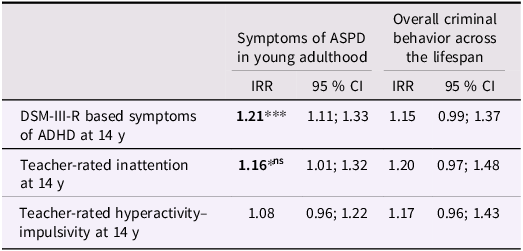
Table 5. Long description
A table with three rows and three columns comparing DSM-III-R based symptoms of ADHD, teacher-rated inattention, and teacher-rated hyperactivity-impulsivity at age 14 with symptoms of ASPD in young adulthood and overall criminal behavior across the lifespan. The columns are labeled ‘Symptoms of ASPD in young adulthood’ and ‘Overall criminal behavior across the lifespan’, each with IRR and 95 percent CI values. Row 1: DSM-III-R based symptoms of ADHD at 14 years, IRR 1.21, 95 percent CI 1.11 to 1.33 for symptoms of ASPD in young adulthood, IRR 1.15, 95 percent CI 0.99 to 1.37 for overall criminal behavior across the lifespan. Row 2: Teacher-rated inattention at 14 years, IRR 1.16, 95 percent CI 1.01 to 1.32 for symptoms of ASPD in young adulthood, IRR 1.20, 95 percent CI 0.97 to 1.48 for overall criminal behavior across the lifespan. Row 3: Teacher-rated hyperactivity-impulsivity at 14 years, IRR 1.08, 95 percent CI 0.96 to 1.22 for symptoms of ASPD in young adulthood, IRR 1.17, 95 percent CI 0.96 to 1.43 for overall criminal behavior across the lifespan.
*p < .05,***p < .001; ns p value non-significant after false discovery rate (FDR) correction.
Note: N = 632–918 for models predicting symptoms of ASPD in young adulthood; N = 294–366 for models predicting overall criminal behavior across the lifespan.
All participants with non-missing data on relevant measures were included.
IRR = incidence rate ratio; DSM = the Diagnostic and Statistical Manual of Mental Disorders; ADHD = attention-deficit/hyperactivity disorder; ASPD = antisocial personality disorder.
Interactions between ADHD symptoms and cognitive performance
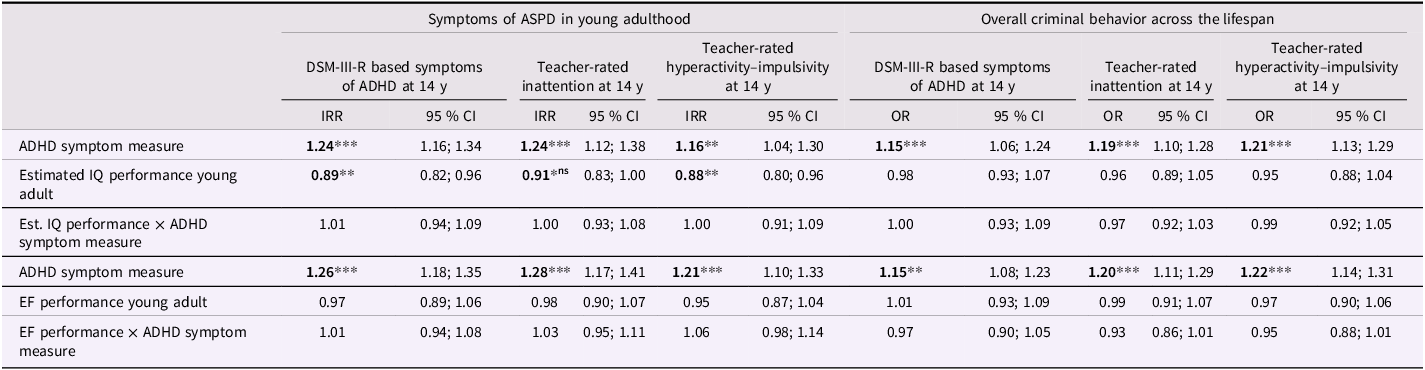
Results from models examining the interaction effects of cognitive performance with ADHD symptom measures are summarized in Table 6. The associations of ADHD symptoms in adolescence with later symptoms of ASPD and overall criminal behavior remained largely unchanged compared to the regression models not including cognitive performance. No statistically significant interaction effects were observed. Higher estimated IQ performance had consistent independent associations with fewer concurrent symptoms of ASPD (IRR = 0.88–0.91, p < .05).
The results of Poisson regression models (separate models for each ADHD measure, cognitive measure, and outcome measure), where ADHD symptoms (standardized measures of SSAGA symptom count and teacher-rated MPNI scores at age 14), cognitive performance in young adulthood (estimated IQ and EF performance) and the interaction between ADHD symptoms and cognitive performance were set as independent variables to predict symptoms of ASPD in young adulthood and self-reported overall criminal behavior across the lifespan. All analyses were adjusted for sex

Table 6. Long description
The table presents the results from models examining the interaction effects of cognitive performance with ADHD symptom measures. It includes data on symptoms of ASPD in young adulthood and overall criminal behavior across the lifespan. The table has 4 rows and 12 columns. Column headers are: DSM-III-R based symptoms of ADHD at 14 y, Teacher-rated inattention at 14 y, Teacher-rated hyperactivity-impulsivity at 14 y, DSM-III-R based symptoms of ADHD at 14 y, Teacher-rated inattention at 14 y, Teacher-rated hyperactivity-impulsivity at 14 y. Row labels are: ADHD symptom measure, Estimated IQ performance young adult, Est. IQ performance x ADHD symptom measure, ADHD symptom measure, EF performance young adult, EF performance x ADHD symptom measure. Each cell contains values for IRR, OR, and their respective 95% CI. The table shows no significant interaction effects between ADHD symptoms and cognitive performance.
*p < .05,**p < .01,***p < .001; ns p value non-significant after false discovery rate (FDR) correction.
Note: N = 615–799 for models predicting symptoms of ASPD; N = 346–431 for models predicting overall criminal behavior.
All participants with non-missing data on relevant measures are included.
IRR = incidence rate ratio; OR = odds ratio; DSM = the Diagnostic and Statistical Manual of Mental Disorders; ADHD = attention-deficit/hyperactivity disorder; ASPD = antisocial personality disorder.
Supplementary analyses
Supplementary table 4 displays the results of the population-level regression analyses using a sample restricted to participants with non-missing data on all ADHD measures in adolescence as well as cognitive performance in young adulthood. The results were largely in line with the main analyses. The results of supplementary models examining the associations of inattention and hyperactivity–impulsivity at age 12 with later symptoms of ASPD and criminal behavior are summarized in Supplementary table 5. These results were also consistent with the main analyses: having more ADHD symptoms in adolescence was associated with a higher number of later ASPD symptoms as well as a higher likelihood for overall criminal behavior, violent crime, and criminal convictions. Similarly, results of supplementary analyses exploring interactions between cognitive and academic performance at age 14 and different ADHD symptom measures, displayed in Supplementary table 6, were in line with the main findings. There was one interactive association: higher EF performance at age 14 attenuated the association between concurrent teacher-rated hyperactivity–impulsivity and self-reported overall criminal behavior across the lifespan. Having a higher GPA at age 14 was independently associated with fewer ASPD symptoms and less overall criminal behavior in adulthood.
Discussion
We investigated whether adolescent ADHD symptoms were associated with symptoms of ASPD in young adulthood and criminal behavior across the lifespan in a population-based sample of twins. Further, we studied the nature of these associations in more detail to examine whether they were independent of familial factors shared between co-twins and whether cognitive performance moderated these associations in a protective fashion. In general, both DSM-criteria based symptoms of ADHD and teacher-rated inattention and hyperactivity–impulsivity in adolescence were consistently associated with having more symptoms of ASPD in young adulthood and self-reported criminal behavior across the lifespan. Further, our results suggested that the associations are to a large degree independent of familial background, since they did not clearly attenuate when genetic and environmental factors shared between co-twins were accounted for, although these analyses suffered from limited statistical power. Cognitive performance level did not moderate the association between adolescent ADHD symptoms and later antisocial behavior.
ADHD symptoms and antisocial behavior
Our finding that subclinical ADHD symptoms at the population-level are longitudinally associated with future antisocial behavior is in line with previous evidence from clinical and forensic studies (Erskine et al., Reference Erskine, Norman, Ferrari, Chan, Copeland, Whiteford and Scott2016; Mohr-Jensen & Steinhausen, Reference Mohr-Jensen and Steinhausen2016; Storebø & Simonsen, Reference Storebø and Simonsen2016) and some population-based studies (Pardini & Fite, Reference Pardini and Fite2010; Selinus et al., Reference Selinus, Molero, Lichtenstein, Larson, Lundström, Anckarsäter and Gumpert2015). The medium effect sizes we observed are largely in line with previous evidence from population-based samples: studies using a continuous ADHD symptom measure have reported similar effect sizes (OR = 1.19 for violence in Pardini & Fite, Reference Pardini and Fite2010), while other studies using dichotomous ADHD measures and broader definitions for antisocial behavior have found somewhat larger effects (OR = 2.67 for any antisocial behavior in Selinus et al., Reference Selinus, Molero, Lichtenstein, Larson, Lundström, Anckarsäter and Gumpert2015). The fact that these associations exist at lower levels of ADHD symptomatology in the general population suggests that the link between ADHD and antisociality is strong and potentially neurobiological in origin (Beaver et al., Reference Beaver, Nedelec, Rowland and Schwartz2012; Choi et al., Reference Choi, Poore, Brislin, Barr, Aliev, Zellers, Saunders, Salvatore, Vrieze, Harden, Palmer, Raevuori, Latvala and Dick2025; Mollon et al., Reference Mollon, Knowles, Mathias, Rodrigue, Moore, Calkins, Gur, Peralta, Weiner, Robinson, Gur, Blangero, Almasy and Glahn2021). The long follow-up in our study further strengthens the finding: even 12-year-olds’ inattention and hyperactivity–impulsivity were associated with symptoms of ASPD a decade later and with self-reported criminal behavior up to 28 years later. Our results are consistent with the notion of a broad, transdiagnostic spectrum of externalizing symptoms (Mullins-Sweatt et al., Reference Mullins-Sweatt, Bornovalova, Carragher, Clark, Corona Espinosa, Jonas, Keyes, Lynam, Michelini, Miller, Min, Rodriguez-Seijas, Samuel, Tackett and Watts2022; Perkins et al., Reference Perkins, Joyner, Foell, Drislane, Brislin, Frick, Yancey, Soto, Ganley, Keel, Sica, Flor, Nees, Banaschewski, Bokde, Desrivières, Grigis, Garavan, Gowland, Heinz, Ittermann, Martinot, Paillère Martinot, Artiges, Papadopoulos Orfanos, Poustka, Hohmann, Fröhner, Smolka, Walter, Whelan, Schumann and Patrick2022) and previous findings suggesting that a genetic predisposition toward externalizing behavior can manifest in different behaviors across development (Choi et al., Reference Choi, Poore, Brislin, Barr, Aliev, Zellers, Saunders, Salvatore, Vrieze, Harden, Palmer, Raevuori, Latvala and Dick2025). Our finding that inattention was also consistently associated with later antisocial behavior contradicts previous findings that have emphasized hyperactivity–impulsivity, which is more closely related to behavioral disinhibition, as a precursor to later antisocial behavior (Pardini & Fite, Reference Pardini and Fite2010; Pingault et al., Reference Pingault, Côté, Lacourse, Galéra, Vitaro and Tremblay2013). However, recent research has indicated that individual ADHD symptoms are associated with different transdiagnostic psychopathology domains (Peng et al., Reference Peng, Stanton, Dominguez-Alvarez and Watts2024); our results may reflect this heterogeneity within the symptom categories of inattention and hyperactivity–impulsivity (Peng et al., Reference Peng, Stanton, Dominguez-Alvarez and Watts2024). Our results could also be partly explained by our use of behavioral teacher-ratings: intercorrelations between inattention and hyperactivity–impulsivity were high, so it is possible that teachers have considered largely similar behavioral issues when assessing both symptom dimensions.
Familial factors
Previous family studies have suggested a shared genetic background underlying ADHD symptoms and antisocial behavior (Beaver et al., Reference Beaver, Nedelec, Rowland and Schwartz2012). Although in our within-pair models many associations between adolescent ADHD symptoms and later ASPD symptoms and self-reported criminal behavior became non-significant, the point estimates of most associations did not seem to change. We interpret this as evidence of a largely independent association between ADHD symptoms and later antisocial behavior. Within-pair analyses in MZ twins offer the strongest setting for ruling out familial factors by fully controlling both genetic and shared environmental effects; these models resulted in estimates with wide confidence intervals, but, notably, the point estimates were non-zero and suggestive of an association between ADHD symptoms and antisocial behavior in four cases out of six. While suggestive, these results are in line with the within-pair models combining both zygosities. The observation of a similar association in individual-level analyses and in within-pair models (which account for stable factors shared by co-twins) implies that ADHD symptoms as such or other individual-level factors not shared between co-twins, such as congenital factors or non-shared environmental or genetic factors, contribute to later ASPD symptoms and criminal behavior. Individual-specific factors associated with both ADHD symptoms and antisocial behavior could include, for example, prenatal exposure to toxins, traumatic brain injury, other accidents, and individual peer environments in childhood. In the current study, only the associations of teacher-rated inattention and hyperactivity–impulsivity and later symptoms of ASPD seemed to more clearly attenuate in the within-pair models compared to individual-level analyses. All in all, our results are in line with previous twin studies pointing to both shared and non-shared environmental factors, besides genetic factors, contributing to a broad externalizing spectrum encompassing both ADHD symptoms and antisocial tendencies (Kendler et al., Reference Kendler, Lönn, Maes, Lichtenstein, Sundquist and Sundquist2016). Our results are also compatible with findings from pharmaco-epidemiological studies suggesting that using ADHD medication reduces the risk of criminal behavior among people with ADHD (Lichtenstein et al., Reference Lichtenstein, Halldner, Zetterqvist, Sjölander, Serlachius, Fazel, Långström and Larsson2012; Zhang et al., Reference Zhang, Zhu, Sjölander, Nourredine, Li, Garcia-Argibay, Kuja-Halkola, Brikell, Lichtenstein, D’Onofrio, Larsson, Cortese and Chang2025); if interventions targeting ADHD symptoms specifically reduce the risk for antisocial behavior, this suggests an independent link between ADHD symptomatology and antisociality.
Cognitive performance
Contrary to our expectations, neither estimated IQ nor EF performance did explain or moderate the associations of ADHD symptoms with later ASPD symptoms and criminal behavior. The only observed interaction effect between ADHD symptoms and cognitive performance in our study was between teacher-rated hyperactivity–impulsivity at age 14 and higher EF performance at age 14 when predicting overall criminal behavior. Our findings thus suggest that at the population level, cognitive performance does not nullify the effect of ADHD symptoms on predicting later antisocial behavior, lending no support for the hypothesis of higher cognitive performance acting as an interactive protective factor. The finding that higher IQ performance was independently associated with lower levels of ASPD symptoms is in line with previous evidence showing strong negative associations between intelligence and antisocial behavior in the general population (Frisell et al., Reference Frisell, Pawitan and Långström2012; Schwartz et al., Reference Schwartz, Savolainen, Aaltonen, Merikukka, Paananen and Gissler2015). All in all, it appears that higher ADHD symptoms are a risk factor and higher cognitive performance is a protective factor from later antisocial behavior, but these two do not interact, i.e., adolescents with low and high levels of ADHD symptoms benefit from high cognitive ability equally. Our finding that EF performance was mostly not associated with antisocial behavior could be due to our mostly healthy, population-based sample: a recent meta-analysis called into question whether EF deficits in antisocial populations are specifically related to antisociality as they rather seem to reflect comorbid psychiatric disorders (Jansen & Franse, Reference Jansen and Franse2024).
Implications, strengths, and limitations
The findings of our study have several practical implications. Subclinical ADHD symptoms should be considered an independent risk factor for later antisocial behavior, because the relationship exists at the population level, mostly independent of familial background. Since cognitive performance does not seem to act as a nullifying protective factor at the population level, subclinical ADHD symptoms should be considered a risk factor for future antisocial behavior irrespective of cognitive ability level. Our findings also emphasize the role of inattentive traits in antisocial behavior. All in all, our results could help in early identification of at-risk adolescents. With adequate support offered to adolescents and their families, adverse outcomes such as criminal behavior and marginalization might be reduced.
Our study has multiple strengths. First, the population-based sample with a follow-up of 25–28 years allowed us to examine the longitudinal associations of subclinical, dimensional ADHD symptoms in the general population. Our dataset also gave us a unique opportunity to examine the effects of cognitive performance in mostly healthy participants; this would not have been possible in clinical or forensic populations, where psychiatric disorders, learning difficulties, and neurodevelopmental disorders are highly prevalent. Second, the neuropsychological test measures used in our study are widely used in clinical neuropsychology, which makes our findings more applicable into clinical work. Third, having data on twin pairs made it possible to investigate the familial factors underlying the associations between ADHD symptoms and antisociality. Finally, having multiple measurement points and different measures of dimensional ADHD symptoms (i.e., behavioral ratings by teachers and diagnostic interview-based symptoms) strengthened the validity and consistency of our findings.
Some limitations should also be considered when interpreting our findings. The greatest limitations of our dataset are two: we had only self-report measures of criminal behavior, and a number of participants were lost to follow-up, especially in early midlife. Official registry data on criminal convictions would have strengthened our findings, because participants may well underreport criminal behavior in self-report questionnaires. Conversely, self-report questionnaires may capture crimes not processed in the criminal justice system. Additionally, there was attrition bias in early midlife. Due to this selection bias, participants with a higher level of ADHD symptoms and convictions for severe crimes were disproportionately missing from our sample. The rate for criminal convictions in our study is lower than expected based on registry data, and estimates for criminal behavior underestimate the true rate. We do not know how this attrition may have affected our results; it is possible that the associations between adolescent ADHD symptoms and later antisocial behavior are similar across the distribution. Further, to reduce selection bias, our study would have benefitted from sampling weights, which were unfortunately not available for this study. It should also be noted that analyses separating MZ and DZ twins had limited statistical power, and the within-pair estimates combining both zygosities may also reflect partial residual genetic confounding due to the inclusion of DZ twin pairs. Our study also did not aim to separate the exact roles of genetic and environmental influences in the association between ADHD symptoms and later antisocial behavior; this should be studied in more detail using multivariate twin models and other genetically informative designs. Regarding the assessment of psychopathology, future studies could employ more transdiagnostic assessment methods instead of diagnostic tools in order to get a more comprehensive view of externalizing and neurodevelopmental symptom domains. We were also unable to examine the role of callous-unemotional traits in antisociality. As different cognitive deficits and long-term outcomes seem to be associated with antisocial traits depending on whether they co-occur with callous-unemotional traits (Bégin et al., Reference Bégin, Mavungu-Blouin, Hamilton, Therriault, Le Corff and Déry2024; Dotterer et al., Reference Dotterer, Tomlinson, Burt, Weigard, Klump and Hyde2021; Saunders et al., Reference Saunders, Anckarsäter, Lundström, Hellner, Lichtenstein and Fontaine2019), future research should include a more detailed assessment of this dimension. Finally, our estimated IQ performance variable was calculated based on two subtests (instead of four), which was practical in a wide population study but is a deviation from clinical practice.
Conclusion
In conclusion, we found that ADHD symptoms in adolescence were longitudinally associated with increased risk for symptoms of ASPD in young adulthood and self-reported criminal behavior across the lifespan in the general population. The associations of ADHD symptoms in adolescence with later ASPD symptoms and overall criminal behavior were not fully and clearly explained by shared familial factors. Nor, importantly, did cognitive performance counteract these associations. Our findings suggest that subclinical ADHD symptoms are associated with increased risk for future antisociality to a large degree independent of familial background and cognitive performance level, highlighting the importance of early identification of even subclinical ADHD symptoms and implementing their evidence-based treatments.
Supplementary material
The supplementary material for this article can be found at https://doi.org/10.1017/S095457942610176X.
Data availability statement
The Finnish Twin Cohort (FTC) data are not publicly available due to the restrictions of informed consent. However, the FTC data are available through the Institute for Molecular Medicine Finland (FIMM) Data Access Committee (DAC) (fimmdac@helsinki.fi) for authorized researchers who have IRB/ethics approval and an institutionally approved study plan. To ensure the protection of privacy and compliance with national data protection legislation, a data use/transfer agreement is needed, the content and specific clauses of which will depend on the nature of the requested data. The analytic code necessary to reproduce the analyses presented in this paper is accessible by contacting the first author. All statistical analyses were conducted using Stata (version 18). We report how we determined our sample size as well as all data exclusions, manipulations, measures, and statistical analyses used in the study. We follow the STROBE (Strengthening the Reporting of Observational studies in Epidemiology) guidelines in reporting our research.
Author contributions
Author contributions according to the Contributor Roles Taxonomy (CRediT): Laila Ketvel contributed to conceptualization, formal analysis, and writing the original draft. Pekka Rapeli contributed to conceptualization, supervision, and writing – review and editing. Anu Raevuori contributed to conceptualization, supervision, and writing – review and editing. Mona Sotaniemi contributed to conceptualization and writing – review and editing. Richard J. Rose contributed to investigation and writing – review and editing. Lea Pulkkinen contributed to investigation and writing – review and editing. Eero Vuoksimaa contributed to investigation and writing – review and editing. Sari Aaltonen contributed to writing – review and editing. Jessica Salvatore contributed to writing – review and editing. Danielle Dick contributed to writing – review and editing. Antti Latvala contributed to conceptualization, formal analysis, supervision, and writing – review and editing.
Funding statement
Analysis and writing of the manuscript were funded by a research grant from Yrjö Jahnsson Foundation to the first author. The FT12 study was supported by the National Institute on Alcohol Abuse and Alcoholism of the National Institutes of Health (Grant/Award Numbers: R01AA015416, R01AA09203, K02AA018755 and K01AA024152) and the Research Council of Finland (Grant/Award Numbers: 100499, 205585, 118555, 141054, 265240, 263278, 264146, 308248, 352792 and 312073). The content is solely the responsibility of the authors and does not necessarily represent the official views of the funders.
Competing interests
We have no competing interests to report.
Pre-registration statement
The current study was not pre-registered due to its exploratory nature. This study involved secondary analyses of an existing longitudinal dataset, and hypotheses and analytic strategies were developed after data collection had occurred.





 Open access

