INTRODUCTION
Islands located within the Mediterranean region of Europe generally possess a shallow soil structure and semi-steep pastures. Both sheep and goat farming are extensively practiced in the rangelands of the islands (Hadjigeorgiou et al. Reference Hadjigeorgiou, Papavasiliou, Zervas and Sorensen1997, Reference Hadjigeorgiou, Vaitsis, Laskaridis and Tzanni2008). Prickly burnet (Sarcopoterium spinosum (L.) Spach) is common over the garrigue shrub cover of the pastures. Prickly burnet is mostly encountered in isolated parts of Middle Eastern countries such as Turkey, Crete, Greece, Albania, Dalmatia, Malta, Tunisia and Italy (Lantieri et al. Reference Lantieri, Guglielmo, Pavone and Salmeri2013). Due to its rapid and expansive growth, prickly burnet is treated as an invasive species (Hadjigeorgiou et al. Reference Hadjigeorgiou, Vaitsis, Laskaridis and Tzanni2008; Gökkuş et al. Reference Gökkuş, Parlak, Baytekin and Alatürk2013). Various reclamation methods such as burning (Papanastasis Reference Papanastasis1980; Perevolotsky et al. Reference Perevolotsky, Ne'Eman, Yonatan and Henkin2001; Henkin et al. Reference Henkin, Noy-Meir, Kafkafi and Gutman1998, Reference Henkin, Seligman and Noy-Meir2007), herbicide application (Perevolotsky et al. Reference Perevolotsky, Ne'Eman, Yonatan and Henkin2001; Henkin et al. Reference Henkin, Noy-Meir, Kafkafi and Gutman1998, Reference Henkin, Seligman and Noy-Meir2007), cutting, mechanical control and fertilization (Perevolotsky et al. Reference Perevolotsky, Ne'Eman, Yonatan and Henkin2001) have been implemented to control the species. Some rangeland areas have been reclaimed through liming, fertilizer application and seeding using Dactylis glomerata, Medicago sativa and Trifolium subterraneum seeds (Hadjigeorgiou et al. Reference Hadjigeorgiou, Vaitsis, Laskaridis and Tzanni2008). Grazing can also be used as a control measure on sites which pose a fire risk (Bartolomé et al. Reference Bartolomé, Franch, Plaixats and Seligman2000). However, since the grazed parts and nutritional values of prickly burnet are relatively low compared with other shrubs, it is hard to combat this species through grazing (Papanastasis Reference Papanastasis1980; Akbaǧ et al. Reference Akbaǧ, Tölü, Baytekin and Küçükersan2013).
Although cattle are not suitable for sustainable control of some sections of shrub land, this could be achieved with the help of sheep and goat grazing (Celaya et al. Reference Celaya, Olivan, Ferreira, Martinez, Garcia and Osoro2007). It is known that, compared with goats, sheep prefer herbaceous vegetation (Bartolomé et al. Reference Bartolomé, Franch, Plaixats and Seligman1998; Ferreira et al. Reference Ferreira, Celaya, Benavides, Jauregui, Garcia, Santos, Grazia, Rodrigues and Osoro2013). However, the mouths of sheep have a morphologic advantage (small mouth parts and a long, narrow muzzle); thus, they can benefit from small shrubs by taking small nibbles (Papachristou Reference Papachristou1997; Ferreira et al. Reference Ferreira, Celaya, Benavides, Jauregui, Garcia, Santos, Grazia, Rodrigues and Osoro2013). Sheep can be used to control small bushes (shorter than 0·5 m) by grazing on the herbaceous vegetation around the shrubs (Papachristou Reference Papachristou1997). Sheep generally prefer shrubs as an alternative when there is only limited herbaceous matter found on the rangelands (Bartolomé et al. Reference Bartolomé, Franch, Plaixats and Seligman1998; Ferreira et al. Reference Ferreira, Celaya, Benavides, Jauregui, Garcia, Santos, Grazia, Rodrigues and Osoro2013).
There is long-established pastoral ruminant production on the island of Gökçeada (formerly named Imbros) (Aktürk et al. Reference Aktürk, Savran, Hakyemez, Daş and Savaş2005; Tölü & Savaş Reference Tölü, Savaş and Soysal2011). The number of sheep (46 414 head) is far higher than the number of goats (16 191 head) (Anonymous 2013a , b ). Ovines have a difficulty grazing on Gökçeada Island because of the intensive covering of prickly burnet. Attempts have been made to adapt native sheep breeds of Turkey to the conditions on Gökçeada by pure or cross breeding. However, these genotypes, such as the Gökçeada sheep that are particularly grazed under a free grazing system, do not perpetuate themselves in the rangelands which are covered with dense prickly burnet. While about 0·70 of ovines are raised freely, the rest are raised in sheep barns under human control but are still mostly dependant on Gökçeada rangelands. Sheep that roam freely over the island are captured once a year for their meat and fleece by shepherds and specially trained dogs. Recently, the supply of fodder and water has been supplemented for these free-roaming sheep in the rangelands. The wild animals generally graze at twilight and are under natural selection pressure to use and benefit from the nutrients they consume. In this sense, wild and domesticated herbivores spend most of their metabolizable energy on muscular activities accrued by eating (grazing, chewing) and movement in rangelands (Canas et al. Reference Canas, Quiroz, León-Velarde, Posadas and Osorio2003; Lachica & Aguilera Reference Lachica and Aguilera2005). In a study carried out in New Zealand with wild sheep, it was observed that the grazing and resting behaviour of sheep was differentiated by variations that occurred during daylight (Harris & O'Connor Reference Harris and O'Connor1980; Arnold Reference Arnold1982).
There are no studies on the grazing behaviour and rangeland use of sheep that roam freely on the rangelands of Gökçeada. There are also no studies dealing with other sheep behaviour in the rangeland, covered largely with prickly burnet. Grubbing, burning and cutting have been practiced on the island's rangeland to reduce prickly burnet (S. spinosum (L.) Spach) from the vegetative covering, and seeding with fodder crop seeds has been implemented to improve the grazed forage. The present study aimed to comprehensively investigate the behaviour of Gökçeada sheep found in these rangelands and the factors that affect their behavioural characteristics.
MATERIALS AND METHODS
Study area
The present research was conducted on Gökçeada Island, covering 286 km2 and located at the far western edge of Turkey in the Aegean Sea. The experimental site, with an altitude of 53 m a.s.l. and covering a total area of 5·4 ha, was situated in Yildiz Bay in the northern part of the island (40°14′10·82″ N latitude, 25°54′30·45″ E longitude). During the grazing year 2013, the lowest average monthly temperatures varied between −2·2 and 20·3 °C while the highest monthly average temperatures varied between 17·2 and 26·1 °C. Overall, average monthly temperatures ranged from 8·4 to 26·3 °C. Monthly average relative humidity varied between 58·7 and 83·9%. Total annual precipitation for 2011, 2012 and 2013 was 640·8, 792·7 and 869·1 mm, respectively. The long-term (30 year) average annual precipitation of Gökçeada was recorded as 740·3 mm, average temperature as 15·1 °C and relative humidity as 66% (Anonymous, 2013b ). The experimental area of the rangeland was undulating with slopes varying between 5 and 20%. The soil of the rangeland is shallow, slightly alkaline and not saline with sandy-loam texture, low lime content, medium organic matter content, high nitrogen (N), calcium (Ca) and magnesium (Mg) content, very low phosphorus (P) content and sufficient potassium (K) levels (Gökkuş et al. Reference Gökkuş, Parlak, Baytekin and Alatürk2013).
Grubbing (ripping), burning and cutting (mowing) were carried out in October 2010 on the rangeland to control the prickly burnet (S. spinosum (L.) Spach) shrubs. An area of natural rangeland was utilized in the present study as the control plot. Cutting was performed with a double-blade shrub-cutting machine leaving a 10–15 cm stalk on the surface of the soil. Grubbing was done with chisel ploughs and prickly burnet shrubs were removed and rooted out through ploughing to a depth of 20 cm. This effectively removes a large part of the prickly burnet. The ripped shrubs were collected and removed from the trial area. Burning was implemented through setting alight the entire top part of plants, with relevant safety measures taken into account. Half of the four plots including the natural plot (which functioned as the control plot) were seeded with forage crop seeds. Rangeland was ripped at 7–8 cm depth with the help of a chisel plough for seeding purposes. Then, seeds were scattered and buried with a harrow. Since the soil was sufficiently tilled, seeds were spread directly. Seeds were mixed at random before sowing and spread with a centrifuge-type fertilizer spreader. For the seeding process, a mixture of 0·20 perennial ryegrass (Lolium perenne), 0·20 crested wheatgrass (Agropyron cristatum), 0·20 orchard grass (D. glomerata), 0·15 alfalfa (M. sativa), 0·15 sainfoin (Onobrychis viciifolia) and 0·10 burnet (Poterium sanguisorba) were sown at a rate of 100·75 kg/ha.
After 2 years reclamation of the rangeland, the sheep were placed into the eight plots (four seeded, four unseeded) and their behaviour was observed for a period of 1 year, starting in December 2012. Each grazing plot was fenced off, calculated at a size of 0·15 ha/sheep (i.e. totalling 0·75 ha). The marked-out plots were then surrounded with steel matting fences 1·1 m high.
Animals
A flock of 150 sheep, which ranged freely over the island's pasture and was accustomed to feeding and returning to the barn at the call of the owner, was used to select the experimental sheep. Forty sheep were chosen based on age, live weight and condition. These were randomly distributed to the experimental plots with five sheep in each. The selected sheep were aged 3–4 years and averaged 31 ± 1·7 kg live weight. At the end of the 1-year experiment, the average live weight of the sheep was 29 ± 1·6 kg.
The sheep freely grazed within the eight new rangeland plots. A total of four paddocks were constructed and placed on the border between the seeded and unseeded sections of each reclamation plot. The paddocks resembled a shelter in appearance, with the windward side closed. The 24 m2 (4 × 6 × 2 m) paddocks were divided into two sections, each consisting of an area of 12 m2, with a fence placed through the middle of the paddock (i.e. the sheep inhabited separate but neighbouring plots). Roughage and shade were provided to the sheep in the paddocks, which were designed to protect them from rain and cold weather. Water was supplied to the plots from a reservoir found in the vicinity. Water was channelled through pipes and supplied ad libitum in the 30-litre plastic containers.
Precautionary and protective practices were implemented by a herdsman in the morning and evening. For adaptation of the sheep to their new plots, maize kernels, to which the sheep were accustomed, were supplied from the first day of pasture. Concentrate feed was directly spread onto the rangeland within the plots and roughage was supplied by feeders located in the paddocks. Fodder was provided in the form of group feeding within each plot. Maize was supplied at a ratio of 100 g/sheep from the placement of sheep into the rangeland plots in the first week of February 2013. From that date, the supply of maize was increased to 300 g/sheep to aid with gestation, birth and the winter conditions. From the 3rd week of February until the beginning of April, 500 g/sheep dry alfalfa hay was also offered to the sheep. The supply of maize was reduced to 150 g/sheep after the first week of April and supplementary feeding was fully terminated in the 3rd week of April. Supplementary feed was not given from mid-April until the beginning of June. Concentrate feed was supplied at a ratio of 200–300 g/sheep/day during the rest of year until the exit of the sheep from the plots. Sheep fattening feed was supplied as a concentrate mixture in pellet form from the beginning of June. Since herbaceous plants and prickly burnet shrubs dry out and the thorny structures harden in the summer, 500 g/sheep/day of alfalfa dry hay was supplied from the beginning of August till the end of November. In supplementary feeding, the survival requirements of the sheep were met taking gestation, birth, lactation, insemination and pasture conditions into consideration. Nutritional values of the supplementary feeds are given in Table 1.
Chemical composition of feeds used for supplementary feeding, as fed

DM, dry matter; CP, crude protein; NDF, neutral detergent fibre; ADF, acid detergent fibre; ADL, acid detergent lignin; CF, crude fat.
Births began at the end of February and continued until the beginning of March. All lambs were allowed to accompany their mothers in the rangeland plots. Lambs suckled freely, and fed on the concentrated feed supplied to their mothers as well as grazing on the rangeland. Although births occurred in the same period and the majority of lambs were weaned at the beginning of June, two lambs weaned at the end of June another two at the end of July were kept away from the rangeland.
At the beginning of September, one indigenous Gökçeada ram of 25–27 kg live weight and age of 2·5 years was placed in each plot. A total of eight Gökçeada rams stayed with the sheep until the removal of the sheep from the rangeland plots. Rams were selected from the flocks of sheep raised freely in the rangeland on Gökçeada Island.
Behaviour observations
The first behavioural observations were performed 15 days after placing the sheep in the eight rangeland plots. In the following period, their behaviour was observed once a month in the 3rd week of the month, according to weather conditions. Observations were carried out by four observers through direct observation of the sheep throughout the day from dawn till dusk. Observers did not always observe behaviour in the same plots. Since the observations of the first day started in the morning, the missing hours from dawn till the start of observation on the first day were completed the next day. During the initial 4 months, paddocks were also checked at night to see whether the sheep were grazing outside their paddock or not. However, these observations were not sustained since the sheep were frightened by the flashlight and tried to escape from the paddocks. Behaviour was observed throughout the year for a duration of between 9·49 and 15·09 h, according to the length of day (Anonymous, 2013a ). Observed behavioural characteristics are itemized below (Tölü Reference Tölü2009):
-
Grazing: Breaking, chewing, searching, walking, etc. for consumption of plants.
-
Rumination: Ruminating in a standing or lying position.
-
Locomotion: Being active without grazing.
-
Lying: Lying without doing any activity.
-
Standing: Standing without doing any activity.
-
Resting: Total of lying and standing behaviour.
-
Interaction: Generally, aggressive interactions with group mates.
-
Walking: Change of location without exhibiting any other behaviour.
-
Other: Lamb suckling, itching, urination, defaecation, bleating, etc.
Besides having plastic ear tags as individual records, the sheep in each group were numbered with different colours. Then, each sheep's activity, whether grazing, lying, standing, ruminating in lying position, ruminating in standing position, walking, interaction or another behaviour, was recorded using the time sampling method at 10 min intervals. Locomotion behaviour, taken by time sampling method, consisted of walking, interaction and other means of behaviour. The locality where these behavioural activities were observed (pasture or paddock) was also recorded as well as the type of plant grazed on by the sheep. On the other hand, walking (without any other behaviour) behaviour was recorded using continuous sampling. Binoculars were used to identify the type of grazed plants since the sheep tended to stop feeding and escape if they sensed the presence of observers.
Plant measurements
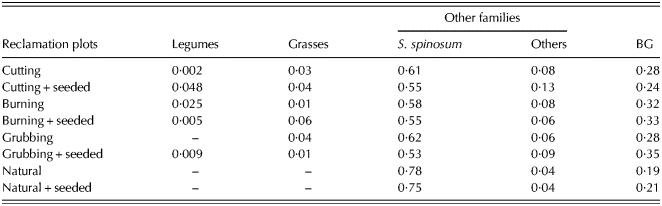
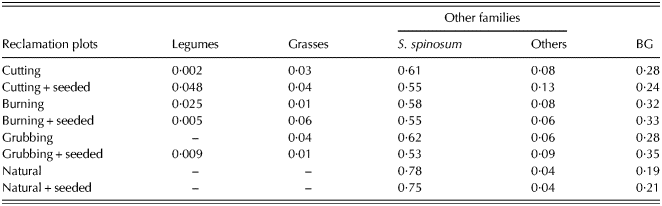
Distribution of plant species within the plant cover of the rangeland was measured in May each year using the loop method (Parker & Harris Reference Parker, Harris and Tifton1959). In each plot, ten line measurements were performed; the results are shown in Table 2. The dominant plant cover was prickly burnet shrubbery (0·53–0·78).
Plant species present in covering area and bare ground (BG) in the reclamation plots (proportion)
To determine plant nutrient content, five sections (1 m2) were harvested at ground level in each season. Cutting was performed with a grass hook and grass-trimmer. Mowed samples were initially kept dry in the air and then dried at 60 °C for 48 h to determine the dry weight (Cook & Stubbendieck Reference Cook and Stubbendieck1986).
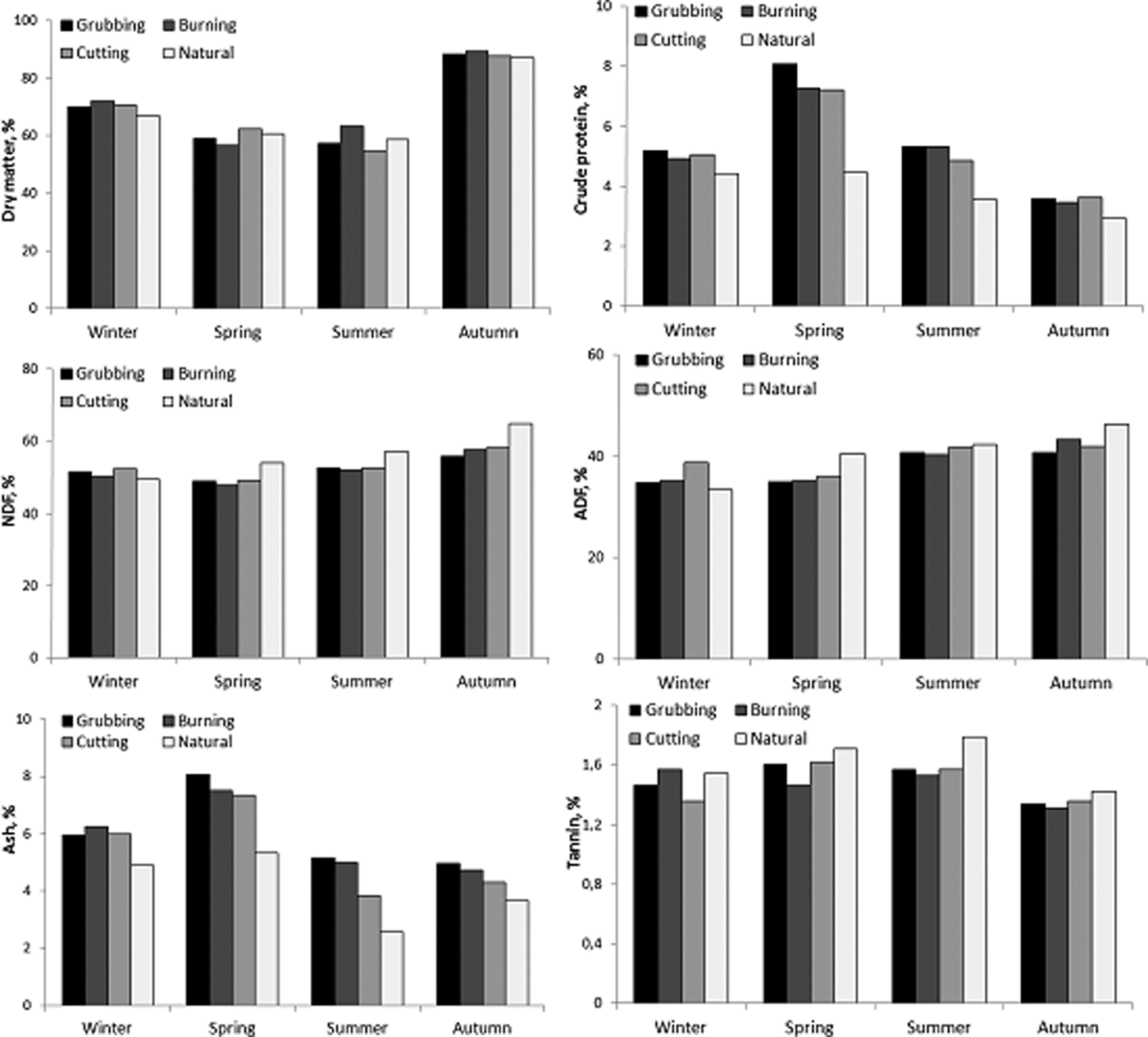
Dry matter and ash analyses were carried out in accordance with AOAC (2000). Crude fat was determined using the Soxhlet extraction method (AOAC 1990). Crude protein content was determined using the Kjeldahl method through wet ashing in a salicylic-sulphuric acid mixture (Bremner Reference Bremner1960). Structural carbohydrate analyses (neutral detergent fibre (NDF), acid detergent fiber (ADF)) were carried out in accordance with Van Soest et al. (Reference Van Soest, Robertson and Lewis1991) and tannin analysis as per Makkar et al. (Reference Makkar, Blümmel and Becker1995). Results of the analyses are shown in Fig. 1.
The chemical composition of rangeland forage according to season and reclamation plot.

Statistical analyses
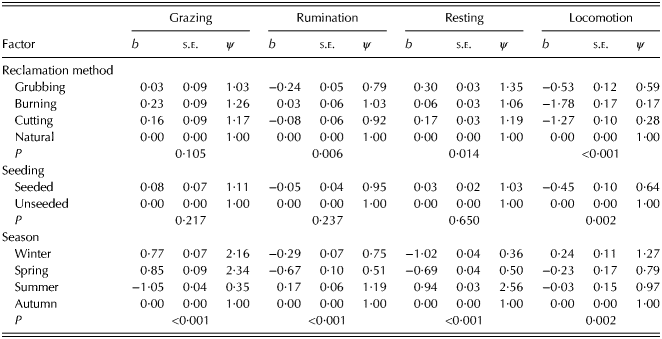
The statistical analysis was performed in SAS (1999) according to GEE (Generalized Estimating Equations) Logistic Regression method with the help of PROC GENMOD. A repetitive binominal distributed threshold model-based analysis was used for behavioural traits (grazing, lying, rumination, locomotion) and plant preferences. The type of reclamation plot (i.e., grubbed, burnt, cut or natural), seeding of plots viz. seeded and unseeded, and seasons (winter, spring, summer and autumn) were placed in the model as fixed factors. The animal was integrated in the model as repeated factor. The odds ratio, regression coefficients and standard error values of the regression coefficients were used for evaluating effects. Odds ratio was defined here as the ratio of observation to non-observation of behaviour. This ratio was calculated from the equation ψ = eb, where ψ is the odds ratio, b is the regression coefficient, and ‘e’ is the exponential constant (Yurtman et al. Reference Yurtman, Savaş, Karaaǧaç and Çoşkuntuna2002; Tölü et al. Reference Tölü, Yurtman, Baytekin, Ataşoǧlu and Savaş2012). The post-hoc analyses were made according to Wald χ2 test.
Data regarding animals’ walking were analysed following a conversion of monthly observations into daily total frequencies. Square root
 $(\sqrt {y + 1} )$
transformation was applied to these data to meet the pre-conditions of variance analysis. Then, the transformed walking behaviour data and plant chemical compositions were subjected to ANOVA (analysis of variance) for repetitive measurements with a model containing the fixed factors of reclamation method (grubbed, burnt, cut or natural), seeding of plots (seeded or unseeded) and season (winter, spring, summer or autumn), and the animal as repeated factor. Pair-wise comparisons were performed using TUKEY's test. SAS (1999) was used for statistical analyses.
RESULTS
Prickly burnet cover was between 0·53 and 0·62 in the six plots where control measures had been implemented, while it was between 0·75 and 0·78 in the two natural rangeland plots (Table 2). The same was also reflected in soil cover ratios. The crude protein ratio and mineral matter content of the rangeland increased in spring (Fig. 1). Natural rangeland plots had lower protein and ash content along with higher NDF and ADF content, compared with other groups (P ⩽ 0·05). Tannin content was found to be 3–4% lower than the tolerable diet concentrations of the sheep (Barry et al. Reference Barry, Manley and Duncan1986).
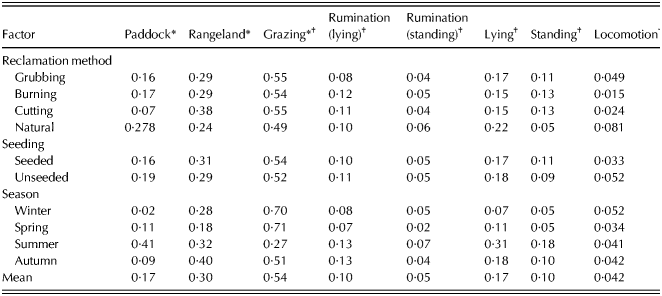
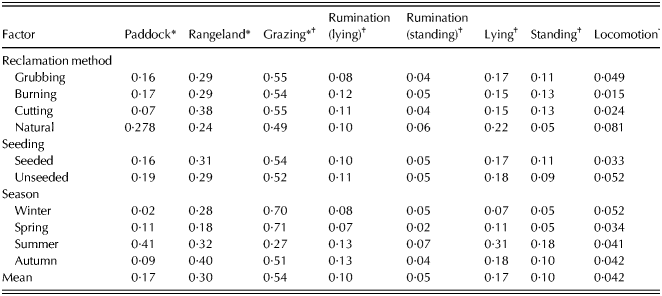
Observation ratios regarding behavioural activities are given in Table 3 and statistical analysis results for behavioural characteristics in Table 4. The sheep in plots spent the majority of their time (0·84, comprising 0·54 grazing, 0·30 other behaviour) in the rangeland. Sheep used paddocks less in the daytime hours (0·17) and more in the summer months (0·41). The ratios of paddock use in spring and autumn were found to be close to each other, while the least paddock use was observed in winter (0·02). The natural rangeland plots with a high (0·28) ratio, and cut plots with a low (0·7) paddock use ratio, were different from the other plots. Paddock use ratios for seeded plots were also close to each other.
Behaviour ratios taken by using time sampling observation method (proportion)
* Proportion of places: paddock, rangeland, grazing.
† Proportion of behaviour: grazing, rumination by lying, rumination by standing, lying, standing, locomotion.
Estimate (b), standard error (s.e.), odds ratio (ψ) and P values of sheep behaviour by time sampling observation method
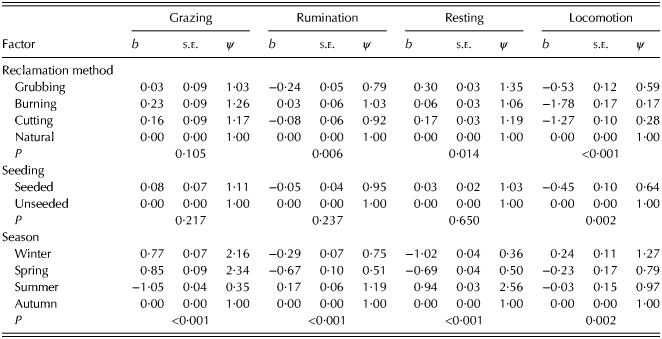
Significant differences were observed in grazing, resting (lying + standing), locomotion (interaction + walking + others) and rumination (by lying and by standing) by season, as given in Table 4. Regarding the reclaimed method, significant differences were found between all behavioural activities, except grazing. In seeded plots, only locomotion varied from the other behaviours. Significant differences were also observed in grazing by season (P < 0·001); the highest ratio was in spring while the lowest was in summer (P ⩽ 0·05). Grazing in summer and autumn was significantly at variance compared with other seasons (P ⩽ 0·05). However, the difference between winter and spring was non-significant. Compared with autumn, Gökçeada sheep grazed 234% (ψ = 2·34) more in spring, 216% (ψ = 2·16) more in winter and 65% (ψ = 0·65) less in summer (P ⩽ 0·05).
The sheep spent almost half their time grazing, and 0·15 of their time ruminating (2/3 of it lying down and 1/3 in standing position), as shown in Table 3. Rumination was found to be significantly different in all factors except seeding (Table 4). The highest rumination was observed in burnt plots (0·17) while the lowest was in grubbed plots (0·12). Grubbed plots, having low rumination ratios, were significantly different compared with the other plots (P ⩽ 0·05). Rumination was found to be significantly variable by season and the ratios, from highest to lowest, were summer, autumn and winter followed by spring (P ⩽ 0·05).
The sheep spent 0·27 of their daytime hours resting (2/3 lying and 1/3 in standing position) (Table 3). Resting was significantly different in all factors (reclamation methods P = 0·014; season P < 0·001), except seeding (Table 4). In reclamation plots, the largest resting ratio was observed in grubbed plots. The grubbed plots, with a high ratio (0·28), were significantly different from the natural and cut plots (P ⩽ 0·05). In the case of resting in seeded plots, no significant differences were found between plots. On the other hand, significant differences were observed in resting according to season (P < 0·001). The largest resting ratio (0·49) was observed in the summer months while the lowest (0·12) was noted in winter months.
The overall average for locomotion composed of walking, interaction and other activities was noted as 0·04 (Table 3). Locomotion was found to be significantly different in all factors (Table 4; reclamation methods P < 0·001; seeding P = 0·002 season P = 0·002). Sheep demonstrated < 0·41 locomotion in grubbed plots, 0·83 in burnt plots and 0·72 in cut plots (P ⩽ 0·05) compared with the natural rangeland plots. Locomotion ratios in unseeded plots were found to be higher than those of the seeded plots (P = 0·002). Locomotion was observed as higher in winter compared with other seasons, and a significant difference was found in locomotion in winter, which was not recorded in the other seasons (P ⩽ 0·05).
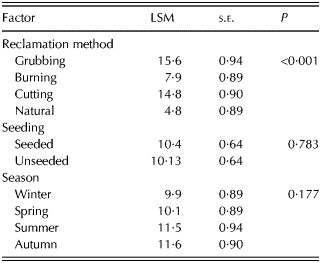
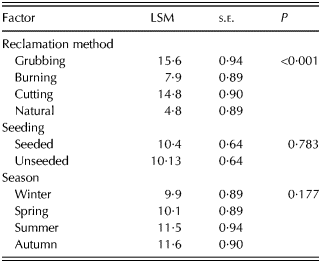
Throughout the daytime behavioural observations, carried out once a month, the sheep exhibited walking behaviour 10·6 times/day (Table 5). They did more walking in the grubbed and cut plots compared with the burnt and natural plots (P ⩽ 0·05). The least amount of walking was demonstrated in the natural rangeland plots (P ⩽ 0·05). Walking did not show significant variability by season. Both winter and spring had values close to each other, but summer and autumn also had similar values regarding the walking of animals; however these were non-significant.
Least squares mean (LSM), standard error (s.e.), and P values for walking behaviour (n/sheep/day) by continuous sampling observation method
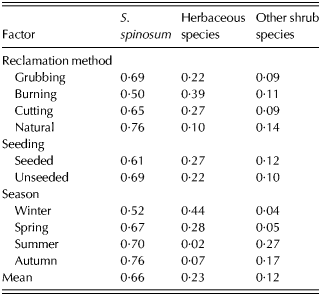
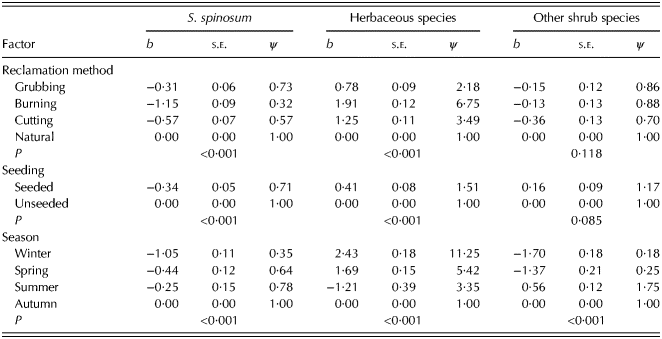
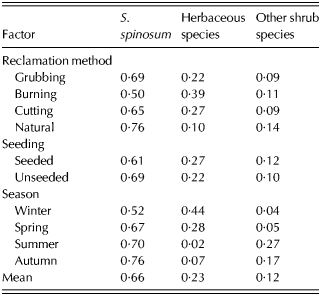
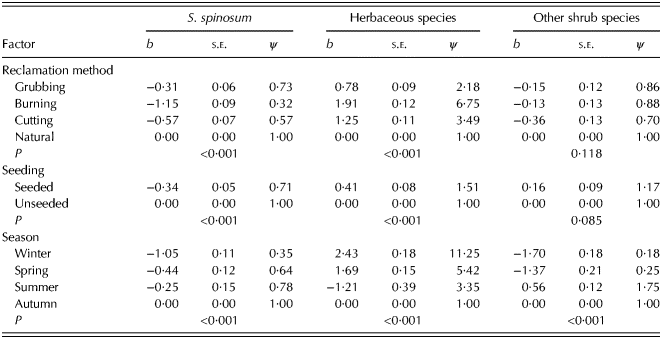
The sheep demonstrated grazing behaviour 0·54 of the time in general and had a 0·66 inclination towards feeding off prickly burnet during grazing (Table 6). All factors had a significant effect on preference of prickly burnet and herbaceous species (Table 7; P < 0·001). Natural rangeland plots, having high prickly burnet and other shrub preferences and low herbaceous plant preference, varied significantly from the other plots (P ⩽ 0·05). Seeded plots had 151% more herbaceous plant preference and 29% less prickly burnet preference compared with unseeded plots (P ⩽ 0·05). Herbaceous plants were preferred much more in winter and spring compared with other seasons, while ligneous plant preferences were low during these seasons (P ⩽ 0·05).
Preference by Gökçeada sheep of plant species during grazing (proportion)
Estimate (b), standard error (s.e.), odds ratio (ψ) and P values for plant preferences of Gökçeada sheep
DISCUSSION
In observations during daylight hours, it was seen that Gökçeada sheep grazed for half of their time. Although dependant on various factors, animals choose to spend most of their time (0·58–0·95) grazing (Arnold Reference Arnold1982; Solanki Reference Solanki2000; El Aich et al. Reference El Aich, El Assouli, Fathi, Morand-Fehr and Bourbouze2007; Tölü et al. Reference Tölü, Yurtman, Baytekin, Ataşoǧlu and Savaş2012; Evangelou et al. Reference Evangelou, Yiakoulaki and Papanastasis2014). In one study, Schlecht et al. (Reference Schlecht, Hiernaux, Kadaoure, Hülsebusch and Mahler2006) mention that cattle, goats and sheep spent about 0·60 of the day grazing. Although results varied according to temperature, humidity and wind, Arnold (Reference Arnold1982) carried out a study in Australia and pointed out that sheep spent 0·58 of the day grazing. Harris & O'Connor (Reference Harris and O'Connor1980) reported that the grazing and resting behaviour of wild sheep changed according to the amount of daylight under New Zealand conditions. The results of previous studies carried out with different species of animals and daytime observations are similar to the results of the present study, in other words, an average of about 8–9 h grazing time was determined in sheep in all seasons (Celaya et al. Reference Celaya, Olivan, Ferreira, Martinez, Garcia and Osoro2007; Ferreira et al. Reference Ferreira, Celaya, Benavides, Jauregui, Garcia, Santos, Grazia, Rodrigues and Osoro2013).
While reclamation method did not influence grazing, some differences were observed in grazing by season. In the current study, sheep spent 0·25 of the daytime hours grazing in summer, 0·5 in autumn and 0·75 in spring and winter. Evangelou et al. (Reference Evangelou, Yiakoulaki and Papanastasis2014) studied the rangeland of northern Greece and reported that sheep grazed 0·58, 0·62 and 0·31 of the time in winter, spring and summer, respectively. During the long and hot days of summer, sheep usually like to graze at night, early in the morning and in the evening (Ferreira et al. Reference Ferreira, Celaya, Benavides, Jauregui, Garcia, Santos, Grazia, Rodrigues and Osoro2013).
The sheep ruminated for 0·15 of the total time but this was affected by reclamation method and season. Animut et al. (Reference Animut, Goetsch, Aiken, Puchala, Detweiler, Krehbiel, Merkel, Sahlu, Dawson, Johnson and Gipson2005) observed sheep for 13·5 daytime hours and reported 0·22–0·28 rumination. Kronberg & Malechek (Reference Kronberg and Malechek1997) performed 10 h of daytime observations and reported 0·27–0·36 rumination in sheep. Tölü et al. (Reference Tölü, Savaş, Yurtman, Hakyemez and Gökkuş2013a ) carried out a study on goats grazed over wheat straw and natural pastures and reported about 0·16 rumination in goats grazed on natural rangelands. Sanon et al. (Reference Sanon, Kabore-Zoungrana and Ledin2007) recorded the rumination of sheep as 0·06, 0·11 and 0·08 in the rainy, post-rainy and dry seasons, respectively. The ratio of rumination ordered from highest to lowest occurred in summer, autumn, winter and spring. Such a finding is totally inverse to the grazing of the animals. The consumptive behaviour of sheep causes a decrease in rumination (Kronberg & Malechek Reference Kronberg and Malechek1997). The type and chemical composition of grazed plants and animal requirements may significantly affect rumination (Tölü et al. Reference Tölü, Savaş, Yurtman, Hakyemez and Gökkuş2013a , Reference Tölü, Akbaǧ, Yurtman, Baytekin and Savaş b ). Higher rumination was observed in the natural and burnt plots with slightly higher DM, NDF and ADF content, and also in summer and autumn. Similar to the current findings, low rumination ratios were observed in the rainy season and high ratios in the dry season in earlier studies carried out on cattle, sheep and goats (Ouedraogo-Kone et al. Reference Ouedraogo-Kone, Kabore-Zoungrana and Ledin2006; Sanon et al. Reference Sanon, Kabore-Zoungrana and Ledin2007).
Gökçeada sheep rested for 0·27 of the time during daylight hours and they mostly rested in the lying position. Schlecht et al. (Reference Schlecht, Hiernaux, Kadaoure, Hülsebusch and Mahler2006) reported that cattle, goats and sheep spent 0·12–0·20 of their daytime hours resting. In the current study, while the highest resting behaviour was observed in grubbed plots (0·28), lower values were seen in the natural and cut plots. Locomotion behaviour was significantly different in all rangeland plots and seasons. The highest ratio was observed in summer (0·49) while the lowest was found in winter (0·12%). Sheep mostly rested during daylight hours and grazed at night in summer, but during the winter they mostly grazed during the daytime. Sanon et al. (Reference Sanon, Kabore-Zoungrana and Ledin2007) recorded the resting ratios of sheep as 0·10, 0·16 and 0·15 in the rainy, post-rainy and dry seasons, respectively. In another study (Ouedraogo-Kone et al. Reference Ouedraogo-Kone, Kabore-Zoungrana and Ledin2006), resting by sheep was reported as being 0·24 in the dry season and 0·10% in the cool season. Evangelou et al. (Reference Evangelou, Yiakoulaki and Papanastasis2014) reported the standing behaviour of sheep as 0·7, 0·17 and 0·44 in winter, spring and autumn, respectively.
During the monthly daytime observations, frequency of walking per sheep varied between 5 and 16 times/day. Significantly higher walking ratios were observed in the grubbed and cut plots compared with the natural and burnt plots. This may have occurred because of the paddock locations and topography. Grazing was recorded as high while resting was found to be low in winter and spring; the opposite was observed in summer and autumn. Thus it can be stated that Gökçeada sheep walked more during the resting periods through travelling between the paddocks and rangeland compared with the grazing periods. In a study carried out on goats of different breeds and ages, Tölü et al. (Reference Tölü, Yurtman, Baytekin, Ataşoǧlu and Savaş2012) determined with 8 h of daily observation that goats demonstrated walking behaviour 18·5–51·7 times daily per animal and also determined that Gökçeada goats walked the least. Slightly lower walking frequencies in the present study were because the sheep were continuously free to go to the rangeland. On the other hand, when compared with goats, sheep generally keep their heads down while grazing and move slower than goats (Bartolomé et al. Reference Bartolomé, Franch, Plaixats and Seligman1998). Wild animal species shape their behaviour mostly based on saving energy; thus wild and domestic herbivores spend the majority of their metabolizable energy on eating and movement (Canas et al. Reference Canas, Quiroz, León-Velarde, Posadas and Osorio2003; Lachica & Aguilera Reference Lachica and Aguilera2005). Therefore, Gökçeada sheep, reared almost in wild (near feral) conditions, kept walking to a minimum level.
In general, Gökçeada sheep spent half their time grazing and between 0·52 and 0·75 of that time grazing prickly burnet. Sheep grazing natural rangeland with the greatest prickly burnet cover had a higher inclination towards grazing prickly burnet as compared with sheep in other plots. Higher shrub grazing ratios were observed in the two natural rangeland plots since the dominant vegetation in these plots was shrubs (about 0·95 of the botanical composition was composed of shrubs). It has also been observed in previous studies that animals usually prefer the dominant species more than other species (Papachristou & Nastis Reference Papachristou and Nastis1993; Papachristou Reference Papachristou, Ledin and Morand-Fehr2000; Tölü et al. Reference Tölü, Yurtman, Baytekin, Ataşoǧlu and Savaş2012).
Prickly burnet was grazed the most in autumn and least in the winter months. The grazing ratios in spring and summer were similar to each other. However, it should be kept in mind that there were differences in the plant parts and nutrient content of prickly burnet in the spring and summer months. Sheep inclination towards prickly burnet in summer was because of the lack of herbaceous species and the tendency in spring was due to the refreshed and enriched nutrient content of the shrub. Such a predisposition also continued in autumn. However, precipitation in autumn softened the grazed sections of the shrub and made their consumption easier for the sheep. Totally eradicated herbaceous plants remerged with the precipitation at the beginning of October. Sheep released onto rangeland at the beginning of the winter months had a 11·2 (ψ = 11·2) times higher propensity to feed off herbaceous plants in winter and a 5·4 times higher tendency in spring months simply because of the dominant herbaceous plant cover among the vegetation. The factors affecting the preference for other shrubs were similar to those factors that affected the tendency for grazing on prickly burnet. Thus, the inclination to feed on other shrubs was lowest in spring and winter when the greatest preference was for herbaceous plants, because of denser herbaceous plant cover in these two seasons. Goats can graze shrubs more easily than sheep (Rogosic et al. Reference Rogosic, Estell, Skobic, Martinovic and Maric2006; Sanon et al. Reference Sanon, Kabore-Zoungrana and Ledin2007) but they also prefer to graze on herbaceous species because of their easy access, digestibility and better taste (Bailey et al. Reference Bailey, Gross, Laca, Rittenhouse, Coughenour, Swift and Sims1996; Tölü et al. Reference Tölü, Yurtman, Baytekin, Ataşoǧlu and Savaş2012; Ferreira et al. Reference Ferreira, Celaya, Benavides, Jauregui, Garcia, Santos, Grazia, Rodrigues and Osoro2013). Sanon et al. (Reference Sanon, Kabore-Zoungrana and Ledin2007) carried out a study with cattle, sheep and goats in Burkina Faso under the same environmental conditions and reported that the highest sheep and goat liking for ligneous species was in the dry season. The sheep tended to graze herbaceous species in winter and humid weather conditions, and then tended to graze shrubs in the dry season (Papachristou & Nastis Reference Papachristou and Nastis1993; Bartolomé et al. Reference Bartolomé, Franch, Plaixats and Seligman1998; Ferreira et al. Reference Ferreira, Celaya, Benavides, Jauregui, Garcia, Santos, Grazia, Rodrigues and Osoro2013).
CONCLUSION
Except in very hot, windy or rainy conditions, the Gökçeada sheep preferred grazing on the rangeland continuously regardless of whether it was day or night. In the summer months they minimized grazing during the middle of the day and grazed mostly in the morning and cool evening hours. During the other hours, they spent their time in rest and rumination. Grazing behaviour and preference of plant species varied significantly according to reclamation method, seeding and season. Existence or extinction of herbaceous plants and structure, and nutritional changes in shrubs, especially prickly burnet (S. spinosum (L.) Spach), were especially effective in such differences. Sheep primarily preferred herbaceous plants, but also grazed on prickly burnet throughout the year. The behaviour of the sheep in the two natural rangeland plots was significantly different from the reclamation plots. Such differences occurred mainly due to the large amount of prickly burnet shrubs in the natural rangeland plots. The sheep did not prefer walking unless they were obliged to, and during grazing they prioritized saving energy, as with wild species.
The authors would like to thank Mr. Ali Önder for looking after the sheep for a period of 1 year. They also extend their gratitude to Mr. Bayram Duran and Mr. Mustafa Duran for their help while supplying the sheep to us. They are indebted to Mr. Ali Kutluca (veterinarian) for the animal health care that he provided. They would be remiss if they did not mention Agric. Eng. Murat Karayavuz and Agric. Eng. Cem Atalay as well as Agric. Eng. Serhat Özdemir for support shown during animal behaviour observations. Their thanks are also extended to TÜBİTAK (Project No: 110O260) for financially supporting this research and Dr Türker Savaş and Dr İ. Yaman Yurtman for their scientific advice while preparing this paper and Mr. Graham H. Lee for editing the language of this paper.