Introduction
Major depressive disorder (MDD) is one of the most common mental illnesses with significant morbidities and mortalities. The current treatment goal is to achieve remission of the illness (Keller, Reference Keller2003). Non-remission of depression not only leads to significant personal distress but also is associated with various adverse outcomes, including substantial psychosocial disability, higher health care utilization (Judd et al., Reference Judd, Akiskal, Zeller, Paulus, Leon, Maser and Keller2000), increased risk of relapse/recurrence (Judd et al., Reference Judd, Akiskal, Maser, Zeller, Endicott, Coryell and Keller1998) and suicidality (Li, Lam, Yu, Zhang, & Wing, Reference Li, Lam, Yu, Zhang and Wing2010). By using the Morningness-Eveningness Questionnaires, subjects could be classified as the morning, intermediate, or evening-chronotype (a circadian preference for later bedtime and rise time) (Horne & Ostberg, Reference Horne and Ostberg1976). About 20% of patients with unipolar non-seasonal depression were found to have evening-chronotype, and they had higher non-remission rate, worse depressive and insomnia symptoms, as well as higher suicidality, as compared to their counterparts with intermediate/morning chronotypes (Chan et al., Reference Chan, Lam, Li, Yu, Chan, Zhang and Wing2014). A recent meta-analysis further corroborated the findings that eveningness was associated with more severe depressive symptoms in the clinical populations with mood disorders (Au & Reece, Reference Au and Reece2017). Light therapy has been well established as an effective treatment for seasonal affective disorder (Pjrek et al., Reference Pjrek, Friedrich, Cambioli, Dold, Jager, Komorowski and Winkler2020). Two recent randomized controlled trials also showed that light treatment resulted in a higher remission of depressive symptoms in patients with non-seasonal depression (Lam et al., Reference Lam, Levitt, Levitan, Michalak, Cheung, Morehouse and Tam2016; Sit et al., Reference Sit, McGowan, Wiltrout, Diler, Dills, Luther and Wisner2018). In addition, light therapy was shown to hasten the effect of antidepressants when used as an adjunctive treatment for non-seasonal depression patients (Benedetti et al., Reference Benedetti, Colombo, Pontiggia, Bernasconi, Florita and Smeraldi2003; Lam et al., Reference Lam, Levitt, Levitan, Michalak, Cheung, Morehouse and Tam2016; Martiny, Reference Martiny2004) but the effect of bright light therapy in depressive patients with evening-chronotype, i.e. those with poorer outcomes, has not been well studied. Apart from improving mood symptoms, light was shown to be effective in phase-shifting the human circadian rhythm (Boivin, Duffy, Kronauer, & Czeisler, Reference Boivin, Duffy, Kronauer and Czeisler1996), and has been used as a treatment for phase advancing in patients with delayed sleep wake phase disorder (DSPD) (Dodson & Zee, Reference Dodson and Zee2010). As the phase-shifting effect of light depends critically on the timing of administration in relation to the circadian phase (Duffy & Czeisler, Reference Duffy and Czeisler2009), theoretically, the use of light therapy at an early fixed timing might risk an inadvertent delay of the circadian rhythm in the patients with evening-chronotype. To address this issue, a protocol of gradual advance of the timing of light therapy according to the baseline habitual wake time and adherence to prescribed light therapy was tested in the current study. The aim of this study was to examine the efficacy of adjunctive light therapy with a gradual advance of timing in evening-chronotype patients with non-seasonal unipolar depression. We hypothesized that the bright light therapy (BLT) group would have a greater improvement in depressive symptoms, a higher remission rate of depression, and other better clinical outcomes, e.g. less sleep disturbance and better quality of life, as compared to the control group (dim red light, DRL).
Methods
Study subjects
Participants were recruited from the psychiatric outpatient clinic of a university-affiliated hospital. Recruited participants were on a stable dose of psychotropic medications, and any change of medications during the intervention period of the study was recorded. Participants who met all the following criteria were eligible for the inclusion in the study: (i) Chinese aged 18–65 years old; (ii) being capable of giving informed consent; (iii) meeting the diagnostic criteria of MDD according to Mini International Neuropsychiatric Interview (MINI) (Sheehan et al., Reference Sheehan, Lecrubier, Sheehan, Amorim, Janavs, Weiller and Dunbar1998); (iv) scoring at least 14 on the 17-item Hamilton Depression Score (17-HDS) component from the Structured Interview Guide for the Hamilton Depression Rating Scale with Atypical Depression Supplement (SIGH-ADS) (Williams & Terman, Reference Williams and Terman2003); (vi) scoring 41 or less in the Morningness Eveningness Questionnaire (Horne & Ostberg, Reference Horne and Ostberg1976) (i.e. evening chronotype). The exclusion criteria included: (i) MDD fulfilling the seasonal pattern specifier of the DSM-V; (ii) a current diagnosis of substance abuse or dependence; a current or past history of manic or hypomanic episode, schizophrenia, personality disorder, mental retardation, or organic mental disorder; (iii) significant suicidal risk in the opinion of the investigator, or had moderate level or above suicidality as assessed by the Suicidality Module of MINI, or had made a suicide attempt in the past 3 months; (iv) a history of light induced migraine/epilepsy; (v) current use of photosensitizing medications; (vi) presence of eye disease: e.g. retinal blindness, severe cataract, glaucoma; (vii) current therapy with drugs that could potentially interfere with one's circadian rhythm, i.e. lithium, exogenous melatonin, melatonergic antidepressants within past 3 months; (viii) shift worker; (ix) trans-meridian flight in the past 3 months and during the study; (x) significant medical condition/hearing impairment/speech deficit which might lead to incapability of completing the clinical interview. All procedures contributing to this work comply with the ethical standards of the relevant institutional committees on human experimentation and with the Helsinki Declaration of 1975, as revised in 2008. All procedures involving the patients were approved by the local clinical research ethics committee (CREC Ref No: 2014.505-T) and the trial was registered with the Chinese clinical trial registry (ChiCTR-IOR-15006937). All subjects have given their written informed consent after explanation of the study procedures.
Clinical assessments
Eligible participants were asked to complete 1-week sleep diary for prospective evaluation of their sleep-wake pattern. All the study participants were assessed at baseline and weekly during the 5 weeks of active intervention, as well as at 1-week post-treatment (P1w), 1-month post-treatment (P1 m), 2-month post-treatment (P2 m) and 5-month post-treatment (P5 m). The primary outcome measures were the rate of remission, as defined by 17-HDS of 7 or less. Secondary outcomes included anxiety symptoms as assessed by clinician-rated Hamilton Anxiety Rating Scale (HAM-A) (Maier, Buller, Philipp, & Heuser, Reference Maier, Buller, Philipp and Heuser1988), and a battery of self-reported questionnaires including Hospital Anxiety and Depression Scale (HADS) (Leung, Wing, Kwong, Lo, & Shum, Reference Leung, Wing, Kwong, Lo and Shum1999), Insomnia Severity Index (ISI) (Bastien, Vallieres, & Morin, Reference Bastien, Vallieres and Morin2001), Beck Scale for Suicidal Ideation (BSSI) (Beck, Steer, & Ranieri, Reference Beck, Steer and Ranieri1988), Chadler Fatigue Scale (CFS) (Chalder et al., Reference Chalder, Berelowitz, Pawlikowska, Watts, Wessely, Wright and Wallace1993) and Short-Form 36 Health Survey (SF36) (Hays, Sherbourne, & Mazel, Reference Hays, Sherbourne and Mazel1993). The self-reported questionnaires were translated and validated in Chinese (Lam, Gandek, Ren, & Chan, Reference Lam, Gandek, Ren and Chan1998; Leung et al., Reference Leung, Wing, Kwong, Lo and Shum1999; Li XY et al., Reference Li, Phillips, Tong, Li, Zhang, Zhang and Niu2010; Wong & Fielding, Reference Wong and Fielding2010; Yu, Reference Yu2010). A higher rating in these clinical assessments indicated a worse clinical condition, except for SF36, at which a higher rating indicated a better health status. CFS and SF36 enquire symptoms over the past 1 month, and were administered at the baseline, fifth treatment week, P1 m, P2 m and P5 m only; while all other assessments were completed at each follow-up visit. The adverse outcomes were monitored by a modified adverse event checklist (AEC), which included common side effects from light therapy based on the previous studies (Levitt et al., Reference Levitt, Joffe, Moul, Lam, Teicher, Lebegue and Buchanan1993; Martiny, Reference Martiny2004; Terman & Terman, Reference Terman and Terman2005; Tuunainen, Kripke, & Endo, Reference Tuunainen, Kripke and Endo2004). Participants were asked to fill in the AEC at baseline in order to differentiate pre-existing somatic symptoms from those treatment-emergent adverse events. The Young Mania Rating Scale (YMRS) (Young, Biggs, Ziegler, & Meyer, Reference Young, Biggs, Ziegler and Meyer1978) was used to monitor possible hypomanic/manic symptoms. At baseline, participants were asked to rate how much they believed the treatment would be efficacious in improving their mood symptoms on a Likert scale from 0 (not at all) to 100 (very much). They were asked to fill in a sleep diary for a week prior to each follow-up. Participants were also instructed to record the timing of light therapy received on the sleep diary. The timeline of intervention and follow-up was illustrated in eFigure1 of the Supplementary Files.
Randomization and treatment blinding
Eligible participants were randomly allocated to either bright light therapy (BLT) group or dim red light (DRL) group according to a computer-generated random number sequence. An independent research worker performed the randomization and assignment of interventions. Participants were informed that the study aimed to compare two different kinds of light treatments but no declaration was made as to which treatment was the ‘placebo’ group. The prescription of light timing was determined and performed by a prescribing psychiatrist (prescriber) who was blinded to the treatment allocation. A clinical assessor (assessor) who was also masked to the group allocation assessed the patients independently at baseline and each follow-up. The randomization list was not accessible to prescriber and assessor to ensure concealment. The study participants were instructed not to reveal their allocated treatment to the assessor and prescriber.
Interventions
Light therapy
Study participants in the BLT group received 5 weeks of daily bright light therapy lasting for 30 min, delivered by a light box sized 15.7″H × 11″W × 7.25″D which emits 10 000 lux white light at eye level at a distance of 40 cm (SunTouch Plus; Nature Bright Company, CA, USA). For the participants in the dim red light (DRL group), they were prescribed 50 lux dim red light. The light boxes of the two groups looked identical when the light was off. The initial timing of light therapy was set at the habitual wake time, as determined by the prescriber based on the sleep diary prior to the baseline session.
Protocol for gradual advance in light therapy start time
Light therapy was started within 1 hour of the habitual wake time, which was inferred from the 1-week sleep diary prior to the baseline visit. Prescriber reviewed the sleep diary and light therapy recorded weekly to determine the timing of the light therapy for each participant. The timing of light therapy was gradually advanced 30 min each week only if the participants were able to adhere to the prescribed treatment adequately (i.e. greater than 50% of the total weekly duration of light therapy received over the past treatment week with timing overlapped with or earlier than the prescribed time of light therapy, which was defined as ‘appropriately-timed LT’). If the participant was not able to adhere to the prescribed timing in the previous week, the timing of light therapy would be kept the same in the following week. The advancement protocol in this study took into account the duration and timing of treatment received.
Statistical analysis
Sample size calculation was based on a previous study of adjunctive light therapy conducted in patients with non-seasonal depression (Martiny, Reference Martiny2004). In order to achieve 95% two-sided confidence level, 80% power, the planned sample size was 44 participants in each arm. Given an estimation of 30% drop out rate, 57 participants were therefore required for each group. The analysis was conducted on an intention-to-treat principle including all the participants who were allocated to treatment. The time to achieve remission and the cumulative remission rate over the 6 months were evaluated using Kaplan–Meier method and the log-rank test. Cox proportional hazard analysis was used to generate the hazard ratios and corresponding 95% confidence intervals based on the Kaplan–Meier estimates. In order to better accommodate missing data without the need for imputation, we have performed analyses of the outcomes by linear mixed models (LMM). Variables that were not normally distributed were log-transformed prior to the mixed model analyses. Cohen's d between-group effect sizes were estimated by dividing each relevant mixed model derived effect estimate by the baseline standard deviation of the dependent variable (Trockel, Karlin, Taylor, & Manber, Reference Trockel, Karlin, Taylor and Manber2014). The group differences in baseline clinical characteristics and the rates of adverse events (AE) were tested by Chi-square tests and t test as appropriate. All the statistical analyses were performed using Statistical Package System Software for Windows 25.0 (SPSS, IBM Corp, Chicago, IL, USA).
Results
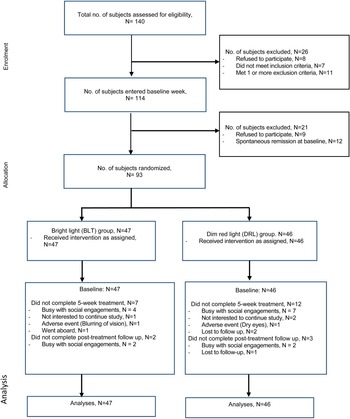
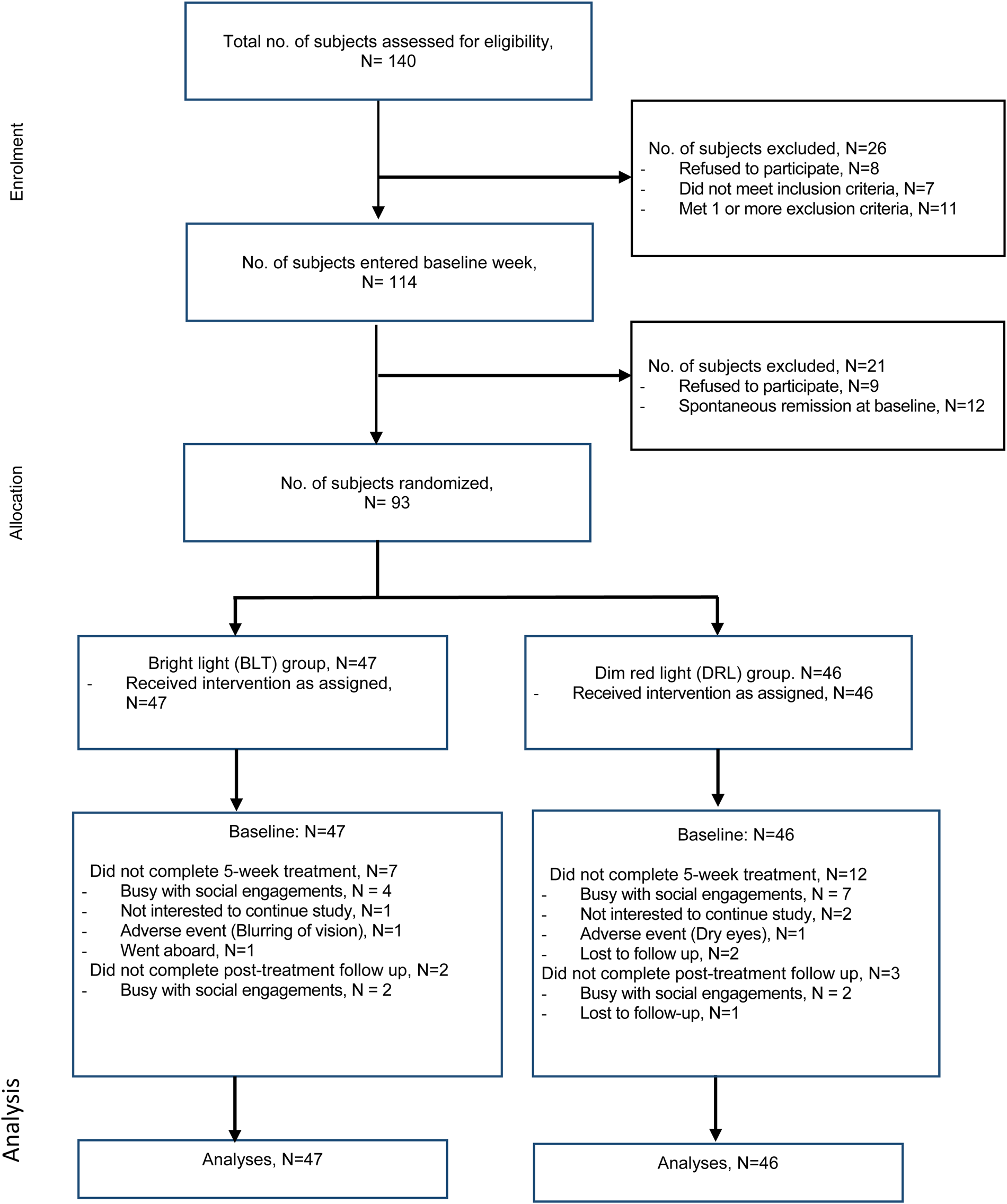
A total of 114 participants with moderate unipolar non-seasonal MDD and evening-chronotype were recruited into this study from September 2015 to December 2018. Although 114 participants fulfilled the study criteria and completed baseline, nine of them subsequently refused to participate further and 12 had spontaneous remission (i.e. 17-HDS scored 7 or less at randomization). Ninety-three participants were then randomly allocated to two groups: 47 to the BLT group and 46 to the dim red light (DRL) group. Data of all 93 participants were analyzed. (Fig. 1).
CONSORT Flow Diagram.
Baseline demographic and clinical characteristics
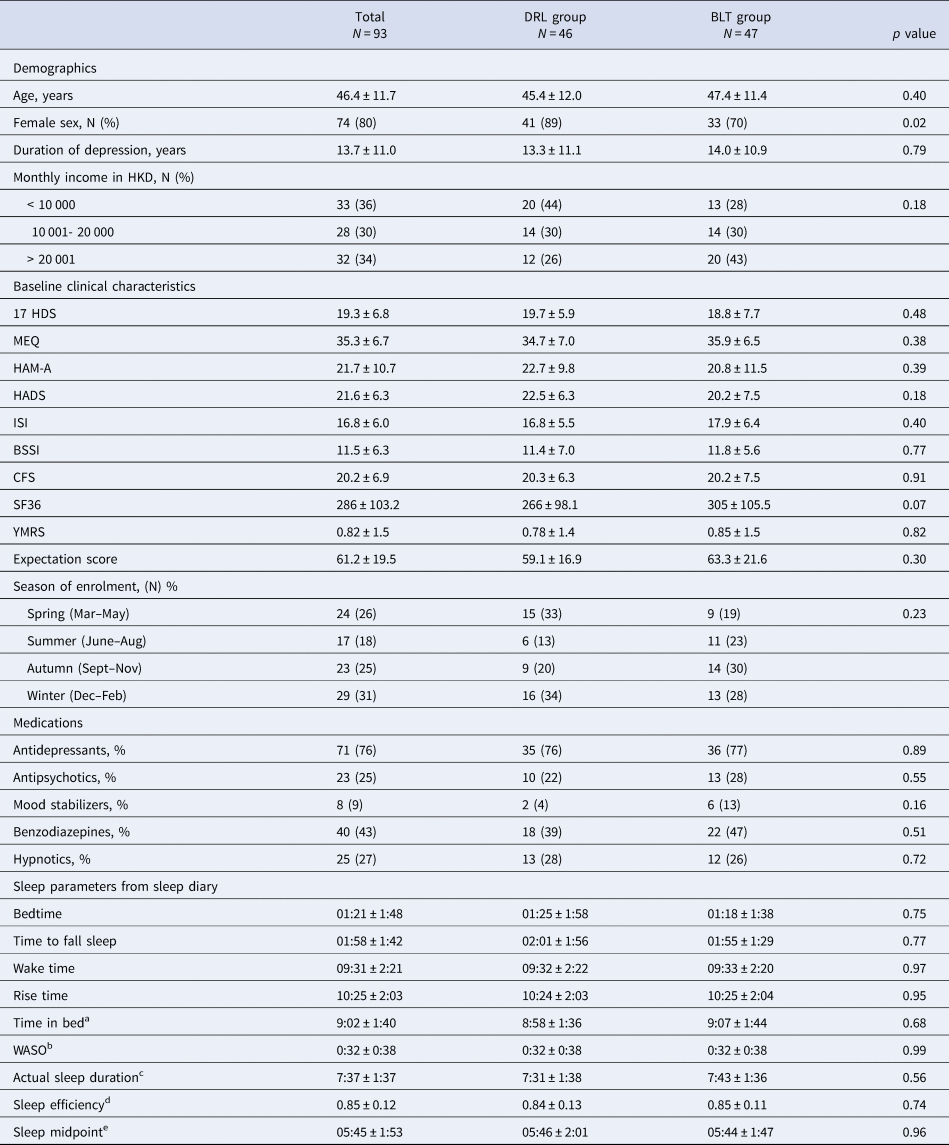
As shown in Table 1, the mean age of the participants was 46.4 ± 11.7 (mean ± s.d.) years old and 80% were female. The average duration of depressive illness was 13.7 ± 11.0 (mean ± s.d.) years. There were no differences in the baseline clinical characteristics, types of prescribed medication and the sleep diary parameters between the two groups, except that there was a slight female preponderance in the DRL group (89% v. 70%, p = 0.02). The 17-HDS was in the range of moderate severity of depression (17-HDS, mean ± s.d.: 19.3 ± 6.8). All the recruited participants were of evening-chronotype (MEQ score, mean ± s.d.: 35.3 ± 6.7) which was consistent with their baseline sleep pattern of a late bedtime (mean ± s.d.: 01:21am ± 1:48) and late rise time (mean ± s.d.: 10:25am ± 2:03). Of note, these participants also had moderate severity of insomnia (ISI score, mean ± s.d.: 16.8 ± 6.0). There was no significant difference in the expectation towards treatment at baseline between the two groups. These findings indicated that the BLT group had comparable demographic and clinical profiles to the DRL group.
Demographics, baseline clinical characteristics and sleep parameters of the subjects in the dim red light (DRL) group and bright light therapy (BLT) group (mean ± s.d.)
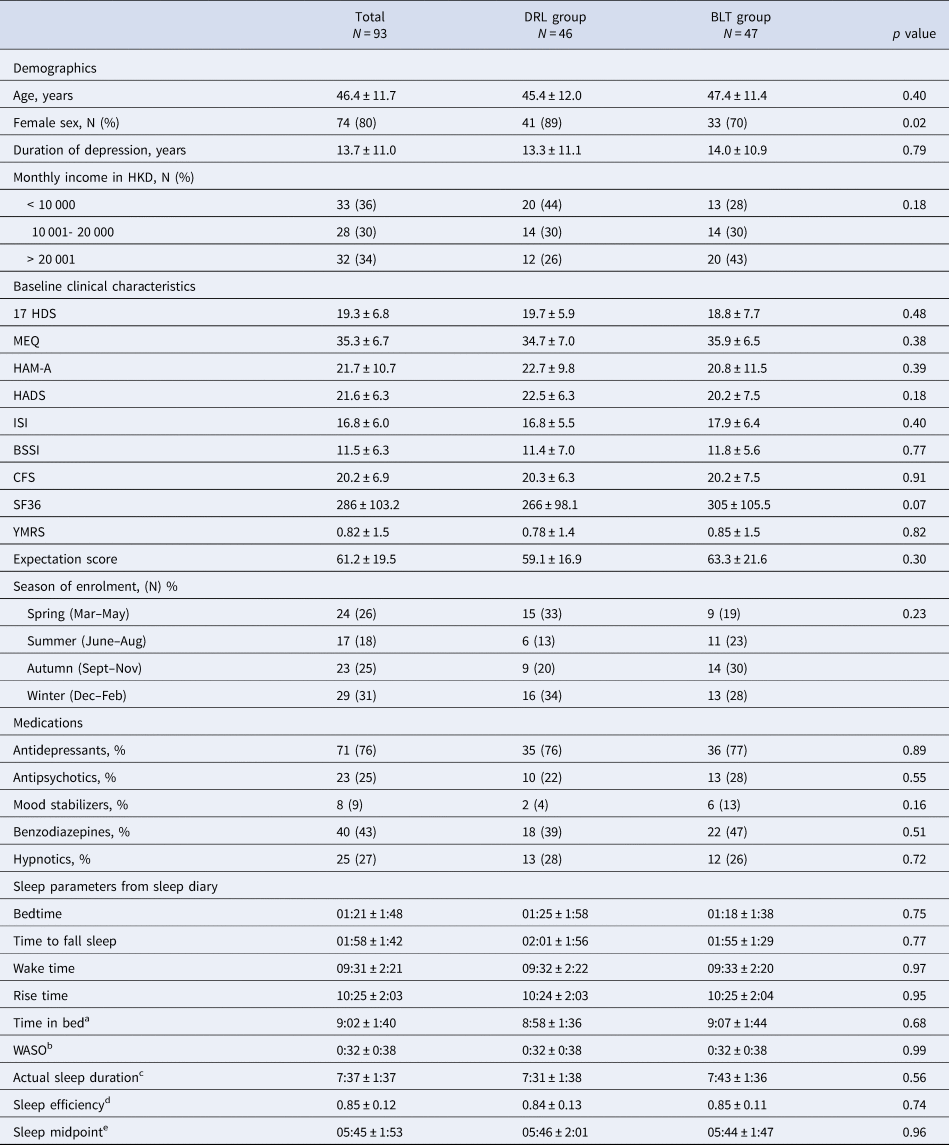
17 HDS, 17-Item Hamilton Depression Score; MEQ, Morningness Eveningness Questionnaire; HAM-A, Hamilton Anxiety Rating Scale; HADS, Hospital Anxiety Depression Scale; ISI, Insomnia Severity Index; BSSI, Beck Scale for Suicidal Ideation; CFS, Chadler Fatigue Scale; SF36, 36-item Short Form Health Survey; YMRS, Young Mania Rating Scale.
Antidepressants include imipramine, mianserin, sertraline, fluoxetine, paroxetine, trazodone, escitalopram, mirtazapine, bupropion, duloxetine, venlafaxine, desvenlafaxine, vortioxetine, milnacipran.
Antipsychotics include quetiapine, risperidone, aripiprazole, sulpiride, chlorpromazine.
Mood stabilizers include lamotrigine, sodium valproate, carbamazepine.
Benzodiazepines include clonazepam, lorazepam, bromazepam, diazepam.
Hypnotics include zopiclone, zolpidem.
a Time in bed is defined as the Bedtime to the Rise time.
b WASO: wake after sleep onset.
c Actual sleep duration = Wake time – Time to fall sleep – WASO.
d Sleep efficiency = Actual sleep duration/ Time in bed.
e Sleep midpoint = the midpoint time between Time to fall sleep and Wake time.
Timing of light therapy and adherence
Both BLT and DRL groups were prescribed light therapy with a gradual advance in the start time over the course of the 5-week intervention (the main effect of time p < 0.01), but the actual light therapy start time recorded by sleep diary in the BLT group was advanced significantly earlier than the DRL group (group × time interaction p = 0.028). The adherence of light therapy, in terms of the weekly total duration of light therapy ranged from 57% to 77% for all the participants. However, the appropriately-timed light therapy duration was lower, ranging from 33% to 62%. The adherence decreased with time but no group difference was observed. (eTable 1).
Primary outcomes
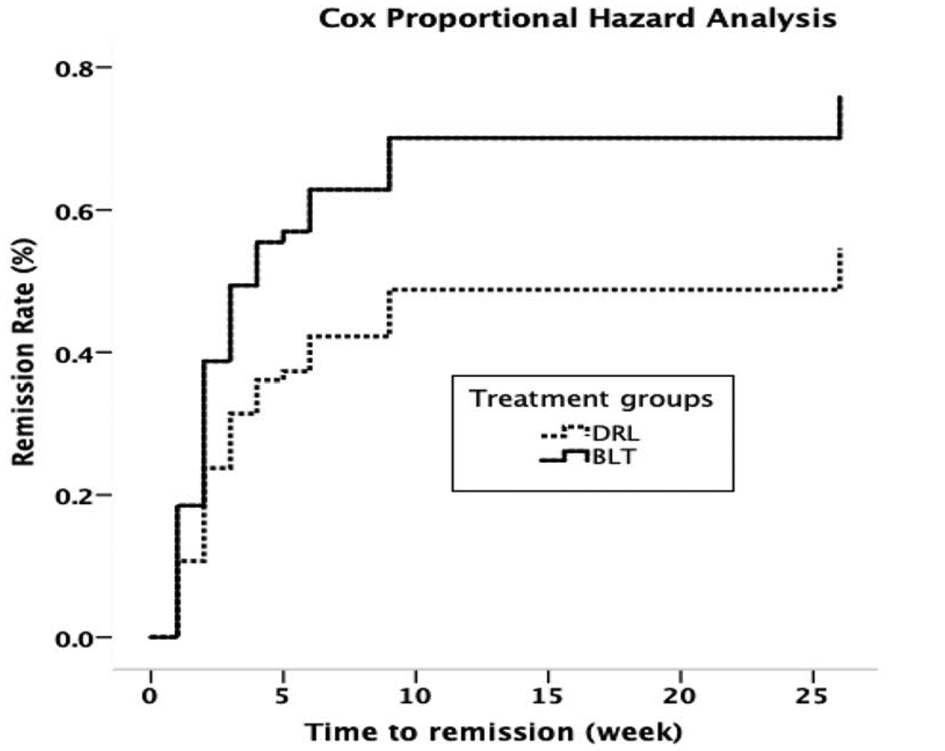
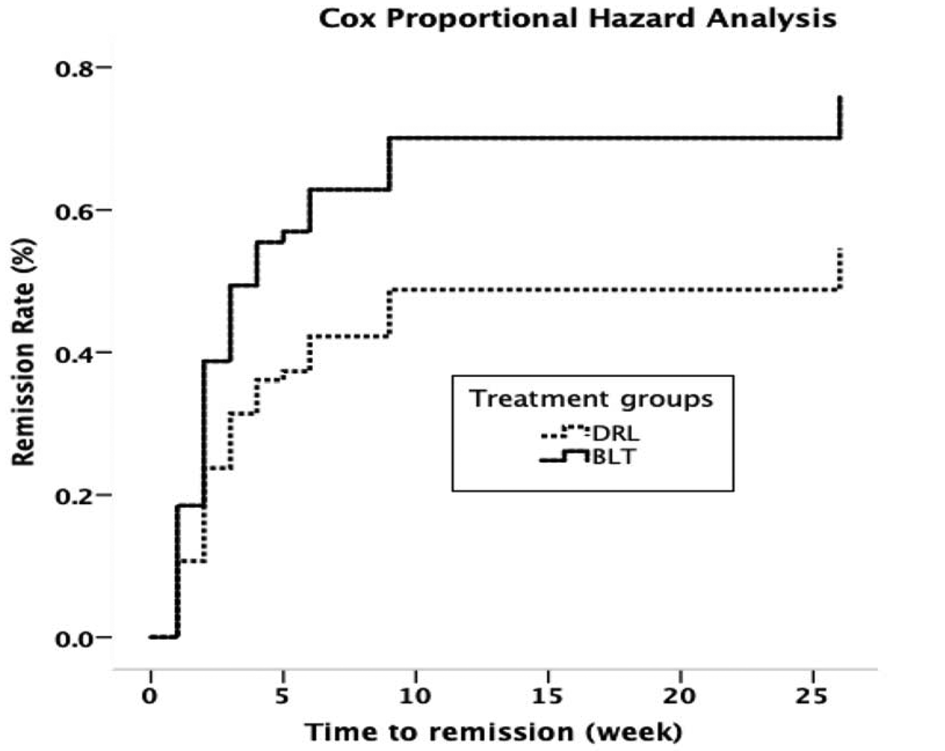
The cumulative rate of achieving remission was 67.4% and 46.7% in the BLT and DRL group respectively. Time to remission was shorter for the BLT group relative to the DRL group (log-rank test p = 0.024). To control for the female preponderance, gender was included as a covariate in the Cox proportional hazard survival analysis, and patients in the BLT group had a higher probability of achieving remission relative to patients in the DRL group [hazard ratio = 1.9 (95% CI = 1.1– 3.4), p = 0.026]. (Fig. 2).
Cox proportional hazard analysis of the time to remission between dim red light (DRL) and bright light therapy (BLT) group.
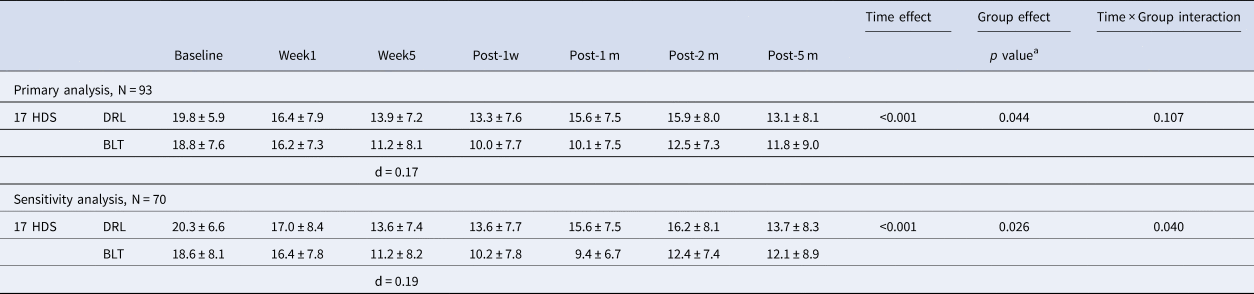
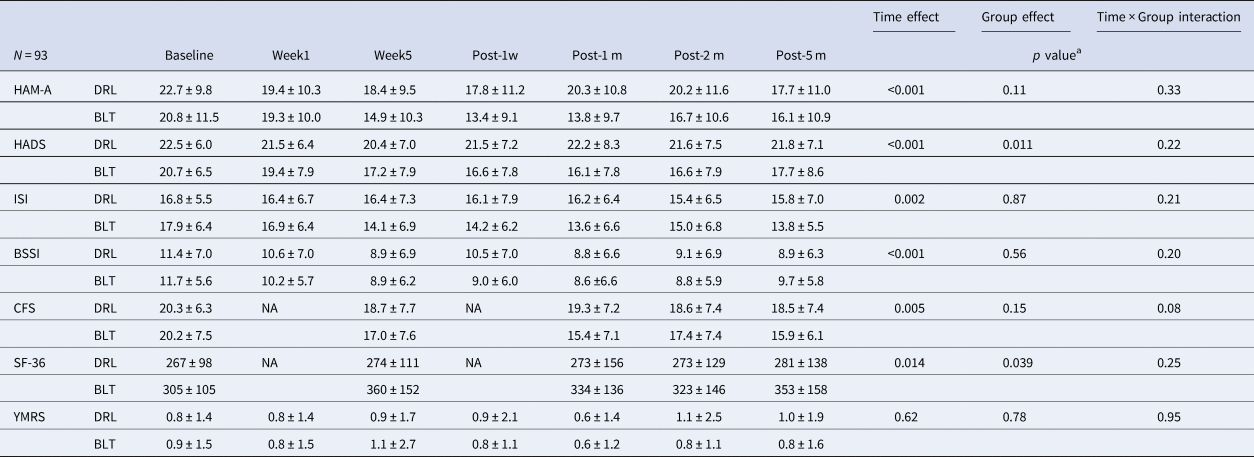
With regard to the clinician-rated depression severity, the 17-HDS was reduced over time in both groups (main effect of time, p < 0.001). There was a significant group effect (p = 0.044) with a lower 17-HDS across all time points in the BLT than the DRL group but the groups did not differ with respect to change in 17-HDS over time (group × time interaction, p = 0.107). The Cohen’d for the between-group effect size was 0.17 (Table 2).
Comparison of depression severity between the dim red light (DRL) and bright light therapy (BLT) group (mean ± standard deviation)
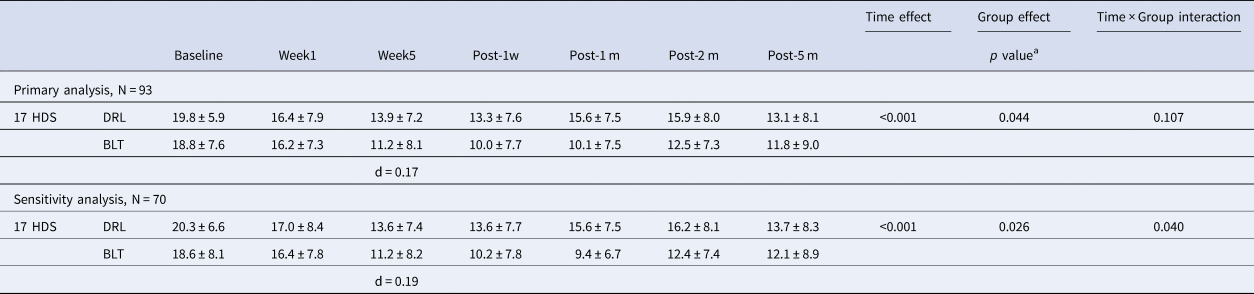
17 HDS, 17-Item Hamilton Depression Score.
a By Linear mixed model.
Note: Data at week 2 to week 4 follow-up could be made available upon requests.
Sensitivity analysis
We performed a sensitivity analysis (Table 2) focusing on those participants who had at least 50% adherence to the total duration of the prescribed light therapy. In total, 70 out of 93 participants (75.3%) were included in the analysis (38 in BLT and 32 in DRL group, respectively). Baseline demographic and clinical characteristics did not differ between the two groups except for a higher SF36 score in the BLT group at baseline. Similar findings on a faster remission (log-rank test, p = 0.022) and a higher probability of achieving remission [hazard ratio 2.0, (95% CI = 1.1– 3.8), p = 0.027] was found in the BLT group. There was also a significant group × time interaction (p = 0.04) on the 17-HDS observed, with a greater improvement in the BLT group. The Cohen's d for the effect size was 0.19.
Secondary outcomes
For other secondary outcomes (HAM-A, HADS, ISI, BSSI, CFS, SF36), each of these assessments showed significant main effects of time but there were no significant group × time interaction effects (Table 3). Similar findings were observed in the sensitivity analysis (eTable 2).
Comparison of secondary outcomes between the dim red light (DRL) and bright light therapy (BLT) group (mean ± standard deviation)
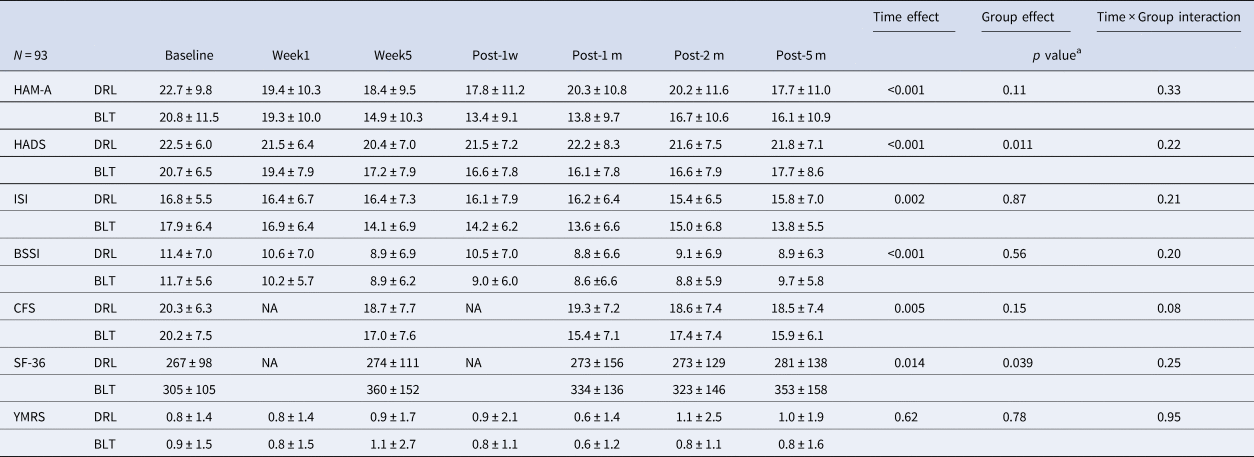
HAM-A, Hamilton Anxiety Rating Scale; HADS, Hospital Anxiety Depression Scale; ISI, Insomnia Severity Index; BSSI, Beck Scale for Suicidal Ideation; CFS, Chadler Fatigue Scale; SF36, 36-item Short Form Health Survey; YMRS, Young Mania Rating Scale.
a By Linear mixed model.
NA: CFS and SF-36 enquires symptoms over the past 1 month, thus were administered at the baseline, fifth treatment week, P1 m, P2 m and P5 m only.
Note: Data at week 2 to week 4 follow-up could be made available upon requests.
Sleep parameters by sleep diary
Along with the gradual advance in light therapy timing, the sleep-wake pattern was also advanced gradually in the treatment weeks, but there was no group × time interaction in these parameters. (eTable 3).
Adverse events
The incidence of treatment-emergent adverse event (AE) was defined as a change from baseline to at least moderate severity (eTable 4). Blurring of vision (18%) and restlessness (12%) were significantly more common in the DRL group, and overall, the incidence of side effects was more commonly found in the DRL than BLT group. Two participants withdrew from the study because of adverse effects: one from DRL group complained of dry eye, another one from BLT group complained of blurring of vision. In both cases, the discomfort was transient and subsided rapidly. There was no treatment-emergent hypomania/mania in the study.
Discussion
Our results showed that 5-week adjunctive bright light treatment with the gradual advance in timing produced a more rapid remission and a higher cumulative rate of remission than the DRL group. With an average duration of depressive illness of 13.7 years, the participants in our study represented those who were difficult to treat and did not remit despite years of treatment. The findings from the present study showed that 5 weeks of BLT with the advance protocol could facilitate their remission of depression, the result was consistent with other light treatment trials of similar duration (Goel, Terman, Terman, Macchi, & Stewart, Reference Goel, Terman, Terman, Macchi and Stewart2005; Martiny, Reference Martiny2004). In concordance with other earlier studies (Benedetti et al., Reference Benedetti, Colombo, Pontiggia, Bernasconi, Florita and Smeraldi2003; Kripke, Reference Kripke1998), adjunctive light therapy showed a quick antidepressant effect, suggesting that antidepressants and light therapy could work synergistically (Benedetti et al., Reference Benedetti, Colombo, Pontiggia, Bernasconi, Florita and Smeraldi2003; Martiny, Reference Martiny2004). With the good tolerability, a lack of drug–drug interactions and relatively few contra-indications, our finding suggested that BLT with gradual timing advancement protocol could be a valuable adjunctive treatment for evening chronotyped depressed patients who did not improve with conventional therapy.
Although there was a parallel improvement of anxiety symptoms, insomnia severity, suicidal ideation and fatigue over time, there were no significant differences between the two groups. The between-group effect sizes on the change of 17-HDS after 5 weeks of treatment was small (d = 0.17 for primary analysis and 0.19 for sensitivity analysis). Compared to the similar small effect size of antidepressants (d = 0.30) (Cipriani et al., Reference Cipriani, Furukawa, Salanti, Chaimani, Atkinson, Ogawa and Geddes2018), the effect size of bright light therapy in this study might still be clinically meaningful as this group of evening-chronotype patients were more difficult to treat with poorer response to treatment (Chan et al., Reference Chan, Lam, Li, Yu, Chan, Zhang and Wing2014). In addition, in the study by Lam et al., significant difference from placebo occurred only after 4 weeks (Lam et al., Reference Lam, Levitt, Levitan, Michalak, Cheung, Morehouse and Tam2016). As the current study only had a modest treatment duration of 5 weeks, it may be possible that a longer duration of bright light treatment might lead to greater response. In contrast to a previous trial of adjunctive light thearpy (Benedetti et al., Reference Benedetti, Colombo, Pontiggia, Bernasconi, Florita and Smeraldi2003), where the timing of placebo exposure was scheduled at 1.5 h after the optimal timing for the light therapy group to avoid the phase advance, the DRL group also underwent weeks of gradual advance in the timing of light therapy in our study as the prescriber of the current study was also blinded to treatment allocation. The bedtime, rise time and sleep midpoint were advanced during the study period in both groups. It has been shown that adherence to a fixed advanced sleep/wake schedule could result in significant circadian phase shifts in young adults with subclinical DSPD with or without morning blue light exposure (Sharkey, Carskadon, Figueiro, Zhu, & Rea, Reference Sharkey, Carskadon, Figueiro, Zhu and Rea2011). The timing of sleep and dim light melatonin onset (DLMO) was also advanced in the DSPD patients in the dim light group that were instructed to gradually advance wake time (Wilhelmsen-Langeland et al., Reference Wilhelmsen-Langeland, Saxvig, Pallesen, Nordhus, Vedaa, Lundervold and Bjorvatn2013). It is possible that the advancement of sleep-wake pattern might have ameliorated the circadian misalignment in the evening-chronotype patients in this study, which might, in turn, contribute to the improvement of clinical outcomes in both treatment groups. Nonetheless, even after controlling for the phase advance effect, the effect of bright light treatment was still evident, with a greater improvement in depression especially in the adherent group. Further study would be needed to delineate the long-term treatment effect of gradual sleep phase advance, alone and in combination with bright light therapy and antidepressant treatment.
Apart from reducing circadian misalignment, it has been suggested that partial sleep deprivation could have contributed to the more rapid amelioration of depression seen in the bright light group (Benedetti et al., Reference Benedetti, Colombo, Pontiggia, Bernasconi, Florita and Smeraldi2003). However, with the gradual advancement protocol in our study, both groups have similar advance in the sleep-wake pattern without incurring sleep deprivation. In addition, the insomnia severity as measured by ISI in both groups remained at the moderate range, irrespective of treatment modalities. This suggested that the mechanism of improving depression by bright light therapy might be independent of the effect of sleep deprivation or the improvement of insomnia. Interestingly, the antidepressive effect of BLT may also be independent to that of circadian effect by acting via the retino-raphe projection (from retinal ganglion cells to dorsal raphe nucleus) to modulate the serotoninergic tone directly (Ren et al., Reference Ren, Luan, Lau, Huang, Yang, Zhou and Pu2013). Nevertheless, the persistence of insomnia in this group of evening-type depressed patients further argues that insomnia itself would deserve an independent, focused treatment. Future study should investigate the effects of the concurrent cognitive behavioral therapy for insomnia (CBT-I) in addition to BLT in treating insomnia and depression.
The adherence rate to the total duration of light therapy ranged from 57% to 77% in our study, whereas the reported adherence rate in another 5-week study (Martiny, Reference Martiny2004) (albeit without precise definition) was nearly 90%. However, the adherence to the appropriately-timed light therapy was 35–62%, the suboptimal adherence in our study could be partially related to the recruitment of the patients with evening-chronotype, which was often associated with poorer self-regulation (Owens, Dearth-Wesley, Lewin, Gioia, & Whitaker, Reference Owens, Dearth-Wesley, Lewin, Gioia and Whitaker2016), greater procrastination (Digdon & Howell, Reference Digdon and Howell2008) and more irregular lifestyle (Monk, Buysse, Potts, DeGrazia, & Kupfer, Reference Monk, Buysse, Potts, DeGrazia and Kupfer2004). The difficulty in motivating evening-chronotype patients in treatment represents a clinical challenge. There is a need to explore additional ways (e.g. via motivational interviewing (Micic et al., Reference Micic, Richardson, Cain, Reynolds, Bartel, Maddock and Gradisar2019)) to improve adherence in futur research, in order to maximize the treatment benefits when providing light therapy in this unique clinical population.
Strengths and limitations
This was a double (prescriber and assessor) –blinded randomized controlled trial which would have limited the potential bias from each party. We had a long follow-up period that was up to 5 months post-treatment. However, some limitations of this study should be noted. First, despite randomization, there was a slight female preponderance in the DRL group. We have further controlled this potential covariate, and previous studies also did not show any gender difference in the treatment response in light therapy (Lam, Reference Lam1994; Leibenluft, Hardin, & Rosenthal, Reference Leibenluft, Hardin and Rosenthal1995). Second, the remission in this study was defined by a 17-HDS of seven or less. The symptomatic timeframe as assessed by 17-HDS was limited to the past 1 week. It could be possible that there was a fluctuation of depressive symptoms between the assessment timepoints, especially in the follow-up period. The relapse of symptoms was not captured in the survival analysis.
Conclusion
Our findings suggested that adjunctive bright light therapy with gradual advance timing protocol is effective in producing a quicker and better antidepressant effect in non-seasonal unipolar depressed patients with evening-chronotype.
Supplementary material
The supplementary material for this article can be found at https://doi.org/10.1017/S0033291720003232
Acknowledgements
This project was supported by the Health and Medical Research Fund, The Food and Health Bureau, The Government of Hong Kong Special Administrative Region (Ref 12131131). The funder (The Food and Health Bureau, Hong Kong) of the study had no role in study design, data collection, data analysis, data interpretation, or writing of the report.
Conflict of interest
Yun Kwok Wing- Received personal fees from Eisai Co., Ltd for lecture, travel support from Lundbeck HK Limited, outside the submitted work. Others - none