1. Introduction
There is an interesting but largely unexplored genealogy of racial classifications and categories on the Canadian census. A question on the racial origins of the population occurred on some of the earliest censuses of the pre-Confederation era and continued on nearly every census of the nineteenth and early twentieth centuries. In 1951, the census abandoned the language of race, instead featuring a question on “ethnic origins.” Then, in 1996, a newly designed question was put alongside the question on ethnic origins in order to more accurately enumerate the nonwhite populations of Canada. Only two studies of race and the Canadian census describe this evolution, but neither answers the question of why these changes occurred.Footnote 1 What explains the fits and starts of the ways that Canada counted by race? How and why did racial taxonomies in the Canadian census change and with what consequences?
In brief, I argue that the racial questions and classifications in the Canadian census have been shaped by the interactions among evolving global ideas about race, programmatic beliefs of international epistemic communities of statisticians and census designers, and domestic institutions involved in the administration of the census. The argument is threefold. First, Canadian census designers drew from shifting global conceptions about the nature of race and racial difference—for example, whether race is broadly understood as a biological truth or a social construction. These macro-level ideas exist transnationally, beyond the borders and control of any one nation-state. They are also rather ubiquitous, but can be made more finite if they are institutionalized in the mandates, declarations, or processes of international organizations. These racial worldviews have changed over time, often because of exogenous events with global repercussions, such as war or the transnational ripple effects of developments in racial politics elsewhere. Second, Canadian census designers often paid heed to the programmatic beliefs of the international statistical community, which are more systematic, coordinated, and policy-specific ideas about the appropriateness and necessity of collecting racial data.Footnote 2 These ideas can be influential in domestic policymaking arenas in part because census administration is a highly technical enterprise, involving the mobilization of time, people, money, and importantly, expertise. Programmatic beliefs also changed over time as the concerns, knowledge, and understanding of these experts evolved. Taken together, racial worldviews inform the legitimate ends of race policies, while programmatic beliefs inform the appropriate means of achieving those ends. On the whole, these transnational ideas work as a global-level cultural code, providing a range of acceptable policy options that actors can draw from when making decisions.Footnote 3
Finally, the evolving political institutions involved in the administration of the census mediated these racial worldviews and programmatic beliefs, and actors therein molded them to fit the Canadian national context through two processes: cultural translation and institutional translation. Cultural translation is the process through which actors attempt to create congruence between transnational and domestic norms. The characteristics of a norm may help or hinder this process. If a transnational racial idea resonates with domestic norms already in place, then this strong “cultural match” can make the diffusion of the racial idea more rapid.Footnote 4 But the process of creating cultural congruence is an interpretive exercise—actors can make norms appear to be congruent by discursively aligning transnational racial ideas and “national cultural repertoires.” These help citizens and policymakers conceptualize race as a political category and conceive of rational, temporally situated solutions to problems of racial hierarchy, conflict, and inequality. Institutional translation is the process through which actors localize programmatic beliefs by incorporating them into domestic institutional orders. Localization is not simply a matter of changing institutional practices and behaviors to make them consistent with external ideas.Footnote 5 Rather, it is a process through which local actors use their institutional power and position to adapt programmatic beliefs of international epistemic communities to meet and mesh local institutional practices. Given that the conceptual and political terrain of race politics is full of landmines, these translational processes do not inevitably lead to policy change. Even with support from powerful actors, ideas constantly run the risk of blockage as they traverse political arenas.
In empirical terms, this article traces evolving transnational racial ideas and programmatic beliefs, and details varying processes of institutional and cultural translation that mediated their impact on racial questions and classifications in Canada from the earliest censuses of the nineteenth century until the 1960s. The nineteenth- and early twentieth-century debates among scientists and ethnologists legitimated the central tenets of biological racialism—tenets crafted through domestic and international racial projects such as imperialism, colonialism, and slavery. At the same time, emergent epistemic communities of statisticians and census administrators advanced the idea that moral statistics could be used to solve pressing social issues and agreed that counting by race served compelling state interests. In the territory that would eventually become Canada, weak colonial institutions and competitive cultural animosity between Anglophones and Francophones made census-taking efforts difficult, though demarcating black and indigenous populations was an important colonial imperative. Confederation in 1867 catalyzed a number of institutional developments and gave census designers more discretion over the translation of racial worldviews and programmatic beliefs. The architect of Canadian statistics was able to tweak the classification rules for the origins question in order to institutionalize peculiar interpretations of Canadian national identity as bicultural, while upholding the hierarchical ordering of what was presumed to be biologically distinct races. As political elites and high-level bureaucrats consolidated and centralized the statistical system in the early twentieth century in accordance with international trends, the influence of racial worldviews and programmatic beliefs became even more pronounced. The census was fortified as a racial project, in which eugenicist language and logic shaped racial classification rules, and counting by race in the census was used to solidify and protect the boundaries of whiteness.
A major shift in racial worldviews occurred in the aftermath of the Second World War, spurred by a tidal wave of exogenous global events, such as the Holocaust, decolonization, the burgeoning norm of human rights, and the foreign policy debates of the Cold War. In this transnational moment, the normative context surrounding the previously dominant conceptualization of race as irrefutably biological and the hierarchical organization of superior and inferior races fundamentally changed. Perceptions of democratic legitimacy in the Anglophone West now depended in part on an adherence—at least, officially—to the principles of racial equality. The invalidation of biological racialism raised important pragmatic questions in the newly formed International Statistical Commission of the United Nations (UN): If race was no longer considered legitimate, were census questions that differentiated among racial groups appropriate? Programmatic beliefs of transnational networks of statisticians and census designers shifted from unequivocal support of efforts to count by race in national censuses to recommending that such questions be excluded. These discussions were influential in Canada because of the centralized and relatively autonomous structure of the statistical system. At the same time, key policy actors, most notably the dominion statistician, once again modified transnational ideas to suit dominant racial frames in Canada, which significantly overlapped with nation-building projects such as colonialism, the management of the French/English cleavage, and the elusive search for a Canadian national identity.
It was therefore the interaction of transnational and domestic factors that drove the political development of racial taxonomies in the Canadian census. Transnational ideas alone cannot explain these changes. It is never a foregone conclusion that racial worldviews will be adopted in domestic contexts, and even if they are, domestic-level outputs are rarely emulated blindly and completely. Domestic contexts still matter; those “deeply rooted cultural beliefs that inform the goals and desires that people bring to the political world and, hence, the ways they define and express their interests; the meanings, interpretations, and judgments they attach to events and conditions; and their expectations about cause-and-effect relationships in the political world,”Footnote 6 which are often informed by immediate political and social environments. Similarly, though domestic-level explanations are important, archival research reveals that Canadian census designers believed the dominant racial worldviews of the day and worried about the reputation of Canada's statistical system among its peers. They actively sought to learn from the experiences and experiments of policymakers in other countries, rationally rejecting wholesale ideational or policy emulation and instead excluding certain elements of transnational ideas that could harm the existing social or political order of the time and adapting other aspects that they believed to be more effective in the Canadian context.Footnote 7 The impact of transnational racial ideas, therefore, is always filtered by domestic-level processes of cultural and institutional translation, which can modify, mediate, or obstruct their influence.
In theoretical terms, this exploration of interactive political development in the context of the Canadian census raises an important question about generalizability of American political development (APD) scholarship: just how American is APD? On one hand, both APD and the subset of the field that interrogates race and APD are decidedly, distinctively, American. Early works in the field sought to challenge “stateless” accounts of American politics and government by placing the development, capacities, and peculiarities of American institutional arrangements at the center of analyses.Footnote 8 In The Search for American Political Development, Orren and Skowronek write that to examine APD is “tantamount to interrogating the national premise” and the “master narrative of American politics” of America's unique origins and its people's manifest destiny.Footnote 9 Peculiar features and arrangements of American politics, such as federalism and localism, the separation of powers, the party system, and the distinct process of state formation, are often used to explain the persistence of racial inequality in the United States.Footnote 10 APD scholarship on race often employs developmental narratives that focus on four uniquely American critical junctures: the founding era, the Civil War and Reconstruction, the New Deal, and the civil rights movement.Footnote 11 There is also a tendency to give primacy to the black-white binary that emerged from slavery and its aftermath, thereby ignoring the racial formations that defined the legal status of Native Americans, Asian immigrants, former Mexican citizens, and those who inhabit the borderlands within racial classification systems.Footnote 12 Though this body of work is influential in its ability to see race as more than an irrational, outdated system of individual beliefs, instead conceptualizing racial categories as “social constructions with historically embedded accretions of power relations,”Footnote 13 these racial formations are often conceptualized as wholly American in origin, implementation, and consequence. This is likely a ramification of the disciplinary location of both APD and race and ethnic politics scholarship within the subfield of American political science.
On the other hand, there is nothing particularly American about defining political development as durable shifts in governing authority or examining the ways that the entrenchment of institutional arrangements at specific historical moments foreclose otherwise viable alternatives.Footnote 14 Nor does specifically American-focused scholarship have a monopoly on paying attention to how those acting within state institutions and in the name of the state make, enforce, and interpret public policy.Footnote 15 As Richard Bensel writes, if we think of the term “American” in APD as a modifier rather than a dictum, “the term specifies the spatial and temporal boundedness of American political development without ascribing unique principles to that experience…. the modifier American could be replaced by any other national adjective or dispensed with altogether.”Footnote 16 In an excellent review of the intellectual origins and affinities of comparative politics and APD, Kimberly Morgan suggests that there is much to be learned from a comparative approach to political development.Footnote 17 For example, King and Lieberman suggest that a comparative-historical analysis of the emergence, persistence, and adaptation of American democracy provides a valuable set of puzzles that have much to add to our understandings of the causes and processes behind democratization.Footnote 18 In addition, Robert Lieberman notes that many of the key questions that form the basis of APD research are animated by an implicitly comparative assumption about the exceptionalism of American policy architectures, especially in studies of the welfare state and explorations of specific policy areas such as health care. He writes that “many, if not most, works in the APD tradition come down to arguments about specific national configurations of political institutions, ideas, or culture—that generally leave unspoken the counterfactual speculation that were the prevailing institutions (or ideas or cultural formations) different, the outcomes would have been different as well.”Footnote 19 A series of workshops in 2015 and 2016 held at the University of Toronto and Oxford University were premised on the idea that putting studies of American, British, and Canadian (conveniently, ABC) political development side by side, or using comparative-historical analysis to examine these cases in tandem, could yield important and revealing insights, even to national literatures with long-established orthodoxies.Footnote 20
The mounting calls for comparative work suggest that the theoretical toolbox of APD can readily be adapted and applied to circumstances outside the United States. Such efforts include the use of wide-angle lenses to allow for macro and longitudinal analyses of politics; asking the big questions of why, but especially how, and what happened?; examining the applicability of theories of institutional stability, such as intercurrence and path dependency, and incremental change, such as layering, drift, and conversion; and taking history, institutions, and especially the role of (racial) ideas seriously.Footnote 21 The few comparative studies of race politics that have incorporated the United States as a case study have made important and original contributions to our understandings of historical and contemporary racial formations, especially in combatting the seductive but parochial logic of American racial exceptionalism.Footnote 22 A comparative political development perspective on the racial politics of the census can also test the conclusions generated by the literature on race and the U.S. Census. For example, in their examination of racial taxonomies in the U.S. Census between 1880 and 1930, Hochschild and Powell argue that census officials’ choices of racial categories were driven in part by contestation between Congress and the bureaucracy for political control over the census.Footnote 23 Congressional oversight over the census is a key institutional dynamic in the U.S. context; how might the parliamentary system of government, the relative centralization of the Canadian statistical system, and autonomy of the Dominion Bureau of Statistics in Canada change the nature of contestation over counting? One of the theoretical goals of this article, therefore, is to determine what adjustments (if any) are required to enable APD to be equally illuminating of the causes, composition, and consequences of Canada's racial order.
Moreover, comparative political development is a first and necessary step to understanding the ways in which processes of political development may be shaped by forces that are not confined by territorial boundaries. This contention builds upon long-standing efforts in international relations to demonstrate that international influences such as war and trade have an explicit impact on domestic structures.Footnote 24 The literature on policy diffusion in international relations and sociology, for example, demonstrates that the policy choices of one country are often shaped by the choices of its neighbors as decision makers attempt to learn from the policy experiments of their peers. The adoption of similar policies in different countries can also be catalyzed by the proliferation or institutionalization of norms in epistemic communities and international organizations.Footnote 25 Additionally, the “transnational turn” in history is centrally concerned with how “movements, flows, and circulation,” are fundamental to historical processes.Footnote 26 While a comparative approach might reveal the ways that these processes, networks, ideas, or institutions vary across time or space, transnational analysis is premised on the understanding that these forces exist beyond the borders of the nation-state and are constituted by and through their movement between places, sites, or moments.Footnote 27
Drawing from the literatures on diaspora studies, transnational history, and constructivist international relations, I argue that macro-level ideas about race—such as whether it is biologically determinative or a social construction—are transnational. Here, transnational is not necessarily the same as global or universal. Rather, as Aiwah Ong suggests, the trans in transnational denotes both movement across space or boundaries and the changing nature of something as it moves.Footnote 28 Paul Gilroy's formulation of the Black Atlantic notes the importance of both the roots of racial ideas and the routes through which encounters among individuals, ideas, and institutions shift, realign, constitute, and recreate race across space and time.Footnote 29 Transnational lenses zoom in on interactions, exchanges, constructions, and translations across borders, as well as the significance of different national experiences of the same global phenomenon.Footnote 30 In this way, and as many have argued, race is a distinctively modern, transnational idea that emerged over several centuries as a result of the need to create sharp divisions between Europeans and non-Europeans in the Atlantic slave trade, the spread of European colonial rule throughout Africa and Asia, and, eventually, the pseudo-scientific racial ideologies of the nineteenth and twentieth centuries.Footnote 31 Conceptualizing race as transnational challenges accounts of racial exceptionalism that tend to bind race with state sovereignty, giving primacy to “internal dynamics at the expense of global patterns and intertwined national-state legacies of racial domination.”Footnote 32 Thus, insofar as we can conceptualize racial ideas as existing within, through, and beyond the purview or control of any one nation-state,Footnote 33 the theoretical toolbox of APD provides a means through which we might examine how domestic racial orders are interactively constituted.
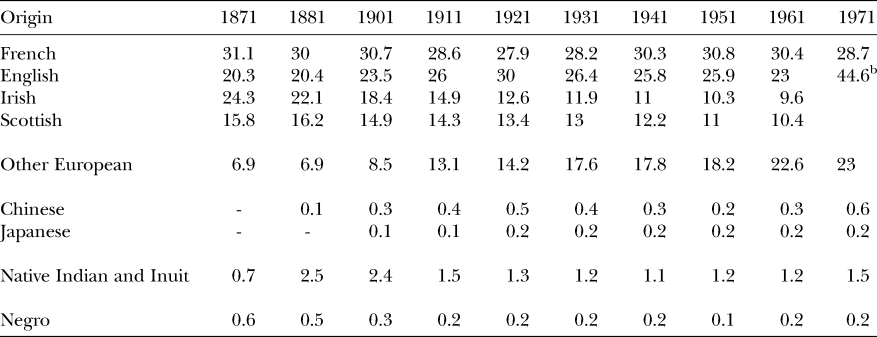
This article focuses on major shifts in racial schematics on the Canadian census from the nineteenth century until the 1960s for a number of reasons. First, this periodization demonstrates that the fits and starts of Canada's erratic history of counting by race have little relation to the demographic composition of the Canadian population. Table 1 provides a summary of key identity groups that contributed to Canada's evolving diversity between 1871 and 1971.
Ethnic Origins of the Canadian Population, 1871–1971 (percent of total population)a

a Notes. Statistics Canada, Origins of the Population, Census Dates, 1871–1971 (Ottawa: Statistics Canada), Table A125-163.
b Estimates for the “British” category, which includes English, Irish, Scottish, and Other.
The racialized segments of the Canadian population were numerically quite small until the last decades of the twentieth century, with the combined populations of Chinese, Japanese, and black groups holding steady at less than 1 percent of the Canadian population between 1871 and 1971, even as the total population grew from 3.4 million in 1871 to 21.5 million a century later. The Aboriginal population was also quite small, declining from 2.4 percent of the population in 1901 to 1.5 percent in 1971. It was not until the 1980s and 1990s that significant demographic changes took hold: Between 1981 and 2001, the number of “visible minorities” in Canada increased from 1.1 million, or 5 percent of the population, to 4 million people, or 13 percent.Footnote 34 The most recent census data from 2016 reveal that 22.3 percent of the population, around 7.7 million people, identify as a racial minority, and the proportion of visible minorities is expected to reach one-third of the population by 2036.Footnote 35 Though Canada is now among the most racially diverse countries in the OECD (Organisation for Economic Co-operation and Development), it was during the nineteenth and first half of the twentieth century that that successive Canadian governments were greatly concerned about enumerating the comparatively miniscule nonwhite population.
Second, in spite of Canada's contemporary reputation for its diversity, multiculturalism, and tolerance, its history is marred by segregation, state-sanctioned discrimination, and patterns of racial inequality that have persisted into the twenty-first century. Slavery in Canada was not as pervasive as in the United States or Latin America, but it existed nonetheless, lasting over two hundred years and only coming to an end when slavery was abolished by imperial decree in 1833.Footnote 36 Legalized discrimination against racialized minorities in the criminal justice system, housing, education, employment, education, and voting continued well into the mid-twentieth century.Footnote 37 Racially exclusive immigration laws effectively prohibited nonwhite immigration until 1967, when a race-neutral points system came into effect.Footnote 38 Indigenous territorial dispossession was a colonial imperative, and the Indian Act regime was purposefully designed to govern the lives of Aboriginal people from cradle to grave.Footnote 39 These paternalistic processes of assimilation were violent and destructive, involving the theft of indigenous lands, the suppression of indigenous cultures, and the denial of access to the means through which Aboriginal people could challenge the state (e.g., Indians were prohibited from retaining legal counsel).Footnote 40 The residential school system, which forcibly removed Indian children from their homes and communities and placed them in church- or state-run schools where they experienced physical and sexual abuse, amounted to nothing less than cultural genocide.Footnote 41 The ongoing violence faced by indigenous women, girls, and gender-diverse and nonbinaryFootnote 42 people, painstakingly detailed in the 2019 Final Report of the National Inquiry into Missing and Murdered Indigenous Women and Girls, identifies colonization as an inherently gendered form of oppression.Footnote 43 For these reasons, many indigenous scholars in Canada use the framework of “internal colonialism” instead of race, racism, or racialization to emphasize the ongoing exploitative relationship between the Canadian government and Aboriginal peoples. It is a term that encapsulates the compounding relationships among processes of racial discrimination, territorial dispossession, and the displacement of traditional Aboriginal cultures and modes of governance.
In 1965, sociologist John Porter argued that though Canadians understood the country to be a mosaic of ethnic and racial hues, particularly in contrast to the American “melting pot,” it was in fact a “vertical mosaic” with British-origin Canadians at the apex of an ethno-racial hierarchy.Footnote 44 Though differences in income and wealth between English and French Canadians have now disappeared, and other white ethnic groups earn more on average than British-origin citizens, “racial minorities in Canada remain at a disadvantage, some groups significantly so, and Aboriginal peoples are hugely disadvantaged.”Footnote 45 Rather than emerging as a result of the demographic fact of an increasingly diverse population and egalitarian sociopolitical environment, the country's multicultural, multiracial national identity was carefully crafted and honed by successive Canadian governments beginning in the 1970s and involved a convenient, if not purposeful, obscuring of historic and contemporary discussions about racism in Canada.
An exploration of the political development of racial questions and classifications on the Canadian census therefore stands to reveal a great deal about the origins and evolution of the Canadian racial order. According to Michael Dawson, the racial stratification that has historically shaped (American) political, social, and economic life coalesces into a racial order, which assigns racial groups “various degrees of citizenship rights, legal status, relationships to the security apparatus, places in the economy, and the amount of status conferred on members of each racial group.”Footnote 46 With their focus on the evolution and impact of American ideas and institutions, APD scholars have often been at the forefront of political science scholarship that seeks to understand the intractable influence of race on the creation, maintenance, and evolution of political orders and the American state.Footnote 47 There is also a small but notable body of work that examines the formation of racial orders outside of the United States. Often drawing from Michael Omi and Howard Winant's Racial Formation in the United States,Footnote 48 this scholarship examines the nexus of race and state through citizenship laws, racial classifications systems, legacies of colonialism, mechanisms of state control and surveillance, civil rights regimes, and social activism.Footnote 49 This work is comparative, global, cross-disciplinary, and multi-paradigmatic,Footnote 50 but also shares with APD an institutionalist core, historical orientation, and nuanced understanding of how race is deeply embedded in state apparatuses. Research by George Fredrickson, Ira Katznelson, Michael Hanchard, Anthony Marx, Robert Lieberman, Howard Winant, Tianna Paschel, Erik Bleich, Danielle Clealand, and Mark Sawyer has illuminated the dynamics of racial orders in comparative context, demonstrating that though the vast majority of race scholarship can be found in the American-centered subfields of the social sciences, the desire to understand the United States as an exceptional case can be challenged through comparative-historical analysis.Footnote 51
A number of excellent studies of race and the census in the United States and Latin America hold in common the idea that racial categories are an integral component of a country's racial order, including Melissa Nobles's trailblazing book Shades of Citizenship, Jennifer Hochschild, Vesla Weaver, and Traci Burch's Creating a New Racial Order, Desmond King and Roger Smith's Still a House Divided, Kenneth Prewitt's What is Your Race?, and Mara Loveman's National Colors.Footnote 52 In advancing these racial schemas, the census is both a racial project of the state and an administrative hub in the service of other state-backed racial projects.Footnote 53 Yet, unlike the extensive literature in APD that explores the relationship between race and the various manifestations of the American state, there is very little literature in Canadian political science that theorizes “the role of the Canadian state in producing legal and discursive concepts of race and ethnicity in comparative perspective.”Footnote 54 In her 2009 presidential address to the Canadian Political Science Association, Miriam Smith argued that to more fully develop a field of “Canadian political development,” political scientists must conceptualize diversity as a question of political power related to the protection of rights, the allocation of resources, and access to political participation rather than a paradigm of folkloric multicultural recognition.Footnote 55 This article therefore seeks not only to contribute to the rich scholarship on race and APD, but also to acknowledge the substantial work that remains to be done to more fully comprehend the emergence, dynamism, and persistence of the Canadian racial order.
The remainder of this article is organized into four empirical sections that cover broad periods of time characterized by evolving racial worldviews and census-taking practices of the state. In section 2, I examine the pre-Confederation censuses of Canada in terms of how the demands of empire shaped census imperatives. The third section considers the post-Confederation censuses as an integral element implicated in building the Canadian state and institutionalizing the Canadian nation as comprising “two founding races.” In section 4, I explore the classification standards employed within the racial origins question between 1900 and 1945, which reinforced a hierarchical racial order. The final section details the ejection of the terminology of race from the census in the postwar era and its replacement with the more benign concept of ethnicity, once again institutionalizing the national primacy of linguistic difference. The article concludes with a brief exploration of the relevance of APD for the study of race politics outside the United States.
2. Counting Colonials (1763–1860)
Counting and classifying by race in early colonial censuses was important to the imperial administration of British North America during the pre-Confederation era, the period delineated by the British acquisition of New France following the Seven Years War until the provinces were united by Confederation in 1867. The racial classifications featured in these early precursors of the decennial census demonstrate the influence and significant evolution of two emergent transnational forces. First, the proliferation of a biological conceptualization of race, and, second, the birth of modern statistics and the eventual emergence of an international community of statisticians devoted to expanding and standardizing the collection of demographic statistics across the globe. At the same time, actors within evolving colonial political institutions interacted with these transnational ideas and sought to translate them in ways that aligned with the priorities of both empire and colony. One such priority was the management of the conflict between the French- and English-speaking denizens of British North America, while another was maintaining colonial racial hierarchies by carefully counting black and indigenous populations. These efforts, however, were often hampered by a lack of administrative capacity as the colonial state attempted to imagine and reimagine the demographic composition of its dominion.Footnote 56
Canadian statehood was embryonic for much of the nineteenth century, but Great Britain was a burgeoning empire, powered as much by information as by the raw materials and natural resources extracted from its colonies. In practical terms, census tabulations provided London with a sense of the empire's resources, wealth, territory, and population. Some of the earliest censuses in modern history were conducted in what would eventually become Canada and included race as a noteworthy mode of classification. In 1767 both Nova Scotia (including what is now New Brunswick) and Prince Edward Island (then called “St. John Island”) enumerated origin (English, Irish, Scotch, American, German, Acadian, and “not given”) and race (white, Indian, or Negro). By the early decades of the nineteenth century, the British government sought to make enumeration a more regularized affair. In 1817 the Parliamentary Select Committee on Finance, seeking to reduce colonial expenditure in the wake of the 1815 depression, asked for more information on the financial returns of the colonies, and in 1822 each colonial governor was sent a “Blue Book” in which he was to fill in details relating to taxes, income and expenditures, military requirements, birth, marriages, deaths, and other statistics.Footnote 57
The census was an important though imperfect means through which British imperial identity and power were extended. In ideological terms, the systematic counting of bodies was, as Arjun Appadurai argues, not just an extension of the preoccupation with numeracy sweeping across Europe, but also worked to create a sense of imperial control and define what was controllable.Footnote 58 The racial composition of the various British colonies mattered a great deal in how British administrators viewed each colony's worth to the empire and potential for independence. From the purview of the metropole, the success of settler societies was determined in part by whether the settlers could attain a demographic advantage over native and enslaved or free black populations. In this context, “European and non-European, or ‘white’ and ‘black’ or ‘colored’ gained potency as categories for understanding the Empire.”Footnote 59 Early census-taking efforts across the empire varied considerably depending on local issues and administrators, especially before processes were partially standardized in the 1860s. In spite of local peculiarities of counting the population, by the 1830s the sheer number of people considered to be “British subjects” was a source of imperial pride.Footnote 60 From the colonial viewpoint, contributing to this growing population was a means of demonstrating Canadian loyalty to the Crown. As the report of the 1861 Census of Prince Edward Island noted, “In these figures, our Island adds its quota to swell the vast and accumulating mass of Statistics now in-gathering, under Imperial auspices, from the remotest regions—Statistics which will be viewed as a monumental record—valuable, because authentic—of the might and resources of that extended Empire, in whose unity and prosperity we all feel a deep and abiding interest.”Footnote 61
Estimates on the racial composition of colonial populations were explicitly requested by the Colonial Office in the early nineteenth century, and classification schemas of British colonies varied widely. The first Blue Books of the 1820s and 1830s contained a threefold distinction between white, free colored, and slave populations. Once slavery was abolished in 1833, a white/colored dualism formed the basis for the majority of classification schemas throughout the empire.Footnote 62 Initial proposals for taking a census of the British empire in the mid-nineteenth century, advocated by Superintendent of Statistics William Farr and Lord Stanley, the Secretary of State for War and Colonies, specifically required that a question on race be included.Footnote 63 Without independent political institutions of its own at this point, the colonial administrators of British North America implemented any statistical directives from the Crown, though efforts were stymied by a lack of administrative capacity.Footnote 64
The Act of Union in 1840, which united the colonies of Upper Canada (now Ontario) and Lower Canada (now Quebec) under a model of responsible government,Footnote 65 was a dramatic transformation of the Canadian political landscape. In the context of a reluctant partnership imposed by imperial decree, the census became even more important for the centralization of political power and consolidation of knowledge. In her exploration of the cultural history of census taking in Great Britain, Kathrin Levitan writes that “it is precisely because the Canadian colonies were inhabited by white-settler majorities that the government in London was willing to give up control of local census taking, just as it gave up control of other aspects of administration and governance.”Footnote 66 One of the first enactments of the new legislature of the colony authorized the taking of a periodic census. Early attempts at a Dominion-wide census quickly became the target of sectarian animosity over representation in the equally partitioned Legislative Assembly, which required a two-thirds majority to pass laws. The Anglophone minority initially promoted the principle of equal representation, while Francophones preferred representation by population, each group attempting to maximize its legislative power. These respective positions would reverse when increased Anglophone immigration created new settlement patterns that dwarfed the Quebecois population.Footnote 67 Regardless, those who stood to lose from a switch to representation by population would often cry foul and claim census results were faulty—though this was, in fact, the truth—once the political implications of the data were made clear. The lack of administrative machinery led to numerous census failures in 1842, 1847, 1848, and 1850. When the 1847 Census and Statistics Act created a Board of Registration and Statistics to oversee general statistical matters, its first Secretary, Walter Cavendish Crofton, was a patronage appointee who did little to advance Canada's statistical system beyond the status quo. Against the recommendations of an increasingly robust international statistical community, census administration relied on the cooperation of local governments, which caused many problems in terms of the consistency required for an accurate enumeration.Footnote 68
These census failures were increasingly consequential in the mid-nineteenth century precisely because of the emergence of an international community of statisticians who saw the need to create and implement scientific standards for counting populations around the world. During the first World's Fair, or the “Great Exhibition,” in London in 1851, a small circle of experts from European countries developed the idea of an international congress on statistics to work for greater comparability in statistical publications.Footnote 69 The International Statistical Congress, spearheaded by Belgium's social statistics pioneer, Adolphe Quetelet, and the superintendent of the American Census Office, Joseph Kennedy, was formed in 1853.Footnote 70 Between 1853 and 1876, nine additional international statistical conferences were held throughout Europe, “an important phase in the acceptance of statistics as a guiding instrument of political decision-making.”Footnote 71 The meetings covered the definitions of the principal branches of statistics (demographic, economic, and social), the centralization of statistical offices within member states, and the field of comparative international statistics.Footnote 72 Great Britain was a key participant in the formation of the International Statistical Congress, in part because Prince Albert (the consort of Queen Victoria) was both a friend and former student of Quetelet, who is widely regarded as the founder of international statistics. Prince Albert credited Quetelet for introducing him to the ways that higher mathematics could be applied to social phenomena.Footnote 73 Speaking in his role as president of the International Statistical Congress in 1860, the prince stated that “these International Congresses pave the way to an agreement among different Governments and Nations to follow up these common inquiries, in a common spirit, by a common method for a common end.”Footnote 74 It was in this climate that the British Colonial Office pushed colonial administrations, including those in Canada, to adopt the census-making procedures of the International Statistical Congress as a template in the late 1850s.Footnote 75 The development of Canadian statistics was influenced by these international discussions. Census officials attended the Fourth International Statistical Congress of 1860 and were situated firmly within this international network. There were also bilateral discussions with the United States, where census officials regularly corresponded with their Canadian counterparts and shared sample forms, instructions, and published reports.Footnote 76
Though the institutions and practices of census administration evolved with the help of the international statistical community, census-takers on the ground still faced a great deal of ambiguity with regard to how, exactly, to racially enumerate the population. The 1844 Census, for example, included in its schedule a column labeled “persons of colour” (“personnes de couleur”), which enumerators were to leave blank to identify the white population. Blacks could be counted by filling the column with the letter “B”—an important distinction, particularly in keeping track of Canada's former slave population and the Black Loyalists who had fought for Britain during the American Revolution in return for their freedom from American slavery and were expelled to Canada for doing so.Footnote 77 One census commissioner complained that the census form failed to differentiate between “full-blooded blacks” and “mulattoes”—yet another important demarcation, according to the dominant racial beliefs of the time. It was also unclear on which side of the color line were indigenous peoples. The commissioner went on to lament, “and as for the poor savages, the primitive children of the earth, we have great difficulty in knowing what to do with them. What corner shall we put them in? This is a prickly question. Shall we blacken their faces and line them up in the 39th and 40th columns, among ‘people of colour’?”Footnote 78
The idea that different races existed was a matter of common sense at the time. In fact, the 1849 instructions from the General Register Office in Britain about how censuses should be administered in the colonies considered race to be as “sufficiently obvious” as recording a respondent's age, such that neither category required further explanation.Footnote 79 Though the existence of different races may have been obvious, the precise meaning of race was a different story. During the nineteenth century, an entire body of scientific thought sought to explain the nature of racial differences and develop the most accurate classification system of the human species.Footnote 80 Conflict reigned over consensus for a time. Monogenists, such as the French physician François Bernier and naturalist Georges Buffon, Britain's Johann Blumenbach and James Pritchard, and America's Samuel Stanhope Smith, argued that all races of man were the same species with a common historical ancestry, and differences in skin color, anatomy, temperament, intelligence, and morality could be attributed to different physical and social environments. Polygenists, such as Sir William Lawrence and George Gliddon in Great Britain, Georges Cuvier and Joseph Arthur de Gobineau in France, and Samuel Morton, Louis Agassiz, and Josiah Nott in the United States, however, believed that the various races were, in fact, different species, racial hierarchies were natural, and racial hybrids were degenerate.Footnote 81 The common denominator of these transnational ideas was the conceptualization of race as biological and of biological differences as determinative. In other words, race determined one's intellectual capabilities, culture, temperamental dispositions, behaviors, and moral worth.
The censuses of 1852 and 1861 occurred in the midst of increasingly consequential transnational scientific debates about whether human beings were descended from a “pure type” or if different races were in fact different species, if slavery was in any way justifiable, and what would be the future of the American union. After the passage of the Fugitive Slave Act in the United States, which put escaped slaves and free blacks alike in danger of being kidnapped and sold into slavery, approximately 15,000 to 20,000 black people entered Canada between 1850 and 1860, increasing the African-descended population of British North America to nearly 60,000.Footnote 82 Using a combination of birthplace and origin data to ascertain the character and content of the population, these censuses specifically required enumerators to identify any “persons of colour—negroes” (“personnes de couleur, ou nègres”) and “Indians.” The instructions to enumerators for the 1851 Census relayed that they would “at once apprehend by the term ‘colored persons,’ is meant negroes.”Footnote 83 In 1861 the instructions requested that this population be counted carefully to improve upon estimates of blacks in Canada. The designation “persons of colour” also included mulattoes, who were to be discerned by an “M” after the respondent's name. In accordance with dominant racial ideas at the time, mulattoes were believed to be biologically inferior because of the clash of their irreconcilable racial bloodlines, but were also living, breathing warnings of the dangerous potential of interracial relationships. For example, Samuel Howe, a member of the Freedman's Inquiry Commission appointed by President Lincoln in 1863, focused his 1864 report The Refugees from Slavery in Canada West on blacks in Canada to belay American anxieties that intermarriage was inevitable: “With freedom and protection of their legal rights; with open field for industry, and opportunities for mental and moral culture, colored people will not seek relationship with whites, but will follow their natural affinity, and marry among themselves.”Footnote 84 Unlike many American states, Canadian provinces did not officially prohibit interracial marriage,Footnote 85 though the practice was strongly discouraged, and the classification rules for mixed-race offspring relied on a Canadian version of the one-drop rule, explored further below.
The inclusion of Indians on the census form served a twofold political purpose. White-settler societies such as Canada were preoccupied with creating and maintaining unequal colonial relationships with indigenous populations by signing treaties that ultimately transferred underlying title to the land to the Crown. Including Indians in the population count made the colony seem more populous—a clear measure of colonial success. It also provided information about the size of the indigenous population, and longitudinal data could be used to determine whether Indians were, in fact, “dying out.” Historian Bruce Curtis writes that at the time, “most politicians and intellectuals were convinced of the inevitability of Aboriginal assimilation—or extinction, but counting them in the interim would increase the number reported as the colonial population, something in which the [census] board was interested—while perhaps satisfying imperial government demands for information about the magnitude of its treaty obligation.”Footnote 86 In Canada, state strategies of indigenous extermination and assimilation were intertwined state imperatives, driven by overarching ideas of biological inferiority. In particular, the post-Confederation Indian Act and residential school system, discussed further below, sought to simultaneously assimilate, and sometimes murderously eliminate, indigenous peoples.
Even from these early censuses of the territory now known as Canada, cultural and institutional translations of transnational racial ideas were important in shaping Canadian racial schematics. The beginnings of Canadian statistics were haphazardly supported by weak institutions, themselves an outgrowth of a temporary political compromise between Britain and its colonial administration. Though there was a newfound desire for statistics catalyzed by a growing international epistemic community, these efforts were further hampered in Canada by the competitive cultural animosity between the country's Anglophone and Francophone components. Discursively, censuses help to shape and visualize the nation, making the disparate parts of the community an imagined whole. The separate, and largely inadequate, enumerations of Canada East and Canada West failed in this endeavor. The process of counting blacks and Indians, however, was oddly unifying in the face of these cultural and linguistic divisions. Enumerators were instructed to carefully count the black population and indigenous peoples, though the Board of Registration and Statistics believed them to be in “gradual decline” from natural inferiority. The precise definition of race during this time was in flux, but the racial categories in the census drew lines between the white, black, and indigenous populations, conferring a veneer of administrative legitimacy and making the socially constructed divisions of humanity appear natural and immutable.
3. Statistics and State-Building (1860–1900)
The racial classification schema of the first of post-Confederation censuses were designed to create a particular vision of Canada—one that identified Quebec's place in the new nation—while upholding the basic principles and hierarchies of biological racialism. As the international statistical community became more robust, prevalent, and influential, Canadian political elites and newly appointed census administrators sought to stay abreast of international trends concerning the development and execution of a national census. They translated racial worldviews of biological racialism and programmatic beliefs of the growing international statistical community and designed classification rules for the origins question that solidified the Quebecois as a founding race and nation, calcified racial preferences in immigration law, and abetted the assimilative goals of the Indian Act regime. In a few short decades, racial statistics became integral to the Canadian state's dual projects of nation-building and colonialism.
As the Dominion crawled toward Confederation in the 1860s, it joined other states in becoming increasingly interested in the “science of society.” The international rise of statistics began with European powers—France, Belgium, and England—and soon extended throughout Europe, its colonies, and North America. Statistical societies sprung at national and international levels. Census administrators had access to new ideas, drew lessons from elsewhere, and, in turn, saw their innovations molded to fit other contexts. State institutions with the specific purpose of collecting and analyzing statistical data consolidated, and this newfound wealth of information began to be used to formulate public policies and shape national imaginaries. Statistics were a new form of objective knowledge that “embodied the hope of discovering the ‘laws of society’ and improving the moral and material standard of living.”Footnote 87 Quetelet's body of work, especially his statistical concept of the “average man” and his arguments that systemic observations could be used to predict patterns of behavior, circulated throughout Europe and America through the meetings of the International Statistical Congress and its successor, the International Statistical Institute.Footnote 88 These imperatives enabled the use of statistics to study a society's most pressing social problems—disease, public health, deviancy, crime, education, poverty, and, particularly in North America, racial difference.Footnote 89
In the years leading up to Confederation, political elites began to realize that statistics were a useful way of ascertaining the potential of a unified Canada not just as a colony of Britain but as a political entity unto itself. This required institutions more dedicated to the production of statistics than the previous, temporary organizations responsible for the tabulation failures of the past. Recognizing that Canadian statistics were underdeveloped compared to other “civilized” nations, politician Thomas D'Arcy McGee assessed the capacities of the colonial state in his 1863 “Report on Government Departments.” This report found that the existing arrangements for the collection and analysis of statistics were “a source of humiliation to every advocate of judicious process.”Footnote 90 Impressed by the Dutch delegates to the 1860 International Statistical Congress, McGee sought to model Canada's statistical system after their example. McGee institutionalized statistical work within the Department of Agriculture and appointed Joseph-Charles Taché as the deputy minister in 1864. Taché's first task was to give the Census Board more administrative autonomy with a permanent staff and create an interdepartmental statistical commission.Footnote 91 Confederation in 1867 resolved the contestation between English and French Canada over representation by instituting a bicameral legislature, with a lower house elected according to population and an appointed upper house to ensure regional representation. Section 91(6) of the British North America Act identified “the census and statistics” as being under the sole jurisdiction of the federal government.
The Census Act of 1870 provided the legislative basis for the first official census of Canada to occur in 1871, a date endorsed by the International Statistical Congress as the common census date throughout the British empire. The purpose of the act was to “ascertain and show, with the utmost accuracy possible … all statistical information which can conveniently be obtained and stated in tabular form touching [the] population and the classification thereof, as regards age, sex, social condition, religion, education, race, occupation, and otherwise.”Footnote 92 When introducing the bill before Parliament, Minister of Agriculture Christopher Dunkin claimed that the census practices implemented in Canada were drawn from the best practices of “all parts of the imperial state, in all colonies from which he could get information, and in the United States.”Footnote 93 The model for the content of post-Confederation censuses—and also for the preceding censuses of 1851 and 1861—was the United States census, which went beyond the demographic count mandated by the American constitution and included information about other economic and public institutions and activities such as agriculture and manufacturing.Footnote 94 The real architect behind the fomentation of Canadian statistics, however, was Taché, who used the “origins” classifications on the census to institutionalize new landscapes of Canadian identity and national difference while still upholding the basic tenets of biological racialism.
In these early days of statehood, the Canadian national imagination was saturated with the conception of Canada as a white-settler society with strong ties to Great Britain. The dual projects of nation-building and colonialism were infused with transnational discourses of biological racialism and premised on a belief that only a white, racially homogeneous community could produce the nationalism required to build the country demographically, economically, politically, and morally. Historically, Canadian racial politics have concerned the control of nonwhite subjects outside Canada through discriminatory immigration policies and the regulation of nonwhite subjects inside Canada through formal and informal mechanisms of segregation and social stratification.Footnote 95 The racial classification schema of the census were purposefully designed to support and reflect the centrality of biological racialism and the institutionalization of these racial projects.
Immigration and citizenship regimes of late nineteenth-century Canada were shaped by political elites’ tripartite preoccupation with protecting economic interests, adhering to dominant racial ideologies, and crafting a new national identity.Footnote 96 The first Immigration Act of 1869 lacked controls, although the federal government retained the right to deny entry to paupers, the mentally ill, and the physically disabled. The most pressing issue for Canada at this time was immigrant retention: It is estimated that one-quarter of those who crossed the Atlantic to Canada stopped only briefly on their way to the United States.Footnote 97 The Canadian government's policy of actively recruiting immigrants to settle the West and populate the country involved political decisions about distinguishing “desirable” and “undesirable” immigrants. Between 1867 and 1896, Canada employed promotional activities designed to attract its ideal immigrant: of British, American or northern European “stock” and with agricultural experience.Footnote 98 Both the promotional activities and incentives for emigration at the time exhibited strong racial preferences,Footnote 99 though an official immigration hierarchy had not yet been formalized in law. The definition of desirable immigrants expanded after 1896, when Liberal Prime Minister Wilfred Laurier's minister of the Interior, Clifford Sifton, committed to the rapid settlement of the West. His recruitment policy originally preferred immigrants from Britain, the United States, Germany, and other northern European countries, and when these numbers proved insufficient, the range of acceptable source countries was expanded to include Central and Eastern Europe. In particular, Sifton sought those with farming experience or those who were willing to work the land, which had been appropriated from the original indigenous inhabitants of North America. Though immigrants from eastern and continental Europe were deemed necessary to settle the Prairie Provinces, these immigrants were still considered to be impediments to nation-building efforts forged primarily (it was perceived) by those of British descent.Footnote 100
During this period of immigrant-recruitment, nonwhite immigrants were considered “undesirable” permanent participants in the new nation, though their labor was required for nation-building projects such as the construction of the trans-Canadian railroad. The influx of an estimated 15,000 Chinese laborers to western Canada in the 1880s was advocated by political and business elites as necessary and, importantly, temporary. As Prime Minister John A. MacDonald assured the House of Commons in 1882, once the Canadian Pacific Railroad was completed, he would “join to a reasonable extent in preventing a permanent settlement in this country of Mongolian or Chinese immigrants.”Footnote 101 Kelley and Trebilcock argue that the eventual restriction of Chinese immigration beginning with the imposition of a head tax in 1885 is evidence of shifting compromises between competing economic interests in a cheap source of labor and racist ideologies.Footnote 102 For example, anti-Asian sentiment in British Columbia labeled Chinese immigrants as competitive, cheap labor, and strike breakers. Throughout the country, nativism manifested in fears of the immorality of interracial relationships, spurring Saskatchewan, British Columbia, and Ontario to each enact laws in the early twentieth century prohibiting Chinese men from employing white women.Footnote 103
Biological conceptions of race and racial difference were also fundamental to the design and implementation of Canada's colonial project. Like other white-settler societies, the Canadian state gained control of the territories claimed by the British Crown and accepted the transferred responsibility of maintaining the colonial relationship with indigenous populations. This was achieved largely through the Indian Act, first passed in 1876, but based on earlier legislation in 1850 that provided a characterization of “Indian and none other” based on having Indian blood, descent from Indians, and women married to those who met the first two criteria.Footnote 104 Between the first Indian Act and its significant amendments in 1985, revisions were attempted or made every decade since the 1850s, often with increasingly stringent requirements on the definition of who was entitled to Indian status. Over the years, losing one's Indian status actually became quite easy: An Indian woman who married a non-Indian lost status, and the children of that marriage were not entitled to status (1869); Indian status became contingent on male lineage (1876), obtaining a university degree (1876), living away from Indian communities (1918), and being deemed “fit for enfranchisement” by a board of examiners (1920); and the Indian Registrar could add—but more importantly delete—names from either General Lists (of status Indians) or Band Membership Lists (1951).Footnote 105 The Indian Act was clearly designed to remove Indian status; this was not an attempt by the state to ensure the equal treatment of Aboriginal people in Canadian society. Rather, the federal government was compelled by legal precedent, constitutional convention, and colonial legacy to administer “Indians and lands reserved for Indians,” as per section 91(24) of the British North America Act of 1867. The legal category of “status Indian,” after all, “is the only category to whom a historic nation-to-nation relationship between the Canadian and Indigenous people is recognized.”Footnote 106 The removal of Indian status, therefore, was a twofold strategy: It removed the constitutional Indian status of individuals and therefore diminished the collective claim of underlying Aboriginal title to the land, and it simultaneously alleviated the burden of Indian administration on the Canadian government.
The creation of a white-settler society that mimicked its British forebears also put Quebec, and the future of the bicultural nation, in a precarious position: Were Quebeckers really white? The dominant racial worldviews of the time drew boundaries between Europeans and non-Europeans, necessary for the continuance of exploitative colonial relationships in Africa and Asia.Footnote 107 However, the contentious relationship between English and French Canada was premised on English Canada's belief in their civilizational superiority over the French. At times, this conflict was imbued with racial overtones. As Corrie Scott argues, race as a concept—and not simply a word—was liberally applied to describe French inferiority, especially compared to the “civilized” Anglo Saxons. For example, Lord Durham used the word “race” thirty-two times in his “Report on the Affairs of British North America” (1839), a conceptualization central to his recommendation that the French should be assimilated into English culture and society.Footnote 108 After Confederation, however, the Quebecois morphed from a “warring nation” to a “founding race” and the not-quite-white status of French Canadians whitened over time. Though some Quebec nationalists in the mid-twentieth century took great pains to (problematically) claim that they were the “nègre blanc d'Amérique” (white niggers of North America),Footnote 109 whose subjugation was equivalent to that of African Americans, French Canadians have significant political power in national politics as well as provincial control over key areas of social policy such as education.
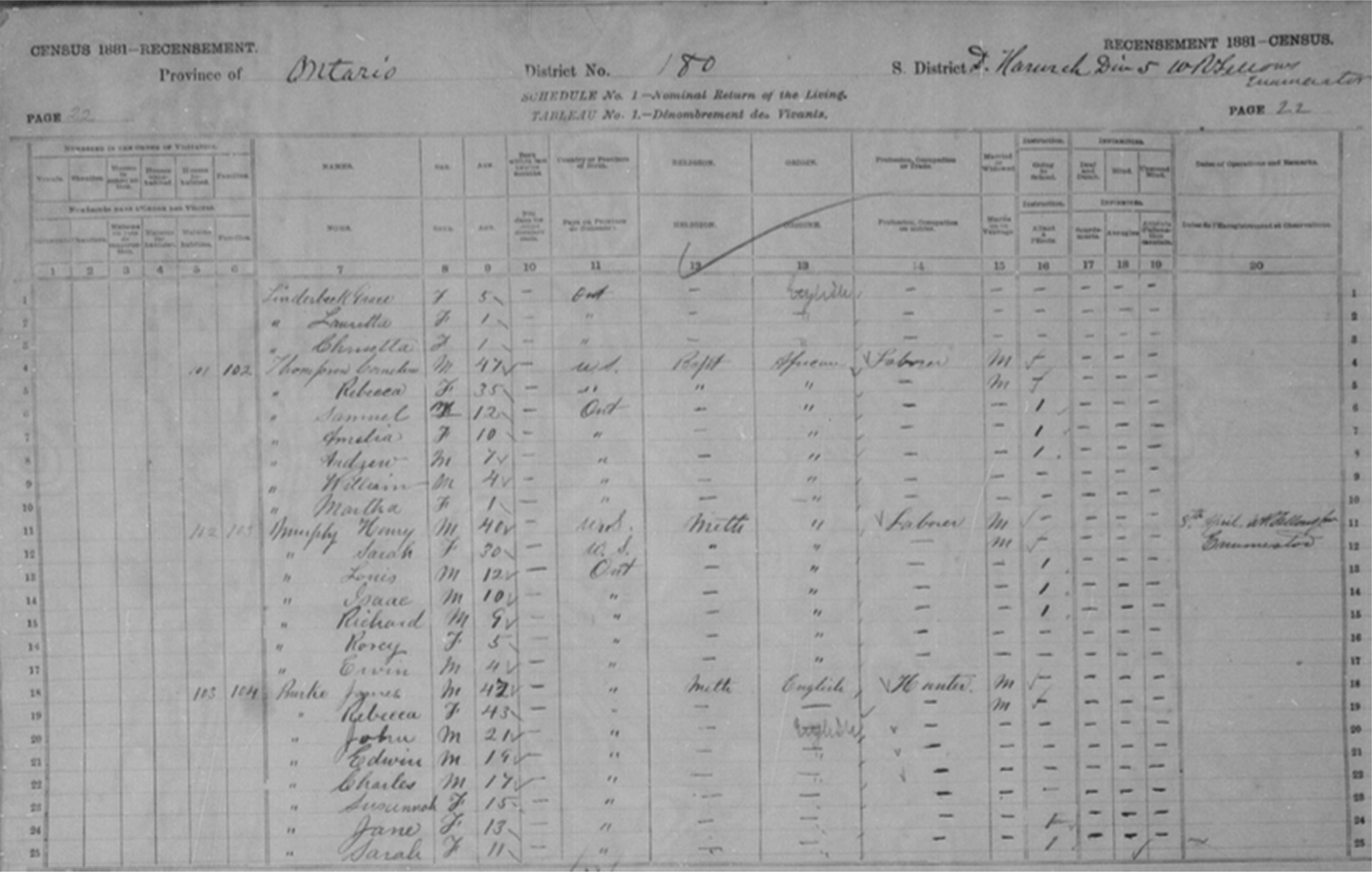
The embryonic institutions of the Canadian statistical system and Taché's powerful position therein enabled him to create an architecture for Canadian origin statistics that confirmed dominant racial ideologies of the day premised on the hierarchical ordering of distinct races, but culturally and institutionally translated to fit the specific needs of the new nation. Taché's most consequential move was to institutionalize the demographic power of French Canada by tweaking the underlying schematic of the origin question on the 1871 and 1881 censuses (see Figure 1). Enumerators were instructed to enter information on origin “scrupulously,” taking care to differentiate among the English, Scottish, Welsh, and Irish while homogenizing the French into a single origin category,Footnote 110 though, as Bruce Curtis astutely points out, France was an unstable entity at the time. The appearance of a cohesive and demographically potent French population was also constituted by asymmetrically applied rules of patrilineal descent. Origin was always traced through the line of the father; however, if a person's mother or father was born in Quebec, the respondent became “census French.” This strategy of Francophone protectionism was only followed in Quebec, but effectively made “French” the largest origin group in Canada.Footnote 111 At the same time, Taché created “census standards” for the origin question, and “Canadian” was not among them. There is evidence that some respondents insisted their origins were Canadian or American, and it appears that enumerators or data compilers changed these responses to the census standards after the fact.Footnote 112 Taché's classificatory orchestrations, done in the service of his ardent Quebecois nationalism, gave the appearance of demographic power and enabled French Canada to maintain its political prowess, especially as increased desirable and undesirable immigration redefined the composition of Canadian society and national identity.
Census of Canada, 1881.

4. The Problem of the Color Line (1900–1945)
During the first half of the twentieth century, the origin question on Canadian censuses was reframed as explicitly racial. This shift was due, in no small part, to the rise of the international eugenics movement and its influence on conceptions of racial difference in mainstream Canadian society. The centralization of statistical work in the Dominion Bureau of Statistics also enabled this change, as Dominion Statistician Robert Hamilton Coats sought to align statistical practices, including programmatic beliefs about how to count by race, with the recommendations of the international statistical community. Census designers once again crafted classification rules that solidified racial hierarchies while simultaneously supporting the Canadian state's nation-building and colonial projects.
In the early twentieth century, both census-making institutions and dominant conceptualizations of race evolved. By 1905, the Census and Statistics Office was established as a permanent, separate entity within the Department of Agriculture. Institutionalization came before centralization, but neither emerged without help from abroad. On the heels of the Boer War in 1911, Britain tasked the Dominions Royal Commission with determining the natural resources, manufacturing capabilities, status of international trade, and fiscal policy of each part of the British empire. Canada's representative was George Foster, who was also the newly appointed minister of Trade and Commerce. One of the first discoveries of the commission was the abysmal state of Canada's statistical system. Foster made several important decisions to rectify the situation. He moved the Census and Statistics Office to the Ministry of Trade and Commerce and appointed a departmental commission on official statistics. Both commissions—in Britain and within the Canadian government—were persuaded by the arguments of A. L. Bowley, a British expert on statistics, and recent institutional developments in Australia that a central statistical office could work as a “central thinking office.” In 1916 the government created the position of dominion statistician and appointed Robert Hamilton Coats, who had previously served as the chief statistician in the Department of Labour. Coats would serve as the dominion statistician for more than twenty-five years until 1942, but his first order of business was to submit a paper to the Cabinet entitled, “A National System of Statistics for Canada—Centralization, Reorganization, and Enlargement of Canadian Statistics.” Coats was a participant in international debates about how best to organize national statistical systems and staunchly advocated for centralization, a trend he felt was spreading throughout the Western world.Footnote 113 Following his recommendations, the Dominion Bureau of Statistics was created in 1918.Footnote 114
By the early twentieth century, racial ideas had morphed, in that the terminology of race was used to differentiate between what might now be considered white ethnic groups. Due in no small part to the international eugenics movement,Footnote 115 British was more than a nationality and Britain more than a birthplace, but instead were considered a race and civilization apart. Though Canada did not have a highly visible eugenics champion, such as Britain's Francis Galton or the American Charles Davenport, eugenic ideas were supported by the major political elites of the early twentieth century, including Tommy Douglas, Nellie McClung, Judge Emily Murphy, and James S. Woodsworth, as well as scholars at Quebec's McGill University and Ontarian medical professionals.Footnote 116 Woodsworth's popular 1909 book warning of the impending dangers of immigration, Strangers Within Our Gates, speaks to the close relationship between eugenic discourse and biological racialism in the Canadian imagination. While immigrants from Central and Eastern Europe could be transformed to assimilate successfully into the national character of Canada through vigorous and targeted government programming, those “distant stocks” deemed too far removed from the Anglo-Saxon ideal—“Orientals and Africans”—needed to be vehemently excluded.Footnote 117 The relevance of Woodsworth's book lies in its representation of the mainstream (educated, progressive) sentiment of the time, revealing the substantial degree of acceptability and transportability that discourses of scientific racialism held.Footnote 118 Ideas about eugenics, morality, and religion collided to produce a distinct brand of Canadian nativism that was explicitly racist and xenophobic, using a fantastical construction of the Anglo-Saxon ideal to naturalize Anglo-Canadian superiority.Footnote 119 The language of race also continued to characterize the English-French conflict, most notably in Siegfried's 1907 treatise, The Race Question in Canada.Footnote 120 And yet, as Bruce Baum argues, the idea of a “Caucasian race” that was unified against races on the other side of the color line persisted and was highly consequential.Footnote 121 French Canadians, along with continental and Eastern Europeans, faced prejudice and discrimination during this time period and were racialized in particular ways by reference to a shifting set of factors that defined whiteness in Canada. But these groups also had access to white privilege—the right to vote and retain legal counsel, for example, both denied to nonwhites well into the twentieth century—in ways that racialized and indigenous populations did not.
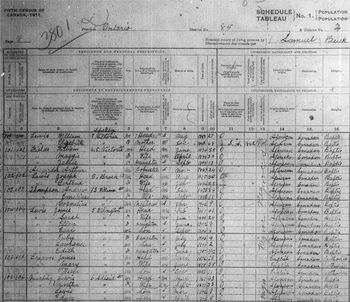
The principles of racial classification in the census continued to crystallize and support other racial projects of the state, including racially exclusive immigration policies, colonial subjugations of indigenous populations, and informal mechanisms of segregation that subdued other nonwhite populations, such as the historic black populations in Halifax, Nova Scotia, and southwestern Ontario. Given their reliance on biological conceptions of race and racial difference, these nation-building and colonial racial projects necessitated a complex racial classification system to legitimate the belief in distinct races. Canada thus began the dawn of a new century by explicitly focusing on the racial origins of the population, rather than the previous label of simply “origins.” The census guide defined “race” as “a subgroup of the human species related by ties of physical kinship. Scientists have attempted to divide and subdivide the human species into groups on the basis of biological traits, such as shape of head, stature, colour of skin, etc.”Footnote 122 American interpretations of the meaning race informed the racial schematic, with policymakers in the Dominion Bureau of Statistics using the United States Immigration Commission's 1911 Dictionary of Races or Peoples for census grouping purposes.Footnote 123 This influence is demonstrated in Figure 2, in which an enumerator (or data compiler) of the 1911 Canadian census crossed out the label “African” in the origin column and replaced it with “Negroes.”
Census of Canada, 1911.

Census monographs and instructions to enumerators provided examples of different races, including French, English, Scotch, Irish, Welsh, German, Italian, Danish, Swedish, Norwegian, Bohemian, Ruthenian, Bukovinian, Bulgarian, Chinese, Japanese, Polish, and Jewish. Some races that did not readily align with the global color line required further clarification; for example, in 1911 enumerators were instructed that if a respondent was born in Turkey, “the enumerator should ask whether European or Asiatic Turkey, and write Turkey (E.) and Turkey (A.) accordingly.”Footnote 124 The purpose of the origin question was clear. Decades later, when preparing to counter the argument that the census be cancelled because of the Second World War, the chief statistician was advised to respond that the collection of origin data was of paramount importance:
In a new country it is very expedient that we should be able to trace the operation of what is known as the “melting pot”—that we should be able to determine what is being done towards the assimilation of the foreign elements of our population. The data of the 1921 and 1931 censuses have been used in this connection to produce Census studies which have been of great value in the determination of immigration policy. We shall need corresponding information in respect of the experience of the decade that is now coming to its close.Footnote 125
The progress of the “melting pot” was a chief concern in Canada, where political elites still sought to create a unified national identity in spite of the ethnic diversity that unrestricted European immigration had created. The enumeration of nonwhite “foreign elements” was also a central preoccupation of Canadian census politics. Coats had extensive correspondence with eugenicist civil society organizations such as the White Canada Association of Vancouver and the similarly inclined Maple Leaf Association in 1930, whose Secretary H. Langley warned Prime Minister R. B. Bennett that “Orientals” were “going to spell disaster to this young Dominion,” arguing that “every Oriental in Canada should be ear-marked, labeled just as effectively as Canadian citizens. Our labourers are being driven out of industry, to make room for cheap Oriental workers.”Footnote 126 Though he noted that the census could not be used to create a registration system for the Chinese in Canada, Coats was indeed concerned that the census was not capturing the entirety of the population. In light of its correspondence with the White Canada Association, the Dominion Bureau of Statistics “made an arrangement with the Immigration Department to let us know as for June 1931 the total number of registrations of Chinese and the number of absentees, these figures to be used as check and comparison with the Census.”Footnote 127
The census also warns that the terms “American” and “Canadian” should not be used as racial origins, as “there are no races of men so called.” In the 1920s census officials again noted public agitation to record “Canadian” as a racial origin. However, this conceptualization was maligned with dominant global understandings of race at the time. In 1926, a memorandum to the dominion statistician quipped:
One cannot change the shape of one's skull or one's physical characteristics by Act of Parliament nor would it be possible for us to insert the term ‘Canadian’ in our racial origin classification without exposing ourselves to the ridicule of scientific ethnologists throughout the world. It would be a step which, with all their spread-eaglism, the Americans have never taken, and they have succeeded as we all recognize in working up a very high degree of national sentiment without it.Footnote 128
The question of whether “Canadian” should be considered a nationality or an origin would return to plague census officials after the Second World War and again in the 1990s, as census officials struggled to adhere to the definitions of race and ethnicity propagated by the international statistical community amid conflicting demands from the public. Popular beliefs in the necessity of distinguishing white and nonwhite racial groups, however, were drawn directly from global understandings about the supremacy of whiteness—even in all its variants—and the immutability of racial difference. Different classification rules, especially for determining the status of indigenous assimilation as well as the race of mixed-race progeny, legitimated a Canadian version of the “one-drop rule,” which ultimately protected the boundaries of white privilege.
In 1901 enumerators were required to write the names of tribes and were instructed to carefully record white/Indian “mixes.” The instructions read:
persons of mixed white and red blood—commonly known as “breeds” will be described by the initial letters “f.b.” for French breed, “e.b.” for English breed, “s.b.” for Scotch breed, and “i.b.” for Irish breed. For example: “Cree f.b.” denotes that the person is Chippewa and Scotch. Other mixtures of Indians besides the four above specified are rare, and may be described by letters “o.b.” for other breed. If several races are combined with the red, such as English and Scotch, Irish, and French, or any others, they should also be described by the initials “o.b.”Footnote 129
The Canadian state was interested in two distinct sets of information in recognizing and recording such an elaborate taxonomy of Aboriginal and French, English, Scotch, or Irish offspring. First, counting the number of persons with Aboriginal ancestry was necessary in order for the state to determine the progress of the assimilative goals of the Indian Act, which used intermarriage as a means of reducing the legal ability of Aboriginal people to claim Indian status. However, in accordance with global racial ideas of the era, many believed that the population would eventually die out. A 1915 Bureau of Statistics memorandum on the issue notes the importance of ideas within the international statistical community and the lessons that could be drawn from the American experience:
In taking a census of an aboriginal race, the anthropological and ethnological point of view must be considered. Hints on the subject are to be found in the 35 questions proposed by the International Statistical Institute for territories peopled by native races without censuses. The view of experts, however, would be necessary for a final decision. As the Indian population is small, and is decreasing it is doubtful if the expenditure which such an inquiry would entail would be warranted with any other than a scientific end in view. The United States in 1911 took a census of Indians of this nature, but has announced it will not repeat the inquiry.Footnote 130
The census could not answer the question of whether indigenous people were assimilating into whiteness or dying because of biological inferiority, but it could detail the population's demographic decline. Besides, either colonial strategy—assimilation or elimination—served the same purpose, and recording the number of “half-breeds,” was could progress in reducing the “Indian problem”—that is, the existence of a nonwhite, uncivilized, inassimilable population that held legal claims to Canadian land and toward whom the Crown held a fiduciary obligation.
Second, the need for specific details about the precise compositions of these identities is related to the history of violent clashes between the Canadian government and the Métis population of the Prairie Provinces during the last decades of the nineteenth century. Legally designated as “half-breeds” by the federal government, these descendants of Aboriginal women and French fur traders were never seriously considered by the state to be either within the definition of Indian or a distinct segment of the Aboriginal population.Footnote 131 To acknowledge either of these scenarios would contradict the purpose of the Indian Act regime, which was to remove all legal distinctions between the native population and other Canadians while maintaining racial hierarchies. The census provided a means of counting the Métis; though the census is a type of official recognition, it does not confer legal rights or responsibilities. The same 1915 Bureau of Statistics memorandum continued: “The class of half-breed in the Northwest provinces commonly known as ‘Métis’ benefitted in the early days by the distribution of scrip and free lands. The Indian Department thinks it would be useful to enumerate these separately, but it is doubtful as to the feasibility of doing so.”Footnote 132 This complex enumeration of the Métis and other mixed-race people with Aboriginal heritage enabled the state to keep tabs on a population that, in its view, threatened the security of the still unstable, still largely unsettled, western provinces.
Beginning in 1911, the census required that the names of “tribes” be recorded and that the racial origin be traced through the mother's side. This requirement of matrilineal descent is particularly interesting given that the progeny of Aboriginal women and non-Aboriginal men would be considered “Indian” in the census and yet denied Indian status in accordance with section 12.1(b) of the Indian Act, which removed the Indian status of women who married non-Aboriginal men as well as that of their offspring, effectively blocking these women from access to indigenous communities and treaty rights. Why this inconsistency? On one hand, a long process of institutional development may have prevented schematic standardization. During its formative years, the Dominion Bureau of Statistics was likely not overly concerned with promoting a standardized racial classification system throughout the federal government. Interdepartmental inconsistency was a basic fact of bureaucratic life. The Indian Act—whose unabashed goal was, as Duncan Campbell Scott, the deputy superintendent for the Department of Indian Affairs, put it, to “get rid of the Indian problem … to continue until there is not a single Indian in Canada that has not be absorbed into the body politic and there is no Indian department”Footnote 133—had a different function and purpose and, therefore, different policy and political consequences than the census, which was designed to count the population.
On the other hand, however, both the census and the Indian Act were historically, and remain today, legal instruments through which racial categories are made and manipulated. They do not simply reflect racial reality, but are constitutive of it. As such, discourses of race and gender collide through the state's schematizing impetus: There were dire legal and social sanctions for Aboriginal women who married non-Aboriginals through the Indian Act regime. At the same time, the rationale of the census required Aboriginal ancestry be traced through matrilineal descent, since women were perceived as the vessels of civilization, culture, and morality, juxtaposed with the patrilineal tracing of white descent, since men were the conveyors of the privilege of property and citizenship rights.Footnote 134
Patrilineal or matrilineal descent did not matter for mixed white/nonwhite progeny, as census guides instructed that “the children begotten of marriages between white and black or yellow races will be classed as Negro or Mongolian (Chinese or Japanese) as the case may be.”Footnote 135 In the 1931 and 1941 censuses, eugenicist language permeated the wording of the question, referring to “the distant coloured stocks … involving differences in colour (i.e., the black, red, yellow, or brown races).”Footnote 136 In other words, any mixed-race person whose parental or ancestral lineage was composed of European and nonwhite components would legally be counted by the census as nonwhite. This concern about the classification of mixed-race offspring reflects eugenicist anxiety not simply about nonwhite immigration to Canada, but also the reproduction of “degenerates” already in the country.Footnote 137 According to these beliefs, mixed-race people were contaminants to the nation. For example, a 1941 article in the Journal of Negro Education attempts to determine the intelligence of “negroes of mixed blood in Canada,” by testing the relationship between standardized test scores and Negro groups comprising “full bloods,” “3/4 bloods,” “1/2 bloods,” and “1/4 bloods”—in the author's words, “the correlation between intelligence and degree of White blood.”Footnote 138 These views were also promoted by political elites. In 1922 Prime Minister William Lyon Mackenzie King argued in the House of Commons that Gresham's Law of Precious metals applied to the races of men as well; just as base metals tended to overwhelm finer metals, King cautioned that the presence of “lower” races in Canada would lead to the dilution of the Anglo-Saxon population.Footnote 139 Those with such inherently degenerate characteristics could never be considered potential members of the dominant race and were classified in the census accordingly.
5. The Demise of Race (1945–1960)
Between 1945 and 1960 a monumental change in transnational ideas about the nature of race and racial difference had ripple effects that fundamentally altered the racial politics of the census. The atrocities of the Second World War raised questions in the international statistical community, for the first time, about the desirability of collecting racial statistics. These discussions were influential in Canada, and census administrators redesigned the origin question and its classification rules to focus on ethnicity and language rather than race.
The Second World War catalyzed a transnational moment—a political rupture, followed by a period of transition—when the normative context surrounding the previously dominant conceptions of race as irrefutably biological, determinative, and hierarchically ordered fundamentally shifted. The drivers of this change, extensively discussed by others, include the fallout from the biological racism of the Holocaust and Nazi Germany,Footnote 140 the practical requirements of warfare,Footnote 141 academic challenges to the biological construction of race,Footnote 142 the emerging global discourse of human rights and important statements by international organizations that explicitly questioned the validity of the race concept,Footnote 143 the decolonization and the creation of states in Africa and Asia with access to and power within the international system,Footnote 144 and Cold War politics that shone an uncomfortable international spotlight on illiberal practices of the same states that trumpeted the moral virtues of democracy.Footnote 145
Up until this point, Canadian census policymakers had waded into racial waters without hesitation. The new transnational normative context in the postwar era now poked and prodded at this conventional approach. International epistemic communities of statisticians at the Population Commission and the Statistical Commission of the newly formed UN extensively discussed “the nature of the questions which may be appropriately asked in a nation-wide census [more so] than in any previous census.”Footnote 146 Given the recent atrocities in the name of racial purity, the issue of whether race was an appropriate issue of inquiry on national censuses was at the top of the agenda. This concern was influential in Canadian census politics, partly because of the structure of political institutions. The Dominion Bureau of Statistics was increasingly centralized, had earned an admirable international reputation for its statistical analysis of resources and labor trends during the Second World War, and was well on its way to becoming an independent agency, which occurred in 1971. More importantly, these international discussions were influential because the dominion statistician, Herbert Marshall, took them seriously. Marshall, who held this position in the decade following the war, was also the chair of the UN Statistical Commission in 1947–48 and was highly involved in these debates. In turn, political elites often deferred to Marshall's expertise, and decisions about the census were largely left in the hands of the bureaucracy.
In response to those who argued that the concerns of the international community necessitated that the race question be abandoned altogether, Marshall wrote that “the question cannot be omitted from the Census if for no other reason than the demand of important groups that it be included.”Footnote 147 This demand from “important groups” emanated, of course, from French Canada. It was far more practical, from Marshall's point of view, to simply change the label of the question rather than its content. The bureau recommended that the column on the census card simply be called “origin,” because “‘racial’ has some odious implications, stresses the biological aspect and is thoroughly unscientific. ‘Ethnic’ includes more to the cultural aspects, which is what we want, but it has been criticized as being too academic a term to be easily understood.”Footnote 148 Unlike human rights laws or immigration policies, which the government aligned with the transnational normative context only in halting increments,Footnote 149 there was little at stake by changing the language of the origin question in the census. In other words, the programmatic belief emerging from the international epistemic community aligned well with domestic priorities, making the institutional translation of these racial ideas possible.
The term “race” was dropped from the census, with the question in 1951 now requesting details on the “origin” of the population. The instructions to census enumerators relayed the importance of carefully distinguishing between citizenship/nationality and origin, admonishing that “origin refers to the cultural group, sometimes erroneously called ‘racial’ group, from which the person is descended; citizenship (nationality) refers to the country to which the person owes allegiance” (italics added here for emphasis).Footnote 150 Instead of assigning mixed-race offspring of white/nonwhite relationships to a nonwhite designation, these people were classified according to the same principles of patrilineal descent as other white ethnic mixes. This change in classification rules had statistical consequences. It partially accounts for the decline in the Chinese and Japanese populations and also explains the large drop in the black population, from 22,174 in 1941 to 18,020 in 1951.Footnote 151 The social construction of race certainly did not appear overnight, nor was the idea of race as biological fully abandoned in the social foundations of the census. The introduction to the origin question in the 1951 census refers to the data as “partly cultural, partly biological, and partly geographical” in nature.Footnote 152
The state also maintained its interest in the precise categorization of Aboriginal descent. Enumerators were instructed that those living on Indian reserves were to be recorded as “Native Indian,” while the origin of those not living on reserve would be traced through the line of the father. This change from a designation of “half-breed” in the 1941 census to a complex interplay between place of residence and state-imposed labels is significant because of the rights and privileges assigned to each. The Canadian state's constitutional responsibility for “Indians and lands reserved for Indians” has often been interpreted by the government as a fiduciary duty for only Indians on lands reserved for Indians.
The 1951 census also made the link between ethnic origin and language more explicit. Instructions to enumerators read: “you will first attempt to establish a person's origin by asking the language spoken by the person (if he is an immigrant), or by his paternal ancestor when he first came to this continent.”Footnote 153 However, in some cases the focus on language was insufficient to garner the information the census was actually after. If origin could not be established via linguistic difference, enumerators were instructed to ask, “Is your origin in the male line English, Scottish, Ukrainian, Jewish, Norwegian, North American Indian, Negro, etc.?” According to the General Review of the 1951 census, the shift from racial to ethnic origins did not change the essential purpose of the inquiry: “Fundamentally, it is an attempt to distinguish groups in the population having similar cultural characteristics, based on a common heritage.”Footnote 154 This decisive shift to a construction of language and culture as primary indicators of ethnic origin, as Eve Haque demonstrates in her analysis of the Royal Commission on Bilingualism and Biculturalism, was part of the ongoing project of white-settler nation-building.Footnote 155
Yet, some wondered whether the question itself did more harm than good. Conservative politician John Diefenbaker claimed that the emphasis on the origins of the white population was “the one thing that has caused more difficulty than any other in attaining Canadian unity.”Footnote 156 In the 1946 debates surrounding the proposed Citizenship Act, Diefenbaker claimed that the census was a “back door” that simply accentuated ethnic divisions.Footnote 157 After becoming prime minister, Diefenbaker continued his criticism of this practice because “regardless of the number of generations that have elapsed or the admixtures of nationality that have taken place during the 40, 50, 75 or 125 years, so long as persons must register under the nationality of their paternal ancestor, there will never be that Canadianism which we wish to establish.”Footnote 158 In a 1959 cabinet meeting, Diefenbaker confessed that he would prefer to see the question omitted altogether.Footnote 159 If a question had to be included, he reasoned, “Canadian” should be included as a marked position on the census form.Footnote 160
However, this proposal proved infeasible and was withdrawn for three reasons. First, the question was still necessary in order to identify nonwhite populations. Political elites understood that this was a relevant use of the census in the United States, and so too it could be used for similar purposes in Canada.Footnote 161 Second, Diefenbaker's suggestion was met with opposition in Quebec. An article in L'Action Nationale argued that French Canadians “are led to sacrifice their interests once more before altar of national unity…. In other words, the interests of the authentic founders of the nation will be sacrificed so as to conform to the wish of certain Neo-Canadians in hiding their origin, to the clapping of those who want but ‘Canadians,’ period.”Footnote 162 The Liberals also appeared to be building a strong campaign in this province against the inclusion of a “Canadian” option and Diefenbaker could not afford to further antagonize the growing resentment of French Canadians.
Third, Marshall's successor as dominion statistician, Walter Duffett, leveraged his institutional position and power to block the proposal. The Canadian statistical system was, and remains, highly centralized with significant autonomy from political and social whims. The dominion/chief statistician of Canada is a senior civil servant who holds the rank of deputy minister and serves at the pleasure of the executive branch, but is traditionally retained through changes in government. For example, Walter Duffett served as the dominion statistician from 1957 to 1972 at the behest of both Conservative and Liberal prime ministers. Decisions about the census, therefore, are most often left to bureaucratic experts and are rarely the fodder of political machinations. Accordingly, Duffett was able to convince political elites that because the origin question was immediately preceded by a question on citizenship, a “Canadian” origin entry would confuse both enumerators and respondents.Footnote 163 Further, Duffett and other senior-level bureaucrats had long recognized that the inclusion of a Canadian entry would lead to so many people identifying as Canadian that the value and comparability of the origins data would be adversely affected.Footnote 164 As Canada moved through the 1960s, a new immigration policy regime eventually led to massive demographic changes in the racial composition of the country. The question of how to adequately capture this newfound racial diversity in census classifications designed to primarily measure ethnicity, as well as renewed public agitation for a Canadian ethnic category, would continue to characterize Canadian census politics for the remainder of the twentieth century.
In sum, new conceptualizations of race and racial difference emerged in the postwar era, which catalyzed discussions in international epistemic communities of statisticians about whether racial statistics were an appropriate policy instrument. These debates were influential in Canada, in part because the dominion statistician chose to mold these new transnational directives to fit the Canadian context and could do so with relative ease because the structure of political institutions provided him with the power and autonomy to do so. Even when the existence of the question was threatened by political elites, the dominion statistician was able to preserve it without adding a “Canadian” designation. As a result of the autonomy and centralization of the Dominion Bureau of Statistics and the cultural translation of a social, rather than biological, construction of race, the racial origin question was reformulated as a question about ethnic ancestry, determined primarily by language. The administrative desire to enumerate nonwhite populations remained, but classificatory rules were now applied more consistently. These policies remained in place until increased racial diversity and a backlash against the lack of a Canadian category in the 1990s forced the government to reassess its approach to racial and ethnic enumeration.
When Canada did become more racially diverse in the 1980s and 1990s, this diversity posed challenges for census designers. New anti-discrimination provisions, including employment equity policies, required accurate statistics on racial minority populations and their participation in the labor force, but Canada's ethnic origin question was simply not designed to measure racial identity. For example, when asked about their ethnic origins for the 1981 census, Jamaican-descended respondents reported that they were British, while those of Haitian descent identified as French. Some Indians (from India) identified as “status Indian”—a category intended to enumerate the Aboriginal population—because they believed the question inquired about their ethnic origin and immigration status.Footnote 165 International epistemic communities of statisticians eventually acknowledged that racial statistics were necessary for the proper implementation of anti-discrimination measures, and the UN Statistical Commission included race on its list of recommended questions to be asked on national censuses in the early 1980s. Statistics Canada implemented a direct question on race in 1996—a decision that arose, like many other decisions concerning racial taxonomies in the census, from the interaction between transnational racial ideas and the careful deliberation by bureaucrats and census administrators within the Canadian state.Footnote 166
6. Conclusion
The political development of racial categories on Canadian censuses has been a tricky business. Numbers tell stories, but so too do the classificatory rules through which those numbers are produced. The history of statistics is a history of intellectual exchange through transnational networks of experts who shaped the development of national statistical organizations and priorities.Footnote 167 It is also a story of how global ideas are translated by the domestic political institutions responsible for the administration of the census. Finally, in the Canadian context, this narrative is driven by census designers and administrators. While the racial politics of the census in the United States has been characterized by the push-and-pull politics of negotiation between Congress and the bureaucracy, or between the state and social movements, neither partisan interference nor social mobilization have played significant roles in racial questions or classifications in the Canadian census.
Historically, Canada was a very white country, and the major social cleavage has been the French/English divide. Dominant understandings of difference and heterogeneity since the postwar era have primarily been conceptualized in cultural and linguistic terms. This does not mean that there has never been a Canadian racial order; on the contrary, this research demonstrates that while the creation of racial classification schema do not indicate the same level and intensity of racial anxiety over the boundaries of whiteness as marks the complicated history of racial boundary-making processes in the United States,Footnote 168 there were clearly hierarchical distinctions made between the white and nonwhite segments of the population. The homogeneity of the nation, however, meant that the politics of race did not prefigure later debates in the 1960s and 1970s surrounding the development of key components of the Canadian welfare state, including social insurance, unemployment benefits, and universal health care. Even Canadian multiculturalism policy, which includes anti-discrimination protections alongside public recognition for ethnic, racial, and religious groups, emerged from the social mobilization of white ethnic groups and was institutionalized during a time when the racial minority population was comparatively miniscule.Footnote 169
The ways that influences from outside Canada have shaped the formation of its racial orders indicate an interactive political development. Racial schemas in the census were informed by macro-level racial worldviews about the nature of race and racial difference, which helped to define the boundaries of legitimate action in race politics. Meso-level programmatic beliefs from international epistemic communities of statisticians influenced domestic policymakers’ understandings of whether racial statistics were an appropriate policy instrument. These transnational ideational forces are powerful. However, domestic-level institutions have the potential to mediate, filter, or even obstruct the influence of these transnational racial ideas. Programmatic beliefs emanating from transnational networks of statisticians were quite influential in Canada because of the centralized and autonomous structure of the statistical system. At the same time, the structure of these political institutions enabled key policy actors, most notably the dominion statistician and his predecessors, to mold and modify transnational ideas to align with Canadian nation-building projects such as colonialism, immigration, the management of the French/English cleavage, and the search for a Canadian national identity.
What theoretical insights are gained in APD by this focus on race and the Canadian census? First, the relationship between race and Canadian political development is a unique puzzle: How is it that Canada's historical patterns of segregation, discriminatory immigration policies, colonial territorial dispossession, legal subjugation, and labor-market exploitation have remained so hidden, yet so entrenched, for so long? As APD literature makes clear, identities and institutions do not exist separately from one another; they are mutually constitutive. Race in Canada has often been regulated through submerged sites of governing power, a situation that stands in stark and sneaky contrast to the explicit racial overtones of America's Jim Crow. And yet, the racialized realities of contemporary Canadian society, such as disparate rates of incarceration, segregated residential patterns, and differential educational outcomes, strike at the core of democratic conceptions of egalitarianism and Canada's national multicultural identity.Footnote 170 The fact that there is little social mobilization surrounding these issues, a pervasive discourse of race-neutral multiculturalism, little political attention to racial disadvantage and internal colonialism, and practically no discussion of white privilege in the face of persistent patterns of racial inequality is, in and of itself, puzzling. This research explicitly focuses on the relationship between racial ideas and political institutions, using the lens of the state's role in creating racial classification schemas to disrupt common and long-standing histories about the nature and content of Canadian democracy.
Second, applying theories traditionally associated with APD to the Canadian context raises the question of which insights of race and APD hold true when analyzing the political development of institutions and racial dynamics outside the United States. The literature on racial orders strongly caters to the peculiarities of the American political system—just as the authors intended. King and Smith's theory of the conflict between white supremacist and egalitarian racial coalitions,Footnote 171 for example, cannot be readily applied to either the fusion of executive and legislative power in parliamentary systems that minimize the need for political coalitions in majority government situations or the subtler processes of racialization in the Canadian context. Similarly, Megan Ming Francis's insightful work on the NAACP's anti-lynching campaign illustrates that social actors contributed a great deal to building the American state in the early twentieth century,Footnote 172 but is not generalizable to the Canadian context, in which state-building occurred in a country that was demographically and politically dominated by white populations for most of the nineteenth and twentieth centuries. As a whole, however, the theoretical toolbox of APD is helpful in developing a structural, historical, and institutional approach to the study of race and Canadian political development. Though the long tradition of focusing on the state and its institutions in Canadian political science means that there was never a need to “bring the state back in,” the macro-historical lens developed in APD is useful for the task of making visible the “submerged understandings of the role of the state, law, and public policy in producing and reproducing racialized and gendered power relations”Footnote 173 that continue to characterize Canadian political, economic, and social life.
Finally, the focus on the relationship between transnational ideas and domestic processes of cultural and institutional translation reveals a great deal about the ways that racial orders are constituted. An analysis of the isolated development of either Canadian or American racial orders only tells part of the story. This research demonstrates that ideas about the nature of race and racial difference anchor the formulation of racial orders and, importantly, that these ideas exist transnationally. Though race is often operationalized in racial projects designed for national specifications, ideas about race—whether race is considered a biological truth or a social construction, whether racial diversity is considered an impediment to or an amplification of democracy—are not bound by national borders. Conceptualizing race as a transnational concept linked to modernity, the Atlantic slave trade, and the governing logics of colonial rule enables an analysis that takes account of the varying intensities of nationally specific racial projects and the structures of political institutions, as well as the ways that these factors shape the cultural and institutional translational processes distinctive to each country. Both global racial ideas and the domestic interpretations thereof interactively authorize peculiar racial classifications, which inspire, though do not wholly determine, the reconfiguration of social relationships. Yet, the overall effect of these racial ideas does not achieve total dominance. Their influence is always mediated by domestic-level institutions, conditioned by the contexts into which they were produced and/or introduced, and inflected by political actors with a range of strategies, goals, and preferences. In sum, an interactive political development follows APD scholarship in taking ideas and institutions seriously, but also adds nuance to the analysis by acknowledging that race and racism are always mediated by political and cultural institutions, and have never been monopolized by American politics.