Introduction
Non-carcass components (NCC) obtained after slaughtering animals, such as head, blood, skin, feet, organs and viscera, have additional commercial value for the meat production chain and are of great importance for the cookery of many countries. In Brazil, NCC are used to prepare ‘sarapatel’ (Brasil et al., Reference Brasil, Queiroz, Silva, Bezerra, Arcanjo, Magnani, Souza and Madruga2014), ‘buchada’ (Albuquerque et al., Reference Albuquerque, Costa, Barba, Gómez, Ribeiro, Beltrão Filho, Sousa, Santos and Lorenzo2019) and ‘panelada’ (Roque et al., Reference Roque, Mendes, Carapelli, Lopes Júnior and Vieira2020), which are very popular meals, especially in the semiarid region. ‘Morcilla de Burgos’ in Spain (Santos et al., Reference Santos, González-Fernández, Jaime and Rovira2003), ‘Morcela de Arroz’ in Portugal (Pereira et al., Reference Pereira, Dionísio, Patarata and Matos2015) and ‘Krvavica’ in Slovenia (Gašperlin et al., Reference Gašperlin, Skvarča, Žlender, Lušnic and Polak2014) are also traditional meals prepared with NCC. Furthermore, as it is possible to evaluate the size and weight of organs and viscera, the evaluation of NCC allows inferences about animal metabolism, which is interesting when evaluating different sexual classes and genotypes submitted to the same diet (Atti et al., Reference Atti, Nozière, Doreau, Kayouli and Bocquier2000; Hajji et al., Reference Hajji, Smeti, Ben Hamouda and Atti2016; Pereira et al., Reference Pereira, Lima, Marcondes, Rodrigues, Campos, Silva, Bezerra, Pereira and Oliveira2017).
The ecotype Berganês appeared in the 1980s in the Brazilian semiarid, resulting from crossings between the Bergamácia breed and local breeds, with a predominance of the Santa Inês breed (Soares et al., Reference Soares, Nogueira, Moura Neto, Gouveia G, Ribeiro and Gouveia2019). This ecotype is characterized by its remarkable body size and adaptability to semiarid region (Nogueira Filho and Yamamoto, Reference Nogueira Filho and Yamamoto2016). In these regions, it is common to slaughter sheep of different sexual classes. In addition, the large size of their ventral region suggests that Berganês ewes are an option for crossbreeding. To the best of our knowledge, although there are a few studies on the biometry of the Berganês ecotype (Silva Filho et al., Reference Silva Filho, Moura Neto, Arandas, Santos, Nogueira Filho, Carvalho, Mesquita and Ribeiro2019), there are no studies on the yield of its NCC.
In the semiarid region of Brazil, native breeds like Santa Inês are predominantly used because of their rusticity and adaptability, although there is an increase in crossbreeding with exotic breeds specialized in meat production, such as the Dorper breed (Mcmanus et al., Reference Mcmanus, Hermuche, Paiva, Moraes, Melo and Mendes2013). With the emergence of the ecotype Berganês, new options for sheep production in the region have become viable, including its crossing with native and exotic breeds. Therefore, it is necessary to evaluate the productive characteristics of this ecotype, as well as the effect of its crossing with other breeds on productive characteristics, as NCC yield.
The effects of sexual class and genotype on NCC were evaluated in Pantaneiro lambs and it was observed that males showed a higher weight of by-products and organs, while females showed higher weight and percentage of internal fat. Moreover, it was reported that the crossbreeding of Pantaneiro × Texel achieved higher NCC weight (blood, head, skin, feet), while the crossbreeding of Santa Inês × Texel increased the internal fat (Vargas Junior et al., Reference Vargas Junior, Martins, Pinto, Ferreira, Ricardo, Leão, Fernandes and Teixeira2014).
The use of suitable statistical tools is essential for an appropriate interpretation of any set of variables, for instance, data from carcass evaluation. The factorial analysis (FA) is recommended when the aim is to summarize an original data set in factors and indicate the variables which contribute to most of its explication (Hair et al., Reference Hair, Black, Anderson and Tatham2009; Arandas et al., Reference Arandas, Silva, Nascimento, Pimenta Filho, Brasil and Ribeiro2017). However, if the intent is the comparison of groups, discriminant analysis (DA) is recommended in order to understand differences between groups and predict the probability that an individual will belong to a specific group based on the studied variables (Paim et al., Reference Paim, Silva, Martins, Borges, Lima, Cardoso, Esteves, Louvandini and McManus2013; Ribeiro et al., Reference Ribeiro, Pimenta Filho, Arandas, Ribeiro, Saraiva, Bozzi and Costa2015).
The aim of this study was to evaluate the NCC yield of Berganês lambs of different sexual classes and genotypes using univariate and multivariate statistics.
Material and methods
Ethical aspects, animals, treatments and experimental design
The Ethics Committee for the Use of Animals of the Federal Institute of Sertão Pernambucano approved the study under code 029/2017.
The study was divided into two experiments. For the evaluation of the sexual class, non-castrated (BNC), castrated (BC) and female (BF) Berganês lambs were used, with mean initial body weight of 27 ± 3.1 kg. For the evaluation of genotypes, the genetic groups Berganês (BG), Berganês × Santa Inês (BSI), Berganês × Dorper (BD) and the control Dorper × Santa Inês (DSI) were used, all non-castrated males with mean initial body weight of 28 ± 3.8 kg. In both experimental trials, eight animals per treatment were used and the animals had an initial age ranging from 4 to 5 months. The animals used in the two experimental tests came from eight herds registered in the Association of Berganês Sheep Breeders (ABCOB) and did not have direct kinship relations.
During the experiment, the animals were in individual pens of 2 m2, with a dirt floor, each provided with feeder and waterer. The experiment duration was 70 days, the first 14 of which were for the adaptation of the animals to the environment and management. The lambs were fed a single diet with a roughage:concentrate ratio of 15:85, containing 14.1% of crude protein and 65.8% of total digestible nutrients, based on NRC (2007), for a weight gain of 250 g/day. The roughage was buffel grass hay (Cenchrus ciliaris L.) and the concentrate consisted of ground corn, soybean meal and a mineral/vitamin core. Diets were provided as a complete mixture twice a day at 8.00 a.m. and 3.00 p.m.
Slaughter and obtaining of NCC
After fasting for 16 h, the animals were weighed and slaughtered. The process was initiated by concussion stunning, followed by bleeding, skinning and evisceration. The organs, tongue, lungs, heart, diaphragm, liver, kidneys and spleen, were separated and weighed, the sum corresponding to the total organ weight; the viscera, rumen, reticulum, omasum, abomasum, small intestine and large intestine, were emptied and weighed, and thus the weight of the gastrointestinal tract (GIT) was obtained. The mesenteric and perirenal fats (internal fat) were separated and weighed. The sum of viscera (GIT and internal fat) corresponded to the total weight of viscera. The weight of head, blood, skin and feet was also obtained and together corresponded to the weight of the by-products.
The empty body weight (EBW) was obtained through the difference between the slaughter body weight and the weight of the GIT content. The total weight gain (TWG) was obtained through the difference between final body weight and initial body weight.
The yields of all NCC in relation to EBW were also calculated, in which: NCC yield = (weight of NCC/EBW) × 100.
Statistical analysis
Two data files were created, the first of which contained information on sexual classes (BNC, BC and BF) and the second one containing data on genotype (BG, BSI, BD and DSI). Data were submitted to univariate proceedings (analysis of variance and means test, as well as correlation analysis) and multivariate proceedings (FA and DA).
The data were assessed using the Statistical Analysis System (SAS, 2002). The descriptive analysis was carried out with PROC MEANS, obtaining mean values and measures of dispersion. Data were submitted to variance analysis, obtained with PROC GLM and the means were submitted to the Tukey test at 5%, including EBW as a covariate in the statistical model. PROC CORR was used for Pearson correlation analysis. The FA based on principal components was performed using PROC FACTOR in order to summarize the set of original variables in independent latent variables (factors). The most important factors were extracted based on the method of Kaiser (Reference Kaiser1960), which considers for selection an eigenvalue >1. The varimax rotation method was applied because it best suited the model.
The DA was carried out with PROC STEPDISC to obtain the variables with the most significant discriminatory power. The STEPDISC starts without any variable in the model, and, in each stage, the addition of variables with the highest discrimination power was combined with eliminating those with the least contribution, based on the F statistic or the Wilks’ lambda value. PROC DISCRIM was used to obtain the classification between sexual classes and between genotypes. The canonical DA was performed with PROC CANDISC, to obtain overall standardized canonical coefficients and total variation explained by each canonical variable for sexual classes and genotypes.
Results
Univariate analysis by sexual classes of animals
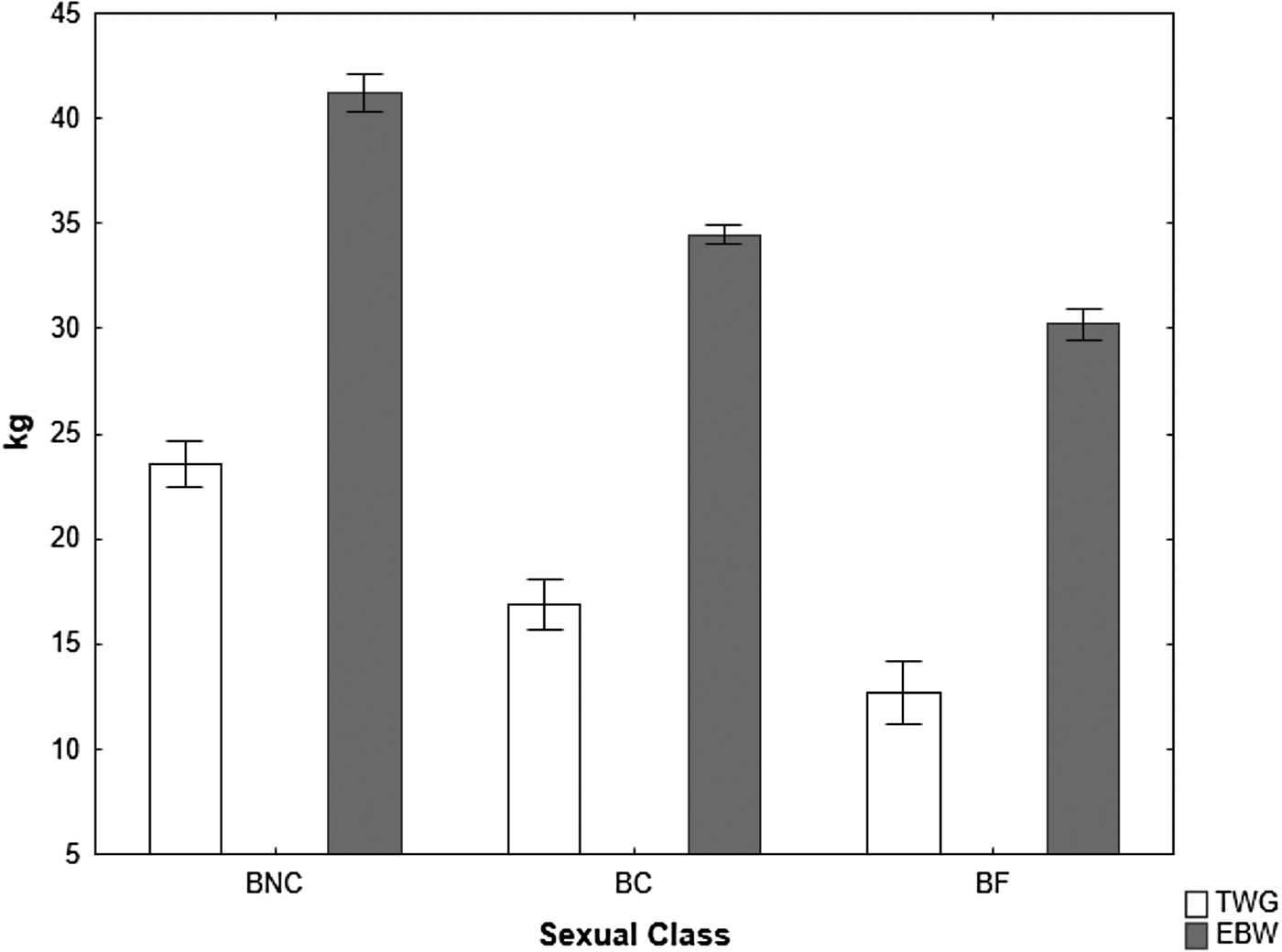
Among the sexual classes the EBW was higher (P < 0.001) for BNC (41.2 kg), intermediate for BC (34.5 kg) and lower for BF (30.2 kg). The same behaviour was observed for TWG (P < 0.001), in which BNC showed 19.8 kg, BC 15.6 kg and BF 11 kg (Fig. 1).
Empty body weight (EBW) and total weight gain (TWG) of lambs from different sexual classes, Berganês non-castrated (BNC), Berganês castrated (BC) and Berganês female (BF), in feedlot.

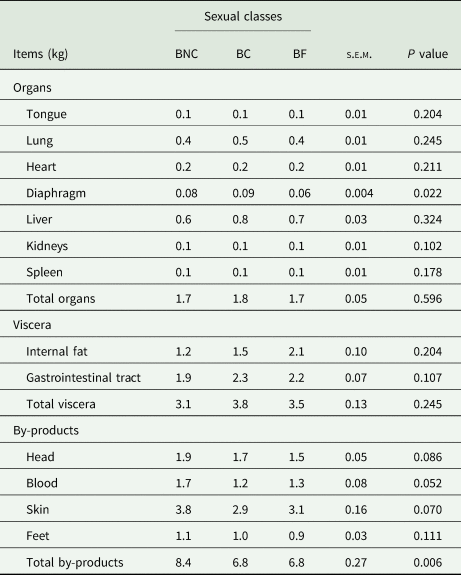
For organ weight, it was observed that the diaphragm weight was lower for BF (P = 0.022). For viscera weight, differences did not find (P > 0.05) between the sexual classes. Regarding the by-products weight, it was observed that BNC showed superiority (P = 0.006) for total by-products weight (Table 1).
Least square means of non-carcass components weight of lambs from different sexual classes, non-castrated Berganês (BNC), castrated Berganês (BC) and female Berganês (BF), in feedlot

s.e.m., standard error of the mean; P value, probability value.
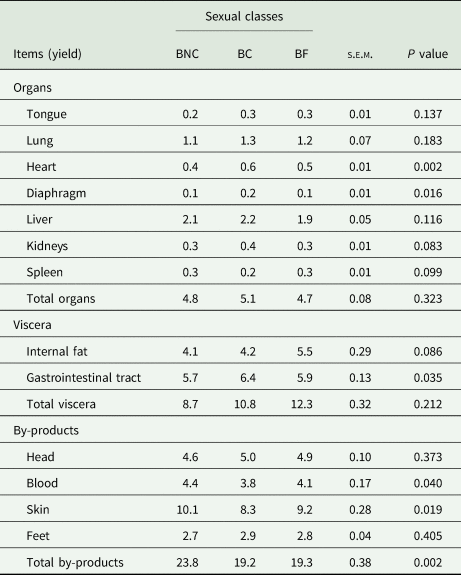
In relation to organ yield, it was observed that the heart yield was higher for BC compared to BNC (P = 0.002). For diaphragm yield, BC had higher value (P = 0.016) in relation to the other sexual classes. For viscera yield, BC showed higher GIT value than BNC (P = 0.035). In relation to by-products yield, blood, skin and total by-products yield was higher for BNC and lower for BC (Table 2).
Least square means of non-carcass components yield of lambs from different sexual classes, non-castrated Berganês (BNC), castrated Berganês (BC) and female Berganês (BF), in feedlot

s.e.m., standard error of the mean; P value, probability value.
Univariate analysis according to evaluated genotypes
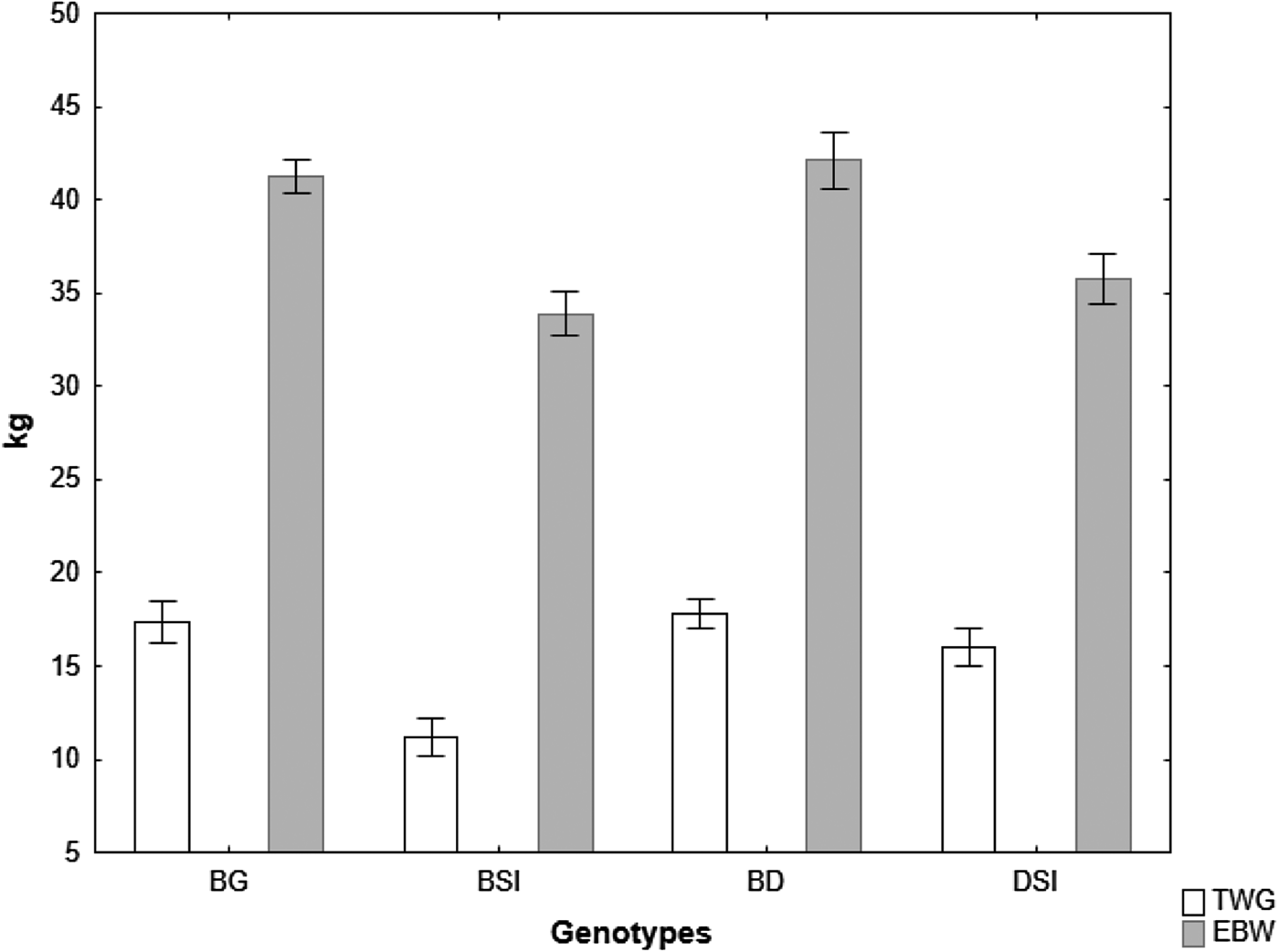
EBW was higher (P < 0.001) for genotypes BD (42.1 kg) and BG (41.2 kg) in comparison to DSI (35.7 kg) and BSI (33.9 kg). TWG was lower (P = 0.003) for BSI (13.5 kg), and the other genotypes did not differ (P > 0.05) between each other (20.7 kg BG, 22.8 kg BD and 18.3 kg DSI) (Fig. 2).
Empty body weight (EBW) and total weight gain (TWG) of lambs of different genotypes, Berganês (BG), Berganês × Santa Inês (BSI), Berganês × Dorper (BD) and Dorper × Santa Inês (DSI), in feedlot.

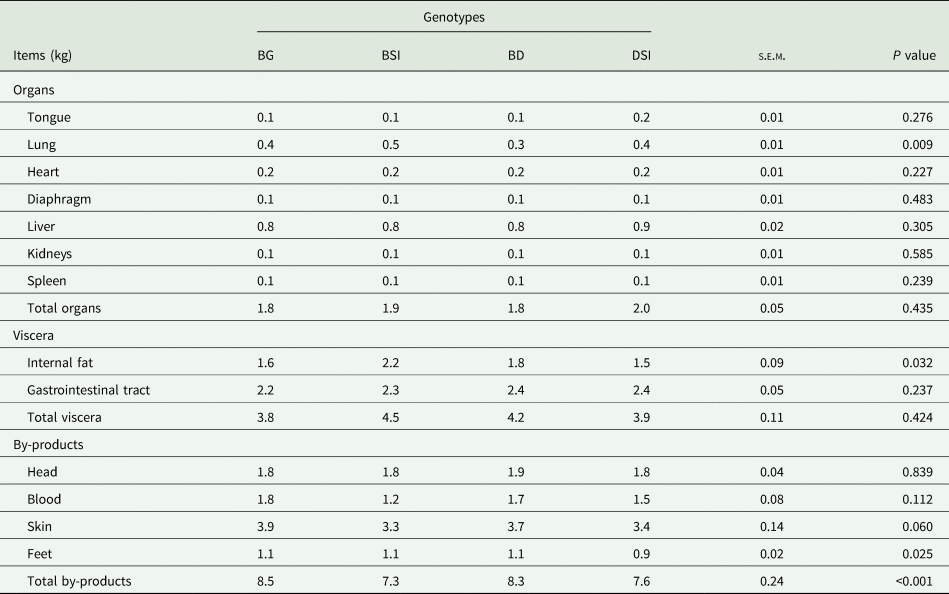
For organ weight, the lung weight was higher for BSI and lower for BD (P = 0.009), while DSI and BG did not differ from the others (P > 0.05). In relation to viscera weight, it was observed that the internal fat was higher for BSI and lower for DSI (P = 0.032). For by-products weight, the DSI genotype showed lower value for feet (P = 0.025) and total by-products weight (P < 0.001), while BG, BSI and BD did not differ from each other (P > 0.05) (Table 3).
Least square means of non-carcass components weight of Berganês lambs (BG) and its crossbreeds Berganês × Santa Inês (BSI) and Berganês × Dorper (BD), and the control group Dorper × Santa Inês (DSI), in feedlot

s.e.m., standard error of the mean; P value, probability value.
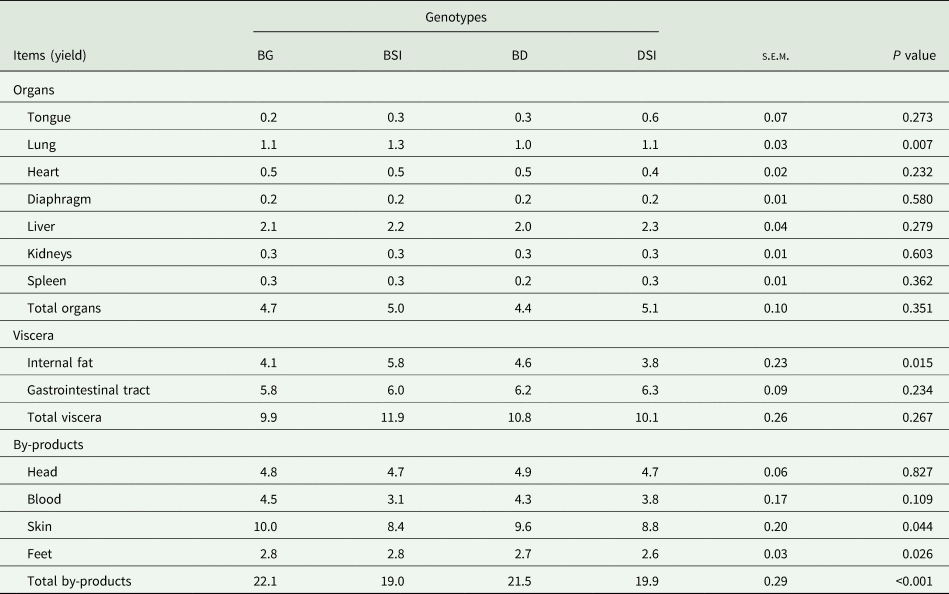
In relation to organ yield, it was observed that the lung yield was higher for BSI compared to BD (P = 0.007). For viscera yield, the internal fat was higher for BSI and lower for DSI (P = 0.015). BG and BD did not differ from the others (P > 0.05). Regarding the by-products yield, the skin yield was higher for BG compared to BSI (P = 0.044). For feet yield, the DSI genotype showed lower value compared to the other genotypes (P = 0.026). In relation to total by-products total yield, the BSI and DSI genotypes had lower value than BG and BD (P < 0.001) (Table 4).
Least square means of non-carcass components yield of Berganês lambs (BG) and its crossbreeds Berganês × Santa Inês (BSI) and Berganês × Dorper (BD), and the control group Dorper × Santa Inês (DSI), in feedlot

s.e.m., standard error of the mean; P value, probability value.
Correlation analysis
The correlation coefficients ranged from −0.5 to 0.9, being significant for 28.6% of the variables used in the study (Supplementary Table 1).
Factorial analysis
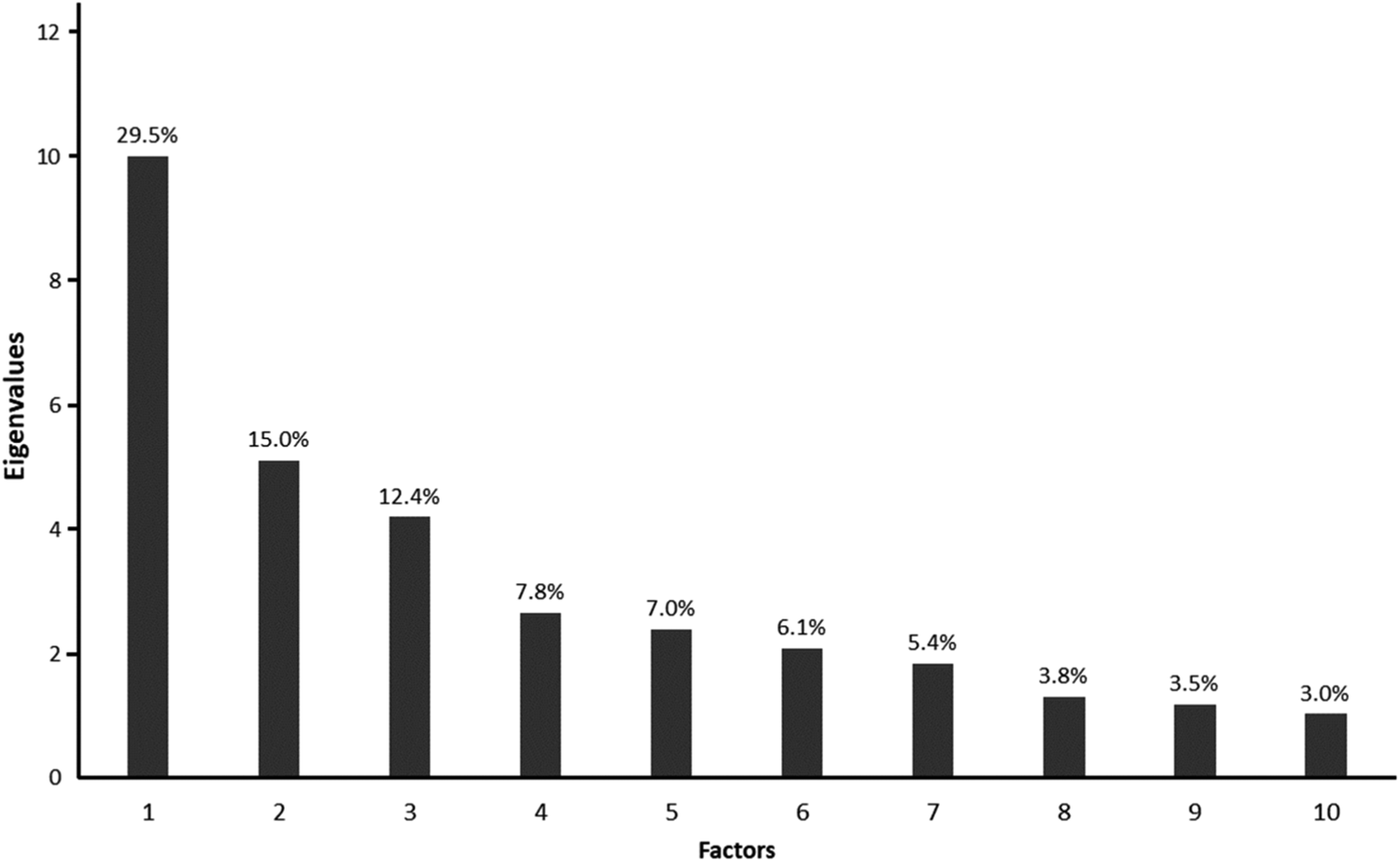
The communalities values ranged from 0.59 to 0.99. Ten factors were obtained with eigenvalue >1, which together explained 93.6% of the total variation (Fig. 3).
Accumulated variance and eigenvalues (y-axis) generated from the factor analysis of non-carcass components of Berganês lambs from different sexual classes and crossbreeding.

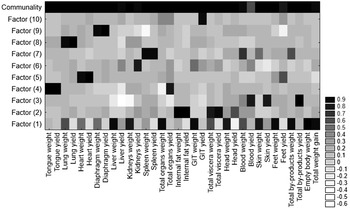
Factor 1 explained 29.5% of the total variance. The weights of the liver, kidneys, total organs, GIT, head, skin, feet, total by-products, EBW and TWG were the most important variables in explaining factor 1 (Fig. 4). Regarding factor 2, which explained 15.0% of the total variation, weight and yield of internal fat and total viscera presented higher eigenvectors. Factor 3 obtained 12.4% of accumulated variance, and greater eigenvectors were found for the yields of blood, skin and total by-products. The variability explained by the factor of 4 was 7.8%. The tongue weight and yield, as well as the total organs yield, showed higher eigenvectors in this factor. The heart weight and yield showed higher eigenvectors for factor 5, which explained 7.0% of the total variation. For factor 6, which presented 6.1% of accumulated variance, the kidneys yield obtained the largest load factor in isolation. Factor 7 presented 5.4% of the total variation and the spleen weight and yield showed higher eigenvectors. The lung weight and yield obtained greater eigenvectors for factor 8, which presented 3.8% of accumulated variance. Factor 9 obtained 3.5% of accumulated variance and the diaphragm weight and yield showed higher eigenvectors. For factor 10, which explained 3.0% of the total variation, the GIT yield obtained the highest load factor in isolation.
Factorial analysis of non-carcass components of Berganês lambs from different sexual classes and crossbreeding.

DA by sexual classes of animals
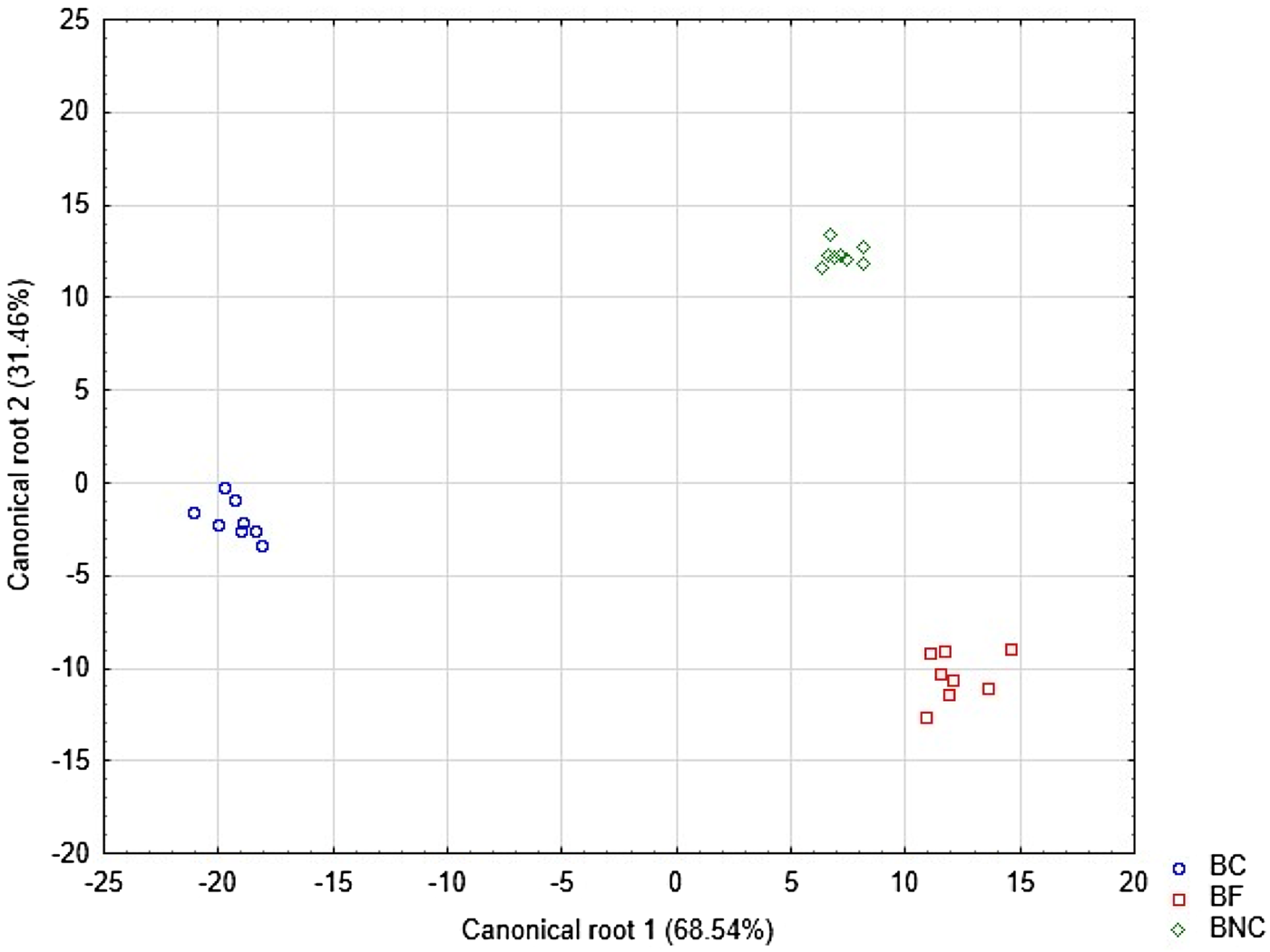
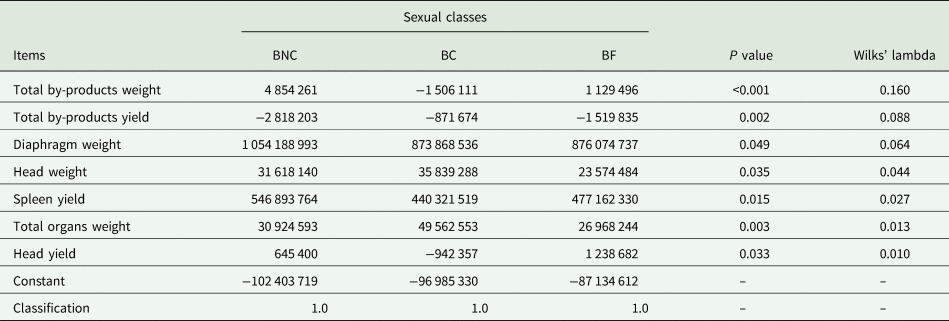
According to the stepwise method, the variables with the greatest power to discriminate (P < 0.05) sexual classes were total by-products weight, total by-products yield, diaphragm weight, head weight, spleen yield, total organs weight and head yield (Table 5). The other variables were excluded from the model. It was found that the Wilks’ lambda value decreased from 0.160 to 0.010. All evaluated lambs were classified into their respective sexual classes (Fig. 5).
Colour online. Discriminant representation of the categories non-castrated Berganês (BNC), castrated Berganês (BC) and female Berganês (BF) according to their non-carcass components.

Linear discriminant function and classification of different sexual classes, non-castrated Berganês (BNC), castrated Berganês (BC) and female Berganês (BF) according to their non-carcass components by the stepwise method

P value, probability value.
DA by genotype of animals
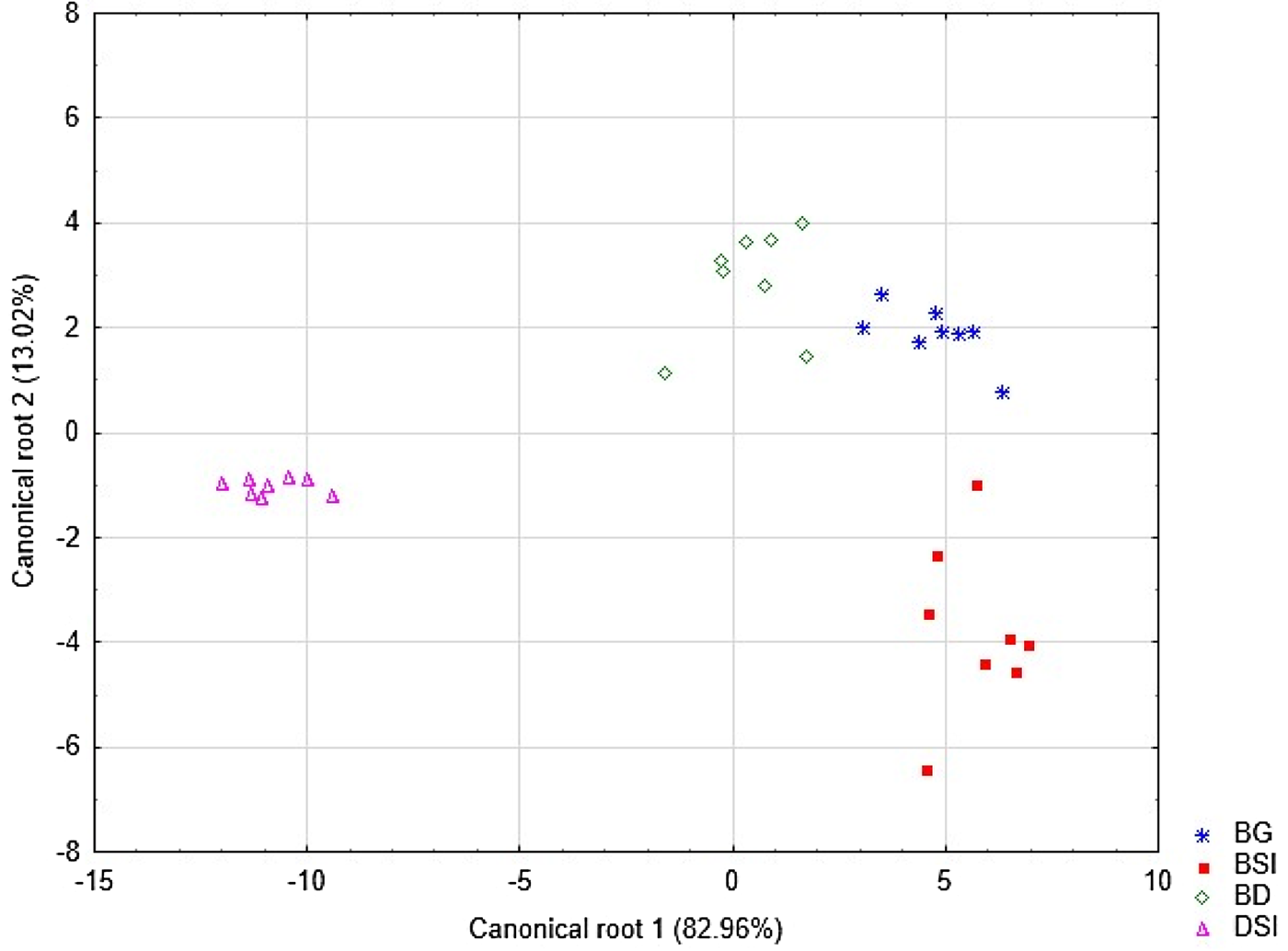
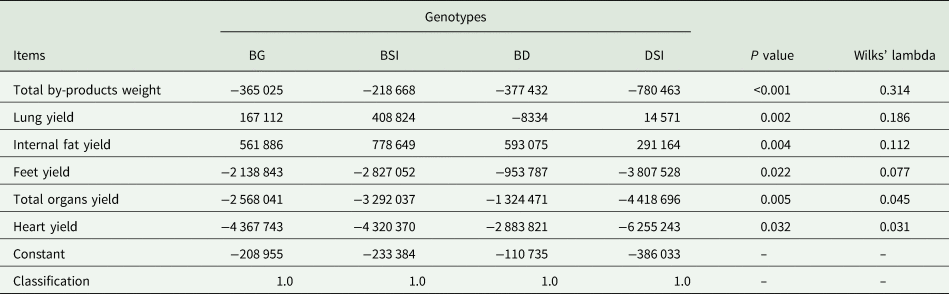
The variables selected by the stepwise method to discriminate genotypes were total by-products weight, lung yield, internal fat yield, feet yield, total organs yield and heart yield (P < 0.05) (Table 6). It was observed that the Wilks’ lambda value decreased from 0.314 to 0.031. All evaluated lambs were classified into their respective genotypes (Fig. 6).
Colour online. Discriminant representation of Berganês (BG), Berganês × Santa Inês (BSI), Berganês × Dorper (BD) and Dorper × Santa Inês (DSI) lambs according to their non-carcass components.

Linear discriminant function and classification of Berganês (BG), Berganês × Santa Inês (BSI), Berganês × Dorper (BD) and Dorper × Santa Inês (DSI) genotypes according to their non-carcass components by the stepwise method

P value, probability value.
Discussion
In general, non-castrated lambs show higher growth than castrated males and females (Mahgoub and Lodge, Reference Mahgoub and Lodge1994; Soares et al., Reference Soares, Furusho-Garcia, Pereira, Alves, da Silva, Almeida, Lopes and Sena2012), which also results in higher EBW and TWG. The anabolic action of the hormone testosterone in non-castrated males explains this difference, promoting higher muscle growth (Butterfield, Reference Butterfield1988; Li et al., Reference Li, Tang, Zhao, Yang, Li, Qin, Liu, Yue and Zhang2020). This effect was also observed in Morada Nova lambs, in which values of EBW and daily weight gain were higher for non-castrated males, intermediate for castrated males and lower for females (Araújo et al., Reference Araújo, Pereira, Mizubuti, Campos, Pereira, Heinzen, Magalhães, Bezerra, Silva and Oliveira2017).
The lower diaphragm weight for BF suggests that they tend to have less developed thoracic organs, especially the lung, although this did not differ significantly between sexual classes. In general, females have a smaller thoracic cavity and, therefore, less developed respiratory organs (Popkin et al., Reference Popkin, Baker, Worley, Payne and Hammon2012), including the diaphragm. The similarity in the weight of the other organs is common in studies with young sheep from different sexual classes (Vargas Junior et al., Reference Vargas Junior, Martins, Pinto, Ferreira, Ricardo, Leonardo, Fernandes and Teixeira2015; Sabbioni et al., Reference Sabbioni, Beretti, Zambini, Superchi and Ablondi2019), because they are organs of early maturity and stabilize the weight even in the growth phase (Kamalzadeh et al., Reference Kamalzadeh, Koops, Van Bruchem, Tamminga and Zwart1998). It is also acceptable that late developing viscera have similar weights among young lambs of different sexual classes (Rodríguez et al., Reference Rodríguez, Bodas, Landa, López-Campos, Mantecón and Giráldez2011; Costa et al., Reference Costa, Mendonça, Costa, Nunes, Ollé and Feijó2020), a fact that in this study may be associated with similar age and the provision of the same diet for BNC, BC and BF. The heart, diaphragm and GIT yields were higher for BC compared to BNC, which may be related to the higher EBW achieved by the BNC, associated with the similarity in the weight of these NCC between these sex classes, although the diaphragm showed a significant difference (P = 0.022), but with little variation in absolute weight. Studies with different sexual classes observed that the yields of these NCC were not influenced by sex (Everitt and Jury, Reference Everitt and Jury1966; Pereira et al., Reference Pereira, Lima, Marcondes, Rodrigues, Campos, Silva, Bezerra, Pereira and Oliveira2017, Reference Pereira, Pereira, Marcondes, Medeiros, Oliveira, Silva, Mizubuti, Campos, Heinzen, Veras, Bezerra and Araújo2018).
The by-products (head, blood, skin and feet) also have early maturity (Atti et al., Reference Atti, Nozière, Doreau, Kayouli and Bocquier2000) and, therefore, the absence of a difference in their weights between the different sexual classes would not be an unexpected result (Vargas Junior et al., Reference Vargas Junior, Martins, Pinto, Ferreira, Ricardo, Leonardo, Fernandes and Teixeira2015; Sabbioni et al., Reference Sabbioni, Beretti, Ablondi, Righi and Superchi2018). However, the higher weight of total by-products for BNC indicates that the muscles of the head and feet show more significant development due to the anabolic effect of the testosterone (Owens et al., Reference Owens, Dubeski and Hansont1993; Gashu et al., Reference Gashu, Urge, Animut and Tadesse2017; Costa et al., Reference Costa, Mendonça, Costa, Nunes, Ollé and Feijó2020), present at a higher rate in non-castrated males (Saaed and Zaid, Reference Saaed and Zaid2019; Li et al., Reference Li, Tang, Zhao, Yang, Li, Qin, Liu, Yue and Zhang2020). The superiority obtained in blood and skin yields for BNC in comparison to BC, as well as in total by-products yield by BNC in relation to other sexual classes, confirms that non-castrated males show higher growth compared to castrated ones and females (Popkin et al., Reference Popkin, Baker, Worley, Payne and Hammon2012).
The EBW was higher for BD when compared to BSI and the values presented by DSI animals indicate better heterosis. However, the similarity obtained with BG suggests that this heterosis may have been insufficient to give a greater hybrid vigour when compared to the pure genotype. The similarity between pure and crossed genotypes for EBW was also observed by Araújo Filho et al. (Reference Araújo Filho, Costa, Fraga, Sousa, Cezar and Batista2010) with Santa Inês and DSI lambs, and by Vargas Junior et al. (Reference Vargas Junior, Martins, Pinto, Ferreira, Ricardo, Leão, Fernandes and Teixeira2014) with Pantaneiro, Pantaneiro × Santa Inês and Pantaneiro × Texel lambs. The lower TWG for BSI could denote lower metabolic requirements compared to the other genotypes, which is an interesting characteristic when compared mainly to DSI because both genetic groups had similar EBW.
The higher lung weight for BSI, when compared to BD, suggests that BSI could have a greater respiratory capacity and, consequently, a lower demand for ambiance. This result reinforces that genotypes with faster growth and higher production capacity become more demanding of management and environment to reach their productive potential (Ribeiro et al., Reference Ribeiro, Furtado, Medeiros, Ribeiro, Silva and Souza2006; Pragna et al., Reference Pragna, Sejian, Bagath, Krishnan, Archana, Soren, Beena and Bhatta2018). In this sense, a previous study showed that male Santa Inês lambs achieved lower values for respiratory frequency when compared to Dorper and F1 DSI lambs, indicating that the genotype Santa Inês is better adapted to the Brazilian semiarid climate conditions than the genotype Dorper, which was more susceptible to thermal stress (Cezar et al., Reference Cezar, Souza, Souza, Pimenta Filho, Tavares and Medeiros2004). The results obtained for lung yield reinforce greater respiratory capacity for BSI, suggesting that the Santa Inês breed improved the adaptive parameters.
The higher quantity of internal fat might indicate that BSI reaches the finishing stage earlier, suggesting that this genetic group needs less time in the finishing stage to achieve appropriate slaughter weight and termination. Vargas Junior et al. (Reference Vargas Junior, Martins, Pinto, Ferreira, Ricardo, Leão, Fernandes and Teixeira2014, Reference Vargas Junior, Martins, Pinto, Ferreira, Ricardo, Leão, Fernandes and Teixeira2015) found greater quantity of internal fat (P < 0.01) for Pantaneiro × Santa Inês lambs, intermediate quantity for Pantaneiro lambs, and lower quantity for Texel × Pantaneiro lambs, indicating that the crossbreeding with Santa Inês promote more internal fat.
The lower values of feet weight and yield for DSI indicate that the genotype Berganês, besides having heavier feet, passes on this characteristic in crossbreeding. According to Moura Neto et al. (Reference Moura Neto, Moreira, Gouveia, Nogueira Filho, Silva Júnior and Ribeiro2016), Berganês sheep have long legs that are consequently heavier, a feature inherited from the Bergamácia breed.
The higher skin yield obtained for BG in relation to BSI suggests that crossbreeding BG with Santa Inês results in smaller lambs and this evidence is reinforced by the EBW. The Berganês ecotype has a large body (Moura Neto et al., Reference Moura Neto, Moreira, Gouveia, Nogueira Filho, Silva Júnior and Ribeiro2016), while, according to Ribeiro and Gonçalves-García (Reference Ribeiro and Gonçalves-García2016), the Santa Inês breed is of medium size, which probably contributes to reducing the size of their crossbreed. The higher values of total by-products weight and yield for BG and BD confirm higher growth rate for both genotypes, because similar results were also observed for EBW.
For the present study, it was not possible to prepare the typical Brazilian semiarid dishes made with organs and viscera, such as ‘buchada’, ‘sarapatel’ and ‘panelada’. On the other hand, considering some information available in the literature, it was possible to estimate the effect of the sexual classes and the crossbreeding on the yield of such meals. For the preparation of ‘buchada’, Costa et al. (Reference Costa, Madruga, Santos and Medeiros2005) and Medeiros et al. (Reference Medeiros, Carvalho, Batista AM, Junior, Santos and Andrade2008) list the following ingredients: blood, liver, kidneys, lungs, spleen, tongue, heart, omentum, rumen, reticulum, omasum and small intestine. As to ‘sarapatel’, the same NCC as for ‘buchada’ are used, only they are not placed in small bags made from the rumen/reticulum (Brasil et al., Reference Brasil, Queiroz, Silva, Bezerra, Arcanjo, Magnani, Souza and Madruga2014).
For ‘panelada’, Clementino et al. (Reference Clementino, Sousa, Medeiros, Cunha, Gonzaga Neto, Carvalho and Cavalcante2007), Lima Júnior et al. (Reference Lima Júnior, Carvalho, Batista, Ferreira and Ribeiro2015) and Cardoso et al. (Reference Cardoso, Véras, Carvalho, Magalhães, Vasconcelos, Urbano, Fonsêca and Freitas2016) used the ingredients for ‘buchada’ plus head and feet. Thus, the yield of these dishes probably would not be greatly affected by the sexual class, as BNC, BC and BF presented similar weight for most NCC. Regarding the genotype, the similarity of yield for most of the components used in the preparation of ‘Buchada’ and ‘Sarapatel’ indicates that their yield would be similar between the genotypes. However, in relation to ‘panelada’, the lower value of feet yield for DSI suggests that there would be a lower yield for this typical dish from the Brazilian semiarid region.
In general, 28.6% of the variables evaluated showed a significant correlation (P < 0.05). The observed correlations between variables allow the use of multivariate statistical techniques. In the FA, the communalities represent the proportion of variance explained by each variable, or else, the intensity with which a particular variable contributes to the explication of the overall variance of considered factors (Arandas et al., Reference Arandas, Silva, Nascimento, Pimenta Filho, Brasil and Ribeiro2017). The communality values hint to an appropriate adjustment of the model; according to Hair et al. (Reference Hair, Black, Anderson and Tatham2009), values over 0.5 are considered acceptable and indicate that variables are linearly correlated and should be included in the FA.
The highest eigenvectors obtained by the weights of liver, kidneys, total organs, GIT, head, skin, feet, total by-products in factor 1 indicate that the increase in the weight of these NCC during the termination period may be associated with increases in muscle growth, as EBW and TWG also had high load factors in factor 1. Thus, factor 1 was called the performance factor. According to Owens et al. (Reference Owens, Dubeski and Hansont1993), the body growth and muscle hypertrophy are closely related to the growth and functions of some NCC, especially those that play a role in the digestive system and metabolism. Factor 2 was denominated viscera factor, because the largest eigenvectors were obtained by internal fat and total viscera weight and yield, suggesting that the variation in internal fat deposition in animals may influence the variation in weight and total viscera yield. This result is in accordance with the literature, because among the viscera, the internal fat undergoes greater variation according to the sexual classes (Mahgoub et al., Reference Mahgoub, Horton and Olvey1998; Gashu et al., Reference Gashu, Urge, Animut and Tadesse2017; Pereira et al., Reference Pereira, Lima, Marcondes, Rodrigues, Campos, Silva, Bezerra, Pereira and Oliveira2017) and genotypes (Vargas Junior et al., Reference Vargas Junior, Martins, Pinto, Ferreira, Ricardo, Leão, Fernandes and Teixeira2014; Hajji et al., Reference Hajji, Smeti, Ben Hamouda and Atti2016), but the GIT has late maturation and varies little in young sheep (Drouillard et al., Reference Drouillard, Klopfenstein, Britton, Bauer, Gramlich, Wester and Ferrell2020; Mahouachi and Atti, Reference Mahouachi and Atti2005; Pereira et al., Reference Pereira, Pereira, Marcondes, Medeiros, Oliveira, Silva, Mizubuti, Campos, Heinzen, Veras, Bezerra and Araújo2018).
The results obtained with factor 3 confirm the correlation between blood and skin yields (Supplementary Table 1), in addition, the variation in the yield of these NCC is closely related to the total by-products yield, with this factor being called by-products factor. These results indicate that there was a similarity in the degree of maturity of the blood and skin, contrary to what was described by Butterfield (Reference Butterfield1988), who reported that blood and skin have low and medium maturity, respectively. This suggests that the large body size of the Berganês sheep may delay the maturity of the skin and this characteristic has been transmitted to its crossbreeding.
Factor 4 indicated that variations in tongue weight and yield were important for the determination of the total organs yield. This factor was denominated tongue factor. The organs of the digestive tract have a late maturity (Mahgoub and Lodge, Reference Mahgoub and Lodge1994; Atti et al., Reference Atti, Nozière, Doreau, Kayouli and Bocquier2000), however, the variation observed for tongue weight and yield suggests that sexual class and crossbreeding alter the maturity of this organ possibly because it is composed of skeletal muscle tissue.
The isolation of heart in factor 5 (heart factor), kidneys in factor 6 (kidneys factor), spleen in factor 7 (spleen factor), lung in factor 8 (lung factor), diaphragm in factor 9 (diaphragm factor) and GIT in factor 10 (GIT factor) suggests that these NCC were important to explain the variation of their respective factors, but had little correlation with other NNC, since correlated variables share the same factor (Parés-Casanova and Mwaanga, Reference Parés-Casanova and Mwaanga2014; Härdle and Simar, Reference Härdle and Simar2015).
The greater discrimination power of the sexual classes observed for by-products weight and yield as well as for diaphragm weight can be explained by the statistical difference found for these variables in the analysis of variance (Tables 1 and 2). However, the selection of the variables head yield and weight, spleen yield and total organs weight by the stepwise method indicates the existence of sufficient variation to differentiate the sexual classes also for these variables. Regarding the genotypes, the greater discrimination power observed for total by-products weight, lung yield, internal fat yield and feet yield is also explained by the statistical difference in the analysis of variance (Tables 3 and 4). However, the stepwise method found that the variables total organ yield and heart yield were also important in discriminating genotypes.
The reduction in the Wilks’ lambda value indicates a fit of the model for treatment discrimination (Yakubu et al., Reference Yakubu, Salako, Imumorin, Ige and Akinyemi2011), suggesting heterogeneity between sexual classes and genotypes in this study. Wilks’ lambda refers to the proportion of the total variance in the discriminating scores not explained by differences between the groups (Hair et al., Reference Hair, Black, Anderson and Tatham2009).
Therefore, based on EBW and TWG, a higher growth rate is estimated for BNC. Regarding the genotypes, the lower TWG and greater deposition of internal fat for BSI indicate its greater precocity to reach the stage of termination. The FA indicated that, among the NCC evaluated, the weight of liver, kidneys, GIT, skin and feets are determinants for obtaining EBW and TWG. Although few variables have shown statistical difference in the analysis of variance, the classification of 100% of individuals in their respective groups of origin, by DA, indicates the heterogeneity existing between sexual classes and genotypes.
Supplementary material
The supplementary material for this article can be found at https://doi.org/10.1017/S0021859621000563
Acknowledgements
The authors would like to thank the Coordination for the Improvement of Higher Education Personnel (CAPES) for granting the first author's postgraduate scholarship (doctorate degree). The National Council for Scientific and Technological Development (CNPq) for financing the project (469336/2014-5). The Brazilian Association of Breeders of Berganês Sheep (ABCOB) and Agronomic Institute of Pernambuco (IPA) for facilitating access to Berganês sheep breeders. The Federal Institute of Sertão Pernambucano, for the availability of the infrastructure in the realization of the experiment.
Financial support
This work was funded by the National Council for Scientific and Technological Development (CNPq) and Coordination for the Improvement of Higher Education Personnel – Brazil (CAPES) – Financial Code 001.
Conflict of interest
None.
Ethical standards
The Ethics Committee for the Use of Animals of the Federal Institute of Sertão Pernambucano approved the study under code 029/2017.