




No CrossRef data available.
Screening and synthesis: high throughput technologies applied to parasitology
Published online by Cambridge University Press: 12 May 2005
Abstract
High throughput technologies continue to develop in response to the challenges set by the genome projects. This article discusses how the techniques of both high throughput screening (HTS) and synthesis can influence research in parasitology. Examples of the use of targeted and phenotype-based HTS using unbiased compound collections are provided. The important issue of identifying the protein target(s) of bioactive compounds is discussed from the synthetic chemist's perspective. This article concludes by reviewing recent examples of successful target identification studies in parasitology.
Keywords
Information
- Type
- Research Article
- Information
- Copyright
- © 2004 Cambridge University Press
INTRODUCTION
Plasmodium falciparum, Trypanosoma brucei, Toxoplasma gondii, Eimeria tenella, Leishmania major, Theileria annulata, Schistosoma mansoni – the list continues to grow. Unfortunately this is not the list of parasites for which there is an affordable, accessible, side-effect free treatment for the corresponding disease state. It is, rather, an incomplete list of the parasite genomes that have been sequenced. A discussion of the steps involved in using bioinformatics to distil ‘drug-targets’ out of these sequences falls outside the scope of this article. Instead we focus on the technology that links parasitology to chemistry. The search for compounds that modulate protein activity is usually viewed as the task of the pharmaceutical industry. However, in the context of parasitology, World Health Organisation (TDR), Medicines for Malaria Venture (MMV), Walter Reed, the Gates Foundation and many others also play a key role. The high ‘tech’ approaches adopted in drug discovery centres of excellence are increasingly being applied in academia. Here we provide a brief review of the use of high throughput screening (HTS) in parasitology, including target- and phenotype-driven approaches. We discuss how phenotype-based studies, recently termed forward chemical genetics, require a multidisciplinary approach driven by the challenge of ‘protein target identification’.
HIGH THROUGHPUT SCREENING
At least four considerations are required for an academic laboratory to use high throughput screening as part of their research arsenal. The first is to engineer an experimental situation in which the ‘system’ itself tells us the answer to a difficult problem. For example, establishing a method of identifying novel proteins involved in host cell invasion by a parasite (Carey et al. 2004). The second relates to the availability of the necessary technology. There has been a significant drop in the cost of the required robotic equipment and it is now possible to buy an automated liquid handler and multimode plate reader with a minimal budget. Third, compound collections are now commercially available and a myriad of companies cater to the increasing demand (Table 1). Fourth, academic researchers have realised that they can not only validate a novel protein target but can also identify ‘proof of concept’ compounds that modulate the protein's activity (Smith et al. 2004).

TARGETED HTS
Providing an exhaustive literature review of high throughput screening in parasitology is a daunting task. We have therefore chosen to review only a sub-section of the literature (for a more complete review see Werbovetz, 2000). All the articles we will discuss in detail have a common link: the use of unbiased compound collections. This decision means that a large number of targeted HTS reports in parasitology will not be discussed. Our view is that in the majority of these articles a lead compound against the selected parasite target already exists and that the main focus of the papers is usually not on the discovery aspect but on lead optimisation. For example, the recent report of the screening of kinase inhibitors against the Leishmania mexicana CRK3 Cyclin-Dependent Kinase, although interesting, is not discussed in detail here as this research is inspired by previous knowledge of likely kinase inhibitor structures (Grant et al. 2004).
As a result of intellectual property issues, financial constraints and the many technical barriers inherent in establishing a miniaturised functional protein assay, there are very few cases where purified parasite proteins have been screened against unbiased compound collections (e.g. Samson et al. 1995; Asai et al. 2002). An excellent example of this approach is the work by Asai et al. (2002). Toxoplasma gondii expresses the protein nucleoside triphosphate hydrolase (NTPase) in two isoforms, NTPase-I and NTPase-II. These enzymes are released into the parasite-containing vacuole and are essential for tachyzoite replication within the host cell. Approximately 150000 compounds were assayed against NTPase in T. gondii in an automated 96-well format. The activity of the compounds was monitored by the presence of orthophosphate, formed by hydrolysis of ATP. Five compounds were shown to inhibit both NTPase-I and NTPase-II. One of the compounds was a selectivite inhibitor of NTPase-I. On further investigation all five compounds were found to inhibit parasite replication. With the availability of genome sequences and improvements in our ability to classify and express recombinant proteins, it seems likely that the number of examples of this HTS mode will increase dramatically. The use of small molecule chips to aid high throughput binding assays, followed by low throughput functional assays, will also enhance this discovery mode (Koehler, Shamji & Schreiber, 2003).
A second class of HTS projects that use an unbiased compound set does exist but this set is a virtual one. Table 2 summarises reports of projects that have started with an in silico screen against a specific protein. In the majority of cases, these studies are aided by the availability of structural information on the chosen protein, although homology models are also used. For example Bond et al. (1999) used this approach to study the protein target trypanothione reductase (TR) in the protozoan parasite Trypanosoma cruzi. This protein was selected due to its potential importance in the survival of the parasite. TR reduces trypanothione disulfide (T[S]2) to dihydrotrypanothione, which can in turn reduces glutathione disulfide (GSSH) to glutathione (GSH). GSH protects cells by removing potential oxidising agents. Bond et al. (1999) obtained a crystal structure of TR with its T[S]2 substrate bound. An area of the active site of TR which is the most structurally dissimilar to the human equivalent glutathione reductase (GR) was choosen to screen the Cambridge Structural Database (CSD) for potential inhibitors. Two natural products, cadabacine and lunarine, were identified from this screen and considered suitable for further investigation. Lunarine, which is commercially available, showed inhibition kinetics indicating non-covalent binding to TR followed by covalent binding to the reduced form of TR.

PHENOTYPE HTS
The workhorses of HTS in parasitology are the cell-based live/dead assays. This class of assays includes the tritiated hypoxanthine incorporation assay used to determine the activity of a compound against P. falciparum (Harmse et al. 2001). By carrying out these assays in conjunction with mammalian cell cytotoxicity assays, it is possible to make an initial assessment of whether or not a compound has an acceptable therapeutic window. The protein targets of compounds cannot be assigned from these assays, but the assays do provide a clear indication of relevant biological activity in a cellular environment. Recent technological advances enable the use of more focused cell-based assays to assess the effect of compound collections on specific aspects of the parasite lifecycle. An example that we have been involved in is the use of high throughput imaging technology to identify small molecules that perturb host cell invasion by T. gondii. Fig. 1 summarises the approach used to screen 12160 commercially available compounds in this study.

Fig. 1. A phenotype-based high throughput invasion assay. Each well of the 384-well plate contained either a unique compound or an equivalent volume of DMSO (control). Intracellular and extracellular parasites were distinguished by fluorescence microscopy; extracellular parasites were red and green appearing yellow in merged images; intracellular parasites were green only. Compounds that reduced the invasion levels to <20% compared to control wells were considered inhibitors. This figure is reproduced from Carey et al. (2004) copyright, National Academy of Sciences, USA. (Bar=10 μm.)
In addition to the supply of parasites, compounds and the miniaturisation of the assay format, two other key factors made this screen possible. Firstly, just short of 100000 images had to be captured. This was done at the Institute of Chemistry and Cell Biology (ICCB) at Harvard Medical School using an inverted fluorescence microscope fitted with an x/y stage and piezoelectric-motorized objective holder. Metamorph® software was used to control auto-focusing, all aspects of image acquisition and movement between the 4 different fields sampled in each well and between wells. The same technology has also been used to identify compounds that modulate the early stages of the wound healing response (a process that is analogous to parasite invasion in that it involves the cell motility machinery). This work has recently been published (Yarrow et al. 2004) and provides further details on the automated microscopy. Whilst acquiring, storing and accessing the images proved challenging, sorting through them to identify hits proved impossible by hand/eye. An algorithm to enable automated image analysis was therefore established. The goal of this algorithm was to identify and count fluorescent objects (parasites) present in each of the 100000 images. The number of parasites per field was then used to calculate the average number of invaded parasites per field (by subtraction of parasite numbers in paired images, see Fig. 1). This number was compared to that in the control wells present on each plate and inhibitors of invasion were defined as compounds that gave invasion levels of less than 20% of the control levels. A parasite was defined by input of numerical values for minimum and maximum object area. This enabled fragments or clumps of parasites to be excluded. The overall protocol was sufficiently reliable to identify 65 inhibitors from the primary screen. This number was eventually reduced to 24 using additional selection criteria (Carey et al. 2004).
THE NEXT CHALLENGE: TARGET IDENTIFICATION
Phenotype-based approaches, such as the one discussed above, minimally deliver compounds that are active in cells. Unfortunately, unless the detailed phenotype provides additional clues (Mayer et al. 1999), such approaches do not provide information about the protein target(s) of the compound. For this, a series of other techniques and some good fortune is required. Numerous articles summarising biochemical approaches to protein target identification have been published recently, reflecting the fact that this is becoming one of the major challenges in post-genomic research (King, 1999; Gray, 2001; Ward, Carey Westwood, 2002; Lokey, 2003). Here we focus on the input that the biologically-aware chemist can, and arguably, must have. To date, our laboratory has encountered six scenarios in which chemical input is required.
Affinity chromatography
These studies typically involve the immobilisation of the active compound onto a water-compatible matrix. The resulting affinity matrix is then used to capture protein targets from crude or prefractionated cell lysates. In order for the compound to be optimally displayed for protein binding, it is necessary to modify its structure by the addition of an inert linker unit. For example, in order to identify parasite-derived binding partners of olomoucine, the agarose 95 matrix was prepared (Fig. 2) (Knockaert et al. 2000). Deciding where the linker unit should be attached so that it has a minimal effect on biological activity frequently requires rounds of analogue synthesis and retesting. As shown in Fig. 2, studies of this type also require the preparation of a control matrix (agarose 95 M matrix). This involves the use of an inactive analogue of the compound that is as close in chemical structure to the original as possible. The use of this matrix enables the identification of proteins that bind non-specifically to the matrices. Analogous studies using other kinase inhibitors known to be of relevance to parasite systems (Taddei and Westwood, unpublished results) and several of the 24 inhibitors that were identified in the T. gondii screen (Morgan, Ward and Westwood, unpublished results; Carey et al. 2004) are ongoing in our laboratory using these techniques. Affinity chromatography can also be used in a second mode. ATP or cGMP binding subsets of the crude lysate are isolated using ATP or cGMP immobilised resins. Comparison of proteins bound to the resin in control lysates versus lysates that have been pretreated with the compound of interest leads to the identification of protein binding partners (Graves et al. 2002). This was elegantly used (Gurnett et al. 2002) to provide additional evidence in support of the assignment of a cGMP-dependent protein kinase (PKG) as the target of the pyrrole containing compound 1 shown in Fig. 4.

Fig. 2. Successful target identification in parasitology – affinity chromatography. Affinity chromatography studies were carried out using crude protein extracts from four different protozoan parasites Plasmodium falciparum, Leishmania mexicana, Trypanosoma cruzi and Toxoplasma gondii and resins loaded with either 95 or 95 M, see B. The bound proteins were eluted and analysed by SDS-PAGE/silver stain, see A. The gels clearly show the isolation of one protein CK1 for P. falciparum, two proteins are identified with L. mexicana, CK1 and an unknown protein. CK1 was also pulled down from the T. gondii and T. cruzi extracts (with two other unidentified proteins in the latter case, Knockaert et al. 2000)*Reprinted from Knockaert, M., Gray, N., Damiens, E., Chang, Y-T, Grellier, P., Grant, K., Fergusson, D., Mattram, J., Soete, M., Dubremetz, J-F., Le Roch, K., Doerig, C., Schultz, P. G. & Meijer, L. (2000). Intracellular targets of cyclin-dependent kinase inhibitors: identification by affinity chromatography using immobilised inhibitors, Chemistry and Biology, 7, 411–422. Copyright (2000), with permission from Elsevier..
Photoaffinity labelling
As discussed above, a key step in the use of affinity chromatography is finding a site on the compound to attach a linker unit without loss of biological activity. Once this site has been identified, however, it can often be used in a number of other approaches. One of these involves the attachment of a photoreactive functional group to the compound at this site (reviewed in Dormán & Prestwich, 2000). Subsequent irradiation of a mixture of the probe with a crude cell lysate can lead to specific labelling of target proteins. A biotin handle attached to the compound is often used in order to identify labelled proteins.
Yeast-3-hybrid approach
Several articles on this subject have already been published and the reader is referred to these for details of the approach (Spencer et al. 1993; Lin et al. 2000). We have included it here, however, because it requires chemical modification of the original hit in an analogous manner to that described in approaches 1 and 2. A linker unit must be attached to the compound, enabling it to be joined to a molecule such as methotrexate (Lin et al. 2000 and references therein).
High throughput synthesis technology to increase compound potency and aid rapid generation of structure activity relationship data (SAR)
It is currently a very rare occurrence for a commercial compound collection to yield a hit that enables direct target identification. One reason for this is that the initially identified compounds are often not very potent. It is therefore necessary for the activity of a compound to be improved before techniques such as affinity chromatography can be used successfully. Fig. 3 summarises the type of technology that is available to chemists as they try to increase the potency of an analogue series as rapidly as possible.

Fig. 3. Chemical technology that aids protein target identification. The main goal of this technology is to increase the rate of analogue synthesis enabling the rapid acquisition of structure activity relationship (SAR) data (Hird, 1999). Images A–D show examples of the technology used in our research group. A and B: semi- and fully-automated reaction blocks often supplied with filtration and separation devices, enabling both solid and solution phase chemistry. Maximum use of these systems requires automated purification systems (up to 10 compounds can be purified in parallel, equipment not shown); C: focused microwave apparatus. This technology enables reactions that have been traditionally carried out on the time scale of hours to be carried out in minutes. For a recent application from our laboratory see Patterson et al. (2004); D: automated analytical systems. The liquid chromatography-mass spectrometry system shown here enables the assessment of compound purity and structure 24 hours a day. Additional analytical techniques include evaporative light scattering and both fully automated and flow NMR.[Dagger]A web based search identified the following companies as manufactures of technology required for library synthesis. The letters in brackets correspond to the type of instrumentation they supply. A=manual reaction blocks, B=automated systems, C=Microwaves, D=LCMS systems, E=HPLC systems, F=ELSD's, G=NMR systems. Accelab (B), Advanced ChemTech (B), Agilent Technologies (D, E), Alltech Associates (F), Applied Biosystems/MDS SCIEX (D), Argonaut Technologies (B, E), Biotage (E), Brucker Biospin (G), Buchi (A, E), CEM Corporation (C), Charbdis Technologies (A, B, E), Chemglass (A), Chemspeed (A, B), CSPS Pharmaceuticals (A), FlexChem (A), GBC Scientific Equipment PTY Ltd (E), Genevac (A), Gilson Inc. (B, E), H&P (A), Hitachi (E), Heidolph (A), HEL Inc (B), Innolabtech (B), Isco Inc (E), J-Kem Scientific (A), Mettler Toledo (Bohdan) (A, B), Milestone Inc. (C), Orochem Technologies (A), Personal Chemistry/Biotage (C), Polymer Laboratories (F), Prolab Instruments (B, E), Radleys (A, E), Rapp Polymere (A, B), Robosynthon (A), Sedere (F), Shimadzu (D, E), Stem corporation (A), Spyder Instruments (A), Tecan (B), Torviq (A), Varian Inc. (D, E, G), Waters (D, E) and Zinsser Analytic (A, B). Solid phase technology has also improved facilitating split and pool synthesis (e.g. IRORI and Mimotopes, not shown (Ley & Baxendale, 2000)). In the majority of cases, the advancements in technology described here shift the rate determining step in analogue synthesis away from practical issues and back to fundamental questions of chemical design and feasibility.
The use of parallel synthesis equipment coupled with automated purification and analysis technology speeds up this process. For example, we recently prepared 96 analogues of an invasion inhibitor of T. gondii, resulting in the identification of compounds with increased potency and a clearer view of the substituent-dependence of the biological activity (Catti, Ward and Westwood, unpublished data). However, there is often a lag period while chemists become acquainted with the chemistry associated with a particular hit. When the compound has been selected using HTS from a collection previously prepared by the chemist this delay is reduced.
Insights into mechanisms of covalent modification of proteins
During the course of our studies on invasion inhibitors of T. gondii we identified several compounds that act irreversibly. At least one of these acts through covalent modification of its target protein(s). Whilst the details of this work fall outside the scope of this review article, chemical studies in our research laboratory suggest that this inhibitor can covalently label nitrogen nucleophiles (e.g. lysine residues) through a novel chemical mechanism (Pearson, Evans and Westwood, unpublished data). Identifying the mechanisms by which compounds covalently label proteins are important if mass spectrometric techniques are to be recruited into target identification studies.
Radiolabeled analogue synthesis
One of the most inspiring reports of successful target identification in parasitology comes from the work of the Merck Research Laboratories (Gurnett et al. 2002; Fig. 4). They showed that the pyrrole containing compound 1 has broad spectrum activity against Eimeria in poultry and T. gondii in a murine toxoplasmosis model (Gurnett et al. 2002; Nare et al. 2002). The target of 1 was identified using a tritiated version of 1 prepared in house at Merck. As Fig. 4A and B show, very few proteins other than cGMP-dependent protein kinase (PKG, 120 kD band), specifically associate with radiolabeled-1 in a ligand-binding assay using soluble extracts of unsporulated E. tenella oocysts. Further studies showed that 1 inhibits the activity of PKG with an IC50 of 0·8 nM. The evidence in support of PKG being the cellular target of 1 was further strengthened when mutant parasites that are resistant to 1 in vitro and in the mouse in vivo model were produced by incorporating mutations into the catalytic site of PKG (Donald et al. 2002). More recently, 1 has been used to study the role of PKG in a series of parasite related processes (Wiersma et al. 2004).

Fig. 4. Successful target identification in parasitology – radiolabeled analogue synthesis. A Chromatogram indicating the two fractions (34 and 35) bound by radiolabled compound 1. B Silver stained gels indicate two bands at 150 kD and 120 kD which are present in both fractions 34 and 35 (Gunnett et al. 2002)**Reprinted from, The Journal of Biological Chemistry, (2002) 277, 18. Gurnett A. M., Liberator, P. A., Dulski, P. M., Salowe, S. P., Donald, R. G. K., Anderson, J. W., Wiltsie, J., Diaz, C. A., Blum, P. S., Misura, A. S., Tamas, T., Sardana, M. K., Yuan, J., Biftu, T. & Schmatz, D. M. Purification and Molecular Characterization of cGMP-dependent Protein Kinase from Apicomplexan Parasites. A Novel Chemothreapeutic Target, 15913–15922. Copyright (2002), with permission from The American Society for Biochemistry and Molecular Biology. http://www.jbc.org. C Structure of the radiolabeled compound used in these target identification stuidies.
This research emphasizes the dramatic effect that compounds can have on biological research and in part justifies the time and resources required. The synthesis of sufficient quantities of radiolabeled analogues can be difficult in an academic laboratory, but our experience has shown that with the ‘cold’ synthetic route in hand there are several contract synthesis companies that can help to progress this approach to target identification (Patterson, Westwood, unpublished data).
CONCLUSION
This review has focused on the use of unbiased compound collections as a means of linking parasite biology and synthetic chemistry. In particular, it has described targeted and phenotype-based high throughput screening approaches. The ultimate driving force behind the marriage of chemistry and parasitology is, of course, drug discovery. In this context, the majority of the research discussed here only impacts on the early phases of this complex process (particularly when it is carried out in academia). However, the impact is still a crucial one and, in our opinion, is set to increase as the technologies discussed here become more common-place in academic environments (Verkman, 2004). A recent review (Burdine & Kodadek, 2004) argues the major challenge arising from phenotype-based assays is identifying the protein target(s) of hit compounds. There appears to be a renewed optimism (or is it determination) about our ability to succeed in target ID programmes. Whether this is misplaced or not, it is clear that this venture is a multidisciplinary one that requires the input of biologists, chemists, informatics experts and cutting edge technology.
ACKNOWLEDGEMENTS
We would like to thank the organisers of the autumn 2003 meeting on ‘Parasitic Diseases and Applications of Genomics’ at which many of the issues discussed in this article were presented (NJW). This meeting was supported by the British Society of Parasitology. We would like to thank The Royal Society (Fellowship NJW), EPSRC (REM) and NIH, USA for funding and Dr Jon Hollick for critical appraisal of this manuscript.
References
REFERENCES
ASAI, T.,
TAKEUCHI, T.,
DIFFENDERFER, J. &
SIBLEY, D. (
2002).
Identification of small-molecule inhibitors of nucleoside triphosphate hydrolase in Toxoplasma gondii.
Antimicrobial Agents and Chemotheraphy
46,
2393–2399.CrossRefGoogle Scholar
ARONOV, A. M.,
MUNAGALA, N. R.,
ORTIZ DE MONTELLANO, P. R.,
KUNTZ, I. D. &
WANG, C. C. (
2000).
Rational design of selective submicromolar inhibitors of Tritichomonas foetus hypoxanthine-guanine-xanthine phosphoribosyltransferase.
Biochemistry
39,
4684–4691.CrossRefGoogle Scholar
BOND, C. S.,
ZHANG, Y.,
BERRIMEN, M.,
CUNNINGHAM, M. L.,
FAIRLAMB, A. H. &
HUNTER, W. N. (
1999).
Crystal structure of Trypanosoma cruzi trypanothoine reductase in complex with trypanothione, and the structure-based discovery of new natural product inhibitors.
Structure
7,
81–89.CrossRefGoogle Scholar
BURDINE, L. &
KODADEK, T. (
2004).
Target identification in chemical genetics: the (often) missing link.
Chemistry and Biology
11,
593–597.CrossRefGoogle Scholar
CAREY, K. L.,
WESTWOOD, N. J.,
MITCHISON, T. J. &
WARD, G. E. (
2004).
A small-molecule approach to studying invasive mechanisms of Toxoplasma gondii.
Proceedings of the National Academy of Sciences, USA
101,
7433–7438.CrossRefGoogle Scholar
CHOWDHURY, S. F.,
DI LUCREZIA, R.,
GUERRERO, R. H.,
BRUN, R.,
GOODMAN, J.,
RUIZ-PEREZ, L. M.,
PACANOWSKA, D. G. &
GILBERT, I. H. (
2001).
Novel inhibitors of Leishmanial dihydrofolate reductase.
Bioorganic and Medicinal Chemistry Letters
11,
977–980.CrossRefGoogle Scholar
DONALD, R. G. K.,
ALLOCCO, J.,
SINGH, S. B.,
NARE, B.,
SALOWE, S. P.,
WILTSIE, J. &
LIBERSTOR, P. A. (
2002).
Toxoplasma gondii cyclic GMP-dependent kinase: Chemotherapeutic targeting of an essential parasite protein kinase.
Eukaryotic Cell
1,
317–328.CrossRefGoogle Scholar
DORMÁN, G. &
PRESTWICH, G. D. (
2000).
Using photolabile ligands in drug discovery and development.
Trends in Biotechnology
18,
64–77.CrossRefGoogle Scholar
FREYMANN, D. M.,
WENCK, M. A.,
ENGEL, J. C.,
FENG, J.,
FOCIA, P. J.,
EAKIN, A. E. &
CRAIG III, S. P. (
2000).
Efficient identification of inhibitors targeting the closed active site conformation of the HPRT from
Trypanosoma cruzi Chemistry and Biology
7,
957–968.Google Scholar
GRANT, K. M.,
DUNOIN, M. H.,
YARDLEY, V.,
SKALTSOUNIS, A.-L.,
MARKO, D.,
EISENBRAND, G.,
CROFT, S. L.,
MEIJER, L. &
MOTTAM, J. C. (
2004).
Inhibitors of Leishmania mexicana CRK3 cyclin-dependent kinase chemical library screen and anitleishmanial activity.
Antimicrobial Agents and Chemotherapy
48,
3033–3042.CrossRefGoogle Scholar
GRAVES, P. R.,
KWIEK, J. J.,
FADDEN, P.,
RAY, R.,
HARDEMAN, K.,
COLEY, A. M.,
FOLEY, M. &
HAYSTEAD, T. A. J. (
2002).
Discovery of novel targets of quinoline drugs in the human purine binding proteome.
Molecular Pharmacology
62,
1364–1373.CrossRefGoogle Scholar
GRAY, N. S. (
2001).
Combinatorial libraries and biological discovery.
Current Opinion in Neurobiology
11,
608–614.CrossRefGoogle Scholar
GURNETT, A. M.,
LIBERATOR, P. A.,
DULSKI, P. M.,
SALOWE, S. P.,
DONALD, R. G. K.,
ANDERSON, J. W.,
WILTSIE, J.,
DIAZ, C. A.,
BLUM, P. S.,
MISURA, A. S.,
TAMAS, T.,
SARDANA, M. K.,
YUAN, J.,
BIFTU, T. &
SCHMATZ, D. M. (
2002).
Purification and molecular characterization of cGMP-dependent protein kinase from apicomplexan parasites. A novel chemothreapeutic Target.
Journal of Biological Chemistry
277,
15913–15922.CrossRefGoogle Scholar
HARMSE, L.,
VAN ZYL, R.,
GRAY, N.,
SCHULTZ, P.,
LECLERC, S.,
MEIJER, L.,
DOERIG, C. &
HAVLIK, I. (
2001).
Structure-activity relationships and inhibitory effects of various purine derivatives on the in vitro growth of Plasmodium falciparum.
Biochemical Pharmacology
62,
341–348.CrossRefGoogle Scholar
HIRD, N. W. (
1999).
Automated synthesis: new tools for the organic chemist.
Drug Discovery Today
4,
265–274.CrossRefGoogle Scholar
HORVATH, D. (
1997).
A virtual screening approach applied to the search for trypanothoine reductase inhibitors.
Journal of Medicinal Chemistry
40,
2412–2423.CrossRefGoogle Scholar
KING, R. W. (
1999).
Chemistry or biology: which comes first after the genome is sequenced?
Chemistry and Biology
6,
R327–R333.Google Scholar
KNOCKAERT, M.,
GRAY, N.,
DAMIENS, E.,
CHANG, Y.-T.,
GRELLIER, P.,
GRANT, K.,
FERGUSSON, D.,
MATTRAM, J.,
SOETE, M.,
DUBREMETZ, J.-F.,
LE ROCH, K.,
DOERIG, C.,
SCHULTZ, P. G. &
MEIJER, L. (
2000).
Intracellular targets of cyclin-dependent kinase inhibitors: identification by affinity chromatography using immobilised inhibitors.
Chemistry and Biology
7,
411–422.CrossRefGoogle Scholar
KOEHLER, A. N.,
SHAMJI, A. F. &
SCHREIBER, S. L. (
2003).
Discovery of an inhibitor of a transcription factor using small molecule microarrays and diversity-oriented synthesis.
Journal of the American Chemical Society
125,
8420–8421.CrossRefGoogle Scholar
LEY, S. V. &
BAXENDALE, I. R. (
2002).
New tools and concepts for modern organic synthesis.
Nature Reviews Drug Discovery
1,
573–586.CrossRefGoogle Scholar
LIN, H.,
ABIDA, W. M.,
SAUER, R. T. &
CORNISH, V. W. (
2000).
Dexamethasone-Methotrexate: an efficient chemical inducer of protein dimerization in vivo.
Journal of the American Chemical Society
122,
4247–4248.CrossRefGoogle Scholar
LOKEY, R. S. (
2003).
Forward chemical genetics: progress and obstacles on the path to new pharmacopoeia.
Current Opinion in Chemical Biology
7,
91–96.CrossRefGoogle Scholar
MAYER, T. U.,
KAPOOR, T. M.,
HAGGARTY, S. J.,
KING, R. W.,
SCHREIBER, S. L. &
MITCHISON, T. J. (
1999).
Small molecule inhibitor of mitotic spindle bipolarity identified in a phenotype-based screen.
Science
286,
971–974.CrossRefGoogle Scholar
NARE, B.,
ALLOCCO, J. J.,
LIBERATOR, P. A. &
DONALD, R. G. K. (
2002).
Evaluation of a cyclic GMP-dependent protein kinase inhibitor in treatment of murine toxoplasmosis: gamma interferon is required for efficacy.
Antimicrobial Agents and Chemotherapy
46,
300–307.CrossRefGoogle Scholar
PATTERSON, S.,
LORENZ, C.,
SLAWIN, A. M. Z. &
WESTWOOD, N. J. (
2004).
Rapid access to a pentacyclic library core structure: a microwave assisted approach.
QSAR and Combinatorial Science
23,
883–890.CrossRefGoogle Scholar
RASTELLI, G.,
PACCHIONI, S.,
SIRAWARAPON, R.,
PARENTI, M. D. &
FERRARI, A. M. (
2003).
Docking and database screening reveal new classes of Plasmodium falciparum dihydrofolate reductase inhibitors.
Journal of Medicinal Chemistry
46,
2834–2845.CrossRefGoogle Scholar
RING, C. S.,
SUN, E.,
McKERROW, J. H.,
LEE, G. K.,
ROSENTHAL, P. J.,
KUNTZ, I. D. &
COHEN, F. E. (
1993).
Structure-based inhibitor design by using protein models for the development of antiparasitic agents.
Proceedings of the National Academy of Sciences, USA
90,
3583–3587.CrossRefGoogle Scholar
SAMSON, I.,
KERREMANS, L.,
ROZENSKI, J.,
SAMYN, B.,
VAN BEEUMEN, J.,
VAN AERSCOT, A. &
HERDEWIJN, P. (
1995).
Identification of a peptide inhibitor against glycosomal phosphoglycerate kinase of Trypanosoma brucei by a synthetic peptide library approach.
Bioorganic and Medicinal Chemistry
3,
257–265.CrossRefGoogle Scholar
SCHWIKKARD, S. &
VAN HEERDEN, F. R. (
2002).
Antimalarial activity of plant metabolites.
Natural Products Reports
19,
675–692.CrossRefGoogle Scholar
SELZER, P. M.,
CHEN, X.,
CHAN, V. J.,
CHENG, M.,
KENYON, G. L.,
KUNTZ, I. D.,
SAKANARI, J. A.,
COHEN, F. E. &
McKERROW, J. H. (
1997).
Leishmania major: Molecular modeling of cysteine proteases and prediction of new Nonpeptide Inhibitors.
Experimental Parasitology
87,
212–221.CrossRefGoogle Scholar
SMITH, T. K.,
CROSSMAN, A.,
BRIMACOMBE, J. S. &
FERGUSON, A. J. (
2004).
Chemical validation of GPI biosynthesis as a drug target against African sleeping sickness.
The EMBO Journal
23,
4701–4708.CrossRefGoogle Scholar
SPENCER, D. M.,
WANDLESS, T. J.,
SCHREIBER, S. L. &
CRABTREE, G. R. (
1993).
Controlling signal-transduction with synthetic ligands.
Science
262,
1019–1024.CrossRefGoogle Scholar
TOYODA, T.,
BROBEY, R. K. B.,
SANO, G.-I.,
HORII, T.,
TOMIOKA, N. &
ITAI, A. (
1997).
Lead discovery of inhibitors if the dihydrofolate reductase domain of Plasmodium falciparum dihydrofolate reductase-thymidylate synthase.
Biochemical and Biophysical Research Communications
235,
515–519.CrossRefGoogle Scholar
VERKMAN, A. S. (
2004).
Drug discovery in academia.
American Journal of Physiology and Cell Physiology
286,
C465–C474.CrossRefGoogle Scholar
WARD, G. E.,
CAREY, K. L. &
WESTWOOD, N. J. (
2002).
Using small molecules to study big questions in cellular microbiology.
Cellular Microbiology
4,
471–482.CrossRefGoogle Scholar
WERBOVETZ, K. A. (
2000).
Target based drug discovery for Malaria, Leishmaniasis and Trypanosomiasis.
Current Medicinal Chemistry
7,
835–860.Google Scholar
WIERSMA, H. I.,
GALUSKA, S. E.,
TOMLEY, F. M.,
SIBLEY, L. D.,
LIBERATOR, P. A. &
DONALD, R. G. K. (
2004).
A role for coccidian cGMP-dependent protein kinase in motility and invasion.
International Journal for Parasitology
34,
369–380.CrossRefGoogle Scholar
YARROW, J. C.,
PERLMAN, Z. E.,
WESTWOOD, N. J. &
MITCHISON, T. J. (
2004).
A high throughput cell migration assay using scratch wound healing, a comparison of image-based readout methods.
BMC Biotechnology
4,
1–9.Google Scholar
ZUCCOTTO, F.,
ZVELEBIL, M.,
BRUN, R.,
CHOWDHURY, S. F.,
DI LUCREZIA, R.,
RIUZ-PEREZ, L. M.,
PACANOWSKA, D. G. &
GILBERT, I. H. (
2001).
Novel inhibitors of Trypanosoma cruzi dihydrofolate reductase.
European Journal of Medicinal Chemistry
36,
395–405.CrossRefGoogle Scholar
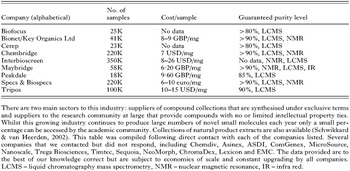
Table 1. Representative sources of compound collections
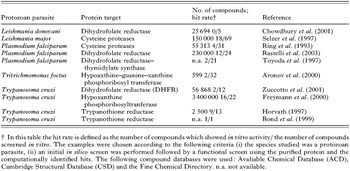
Table 2. Target-based approaches using high throughput in silico screening

Fig. 1. A phenotype-based high throughput invasion assay. Each well of the 384-well plate contained either a unique compound or an equivalent volume of DMSO (control). Intracellular and extracellular parasites were distinguished by fluorescence microscopy; extracellular parasites were red and green appearing yellow in merged images; intracellular parasites were green only. Compounds that reduced the invasion levels to <20% compared to control wells were considered inhibitors. This figure is reproduced from Carey et al. (2004) copyright, National Academy of Sciences, USA. (Bar=10 μm.)

Fig. 2. Successful target identification in parasitology – affinity chromatography. Affinity chromatography studies were carried out using crude protein extracts from four different protozoan parasites Plasmodium falciparum, Leishmania mexicana, Trypanosoma cruzi and Toxoplasma gondii and resins loaded with either 95 or 95 M, see B. The bound proteins were eluted and analysed by SDS-PAGE/silver stain, see A. The gels clearly show the isolation of one protein CK1 for P. falciparum, two proteins are identified with L. mexicana, CK1 and an unknown protein. CK1 was also pulled down from the T. gondii and T. cruzi extracts (with two other unidentified proteins in the latter case, Knockaert et al. 2000)*Reprinted from Knockaert, M., Gray, N., Damiens, E., Chang, Y-T, Grellier, P., Grant, K., Fergusson, D., Mattram, J., Soete, M., Dubremetz, J-F., Le Roch, K., Doerig, C., Schultz, P. G. & Meijer, L. (2000). Intracellular targets of cyclin-dependent kinase inhibitors: identification by affinity chromatography using immobilised inhibitors, Chemistry and Biology, 7, 411–422. Copyright (2000), with permission from Elsevier..
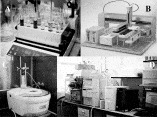
Fig. 3. Chemical technology that aids protein target identification. The main goal of this technology is to increase the rate of analogue synthesis enabling the rapid acquisition of structure activity relationship (SAR) data (Hird, 1999). Images A–D show examples of the technology used in our research group. A and B: semi- and fully-automated reaction blocks often supplied with filtration and separation devices, enabling both solid and solution phase chemistry. Maximum use of these systems requires automated purification systems (up to 10 compounds can be purified in parallel, equipment not shown); C: focused microwave apparatus. This technology enables reactions that have been traditionally carried out on the time scale of hours to be carried out in minutes. For a recent application from our laboratory see Patterson et al. (2004); D: automated analytical systems. The liquid chromatography-mass spectrometry system shown here enables the assessment of compound purity and structure 24 hours a day. Additional analytical techniques include evaporative light scattering and both fully automated and flow NMR.[Dagger]A web based search identified the following companies as manufactures of technology required for library synthesis. The letters in brackets correspond to the type of instrumentation they supply. A=manual reaction blocks, B=automated systems, C=Microwaves, D=LCMS systems, E=HPLC systems, F=ELSD's, G=NMR systems. Accelab (B), Advanced ChemTech (B), Agilent Technologies (D, E), Alltech Associates (F), Applied Biosystems/MDS SCIEX (D), Argonaut Technologies (B, E), Biotage (E), Brucker Biospin (G), Buchi (A, E), CEM Corporation (C), Charbdis Technologies (A, B, E), Chemglass (A), Chemspeed (A, B), CSPS Pharmaceuticals (A), FlexChem (A), GBC Scientific Equipment PTY Ltd (E), Genevac (A), Gilson Inc. (B, E), H&P (A), Hitachi (E), Heidolph (A), HEL Inc (B), Innolabtech (B), Isco Inc (E), J-Kem Scientific (A), Mettler Toledo (Bohdan) (A, B), Milestone Inc. (C), Orochem Technologies (A), Personal Chemistry/Biotage (C), Polymer Laboratories (F), Prolab Instruments (B, E), Radleys (A, E), Rapp Polymere (A, B), Robosynthon (A), Sedere (F), Shimadzu (D, E), Stem corporation (A), Spyder Instruments (A), Tecan (B), Torviq (A), Varian Inc. (D, E, G), Waters (D, E) and Zinsser Analytic (A, B). Solid phase technology has also improved facilitating split and pool synthesis (e.g. IRORI and Mimotopes, not shown (Ley & Baxendale, 2000)). In the majority of cases, the advancements in technology described here shift the rate determining step in analogue synthesis away from practical issues and back to fundamental questions of chemical design and feasibility.

Fig. 4. Successful target identification in parasitology – radiolabeled analogue synthesis. A Chromatogram indicating the two fractions (34 and 35) bound by radiolabled compound 1. B Silver stained gels indicate two bands at 150 kD and 120 kD which are present in both fractions 34 and 35 (Gunnett et al. 2002)**Reprinted from, The Journal of Biological Chemistry, (2002) 277, 18. Gurnett A. M., Liberator, P. A., Dulski, P. M., Salowe, S. P., Donald, R. G. K., Anderson, J. W., Wiltsie, J., Diaz, C. A., Blum, P. S., Misura, A. S., Tamas, T., Sardana, M. K., Yuan, J., Biftu, T. & Schmatz, D. M. Purification and Molecular Characterization of cGMP-dependent Protein Kinase from Apicomplexan Parasites. A Novel Chemothreapeutic Target, 15913–15922. Copyright (2002), with permission from The American Society for Biochemistry and Molecular Biology. http://www.jbc.org. C Structure of the radiolabeled compound used in these target identification stuidies.
 You have
Access
- 2
- Cited by