Language outcomes for children raised in suboptimal institutional care are receiving increasing attention because of the significant window this population provides on the effects of early experience on development. Also, international adoption of children living in institutional care in several countries is growing, presenting new challenges in assessment and intervention for children's language skills. This article reports on school-age language outcomes from the Bucharest Early Intervention Project (BEIP; Zeanah et al., Reference Zeanah, Nelson, Fox, Smyke, Marshall, Parker and Koga2003). The BEIP is a longitudinal examination of development, following children living in Romanian institutions who were randomly assigned to within-country foster care or to continued institutional care.
There is little recent research on language outcomes for children in domestic institutional care. Early reports show that young children in institutional care with little social interaction have marked expressive and receptive language delays, which may be ameliorated to some extent with enriched experiences (Goldfarb, Reference Goldfarb1945; Hunt, Mohandessi, Ghodssi & Akiyama, Reference Hunt, Mohandessi, Ghodssi and Akiyama1976; Provence & Lipton, Reference Provence and Lipton1962; Tizard, Cooperman, Joseph & Tizard, Reference Tizard, Cooperman, Joseph and Tizard1972). More recently, Roy and Rutter (Reference Roy and Rutter2006) compared school-age outcomes for infants placed in institutional and foster care, finding a much higher proportion of children in institutional care with a reading delay.
There now is substantial research on language outcomes for children in institutional care who are adopted internationally. Studies of international adoption do not allow for examination of the children's development in their native language and cultural context. Also, many studies have used questionnaires and other fairly global performance measures. Nonetheless, the studies provide important information about the impact of moving to a more optimal environment on language development. Although there are individual differences, positive language outcomes have been reported for many young children who are placed in foster and adoptive families (Glennen, Reference Glennen2007; Snedeker, Geren & Shafto, Reference Snedeker, Geren and Shafto2007). However, the outcomes are more mixed for children who have experienced institutional care and are placed in foster or adoptive care later in life. While long-term positive outcomes have been reported for both spoken and written language (Scott, Roberts & Krakow, Reference Scott, Roberts and Krakow2008), there are several studies indicating that a larger number of internationally adopted children than their peers continue to show language and other difficulties during the school years (Behen, Helder, Rothermel, Solomon & Chugani, Reference Behen, Helder, Rothermel, Solomon and Chugani2008; Beverly, McGuinness & Blanton, Reference Beverly, McGuinness and Blanton2008; Loman, Wiik, Frenn, Pollak & Gunnar, Reference Loman, Wiik, Frenn, Pollak and Gunnar2009).
Poor institutional care in early development, in which language and social input is severely limited, also has been examined to determine if language recovery is much more or less likely after a particular point in development. There is good reason to think that timing effects of some kind are relevant in language development. Effects of age of exposure and potential sensitive periods have been examined in several populations in which exposure to a first or second spoken language occurs sometime after birth. This includes deaf children who receive cochlear implants at early and later ages, sequential bilingual children, and adults who are second language learners (see Werker & Tees, Reference Werker and Tees2005, for a review of early sensitive periods). Overall, at least for second language learners, age-related effects of later language exposure are clear. However, there do not appear to be the sharp discontinuities in performance that are the hallmark of the classic sensitive or critical period. For example, using US census data on native Spanish- and Chinese-speaking immigrants, Hakuta, Bialystok and Wiley (Reference Hakuta, Bialystok and Wiley2003) found that English proficiency was associated with age of immigration, but there was no sharp decline in language learning ability after proposed critical periods. Rather, there was a steady decrease in proficiency across ages.
Historically, Romanian institutions have presented an instance of very physically and socially depriving care. The English and Romanian Adoptees study (Rutter & the English and Romanian Adoptees (ERA) Study Team, Reference Rutter1998) has provided significant information about the effects of severe deprivation and possible timing effects from a large cohort of young children in Romanian institutional care adopted into the UK. As in other international adoption studies, the ERA is not a randomized controlled design and does not control for selection biases. Using case studies, Rutter et al. (Reference Rutter, Anderson-Wood, Beckett, Bredenkamp, Castle, Groothues, Kreppner, Keaveney, Lord and O'Connor1999) proposed that severely depriving institutional care was associated with increased echolalia and other autistic-like language characteristics considered to be qualitatively different from typical language development. More recently, Croft et al. (Reference Croft, Beckett, Rutter, Castle, Colvert, Groothues, Hawkins, Kreppner, Stevens and Sunuga-Barke2007) studied school-age English language test outcomes for the ERA cohort. In assessments of the children's spoken language at six years and reading comprehension at eleven years, few negative effects were found for children who had experienced less than six months of institutional care. Children with less than six months of institutional care did show somewhat poorer reading comprehension at eleven years than children who had not experienced institutional care, but they were still within age expectations. However, children who had lived in institutional care for longer than six months showed very substantial language deficits. Of particular interest here, there was no correlation between duration of institutional care and language outcomes within this group of children. Thus, the time at which children were placed in a less depriving environment was a critical factor in their later language outcomes.
Early BEIP expressive and receptive language outcomes at ages 2 ; 6 and 3 ; 6 have been reported previously. The BEIP differs from the ERA in that age of foster care placement rather than the related variable of duration of institutional care is of interest. In these early assessments, there is a clear positive intervention effect of early foster care placement. Windsor, Glaze, Koga and the Bucharest Early Intervention Project Core Group (Reference Windsor, Glaze and Koga2007) studied a small subset of children in the BEIP cohort at age 2 ; 6 using caregiver report and spontaneous language samples. Children placed in foster care by age 2 ; 0 showed significantly stronger Romanian language outcomes than both children placed later and children who remained in institutional care. Windsor et al. (Reference Windsor, Benigno, Wing, Carroll, Koga, Nelson, Fox and Zeanah2011) examined the full BEIP cohort at ages 2 ; 6 and 3 ; 6 using formal language tests and utterance length from spontaneous language samples. Again, children placed by age 2 ; 0 showed significantly stronger Romanian language outcomes at both assessment points than children who remained in institutional care. Similar to Croft et al.'s (Reference Croft, Beckett, Rutter, Castle, Colvert, Groothues, Hawkins, Kreppner, Stevens and Sunuga-Barke2007) finding of the advantage of short institutional duration, children placed in foster care by age 1 ; 3 had equivalent language skills to typically developing peers. While they too continued to learn language, children who were placed in foster care after age 2 ; 0 had the same severe language delays as children who remained in institutional care. However, unlike Croft et al.'s finding of no correlation between duration of institutional care and school-age language outcomes, Windsor et al. (Reference Windsor, Benigno, Wing, Carroll, Koga, Nelson, Fox and Zeanah2011) found a robust correlation between foster placement age and preschool language outcomes. This more graded effect of placement timing aligned well with the children's broader cognitive development, with children placed by age 2 ; 0 also showing higher IQs than children placed later (Nelson, Zeanah, Fox, Marshall, Smyke & Guthrie, Reference Nelson, Zeanah, Fox, Marshall, Smyke and Guthrie2007).
The current study focuses on BEIP language outcomes at eight years of age, four and a half years after the 3 ; 6 assessment. At the 2 ; 6 and 3 ; 6 language assessments, almost all children remained in the foster care or continued institutional care groups to which they had been assigned originally. At the eight-year assessment, children were living in a range of care environments, including continuing institutional or foster care and also government foster care and placement with biological or adoptive families. It is possible that children originally assigned to institutional care and who later moved to other settings gained in their language skills, reducing differences between the foster care and institution groups later in development.
Recently, Fox, Almas, Degnan, Nelson and Zeanah (Reference Fox, Almas, Degnan, Nelson and Zeanah2011) studied eight-year cognitive outcomes for children in the BEIP cohort. Children originally assigned to foster care continued to show a significantly higher verbal IQ than children originally assigned to continued institutional care. This effect was especially evident for children who remained in BEIP foster care rather than another care environment at eight years. A similar but weaker effect was found for full-scale IQ. There also were moderate effects of placement age timing, with children placed in foster care after age 2 ; 2 more likely to have very low full-scale IQ profiles than children placed earlier. The overall positive effects of foster care versus institutional care were not as marked as Nelson et al. (Reference Nelson, Zeanah, Fox, Marshall, Smyke and Guthrie2007) found at younger ages, possibly because children originally assigned to institutional care had moved to more optimal care environments by eight years of age.
Fox et al.'s (Reference Fox, Almas, Degnan, Nelson and Zeanah2011) results suggest that a current environment that is of high quality has some impact on maintaining development for children placed early in foster care. For young children who have not experienced early severe deprivation, quality of the current care environment and type of language input to which children are exposed in that environment have been found to have at least modest effects on children's current and later language ability. For example, the proportion of complex sentences that teachers use has been found to be correlated with typically developing preschoolers' syntactic growth (Huttenlocher, Vasilyeva, Cymerman & Levine, Reference Huttenlocher, Vasilyeva, Cymerman and Levine2002). Similarly, kindergarteners' receptive vocabulary and quality of their preschool classrooms appears to be correlated (Peisner-Feinberg et al., Reference Peisner-Feinberg, Burchinal, Clifford, Culkin, Howes, Kagan and Yazejian2001). Intervention by speech-language pathologists also has been found to have positive effects on some expressive language skills for young children with language delays (Law, Garrett & Nye, Reference Law, Garrett and Nye2004).
In the current study, we carried out a detailed assessment of the children's school-age language at eight years. We were interested mainly in continued differences between the groups originally assigned to foster and institution care, the effect of foster placement age, and the effect of current placement status. Given the robust effects of early experience on the children's preschool language development found by Windsor et al. (Reference Windsor, Glaze and Koga2007; Reference Windsor, Benigno, Wing, Carroll, Koga, Nelson, Fox and Zeanah2011), we anticipated that children's original group assignment and their earlier language performance at age 3 ; 6 would continue to impact their language performance at eight years. As in our earlier work, foster care placement before and after two years of age was of particular interest. We expected any effect of children's current placement to be more moderate relative to the effect of original placement.
METHOD
Participants
The BEIP follows children abandoned at birth who spent all or almost all of their early life in institutional care in Bucharest. The children were randomly assigned either to foster care or to continued institutional care. Children were aged between 0 ; 6 and 2 ; 9 at the time of random assignment. Children with medical conditions were not included in either group. The BEIP follows an intent-to-treat design, and children were placed in alternative settings if these became available. A third group of children living in the same communities who had never received institutional care acted as a comparison group.
The institutional care the children received was characterized by impoverished stimulation, highly structured routines, rotating shifts of caregivers, and a very low caregiver–child ratio. Childcare emphasized instrumental activities such as feeding, bathing and changing with little focus on social interaction and engagement. High-quality foster placements, that would not otherwise have been available, were achieved for the children placed in foster care through collaboration with Romanian agencies. There was systematic contact and support available for families through BEIP foster care placement. The BEIP partnered with an established non-governmental organization to ensure an infrastructure of trained personnel to assist families. This included a Romanian team of social workers who had ongoing contact with families. All foster mothers had a high-school education and most had completed vocational training or had specialized skills. Detailed information about the participant groups, care environments, and cultural and ethical issues is reported elsewhere (Nelson et al., Reference Nelson, Zeanah, Fox, Marshall, Smyke and Guthrie2007; Zeanah et al., Reference Zeanah, Nelson, Fox, Smyke, Marshall, Parker and Koga2003; Reference Zeanah, Koga, Simian, Stanescu, Tabacaru, Fox and Nelson2006).
A total of 105 children in the BEIP cohort had language data available at the eight-year assessment and participated in the current study. These children originally were randomly assigned either to the foster care group (FG, N=54, 29 male) or to the group receiving continued institutional care (IG, N=51, 26 male). At the eight-year assessment, IG children had a mean age of 8 ; 8 (SD=0 ; 5) and FG children had a mean age of 8 ; 6 (SD=0 ; 7). The average age of placement for children in the FG group was 1 ; 11 (SD=0 ; 7).
The BEIP intervention formally ended when children were an average of 4 ; 6, and local agencies assumed responsibility for the foster care network. At eight years, children either retained their original IG/FG group assignment as their current placement or they had moved to government foster care or another care environment. The other care environments mainly involved reintegration with the biological family or adoption or placement with another family. A small number of children lived in a social apartment, much a like a group home with a rotating team of three to four caregivers. Only eleven IG children (7 male) retained their original IG group assignment as their current placement status at eight years. Of the remaining IG children, sixteen were in government foster care (8 male), and twenty-four (11 male) were in another care environment. Twenty-six FG children (13 male) remained in BEIP foster care at eight years, six were in government foster care (1 male), and twenty-two (15 male) had another care environment as their current status.
In addition to the IG and FG children, the BEIP comparison group of children who had never received institutional care also participated in the current study. These children were typically developing age peers (NIG, N=37, 15 male). The children had a mean age of 8 ; 5 (SD=0 ; 3) and all had participated in the NIG comparison group at the 3 ; 6 assessment. The children lived with their biological families and were recruited through pediatric clinics in Bucharest. There were an additional sixty-one typically developing children who were peer interactants in one or more of the spontaneous language samples obtained in the study (M age=8 ; 5, SD=0 ; 4). These children did not participate at earlier assessments and data are not reported on these children in this study.
Materials and procedures
There are no standardized language or reading tests for Romanian-speaking children. Psycholinguistic tasks, however, have been found to separate children with and without language impairments in several different languages and were used as part of the language assessments at eight years. While performance on these types of tasks often is used to make inferences about different underlying mechanisms for language, our main interest here was the utility of the tasks as clinical markers of language performance (Conti-Ramsden, Botting & Faragher, Reference Conti-Ramsden, Botting and Faragher2001; Stokes, Wong, Fletcher & Leonard, Reference Stokes, Wong, Fletcher and Leonard2006).
There were four expressive language measures administered in Romanian by trained research personnel. These included nonword repetition, sentence repetition, written word identification, and average utterance length from a spontaneous language sample. Each of the three elicited tasks included practice/trial items in addition to the test items. All tasks and stimuli were developed in conjunction with native Romanian-speaking informants. Children's task responses were scored by Romanian speakers and also scored independently by the first author. There were minimal item-by-item differences and these were resolved with discussion.
Nonword repetition
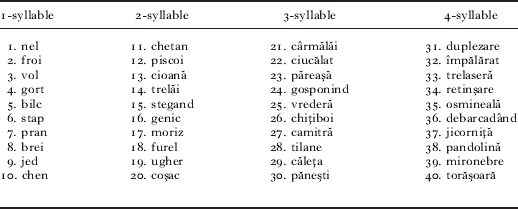
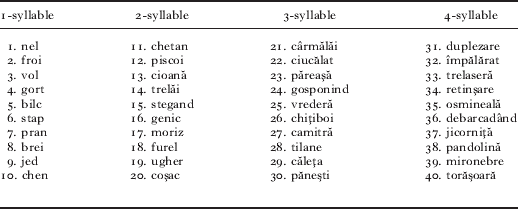
Children's nonword repetition (NonRep) accuracy traditionally has been considered a marker of phonological working memory (Gathercole & Baddeley, Reference Gathercole and Baddeley1989). However, a range of encoding and articulatory factors related to word learning appear to influence performance (Graf-Estes, Evans & Else-Quest, Reference Graf Estes, Evans and Else-Quest2007). Our nonword repetition task included one- to four-syllable nonsense words, with ten test words at each syllable length (Table A1). A variety of syllable shapes was included at each syllable length, with all syllable shapes found in Romanian (Dinu & Dinu, Reference Dinu and Dinu2006). No syllable carried any lexical meaning in Romanian. Words were presented from shortest to longest syllable lengths, and children were given one opportunity to repeat each word. Respectively, there were thirty-four, fifty-three, sixty-nine and ninety phonemes in the one-, two-, three- and four-syllable words, for a total of 246 phonemes. The task was scored conventionally for the percentage of phonemes repeated correctly.
Sentence repetition
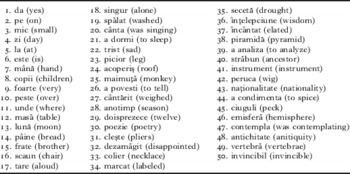
Immediate sentence repetition (SentRep) accuracy has been considered a function of phonological working memory and morphosyntactic knowledge (Chiat & Roy, Reference Chiat and Roy2008; Devescovi & Caselli, Reference Devescovi and Caselli2007). Children repeated thirty-two spoken sentences in the sentence repetition task, including declarative, negative, question and passive forms (Table A2). Scoring followed the Clinical Evaluation of Language Fundamentals-4 (Semel, Wiig & Secord, Reference Semel, Wiig and Secord2003) in which three points were awarded for each sentence repeated exactly, two points for one error, one point for two to three errors, and zero points for four or more errors. Thus, the total number of points possible was ninety-six. Errors typically were word or phrase omissions or word substitutions.
Word identification
Romanian has a shallow orthography, with graphemes largely corresponding in a transparent way to phonemes. Children in Romania begin elementary education at six or seven years old, and single written word identification (WI) was considered most useful as a measure of reading for study participants at eight years. Children read aloud fifty single printed words in this task (Table A3). Stimulus items included a variety of word classes and were presented with three to four words on each page of a booklet. Words were presented in a general order of decreasing familiarity. English word frequency counts from Carroll, Davies and Richman (Reference Carroll, Davies and Richman1971) were used as a general guide in parallel with the native Romanian informants' knowledge. Following the Woodcock-Johnson III Tests of Cognitive Abilities (Woodcock, McGrew & Mater, Reference Woodcock, McGrew and Mater2001), a ceiling rule was used in administration and scoring. If a child was not able to correctly and fluently produce all words on two consecutive booklet pages (i.e. 7 to 8 words), the task was discontinued and the score calculated assuming the child could not read the remaining words.
Mean length of utterance
Mean length of utterance (MLU) conventionally is seen as a global marker of expressive language productivity and morphosyntactic skill. We obtained MLU from a language sample that was part of a longer set of semi-structured interactions each IG and FG child had with a typically developing child. The typical peers had never received institutional care and were matched for gender with the IG and FG children. The ninety-eight typical peers included the thirty-seven NIG children who served as the primary comparison group. Seven of the ninety-eight typical children were participants in two language samples with the total of 105 IG and FG children. Children sat at a table and were instructed by an examiner to talk with each other for five minutes to identify three favorite activities and then to report these back to the examiner. The examiner left the two children alone during the five minutes. All interactions were audio- and video-recorded on DVDs. MLU was calculated in morphemes by a native Romanian speaker following Devescovi, Caselli, Marchione, Pasqualetti, Reilly and Bates' (Reference Devescovi, Caselli, Marchione, Pasqualetti, Reilly and Bates2005) procedure for highly inflected languages. In this calculation, adverbs, conjunctions and interjections were counted as one morpheme. For other word classes an unmarked form was identified, which was counted as one morpheme. Morphemes were added for changes in definiteness, person, plurality and case from the unmarked form (see Windsor et al., Reference Windsor, Benigno, Wing, Carroll, Koga, Nelson, Fox and Zeanah2011, for a similar approach).
Language at age 3 ; 6
As a predictor of children's language performance at eight years, we used their expressive percentage scores on an adaptation of the Reynell Developmental Language Scales (RDLS; Edwards, Fletcher, Garman, Hughes, Letts & Sinka, Reference Edwards, Fletcher, Garman, Hughes, Letts and Sinka1997) at age 3 ; 6, reported in detail by Windsor et al. (Reference Windsor, Benigno, Wing, Carroll, Koga, Nelson, Fox and Zeanah2011). The expressive portion of the RDLS assesses English semantic and grammatical knowledge. Windsor et al. used informant report and NIG performance to determine relevant items for Romanian-speaking children. Four of the six expressive subtests (48 test items) were found to be an appropriate adaptation. The remaining two subtests on complex sentences and negatives were excluded as test items did not obligate specific Romanian grammatical structures as in English. RDLS scores were available for forty-eight IG, fifty-two FG and thirty-six NIG children.
RESULTS
Preliminary analysis
The original intent-to-treat IG and FG groups were used to assess the intervention effect of BEIP foster care on language performance and the effect of foster care placement age. As is conventional, the NonRep, SentRep and WI percentages were arcsine transformed for statistical analysis. As has been found in other NonRep studies (Graf Estes et al., Reference Graf Estes, Evans and Else-Quest2007), there were ceiling effects at shorter syllable lengths and four-syllable accuracy was used as the dependent variable for this language measure. One IG child produced no utterances in the language sample and was excluded from the calculation of MLU. The DVDs were not able to be transcribed for four other IG children and one FG child because of poor audio quality. These children also were excluded. The MLU calculations were based on similar sample lengths for the remaining IG and FG children (IG: N=46, M=45·3 utterances, SD=16·9; FG: N=53, M=51·0 utterances, SD=14·0).
Effect of BEIP foster care
To determine the effect of BEIP foster care, we first conducted a multivariate linear regression to predict three of the four language measures: NonRep, SentRep and MLU. Group (IG, FG), current placement status (original IG/FG group, government foster care, other care), chronological age and gender were used as predictors. A backwards elimination variable procedure was followed, starting from the full model with all independent effects and systematically deleting effects with small contributions. In a subsequent MANOVA (Pillai test), group (F(3, 92)=3·22, p=0·016, partial η2=0·10) and chronological age (F(3, 92)=2·77, p=0·032, partial η2=0·08) emerged as the only significant predictors. Language scores were not standardized for chronological age and it was possible that age might influence the language performance of children in this age range. However, a scatter plot showed the age effect was due to the performance of three children (1 IG and 2 FG) who were younger than other children, aged below 7 ; 6 at the eight-year assessment. A MANOVA of the regression model showed the effect of age was not significant when these three children were removed (F(3, 89)=1·79, p=0·138). These children were excluded in all further analyses.
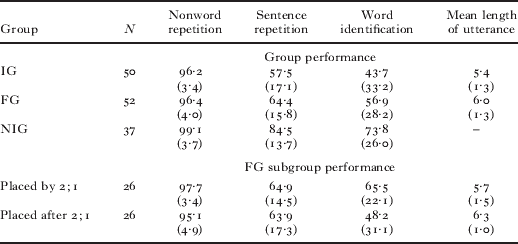
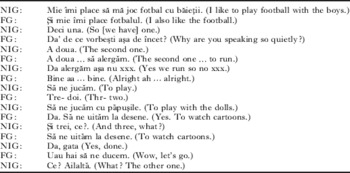
Table 1 shows the group performance on each of the four language measures (excluding the three youngest children). For descriptive purposes, NIG group performance also is included in the table for the three elicited language tasks. MLU is not given for the NIG group as the children's sentence length may have been influenced by whether the child was interacting with an IG or FG child. Table 1 also shows performance on the four language tasks for FG subgroups, with these subgroups described later in the results. Brief segments from an IG and FG child's language samples are given in Tables B1 and B2 as examples. As expected, a MANOVA of the regression model in which the group effect was the only predictor selected by the model (i.e. excluding age) was significant (F(3, 89)=2·72, p=0·034, partial η2=0·08). Post-hoc univariate analyses indicated that the FG group had significantly higher SentRep accuracy than the IG group (t=2·10, p=0·039, d=0·42) and higher MLU (t=2·23, p=0·028, d=0·46). The group effect was not significant for NonRep.
Group mean scores and foster subgroup mean scores on the language measures
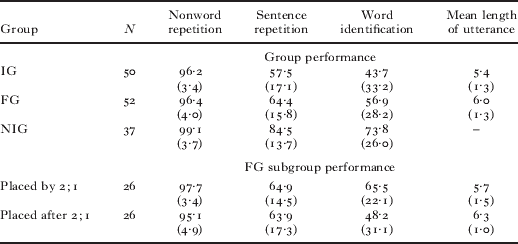
note: In all tables, nonword repetition (NonRep), sentence repetition (SentRep), and word identification (WI) are percentages. Mean length of utterance (MLU) is in morphemes. Standard deviations are in parentheses. IG N=45 and FG N=51 for MLU (N=25 placed by 2 ; 1).
Word identification was analyzed separately from the other three language measures because several children showed limited letter knowledge and were unable to read any words, receiving zero scores. An ANOVA showed the FG group had significantly higher WI accuracy than the IG group (F(1, 101)=4·66, p=0·033, d=0·43). Reading failure was significantly higher in the IG group (13 of 50 children had zero scores) than in the FG group (6 of 52 had zero scores) (χ2 (2, N=102)=3·8, p=0·05, ɸ=0·02). When children with zero scores were excluded, the overall group difference was lower (IG: M=59·1%, SD=23·8%; FG: M=64·3%, SD=20·2%) and not significant (F(1, 82)=3·96, p=0·287).
Effect of current placement status for children in the foster and institution groups
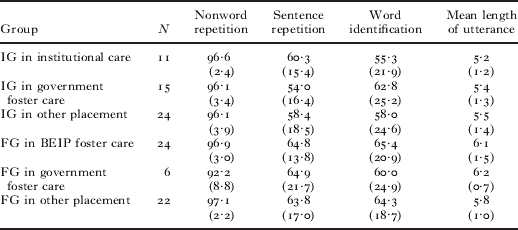
For descriptive purposes, Table 2 shows the IG and FG mean language scores for children in their current placement settings, which included their original group placements, government foster care and other placements. As indicated above, the backwards elimination procedure and MANOVA showed there was no significant effect of children's current placement status on their overall language performance.
Mean scores on the language measures for institution and foster group children across current placement status
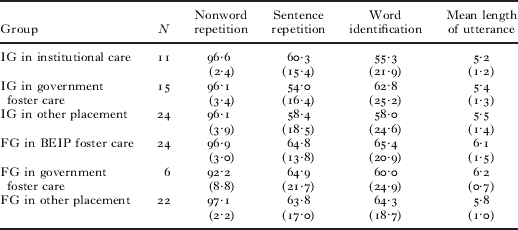
note: Standard deviations are shown in parentheses. Other current placements mainly included reintegration with the biological family, and adoption or placement with another family.
Effect of BEIP placement age for the foster group
Regression and correlation analyses
To determine the effect of placement age in the FG group, we again conducted a multivariate linear regression to predict NonRep, SentRep and MLU. Placement age, current placement status (original IG/FG group, government foster care, other care), chronological age and gender were entered as predictors. A backwards elimination variable procedure again was used, with placement age emerging as the only significant predictor. A MANOVA of this model was significant (F(1, 46)=2·91, p=0·031, partial η2=0·06). The univariate analyses showed that placement age had a significant negative effect on NonRep (t=−2·828, p=0·007, d=0·83) but not on SentRep or MLU.
A follow-up Pearson correlation analysis also indicated that there was a significant negative correlation between placement age and NonRep (r=−0·325, p=0·009). To confirm the multivariate regression result that current placement status did not have a significant effect on FG NonRep performance, a separate Pearson correlation analysis of placement age and NonRep was conducted for children in the FG group who remained in BEIP foster care at eight years. There was a similar pattern of children placed earlier having higher NonRep accuracy, although the correlation did not achieve statistical significance with the smaller sample size (n=24, r=−0·268, p=0·103).
WI was not included in the MANOVA because several FG children showed zero scores on this measure. However, a Pearson correlation indicated a significant negative correlation between placement age and WI (r=−0·226, p=0·054). A similar, though non-significant, level of correlation was evident in the subgroup of FG children who remained in BEIP foster care at eight years (n=24, r=−0·203, p=0·166). Thus, for both NonRep and WI, the extent of correlation between placement age and task performance was largely unaffected by current status.
Foster subgroup analyses
Given the significant effect of FG placement age for NonRep and WI, we were interested in whether there was a difference in language performance on these tasks for FG children placed by approximately two years of age compared to children placed later. Two equally sized subgroups were used for this analysis; children placed by age 2 ; 1 (n=26) and children placed after age 2 ; 1 (n=26). As noted earlier, Table 1 shows the performance of the two subgroups on all four language measures. For purposes of comparison, the IG and NIG groups shown in Table 1 also were included in this analysis. Finally, we compared the performance of FG children placed by age 1 ; 3 with NIG performance, with this age cut-off also used at the 3 ; 6 assessment. Of the twenty-six FG children placed before age 2 ; 1, only six were placed before age 1 ; 3, precluding a robust statistical comparison between this subgroup and the NIG group. Descriptive data are provided for this comparison.
An ANOVA with post-hoc comparisons showed there was a significant NonRep difference among groups (F(3, 138)=9·49, p=0·009). FG children placed by age 2 ; 1 had significantly higher NonRep accuracy than both FG children placed later and the IG group (p=0·040, d=1·03), with no significant difference in accuracy between the FG children placed later and the IG group. The NIG group had higher accuracy than all other groups (p=0·009, d=0·39). The children placed before age 1 ; 3 had a mean NonRep accuracy of 98·4% (SD=1·3%), which was equivalent to the NIG mean accuracy of 99·1%.
Much the same pattern was found for WI. The overall group effect was significant (F(3, 138)=9·08, p<0·001). The NIG group outperformed the IG group and FG group placed later (p=0·002, d=0·89), but not the FG group placed earlier. The FG children placed by age 2 ; 1 had significantly higher accuracy than FG children placed later and the IG group (p=0·013, d=0·64), with no significant difference between the second two groups. However, excluding the thirteen IG, two NIG and six FG children (5 placed after age 2 ; 1) with zero WI scores showed that the NIG group significantly outperformed all other groups (F(3, 117)=5·78, p=0·001, d=0·41). No FG child placed by age 1 ; 3 received a zero WI score, and the mean WI score for this subgroup was 70·9% (SD=16·8%) which approximated the NIG mean score of 73·8%.
Although there was not a placement age effect, FG children's performance on the other two measures, SentRep and MLU, compared to the IG group was of interest. It was also possible to examine NIG SentRep performance. For SentRep, the NIG group outperformed all other groups (F(3, 138)=21·17, p<0·001, d=0·42). The FG children placed before and after age 2 ; 1 had equivalent mean scores and there was no significant difference between either of these groups and the IG group. FG children placed by age 1 ; 3 had mean SentRep accuracy of 65·9% (SD=13·5%), which was equivalent to other FG children placed before and after age 2 ; 1 and well below the NIG group. For MLU, the FG group placed after age 2 ; 1 had a significantly longer utterance length than the IG group (F(2, 95)=3·96, p=0·022, d=0·78). The difference between the two FG groups was not significant. That is, unlike NonRep and WI, in which the significant BEIP intervention effect was due to the FG children placed by age 2 ; 1, for MLU the intervention effect was due to the FG children placed after age 2 ; 1. FG children placed by age 1 ; 3 had a mean MLU of 6·0 morphemes (SD=1·9), which was equal to the average MLU of the full FG group.
Effect of age 3 ; 6 language performance for children in the foster and institution groups
Excluding the three youngest children as in other analyses left forty-seven IG and fifty FG with RDLS scores available at age 3 ; 6. IG children had an average RDLS score of 47·3% (SD=17·9%). FG children had an average of 59·9% (SD=21·2%). Table 3 shows there were significant moderate Pearson correlations within each group between age 3 ; 6 performance and SentRep, WI, and for the FG group NonRep at eight years. Early language performance was anticipated to predict later language performance and we were mainly interested in whether there were different patterns of association for the IG and FG groups.
Pearson correlations between age 3 ; 6 language performance and each eight-year language performance measure for the IG and FG groups

note: The age 3 ; 6 language measure was the expressive percentage score on the adaptation of the Reynell Developmental Language Scales. N=42 for IG mean length of utterance.
* p<0·05, **p<0·01.
To identify if there were different patterns across groups, a bi-directional stepwise linear regression with the starting point of all main effects (group, eight-year language measures) and interaction effects was used to predict age 3 ; 6 performance. The Akaike information criterion (AIC) was used to compare the relative goodness of fit of the regression models. If there was a difference in association between groups, a significant interaction effect should emerge. The only interaction effect in the selected model was for group×NonRep. However the effect was not significant (t(83)=1·47, p=0·146) and a scatterplot showed no discernible difference in trends across groups.
DISCUSSION
It has been shown previously that children who experience early severe deprivation have marked language deficits during the preschool years. Children placed in a more optimal environment during the first two years of life have greater expressive and receptive language skills than those placed later (Windsor et al., Reference Windsor, Benigno, Wing, Carroll, Koga, Nelson, Fox and Zeanah2011). The current study demonstrates that observable deficits in expressive language remain when the children are school-age, and that the ameliorative effects of placement by age two also are evident in some aspects of their language.
BEIP foster care intervention led to higher language performance for FG than IG children on three of the four language measures, SentRep, MLU and WI. The effect for WI was not present when only children with at least some minimal reading ability, including letter knowledge, were considered. Foster placement age had a significant effect on NonRep and WI (including children with no letter knowledge), with children placed earlier showing higher accuracy than children placed later. Indeed, FG children placed by age 1 ; 3 had equivalent NonRep and WI performance to children who had never received institutional care. Children placed after age 2 ; 1 on these two measures showed the same lower language performance as children who originally were assigned to continued institutional care. For MLU, FG children placed later outperformed IG children, while FG children placed earlier had equivalent performance to the IG group. Children's expressive language performance at age 3 ; 6 was correlated with their eight-year language outcomes, except for MLU, with similar predictive patterns of association for the IG and FG groups. Unlike their original group placement and earlier language outcomes, IG and FG children's current placement did not significantly affect their current language performance. That the positive effects of early placement age found at 3 ; 6 are still evident in some aspects of language when the children are aged eight and living in a range of different care environments speaks clearly to the significance of early development.
These results parallel Croft et al.'s (Reference Croft, Beckett, Rutter, Castle, Colvert, Groothues, Hawkins, Kreppner, Stevens and Sunuga-Barke2007) finding that early placement in a high-quality care environment is a critical factor in children's long-term language outcomes. However, our results do not align with Croft et al.'s finding that, for children with longer than six months of institutional care, there was no correlation between duration of institutional care and any language task outcomes. Our results, from an age of placement perspective, show that children placed earlier in foster care have better NonRep performance than children placed later. Also, a larger number of children placed earlier than placed later have letter knowledge and word identification skills.
The differences in study design and ages of interest in the BEIP and ERA cohorts make direct comparisons difficult. A key difference in types of language measures across the two studies is that Croft et al. (Reference Croft, Beckett, Rutter, Castle, Colvert, Groothues, Hawkins, Kreppner, Stevens and Sunuga-Barke2007) used standardized tests and our study used criterion-referenced measures. It may be that standardized tests are not sufficiently sensitive to capture more subtle differences in later language development during the school years. In our study, group and placement age effects were different across the different aspects of language assessed in the four tasks.
The differential pattern of foster care intervention across the spoken language tasks is interesting. While a single task is not sufficient to infer an underlying construct, it is notable that group status but not foster placement age effects were found on the two tasks with a morphosyntactic component, SentRep and MLU. Conversely, placement age but not group effects were evident on NonRep, a task aligned with spoken word learning. It is plausible that living in suboptimal institutional care was detrimental both to children's long-term word learning and their morphosyntactic development. However, moving to high-quality foster care earlier, especially before age 2 ; 1, facilitated stronger word learning development. On the other hand, moving to high-quality foster care any time before age 2 ; 9 (the latest date of placement for any FG child) also facilitated long-term morphosyntactic development, but not in a way that was associated with the specific age at which children moved to the high-quality care environment.
That there might be different findings for different aspects of language accords well with the earlier trajectory of lexical–semantic growth compared to grammatical growth for young children (Fenson, Dale, Reznick, Bates, Thal & Pethick, Reference Fenson, Dale, Reznick, Bates, Thal and Pethick1994). It may be that experience before age 2 ; 1 is pivotal for lexical outcomes and experience during a longer or later time frame is more important for grammatical development (with these data allowing us to examine differences in placement age only up to 2 ; 9). However, it should be remembered that FG placement age was significantly correlated with MLU at age 3 ; 6 (Windsor et al., Reference Windsor, Benigno, Wing, Carroll, Koga, Nelson, Fox and Zeanah2011).
In their discussion of internationally adopted children's school-age language performance, Scott et al. (Reference Scott, Roberts and Krakow2008) draw attention to Cummins' (Reference Cummins1984) classic distinction between language that serves academic purposes and language used in interpersonal communication. Specifically, that proficiency in the types of language used for academic purposes may be more difficult to achieve than conversational language. Even though there is an IG–FG group difference in MLU at eight years, the children show robust grammatical performance (see Appendix B). It may be that the children's sentence length in spontaneous conversation is not as sensitive a measure of any foster placement age effects as the other three elicited language measures. Overall, the language tasks in the current study were not chosen to make a lexical–grammatical comparison and our data are not sufficient to make any strong claims about this specific issue.
Importantly, even though the IG and FG groups did not show the same language proficiency at eight years as their typically developing NIG peers, their language skills had continued to develop from younger ages. In particular, the children's NonRep accuracy was very high across all groups, suggesting no clinical concern on this measure for the IG and FG groups. Also, unlike the one- to two-morpheme sentences which characterized the IG group's language at age 3 ; 6 (Windsor et al., Reference Windsor, Benigno, Wing, Carroll, Koga, Nelson, Fox and Zeanah2011), the IG group were using five-morpheme sentences at eight years. Similarly, the FG group's sentence length had increased from two- to three-morpheme sentences to six-morpheme sentences at eight years. While we did not examine other aspects of the children's spontaneous language, obvious deficits were evident in the SenRep and WI tasks.
We did not find large discontinuities in language development for the FG group. Rather, where we found a difference in performance for FG children placed before and after age 2 ; 1, this was in the context of a significant linear correlation between age and performance. In this sense, we did not find strong evidence for a particular invariant period during which children's language development was less modifiable in the classic sense of a critical period. As at age 3 ; 6, there was a graded impact of placement age on language performance. However, using the more categorical lens of whether FG children did or did not achieve language that was within age-expectations at eight years, the cut-off point of age 1 ; 3 that was examined at age 3 ; 6 continued to be an important marker. Children placed by age 1 ; 3 performed on average as well as their typically developing community peers in NonRep and WI. In the BEIP cohort, children who moved from a severely depriving context to high-quality care during the first year of life show language growth on these two measures that is resilient to the negative effects of deprivation.
The expressive language skill which the IG and FG children showed at age 3 ; 6 was predictive of their eight-year performance on the three elicited language tasks, confirming the significance of the children's early language experience. There was, however, no difference between groups in the trend of the association between age 3 ; 6 and eight-year performance. That is, the two groups showed no discernible difference in the trajectory of language growth.
Finally, the children's current placement status had no significant effect on their language performance. Fox et al. (Reference Fox, Almas, Degnan, Nelson and Zeanah2011) found that the intervention effect of foster care on IQ was stronger for children who remained in BEIP foster care at eight years. Here, the age of placement effects for NonRep and WI were similar for FG children who remained in BEIP foster care and children with other placement status at eight years. It is important to note that our statistical analysis of current placement was in the context of the IG–FG group comparison. That is, current placement was not as powerful or systematic a way to describe children's performance as was children's original group status. Notably, there were a small number of FG children in government foster care at eight years, with larger variability on some language measures within this current status than for other FG current status. It is possible that current placement status may have had greater predictive power with more equivalent and larger sample sizes. Even so, this would not weaken the robust effects of children's original institutional or foster placement and effect of age of foster placement on their school-age language skills.
APPENDIX A
Nonword repetition task stimuli
Sentence repetition task stimuli

Word identification task stimuli

APPENDIX B
Portion of language sample from the institution group

Portion of language sample from the foster group