Introduction
Heat exposure is a matter of significant global concern, so it is perhaps surprising that relatively few scholars have studied it specifically. Many countries report increasing volumes of morbidity and mortality secondary to heat exposure; for example, from 1999 through 2009 in the US, more than 7,800 deaths were caused or influenced by heat exposure.Reference Lindstrom, Nagalingam and Newnham1–Reference Karl, Melillo and Peterson6 Exposure to excessive heat can affect brain, liver, kidney, and heart function, generating effects such as heat rash, heat cramp, heat syncope, heat exhaustion, and heat stroke.Reference Mo, Gao and Liu7–Reference Sithinamsuwan, Piyavechviratana and Kitthaweesin9
The scientific community knows that Earth is getting warmer, due to human actions and atmospheric changes, and the average temperature globally has increased since the beginning of the last century.10 In the US, the National Centers for Environmental Information (NCEI; Asheville, North Carolina USA) has declared the years 2014 and 2015 to be the warmest recorded across global land and ocean surfaces since records began in 1880.11
Studies have shown that people aged 65 years and older, those living in poverty, and the homeless have an elevated risk of heat-related health problems.12–15 The risk is also increased for patients with comorbidities; physiologically, the ability to cope with heat stress is primarily determined by the status of an individual’s cardiovascular system, so the risk is significantly increased among patients with heart disease.Reference Khogali16
Wherever large numbers of people gather, heat-related illnesses are often primary public health concerns, along with the risks of infectious disease, injuries, traffic accidents, non-communicable disease, and terrorism.Reference Al-Nsour and Fleischauer17 Clearly, heat-related health illnesses are a particular concern at mass gatherings in places with a hot climate. However, the literature contains relatively few studies of the effects of heat at such gatherings.Reference Al-Nsour and Fleischauer17
Background and Study Objectives
The Arabian Peninsula, which falls mainly within the Kingdom of Saudi Arabia, is the largest peninsula in the world, with an extremely hot and arid climate. The annual Hajj season sees more than two million pilgrims, from all corners of the world, gather in a small area within Mecca (Saudi Arabia) for six days. Temperatures in Mecca can reach 50°C (122°F), and thus climate constitutes most of the overall heat load, although there is also heat dissipated from Hajj activities, including crowds, vehicular, and human activities.Reference Noweir, Bafail and Jomoah18
Mecca’s Hajj experience has never been thoroughly evaluated, and there is a similar lack of research focusing on the effects of heat exposure and the perception of pilgrims. Just a few studies have explored the behavioral risk factors for important medical issues, including heat exhaustion and heat stroke, among pilgrims in Mecca over the past three decades. However, with the annual pilgrimage now set to coincide with the summer months of June, July, August, and September for many years to come, such knowledge is likely to be of increasing value, particularly to organizations concerned with public health. Therefore, any increase in understanding should help to minimize problems related to heat and health.
The annual pilgrimage (Hajj) in Mecca, Saudi Arabia is one of the essential pillars of the Islam religion. All Muslims in the world who are capable of doing so are required to visit Mecca for Hajj at least once in their lifetime. Thus, more than two million Muslims gather in this small city during the Arabic lunar calendar month of Dho Alhijja every year.
Pilgrims start to arrive in Mecca before the eighth day of Dho Alhijja, which marks the beginning of the formal six-day Hajj. During their pilgrimage, travelers must visit four specific sites in Mecca, and must do so during specified days and at particular times. The sites are Masjid Al Haram, Mina, Mozdalifa, and Arafat. The last three holy places are located to the east of Masjid Haram, and all sites are within 20 kilometers of each other.
Pilgrims spend their first night, that of the eighth of Dho Alhijja, in Mina, which is also known as “tent city” due to the sheer volume of pilgrims camping there. On the following day, pilgrims must go to Arafat, and they leave for Mozdalifa that evening. On the tenth of Dho Alhijja, pilgrims go back to Mina, where they spend the next three days performing the ritual “stoning of the devil” (also known as “stoning Jamarat”).
In light of the above, the authors decided to carry out a cross-sectional study of male Hajj pilgrims in order to identify their perceptions of heat and related health issues, and their behavioral strategies for coping with the challenges of Mecca’s climate. The setting of the study was the annual pilgrimage to Mecca in the Islamic calendar year 1436, which coincided with the western year 2015.
Methodology
A cross-sectional study was conducted in Mecca, Saudi Arabia. Data collection for the study reported here was carried out on the tenth, eleventh, and twelfth days of Dho Alhijja 1436 (September 23-25, 2015). These days were chosen because all pilgrims stay in Mina during these days, and so it was easier to find a good number of participants in the camps.
As the Hajj pilgrims come from all over the world and speak many different languages, it was impossible to cover all of the nations and languages represented at the Hajj through this study alone. Study participants were exclusively male Arab pilgrims; females were not included, due to cultural constraints.
The sample was selected by a one-stage, random stratifying method. Arab pilgrims were divided into two categories: domestic Arabs and international Arabs. Pilgrims from Saudi Arabia were considered domestic, whereas those from other Arabic countries were regarded as international. Arabic refers to the language; Arabic speaking country. At the Hajj, each camp site at Mina contains pilgrims from one country and has a unique number. A group of countries from the same region of the world may be hosted in the same area, and similarly applies to the domestic camps. For this study, a map of Mina, which was provided by the Ministry of Hajj Affairs (Kingdom of Saudi Arabia), was used to identify the locations of camps for Arab hajjis. It contained detailed information about the exact locations of all camps, along with their unique identifying numbers, pathways, and other important landmarks. When the authors had identified all Arabic and domestic camps, 14 camps were selected by a simple randomization method: seven from each category. Epi Info (version 7; Centers for Disease Control and Prevention [CDC]; Atlanta, Georgia USA) software was used to randomly select these camps.
The sample size was calculated as N > 384 subjects. This was calculated by Epi Info based on 95% confidence limits and the assumption that 50% of the participants were aware of the problems associated with excessive heat exposure and adopted healthy practices to cope with the heat. The sample size was increased, however, to 400 to compensate for missing data and non-responses.
A pre-designed, structured questionnaire was used for data collection. The first nine questions asked for socio-demographic information. The next seven questions explored the extent to which subjects understood heat exposure and associated health problems. The remaining 13 questions were designed to identify the coping practices adopted by the Arab pilgrims. The questionnaire contained closed questions, except for two which also contained a space for participants to fill with their own narrative.
The self-administered questionnaire was distributed over three days, during which pilgrims were staying in their camps in Mina. A total of 42 paper questionnaires were distributed in each camp. The extra papers were to compensate for losses, non-responses, and forms with significant missing data. The participants included in the Arabic international category were mainly from Egypt, Morocco, Lebanon, Sudan, and Somalia, whereas the hajjis in the domestic strategy were mainly Saudis and others belonging to different Arabic nationalities living in Saudi Arabia.
The questionnaire was distributed during daylight hours, and also in the evening; in short, whenever pilgrims were available at their tents. During these three days, pilgrims were constantly leaving the camp to undertake Jamarat stoning; therefore, they were not available all of the time, even when inside their camps. Many of them were out for Jamarat, and many of those who returned were exhausted and could not participate in the study. In some camps, pilgrims were angry due to (entirely unrelated) problems with logistics, and so refused to participate. In a very few cases, the camp managers were not co-operative. In such cases, the researcher had to wait for some time or come back later. In other cases, where the camps were completely inaccessible, adjacent camps were selected instead.
Before data were gathered from each camp, permission was secured from that camp’s manager. The choice of tents from those inside each camp was made by the manager himself, depending on the availability of pilgrims and their readiness to contribute by filling in the study questionnaire. For some camps, one tent contained a sufficient number of participants, whereas more than one tent was selected from other camps in order to achieve the desired sample.
Before a questionnaire was handed to them, the nature and objectives of this study were explained to each participant. After that, each participant was given one form and a pen. Further clarification was provided for those who asked for explanation of some questions. Participants unable to read and write were helped to complete the questionnaire, either by the researcher or by a fellow hajji. In total, 412 forms were completed by the participants.
The data thus collected were organized, tabulated, and statistically analyzed using IBM SPSS 21.0 (IBM Corp.; Armonk, New York USA). The numerical data were presented in terms of mean and standard deviation and the categorical data were presented as number and percentage. The chi-square was used to test for differences in sub-categories. The P value adopted was P <.05.
Witnessed verbal consent was secured from each participant. No pressure of any kind was exerted to encourage participation in this study. Data were collected anonymously and used only for the purposes of the study, and confidentiality of data was ensured throughout the study period.
This research was revised by the Field Epidemiology Training Program (FETP; Centers for Disease Control and Prevention [CDC]; Atlanta, Georgia USA) scientific board, as was accepted technically and ethically, and was also revised by the Institutional Review Board of the King Fahad Medical City, Ministry of Health (Kingdom of Saudi Arabia), as was approved ethically. The research was addressing behaviors of pilgrims in the public places and did not address any private behaviors.
Results
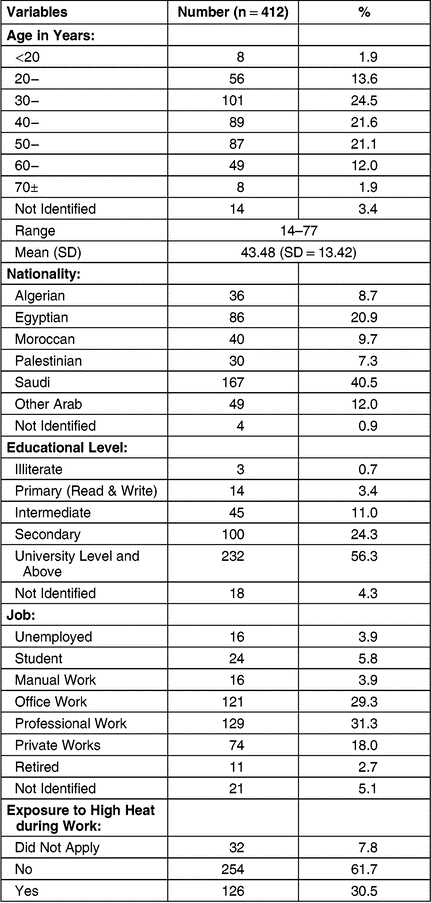
Table 1 describes the demographic characteristics of the study participants. Participants’ ages ranged from 14 to 77 years, with a mean age of 43.48 (SD = 13.42) years. Men in the age range of 30-60 years accounted for 67.2% of the total study participants, while the age groups least represented were below 20 and above 70 years, both groups contributing less than 4.0% of the total. Participants were mainly Saudis (40.5%), while Egyptians represented the second largest group at 20.9%. Participants from Morocco, Algeria, and Palestine were 9.7%, 8.7%, and 7.3%, respectively. The other Arab nationalities represented 12.0%, while for almost 0.9%, a nationality was not identified. Most participating hajjis were educated; approximately 56.3% had a university degree and 24.3% had finished secondary school. Almost one-third had professional occupations (31.3%), and 29.3% of participants worked in offices. Manual workers comprised just 3.9% of the total. When asked, 30.5% said that they were exposed to heat in the course of their work.
Distribution of Studied Pilgrims According to Their Characteristics

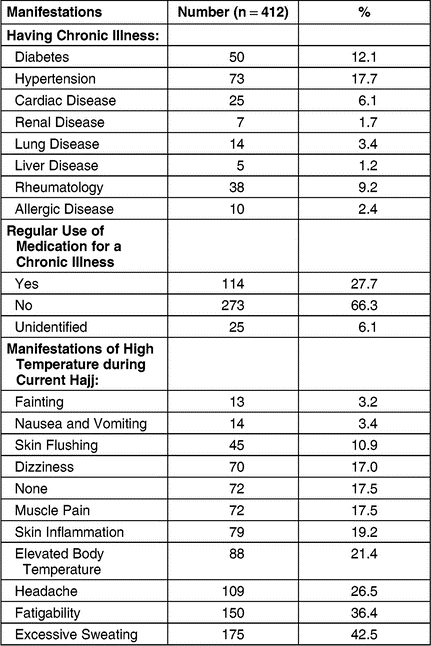
Table 2 shows the distribution of study participants in medical/clinical terms. Hypertension and diabetes mellitus were the most common chronic diseases among participants, with incidences of 17.7% and 12.1%, respectively. Almost 27.7% of participants reported that they regularly took medicines to treat chronic diseases. Predictably, many hajjis experienced excessive sweating (42.5%) and fatigability (36.4%) during their pilgrimage. Skin problems were also common; almost 30.1% had experienced skin inflammation and flushing. Approximately two-thirds reported at least one of the following symptoms of headache, high body temperature, and dizziness. Only 17.5% of hajjis participating in the study had not experienced any symptoms.
Distribution of Participants in Relation to Experience of Chronic Illness and Manifestations of High Heat Exposure during Current Hajj

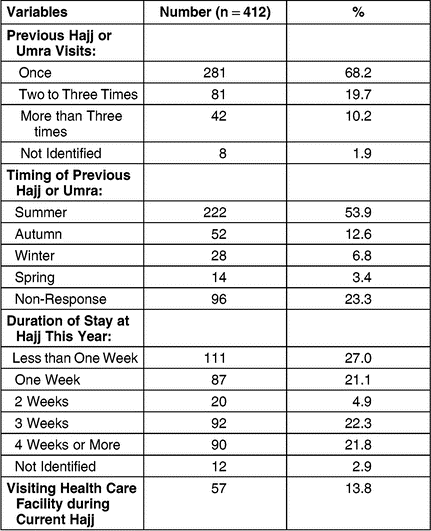
Table 3 shows data related to previous and current Hajj visits. Most of the hajjis who completed the questionnaire (68.2%) had never performed Hajj before. Of those who had previously performed Hajj or Umra, a minor pilgrimage to Mecca performed at any time of the year, 53.9% had visited Mecca during the summer season. For their current Hajj visit, almost 49.0% of pilgrims had planned to stay in the area for at least two weeks. Pilgrims who had sought medical advice for problems secondary to heat exposure were almost 13.8% of the whole group.
Distribution of Studied Pilgrims in Relation to Previous and Current Hajj Visits

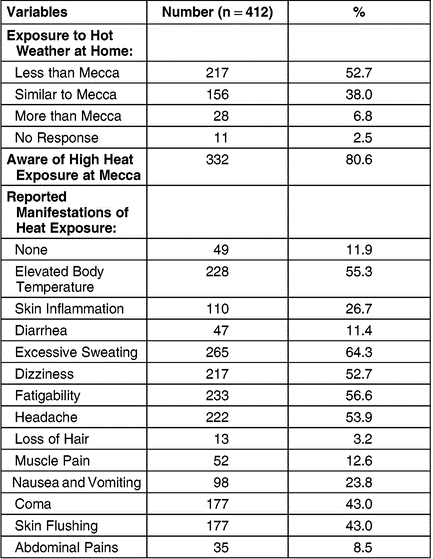
Table 4 shows that 52.7% of participants came from areas generally colder than Mecca, and perhaps unsurprisingly, 80.6% were aware of Mecca’s climate before their arrival. Over 50.0% considered elevated body temperature, excessive sweating, dizziness, fatigability, and headache to be the main manifestations of problematic heat exposure.
Participants’ Home Climates, Plus Awareness of Mecca’s Climate and Heat Exposure Symptoms

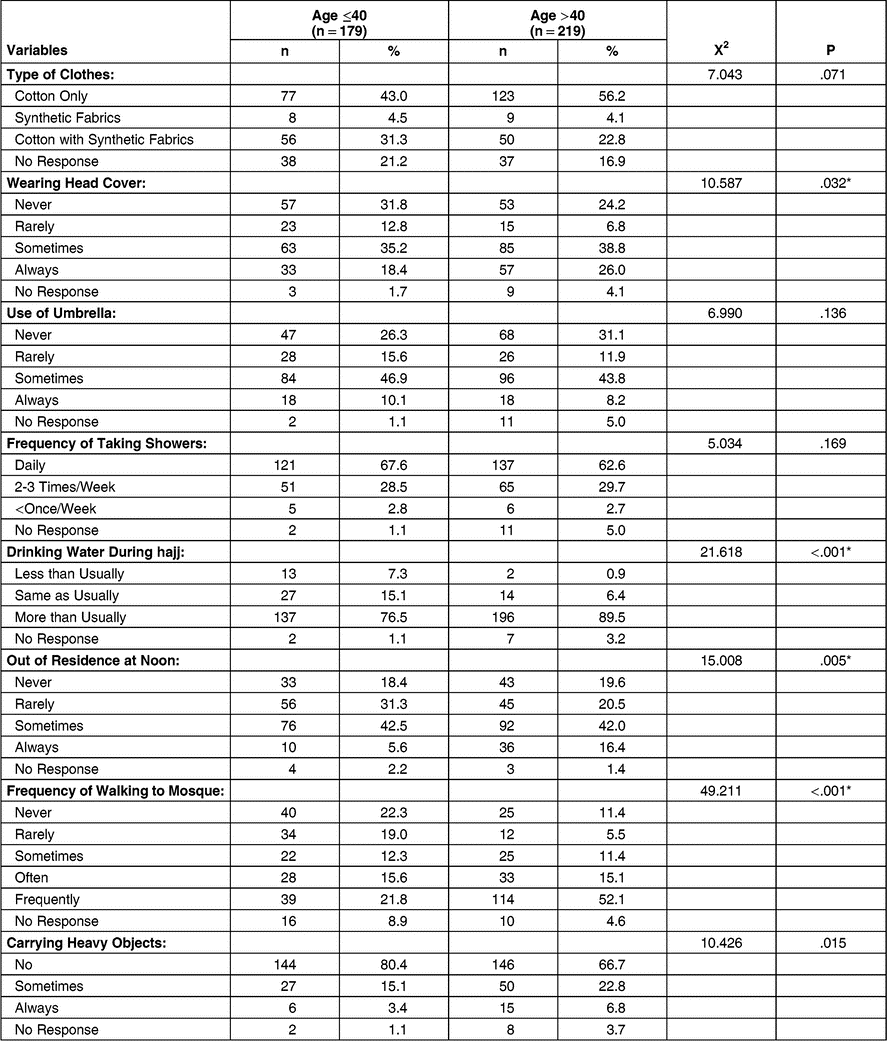
Participants were divided into two categories by age: less than 40 and more than 40 years of age. Respondents aged above 40 tended to cover their heads all of the time to a greater extent than those under 40 (26.0% versus 18.4%, respectively), and this difference was statistically significant (P = .032). In a similar way, older people drank water more frequently during Hajj compared to the younger age group (P <.001). Almost 89.5% of pilgrims aged over 40 said that their water intake had increased during Hajj, compared to 76.5% of people under 40 years old. However, participants older than 40 were more likely to venture outside at noon; approximately16.4% of this group “always” went out at noon, whereas only 5.6% of younger pilgrims did so. This was statistically significant (P = .005). Similarly, people older than 40 tended to visit the Haram Mosque more frequently than younger participants did. Only 11.4% among the older group said they never walked, while 52.1% of them had made frequent visits to the Haram Mosque. In contrast, just 21.8% of the other younger age group visited the mosque frequently on foot, and almost 22.3% had never walked to Haram. This was, again, statistically significant (P <.001).
In spite of the difficulties they faced during Hajj, some pilgrims also carried heavy objects for different purposes: food, sleeping, transport, and personal properties. Almost 6.8% of pilgrims over 40 years of age always carried heavy objects, compared with 3.4% of younger pilgrims. Thus, this practice was twice as common among pilgrims over 40 years of age, with a significant P value of .015. Differences between the groups in terms of clothing, the use of umbrellas, and the frequency of taking showers were all insignificant, as Table 5 illustrates.
Distribution of Studied Pilgrims by Age and Practices Related to Excessive Heat Exposure

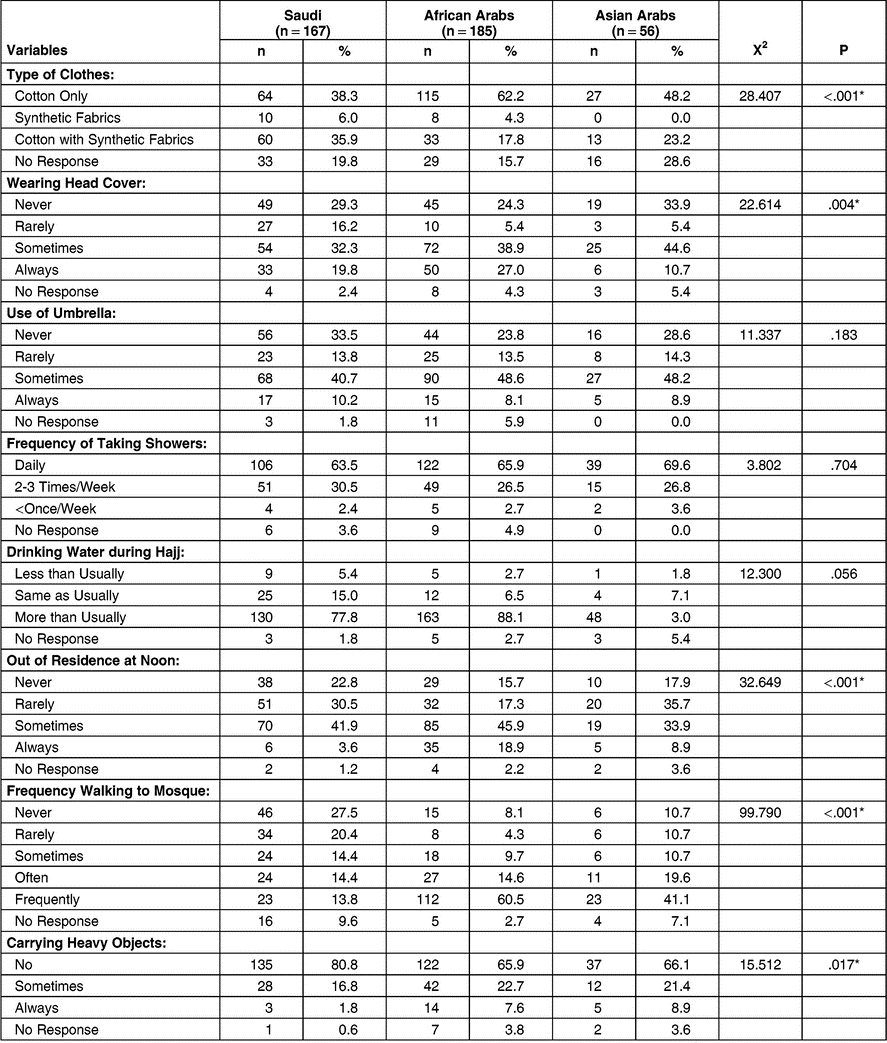
Nationalities were further classified into three groups: Saudis, African Arabs, and Asian Arabs. Arabs from African countries showed more positive, helpful practices regarding the types of clothing worn and use of head coverings compared to the other two groups. Almost 62.2% of African Arabs only used clothes made of cotton. Cotton clothes were less-widely used by Asian Arabs and Saudis, at 48.2% and 38.3%, respectively, and this was statistically significant (P <.001). Head cover use was also more common among African Arabs (P = .004). Approximately 27.0% of this group stated that they always covered their heads, whereas only 19.8% and 10.7% of the Saudi and Asian groups, respectively, did so.
Going out of one’s residence at noon was seen more frequently among African Arabs (18.9%) than Saudis (3.6%) and Asian Arabs (8.9%). This was statistically significant (P <.001). Similarly, a significant P value of <.001 was present with the frequency of walking to the Haram Mosque. This was highest among African Arabs, of whom almost 60.5% “frequently” walked to Haram Mosque, compared to 41.1% and 13.8% of Asian Arabs and Saudis, respectively.
Most of the pilgrims, from all three groups, didn’t carry heavy objects. However, approximately 8.9% of Asian Arabs and 7.6% of African Arabs “always” carried heavy objects, compared to just 1.8% of Saudis who did so. This was again statistically significant (P = .017). The remaining variables didn’t show any significant differences between nationalities, as Table 6 shows.
Distribution of Participants by Nationality and Practices Related to Excessive Heat Exposure

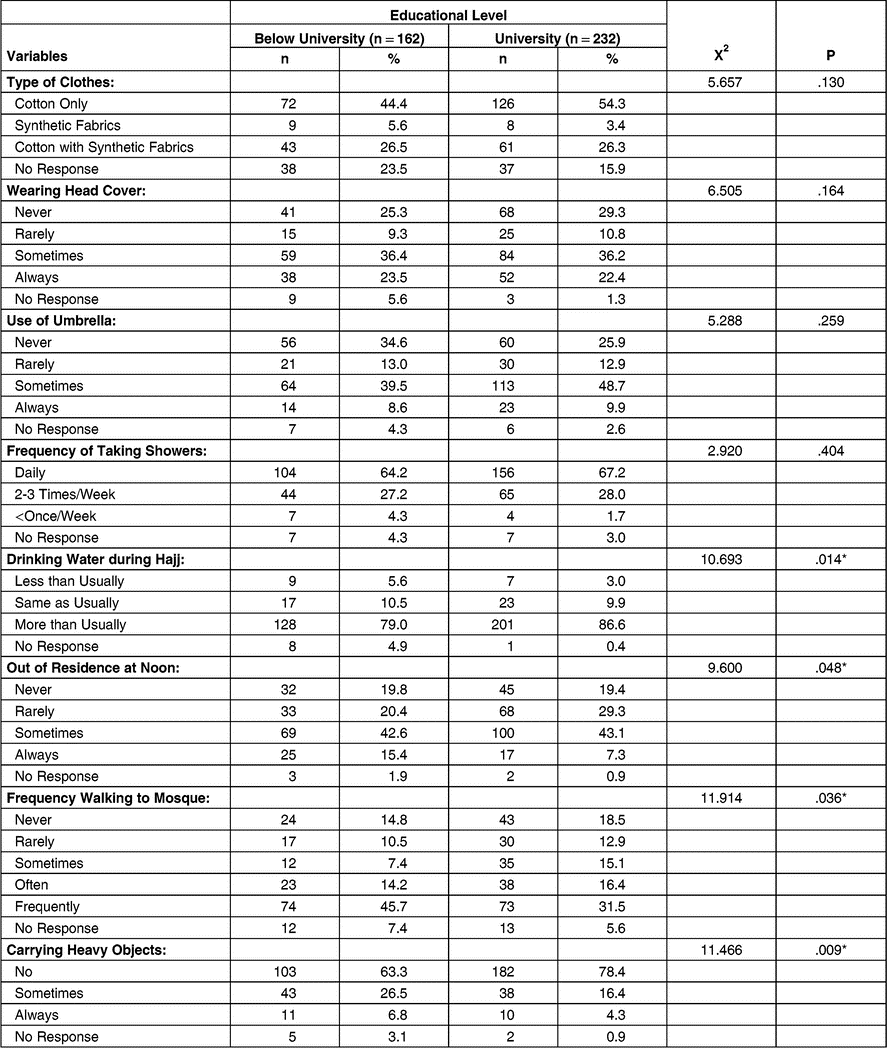
In terms of education, the Arab pilgrims were categorized into two groups. The first group included all Arab pilgrims without a university degree; the second included those educated to university level and above. Significantly, the second (more extensively educated) group showed better water intake; almost 86.6% increased their water intake during Hajj days, while 79.0% of those less educated increased their water intake (P = .014). Similarly, participants with a university degree appeared more inclined to stay within their residences at noon time, when the heat reaches its maximum level. Only 7.3% of the more highly educated participants “always” went out at noon, yet almost twice as many (15.4%) of the pilgrims with less education did so. This result was again significant (P = .048). Pilgrims with less education carried heavy objects significantly more frequently than pilgrims with higher education: 33.3% and 20.7%, respectively (P = .009). Insignificant differences were found with regard to the clothing, head cover and umbrella use, frequency of taking showers, and walking to the Haram Mosque; Table 7 illustrates.
Distribution of Participants by Educational Level and Practices Related to Excessive Heat Exposure

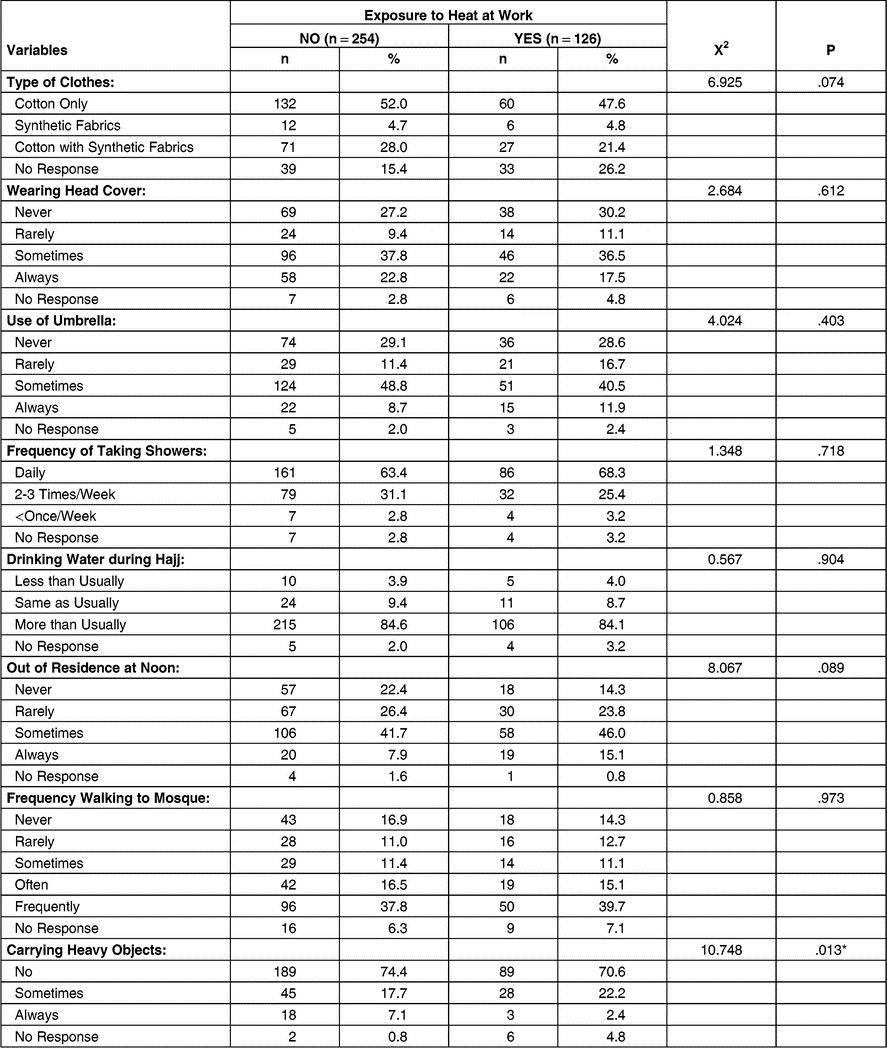
The link between workplace exposure to heat and heat-related behavior at the Hajj seemed very limited. Of 254 pilgrims who didn’t experience heat exposure at work, 7.1% always carried heavy objects when they moved around Mecca’s holy places. However, only 2.4% of 126 pilgrims who experienced heat exposure at work always carried heavy objects. This was statistically significant (P value = .013); Table 8 illustrates this point.
Distribution by Exposure to Heat at Work and Practices Related to Excessive Heat Exposure

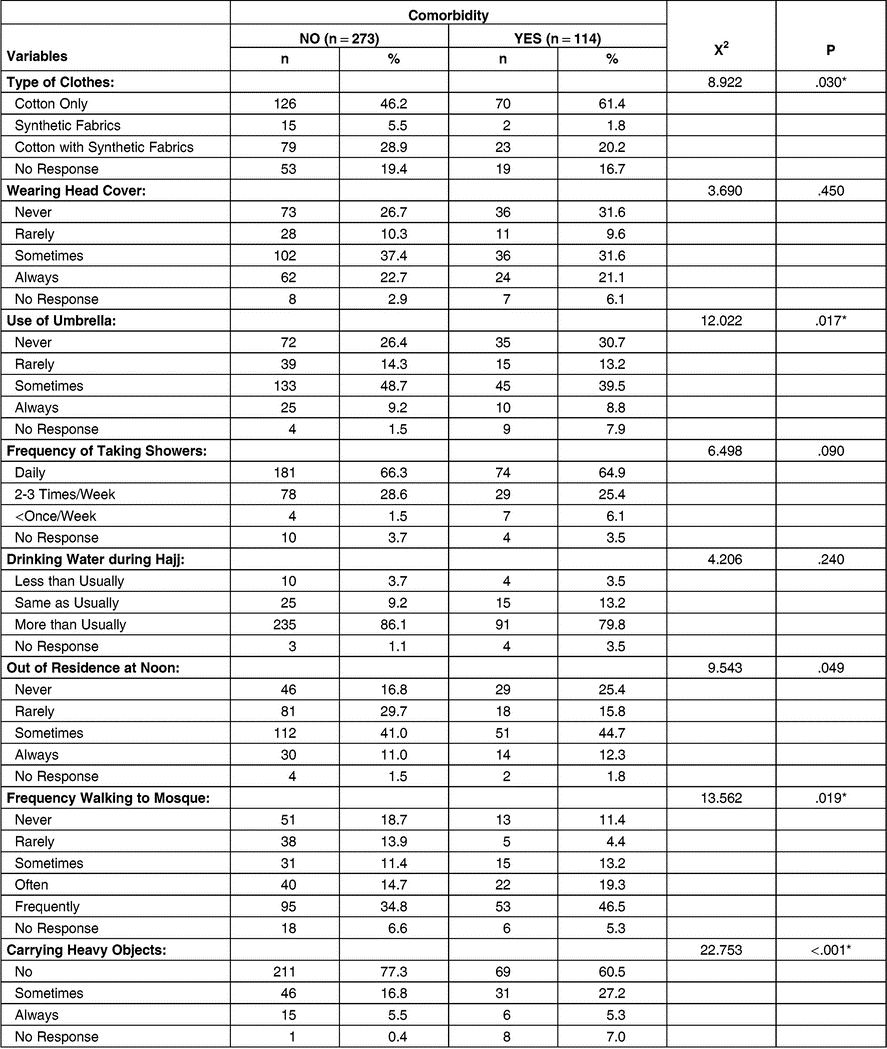
The presence of comorbidities was, in this study, signaled by the participants’ regular use of medications. Thus, Arab pilgrims were categorized into two groups according to their use (or otherwise) of medications. Notably, the wearing of clothes made of cotton was more common among pilgrims with comorbidities (61.4%). Only 46.2% of the other group, those deemed to be without comorbidities, used this type of clothing. This was statistically significant (P = .030). Though the use of umbrellas was quite similar in both groups, pilgrims who didn’t have comorbidities appeared to use umbrellas more, with almost 48.7% of them stating that they “sometimes” used one, compared to 39.5% among pilgrims with comorbidities (P = .017). Frequency of walking to the Haram Mosque was higher for pilgrims with comorbidities than it was for those without. Almost 11.4% of the pilgrims who had comorbidities didn’t walk to the Masjid Haram, while 46.5% walked “frequently” (P = .019). Carrying heavy objects was significantly more common among the group with comorbidities (32.5%) than for the group without (22.3%; P <.001). Table 9 illustrates this in more detail.
Distribution of Studied Pilgrims in Relation to Their Comorbidities and Practices Related to Excessive Heat Exposure

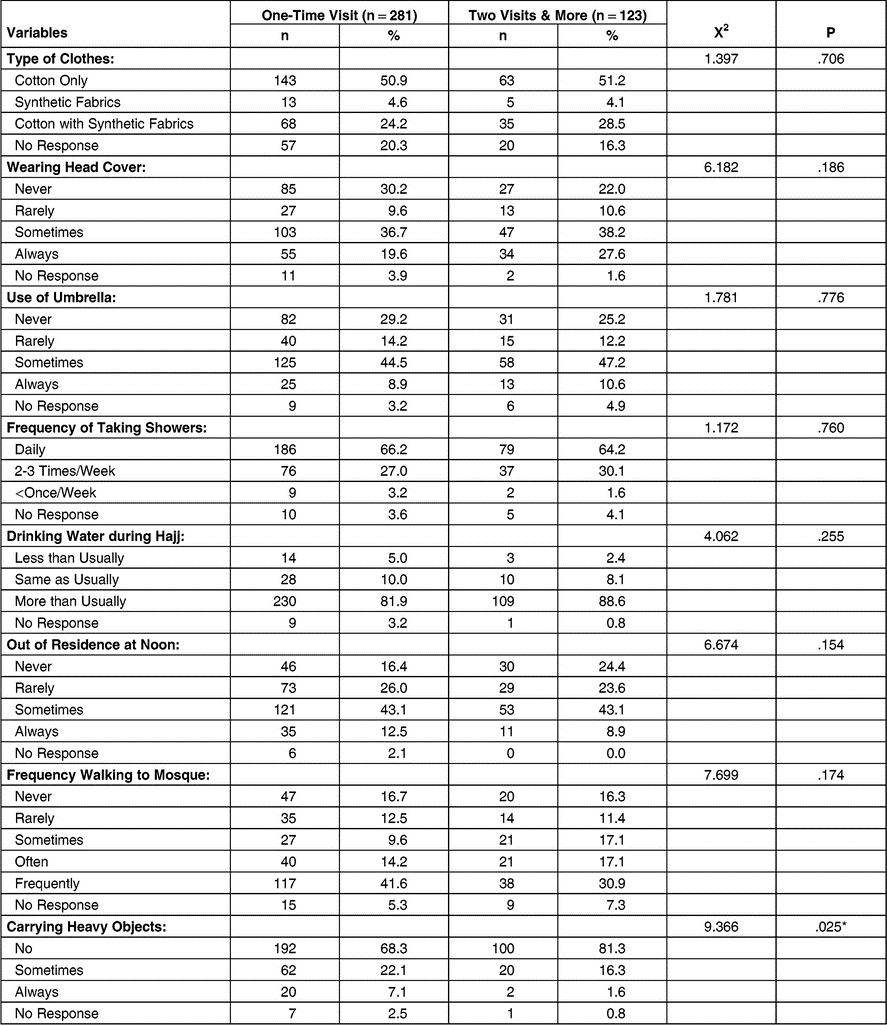
Carrying heavy objects while moving between holy places during Hajj days was significantly associated with the experience of previous visits. Almost 81.3% of pilgrims who had made two previous visits or more never carried heavy objects during the Hajj, and only 1.6% stated that they always did. This behavior was significantly different to that of those participants for whom this was their first Hajj. Of first-time pilgrims, 68.3% never carried heavy objects, while 7.1% always did (P = .025). Table 10 provides further detail.
Distribution of Studied Pilgrims in Relation to the Number of Hajj Visits and Practices Related to Excessive Heat Exposure

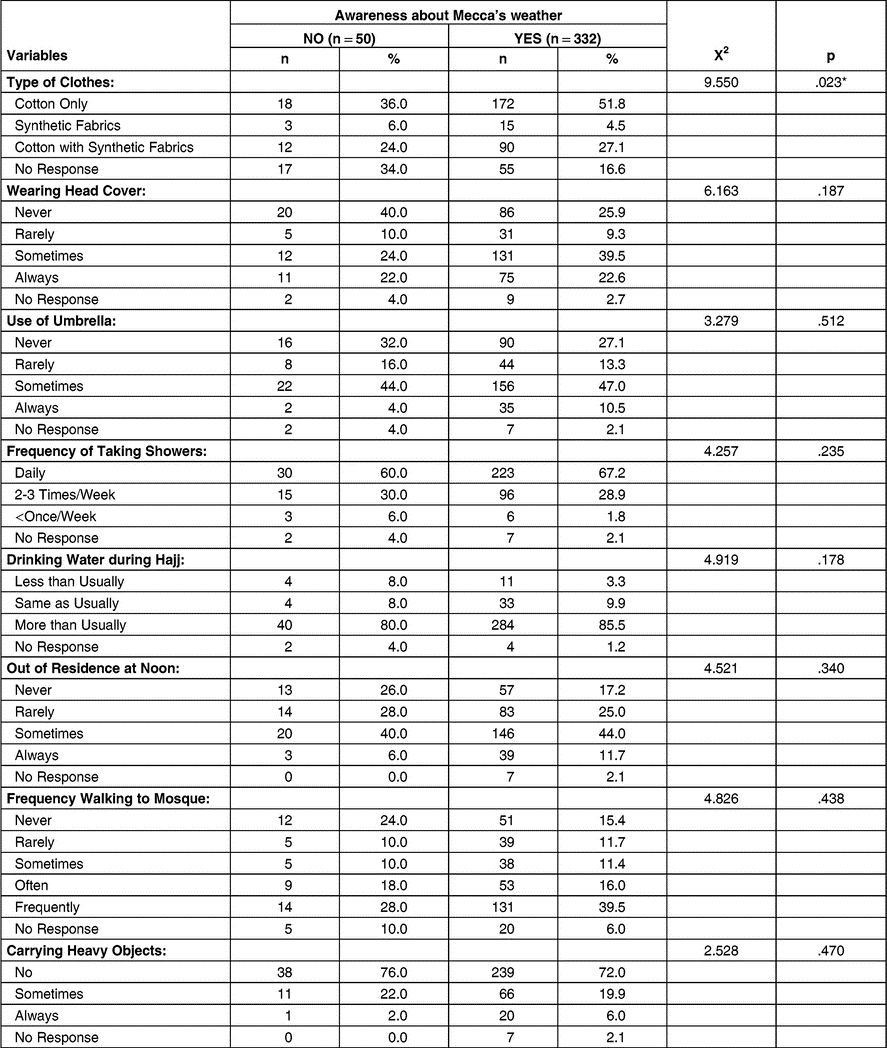
There seemed to be a strong link between the extent to which pilgrims were aware of Mecca’s weather and the types of clothing worn. Approximately 51.8% of those who were aware of Mecca’s weather wore cotton clothes. However, cotton clothing was used only by 36.0% of those pilgrims who declared themselves unaware of Mecca’s climate. Statistically, this difference was significant (P value = .023). Table 11 provides further detail.
Distribution of Studied Pilgrims in Relation to Their Awareness of Mecca’s Weather and Practices Related to Excessive Heat Exposure

Discussion
Heat exposure is one of the most serious health issues encountered at mass gatherings of people. Physiologically, when the body temperature goes beyond 40°C (104°F), rapid cellular damage takes place that leads ultimately to a series of multi-system failures and possibly death.Reference Becker and Stewart19 Unfortunately, the literature does not contain much research on the effects of exposure to extremely high heat loads.
The authors have identified five previous studies, conducted in 1995, 1998, 2002, and 2008, that identify behavioral risk factors for disease in Mecca, including heat exhaustion. Those studies focused on various factors, such as subjects’ means of transport to Mecca, frequency of walking between the holy places, umbrella use, time spent inside the tent or building, and the effects of comorbidities.Reference Al-Zahrani, Al-Sulaiman and El Bushra20–Reference Alfaraj, Choudhry and Alhayani24 In contrast, this study deals specifically with the perception of, and coping practices used to cope with, excessive heat exposure among Arab pilgrims.
The present study found that most participants were educated, and only one-third of them experienced heat exposure at work. Generally, pilgrims’ level of awareness concerning Mecca’s weather and problems resulting from heat exposure requires improvement. The percentage of pilgrims with comorbidities in this study was similar to that identified in a previous study, conducted in 2008.Reference Alfaraj, Choudhry and Alhayani24 Moreover, hypertension and diabetes are the most common comorbidities in the present study, and the same finding was found in a previous, similar study.Reference Al-Madhderi, Al-Joudi, Choudhry, Al-Rabeah, Ibrahim and Turkistani23 In the present study, the majority of participants were performing Hajj for the first time. Three previous studies showed almost the same percentage of pilgrims who had performed Hajj for the first time as was found in the present study.Reference Al-Zahrani, Al-Sulaiman and El Bushra20–Reference Al-Rabeah, El-Bushra and Al-Sayed22, Reference Alfaraj, Choudhry and Alhayani24
The Role of Age
People aged above 65 years are more likely to develop heat-related illnesses, as previous studies have found.12–15 In this study, pilgrims over 40 years old showed better health-related practices, including greater use of head cover and drinking more water. However, they also tended to carry heavy objects, go out at noon, and visit the Masjid Al Haram more frequently, all of which may expose them to health hazards arising from the heat and humidity of Mecca City during the Hajj.
The Role of Nationality
There was clear variation between the three nationality groups (African, Asian, and Saudi) into which pilgrims were divided, in terms of their practices for coping with excessive heat exposure in Mecca. For instance, wearing suitable clothes and using head cover were strategies prominent among pilgrims from African countries. However, members of this group were also more likely to go outside their residence at noon. Saudis were the least likely to carry heavy objects during Hajj rituals. A previous study in 2002 revealed similar findings, whereby those who walked between holy places were mostly from the Indian sub-continent, sub-Saharan Africa, and Arabs other than those from countries in the Gulf Co-operation Council (GCC; Riyadh, Saudi Arabia).Reference Al-Madhderi, Al-Joudi, Choudhry, Al-Rabeah, Ibrahim and Turkistani23 These differences reflect the various independent ideologies, cultures, and customs of many nationalities.
The Role of Education
A 1995 study found no association between educational level and heat exhaustion.Reference Al-Zahrani, Al-Sulaiman and El Bushra20 However, the study presented in this paper suggests that pilgrims did have different responses to heat exposure based on their level of education. Those with a high-level of education had a higher water intake and appeared more inclined to stay within their residence at noon, when the heat is extremely high. This may indicate that a higher level of education is associated with awareness of risks and greater compliance with proper coping strategies than is the case for those less-educated.
The Role of Heat Exposure at Work
Pilgrims who experienced heat exposure at their work places showed better health practices in terms of carrying heavy objects while moving between the holy places in Mecca. It seems that those usually exposed to excessive heat at work had well-established coping strategies that they had adopted in order to continue work while exposed to high temperatures, and when in Mecca, these individuals were more likely to adopt the same strategies to cope with high temperatures during Hajj.
The Role of Comorbidities
The ability of human beings to dissipate heat from the body resides mainly in the effective cardiovascular system.Reference Khogali16 However, many chronic medical problems increase the adverse effects of heat stress, and prominent among these are diabetes mellitus and malnutrition. Results from this study show that pilgrims with comorbidities appear to have adopted better health practices in some aspects; for example, they tended to wear suitable clothes and to make greater use of umbrellas. Unexpectedly, they also appeared to carry heavy objects more frequently than pilgrims without chronic medical issues, which could be a risk factor exposing them to more stress and elevated risk of dehydration than would otherwise have been the case.
Previous Visits to Mecca and Awareness of Mecca’s Climate
As might be expected, pilgrims who had previously visited Mecca managed themselves better in terms of practices beneficial to health in the face of heat exposure. Thus, it seems that their previous experiences and knowledge had conveyed benefits. Experienced visitors to Mecca travelled on foot less often and preferred not to carry any heavy objects while performing Hajj rituals. They were also more inclined than less-experienced travelers to wear cotton clothes. Understandably, new comers to Mecca are not yet familiar with the walkways and streets in Mina, in particular, and sometimes lose their way. This echoes a previous study which showed that pilgrims who lose their way in Mina are at higher risk of heat exhaustion.Reference Al-Zahrani, Al-Sulaiman and El Bushra20
Pilgrims’ use of protective coping strategies was primarily influenced by age, nationality, education, and comorbidities, while other factors had less effect.
The available literature, although limited, does indicate that there is an increasing risk of excessive heat exposure world-wide, and particularly in places with a hot climate. Mass gatherings and highly congested areas are believed to increase the risk of those present acquiring illnesses secondary to heat exposure. The average temperature globally has been slowly increasing for a long time, and this heat increase is in addition to the heat dissipated from other resources. Global warming, whereby extra heat is released from burning fossil fuels such as coal, oil, and natural gas, is also causing average temperatures to increase.Reference Karl, Melillo and Peterson6, 25, Reference Solomon, Qin and Manning26
If pilgrims are to be protected from the damaging effects of heat, the Hajj season in Mecca should be assessed thoroughly and appropriate measures should be taken to minimize heat exposure. Simultaneously, the level of awareness among interested parties must be improved. For example, pilgrims need to understand — in depth — the complications that may arise from excessive heat exposure, and to learn to deploy appropriate, healthy behaviors.
Previous studies have shown that older people and those with comorbidities are at higher risk of developing illnesses and complications of heat exposure.12–Reference Khogali16 This study suggests that by improving the perception and coping levels of pilgrims, many cases of morbidity and mortality could be avoided.
In light of this study and its findings, the following action are recommended:
1. Hajj pilgrims should, before coming to Mecca, be informed and educated about its climate, geography, and the distribution of camps, walkways, and exits.
2. The dangers and complications of exposure to excessive heat, particularly among older people and those with comorbidities, should be emphasized and explained to all coming pilgrims.
3. Health providers in pilgrims’ home countries, travel agents, and Hajj authorities should recommend the use of appropriate behaviors. For example, pilgrims should be advised to wear light clothes and cover the head, to use umbrellas, drink sufficient water, stay protected from direct sunlight, and not to carry unnecessarily heavy objects. And,
4. A positively healthy culture could be encouraged by distribution of posters throughout Mecca, but particularly inside the camps in Mina. Posters should encourage healthy behaviors in the face of heat exposure.
Limitations of the Study
Results from this study reflect the experiences of male Arabic pilgrims when dealing with excessive heat exposure in Mecca. Therefore, results may not be generalized to pilgrims from outside the Arabic region.
This survey-based research was subjected to unknown errors related to pilgrims’ various perceptions towards Hajj services in Mecca, social media effects, cultural and background differences, missing of data, and stressful activities and rituals during pilgrimage season.
Conclusion
There is a clear and pressing need for improvement of Hajj pilgrims’ knowledge of, and behavior in the response to, excessive heat exposure. This study shows that their coping strategies were influenced mainly by age, nationality, level of education, and the presence or otherwise of comorbidities.
Acknowledgment
The lead author would like to thank all the advisors in the Field Epidemiology Training Program: Dr. Randa Nooh, Dr. Abdel Jamil Choudhry, Dr. Fahad Alswaidi, Dr. Hassan El Bushra, and Dr. Mohammed Nageeb for their close supervision, support, and guidance to complete this research.
Also, gratitude to all colleagues in the training program: Dr. Ahmed Alghumgham, Dr. Mohammed Al Semayen, Dr. Mohammed Al Essa, and Dr. Hassan Al Hawaj. The support of Mecca’s Health directorate was also appreciated greatly.