INTRODUCTION
Vascular findings from cranial magnetic resonance imaging (MRI) are common in the elderly, with prevalence increasing with age, especially after 75 years (Morris et al., Reference Morris, Whiteley, Longstreth, Weber, Lee, Tsushima, Alphs, Ladd, Warlow, Wardlaw and Salman2009). Racial and ethnic minority populations experience disproportionate burden of diseases related to vascular aging (U.S. Department of Health and Human Services, 2014). American Indians, or individuals who have ancestry with any of the original peoples of North, Central, and South America or who maintain tribal affiliation or community attachment (Office of Management and Budget, 1997), are at especially high risk for stroke (Harris, Nelson, Muller, & Buchwald, Reference Harris, Nelson, Muller and Buchwald2015; Lee et al., Reference Lee, Welty, Fabsitz, Cowan, Le, Oopik, Cucchiara, Savage and Howard1990; Zhang et al., Reference Zhang, Galloway, Welty, Wiebers, Whisnant, Devereaux, Kizer, Howard, Cowan, Yeh, Howard, Wang, Best and Lee2008) and endure a greater burden of cerebral vascular injury risk, including from hypertension, diabetes mellitus, hypercholesterolemia, and obesity (Ayala et al., Reference Ayala, Greenlund, Croft, Keenan, Donehoo, Giles, Kittner and Marks2001; Centers for Disease Control and Prevention, 2004; Gillum, Reference Gillum1995; Harwell, et al., Reference Harwell, Oser, Okon, Fogle, Helgerson and Gohdes2005; Hutchinson & Shin, Reference Hutchinson and Shin2014; Lee et al., Reference Lee, Welty, Fabsitz, Cowan, Le, Oopik, Cucchiara, Savage and Howard1990), compared with US general population (Zhang et al., Reference Zhang, Galloway, Welty, Wiebers, Whisnant, Devereaux, Kizer, Howard, Cowan, Yeh, Howard, Wang, Best and Lee2008). However, American Indians are often not included in the studies of vascular brain aging and dementia risk, even meta-analyses (Morris et al., Reference Morris, Whiteley, Longstreth, Weber, Lee, Tsushima, Alphs, Ladd, Warlow, Wardlaw and Salman2009).
Cerebral vascular injury or cerebral atrophy, detected by MRI, has been associated with increased risk of cognitive impairment, independent of age (Drag & Bieliauskas, Reference Drag and Bieliauskas2010; Eyler, Sherzai, Kaup, & Jeste, Reference Eyler, Sherzai, Kaup and Jeste2011; Gorelick et al., Reference Gorelick, Scuteri, Black, DeCarli, Greenberg, Iadecola, Launer, Laurent, Lopez, Nyenhuis, Petersen, Schneider, Tzourio, Arnett, Bennett, Chui, Higashida, Lindquist, Nilsson, Roman, Sellke and Seshadri2011). Specifically, associated deficits include frontal lobe-mediated functioning, especially executive function and processing speed (Erkinjuntti et al., Reference Erkinjuntti, Inzitari, Pantoni, Wallin, Scheltens, Rockwood, Roman, Chui and Desmond2000; Jokinen et al., Reference Jokinen, Kalska, Ylikoski, Madureira, Verdelho, Gouw, Scheltens, Barkhof, Visser, Fazekas, Schmidt, O’Brien, Hennerici, Baezner, Waldemar, Wallin, Chabriat, Pantoni, Inzitari and Erkinjuntti2009; Miralbell et al., Reference Miralbell, Lopez-Cancio, Lopez-Oloriz, Arenillas, Barrios, Soriano-Raya, Galán, Cáceres, Alzamora, Pera, Toran, Dávalos and Mataro2013). For example, in the Rotterdam Study of adults aged 60–90, brain infarcts, periventricular white matter hyperintensities (WMHs), and overall brain atrophy were associated with poorer performance in both processing speed and executive function cognitive domains (Prins et al., Reference Prins, van Dijk, den Heijer, Vermeer, Jolles, Koudstaal, Hofman and Breteler2005). However, most previous research has focused on non-Hispanic whites, and some on African Americans; the impact of cerebral vascular injury or cerebral atrophy on cognitive function in other ethnic populations is poorly understood, with the first estimates of population-based prevalence of cranial MRI findings in American Indians only very recently described (Suchy-Dicey et al., Reference Suchy-Dicey, Shibata, Best, Verney, Longstreth, Lee, Okin, Devereux, O'Leary, Ali, Jensen, Muller, Nelson, Rhoades, Madhyastha, Grabowski, Beauchamp, Umans and Buchwald2016, Reference Suchy-Dicey, Shibata, Madhyastha, Grabowski, Longstreth, Okin, Devereux, O’Leary, Ali, Jensen, Muller, Nelson, Rhoades, Madhyastha, Grabowski, Beauchamp, Umans and Buchwald2017). Whether American Indians differ in cognitive risk and whether any such differences may be attributed to cerebral vascular injury or cerebral atrophy, excess burden of vascular comorbidities, predisposition to other adverse health disparities, variation in sociodemographics, or differences in functional testing performance itself are yet unclear.
The prevailing theory has been that cognitive associations with cerebral vascular injury or atrophy in the corresponding brain regions are likely to be similar for non-Hispanic white populations as for other racial and ethnic populations, after accounting for differences in sociodemographics and clinical comorbidities and other confounders (DeCarli et al., Reference DeCarli, Reed, Jagust, Martinez, Ortega and Mungas2008). For example, both the Atherosclerosis Risk in Communities study and the Chicago Health and Aging project found no racial differences in cerebral vascular injury associations with cognition, when comparing African Americans with non-Hispanic whites (Aggarwal et al., Reference Aggarwal, Wilson, Bienias, De Jager, Bennett, Evans and DeCarli2010; Mosley et al., Reference Mosley, Knopman, Catellier, Bryan, Hutchinson, Grothues, Folsom, Cooper, Burke, Liao and Szklo2005). A more recent study comparing African Americans, Hispanics, and non-Hispanic whites, the Washington Heights-Inwood Columbia Aging Project, reported a few differences; specifically, WMHs were associated with processing speed and executive function among African American participants and hippocampal volume was more strongly associated with memory among non-Hispanic white participants, compared with other participants (Zahodne et al., Reference Zahodne, Manly, Narkhede, Griffith, DeCarli, Schupf, Mayeux and Brickman2015). The authors interpreted these findings as resulting from differences in environmental conditions, and not differences in underlying biology.
American Indians differ from the majority US population in many factors that can profoundly influence both cognitive function and cognitive testing performance, including educational attainment, sociodemographics, language, lifestyle, cultural traditions, and sociopolitical history (Suzuki, Naqvi, & Hill, Reference Suzuki, Naqvi, Hill and Leong2013; Verney, Bennett, & Hamilton, Reference Verney, Bennett, Hamilton and Ferraro2015; Verney et al., Reference Verney, Suchy-Dicey, Cholerton, Calhoun, Nelson, Montine, Ali, Longstreth and Buchwaldin press). Socioeconomic factors such as education and income are also associated with vascular risk and other chronic diseases (Gorelick et al., Reference Gorelick, Scuteri, Black, DeCarli, Greenberg, Iadecola, Launer, Laurent, Lopez, Nyenhuis, Petersen, Schneider, Tzourio, Arnett, Bennett, Chui, Higashida, Lindquist, Nilsson, Roman, Sellke and Seshadri2011), although they may also constitute proxy variables for other exposure characteristics such as access to healthcare, nutrition, or social isolation. Use of Native languages, especially when reflective of bilingual status, and geographic region may represent proxy characteristics for environmental and cultural factors that affect cognitive function, although language does independently influence cognitive test performance. In addition to its influence on vascular risk, diabetes has been independently associated with cognitive impairment and dementia risk (Cholerton, Baker, & Craft, Reference Cholerton, Baker and Craft2011; Luchsinger, Reference Luchsinger2010; Strachan, Reference Strachan2003), affecting processing speed, executive function, and memory domains (Sadanand, Balachandar, & Bharath, Reference Sadanand, Balachandar and Bharath2015; Tournoy et al., Reference Tournoy, Lee, Pendleton, O’Neill, O’Connor, Bartfai, Casanueva, Finn, Forti, Giwercman, Han, Huhtaniemi, Kula, Lean, Moseley, Punab, Silman, Vanderschueren, Wu and Boonen2010; van den Berg et al., Reference van den Berg, Kessels, Kappelle, de Haan and Biessels2006; Zhao et al., Reference Zhao, Roberts, Ding, Cha, Guo, Meng, Luo, Machulda, Shane Pankratz, Wang, Christianson, Aakre, Knopman, Boeve, Hong and Petersen2015). Understanding these biological, behavioral, sociocultural, and environmental differences that may explain cognitive and vascular health disparities in American Indians is critical to better serving this rapidly aging population, and an emerging public health priority (Hill, Perez-Stable, Anderson, & Bernard, Reference Hill, Perez-Stable, Anderson and Bernard2015; Zahodne et al., Reference Zahodne, Manly, Narkhede, Griffith, DeCarli, Schupf, Mayeux and Brickman2015).
This study aims to develop the first basis for better understanding of these relationships, with long-term potential to inform development of better prevention programs, risk quantification, and future mechanistic research. As the first report associating both vascular (infarcts, hemorrhages, WMH) and atrophy (sulcal and ventricle widening; hippocampal and brain volume) findings from MRI with cognitive testing performance across several cognitive domains including general cognitive functioning, processing speed, verbal learning and memory, verbal fluency, and executive functioning in elderly American Indians, this work primarily represents a descriptive, exploratory effort to examine whether and how basic cognition is related to a variety of cerebral changes using a cross-sectional analysis of data from a unique cohort of an understudied population. Although left-shifted neuropsychological or cognitive testing performance may be expected in elderly American Indians, compared with published normative data for the majority US population, the associations between cognitive performance and cerebral findings from MRI are expected to be similar as for other populations, once all relevant confounding factors are adequately considered.
METHODS
Setting and Participants
The Strong Heart Study is a population-based cohort of 4549 adult American Indian members of 13 original tribes and communities from 3 geographic regions of the USA, including the Northern Plains, Central Plains, and Southwest, which began recruitment for a baseline examination in 1989–1991 (Lee et al., Reference Lee, Welty, Fabsitz, Cowan, Le, Oopik, Cucchiara, Savage and Howard1990). The parent cohort study defined American Indians as individuals who claim ancestry with any of the original peoples of North, Central, and South America and who maintain tribal affiliation or community attachment (Office of Management and Budget, 1997). A follow-up examination visit in 2010–2013, known as the Cerebrovascular Disease and its Consequences in American Indians (CDCAI) study (Suchy-Dicey et al., Reference Suchy-Dicey, Shibata, Best, Verney, Longstreth, Lee, Okin, Devereux, O'Leary, Ali, Jensen, Muller, Nelson, Rhoades, Madhyastha, Grabowski, Beauchamp, Umans and Buchwald2016), recruited 1033 surviving participants, all aged 64 and older, from the original baseline cohort for cranial MRI; neuropsychological, cognitive, and functional testing; and a clinic examination. CDCAI study procedures were designed to include protocols and instruments used by other large cohort studies of cerebral vascular injury; because participants were elderly and often frail, time constraints were also considered in selection of study components (Arnold et al., Reference Arnold, Psaty, Kuller, Burke, Manolio, Fried, Robbins and Kronmal2005; Rosamond et al., Reference Rosamond, Folsom, Chambless, Wang, McGovern, Howard, Copper and Shahar1999). Tribal councils, the Indian Health Service, and Institutional Review Boards for participating communities and partner institutions approved all study procedures; all participants provided written informed consent. After data collections were complete, one community withdrew from ongoing research and analysis (n = 215). Some participants were additionally excluded from the current analyses based on incomplete or inadequate brain MRI scans (n = 29), incomplete cognitive testing (n = 3), or adjudicated prior stroke (n = 37), resulting in a final N = 749 included in this cross-sectional analysis of data from the CDCAI study visit.
Cranial MRI Findings
Detailed MRI procedures have been described previously (Suchy-Dicey et al., Reference Suchy-Dicey, Shibata, Madhyastha, Grabowski, Longstreth, Okin, Devereux, O’Leary, Ali, Jensen, Muller, Nelson, Rhoades, Madhyastha, Grabowski, Beauchamp, Umans and Buchwald2017). In brief, local Radiology centers at each field site used 1.5T MRI scanners to obtain six image sequences in contiguous slices, including sagittal T1-weighted localizer, co-registered 5 mm axial-T1, 5 mm axial-T2, and 5 mm axial-T2 * susceptibility-weighted in the anterior commissure/posterior commissure plane, 3 mm axial fluid-attenuated inversion recovery (FLAIR), and 1.5 mm sagittal T1-weighted volumetric gradient echo. Study neuroradiologists, blinded to participant characteristics, scored images for presence, number, and location of infarcts (>3 mm) and hemorrhages as well as for graded severity (0–9) of WMH, sulcal widening, and ventricle enlargement. Infarct lesions were defined as lacunar if they were between 3 and 20 mm in maximum dimension and located within the caudate, lenticular nucleus, internal capsule, thalamus, brainstem, cerebellar white matter, centrum semiovale, or corona radiata. Neuroimaging technologists employed semi-automated software workflows (Suchy-Dicey et al., Reference Suchy-Dicey, Shibata, Madhyastha, Grabowski, Longstreth, Okin, Devereux, O’Leary, Ali, Jensen, Muller, Nelson, Rhoades, Madhyastha, Grabowski, Beauchamp, Umans and Buchwald2017) to estimate volumetric measures, including WMH, hippocampus, brain, and intracranial volumes.
Cognitive Testing
Neuropsychological and cognitive examinations were administered at field sites by trained study staff, and scored and coded by study neuropsychologists. The test battery included the Modified Mini Mental State Exam (3MSE) (Teng & Chang Chui, Reference Teng and Chang Chui1987), California Verbal and Learning Test, 2nd edition, Short Form (CVLT-II SF) (Delis, Kramer, Kaplan, & Ober, Reference Delis, Kramer, Kaplan and Ober2000), Wechsler Adult Intelligence Scale, 4th edition (WAIS-IV) Coding subtest (Wechsler, Reference Wechsler2008), and the Controlled Oral Word Association (COWA) test (Benton & Hansher, Reference Benton and Hansher1976). The 3MSE is a global cognitive screening measure consisting of 40 questions, scored on a 100-point scale (Teng & Chui, Reference Teng and Chui1987). The CVLT-II SF is a list learning test of nine words which provides indices of verbal learning and memory (Delis et al., Reference Delis, Kramer, Kaplan and Ober2000) including short (30-s) delay free recall and long delay (10-min) free recall, with scoring based on the total number of words recalled (score 0–9). The WAIS-IV Coding test measures visuospatial processing speed and working memory, with scoring based on total number of symbols coded correctly over 120 s, ranging from 0 to 135 (Wechsler, Reference Wechsler2008). The COWA is a measure of phonemic verbal fluency that also provides an index of executive functioning (Benton & Hansher, Reference Benton and Hansher1976), with scoring based on number of total correct words for the letters “F,” “A,” and “S” in each of three 60-s trials.
Other Measures
Trained study staff at each field site administered clinical examinations, including anthropometric measurements and blood and urine collections. Staff assessed height and weight, calculating body mass index (BMI, kg/m2); recorded blood pressure as the average of three seated electronic sphygmomanometer measures; and transcribed usual medications from bottle labels. Standard labs included fasting plasma glucose and blood lipids, including low density lipoprotein (LDL). Participants also completed questionnaires, self-reporting their year of birth, sex, years of formal education, annual household income, marital status, and ability to speak their traditional Native (“tribal”) language. Of note, language speaking capacity represents bilingual fluency because speaking English was a requirement of participation in the cohort.
Categorical variable definitions include sex (male, female), site (Northern Plains, Southern Plains, Southwest), education (up to or any high school, high school graduate, any college, college graduate), annual household income (<$10,000, $10,000–20,000, $20,000–35,000, >$35,000), marital status (single; married or partnered; divorced, separated, or widowed), Native language speaking capacity (not at all, a little, moderately, very well), obese (BMI ≥30 kg/m2), diabetes (fasting plasma glucose ≥126 mg/dL or use of antihyperglycemic medications), hypertension (systolic blood pressure ≥140 mmHg, diastolic blood pressure ≥90 mmHg, or use of antihypertensive medications), and hypercholesterolemia (LDL ≥130 mg/dL or use of statin medications).
Analytic Strategy
Descriptive summary of selected participant characteristics as of the time of the MRI examination included count and percent or mean and standard deviation. Histograms with Gaussian overlay were used to graphically describe the distribution of neuropsychological test scores. Spearman rank correlation coefficients were estimated for each neuropsychological test with the others (3MSE, CVLT long delay free recall, WAIS coding, COWA) and for each MRI finding with the others (any infarct, hemorrhage, white matter disease grade, sulcal grade, ventricle grade, hippocampal volume, WMH volume, brain volume), to assess relationships among exposure and outcome variables.
Associations between MRI findings and neurocognitive performance test scores were examined using standardized linear regression models for each exposure and outcome combination. Independent (exposure) variables included presence of infarct, including lacunar or other type, or hemorrhage; ordinal grade for WMH, sulcal widening, or ventricle enlargement; or volumetric estimates for WMH, hippocampus, or brain (grey and white matter). Volumetric models were adjusted for intracranial space. Due to heavy skew in WMH volume, regression models used a log-transformed variable. In order to produce interpretable coefficients, brain volume was modeled in liter units. Dependent (outcome) variables included continuous raw scores for neurocognitive performance tests, including 3MSE, CVLT long delay free recall, WAIS-IV coding, and COWA. Regression models were adjusted using a nested, model-building approach, including unadjusted (Model 0), minimally adjusted (Model 1), and fully adjusted (Model 2), to assess the relative contribution of sets of confounders to the associations of primary interest. Model 1 adjusted for age, sex, site, education, income, marital status, and Native (“tribal”) language speaking capacity; Model 2 additionally adjusted for obesity, diabetes, hypertension, and high LDL. Adjustments were selected a priori based on having known association with both the vascular brain exposures and the cognitive function outcomes, including socioeconomic factors (education, income, and marital status), study field site (geographic region) and Native language use, and vascular risk factors (obesity, diabetes, hypertension, and high LDL), all evaluated as individual confounders and because of independent pathological or risk effect.
Primary inference was drawn from the fully adjusted Model 2, as these confounders were stated a priori and the fully adjusted model offers the strongest inference of independent effect between exposure and outcome. Robust standard errors were used to obtain unbiased errors from the ordinal least squares in the presence of heteroskedasticity. The Benjamini-Hochberg method for controlling the family-wise error rate, wherein the expected proportion of false discoveries is estimated among rejected null hypotheses, was used to account for the problem of multiple comparisons; false discovery rate (FDR)-corrected P-values, often termed Q-values, were presented (Benjamini & Hochberg, Reference Benjamini and Hochberg1995). All analyses were done using Stata v.14 (StataCorp, 2014) or R version 3.3.1(R Core Team, 2016).
RESULTS
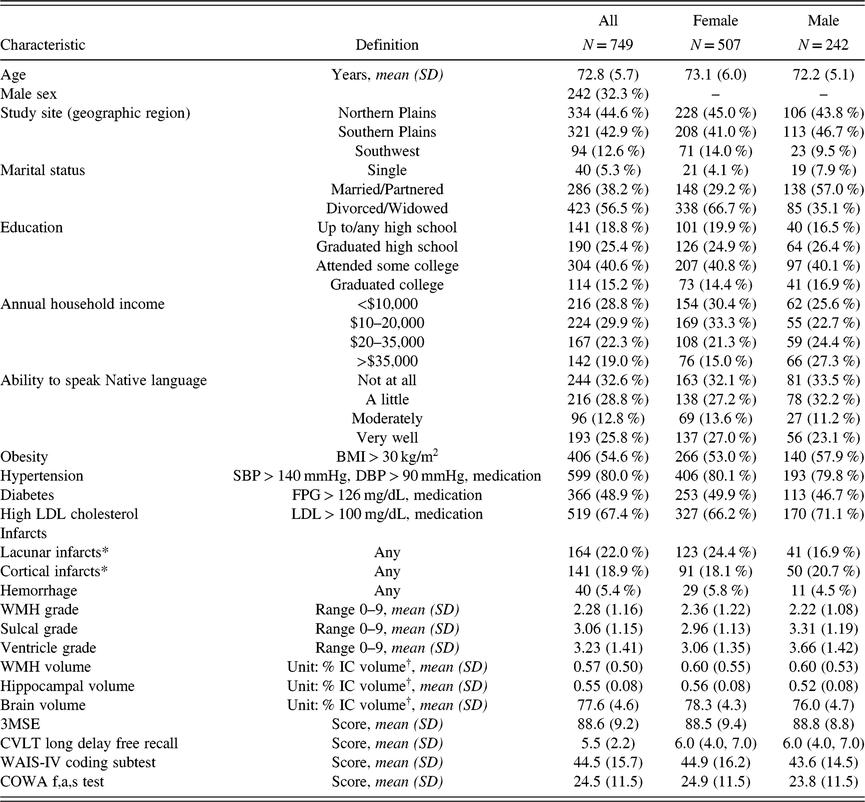
The mean age of participants was approximately 73 years, and a majority were female (68 %; Table 1). The majority of participants also tended to be divorced, separated, or widowed (56 %); with at least some college education (55.8 %, combined); and below $20,000 annual household income (58.7 %, combined). Males and females were similar in most categories, with exception that more females were unmarried and low income; males had more findings of cerebral vascular injury or atrophy, which has been previously reported (Suchy-Dicey et al., Reference Suchy-Dicey, Shibata, Madhyastha, Grabowski, Longstreth, Okin, Devereux, O’Leary, Ali, Jensen, Muller, Nelson, Rhoades, Madhyastha, Grabowski, Beauchamp, Umans and Buchwald2017). Bilingual status was common, with many able to speak their Native language moderately or very well (38.6 %, combined). Most were measured as or reported taking medications for high blood pressure (80 %), diabetes (48.9 %), and high LDL cholesterol (67.4 %); and more than half (54.6 %) were obese, with mean BMI 31 kg/m2.
Selected participant characteristics among elderly American Indians from the Cerebrovascular Disease and its Consequences in American Indians study (2010–2013)

Notes: Data given as n (%) unless otherwise noted; BMI = body mass index; SBP = systolic blood pressure; DBP = diastolic blood pressure; FPG = fasting plasma glucose; LDL = low density lipoprotein; WMH: white matter hyperintensity; IC = intracranial; 3MSE: Modified Mini Mental State Examination; CVLT LF: California Verbal Learning Test 2nd edition long delay free recall; WAIS-IV: Weschler Adult Intelligence Scale—4th edition (Coding subtest); COWA: Controlled Oral Word Association test (F, A, S words).
* Lacunar infarcts and cortical infarcts are not mutually exclusive categories; participants may have either or both.
† Volumetric measures given as % of intracranial (IC) volume.
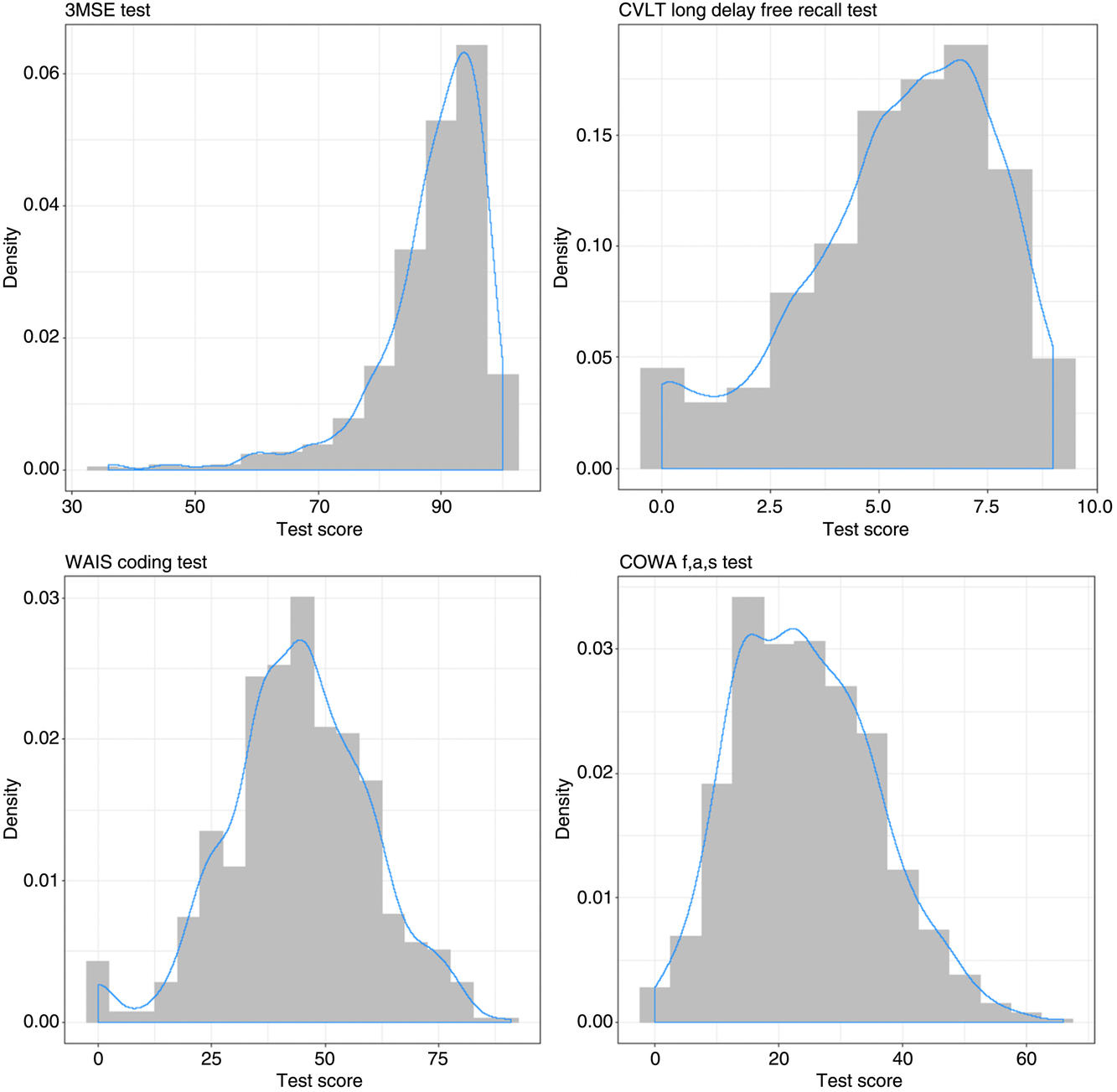
The distributions of scores for each cognitive test were visualized graphically using histograms and Gaussian curves (Figure 1). 3MSE was heavily right-skewed, with approximate mean score 88; CVLT long delay free recall test was slightly right-skewed, with mean score 5; WAIS coding subtest was somewhat normal, with mean score 44; COWA test was also somewhat normal, with mean score 24.
Histograms of cognitive test scores including Modified Mini Mental Status Examination (3MSE), California Verbal Learning Test II (CVLT) short form long/free-recall test, Weschler Adult Intelligence Scale (WAIS) digit coding subtest, and Controlled Oral Word Association (COWA) f,a,s subtest among elderly American Indians, showing score density (Y-axis) with a Gaussian distribution overlay (blue curve). Mean scores overall were approximately: 3MSE (88), CVLT long free recall (5), WAIS coding (44), and COWA (24).

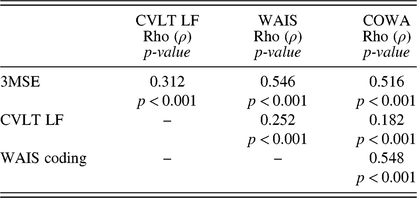
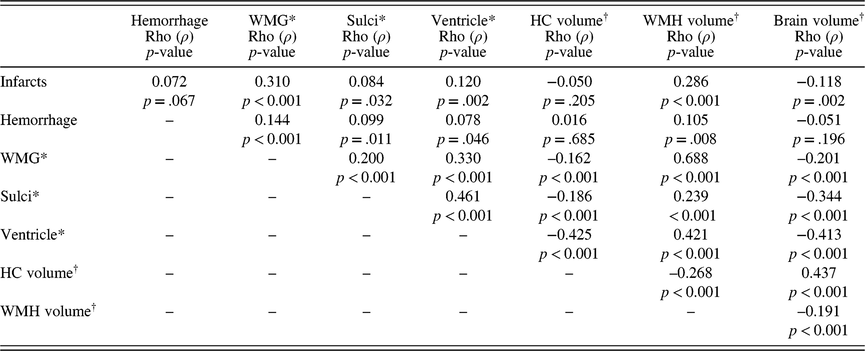
Spearman rank order correlation coefficients among cognitive test scores suggest that each test is significantly correlated with each other (Table 2). The strongest correlations were among 3MSE, WAIS, and COWA (ρ > 0.5); medium level correlations were detected for CVLT with 3MSE and WAIS (ρ ≈ 0.3); and smallest correlations were found for CVLT and COWA (ρ < 0.2). Similarly, Spearman rank order correlation coefficients among MRI findings indicated strong overlap among various cerebral vascular and atrophy type injuries (Table 3). Vascular lesions (infarct, hemorrhage) were significantly correlated with worse white matter disease grade and more WMHs volume (ρ ≈ 0.1–0.3), as well as infarcts with worse sulcal grade, worse ventricle grade, and smaller brain volume (ρ ≈ 0.1). White matter disease grade and WMHs volume were also significantly correlated with worse sulcal grade (ρ ≈ 0.2), worse ventricle grade (ρ ≈ 0.3–0.4), smaller hippocampal volume (ρ ≈ −0.2 to −0.3), smaller brain volume (ρ ≈ −0.2), and with each other (ρ > 0.6). Graded and volumetric measures of atrophy were also intercorrelated—albeit not completely—notably, sulcal grade with ventricle grade (ρ ≈ 0.5); ventricle grade with smaller hippocampal volume (ρ ≈ −0.4); and both with brain volume (ρ ≈ −0.3 to −0.4).
Spearman’s rank order correlation coefficients (rho) and associated p-values for cognitive test scores in elderly American Indians from the Cerebrovascular Disease and its Consequences in American Indians study (2010–2013)
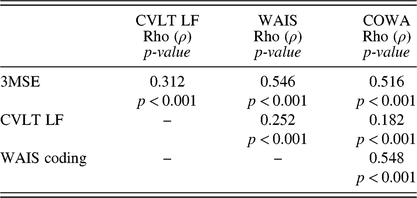
Notes: 3MSE = Mini Mental Status Examination; CVLT LF = California Verbal Learning Test II short form long delay free recall; WAIS = Weschler Adult Intelligence Scale coding subtest; COWA = Controlled Word Association test (F, A, S words); N = 737.
Spearman’s rank order correlation coefficients (ρ) and associated p-values for MRI findings in elderly American Indians from the Cerebrovascular Disease and its Consequences in American Indians study (2010–2013)
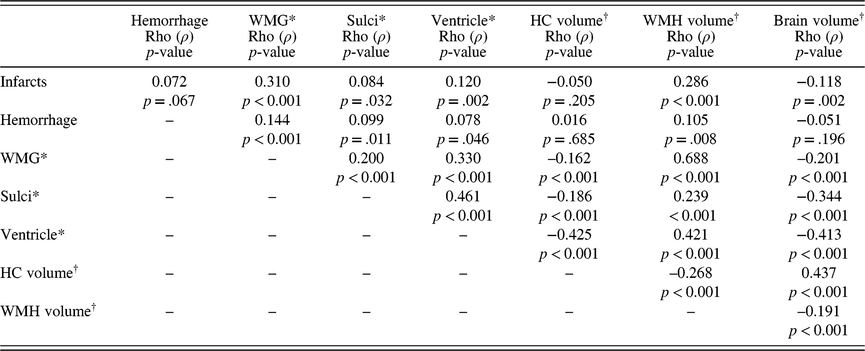
Note: N = 654.
* White matter grade (WMG), sulci, and ventricle grade coded as ordinal (grade 0–9).
† Hippocampus (HC), white matter hyperintensities (WMHs), and brain (grey and white matter) volumes coded as percent of intracranial volume.
Nested models evaluated influence of additional covariates (Supplemental Table). Some associations detected in Model 0 or Model 1 did not remain after adjustment for vascular comorbidities in Model 2. White matter grade was associated in Model 1 with lower 3MSE score (p = .032) and ventricle enlargement grade was associated with lower COWA score (p = .017). Individual adjustment for each clinical characteristic indicated that models for white matter grade and 3MSE may be limited in statistical power, as each individually adjusted model was still statistically significant (data not shown). Similar evaluation of associations between ventricle grade and COWA test was still significant after adjustment for each factor, except for diabetes. Graphical examination of residuals over fitted values, QQ plots, and residuals over leverage suggested that model assumptions were reasonably supported.
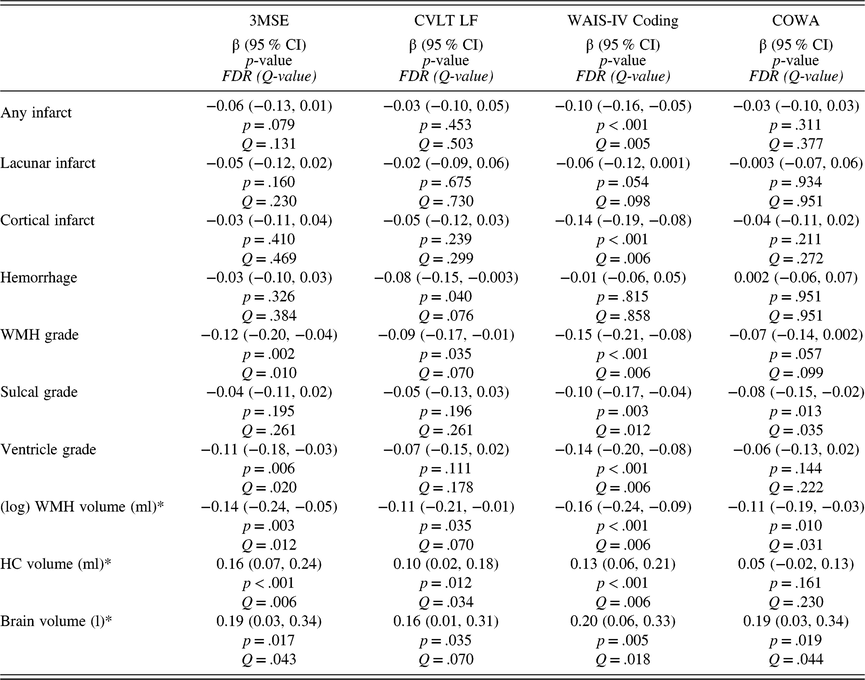
Standardized associations that did remain after full adjustment in Model 2 and accounting for multiple comparisons using FDR (Table 4) were strongest for the WAIS-IV Coding subtest and the 3MSE. Cerebral infarcts (β −0.10 95 % CI −0.16, −0.05) and cortical infarcts (β −0.14 95 % CI −0.19, −0.08), worse white matter grade (β −0.15 95 % CI −0.21, −0.08), larger WMH volume (β −0.16 95 % CI −0.24, −0.09), worse sulcal grade (β −0.10 95 % CI −0.17, −0.04), worse ventricle grade (β −0.14 95 % CI −0.20, −0.08), smaller hippocampus volume (β 0.13 95 % CI 0.06, 0.21), and smaller brain volume (β 0.20 95 % CI 0.03, 0.34) were all associated with lower scores on the WAIS-IV Coding subtest. Similarly, associations for lower 3MSE score included worse white matter grade (β −0.12, 95 % CI 0.20, −0.04), WMH volume (β −0.14 95 % CI −0.24, −0.05), ventricle grade (β −0.11 95 % CI −0.18, −0.03), hippocampus volume (β 0.16 95 % CI 0.07, 0.24), and brain volume (β 0.19 95 % CI 0.03, 0.34). Negative associations for CVLT long delay free recall included findings for long-term recall with hippocampus volume (β 0.10 95 % CI 0.02, 0.18) and for COWA with WMH volume (β −0.11 95 % CI −0.19, 0.33), sulcal grade (β −0.08 95 % CI −0.15, 0.02), and brain volume (β 0.19 95 % CI 0.03, 0.34). Associations for other CVLT subtests, including short delay free recall, were similar to long delay free recall (data not shown). Direction and precision of these associations can be visually examined graphically in scatterplots with linear and loess fits of volumetric and graded MRI measures with cognitive test scores (Supplementary Figures).
Standardized beta coefficients with 95 % confidence intervals (95 % CI) and p-values from linear regressions of cognitive test scores with standardized MRI findings from elderly American Indians from the Cerebrovascular Disease and its Consequences in American Indians study (2010–2013)
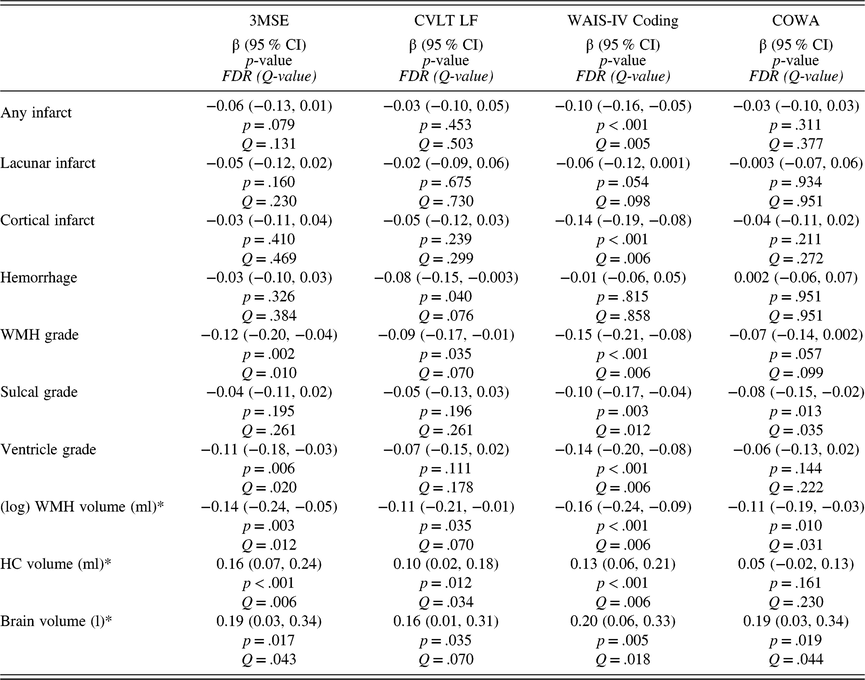
Notes: Comparison units for MRI findings (independent variable) include infarct, lacune, and hemorrhage present versus absent; WMH grade, sulcal grade, and ventricle grade per 1 point higher grade, range 0–9; log WMH volume, HC volume per 1 ml increase in volume; brain volume per 1 l increase in volume. Model adjusted for age, sex, site, marital status, income, education, Native language speaking ability (bilingual), obesity, diabetes, hypertension, hypercholesterolemia; 3MSE: Modified Mini Mental State Examination; CVLT LF: California Verbal Learning Test 2nd edition Short Form long delay free recall; WAIS-IV: Weschler Adult Intelligence Scale 4th edition (Coding subtest); COWA: Controlled Oral Word Association test (F, A, S words); FDR (Q-value): false-discovery rate corrected p-value.
* Volumetric models adjusted for model 2, as well as for intracranial volume; volumetric beta coefficient and 95 % CI estimates that are listed as 0 were calculated to 3 decimal places as <.0001.
DISCUSSION
Overview
Neuropsychological test performance was associated with findings from cranial MRI in this sample of American Indian elders, although some of these associations were diminished with the addition of sociodemographic, health, and behavioral characteristics in regression models. WAIS-IV Coding test, a measure of processing speed, was independently associated with several cranial MRI findings of both vascular injury and cortical and central atrophy. Processing speed has generally been the most consistent correlate of cerebral vascular injury in other large, community-based studies of elderly adults from other racial or ethnic populations, as well. Vascular injury has been generally associated with deficits in frontal lobe-mediated functioning—especially executive functioning and processing speed (Erkinjuntti et al., Reference Erkinjuntti, Inzitari, Pantoni, Wallin, Scheltens, Rockwood, Roman, Chui and Desmond2000; Jokinen et al., Reference Jokinen, Kalska, Ylikoski, Madureira, Verdelho, Gouw, Scheltens, Barkhof, Visser, Fazekas, Schmidt, O’Brien, Hennerici, Baezner, Waldemar, Wallin, Chabriat, Pantoni, Inzitari and Erkinjuntti2009; Miralbell et al., Reference Miralbell, Lopez-Cancio, Lopez-Oloriz, Arenillas, Barrios, Soriano-Raya, Galán, Cáceres, Alzamora, Pera, Toran, Dávalos and Mataro2013), although processing speed has also been associated with white matter integrity (Aggarwal et al., Reference Aggarwal, Wilson, Bienias, De Jager, Bennett, Evans and DeCarli2010; Longstreth et al., Reference Longstreth, Arnold, Beauchamp, Manolio, Lefkowitz, Jungreis, Hirsch, O'Leary and Furberg2005; Moseley & Linden, Reference Moseley and Linden2006; Prins et al., Reference Prins, van Dijk, den Heijer, Vermeer, Jolles, Koudstaal, Hofman and Breteler2005; Zahodne et al., Reference Zahodne, Manly, Narkhede, Griffith, DeCarli, Schupf, Mayeux and Brickman2015), infarcts (Aggarwal et al., Reference Aggarwal, Wilson, Bienias, De Jager, Bennett, Evans and DeCarli2010; Jokinen et al., Reference Jokinen, Kalska, Ylikoski, Madureira, Verdelho, Gouw, Scheltens, Barkhof, Visser, Fazekas, Schmidt, O’Brien, Hennerici, Baezner, Waldemar, Wallin, Chabriat, Pantoni, Inzitari and Erkinjuntti2009; Longstreth et al., Reference Longstreth, Dulberg, Manolio, Lewis, Beauchamp, O’Leary, Carr and Furberg2002; Mosley et al., Reference Mosley, Knopman, Catellier, Bryan, Hutchinson, Grothues, Folsom, Cooper, Burke, Liao and Szklo2005; Prins et al., Reference Prins, van Dijk, den Heijer, Vermeer, Jolles, Koudstaal, Hofman and Breteler2005; Saczynski et al., Reference Saczynski, Sigurdsson, Jonsdottir, Eiriksdottir, Jonsson, Garcia, Kjartansson, Lopez, van Buchem, Gudnason and Launer2009), ventricle grade (Moseley & Linden, Reference Moseley and Linden2006), and brain atrophy (Aggarwal et al., Reference Aggarwal, Wilson, Bienias, De Jager, Bennett, Evans and DeCarli2010; Prins et al., Reference Prins, van Dijk, den Heijer, Vermeer, Jolles, Koudstaal, Hofman and Breteler2005; Zahodne et al., Reference Zahodne, Manly, Narkhede, Griffith, DeCarli, Schupf, Mayeux and Brickman2015).
Comparison with Other Populations: Infarct Lesions
Other large studies of elderly adults of European or Asian descent, including middle-aged and elderly US non-Hispanic whites, have reported significant associations for neuropsychological tests of different cognitive domains with infarcts, WMH, cerebral atrophy, and cortical damage—often resulting from multiple, clinically covert processes acting in concert (Dhamoon et al., Reference Dhamoon, Cheung, Gutierrez, Moon, Sacco, Elkind and Wright2018; Knopman et al., Reference Knopman, Griswold, Lirette, Gottesman, Kantarci, Sharrett, Jack, Graff-Radford, Schneider, Windham, Coker, Albert and Mosley2015). Cerebral infarcts, in particular, have been reported to increase risk of impairment and dementia across multiple cognitive domains including verbal fluency, memory, processing speed, executive function, motor function, and mood, independent of cardiovascular comorbidities, other lesions, and cerebral atrophy (Mosley et al., Reference Mosley, Knopman, Catellier, Bryan, Hutchinson, Grothues, Folsom, Cooper, Burke, Liao and Szklo2005; Pantoni, Fierini, Poggesi, & LADIS Study Group, Reference Pantoni, Fierini and Poggesi2015; Saczynski et al., Reference Saczynski, Sigurdsson, Jonsdottir, Eiriksdottir, Jonsson, Garcia, Kjartansson, Lopez, van Buchem, Gudnason and Launer2009; Warren et al., Reference Warren, Weiner, Rossetti, McColl, Peshock and King2015), with more infarcts increasing the degree of risk (Saczynski, et al., Reference Saczynski, Sigurdsson, Jonsdottir, Eiriksdottir, Jonsson, Garcia, Kjartansson, Lopez, van Buchem, Gudnason and Launer2009; Schnieder et al., Reference Schnieder, Wilson, Cochran, Bienias, Arnold, Evans and Bennett2003; Vermeer et al., Reference Vermeer, Prins, den Heijer, Hofman, Koudstaal and Breteler2003). Cerebral infarcts are often categorized by affected location, such as subcortical and cortical, with implications for different cognitive functions. Subcortical—thalamic, in particular—lesions have been associated with poor memory (Debette et al., Reference Debette, Beiser, DeCarli, Au, Himali, Kelly-Hayes, Romero, Kase, Wolf and Seshadri2010; Saczynski et al., Reference Saczynski, Sigurdsson, Jonsdottir, Eiriksdottir, Jonsson, Garcia, Kjartansson, Lopez, van Buchem, Gudnason and Launer2009; Vermeer et al., Reference Vermeer, Prins, den Heijer, Hofman, Koudstaal and Breteler2003), global cognitive functioning, motor speed, attention, executive functions, verbal fluency, and working memory (Jokinen et al., Reference Jokinen, Kalska, Ylikoski, Madureira, Verdelho, Gouw, Scheltens, Barkhof, Visser, Fazekas, Schmidt, O’Brien, Hennerici, Baezner, Waldemar, Wallin, Chabriat, Pantoni, Inzitari and Erkinjuntti2009), whereas a combination of both cortical and subcortical lesions has been associated with slower processing speed and poorer executive functioning.(Saczynski et al., Reference Saczynski, Sigurdsson, Jonsdottir, Eiriksdottir, Jonsson, Garcia, Kjartansson, Lopez, van Buchem, Gudnason and Launer2009)
In our study of American Indian elders, the presence of any infarcts, regardless of location, was associated with general cognitive function (3MSE) and processing speed (WAIS-IV Coding), but not with verbal memory or executive function (COWA, CVLT); after adjustment for multiple comparisons, significant associations included only any type of infarct, irrespective of location, with processing speed. Future research may be directed toward further elucidating these associations between location and number of lesions in association with various domains of cognitive dysfunction.
Comparison with Other Populations: Hemorrhages
Aneurysmal subarachnoid hemorrhage, the accumulation of blood in the subarachnoid space, impacts cognitive functioning depending on the location and extent of the hemorrhage, including memory, executive functioning, and language, or verbal memory (Al-Khindi, Macdonald, & Schweizer, Reference Al-Khindi, Macdonald and Schweizer2010). Both verbal and visual memory are predominantly mediated by lesions in the medial temporal lobes, whereas impairment in executive function is typically associated with lesions in the frontal lobes (Al-Khindi et al., Reference Al-Khindi, Macdonald and Schweizer2010). Even microbleeds—small hemorrhages characterized by homogeneous, round foci of low signal intensity on MRI gradient echo—can increase risk of larger hemorrhage, stroke, and dementia (Charidimou et al., Reference Charidimou, Shams, Romero, Ding, Veltkamp, Horstmann, Eiriksdottir, van Buchem, Gudnason, Himali, Gurol, Viswanathan, Imaizumi, Vernooij, Seshadri, Greenberg, Benavente, Launer and Shoamanesh2018), thus carrying possible therapeutic implications for prognosis in hypertension, diabetes, and stroke (Cordonnier, Al-Shahi Salman, & Wardlaw, Reference Cordonnier, Al-Shahi Salman and Wardlaw2007). Specific associations with microbleeds reported by large cohort studies include global neuropsychiatric burden, in particular symptoms of depression and disinhibition (Xu et al., Reference Xu, Chan, Hilal, Goh, Ikram, Wong, Cheng, Chen and Venketasubramanian2017), impairment in fluency, attention, and executive function domains (Valenti et al., Reference Valenti, Del Bene, Poggesi, Ginestroni, Salvadori, Pracucci, Ciolli, Marini, Nannucci, Pasi, Pescini, Diciotti, Orlandi, Cosottini, Chiti, Mascalchi, Bonuccelli, Inzitari and Pantoni2016), impairment in walking speed, independent of cognitive performance (Stijntjes et al., Reference Stijntjes, de Craen, van der Grond, Meskers, Slagboom and Maier2016). Smaller clinical studies have identified possible mechanisms including reduction in resting state cerebral blood flow and chronic hypoperfusion (Gregg et al., Reference Gregg, Kim, Gurol, Lopez, Aizenstein, Price, Mathis, James, Snitz, Cohen, Kamboh, Minhas, Weissfeld, Tamburo and Klunk2015) or hypertensive microangiopathy (Yamashiro et al., Reference Yamashiro, Tanaka, Okuma, Shimura, Ueno, Miyamoto, Urabe and Hattori2014), with specific effects on cognition and function relating to specific regions affected.
Hemorrhage of any size was only associated with verbal memory (CVLT) in our study, and was not significant after adjustment for multiple comparisons; however, these limited findings may be due to the small number of elderly American Indian participants who had evidence of hemorrhage, and the broad definition in our measure of hemorrhage. Few studies have examined racial and ethnic differences in cerebral vascular injury, including both infarct and hemorrhage, or in the cognitive sequelae. One study has found no difference in microbleed presence and location, comparing African American and Caucasian ischemic stroke patients, but the presence of multiple microbleeds (≥5) was higher for those with African heritage (Shahjouei et al., Reference Shahjouei, Tsivgoulis, Singh, McCormack, Noorbakhsh-Sabet, Goyal, Alexandrov, Alexandrov and Zand2017).
Comparison with Other Populations: Small Vessel Disease
White matter lesions have been associated with poorer cognitive functioning in several cognitive domains in both middle-aged and elderly US non-Hispanic whites, including general cognitive functioning, processing speed, executive functioning, verbal fluency, and episodic memory (Longstreth et al., Reference Longstreth, Arnold, Beauchamp, Manolio, Lefkowitz, Jungreis, Hirsch, O'Leary and Furberg2005, Reference Longstreth, Dulberg, Manolio, Lewis, Beauchamp, O’Leary, Carr and Furberg2002; Mosley, et al., Reference Mosley, Knopman, Catellier, Bryan, Hutchinson, Grothues, Folsom, Cooper, Burke, Liao and Szklo2005). White matter lesion location may be critically important to identifying or evaluating risk of specific cognitive or functional consequences. Episodic memory was most associated with lesions in bilateral temporal–occipital lobes, right parietal periventricular space, and the left anterior limb of the internal capsule. Executive functioning was most associated with bilateral temporal–occipital and right parietal periventricular white matter lesions, and the anterior limb of the internal capsule bilaterally (Smith et al., Reference Smith, Salat, Jengs, McCreary, Fischi, Schmahmann, Dickerson, Viswanathan, Albert, Blacker and Greenberg2011). White matter disease burden was also associated with amnestic mild cognitive impairment in those aged 60 and older (Debette et al., Reference Debette, Beiser, DeCarli, Au, Himali, Kelly-Hayes, Romero, Kase, Wolf and Seshadri2010). Previous reports have also found a greater burden of white matter lesions associated with hypertension, impaired glucose tolerance, and mood (Yamawaki et al., Reference Yamawaki, Wada-Isoe, Yamamoto, Nakashita, Uemura, Takahashi, Nakayama and Nakashima2015), and with verbal learning slope (Glazer et al., Reference Glazer, Dong, Yoshita, Rundek, Elkind, Sacco, DeCarli, Stern and Wright2015). The anterior thalamic radiation and forceps minor may also be strategic tracts in which white matter lesions are most strongly associated with cognitive impairment (Biesbroek et al., Reference Biesbroek, Weaver, Hilal, Kuijf, Ikram, Xu, Tan, Venketasubramanian, Postma, Biessels and Chen2016).
In our study, graded white matter disease was associated with processing speed (WAIS-IV Coding), but volumetric WMH measure was additionally associated with general cognition (3MSE), verbal memory (CVLT), verbal fluency, and executive function (COWA), although these associations were not significant after adjustment for multiple comparisons. Future research should consider associations by brain structure and location, such as voxel-based volumetric analyses, as well as additional measures of episodic memory and verbal learning to more comprehensively examine the effect of small vessel disease in elderly American Indians.
Comparison with Other Populations: Cerebral Atrophy
Previous reports from the Strong Heart Study associated brain volume and hippocampus volume with processing speed (WAIS); brain volume and left hippocampus volume with verbal memory (CVLT); and left hippocampus volume with general cognition (3MSE), all independent of apolipoprotein E genotype (Cholerton et al., Reference Cholerton, Omidpanah, Madhyastha, Grabowski, Suchy-Dicey, Shibata, Nelson, Verney, Howard, Longstreth, Montine and Buchwald2017). Our study echoes these findings; hippocampus volume was associated with general cognition (3MSE), verbal memory (CVLT), and processing speed (WAIS-IC Coding); brain volume was associated with processing speed (WAIS-IV Coding) and verbal fluency (COWA)—although this last association was marginally significant after adjustment for multiple comparisons. Future research will benefit from longitudinal measures in order to directly examine atrophy in these and other brain regions.
In middle-aged US non-Hispanic whites, both sulcal and ventricular enlargement have been associated with poorer memory and ventricle enlargement additionally with processing speed (Mosley et al., Reference Mosley, Knopman, Catellier, Bryan, Hutchinson, Grothues, Folsom, Cooper, Burke, Liao and Szklo2005). In our study, both sulcal and ventricle grade were associated with processing speed (WAIS-IV Coding), and sulcal grade additionally with verbal fluency and executive function (COWA); however, these associations were not significant after adjustment for multiple comparisons. Some discrepancy between existing literature and our study may be due to differences in age of populations, as well as other sociodemographic and cultural disparities.
Effect Modification by Age and Sex
Age may present a particularly strong confounding or modifying influence on cognition. For example, WMH and hippocampal volume influenced cognitive decline in processing speed and executive functioning tasks, independent of age, in a sample of older participants aged 75–90 years (Papp et al., Reference Papp, Kaplan, Springate, Moscufo, Wakefield, Guttman and Wolfson2014). Similarly, voxel-wise analyses revealed significant associations between WMH and both increasing age and processing speed and flexibility in regions throughout the brain (Birdsill et al., Reference Birdsill, Koscik, Jonaitis, Johnson, Okonkwo, Herman, Larue, Sager and Bendlin2014).
Sex may also modify the associations described. However, adjustment for characteristics that are in the causal pathway that are caused by sex (e.g. smoking, alcohol use, heart conditions) would estimate only the partial effect of sex on cognition, that is, the portion that is not mediated by the adjustment parameters. It is possible this estimate reflects some difference in biological sex, but it is also possible that it reflects some other effect for which sex is a proxy variable. Additionally, in previous work, our group found that only the CVLT and physical function tests were associated with participant sex in unadjusted analyses (Verney et al., in press). Future research may examine these questions further through structured longitudinal models.
Comparison with Other Populations: Cognitive Test Performance
Normative and diagnostic standards for cognitive tests are well-established for US non-Hispanic whites, including 3MSE (Jones & Gallo, Reference Jones and Gallo2002), WAIS-IV (Wisdom, Mignogna, & Collins, Reference Wisdom, Mignogna and Collins2012), COWA (Tombaugh, Kozak, & Rees, Reference Tombaugh, Kozak and Rees1999), and CVLT (Fine, Kramer, Lui, Yaffe, Reference Fine, Kramer, Lui and Yaffe2012). Compared with these normative standards, mean scores and overall distributions for our study were all left-shifted, suggesting need for formal neuropsychological test validation in this population. Education length and quality, language, culture, economic, social, and other factors can influence neuropsychological testing performance, and thus both normative and diagnostic scores, which limits interpretability of scores on an absolute scale in the absence of such validations. Future research to conduct domain and construct validation, with score calibration, will benefit clinical interpretability of these findings and support development of better understanding of cognitive impairment and dementia in elderly American Indians.
Limitations
This is a cross-sectional examination, so we were not able to directly evaluate temporal sequence in any associations. Also, although this examination includes the largest cohort study of American Indian elders from three major geographic regions, these findings may not be generalizable to other populations, including other American Indian or Alaska Native groups, or other indigenous populations. Additionally, because of the high degree of vascular risk in this population, participants may not represent the full range of exposures, including an “unexposed” group, which could limit the discoverability of associations. Further, inclusion of this study to survivors from study baseline could introduce bias in the form of differential selection if those who did not survive to participate had especially strong associations between cerebral vascular injury and cognitive status; such a limitation would tend to increase the possibility of Type II error, limiting the discoverability of true associations. However, previous analyses of differential survival from the baseline recruitment period (1989–1991) to the MRI examination (2010–2013) suggested that there were not major differences in vascular risk and comorbidities between those who did and did not participate in the follow-up visit (Suchy-Dicey et al., Reference Suchy-Dicey, Muller, Madhyastha, Shibata, Cole, Zhao, Longstreth and Buchwald2018). It is possible that vascular comorbidities may be effect modifiers for the observed associations in this study. Future longitudinal research should examine these questions for diabetes, hypertension, and renal disease, all of which may have profound influence on cognitive function.
Summary
Several associations of MRI findings were detected among different cognitive domains, many similar to previous findings in non-Hispanic white and other populations, after adjustment for critically confounding characteristics. Some differences may represent effects from age, selection pressures, differences in neuropsychological test performance, or pathological discrepancies. Future research should examine these questions more fully. In summary, this is the first study of MRI-defined cerebral vascular injury and neuropsychological testing performance-defined cognitive function in a large cohort of American Indian elders, a population which experiences many chronic health and sociodemographic conditions that can lead to premature aging, increase risk of cerebral vascular injury and cerebral atrophy, and result in development of physical and cognitive impairment or dementia (Shiels et al., Reference Shiels, Chernyavskiy, Anderson, Best, Haozous, Hartge, Rosenberg, Thomas, Freedman and Berrington de Gonzalez2017; Verney et al., Reference Verney, Bennett, Hamilton and Ferraro2015). Developing better understanding of the significant cultural, educational, economic, linguistic, and public health diversity among the 567 federally recognized US tribes, the many non-tribal indigenous communities, as well as other similarly exposed minority populations, are critical to improving brain health and cognitive care in elderly peoples, in order to improve prevention efforts, inform risk and diagnostic assessments, and reduce health disparities overall.
ACKNOWLEDGEMENTS
This work was supported by the National Heart Lung and Blood Institute (grants U01HL41642, U01HL41652, U01HL41654, U01HL65520, U01HL65521, R01HL109315, R01HL109301, R01HL109284, R01HL109282, R01HL109319, and R01HL093086); the National Institute on Aging (grants P50 AG005136 and R01AG049084); the National Institute on Minority Health and Health Disparities (2 U54 MD004811); and the Nancy and Buster Alvord Endowment (Thomas J. Montine). The opinions expressed in this manuscript are those of the authors, and do not necessarily reflect those of the Indian Health Service (IHS). The authors wish to thank all study communities, participants, and staff.
CONFLICT OF INTEREST
None of the authors has any conflicts of interest to report.
SUPPLEMENTARY MATERIAL
To view supplementary material for this article, please visit https://doi.org/10.1017/S1355617719001073.