Infections of cardiac implantable electronic devices (CIEDs) are a major cause of morbidity and mortality. As the patient population receiving these invasive devices is increasingly older and more medically complex, CIED infection incidence has doubled over the past decade.Reference Greenspon, Patel and Lau1, Reference Greenspon, Patel and Lau2 At the same time, the number of patients receiving CIEDs continues to increase, with more than 300,000 new devices placed annually in the United States. Despite the growing burden of these infections, little is known about the most clinically effective methods of preventing them.Reference Mehrotra, Gupta and Strymish3
Most data on the effectiveness of preventative measures for CIED infections are extrapolated from cardiac surgery rather than from studies specific to the electrophysiology laboratory. Among the most commonly applied strategies, high-quality evidence supports pre-incisional antimicrobial prophylaxis.Reference de Oliveira, Martinelli and Nishioka4 The effectiveness of other measures (eg, combination prophylactic regimens and methicillin-resistant Staphylococcus aureus (MRSA) screening and decolonization) are supported by only limited data.Reference Strymish, Welch and Peralta5 Evidence supporting topical application of antimicrobials, either through the use of antibacterial-impregnated envelopes (TYRX, TYRX-A, Medtronic, Minneapolis, MN) or antimicrobial washes, is also limited.Reference Ali, Kanjwal and Bruhl6 Bundled approaches, which include a collection of infection prevention measures performed simultaneously, have demonstrated promising effectiveness; however, due to the nature of the study designs, it remains unclear which bundle components are effective and which increase costs and complexity without improving care.Reference Ahsan, Saberwal and Lambiase7–Reference Krahn, Longtin and Philippon9
Host factors that drive infection risk are generally not modifiable or are only partially modifiable; examples include smoking, MRSA colonization, diabetes, renal impairment, and increased risk of bleeding due to underlying disease or medications.Reference Polyzos, Konstantelias and Falagas10 Although bleeding is not on the direct causal pathway to CIED infection, bleeding complications increase rates of hematomas and wound dehiscence, which in turn increase infection risk by providing microorganisms with a portal of entry (in the case of wound dehiscence) and a source of growth (in the case of hematoma).Reference Nichols and Vose11 Some procedural factors associated with increased risk (eg, reoperation procedures where the generator and/or leads need to be revised or replaced) are also not modifiable.
Thus, to identify the most effective prevention strategies for reducing procedure-related CIED infections performed in the electrophysiology laboratory, we sought to measure the association between individual infection prevention interventions and procedure-related CIED infections among a large, multicenter, national cohort.
Methods
Databases
The VA Clinical Assessment Reporting and Tracking (CART) program is a national quality program supporting all VA cardiac catheterization laboratories where invasive procedures are performed. A key feature of this program is a clinical software application designed to collect standardized procedure data. Although use is mandatory for coronary angiograms and percutaneous coronary interventions, it is optional for electrophysiology procedures; an estimated 30% of electrophysiology procedures performed throughout the national VA are captured by CART.Reference Branch-Elliman, Stanislawski and Strymish12 Prospectively collected data included procedure type and date, patient demographics (eg, age and sex), and comorbidities (eg, diabetes, renal disease, or heart disease). Procedural complications (eg, wound complications and hematomas) were also captured in real time from the electronic medical record (EMR). CART data were then combined with other data from the VA Corporate Data Warehouse including pharmacy and administrative data to create a longitudinal cohort.
Cohort development
Cardiac device procedures, including implantations and revisions of permanent pacemakers, implantable cardioverter defibrillators (ICDs), biventricular pacemaker ICDs, and biventricular pacemakers entered into the CART application during the period from October 2008 to September 2015, were considered for inclusion (N = 6,497). Manual EMR review was necessary to accurately determine infection status because CIED infection outcomes are not electronically captured. Given the low expected incidence rate of CIED infections (estimated 1%–3%1), cases with higher CIED infection probability were oversampled to enhance case ascertainment. Specifically, all procedures with a potentially relevant International Classification of Disease, Ninth and Tenth Revisions (ICD-9/-10) code (Supplemental Material Appendix 1 online) and/or a blood culture order and/or a wound culture order within 90 days of the index device procedure underwent manual review by a trained infectious diseases clinician (A.A. or W.B.E.) applying standard definitions for CIED infection.Reference Baddour, Epstein and Erickson13 Cases in the enriched sample were then matched 1:3 with cases without potentially relevant ICD-9/-10 codes and without potentially relevant microbiology orders. The unenriched sample was stratified by facility to the high-probability sample, then a random number generator was used to select cases for manual review. If a facility lacked sufficient CART-EP–entered procedures to complete the matching process, then other low-probability procedures were selected randomly from the cohort so that 3 unenriched procedures were matched for every 1 procedure in the enriched sample. Cases without documented cardiac device procedures and/or without clinical notes entered into the VA EMR were excluded.
Outcomes and exposures
The primary outcome measure was incidence of CIED infection during the 6-month period following the device procedure. These infections were categorized as superficial if they involved only the subcutaneous tissues/incision or as deep if the infection spread to involve the pacemaker leads and/or resulted in bacteremia and/or endocarditis. Each infection was identified during the manual review as definite, possible, or probable. Definite infections met standard definitions of CIED infections.Reference Baddour, Epstein and Erickson13–Reference Nielsen, Gerdes and Varma15 Cases were classified as possible if there was diagnostic uncertainty about etiology of symptoms (eg, warmth, tenderness, erythema, but disagreement about infection versus hematoma) but the patient received treatment for an infection. Probable infections were cases in which patients were treated with antimicrobial therapy for CIED infection due to signs of an infection (eg, warmth, tenderness, erythema, purulence, and/or fever) but confirmatory testing was not ordered or completed. These cases were all combined as the outcome of presumed CIED infection.
Risk factors were categorized into patient variables, procedural variables, and infection prevention variables (Supplemental Material Appendix 2 online). Some variables (eg, demographic characteristics) were extracted from the CART-EP database using electronic definitions; however, variables not collected by CART-EP were extracted and/or validated using manual review to optimize detection and to ensure accuracy of electronic data entry. Although MRSA screening is mandated for inpatient admissions, MRSA screening is not required before a procedure or for outpatients. Thus, screening results were not available for the entire cohort. Management of patients identified with MRSA colonization is at the discretion of each individual VA medical center and has not been standardized nationwide.
Statistical analysis
Demographic and clinical characteristics among patients with and without CIED infections were evaluated. We used χ2 tests to compare categorical variables and Mann–Whitney Wilcoxon tests for continuous variables. Epidemic curves of the CIED infection outcomes were constructed using the R package epitools.16 Generalized estimating equations were used to evaluate the relationships between risk factors and the outcome of CIED infection within 6 months following the procedure. CIED infection was evaluated as a binary outcome (described above) with an assumed binomial distribution, logistic link function, and an exchangeable structure, to allow for clustering by facility. Due to the limited number of CIED infections in the cohort, the number of risk factors included in the multivariable regression models were restricted and included age, antibiotic solution, chlorhexidine skin cleaning, Elixhauser comorbidity index,Reference Elixhauser, Steiner, Harris and Coffey17 MRSA status, revision procedure, wound complication, international normalized ratio (INR), and type of preprocedure antibiotic (any vancomycin as referent, β-lactam, and other). These adjustment variables were chosen a priori based on prior clinical research. A secondary analysis was performed to evaluate the impact of including fever in place of the preventive measure with the weakest statistical association with the outcome (ie, antibiotic solution).
Analyses were completed using SAS software version 9.4 (SAS Institute, Cary, NC) or R version 3.4.0 software.18 The study was approved by the Colorado Multiple Institutional Review Board and the VA Boston Healthcare System Institutional Review Board prior to data collection and analysis.
Results
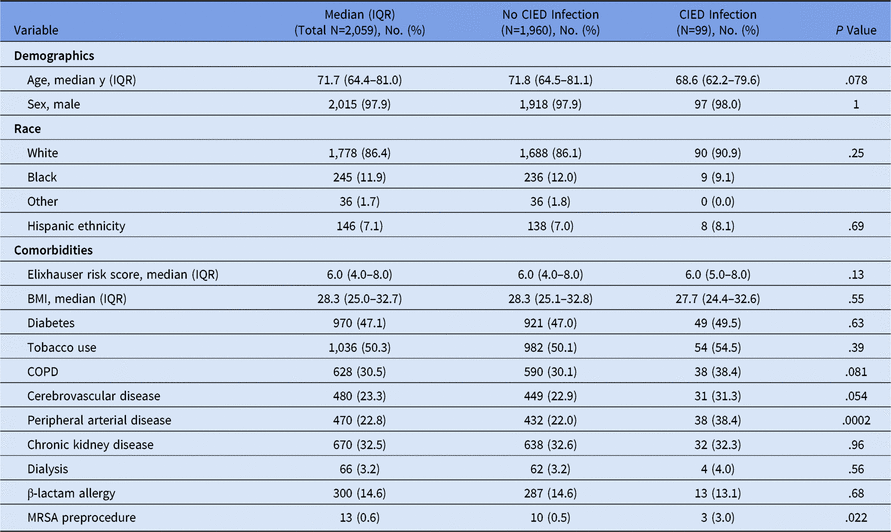
In total, 2,098 procedures at 39 different VA medical centers underwent detailed manual review, representing 32% of the 6,497 procedures entered into the CART-EP application during the study period. The final analytic cohort included 2,059 unique patients (Table 1a). Patients were predominantly male (97.9%), with a median age of 71.7 years (IQR, 64.4–81.0). A large proportion had medical comorbidities, the most common being tobacco use (50.3%), diabetes (47.1%), and chronic kidney disease (32.5%). Among 2,098 procedures, 819 patients (39%) were prescribed anticoagulants, and 276 (13.2%) were on antiplatelet medications. In 276 of 2,098 procedures (13.2%), the INR was >1.5 at time of incision. Among all 2,098 procedures, 287 (13.7%) had complications, including 131 hematoma formations (6.2%) and 21 wound complications (eg, dehiscence) (1.0%).
Cohort Characteristics by Patient

Note. IQR, interquartile range; BMI, body mass index; COPD, chronic obstructive pulmonary disease.
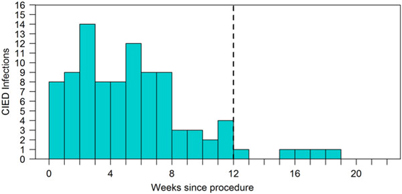
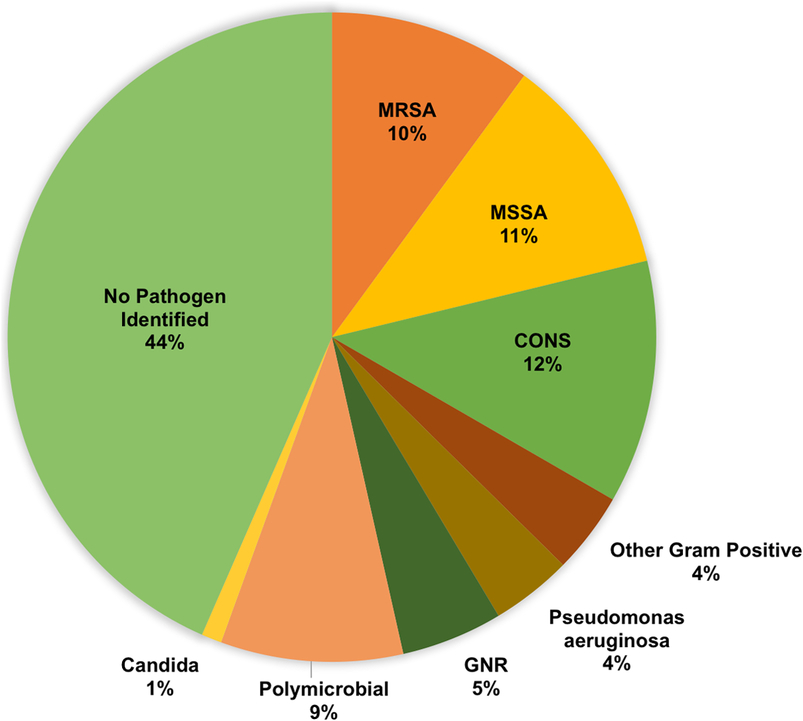
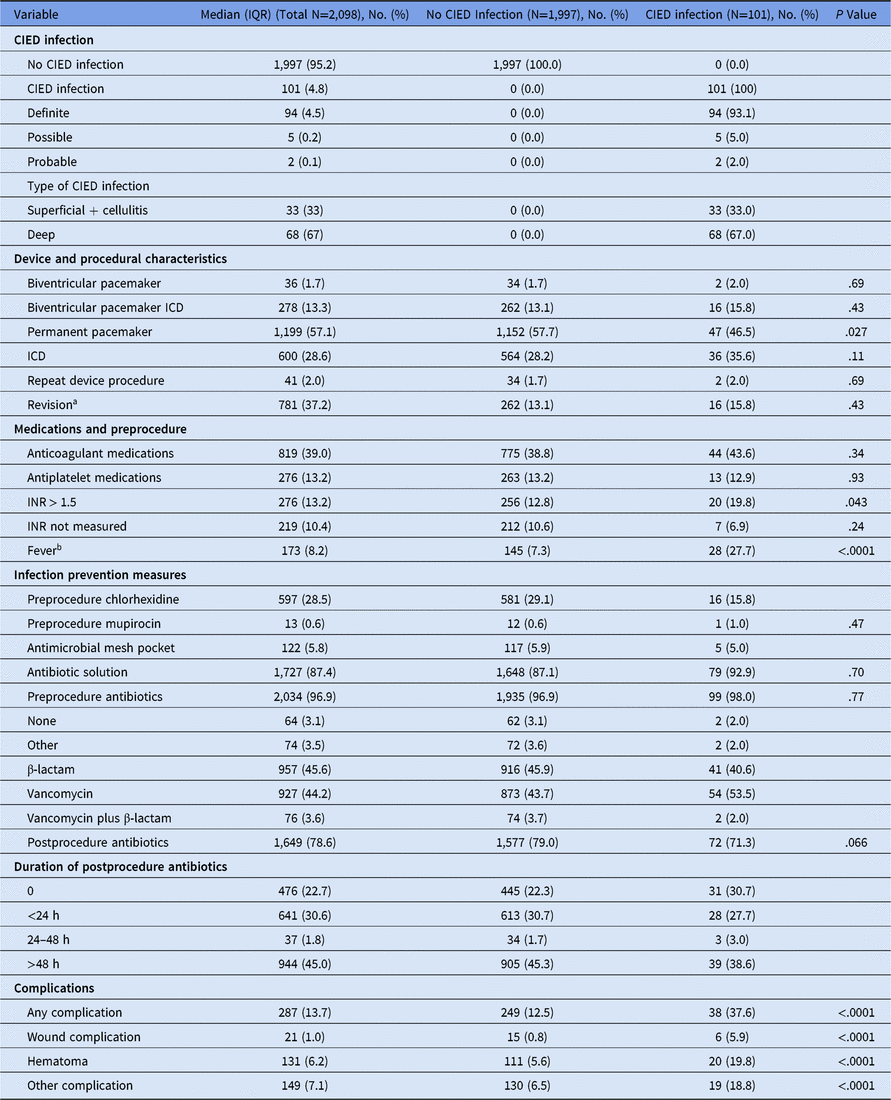
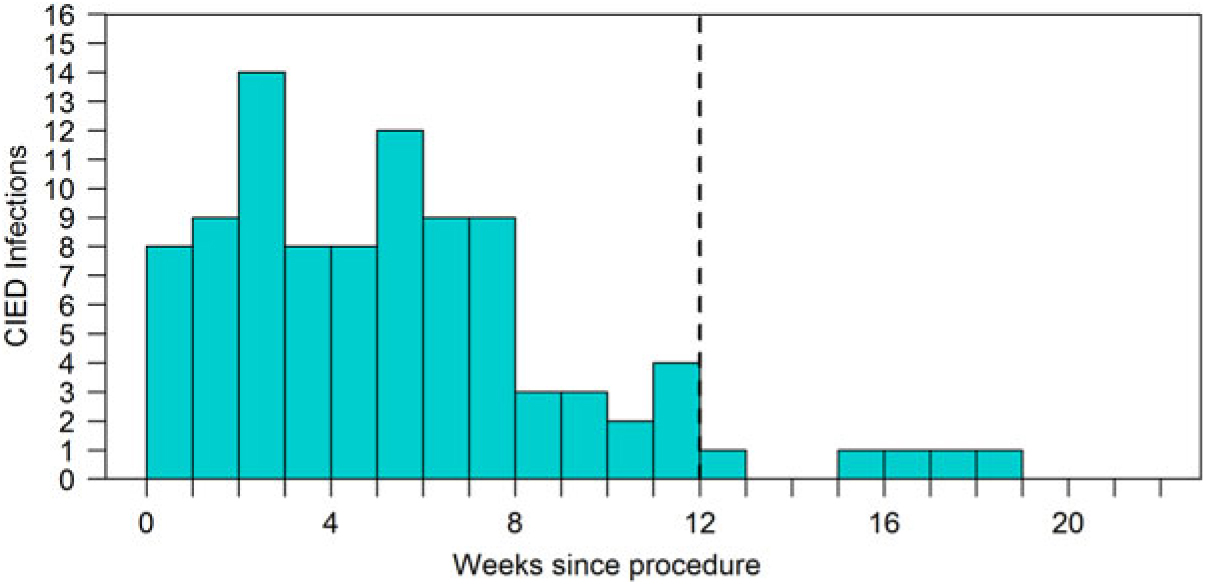
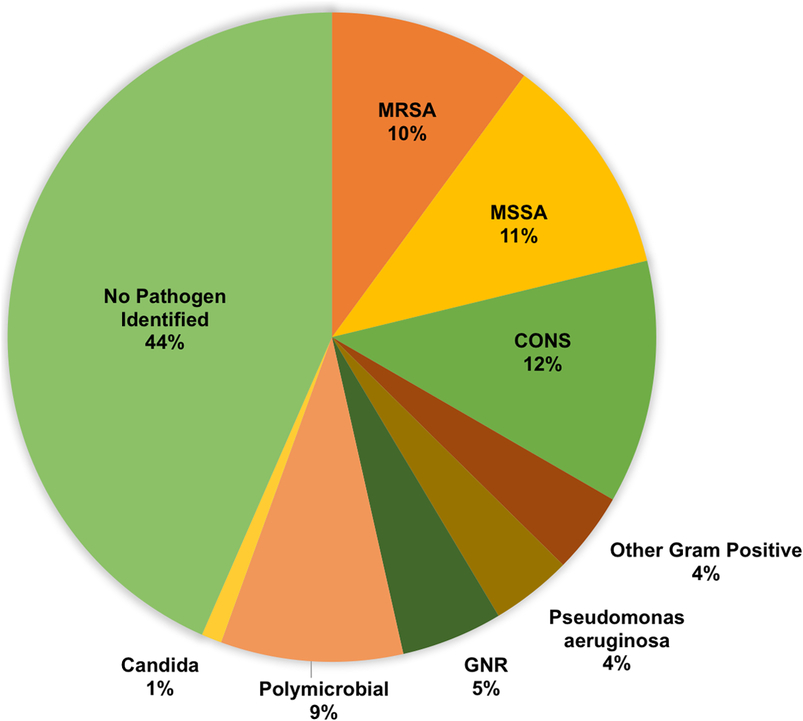
We identified 101 definite, probable, and possible CIED infections (4.5%) among 99 unique patients within 6 months of the device procedures; most occurred within the 90-day National Healthcare Surveillance Network (NHSN) window (Fig. 1). Among these cases, most infections were deep and/or endocarditis (N = 68 of 101) (Table 1b). The plurality of infections (44%) did not have a pathogen identified, but among cases with positive clinical microbiology results, the most common organisms cultured were gram-positive bacteria, particularly Staphylococcus spp (Fig. 2).
Epidemiologic curve of incidence of CIED infections following electrophysiology procedure.
Distribution of microbiology results among patients with CIED infections. Note. MRSA, methicillin-resistant Staphylococcus aureus; MSSA, methicillin-sensitive S. aureus; CONS, coagulase-negative Staphylococcus; GNR, gram-negative rod.
Cohort Characteristics by Procedure

Note. CIED, cardiac implantable electronic device; ICD, implantable cardioverter defibrillator; INR, international normalized ratio.
a Includes generator/battery changes.
b Fever was defined as a temperature ≥ 38°C (100.4°F) within 24 h postprocedure.
Fever (temperature ≥ 38°C [100.4°F]) within 24 hours postprocedure occurred in 27.7% of CIED infection cases on univariate analysis (28 of 101 vs 145 of 1,997; P < .0001). Revision procedures including generator changes (16 of 101 vs 262 of 1,997; P = .0002) and complications (any complication, 38 of 101 vs 249 of 1,997; P < .0001) were higher in the CIED infection group.
Infection prevention interventions included documented preprocedural chlorhexidine skin cleaning in 597 (28.5%) of 2,098 manually reviewed procedures and the use of antimicrobial mesh pocket in 122 procedures (5.8%). Preprocedural antibiotics were used in nearly all manually reviewed procedures (2,034 of 2,098, 96.9%), and administration of antimicrobials after skin closure was common (1,649 of 2,098, 78.6%). Among 2,098 reviewed procedures, 981 patients (46.8%) received postprocedural antibiotics for >24 hours following device placement. The most commonly used prophylactic agents included β-lactam antibiotics (957, 45.6%) and vancomycin (927, 44.2%). Pocket irrigation with an antibiotic solution prior to skin closure was applied in 1,727 (87.4%) of 2,098 procedures.
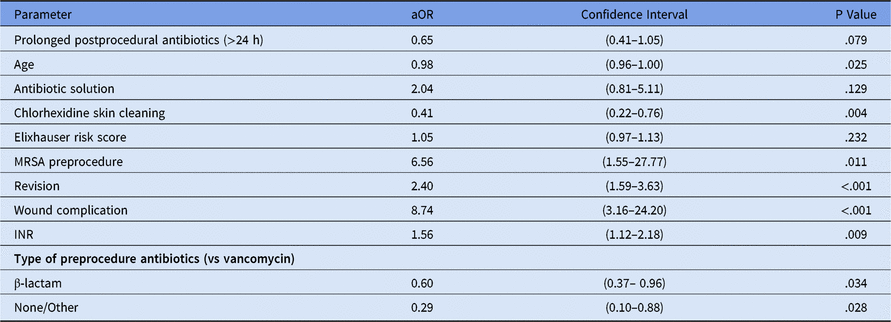
Among infection prevention measures identified, chlorhexidine skin cleaning (adjusted odds ratio (aOR), 0.41; 95% confidence interval [CI], 0.22–0.76) and preprocedure antimicrobial prophylaxis with a β-lactam versus vancomycin (aOR, 0.6; 95% CI, 0.37–0.96) were associated with reduced odds of infection after controlling for other factors (Table 2). Other factors associated with increased odds of infection included preprocedure MRSA status (aOR, 6.56; 95% CI, 1.55–27.77), INR > 1.5 prior to the procedure (aOR, 1.56; 95% CI, 1.12–2.18), revision procedures (aOR, 2.4; 95% CI, 1.12–2.18), and wound complications (aOR, 8.74; 95% CI, 3.16–24.40). Neither antibiotic irrigation of the pocket intraprocedure (aOR, 2.01; 95% CI, 0.81–5.11) nor prolonged postprocedural antibiotics >24 hours (aOR, 0.65; 95% CI, 0.41–1.05) were associated with significantly reduced risk of infection. The results were generally consistent in the sensitivity analysis that included fever rather than antibiotic solution (Supplemental Material Appendix 3 online). Fever within 24 hours postprocedure substantially increased the odds of developing a CIED infection (aOR, 5.04; 95% CI, 3.03–8.39).
Multivariable Logistic Regression of CIED Infection Risk by Patient and Procedural Variables as well as Infection Prevention Measures

Note. CIED, cardiac implantable electronic device; aOR, adjusted odds ratio; INR, international normalized ratio.
Discussion
Using this large, multicenter cohort with detailed manual review, we were able to robustly evaluate the effectiveness of the individual infection prevention strategies commonly used in clinical practice to reduce CIED infections. We found that many of these frequently applied interventions are ineffective and that the simplest strategies (those designed to limit bleeding risk and avoid implantations in patients with active infections) have the strongest potential to improve CIED infection outcomes. We also identified several strategies, such as prolonged use of antimicrobials after skin closure, that are both ineffective and increase harm, such as acute kidney injury and C. difficile infections.Reference Asundi, Stanislawski and Mehta19 Taken together and in combination with other high-quality studies,Reference Krahn, Longtin and Philippon9 these findings can be used to drive the development of evidence-based, cardiac-device–specific infection prevention protocols and guidelines.
Chlorhexidine skin cleaning is an intervention directly adopted from traditional surgical settings; it was also associated with reduced risk of postprocedural CIED infections. Chlorhexidine was likely effective in both settings because skin commensals introduced through incisions constitute the major microbiological culprits in both CIED procedures and conventional surgical settings.Reference Chen, Chen and Chen20, Reference George, Leasure and Horstmanshof21 Similarly, the association we found between preprocedure MRSA status and CIED infection underscores the importance of skin commensals as drivers of procedure-related infections in this setting.
Preincisional antimicrobial prophylaxis is a mainstay of infection prevention in procedural settings. Although available evidence and surgical site infection prevention guidelines support only the use of a single preincisional dose,Reference de Oliveira, Martinelli and Nishioka4, Reference Baddour, Epstein and Erickson13, Reference Lee, Huang and Lin22 continuation of antibiotics for >1 day is common following electrophysiology procedures.Reference Mehrotra, Gupta and Strymish3 Prior studies demonstrate that prolonged post-procedural antibiotics following device placement are considered the standard of care by clinical electrophysiologists.Reference Basil, Lubitz and Noseworthy23 In our cohort, there was no benefit to prolonging postprocedural antibiotics beyond a single preincisional dose; this finding is aligned with other studies in many surgical settings. Reducing postprocedural prescribing is an important stewardship effort with the potential to improve care by reducing preventable harms.Reference Bratzler24, Reference Harbarth, Samore, Lichtenberg and Carmeli25 Thus, implementing standardized protocols and guidelines to limit their use, or instituting a national quality metric, similar to the highly effective Surgical Care Improvement Project INF-3 measure, may be necessary to change this pervasive and potentially harmful practice.Reference Rosenberger, Politano and Sawyer26, Reference Bratzler, Houck and Richards27 Furthermore, identifying nonmodifiable risk factors that may trigger the application of ineffective interventions may be an area of focus for provider feedback. For example, revision procedures and generator changes are oft recognized as risk factors for infection. During unpublished qualitative interviews with electrophysiologists, we found that processes for revisions and generator replacements are more aggressive than prevention strategies applied to initial procedures. For example, during interviews, one provider reported, “Infections are a lot more common with generator changes… that’s why I extended the antibiotics for those patients, but I stop with the new devices.”
Overall, β-lactam antimicrobials appeared to be more effective for preventing CIED infections than vancomycin. Studies in other settings have generally favored β-lactam prophylaxisReference Bratzler, Dellinger and Olsen28 as superior agents for Staphylococcus spp, the most common cause of CIED infections.Reference Bolon, Morlote and Weber29 Another factor impacting vancomycin’s effectiveness as a prophylactic agent in this setting may be resource and environmental constraints that are present in the electrophysiology laboratory but not traditional operating rooms. Several providers reported during unpublished interviews that limited space and beds in the preprocedural area cause administration challenges with vancomycin, due to the need for prolonged infusion times with this antibiotic. These restraints prevent infusion of the antimicrobial prior to incision, thereby potentially limiting the effectiveness of the prophylaxis.
We also found that vancomycin prophylaxis also did not reduce CIED infection risk even after accounting for MRSA status; this finding is of particular importance given the strong association between preprocedure MRSA colonization status and postprocedural CIED infections. Our ability to explore the question of whether vancomycin was superior in the MRSA-colonized population was limited by the small number of patients tested for colonization at the time of their CIED procedure; however, infusion challenges described above would apply to all patients undergoing cardiac device procedures. In addition, supporting our findings is a recently published randomized controlled crossover trial measuring the impact of an antimicrobial prophylaxis bundle on CIED infection risk.Reference Krahn, Longtin and Philippon9 This randomized controlled trial found no additional benefit to adding vancomycin as part of a preincisional prophylaxis bundle.Reference Krahn, Longtin and Philippon9 Our work expands upon this study; we evaluated a broader variety of antibiotic regimens and also teased out the individual impact of different nonantibiotic bundle elements.Reference Krahn, Longtin and Philippon9 An additional factor that must be considered when evaluating the clinical utility of vancomycin as a prophylactic agent is its toxicity: prior work demonstrates a higher rate of acute kidney injury among patients who received vancomycin-based prophylaxis regimens compared to regimens without vancomcyin.Reference Asundi, Stanislawski and Mehta19 Taken together, these studies suggest that the most impactful way to minimize risk among MRSA-colonized patients might be an evidence-based skin antisepsis and decolonization bundle rather than a shift toward more widespread use of vancomycin as the primary agent for preincisional prophylaxis.
Some measures specifically targeted for CIED implantations (eg, the use of topical antibiotic washes for pocket irrigation and antibiotic-impregnated device envelopes) are widely used despite limited evidence supporting their effectiveness. Our analysis suggests that these topical administration strategies do not reduce CIED infections. In fact, we observed a trend toward an increased risk of infection among patients who received antimicrobial washes; this finding is congruent with prior studies evaluating this intervention that have demonstrated a lack of efficacy.Reference Krahn, Longtin and Philippon9, Reference Kang, Liu and Liang30, Reference Lakshmanadoss, Nuanez and Kutinsky31 Potential reasons why this strategy may not reduce infections include the risk of direct tissue toxicity from high doses of antimicrobials, increased risk of wound dehiscence, and the unpredictable pharmacodynamics of the diffusion of antimicrobials away from the device pocket.Reference Edin, Miclau, Lester, Lindsey and Dahners32 Another topical strategy, antimicrobial-impregnated TYRX envelopes, is specifically designed to reduce CIED infections and was approved for use in 2008. These absorbable and nonabsorbable mesh pockets release minocycline and rifampin in the generator pocket and have been associated with reduced infection risk in some observational studies.Reference Ahsan, Saberwal and Lambiase7, Reference Henrikson, Sohail and Acosta33, Reference Koerber, Turagam, Winterfield, Gautam and Gold34 However, in our large, multicenter, national sample, the use of mesh pockets was not associated with reduced infection risk. This observation contrasts with a recently published randomized controlled trial supporting the efficacy of absorbable antibacterial envelopes.Reference Tarakji, Mittal and Kennergren35 Reasons for this difference may include type of pocket evaluated; during the time frame of our study, both absorbable and nonabsorbable pockets may have been used and the newer pockets may have been more clinically effective than older designs. Another important difference is the 365-day infection outcome applied in the randomized controlled trial.
The high rate of wound complications preceding the development of CIED infections suggests that interventions that reduce the risk of wound complications (eg, those aimed at reducing bleeding) may lead to additional risk reduction. Consideration should be given to measures that reduce risk of hematoma, such as procedural checkpointsReference Strymish, Welch and Peralta5 to institute an INR cutoff of <1.5 with consideration to delay procedures if elevated, particularly in high-risk patients. The use of compression vests and compression dressings are other interventions that may be beneficial in patients who cannot safely stop their anticoagulants and/or antiplatelet agents.Reference Turagam, Nagarajan, Bartus, Makkar and Swarup36, Reference Douketis37 In addition, delaying procedures if a patient is febrile preprocedure may be a simple and effective risk reduction strategy.
This study has several limitations. The CART-EP application only captures a subset of voluntarily reporting VA electrophysiology procedures, and the sample may not be representative of all CIED procedures. In addition, the VA population may not be generalizable to non-VA populations, particularly to those with a higher proportion of female patients. Given the reliance on data available in VA records, adverse events occurring outside the VA system may not have been captured. However, prior studies have demonstrated that the majority of patients return to the closed VA healthcare system for subsequent care, somewhat mitigating this limitation.Reference Pindyck, Gupta and Strymish38 In addition, we conducted a detailed manual review of scanned-in paper records including of outside facility records, so the vast majority of non-VA care was captured and reviewed. Although our cohort was strengthened by manual review of all patients, infection prevention efforts that were not documented would not have been measured; this would tend to bias our findings toward the null and was most likely to impact variables typically not captured in any medical record, such as type of skin antiseptic and receipt of shaving or clipping prior to the procedure. Furthermore, some variables may have only been intermittently documented (eg, chlorhexidine use), therefore underestimating the true scope of practice and the clinical effectiveness of this intervention.
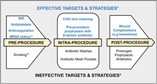
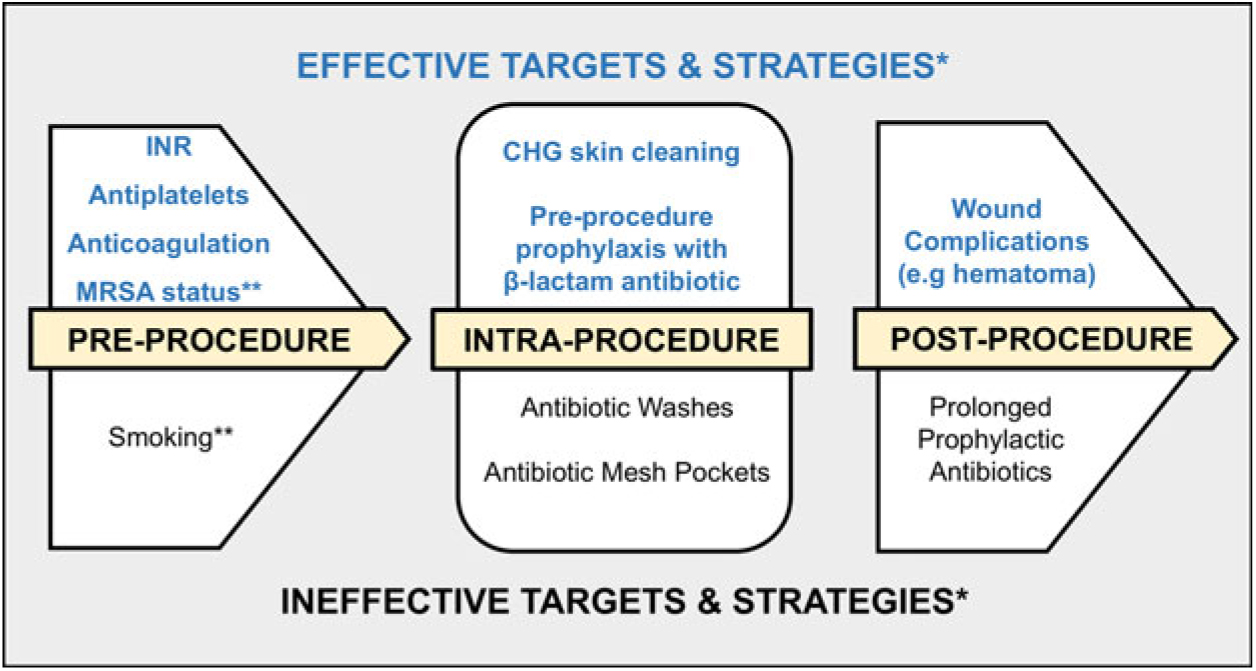
Straightforward and easy-to-implement interventions should form the basis of standardized protocols and bundles (Fig. 3) to improve infection prevention in the electrophysiology laboratory. Although a variety of activities are commonly used in clinical practice, our findings highlight the principle that “less is more.”
Proposed Infection prevention bundle for CIED infections. *Nonmodifiable factors (eg, age, comorbidities, device type, and lead dislodgement) were omitted from this schematic because they are not often included in infection prevention initiatives. **These variables are potentially modifiable but may be difficult to target in the immediate preprocedural setting.
Supplemental material
To view supplementary material for this article, please visit https://doi.org/10.1017/ice.2019.127
Acknowledgments
This research would not have been possible without the help and support of the VA Clinical Assessment, Reporting, and Tracking Program.
Financial support
The work was supported by American Heart Association Institute for Precision Cardiovascular Medicine Award (grant no. 17IG33630052). W.B.E. is supported by a Veterans Integrated Service Network (VISN)-1 Career Development Award.
Conflicts of interest
A.A. has been an investigator for studies funded by Gilead Sciences since the completion of this study. P.Z. has received speaking honoraria from Abbott Laboratories. W.B.E. provides consulting services to DLA Piper. All other authors have no conflicts to disclose.