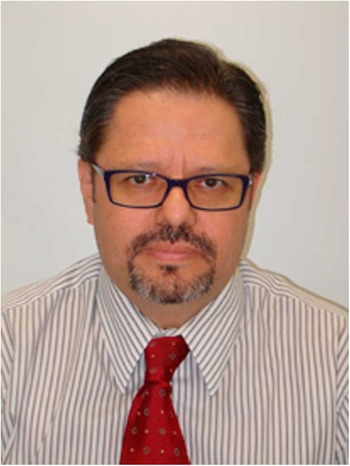
Biography

Humberto Nicolini obtained his medical degree from the Universidad Nacional Autonoma of México (UNAM), School of Medicine. He went into his residency in psychiatry at the Spanish Hospital in Mexico City, and also became a clinical research associate at UpJohn Labs. Dr. Nicolini completed his postdoctoral training at the Neuropsychiatric Institute in the University of California Los Angeles (UCLA) Medical Genetics Training fellowship, under the mentorship of M. Anne Spence, PhD. In 1991, he returned to Mexico and started the first psychiatric molecular genetics research lab in Latino-America. More recently, he moved to the Mexico′s City Autonomous University to the center of Genomics to begin collaboration with the Positron Emission Tomography (PET) Unit at the UNAM, using functional neuroimaging and genetics as research tools. He founded the Mexican Colleague of Neuropsychopharmacology, as well as a clinical site to conduct psychopharmacology trials (Grupo Médico Carracci). Dr. Nicolini is also a member of several scientific societies. He was a member of the steering committee of the National Hispanic Science Network (NHSN)-National Institute of Drug Abuse (NIDA) and is a treasurer and secretary of the Mexican College of Neurospychopharmacology, Mexican representative of the Latino-American Colleague of Neuropsychopharmacology, current medical president of the Mexican Association for Obsessive Compulsive Disorder (OCD), and member and part of the board of directors of the International College of Obsessive Compulsive Spectrum Disorders (ICOCS).
A Personal Perspective of the Development of Neuropsychopharmacology in Latin America
The development of neuropsychopharmacology in Latin America (LA) has been an area of interesting developments. LA historically has been greatly influenced by psychoanalysis, but has been left somewhat behind regarding psychopharmacological treatments, which are included in the concept of “biological psychiatry.” In some places in LA, psychopharmacology was not an area of primary interest in the teaching of psychiatry up until the 1980s. From that decade, thanks to the significant development of neuroscience and the emerging interest of the pharmaceutical industry to become involved in the organization of educational activities within psychiatric associations, a gradual but steady growth in the interest among psychiatrists in learning more about psychopharmacology has been shown. This tendency reached perhaps a climax in the 1990s with the creation of several colleges of neuropsychopharmacology in different countries such as Mexico, Colombia, Ecuador, Argentina, Chile, Venezuela, Brazil, and Peru, among those with the highest number of affiliate partners. Several of them joined the International College of Neuropsychopharmacology (CINP).
Because of this development, regional meetings were held and conferences devoted to psychopharmacology in the following years. Currently, there is a Latin American College of Neuropsychopharmacology Congress, which will be held in Ecuador in 2013 and which brings attendees from more than 12 countries in the region.
In more recent years, the new millennium also saw the development of a growing number of private research sites for psychopharmacology where industry sponsor clinical trials can be done. In general, these sites are not affiliated with government or academic institutions. This phenomenon was due to the fact that many government institutions in LA could not properly follow good clinical practice guidelines (GPC), due to a lack of internal regulation and excessive bureaucracy. Therefore, these sites were more efficient in terms of good adherence to the GPC and in meeting the goals of patient recruitment. Also, these clinical trial sites generally manage their financial resources more responsibly by using their economic resources to actually conduct the research, paying salaries to researchers involved in conducting the trials, and developing independent ethics committees (IRBs) that adhere to international standards. This has helped to position the region as important in the development of research and publications in the field of psychopharmacology.Reference Fiestas, Gallo and Poletti1, Reference Mari, Patel and Kieling2
It is worth noting some important contributions to psychopharmacology from the clinimetric validation of many scales useful for assessing psychopathology and evaluating new treatments and responses to medication in different fields of mental illness such as psychosis, mood disorders, obsessive compulsive disorder, suicide, etc., both in children and adults.Reference Minaya, Fresán, Cortes-Lopez, Nanni and Ugalde3–Reference Ulloa, de la Peña and Higuera11
I will try to describe a sample of some of the findings that have emerged from LA. It is obvious that I will only be able to mention a few examples; however I hope to give a snapshot of what the LA region is producing. A sample follows:
• Finding new profiles of response for old drugs, such as testing old antipsychotics to see if they have “atypical” propertiesReference Apiquian, Fresan and Ulloa12
• Documenting the clinical efficacy of psychotropic drugs in different mental disorders,Reference Illescas-Rico, Páez-Agraz and Arreola-Chávez13, Reference Nicolini, Bakish and Duenas14 drug combinations that could be more effective,Reference De la Fuente, Berlanga and León-Andrade15 or to demonstrate that nicotine has antidepressant propertiesReference Salín-Pascual, Rosas, Jimenez-Genchi, Rivera-Meza and Delgado-Parra16
• Describing patterns of use of typical antipsychotics that are not used anymore in developed countriesReference Apiquian, Fresán, de la Fuente-Sandoval, Ulloa and Nicolini17
• Studies on the neurobiology of estrogen in depression, which has helped find new populations that may have better response to antidepressantsReference Estrada-Camarena, Fernández-Guasti and López-Rubalcava18
• The study of psychiatric treatment naive populations or first episode of psychosis in LAReference Apiquian, Córdoba and Louzã19
• Differences in response between children and adultsReference Ulloa, Nicolini, Avila and Fernández-Guasti20
• Important contributions on the effects of antidepressants on sleepReference Salín-Pascual, Herrera-Estrella, Galicia-Polo, Rosas and Brunner21–Reference Salin-Pascual and Moro-Lopez23
Unfortunately, with the withdrawal of the pharmaceutical industry within psychiatry in recent years, the number of educational and research activities in psychopharmacology has declined slightly.
However, a tendency remains that began during the last 25 years, which has led to the constant generation of a group of well trained professionals who are very much interested in the topic. This trend is still active,Reference Mari, Patel, Kieling, Razzouk, Tyrer and Herrman24 despite the economic problems of the region, and fortunately for psychiatry, alternative strategies are being developed to achieve the financial support for the educational and research activities in this field in Latin America.