

Students exhibiting behaviours of concern are at greater risk of being excluded from school (Victorian Ombudsman, 2017), are less likely to receive positive behaviour support (NSW Ombudsman, 2017), and are more likely to experience restrictive interventions in response to their behaviour (i.e., restraint or seclusion; Victorian Equal Opportunities and Human Rights Commission, 2012). As identified by Finkelstein, Sharma, and Furlonger (Reference Finkelstein, Sharma and Furlonger2021), positive approaches that meet the social, emotional, and behavioural needs of all students are critical to effective inclusive education. Within Australia, multiple recent reports have called for educators to consistently engage in positive and proactive approaches to behaviour support (Hepburn & Beamish, Reference Hepburn and Beamish2019). However, the task of successfully and sustainably implementing these practices remains a challenge. McIntosh, Horner, and Sugai (Reference McIntosh, Horner, Sugai, Sailor, Dunlap, Sugai and Horner2009) suggested that teacher implementation of positive and proactive behaviour support practices is more likely to sustain if these same teachers observe improved student behavioural outcomes resulting from their efforts. The current study seeks to identify the facilitators and barriers teachers experience as they work to improve the behavioural outcomes of their students in schools currently implementing school-wide positive behavioural interventions and supports (SWPBIS).
School-Wide Positive Behavioural Interventions and Supports
One evidence-based, positive, and proactive approach to address the social and behavioural needs of all students is SWPBIS. SWPBIS is a multi-tiered system of social and behavioural support with philosophical roots in behavioural science (i.e., applied behaviour analysis; Sugai, Simonsen, Freeman, & La Salle, Reference Sugai, Simonsen, Freeman and La Salle2016). Rather than being considered a specific intervention, SWPBIS utilises a tiered structure to guide staff working in schools to select and adopt evidence-based interventions that match the intensity of students’ needs (Sugai & Horner, Reference Sugai and Horner2020). A prevention focus at Tier 1 ensures that classroom and schoolyard routines are established, behavioural expectations are defined and taught to all students, and students’ use of prosocial behaviours is reinforced (Myers, Simonsen, & Freeman, Reference Myers, Simonsen and Freeman2020; Simonsen & Sugai, Reference Simonsen, Sugai, Little and Akin-Little2019). Interventions and supports at Tier 2 focus on small groups of students who have not responded to Tier 1 supports, and increase student access to explicit social and behavioural instruction, prompts, and structured access to reinforcement for engaging in prosocial behaviour (Simonsen & Sugai, Reference Simonsen, Sugai, Little and Akin-Little2019). Interventions at Tier 3 focus on delivering individualised intervention to students who are identified through processes of data collection as not responding to preventive behavioural supports (Simonsen & Sugai, Reference Simonsen, Sugai, Little and Akin-Little2019). The interventions at Tiers 2 and 3 are derived from more detailed assessments of individual student need, including assessments of the function of the student’s behaviour (Simonsen & Sugai, Reference Simonsen, Sugai, Little and Akin-Little2019). A large body of research evidence demonstrates positive impacts of SWPBIS on social, emotional, organisational, behavioural, and academic outcomes in schools, across all year levels and settings (Sugai & Horner, Reference Sugai and Horner2020). Thus far, very limited research has been published that explores the implementation, outcomes, and experiences of key stakeholders relating to SWPBIS implementation in Australian schools.
Ensuring Improved Student Behavioural Outcomes
As a result of the proven efficacy and effectiveness of SWPBIS to improve the behavioural outcomes for students, schools across multiple Australian states, including Victoria, have adopted the framework (Poed & Whitefield, Reference Poed and Whitefield2020). Ensuring that school change initiatives are sustained in schools and continue to deliver positive outcomes for students is a considerable challenge (McIntosh et al., Reference McIntosh, Horner, Sugai, Sailor, Dunlap, Sugai and Horner2009). When considering this challenge in relation to SWPBIS, McIntosh et al. (Reference McIntosh, Horner, Sugai, Sailor, Dunlap, Sugai and Horner2009) suggest that teachers’ efforts to engage in SWPBIS practices will be reinforced by them achieving and observing positive changes to targeted student behavioural outcomes. If teachers do not see improved student behavioural outcomes from their efforts, the long-term sustainability of teacher use of SWPBIS may be jeopardised. The challenges of sustaining implementation of SWPBIS necessitates an understanding of teachers’ perceptions of the barriers and facilitators to improving their students’ behavioural outcomes.
Teachers’ perceptions of the facilitators and barriers to improving student outcomes within schools currently implementing SWPBIS in Australia have, as yet, remained unexamined. Factors influencing teachers’ ability to engage in effective behaviour support have been identified within the Australian context. For example, teachers consistently report being underprepared to manage and support student behaviour (Hepburn, Reference Hepburn, Bryer and Beamish2019; O’Neill & Stephenson, Reference O’Neill and Stephenson2012). Teachers also express that managing student behaviours of concern brings about considerable stress, exacerbated by already unmanageable workloads (Heffernan, Longmuir, Bright, & Kim, Reference Heffernan, Longmuir, Bright and Kim2019). Further, teachers indicate that they often work in contexts that do not provide guidance on how to successfully manage student behaviour, which can lead to the use of reactive and punitive approaches to student management (Hepburn, Reference Hepburn, Bryer and Beamish2019). Although these factors may limit the ability of teachers to improve the behavioural outcomes of their students and engage in positive and proactive approaches to behaviour support, limited exploration has been undertaken of teachers’ perceptions of these factors within schools already implementing the SWPBIS framework.
The Present Study
The purpose of the current study was to identify the facilitators and barriers Victorian teachers face as they work to improve the behavioural outcomes of their students within schools currently implementing the SWPBIS framework. The significant increase in resourcing allocated to SWPBIS implementation efforts across Australia warrants further investigation into variables supporting effective and sustained implementation (Poed & Whitefield, Reference Poed and Whitefield2020). Developing a preliminary understanding of these facilitators and barriers is an important step to improving the SWPBIS implementation supports provided to teachers to ensure improved student behavioural outcomes can be achieved and sustained within their school. In doing so, the current study addresses gaps in the published research examining the experiences of Australian teachers working in schools currently implementing SWPBIS.
Method
Participants and Settings
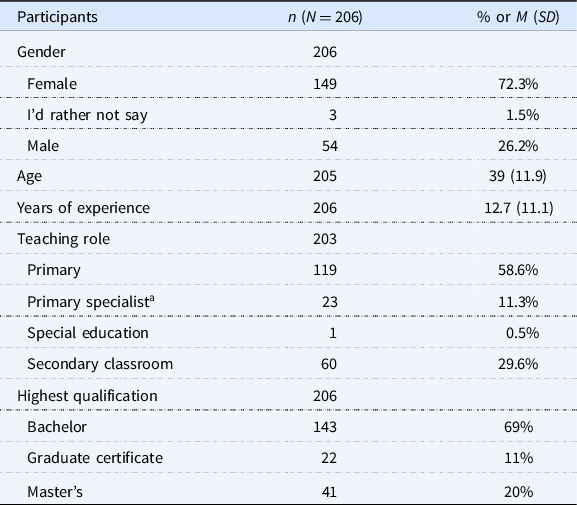
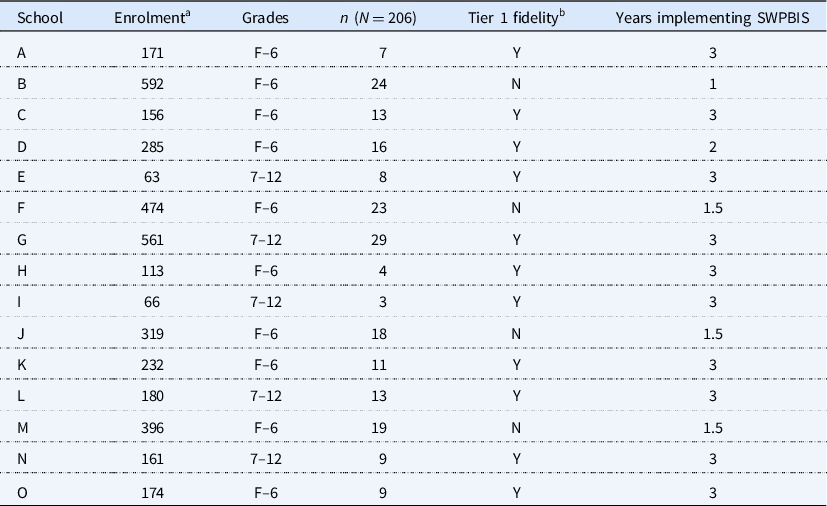
A total of 206 Victorian teachers working in primary and secondary schools currently implementing SWPBIS responded to two open-ended questions. Recruitment of participants from schools that have experience in implementing SWPBIS was critical to this study, as we wanted to conduct a preliminary study of the perception of teachers who work in contexts implementing the SWPBIS framework. As such, purposive sampling was used (described in more detail below), and the independent school system and region of the Department of Education and Training (Victoria) were selected due to their experiences implementing SWPBIS. Respondents worked in both independent and public schools. Almost two thirds of participants were female (see Table 1). Average years of teaching experience was 13. More than half the participants worked in a primary school setting, and an additional 11% reported working in a primary specialist role. Thirty percent of participants worked in a secondary school setting. A single participant identified that they taught in a special education role within a mainstream school setting. Table 2 provides an overview of the school settings. Teachers from 15 different schools participated. Of these 15 schools, 10 were primary schools (Years Foundation–6) and the remainder were secondary schools (Years 7–12). Total student enrolment per school ranged from 63 to 592. The total number of participants per school ranged from three to 29. Extant Tier 1 fidelity data were provided by schools and were assessed by external coaches trained in using the Tiered Fidelity Inventory (TFI; Algozzine et al., Reference Algozzine, Barrett, Eber, George, Horner, Lewis and Sugai2019). Seventy-three percent of participating schools (n = 11) were observed to be implementing Tier 1 SWPBIS with fidelity (defined as ≥ 70%, as measured by the TFI). Duration of implementation ranged from 1 to 3 years, with an average implementation duration of 2.5 years.
Summary of Participant Demographic Information

a Primary specialist including teaching specialist subjects such as music, languages other than English, or art.
Summary of Participant Settings

Note. F = foundation; SWPBIS = school-wide positive behavioural interventions and supports.
a Enrolment data for independent schools was verified from Victorian Government student census documents; enrolment data from public schools was obtained from a Department of Education and Training (DET) summary statistics document.
b Tier 1 fidelity was measured using the Tiered Fidelity Inventory (Algozzine et al., Reference Algozzine, Barrett, Eber, George, Horner, Lewis and Sugai2019).
Measures
The current data were collected by asking participants to respond to a 10-part mixed methods survey questionnaire, the Teachers’ Beliefs and Experiences of Behaviour Support survey (TBEBS). The TBEBS is a plain-language author-created survey designed to measure Australian teachers’ perceptions of features identified as having a significant impact on SWPBIS implementation and sustainability. The quantitative components of the TBEBS consisted of eight subscales that used closed-ended questions to measure teachers’ perceptions of preparation (in-service and preservice) and confidence to engage in behaviour support, as well as resourcing for behaviour support; leadership for behaviour support; behaviour support team structures and function; behavioural data collection, collation, and use; and teachers’ beliefs about the basis for student behaviour. In addition, the TBEBS included two open-ended questions that allowed teachers to describe the types of things that helped or hindered their efforts to support improved behavioural outcomes for their students. Teachers responded to the following two open-ended questions by entering text in a free-text field as part of their anonymous online response. Because the purpose of the current study was to conduct a preliminary qualitative thematic analysis of the facilitators and barriers teachers face to improving student behavioural outcomes in schools currently implementing SWPBIS, data are only reported for the following open-ended survey questions:
-
1. What would you find most helpful to assist you in supporting improved student behaviour in your role?
-
2. What are the most significant barriers you face when supporting improved student behaviour in your role?
Procedure
Recruitment
Two independent convenience samples of participants were recruited. Prior to engaging in participant recruitment, formal ethics approval was obtained from Monash University Human Research Ethics Committee (Project 13362). Formal ethics approval was also obtained from the Department of Education and Training, Victoria, and the administrative office of an independent school system in Victoria.
Independent school participants were recruited through the statewide SWPBIS lead implementer of an independent school system in Victoria. The first author contacted the lead implementer to describe the purpose and aims of the study. The lead implementer nominated schools currently implementing SWPBIS. The first author then met directly with the principals of the nominated schools to explain the purpose and voluntary nature of participation in the current study. Principals then provided written informed consent to allow recruitment to occur within their schools.
Public school participants were recruited through a SWPBIS network within a single region of Victoria. The aims and methods of this research were presented within this network, and interested principals (with experience implementing SWPBIS) were provided with contact details to express interest in participating in the study. Follow-up contact was made and written informed consent from participating principals was obtained.
Survey administration
The first author presented an overview of this study directly to teachers in all participating schools. This occurred during individual staff meetings, with time allocated specifically for survey completion. The survey was administered through the Qualtrics XM online survey platform (Qualtrics, 2020). The anonymous survey link was forwarded by email to all teaching staff by the office staff of each school. An explanatory statement was attached to the email and voluntary participation was emphasised throughout the recruitment and survey administration process. After reading a summary statement, participants provided informed implied consent by clicking ‘ok’ to participate in the survey.
Data extraction
To extract the key themes from responses, a process of inductive thematic coding was undertaken (Braun & Clarke, Reference Braun and Clarke2006). This methodology was selected for this study as it allowed for categorisation and exploration of all emergent themes expressed by respondents. Furthermore, no suitable a priori codes were identified.
For the purposes of this study, facilitators were considered the presence or absence of specific practices or contextual variables that support improved student behavioural outcomes. Barriers were considered the presence or absence of specific practices or contextual variables that impeded the ability of staff to achieve improved student behavioural outcomes. The first question asked respondents to describe what would assist them in supporting improved student behaviour; responses were coded as facilitators. The second question asked participants to describe the barriers they faced when supporting improved student behaviour in their role within schools implementing SWPBIS; these responses were coded as barriers.
Inductive coding began with the first author reading and re-reading all participants’ responses and identifying subvariables based on sematic themes (i.e., the presence of keywords), as well as latent themes (i.e., underlying meaning of responses) evident in each response (Braun & Clarke, Reference Braun and Clarke2006). The first author then developed an initial coding frame with definitions of all individual codes created as a result of the first reading. A total of 48 initial codes were identified and defined. After analysis, these were consolidated into the broader themes presented in the results of the current study.
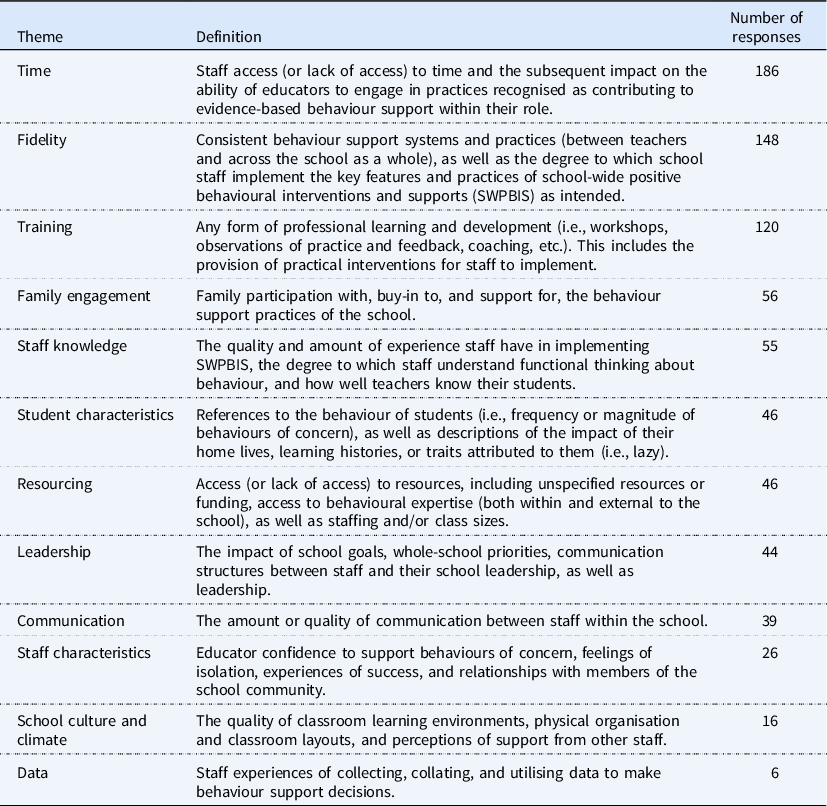
An independent reviewer assessed the suitability of the final coding frame and agreement was established (described below). Each participant’s response was then re-read and coded for subvariables using NVivo 12 Plus (QSR International, Reference International2018). Following this process, the results were compiled, compared, and tabulated. After all responses were read, coded for subvariables, and compiled, the first author combined these fine-grained subvariables into the 12 broader themes presented in the Results (see Table 3 for theme definitions). These consolidated broader themes were independently reviewed by the independent coder and, following a consensus meeting, agreement was established.
Theme Definitions and Frequency of Participant Responses by Theme

Interrater reliability
Interrater reliability was calculated at three points during the data extraction process: after the development of initial codes for subvariables, after the coding of participants’ responses, and after subvariables were consolidated into the broader themes. The first step involved an independent reviewer reading all participant responses to the open-ended questions and the initial coding frame to assess the suitability of the codes and operational definitions for subvariables. Interrater reliability was calculated by dividing the number of agreements by the number of agreements plus disagreements. Point-to-point agreement was initially 91% on the suitability of the initial codes, with the independent reviewer suggesting five additional codes. During a consensus meeting, 100% agreement was established on the codes and their operational definitions.
A second interrater reliability check was performed on the coding of participant responses using the subvariable coding frame. A Cohen’s kappa coefficient of .83 was calculated on the first author and independent reviewers’ coding on all responses, suggesting a high level of agreement (McHugh, Reference McHugh2012). A consensus meeting was convened to resolve disagreements, with final agreement established at 100%.
Once subvariables were consolidated into the broader themes, the independent coder checked these for conceptual congruence. One wording change to a subvariable title was suggested. There was 100% agreement with the categorisation of the themes.
Results
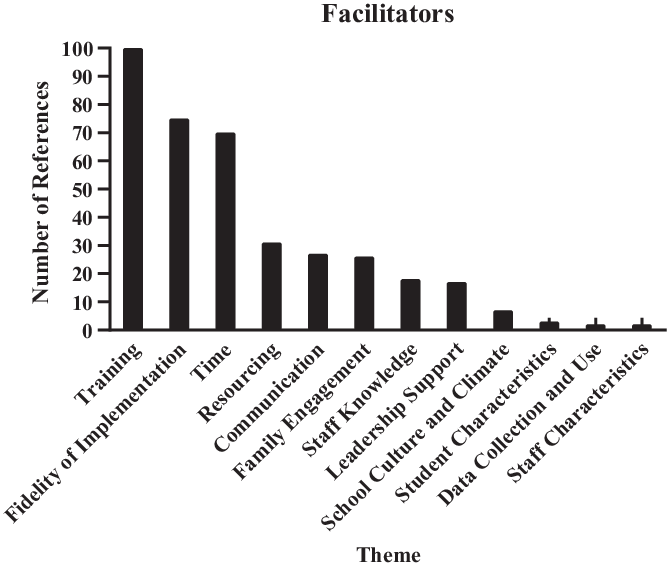
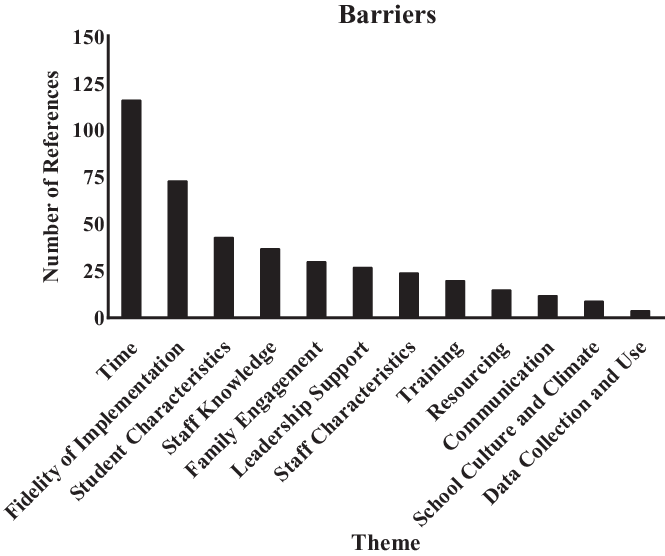
The data analysis of open-ended questions revealed 12 specific facilitator and barrier themes. An attempt was made to count the frequency of various subthemes. We understand that in a truly qualitative study, frequency of subthemes may have limited meaning. However, given the limited research conducted on the perspectives of teachers working in schools currently implementing SWPBIS, we believed that this would provide preliminary data to inform about the relative importance respondents placed on different aspects of SWPBIS implementation. As can be seen in Table 3, teachers frequently identified that time, fidelity, training, and knowledge most significantly affected their ability to improve students’ behavioural outcomes. This was followed by engagement with families, the characteristics of students themselves, communication within the school, support from leadership, resourcing, characteristics of staff, and the school climate and culture. Data collection and use was the least reported variable, with only six references. More statements related to barriers to improving student behaviour (n = 410) than those that would facilitate improved student behavioural outcomes (n = 378). In addition, differences were identified in the frequency with which teachers identified each theme as either a facilitator or barrier (see Figures 1 and 2).
Frequency of Facilitators to Improved Student Behavioural Outcomes by Theme.

Frequency of Barriers to Improved Student Behavioural Outcomes by Theme.

While analysing the facilitator and barrier theme statements, it became apparent that staff described each theme as functioning as either a facilitator or a barrier, depending on the presence or absence of the theme described. As such, the results are reported as consolidated themes. For example, time as a theme was identified most frequently across all statements (facilitators and barriers). Staff reported that the presence of sufficient time to plan for and follow up with student behaviours of concern facilitated their ability to improve their students’ outcomes. Conversely, an absence of this time was perceived as a barrier. Given that a presence of time was identified as a facilitator and an absence of time was identified as a barrier, time was discussed as a single theme.
Themes
Training
Teachers most frequently reported training as facilitating improved student behavioural outcomes. Of the 100 references to training as a facilitator, 38 did not provide specific information about the nature of training that they found useful or desired. Statements relevant to this theme included ‘further training’, ‘PDs’, and ‘professional development’. Other respondents indicated that they desired ‘practical’ interventions, ‘toolkits’, or a ‘bank of strategies’ they could use when dealing with student problem behaviour (n = 20). Others specifically identified a need for training in SWPBIS interventions (n = 9). Staff also reported wanting to observe other teachers’ practice or have staff observe them (n = 12), as well as desiring feedback on their own practice (n = 8). Ongoing forms of training and support such as coaching and mentoring were reported as facilitators by 13 respondents.
Although less frequently reported, staff indicated that an absence of training or a need for training (n = 20) was a barrier. Teachers most frequently identified a need for training in SWPBIS practices (n = 7), as well as a desire for practical interventions (n = 5). Others did not specify what training was required (n = 8).
Time
Time was frequently identified to facilitate improved student behavioural outcomes (n = 70). Although 27 references did not specifically define how staff perceived time to facilitate their work with students, with statements like ‘time!!’ or ‘more time’, 18 respondents did specifically describe how time can be a facilitator. For example, one teacher stated, ‘more time so that I could give the thought and planning required to support students with problem behaviour’. Additionally, time to address or follow up student behaviour (n = 10) and time to meet with other staff about student behaviour (n = 10) were noted.
Time was also the most frequently reported barrier (n = 117). A large number of respondents made statements that identified time as a barrier without providing any additional detail (n = 53). Others reported that a lack of time to follow up with students was a barrier to improving student behaviour (n = 37). Respondents stated that, ‘time constraints may mean that the behaviour is not addressed as thoroughly as is ideal’ and ‘… dealing with issues outside of class time consumes your own personal time which is not sustainable’. Lack of time to follow up with student behaviour was also noted in relation to desired behaviour, with one teacher saying, ‘Making time for students to collect their reward’ was a barrier. Respondents also observed that they were ‘… missing the kids who always do the right things in their class’ (n = 10). Further, teachers noted that not having the requisite time to plan for student behaviour (n = 7) or meet with other staff regarding student behaviour (n = 3) were barriers.
Fidelity
Consistency of implementation was identified as a facilitator in 75 responses. Staff reported that ‘consistency throughout the school’ and a ‘… whole school approach so that all teachers are on the same page’ were necessary for improving student behavioural outcomes. In addition, staff perceived key SWPBIS implementation components such as the establishment of whole-school behaviour systems (n = 13), the use or creation of consistent school-wide documentation (i.e., policies and behaviour support plan templates; n = 8), the effective teaching of replacement behaviours (n = 5), and effective use of the reinforcement system (n = 6) as facilitators. Teachers also indicated that ‘having a good team that help with individual problems is really supportive’ and ‘working with a team of people to figure out how best to help’ were facilitators.
Staff reported that a lack of consistency of implementation was a barrier. This was considered broadly (n = 19), as well as relating to consistent implementation of key SWPBIS practices. Specifically, staff noted challenges in implementing the reinforcement system (n = 19). With regard to the reinforcement system, some statements related to practical concerns, such as ‘remembering to fill tokens’ and ‘tokens running out’. Others were more philosophical, such as not wanting to be ‘rewarding students for behaviours they should already be doing e.g.: listening attentively, showing respect’. Staff also indicated that they perceived a lack of consistent consequences to be a barrier to improved outcomes for their students (n = 13). Staff noted that ‘there are no consequences in place so my word of warning carries no weight’ and that there needs to be ‘… follow through on consequences (needs bite)’.
Resourcing
Resourcing was coded as a facilitator 31 times. Within-school expertise in behaviour (n = 9) and within-school supports for students (n = 7) were identified as resources that support improved student behaviour. Respondents also identified external behavioural expertise as a facilitator (n = 6), as illustrated by comments such as ‘experts’, ‘easy access to experts’, or ‘professional help on hand’. An absence of these supports was identified as a barrier by six respondents. Teachers also reported that smaller class size or lower teaching loads would facilitate improved student behaviour (e.g., ‘take a class off me so I can deal with an issue’). In addition, five respondents explicitly identified class sizes as a barrier to improving student behavioural outcomes.
Staff with the right knowledge
Staff reported that knowledge was critical to improving student behavioural outcomes. In particular, respondents indicated that understanding behaviour function (n = 7) facilitated improved behaviour (e.g., ‘… staff thinking about the purpose of behaviours’). Teachers also stated that improved relationships between teachers and their students would facilitate improved behaviour (n = 3).
A lack of staff knowledge was coded in 37 responses. Nearly half of these (n = 16) were broad statements about a lack of knowledge being a barrier. Nine respondents reported that a lack of knowledge of their students, or student-specific needs, was a barrier to improving student behaviour, and eight indicated a need for functional thinking. For example, one teacher indicated a need for a ‘… comprehensive understanding of what is happening for the student’. Staff also reported that a lack of experience in implementing SWPBIS (n = 4) was a barrier to improving behavioural outcomes.
Teacher experiences of student characteristics
Respondents frequently reported that they perceived the behaviour of their students or specific characteristics of their students as barriers to improved behavioural outcomes (n = 43). Specifically, 25 of the barrier responses related to staff experiences of direct engagement with student behaviours of concern (e.g., ‘when dealing with a student’s behaviour, other problem behaviour occurs by other students’). The frequency and nature of student behaviour was also reported as a barrier. One respondent simply stated, ‘the number of behaviours, number of students who display these behaviours’. Respondents also reported that their perception of specific characteristics of students, such as ‘an unwilling attitude from the student to change’, or student denial ‘that they are a problem and need assistance’ was a barrier to improved behavioural outcomes (n = 18). Other staff referred to the impact of students’ backgrounds, home lives, and past experiences.
Family engagement
Family engagement with the school was described as a facilitator by 26 respondents. Respondents indicated that they desired the support of families and carers. Many of these statements lacked detail such as ‘family’, or ‘supportive parents’, or ‘better support from parents’. Others indicated that ‘less defending from parents when students are disciplined’, ‘… respect …’, and parents to be ‘… on your side to see the problem and help’ would facilitate improved behavioural outcomes. A lack of family engagement was coded as a barrier by 30 respondents. Teachers reported ‘… lack of support/cooperation from parents’, ‘battling with parents’, and a ‘lack of parent involvement’ was a barrier.
Other themes
Other themes were less frequently reported as being barriers or facilitators to improved student behavioural outcomes. Leadership support was reported by 17 respondents as functioning as a facilitator, whereas a lack of leadership support was more frequently identified as a barrier (n = 30). Staff also identified that their own characteristics (i.e., confidence to manage student behaviour, or feelings of isolation) were a barrier to implementation (n = 24). In contrast, two respondents indicated that their characteristics enabled them to improve the behavioural outcomes of their students. In addition, communication between staff was identified as a facilitator (n = 27) and a lack of communication as a barrier (n = 12). Nine participants described the hindering effect of their school culture and climate, whereas seven participants described how addressing this helped them in their work. The least frequently identified facilitator and barrier was data collection and use (n = 2 and n = 4 respectively).
Discussion
To this point, no published studies have examined teacher perceptions of the facilitators and barriers teachers face in their efforts to improve student behaviour within schools currently implementing SWPBIS. The aim of the current study was to engage in a preliminary investigation of these facilitators and barriers for teachers working in Victorian schools implementing SWPBIS. Overall, time was the most frequently reported theme. Teachers identified training as a facilitator more often than any other theme, and time constraints were most consistently noted as a barrier. Implementation fidelity was the second most frequently noted facilitator or barrier. In what follows, we will explore the implications of the findings as they relate to improving behavioural outcomes for students within schools implementing SWPBIS. Implications and future research directions will also be discussed.
Importance of Effective Training
Adequate training was identified as the most commonly reported facilitator for improving student behavioural outcomes. These findings contribute to an existing body of research that highlights Australian teachers’ feelings of poor preparation to engage in effective behaviour support (e.g., O’Neill & Stephenson, Reference O’Neill and Stephenson2012) and reviews recognising the broader need for additional teacher training in positive behaviour support (Deloitte Access Economics, 2017; NSW Ombudsman, 2017). The importance of training was further emphasised in the current study, with participants reporting that their lack of knowledge also functioned as a barrier to their ability to improve the behavioural outcomes of their students. Staff cannot effectively implement interventions they do not understand.
Although some participants indicated a desire to engage in models of training that have been shown to be highly effective, such as ongoing coaching, technical assistance, modelling, observation, and performance feedback (Yeung et al., Reference Yeung, Craven, Mooney, Tracey, Barker, Power and Lewis2016), the majority of teachers indicated a preference for a package of interventions or bank of strategies. This may reflect a lack of confidence, or knowledge, or the lack of time that they report in the current study. However, meeting staff requests for packaged interventions or behaviour toolkits may, in itself, bring about future challenges. As identified by Andreou, McIntosh, Ross, and Kahn (Reference Andreou, McIntosh, Ross and Kahn2015), sustaining implementation of SWPBIS with fidelity requires interventions to be contextually relevant and adapted to each dynamic and evolving school context. Freeman, Sugai, Simonsen, and Everett (Reference Freeman, Sugai, Simonsen and Everett2017) describe the impact of effective coaching and technical assistance as extending beyond simply ensuring that teachers acquire the necessary skills in a training environment. Rather, teachers need to develop fluency in using their new skills, maintain these skills overtime without the need for ongoing prompting, generalise the skills to other environments, and adapt them to meet new conditions and response requirements (Freeman et al., Reference Freeman, Sugai, Simonsen and Everett2017).
In addition, staff indicated that a functional understanding of behaviour was something they both desired and lacked. This may be indicative of a broader lack of understanding of behavioural principles (Hepburn, Reference Hepburn, Bryer and Beamish2019). SWPBIS is a systems-level approach to direct the application of behavioural principles, with interventions at each tier underpinned by these principles (Simonsen & Sugai, Reference Simonsen, Sugai, Little and Akin-Little2019). Where training focuses solely on packaged interventions, toolkits, or trick bags of behaviour management approaches, a deep understanding of the core components (i.e., behavioural principles) of an intervention may be lost. In order for staff to effectively adapt interventions to meet specific needs within their context, a deeper understanding of the behavioural principles that underpin SWPBIS interventions may be required. As Sterrett, McDaniel, Majeika, and Bruhn (Reference Sterrett, McDaniel, Majeika and Bruhn2020) suggest, understanding the function of students’ behaviour is critical to ensuring that interventions can be successfully adapted to meet the needs of students.
Importance of Adequate Time for Behaviour Support
Lack of time was the most frequently identified barrier to improving student behavioural outcomes, and the provision of adequate time was the third most frequently identified facilitator. These findings are unsurprising given that researchers report that 75% of Australian teachers in a recent study stated that their current workload was not manageable (Heffernan et al., Reference Heffernan, Longmuir, Bright and Kim2019). While the effective implementation of SWPBIS has been linked with increased time teachers can spend focused on classroom instruction (Gage, Leite, Childs, & Kincaid, Reference Gage, Leite, Childs and Kincaid2017), this is predicated on ensuring that key SWPBIS practices are in place (Simonsen & Sugai, Reference Simonsen, Sugai, Little and Akin-Little2019).
Teachers participating in this research reported lacking the necessary time to reflect on the function of the student behaviour, plan effectively for behaviour support, follow up on behaviour in a timely fashion, collect and use data, as well as engage in team-based communication around the school. These practices are critical, active ingredients required to support positive behaviour change as part of Tier 1 SWPBIS (Andreou et al., Reference Andreou, McIntosh, Ross and Kahn2015). In instances where staff do not have the time to engage in these practices effectively, they may not see the full benefits realised for their students. There are serious potential implications for SWPBIS implementation sustainability in the schools studied if staff do not observe improved student behavioural outcomes. McIntosh et al. (Reference McIntosh, Mercer, Nese, Strickland-Cohen, Kittelman, Hoselton and Horner2018) emphasise that the SWPBIS implementation behaviours of staff are likely to be reinforced by observing the direct connection between their efforts implementing evidence-based practices and positive behavioural changes in their students. If staff fail to see improved outcomes for their students, they may return to their previous behaviour support practices (Blase, Fixsen, Sims, & Ward, Reference Blase, Fixsen, Sims and Ward2015), potentially jeopardising students’ behavioural outcomes.
Importance of Fidelity
Staff reported that fidelity of implementation was critical to their ability to support improved student behaviour. This theme was the second most frequently reported across both facilitators and barriers. This is unsurprising given that fidelity of implementation of SWPBIS has consistently been directly linked to improved student behavioural outcomes (see Gage, Lee, Grasley-Boy, & Peshak George, Reference Gage, Lee, Grasley-Boy and Peshak George2018). Respondents in the current study indicated that they perceived a lack of consistency in behaviour support implementation across their schools. Researchers have found that staff who voice these perceptions also describe the negative impact these observations have on their own implementation efforts (Feuerborn, Wallace, & Tyre, Reference Feuerborn, Wallace and Tyre2016). Teachers in the current study extend this, indicating an awareness of the direct negative impact of inconsistent behaviour support practices within their school on their students’ behavioural outcomes. Ensuring SWPBIS teams effectively use data to guide school-wide practice may be one mechanism by which consistency can be developed across all staff, improving overall implementation fidelity, and leading to improved student behavioural outcomes (McIntosh et al., Reference McIntosh, Mercer, Hume, Frank, Turri and Mathews2013).
Teachers in the current study also reported challenges implementing key SWPBIS practices such as teaching and reinforcing expected behaviours. Effective implementation of these core SWPBIS practices with fidelity has been shown to be critical to the sustainability of the SWPBIS framework (Andreou et al., Reference Andreou, McIntosh, Ross and Kahn2015). Respondents reported both practical challenges to implementing specific practices, such as managing the reinforcement system, as well as challenges stemming from philosophical disagreements with the SWPBIS framework. The philosophical differences were identified through statements expressing the need for tougher consequences or ‘consequences with bite’. These statements reflect punitive and reactive philosophies of discipline. In addition to views supportive of reactive and punitive approaches to discipline, teachers indicated they were in opposition to the idea of reinforcing students for engaging in expected behaviours.
Philosophical disagreement with SWPBIS has previously been identified as a barrier to the sustained implementation of SWPBIS (Feuerborn et al., Reference Feuerborn, Wallace and Tyre2016). Although addressing philosophical differences is a significant challenge, McIntosh et al. (Reference McIntosh, Predy, Upreti, Hume, Turri and Mathews2014) suggest staff may change beliefs when they see the positive outcomes with students, something that may be supported through effective use of data (Andreou et al., Reference Andreou, McIntosh, Ross and Kahn2015). Adapting practices to ensure they are suitable for a school context may address the practical concerns and support teacher fidelity, which leads to improved outcomes (Han & Weiss, Reference Han and Weiss2005). Coaching to support adaptation of implementation in schools has been shown to have a high impact on SWPBIS implementation teams (Bastable, Massar, & McIntosh, Reference Bastable, Massar and McIntosh2020).
Interactions Between Themes
The themes that teachers in the current study reported to impact on their ability to improve the behavioural outcomes of their students were also observed to interact with each other. Interactions have also been identified in research that has analysed the themes that function as facilitators or barriers to sustained implementation of SWPBIS with fidelity in schools. For example, Andreou et al. (Reference Andreou, McIntosh, Ross and Kahn2015) described the SWPBIS sustainability variables as having a ‘synergistic effect’ (p. 163) on other variables, and Yeung et al. (Reference Yeung, Craven, Mooney, Tracey, Barker, Power and Lewis2016) suggested that SWPBIS variables function in ‘an interactive way’, mutually influencing each other (p. 154). An example of interactions observed in the current research was evident in how respondents described time. Staff frequently identified that adequate time would facilitate their ability to improve student behavioural outcomes if and when it could be used in conjunction with other practices, such as data collection and use, planning, communication, and team-based action. Furthermore, although not included as a standalone theme, philosophical differences were evident in how teachers described their perceptions of the behaviour of their students. Specifically, teachers frequently attributed the cause of student behaviours of concern to inherent characteristics of the student. These philosophical differences may be a result of interactions between gaps in staff knowledge (i.e., philosophical and theoretical understandings of SWPBIS) that could result from a lack of effective training or, potentially, a lack of successful experience in implementing SWPBIS. Addressing these differences will be critical if teachers are to continue to effectively improve student behavioural outcomes within their schools (Feuerborn et al., Reference Feuerborn, Wallace and Tyre2016).
Although less explicit, interactions were also evident in staff responses to the impact of their school leadership. For example, effective leadership has been widely recognised as a critical factor in sustaining implementation of SWPBIS with fidelity (McIntosh et al., Reference McIntosh, Predy, Upreti, Hume, Turri and Mathews2014). In the current study, the theme of leadership was, surprisingly, not as frequently noted as time, fidelity, training, staff knowledge, family engagement, resourcing, or teacher perception of student characteristics. However, while leadership was not frequently identified as a standalone theme, it does directly and indirectly influence many of the themes here identified. For example, leaders are responsible for allocating the time for teams to meet and plan (McIntosh et al., Reference McIntosh, Predy, Upreti, Hume, Turri and Mathews2014), approving training for staff (Yeung et al., Reference Yeung, Craven, Mooney, Tracey, Barker, Power and Lewis2016), and ensuring that SWPBIS remains a priority for all staff (McIntosh et al., Reference McIntosh, Mercer, Hume, Frank, Turri and Mathews2013).
Considering the themes identified in the current study as interactive has practical implications for the design and delivery of teacher SWPBIS implementation supports and interventions. Leaders can create the time for staff, but this time will be most effective when allowing staff to meet, communicate, and engage with behavioural data. Ensuring that resources are available to scaffold consistent practice while enabling teachers to engage in effective models of professional learning that allow for the adapted, generalised implementation of SWPBIS in different contexts will likely bring significant benefit. Improvements in practice will be reinforced if data are then collected and used to communicate successes and reinforce implementation efforts, address philosophical differences, and deepen teacher understanding of the behavioural principles. These coordinated actions will support the development and sustainment of contextually relevant practices and systems that lead to improved student outcomes.
Limitations and Future Directions
In this current study, we considered the responses of a convenience sample of primary and high school teachers from a single state within Australia. Furthermore, all the participants were teachers in mainstream school settings. We believe that purposive sampling was a strength of the current study. As the purpose of the study was to address gaps in the published research exploring teacher experiences of working to improve student behaviour within schools currently implementing SWPBIS, it was necessary to recruit teachers from schools with experience implementing SWPBIS. However, there were notable differences between schools, particularly with respect to school enrolment, number of participating teachers within each school, fidelity of SWPBIS implementation, and duration of implementation. In the current study, we did not analyse differences in teacher perceptions as a function of contextual variables such as school size, school level, or years implementing. Future research is needed to explore whether or not significant differences in perceptions exist between Victorian teachers working in schools with small versus large enrolment, high versus low fidelity scores, and short versus long durations of implementation.
It is important to note that the data collected in the current study are preliminary in nature. In future, researchers could engage in qualitative exploration of the outcomes and experiences of staff engaging in SWPBIS implementation efforts utilising in-depth interviews, focus groups, or direct observations of classroom practice to deepen the current understanding.
In addition, we compiled and analysed the responses from teachers across all settings in the aggregate. Although beyond the scope of the current study, researchers may study facilitators and barriers using research designs that allow for analysis of staff perceptions school by school. This could potentially allow researchers to assess the impact of unique contexts on the perceptions of teachers.
Finally, the wording of the two open-ended questions contained variations that have the potential to affect respondents’ interpretations of the questions, limiting efforts to determine the significance of and comparisons between participants’ facilitator and barrier responses. The overall themes identified in the current study were very consistent across both facilitator and barrier responses, but future research should ensure consistency of wording for both facilitator and barrier open-ended questions.
Conclusions
The aim of the current study was to identify the facilitators and barriers that teachers face as they work to support improved student behavioural outcomes within schools in Victoria currently implementing SWPBIS. Teachers reported that the provision of sufficient time to engage in planning, collaboration, and follow-up for student behaviours had the greatest impact on their ability to improve outcomes. In addition, educators indicated that effective training in key SWPBIS practices that support consistent school-wide implementation with fidelity was critical to improving the behavioural outcomes of their students. Given the lack of published research exploring the experiences of teachers working in schools currently implementing SWPBIS, the current study provides some preliminary facilitators and barriers for those involved in implementing SWPBIS in Australian schools to attend to. Unless school and implementation leaders are willing to address the concerns of teachers charged with implementation, it is unlikely that teachers will see the fruits of their implementation efforts in improved student behaviour. We hope that the findings of this study provide a useful insight to school leaders in Australia about how to best support their staff to successfully implement SWPBIS.
Author note
This research was part of a doctoral thesis submitted by the first author in partial fulfilment of the requirements for a Doctor of Philosophy degree at Monash University.
Acknowledgements
This research was supported by an Australian Government Research Training Program (RTP) Scholarship. The first author thanks the Department of Education and Training, Victoria, for allowing this research to be conducted in Victorian schools.
Conflict of interest
The authors declare no conflicts of interest with respect to the authorship and/or publication of this article, nor did they receive any financial support for the research, authorship, and/or publication of this article.