Turkey faces regular natural and man-made disasters. Natural disasters causing significant damage and casualties have been documented in Turkey since 325 A.D.Reference Suner1 The most frequent natural disasters in Turkey are earthquakes, landslides, and floods.Reference Ural2, 3 According to government data, there were 15 major natural disasters between 1992 and 2011 with more than 20 million people affected, more than 1 million left homeless, nearly 21,000 deaths and more than 60,000 injured.4
Additionally, the Turkish people are dealing with man-made disasters. Regional unrests in the Middle East and nationalist movements within the country are causing an increase in the number of terrorist attacks within the country. Turkey has had terror-related events since the beginning of the 1980s, and according to a review by Rodoplu et al. in 2003 approximately 30,000 to 35,000 Turkish citizens were killed by terrorism-related events between 1984 and 2000.Reference Rodoplu, Arnold and Ersoy5 Since the beginning of the Syrian civil war in 2011, Turkey has experienced an increased number of terrorist bombings, including the deadliest attack in the history of the Turkish Republic in the capital on October 2015, with more than 100 casualties.6, 7 Residency trained emergency physicians have played important roles in these past Turkish disasters. Emergency physicians played a central role during the 2011 Van earthquake as field supervisors for other specialty physicians and recent major earthquakes revealed the importance of adequate training for all health-care workers on disaster medicine.Reference Doğan and Aksel8 There are different programs offering bachelors and master’s degrees for disaster management and emergency response, but there is no established fellowship program for Turkish specialist physicians.9
There are 2 types of academic hospitals in Turkey: University Hospitals (UH) are within the faculty of medicine at a university and have a focus on academic research, and Training and Research Hospitals (TRH) are state owned public hospitals focused more on patient care with fewer academic resources. EM residency training programs in Turkey started in 1994 at UHs, and the first EM programs at TRHs started in 2006, resulting in a total of 87 academic EM centers. There are 2 Emergency Medicine Specialty Societies in Turkey: Emergency Medicine Association of Turkey (EMAT) and Emergency Physicians Association of Turkey (EPAT). Both have disaster medicine subcommittees focusing on curriculum development and organizing trainings for prehospital healthcare workers and national search and rescue teams. These subcommittees developed to support scientific improvement within the field, and disaster preparedness has been studied among Turkish health-care workers and found to be suboptimal.10–Reference Düzenli, Sever and Aksay16 Surveys of health-care workers at state hospitals in the city of Kocaeli found rates of disaster preparedness training of health-care professionals to be between 20% and 50%.Reference Yurdakul, Piroglu and Okay12, Reference Çakmak, Aydın Er and Can Öz17 These studies also revealed that lack of training was an important source of anxiety for health-care workers possibly involved in disaster response.Reference Yurdakul, Piroglu and Okay12, Reference Çakmak, Aydın Er and Can Öz17 A nationwide survey in 2006 revealed that 26.7% of the academic EM departments have regular drills, and 40% had EM residency curriculum integrated with Disaster Medicine training lectures.Reference Ersel, Aksay and Kyan13 A recent survey study among nursing students at a university in Turkey concluded that nursing students’ knowledge was inadequate in the following areas: triage in a disaster setting, decontamination, and medical equipment for disaster situations.Reference Altıntaş18
The purpose of this study was to understand the expectations and interests of Turkish emergency medicine attending physicians in disaster medicine training programs. The secondary aim was to evaluate the adequacy of emergency medicine residency training programs on topics of disaster preparedness and management.
METHODS
We conducted a cross-sectional survey of Turkish emergency medicine attending physicians who were members of EMAT. A total of 937 attending emergency physicians were contacted by email using the EMAT online database between October 2015 and December 2015. Institutional Review Board approval for this study was received from Katip Celebi University in Izmir, Turkey. The study was approved as exempt from the Case Western Reserve University, Cleveland, Ohio IRB (Supplementary Material 1).
Descriptive statistics were analyzed using IBM SPSS Statistics version 23, and the survey was conducted using Google Forms. The survey questions were derived from a previously published study by Ersel et al. focusing on academic emergency departments in Turkey to determine disaster preparedness levels at these departments and investigate disaster medicine education levels of the residency programs.Reference Ersel, Aksay and Kyan13 The final questionnaire had 19 questions with 4 sections investigating various aspects of disaster medicine training for emergency physicians (Supplementary Material 2). A survey link was emailed to Turkish EM physicians using the email address on file from EMAT.
RESULTS
Total of 937 attending emergency physicians were contacted by email between October and December 2015. A total of 191 persons completed the survey (20.4%).
Demographic Characteristics
Participants reported < 1 year (14.7%, n = 28), 1-5 years (54.5%, n = 104), 6-9 years (15.2%, n = 29), ≥ 10 years (15.7%, n = 30) of experience in emergency medicine. Most respondents trained in UH (34%, n = 65) compared with TRH (66%, n = 126). There were 130 (68.1%) responses from a facility that has an emergency medicine residency training program, of which 37.7% were from a TRH (n = 72) and 30.4% from a UH (n = 58). We found that 22% (n = 42) of respondents were working as Administrative Directors and 28.8% (n = 55) were working as Educational Directors.
Prior Training
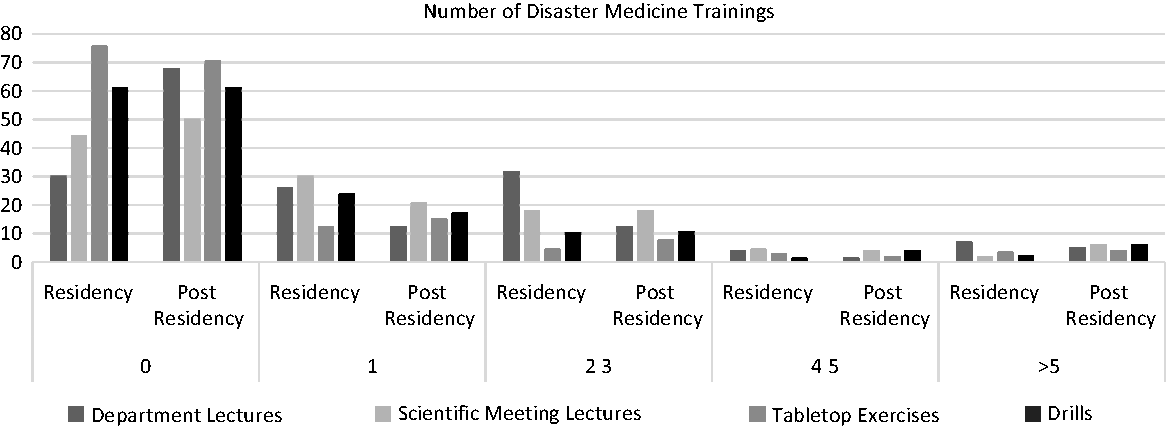
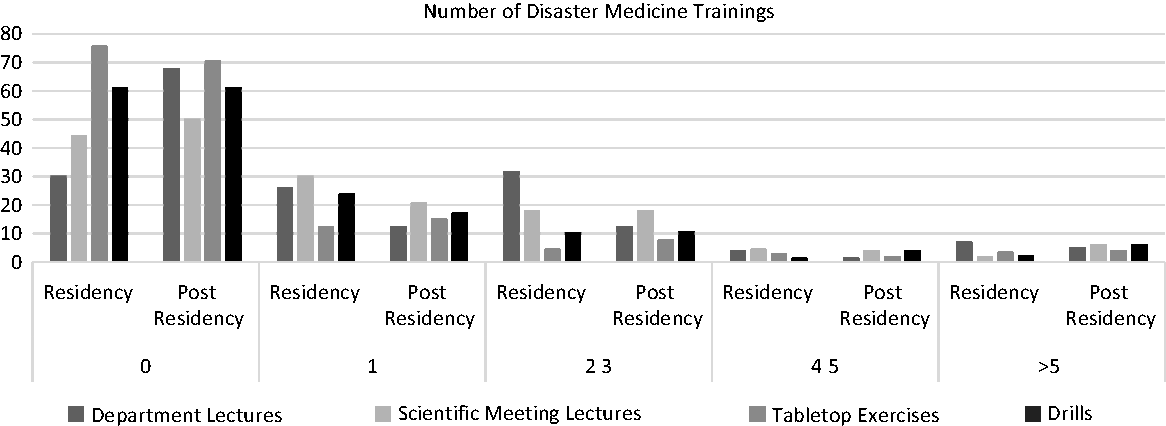
More than half of the attending physicians declared that they had never attended a tabletop exercise or disaster drill. EM residency lectures were the most common source of disaster trainings, while tabletop exercises were the least common. Physicians were asked about the number of trainings that they had participated in after their residency training and 50.3% to 70.7% declared they did not attend any type of disaster medicine trainings. The main source of disaster training after residency was from scientific meetings. The number of trainings during and after residency are shown in Figure 1.
Prior Number of Disaster Medicine Trainings for Turkish Emergency Medicine Attending Physicians During and After Residency Training.
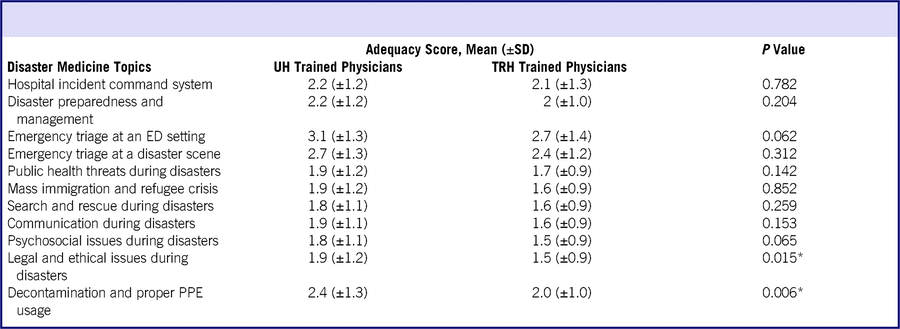
Participants were asked to evaluate their residency training in different areas of disaster medicine on a 1 to 5 (1 = not effective to 5 = very effective) point scale (Table 1). Other than disaster triage, the mean scores were all lower than 2.5/5. Training on emergency triage in a disaster setting had the highest score (3/5), while mass immigration and refugee problems (1.6/5) and psychosocial issues during disasters (1.7/5) were the lowest. UH residency programs had higher scores compared with TRH for “legal and ethical issues during disasters” and “decontamination and proper PPE usage” (P < 0.05) (PPE, personal protective equipment).
Evaluation of Residency Training in Different Disaster Medicine Topics
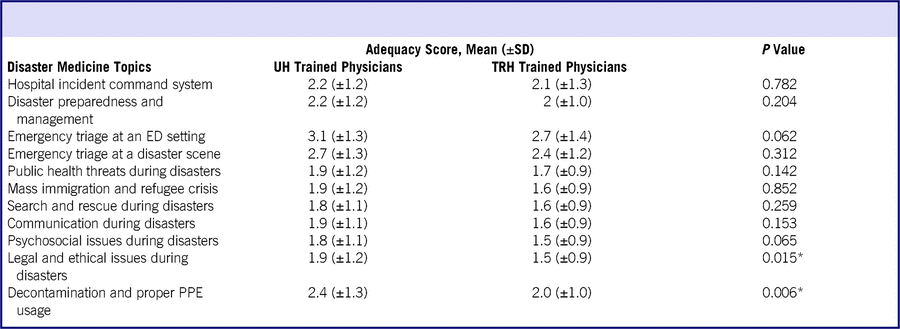
* Values are significant.
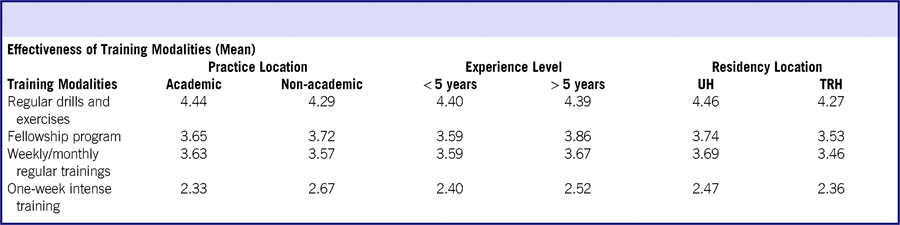
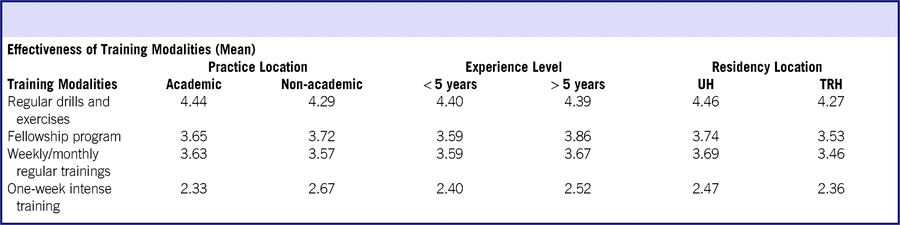
The type of disaster medicine training sessions used by UH and TRH residency training programs were compared, and the results are shown in Table 2. The percentage of physicians from UH residency programs who participated in 1 or more training session is higher for the percentage of TRH-trained physicians, and these were statistically significant for scientific meeting lectures (P = 0.013) and tabletop exercises (P = 0.017). Physician level of experience, practice location, and residency location had no effect (P > 0.05) on training modalities (Table 3).
Number of Disaster Medicine Trainings During Residency for UH and TRH Trained Physicians

* Values are significant.
Training Modalities by Practice Location, Experience Level, and Residency Training Location
Perceived Threat
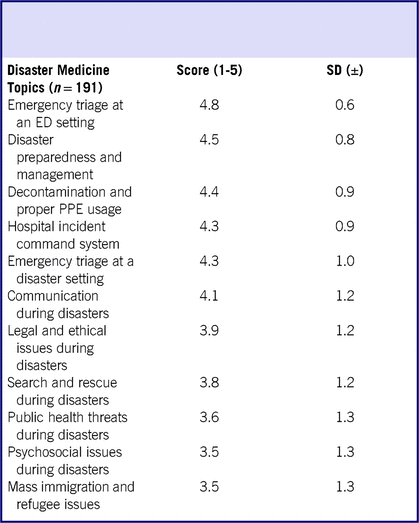
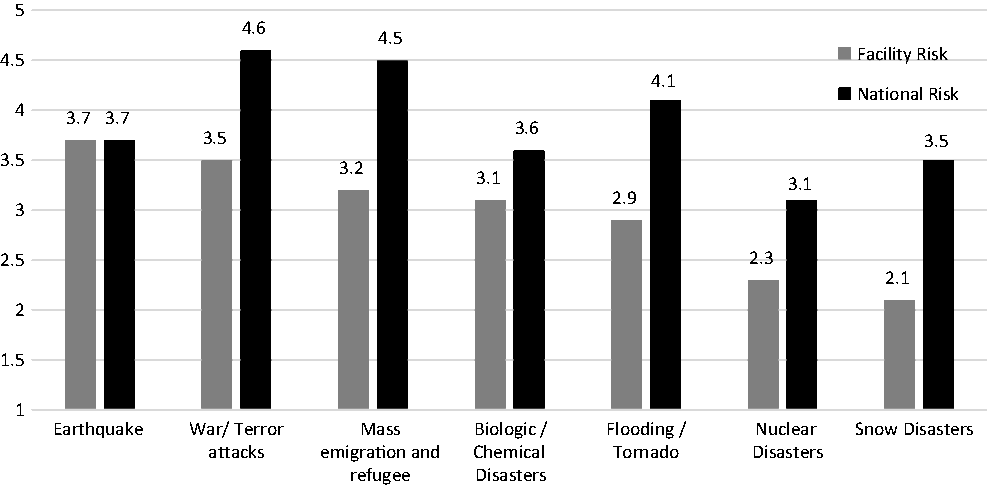
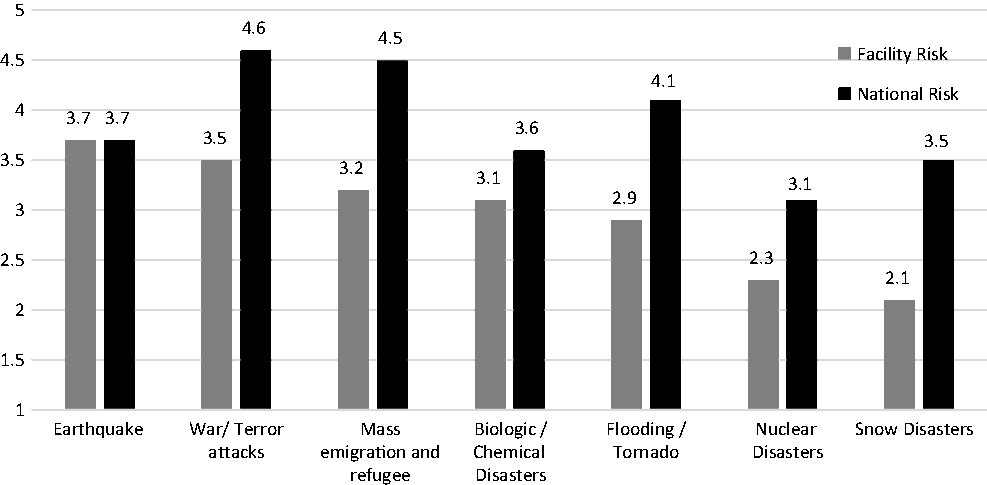
Emergency triage in both an ED and a disaster setting were described as the most important topics for an emergency physician, while psychosocial issues and mass immigration and refugee issues had the lowest scores (Table 4). Participants were asked to evaluate the risk levels of disaster situations for their institutions and the country. War/terror attacks and mass migration and refugee problems were considered as highest risks for the country, while an earthquake was considered the highest risk for their facility (Figure 2).
Importance of Each Disaster Medicine Topic for an Emergency Physician
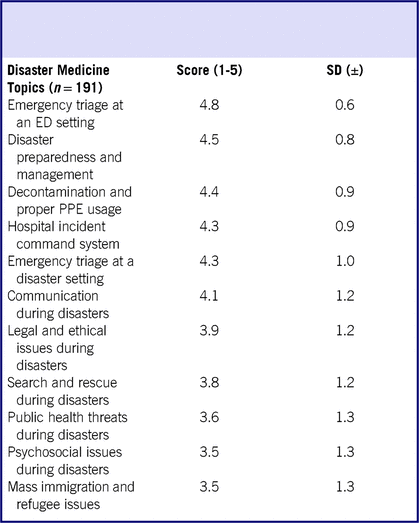
Perceived Risk of a Disaster at Participants’ Facility and Nationally.
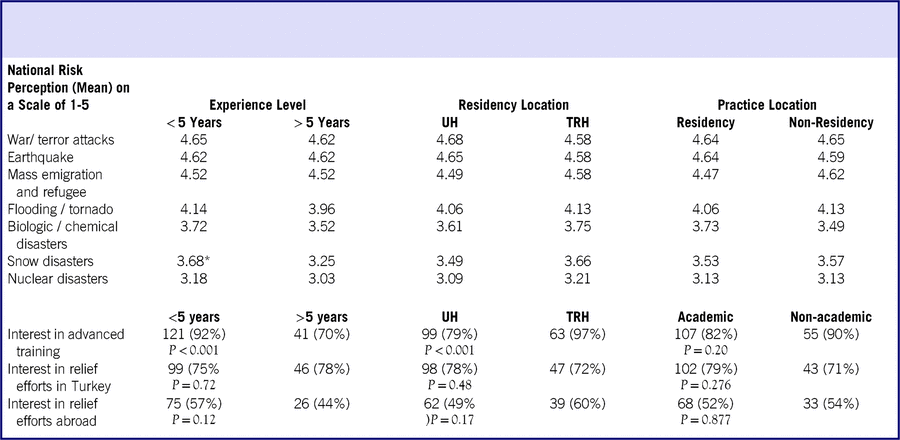
National risk perception was investigated for different variables, and results are shown in Table 5. Results show that less-experienced physicians have higher perceptions of risk for “snow/winter related disasters” in comparison to the physicians with more than 5 years of experience as an attending (P = 0.009). Other topics were not different by experience level. There was no statistically significant difference for residency training location or practice location for national risk perception.
National Risk Perception and Interest in Disaster Medicine by Experience Level, Residency Rraining Location, and Practice Location
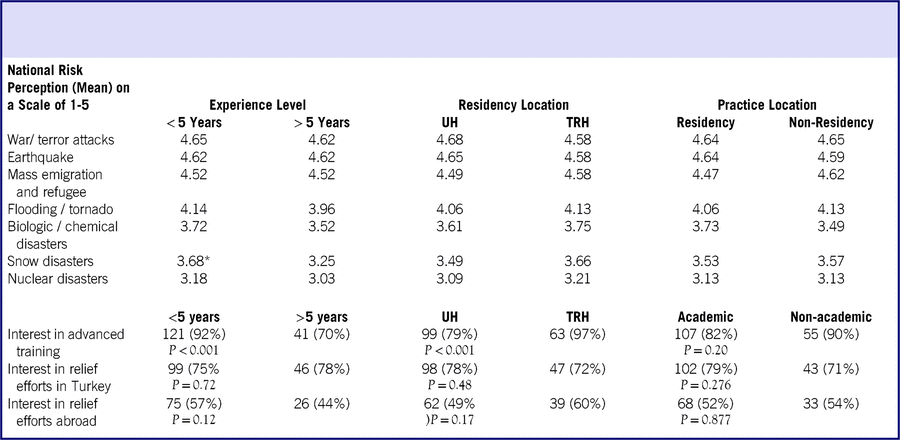
Experience, training location, practice location cross tab for different variables.
The majority of the participants (80.1%) declared that emergency physicians’ involvement in the planning of hospital disaster plans is very important. Only 1 participant declared that this was not important. Personal preparedness was inquired, and 27.2% (n = 52) declared they have a family/personal disaster plan. This was higher for the physicians who work as Educational Directors at their departments (n = 24, 43.6%, P = 0.01). Experience level of the participants was compared with their perception of different disaster medicine topics. “Search and rescue” (P = 0.059) and “communication during disasters” were evaluated as more important by less experienced physicians (P = 0.09). There was no statistically significant difference for physicians’ evaluation of their residency trainings by experience level.
Interests and Expectations
Majority (85%, n = 162) of the participants were interested in advanced training in disaster medicine, and 95% (n = 181) declared disaster medicine trainings should be provided during residency training. Regular drills and exercises and weekly/monthly regular trainings were the most preferred training modalities. One-week intensive training modality was the least preferred method among the participants. Ministry of Health was chosen by 34% of the participants as the responsible organizer of disaster medicine training programs, while 21% (n = 40) declared these trainings should be given by all related organizations, including Ministry of Health, specialty societies, hospital administrators, and nongovernmental organizations.
Interests in disaster relief efforts were different at the national and international level. While 76% declared they will be interested in being involved in the disaster relief efforts in Turkey, 53% declared they were interested in international relief efforts. Less experienced physicians and TRH-trained physicians had higher interest in advanced disaster medicine training (P < 0.001). Physicians who practice at a non-academic facility had higher interest for advanced disaster training (P = 0.2). Interest in advanced disaster medicine training was also higher for TRH-residency trained EM physicians (97%, n = 63) in comparison to UH trained EM physicians (79%, n = 99) and this was statistically significant (P = 0.001). There was no statistically significant difference for interest in disaster relief efforts in Turkey. However, interest in international disaster relief was higher for less-experienced physicians (P = 0.12) and UH-trained physicians (P = 0.17). Having a personal disaster plan was not statistically significant for each group of physicians.
DISCUSSION
The EMAT 2015 Database, which includes 937 physicians, was surveyed with 191 responses (20%). Our survey response rate was similar to previous online survey studies for EM physicians in Turkey but lower for national survey studies for the same population.Reference Ersel, Aksay and Kyan13, Reference Düzenli, Sever and Aksay16, Reference Basol, Çelenk and Okan19, Reference Sezik, Aksay and Temizyurek20 TRH EM residency training programs started later than UH residency programs, and accordingly the majority of the participants declared that they had their residency training at a university hospital.
Participation in disaster medicine training was higher during residency training (25%) compared with participating in trainings postresidency, and this was similar to a survey study of disaster preparedness training levels of EM residents in the United States.Reference Dennis, Brandt and Steinberg21 The U.S. survey found that 72% of the EM residents had lectures on disaster response and 22% had drills, which was similar to our findings of 69% and 25%, respectively.Reference Dennis, Brandt and Steinberg21 Dennis et al. reported that disaster exercises have the greatest contribution to the comfort level of residents for disaster preparedness.Reference Dennis, Brandt and Steinberg21 Accordingly, these types of trainings are considered highly effective (4.3/5) by the participants of this survey, but the total number of attendees for drills and tabletop exercises were low. Future disaster medicine trainings should include these modalities.
A 2009 survey study by Ersel et al. revealed that 10 of 25 Turkish academic EM departments have disaster medicine lectures included in their core curriculum.Reference Ersel, Aksay and Kyan13 Accordingly, EM residency lectures were the source of disaster medicine training for most of the participants, but survey results revealed that emergency physicians consider their residency training in disaster response to be inadequate.
Perceived risks were higher for war/terror attacks and mass emigration and refugee problems. These results are correlated with recent developments in Turkey and within the region.Reference Bilgin, Inel and Özmen23 Earthquakes are considered to be higher risk at the facility level. Improving hospital structures against earthquakes is described as a priority for The Disaster and Emergency Management Presidency of Turkey (AFAD), and improvement plans have been implemented by the government after recent earthquakes. Bilgin et al. investigated the status of 80 public buildings, including hospitals, in 3 city centers for updated earthquake regulations, and none of the buildings were in compliance.Reference Bilgin, Inel and Özmen23 Participants’ perception of high earthquake risk for their facilities may be due to ongoing building improvement plans. Additional research is needed on structural preparedness of hospitals for earthquakes and other disasters.
Our study demonstrates that emergency physicians in Turkey are interested in advanced disaster medicine training. Less experienced participants and TRH trained physicians had a statistically significant higher interest in advanced disaster medicine training. TRH residency training programs reported having less sufficient disaster training compared with UH training programs, and this may be a reason for the high interest. Physicians who practice at a non-academic facility also had higher interest in advanced training compared with physicians who work at an academic facility. Accordingly, physicians who work at an academic facility have higher rates of participation in disaster medicine trainings. Comparatively lower interest in advanced training for physicians in academic facilities may be due to their already established other academic interests, but this was not studied in this survey.
A systematic review in 2008 by Williams et al. was unable to determine the effectiveness of different training modalities on disaster preparedness levels for health-care providers but emphasizes the importance of research opportunities on regular drills and lecture trainings.Reference Williams, Nocera and Casteel24 Accordingly, regular drills and exercises, and weekly/monthly regular trainings were the most preferred training modalities by the participants of this survey. Survey results revealed that participation to disaster medicine lectures during residency was higher for UH-trained physicians in comparison to TRH-trained physicians, but total participation in a drill or exercise was less than 50% for all physicians. Future training efforts should include these preferred modalities, and regular trainings should be implemented with an increased number of drills and exercises. Evaluating the effectiveness levels for the different modalities are possible future research areas to improve scientific knowledge on disaster preparedness training.
The limits of this study are that it was an online survey and the response rate was only 20.4%, which affects the generalizability of the study results. Other online survey limitations such as absence of an interviewer and self-selecting bias should also be considered when interpreting the results.
CONCLUSION
Disaster and emergency preparedness is crucial for Turkey, especially with increased conflict around its borders and war/terror attacks within the country. This study demonstrates that residency-trained emergency physicians, especially those who have worked less than 5 years, are interested in getting advanced training in disaster medicine and emergency preparedness. UH and TRH EM residency programs were found not to have adequate knowledge of disaster medicine, and current residency training programs should be improved by including more disaster training. Regular drills and disaster exercises on a weekly or monthly basis are the preferred training methods. Participants also believed the trainings should be organized by Ministry of Health in collaboration with other vested groups. Earthquakes are considered the highest risk for facility level risk perception, but additional research is needed to understand this apprehension including the structural preparedness of the health-care facilities. Our results provide perspective on the needs of Turkish EM physicians for implementation of disaster medicine training programs.
Supplementary material
To view supplementary material for this article, please visit https://doi.org/10.1017/dmp.2019.50