1. Introduction
In this paper, we present a series of environmental policies that were implemented in the city-state of Athens during the Classical period (508–323 BCE) through an economic perspective. We link these policies to the provision of a series of services provided by the Athenian state through a set of specific institutional bodies and we argue that such services proved to have been beneficial for Athenian society as a whole. They basically included: (1) the implementation of an effective waste management policy and (2) the implementation of a recycling process regarding animal manure. These policies were further reinforced by the implementation of collective hygiene practices through a system of public baths and athletic facilities as a collective opportunity for all the residents of the Athenian city-state.
What we mainly present in this paper is that the success of the above two environmental policies should be attributed to (1) a combination of economic motives and disincentives: on the one hand, satisfactory salaries for the staff of the institutions who were entrusted by the state to provide efficient environmental services, plus profit opportunities, and on the other hand, the imposition of heavy fines, job and wage losses for this staff in case they provided subpar services; and (2) fines imposed to every other resident of Athens (either citizen, metic,Footnote 1 or slave) who trespassed the state laws and polluted the polis with his/her actions. Finally, based on the Athenian experience, our paper provides proposals that could be useful for today.
It is well-known that the existence (or lack) of efficient and enforceable institutions regarding the provision of environmental public goods is considered a key prerequisite for the success of an environmental policy (Dasgupta and De Cian, Reference Dasgupta and De Cian2016). In fact, introducing efficient institutions for the success of an economic policy is a key principle that exceeds the field of Environmental Economics and applies in general (Acemoglu and Robinson, Reference Acemoglu and Robinson2013; Hodgson, Reference Hodgson2015a; North, Reference North1981, Reference North1990). In our paper, we argue that this important prerequisite was also applied in the case of Classical Athens regarding environmental issues.
The first issue, waste management policy, is a core issue in the field of Environmental Economics. An inefficient waste management policy can lead to negative externalities as defined by the seminal works of Pigou (Reference Pigou1920), Baumol (Reference Baumol1972), and Baumol and Oates (Reference Baumol and Oates1988), among others. It can further lead to infectious diseases (such as COVID-19 nowadays) that can prove very harmful for a society in the long run.
Regarding the second issue, effective recycling procedures, this is directly related to waste management policies (e.g. the reduction of hazardous waste) and environmental protection (Peretz, et al., Reference Peretz, Bohm and Jasienczyk1997; Schenkel, Reference Schenkel1993). Recycling procedures are related to economic efficiency and growth (Shinkuma and Managi, Reference Shinkuma and Managi2011). We provide evidence for a profitable recycling procedure that the Athenians introduced and we link this finding with game theory analysis which connects the Athenian institutions that implemented the environmental policies, to profitability prospects, that is, the collection and the recycling of garbage for making a profit.
The third issue has to do with the implementation of hygiene measures taken by the Athenian state authorities that are related to satisfactory levels of health. This is again related to Environmental Economics issues: people cannot live well and thrive economically if the environment is polluted since this undermines the basic precondition of living a healthy life, at least for the majority of a society's population. Furthermore, pollution is a deterrent to economic development (Halkos, Reference Halkos2011). Thus, clean technologies, such as what today is characterized as green growth policies, are related to population growth and economic development (Smulders et al., Reference Smulders, Toman and Withagen2014).
Our paper is organized as follows: in section 2 we focus on the waste management procedures that were adopted by the Athenians, by concentrating mainly on two important institutions, the koprologoi and the astynomoi which proved crucial for the success of the overall Athenian environmental policy. Section 2 further argues that the successful implementation of such laws and practices was related to what is now called environmental awareness, at least, to some extent. And this situation made the overall Athenian environmental policies more efficient in the long run. Section 2 further describes the recycling procedures that were introduced by the Athenians as a part of their overall waste management policy. Section 3, by introducing a game theory analysis, describes the mechanisms of the enforcement of the Athenian environmental policies. Their success was based on (1) a combination of economic motives and disincentives to those institutions that were related to the implementation of the Athenian environmental policies and (2) fines generally imposed on every resident of Athens who trespassed the state laws and polluted the polis with his/her actions. Section 4 analyzes the issue of the implementation of collective hygiene practices as part of the wider process of facing pollution and ensuring the cleanliness of the Athenian city-state. Such practices were supportive to the overall Athenian environmental policies. Section 5 concludes.
Our conclusions indicate that, by analyzing the case of Athens during the Classical period, a series of intertemporal findings arise. To the best of our knowledge, this is the first research regarding Classical Athens which connects the scientific disciplines of Institutional Economics and Economic History to Environmental Economics. The discussion is further supported through the lens of game theory.
2. Provision of environmental services by the state in Classical Athens
During recent years, scholars have researched various aspects of the Athenian economy of the Classical period (508–323 BCE), showing its modern character and institutional setup in many areas. For example, Kyriazis and Zouboulakis (Reference Kyriazis and Zouboulakis2003, Reference Kyriazis and Zouboulakis2004), Tridimas (Reference Tridimas2013), and Economou and Kyriazis (Reference Economou and Kyriazis2019) described what caused the transformation of the structure of the Athenian economy from an agrarian into a maritime one with an emphasis on international trade among Athens and its more than 300 allies within the Delian League as well as other states (Figueira and Jensen, Reference Figueira and Jensen2021).Footnote 2 Lyttkens (Reference Lyttkens2010, Reference Lyttkens2013), Bergh and Lyttkens (Reference Bergh and Lyttkens2014), Bresson (Reference Bresson2016a, Reference Bresson, Harris, Lewis and Woolmer2016b), and Bitros et al. (Reference Bitros, Economou and Kyriazis2020) among others, analyzed the structure of institutions and markets. Bitros and Karayannis (Reference Bitros, Karayiannis, Cassis and Pepelasis-Minoglou2006, Reference Bitros and Karayiannis2008) and Bresson (Reference Bresson2016a, Reference Bresson, Harris, Lewis and Woolmer2016b) further analyzed the related issue of entrepreneurship in Athens under free market economy principles.
Economou and Kyriazis (Reference Economou and Kyriazis2017, Reference Economou and Kyriazis2019) provide tangible evidence that in the city-state of Athens property rights and the validity of commercial contracts were protected by state laws in the event two traders ended up in court. Eminent scholars such as Hodgson (Reference Hodgson2015a, Reference Hodgson2015b, Reference Hodgson2015c, Reference Hodgson2015d) have argued in general that property rights protection is a very essential prerequisite so that commercial transactions become credible. Ober (Reference Ober2008) adds that this attitude in Athens effectively reduced transactional costs under the Coasian logic. In addition, Cohen (Reference Cohen1992) in his seminal book the Athenian Economy and Society: A Banking Perspective analyzed exhaustively the sophisticated banking services that were provided in Classical Athens. Acton (Reference Acton2014) provides evidence regarding insurance services and primitive versions of joint stock companies that were linked to the loans provided by primitive versions of banks for performing efficiently international commercial transactions. Figueira (Reference Figueira1998), Bresson (Reference Bresson2016a), Bitros et al. (Reference Bitros, Economou and Kyriazis2020), and Halkos et al. (Reference Halkos, Kyriazis and Economou2021) have analyzed the important role of money in the economy. These developments led the Athenian economy to achieve economic growth, at least for some periods between 508 and 323 BCE (Bitros et al., Reference Bitros, Economou and Kyriazis2020; Bresson, Reference Bresson2016a, Reference Bresson, Harris, Lewis and Woolmer2016b; Ober, Reference Ober2015; Tridimas, Reference Tridimas2019a).
Regarding the philosophy of the functioning of the Athenian public administration, Davies (Reference Davies, Os-Borne and Hornblower1994: 204) has found enough evidence to state credibly that the guidelines on which the operation of public services had been erected sought:
‘… (i) to maximize participation, and to minimize the concentration of power, by creating new posts or archai Footnote 3 rather than give additional jobs to existing archai, (ii) to break down the administrative load into chunks which could be performed by amateurs selected by lot, (iii) to give them explicit terms of reference and routes of responsibility, and (iv) to operate on the assumption that “absolutely nobody is to be trusted”’.
However, this is not to deny that cases of corruption regarding public administration were absent. Christ (Reference Christ2006) provides a detailed analysis of such cases. But what is also true is that these cases were relatively limited and a serious reason for this is that the Athenian magistrates' term of office was an annual one for the majority of state posts (Hansen, Reference Hansen1991). This further means that, as Bitros et al. (Reference Bitros, Economou and Kyriazis2020: 151) write, in normal circumstances, appointed officials did not have the time to develop corruption links with each other effectively.
All the above authors, and in general, the relative literature in the last 30 years considers that the Athenian economy during the Classical period was quite developed for its times. And historically, it is true that only in states that are backed by advanced economic institutions for their times,Footnote 4 is it possible for a series of institutions that a state should provide to its citizens, such as public goods or services, to thrive. Furthermore, we believe that the advanced environmental institutions we describe in the following sub-sections could not have flourished if the Athenian economy was characterized by primitive structures.
Our purpose in this paper is to expand the findings of the current research on three environmental policiesFootnote 5 that were provided by the state in Classical Athens: waste management, fertilizing and recycling techniques as a form of renewal energy resource, and finally, hygiene services.
2.1. Waste management services: the koprologoi and the astynomoi
Ensuring a high level of hygiene should be considered among the top priorities for all societies since this is related to their long-term economic prosperity and growth (Weil, Reference Weil, Aghion and Durlauf2014). The Athenians had introduced laws that punished citizens who fouled the streets of Athens with waste and sewage that was produced either in their homes or in other places. For example, archaeological evidence has revealed a law (codified as IG I3 4), introduced in 485/4 BCE, preventing the dumping of animal dung in a particular place on the Acropolis known as the Hecatompedon or defecating in the agora (the Athenian marketplace) or on the processional way to Piraeus (Liebeschuetz, Reference Liebeschuetz2015: 10–11; Owens, Reference Owens1983: ftn. 22: 46). Another law dealt with the pollution of the Ilissos river by tanners (Travlos, Reference Travlos1971: 341).
In passage 50 in Athenian Constitution Aristotle refers, among others, to the institution of koprologoi a service that was responsible for the collection and removal of sewage and the cleaning of the streets. In particular, in every Athenian neighborhood any waste from cesspits and latrines produced by each household had to be stored in a particular pit which also functioned as a statutory dump, placed just outside each household (Owens, Reference Owens1983: 44, 47). The pits would then have to be emptied periodically and it was the owners' responsibility to ensure that this task was done, presumably by summoning the koprologoi. Essentially, the koprologoi were cesspool/sewage pickers who were responsible for emptying the cesspools in each of the 139 municipalities of Athens (Lindenlauf, Reference Lindenlauf and Gardner2004: 93–94).
Neither the ancient sources nor their modern interpretations make it absolutely clear if the koprologoi were either Athenian citizens who worked as private scavengers or public slaves or who acted as public sweepers under the direct supervision of the astynomoi (Cox, Reference Cox2007). However, Owens (Reference Owens1983), Lindenlauf (Reference Lindenlauf and Gardner2004), Ault (Reference Ault2007: 263), and Liebeschuetz (Reference Liebeschuetz2015: 10) persuasively argue that the koprologoi were in fact private scavengers. Owens (Reference Owens1983: 48–50) and Liebeschuetz (Reference Liebeschuetz2015: 10–11, 14) further argue that the koprologoi could even be entrepreneurs themselves who provided their services to the state.
In other words, this shows cooperation between the state and the private sector for the provision of a service, where the state outsources to private scavengers the cleanliness of the city, essentially in the form of an agreement, what Besley and Ghatak (Reference Besley and Ghatak2017) define as public–private partnerships for the provision of public goods, to use modern terminology. Public–private partnership (3Ps) practices are considered as cooperative institutional arrangements between public and private sector actors where private parties are committed to the delivery of various public services (Besley and Ghatak, Reference Besley and Ghatak2017; Hodge and Greve, Reference Hodge and Greve2007). This 3P environmental cooperation procedure was not something unusual in Classical Athens since the Athenians implemented 3Ps in other areas too, such as tax collection through tax-farming, exploitation of the silver mines, the ship-building of warships known as trierarchy, etc. Bitros et al. (Reference Bitros, Economou and Kyriazis2020) among others, provide extensive evidence of this.
Defecating in the streets and in the agora was severely punished with a fine imposed by a state service known as the astynomoi (see below) (Cox, Reference Cox2007: 771; Owens, Reference Owens1983: 45–460). There is no doubt that the Athenians imposed fines to the citizens, metics, or slaves who polluted the streets because they had understood that non-compliance to hygiene measures, if they became widespread, could harm the collective hygiene not only in the microcosm of each separate neighborhood or a deme (municipality), but also in the society as a whole.Footnote 6 In a modern interpretation, the Athenians wanted to neutralize any kind of improper behavior of citizens that could cause negative externalities (in environmental terms) to the society as a whole (under a Pigouvian logic).
The supervision of the cleanliness of the streets and the hygiene (environmental) behavior of citizens as a whole was assigned to a state institution, a service known as the ten astynomoi, each one originating from the ten Athenian tribes. They were elected by lot for an annual service (Hansen, Reference Hansen1991: 387). Half of them served in the city of Athens and the rest in the port of Piraeus. They had various duties regarding cleanliness and maintaining order on the streets, such as the removal of any dead body from the streets, and the supervision of road maintenance. They were in charge also of street repairs, and they had to ensure that the rubbish that was collected by the koprologoi, was thrown outside the city at a distance of ten stadia (approximately 1.85 km) from the city walls (Aristotle, Athenian Constitution, 50; Cox, Reference Cox2007: 770; Liebeschuetz, Reference Liebeschuetz2015: 10–11; Owens, Reference Owens1983: 44–56; Thommen, Reference Thommen2012: 60). This means that the garbage was gathered at a specific waste collection area outside the city. Thus, in all probability, the Athenians were the first, or one of the first, societies to implement a waste management policy.Footnote 7
They also had the power to issue penalties for noncompliance. Cox (Reference Cox2007: 772) has retrieved evidence provided by Plato's Laws (6.764c, 6.779c) where the philosopher states that the astynomoi were authorized to impose fines of up to 100 drachmae and punishment to anyone disobeying the law. The fines could be doubled if they were imposed in conjunction with another auditing institution known as the agoranomoi.Footnote 8 Loomis (Reference Loomis1998) who among others, specialized on wages in Classical Athens, argues (pp. 32–61) that during the 5th century BCE, the average skilled laborer was paid 1 drachma per day. Having this in mind we can surmise that paying either 100 or 200 drachmae as a fine, was a large sum of money; thus, this particular environmental fine should have been considered as hefty. And there is no doubt that the higher the fines, the higher the compliance of the citizens to avoid polluting the Athenian polis. What is also important is that similar laws relating to the fouling of temples and shrines have come to light in other cities too, for example Delos, Epidauros, Paros, and Pergamon (Asia Minor). A law from Gortyn on Crete forbade the location of ovens and dung heaps within a certain distance of the house walls (Owens, Reference Owens1983: 44, 46). This is important since it indicates that such laws did not exist only at Athens but in many other city-states of the Greek world of the time too, suggesting that it was a more generalized phenomenon.
To conclude with the institutions that were related to the provision of environmental services in Classical Athens, we refer to Hughes (Reference Hughes1982: 72, 2014) who, based on Aristotle's Politics in verses 6.1321b and 7.1331b, argues that the Athenian state supervised the protection of forests and watersheds through two additional and less well-known institutions, the agronomoi (‘agricultural land-controllers’) and hyloroi (custodians of forests). The agronomoi were magistrates responsible for the care and supervision of rural areas. They were also charged with supervising the drainage and allocation of rainwater (Bitros et al., Reference Bitros, Economou and Kyriazis2020: 92). Andreades (Reference Αndreades1933: 213) characterizes them as a rural police force. According to Aristotle (Politics, 7.5.4), their duties were similar to those of the hyloroi, the latter, according to Andreades being ‘forest wardens’ tasked with policing the countryside and forests. In principle both groups of magistrates had environmental supervision duties related to natural protection including areas such as: trade on forest products, harvesting timber, the use of agricultural land, as well as the construction of public works to provide and control water supply and drainage. A detailed source regarding these two institutions and their duties is provided by Thommen (Reference Thommen2012) and Hughes (Reference Hughes2014: 84) and the additional references they provide.
2.2. Further laws and institutions related to environmental issues
This sub-section comes as an extension of the previous analysis and discusses further the success of the Athenian environmental policy by linking it to the issue of the gradual establishment in Athenian society of a general spirit of environmental awareness through relative laws and other services. Below we briefly refer to two such cases as tangible evidence regarding this.
Regarding the first, there are various recorded cases in the ancient sources regarding trials against citizens who damaged or cut trees illegally, etc. As an example, one can read the forensic speech of Lysias On the Olive Stump on this. During the Classical period it was considered a serious offence to uproot an olive tree, let alone a sacred olive tree. These trees thrived and were scattered throughout Attica. During the 4th century there were limits on a landowner's right to dispose of olive trees on his property. There were even more stringent restrictions on those olive trees that were considered as sacred. Furthermore, Aristotle in Athenian Constitution in passage 60.2 reveals that the penalty for damage to a tree was death, the highest and most severe penalty of all. Regarding the second case, Demosthenes in Against Macartatus, very characteristically describes severe penalties to those citizens and metics who damaged trees throughout Attica:
‘If anyone shall dig up an olive tree at Athens, except it be for a sanctuary of the Athenian state or of one of its demes, or for his own use to the number of two olive trees each year, or except it be needful to use it for the service of one who is dead, he shall be fined one hundred drachmae, to be paid into the public treasury, for each tree, and the tenth part of this sum shall belong to the goddess. Furthermore, he shall be obligated to pay to the private individual who prosecutes him one hundred drachmae for each olive tree. And suits concerning these matters shall be brought before the archons, according as they severally have jurisdiction. And the prosecutor shall deposit the court fees for his share. And when a person shall have been convicted, the archon before whom the case was brought shall make a report to the collectors of the amount due to the treasury, and of the amount due to the goddess, to the treasurers of the goddess. And if they fail to make such reports, they shall themselves be liable for the amount’.Footnote 9
But except for the introduction of severe penalties for environmental offenders, we believe that the success of the Athenian environmental laws was further reinforced by the environmental awareness of the Athenian residents themselves as a more general social behavior. Modern evidence reveals that environmental laws can be efficient in practice only if there is a general acceptance of the specific environmental legislation on the part of society (and its subsets such as firms), which ‘legitimizes' it (Demirel et al., Reference Demirel, Iatridis and Kesidou2018). When this is not the case, the implementation of an environmental policy through ‘coercive legislation’ fails in the long run (Daddi et al., Reference Daddi, Testa and Frey2016).
This discussion is obviously related to environmental awareness of the citizens themselves in a society. There is a vast literature, which analyzes the nexus between the efficiency of the environmental laws and environmental awareness (see e.g. Gkargkavouzi et al., Reference Gkargkavouzi, Halkos and Matsiori2019). Obviously such a discussion is further related to the cultivation of a series of environmental values which progressively become a way of life of the citizens through a combination of environmental rules, habits, norms, and routines as protocols of behavior.Footnote 10
We believe that such rules, habits, norms, and routines as protocols of behavior truly did exist in Classical Greece and in Athens more specifically as has already been analyzed above and in sub-section 2.1 regarding waste management. Further evidence regarding this can be found in the writings of ancient philosophers such as Strabo, Xenophon, Thucydides, Plato, and others, who all recognized and warned the policymakers of their times about the side-effects that degradation of the land could have both for the present and future societies. Readers can consult further authors such as Thommen (Reference Thommen2012), Hughes (Reference Hughes2014), and Stone (Reference Stone2018) regarding this. Here we refer only to Plato in Critias (111–112) where he provides a description of how (what we nowadays characterize as) an ecosystem thrived and prospered according to the standards of the time. Furthermore, Aristotle in Nicomachean Ethics (1103a) writes that:
‘Neither by nature, then, nor contrary to nature do the virtues arise in us; rather we are adapted by nature to receive them, and are made perfect by habit’.
This is actually an observation that can also be interpreted as a warning, since it implies that our lives are related to nature and that we must respect the environment in parallel to our daily activities.
In addition, it must be said that various institutions existed in Athens that were also linked, even indirectly, to environmental issues. For example, the Greeks of that time had linked the issue of successful medical treatment to the environment. Throughout the Hellenic world there existed the so-called asclepieia, which were large medical centers which provided healthcare and healing services. According to Croon (Reference Croon1967) and Risse (Reference Risse1990: 56), their facilities included special healing spaces, as well as baths, thermal water, temples of worship, a stadium, other athletic facilities, etc. A famous asclepieion was the Sanctuary of Asclepius at Epidaurus. These facilities were located in areas where the patients could be in close contact to the environment since this was considered important for their effective recovery (Lyttkens, Reference Lyttkens2011).
2.3. Recycling and fertilizer as a primitive form of a renewable energy resource
Another important aspect regarding the institution of koprologoi is that it is linked to what we characterize today as recycling and renewable energy resource policies. The current literature conveys the importance of exploiting converted animal manure as a fertilizer since this has economic benefits in general (Keplinger and Hauck, Reference Keplinger and Hauck2006). Due to this, some authors characterize animal manure as an ‘efficient waste’ (Sheriff, Reference Sheriff2005).
In particular, from literary sources we know that the koprologoi were able to profit by collecting and recycling waste materials, mainly the dung of animals (known as kopros), which they collected from the streets of Athens and then sold it as fertilizer. This was a very profitable activity for them in Athens (Ault, Reference Ault2007: 263). Furthermore, this was a practice that took place not only in Athens, but also in many other city-states such as Larissa, Olynthus, and the Island of Thasos. Ault (Reference Ault1994: 198–199) characteristically writes that:
‘When domestic kopros, was supplemented with débris from the fields: fallow crops, brush, weeds, prunings, and the manure of grazing animals, a plentiful and powerful source of fertilizer was available. That the kopron, then, should be viewed not as a lowly garbage pit, but as a profitable compost heap or mulch pile is the next point of recognition’.
This description is related to one of the first (or perhaps the first ever) recycling processes in recorded history and to one of the first (or perhaps the first ever) waste management policies. Thus, recycling activities were carried out by private operators.
3. Game theory analysis regarding the mechanisms of enforcement of the environmental policies in Classical Athens
In this section, we provide a game theory analysis in order to better identify the benefits for the Athenian economy that emerged from the existence of auditing institutions against the negative externalities that could be caused by environmental pollution in the Athenian streets. In Table 1 the payoffs of two players, the koprologoi and the astynomoi, are analyzed.
Numerical payoff pairs between the koprologoi and astynomoi based on the degree of their professionalism and efficiency

A Prisoner's Dilemma setup is expected in such cases when players choose their strategies simultaneously, which is the case of both the koprologoi and the astynomoi who provided their services to the Athenian state.Footnote 11 If the space of the set of possible strategies for each player i is denoted as Si, then each arbitrary element ei belongs to this strategy space that is ei ∈ Si. If (e 1, e 2,…,en) denotes the combination of strategies, each one for each player, and Pi denotes the payoff function presented as: Pi(e 1, e 2,…,en), then the game may be represented as:

Let us assume that we face a game of complete but imperfect information, with full use of appropriate institutions and by having both players selecting simultaneously their policies. In a typical setup of model (1) if $e_i^{\rm ^{\prime}}$ and $e_i^{\rm \prime\prime }$
 are practicable strategies for player i and elements from the strategy space then strategy $e_i^{\rm ^{\prime}}$
 will be strictly dominated by $e_i^{\rm \prime\prime }$
 if:

Player 1 selects action e 1 from practicable set S 1 and player 2 seeing e 1 chooses action e 2 from practicable set S 2 having payoffs P 1(e 1, e 2) and P 2(e 1, e 2).
Table 1 presents through a Prisoner's Dilemma game, the payoffs that are based on the behavior of two players, the koprologoi and the astynomoi regarding the degree of performing their duties efficiently or not. As already mentioned in sub-section 2.1, the koprologoi are supervised by the astynomoi regarding the effectiveness of the service they provide. In principle, both the astynomoi and the koprologoi (even if this group does not ‘technically’ belong to public servants) had to be consistent in the performance of their duties. Because, as a general rule regarding the Athenian public administration, phenomena such as provision of subpar services or corruption could lead to severe punishments (Bitros et al., Reference Bitros, Economou and Kyriazis2020).
Table 1 actually examines the payoffs that are based on the attitude of the koprologoi and the astynomoi as pairs. The pairs are shaped based on two key qualitative elements that are intertwined: (i) cheating, that is, inefficient performing of their duties, in other words, providing subpar services and (ii) professionalism, that is, efficient performing of their duties. There are four possible scenarios:
(1) both groups are trying to cheat, that is, to exhibit inferior work effort
(2) one group, e.g. the astynomoi, behaves professionally while the other cheats
(3) the inverse case of (ii)
(4) both groups choose to behave professionally so as to keep the city clean
Regarding scenario 1, both the koprologoi and the astynomoi are trying to cheat, meaning, to provide subpar services to the polis. The koprologoi are trying to avoid significant physical exertion associated with their duties. The astynomoi on their part defraud the citizens (and the rest of the residents) of Athens by not enforcing the desired environmental standards.Footnote 12 Effective performance of their duties would mean constant supervision of the koprologoi. But since the astynomoi were also burdened with additional supervisory tasks as mentioned in sub-section 2.1, they would have to work very hard in order to succeed in tackling all their duties properly, which is something that in this particular scenario 1, they try to avoid in order to limit their work effort and save free time. This is the worst case scenario for the polis, since the city is not cleaned efficiently and this situation carries serious risks such as pandemic infections and deadly diseases, such as the catastrophic plague of Athens in the periods 429 and 427/6 BCE.
Since the city is dirty and environmentally unsafe, the astynomoi are either replaced and/or ordered to pay a fine imposed by the Athenian state authorities, possibly, by the Athenian Council, which is the highest supervisory state institution.Footnote 13 Such a deduction should not be considered unfounded or hypothetical. We know that when the public magistrates in Classical Athens did not perform their duties efficiently and professionally, they could be replaced immediately, even if their term of office had not been completed. Depending on the level of mismanagement of their duties, they faced extra penalties such as fines, or being prosecuted, or a combination of all the above (Bitros et al., Reference Bitros, Economou and Kyriazis2020; Hansen, Reference Hansen1991; Ober Reference Ober2008).
On their part, the koprologoi were fired if they failed to perform their duties and were also obliged to pay a fine in favor of the Athenian state since their poor performance harmed the overall environmental footprint of the polis as well as the hygiene of the Athenian residents as a whole. However, until they were dismissed by the Athenian state if they had failed to provide proper hygiene services, both the astynomoi and koprologoi received a small fee for the short period of time they began performing their duties until the moment they were relieved from them. Due to this, their final payoff is (1,1). As a general comment both groups achieve the worst-case payoff scenario (1,1).
Regarding scenario 2, the koprologoi are trying to cheat. This unprofessional behavior cannot be found immediately by the astynomoi. But they discover it progressively. As soon as the astynomoi find it, they threaten the koprologoi that if they do not comply with their duties, they will be fired by the state authorities. Then, some koprologoi alter their attitude and behave professionally while others are fired. The final outcome regarding the cleanliness of the city is not the optimal one. The city could have been cleaner and more environmentally friendly. The Athenian Council which supervises both the astynomoi and the koprologoi, finds out what really happened and is not satisfied by their joint performance. However, the Council does not decide to replace the astynomoi with other citizens as public magistrates. Instead, it decides to impose a fine on them due to the fact that they did not notice earlier the cheating behavior of the koprologoi. Regarding the koprologoi, they are fired and are replaced by others. But their payoff is not 0 since until the time they were fired they had received already some wages; thus, they achieve a small payoff, 2. In this case the payoffs pair is (2,5).
Regarding scenario 3, the koprologoi behave professionally and work efficiently while, on the other hand, the astynomoi are trying to cheat in the sense that they perform their supervisory duties very superficially or not at all. The latter appear as exhibiting unprofessional behavior. In this case, the koprologoi, try to behave professionally and strive to keep the city clean, but because their coordinators, the astynomoi, are absent, the final outcome is that the cleanliness of the city is not at the desired level. The Athenian Council finds out what has happened and is not satisfied by their joint performance. It relieves astynomoi of their duties, by simultaneously imposing a fine, and gives a second chance to the koprologoi. The Council pays the koprologoi half of their salary (payoff 5). The astynomoi are paid a small amount of salary up to the moment they are fired (payoff 2).
Regarding scenario 4, both the koprologoi and the astynomoi are working efficiently with professional and environmental awareness. In this case the koprologoi receive a payoff 10, which is the maximum possible payoff because their work leads to excellent results. What is also important is that the koprologoi have an extra stimulus to work hard and cooperate efficiently with the astynomoi; they can also profit from converting the animal manure that they have collected in the city streets and other spaces into compost and then sell this to privates/farmers as a material to be converted into fertilizer. On their part, the astynomoi, due to the highly efficient performance and work ethic of the koprologoi, can perform their environmental supervision duties much easier and more effectively than in scenarios 1–3 and this also allows them to focus more on their other supervisory duties.
Having taken all the above into account, this 2 × 2 Prisoner's Dilemma scenario shows that cooperation under the principles of professionalism is the ideal scenario for both players, since it leads to better outcomes regarding their payoffs. Table 1 shows that efficient cooperation between the astynomoi and the koprologoi is key for the success of the whole process of keeping the city clean. The message of the above analysis is a straightforward one: when strategic players engaging in a Prisoner's Dilemma game share common values and the opponents are fully aware of this, they choose strategies which lead to an efficient equilibrium (one which maximizes the surplus) instead of the inferior Nash equilibrium. This is a well-established result, and based on the above findings, we argue that it also applied to the case of Classical Athens, regarding the issue of the Athenian environmental institutions.
A key finding from the above analysis is that the success of the Athenian environmental policies was based on a combination of motives and disincentives; on the one hand, salaries paid by the state authorities for both groups providing they worked efficiently, plus profit opportunities to the koprologoi from selling animal manure to the private sector, and on the other hand, heavy fines and job losses for both groups in the event they provided subpar services. This is consistent with the findings of current research regarding modern societies, such as Baumol and Oates (Reference Baumol and Oates1988), Gray (Reference Gray2002), and Feldman and Perez (Reference Feldman and Perez2012), which link the efficient implementation of an environmental protection policy with the economic motives (or disincentives such as fines) behind the groups involved. Thus, our paper leads to a finding which has an intertemporal character.
Parallel to this and equally important, the success of the above environmental policies was also based on the imposition of heavy fines not only on those Athenian institutions that were entrusted with the implementation of the environmental policy, but in general, on any trespasser, whether they were citizens or not, if they polluted the city. There is a vast literature which links environmental protection to fines or taxes as a means of limiting environmental degradation. One can refer again to the seminal contributions of Pigou (Reference Pigou1920), Baumol (Reference Baumol1972), and Baumol and Oates (Reference Baumol and Oates1988), among others, who prove that the higher the fines, the higher the compliance of the citizens to the environmental policies. In turn, adherence to environmental rules is related to economic growth (Halkos and Managi, Reference Halkos and Managi2016). With this paper we argue that effective institutional disincentives against environmental degradation were also valid in the case of Athens during Classical times.
4. Collective hygiene services as a reinforcement mechanism of Athenian environmental practices
This section argues that the measures for hygiene that were taken by the Athenian state authorities in parallel to waste management, contributed further to the overall success of Athenian environmental policy. Hygiene should be considered among the top priorities for societies that are characterized by strong economies. Especially now, with the current COVID-19 global pandemic, hygiene is of top priority in the agenda. Bathing, as a primary form of hygiene, played a critical role in the lives of the ancient Greeks as a whole, as attested to by archaeological findings regarding the construction of numerous buildings for bathing as well as frequent commentary on the baths by ancient authors from Homer onward. This was true both at the level of personal hygiene and at the public level.
At the level of personal hygiene, according to Gill (Reference Gill2008: 208–209) the earliest references to baths and bathing in Greece date to the 8th century BCE when Homer refers to the bathing of Homeric heroes in single tubs in various passages in both the Iliad and the Odyssey. Tubs have been found even in earlier periods, at Knossos, Mycenae, and Pylos during the Bronze Age period (1600–1100 BCE). During the Classical period archaeological evidence has revealed that except Athens, in cities like Olynthus, many houses that belonged to the middle- or high-income classes of citizens had a bathroom with a small bathtub with a seat (Yegül, Reference Yegül1992). Private baths in Athens are mentioned by Plutarch (Demetrius, 24.2) and Pseudo-Xenophon (Constitution of the Athenians, 2.10).
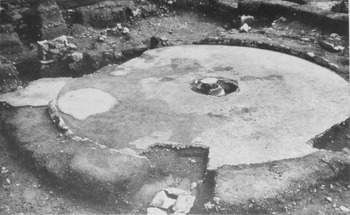
At this point we have to make clear that body cleanliness is a personal issue (one which can generate positive externalities) as a shared social value rather than a public good. But on the other hand, if a significant segment of the population has the economic ability to follow hygiene rules as a collective behavior, this can lead to collective hygiene which benefits the society as a whole. To achieve this the Athenian state ran public baths. Those citizens and metics who did not enjoy the privilege of having a bathtub in their homes, from the 4th century BCE, could resort to public baths known as balaneia (balaneion in singular). Travlos (Reference Travlos1971), who made a detailed study regarding the architectural constructions in Classical Athens, and Gill (Reference Gill2008: 209–210) argue that by the mid-5th century BCE the balaneia were well-established in Athens as well as in many other places in mainland Greece and elsewhere, such as Olympia, Isthmia, Delphi, Nemea, Corinth, Delos, Epidaurus, Eleusis, Eretria, Messene and Olynthus, Syracuse (South Italy). etc. (Figure 1).

They were further expanded during the Hellenistic (322–146 BCE) and Roman periods and can be found, among others, in Alexandria (Egypt) and elsewhere (Yegül, Reference Yegül1992). Therefore, before the famous baths of Rome, public baths existed in the Greek city-states too, as described by authors such as Pseudo-Xenophon (Constitution of the Athenians, 2.10). The earliest of these urban baths dates to the mid-5th century BCE and is located outside the Dipylon Gate in the Kerameikos of Athens.
Every citizen or metic could take a comfortable bath with hot water for a small fee in the balaneia facilities (Reference BressonBresson, 2016a). Thus, the balaneia services could essentially be seen, at least to some extent, as a publicly provided good (as a modern definition) where, in reality, the Athenian state bore the substantial and major part of the cost of operating these public infrastructures. Lindenlauf (Reference Lindenlauf and Gardner2004: 91) argues that the provision of these services enabled Athenian citizens to engage in and live up to new standards of cleanliness. Public baths were often located outside the walls of a city, examples of which can be seen in Athens, Piraeus, Eretria, and Eleusis. According to Gill (Reference Gill2008: 209) the location of the Kerameikos bath was outside the city walls. The Athenians and other Greeks had created enough baths on the outskirts of the city to reduce the risk of epidemics.
Furthermore, since various balaneia were close to hot springs, it could be argued that they were also related to what we nowadays characterize as geothermal energy, which is a form of a renewable energy by modern standards. This kind of energy was further exploited by the Greeks as a mechanism for curing several illnesses (Croon, Reference Croon1967). Many of these hot springs are still being exploited nowadays for curative purposes, such as those in Edipsos, in Methana, Pozar, and elsewhere.
The so-called gymnasia functioned under the same logic as the public baths. These were large athletic facilities, similar in idea to a modern fitness center, which were co-financed by both the public and the private sectors through the institution of gymnasiarchy Footnote 14 under a 3P logic. There were three public gymnasia in Athens (Academy, Lyceum, Cynosarges) where access was free to every free citizen or metic for taking a bath with hot water regardless of income and social class (Fisher, Reference Fisher, Cartledge, Millett and von Reden1998; Yegül, Reference Yegül1992).
As a final comment, Bresson (Reference Bresson2016a) praises the system of personal hygiene of the Greeks. His view contradicts directly with Garland (Reference Garland1998) who describes hygiene conditions in Classical Athens almost as awful. Garland argued that garbage piled up on the streets in huge quantities, creating a terrible stench and posing a serious health hazard, especially during the summer months. But Garland does not provide any kind of evidence as to how he reached such a view. Furthermore, he makes no mention at all of the existence of the crucial institutions of the koprologoi and the astynomoi for cleaning the streets and ensuring a high level of collective hygiene. In accordance with Gill, Lindenlauf, Bresson, and the above analysis, Antoniou (Reference Antoniou2007) mentions various primary ancient sources which testify to the interest of the Athenian authorities in keeping public spaces tidy with the construction of public toilets.
Another important element regarding the Athenian collective hygiene procedures is the construction of a public drainage system, through a system of sewers (Crouch, Reference Crouch1993: 22, 27). Liebeschuetz (Reference Liebeschuetz2015: 14) characteristically writes that:
‘In Greece the bringing of water into cities either by underground clay pipes or through rock-cut channels began early. At Athens the beginnings of a sewer system go back to the time when the Peisistratids (6th cent.) brought water to feed a fountain into Athens. It was gradually extended into a system of sewers to carry away storm and waste-water’.Footnote 15
As a final comment, Bresson (Reference Bresson2016a), an eminent historian on the economic organization regarding Greek antiquity, praises the system of personal hygiene of the Greeks to the point of arguing that the citizens of an ordinary Greek city would be able to give hygiene and cleanliness lessons to King Louis XIV of France and his court (17th AD).
5. Concluding remarks
This paper is an attempt to link some aspects of the Athenian economy in Classical times to a series of environmental institutions through their historical dimensions. With this paper we described the following environmental issues: (1) waste management policy through the existence of environmental auditing institutions, mainly the koprologoi and the astynomoi, and (2) a fertilizing technique and a recycling practice. These were reinforced by hygiene measures that functioned as a collective behavioral procedure.
We argued that the Athenians were aware that polluting their physical environment, urban and rural, generated negative externalities. Thus, through the introduction of specific institutions they implemented policies to discourage such behaviors. Special administrative bodies with the authority to impose heavy fines on offenders were set up for this purpose. The actual job of environmental protection was contracted out to private operators known as the koprologoi. We modeled the relationship between the public administrative body (the astynomoi) and the private operator (the koprologoi) as a Prisoner's Dilemma. Similarly, the Athenians understood that personal hygiene generated a positive externality, and the state subsidized its provision.
Our findings indicate that the success of the Athenian state to provide efficient environmental services to its citizens should be attributed to:
(1) the proper combination of institutions that were introduced and related to the provision by the state of what today we call environmental services;
(2) economic motives for those groups that were entrusted by the state to provide efficient environmental services, plus profit opportunities;
(3) the imposition of fines to the above groups in the event they provided subpar services;
(4) the imposition of fines for every Athenian citizen (and residents in general) who trespassed environmental rules;
(5) laws against environmental degradation;
(6) the efficient provision of other state activities (healthcare and healing services) that were indirectly linked to environmental protection and preservation (such as the services provided by the asclepieia); and
(7) the gradual development of a spirit of environmental awareness among the residents of Athens.
One could argue that the above findings are well known and commonly acceptable assumptions regarding how we perceive environmental policies nowadays around the world. On the other hand however, eminent scholars, in one or another way, have demonstrated that successful institutions are those that last and endure throughout the passage of time, even if there occur some historical interruptions, thus, in actuality consisting of intertemporal norms, rules and protocols of behavior according to the definitions of North (Reference North1981, Reference North1990), Hodgson (Reference Hodgson1997, Reference Hodgson2015a), Hodgson and Knudsen (Reference Hodgson and Knudsen2010), and Acemoglu and Robinson (Reference Acemoglu and Robinson2013). With the case study of Athens during Classical times we confirm that the above findings (1)–(7) have an intertemporal character.
Potential avenues for further research that this paper opens up are, first, a further focus on Environmental Economics issues through the prism of methodological approaches that link disciplines such as Institutional Economics, Economic History, and Historical Political Economy, as this article does. This is actually a call for introducing interdisciplinary research approaches so as to solve various problems that are associated with the environment as authors such as Simon et al. (Reference Simon, Shao-Chang Wee, Chin, Depierre Tindle, Guth and Mason2013) argue, among others. In most cases, solving environmental problems such as waste disposal, deforestation, loss of biodiversity, etc. requires complex solutions and combining the efforts of scientists from different research fields, or different specializations from the same research fields, as this paper does.
Another potential avenue is to link decisions on environmental issues to governance regarding modern societies. It is well known that decisions regarding introducing or abolishing new laws or decisions on state policy (e.g. war or peace) in Athens were taken and decided by the Athenian Assembly of citizens. But the difference between ancient and modern democracies lies in the fact that decisions regarding state policy or legislation (including environmental laws) were taken directly in ancient times, but indirectly by modern democracies through parliaments or independent regulatory bodies such as Central Banks.Footnote 16
If the Athenian paradigm of direct democracy can inspire modern policymakers on environmental issues, this is obviously related to the introduction at the level of municipalities or region, or even at the state level, of referendums on environmental issues, such as, for example, consultation between the local authorities and the local community before reaching a decision, for example, on the construction (or not) of more parks and green areas that create positive externalities. Another paradigm through referendum decisions on a popular basis could have been, for example, the introduction (or not) of more wind turbines or solar panel parks to replace lignite or other older types of polluting energy production technologies.Footnote 17
At present, environmental policy issues are at the forefront of international interest. The most current one is climate change. Solving these issues requires effective international cooperation. We believe that the Athenian paradigm can serve as a source of inspiration regarding such discussions, that is, improving the quality of decision-making on environmental issues for the present and the future, at the global level.
Except for the potential avenues, there are, of course, also some limitations regarding our research as a whole. The most noticeable is the absence of cliometric data so as to test our hypotheses, but this applies not only for Classical Athens, but also for every other ancient economy in general. In this case, we can only rely on the findings of historical research by using them cautiously, through interpretative tools from disciplines as those mentioned above.
As a final comment, based on the case of Athens during Classical times we believe (and hope) that we have explained convincingly the intertemporal nexus between the provision of environmental services that ensure a society's prosperity through the introduction of effective economic institutions that are linked to economic stimuli or disincentives to those involved in the provision of these environmental services.
We hope that this paper will further stimulate the interest of the academic community on related issues.
Acknowledgements
The authors wish to thank the editor and the anonymous reviewers for their valuable comments and suggestions that led to the significant improvement of this work.