


Introduction
While the evidence base on outcomes of CBT training programmes is starting to develop (Rakovshik & McManus, Reference Rakovshik and McManus2010), there is relatively little research focused on the process of training therapists (Bennett-Levy, Reference Bennett-Levy2006; Bennett-Levy et al. Reference Bennett-Levy, McManus, Westling and Fennell2009a). Typically, trainers use a variety of training strategies, such as pre-reading, didactic instruction, modelling, role-play, and visual or audio-recording review (Bennett-Levy et al. Reference Bennett-Levy, McManus, Westling and Fennell2009a; Friedberg & Brelsford, Reference Friedberg and Brelsford2013). Supervisors use similar strategies in clinical supervision, a primary way that therapists learn therapy skills (Milne, Reference Milne2009). The Personal Professional Development literature emphasizes the value of experiential learning (e.g. Kolb, Reference Kolb1984; Ravitz & Silver, Reference Ravitz and Silver2004) and reflective practice (e.g. Schön, Reference Schön1983; Rønnestad & Skovholt, Reference Rønnestad and Skovholt2003; Sheikh et al. Reference Sheikh, Milne and MacGregor2007; Bennett-Levy et al. Reference Bennett-Levy, Thwaites, Chaddock, Davis, Stedmon and Dallos2009b). Moreover, there has been increasing recognition that self-experiential work is important in the development of specific therapist skills (Bennett-Levy et al. Reference Bennett-Levy, McManus, Westling and Fennell2009a).
Self-Practice/Self-Reflection (SP/SR) was developed by Bennett-Levy and colleagues (Reference Bennett-Levy, Turner, Beaty, Smith, Paterson and Farmer2001) as a structured programme designed to give cognitive-behavioural therapists some personal therapy-like experience through practising CBT techniques on themselves, followed by reflection and evaluation of their experience. SP/SR has been used in two forms; either in pairs as ‘co-therapy’, or on an individual basis in a workbook format.
A central outcome of SP/SR studies with both novice and experienced therapists has been the perceived value of SP/SR in developing therapist skills (Bennett-Levy et al. Reference Bennett-Levy, Turner, Beaty, Smith, Paterson and Farmer2001, Reference Bennett-Levy, Lee, Travers, Pohlman and Hamernik2003; Farrand et al. Reference Farrand, Perry and Linsley2010; Haarhoff et al. Reference Haarhoff, Gibson and Flett2011; Thwaites et al. Reference Thwaites, Bennett-Levy, Davis, Chaddock, Whittington and Grey2014). Themes emerging from these studies have included perceived gains in conceptual understanding and skills (Bennett-Levy et al. Reference Bennett-Levy, Turner, Beaty, Smith, Paterson and Farmer2001; Haarhoff et al. Reference Haarhoff, Gibson and Flett2011), therapist technical skills (Bennett-Levy et al. Reference Bennett-Levy, Turner, Beaty, Smith, Paterson and Farmer2001, Reference Bennett-Levy, Lee, Travers, Pohlman and Hamernik2003), and in particular therapist interpersonal skills such as empathic attunement and reflective skills (Bennett-Levy et al. Reference Bennett-Levy, Lee, Travers, Pohlman and Hamernik2003). Some studies have also reported significant personal gains from SP/SR (e.g. Davis et al. Reference Davis, Thwaites, Freeston and Bennett-Levy2014).
However, Bennett-Levy & Lee (Reference Bennett-Levy and Lee2014) have observed that while the great majority of participants seem to benefit from SP/SR, not all participants benefit to the same extent, and there are some who derive little or no benefit. Participants may have idiosyncratic reactions to SP/SR. Strong engagement with the SP/SR programme appears to be essential to maximize the experience of benefit (Bennett-Levy & Lee, Reference Bennett-Levy and Lee2014). Recently there has been growing interest in SP/SR (Fraser & Wilson, Reference Fraser and Wilson2010; Haarhoff & Farrand, Reference Haarhoff, Farrand, Dryden and Branch2012; Gale & Schröder, Reference Gale and Schröder2014; Thwaites et al. Reference Thwaites, Bennett-Levy, Davis, Chaddock, Whittington and Grey2014; Bennett-Levy et al. in press). However, if SP/SR programmes are to be made more widely available, there is a need for greater understanding of individual differences in participants’ SP/SR experiences and outcomes; in particular we need to understand the kind of idiosyncratic reactions participants may have in order to enhance engagement, increase opportunities for the kind of benefits the majority of participants report (Fraser & Wilson, Reference Fraser and Wilson2010; Thwaites et al. Reference Thwaites, Bennett-Levy, Davis, Chaddock, Whittington and Grey2014), and reduce occasional negative reactions as a result of SP/SR (Bennett-Levy et al. Reference Bennett-Levy, Turner, Beaty, Smith, Paterson and Farmer2001; Thwaites et al. Reference Thwaites, Bennett-Levy, Davis, Chaddock, Whittington and Grey2014). Single-case methodology is particularly appropriate for capturing idiosyncratic experiences (McLeod, Reference McLeod2010). Using a single case design to provide in-depth analysis of idiosyncratic experiences was the primary aim of the present study.
A further aim of the study was to begin to move away from the primarily qualitative methodologies employed in most of the published studies (e.g. Bennett-Levy et al. Reference Bennett-Levy, Turner, Beaty, Smith, Paterson and Farmer2001, Reference Bennett-Levy, Lee, Travers, Pohlman and Hamernik2003; Farrand et al. Reference Farrand, Perry and Linsley2010; Fraser & Wilson, Reference Fraser and Wilson2010) towards a more quantitative approach, as recently suggested by Haarhoff & Farrand (Reference Haarhoff, Farrand, Dryden and Branch2012) and Thwaites et al. (Reference Thwaites, Bennett-Levy, Davis, Chaddock, Whittington and Grey2014). A methodology was therefore required which remained close to participants’ idiosyncratic experiences of SP/SR, thereby building on previous qualitative studies, but which also introduced an element of quantification and quasi-experimental design. This may be considered a primarily exploratory piece of work which capitalizes on natural training, not an experimental study employing rigorous control. Rather, it should be considered an initial attempt to introduce a level of quantification to the empirical study of SP/SR. Accordingly, this study employed a single-case methodology to investigate the individual learning experiences of a cohort of CBT trainees undertaking a workbook-based SP/SR programme as part of their training.
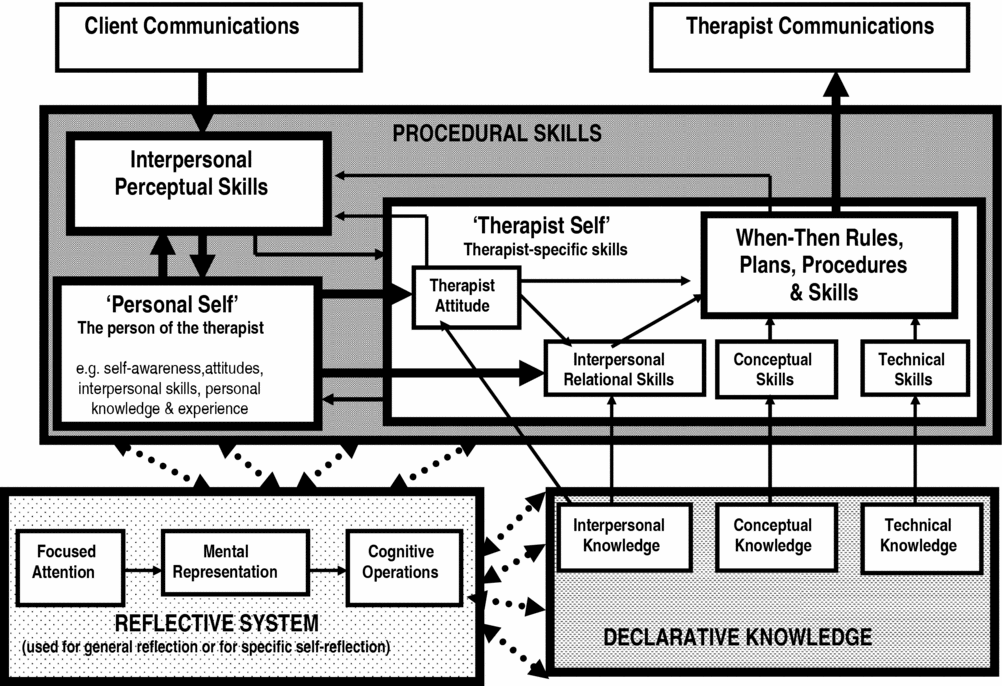
In this paper, the Declarative-Procedural-Reflective (DPR) model (Bennett-Levy, Reference Bennett-Levy2006; Bennett-Levy & Thwaites, Reference Bennett-Levy, Thwaites, Gilbert and Leahy2007) provides a frame of analysis for interpreting the results. The DPR model has been widely adopted as a model of therapist skill development (e.g. Kuyken et al. Reference Kuyken, Padesky and Dudley2009). The model, presented in Figure 1, consists of three major information processing systems to describe how therapists learn therapy skills: the declarative, procedural and reflective systems.
The Declarative-Procedural-Reflective model of therapist skill development (adapted from Bennett-Levy, Reference Bennett-Levy2006, Bennett-Levy & Thwaites, Reference Bennett-Levy, Thwaites, Gilbert and Leahy2007; Bennett-Levy et al. Reference Bennett-Levy, Thwaites, Chaddock, Davis, Stedmon and Dallos2009b).

The declarative system is the repository of information and knowledge about therapy; for instance conceptual, technical and interpersonal knowledge that might be gained from reading books or attending lectures. The procedural system is characterized as the ‘storehouse of skills’ (Bennett-Levy, Reference Bennett-Levy2006); the application of declarative knowledge in practice (skills-in-action).
The third major system of the DPR model is the reflective system. This system plays a vital role in skill development as it is through reflection that the implications of knowledge can influence what a therapist does, and conversely, it is through reflection that a therapist's actions can consolidate or adapt existing knowledge, and contribute to new learning (Bennett-Levy et al. Reference Bennett-Levy, Thwaites, Chaddock, Davis, Stedmon and Dallos2009b). The content of a learner's reflections may therefore provide important insights into the nature and form of their learning.
A further important distinction within the DPR model is the distinction between the ‘personal self’ or ‘person of the therapist’ (formerly known as the self-schema; Bennett-Levy, Reference Bennett-Levy2006) and the ‘therapist self’ (formerly known as the self-as-therapist schema). The model suggests that as a therapist develops therapeutic skills, they are developing a therapist self with specific ‘therapist skills’. However, these therapist skills continue to be influenced by, and in turn influence the pre-existing personal self, particularly in the interpersonal skills domain, where personal self perceptual skills (e.g. empathic attunement), attitudes and communication skills can influence the degree to which therapists exhibit these qualities in their therapeutic role. This is clearly an important feature of the DPR model for understanding the idiosyncratic learning experiences of therapists, since it implies that personal self learning and development may be necessary for optimum therapist self skill development.
Accordingly, the present study aimed to examine idiosyncratic experiences of trainees undertaking SP/SR in a workbook format, using self-ratings of therapeutic skill as an indicator for gauging learning outcome, supplemented by qualitative data from reflections on their learning and experiences. Analysis of these idiosyncratic experiences through the lens of the DPR model may help to provide guidance for enhancing the effectiveness of future SP/SR programmes.
Method
Participants
A cohort of 10 CBT trainees was recruited from a 1-year CBT diploma course. The course utilized standard training procedures such as workshops, modelling, role-plays, reading, clinical supervision, case studies, and supervisor-rated video-recordings (one per semester) of clinical sessions. Additionally, SP/SR and its evaluation formed a routine, albeit formative, part of the course. Of the original cohort, two trainees left the course altogether, and therefore did not complete SP/SR. The other eight trainees all completed the SP/SR programme. However, four of the trainees did not submit sufficient data to be included in the study, (defined by failure to submit four or more weekly reflections and/or failure to complete their self-monitoring for three or more consecutive weeks). Therefore, although they completed a sufficient amount of the programme to enable them to pass the course, they were excluded from the analysis. From post-course interviews, it appears that although all eight participants viewed SP/SR as benefitting them personally, the four study ‘drop-outs’ prioritized their summative assignments over SP/SR reflections and self-monitoring due to the time demands of the course.
The remaining four trainees who are included within the present study were all experienced mental health professionals from a nursing background who had previously completed intermediate-level CBT training.
Materials
Participants worked through an SP/SR manual, which was organized as a 12-week self-experiential programme, based on the manual used in the Bennett-Levy et al. (Reference Bennett-Levy, Turner, Beaty, Smith, Paterson and Farmer2001) study. The self-practice element consisted of the kind of activities that you would expect to find in a traditional 12-week course of CBT (e.g. case conceptualization, behavioural experiments, continuum, etc.). Participants applied these techniques to their own professional or personal issues. They then reflected on their self-practice, with a series of questions to help structure their reflections. These reflections were summarized, anonymized, and then shared with the rest of the cohort completing SP/SR.
Design and procedure
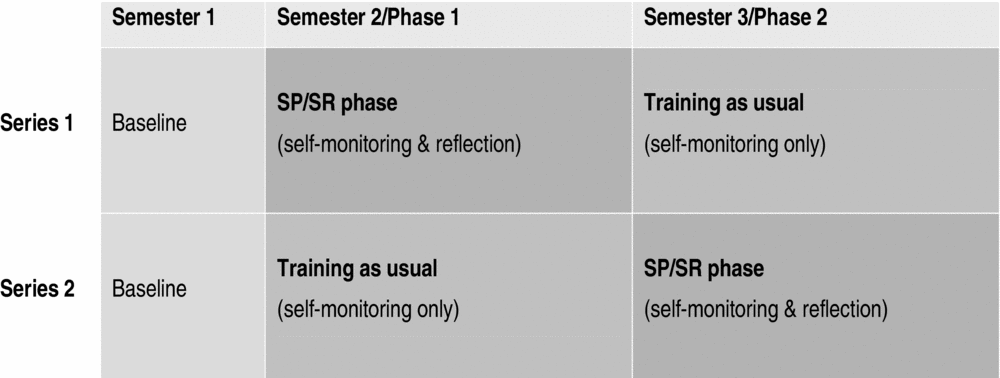
This study employed a quasi-experimental single-case hybrid design. Elements of traditional single-case design were included with two series of trainees (series 1 and 2) forming a simple multiple baseline (although within-series replication was achieved only for series 1 due to attrition). The design capitalized on the existing semester structure of the course to define the timings of phase changes (see Fig. 2). The core quantitative element of the study consisted of weekly self-ratings of specific therapeutic skills, rated weekly across both series. Two sources of qualitative data were used: the weekly reflections, and a semi-structured interview which was conducted following completion of SP/SR.
Design and measurement schedule.
The two series of trainees completed SP/SR at different times in the 1-year programme. Figure 2 illustrates these differences. In the present study, three of the four single cases are drawn from series 1 (n = 5) trainees, and one case from series 2 (n = 5). During baseline (semester 1), all trainees completed their self-monitoring scale three times. In semester 2, series 1 trainees undertook the SP/SR programme over 12 weeks. During this time, trainees completed their idiographic self-monitoring scale on a weekly basis. At the end of this period, they participated in a semi-structured interview. Meanwhile, series 2 trainees completed their weekly self-monitoring scale as per series 1. During this phase, for both groups, teaching and the rest of the course proceeded as usual. In semester 3, series 2 trainees undertook the SP/SR programme, while series 1 trainees continued self-monitoring using their idiographic scale on a weekly basis. For series 1 trainees, this phase should be considered a consolidation phase rather than a return to baseline, since learning cannot subsequently be ‘undone’.
Measurement
Trainees constructed an idiographic rating scale which was completed at baseline, and then on a weekly basis throughout semesters 2 and 3. They were asked to select four items from the Cognitive Therapist Self-Monitoring Scale (Thwaites et al. Reference Thwaites, Bennett-Levy, Freeston, Armstrong and Cromarty2003; Davis et al. Reference Davis, Thwaites, Freeston and Bennett-Levy2014) and the Cognitive Therapist Empathy Scale (Thwaites et al. Reference Thwaites, Freeston, Bennett-Levy, Cromarty and Armstrong2003; Davis et al. Reference Davis, Thwaites, Freeston and Bennett-Levy2014) according to those they felt to be the most central to CBT, the most challenging, and the items they felt most and least competent in. Trainees were also given the opportunity to generate two items in line with their personal learning goals, and were asked to rate their overall mood.
The Cognitive Therapist Self-Monitoring Scale (CTSMS) asks trainees to rate their competence in 12 aspects of CBT in their practice over the past week. These 12 skills correspond to the items in the Cognitive Therapy Scale – Revised (CTS-R; Blackburn et al. Reference Blackburn, James, Milne, Baker, Standart, Garland and Reichelt2001). Items on the CTSMS are rated on a visual analogue scale (0–100) where 0 represents low competence and 100 represents high competence. The Cognitive Therapy Empathy Scale (CTES) is a similar scale developed to assess trainees’ perceptions of empathic skill in their practice. It consists of 15 items covering cognitive, behavioural, and emotional aspects of the way in which a therapist comes to understand, and communicate their understanding of the client's difficulties. Both of these scales assess a trainee's perception of their skills.
Qualitative data were obtained through the trainees’ weekly reflections, which were submitted as part of their SP/SR experience. An interview schedule was developed to provide further qualitative information about trainees’ experience of SP/SR which aimed to provide an additional context for the participants’ quantitative ratings. Within this interview, participants were asked what they believed any changes in self-perceived skill was attributed to, and about any extraneous factors which could have impacted on their sense of their skills (e.g. life events, etc.).
As part of their course assessment, participants also submitted videos of sessions in each of the three semesters of the course. Supervisors rated the recordings on the CTS-R (Blackburn et al. Reference Blackburn, James, Milne, Baker, Standart, Garland and Reichelt2001). The CTS-R ratings are not included in the study data as they do not provide the level of analysis needed to determine the idiosyncratic experiences or skill level of trainees on a week-by-week basis.
Data analysis
Visual inspection is a standard method of analysis for single-case research (Kazdin, Reference Kazdin2003). Data from the participants’ weekly self-monitoring were graphed, and missing data were substituted with the median of two adjacent points in order for the following functions to be calculated. To aid interpretation, non-parametric smoothed trend lines were added using the smoothing function in SPSS (SPSS Inc., USA). Linear trend lines were also added using the linear regression function in Microsoft Excel (Microsoft Corp., USA). The qualitative data provided a context for building an understanding of each participant's SP/SR experience. Mood ratings were graphed alongside self-ratings of skill in order to check whether changes in mood corresponded to changes in perceived skill.
Two additional reviewers acted as a validation check for the interpretation of the qualitative data. Both were experienced CBT therapists/supervisors. The first reviewer (second author) was a senior tutor on the CBT diploma course and also field supervisor of the research. The second, independent reviewer had no prior involvement with the project and was recruited due to their known interest and expertise in reflective practice.
The reviewers were asked individually to categorize each reflective summary submitted by all participants. They were asked to say whether they thought the summary demonstrated that participants were reflecting on themselves as a person (‘personal self’), themselves as a therapist (‘therapist self’), or both. There was also an additional category, ‘other’, for reflections which did not fit easily under these categories. Descriptions and definitions were provided as an aide-mémoire.
The percentage agreement between the reviewers and the principal researcher's analysis of the reflections overall was 79.5% (varying from 70% to 92% across individual participants). There was consensus on the overall categorization of the content of the participants’ reflections in three out of four participants. The discrepancy was for participant 4 where the overall categorization of the reviewers did not match that of the principal researcher.
Results
The results for each participant will be described on an individual basis; however, it is worth noting that visual analysis of the participants’ weekly self-monitoring data revealed four key features common across all participants. First, each of the four participants seemed to demonstrate different patterns of learning over the course of self-monitoring. Second, different items rated by the same participant showed a similar pattern of ratings over time. Third, the quantitative and qualitative data suggested that all participants were responsive to SP/SR. Finally, there were no apparent patterns in mood ratings which could account for shifts in self-ratings of skill. Consistent with the data, all participants attributed learning to SP/SR.
Participant 1, series 1
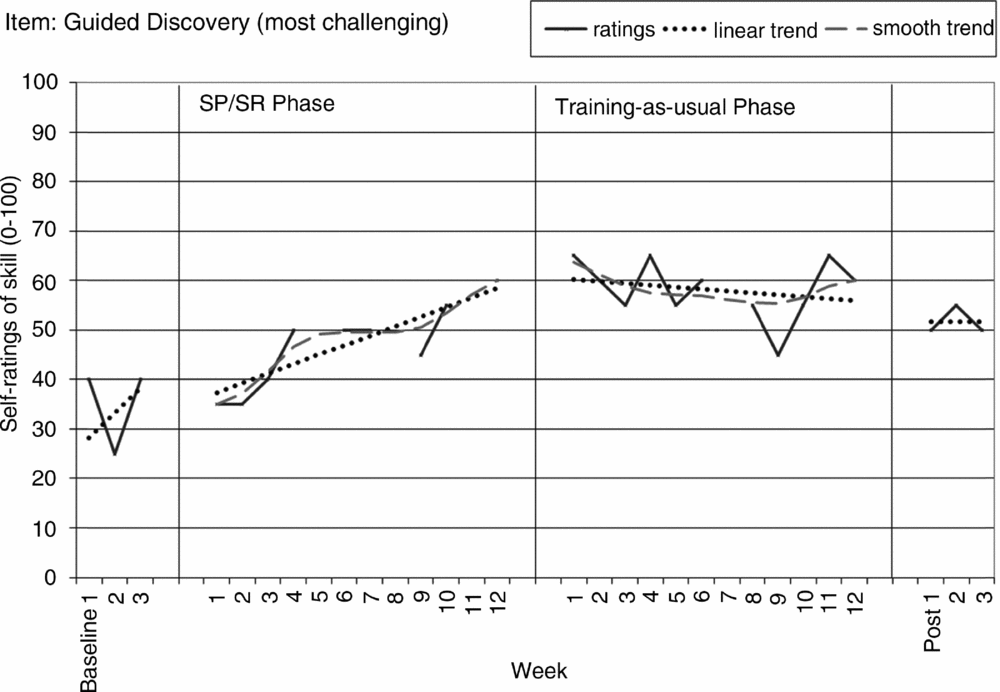
Visual inspection of graphed data for this participant consistently showed what could be described as a pattern of steady gain over the SP/SR phase and a subsequent fall in ratings in the subsequent training continuation phase. Figure 3 shows the ratings for a representative item from the participant's self-monitoring. For this participant, the magnitude of gains over SP/SR, and losses in the following phase differed between the individual items monitored.
Example of pattern of ratings for participant 1. Item: ‘Guided discovery’ (most challenging).
By examining closely the participant's account of their learning, it can be seen that initially SP/SR was viewed as purely a professional endeavour, and the participant seemed to make a conscious effort to avoid a personal self response.
It's probably been helpful in terms for me not to be too caught up in emotion, so that I can use the model more objectively. (Reflection from week 3)
However, gradually the participant did begin to experience an emotional response to SP/SR, and there was a realization about the importance of emotional aspects of the experience, particularly in response to the behavioural experiments (week 5) and responsibility pie charts (week 8).
Acknowledging level of emotional impact is something which I intend to focus upon more in the future. (Responsibility pie charts, week 8)
Thus, while the trainee clearly engaged at a professional level with SP/SR from the beginning, it took much longer to engage at a personal level, and even then this seems not to have occurred to the same extent. This pattern was consistent with the reviewers’ categorization of this participant's reflections. Based on the evidence, it would seem that through SP/SR participant 1 engaged for the most part at the therapist self level.
Participant 2, series 1
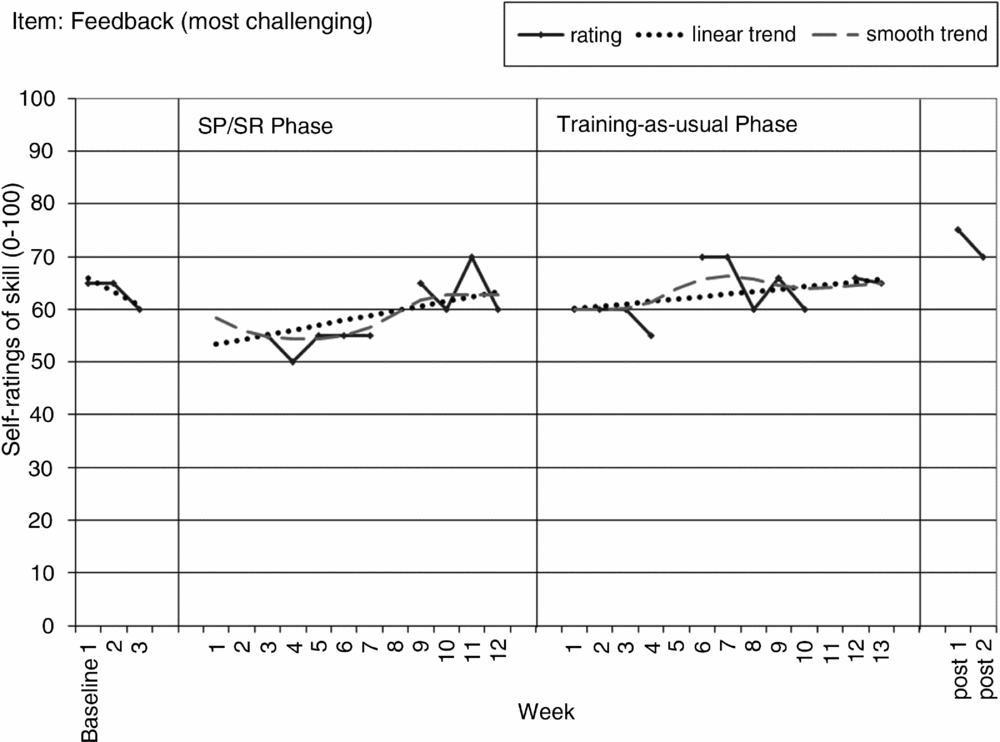
Figure 4 shows the pattern of self-monitoring ratings for a representative item from the participant's self-monitoring. Specific SP/SR activities that were reported to have had a particular impact on the trainee (e.g. responsibility pie charts, week 8) corresponded to shifts in perceived competence on the CTSMS and CTES. However, these perceived shifts were not maintained once the activity was removed. During the semi-structured interview, the participant attributed ‘significant’ changes in professional skills and ability to self-reflect to SP/SR; however, there would seem to be little evidence of improvement in skills ratings over the whole monitoring period.
Example of pattern of ratings for participant 2. Item: ‘Feedback’ (most challenging).
The content of the weekly reflections were almost entirely devoted to personal self meanings and implications. Even when the reflections did consider the wider implications of personal learning, the participant tended to draw abstract conclusions about the nature of CBT that were still focused on their personal application of the model. It was not until the participant was drawing together his overall experience at the end of SP/SR that the implication of his learning became contextualized in terms of therapist self implications for practice.
I now recognize how my own schemas and beliefs can be triggered/strengthened/weakened . . . SP/SR . . . allowed me to ‘step out’ of the therapist's role. (Semi-structured interview)
If the first participant was engaging mainly at therapist self level, this participant may be characterized as engaging mainly at the personal self level. Again this interpretation was supported by the reviewers. Here the focus on the personal self, largely to the exclusion of the therapist self, is correlated with a small degree of change in the participant's perceived therapeutic skills over time.
Participant 3, series 1
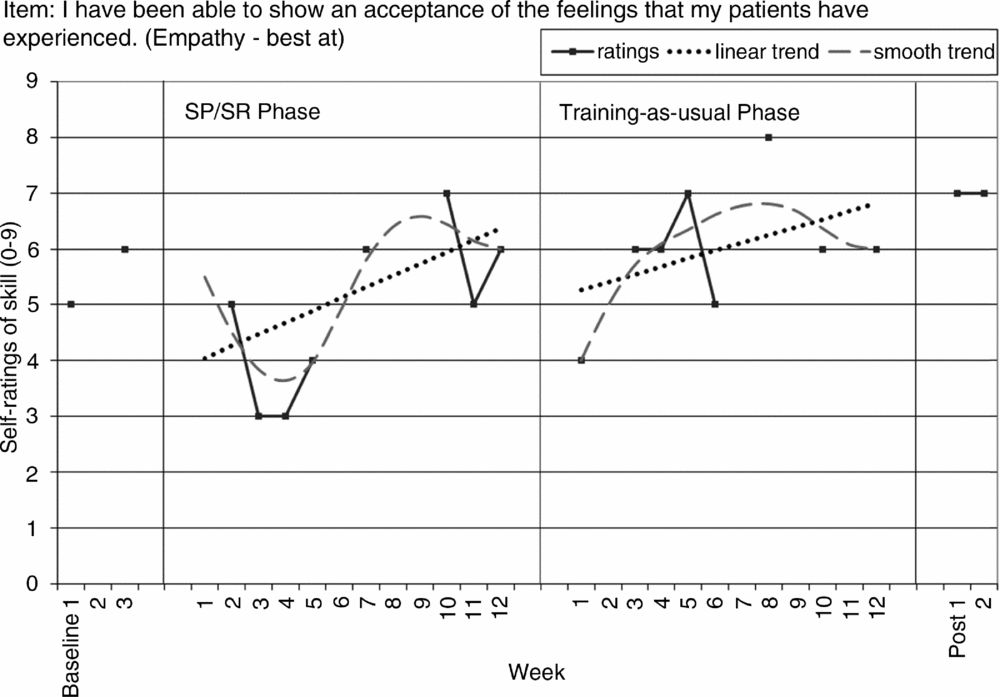
This participant also attributed significant changes in their practice to SP/SR. This was consistent with his weekly self-monitoring, which shows evidence of early changes in stable patterns occurring at the introduction and withdrawal of SP/SR. The greatest gains appear to be during the SP/SR period, with progress maintained once SP/SR is removed, albeit at a lower rate. These features can be seen in Figure 5, which shows the participant's ratings of a representative item from his idiographic scale.
Example of pattern of ratings for participant 3. Item: ‘I have been able to show an acceptance of the feelings that my patients have experienced’ (empathy – best at).
From the qualitative data it seems that this participant not only engaged both the personal self and therapist self from the beginning of SP/SR, but also integrated these within the weekly reflections.
Progress has been slower than I expected . . . I have refined my goals a little since we started at week one and I’m definitely becoming more focussed on this. In cognitive therapy clear goals are, I’m beginning to understand, very important for the success of the therapy. I’m also thinking about some recent clients and it's those clients with whom I’ve not worked to identify some reasonable goals that the therapy has come unstuck somewhat. (Reflection, week 3)
This demonstrates how the participant was trying to see CBT through the eyes of a client, experiencing the impact of therapy at a personal level, reflecting on the general implications of learning for practice, and applying these principles to casework.
The DPR model suggests that work on the linkage between the personal self and the therapist self may be required for optimal learning, especially with regard to the development of interpersonal skills. It is perhaps unsurprising therefore, that this participant's self-ratings seemed to show the greatest improvement over the SP/SR phase, or that his ratings of interpersonal skills showed the greatest and most stable improvement of all the items monitored.
Participant 4, series 2
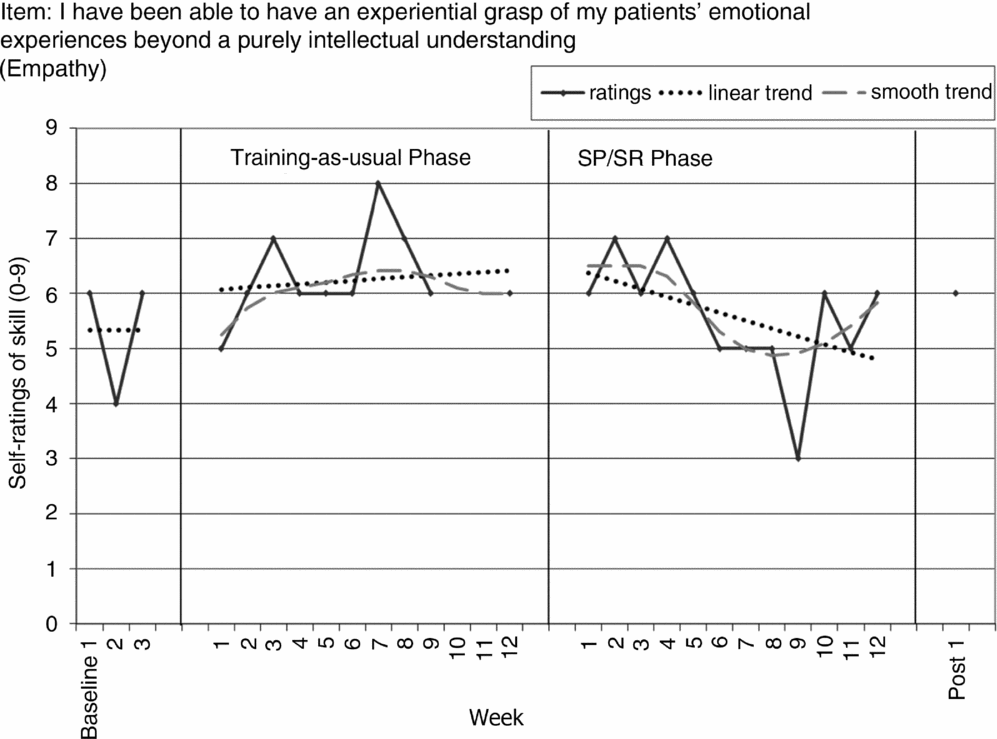
This participant was from series 2, in which SP/SR was completed in the final semester of training. Here, attributions of benefit from SP/SR were less clearly stated than the other participants. The participant reported that SP/SR had a ‘significant impact’ on professional skills (semi-structured interview), but also that it was difficult to say how SP/SR had contributed in addition to standard training, particularly supervision. Figure 6 shows the ratings of a representative item from the self-monitoring. There is clear evidence of a change to a stable pattern of ratings upon the introduction of SP/SR; however, in contrast to the other participants, this represented a marked downward trend in the ratings. Although there is some improvement in ratings towards the end of the SP/SR phase for the item shown in Figure 6, not all items monitored showed this recovery, and for all items, post-SP/SR ratings were lower than pre-SP/SR ratings. There is no evidence to suggest that the participant experienced an important life event, or that standard training and supervision were disrupted in any way.
Example of pattern of ratings for participant 4. Item: ‘I have been able to have an experiential grasp of my patients’ emotional experiences beyond a purely intellectual understanding’ (empathy).
One interpretation of the evidence could be that SP/SR may have had negative consequences for this participant's development. However, by further examining the participant's account, there may be reason to reconsider this interpretation.
I realized I wasn't as good as I thought . . . it's a positive thing because it means I’m learning . . . I gained a better perspective on my strengths and weaknesses but I didn't feel de-skilled. (Interview)
This would suggest that the decline in ratings during the SP/SR phase may be due to gaining a deeper level of insight into current skills and abilities through their experience of SP/SR, leading to a recalibration of competency ratings, and would therefore represent evidence that a different kind of change had occurred due to SP/SR. Such an interpretation is consistent with other studies of trainee development which have suggested that initially trainees ‘don't know what they don't know’; and that part of the process of skill development is developing greater insight, leading to a shift in the validity or accuracy of self-monitoring ratings (Bennett-Levy & Beedie, Reference Bennett-Levy and Beedie2007; Rakovshik & McManus, Reference Rakovshik and McManus2010).
However, this trainee's reflections also showed less detail and depth and their content, along with his responses in the post-programme interview, were very much focused on his learning experience and the goal of maximizing the acquisition of knowledge and skills. Therefore, while the reviewers categorized this participant's reflections as mainly at the personal self level, the principal researcher (first author) categorized the reflections differently, identifying that the content was largely about their learning experience, and reaching their learning potential. An alternative understanding may be that the participant was approaching SP/SR as a learner of therapy. This type of engagement may be defined in similar terms as the therapist self, for example, the ‘learner self’.
This participant's experience of SP/SR highlights the potential usefulness of additional data about participants’ experiences of this type of programme, including the content or targets of their self-practice.
Discussion
Visual inspection of the data revealed evidence of individual differences in response to SP/SR as measured by ratings of perceived competence. The differential impact for individual trainees was examined by considering their relative focus on the personal self and therapist self when engaging with SP/SR. Participant 1 engaged mainly at a therapist self level, where perceived development of skills was not maintained when SP/SR was removed. Participant 2 demonstrated personal self engagement, where any perceived development of skills was not maintained when SP/SR activities were withdrawn. Participant 3 seemingly integrated therapist self and personal self engagement and showed greater perceived development which was maintained when SP/SR was removed. For participant 4, several hypotheses were considered to explain a pattern of ratings representing either the drop in skill or a readjustment of perceived competence, with little recovery of pre-SP/SR levels. It is recognized that this should be considered an interpretation of the data and is as such, speculative in nature.
However, this interpretation seems to build on the suggestion by Bennett-Levy & Lee (Reference Bennett-Levy and Lee2014) that level of engagement with SP/SR and the impact of SP/SR are closely related. By adopting an individual case design, the present study may be seen to add an extra layer to our understanding, highlighting the idiosyncratic nature of participants’ quality of engagement with SP/SR and the possible relationship of different patterns of engagement with differential impact.
Further discussion of these findings follows in two sections. First, we discuss in more detail the idiosyncratic features of participant's experience of SP/SR in relation to theory; and second, we discuss implications for the SP/SR programme itself.
Accounting for idiosyncratic features
In the Results section, the DPR model provided the frame of analysis for interpreting the data. The DPR model proposes that optimum skill development occurs when both the personal self and the therapist self are engaged and when reflection encompasses both selves (Bennett-Levy & Thwaites, Reference Bennett-Levy, Thwaites, Gilbert and Leahy2007; Bennett-Levy et al. Reference Bennett-Levy, Thwaites, Chaddock, Davis, Stedmon and Dallos2009b). Participant 3, who appeared to demonstrate the greatest evidence of benefit from SP/SR, could be described as fulfilling the conditions for optimal skill development since he seemed to be investing in himself as a person as well as himself as a therapist through the experience.
Conversely, participant 4 might be regarded as the participant who benefited least from the experience. One theory explaining this might be that the participant approached SP/SR primarily in the attitude of a learner of therapy. While the DPR model does not account for this level of identity or schema, this can be seen as consistent with the central themes of the model, that a therapist exists not only as a therapist self, in a professional role, but also as a person, in various roles depending on the context. In fact, a unique aspect of the therapist in training is that they occupy an identity not only as a therapist and a person, but also as a learner. In judging his progress in developing skills, engagement with the trainee self may have increased his awareness of what he did not know (Bennett-Levy & Beedie, Reference Bennett-Levy and Beedie2007) and/or may have resulted in negative self-cognitions about himself as a therapist. Strong identification with the trainee self may not have been conducive to gaining maximum benefit from SP/SR and so may be a mismatch for this programme.
Issues and implications for the SP/SR approach
If the hypothesis suggesting that level of engagement with SP/SR is highly correlated with the impact of SP/SR (Bennett-Levy & Lee, Reference Bennett-Levy and Lee2014) is supported by further research, the importance of the type and extent of engagement with SP/SR needs to be carefully considered, perhaps through the increased use of pre-SP/SR orientation. On the basis of this study we would recommend that in the same way as we would socialize a patient to therapy, it may also be important to socialize participants to SP/SR. This would include information about how approaching the programme in different ways can impact on the degree or nature of benefit. Part of this might be an increased emphasis at the beginning of the programme on goal setting, with explicit reference to goals for the therapist self and/or the personal self. We would also echo our previous suggestion that reflective skill and ability should not be assumed, and that supplementary reading and more guidance is needed on what reflective practice actually is (Bennett-Levy et al. Reference Bennett-Levy, Thwaites, Chaddock, Davis, Stedmon and Dallos2009b). It may be that previous experience of self-reflection might prime trainees towards fuller engagement in SP/SR and therefore increase their potential for learning.
The single-case study design used in this study has both strengths and limitations. The strength is that it enabled fine-grained analysis of differential patterns of engagement with the personal self, therapist self and trainee self, and the possible relationship with impact of SP/SR. The mixed methods combination of quantitative and qualitative data were particularly helpful in this respect. The results make a valuable contribution to our understanding of individual trainees’ experiences of SP/SR and implications for future programmes.
However, the study also has a number of limitations. First, it was not a controlled, experimental study. Rather, it was naturalistic, relying very much in its design to the structure of the existing CBT course. We do not know how generalizable the findings are from the four participants presented here although this data fits with qualitative findings in other studies of SP/SR (Bennett-Levy et al. Reference Bennett-Levy, Turner, Beaty, Smith, Paterson and Farmer2001, Reference Bennett-Levy, Lee, Travers, Pohlman and Hamernik2003). Further study of individual patterns of engagement and corresponding outcomes are needed to draw stronger conclusions. It may be possible in the future to introduce some level of manipulation of personal-self and therapist-self engagement with the revision and development of specific reflective exercises. However, this would conceivably require large N studies which may not as yet be justified.
Second, due to journal space limitations only the most striking and salient features of the data could be included and discussed at any depth. Therefore researcher selectivity and bias in the presentation of data remains a possibility, although care was taken to avoid this through consultation with participants and colleagues. While it was beyond the scope of this study to recruit a fully independent review team to review all the data, methodologies such as hermeneutic single case efficacy designs (HSCED; Elliott, Reference Elliott2002) would be one way to take research into individual responses to SP/SR further.
Third, individual differences in learning trajectories could be due to extra-SP/SR factors not measured or monitored in this naturalistic study. In a previous study, Bennett-Levy & Beedie (Reference Bennett-Levy and Beedie2007) found that experiences such as feedback from supervisors, problematic sessions with patients, and concurrent life stresses all affected self-ratings of CBT skill. In this instance, it is unlikely that supervisor ratings of video-recordings significantly influenced self-rated skill for the three participants in series 1 who undertook SP/SR in semester 2, as they only received these ratings before the start (end of semester 1) and after the end of the SP/SR programme (end of semester 2). The situation with participant 4 (from series 2) is less clear as there is no record of the specific date on which they received their supervisor rating. While the impact of concurrent life events on self-ratings in the present study can never be ruled out, it was notable that all participants in their post-programme feedback attributed the changes in self-rating during the SP/SR programme to the SP/SR programme itself.
Fourth, in future studies, it would be helpful to link self-ratings and supervisor ratings more closely since self-assessment may often be inaccurate (Sburlati & Bennett-Levy, Reference Sburlati, Bennett-Levy, Sburlati, Lyneham, Schniering and Rapee2014); and to determine the extent to which other life experiences may affect self-ratings during a SP/SR programme (Bennett-Levy & Beedie, Reference Bennett-Levy and Beedie2007; Bennett-Levy & Lee, Reference Bennett-Levy and Lee2014). This study necessarily relied on idiosyncratic self-report measures rather than more objective measures of skill development. Objective measures that can accurately assess level of skill week-by-week in this naturalistic context are not currently available without huge demands on supervisors’ time. However, it is clearly important that future SP/SR studies move towards more objective ways of determining the impact of SP/SR (Thwaites et al. Reference Thwaites, Bennett-Levy, Davis, Chaddock, Whittington and Grey2014).
Fifth, we used the DPR model as a frame of analysis, which, while apparently helpful, may also have limited the interpretation of the data.
Sixth, the study relied on participants’ reflective summaries which they knew would be circulated to their peers, albeit in anonymized form. It is possible that these may have been censored for public consumption, and may not have accurately reflected the participants’ actual experiences.
Summary
In conclusion, within its context, this study adds an important dimension to our understanding of SP/SR. Participants seem to approach SP/SR in different ways, sometimes engaging preferentially with the personal or therapist aspects of the programme, sometimes engaging well with both personal self and therapist self, and perhaps sometimes engaging in SP/SR with other aspects dominant such as the trainee self. These different patterns may reflect participants’ level of engagement in SP/SR. In line with the DPR model, it is argued that an important feature for gaining maximum benefit is the nature and level of engagement, specifically the extent to which a trainee engages the personal self and therapist self. If this proves to be true, then the study has significant implications for the form and content of future SP/SR programmes.
Ethical standards
This study was registered with and approved by the Research and Development Department of Northumberland Tyne and Wear NHS Foundation Trust.
Acknowledgements
The authors thank Laura Lockhart, Paul Cromarty and Melanie Davis for their help and support of the project. We are especially grateful to the trainees who took part in this study for sharing their experiences of SP/SR with us.
This research received no specific grant from any funding agency, commercial or not-for-profit sectors.
Declaration of Interest
None.
After reading this paper the reader should expect the following:
(1) To have a better understanding of SP/SR and its current evidence base including its potential utility as a training and Personal Professional Development tool.
(2) To recognize that trainees engage with SP/SR programmes at different levels and that different kinds of engagement may result in different learning outcomes.
(3) To be able to apply the concept of levels of engagement to their own reflective and self-practice activities, and reflect on whether they are maximizing their learning from these activities.



Comments
No Comments have been published for this article.