Introduction
Nasal obstruction due to septal deviation is a common problem in both adults and children. It arises from deformities of the quadrilateral cartilage, maxillary crest, vomer or perpendicular plate of the ethmoid bone, which results in narrowing of the nasal airway. Management may involve medical therapy for mucosal inflammation or surgical correction.
In adults, septoplasty is considered the gold standard and has shown to be more effective than medical treatment alone.Reference Carrie, O’Hara, Fouweather, Homer, Rousseau and Rooshenas1, Reference van Egmond, Rovers, Hannink, Hendriks and van Heerbeek2 In children, however, management remains controversial because of concerns that surgery may affect midfacial growth.Reference Zieliński, Costa, Cherkes, Glibbery, Kovács and Mitrea-Sirețeanu3 The sphenodorsal and sphenospinal growth plates are within the quadrangular cartilage, raising the risk of growth disturbance during surgical intervention.Reference Howard, Williams, Navaratnam, Haloob, Stoenchev and Saleh4
Recent studies suggest that conservative paediatric septoplasty can be both effective and safe, with little impact on facial development.Reference Howard, Williams, Navaratnam, Haloob, Stoenchev and Saleh4–Reference El Shalma, Rabie, El Begermy and Mounir7 Furthermore, untreated nasal obstruction in children has been linked to significant morbidity, including sleep-disordered breathing, craniofacial abnormalities and a reduced quality of life.Reference Howard, Williams, Navaratnam, Haloob, Stoenchev and Saleh4–Reference El Shalma, Rabie, El Begermy and Mounir7
The American Rhinological Society has recently issued an expert best-practice statement outlining recommendations for managing paediatric septal deviation and highlighting areas in need for further research.Reference Rose, Makary, Soler, Kimple, Pearlman and Ramaswamy6 Nonetheless, concerns persist regarding the limited long-term outcome data in this group.Reference Zieliński, Costa, Cherkes, Glibbery, Kovács and Mitrea-Sirețeanu3, Reference Howard, Williams, Navaratnam, Haloob, Stoenchev and Saleh4
Current practice patterns and surgeon attitudes towards paediatric septoplasty in the UK remain largely unexplored. This study aims to examine prevailing practices, perspectives and beliefs regarding septoplasty in children across the UK.
Methods
An online survey was developed and piloted within the clinical research group, incorporating free-text fields to enable qualitative thematic analysis. The final survey (see Figure 1) was then sent to independently practising otolaryngologists across the UK through professional societies mailing lists (ENT UK) and social media (X, LinkedIn). Responses were collected over a six-month period. It included questions on respondent demographics, attitudes towards paediatric septoplasty, assessment of paediatric patients with a deviated nasal septum, peri-operative decision making and post-operative care (see Figure 1). Stakeholder input was also sought from national specialty bodies, including ENT UK, the British Rhinological Society (BRS) and the British Association of Paediatric Otolaryngologists (BAPO).
Survey sent to independently practicing ENT surgeons to assess current practice and attitudes towards paediatric septoplasty.

Data analysis was performed using Microsoft Excel (Microsoft, Redmond, USA). Chi-squared testing assessed associations between categorical variables. Free-text survey responses were exported, anonymised and analysed using QualCoder (version 3.7. Curtain. C, 2020), an open-source qualitative analysis software. Thematic analysis followed Braun and Clarke’s framework, with automated inductive coding supplemented by iterative review and refinement of themes by the study authors.Reference Braun and Clarke8
Results
Demographics
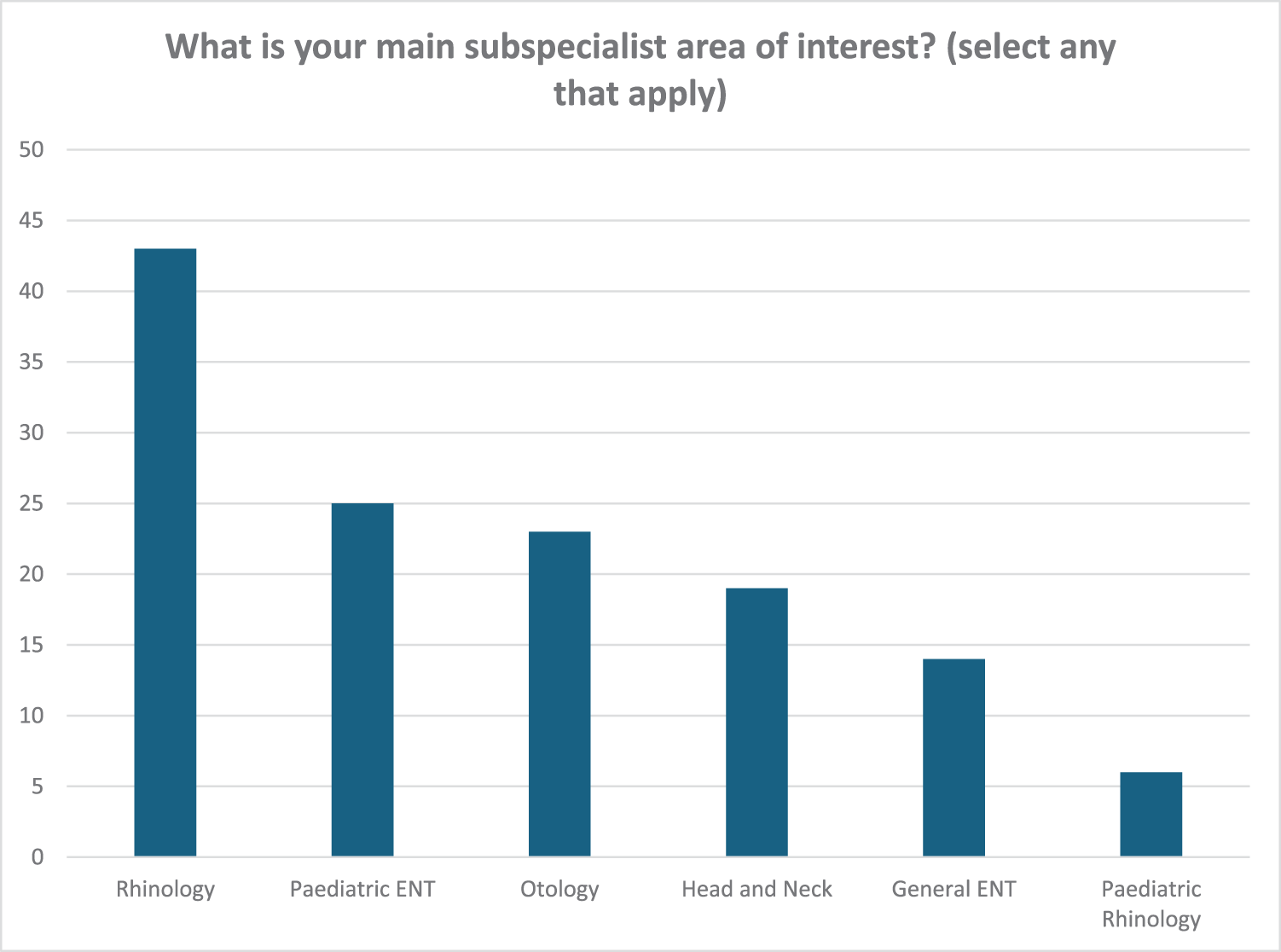
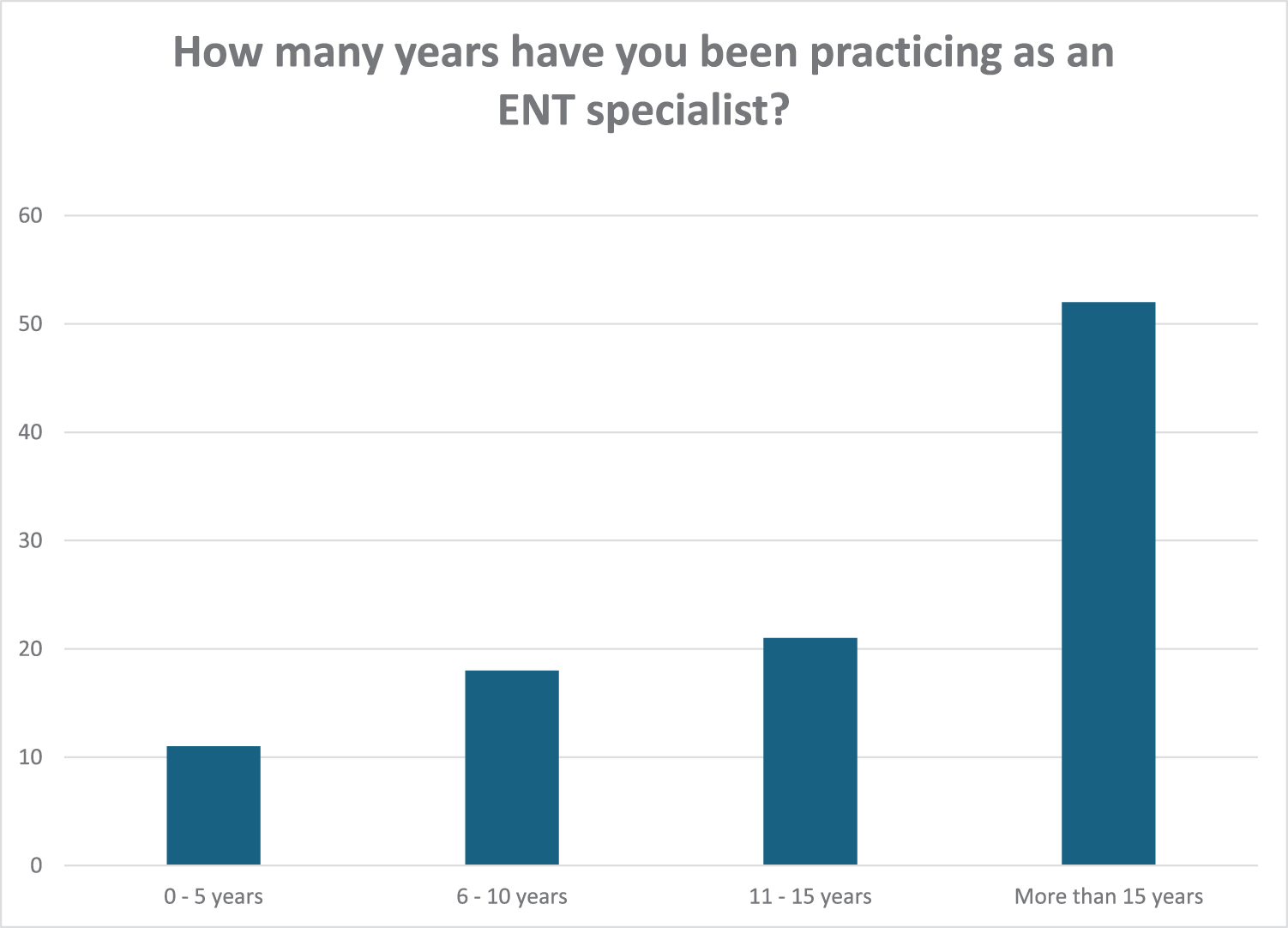
A total of 103 responses were analysed, representing all geographical regions of the UK. The South West (21.4 per cent) and London (17.5 per cent) were the most represented regions. Most respondents were ENT consultants (98.1 per cent), half with more than 15 years of practice (50.5 per cent). The main subspecialty interests were rhinology (41.7 per cent) and paediatric otolaryngology (24.3 per cent) (Figures 2–4).
Graph demonstrating the demographics of surveyed surgeons.

Graph demonstrating the main areas of subspecialty interest of surveyed surgeons.

Graph demonstrating years of independent practice of surveyed surgeons.

Current attitudes
There was a near-even division in attitudes towards paediatric septoplasty: 56.3 per cent would not offer the procedure, while 43.7 per cent would (Table 1). A significant minority strongly opposed paediatric septoplasty (28.2 per cent; n = 29). The majority of these were senior surgeons with greater than 15 years’ experience (62.1 per cent), whilst no recently appointed consultants disagreed with the practice.
Table demonstrating whether surgeons perform septal surgery in children, including subgroup analysis based on subspecialty interest and years of experience

There was a clear gradient in how subspecialty affected decision making to offer surgery (χ2 = 23.433; df = 5; p < 0.0001). Surgeons with interests in paediatric rhinology (80 per cent) or rhinology (64.4 per cent) were more likely to offer surgery. Experience also influenced decision-making (χ2 = 8.090; df = 3; p = 0.044). Consultants with 10–15 years in practice (59.1 per cent), and those with more than 15 years (43.4 per cent) were more likely to offer surgery than less experienced surgeons (Table 1).
When asked about whether they felt the current evidence supports septoplasty in children, most surgeons were uncertain (44.1 per cent). Almost all reported being unaware of any guidelines on paediatric septoplasty (93.1 per cent), and most indicated that further training resources would be helpful (57.8 per cent).
Current practice
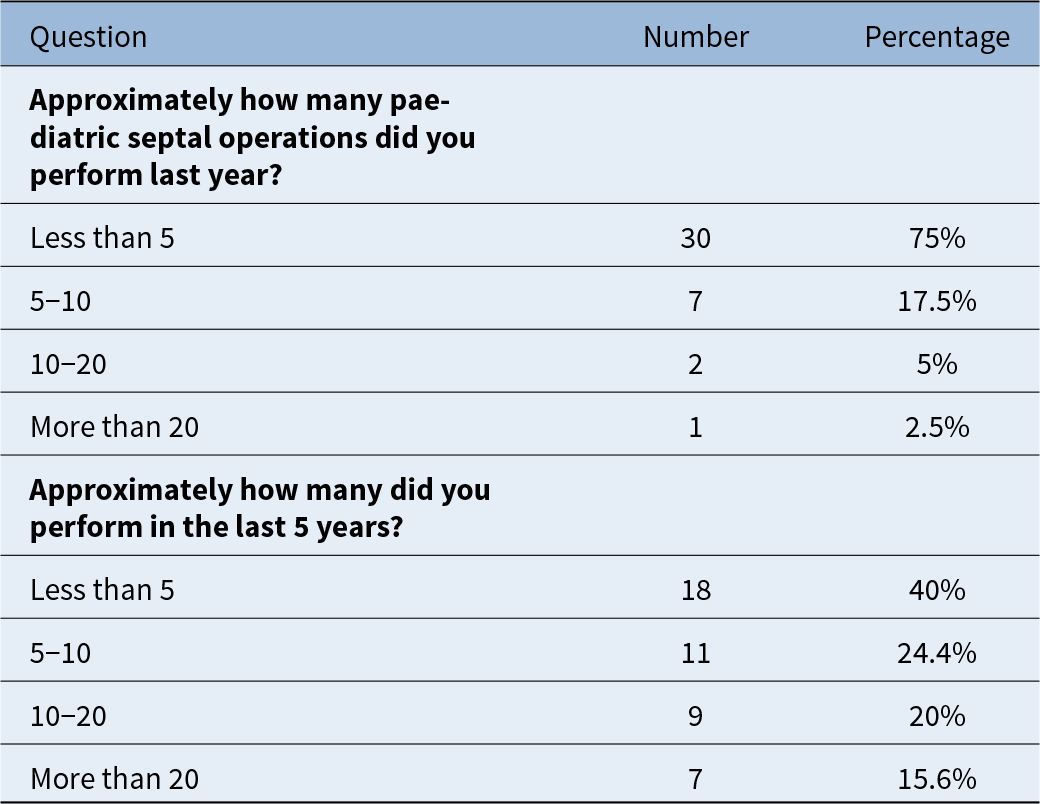
Paediatric septoplasty was reported to be performed at low volumes. Among those offering it, only 22.2 per cent performed more than five cases in the past year, with 70 per cent of these surgeons having a background in either rhinology or paediatric rhinology and 30 per cent had an interest in paediatric ENT. A small minority reported high activity: one surgeon (2.2 per cent) performed more than 20 cases in the past year (Table 2).
Table demonstrating the volume of paediatric septoplasty by surgeons within the last year and last five years

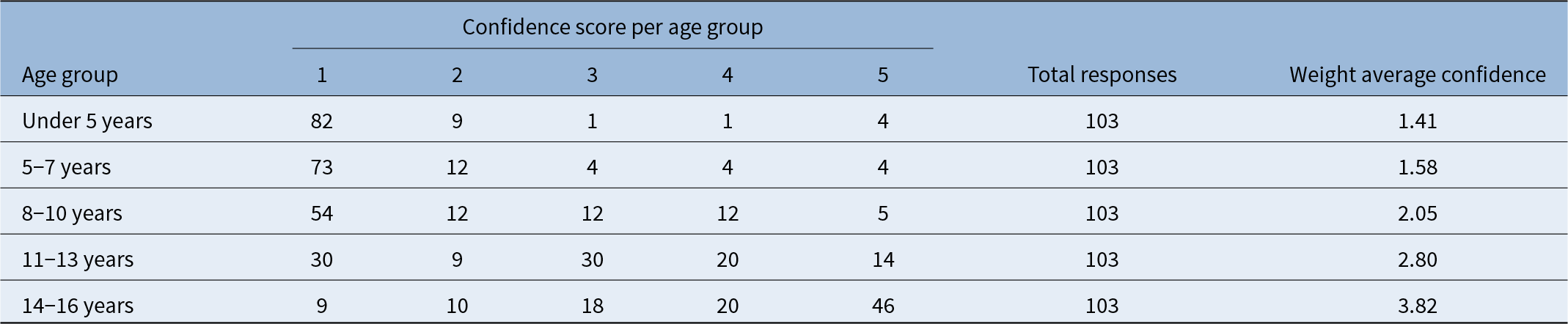
The reported minimum age for surgery averaged 11.1 years (range: 0–16 years), while the perceived “optimum” age was 14.7 years (range: 10–18 years). Surgeons’ confidence in performing paediatric septoplasty increased markedly with older patient age. The average confidence was highest for patients of 14–16 years. Statistical analysis demonstrated a highly significant relationship between patient age and surgical confidence (χ2 = 210.31; p < 0.0001), with a clear increase from age 11 onwards. (Table 3).
Table demonstrating the average confidence of surgeons in performing septoplasty based on the age group patient

Peri-operative decision-making
The most common indication for paediatric septoplasty was nasal obstruction (95.7 per cent; n = 44), followed by traumatic nasal deformity (73.9 per cent; n = 34), access for endoscopic surgery (52.2 per cent; n = 24), congenital facial anomaly (28.3 per cent; n = 13) and sleep-disordered breathing (26.1 per cent; n = 12).
Assessment most frequently involved anterior rhinoscopy (91.3 per cent; n = 42) and nasal endoscopy (87.0 per cent; n = 40). Other methods included allergy testing (63.0 per cent; n = 29), clinical photography (43.5 per cent; n = 20), cross-sectional imaging (21.7 per cent; n = 10) and nasal inspiratory peak flow (10.9 per cent; n = 5). Almost all surgeons reported using an endonasal (closed) approach.
The main reasons for deferring surgery were patient age (84.9 per cent; n = 84), concern over facial growth (77.8 per cent; n = 77) and limited long-term outcome data (61.6 per cent; n = 61). Key reasons for proceeding included severity of symptoms (74.3 per cent; n = 75), extent of deviation (65.4 per cent; n = 66) and psychosocial impact (37.6 per cent; n = 38).
Post-operative care
Surgical success was most often measured by subjective symptom improvement (95.7 per cent; n = 45). Use of validated outcome tools were less common: quality of life questionnaires such as the Nasal Obstruction Severity Evaluation (NOSE) were used by 34.0 per cent (n = 16) and objective measures such as peak nasal inspiratory flow by only 2.1 per cent (n = 1).
Most respondents did not report perceived effects on facial growth (76.6 per cent; n = 36), though follow-up was usually limited (<1 year in 76.1 per cent; n = 35). Revision surgery was perceived to be rare, with 35.6 per cent (n = 16) estimating rates under 1 per cent, though responses varied across the full range of categories.
Qualitative thematic analysis of attitudes and approaches
Free-text analysis (n = 51) identified the following six key themes and sub-themes (see Figure 5) with representative quotes shown in Figure 6.
Graphical representation of themes and sub themes identified by qualitative analysis.

Representative quotes from free text analysis within themes identified by qualitative analysis.

Conservative surgical philosophy (52.9 per cent) – Emphasis on minimal intervention, high threshold for surgery and delaying until after puberty unless symptoms were severe. The approach often involves a focus on realigning the septum and avoiding trauma to growth areas (see Figure 5).
Growth and development considerations (39.2 per cent) – Many highlighted facial growth concerns as central to decision-making, though some argued major deviations would not normalise without intervention (see Figure 5).
Technical and procedural adaptations (17.6 per cent) – Descriptions of cartilage-sparing methods, in-situ cartilage replacement and modifications tailored to children (see Figure 5).
Communication and consent (11.8 per cent) – Emphasis on detailed discussions with parents and caregivers, managing expectations and highlighting risks (see Figure 5).
Risk management and safety (11.8 per cent) – Caution regarding complications, long-term monitoring and careful counselling (see Figure 5).
Professional development and guidelines (13.7 per cent) – Recognition of the need for dedicated training, national guidance and performance of paediatric septoplasty by appropriately trained and specialised surgeons (see Figure 5).
Many responses touched on multiple themes, underscoring the interlinked nature of surgical decision-making in paediatric septoplasty.
Discussion
This cross-sectional survey highlights the polarised opinions and variation in current practice among ENT surgeons in the UK. Both the qualitative analysis and survey findings suggest that much of this variation stems from differing perceptions of the risks and benefits of performing septoplasty in children. From our survey results, surgeons who are more experienced and have interests in rhinology or paediatric rhinology are more likely going to offer paediatric septoplasty. The non-linear pattern of experience (highest at 11–15 years, slightly lower at >15 years) may reflect peak confidence and activity in mid-career or selection bias due to the cross-sectional nature of the study. Interestingly, no early years surgeons disagreed with the paediatric septoplasty, perhaps reflecting training era differences.
When paediatric septoplasty is offered, the primary indication is nasal obstruction, consistent with recent literature reviews.Reference Zieliński, Costa, Cherkes, Glibbery, Kovács and Mitrea-Sirețeanu3, Reference Howard, Williams, Navaratnam, Haloob, Stoenchev and Saleh4, Reference El Shalma, Rabie, El Begermy and Mounir7 The American Rhinological Society (ARS) Expert Practice Statement similarly stresses the importance of thorough evaluation to confirm that septal deviation is the main cause of obstruction before considering surgery.Reference Rose, Makary, Soler, Kimple, Pearlman and Ramaswamy6
Evidence regarding a standardised pre-operative work up is limited. Survey respondents most commonly employed clinical examination with anterior rhinoscopy and endoscopy, reflecting the variation described in the literature.Reference Zieliński, Costa, Cherkes, Glibbery, Kovács and Mitrea-Sirețeanu3, Reference Howard, Williams, Navaratnam, Haloob, Stoenchev and Saleh4, Reference El Shalma, Rabie, El Begermy and Mounir7 Standardisation of pre-operative assessment represents an important area for future research to guide patient selection and enable prospective studies that incorporate both subjective and objective outcome measures.
The choice of surgical approach depends on the specific anatomical deformity and surgeon preference, as reflected in the current literature.Reference Zieliński, Costa, Cherkes, Glibbery, Kovács and Mitrea-Sirețeanu3, Reference Howard, Williams, Navaratnam, Haloob, Stoenchev and Saleh4, Reference Rose, Makary, Soler, Kimple, Pearlman and Ramaswamy6, Reference El Shalma, Rabie, El Begermy and Mounir7 A recent meta-analysis found that cartilage-preserving techniques predominate, with 63.4 per cent of paediatric septal surgery performed through an open approach, compared to 36.6 per cent via a closed technique,Reference Howard, Williams, Navaratnam, Haloob, Stoenchev and Saleh4 although 26 per cent in this study underwent septorhinoplasty which may explain the rates of open surgery. In contrast, our survey revealed a strong preference for closed approaches among UK surgeons (88.9 per cent). Combined with the qualitative data, this suggests that otolaryngologists in the UK favour a more conservative operative strategy, likely influenced by concerns over the risks of open surgery in young children.
The optimal age for intervention remains debated. Arguments for delaying surgery centre on potential disruption of growth plates before puberty and the technical difficulties posed by smaller nasal cavities and nostrils. Endoscopic adjuncts may help mitigate the limitations.Reference Zieliński, Costa, Cherkes, Glibbery, Kovács and Mitrea-Sirețeanu3, Reference Howard, Williams, Navaratnam, Haloob, Stoenchev and Saleh4 Conversely, untreated nasal obstruction can itself lead to facial deformity and sleep disturbance due to chronic mouth breathing.Reference Sarnat and Wexler9–Reference Turner and Hayton11 In our survey, the youngest average age at which surgery was offered was 11.1 years, with the preferred age averaging 14.7 years. This aligns closely with pooled literature values of 13.0 years.Reference Howard, Williams, Navaratnam, Haloob, Stoenchev and Saleh4
Use of validated outcome measures was low. Most respondents relied on subjective reports of symptom improvement (95.7 per cent), while only 34 per cent use validated subjective questionnaires and 2.1 per cent employed objective testing. This highlights an area that must be addressed for future prospective studies to accurately capture long-term outcomes. Studies employing validated patient-reported outcome measures (PROMs) such as the NOSE score,Reference Din, Bundogji and Leuin12, Reference Kawai, Dombrowski, AuYeung and Adil13 demonstrate that septoplasty is effective in treating paediatric nasal obstruction.Reference Manteghi, Din, Bundogji and Leuin14–Reference Lee, Gold and Parikh16 A recent meta-regression analysis further underscored the procedure’s efficacy, with age positively correlating with improvements in NOSE scores.Reference El Shalma, Rabie, El Begermy and Mounir7 The ARS statement reinforces this, citing strong evidence for improved post-operative quality of life.Reference Rose, Makary, Soler, Kimple, Pearlman and Ramaswamy6
Despite longstanding concerns that septoplasty may impair midfacial growth in children, recent evidence suggests that the procedure has minimal impact.Reference Zieliński, Costa, Cherkes, Glibbery, Kovács and Mitrea-Sirețeanu3, Reference Howard, Williams, Navaratnam, Haloob, Stoenchev and Saleh4, Reference Rose, Makary, Soler, Kimple, Pearlman and Ramaswamy6 Early fears largely arose from animal studies.Reference Rose, Makary, Soler, Kimple, Pearlman and Ramaswamy6
Modern cephalometric studies, however, generally do not support the hypothesis of midface growth disturbance.Reference Adil, Goyal and Fedok17–Reference Béjar, Farkas, Messner and Crysdale19 Despite this, 77.8 per cent of respondents in our survey cited concerns regarding facial growth as a reason to defer surgery. This reflects a clear gap in awareness and dissemination of updated evidence, compounded by the fact that 93.1 per cent of surgeons reported being unaware of any existing guidance on the subject, with 63.7 per cent expressing strong support for standardised recommendations.
Reports of reduced nasal dorsal length have been noted, though these were associated with open septorhinoplasty and extracorporeal reconstruction, often with short follow-up periods.Reference Howard, Williams, Navaratnam, Haloob, Stoenchev and Saleh4, Reference El-Hakim, Crysdale, Abdollel and Farkas20 In our study, 76.1 per cent of surgeons followed up patients for less than one year, which may further contribute to uncertainty in assessing long-term effects. Current evidence supports that conservative techniques do not impair growth, but longer-term prospective data are essential, which can be difficult in the context of the NHS (National Health Service).
Revision surgery varied among respondents, echoing findings in the literature. A Young European Society of Paediatric Otolaryngologists (Young ESPO) review reported an overall complication rate of 3.42 per cent with epistaxis most common. Septal perforation occurred in 2.3 per cent of cases, while revision rates ranged from 0.4 per cent to 14 per cent.Reference van Egmond, Rovers, Hannink, Hendriks and van Heerbeek2 These rates are comparable to a recent metanalysis of complications in adult septoplasty, with bleeding and septal perforation being 4 per cent and 2 per cent, respectively.Reference Brescia, Franz, Frasconi, Marciani, Soldati and Frigo21 Howard et al.Reference Howard, Williams, Navaratnam, Haloob, Stoenchev and Saleh4 reported a pooled revision rate of 5.3 per cent, notably higher in children than in adults and particularly elevated in those under 14 years of age. These risks should be addressed during informed consent discussions with patients and families.
• Current evidence would support the safety and efficacy of septoplasty in children when performed conservatively
• Paediatric septoplasty is practised within the UK but opinions and current practise vary Surgeons with a rhinological background or with more than 10 years’ experience are more likely to offer surgery
• Many surveyed consultants were not aware of any recently published expert best practice statements or guidance
• Further longitudinal prospective studies are needed to assess the long-term impact and outcomes of paediatric septoplasty
Limitations
This study has several limitations. As a cross-sectional observational survey, responses capture only a snapshot in time and may not represent the full spectrum of opinions across the UK. While we received responses from all regions of the UK, the overall response rate was relatively low. The ability to select multiple subspecialty interests and the low numbers in some subspecialties (paediatric rhinology), restricted multivariate subspecialty-specific subgroup analyses and may also have skewed analysis. Finally, participation was voluntarily, introducing potential selection bias, as respondents may not reflect the broader community of ENT surgeons.
Conclusion
Paediatric septoplasty is performed in the UK, but practice and attitudes remain variable among ENT surgeons. While recent evidence cautiously supports the safety and efficacy of conservative approaches, our survey indicates persistent concerns regarding long-term outcomes and complications. Surgeons offering this procedure should remain informed of current evidence and risks to ensure that patients and caregivers receive adequate counselling and information. Thematic analysis suggests strong support for the development of national best practice guidelines and enhanced training in paediatric septoplasty. Such initiatives should be aligned with ongoing prospective studies to clarify long-term outcomes, assess different surgical techniques and establish validated of child-specific patient-reported outcome measures.
Acknowledgements
This survey was distributed by ENT UK and the British Rhinological Society Juniors committee and was supported by the British Rhinological Society Council.