


INTRODUCTION
Conflicts related to organized crime and gang turf wars have emerged as the deadliest form of violence in the world. This article characterizes the variety of forms of local governance that organized criminal groups (OCGs) establish in the territories they control. It also explores the mechanisms and processes that allow the police to take back territorial control and generate legitimate state order, as well as alternative conditions where police interventions fail, leading violence to escalate. Our article contributes to various bodies of literature including criminal governance, conflict, policing, nonstate provision of public goods, and state building.
Scholars generally agree that state crackdowns on OCGs often backfire, exacerbating violence, driving the displacement of crime, and intensifying turf wars (Calderón et al. Reference Calderón, Robles, Díaz-Cayeros and Magaloni2015; Dell Reference Dell2015; Durán-Martínez Reference Durán-Martínez2015; Lessing Reference Lessing2015; Snyder and Durán-Martínez Reference Snyder and Durán-Martínez2009; Trejo and Ley Reference Trejo and Ley2018). Most of this literature focuses on the national or regional level and fails to understand why police interventions often generate heterogeneous outcomes, exacerbating violence in certain territories but improving security in others. To explain why, this article takes a micrologic approach and uncovers the various forms of local authority OCGs establish in the territories they control that develop state-like functions, including conflict resolution, policing, delivery of welfare benefits, and taxation. The article demonstrates that these criminal regimes shape the outcome of police interventions.
The article also generates knowledge about one of the most important security interventions in Latin America, Rio de Janeiro’s “Pacifying Police Units” (UPPs). The UPP was inspired by notions of community-oriented policing (COP) (Frühling Reference Frühling2007). It sought to abandon the “militarized” approach of policing the favelas—informal low-income urban sprawls in which around 20% of Rio’s population resides—under the control of drug gangs and paramilitary groups. We take advantage of the staggered implementation of the UPP across approximately 160 favelas in which more than 10,000 police officers were assigned to understand the challenges states confront to regain territorial control. Proponents of “Iron Fist” strategies argue that heavy-handed tactics are often necessary to enhance public safety. Opponents of militarized policing argue that it increases human rights violations and undermines community trust in the police (Bailey and Dammert Reference Bailey and Dammert2005; Dammert and Malone Reference Dammert and Malone2006; Frühling Reference Frühling2007; Moncada Reference Moncada2013a; Riccio et al. Reference Riccio, Ruediger, Ross and Skogan2013). This article provides quasi-experimental statistical evidence about the public safety consequences of COP policing strategies relative to militarized ones in the Latin American context. It is the first to demonstrate that the preexisting criminal regime largely shapes how COP strategies work—e.g., if these improve or deteriorate local security and if these gain community acceptance or not.
Although particularly striking in Rio, communities living under criminal rule is a common phenomenon throughout the world. Building on the literature on civil wars and organized crime (Arias Reference Arias2017; Arjona Reference Arjona2017; Gambetta Reference Gambetta1996; Kalyvas Reference Kalyvas2006; Lessing and Willis Reference Lessing and Willis2019; Magaloni et al. Reference Magaloni, Robles, M. Matanock, Diaz-Cayeros and Romero2017; Mampilly Reference Mampilly2011; Popkin Reference Popkin1979; Staniland Reference Staniland2012), we argue that the forms of criminal authority vary according to whether criminal groups confront or collude with state actors, abuse or cooperate with the community, and hold a monopoly or contest territory with rival OCGs. These dimensions generate five types of criminal orders: Insurgent, Bandit, Symbiotic, Predatory, and Split. These criminal regimes have not been characterized within a unified theoretical framework that explicates variation in how OCGs govern their territories and the dynamics of everyday violence, including behaviors such as intimidation, extortion, and murder.Footnote 1
The criminal underworld is not necessarily one of anarchy. When OCGs monopolize violence, they might establish forms of relatively orderly rule, delivering conflict resolution and a local police to sanction crimes such as assault, rape, domestic violence, and robbery. Police interventions in these settings are often counterproductive. Disorganized crime might be worse for the community than organized crime, especially when the state has poor control of its security forces and when these security forces lack legitimacy among the community. But the criminal underworld can also be extremely violent, as when OCGs fight turf wars and engage in constant shootouts, or when OCGs fail to restrain their armed men from engaging in atrocities against residents. OCGs can also be predatory, extracting rents from local populations and businesses, and killing anyone who refuses to pay. It stands to reason that police interventions should prioritize these types of criminal environments.
Nonetheless, our article suggests that police interventions are seldom driven by the security needs of poor communities. Police forces tend to target their interventions against OCGs whose activities are threatening to the state and the upper classes—e.g., criminals who engage in terrorists attacks to paralyze the city, kidnap the wealthy, or engage in targeted assassinations of judges, state agents, and police. Our theory proposes that the local outcomes of police interventions vary according to the military capacity of the OCG and how it governs its territory. In Insurgent regimes, the OCGs possess high military capacity, and it also provides safety and other benefits to civilians to win support. By contrast, Bandit rulers possess less military capacity to deter invasions, and they rule their territories using more ruthless methods. This article demonstrates that police interventions in Insurgent regimes can turn communities into war zones. With nobody in control, robberies, rape, and assaults are likely to spread in the community. By contrast, in Bandit regimes, police interventions can play an important role improving local security conditions.
On the other hand, states often refrain from targeting OCGs that embrace strategies of corruption by paying the police, state agents, and judges not to enforce the laws. Snyder and Durán-Martínez (Reference Snyder and Durán-Martínez2009) argue that security reforms seeking to undo these illicit contracts—what they call “state-sponsored protection rackets”—with the intention to improve rule of law is what often causes violence to escalate. This article demonstrates that this is not always the case. In Symbiotic regimes, OCGs share resources from illicit markets with their state associates but behave in “benign” ways toward civilians by providing local security and other forms of assistance. State crackdowns against these regimes tend to backfire, undoing a form of criminal governance that is effective in maintaining order. By contrast, in Predatory regimes, OCGs form illicit associations with state agents to extract rents from the community, and might even engage in activities such as human trafficking, sexual violence, and kidnapping, which they perform under the protection of law enforcement. Undoing these illicit pacts will likely improve local security and respect for human rights. Nonetheless, as the case of Rio de Janeiro’s paramilitary groups suggests, states rarely crackdown on these criminal regimes.
Last, our article also characterizes the outcome of police interventions in Split criminal regimes, where communities are divided into territories controlled by rival criminal groups and are subject to constant armed confrontations. In these settings, our theory proposes that the police often emerges as a critical actor that can bring a solution to the Hobbessian state of nature where life is “brutish and short.” Hence, in our theoretical approach, the criminal underworld is far more complex than a distinction between “stationary” and “roving” bandits (Olson Reference Olson1993). Consistent with Olson’s (Reference Olson1993) theory, OCGs are more likely to behave like “roving” bandits when they face shortened time horizons and operate under contested rule. But when OCGs hold monopoly control of a territory, they will not necessarily behave like “stationary” bandits because they can either establish “benign” or tyrannical forms of criminal rule, as this article will elaborate.
In addition to the preexisting criminal regime, the state’s capacity to regain territorial control is also influenced by police behavior. As in the United States and other parts of the world, the state confronts an agency problem when implementing COP strategies because abusive practices by street police officers can seriously undermine trust in the police (Hough et al. Reference Hough, Jackson, Bradford, Myhill and Quinton2010; Tyler Reference Tyler1988). Our article moves beyond this literature by explicating not only how abusive policing practices by UPP officers undermined trust in the police but also the broader set of conditions that allow the police to regain legitimacy in areas where OCGs have control. Shifting territorial control ultimately requires the community to endorse the police rather than OCGs as the legitimate bearers of coercive force. But when OCGs maintain order more effectively than the police, and when residents fear law enforcement officers more than criminal bosses, communities are likely to prefer to be ruled by OCGs.
Empirically, our article proposes a novel way of doing research on criminality and policing that combines extensive ethnographic research, automated text analysis of crime reports, a large-N survey, and quasi-experimental statistical modeling using manually geo-coded data of crime indicators. The first empirical challenge is to demonstrate that the criminal underworld in Rio’s favelas can be conceptualized according to our typology of criminal regimes. This part of the analysis relies on ethnographic research in six territories selected according to our typology. To offer support that insights from our case studies are generalizable, the article then uses automated text analysis of a unique dataset consisting of thousands of anonymous tips collected by an independent Brazilian NGO, Disque Denuncia. The analysis confirms that OCGs differ in their behavior toward the state and the community according to the patterns described by our criminal regime typology.
The second empirical challenge is to demonstrate that criminal governance shapes the state’s capacity to regain territorial control. Territorial control is measured in terms of three quantifiable outcomes: (1) reductions of armed confrontations between OCGs and the state, measured by the number of fatal police shootings and the number of police officers killed; (2) improvements in public security, including homicides rates and other common crime indicators; and (3) legitimacy of the police, measured with a large (N = 5,300) survey conducted in favelas.
The statistical results provide compelling support to our theory. Relative to the militarized policing strategy of the past, the UPP reduced the number of fatal police shootings by 45%. Moreover, the results demonstrate that the police intervention had heterogeneous outcomes. As expected, the UPP improved local security where OCGs were unable to maintain order or predated on residents, as in Split, Bandit, and Predatory regimes. In the first two of these, the UPP significantly reduced armed confrontations and homicides, and in the third, it reduced extortion and robbery. By contrast, as predicted, the UPP increased lethal violence and common crimes in Symbiotic and Insurgent criminal regimes. Our results further demonstrate that, as expected, the UPP increased armed confrontations between the state and the OCG, turning Insurgent regimes into war zones, and trapping residents in the crossfire.
Our survey results demonstrate that in favelas where residents were safer under the rule of OCGs and crime propagated with the arrival of the UPP, the community considers the UPP as illegitimate and wants it to leave their favela. By contrast, in favelas where OCGs did not restrain crime and violence, and security improved as a result of the UPP, police forces are perceived as legitimate. Our survey data further demonstrate that direct victimization of residents by UPP officers dramatically reduces community acceptance of the UPP. Overall, our results demonstrate that the state’s capacity to regain territorial control is influenced by both the preexisting criminal regime and police behavior.
THE CASE OF RIO DE JANEIRO
Because of Brazil’s vast land borders with all three major producer of cocaine—Colombia, Peru, and Bolivia—the country is an important transit point for drug smuggling to Europe. In addition, drug syndicates increasingly focus on internal markets (Miraglia Reference Miraglia2015). As a result, drug gangs have become “a recognized sociopolitical force” in the favelas since the 1980s (Dowdney Reference Dowdney2005). Three main drug factions compete for control of Rio’s favelas: Commando Vermelho (CV), Amigos dos Amigos (ADA), and Terceiro Commando Puro (TC). In reaction to the prevalence of drug syndicates, vigilante groups or milícias have also emerged. Militias charge inhabitants and businesses security taxes, and extort money for services such as water, electricity, and gas (Cano Reference Cano, Stiftung and Schönenberg2013).
As in other countries across the region, Rio’s business community and the middle class have lobbied to take a tough stance against criminal groups (Moncada Reference Moncada2013a). The emergence of a repressive approach to drug traffickers emerged in the late 1970s. The Military Police (hereafter PM) is a uniformed civilian police force that undertakes principally public safety or street policing functions. The PM differs from the Civilian Police as a plain clothed investigative force. The PM relies on specialized battalions such as the Battalion of Special Operations (BOPE), which is trained in urban warfare, as well as tactical teams operating within the regular territorial battalions, to combat drug traffickers. BOPE performs its operations with heavy weaponry. BOPE officers seldom get injured or killed, and their operations are known for violence and “efficiency.” In 1995, a right-wing government instituted a “bravery bonus” that rewarded police officers for killing. Although the bonus was ultimately eliminated, an institutional culture that rewards police violence persists.
This militarized policing strategy resulted in exorbitant levels of fatal police shootings. Rio’s PM is one of the most violent in the world—the police have killed more than 13,000 people in the state between 2003 and 2017, including 1,127 in 2017.Footnote 2 Police killings affect criminals as well as residents, who often are injured or killed in the crossfire. On several occasions, police officers have killed innocent children, women, and men to avenge the deaths of other police officers. The PM has justified their killings on the grounds of legitimate defense or “resistance to arrest” (Auto de Resistência). The criminal justice system practically never investigates or punishes these killings (Brinks Reference Brinks2007). Killings by the police are endorsed by Brazilian society. According to a national survey conducted in 2015, more than 50% of the Brazilian population agrees with the common phrase “Bandido bom é bandido morto” (A good criminal is a dead criminal).Footnote 3
In anticipation of the 2014 World Cup and the 2016 Olympics, the state instituted the UPPs, whose mission was to regain control of territory from drug syndicates. Young officers were assigned with the idea that they would come with a fresh mentality, not socialized in the traditional “militarized” approach. Training included principles of human rights and community-oriented policing (COP) strategies such as continuous patrols and proactive policing. The aim was to establish a more “proximate” relationship with favela residents and reduce armed confrontations. The way these concepts were implemented varied from unit to unit according to the leadership styles of the UPP commanders. Commanders would use varying strategies, including the provision of services such as soccer and karate classes for kids and the youth. Others would assign officers to engage in conflict resolution, mostly arbitrating fights among neighbors over the use of space, garbage disposal, noise, etc. Most of the commanders would hold meetings with the community to discuss security conditions. These strategies broadly correspond to COP (Frühling Reference Frühling2007).
This intervention entailed an initial pre-announced “invasion” by special operations units, including BOPE and sometimes the army. After some months of “stabilization,” UPP police officers were permanently assigned. The program began in 2008 in the Santa Marta favela and gradually expanded to more than 160 favelas.Footnote 4 The first stage of the “pacification” included the favelas of the South zone next to the upper-class neighborhoods of Ipanema, Leblon, and Copacabana, as well as the favelas near the Maracana stadium. The intervention in Complexo do Alemão—CV’s headquarters—marked the beginning of the second stage of the “pacification.” The army occupied Alemão for over a year and a half until eight UPPs were installed in 2012. A third stage began when the large favela of Rocinha, the heart of ADA, was occupied in 2012. The arrest of Rocinha’s drug lord occurred without firing a bullet. The occupation of Complexo da Maré—a large area in the North of Rio—marked the end of the “pacification.” The Army occupied Maré from April of 2014 to June of 2015. Although their aim was to establish secure conditions for the implementation of the UPP, they were ultimately unsuccessful.
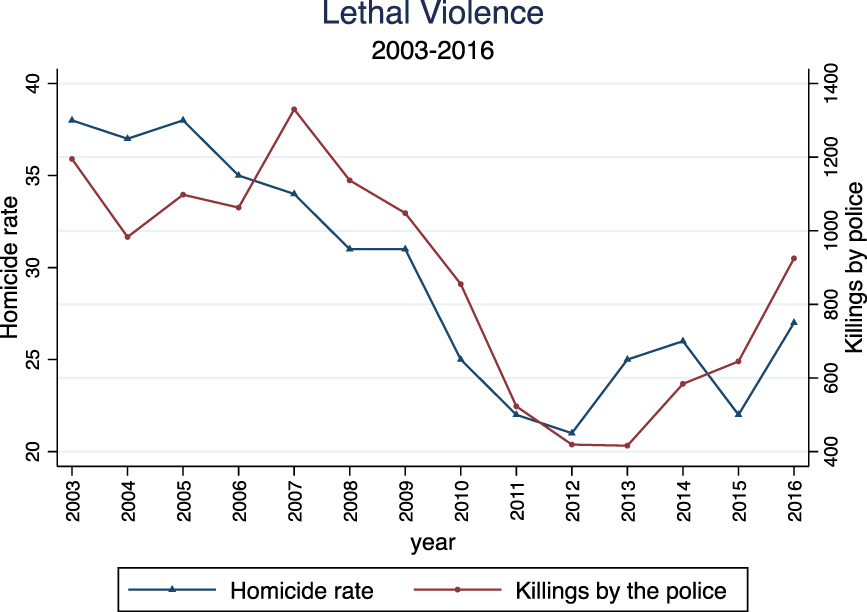
The UPP was not accompanied by an expansion of infrastructure and social welfare programs. For a couple of years, there was a so-called UPP social, but money soon dried out and the police was left alone to deal with complex socioeconomic problems. As observed in Figure 1, between 2008 and 2013, killings by the police decreased by more than 68% and homicides decreased by 40%. After 2013, lethal police violence started to increase, reaching 1,127 deaths in the state and 527 in the capital alone in 2017, which is almost as high as pre-UPP levels. The number of police deaths also decreased from 43 officers in 2003 to seven in 2011. Since that year, this number has gone up to a total of 38 police deaths in 2016.
Lethal Violence
MULTIMETHOD APPROACH
Conducting research on criminal rule is a complex issue because of the dangers it poses to both researchers and their subjects. To overcome these obstacles, we relied on a combination of strategies.Footnote 5 First, we formed partnerships with local residents and NGOs, which facilitated access to six territories that were selected according to our typology: Symbiotic (Rocinha), Predatory (Batán), Insurgent (Complexo Alemão), Bandit (Providência), and Split (Maré and Cidade de Deus). Figure 2 shows Rio’s favelas, the areas of our research, and the territories that received a UPP. We conducted semi-structured interviews and focus groups, as well as a large-N survey (N = 5,300). To conduct the survey, we hired a group of residents from each of these areas and trained them as enumerators.
Spatial Distribution of UPPs in Rio de Janeiro
Note: Favelas (light gray) and UPPs (dark gray) in Rio de Janeiro. Thicker lines represent the division of the city in police battalions (AISP), which are themselves subdivided into Delegacias (DP). We label the areas where we conducted our fieldwork.

Second, we formed partnerships with the Secretary of Security and the PM. This allowed us to interview officers from many UPPs, BOPEs, and territorial battalions. We interviewed all of the General Commanders of Rio’s UPPs since its creation, General Commanders of the PM, almost half of UPP unit commanders, and Rio’s Secretary of Security. Our partnership with the PM also gave us access to intelligence information and detailed crime data. We were able to accompany officers on patrols and also participate in closed door meetings.
Third, to generalize beyond our case studies, we use automated text analysis of Disque Denucia (DD), an anonymous 24-hour hotline that is frequently used by favela residents. Disque Denunia has been collecting citizens’ reports on criminal activity and police abuse since 1995 and has taken more than two million complaints. Finally, to test our theory about the heterogeneous outcomes of police interventions, we perform quasi-experimental statistical analyses using crime indicators.
THEORY OF CRIMINAL REGIMES
The form of local authority OCGs establishes varies according three variables: degree of territorial control, relationship with the state, and relationship with the community.
Territorial Control
OCGs aspire to control territories that are valuable. Drug traffickers seek control of areas suitable for drug cultivation, strategic locations (e.g., ports, border-crossings, and highways to transport drugs and arms), and city areas near consumer markets. OCGs often seek active control of a territory not only to extract profits from the illicit markets connected to that area but also to protect themselves from other OCGs and from the state. Since deals among criminal groups are hard to enforce, OCGs aspire to retain monopolistic control of these turfs (Magaloni et al. Reference Magaloni, Robles, M. Matanock, Diaz-Cayeros and Romero2017).
A first factor determining the nature of criminal regimes relates to whether OCGs contest territory with their rivals or have monopolistic control. In line with Olson (Reference Olson1993), monopoly control creates the expectation of continual cooperation that may benefit the armed actor over the long run (Arjona Reference Arjona2017; Mampilly Reference Mampilly2011; Metelits Reference Metelits2009; Staniland Reference Staniland2012). Under monopolistic control, time horizons are longer and OCGs are more likely to invest in governance because they can be more confident of reaping future gains. By contrast, where criminal groups contest territory, time horizons are shorter, thus undermining incentives to establish collaborative arrangements that may benefit the armed group over the long run.
Relationships with the State
OCGs also vary in the way they interact with the state, from “active partnership to mutual tolerance to violent discord” (Moncada Reference Moncada2013b, 229). We follow Barnes (Reference Barnes2017) in distinguishing three types of OCGs according to the way they interact with the state: OCGs that emphasize violent confrontation, OCGs that mostly follow a strategy of enforcement evasion, and those criminal groups that follow a strategy of integration with the state.
OCGs confront the state not to topple it or break away but to influence policy regarding enforcement (Lessing Reference Lessing2015). Confrontation can result from the breakup of a previously collaborative arrangement with the state, as was the case with Mexican drug cartels during the Calderón administration. At other times, the escalation of violence is episodic and decentralized. For example, drug traffickers and the PM in Rio often engage in spirals of violence and revenge. An example was the massacre in the Church of Candelària, where in 1993 a police death squad exterminated eight children following the murder of a police officer. A month later, police officers murdered in total 21 unarmed people in the Vigàrio Geral favela (Glenny Reference Glenny2015). Drug traffickers responded to these massacres by intensifying their violence against the police. Here, the lack of coordination among different levels of government is another reason why OCG-state violence escalates (Durán-Martínez Reference Durán-Martínez2015).
In enforcement evasion, the state uses its traditional enforcement mechanisms to combat OCGs, which respond by attempting to evade enforcement (Lessing Reference Lessing2015). The OCGs and the state remain separate entities yet cooperate through bribes. The difference between enforcement-evasion and integration, according to Barnes (Reference Barnes2017), is that in integration, members of the criminal group are directly incorporated into the state apparatus. Some examples include Italy’s Cosa Nostra, the Neapolitan Camorra, Colombian paramilitary groups, and Mexican drug gangs.
Although every OCG engages in a combination of corruption and confrontation strategies, OCGs tend to emphasize one over the other. More than any other drug syndicate operating in Rio, CV has emphasized strategies of violent confrontation with the state. CV emerged in a prison south of Rio, where the military regime imprisoned some of the most violent criminals next to political prisoners from the M-18 and the Alianza Libertadora Nacional (ALN). The imprisonment conditions were extremely cruel. When these criminals returned to the streets, they were now using the language of social justice to justify their criminal activities (Amorim Reference Amorim1993). They also came out with unique notions of hierarchy, organization, armed tactics, and an antistate ideology. CV is known for offering money to assassinate policeFootnote 6 and, on many occasions, has paralyzed the city by setting off bombs, burning buses, and blowing up buildings of the PM.
ADA was also born inside the prison, where a famous drug lord, Uê, the founder and leader of TC, and Celsinho from Vila Vitém, joined forces to form a new criminal faction aimed at undermining CV’s dominance and becoming the main supplier of drugs in Rio (Amorim Reference Amorim2003). With ADA, Celsinho became the most powerful drug trafficker in the West zone. He maintained a close relationship with the police, which served ADA in different capacities—from keeping police officers out of their territories to having them provide services as personal security guards (Penglase Reference Penglase2008).
Rio’s militias, for their part, have integrated with the state. Militias are made up of former police officers, firemen, and prison guards who promise to remove drug gangs and provide security to citizens. In reality, their goal is economic profit, levying heavy on communities and taxing for security and basic public services (Cano Reference Cano, Stiftung and Schönenberg2013). The police-connected militias are directly linked to numerous politicians in the city’s parliament. They exploit their territorial control to gain voting constituencies (Hidalgo and Lessing Reference Hidalgo and Lessing2015). Militias also traffic drugs and arms, and control hundreds of communities in Rio.
Community Relations
Local criminal authority also differs according to the nature of the contract, ranging from cooperative to tyrannical, the OCG establishes with the community. The OCG seeks to gain community acceptance in the former, whereas the OCGs establish abusive forms of governance in the latter.
In the case of Rio, drug gangs have traditionally developed cooperative relationships with the community. They rely on local informants to serve as their “eyes and ears” and to alert them of any suspicious activity. They also hire fogueteiros, who are normally located at strategic entry points, to closely monitor who enters and leaves the favela.
To gain community collaboration, Rio’s drug lords often provide assistance in the form of food, medicine, and loans. They also regulate basic routines, such as access to the favelas. Some even prohibit residents from wearing colors associated with their rivals. They also regulate business activities—for example, permits for the moto-taxis, street vendors, and food stands. But the most important functions of governance that drug lords provide are conflict resolution and policing. The tribunal do tráfico (drug traffickers’ tribunal) is a system of retaliatory justice where drug lords punish criminal offenses, including robbery and domestic violence, through beatings, house arrests, killings, and even expulsion from the community. This informal system of justice is swift and effective, even if at times tyrannical (Arias and Rodrigues Reference Arias and Rodrigues2006).
These criminal governance practices are common throughout Rio’s favelas but the methods vary. An important factor to consider is the drug lord’s personality. Some drug lords are referred to as “heroes” but others are feared because of their tyrannical methods. For example, a famous drug lord affiliated with CV, “Dudu,” who for a short period in the 1990s ruled Rocinha, was known as a psychopath and notorious rapist (Glenny Reference Glenny2015, 119). Rocinha residents remember him for his fearful cruelty, but recall other drug lords such as “Lulu,” also from CV, with nostalgia. Similarly, Orlando Jogador, a drug lord of Alemão, is still remembered for the way he treated the community, as a provider of social justice and welfare.
Furthermore, the degree of OCG-community collaboration also depends on whether criminals are home-grown or come from other locales. Rio’s drug gangs are mostly composed of criminals with strong communal ties to the favela. Moral codes and a sense of solidarity tie these criminals to their communities. Residents often referred to them as “the boys,” reflecting the fact that they grew up with them. Rio’s militias, by contrast, mostly come from outside of the community and don’t have the same level of social embeddedness as drug traffickers.
OCG-community collaboration is also shaped by the strength of the community, as in Arjona (Reference Arjona2017). The author argues that when civilians are able to exert collective resistance, rebel groups establish less intrusive social contracts. This argument can be extended to criminal rulers. Most favelas are tightly knit communities with vibrant social lives (Perlman Reference Perlman2005). Drug gangs commonly accommodate certain levels of independence within the community and negotiate with community associations (Arias Reference Arias2017). “Lulu” from Rocinha, for example, established a council to mediate conflicts among his managers and soldiers as well as between traffickers and community leaders (Glenny Reference Glenny2015, 102). However, communities in other favelas are not as close-knit as Rocinha. Rio’s militas have expanded more toward communities in the West and North, many of which were formed by more recent migration patterns. These communities tend to be significantly less cohesive than the favelas located in the heart of Rio.
One final aspect to consider is criminal organization. Criminals are not only motivated by greed and profits but they also seek prestige and power within their organizations. The most successful drug lords within CV have hundreds of armed men under their command and carry out invasions to expand CV’s territories. These “criminal warriors” are promoted to high-ranked positions, some of which grant them control of favelas inside CV’s headquarters. One example is “FB” da Silva, who was famous for commanding hundreds of men and successfully invaded many favelas. He was promoted to drug lord of Complexo da Penha, in Alemão. Although these criminal warriors serve the OCG well for fighting, they are likely to be unpredictable, capricious, and violent without strong leadership to control them.
An indisputable leader “Marcinho-VP” has run CV from prison since the 1990s (Amorim Reference Amorim1993, Reference Amorim2003). He closely monitors a handful of drug capos to oversee general operations within the organization. Because of the importance of Alemão and its status as the headquarters of CV, Marcinho-VP has established processes to hold local drug lords accountable to him to ensure that he keeps men in the highest hierarchy of the organization controlled. On occasion, drug lords inside Alemão have been executed for failing to follow Marcinho’s orders. One example was Tota whose reign in Alemão lasted from 2005 to 2008 when he was apparently killed following Marcinho-VP’s orders because of his vicious ways of dealing with local residents.Footnote 7 Marchino-VP also gives orders to drug lords outside of Alemão.Footnote 8 Generally, these orders are strategic, focusing more on the organization as a whole and focusing less on daily operations or how a drug lord manages his favela (Penglase Reference Penglase2008).
Mapping Criminal Governance and Hypotheses
These three dimensions produce five types of criminal rule, as illustrated in Figure 3. Insurgent and Bandit rulers emphasize violent confrontation in their strategies toward the state but differ in how they interact with the community: although the former establishes collaborative governance practices, the latter victimizes residents. The reasons for why they collaborate or not with the community vary, as explained above, according to leadership personality, community strength, and criminal organization. Both Symbiotic and Predatory criminal regimes establish collusive agreements with the state, but differ in how they relate to the community. Symbiotic rulers conduct their illicit activities cooperating with the community. Meanwhile, Predatory rulers use the backing of the state to predate upon residents and extract rents from them. In Split criminal regimes, two or more OCGs contest for territorial control, dividing communities into parallel micro-armed regimes.
Typology of Criminal Regimes

Our theoretical approach proposes that the existing criminal regime influences, first, where the state will target its crackdowns. These crackdowns will mostly target OCGs that emphasize violent confrontation over collusion. In turn, the state will protect OCGs that establish enduring associations with police officers, judges, and government officials. Police interventions against OCGs that emphasize violent confrontation might even resemble military operations involving high levels of force. By contrast, where OCGs collaborate with the state, police interventions might even be negotiated beforehand and occur without the police firing a shot.
In terms of the dynamics of the intervention, it is reasonable to expect that, in contrast to militarized policing strategies, COP approaches should reduce armed confrontations between OCGs and the police as well as the frequency of fatal police shootings. However, the effect of COP strategies on fatal police shootings is mediated by how the OCG responds. OCGs can respond to police interventions with violence, by bribing the police, or relocating to where they can hide from the state.Footnote 9 If OCGs respond with violence—e.g., by killing police officers—COP strategies are hardly viable. It stands to reason that when police officers are killed, they are likely to retaliate out of anger and a desire for retribution, and because they feel vulnerable and need to deter future aggression. OCGs’ responses depend on their organizational orientations. Our theory proposes that CV is likely to respond predominantly by killing front-line UPP police officers, while ADA will respond by bribing them. OCGs’ responses also depend on their capacity to fight back versus flee. We expect CV to respond with more violence in its headquarters of Alemão, where they have greater military capacity, than in the rest of its favelas where CV drug lords might better respond by fleeing.
The preexisting criminal regime also shapes how police interventions will affect social order and common crime. Holding police behavior constant, our theoretical approach proposes that police interventions are more likely to improve local security in Split, Bandit, and Predatory regimes. In the first two, we expect reductions of homicides and everyday violence; meanwhile, in Predatory regimes, we expect reductions in levels of extortion. By contrast, in Insurgent and Symbiotic criminal regimes, police interventions will undermine criminal regimes that are effective in providing local security. State crackdowns in these regimes might produce the paradoxical result of propagating crime in the community, at least until the police are able to fill the void left by drug lords.
Police forces will often have a hard time filling the void left by OCGs because of four main reasons. First, police lack local knowledge regarding who is who in the community and the nature of interpersonal dynamics, which drug lords know well. This void is naturally harder to fill in larger communities where it is challenging to get to know everyone. Second, the informal systems of justice and policing used by the OCGs are often more accessible, swift, and effective at resolving conflicts such as rape, robbery, and murder than formal systems of justice, which are generally too far removed and intimidating to poor and segregated communities. A third challenge for the police is that, where institutions are weak, trust depends on personal knowledge of the individuals in charge. Frequent changes of police commanders, as our fieldwork revealed, worked to disrupt the trust between the UPP and the community. Fourth, it is difficult for police to build trust where there is a history of racial segregation and police forces have been experimented as instruments of repression.
Last, the state’s capacity to regain territorial control through COP strategies is also shaped by street police officers’ behavior in their everyday interactions with residents. With enough time, police might be able to gain enough local knowledge and community trust to fill the governance void left by the drug lords. But if police officers are abusive and violent, they are not likely to gain community trust. The following section discusses how each of these criminal regimes is empirically validated in the case of Rio. The case studies convey the voices of the residents we interviewed, mostly related to their experience with everyday violence.
CASE STUDIES
Insurgent Criminal Regime
There is a line of scholarship in Brazil that conceptualizes drug traffickers as “criminal insurgents,” drawing attention to how, during the military dictatorship, criminals were socialized with political prisoners, translating the struggle from the realm of politics (leftists insurgents) to the realm of economics (criminal insurgents) (Burgoyne 2011; Holston Reference Holston2009; Killebrew Reference Killebrew2011; Sullivan Reference Sullivan2000). Although we agree with Lessing (Reference Lessing2015) in that this conceptualization might overestimate the importance of ideology for CV, we still find the concept useful. In our approach, what defines a criminal insurgent is a combination of factors: (1) high military capacity allowing criminals to barricade their territories, (2) the use of terrorist strategies, and (3) the fact that they rule their territories aiming to gain community collaboration. A particular ideology seeking “justice and peace” for the urban poor might be helpful to obtain community collaboration, but it is not necessary.
CV took its “struggle” against state officials from prisons to the streets in the 1970s. CV’s debut was an incident later known as “Four Hundred Against One” when a criminal cell fought back the PM all night with semi-automatic weapons in an apartment complex. After the incident, the state concluded that it urgently needed to increase the police’s military capacity to confront these criminals (da Silva Lima Reference da Silva Lima2001). Over the years, CV would maintain its violent stance against the state, while expanding to greater than 70% of Rio’s favelas (Amorim Reference Amorim1993). Meanwhile, the state would continue to escalate its violence with tactical units, such as BOPE, trained in counter-insurgency.
Marcinho-VP became CV’s absolute drug lord, ruling Alemão since the 1990s from prison (Amorim Reference Amorim1993, Reference Amorim2003). He was arrested in 1992 but gives orders to his right hands in Alemão and closely manages drug trafficking activities in the entire state. Machino-VP ordered the majority of the attacks that set off bombs, burned buses, and destroyed police buildings. During the 2007 Pan-American Games, an unprecedented “war” involving the police, the army, and the navy took place in Alemão, leaving many dead. Alemão was considered under siege.
In November 2010, the state decided to target Alemão for “pacification” with its thirteen favelas and around 200,000 inhabitants. The invasion was not part of the original plan, but it was triggered by a terrorist attack in mid-November 2010 (Beltrame Reference Beltrame2014). The terrorist attack apparently occurred because CV was protesting the invasion of its territory by militias and the fact that most UPPs had been dispatched to CV-controlled favelas. Alemão was occupied by a force of 1,200 PM officers, 400 civilian police, 300 federal police, and 800 members of the Brazilian army. The Brazilian army occupied Alemão for around a year and a half until eight UPPs were introduced in mid-2012.
Our first interviews with Alemão’s residents took place the day the Brazilian Military was leaving the area and the UPPs were arriving. Before the military intervention, police would seldom enter Alemão, and when they did, sirens would sound so everyone could hide. A resident reported that “police almost never entered the territory and we rarely experienced shootouts.” When asked who she feared more, the police or drug traffickers, a woman responded: “I fear the police more. The police only come here to kill. The traffickers take care of residents.” CV traffickers learned that it was better for the drug business to have the community on their side. They created the slogan “Peace, Justice and Freedom,” which was later widely disseminated and incorporated by the residents in CV’s territories. Drug traffickers would deliver social welfare in the form of health, cash, and even food. The same woman explained:
If the resident got sick, needed medication and couldn’t afford the medicine, they would take the prescription to the boca de fumo and they [the traffickers] would buy it. No gas? They would go to the traffickers to ask for gas and they would give it. … So, the resident sees them as heroes.
Expanding on the rules of their fudão (origins) in prison, which prohibited inmates from attacking, robbing, or raping each other, CV instituted a system of forced reciprocity in the favelas “by which traffickers provided security, outlawing theft, robbery or rape, in exchange for the silence or complicity of residents” (Penglase Reference Penglase2008, 129). Our informants in Alemão agreed that CV provided stability and order. A resident who lived in front of one of the bocas de fumo Footnote 10 explained that everyday he would see hundreds of drug traffickers with heavy weapons but he “felt safe because the traffickers never did anything to us.” With respect to common crime, traffickers kept things under control. Another resident reported that prior to the “pacification,” “nobody dared to disobey because of fear of the traffickers’ tribunal. Thieves were expelled from the community or killed, and so would rapists.”
COP strategies are hardly viable in this type of criminal regime. On the one hand, police officers are too vulnerable in the terrain. The first police officers to ever die in a UPP assignment were killed in Alemão at the end of 2012. A commander of one of the UPPs in Alemão explained: “Traffickers use war strategies against us. They ambush us to kill us …. everything is allowed for them in this war. Instead, are we supposed to follow rules?” In an interview with the General Commander of Rio’s UPPs at the time, we learned that the assassination of those police officers had convinced the PM that they needed to deploy better trained police officers to the UPPs, including BOPEs.
Armed confrontations between CV and the police soon escalated, causing fatalities on both sides. The UPP exposed the community to continual gunfire. One of the most disturbing moments in the Alemão intervention was the death of a 10-year-old boy, Eduardo de Jesus, who was killed in the crossfire on the doorstep of his home. A year later, five residents were shot dead and two others injured during intense shootouts. A day later, another child was killed. Clashes with the police disrupted everyone’s lives and would often last for hours. A resident lamented: “We can’t rest knowing that at any given moment, a war may explode or that a police officer can kill our sons.” Another resident told us: “Life for us has become checking every moment to see if we can hear the sound of gunshots.”
In this environment, police can’t fill the governance void left by the drug lords because residents are terrified of them. Because police are perceived as a coercive occupation force, few residents volunteer information. Not surprisingly, in our interviews we heard complaints that with the UPP common crime inside Alemão significantly increased. A resident lamented:
Before the UPP, people wouldn’t just go around sticking knives to each other because the bandits would have killed them. The bandit needs to be present to avoid fights among residents, to prevent robberies inside the favela, to prevent rape … The police can’t do anything. So, we need the traffic to organize things.
Police misconduct further played a role in feeding distrust. Residents complained of being “frisked with no reason,” “slapped on the face,” “pulled by the hair,” and being “treated with arrogance.” These behaviors further damaged the legitimacy of the UPP. A 50-year-old woman forcefully articulated why: “We won’t get rid of a bandit to surrender ourselves to another one. Do you understand?” This woman was specifically complaining of police corruption, arguing that the UPP in Alemão was behaving like Rio’s militias, charging residents money for everything, including “every time we want to hold a party or have the band play.”
Bandit Criminal Regime
The CV is most accurately described as a loose association of drug traffickers who come together for reciprocal assistance yet act with a great degree of autonomy. It brings together a set of symbols of common identity, a general strategy, and a set of assumptions about how to interact with other criminals, with residents of poor neighborhoods, and with the state (Penglase Reference Penglase2008). But favela-level drug bosses have a wide degree of local autonomy, and for that reason, there is considerable variation in practices among those who consider themselves to be part of the CV. They lack the same level of control and supervision from CV’s leadership.
The CV is better prepared to assist members with fighting gang rivals than with helping resolve internal struggles. The loss of a favela to a rival can harm the organization as a whole, making it harder to distribute arms, drugs, and manpower. But rivalries between drug lords inside favelas are seen as less important as long as they claim membership in CV (Penglase Reference Penglase2008). Moreover, because they do not have the same military capacity as in Alemão, these drug lords are also more vulnerable. In line with Olson’s logic, their higher vulnerability shortens their time horizons and makes them behave in more abusive ways toward the population.
An example is the favela of Providência, located in the heart of the city. Providência has roots dating back to the late nineteenth-century, when free slaves and survivors of the Canudos war first settled there. CV has controlled the area since the 1980s. The favela came to be considered one of the most dangerous in the city, with signs of violence already in 1948. Before the UPP intervention in 2010, Providência had experienced two army invasions. In 2006, the favela endured 10 days of operations with more than 200 soldiers and, in 2008, the Army again occupied the favela.
In our fieldwork, we heard numerous complaints from residents against the drug traffickers, some of which concern the enactment of excessively cruel decisions in the drug lord’s tribunal and the use of arbitrary violence—e.g., murdering residents in cold blood on mere suspicions. Our informants shared some of the following examples:
Not long ago, there was a 17-year-old boy playing all day. After the traffickers found out that the boy was from a favela that belonged to ADA, they cut his ear. They put the ear inside a jar and made the boy walk with it through the Estação Central. A 7-year-old boy brought the knife for the traffickers to cut the ear.
Another resident reported that traffickers in Providência always punished thieves, as drug lords do in most favelas. But she explained that they would first cut their body parts to make them suffer before killing them. Other residents reported that the traffickers would “burn residents alive” if they suspected they were spies. Others also said that traffickers would “expel residents from their homes and the favela upon mere suspicions.” Because residents reported fearing traffickers, many chose not to resort to the tribunal do tráfico to resolve disputes. For example, a woman reported that it was better to keep problems related to domestic violence from traffickers out of fear that they would kill their partners. Because anyone could be suspected, it was better to keep a distance, and so many would opt to not denounce anything.
Not surprisingly, we heard more positive assessments about the UPP in Providência than in Alemão. A woman explained how things had improved with the UPP: “Before, there were sinister scenes at the boca de fumo in front of my house, many bodies lying dead there and the bodies being removed. These things no longer happen.” However, as in Alemão, residents also expressed concerns about police behavior. In fact, just prior to the collection of our survey, there was an incident captured in video by a local resident and then spread through social media. In the video, UPP police officers in Providência fatally shot an unarmed resident and then planted a weapon on his body.
Symbiotic Criminal Regime
As a Symbiotic criminal regime, we selected Rocinha, the headquarters of ADA before the UPP intervention. Rocinha is the largest favela in Brazil with more than 120,000 inhabitants. Located in the South Zone, this is one of Rio’s most valuable territories. In the past, the favela was controlled by CV until its leader, “Lulu da Rocinha,” was killed in 2004. His death initiated a war. After an intense power dispute, Nem assumed control and established peace by forming an alliance with the rival drug faction, ADA. Nem ruled Rocinha until 2012, when the UPP was installed. The intervention in Rocinha occurred without the police firing a shot. Some even believe that Nem might have negotiated his arrest.Footnote 11
In a fascinating journalistic account of Nem’s life, Glenny (Reference Glenny2015) describes the guiding principles of the drug lord’s rule: “There are three pillars upon which a effective leader builds his dominance: reputation within the community; acceptability to the local police; and authority within his organization” (p. 167). The trafficker believed that controlling his soldiers—young men with high levels of testosterone and eager to display muscle—was one of the biggest challenges of being a successful drug trafficker. The drug lord wanted to maintain a good reputation with the community. Our first interviews in Rocinha took place some months before the “pacification.” A woman explained:
We are used to seeing the traffic, the guns, to see traffickers walking with drugs packages … smoking marijuana, young girls also getting involved with them. But the “boys”—we call them boys because we grew up with them—leave us alone.
Nem also engaged in social welfare, assisting residents with cash loans, medical emergencies, and burials. The drug lord was also a provider of justice and would severely sanction theft, rape, and domestic violence. Some of our informants reported they sought help from the traffickers, whereas others preferred to keep their distance because sanctions could be severe.
Nem established an enduring collaboration with security institutions. The relationship ranged from bribes, information exchange—for example, tipping traffickers of impending military operations—to the exchange of services. Nem would hire police to train his men and directly assist with armed invasions of other favelas. Police would lend him automatic weapons and transport criminals in their vehicles to invade other favelas.Footnote 12 Additionally, Nem was famous for having on his payroll judges, prosecutors, and members of the Civil Police in charge of investigations.
The “pacification” of Rocinha might not have taken place had it not been for the events of August 2010, when a group of traffickers from Rocinha held tourists hostage in the Intercontinental Hotel, until they were instructed by Nem to surrender themselves peacefully (Glenny Reference Glenny2015). The proximity to the World Cup and the Olympics made it difficult for the government to justify not targeting Rocinha for pacification. Nem was easily arrested because the Civil Police had accumulated a great deal of information on him. Although he initially hid in the community, the police arrested him.
A BOPE trained major assumed the UPP’s command. In one of our visits to the favela, we interviewed him and learned from police officers and residents that he was cutting off the trafficker’s business and was about to launch a major anti-narcotics operation. Some months later, he was implicated in the torturing and killing of resident, Amarildo de Souza. One interpretation of the Amarildo scandal is that police officers working in association with drug traffickers inside Rocinha framed the UPP commander. The scandal had a major impact in undermining the legitimacy of the UPP.
The UPP came to break the peace that Nem had established. Residents systematically complained of the proliferation of disorder, with thieves, rapists, robbers, and drug traffickers roaming the streets and answering to no one. Moreover, armed confrontations between rival criminal groups inside Rocinha became frequent. A resident lamented: “There are bullets flying everywhere. Before all you needed to do is avoid certain streets to be safe. Now nowhere is safe.” Another resident reported “we live afraid, constrained you know, afraid of being targeted by the traffickers or the police. So we close ourselves up, we live in fear.” Without the state’s military assistance and nobody in command, the favela became vulnerable to invasions by rival drug factions. After a long and bloody battle, CV was able to reestablish control in 2018. The general perception among residents is that the UPP came to dramatically deteriorated security in the favela.
Predatory Criminal Regime
The state targeted only one favela controlled by militias, Batan, due to a scandal involving a group of journalists that milicianos had kidnapped and tortured (de Paula Reference de Paula2015). In 2008, the journalists published an article exposing the militias and their association with the state. Rio’s secretary of security decided to crackdown on the militias in Batan, installing a UPP unit in the area in 2009.
Batan is a neighborhood located in the West of Rio. During the 2000s, the territory was heavily contested between ADA and TC resulting in high levels of violence toward residents. The patterns of abuse changed when the miltias took control. The militias began to kill anyone involved with drug traffickers. Some residents reported feeling satisfied with the militas and approved of the methods employed against the traffickers. But many others felt the methods were unnecessarily ruthless. A young man in Batan explained:
A boy was involved with the traffic, using drugs and doing sh… He was caught by the militia. Then they took him, beat him, and tied him to a pole for everyone to see. The boy died, he was with no food or water for several days.
These summary execution groups started to emerge in the 1980s to “liberate” communities from the drug gangs. But the main goal of the militias is establishing territorial control to extract resources from local economic activity by regulating businesses, land distribution, and real estate (Arias Reference Arias2017). Moreover, militias charge heavy taxes not only for security but also for services such as water and gas. As a result, many residents feel that their form of rule is predatory. A man in Batan told us:
You are buying bread in the local store and the milita arrives and says “where is the money?” They come with ski masks, a black polo, silver or gold necklace to collect their money. The gas now costs 50 reais instead of 30 because the militia only allows one resident to sell it.
Militias are also involved in the business of arms trafficking, kidnapping, “Jogo do Bicho,” nickel machines, and increasingly drug trafficking (Cano Reference Cano, Stiftung and Schönenberg2013). Because of their close association with the police and the state, militias can rule their territories with little interference. Proponents of the militias argue that without these extermination groups, local communities would be more vulnerable to crime. In fact, a common view of militias is that they combine military capacity and extra-legal violence to enforce order where states cannot (Dube and Naidu Reference Dube and Naidu2015; Jentzsch, Kalyvas, and Schubiger Reference Jentzsch, Kalyvas and Schubiger2015; Lyall Reference Lyall2010). But the fact is that Rio’s militias are involved in serious human rights abuses and have become a major threat to public security. They are thought to be behind the assassination of congresswoman Marieli Franco, a black gay activist from Maré. Only two police officers were arrested, which is suggestive of how deep the criminal underworld run by former law enforcement officials and militias goes.
In our interviews in Batan, we found acceptance of the UPP mostly because of how this intervention restrained abusive behavior by the militias. A young man explained: “before the UPP arrived, we lived in terror of the militias. These would suspect anyone collaborating with the traffic. They executed many people in cold blood, cut their body parts with machetes, expelled their families. I feel safer with the UPP.” Another man explained: “There was a lot of conflict here, lots of guns, and we don’t see this anymore with the UPP.” A young mother highlighted that, with the UPP, her family was better off because now “they didn’t have to pay for ‘everything’ to the militia.”
Split Criminal Regime
Maré is a large area in the North of Rio, a valuable territory located in the main corridor where drugs and arms arrive to the city. The complex has more than 140,000 inhabitants. CV and TC compete for control, but militias are also present, subjecting residents to constant violence. Criminal governance in Maré is characterized by parallel micro-armed regimes. As Sousa Silva (Reference Sousa Silva2012) explains, frontier is a term residents normally use to refer to the territorial divisions established by the drug factions. Drug lords establish forms of micro-governance within their areas and some of the rules are similar to those in noncontested favelas—e.g., thieves are severely punished, drug lords provide welfare, resolve conflicts, and regulate basic routines. But those living under the control of one drug gang normally do not venture into the other side. A resident explained why:
When you don’t know the drug rulers and those persons don’t know you, there is suspicion. To circulate freely you need to know the norms of the territory. If you don’t it creates fear. The frontier is where one community ends and the other begins.
Residents dread invasions from rival gangs because shootouts terrorize everyone. A social activist in Maré explained that schools are regularly locked down because of armed confrontations. Nobody can leave their homes and children are terrorized. The violence is significantly more intense near the frontier and some streets are even known to locals as “Gaza Strips.” When a rival gang invades territory, it is not uncommon that criminals evict from their homes or murder residents associated with their gang rivals. These dynamics resonate with contested areas during civil wars (Kalyvas Reference Kalyvas2006).
Split regimes also experience high levels of police violence. Rio’s PM tend to perform significantly more incursions where rival gangs are fighting turf wars. They use heavy armament and armored troop vehicles (known as the caveirão). During these incursions, police often perform arbitrary actions against residents, including home invasions, beatings, and killings. In one of these operations in Maré that took place in 2013, a BOPE police officer was murdered. A month later, police officers invaded the area, violently entering numerous homes, torturing residents, and brutally murdering nine residents. Maré didn’t receive a UPP despite the fact that in 2014 there was a military occupation that was supposed to create the conditions to “pacify” the area. Interviews with the General Commander of Rio’s UPPs at the time of the Maré intervention revealed that the state had lost commitment to the reform for reasons we will turn to in the conclusion. These violent police practices, in turn, create fear of police. A young man explained:
We learn to view the police officer as the villain, you know? Here, the guy [police] will frisk you, hit you, slap you on the face, they will do these things so you create a certain resistance to them.
There are five negative consequences of living in Split regimes: (i) residents are unable to circulate freely; (ii) communities are permanently divided; (iii) high frequency of shootouts; (iv) high levels of fatalities as a result of gang turf wars, particularly affecting young men; and (v) when invasions occur, residents are often evicted from their homes and some executed in cold blood.
Because a UPP was not installed in Maré, we also conducted interviews and our large-N survey in Cidade de Deus, a group of favelas and housing projects built in the 1960s in the West zone. The area was contested by CV and paramilitaries prior to the UPP. Intense shootings and invasions took place among rival CV factions that controlled different areas. The miltias were also present, using strategies such as kidnapping drug traffickers, extortion, and summary executions. A UPP was installed in 2009 and violence dropped dramatically. Community acceptance of the UPP, as our initial interviews there revealed, was high. A man explained:
The power of the traffickers weakened with the UPP. They sell drugs… the trafficking continues. But the UPP really reduced violence … we don’t see guns anymore, or the barricades the traffickers used to avoid the police.
Unfortunately, the security conditions in Cidade de Deus began to deteriorate after 2013. Many criminals from other areas moved there and, additionally, the CV set bombs in various UPPs, including Cidade de Deus.Footnote 13 At the time we conducted our survey, security was deteriorating, with an armed confrontation in one of the areas forcing us to suspend data collection for a month.
EVIDENCE FROM TEXT ANALYSIS
Ethnographic work allows us to understand the mechanisms and processes of criminal rule. To generalize beyond our cases, we use automated text analysis using data for the entire universe of “pacified” favelas. We use crime reports collected by Disque Denucia (DD). The calls are related to a broad set of topics ranging from noise complaints, homicide, and petty crime to major criminal plots. DD guarantees that calls are neither recorded nor tracked. Following Grimmer and Stewart (Reference Grimmer and Stewart2013), we rely on a rule-based method to classify each call into our typology of criminal behavior. To obtain the key words and phrases associated with each regime, we carefully read a sample of calls coming from each of the territories that we selected for our case studies.Footnote 14 Each topic is defined as follows:
• Insurgency: These words are related to regimes in which criminal groups violently confront the state and, in particular, the police. CV is the faction associated with this type of criminal behavior. (Some of the key phrases include the following: to kill a police [officer], offering money to kill officers, terrorist attempt, and bomb.)
• Banditry: These words are related to our Bandit Criminal Regime in which OCGs behave violently toward the population. CV outside its headquarters is the faction associated with this type of criminal behavior. (Some of the phrases include terrorizing, death of residents, threat to residents, killing residents, practicing barbarities, expelling residents, and executing residents.)
• Collusion: These words are related to our scenario of Symbiotic Criminal Rule in which the OCG chooses corruption and bribes over violent confrontation with the police. The criminal faction associated with this type of behavior is ADA. (Some key phrases and words include bribe, receive money, paying police, to tip off traffickers, leaking information, and corrupt police.)
• Predation: These words are related to our scenario of Predatory Regime where the OCG extorts the population by demanding direct payments in exchange for protection or basic services. The criminal faction associated with this type of behavior is the Militia. (Some of the words include extort, extortion, to charge, charge for services, and to expel.)
• Confrontation: These words are related to our scenario of Split Criminal Regime in which confrontation between criminal groups results in a harmful environment for the population. (Some of the keywords are residents in panic, terror, armed confrontations, favela will be invaded, and planned invasion.)
Using these typologies, we classify each call into these topics if it mentions one of these keywords or phrases. We choose to simplify the classification with a binary indicator that takes the value of one if the call includes one of these unigrams or key-phrases, and zero otherwise. It should be noted that a particular call might refer to one or more criminal behaviors simultaneously. This overlap across topics follows the attributes of these complaints. Usually, calls address more than one criminal behavior as OCGs are often involved in several activities at the same time. In total, we coded more than 40 key-phrases and unigrams with all their grammatical variations.
This classification was performed for each call coming from favela complexesFootnote 15 that had UPP at any point in time. For each of these favela complexes, we have information provided by the PM on the group controlling the territory prior to the UPP treatment. We then corroborated the information on territorial control provided by the PM with data from DD, as detailed in the Online Appendix, Section A.3. Because we only have information about the faction controlling each specific favela complex right before the UPP intervention, we restricted the time window to 24 months before the intervention. In total, there are 3,706 calls that occurred within UPP intervened favelas for this time period.
To estimate the likelihood that a particular call belongs to one of the five categories defined above before and after the UPP intervention, we compute the following linear model:
 $$y_i = \beta F\;action_i \,\times \,UPP_i + \lambda _i + \delta _t + \gamma \;Module_i + \varepsilon _i$$
Here, y is a binary variable that takes the value of 1 if the call i corresponds to a particular category (collusion, predation, confrontation, insurgency, or banditry), and zero otherwise.Footnote 16 We hence run five models, each for one of these categories. The variable Faction corresponds to the criminal group controlling the specific favela before the UPP intervention. The base category is favelas controlled by the CV outside Alemão (Bandit rule). UPP is a binary variable that takes the value of 1 after the intervention. Additionally, we control for the location of the call, that is, the particular UPP territory. We also include a fixed-effect for the month-year in which the called was received. Also, because the dataset is divided into 24 predefined modules created by DD, we include a module fixed-effect. We clustered standard errors at the UPP level.
Our theoretical expectations are as follows. First, we expect to observe more violence against the state in CV-controlled territories and more collusion with the state in ADA-controlled ones. Second, we expect CV’s behavior toward the community to differ across territories that are inside and outside its headquarters. Although CV will cooperate more with the community in the former, it will increasingly victimize residents in the latter. We expect to find more calls involving extortion in areas controlled by the militias. Last, calls coming from areas contested by various criminal groups are expected to involve more threats of invasions and armed confrontations. The results are presented in Figure 4. All plots should be read in relationship to the omitted category (CV-controlled favelas outside Alemão).
Key Terms and Criminal Governance
Note: Each plot presents the coefficients for the regression in A.4 with their 95% intervals. The dependent variables indicate the presence of key terms for each criminal regime and the independent variables are the groups controlling the territory. The base category (omitted) are favelas controlled by the CV outside Alemão.

The results are as expected. CV behaves significantly more violently toward the state than ADA, and ADA colludes with the state more than CV does. Importantly, there are more frequent complaints about armed confrontations with the state in Bandit than in Insurgent regimes, suggesting that the former are more vulnerable to police “invasions” than the latter. The results also show that CV outside Alemão behaves more in accordance to a Bandit regime by terrorizing citizens. By contrast, CV in Alemão and ADA use more restraint in their relationship with the population, which supports our argument that Insurgent and Symbiotic regimes collaborate with the community. The results also reveal that Militias behave according to our Predatory category by extorting residents. Interestingly they also use as much violence toward the population as Bandit regimes.Footnote 17 It should be noted that militias’ strategy of integration with the state is not captured by our “collusion” category, which reflects the strategy of “enforcement evasion” used by ADA. This is not surprising, given how hard it is for residents to observe the hidden deals between the militias and politicians that are forged far from the favelas. Finally, according to our theory, there is a higher incidence of violent invasions and armed confrontations in Spilt criminal regimes than in Insurgent and Symbiotic regimes. Surprisingly, these regimes are less abusive toward the population than Bandit and Predatory regimes. These results lend credence to our criminal regime typology and classification of Rio’s OCGs.
THE HETEROGENEOUS EFFECTS OF POLICE INTERVENTIONS ON LETHAL VIOLENCE
Our theory argues that the outcome of police interventions is influenced by the preexisting criminal regime in three fundamental ways: (1) it determines where the state targets its interventions, (2) it influences whether the intervention works to control common crime or if lethal violence escalates, and (3) it affects how preexisting criminal governance and police behavior jointly shape community acceptance of the police.
Targeting Police Interventions
Patterns of OCG-state confrontation and collusion determine where the state targets its interventions. Table 1 reports which criminal factions controlled the group of favelas treated by the UPP. The table also reports which criminal group controlled the nonpacified areas in 2008. The data on criminal dominance were provided by the PM.Footnote 18
Descriptive Statistics of Favela Complexes by Criminal Faction

Note: Descriptive statistics at complexos of favela level by criminal faction. A complexo corresponds to a group of favelas with common borders. Favelas under control of the Tercero Comando Puro or with unknown criminal governance were not part of the UPP treatment.
The UPP covered more than 160 favelas, corresponding to greater than 20% of Rio’s more than 700 favelas. Around two-thirds of the UPPs were assigned to CV-controlled areas, which includes both Insurgent and Bandit regimes. About 24% of the favelas in which intervention occurred correspond to Split criminal regimes. By contrast, only 7% and 3% of treated favelas were controlled by ADA (Symbiotic) and the Militias (Predatory), respectively. These results lend credence to our argument that state crackdowns are predominantly targeted against OCGs that have a history of violent confrontation with the state. By contrast, the state mostly refrains from intervening in Symbiotic regimes and, in this case, it practically left Predatory regimes untouched. It should be noted that after excluding the favelas for which we do not have information on control, militias control 25% of these territories.Footnote 19
Estimating the Effects of the UPP
Providing causal evidence about the consequences of the UPP requires selecting an adequate comparison group. Unfortunately, there are not publicly available crime statistics at the favela level. For this reason, we rely on a thorough effort to manually geo-code more than 22,000 lethal incidents that occurred between 2005 and 2015. The Ministry of Security provided the original data with the addresses. The information was available only for fatal police shootings and homicides.Footnote 20
Naturally, our unit of analysis corresponds to the geographic areas covered by UPPs. These borders were drawn to cover groups of favelas (complexes) and also some areas connecting these favelas. Figure 2 shows the larger territorial scope of UPP vis-à-vis the favelas. For the treated areas, we calculated the criminal incidents that occurred inside the borders of the UPP, which include those that fall inside the favelas as well as those outside their borders but inside the UPPs. To construct a meaningful comparison group among nontreated areas,Footnote 21 we computed lethal violence incidents at the favela-complex level and also included incidents within their 100 meter buffers. This strategy makes the nontreated units more closely comparable to UPP areas by replicating the larger geographical scope of the UPP treatment.
Effects on Lethal Violence
Our difference-in-difference approach will exploit the temporal and spatial variation of UPP assignment. To measure the effect of the UPP on lethal violence, we estimate the following generalized DID model:
 $$[$y_{i,t} = \tau BOPE_{i,t} + \delta UPP_{i,t} \,\times \,R_i + \gamma \left( {F_i \,\times\, t} \right) + \lambda _i + \varepsilon _{i,t}$$
The dependent variable of interest, y i,t, represents the crime rate per 100,000 inhabitants.Footnote 22 R stands for the criminal regime before the introduction of the UPP. The coefficient of interest is δ, which represents the interaction between the UPP treatment and the type of criminal regime. γ represents the unit-specific time trend, and λ is a unit-fixed effect. We clustered the standard errors at the favela complexes level to account for correlation patterns within units.Footnote 23
The “pacification” consisted of two nonoverlapping actions: (i) the occupation by BOPE or armed forces, usually taking place a few months before the UPP intervention; and (ii) the establishment of a UPP unit in the area. Therefore, we coded BOPE i,t as a binary variable that takes the value of 1 during the period in which BOPE was present in the favela, and Post_UPP i,t as a binary variable that takes the value of 1 after a UPP was introduced.
A challenge to the empirical strategy is that violence could have been decreasing for reasons unrelated to the UPPs, including improved economic performance, the expansion of social policies, or spillovers from Bolsa Família, a program significantly expanded during the government of Lula da Silva (2003–11). To control for the overall decline of violence in the region and at the local level, we introduce time fixed effects and complexo-specific time trends. This approach mitigates concerns over omitted variable bias and captures the high monthly variation of these outcomes.
The results are presented in Table 2. Columns 1 and three show how the UPP shaped homicides and police killings without controlling for criminal regime. Column 5 shows how the UPP affected lethal violence, which is the sum of homicides and police killings. The results demonstrate that, on average, the UPP did not reduce homicide rates. However, the UPP had a substantial effect reducing killings by the police. The size of the UPP estimate for police killings is −1.13. This implies a reduction of 1.3 police killings per 100,000 inhabitants per month. With 164 treated favelas, these estimates imply that there was a yearly reduction of around 133 killings, which suggests that police violence decreased roughly 40%, thanks to the UPP.Footnote 24
Heterogeneous Effects of UPP Intervention on Lethal Violence

Note: Regressions for the 2007–15 period with complexo-month as the unit of analysis. Complexos are groups of favelas with common borders. The dependent variables are in rates per 100,000 inhabitants. UPP takes the value of one after the UPP was introduced. The criminal order that serves as our reference category is Bandit. All models include a binary variable for the BOPE invasion period, unit and time fixed-effects, and complexo-specific linear time trends. Standard errors (in parentheses) are clustered at the complexo level. The average monthly homicide rate in the sample is 3.83, and the average monthly police killings rate is 1.23.
+ p < 0.1; * p < 0.05; ** p < 0.01; *** p < 0.001.
Figure 5 presents marginal UPP effects according to criminal regime. Results are consistent with our expectations. The UPP reduced lethal violence in Bandit and Split regimes. Relative to these, the UPP increased lethal violence in Insurgent and Symbiotic regimes. In Predatory criminal regimes, the UPP appears to have no effect on lethal violence.
Heterogeneous Effects of UPP Interventions on Lethal Violence
Note: Estimated marginal UPP effects, with 95% confidence intervals (by delta method), based on models presented in Table 2.
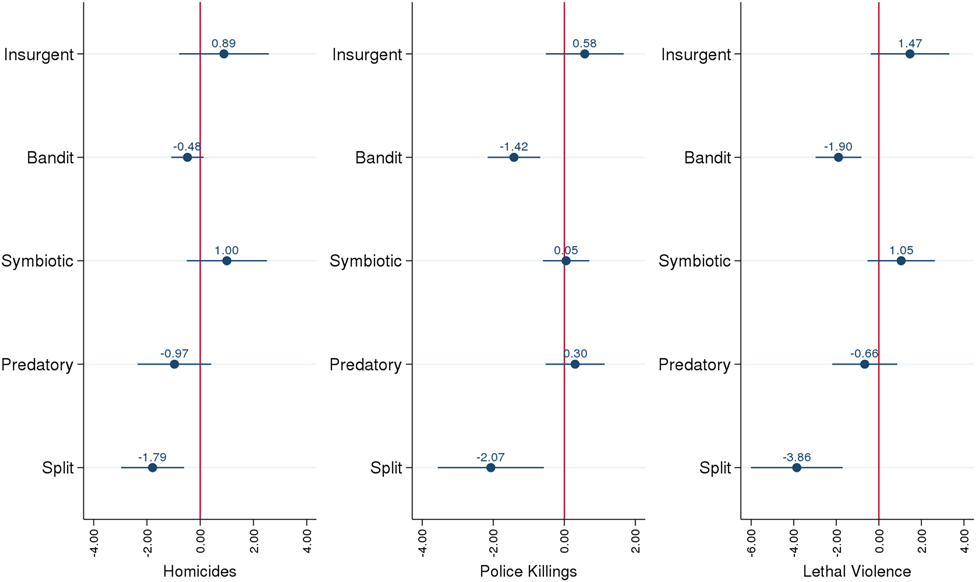
In Online Appendix A.10, we present generalized difference-in-difference estimations for other crime outcomes including extortion, burglary, and officers killed in action.Footnote 25 Figure 6 plots the marginal UPP effects for these outcomes. The results match our expectations: the UPP increased common crime such as burglary in Symbiotic regimes. In Predatory criminal regimes, it decreased extortion and, surprisingly, also burglary, suggesting that the militias in Batan were not that effective in keeping crime under control. An intriguing result is that extortion appears to increase almost everywhere but in Predatory regimes. As predicted by our theory, the UPP increased the number of officers killed in Insurgent regimes and it also appears to increase burglary, although its marginal effect is not different from zero. The number of officers killed decreased in Symbiotic regimes. Last, in the Online Appendix, we also show that UPP is associated with increases in drug seizures regardless of criminal regime, likely reflecting the fact that greater police presence produces more opportunities for seizing drugs.
Heterogeneous Effects of UPP Interventions on Common Crime
Note: Estimated marginal UPP effects, with 95% confidence intervals (by delta method), based on models presented in Table A.12 in the Online Appendix.
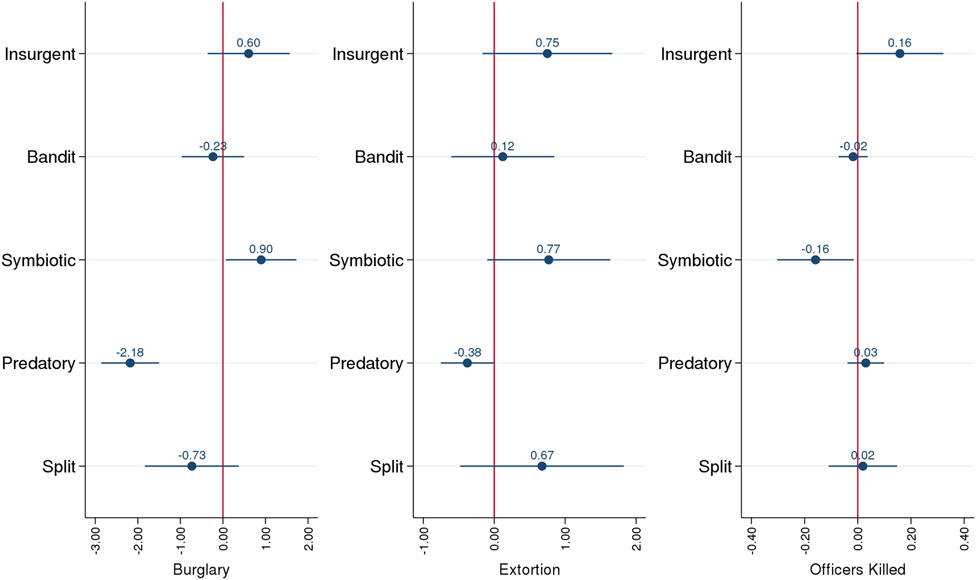
Robustness Tests
We perform several robustness tests. First, in the Online Appendix Section A.7, we examine the data for evidence of nonparallel trends before the onset of the UPP program. Our results suggest that the parallel trends assumption is valid for our DID strategy.
It could be argued that the assumption of parallel trends might be problematic given our argument that criminal regimes are associated with different violence dynamics.Footnote 26 To address this concern, in Section A.8 of the Online Appendix, we segment the analysis by criminal regime and exploit the granularity of the data by modeling the effects of the UPP around its borders. Our comparison groups are those areas along the UPP’s borders. In particular, we look at lethal violence incidents in buffer zones of 100 meters inside and 100 meters outside a given UPP. We run the difference-in-difference analysis on different subsamples of our definition of criminal regimes. Our results are broadly consistent with the main results using all intervened and nonintervened complexos as units of analysis.
Additionally, Section A.9 of the Online Appendix presents placebo tests that artificially move the date for inauguration of each UPP. We present alternative model specifications that include a lag of the pacification treatment that takes the value of 1 for either three, six or nine months before the actual intervention starts. Our results show that none of the lagged variables have a significant effect on homicides or killings by the police, thus strengthening our interpretation of the pacification effect.
We also control in Section A.9 of the Online Appendix for the implementation of the Sistema de Metas, the pay-for-performance system instituted in 2009, and then expanded in 2011 to incorporate killings by the police. This reform changed incentives for police because they would be paid bonuses to lower lethal violence. Our results are robust. Another possible objection to our results is that they might be driven by a particular case. For example, results on ADA could be driven entirely by Rocinha, also the largest favela in Rio. We ran all the models excluding one UPP at a time, and all the results remain unchanged.
Police Legitimacy
The last element of our analysis focuses on police legitimacy. We conducted a survey (N = 5,300) in various favelas selected according to our criminal regime typology. Because this last section is about the legitimacy of the UPP, we do not include survey responses from Maré. Unfortunately, it was not possible to conduct surveys in Alemão because of daily armed confrontations that made it too risky for enumerators. For a full description of the survey and data collection, see Online Appendix, Section A.12.
The survey asked residents to evaluate the UPP as reported in Table 3. For the analysis, we will first model responses to the question about whether the UPP should stay or leave the favela. This is an evaluation about whether it is better to have a UPP or be left under the rule of OCGs. We also will bundle together responses to all of these questions in a composite standardized index of acceptability of the UPP. Our index has a Cronbach’s alpha of 0.74, revealing that the measure has internal consistency.
Evaluations of the UPP

Holding police behavior constant, we expect the UPP to have more legitimacy where it improved local security and the preexisting criminal regime failed to provide order, as in Split (Cidade de Deus), and Bandit (Providência), and Predatory (Batan) regimes. By contrast, where the police intervention deteriorated local security and the preexisting criminal regime provided order, as in Symbiotic regimes (Rocinha), we expect residents to prefer the UPP to leave the favela. The data revealed that significantly more residents in Batan (75%) and Cidade de Deus (56%) want the UPP to stay in their favela than in Providência (37%) and Rocinha (27%).
We also expect that police victimization will work to dampen the UPP’s legitimacy. Our survey included a battery of questions about victimization at the hands of police, which is very high. 3% reported that “the police inflicted physical harm on them,” 13% had “their homes invaded by police officers,” and 15% reported that a family member or friend had been “killed by the police.”
The survey also asked whether common crimes, shootouts, the ostensible use of weapons, and police corruption increased or decreased with the UPP. Deterioration of these conditions should diminish community acceptance of the UPP.Footnote 27 Our modeling strategy uses an OLS regression. In the first model on whether the UPP should leave or stay, the dependent variable is a 3-point scaleFootnote 28. In the second model, we combine the questions about the UPP reported in Table 3 into an index that ranges from −1 (least favorable) to 3 (most favorable).Footnote 29
Figure 7 provides a visual depiction of the findings. The full results for both models are reported in the Online Appendix A.12. Residents in our Split regime exhibit the highest community endorsement of the UPP, followed by those living under Predatory and Bandit rule. As expected, police legitimacy in the Symbiotic regime is very low.
Community Evaluations of the UPP
Note: Estimated marginal effects based on models displayed in Table A.13 in the Online Appendix. 95% confidence intervals. The communities sampled in the survey are Batan (Predatory), Cidade de Deus (Split), Providência (Bandit), and Rocinha (Symbiotic). Models include sociodemographic controls. The vertical line represents the average value of the dependent variable.

The results further demonstrate that police victimization produces strong negative effects. Those whose homes were invaded, suffered physical assault, or had a family or friend killed by police are more likely to want the UPP to leave and to have negative evaluations of the UPP, regardless of criminal regime. By contrast, decreases in armed conflicts between OCGs and the police and of overt use of weapons produce highly supportive evaluations of the UPP. Increases in crimes such as robbery, theft, or rape increase residents’ desire to want the UPP to leave and produce more negative evaluations, as predicted by our theory. Similarly, when residents observe that police corruption increased, evaluations of the UPP are significantly more negative.
CONCLUSION
Millions of people around the world live under the rule of criminal organizations. The criminal underworld is complex and often fluid, but that does not mean that it lacks order. This article characterized five types of criminal regimes—Insurgent, Bandit, Symbiotic, Predatory, and Split. It offered empirical evidence of how OCGs govern their territories, and how they shape behaviors such as intimidation, extortion, and murder. The article also demonstrated how these criminal regimes influence where the state targets its police interventions and whether these improve or deteriorate local security. Shifting territorial control requires that the community endorses the state as the legitimate bearer of coercive force. But that will not happen if criminal bosses are more capable than the police at enforcing order.
The article also contributes to an important policy debate about policing tactics. “Militarized” approaches not only subject residents to ongoing shootings and terror but also work to strengthen community support for criminal rulers. With the recent right-turn in Brazil, new power-holders have openly embraced the notion that the PM should, literally, exterminate “criminals.” An accurate understanding of the UPP is hence more essential than ever. We particularly highlight that the UPP reduced the number of police fatal shootings by greater than 40%. Moreover, in around 60% of the territories in which intervention occurred, the UPP further managed to reduce common crimes such as homicides, extortion, and burglaries, and to gain community acceptance. Despite its achievements, the UPP deteriorated public security in 40% of the territories in which it was dispatched and failed to gain legitimacy. This article provided a theory to understand the variation in outcomes.
It is important to underscore that this article focused on the local effects of the UPP (e.g., how it affected public security inside favelas). But the UPP also had spillover effects. The Online Appendix Section A.13 demonstrates that the UPP pushed OCGs to relocate outside favelas, making crime and violence more visible to Rio’s middle class, and significantly increasing the challenges for the PM to maintain order in the city at large. These spillover effects played an important role in undermining the state’s commitment to the “pacification.” Additionally, the state left the police practically alone to deal with complex security problems that are deeply interconnected to poverty, racial segregation, and the lack of lawful opportunities for youth in the favelas. The failure to expand polices to promote socioeconomic development and extend other arms of the state to the favelas further worked to undermine the state’s capacity to regain territorial control.
Our conclusions have broad implications beyond Rio and inform our understanding of criminal rule, conflict, and ongoing processes of state formation. Security policies ought to be based on a better understanding of the micro-logics of criminal rule. Where OCGs establish “benign” relationships with the community and provide local security, police interventions can often propagate crime and violence. By contrast, where criminal rule is violent, tyrannical, or predatory, police interventions are more likely to be effective and gain community acceptance. The article argued that factors such as leadership and organizational styles, community strength, whether criminals are homegrown and have social ties with residents, and territorial control all play a role in shaping how OCGs relate to the community. We leave for further research a more in-depth exploration of how each of these mechanisms shapes criminal behavior.
Our article also reveals an important variation in the nature of illicit contracts between OCGs and the state. Prior literature has argued that security interventions that seek to undo illicit pacts between OCGs and the state is what often causes violence to escalate. But our article demonstrates that this is only the case in Symbiotic regimes where the OCG effectively maintains local order. In Predatory regimes, OCGs operate in association with state agents to extort, kidnap, and extract rents from inhabitants. In our approach, this corresponds to one of the most tyrannical criminal regimes where OCGs have the full backing of the state to abuse human rights. Cracking down on these predatory regimes should be a priority. However, states seldom target their police interventions while considering the local security dynamics of low-income communities. Rather, they often seek to protect OCGs that form illicit associations with police, judges, or government officials.
Last, our article makes explicit that the state confronts an agency dilemma with its police forces when attempting to reclaim territorial control from OCGs. Poor communities often tend to experience the police as instruments of oppression. When police and public justice systems fail the poor, it is not surprising that states will have a hard time extending their tentacles to these territories where vast sectors of society live, ruled by criminals.
SUPPLEMENTARY MATERIAL
To view supplementary material for this article, please visit https://doi.org/10.1017/S0003055419000856.
Replication files can be found on Dataverse at: https://doi.org/10.7910/DVN/7PZHF6.
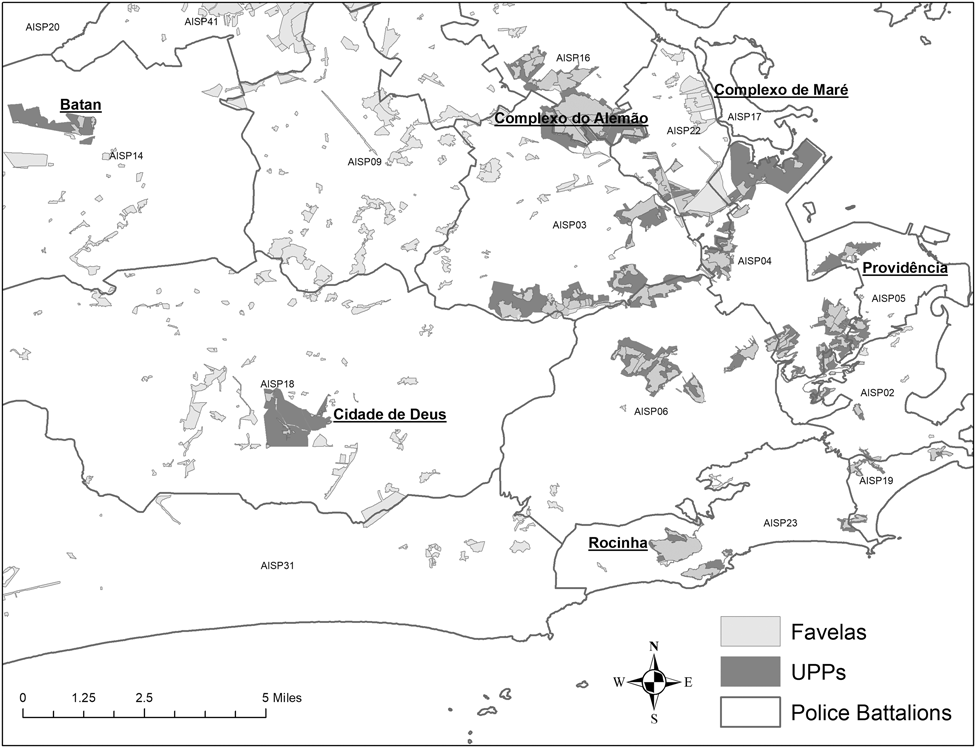
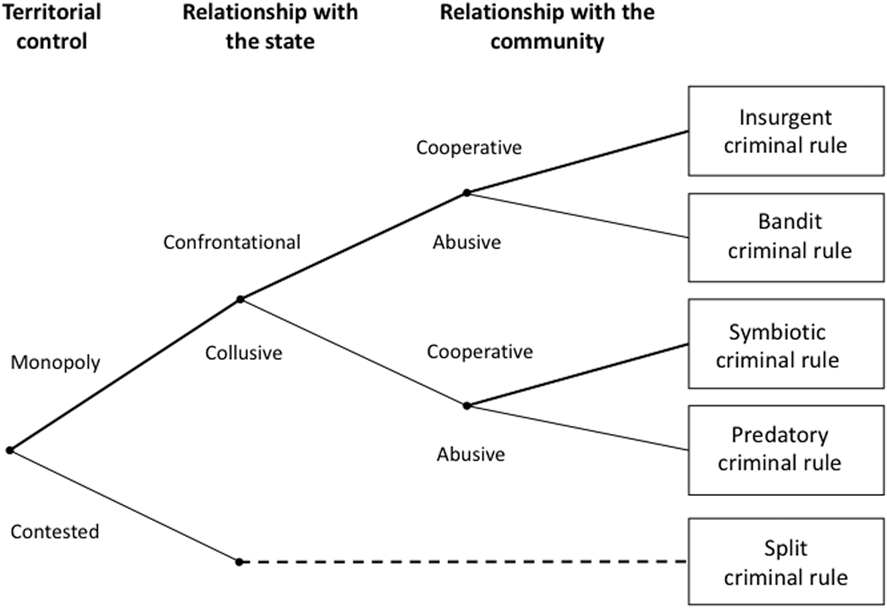
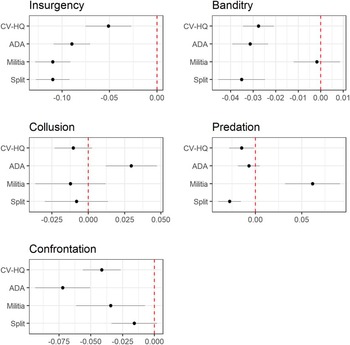
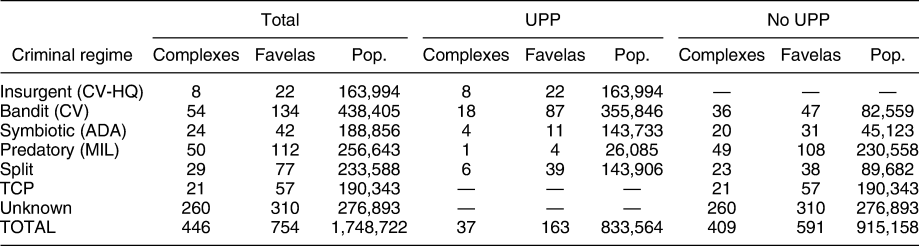
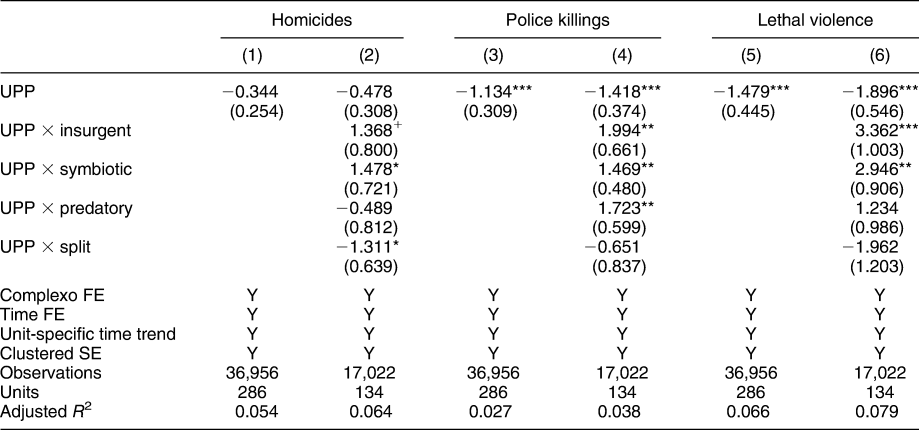
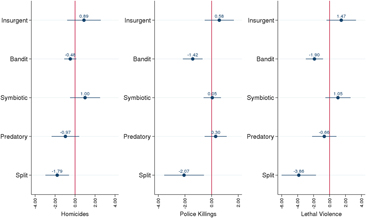
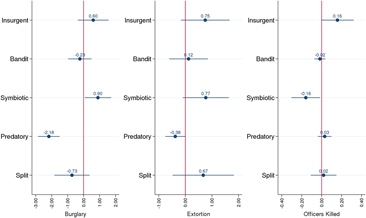

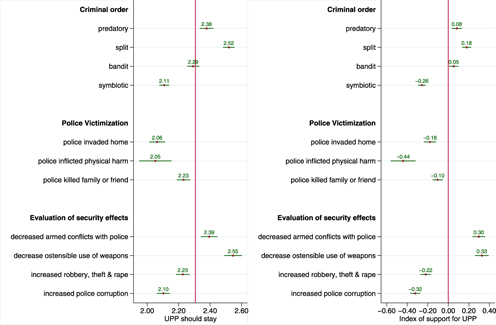




Comments
No Comments have been published for this article.