Implications
Studies suggest that providing forage to pregnant sows improves their health and welfare. Hence, increasing the intake of forages by sows could improve performance as well. Reliable information is required on the types of forages that should be offered to sows to increase both fresh and dry forage intake, particularly in alternative breeding systems that provide more possibilities of giving access to forages than conventional systems (e.g. fresh forages in pasture-based systems). The results revealed that forages rich in legumes are preferred by sows.
Introduction
Sows are usually feed restricted during gestation to avoid obesity that can alter their reproductive performance due to farrowing and locomotion disorders (Dourmad et al., Reference Dourmad, Etienne, Prunier and Noblet1994, Trottier et al., Reference Trottier, Johnston, de Lange and Farmer2015). Sows are commonly fed once or twice a day with a concentrate diet that is rapidly consumed. Stereotypic behaviours and, more specifically, oral stereotypies such as bars biting, chain manipulation and “sham” chewing have been observed in feed-restricted sows after feed consumption. The occurrence of those behaviours is negatively correlated with feed allowance (Lawrence and Terlouw, Reference Lawrence and Terlouw1993), suggesting a frustration of their feeding motivation because sows did not feel satiated. Feed restriction therefore reduces the welfare of sows due to a prolonged state of hunger (Meunier-Salaün and Bolhuis, Reference Meunier-Salaün, Bolhuis and Farmer2015).
One solution is to provide a diet with additional fibrous material. High-fibre diets increase the time spent eating and reduce frustration of the feeding motivation in pregnant sows (Bergeron et al., Reference Bergeron, Bolduc, Ramonet, Meunier-Salaün and Robert2000, Meunier-Salaün et al., Reference Meunier-Salaün, Edwards and Robert2001). Sows fed a very-high-fibre diet spent more time lying down after a meal than sows fed a concentrate diet (Bergeron et al., Reference Bergeron, Bolduc, Ramonet, Meunier-Salaün and Robert2000). This sign of satiety could be explained by the fact that the stomach is full for a longer time because of the water-holding capacity of the fibre (Bindelle et al., Reference Bindelle, Leterme and Buldgen2008).
High-fibre diets also have the potential to improve the health and performance of sows. According to Feyera et al. (Reference Feyera, Hłjgaard, Vinther, Bruun and Theil2017), increasing the dietary fibre supply during the last 2 weeks of gestation reduced the proportion of stillborn piglets and total piglet mortality. Dietary fibres also have the advantage of improving gut health by enhancing beneficial bacteria (Jha and Berrocoso, Reference Jha and Berrocoso2015). Finally, a high-fibre diet can reduce constipation risks during the last stage of gestation and early lactation (Oliviero et al., Reference Oliviero, Kokkonen, Heinonen, Sankari and Peltoniemi2009).
The inclusion of fibres in the diet of pregnant sows is also beneficial during the lactation period. Because energy requirements of lactating sows are high and not covered by the voluntary intake, it is important to maximise feed intake to limit weight loss (Dourmad et al., Reference Dourmad, Etienne, Prunier and Noblet1994). Meunier-Salaün et al. (Reference Meunier-Salaün, Bolhuis and Farmer2015) showed that feeding pregnant sows with a high-fibre diet increases the feed intake capacity of sows during the lactation period.
To increase the daily fibre intake, a portion of the concentrate diet can be substituted by forages, while maintaining the same energy level. Providing fresh or dry forage to pregnant sows can increase DM feed intake without additional weight gain and improve the welfare, health and performance of sows. Fresh and dry forages are not widely used currently in pig production, and sows’ preference for different fresh and dry forages has been poorly investigated. Some studies have shown that sows prefer legumes over grasses offered as fresh forage (Sehested et al., Reference Sehested, Słegaard, Danielsen, Roepstorff and Monrad2004, Rachuonyo et al., Reference Rachuonyo, Allen and McGlone2005). In ruminant species, such as cows, sheep and goats, it is known that the botanical and chemical composition of forages influence preferences and, therefore, forage consumption (Scehovic et al., Reference Scehovic, Poisson and Gillet1985, Buntinx et al., Reference Buntinx, Pond, Fisher and Burns1997, Mayland et al., Reference Mayland, Shewmaker, Harrison and Chatterton2000, Burns et al., Reference Burns, Fisher and Mayland2001, Lombardi et al., Reference Lombardi, Vasseur, Berthiaume, DeVries and Bergeron2015). For example, the concentrations of NDF and ADF in forages are negatively correlated with preference in different herbivore species (Burns et al., Reference Burns, Fisher and Mayland2001, Horadagoda et al., Reference Horadagoda, Fulkerson, Nandra and Barchia2009). To optimize the use of both fresh and dry forages in the feeding of sows, it is necessary to better understand preferences for different types of forage. The objective of the present study was to determine the preference of sows among four different forage mixtures commonly used in Canada offered as dry or fresh forages. The relationship between botanical and chemical composition of forages and this preference by sows was also investigated.
Materials and methods
Animals and treatments
The institutional animal care committee of the Sherbrooke Research and Development Centre of Agriculture and Agri-Food Canada (QC, Canada) reviewed the procedures (authorisation #491) in conformity with the guidelines of the Canadian Council on Animal Care (CCAC, 2009) and the Canadian code of practice (National Farm Animal Care Council, 2014). Two experiments were conducted separately to test the preference of sows for four forage mixtures offered as fresh forage during spring (May–June) and dry forage (hay) during autumn (September–October). For each experiment, eight adult Yorkshire × Landrace sows were used (spring: parity = 2, body weight = 258.9 ± 10.2 kg, back fat = 17.7 ± 3.6 mm; autumn: parity = 2, body weight = 259.4 ± 11.2 kg, back fat = 18.8 ± 4.5 mm; mean ± SD) for a double Latin square design. The sows were between 39 and 78 days of gestation and housed indoors in individual pens (1.5 × 2.5 m) with a plain concrete floor in order to precisely collect forage refusals. Each sow had one neighbour as each pen was adjacent to another with a common side. Each sow had access to two separate troughs that were on the same side of the pen and inaccessible to the neighbouring sow. Sows were fed around 2.7 kg/day of a commercial gestation diet in form of pellets (12.74 MJ/kg ME, 13% CP; Nutreco Canada, Saint-Hyacinthe, QC, Canada) to meet their nutritional requirements for maintenance and foetal growth according to the National Research Council (2012). Sixty percent of the diet was given in the morning at around 0730 h and 40% in the afternoon immediately after the tests at around 1400 h.
Each experiment included a voluntary intake test and a preference test. Voluntary intake was measured by offering each forage mixture separately (one forage mixture per day) according to a 4 × 4 Latin square design. During the preference test, two forage mixtures were offered simultaneously with one combination of two forage mixtures per day.
Four forage mixtures were tested: (1) AlfFT with alfalfa (Medicago sativa L.), tall fescue (Festuca arundinacea Schreb.) and timothy (Phleum pratense L.); (2) CloFT with red clover (Trifolium pratense L.), tall fescue and timothy; (3) AlfT with alfalfa and timothy and (4) CloT with red clover and timothy. The AlfT and CloT forage mixtures were produced at the Sherbrooke Research and Development Centre of Agriculture and Agri-Food Canada (QC, Canada; 45°36′N, 71°83′W). The AlfFT and CloFT forage mixtures were produced at the Lieutenant farm in Stoke (QC, Canada; 45°49’N, 71°83’W).
Fresh forages were manually harvested using a pole hedge trimmer (model KombiTools; STIHL Limited, London, ON, Canada) in the morning of every test day. Forages for the second experiment with hay were also manually harvested (between 0.5 and 0.8 ha) in the spring (AlfFT, 2 June 2016; CloFT, 15 June 2016; AlfT, 31 May 2016 and CloT, 14 June 2016), dried and stored in bulk in a barn until being used in autumn. Fresh and dry forages were chopped with knives (fresh) or an electric hedge trimmer (hay) before being offered in order to obtain a particle length of around 10 cm.
Voluntary intake tests
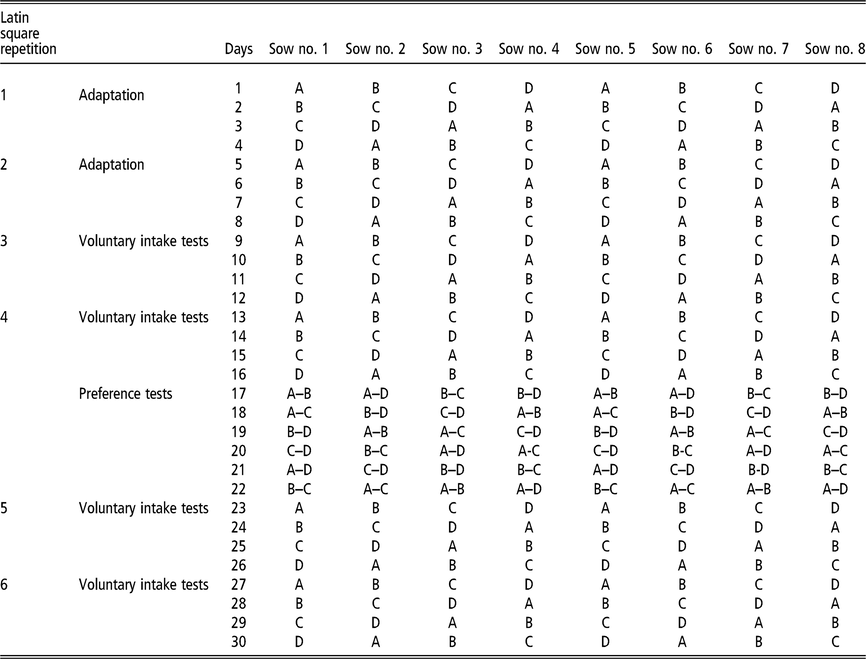
Voluntary intake tests were designed as a double 4 x 4 Latin square with forage mixtures as treatments, sows as columns and days as rows, which was repeated six times (Table 1). The first two repetitions of the double Latin square were considered the adaptation period. The third and fourth repetitions of the Latin square took place consecutively. Then, during the following 6 days, a preference test was performed, and finally, the fifth and sixth repetitions of the Latin square were carried out (Table 1). Data for the analysis of voluntary intake came from the third, fourth, fifth and sixth repetitions of the Latin square only, so that each forage mixture was tested four times on each sow.
Experimental design of voluntary intake and preference tests in sows

A, B, C and D correspond to the different forage mixtures given to the sows.
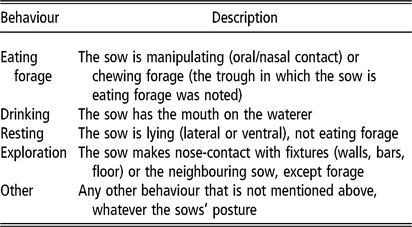
For each daily test, the forage was offered ad libitum from 1200 to 1330 h. The quantity of forage provided and refusals were measured for each sow. For hay, refusals were dried at 55°C during at least 72 h before being weighed. Sow feeding behaviour was video recorded using specialised viewing software (Omnicast; Genetec Inc., Montréal, QC, Canada). The behavioural elements described in Table 2 were observed continuously for each sow for the third repetition of the double Latin square by three observers blinded to the treatments (with the treatments and sows evenly distributed between observers). Inter- and intra-observer percentages of agreement were 95% and 97% respectively. The percentage of agreement was calculated based on the beginning and ending time for each behaviour noted by the observers with a tolerance of 4 s maximum. The percentage of agreement was calculated at the beginning of video processing on four videos selected randomly. Ingestion rate was calculated as the DM intake divided by the time spent eating the forage during the 90 min of the test.
Ethogram with the description of sows behaviour

Preference tests
Preference tests were conducted over 6 days, with a different pair of forage mixtures tested each day for each pair of neighbouring sows (Table 1). The side of the presentation of forages was balanced between the two neighbouring sows in order to avoid a possible lateral bias. During the 6 days, each sow received once all possible pairwise combinations of two forage mixtures (four forage mixtures tested in pairs, six combinations in total). The sequence of pairs was randomly determined.
Forages were simultaneously offered ad libitum from 1300 to 1345 h in two different troughs. The quantity of forage provided and refusals were measured for each forage mixture. The refusals of hay were dried at 55°C during at least 72 h in an oven before being weighed. Sows were video recorded during all the tests using the same equipment as in voluntary intake tests. Behaviours were then observed continuously by one observer (intra-observer percentage of agreement calculated on four videos = 99%). Time spent eating each forage mixture was measured.
Composition of forages
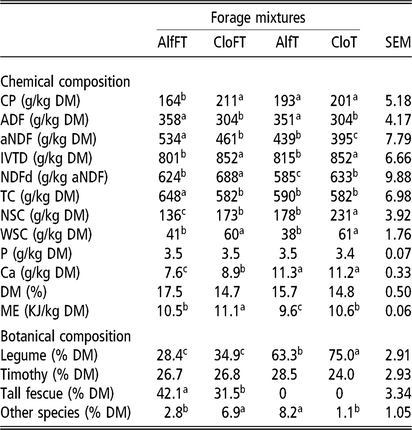
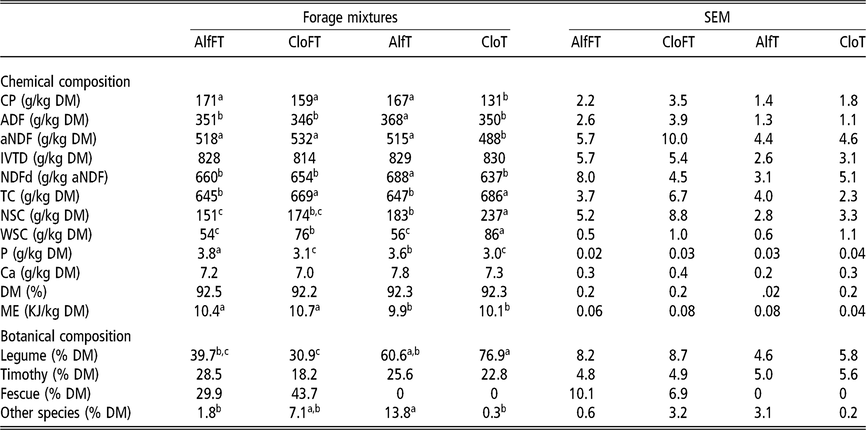
Samples of forages were collected at harvest for botanical composition and just before being offered to sows for chemical composition. For fresh forages, an area of 0.25 m2 of each forage mixture was harvested on each experimental day (n = 88). For hays, six areas of 0.25 m2 were harvested on the day of mowing each forage mixture (n = 24). The botanical composition was determined for each sample after each harvest. Plants of each species were dried separately at 55°C for at least 72 h, and the proportion of each forage species in the mixture was determined on a DM basis. The botanical composition of fresh and dried forages is presented in Tables 3 and 4 respectively.
Chemical and botanical composition of four forage mixtures fed as fresh forage to the sows. Least square means and standard error of the mean (SEM) are presented.

AlfFT = alfalfa, tall fescue and timothy; CloFT = red clover, tall fescue and timothy; AlfT = alfalfa and timothy; CloT = red clover and timothy; CP = crude protein; ADF = acid detergent fibre; aNDF = neutral detergent fibre assayed with a heat-stable α-amylase; IVTD = in vitro true digestibility of DM; NDFd = in vitro NDF digestibility; TC = total carbohydrates; NSC = non-structural carbohydrates; WSC = water soluble carbohydrates; ME = metabolisable energy for sows.
a,b,c Values within a row with different superscripts differ significantly at P < 0.05 (analyses of variance using the MIXED procedure of SAS, n = 22 per forage mixture).
Chemical and botanical composition of four forage mixtures fed as hay to the sows. Least square means and standard error of the mean (SEM) from heterogeneous variance analysis are presented.

AlfFT = alfalfa, tall fescue and timothy; CloFT = red clover, tall fescue and timothy; AlfT = alfalfa and timothy; CloT = red clover and timothy; aNDF = neutral detergent fibre assayed with a heat-stable α-amylase; IVTD = in vitro true digestibility of DM; NDFd = in vitro NDF digestibility; TC = total carbohydrates; NSC = non-structural carbohydrates; WSC = water soluble carbohydrates; ME = metabolisable energy for sows.
a,b,cValues within a row with different superscripts differ significantly at P < 0.05 (analyses of heterogeneous variance using the MIXED procedure of SAS; for botanical composition, n = 6; and for chemical composition, n = 5, for each type of hay).
Overall, 20 samples of hay (one sample per forage mixture per week) and 88 samples of fresh forage (one sample per forage mixture per day) were collected for chemical analysis. These samples were dried at 55°C for at least 72 h in an oven and then ground using a Wiley mill (Thomas Model 4 Wiley®; Thomas Scientific, Swedesboro, NJ, USA) to pass a 1-mm screen. Dried and ground forage samples were scanned by visible near-infrared reflectance spectroscopy (VNIRS) using a NIRS DS2500 monochromatic instrument (Foss NIRSystems Inc., Hilleroed, Denmark). A calibration set (n = 44) and a validation set (n = 8) of samples were selected using WinISI 4 software (version 4.5.0.14017; Infrasoft International, State College, PA, USA) and chemically analysed for concentrations of DM, ash, neutral detergent fibre assayed with a heat-stable α-amylase (aNDF), ADF, ether extract (EE), water-soluble carbohydrates (WSC), starch, total N (TN), neutral detergent insoluble N (NDIN), P and Ca. The in vitro true digestibility (IVTD) of DM and the in vitro NDF digestibility (NDFd) were also determined in these sets of samples. All of these nutritive attributes were determined according to procedures described in Bélanger et al. (Reference Bélanger, Tremblay, Papadopoulos, Duynisveld, Lajeunesse, LafreniŁre and Fillmore2018). The chemical composition of fresh and dried forages is presented in Tables 3 and 4 respectively. Crude protein concentration was estimated as CP = TN × 6.25 and the neutral detergent insoluble crude protein (NDICP) as neutral detergent insoluble N × 6.25. The concentration of total carbohydrates (TC, g/kg DM) was calculated as TC = 1000 – CP – EE – ash, whereas concentration of non-structural carbohydrates (NSC, g/kg DM) was calculated as NSC = TC – (aNDF – NDICP). The IVTD (g/kg DM) and NDFd (g/kg aNDF) were calculated as follows:
 $$ \eqalign{{\rm{IVTD}} = \ [1\, - ({\rm{post}} \hbox- {\rm{digestion \ dry \ weight \ following}} \cr {{\rm aNDF \ wash}}/{\rm{pre}} \hbox- {\rm{digestion \ dry \ weight)}}]\ \times \ 1000}$$
 $$\eqalign{\scale95%{{\rm{NDFd}} = \ [1 - ({\rm{post}} \hbox- {\rm{digestion \ dry \ weigh \ following \ aNDF }}} \cr {\scale95%{\rm wash}}/{\rm{pre}} \hbox- {\rm{digestion \ dry \ weight \ of \ aNDF}})]\ \times \ 1000}} $$
The nutritive attributes described above were thereafter predicted for all forage samples using VNIRS (WinISI 4 software, version 4.5.0.14017; Infrasoft International). The VNIRS predictions were considered successful when the ratio of the standard error of prediction to the standard deviation (RPD, ratio of prediction to deviation) was >3 (Nie et al., Reference Nie, Tremblay, Bélanger, Berthiaume, Castonguay, Bertrand, Michaud, Allard and Han2009). The RPD was calculated by dividing the standard deviation of the reference data used in the validation set by the standard error of prediction corrected for bias. The RPD for ADF, aNDF, IVTD, NDFd, TC, NSC and WSC were >3 (ranged from 3.08 to 6.97).
Total N, P and Ca were extracted in all forage samples using a method adapted from Isaac and Johnson (Reference Isaac and Johnson1976). This extract was used to determine total N (method 13-107-06-2-E; Lachat Instruments, 2013) and P (method 13-115-01-1-B, Lachat Instruments, 2013) using a Lachat QuickChem8000 flow injection analysis system (Zellweger Analytics Inc., Lachat Instruments Division, Milwaukee, WI), as well as Ca by inductively coupled plasma optical emission spectrometry (Optima4300DV, Perkin Elmer, Norwalk, CT, USA).
Metabolisable energy (ME) was calculated from the chemical composition of the samples of the calibration set previously used for chemical analyses (n = 44) using two equations. The first equation estimates ME for growing pigs (MEg) as follows:
 $${\rm{MEg}} = 4182-(9.6 \times {\rm{Ash}}) + (1.1 \times {\rm{CP}}) + (4.1 \times {\rm{EE}}){\rm{ }}-{\rm{ }}(2.4 \times {\rm{Hemi}})-(4.4 \times {\rm{ADF}})$$
where Hemi is the hemicellulose content calculated as Hemi = NDF − ADF (Noblet and Shi, Reference Noblet and Shi1993). The second equation estimates ME for the sows (MEs) (Noblet and Perez, Reference Noblet and Perez1993) as follows:
 $$ {\rm{MEs}} = - 3.96 + (1.17 \times {\rm{MEg}}) + (0.0132 \times {\rm{NDF}})$$
The values of ME for sows were thereafter predicted for all forage samples using VNIRS (WinISI 4 software, version 4.5.0.14017; Infrasoft International). The RPD was 2.82 which is considered moderately successful (Nie et al., Reference Nie, Tremblay, Bélanger, Berthiaume, Castonguay, Bertrand, Michaud, Allard and Han2009).
Statistical analysis
Statistical analyses were done with SAS® software (Statistical Analysis System, Release 9.4, 2002–2012. SAS Institute Inc., Cary, NC). For voluntary intake tests, the experimental unit was the individual sow at every daily test within each repetition of the double Latin square. The analysis of variance (with heterogeneous variance according to forage mixtures, for fresh forages only) was done using the MIXED procedure of SAS to compare the DM intake between the four forage mixtures with repetition, Latin square within repetition, animal within repetition and Latin square, days within repetition and Latin square and forage mixture as fixed effects in the model. For the third repetition of the double Latin square only, the MIXED procedure was used to compare the time spent eating forages and the DM ingestion rate between the different forage mixtures.
A principal component analysis (PCA) was performed with the PRINCOMP procedure of SAS to explore relationships between the following variables: DM forage intake, botanical composition (percentage of legumes, timothy, tall fescue and other species) and nutritive attributes (DM, ME, ADF, aNDF, IVTD, NDFd, CP, WSC, NSC, TC, P and Ca) for fresh forages during voluntary intake tests. Each data point (n = 16 for each forage) corresponds to a forage sample for each day for chemical and botanical composition; forage intake was calculated as the average of DM forage intake of the two sows that had the same forage the same day.
For preference tests, the experimental unit was the sow on each daily test. Paired Student’s t tests were used to compare the mean of DM intake and time spent eating each of the two forage mixtures for each pair of forage mixtures offered simultaneously. The preference of a forage over another (within each of the six possible pairwise combinations) was determined by comparing the mean of forage intake using a paired t test. When the paired t test renders a significant result for a pair of forage mixture, then the most consumed forage is considered ‘preferred’.
A probability level of P < 0.05 was chosen as the limit for statistical significance in all tests, whereas probability levels of 0.05 ≤ P < 0.10 were considered a tendency. Multiple comparisons were performed using Tukey’s adjustments of the Student’s t test. Data provided in tables and figures are least square means with standard error of the mean. In the text, data provided are least square means of the treatments with the common SEM (homogeneous variance) unless stated otherwise.
Results
Fresh forages
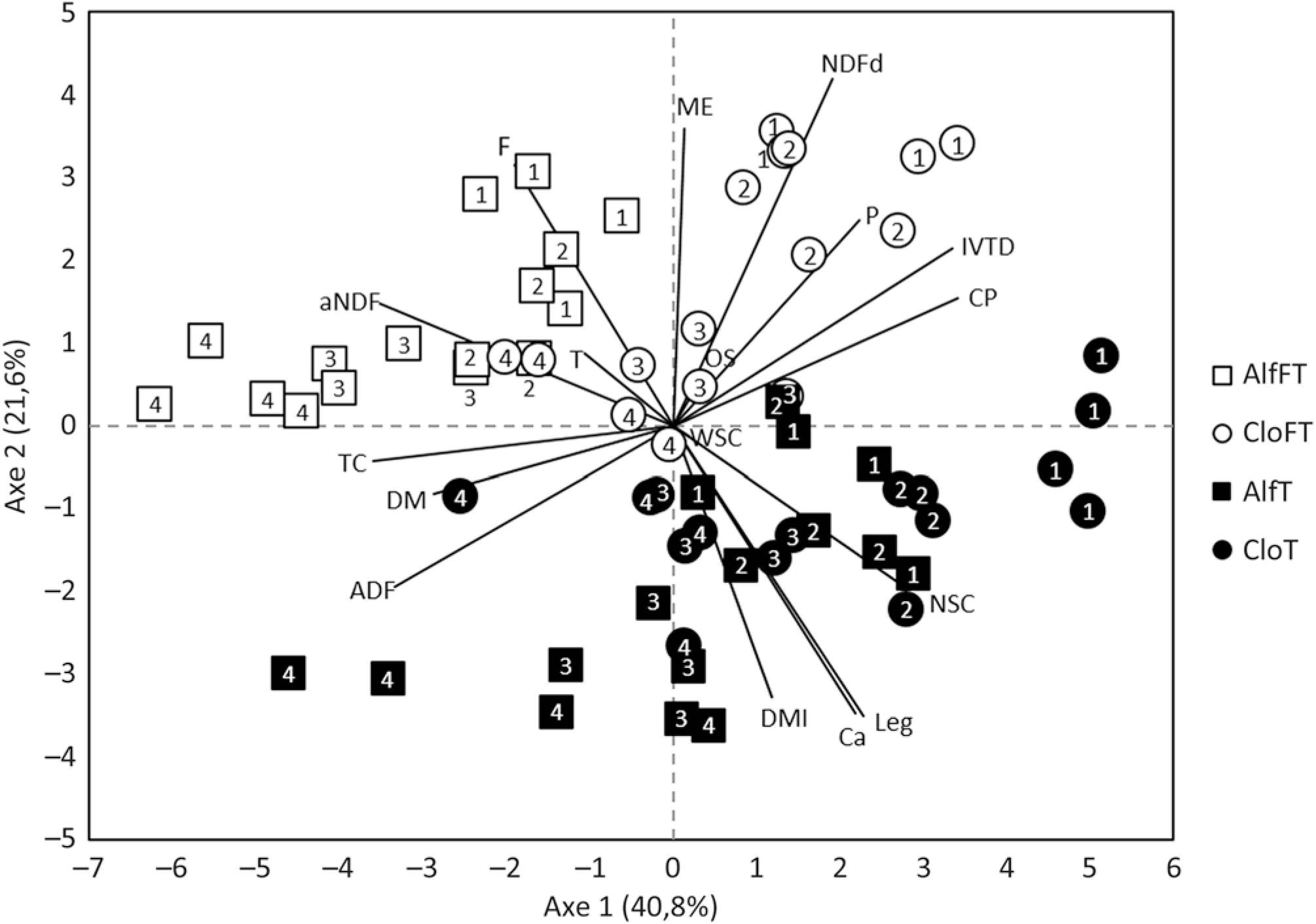
The first two components of the PCA accounted for 62.4% of the total inertia (variance). The distribution of the dots indicates variation within and between forage mixtures offered as fresh forage (Figure 1). The first component of the PCA was defined mostly by CP concentration, NSC concentration and IVTD on the positive side and by concentrations of ADF, DM, TC and aNDF on the negative side. Attributes within same group on each side were positively correlated, whereas attributes in opposing groups were negatively correlated. This first component was mostly defined by the days of harvest, and it highlights the variation within mixtures. The same pattern was observed for all forage mixtures with an increase in ADF, DM and TC concentrations from the third to the last repetition of the double Latin square, whereas the CP concentration and the IVTD decreased when advancing in the season. The second component of the PCA was defined mostly by DM intake, the legume proportion and the Ca concentration on the positive side and by NDFd, the proportion of tall fescue, the ME content and the P concentration on the negative side. This second component was mostly defined by forage mixtures, and it confirms the variation among forage mixtures for the botanical and chemical composition.
Diagram of the first two principal components of a principal component analysis to illustrate the relationship among forage attributes (aNDF, neutral detergent fibre assayed with a heat-stable α-amylase; F, proportion of tall fescue; ME, metabolisable energy; NDFd, in vitro NDF digestibility; IVTD, in vitro true digestibility of DM; OS, other species; WSC, water soluble carbohydrate; NSC, non-structural carbohydrate; Leg, legumes; T, timothy; DMI, dry matter intake of forages by sows; TC, total carbohydrate) for four forage mixtures offered as fresh forage in a Latin square design (AlfFT, alfalfa, tall fescue and timothy; CloFT, red clover, tall fescue and timothy; AlfT, alfalfa and timothy; CloT, red clover and timothy). Numbers in symbols correspond to the period of harvest (1, harvest from 28 to 31 May; 2, harvest from 1 to 4 June; 3, harvest from 11 to 14 June; 4, harvest from 15 to 18 June).

Voluntary intake
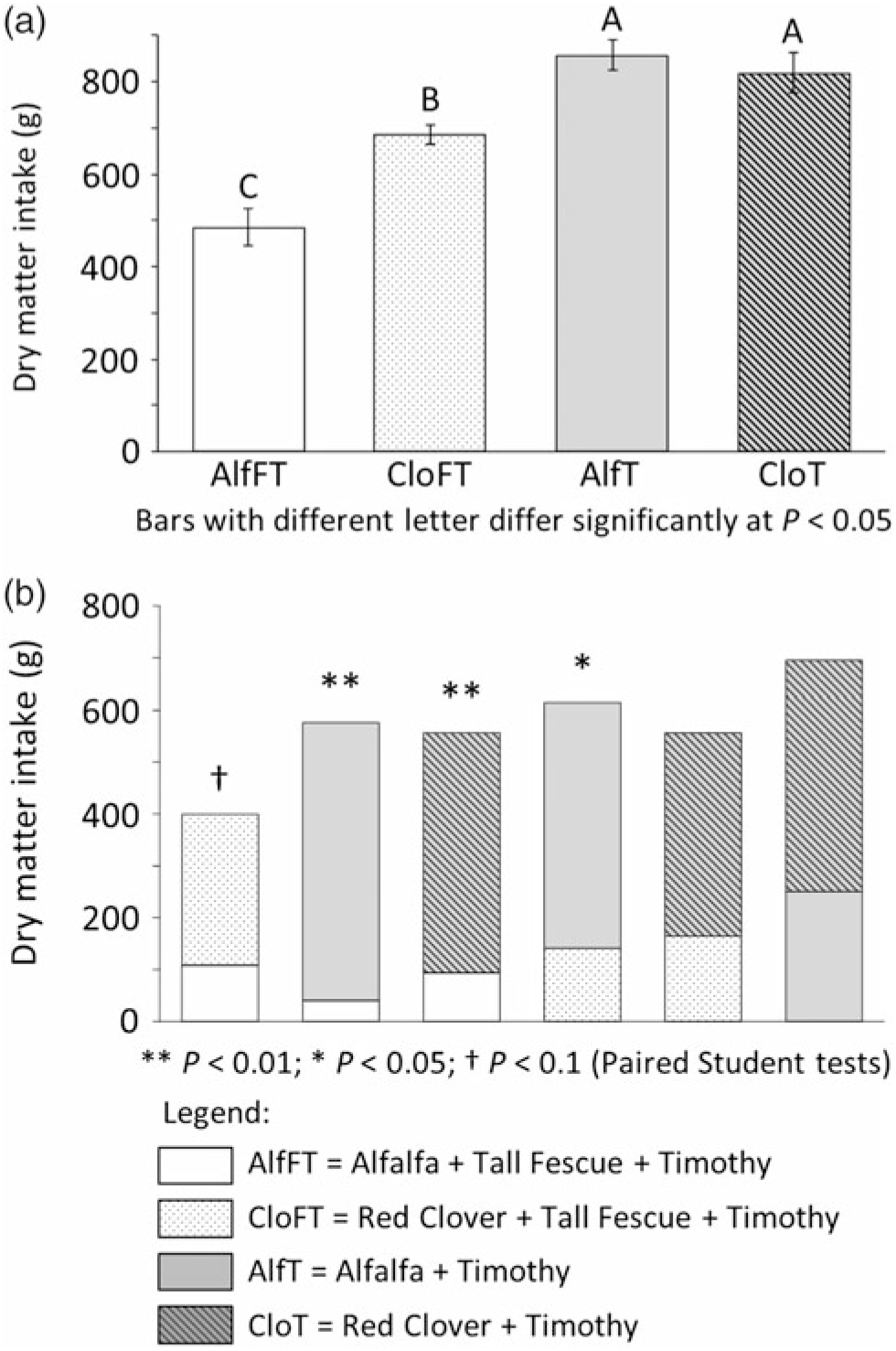
Forage mixtures offered as fresh forage differed in DM intake by sows (F 3,69 = 15.9; P < 0.001; Figure 2a). The DM intake of the AlfFT forage mixture was lower than that of the other forage mixtures, while it was lower for the CloFT forage mixture than for the AlfT and CloT forage mixtures. For the third repetition of the double Latin square, the average percentages of time spent eating were 90, 82, 86 and 86 ± 5%, while the average ingestion rates were 5.6, 6.5, 10.5 and 7.8 ± 1.2 g DM/min for AlfFT, CloFT, AlfT and CloT forage mixtures respectively. The forage mixtures did not differ in the percentage of time spent eating (F 3,21 = 0.55; P = 0.65), but they differed in their ingestion rate (F 3,21 = 3.8; P = 0.025). More specifically, the AlfFT forage mixture was ingested less quickly than the AlfT forage mixture (P = 0.022).
Dry matter intake of fresh forage by sows from (a) four forage mixtures in voluntary intake tests and (b) two forage mixtures for each pair in preference tests.

The position of the variables in the PCA indicates that forage DM intake was negatively associated with the proportion of tall fescue and, to a lesser extent, to the aNDF concentration and ME content but positively associated with the proportion of legumes and concentrations of NSC and Ca (Figure 1), regardless of the days of harvest associated with the experimental Latin square.
Preference tests
For forage mixtures offered as fresh forage, the DM intake differed significantly between the two forage mixtures offered for three pairs out of the six possible pairs of forage mixtures (Figure 2b). The DM intake was lower for the AlfFT forage mixture than for the AlfT and CloT forage mixtures, and it tended (P = 0.088) to be lower than for the CloFT forage mixture. Moreover, the DM intake was higher for the AlfT forage mixture than for the CloFT forage mixture. Despite these DM intake differences averaged across eight sows, not all sows show the same preference pattern. Individual preference for each pair of forage mixtures was determined by comparing the forage DM intake of each sow for the two forage mixtures offered simultaneously with the preferred forage being the forage eaten for more than 50% of the total forage DM intake of the pair. Six out of eight sows preferred CloT over AlfT, CloT over CloFT and CloFT over AlfFT. The preference for AlfT over AlfFT was observed for all eight sows. The majority of the sows (7/8) preferred AlfT over CloFT and CloT over AlfFT.
For forage mixtures offered as fresh forage, time spent eating also differed between the two forage mixtures offered simultaneously for four pairs of forage mixtures. Sows spent less time eating AlfFT than AlfT (P < 0.001; 4 v. 40 ± 1 min respectively), AlfFT than CloT (P = 0.038; 9 v. 36 ± 5 min respectively) and CloFT than AlfT (P = 0.022; 14 v. 31 ± 3 min respectively). A tendency (P = 0.07) for spending less time eating AlfFT than CloFT was also observed (14 v. 31 ± 4 min respectively).
Dry forages (hays)
Voluntary intake
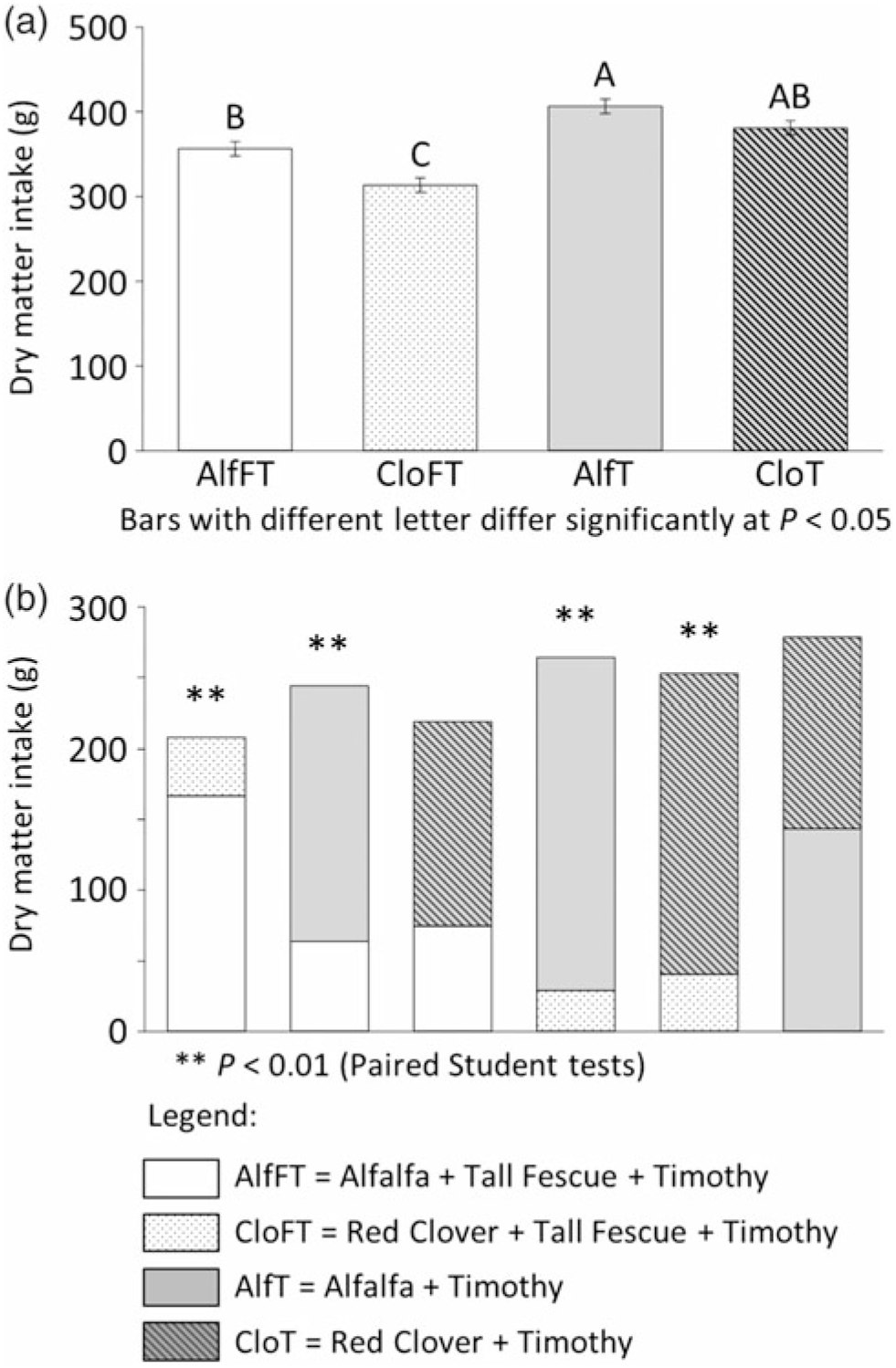
Forage mixtures offered as hay differed in DM intake by sows (F 3,69 = 21.7, P < 0.001; Figure 3a). The DM intake of the CloFT forage mixture was lower than that of the other forage mixtures (356, 314, 406 and 381 ± 9 g of DM for AlfFT, CloFT, AlfT and CloT respectively), whereas the DM intake of the AlfFT forage mixture was lower than that of the AlfT forage mixture (P < 0.001). For the third repetition of the double Latin square, the average percentages of time spent eating were 94, 95, 94 and 93 ± 2% and the average ingestion rates were 3.4, 2.8, 4.1 and 3.8 ± 0.4 g of DM/min for the AlfFT, CloFT, AlfT and CloT forage mixtures respectively. Time spent eating did not differ among forage mixtures (F 3,21 = 0.26; P = 0.86), but the ingestion rate differed among mixtures offered as hay (F 3,21 = 8.7; P < 0.001). Indeed, the CloFT forage mixture was ingested less quickly than the AlfT (P < 0.001) and CloT (P = 0.005) forage mixtures.
Dry matter intake of hay by sows fed from (a) four forage mixtures in voluntary intake tests and (b) two forage mixtures for each pair in preference tests.

Preference tests
Forage intake differed between the two forage mixtures offered as hay for four pairs of forage mixtures (Figure 3b). The DM intake of the CloFT forage mixture was always lower than that of other three forage mixtures. The DM intake of the AlfT forage mixture was higher than that of the AlfFT forage mixture.
Despite these differences, individual sows did not show the same preference pattern. The preference of AlfFT, AlfT and CloT over CloFT was observed for all the eight sows. The preference of AlfT over AlfFT was observed for all the eight sows. The majority of the sows (7/8) preferred CloT over AlfFT. Half of the sows (4/8) preferred AlfT over CloT.
Time spent eating differed between the two forage mixtures offered simultaneously as hay for four pairs of forage mixtures. Sows spent less time eating the CloFT forage mixture than the forage mixtures of AlfFT (10 v. 34 ± 3 min respectively; P = 0.004), AlfT (6 v. 38 ± 2 min respectively; P < 0.001) and CloT (10 v. 35 ± 3 min respectively; P = 0.003). Sows also spent less time eating the AlfFT forage mixture than the AlfT forage mixture (16 v. 28±2 min respectively; P = 0.005).
Discussion
The present study shows that pregnant sows exhibited strong preferences for some forage mixtures over others. Despite variation among individuals, clear preferences were observed at the group level. These preferences were almost similar whether the forage mixtures were offered as fresh forage or hay.
Relationship with botanical composition
Forage mixtures with a great proportion of legumes and without tall fescue, offered either as fresh forage or hay, were preferred by sows over forage mixtures with a high proportion of grasses and including tall fescue offered either as fresh forage or hay. Therefore, the preference of sows seems related to the botanical composition. In previous studies, legumes were also preferred over grasses by sows offered as fresh forage (Sehested et al., Reference Sehested, Słegaard, Danielsen, Roepstorff and Monrad2004; Rachuonyo et al., Reference Rachuonyo, Allen and McGlone2005). According to Rachuonyo et al. (Reference Rachuonyo, Allen and McGlone2005), the preference for legumes could be due to grasses being more fibrous and harder to graze by non-ruminants. In the present study, the least preferred forage mixtures were those containing tall fescue. Similar results have also been observed in ruminant species. Indeed, tall fescue was the least preferred grass species in cattle among eight different grass species offered as fresh forage (Horadagoda et al., Reference Horadagoda, Fulkerson, Nandra and Barchia2009). Tall fescue was also less consumed than other species when offered to sheep as hay (Buntinx et al., Reference Buntinx, Pond, Fisher and Burns1997). Scehovic et al. (Reference Scehovic, Poisson and Gillet1985) reported that tall fescue was less consumed by sheep when compared with ryegrass. These authors similarly observed that ryegrass was also less consumed when sprinkled with tall fescue juice, and they suggested that the low palatability (i.e. palatability of a diet refers to its acceptability features, including taste, smell and texture; Jacela et al., Reference Jacela, DeRouchey, Tokach, Goodband, Nelssen, Renter and Dritz2010) of tall fescue could be explained by its chemical composition, particularly its richness in sulphur compounds. Therefore, the preference of sows for forage mixtures without tall fescue could be due to the taste of this grass species, but further studies are necessary to investigate the reasons for this poor palatability of tall fescue fed to sows. The botanical composition of forage mixtures also translates into differences in chemical composition. For example, legumes usually contain less fibre than grasses (McLeod and Smith, Reference McLeod and Smith1989). Therefore, botanical composition of the forages must be take into account for sow feeding, with a high content of legumes being recommended.
Relationship with chemical composition
The relationship between the chemical composition of forages and voluntary intake has been poorly investigated in swine, whereas it has been well studied in other species, especially ruminants, such as cattle and sheep (Wilman et al., Reference Wilman, Mtengeti and Moseley1996, Buntinx et al., Reference Buntinx, Pond, Fisher and Burns1997, Horadagoda et al., Reference Horadagoda, Fulkerson, Nandra and Barchia2009, Lombardi et al., Reference Lombardi, Vasseur, Berthiaume, DeVries and Bergeron2015). As observed in other species, it could be hypothesized that preferences of sows are also related to the chemical composition of the forage. In the present study, AlfFT, the least consumed forage mixture during the voluntary intake test for fresh forages, had a greater aNDF concentration than the other forage mixtures. Moreover, during the preference tests with fresh forages, the most consumed forage mixture always had a lower aNDF concentration than the least consumed forage mixture. The PCA confirmed these results with a clear opposition between forage aNDF concentration and forage intake. These results are in accordance with previous studies in sheep and cattle (Jung and Allen, Reference Jung and Allen1995). For example, Horadagoda et al. (Reference Horadagoda, Fulkerson, Nandra and Barchia2009) found a negative correlation between NDF concentration and cow preference for grass and legume species offered as fresh forage. One explanation to these results could be the structural characteristics of the fibre. Indeed, studies with sows have found that dietary fibre can promote satiety during and immediately following a meal due to the bulkiness properties of the fibre (reviewed by Meunier-Salaün and Bolhuis, Reference Meunier-Salaün, Bolhuis and Farmer2015). Moreover, some studies have shown a lower feeding rate with the inclusion of fibre in the diet of sows, which could be due to sows spending more time chewing fibrous diets (reviewed by Meunier-Salaün and Bolhuis, Reference Meunier-Salaün, Bolhuis and Farmer2015). Similarly, in sheep, the rate of DM intake of different fresh plant species was negatively correlated with the NDF concentration of the diet (Wilman et al., Reference Wilman, Mtengeti and Moseley1996). Therefore, the properties of fibre could explain why forage mixtures with a greater NDF concentration were less consumed by sows.
Wilman et al. (Reference Wilman, Mtengeti and Moseley1996) also studied the relationship between physical and anatomical characteristics of plants and the ingestion rate in sheep. Their results indicated that the ingestion rate was associated with the characteristics of the veins in the plant. A lower rate of intake was associated with large numbers of veins arranged in parallel lines, such as seen in grasses, whereas a higher ingestion rate was associated with broad leaves, such as seen in legumes that have a network of veins in the leaf easier to be broken than the parallel venation of grasses (Wilman et al., Reference Wilman, Mtengeti and Moseley1996). Therefore, the anatomical characteristics of the species could explain why forage mixtures with high proportion of grasses were less preferred by the sows in the present study.
In the present study, AlfFT, the least consumed forage mixture offered as fresh forage during voluntary intake tests, had lower CP, Ca, NSC and WSC concentrations than the other forage mixtures. During the preference tests with fresh forages, the most consumed forage mixtures often had greater CP concentration than the least consumed forage mixture. The effect of forage NSC and WSC concentrations on forage intake has been investigated in cows. The preference of cows was positively related to the forage WSC concentration (Horadagoda et al., Reference Horadagoda, Fulkerson, Nandra and Barchia2009). Among different cultivars of tall fescue, cattle preference was positively correlated with the forage NSC concentration (Mayland et al., Reference Mayland, Shewmaker, Harrison and Chatterton2000). Therefore, the lowest intake of the AlfFT forage mixture by sows could also be due to its lower concentration of NSC and WSC. Forage WSC concentration was strongly correlated with palatability in cows (Smit et al., Reference Smit, Tamminga and Elgersma2006).
It has been shown in cows that the sweet taste increased palatability. Indeed, over four different additives (sweet, sour, bitter and salty), only sucrose increased diet intake in cows (Nombekela et al., Reference Nombekela, Murphy, Gonyou and Marden1994). It is also known that weaned piglets like sweetness, as several studies have shown that sweet is preferred over a wide variety of flavours (Jacela et al., Reference Jacela, DeRouchey, Tokach, Goodband, Nelssen, Renter and Dritz2010). Moreover, a positive correlation between the CP concentration of forages and intake has been observed in sheep and cattle (Heady, Reference Heady1964), which is in accordance with the present study. Therefore, it seems relevant to favour fresh forages with high level of CP, NSC and WSC for sows feeding.
Following the hypothesis that feedback signals from the gastrointestinal tract would regulate the feed intake according to the energy density of the diet (Li and Patience, Reference Li and Patience2017), it could be expected that the feed-restricted sows would prefer forages with the highest ME content in order to increase their energy intake. However, the results from the present study suggest that ME content was not positively associated with forage intake as the PCA indicates an opposition between DM intake and ME. Similarly, the least preferred dry forage mixture (CloFT) was the one with the highest ME content. Kyriazakis et al. (Reference Kyriazakis, Emmans and Whittemore1991) reported that pigs could adapt their feed intake according to the nutritional composition of the diet only if they had the opportunity to learn about their nutritional consequences. In the present study, sows had access to the forages for 45 to 90 min only and were immediately fed with concentrate pellets afterwards. Therefore, the experimental set up probably limited their possibility to adapt their feed intake to the nutritional composition of the different forage mixtures. Solà-Oriol et al. (Reference Solà-Oriol, Roura and Torrallardona2009) stipulated that preference could be also regulated by sensorial perception which is most likely the case in the present study. Indeed, preferences observed in the present study are more probably due to short-term sensory factors such as taste and/or the difficulty for chewing fibrous materials. The effect of ME content on forage consumption in sows could be investigated in further experiment with forages ad libitum for several days.
In this study, the relationship between the chemical composition of hay and the preferences of sows was not so clear. For hay, during both preference and voluntary intake tests, the CloFT forage mixture was the least preferred of all forage mixtures. However, compared with the other forage mixtures, this forage mixture did not have a greater aNDF concentration or lower WSC, NSC or CP concentrations, which could have explained this lower preference. Further studies are needed to understand the link between hay preferences in sows and forage chemical composition. The least consumed forage mixture (CloFT) contained the highest proportion of tall fescue and the lowest proportion of legumes. Therefore, the preferences observed for hay could be attributed to some chemical or physical properties of tall fescue that were not measured in the present experiment.
In the present study, for fresh forages, the AlfFT forage mixture had a higher DM concentration (17.5 ± 0.5%) than the other forage mixtures. Therefore, DM concentration of the fresh forages could also influence the preferences observed in sows. Gesshe and Walton (Reference Gesshe and Walton1981) suggested that the preference observed in steers for Russian wild ryegrass was probably due to its high proportion of leaves and high moisture concentration in comparison with the other grass species that were evaluated. In the present study, sows in the experiment with fresh forages consumed, on average, almost double the amount of DM than sows in the experiment with dry forages. This could indicate that the DM concentration of forages could be important to consider, but further studies are needed to investigate the effect of DM concentration on forage preference by sows.
Conclusions
Sows exhibited very strong preferences among forage mixtures, with results suggesting that more than one factor is involved including botanical and chemical composition and/or other characteristics such as DM concentration. Several characteristics of the forage mixtures could explain those preferences, but it is highly probable that preferences resulted from a combination of forage characteristics. Indeed, the multivariate analysis showed that forage characteristics are either negatively associated (e.g. proportion of tall fescue in the mixture and aNDF concentration) or positively associated (e.g. proportion of legumes and NSC concentration) with forage intake. More studies are needed to untangle the relationship between forage characteristics and preference in sows. Based on our results, offering forages with a high proportion of legumes would be a good strategy to maximise both fresh and dry forage intake in pregnant sows.
Acknowledgements
The authors would like to thank Marjolaine St-Louis, Sophie Brajon, Julie Doyon, Sandra Lebon, Marianne Fleuret, Danielle Mongrain and Geneviève Bégin for their invaluable technical assistance; the staff of the Swine Complex for care of the animals, the staff of the Dairy Centre and Crop team for help in harvesting forages especially Etienne Viens and Steve Méthot for help in statistical analyses. They also thank Pierpold Lieutenant for giving access to his fields. This research was funded by Agriculture and Agri-Food Canada.
L. Aubé, 0000-0002-6174-3743
Declaration of interest
The authors report no conflicts of interest.
Ethics statement
The Institutional Animal Care Committee of the Sherbrooke Research and Development Centre of Agriculture and Agri-Food Canada (QC, Canada) reviewed the procedures (authorisation #491) in conformity with the guidelines of the Canadian Council on Animal Care (CCAC, 2009) and the Canadian code of practice (NFACC, 2014).
Software and data repository resources
None of the data were deposited in an official repository.