In 2013, the National Healthcare Safety Network (NHSN) of the Centers for Disease Control and Prevention (CDC) replaced surveillance definitions for ventilator-associated pneumonia (VAP) with ventilator-associated events (VAE) in adult patients. The new definitions, utilizing objective rather than subjective criteria, broadened the range of surveillance to capture both infectious and noninfectious etiologies associated with deterioration on the ventilator. 1 In 2016, pediatric and neonatal adaptations for VAE surveillance criteria were defined.Reference Corcoros, Klenmen and Priebe 2 Similar to the adult VAE definitions, pediatric VAE consists of 3 nested definitions: (1) pediatric ventilator-associated condition (VAC), (2) pediatric AVAC (defined as pediatric VAC with antimicrobial use for≥4 days), and (3) possible VAP (PVAP, defined as pediatric AVAC with a positive respiratory diagnostic test). Patients with pediatric VAE, across all nested definitions, are at higher risk for in-hospital mortality, prolonged hospitalization, and prolonged mechanical ventilation compared with matched patients without pediatric VAE.Reference Cirulis, Hamele, Stockmann, Bennett and Bratton 3 – Reference Corcoros, Priebe and Logan 5 A previous cohort study found that pediatric AVAC criteria were met in 44% of pediatric VAC cases.Reference Corcoros, Priebe and Logan 5 We reasoned that the wide variability in the fraction of VACs that meet AVAC criteria and who get laboratory testing may indicate potential opportunities to improve antimicrobial stewardship and to improve laboratory testing practices. We sought to characterize variability in antimicrobial use and laboratory testing for infections associated with pediatric AVAC and pediatric PVAP across various ICU types and hospitals.
Methods
Study design and population
We identified VAE cases from a previous cohort of children ≤18 years of age who had been ventilated for≥1 day in pediatric intensive care units (PICUs), cardiac intensive care units (CICUs), or neonatal intensive care units (NICUs) at 6 US hospitals: Beth Israel Deaconess Medical Center, Boston Children’s Hospital, Children’s Hospital of Philadelphia, Rainbow Babies and Children’s Hospital, Rush University Medical Center, and University of Utah Healthcare. The 6 hospitals included 3 CICUs, 5 PICUs, and 5 NICUs. The study period varied by hospital (ranging from 8 to 66 months), based on the timing of availability of electronic data for ventilator parameters. The earliest start date was February 5, 2008; for all hospitals, the study period ended June 30, 2013. Each pediatric VAC case was matched 1:1 with subjects without pediatric VAC by hospital, ICU type on admission, age±50% (unless the pediatric VAC subject was <8 days old, in which case comparison subjects were matched within 2 days of age), gestational age in weeks (for NICU patients only; matched±1 week), presence of congenital heart disease (based on International Classification of Disease, Ninth Revision [ICD-9] diagnosis and procedure codes, excluding patent ductus arteriosus), and the number of ventilation days prior to the pediatric VAC event plus 1 day. Case patients who did not have VAC based on adjudication and their corresponding controls were excluded from the analysis. ICU type was defined as the ICU location at the start of the ventilation episode. Underlying chronic comorbidities were identified by chart review using a standardized chart abstraction tool described previously.Reference Cocoros, Priebe and Gray 6
Definitions for pediatric VAC, AVAC, and PVAP
Pediatric VAC was defined as worsening oxygenation, expressed by an increase in minimum daily fraction of inspired oxygen (FIO2) by≥0.25 or mean airway pressure (MAP) by≥4 cm H2O for≥2 days following a period of stability or improvement on the ventilator. The VAE window period was defined as the 2 days before, the day of, and the 2 days after the VAC onset date, as long as all of the days were on or after the third day of mechanical ventilation. Criteria for pediatric AVAC were met if a new antimicrobial agent was started within the VAE window, continued for≥4 days, and had not been given in the 2 days preceding the start date. AVAC patients with positive respiratory diagnostic tests in the VAE window were defined as having pediatric PVAP. Criteria for PVAP, including qualifying pathogens for PVAP, definitions for threshold values for cultured specimens meeting PVAP, and definitions for “purulent respiratory secretions” (ie, secretions from lung, bronchi, or trachea containing≥25 neutrophils and≤10 squamous epithelial cells per low power field [lpx, ×100]), were defined in accordance with CDC NHSN VAE definitions. 1 “Invasive” respiratory diagnostic testing was defined as positive samples from bronchoalveolar lavage (BAL), protected specimen brush (PSB), lung tissue, or pleural fluid, whereas “noninvasive” samples included those from sputum or endotracheal aspirate. Viral diagnostic results were available from 3 hospitals. Lung pathology data were available from 2 hospitals.
Antimicrobial spectrum and duration
Based on a previously published study, the antimicrobial spectrum was classified into the following 5 groups: Class 1 agents included penicillin, oxacillin, nafcillin, dicloxacillin, ampicillin, amoxicillin, cefazolin, cephalexin, and nitrofurantoin. Class 2 agents included tetracyclines, macrolides, trimethoprim-sulfamethoxazole, cefoxitin, cefuroxime, and clindamycin. Class 3 agents included amoxicillin-clavulanate, ampicillin-sulbactam, and ceftriaxone. Class 4 agents included aminoglycosides, fluoroquinolones, aztreonam, ceftazidime, cefepime, ceftaroline, ertapenem, and vancomycin. Class 5 agents included imipenem, meropenem, piperacillin-tazobactam, colistin, daptomycin, and linezolid.Reference Stenehjem, Hersh and Sheng 7 For the purposes of this study, we classified metronidazole as a class 2 agent.
Antimicrobial duration was defined in accordance with CDC definitions for qualifying antimicrobial days (QADs). 1 Antimicrobial administration data were extracted from both case and control patients throughout their hospitalization. Eligible antimicrobials were defined by CDC NHSN criteria for VAE. 1 An antimicrobial was considered “new” if it was initiated on or after the third day of mechanical ventilation and within the VAE window period and had not been administered in the preceding 2 days. Cases were classified as being on antimicrobials at the time of the VAC event, regardless of the date of intubation, if they were on an antimicrobial agent 3 or more days prior to the VAC event on day −3.
Statistical analysis
Statistical analyses were performed using STATA version 12.1 software (StataCorp, College Station, TX). This study was approved by the institutional review boards at Harvard Pilgrim Health Care and each of the participating hospitals with waivers of informed consent.
Results
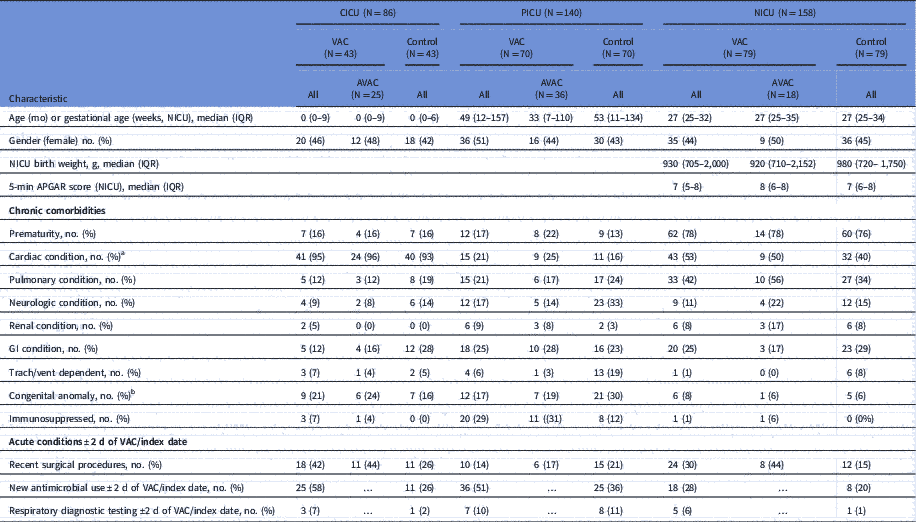
From an initial cohort of 9,025 patients who experienced 10,377 hospital admissions and 12,167 mechanical ventilation episodes, our final cohort included 192 VAC cases (43 in the CICU, 70 in the PICU, and 79 in the NICU) with 192 matched controls. Characteristics of patients with VAC are described in Table 1. VAC cases were more likely to have underlying immunosuppression or renal disease than controls, while more controls had underlying neurologic conditions or were tracheostomy and/or ventilator dependent. Differences in underlying comorbidities were notable between ICU types. A higher proportion of VAC cases with underlying immunosuppression were located in the PICU (29%) at the time of ventilation onset than in the CICU (7%) or NICU (1%).
Baseline Characteristics of Patients With Pediatric Ventilator-Associated Conditions (VAC) in the Cardiac, Pediatric, and Neonatal Intensive Care Units and Their Matched Controls

NOTE: CICU, cardiac intensive care unit; PICU, pediatric intensive care unit; NICU, neonatal intensive care unit; VAC, ventilator-associated condition; AVAC, VAC with antimicrobial use.
a Structural heart disease, valvular disease, septal defect, arrhythmia or cardiomyopathy.
b Congenital anomaly or malformation.
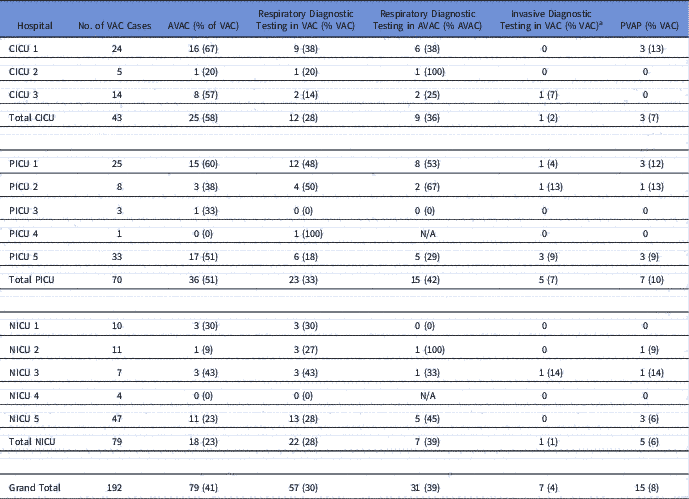
AVAC was identified in 79 VAC cases (41%), 25 CICU cases (58%), 36 PICU cases (51%), and 18 NICU VAC cases (23%). Across all ICU types, patients who met VAC criteria were more likely to receive a new antimicrobial compared with matched controls who did not meet VAC criteria. There was significant variation in the proportion of AVAC cases between hospitals and by ICU type (Table 2). In the PICU, AVAC cases with underlying immunosuppression accounted for 11 of 20 PICU VAC cases (55%).
Variation in VAC, AVAC, and Respiratory Diagnostic Testing Rates Across ICU Type by Hospital

NOTE: CICU, cardiac intensive care unit; PICU, pediatric intensive care unit; NICU, neonatal intensive care unit; VAC, ventilator-associated condition; AVAC, VAC with antimicrobial use; N/A, not available.
a Invasive diagnostic testing was obtained in 4 AVAC cases in the PICU and 1 AVAC case in the NICU.
Variability in new antimicrobial use, spectrum, and duration by ICU type
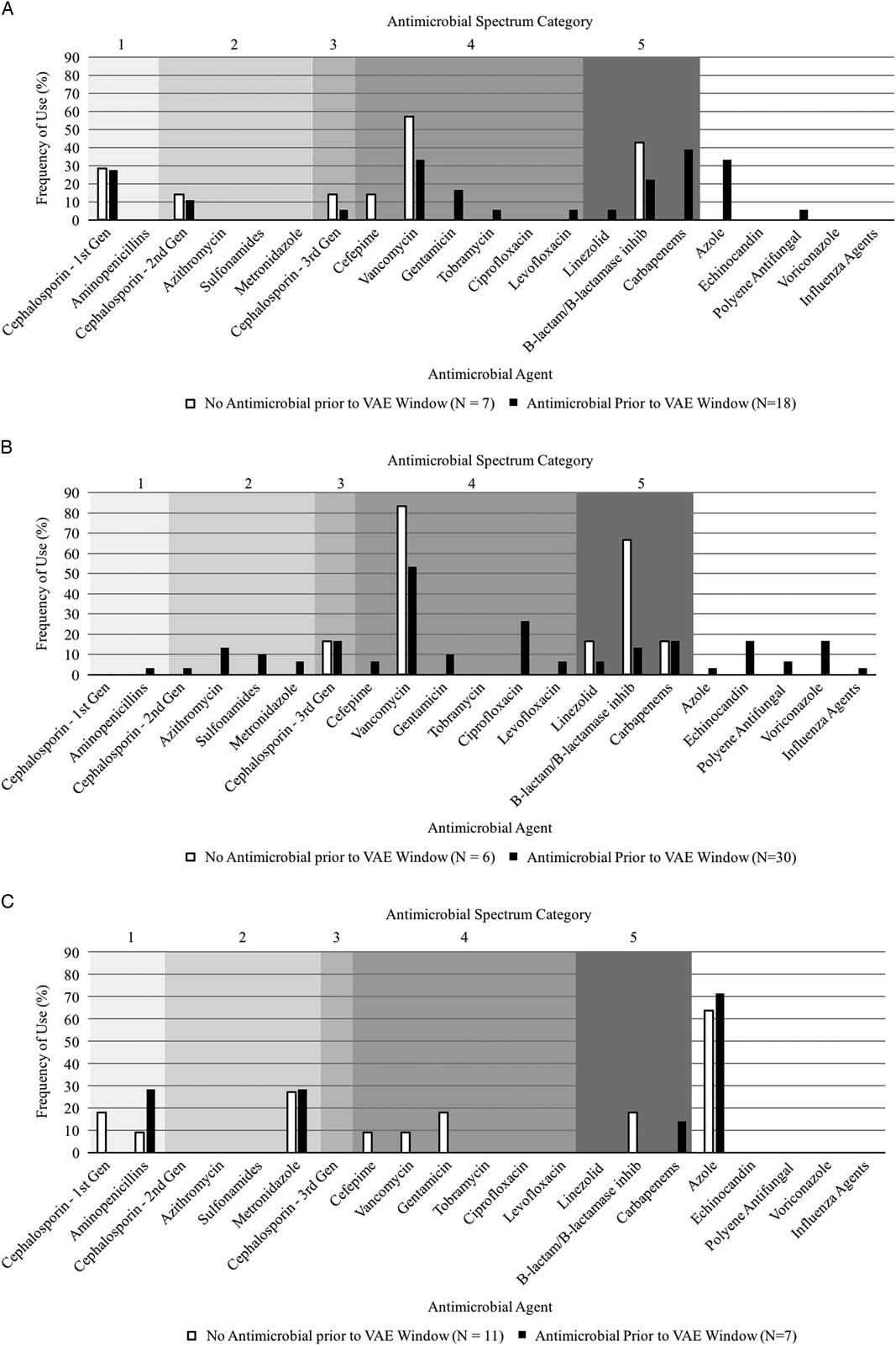
New antimicrobials were more commonly administered for VAC cases in the CICU (58%) and PICU (51%) than in the NICU (23%). AVAC antimicrobial use varied by ICU type (Fig. 1). Vancomycin was the most common antimicrobial administered in AVAC cases in the CICU (40%) and PICU (58%), compared with the NICU (5%). Fluconazole, by contrast, was the most common antimicrobial administered in AVAC cases in the NICU.
Comparison of AVAC antimicrobials between “no ongoing antimicrobial exposure” and “antimicrobial-exposed” VAC cases by ICU type and antimicrobial spectrum. (A) CICU, (B) PICU, and (C) NICU.

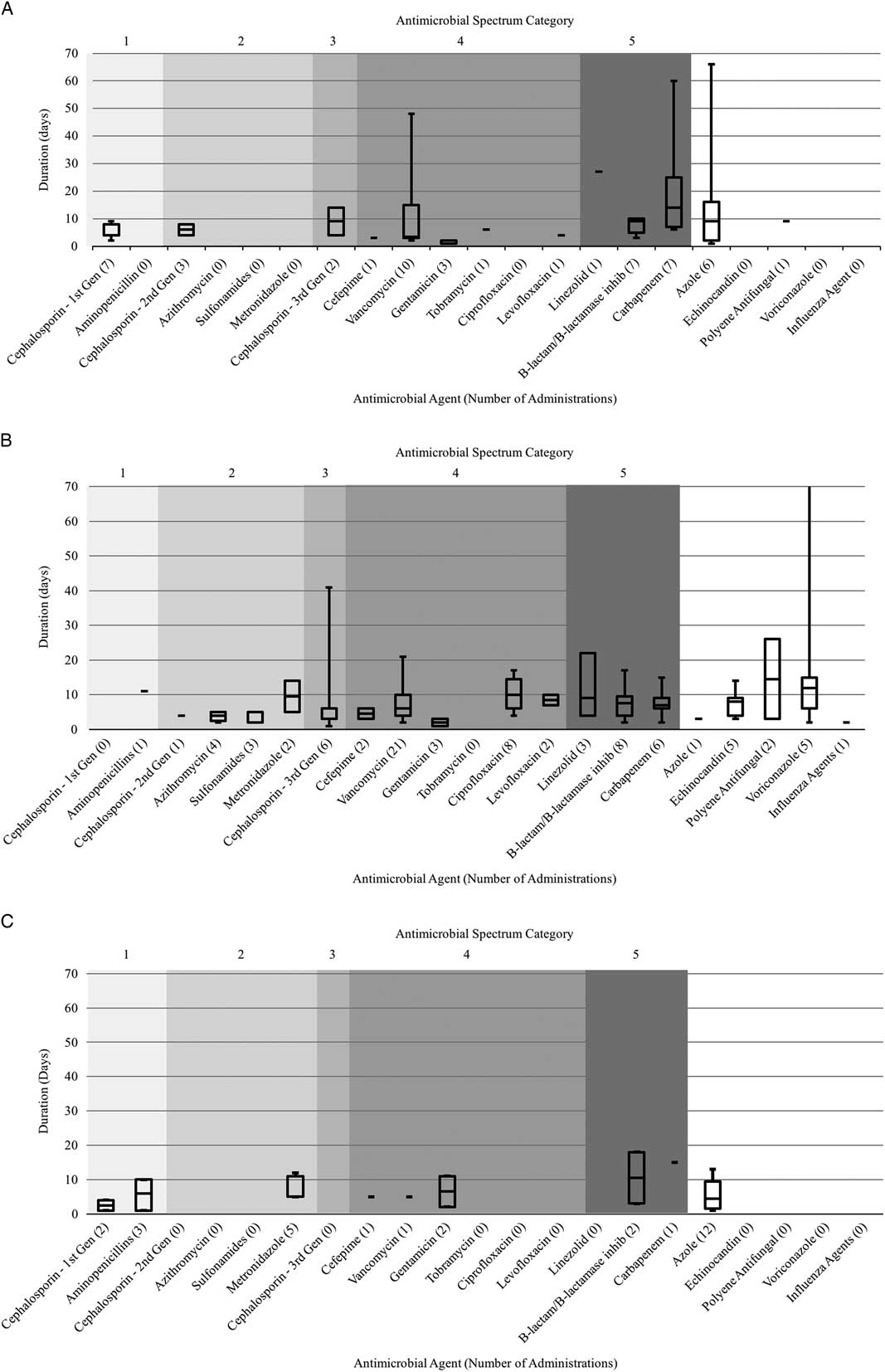
AVAC cases in the CICU (72%) and PICU (83%) were on antimicrobials prior to the VAE window more often compared with the NICU (39%). Accordingly, broad-spectrum antimicrobials (categories 4 and 5) were initiated more commonly in the CICU and PICU compared with the NICU. In antimicrobial-naïve patients, narrow-spectrum antimicrobials were more likely to be given across ICU types (Fig. 1). Notably, 57% of first-generation cephalosporin use in the CICU was associated with recent surgical procedures. AVAC cases received antifungals more often in the NICU (67%) than in the CICU (28%) or PICU (36%). Despite initiation and prolonged use of antifungals (4 or more days) in 32 AVAC cases (7 CICU, 13 PICU, and 12 NICU), only 3 patients (2 PICU, 1 NICU) had associated positive fungal cultures (1 respiratory culture with Aspergillus, 2 urine cultures with Candida). The mean duration of individual new antimicrobials administered for AVAC patients was 9 days: CICU, 10.7±13.5 days; PICU, 8.8±11.5 days; and NICU, 6.6±4.8 days. The median duration and interquartile ranges of individual antimicrobials varied across ICU types (Fig. 2).
Median antimicrobial duration and interquartile range (days) for AVAC antimicrobials across ICU types. (A) CICU, (B) PICU, and (C) NICU.

Respiratory diagnostic testing by ICU type
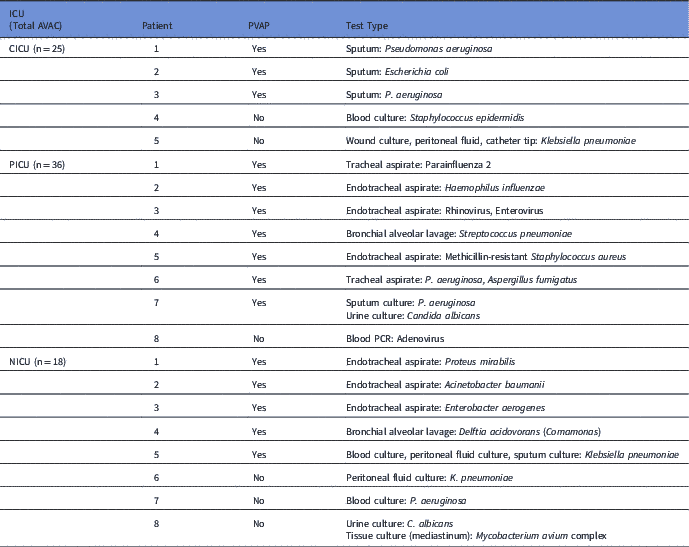
Any diagnostic testing for respiratory infections was performed in 57 of 192 VAC cases (30%) with minimal variation in the proportion of those tested across ICUs (CICU, 28%; PICU, 33%; and NICU, 28%), and in 31 of 79 AVAC cases (39%) (CICU, 36%; PICU, 42%; and NICU 39%) (Table 2). When comparing rates of diagnostic testing across hospitals by ICU type, however, we did note variability in the proportion of VAC with diagnostic tests (CICU, 14%–38%; PICU, 0–100%, and NICU, 0–43%). Very few patients (5 of 192) had invasive respiratory cultures (ie, BAL or PSB), including 4 in the PICU and 1 in the NICU. PVAP was identified in 15 of 192 VAC cases (8%), or 19% of AVAC cases. Furthermore, 73% of AVAC cases had no associated positive respiratory or nonrespiratory culture (Table 3).
Positive Microbiologic Data in AVAC Patients by ICU Type

NOTE: CICU, cardiac intensive care unit; PICU, pediatric intensive care unit; NICU, neonatal intensive care unit; AVAC, VAC with antimicrobial use; PVAP: possible ventilator-associated pneumonia; PCR, polymerase chain reaction.
Discussion
Significant variability in antimicrobial use associated with pediatric VAC was noted across hospitals and ICU types. Antimicrobial initiation coincident with VAC varied in both spectrum and frequency of initiation (0–67%). Our findings are similar to previously published studies in neonatal and pediatric populations that have shown substantial variability in antibiotic prescribing practices across the nation. A large retrospective study in 127 NICUs demonstrated a 40-fold variation in antibiotic prescribing patterns despite similar numbers of infections, cases of necrotizing enterocolitis (NEC), and mortality.Reference Schulman, Dimand, Lee, Duenas, Bennett and Gould 8 A retrospective cohort study using data from 40 freestanding children’s hospitals noted substantial variability in antibiotic use among hospitals in both the proportion of children who received an antibiotic (38%–72%) and the antibiotic duration, even after adjusting for both patient- and hospital-level characteristics.Reference Gerber, Newland and Coffin 9 Similarly, a descriptive study of VAE in adult patients reported variability in infection-related ventilator-associated complications (IVAC) across ICU types, ranging from 31% in the medical ICU to 46% in the thoracic ICU.Reference Klompas, Kleinman and Murphy 10 Furthermore, PVAP or other concomitant infections occurred in only 15% of VAC cases, highlighting previous literature attesting that most VACs are noninfectious and the potential overutilization of sustained courses of antimicrobials (ie, at least 4 calendar days).
While there is likely variability in the case mix among hospitals and ICU types in our study that can explain some variation in rates of antimicrobial use, cultural differences in prescribing practices by ICU type or by hospital may also contribute to underlying variation. For example, despite higher total rates of VAC in the NICU, rates of AVAC were proportionately lower when compared with the PICU and CICU presumably reflecting baseline pulmonary comorbidities secondary to prematurity leading to deterioration on the ventilator. Additionally, neonatologists have made substantial efforts to minimize unnecessary antimicrobial use due to potential concerns for necrotizing enterocolitis, bronchopulmonary dysplasia, emergence of resistant pathogens, and/or emergence of invasive candidiasis.Reference Tzialla, Borghesi, Serra, Stronati and Corsello 11 – Reference Cantey, Huffman and Subramanian 13 Nonetheless, additional studies to understand patient-specific versus ICU-specific risk factors may aid our ability to optimize antimicrobial use in these patients.
We also noted variability in the spectrum of AVAC antimicrobials used by ICUs and by hospitals. AVAC antimicrobials tended to be more broad spectrum, and antifungals were more likely to be initiated in certain ICUs, which may be due in part to higher rates of antimicrobial use prior to the VAC event in those units. While further characterization of antimicrobial spectrum was limited due to small sample size, this is a potential focus area of interhospital antimicrobial stewardship programs.
Finally, we note potential variability among hospitals in the frequency of respiratory diagnostic testing in VAC cases across ICU types, though interpretation of these results is limited due to the small sample size. Differences in the use and stewardship of diagnostic testing for infection in neonates and children may directly impact the rate of pediatric PVAP, which in turn may impact antimicrobial use, suggesting that diagnostic stewardship initiatives may be important in reducing unnecessary antimicrobial use. The low rates of PVAP observed in our study (7.8%) may reflect concerns about risk of obtaining respiratory samples, particularly in neonates and young infants,Reference Bradley 14 the presence of systemic infection in the absence of pneumonia, or noninfectious etiologies leading to VAC (eg, fluid overload, atelectasis). Furthermore, positive findings on a respiratory sample did not always trigger antimicrobial use, which may have been appropriate.Reference Wilson, Conaway, Kelly and Hendley 15 For example, 8 VAC cases had positive cultures (respiratory and nonrespiratory) yet did not receive additional antimicrobials surrounding the VAC event, particularly in the NICU. Previous studies have highlighted the discordance between pediatric PVAP and previously defined NHSN VAP surveillance definitions.Reference Corcoros, Priebe and Logan 5 In a retrospective single-center study in Greece, application of the adult VAE criteria to a pediatric population showed poor concordance between the 2 definitions.Reference Iosifidis, Chochliourou and Violaki 16 Limited overlap has also been described for adult VAP and adult VAE definitions, presumably due to the subjectivity of VAP definitions and the wide range of noninfectious conditions associated with VAE.Reference Klompas 17
Our study has certain limitations given the retrospective nature and small sample size. First, we are unable to speak to the appropriateness of the antimicrobial regimens or diagnostic testing given the lack of concomitant clinical data and lack of data on microbiologic resistance patterns of organisms in different institutions. Second, dosing intervals in neonates could result in inaccurate classification of AVAC cases due to misclassification as a new antimicrobial, such as the use of fluconazole prophylaxis in NICUs (typically dosed twice weekly). Similarly, in children with concomitant renal or hepatic failure, the degree to which dosing modifications due to end-organ dysfunction may play a role in inappropriately triggering or missing AVAC remains to be elucidated. Small sample size limited our capacity to draw firm conclusions. Due to lack of power, we are only able to describe qualitiative differences in variability in antimicrobial use amongst hospitals and ICU types. We were unable to collect overall institution specific rates of antibiotic utilization among ICUs. Therefore, our study population may not reflect the full range of llness severity and practice variability in antimicrobial prescribing seen in other US hospitals, especially in light of the increased presence of antimicrobial stewardship interventions in recent years.
In conclusion, we have documented wide variability in the rate of antimicrobial utilization between ICU types and within ICU types across 6 hospitals. In addition, diagnostic testing for respiratory infections was performed in <50% of AVAC cases, with PVAP and other infectious etiologies representing only 27% of AVAC cases. The new pediatric VAE definitions, proposed to release as early as January 2019, 18 allow for identification of a subset of patients in whom antimicrobial use may be further evaluted. Although initiation of prolonged use of antimicrobials may be unrelated to VAC, such as postsurgical prophylaxis or fluconazole prophylaxis, opportunities for de-escalation remain with regard to duration and/or antimicrobial spectrum. These findings can provide a foundation for interhospital comparisons, and they suggest potential focus areas for antimicrobial stewardship programs.
Acknowledgments
We are grateful to our colleagues who contributed to this study. We also wish to thank our Pediatric VAC Advisory Members.
Financial support
This research was funded by the Agency for Healthcare Research and Quality (AHRQ R18 grant no. 1R18HS021636) to Dr. Lee.
Conflicts of interest
The authors have indicated they have no financial relationships relevant to this article to disclose. Dr. Sammons received grant funding from the CDC Epicenters Program. Dr. Priebe has received grants from AHRQ. Dr. Klompas received grant support from this study and support from AHRQ for studies on VAE surveillance and prevention. Dr. Gray has received grants from Beth Isreal Deaconess Medical Center, and received payment for consulting with Vermont-Oxford Network. Dr. Cocoros received grant funding for AHRQ. Dr. Toltzis has received payment through the University Hospitals Cleveland Medical Center. Dr. Coffin has received payment for medical legal consultation, employment through the Philadelphia Department of Public Health, and grant support form AHRQ, NIH, and the CDC.