Introduction
Over the past two decades much research has been invested into the detection of pre-schizophrenic or early psychotic conditions. This research has been motivated by the assumption that intervention in the early illness stages, before the illness becomes chronic and treatment resistant, may ameliorate long-term outcome. Because schizophrenia is practically unpredictable in its early, so-called ‘pre-morbid’, phases (due to its being a ‘rare epidemiological event’) (Warner, Reference Warner2005), most research of the past 20 years has focused on the emergence of the psychotic clinical picture (otherwise referred to as the ‘prodrome’) in which anomalies of experience and behavioral deviations become more clearly articulated and ‘characteristic’.
From an operational point of view, identification of individuals at high risk for imminent psychosis in these studies has relied on a widespread acceptance of the so-called ultra-high-risk (UHR) paradigm (also referred to as ‘clinical high risk’) (Yung & McGorry, Reference Yung and McGorry1996; Miller et al. Reference Miller, McGlashan, Woods, Stein, Driesen, Corcoran, Hoffman and Davidson1999; Yung et al. Reference Yung, Phillips, Yuen, Francey, McFarlane, Hallgren and McGorry2003, Reference Yung, Yuen, McGorry, Phillips, Kelly, Dell'olio, Francey, Cosgrave, Killackey, Stanford, Godfrey and Buckby2005). This paradigm defines risk by several combinations of symptomatic, functional (e.g. psychosocial decline) and genetic (e.g. family history of psychotic illness) criteria. In addition, to facilitate a ‘close-in’ strategy, it employs additional qualifiers such as age of onset, duration, and frequency/severity ratings.
The most common symptomatic risk criteria are the so-called ‘attenuated’ psychotic symptoms (APS), which are subclinical psychotic symptoms, compatible to their full-fledged Diagnostic and Statistical Manual of Mental Disorders, fourth edition (DSM-IV) counterparts (i.e. the criteria for positive psychotic symptoms). Another closely related, but less common, symptomatic criterion is full-fledged but brief and intermittent psychotic symptoms. The latter, depending upon duration, can result in a DSM-IV diagnosis of brief psychotic disorder, psychosis not otherwise specified, or schizophreniform disorder. The most commonly used assessment instruments for such symptoms are the Structured Interview for Prodromal Syndromes (SIPS; Miller et al. Reference Miller, McGlashan, Rosen, Cadenhead, Cannon, Ventura, McFarlane, Perkins, Pearlson and Woods2003) and the Comprehensive Assessment of At Risk Mental States (Yung et al. Reference Yung, Yuen, McGorry, Phillips, Kelly, Dell'olio, Francey, Cosgrave, Killackey, Stanford, Godfrey and Buckby2005). Another factor, amplifying the risk for psychosis, is an early-onset (before the age of 18 years) schizotypal personality disorder that is accompanied by functional deterioration in the past year (Cannon et al. Reference Cannon, Cornblatt and McGorry2007, Reference Cannon, Cadenhead, Cornblatt, Woods, Addington, Walker, Seidman, Perkins, Tsuang, Mcglashan and Heinssen2008).
Although the UHR approach documented the diagnostic validity and feasibility of prospective ascertainment of individuals at risk for psychosis (Cannon et al. Reference Cannon, Cornblatt and McGorry2007; Woods et al. Reference Woods, Addington, Cadenhead, Cannon, Cornblatt, Heinssen, Perkins, Seidman, Tsuang, Walker and McGlashan2009), and provided a platform for studies assessing benefits of early interventions (McGorry et al. Reference McGorry, Edwards, Mihalopoulos, Harrigan and Jackson1996, Reference McGorry, Killackey and Yung2008; Cannon, Reference Cannon2005; Phillips et al. Reference Phillips, McGorry, Yung, McGlashan, Cornblatt and Klosterkotter2005), there is a wide consensus that it suffers from several conceptual and methodological problems that need to be addressed in order to improve its scientific as well as clinical/societal utility. Most importantly, there is a growing body of evidence that calls into question the specificity of attenuated psychotic symptoms. In fact, this body of literature suggests that APS are quite common in a broad range of non-psychotic psychiatric conditions (Yung et al. Reference Yung, Buckby, Cotton, Cosgrave, Killackey, Stanford, Godfrey and McGorry2006a, Reference Yung, Stanford, Cosgrave, Killackey, Phillips, Nelson and McGorryb). Second, as already noted by Parnas (Reference Parnas2005) and Nelson et al. (Reference Nelson, Yung, Bechdolf and McGorry2008), the UHR predictive algorithms, which use increasing intensity of positive psychotic symptoms to predict psychosis as opposed to a comprehensive psychopathological theory about the nature of psychosis, are rather limited in their informative value about the phenotypic markers of vulnerability for psychosis. Addressing these problems has become increasingly important in light of the reducing rates of transition to psychosis and growing number of ‘false positives’ in more recent UHR samples (Yung et al. Reference Yung, Yuen, Berger, Francey, Hung, Nelson, Phillips and McGorry2007).
In recent years, several phenomenologically oriented researchers (e.g. Huber & Gross, Reference Huber and Gross1989; Parnas, Reference Parnas and Handest2003; Nelson et al. Reference Nelson, Yung, Bechdolf and McGorry2008) have proposed that an empirical exploration of subtle anomalies of self--experience (ASE) holds out the promise of addressing the above problems. At the heart of this proposal, which is based on a combination of clinical observations and philosophical considerations (Parnas & Handest, Reference Parnas, Raballo, Handest, Jansson, Vollmer-Larsen and Sæbye2003; Sass & Parnas, Reference Sass and Parnas2003), is the belief that the emergence of elaborated psychotic symptoms in schizophrenia is a response to, or an attempt to organize around, more profound disturbances in the basic (i.e. pre-reflective) sense of selfhood [self-disorder (SD)]. These disturbances are not subthreshold positive symptoms but rather anomalous transformations of the normal articulation of the stream of consciousness. Some illuminating examples of these anomalous transformations are: (1) a sense that one's thoughts are anonymous, deprived of the immediate quality of ownership; (2) a feeling that one's perceptual source-point of view sinks a bit or moves backwards; and (3) experiencing one's thoughts and/or feelings as having object-like qualities, such as occupying a particular spatial localization (most commonly in a particular part of the head or brain). Because ASE, as a possible phenotypic precursor of schizophrenia, are qualitatively different from subthreshold psychosis, they have the potential to introduce further specificity into current high-risk identification strategies.
Early empirical support for the notion that disorders of self-awareness may constitute a crucial phenotypic aspect of vulnerability to schizophrenia (Parnas & Handest, Reference Parnas and Handest2003; Sass & Parnas, Reference Sass and Parnas2003) came from clinical studies (Møller & Husby, Reference Møller and Husby2000; Parnas et al. Reference Parnas, Jansson, Sass and Handest1998) followed by systematic empirical studies (Parnas et al. Reference Parnas, Raballo, Handest, Jansson, Vollmer-Larsen and Sæbye2011; Raballo & Parnas, Reference Raballo and Parnas2011, Reference Raballo and Parnas2012; Raballo et al. Reference Raballo, Saebye and Parnas2011;Haug et al. Reference Haug, Lien, Raballo, Bratlien, Oie, Andreassen, Melle and Møller2012; Nelson et al. Reference Nelson, Thompson and Yung2012b). Jointly, these studies show that SDs aggregate specifically in the schizophrenia spectrum disorders (schizophrenia and schizotypal personality disorder) compared with other psychiatric conditions (such as bipolar psychosis) among first-admitted hospital cases (Parnas et al. Reference Parnas, Handest, Jansson and Saebye2005a; Nelson et al. Reference Nelson, Thompson and Yung2012b) and among family members of schizophrenia patients with incremental increase across the severity of the schizophrenia spectrum condition. SDs prospectively predict the incidence of new cases of schizophrenia spectrum disorder 5 years after first admission for a non-psychotic illness (Parnas et al. Reference Parnas, Raballo, Handest, Jansson, Vollmer-Larsen and Sæbye2011). Finally, recent prospective findings suggest that identifying SD in a UHR population may provide a means of further ‘closing in’ on individuals truly at high risk of psychotic disorder, particularly of schizophrenia spectrum disorders (Nelson et al. Reference Nelson, Thompson and Yung2012a). However, there is no empirical data to date that elucidate how the UHR criteria and SD might differentially characterize the same help-seeking group of adolescents and/or provide incremental predictive value (regarding functional outcome, transition of psychosis, and/or response to treatment) to each other.
In this study, we set out to take a first step in addressing this lacuna in the literature by examining the relationship between the two different ways of defining the ‘prodromal condition’. More specifically, our goals were: (1) to explore the prevalence and nature of SDs among non-psychotic, help-seeking adolescents; (2) to examine the degree of overlap and contrast between SDs and standard indices of the prodromal syndrome; and (3) to assess the concurrent validity of a new, SD-based definition of risk status.
Based on theoretical considerations and preliminary empirical findings, especially those of Nelson et al. (Reference Nelson, Thompson and Yung2012a), we hypothesized that: (1) SD would be less prevalent than subclinical (i.e. attenuated and/or self-limiting) psychotic symptoms; (2) there would be a moderate overlap between the two ways of defining the prodromal condition; and (3) a new definition of risk that is based on SD would be related to overall level of distress and decline in social functioning at least as strong as standard definitions of the prodromal conditions. These hypotheses were based on the assumption that SDs are trait phenomena that reflect specific vulnerability to schizophrenia spectrum disorder, whereas subclinical or brief and intermittent psychotic symptoms are state phenomena that precede psychosis as such. To our knowledge, this is the first study that examined disturbances of self-experience among help-seeking adolescents who are not already ill with a psychotic disorder.
Method
Participants
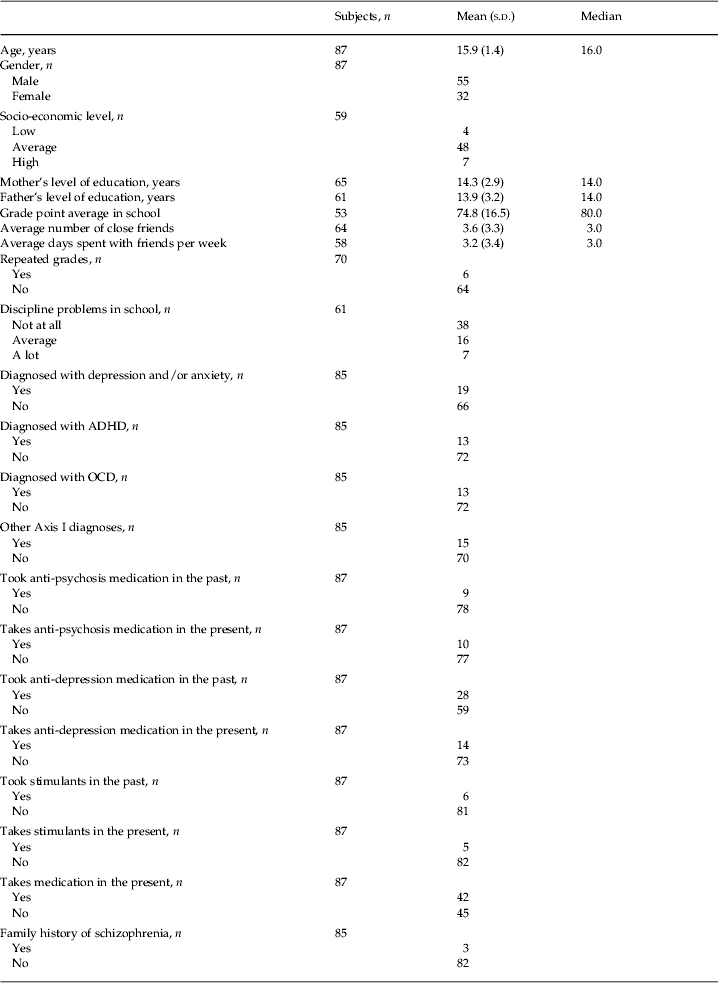
The recruitment population for this study was 133 non-psychotic adolescents (and their parents) who consecutively came to seek help for emotional and behavioral difficulties in three clinical out-patient settings: (1) the Medical Psychology Outpatient Clinic at the Schneider Children's Hospital in Petach Tikva; (2) the Child and Adolescent Unit at the Rambam Medical Center in Haifa; and (3) the Child and Adolescent Unit at the Tirat Ha'Carmel Center for Mental Health. The recruitment process of the study sample consisted of the following steps. First, the intake psychiatrist informed all 133 adolescents and their parents about the study and asked their permission to be contacted directly by the project team. In addition, in order to rule out a potential association between willingness to participate and risk for psychosis, the intake psychiatrists filled out a brief checklist of worrying signs for future psychosis (e.g. decline in social and academic functioning, social withdrawal, changes in mood, difficulties in thinking and perceiving, and family history of serious mental illnesses). Next, those who agreed to participate in the study (n = 87, 65.4%) were invited for a face-to-face interview in which their eligibility for the study was evaluated. The inclusion and exclusion criteria were: (1) aged between 14 and 18 years; (2) fluency in Hebrew; (3) no known past or present psychotic episode as determined by a clinical psychiatric diagnostic assessment; (4) no organic causes for presentation; (5) no history of severe head injury or organic brain disorder; and (6) no intellectual disability as defined by intelligence quotient (IQ) lower than 70 (IQ was estimated with the Vocabulary and Block Design subtests from the WAIS-R). Even though some of the participants were taking anti-psychotic medication (see Table 1), we did not use it as an exclusion criterion because in all cases they were prescribed as off-label treatment of non-psychotic symptoms. All participants and their parents signed an informed consent which was reviewed and approved by the Institutional Review Board committees of the three clinical settings.
Basic sociodemographic, educational, and clinical characteristics of the study sample

s.d., Standard deviation; ADHD, Attention deficit hyperactivity disorder; OCD, obsessive compulsive behavior.
The final sample included 87 participants (76 from the Schneider's Children Hospital, two from the Rambam Medical Center, and nine from Tirat Ha'Carmel Mental Health Center), of whom 33 (37.9%) were rated by the intake psychiatrist as at high worry and 52 (59.8%) as at low worry for future psychosis (two additional participants were not assessed with respect to risk status). Level of willingness to participate in the study was slightly higher among help-seekers rated as at high worry (70%) compared with help-seekers rated as at low worry (61%). However, this difference was not statistically significant (χ2 = 1.25, p = 0.35). Similarly, there were no statistically significant differences between the two groups (i.e. at high versus at low worry for future psychosis) on any of the basic sociodemographic and/or clinical variables. The basic sociodemographic and clinical characteristics of the final sample appear in Table 1.
Measures and procedure
Participants were assessed with the following instruments.
The assessment of ASE, the main variable in the study, was performed with the Examination of Anomalous Self-Experience questionnaire (EASE) (Parnas et al. Reference Parnas, Møller, Kircher, Thalbitzer, Jansson, Handest and Zahavi2005b). The EASE is a semi-structured interview consisting of 57 items that are divided into five rational domains: (1) cognition and stream of consciousness (17 items); (2) self-awareness and presence (18 items); (3) bodily experiences (nine items); (4) demarcation/transitivism (five items); and (5) existential reorientation (eight items).
The EASE has been shown to possess excellent internal consistency (Raballo et al. Reference Raballo, Saebye and Parnas2011; Møller et al. Reference Møller, Haug, Raballo, Parnas and Melle2011) and inter-rater reliability (Møller et al. Reference Møller, Haug, Raballo, Parnas and Melle2011). It should be noted, however, that inter-rater reliability has thus far been studied only among first-episode patients, and was rather varied at the item level.
The interviewers (N.R. and M.A.) underwent an intensive 2-week training course at a University Psychiatric Center in Hvidovre, Denmark, under the supervision of a senior clinician, Dr Peter Handest, co-author of the EASE and a member of Parnas's study group. Inter-rater reliability in the present study was established using a random subsample of 12 (14.6%) interviews. The overall inter-rater correlation (Spearman's ρ) at the total score level was 0.91, and the overall Cohen's κ for all 57 items was 0.51 (ranging from 0.45 to 0.68 over the five domains). The internal consistency for all 57 items across the two raters in the present study was 0.92 (Cronbach's α). The EASE items were rated on a dichotomous scale (i.e. present versus absent) because this has been a routine adopted in the Copenhagen studies (e.g. Raballo et al. Reference Raballo, Saebye and Parnas2011) for the sake of simplicity and reliability, and because repeated analyses have shown that the correlations between the total score if scored dichotomously or continuously are very high (Nelson et al. Reference Nelson, Thompson and Yung2012a).
Subclinical psychosis was screened using the Prodromal Questionnaire (PQ; Loewy et al. Reference Loewy, Bearden, Johnson, Raine and Cannon2005). The PQ is a 92-item self-report questionnaire that targets positive, negative, disorganized and general symptoms. Participants who had more than eight positive prodromal symptoms (a cut-off point for a probable classification of prodromal syndrome according to Loewy et al. Reference Loewy, Bearden, Johnson, Raine and Cannon2005) were further evaluated with the SIPS (Miller et al. Reference Miller, McGlashan, Woods, Stein, Driesen, Corcoran, Hoffman and Davidson1999, Reference Miller, McGlashan, Rosen, Cadenhead, Cannon, Ventura, McFarlane, Perkins, Pearlson and Woods2003). The SIPS was administered and scored by the same interviewers that conducted the EASE interviews (N.R. and M.A.). Both interviewers underwent a standard rater-training program that had been developed by the creators of the SIPS (Miller et al. Reference Miller, McGlashan, Rosen, Cadenhead, Cannon, Ventura, McFarlane, Perkins, Pearlson and Woods2003). Their agreement with two ‘gold standard’ SIPS diagnoses during the training was in the high range (κ > 0.75).
Presence and severity of depressive and anxiety symptoms were assessed with the Mood and Anxiety Symptoms Questionnaire – short form (MASQ; Watson & Clark, Reference Watson and Clark1991). The MASQ is a self-report 61-item questionnaire that covers general distress anxiety, general distress depression, anxious arousal and anhedonic depression.
Social and role (academic/work) functioning was assessed with the Global Functioning: social (GF:S) and the Global Functioning: role (GF:R) scales (Cornblatt et al. Reference Cornblatt, Auther, Niendam, Smith, Zinberg, Bearden and Cannon2007). These two clinician-rated scales were recently developed by Cornblatt et al. (Reference Cornblatt, Auther, Niendam, Smith, Zinberg, Bearden and Cannon2007) to assess social and role functioning among individuals at high risk for schizophrenia. Both scales generate two scores: level of current functioning as well as level of functioning over the past year. The two scales were rated by the same clinicians (N.R. and M.A.) who administered and scored the EASE and SIPS. Because the psychometric properties of the two scales have not been examined in Israeli samples yet, they used the English version of the scales.
Statistical analysis
Demographic and clinical differences among help-seeking adolescents at high versus at low worry for future psychosis were analysed using χ2 tests for categorical variables and t tests for continuous variables. The first hypothesis, regarding a lower prevalence of SD compared with prodromal symptoms, was tested using a Z test for difference in proportions in a dependent sample. The second hypothesis, regarding the overlap between SD and prodromal symptoms, was tested using Pearson correlations for continuous data and χ2 tests for dichotomous data. The third hypothesis, regarding the concurrent validity of a new definition of risk based on SD, was assessed using a series of one- and two-way analyses of variance (ANOVAs) with the various definitions of risk as the dependent variables and social/role functioning and emotional distress as the dependent variables. Finally, the mutual relationship between all markers of risk was assessed using an exploratory principal component analysis with a Promax rotation. All the analyses were performed using SAS 9.2 for Windows (SAS Institute Inc., USA).
Results
Prevalence of ASE
About 92% (n = 82) of the sample completed the entire EASE interview. Of those who completed the entire interview, about 74% reported at least one anomaly out of the 57 EASE items in the questionnaire. However, the majority of this subgroup (58.6%) reported no more than five anomalies. The mean number of anomalies was 6.7 (s.d. = 7.4) and the median was 4.0. This number is slightly higher than that recently found by Raballo & Parnas (Reference Raballo and Parnas2012) in a sample of patients with non-schizophrenia spectrum disorders (mean = 5.7, s.d. = 5.1), but considerably lower than that found in schizotypal personality disorder and schizophrenia patients (mean = 16.5, s.d. = 21.4, and mean = 21.0, s.d. = 17.0, respectively).
The most commonly reported domain of ASE was self-awareness, with 67% of the sample reporting at least one item out of the 18 that comprise this domain. The second most common domain was stream of consciousness, with 63% reporting at least one item out the 17 that comprise this domain. The least common domain was transitivistic experiences, with 6% of the participants reporting at least one item of the five that comprise this domain.
The EASE contains 57 items that are related to each other and are expressive of an alteration of basic self-consciousness. However, the single items taken in isolation have a different degree of specificity to schizophrenia. For that reason, in order to classify individuals into vulnerable versus non-vulnerable we needed a subscale that contains the more specific items. Based on theoretical phenomenological considerations, our clinical experience and available empirical findings, we have selected 10 EASE items (EASE-10) that reflect most prototypically the disorders of the basic self. These comprised: (1) hyperreflectivity; (2) loss of common sense/perplexity; (3) mirror-related phenomena; (4) loss of thought ipseity (i.e. directly given, pre-reflective sense of ‘mineness’); (5) spatialization of experience; (6) ambivalence; (7) diminished sense of basic self; (8) loss of first person perspective; (9) perceptualiztion of inner speech; and (10) thought pressure. The Pearson correlation between the above 10 ASE and the entire EASE was 0.88 (p = 0.0001), suggesting that the 10 items are highly representative of the full-length EASE. Further support for this notion comes from a recent study (B. Nelson et al. unpublished observations), which replicated these correlations (0.90 when the EASE is scored continuously, and 0.71 when the EASE is scored dichotomously) in a sample of 49 UHR patients. Moreover, Nelson et al. found that the smaller subset of 10 EASE items is a better predictor of transition to psychosis in this UHR sample than the full-length EASE.
About 62% of the sample reported at least one of the 10 items, but only 21% reported more than two items. The mean number of anomalies out of the subset of 10 items was 1.7 (s.d. = 2.1) and the median was 1.0. Overall, there was a significant decrease in the number of participants experiencing the 10 self-experiences from 0 to 2, after which the line leveled.
In order to select individuals with potential risk for schizophrenia spectrum disorders, we decided that subjects should report at least three out of the 10 items of the EASE-10 scale. The selection of this cut-off point was based on visual examination of the frequency distribution of the 10 items, which shows a clear neck at three items. In addition, it was supported by empirical data from ongoing studies that scores above this cut-off successfully discriminate spectrum from non-spectrum cases (Raballo et al. Reference Raballo, Saebye and Parnas2011; Raballo & Parnas, Reference Raballo and Parnas2011). Based on this criterion, 18 (22%) of the participants were defined as possibly at risk according to the EASE.
Prodromal symptoms in the sample
On the PQ, 98.8% of the help-seeking adolescents endorsed at least one of the 46 positive symptom items, making these characteristics highly prevalent in the sample. In fact, only one participant did not report any PQ positive symptom. The mean number of positive items was 13.6 (s.d. = 8.9) and the median 14.0. Using the screening cut-off for a probable SIPS classification of prodromal syndrome that was suggested by the initial PQ validation study of eight positive symptom items (Loewy et al. Reference Loewy, Bearden, Johnson, Raine and Cannon2005) selected 69% (n = 60) of the present sample.
Overall, the prevalence and average of prodromal symptoms in the present sample were largely comparable with those reported by previous samples of help-seeking young adults that were assessed with the PQ (Loewy et al. Reference Loewy, Bearden, Johnson, Raine and Cannon2005, Reference Loewy, Johnson and Cannon2007) or other measures, such as the Community Assessment of Psychotic Experiences (Yung et al. Reference Yung, Buckby, Cotton, Cosgrave, Killackey, Stanford, Godfrey and McGorry2006a; Wigman et al. Reference Wigman, Vollebergh, Raaijmakers, Iedema, Van Dorsselaer, Ormel, Verhulst and Van Os2011). These similarities support the external validity of the present findings. That is, they suggest that they can be safely generalized to other populations of not-psychotic help-seeking adolescents or young adults.
A full-scale SIPS interview with 51 of the 60 probably prodromal individuals (another nine refused to return for another interview) confirmed the classification for 24 (47%) of them (all 24 cases were qualified for the classification because of attenuated psychotic symptoms). Based on this proportion, the total number of prodromal individuals in the present sample can be estimated at 28 (47% of 60). In line with our first hypothesis, this frequency was about 1.5 times larger than that of the ASE syndrome (n = 18). However, it did not reach statistical significance (Z = 1.50, p = 0.13).
Overlap between ASE and prodromal measures
As predicted, the EASE was moderately correlated with the positive and negative symptom scales of the PQ (r = 0.49, p < 0.0001 and r = 0.47, p < 0.0001, respectively), and modestly correlated with the PQ disorganized scale (r = 0.33, p < 0.002). The correlation with the additional non-specific symptom scale was not significant (r = 0.19, p = 0.07). The correlations between the EASE-10 subscale and the PQ were rather similar, although slightly lower (r = 0.47, r = 0.41, r = 0.25 and r = 0.20, respectively).
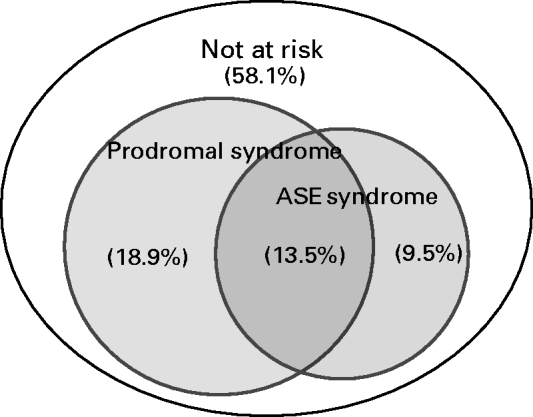
Fig. 1 presents the overlap between the subgroup of adolescents who were defined as at high risk based on the EASE (see above) and those who were diagnosed as prodromal based on the SIPS. Once again, as predicted, there was a moderate overlap between the two syndromes. This overlap was statistically significant (χ2(1) = 7.01, p = 0.008).
Venn diagram of the overlap between the anomalies of self-experience (ASE) and prodromal syndromes.
Concurrent validity of the new ASE syndrome
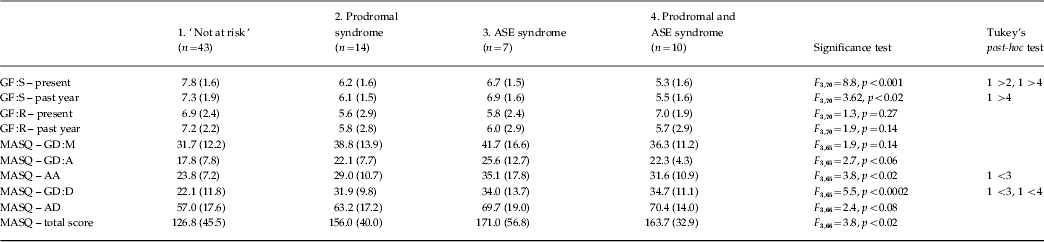
Next, we wanted to examine the concurrent validity of the new ASE syndrome. To accomplish this, we looked at the relationship between ASE status and social/role functioning and emotional distress. Table 2 presents the mean scores on the MASQ and the Cornblatt's Social and Role Global Functioning Scales of adolescents in the four risk groups. As can be seen, overall level of distress (as measured by the MASQ total score) was highest in the ASE syndrome group and second highest in the combined ASE/SIPS syndrome group. Level of social functioning was most impaired in the combined ASE/SIPS syndrome group. A one-way ANOVA revealed a significant group effect on both outcome measures. Finally, a two-way ANOVA revealed significant main effects of both ASE (F 1,70 = 12.3, p < 0.001; F 1,66 = 7.1, p < 0.01, on social functioning and overall level of distress respectively) and SIPS risk statuses (F 1,70 = 21.5, p < 0.001; F 1,66 = 5.3, p < 0.05, on social functioning and overall level of distress respectively), but no ASE × SIPS interaction effects.
Overall levels of distress and social functioning as a function of EASE and SIPS risk status
Data are given as mean (standard deviation).
EASE, Examination of Anomalous Self-Experience; SIPS, Structured Interview for Prodromal Syndromes; ASE, anomalies of self-experience; GF:S, Global Functioning: social; GF:R, Global Functioning: role; MASQ – GD:M, Mood and Anxiety Symptom Questionnaire – general distress, mixed; MASQ – GD:A, Mood and Anxiety Symptom Questionnaire – general distress, anxious; MASQ – AA, Mood and Anxiety Symptom Questionnaire – arousal anxiety; MASQ – GD:D, Mood and Anxiety Symptom Questionnaire – general distress, depressed; MASQ – AD, Mood and Anxiety Symptom Questionnaire – anhedonic depression.
Factor analysis
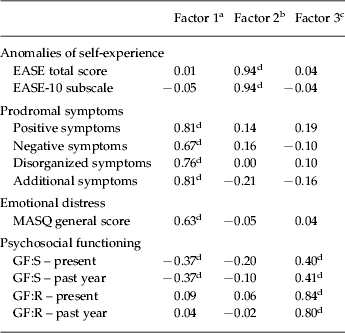
Finally, in order to examine the mutual relationships between the EASE and all other domains of risk, we subjected all the risk markers (except for the SIPS that had not been assessed in the entire sample) to an exploratory principal component analysis with a Promax rotation. The selection of number of factors was guided by the eigenvalue greater than 1 criterion. A three-factor solution explained 95% of the variance in the original variables. Table 3 presents the factor pattern of the three-factor solution following a Promax rotation. The first factor was comprised of self-reported prodromal symptoms and emotional distress. It was thus termed ‘prodromal symptoms’. The second factor was comprised of the EASE-total and EASE-10 variables. It was thus termed ‘EASE experiences’. The third factor was comprised of the social functioning variables. It was thus termed ‘social functioning’.
Factor pattern following a principal component analysis with Promax rotation
EASE, Examination of Anomalies of Self-Experience; MASQ, Mood and Anxiety Symptom Questionnaire; GF:S, Global Functioning: social; GF:R, Global Functioning: role.
a Prodromal symptoms factor.
b EASE experiences factor.
c Social functioning factor.
d Factor loading >0.3 or < − 0.3.
Lastly, we looked at the correlations between the scores on the three factors. In line with our hypothesis, the correlation between the EASE and the prodromal factors was moderately high (r = 0.52, p = 0.001). The correlation between the EASE and the social-decline factors (r = − 0.20, p = 0.08) was lower than that of the prodromal and social-decline factors (r = − 0.33, p = 0.003). However, the difference between the two correlations was not statistically significant (Z = 0.85, p = 0.20).
Discussion
The goal of the present study was to help establish the role of ASE as a core, pre-psychotic characteristic of risk for schizophrenia. To our knowledge, this is the first study that examined ASE in a non-enriched sample (i.e. its selection was not guided by or limited to level of concern for future psychosis) of help-seeking adolescents who are not already ill.
The results of the study showed, first, that ASE are quite prevalent among non-psychotic help-seeking adolescents, yet at a considerably lower rate than the subclinical psychotic (i.e. prodromal) symptoms. This was also reflected in the number of individuals meeting the diagnostic criteria for both syndromes: While about one-third of the cases met classification criteria for a prodromal syndrome, only one-fifth of the cases reported ASE at a clinically significant level. Second, the results demonstrated that ASE and prodromal symptoms constitute distinct but moderately related dimensions of potential risk. Overall, these findings provide additional support for recent studies (e.g. Simon et al. Reference Simon, Dvorsky, Boesch, Roth, Isler, Schueler, Petralli and Umbricht2006; Nelson et al. Reference Nelson, Thompson and Yung2012a), suggesting that assessment of disturbances of self-experience may be useful in supplementing the present UHR approach for early detection of risk for schizophrenia spectrum disorders. In addition, they highlight the importance of future studies that will examine, in a longitudinal manner, the role of anomalous self-experiences in the development of schizophrenia. The following sections elaborate on each of the main findings of the study, followed by a discussion of the limitations of the current study and suggested directions for future studies.
Relative prevalence of ASE and prodromal symptoms
The study's first group of findings showed that ASE are quite common among non-psychotic help-seeking adolescents. However, as would be expected, they also revealed that their prevalence significantly drops when focusing on a smaller subset of anomalies that have been shown in previous studies to be specific for schizophrenia (Parnas et al. Reference Parnas, Handest, Jansson and Saebye2005a). While about two-thirds of the sample reported at least one ASE, only half reported at least one anomaly that is specific to schizophrenia spectrum.
To the best of our knowledge, these results provide the first non-retrospective support for the notion that disorders of the basic sense of self, that has been shown in previous studies to be a core trait characteristic of schizophrenia spectrum diagnoses, do exist among individuals who are at high risk to develop the illness. While certainly requiring further confirmation with follow-up data, these results lend preliminary support for the possibility (e.g. Parnas, Reference Parnas2005; Nelson et al. Reference Nelson, Yung, Bechdolf and McGorry2008) that disturbances of self-experience exist before the acute onset of the illness, and as such constitute a potential marker of early risk that may be useful in supplementing the UHR approach. Primary prospective support for this possibility comes from a recent pilot study by Nelson et al. (Reference Nelson, Thompson and Yung2012a), which found higher rates of ASE among UHR participants who transitioned to a schizophrenia spectrum psychosis versus those who transitioned to other psychoses.
Finally, in line with our first hypothesis, the prevalence of ASE was more than one-third lower than that of prodromal symptoms in the present study. This difference was evidenced both at the symptom (while all of the participants except for one reported at least one subclinical psychotic symptom, only a half reported at least one anomaly that was found in previous studies to be specific for schizophrenia) and syndrome (while about one-third of the sample met classification criteria for a prodromal syndrome, only one-fifth met the classification criteria for a self-disorder syndrome) levels. Although these differences did not reach statistical significance, they suggest that assessment of ASE may be useful in ‘closing in’ on a smaller subgroup of individuals who are truly at high risk of schizophrenia spectrum disorder.
Overlap between ASE and prodromal symptoms
The study's second group of findings showed a moderate level of overlap between SDs and prodromal symptoms. This overlap was evidenced both at the dimensional and the categorical (i.e. syndrome identification) levels of representation of the two constructs. These findings suggest that ASE and prodromal symptoms are two distinct but related markers of potential clinical vulnerability for future schizophrenia spectrum disorders. Further support for this notion came from the results of the principal component analysis, which showed that ASE and prodromal symptoms load on two separate but moderately correlated factors.
The moderate overlap between ASE and prodromal symptoms does not automatically imply that ASE play a generative role in schizophrenia spectrum conditions. However, they do provide preliminary support for this notion, and emphasize the importance of further exploring this possibility by means of prospective studies. Further exploration of this possibility is of substantial importance in light of recent findings suggesting that non-psychotic disorders of subjectivity may be a useful clinical target for early detection and intervention attempts.
Concurrent validity of the ASE syndrome
The third and last group of findings from the present study showed that ASE status is significantly related to both general distress and decline in social functioning. Moreover, they showed that the combination of ASE and prodromal statuses has a trend toward an additive relationship with social functioning deterioration (i.e. an association which is greater than that of each one of them alone). These findings provide preliminary concurrent support for the validity of the ASE syndrome.
From ASE and prodromal symptoms to schizophrenia: possible pathways
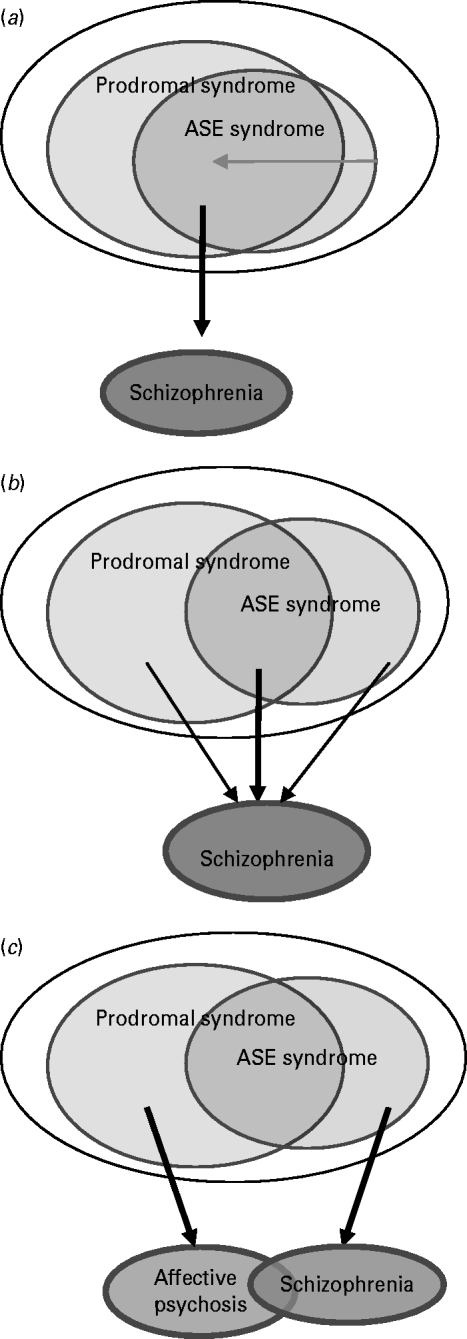
The moderate overlap between ASE and subclinical psychotic symptoms suggests that they are both risk related. Thus, an interesting question is how this relationship plays out. A first possible answer, which builds on the hypothesized distinction of Schultze-Lutter et al. (Reference Schultze-Lutter, Ruhrmann, Berning, Maier and Klosterkotter2010) between the early and late prodromal states, is that ASE are an early prodromal generative feature of late prodromal subclinical schizophrenia spectrum symptoms. If this hypothesis is true, a longitudinal follow-up of the present sample will yield the pattern of results depicted in Fig. 2 a. A second, in our view most convincing, hypothesis is that SDs are trait-markers and predict schizophrenia or schizotypy, whereas the prodromal symptoms are general markers of psychosis (across diagnostic categories). The long-term results that can be expected based on this possibility are depicted in Fig. 2 b. A third possible answer is that ASE and prodromal symptoms are two related but independent risk factors for two related but independent psychotic illnesses. Fig. 2 c depicts the long-term results that can be expected based on this possibility.
Diagrams of the various hypothesized links between anomalies of self-experience (ASE), prodromal symptoms and risk for future psychosis. (a) ASE are a generative feature of prodromal symptoms. (b) ASE are trait-markers of schizophrenia or schizotypy, whereas prodromal symptoms are risk markers of psychosis. (c) ASE and prodromal symptoms are related but independent risk factors for related but independent psychotic conditions.
Strengths and limitations of the study
An important strength of the present study lies in the ‘non-enriched’ nature of our sample. Unlike previous studies that used highly ‘enriched’ samples (i.e. samples with high numbers of adolescents specifically at risk for schizophrenia spectrum disorders), selection of participants for the present study was not guided by their initial level of risk for future psychosis. Consequently, it allows a rather secure extrapolation of its findings to replicable samples of help-seeking adolescents in the community.
However, because it does not include a comparison group of non-help-seeking adolescents, it leaves unanswered the degree to which the present findings are generalizable to the entire population of adolescents who are at risk for schizophrenia spectrum disorders. This is particularly important in light of recent studies, which suggest that not all of those who might be at risk seek help (Poulton et al. 2000; Addington et al. 2008). Future studies that use community-based sampling frameworks (e.g. the school-counseling system) are clearly in place in order to address this limitation.
A second, closely related, limitation of the present study is that the rate of prodromal cases was determined by means of a hierarchical algorithm rather than by assessing all participants with the SIPS (as was the case with the EASE). This slightly compromises the generalizability of the present results to individuals who score below the cut-off point for a probable classification of prodromal syndrome on the PQ. This is important because according to Loewy et al.'s (Reference Loewy, Bearden, Johnson, Raine and Cannon2005) validation study, about 10% of those who are classified by the SIPS as prodromal score below the cut-off point that we used.
A third limitation of the present study relates to its lack of follow-up data about clinical and functional outcome. Consequently, it leaves open the question regarding the predictive validity of ASE for future, clinical as well as subclinical, schizophrenia spectrum symptoms. Needless to say, further longitudinal research that includes a comprehensive psychiatric assessment of clinical outcome is needed in order to address this limitation.
Finally, a fourth limitation of the present study is that it did not include a comprehensive psychiatric assessment, including a formal categorical diagnosis.
Conclusion and future directions
In conclusion, the present results provide first, preliminary concurrent support for the possibility that ASE are a clinical phenotype that characterizes the pre-onset phase of schizophrenia spectrum illnesses. Besides the theoretical implications of the present data for the validity of the schizophrenia spectrum construct, they also provide preliminary support for the clinical potential of supplementing and refining current methods of early detection of risk with assessment of ASE. Finally, the study provides the rational background for further prospective investigation of the longitudinal relationship between ASE, prodromal symptoms and risk for schizophrenia spectrum conditions.
Acknowledgements
The authors wish to thank Tout Naaman, Osnat Ziv, Shahar Iger, Assaf Gayer and Yuval Tal for their help with subject recruitment, and data collection and coding. In addition, they wish to thank Sarah Pearlstein-Levy for her editorial help with earlier versions of this paper. This work was supported by a Seed Grant from the University of Haifa (to D.K.), and two Doctoral Grants from the University of Haifa (to N.R. and M.A.).
Declaration of Interest
None.