Adolescence is marked by an elevated risk for psychopathology (Andersen & Teicher, Reference Andersen and Teicher2008; Hankin et al., Reference Hankin, Young, Abela, Smolen, Jenness, Gulley, Technow, Gottlieb, Cohen and Oppenheimer2015; Kessler et al., Reference Kessler, Berglund, Demler, Jin, Merikangas and Walters2005; Paus et al., Reference Paus, Keshavan and Giedd2008; Petersen et al., Reference Petersen, Bates, Dodge, Lansford and Pettit2015). Exposure to stressful experiences as well as emotional reactivity to stressors increase during this developmental period, contributing to transdiagnostic risk for psychopathology (Dahl & Gunnar, Reference Dahl and Gunnar2009; Dahl, Reference Dahl2004; Espejo et al., Reference Espejo, Hammen, Connolly, Brennan, Najman and Bor2007; Grant et al., Reference Grant, Compas, Stuhlmacher, Thurm, McMahon and Halpert2003, Reference Grant, Compas, Thurm, McMahon and Gipson2004; Somerville et al., Reference Somerville, Jones and Casey2010; Spear, Reference Spear2009). The COVID-19 pandemic introduced a range of novel stressors for youth and families, likely engendering increased vulnerability for developing psychopathology among youth during the pandemic (McLaughlin et al., Reference McLaughlin, Rosen, Kasparek and Rodman2022; Rosen et al., Reference Rosen, Rodman, Kasparek, Mayes, Freeman, Lengua, Meltzoff and McLaughlin2021; Weissman et al., Reference Weissman, Rodman, Rosen, Kasparek, Mayes, Sheridan, Lengua, Meltzoff and McLaughlin2021). In the United States, various containment measures were taken in the early phase of the COVID-19 pandemic (March 2020) to prevent the spread of the virus, including the statewide stay-at-home orders, restrictions on gatherings, and economic lockdown (e.g., closures of non-essential businesses). These measures prevented adolescents from attending schools and extracurricular activities, consequently limiting their face-to-face interactions with other adults and peers and disrupting their social support networks (Ellis et al., Reference Ellis, Dumas and Forbes2020; Fegert et al., Reference Fegert, Vitiello, Plener and Clemens2020; Gruber et al., Reference Gruber, Prinstein, Clark, Rottenberg, Abramowitz, Albano, Aldao, Borelli, Chung, Davila, Forbes, Gee, Hall, Hallion, Hinshaw, Hofmann, Hollon, Joormann, Kazdin, Klein, La Greca, Levenson, MacDonald, McKay, McLaughlin, Mendle, Miller, Neblett, Nock, Olatunji, Persons, Rozek, Schleider, Slavich, Teachman, Vine and Weinstock2021). Caregivers also faced financial strain and disruptions in their daily routines as they experienced job insecurity or were forced to work from home, which were compounded by limited access to external resources and support systems (Fegert et al., Reference Fegert, Vitiello, Plener and Clemens2020; Gruber et al., Reference Gruber, Prinstein, Clark, Rottenberg, Abramowitz, Albano, Aldao, Borelli, Chung, Davila, Forbes, Gee, Hall, Hallion, Hinshaw, Hofmann, Hollon, Joormann, Kazdin, Klein, La Greca, Levenson, MacDonald, McKay, McLaughlin, Mendle, Miller, Neblett, Nock, Olatunji, Persons, Rozek, Schleider, Slavich, Teachman, Vine and Weinstock2021). Indeed, evidence has documented worsening internalizing and externalizing problems during the pandemic among adolescents and adults (Gruber et al., Reference Gruber, Prinstein, Clark, Rottenberg, Abramowitz, Albano, Aldao, Borelli, Chung, Davila, Forbes, Gee, Hall, Hallion, Hinshaw, Hofmann, Hollon, Joormann, Kazdin, Klein, La Greca, Levenson, MacDonald, McKay, McLaughlin, Mendle, Miller, Neblett, Nock, Olatunji, Persons, Rozek, Schleider, Slavich, Teachman, Vine and Weinstock2021; Holman et al., Reference Holman, Thompson, Garfin and Silver2020; Patrick et al., Reference Patrick, Henkhaus, Zickafoose, Lovell, Halvorson, Loch, Letterie and Davis2020; Racine et al., Reference Racine, Cooke, Eirich, Korczak, McArthur and Madigan2020; Ravens-Sieberer et al., Reference Ravens-Sieberer, Kaman, Erhart, Devine, Schlack and Otto2022; Robinson et al., Reference Robinson, Sutin, Daly and Jones2022; Whittle et al., Reference Whittle, Bray, Lin and Schwartz2020) and these elevated symptom levels have persisted over time (Von Soest et al., Reference Von Soest, Kozák, Rodríguez-Cano, Fluit, Cortés-García, Ulset, Haghish and Bakken2022), demonstrating the need for targeted interventions. Difficulties with emotion regulation (ER) are one mechanism that may underlie the development of stress-related psychopathology during adolescence (Herts et al., Reference Herts, McLaughlin and Hatzenbuehler2012; McLaughlin et al., Reference McLaughlin, Hatzenbuehler and Hilt2009; McLaughlin & Hatzenbuehler, Reference McLaughlin and Hatzenbuehler2009; Weissman et al., Reference Weissman, Bitran, Miller, Schaefer, Sheridan and McLaughlin2019). Given the limited contact adolescents had with support systems outside the family during the pandemic, caregiver ER may be closely linked to youth ER, potentially increasing vulnerability for psychopathology development following stressful life events (Milojevich et al., Reference Milojevich, Machlin and Sheridan2020; Platt et al., Reference Platt, Williams and Ginsburg2016). The current study investigated the role of caregiver ER on youth ER and the emergence of stress-related psychopathology during the COVID-19 pandemic.
Difficulties with ER have been associated with adolescent psychopathology in response to stress. Engagement in maladaptive ER strategies, such as rumination and suppression, is linked with increased risk for internalizing and externalizing psychopathology in longitudinal studies and meta-analyses (Aldao et al., Reference Aldao, Nolen-Hoeksema and Schweizer2010; Beauchaine, Reference Beauchaine2015; Eastabrook et al., Reference Eastabrook, Flynn and Hollenstein2014; Hankin, Reference Hankin2008; McLaughlin et al., Reference McLaughlin, Hatzenbuehler, Mennin and Nolen-Hoeksema2011, Reference McLaughlin, Wisco, Aldao and Hilt2014; Schäfer et al., Reference Schäfer, Naumann, Holmes, Tuschen-Caffier and Samson2017). Greater use of rumination has demonstrated prospective associations with psychopathology development during adolescence following stressful life events (Michl et al., Reference Michl, McLaughlin, Shepherd and Nolen-Hoeksema2013; Skitch & Abela, Reference Skitch and Abela2008; Weissman et al., Reference Weissman, Bitran, Miller, Schaefer, Sheridan and McLaughlin2019), and adolescents’ engagement in expressive suppression prior to the COVID-19 pandemic has been prospectively linked to greater internalizing and externalizing symptoms (Boullion et al., Reference Boullion, Linde-Krieger and Doan2023), indicating that the use of maladaptive ER strategies may confer risk for stress-related psychopathology. On the other hand, although less consistently (Aldao et al., Reference Aldao, Nolen-Hoeksema and Schweizer2010; Aldao & Nolen-Hoeksema, Reference Aldao and Nolen-Hoeksema2012), the use of adaptive ER strategies, such as cognitive reappraisal (John & Gross, Reference John and Gross2004), has buffered against the emergence of psychopathology symptoms following stressful experiences (Flouri & Mavroveli, Reference Flouri and Mavroveli2013; Kuhlman et al., Reference Kuhlman, Straka, Mousavi, Tran and Rodgers2021; Rodman et al., Reference Rodman, Jenness, Weissman, Pine and McLaughlin2019). For example, a recent study found that adolescents who reported a greater tendency to engage in cognitive reappraisal were less likely to experience internalizing and externalizing problems in response to pandemic-related stress, suggesting the protective role of cognitive reappraisal in the development of stress-related psychopathology, particularly following stressful life events (Kuhlman et al., Reference Kuhlman, Straka, Mousavi, Tran and Rodgers2021).
Caregivers’ regulatory abilities have been linked to youth development of ER. A growing body of literature indicates that caregivers play a key role in shaping how youth understand and regulate emotions (Eisenberg et al., Reference Eisenberg, Cumberland and Spinrad1998; Morris et al., Reference Morris, Silk, Steinberg, Myers and Robinson2007), which continues to be influential throughout adolescence (Balan et al., Reference Balan, Dobrean, Roman and Balazsi2017; Buckholdt et al., Reference Buckholdt, Parra and Jobe-Shields2014; Hilt et al., Reference Hilt, Armstrong and Essex2012; Shortt et al., Reference Shortt, Stoolmiller, Smith-Shine, Mark Eddy and Sheeber2010; Stocker et al., Reference Stocker, Richmond, Rhoades and Kiang2007; Yap et al., Reference Yap, Allen and Ladouceur2008). Adolescence, in particular, can be a developmentally challenging period for caregivers, given the heightened parenting stress (Anderson, Reference Anderson2008), elevated parent-adolescent conflict (Larson et al., Reference Larson, Richards, Moneta, Holmbeck and Duckett1996; Steinberg, Reference Steinberg2001), and worsening parent-child relationships (Crnic & Low, Reference Crnic, Low and Bornstein2002). Caregivers who have limited ability to manage negative emotions during this period may interfere with adolescents’ regulatory processes and confer risk for emotional and behavioral problems. Prior studies have demonstrated that caregivers’ difficulties in regulating emotions were associated with youth ER difficulties and psychopathology development. For example, parental difficulties with ER were robustly associated with ER difficulties of children who were exposed to early adversity (Milojevich et al., Reference Milojevich, Machlin and Sheridan2020), and youth of parents who reported ER difficulties were at increased risk for developing internalizing symptoms when they showed high levels of emotional inhibition (Han & Shaffer, Reference Han and Shaffer2013). Moreover, the association between caregiver and youth ER may be demonstrated in their engagement of similar regulatory approaches. Indeed, youth have employed ER strategies that are comparable to those of their caregivers. For instance, children of parents who suppress their emotional expression were more likely to engage in expressive suppression themselves (Bariola et al., Reference Bariola, Hughes and Gullone2012). Similarly, in a study of younger children (Gunzenhauser et al., Reference Gunzenhauser, Faesche, Friedlmeier and von Suchodoletz2014), parental tendencies to use cognitive reappraisal and expressive suppression were associated with children’s use of cognitive reappraisal and expressive suppression, respectively, suggesting the parallel use of ER strategies between caregivers and their children.
Despite the link between caregiver and youth ER, less is known about its association in the context of stressful events. Caregivers’ ability to manage emotions may become increasingly vital when families experience stress. Greater exposure to stressors can make it difficult for caregivers to engage in adaptive ER strategies (Li et al., Reference Li, Gu, Wang, Li, Xu, Zhu, Deng, Ma, Feng, Wang and Huang2019; Michl et al., Reference Michl, McLaughlin, Shepherd and Nolen-Hoeksema2013; Ye et al., Reference Ye, Wu, Im, Liu, Wang and Yang2020), possibly elevating youth vulnerability to stress. It is likely that the role of caregiver ER was highlighted during the COVID-19 pandemic, particularly as lockdown restrictions and social distancing measures limited adolescents’ access to their usual social support networks, including interactions with peers and participations in out-of-school activities. Given the well-documented relationship between ER difficulties and psychopathology (Aldao et al., Reference Aldao, Nolen-Hoeksema and Schweizer2010; Lincoln et al., Reference Lincoln, Schulze and Renneberg2022; Sheppes et al., Reference Sheppes, Suri and Gross2015), the extant research on the role of parental psychopathology during stressful times may partially shed light on how caregiver ER difficulties may contribute to heightened emotional vulnerability among youth in response to stress. For instance, youth were more likely to experience anxiety symptoms when their parents demonstrated excessive concerns about their children’s safety and well-being following stressful life events (Platt et al., Reference Platt, Williams and Ginsburg2016). Maternal anxiety and depressive symptoms also mediated the association between exposure to pandemic-related stressors and youth psychopathology in a recent longitudinal study (Lengua et al., Reference Lengua, Thompson, Kim, Rosen, Rodman, Kasparek, Mayes, Zalewski, Meltzoff and McLaughlin2022). Overall, these findings suggest that caregivers’ ER difficulties may be linked to youth ER in response to stressful events, with important implications for mental health outcomes.
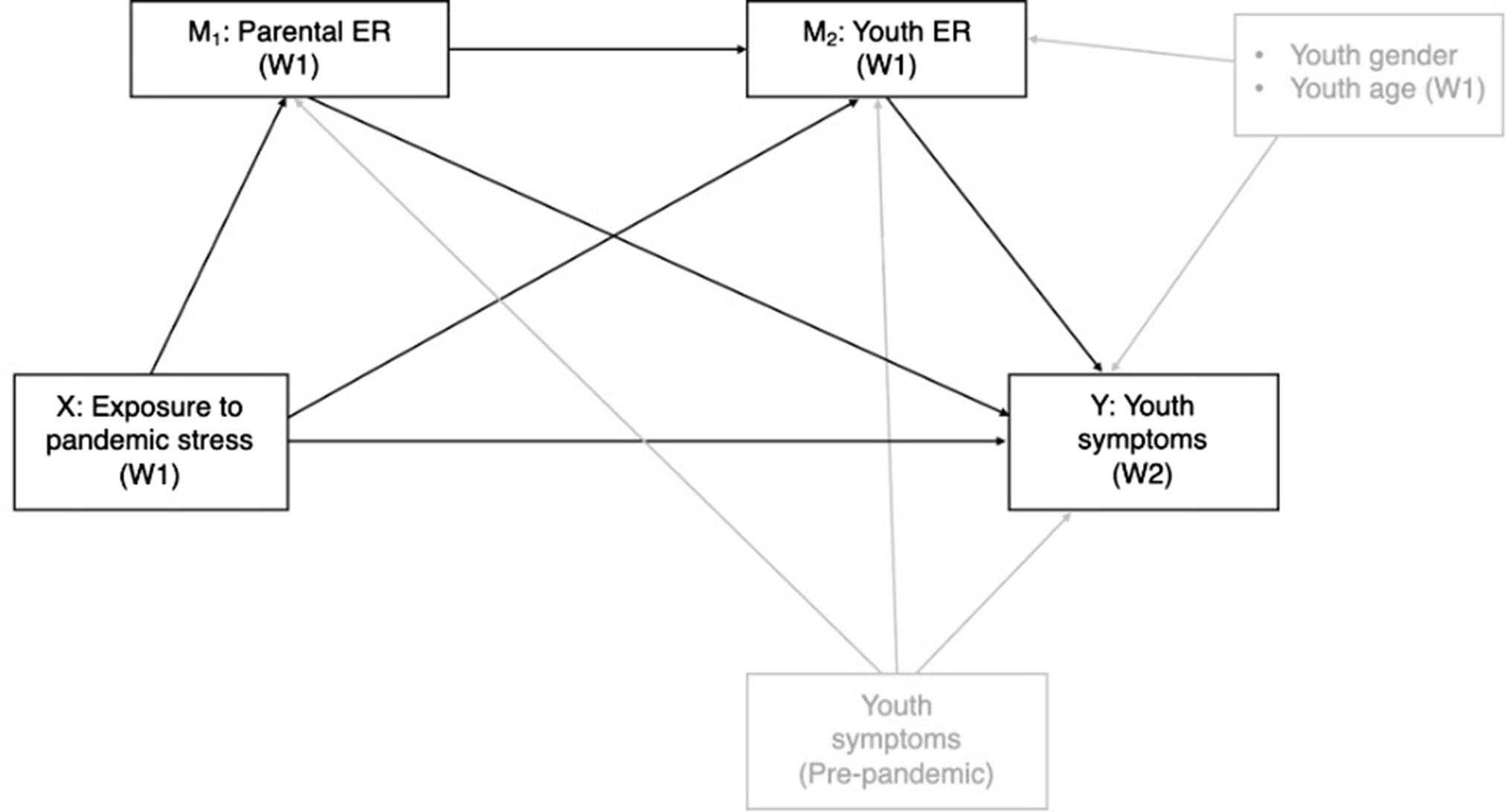
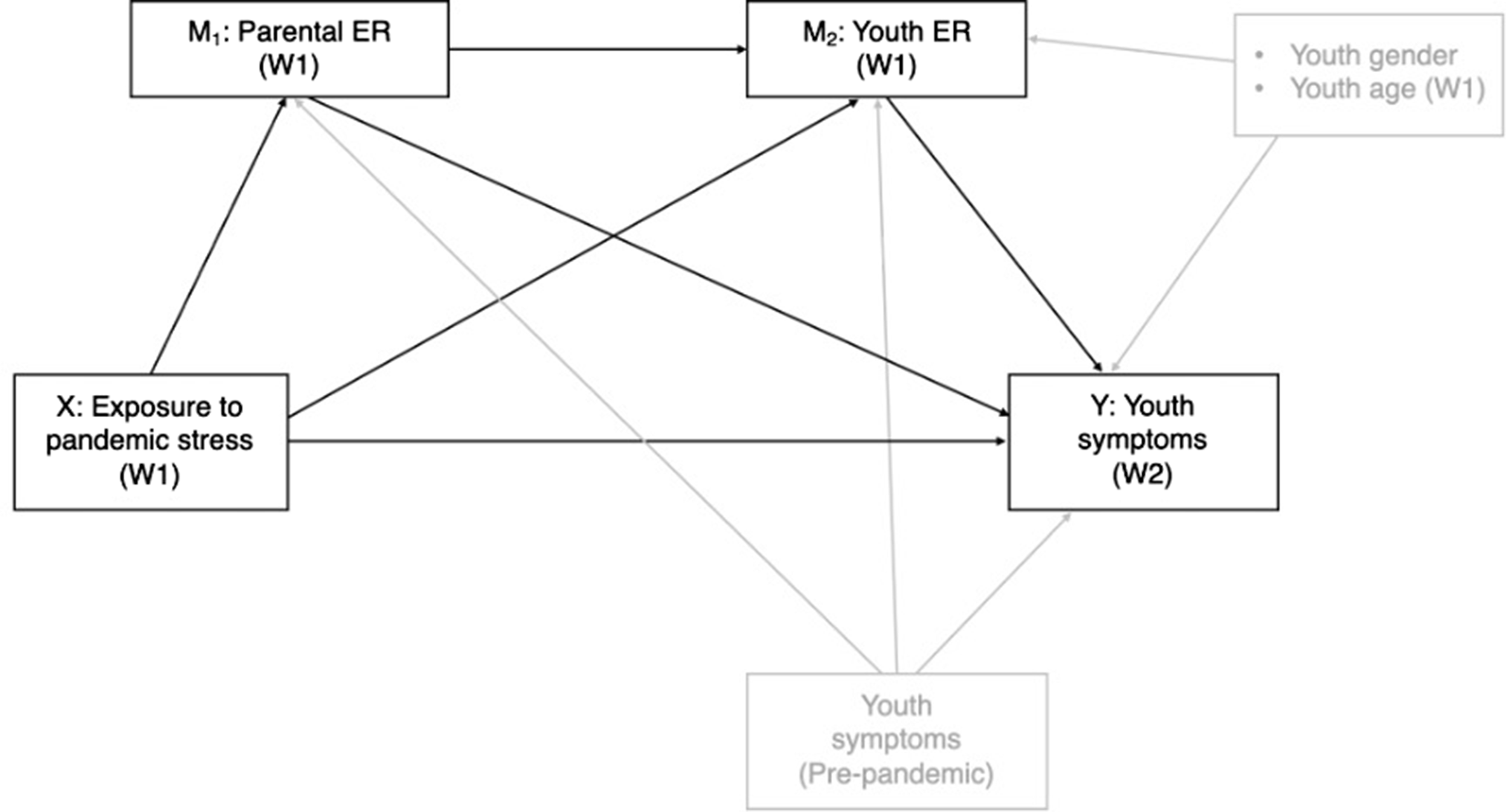
The current longitudinal study investigated the role of caregiver ER in youth ER and psychopathology symptoms in response to pandemic-related stressors. We examined whether caregiver exposure to pandemic-related stressors was associated with caregiver-youth engagement in specific ER strategies – rumination, expressive suppression, and cognitive reappraisal – and whether these associations related to youth internalizing and externalizing problems six months later. We specifically examined the associations of the same strategy pairings between caregivers and youth (e.g., caregiver expressive suppression and youth expressive suppression) to investigate whether caregivers and youth demonstrated similarities in their tendency to use specific strategies. A serial mediation model was tested to explore whether caregiver ER and youth ER sequentially mediated the association between exposure to pandemic-related stressors and youth internalizing and externalizing symptoms. In the proposed model (see Figure 1), we expected that caregiver ER and youth ER early in the pandemic would sequentially mediate the associations between greater exposure to pandemic-related stressors and greater internalizing and externalizing symptoms six months later while controlling for pre-pandemic symptoms. We controlled for symptoms prior to the pandemic to investigate changes in psychopathology that occurred during the pandemic and to account for pre-existing symptoms that are unrelated to the pandemic. We hypothesized that greater exposure to pandemic-related stressors would relate to greater caregiver engagement in maladaptive ER strategies (i.e., rumination and expressive suppression) and less frequent engagement in an adaptive ER strategy (i.e., cognitive reappraisal), increasing youth engagement in similar ER strategies, which may, in turn, be associated with higher levels of youth internalizing and externalizing symptoms six months later.
The serial mediation model of caregiver and youth ER. The diagram represents the serial mediation model to test study hypotheses. Covariances were freely estimated. A total of six separate models were tested for each ER strategy (three models: caregiver and youth rumination, caregiver and youth expressive suppression, caregiver and youth cognitive reappraisal) by youth symptoms (two models: youth internalizing symptoms, youth externalizing symptoms). Youth gender, age, and symptoms at the pre-pandemic baseline were included as covariates. W1 = Wave 1; W2 = Wave 2; Pre = Pre-pandemic baseline. M1 = Mediator 1; M2 = Mediator 2.
Method
Participants
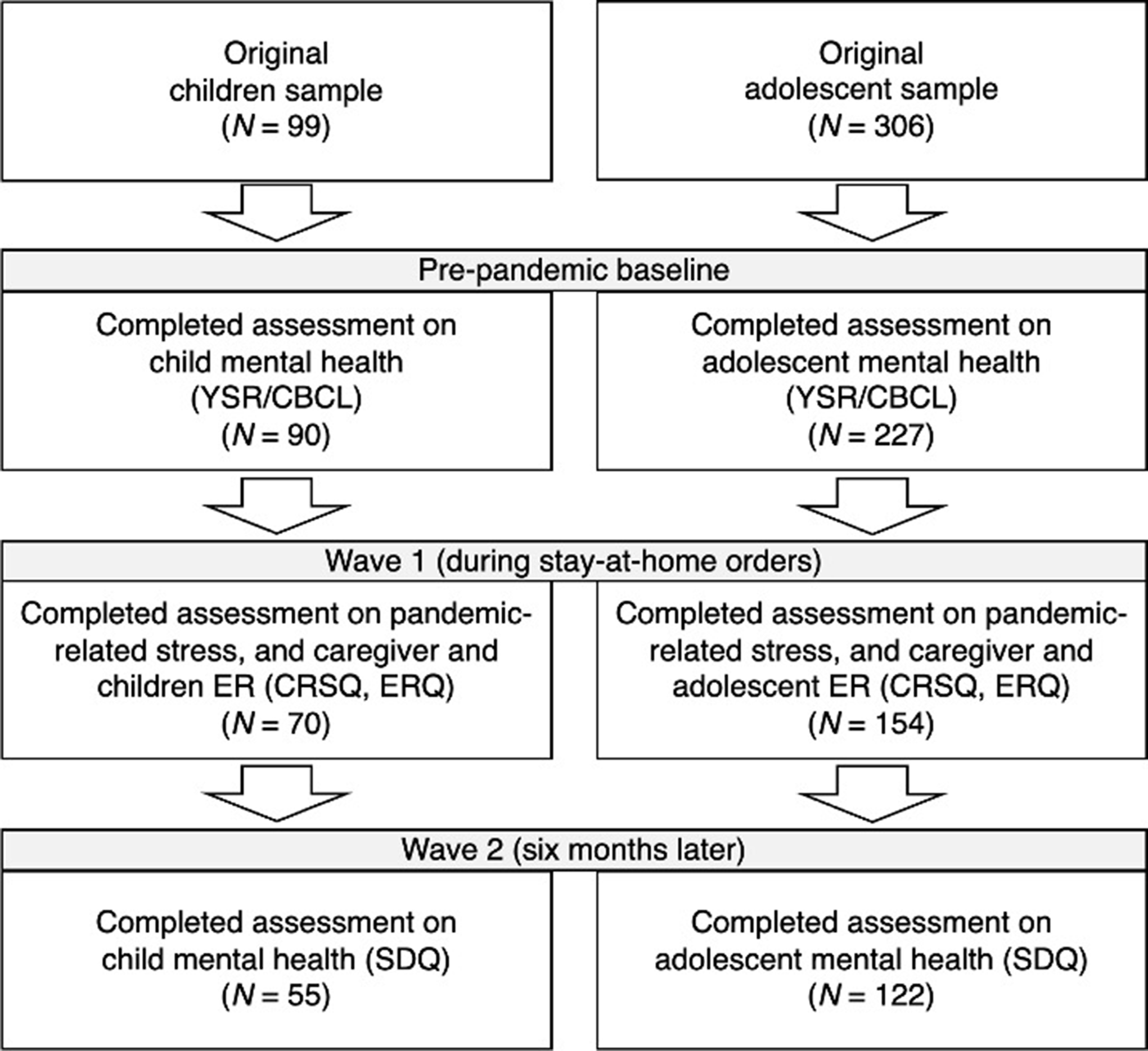
A total of 224 youth (aged 7–15 years) and their caregivers participated in the current study. Families were recruited from two ongoing longitudinal studies (Lengua et al., Reference Lengua, Moran, Zalewski, Ruberry, Kiff and Thompson2015; Rosen et al., Reference Rosen, Meltzoff, Sheridan and McLaughlin2019, Reference Rosen, Hagen, Lurie, Miles, Sheridan, Meltzoff and McLaughlin2020) of children and adolescents in greater Seattle, WA, investigating the associations between environmental experience, cognitive development, and mental health. See Figure 2 for a flowchart illustrating participant recruitment from two separate samples.
Participant recruitment and assessment flowchart. The children sample refers to the sample originally recruited for Lengua et al. (Reference Lengua, Moran, Zalewski, Ruberry, Kiff and Thompson2015), and the adolescent sample refers to the sample recruited for Rosen et al. (Reference Rosen, Meltzoff, Sheridan and McLaughlin2019, Reference Rosen, Hagen, Lurie, Miles, Sheridan, Meltzoff and McLaughlin2020). YSR = Youth Self-Report; CBCL = Child Behavior Checklist; CRSQ = Children’s Response Styles Questionnaire; ERQ = Emotion Regulation Questionnaire; SDQ = Strengths and Difficulties Questionnaire.
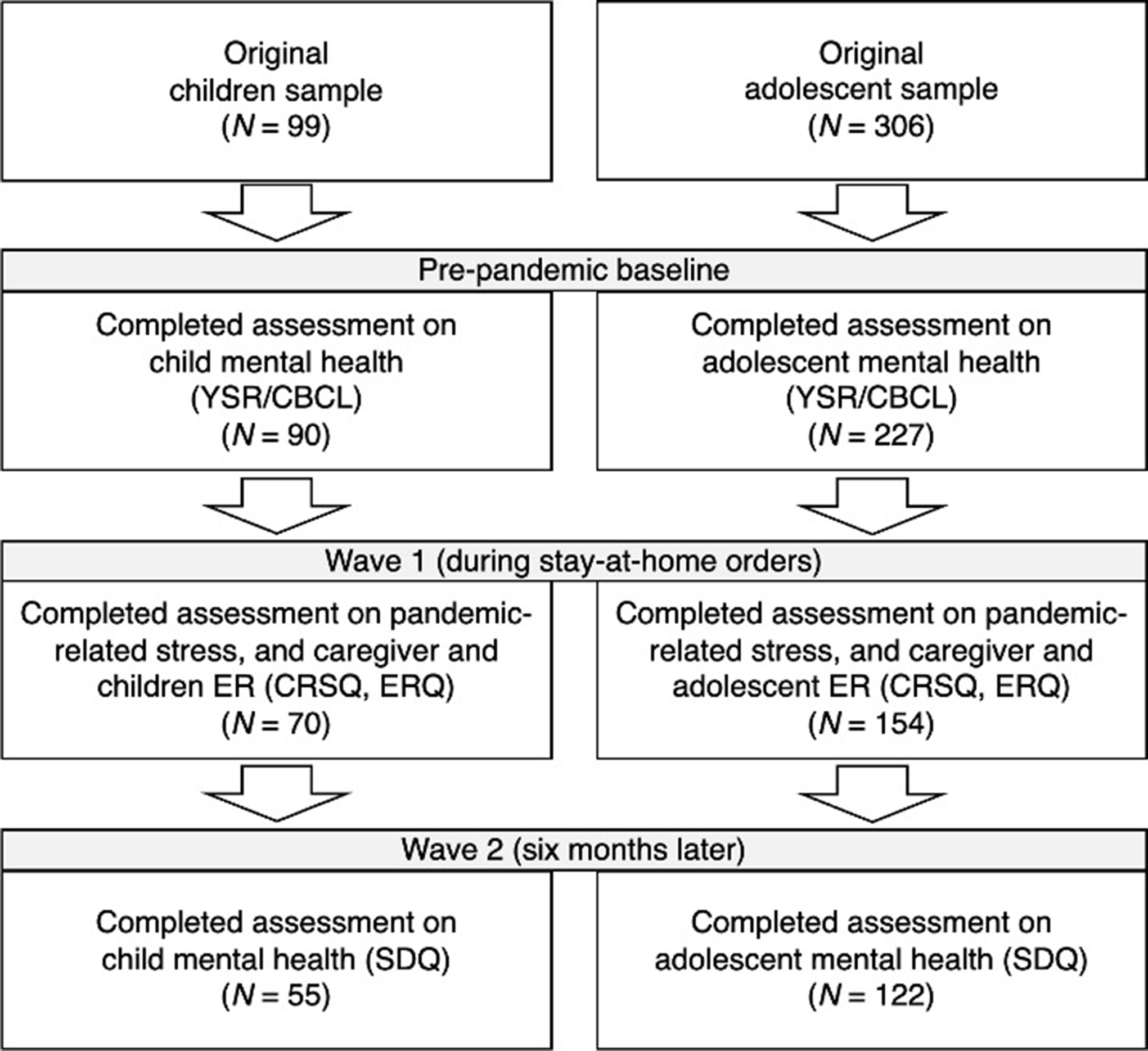
Child participants were recruited from a study of younger children (N = 99) originally recruited between January 2016 and September 2017 (Rosen et al., Reference Rosen, Meltzoff, Sheridan and McLaughlin2019, Reference Rosen, Hagen, Lurie, Miles, Sheridan, Meltzoff and McLaughlin2020). The subset of the children sample (N = 90) participated in a follow-up assessment of mental health between March and November 2018 (pre-pandemic baseline) at the age of 6-8 years. All 90 children were contacted for the current study. Of this sample, 70 children and caregivers participated during the initial stay-at-home order period (wave 1; retention rate: 77% of the pre-pandemic children sample; M age = 8.88, range: 7.64–10.21, 51% female), and 55 children and caregivers completed a follow-up assessment six months later (wave 2) after the initial stay-at-home order period was lifted. Mental health assessments from prior to the pandemic in 2018 were used to adjust for the effects of pre-pandemic symptoms. For three participants who had not completed the mental health assessment in 2018, a previous assessment from January 2016–September 2017 at age 5-6 was used as a measure for pre-pandemic symptoms.
Adolescent participants were drawn from a longitudinal study of children (N = 306) followed from early childhood to adolescence (Lengua et al., Reference Lengua, Moran, Zalewski, Ruberry, Kiff and Thompson2015). The subset of the adolescent sample (N = 227) that participated in a functional MRI (fMRI) study (Cuartas et al., Reference Cuartas, Weissman, Sheridan, Lengua and McLaughlin2021) had a prior assessment of mental health between June 2017 and October 2018 (pre-pandemic baseline) at the age of 11–12 years. All 227 adolescents were contacted for the current study. Of this sample, 154 adolescents and caregivers participated in the current study during the initial stay-at-home order period (wave 1; retention rate: 68% of the fMRI study sample; M age = 14.3, range: 13.12–15.24, 46% female) and 122 adolescents and caregivers completed a follow-up assessment six months later (wave 2) after the initial stay-at-home orders had been lifted. Mental health assessments from prior to the pandemic in 2017-2018 were used to adjust for the effects of pre-pandemic symptoms.
Both the children and adolescent samples came from community-based samples of the same general population – youth in the Seattle area – from a wide range of socioeconomic backgrounds, as indicated by the income-to-needs ratio (M SES = 3.95, SD SES = 1.83, range: 0.35 – 8.41). The two samples differed in their tendencies to engage in rumination, t(150.54) = 2.88, p = .005, and expressive suppression, t(236) = 6.32, p < .001, respectively, but not cognitive reappraisal, t(236) = −0.38, p = .706. The adolescent sample was more likely to engage in rumination and expressive suppression than the children sample. The two samples also differed in pre-pandemic internalizing symptoms, t(232) = 5.17, p < .001, but not in pre-pandemic externalizing symptoms, t(232) = 1.51, p = .133. The adolescent sample reported higher levels of internalizing symptoms compared to the children sample. These differences in their ER tendencies and reported symptoms were expected due to the difference in age across samples and the pattern of increasing use of maladaptive ER strategies (Cracco et al., Reference Cracco, Goossens and Braet2017; Jose & Brown, Reference Jose and Brown2008) and symptoms during adolescence (Brendgen et al., Reference Brendgen, Lamarche, Wanner and Vitaro2010; Dekker et al., Reference Dekker, Ferdinand, Van Lang, Bongers, Van Der Ende and Verhulst2007; Papachristou & Flouri, Reference Papachristou and Flouri2020). These two samples did not differ in gender, t(258) = −0.17, p = .864, socioeconomic status, t(216) = 0.23, p = .817, or in exposure to pandemic-related stressors, t(248) = −0.01, p = .992.
In the current study, 224 youth and caregivers (the children sample: N = 70; the adolescent sample: N = 154) completed a battery of questionnaires online to assess exposure to pandemic-related stressors and the use of specific types of ER strategies during the initial stay-at-home orders of the pandemic (wave 1). After the initial stay-at-home orders were lifted six months later (wave 2), 188 youth and caregivers (the children sample: N = 55; the adolescent sample: N = 122) completed a questionnaire online to assess youth internalizing and externalizing symptoms. The racial and ethnic composition of youth in the current study reflected the Seattle area, with 66% of youth identifying as White, 11% as Black, 11% as Asian, 8% as Hispanic or Latino, and 3% as another race or ethnicity.
We examined the data on exposure to COVID-19 pandemic-related stressors, caregiver and youth ER, and youth psychopathology symptoms for careless or inconsistent response patterns (Curran, Reference Curran2016; Ward & Meade, Reference Ward and Meade2023) using the Careless package in R (Yentes & Wilhelm, Reference Yentes and Wilhelm2021). Our analyses indicated that the data are of suitable quality. The average number of consecutive identical responses was 1.6. While some participants had over 20 consecutive identical responses, this was likely specific to the nature of the COVID-19 pandemic-related stressors questionnaire, which utilized branching logic to direct respondents based on their previous answers (e.g., “Do you know anybody who has died as a result of the coronavirus? If so, what is this persons’ relationship to you (check all that apply or check Does Not Apply or Prefer Not to Answer)?”). Participants with more than 20 consecutive identical responses were reviewed, and their responses were found to be plausible upon review.
Youth were excluded from the parent studies (Lengua et al., Reference Lengua, Moran, Zalewski, Ruberry, Kiff and Thompson2015; Rosen et al., Reference Rosen, Meltzoff, Sheridan and McLaughlin2019, Reference Rosen, Hagen, Lurie, Miles, Sheridan, Meltzoff and McLaughlin2020) based on the following criteria: IQ < 80, active substance dependence, psychosis, presence of pervasive developmental disorders (e.g., autism), and psychotropic medication use. For both the children and adolescent samples, legal guardians provided informed consent, and youth provided assent via electronic signature obtained using Qualtrics (Provo, UT). All study procedures were approved by the Institutional Review Board at Harvard University and University of Washington. Youth and their caregivers were each paid $50 for participating in the first wave of the study and $35 for the second wave.
Procedure
After consent was obtained, caregivers and youth completed surveys separately from one another. Data were collected from three time points prior to and during the pandemic: (a) mental health assessments prior to the pandemic (pre-pandemic baseline); (b) exposure to pandemic-related experiences and use of ER strategies during the initial stay-at-home orders between April and May of 2020 (wave 1); and (c) mental health assessments six months later between November 2020 and January 2021, after the initial stay-at-home orders were lifted (wave 2). Stay-at-home orders and public school closures remained in effect throughout the entire data collection period of wave 1.
Measures
Pandemic-related stressors
A questionnaire was developed to assess exposure to COVID-19 pandemic-related stressors (see https://osf.io/drqku/). It was necessary to create a novel measure given the unprecedented nature of the COVID-19 pandemic and the unique stressors it presented. As reported previously (Rodman et al., Reference Rodman, Rosen, Kasparek, Mayes, Lengua, Meltzoff and McLaughlin2022), it is a widely accepted practice to develop new measures to adequately capture the full extent of specific types of stressful experiences when novel events occur (e.g., Galea et al., Reference Galea, Ahern, Resnick, Kilpatrick, Bucuvalas, Gold and Vlahov2002, Reference Galea, Brewin, Gruber, Jones, King, King, McNally, Ursano, Petukhova and Kessler2007; Mclaughlin, et al., Reference Mclaughlin, Fairbank, Gruber, Jones, Lakoma, Pfefferbaum, Sampson and Kessler2009; Pfefferbaum et al., Reference Pfefferbaum, Seale, Mcdonald, Brandt, Rainwater, Maynard, Meierhoefer and Miller2000). The questionnaire was administered to caregivers and included an assessment of health, financial, social, school, and physical environment stressors that occurred within the month prior to the first assessment during the COVID-19 pandemic. Seven of the stressors were related to the health of participants or close others (e.g., contracting COVID-19); four were related to financial impacts of COVID-19 (e.g., parent(s) lost a job); four were related to disruptions to social life (e.g., social isolation); and three were related to noise and crowding (e.g., the environment where the adolescent does school work is noisy). We used the caregiver-reported scores to capture the pattern of caregiver engagement in ER strategies specifically in response to caregiver exposure to stressors, although it is likely that youth are being exposed to similar stressors that caregivers have reported. Stressors that were coded as present were summed using a cumulative risk approach (Evans et al., Reference Evans, Li and Whipple2013).
Rumination
The use of rumination was assessed using the rumination subscale of the Children’s Response Styles Questionnaire (CRSQ; Abela et al., Reference Abela, Brozina and Haigh2002), a 25-item self-report scale that measures one’s tendency to engage in rumination, distraction, and problem-solving in response to sadness. The CRSQ items were developed to mirror the adult Response Styles Questionnaire (RSQ; Nolen-Hoeksema & Morrow, Reference Nolen-Hoeksema and Morrow1991). The rumination subscale includes 13 items on self-focused responses to sadness (e.g., “Think about a recent situation wishing it had gone better”). For each item, youth and their caregivers were asked to rate how often they respond in such a way on a 4-point Likert scale (1 = almost never to 4 = almost always). The use of rumination in the current study was estimated as the sum of an abbreviated 11-item version of this subscale, with higher scores indicating a greater tendency to engage in rumination. The CRSQ has demonstrated adequate reliability and validity (Abela et al., Reference Abela, Brozina and Haigh2002), and here we find good internal consistency for the rumination subscale for both youth (α = .88) and caregivers (α = .89). Given that no prior study, to our knowledge, has tested the measurement invariance during the pandemic for the CRSQ, supplemental confirmatory factor analyses were conducted to ensure that the factor structures fit the data (see supplemental materials for details).
Expressive suppression and cognitive reappraisal
The use of expressive suppression and cognitive reappraisal was assessed by the Emotion Regulation Questionnaire (ERQ; Gross & John, Reference Gross and John2003). The ERQ is a 10-item self-report questionnaire, with four items pertaining to expressive suppression (e.g., “I control my emotions by not expressing them”) and six items pertaining to cognitive reappraisal (e.g., “I control my emotions by changing the way I think about the situation I'm in”). For each item, youth and their caregivers were asked to provide their responses on a 7-point Likert scale (1 = strongly disagree to 7 = strongly agree). The use of expressive suppression and cognitive reappraisal were estimated as the sum of the corresponding subscale, respectively, with higher scores indicating a greater tendency to engage in that strategy. The expressive suppression subscale demonstrated adequate internal consistency for both youth (α = .78) and caregivers (α = .73), and cognitive reappraisal subscales demonstrated good consistency for both youth (α = .80) and caregivers (α = .84) in the current sample. Given the absence of studies, to our knowledge, that have examined the measurement invariance of the ERQ during the pandemic, supplemental confirmatory factor analyses were conducted to ensure that the factor structures fit the current data (see supplemental materials for details).
Internalizing and externalizing symptoms
Internalizing and externalizing symptoms prior to the pandemic were assessed by caregiver and youth report on the Youth Self-Report (YSR) and Child Behavior Checklist (CBCL), respectively (Achenbach et al., Reference Achenbach, Dumenci and Rescorla2003; Achenbach, Reference Achenbach1991). The YSR and CBCL scales are widely used measures of youth emotional and behavioral problems and use normative data to generate age-standardized estimates of internalizing and externalizing symptoms. We used the Internalizing and Externalizing symptoms subscales from the youth and caregiver report, and the highest scores of the two reporters were used as measures of pre-pandemic symptoms. For children aged 6-8 years at the time of assessment who did not complete the YSR, the CBCL was used to compute their pre-pandemic symptoms at that time point. The use of higher caregiver or child reports for psychopathology is an implementation of the standard “or” rule used in combining caregiver and child report of psychopathology. In this approach, if either a caregiver or child endorses a particular symptom, it is counted with the assumption that it is likely present if a symptom is reported. This is a standard approach in the literature on child psychopathology – for example, it is how mental disorders are diagnosed in population-based studies of psychopathology in children and adolescents (Kessler et al., Reference Kessler, Avenevoli, Costello, Georgiades, Green, Gruber, He, Koretz, McLaughlin, Petukhova, Sampson, Zaslavsky and Merikangas2012; Merikangas et al., Reference Merikangas, He, Burstein, Swanson, Avenevoli, Cui, Benjet, Georgiades and Swendsen2010).
To assess symptoms at wave 2, caregivers and youth completed the Strengths and Difficulties Questionnaire (SDQ; Goodman, Reference Goodman2001), a widely used assessment of youth mental health. The SDQ is a 25-item scale that consists of five subscales, including Internalizing and Externalizing symptoms subscales (Goodman, Reference Goodman2001), with its measurement invariance supported during the COVID-19 pandemic (Foley et al., Reference Foley, Ronchi, Lecce, Feng, Chan and Hughes2023). The SDQ has good reliability and validity (Dickey & Blumberg, Reference Dickey and Blumberg2004; Goodman et al., Reference Goodman, Lamping and Ploubidis2010) and correlates strongly with the CBCL/YSR (Goodman & Scott, Reference Goodman and Scott1999). We chose to use the SDQ to reduce participant burden, as it has substantially fewer items than the CBCL/YSR, given the substantial strain families with children were experiencing during the early phase of the pandemic. The SDQ distinguishes well between low- and high-risk samples of school-aged youth, with a high discriminative ability (AUC = .95), and the subscales of the SDQ demonstrate moderate to strong positive correlations (.59–.87) with parallel CBCL subscales (Goodman & Scott, Reference Goodman and Scott1999). We used the Internalizing and Externalizing symptoms subscales from the youth and caregiver report, and the highest scores of the two reporters were used as measures of psychopathology symptoms at wave 2.
Statistical analyses
R-4.0.3 (R Core Team, 2020) was used to perform statistical analyses. Descriptive and correlation analyses were conducted as preliminary analyses. The mediation analyses were conducted using the latent variable analysis (lavaan; Rosseel, Reference Rosseel2012) package. A total of six separate models were tested for each ER strategy (three models: caregiver and youth rumination, caregiver and youth expressive suppression, caregiver and youth cognitive reappraisal) by youth psychopathology symptoms (two models: youth internalizing symptoms, youth externalizing symptoms). We first investigated the direct associations among pandemic-related stress at wave 1, youth and caregiver ER at wave 1, and youth internalizing and externalizing symptoms at wave 2, controlling for pre-pandemic symptoms. The coefficients were standardized to compare the magnitudes of different associations. We also examined the indirect effects of pandemic-related stress on youth psychopathology symptoms (internalizing and externalizing symptoms) through caregiver ER (caregiver rumination, suppression, and cognitive reappraisal) and youth ER (youth rumination, suppression, and cognitive reappraisal), independently and in serial, controlling for pre-pandemic symptoms (see Figure 1 for the model). Following recommendations by Yzerbyt et al. (Reference Yzerbyt, Muller, Batailler and Judd2018), we tested for indirect effects only if all component paths of the serial indirect effect (i.e., X → M1, M1 → M2, M2 → Y), the main focus of the current study, were significant. Separate models were computed for each ER strategy (e.g., rumination, suppression, cognitive reappraisal) and symptom subtype (e.g., internalizing, externalizing) when the examination of the component paths supported the use of mediation analysis. Youth gender, age at wave 1, and symptoms at the pre-pandemic baseline were included in all six models as covariates. Bias-corrected bootstrap confidence intervals derived from 5,000 bootstrap resamples were used to estimate indirect effects, which were statistically significant if the confidence interval did not include a zero. Completely standardized indirect effect (CSIE) was also computed to estimate the effect size of the significant indirect effects. Covariances were freely estimated, which includes all six covariances among pandemic-related stress at wave 1, pre-pandemic symptoms, youth age, and youth gender.
Little’s missing completely at random (MCAR) test, where the null hypothesis is that the data are MCAR (Little & Rubin, Reference Little and Rubin2019), was non-significant, χ 2 (99) = 107.93, p = .253. Given these results, missing data were handled using full-information maximum likelihood estimation, which has been reported to produce unbiased parameter estimates and standard errors under MCAR (Enders & Bandalos, Reference Enders and Bandalos2001; Enders, Reference Enders2022). Model fits for the proposed models were evaluated using a chi-square test, comparative fit index (CFI), root mean squared error of approximation (RMSEA), and standardized root mean square residual (SRMR). All models explained the data well. Chi-square tests of model fit were all non-significant (p = .067–.788), and other fit indices also demonstrated acceptable to good model fit (CFI = .957–1.000; RMSEA = .000–.087; SRMR = .008–.027; Browne & Cudeck, Reference Browne and Cudeck1992; Hu & Bentler, Reference Hu and Bentler1999; Kline, Reference Kline2005; MacCallum & Austin, Reference MacCallum and Austin2000). Data and analysis code have been made publicly available (https://osf.io/fpxn7).
Results
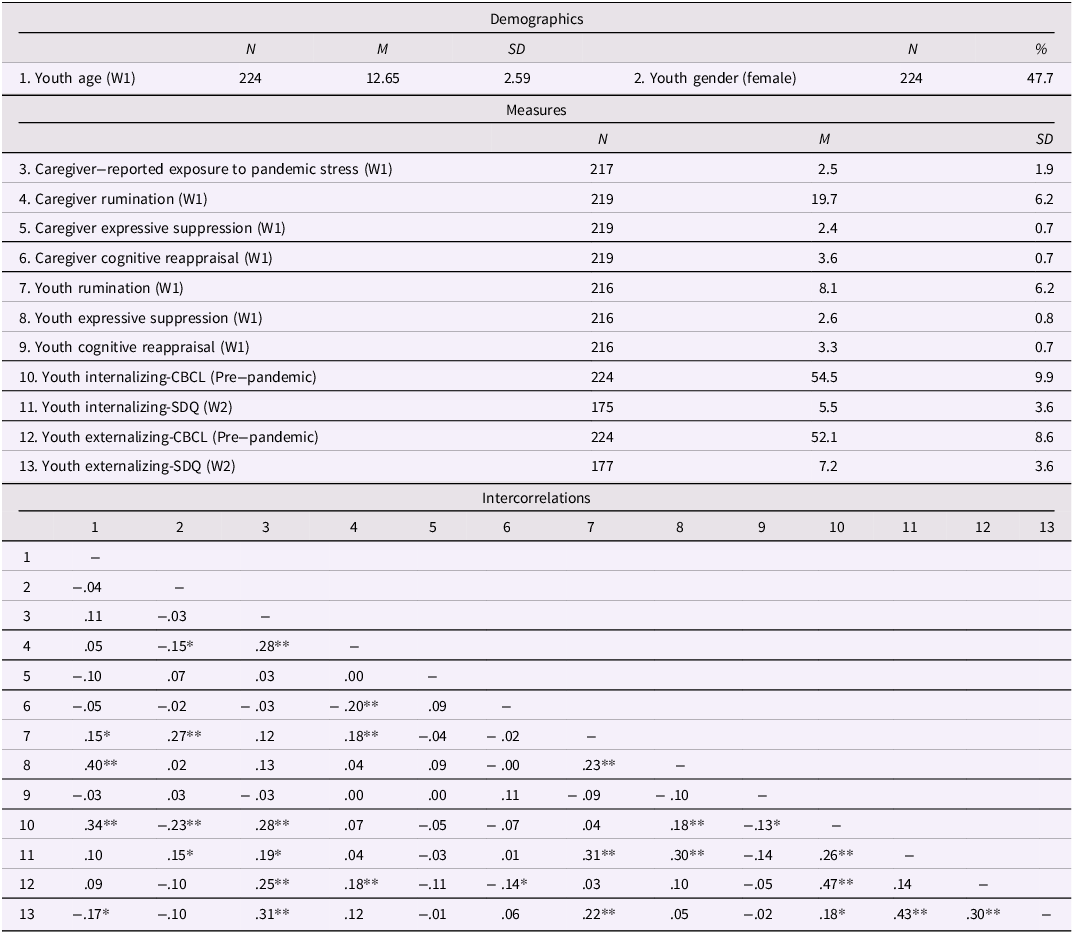
Table 1 provides descriptive statistics for all variables and zero-order correlations among these variables. In bivariate correlations, caregiver rumination was negatively correlated with caregiver cognitive reappraisal (r = −.20, p = .003) but was unrelated to caregiver suppression (r = .00, p = .984). Youth engagement in rumination was positively related to youth suppression (r = .23, p = .001) but was unrelated to youth cognitive reappraisal (r = − .09, p = .184). Moreover, caregiver engagement in rumination was positively associated with youth rumination (r = .18, p = .010) but was not related to youth expressive suppression and cognitive reappraisal (ps > .05). Caregiver expressive suppression and cognitive reappraisal were unrelated to any of the youth ER strategies (ps > .05).
Descriptive statistics and intercorrelations
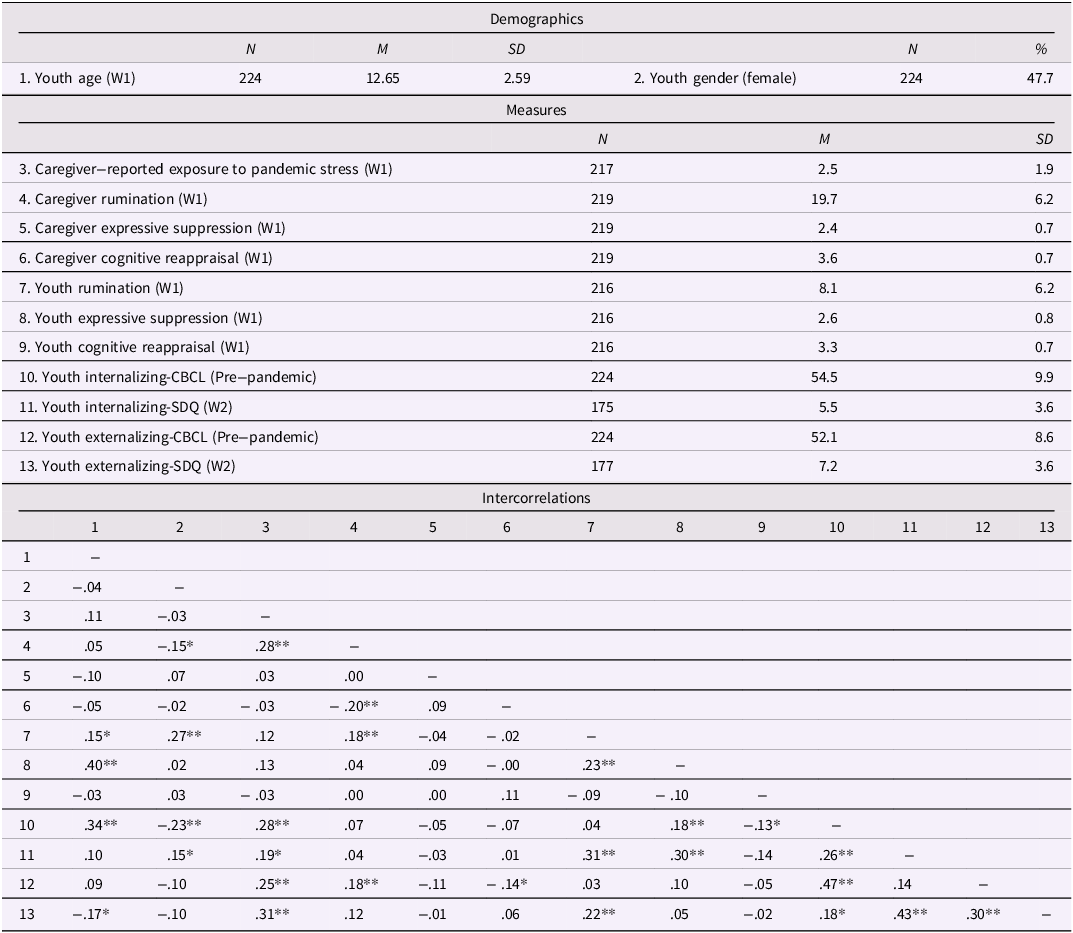
Note. W1 = Wave 1; W2 = Wave 2. All pairwise, Pearson correlations. *p ≤ .05. ** p ≤ .01.
Associations among stress, caregiver and youth ER, and psychopathology
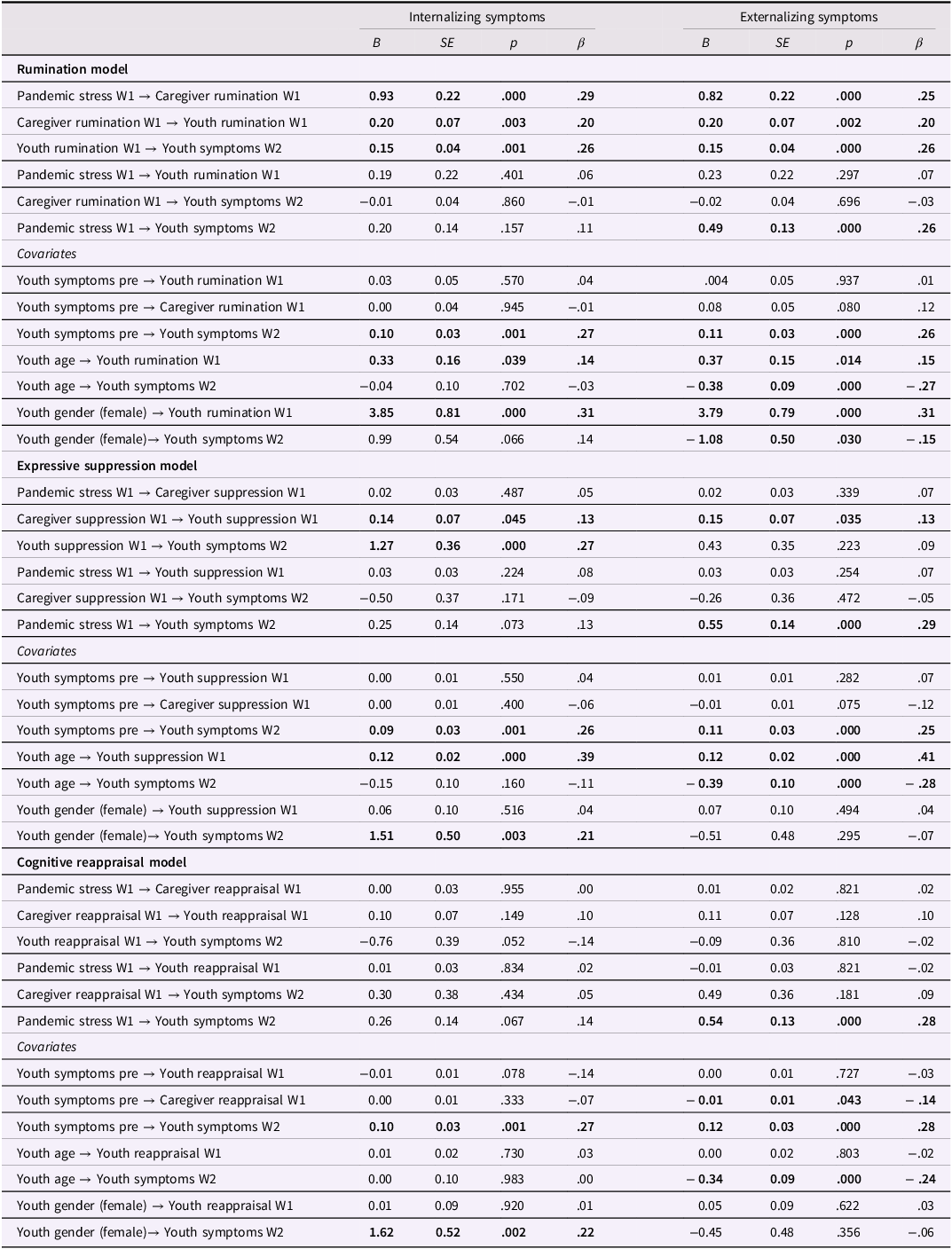
We examined direct associations among caregiver exposure to pandemic-related stressors, caregiver and youth ER, and youth psychopathology symptoms within each model (i.e., rumination-internalizing, rumination-externalizing, suppression-internalizing, suppression-externalizing, reappraisal-internalizing, reappraisal-externalizing; see Table 2 for all results).
Results of regression analyses from serial mediation models
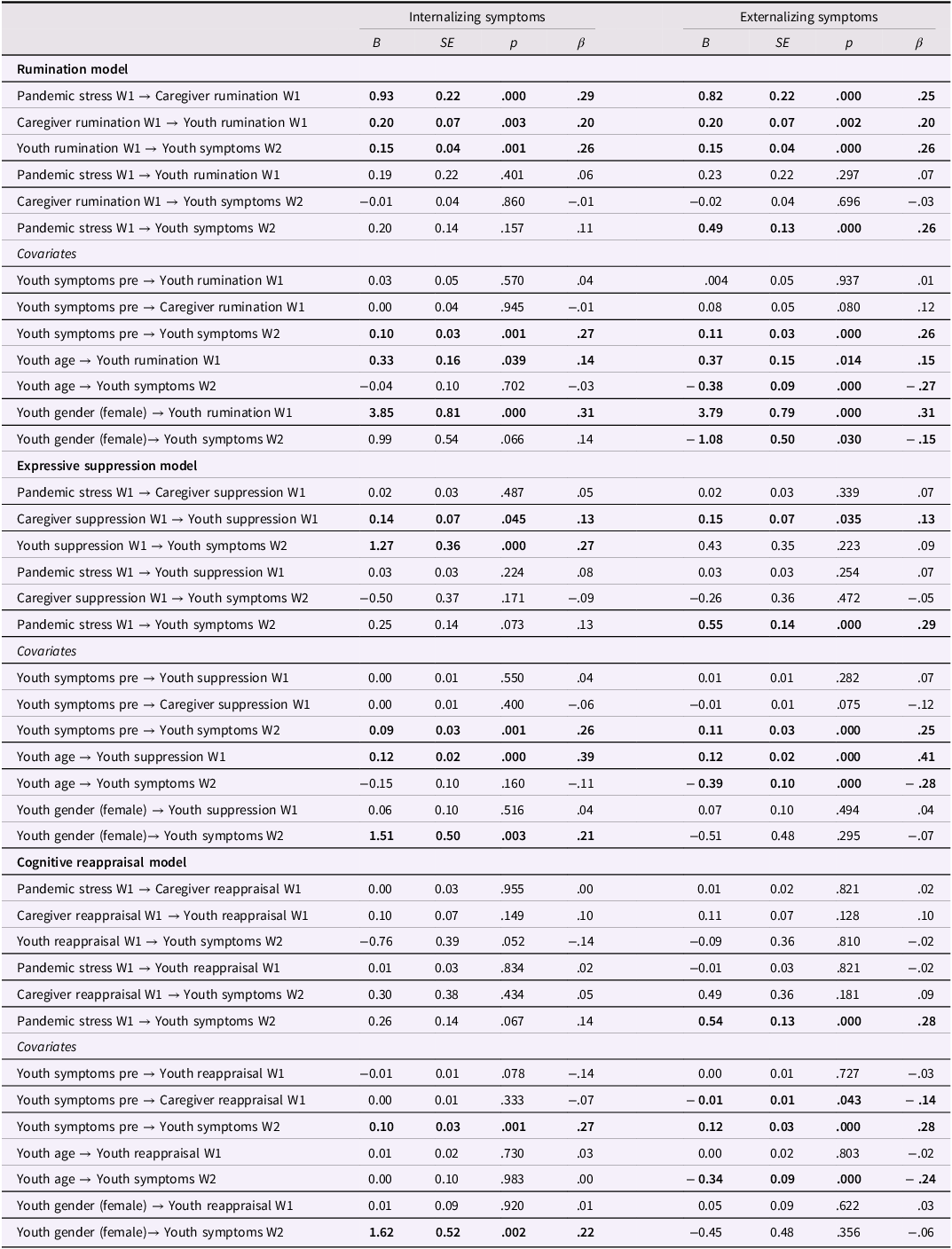
Note. Significant associations are in bold. B = Unstandardized coefficient, SE = Standard error, p = p-value, β = Standardized coefficient. W1 = Wave 1; W2 = Wave 2; Pre = Pre−pandemic baseline.
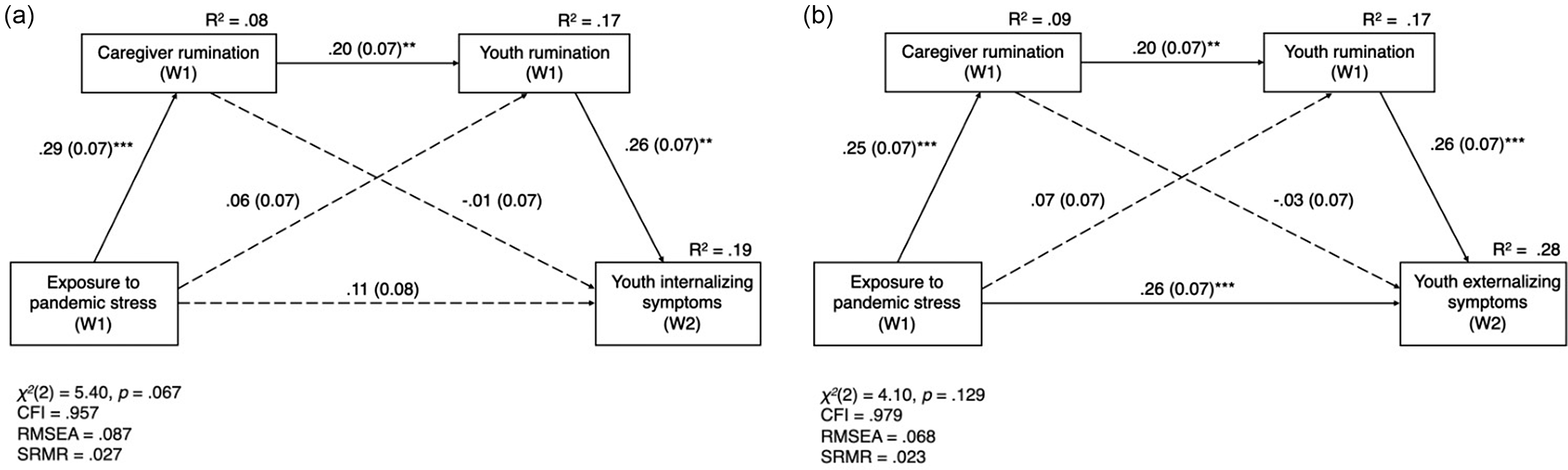
In rumination models, exposure to pandemic-related stressors at wave 1 was associated with greater caregiver engagement in rumination at wave 1 (internalizing model: β = .29, SE = 0.07, p < .001; externalizing model: β = .25, SE = 0.07, p < .001). Youth whose caregivers reported more frequent use of rumination early on in the pandemic were more likely to engage in rumination concurrently (internalizing model: β = .20, SE = 0.07, p = .002; externalizing model: β = .20, SE = 0.07, p = .002), controlling for youth gender and age. Youth engagement in rumination at wave 1 was associated with greater severity of internalizing (β = .26, SE = 0.07, p = .001) and externalizing (β = .26, SE = 0.07, p < .001) symptoms six months later, controlling for pre-pandemic internalizing and externalizing symptoms, respectively. Exposure to pandemic-related stressors was not associated with youth engagement in rumination (internalizing model: β = .06, SE = 0.07, p = .401; externalizing model: β = .07, SE = 0.07, p = .296), and caregiver rumination was not directly related to youth internalizing (β = -.01, SE = 0.07, p = .861) and externalizing symptoms (β = −.03, SE = 0.07, p = .696), respectively. Greater caregiver exposure to pandemic-related stressors was associated with higher levels of youth externalizing symptoms at wave 2 (β = .26, SE = 0.07, p < .001), controlling for pre-pandemic externalizing symptoms, but was not related to youth internalizing symptoms at wave 2 (β = .11, SE = 0.08, p = .155).
Only a few associations were significant in expressive suppression and cognitive reappraisal models. Caregiver use of expressive suppression at wave 1 was concurrently associated with youth engagement in expressive suppression (internalizing model: β = .12, SE = 0.06, p = .043; externalizing model: β = .13, SE = 0.06, p = .033), whereas caregiver and youth engagement in cognitive reappraisal were not related (p = .126–.147). Youth engagement in expressive suppression at wave 1 was also associated with higher levels of internalizing symptoms six months later (β = .27, SE = 0.08, p < .001), but youth engagement in cognitive reappraisal was unrelated to internalizing symptoms (β = −.14, SE = 0.07, p = .050). Exposure to pandemic-related stressors at wave 1 was associated with externalizing symptoms at wave 2 for both suppression (β = .29, SE = 0.07, p < .001) and reappraisal (β = .28, SE = 0.07, p < .001) models. All other associations were non-significant (ps > .05).
Indirect effect of stress on psychopathology symptoms via caregiver and youth rumination
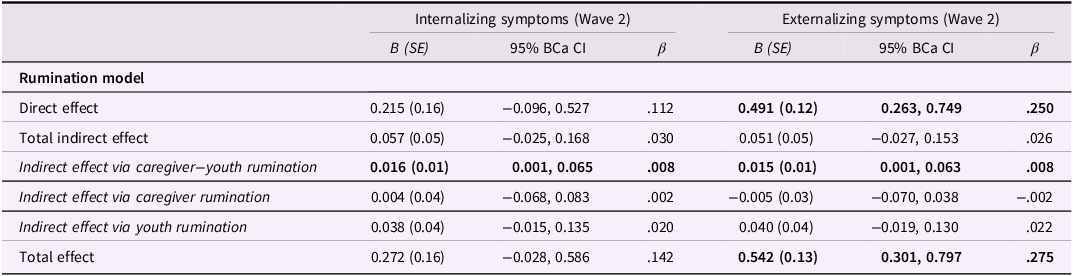
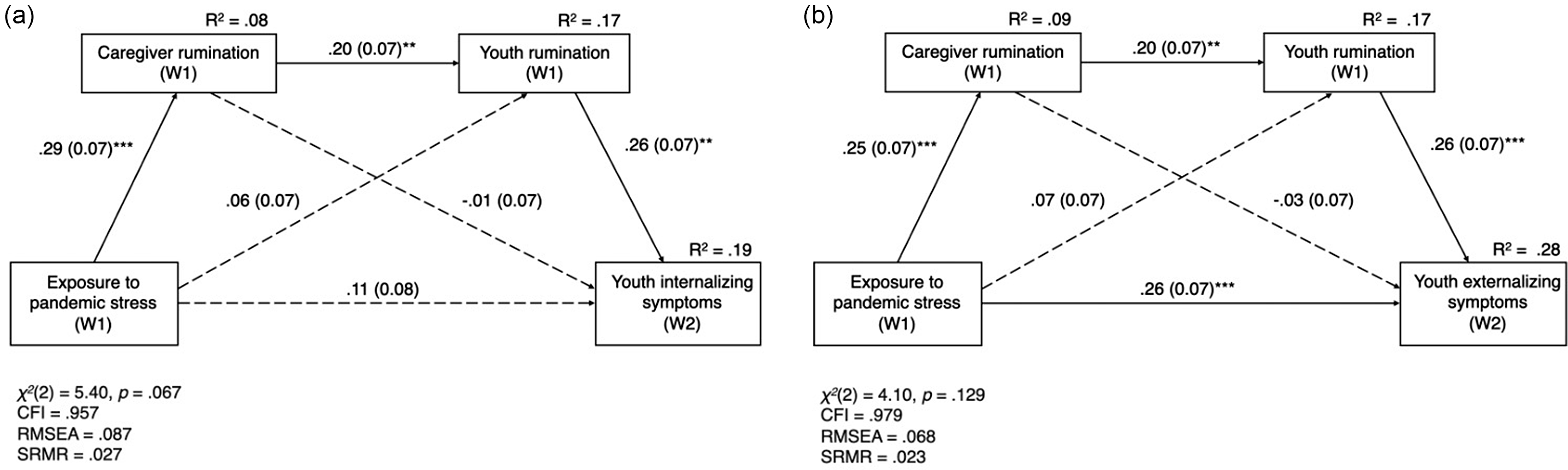
Given that component paths of the serial indirect effect were significant only when caregiver and youth rumination were mediators, we examined the indirect effects of caregiver-youth rumination on internalizing and externalizing symptoms at wave 2, respectively (see Table 3 for all results). The indirect effect of pandemic-related stress on youth internalizing symptoms at wave 2 was significant for caregiver and youth rumination at wave 1 in sequence (B = 0.016, SE = 0.01, 95% CI = [0.001, 0.065], CSIE = .008), but not independently (caregiver: B = 0.004, SE = 0.04, 95% CI = [−0.068, 0.083], CSIE = .002; youth: B = 0.038, SE = 0.04, 95% CI = [−0.015, 0.135], CSIE = .020), controlling for pre-pandemic internalizing symptoms (see Figure 3a). Similarly, the indirect effect of pandemic stress on youth externalizing symptoms was significant for caregiver rumination and youth rumination at wave 1 in sequence (B = 0.015, SE = 0.01, 95% CI = [0.001, 0.063], CSIE = .008), but not independently (caregiver: B = −0.005, SE = 0.03, 95% CI = [−0.070, 0.038], CSIE = −.002; youth: B = 0.040, SE = 0.04, 95% CI = [−0.019, 0.130], CSIE = .022), controlling for the effect of pre-pandemic externalizing symptoms (see Figure 3b).
Serial mediation analyses with caregiver-youth rumination and youth psychopathology symptoms. Standardized path coefficients are reported with their standard errors in parentheses. Caregiver and youth rumination serially mediated the association between exposure to COVID-19 pandemic-related stressors and (a) youth internalizing symptoms and (b) youth externalizing symptoms at wave 2, respectively. Covariates have been removed from the figures to ease interpretation. Solid arrows indicate significant paths, and dashed arrows indicate non-significant paths. W1 = Wave 1; W2 = Wave 2. *p < .05. **p < .01. ***p < .001.
Indirect and direct effects of pandemic stress on youth psychopathology symptoms via caregiver and youth ER
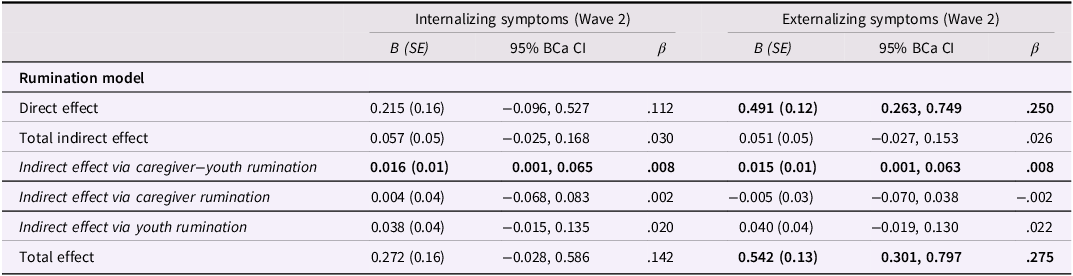
Note. Significant effects are in bold. B = Bootstrap unstandardized coefficient, SE = Bootstrap standard error, 95% CI = 95% bootstrap bias−corrected confidence intervals, β = Bootstrap standardized coefficient.
Sensitivity analysis
To examine the directionality of caregiver and youth rumination effects, we tested the reverse serial mediation models with youth rumination as the first mediator (M 1) and caregiver rumination as the second mediator (M 2). In reverse rumination models predicting internalizing and externalizing symptoms, youth rumination was significantly associated with caregiver rumination (β = .20, SE = 0.07, p = .002), whereas the associations between pandemic stress and youth rumination and caregiver rumination and psychopathology symptoms were both non-significant (ps > .05). Moreover, reverse rumination models predicting internalizing and externalizing symptoms both demonstrated poor model fit with the data as indicated by the chi-square tests of model fit (p < .001) and other fit indices (CFI = .744–.790, RMSEA = .212–.217, SRMR = .055–.058; Hu & Bentler, Reference Hu and Bentler1999). Modification indices indicated that regressing youth rumination on caregiver rumination would improve the overall fit of both models, which is our initially hypothesized directionality of caregiver rumination and youth rumination.
Discussion
The COVID-19 pandemic has introduced unprecedented stressors for families, limiting youth access to external social support while increasing the saliency of caregiver-youth interactions and relationships. Recognizing the potentially enhanced role of caregiver in youth mental health, the present study examined the contributions of caregiver ER to youth ER and psychopathology symptoms during the early stages of the COVID-19 pandemic. We investigated whether caregiver and youth ER – specifically, rumination, expressive suppression, and cognitive reappraisal – serially mediated the associations between caregiver exposure to pandemic-related stressors and youth internalizing and externalizing symptoms six months later, controlling for pre-pandemic symptoms. Consistent with our hypotheses, caregiver and youth rumination sequentially mediated the prospective associations between pandemic-related stress and increases in youth psychopathology symptoms early in the pandemic, compared to pre-pandemic levels. Caregivers with greater exposure to stressors at the beginning of the pandemic were more likely to engage in rumination, which, in turn, was associated with youth tendency to engage in rumination and, ultimately, higher levels of internalizing and externalizing symptoms six months later. Contrary to our hypotheses, caregiver and youth expressive suppression and cognitive reappraisal did not mediate the links between pandemic-related stress and youth psychopathology symptoms independently or sequentially. Overall, these findings indicate that the link between caregiver and youth rumination may serve as a familial factor underlying an increased risk for psychopathology in response to stress.
The association between caregiver and youth rumination, but not suppression or cognitive reappraisal, was linked to increases in youth internalizing and externalizing symptoms during the pandemic. Specifically, pandemic-related stress was associated with greater engagement in rumination but was unrelated to expressive suppression or cognitive reappraisal. The link between exposure to stressful events and rumination has been well-documented in prior research, which has shown tendencies to ruminate following chronic and uncontrollable stressful life events in adolescents and adults (McLaughlin & Hatzenbuehler, Reference McLaughlin and Hatzenbuehler2009; Michl et al., Reference Michl, McLaughlin, Shepherd and Nolen-Hoeksema2013; Shaw et al., Reference Shaw, Hilt and Starr2019). Whereas the current findings do not demonstrate the robust role of rumination as we did not account for the other types of ER strategies simultaneously, the association between pandemic-related stress and ER was unique to rumination, suggesting that rumination in particular may be a common pattern of ER in the context of stressful events. Indeed, in a study of adolescents (Flouri & Mavroveli, Reference Flouri and Mavroveli2013), negative automatic thoughts, one of the main features of rumination (Nolen-Hoeksema et al., Reference Nolen-Hoeksema, Wisco and Lyubomirsky2008), mediated the positive link between stressful life events and emotional and behavioral problems in youth, whereas expressive suppression and cognitive reappraisal did not. Moreover, compared to other ER strategies, such as expressive suppression and cognitive reappraisal, rumination consistently served as the strongest mechanism underlying the positive associations of chronic stress with negative psychological health outcomes, including depression and anxiety, among adults (Zawadzki, Reference Zawadzki2015). This highlights the need for further research investigating within-individual or dyad (i.e., caregiver and youth) variations in the use of ER strategies.
Greater tendencies to ruminate following COVID-19 stress is in line with the appraisal theory of ER (Nowak et al., Reference Nowak, Wittkamp, Clamor and Lincoln2021), which suggests that individuals’ selection of an ER strategy is shaped by their evaluation of (a) the harmfulness of their emotional state and (b) their ability to modify that emotion. Specifically, when individuals perceive their emotional state as both threatening and difficult to manage, they are more likely to employ maladaptive ER strategies, such as rumination and expressive suppression. During the lockdown period of the COVID-19 pandemic, parents experienced an increase in negative affect (Janssen et al., Reference Janssen, Kullberg, Verkuil, Zwieten, Wever, Houtum, Wentholt and Elzinga2020), aligning with prior research demonstrating the association between exposure to stressful events and heightened negative affect (Bolger et al., Reference Bolger, DeLongis, Kessler and Schilling1989; Larson & Ham, Reference Larson and Ham1993; Larson et al., Reference Larson, Moneta, Richards and Wilson2002; Larson & Asmussen, Reference Larson, Asmussen, Colton and Gore1991; Mroczek & Almeida, Reference Mroczek and Almeida2004). Given limited access to resources and support systems at the beginning of the pandemic due to government restrictions and elevated health concerns (Fegert et al., Reference Fegert, Vitiello, Plener and Clemens2020), caregivers likely had reduced capacity to engage in adaptive strategies (e.g., problem-solving, instrumental behaviors) in response to increased stress and negative affect (Achterberg et al., Reference Achterberg, Dobbelaar, Boer and Crone2021; Adams et al., Reference Adams, Smith, Caccavale and Bean2021; Johnson et al., Reference Johnson, Skjerdingstad, Ebrahimi, Hoffart and Johnson2022), leading them to resort to rumination as a means of coping with negative emotions and thoughts. Caregivers’ tendency to ruminate may further exacerbate their own negative affect (Nolen-Hoeksema et al., Reference Nolen-Hoeksema, Morrow and Fredrickson1993) and interfere with effective problem-solving (Lyubomirsky & Nolen-Hoeksema, Reference Lyubomirsky and Nolen-Hoeksema1995; Nolen-Hoeksema et al., Reference Nolen-Hoeksema, Wisco and Lyubomirsky2008), creating a cyclic pattern that promotes further rumination. This increased caregivers’ negative affect may serve as a source of negative affect for adolescents (Larson & Almeida, Reference Larson and Almeida1999; Larson & Gillman, Reference Larson and Gillman1999), and caregivers may also be less likely to provide concrete solutions or guidance in response to stressors, leaving youth with limited tools for managing intrusive and intense negative thoughts and emotions. Thus, youth whose caregivers engage in rumination may be more prone to ruminate themselves.
Another potential mechanism that may account for the association between caregiver and youth rumination is co-rumination, an interpersonal process that involves extensive and frequent discussions focusing on the causes and consequences of negative emotions (Rose, Reference Rose2002). Co-ruminating with peers during adolescence has been prospectively associated with increases in individual rumination, which was further related to greater depressive symptoms (Stone & Gibb, Reference Stone and Gibb2015). Similarly, adolescents who co-ruminated more often with their mothers exhibited greater internalizing symptoms than those who engaged in less co-rumination (Waller & Rose, Reference Waller and Rose2010). The role of co-rumination also emerged during the pandemic, as co-ruminating about the pandemic was associated with greater internalizing symptoms following exposure to pandemic-related stressors in an adult sample (Starr et al., Reference Starr, Huang and Scarpulla2021). Although there is limited literature specifically focusing on caregiver-youth co-rumination, it is possible that co-ruminative conversations between caregivers and youth about the pandemic may have increased adolescents’ stress and negative affect (Rose et al., Reference Rose, Glick, Smith, Schwartz-Mette and Borowski2017; Zelic et al., Reference Zelic, Ciesla, Dickson, Hruska and Ciesla2017), interfering with their engagement in adaptive coping. Taken together, further exploration of familial processes that underlie the link between caregiver and youth rumination in response to stress and risk for psychopathology is critical.
We did not find a significant association between pandemic-related stress and expressive suppression and cognitive reappraisal. This absence of association may be attributed to the context-sensitive nature of employing expressive suppression and cognitive reappraisal (Cheng, Reference Cheng2001; Kobylińska & Kusev, Reference Kobylińska and Kusev2019; Troy et al., Reference Troy, Shallcross and Mauss2013). For instance, the role of expressive flexibility, which involves the flexible adjustment of emotional expression (i.e., enhancing expression vs. suppressing expression) based on situational demands, may be more profound than expressive suppression in the context of stressful events (Bonanno et al., Reference Bonanno, Papa, Lalande, Westphal and Coifman2004; Chen et al., Reference Chen, Chen and Bonanno2018; Lenzo et al., Reference Lenzo, Quattropani, Sardella, Martino and Bonanno2021; Westphal et al., Reference Westphal, Seivert and Bonanno2010). Particularly for caregivers, it might be more adaptive to inhibit the expression of negative emotions when families are already experiencing heightened negative affect rather than expressing them, while expressing positive emotions may be beneficial in such situations. Moreover, regarding cognitive reappraisal, previous research has shown that individuals’ preference for reappraisal is often influenced by various context-specific factors. These factors include the intensity of affective stimuli (Doré et al., Reference Doré, Weber and Ochsner2017; Opitz et al., Reference Opitz, Cavanagh and Urry2015; Sheppes et al., Reference Sheppes, Scheibe, Suri and Gross2011, Reference Sheppes, Scheibe, Suri, Radu, Blechert and Gross2014), anticipatory information about the emotional events (Shafir & Sheppes, Reference Shafir and Sheppes2020), cognitive demand in implementing the strategy (Sheppes et al., Reference Sheppes, Scheibe, Suri, Radu, Blechert and Gross2014), and possibilities for re-interpretation of an emotional stimulus (Suri et al., Reference Suri, Sheppes, Young, Abraham, McRae and Gross2018). Families with greater access to resources or information during the pandemic may have been better equipped to engage in reappraisal as they could more effectively anticipate potential outcomes or possess a greater cognitive capacity to reinterpret their situations. In contrast, those facing limited access, compounded by heightened and prolonged uncertainty and difficulties, may have found it more challenging to reappraise their emotions or situations.
Although we did not find any mediation effect for caregiver-youth expressive suppression and cognitive reappraisal, it is important to note that the concurrent link between caregiver and youth expressive suppression, but not cognitive reappraisal, was positive and significant. This suggests that youth tended to use expressive suppression more when their caregivers also showed a greater tendency to engage in expressive suppression. These findings align with a prior study demonstrating a positive association between parental and youth expressive suppression and a non-significant link between parental and youth cognitive reappraisal (Bariola et al., Reference Bariola, Hughes and Gullone2012). Bariola et al. (Reference Bariola, Hughes and Gullone2012) proposed that it is likely for youth to adopt expressive suppression as they can observe the discrepancy between the experience of emotionally salient events and the absence of emotional response. In contrast, the implementation or consequence of cognitive reappraisal may be less observable than expressive suppression, making it challenging for youth to adopt the strategy. These explanations may, at least partially, account for the associations we found.
Moreover, the contribution of non-familial factors may be more strongly tied to adolescent engagement in cognitive reappraisal. For example, an adult twin study (McRae et al., Reference McRae, Rhee, Gatt, Godinez, Williams and Gross2017) demonstrated that the use of cognitive reappraisal, compared to suppression, was less heritable and more dependent on non-shared environmental influences. This suggests that factors potentially related to unique family experiences or individual differences in temperament (e.g., Liu et al., Reference Liu, Guo, Liu and Sun2022) or executive functions (e.g., Pe et al., Reference Pe, Raes and Kuppens2013) may have a stronger influence on the use of reappraisal than family factors. In addition, adolescents are more likely to engage in emotional processing with their peers than with adults, as friendships increasingly become venues for emotional sharing and disclosure (Hartup, Reference Hartup1993; von Salisch, Reference von Salisch2001). Considering that adolescents maintained active digital interactions with their peers (e.g., texting, phone calls, and social media) to a similar extent as they did before the pandemic (Rodman et al., Reference Rodman, Rosen, Kasparek, Mayes, Lengua, Meltzoff and McLaughlin2022), it is likely that they turned to their friends for emotional processing and were more readily inclined to learn ER strategies from their peers rather than from their caregivers during the pandemic.
The current study examined the role of caregiver and youth ER in the link between pandemic-related stress and youth psychopathology symptoms during the pandemic in a prospective design. This study contributes to the existing literature by demonstrating caregiver ER as a potential family factor that can confer risk for youth regulatory processes and psychopathology in the face of stress. However, there are several limitations to consider for the interpretability of the findings. First, we only used self-report measures to assess the use of ER strategies among youth and caregivers, which may be limited in identifying mechanisms underpinning the parallel use of ER strategies between caregivers and youth. Future studies should utilize observational or real-time data sampling methods (e.g., daily diary, ecological momentary assessment) to better capture micro-level, dynamic interpersonal processes, such as co-rumination, or other psychological or cognitive processes that may underlie the link between caregiver and youth rumination and other ER strategies. The reliance on self-report measures also allowed us to assess only one’s self-perceived tendency to use specific strategies rather than the actual implementation or effectiveness of these strategies. Incorporating experimental methods can be beneficial in understanding how regulatory processes unfold or how effective the strategies are. Second, the present study focused on stressors specific to the COVID-19 pandemic. Whereas the COVID-19 pandemic shares similarities with other types of stressful events due to its chronicity and unpredictability, it has presented families with unique challenges (e.g., social distancing, lockdowns) and unprecedented circumstances (e.g., increased amounts of time shared among family members). It is important to replicate the current results in relation to other stressors to generalize the role of caregiver ER in youth ER and psychopathology development. Third, caregiver and youth ER were assessed at a single time point, which limits the inference for causality due to the cross-sectional nature of the assessment. Additionally, our assumption of a unidirectional association, in which caregiver ER shapes youth ER without considering the possibility of reciprocal influence, may oversimply the dynamics between these processes. Exploring longitudinal models or those that account for bidirectionality, such as a cross-lagged panel model (e.g., Van Lissa et al., Reference Van Lissa, Keizer, Van Lier, Meeus and Branje2019), could offer greater insights into the roles of caregiver ER strategies in youth regulatory processes. The sensitivity analysis conducted in the current study examined the reverse direction of youth rumination on caregiver rumination, and the reverse models predicting internalizing and externalizing symptoms demonstrated poor model fit, respectively. This may suggest a caregiver-youth directionality in the association with rumination, although further exploration is warranted. Fourth, we used different measures of psychopathology symptoms before (CBCL/YSR; Achenbach et al., Reference Achenbach, Dumenci and Rescorla2003; Achenbach, Reference Achenbach1991) and after the onset of the pandemic (SDQ; Goodman, Reference Goodman2001). While employing the same measure consistently across all assessments would have been ideal, we recognized the significant distress families were experiencing during the pandemic and opted for the SDQ due to its brevity compared to the CBCL/YSR (113 items vs. 25 items) and its strong correlation with the CBCL/YSR (Goodman & Scott, Reference Goodman and Scott1999; Goodman, Reference Goodman2001; Klasen et al., Reference Klasen, Woerner, Wolke, Meyer, Overmeyer, Kaschnitz, Rothenberger and Goodman2000; Van Roy et al., Reference Van Roy, Veenstra and Clench-Aas2008). Fifth, we did not assess demographic characteristics of the caregivers as we aimed to minimize caregivers’ assessment burden during the pandemic. However, given that demographic factors are linked with exposure to stressors and psychopathology during the pandemic (e.g., Ben Brik et al., Reference Ben Brik, Williams, Esteinou, Acero, Mesurado, Debeliuh, Storopoli, Orellana and James2022; Cheah et al., Reference Cheah, Wang, Ren, Zong, Cho and Xue2020), future work should explore the moderating role of geographic location, racial/ethnic background, caregiver marital and employment status, and educational level. Lastly, the current study was not pre-registered. While we have endeavored to maintain transparency and rigor in our analyses, the absence of pre-registration leaves open the possibility of selective reporting or post-hoc hypothesizing. Future studies should consider pre-registering their hypotheses to mitigate this risk.
Caregiver engagement in specific ER strategies following stressful life events may contribute to how adolescents regulate their emotions and, consequently, shape their risk for psychopathology. The current study demonstrated that caregiver rumination was linked to a greater tendency to ruminate among youth during the early stages of the pandemic, which led to increases in internalizing and externalizing symptoms during the pandemic. Caregivers’ engagement in rumination, in particular, may be a modifiable process that can be targeted to help youth develop adaptive ER strategies and reduce their risk for psychopathology in the face of stress.
Supplementary material
The supplementary material for this article can be found at https://doi.org/10.1017/S0954579424001081.
Funding statement
This research was funded by the Bezos Family Foundation for the collection of data. This research was also supported by the National Institute of Child Health and Human Development (F32 HD089514 and K99 HD099203 to MLR), the National Institute of Mental Health (R01 MH106482 to KAM and K99 MH126163 to AMR), and the National Science Foundation Graduate Research Fellowship (DGE1745303 to SWK).
Competing interests
None.