Travel writing and the cultural origins of the great divergence
Contrary to the long-standing idea of a scientific failure in early modern China as compared to Europe, some recent work by Benjamin Elman and others has emphasized the existence of a substantial tradition of ‘evidential’ (empirical) research in the natural sciences, antiquarianism, and geography.Footnote 1 There were of course also some direct influences from European culture via the Jesuits, especially in the fields of astronomy, mathematics, and cartography, but rather than emphasize such specific connections, whose impact was often limited to the court and a few literati, what seems more important from a comparative perspective is to assess the possible parallels in the emergence of empirical genres in a number of fields of knowledge.Footnote 2 An important aspect of this is the development of a science of imperial borders with an ethnographic component. Although such genres reflected an ‘encounter’ with foreign peoples, either via trade and diplomacy or through conquest and colonization (and, of course, China itself was also subject to various invasions), we are generally talking about a cultural process internal to the Chinese tradition, not a response to an external—let alone a European—literary or pictorial model.Footnote 3 At this point it is worth emphasizing that although the strategic importance of ethnography and natural history in European works of geography and travel has long been appreciated, it is mainly in recent years that a number of authors such as Laura Hostetler, Emma Jinhua Teng, Peter Perdue, and Leo K. Shin have emphasized the importance of a similar genre in China, especially during the Ming and Qing dynasties.Footnote 4 Some authors, for example, Laura Hostetler, have gone further and interpret these works as exemplifying a type of colonialism that is comparable to similar developments in Europe, possibly to be encompassed within the paradigm of a global ‘early modernity’.Footnote 5
One exciting analogy between early modern Europe and China considers the use of exotic ethnography by the imperial state; another concerns the debate between textual authority and empirical observation by the development of new learning. In this respect, the ‘discovery of the world’ that has often been used to characterize the late Renaissance in Europe, beyond the humanist recovery of classical learning, with figures such as Montaigne or Francis Bacon, finds a fascinating parallel in the antiquarian turn towards travel and observation by late Ming scholars such as the great travellers, Wang Shixing and Xu Xiake. In China no less than in Europe, there was an interaction between antiquarian perspectives focused on the past and a more pragmatic attention to the world in its particularity, one which authorized personal observations as a source of learning.Footnote 6
These parallels suggest a fresh perspective on the cultural origins of the ‘great divergence’. However, while the possibilities for comparisons are exciting, it is far from clear what explanatory power the essentially retrospective concept of a global ‘early modernity’ is supposed to have in this exercise. Are we saying that during the same ‘early modern’ centuries, both China and Europe separately happened to experience a kind of empirical turn, one involving (among other things) ethnographic genres that supported imperial expansion and a new kind of state-sponsored colonialism? Or are we suggesting that the cultural parallels are not coincidental, either because of the hidden strength of specific global connections, or because some structural processes associated with economic and political developments were taking place, almost inevitably, in both ends of Eurasia at roughly the same time? Finally, how do we relate the idea of a global early modernity to the thesis of a ‘great divergence’ between Europe and the rest of the world, in particular China, precisely in this period? It seems clear that if we wish to answer these questions properly—and we will address them in relation to a specific genre, but of course we could have looked at other materials—it is not enough to identify comparable empirical ethnographies, nor similar kinds of travel accounts. We also need to carefully assess the way in which apparently similar genres developed in each cultural system, considering, among other things, how books were produced and consumed. What we propose to do in this article is to sketch a comparative history of the genres of travel writing and ethnography in early modern Europe and Ming/early Qing China. We will seek to do justice to each area separately before embarking upon a comparative analysis, according to the following categories: the genre of travel writing in its variety; its conditions of production, in particular taking account of each imperial context; the manner of its circulation and consumption, with special reference to the role of printing and the book market; and, finally, its intellectual impact.
Let us advance here that, in our opinion, there were qualitative as well as quantitative differences in the way that the genres functioned in each cultural area. Even when we find apparent similarities, we note different chronological rhythms (for example, in the development of subjective forms of travel writing) and a different placement of the genres of travel writing within a wider cultural field—what we might term their ‘cultural relevance’. We must also consider carefully whether the specific nature of Chinese state imperialism—or, conversely, the particular nature of European overseas colonialism—determined the type of ethnographic approach that came to predominate in each cultural area.
Ethnography and travel writing in early modern Europe
The ethnographic ‘impulse’ in early modern Europe, which accompanied the growth of the various genres of travel writing, has often been noted.Footnote 7 As we have frequently insisted, we cannot define early modern travel writing exclusively as a genre of first-person travel narratives imbued with a subjective point of view. Instead, a wide range of different kinds of narratives must be taken account of, from the humble letters and relations (that is, descriptive accounts) of conquerors, pilgrims, and missionaries, to the journal observations of merchants and diplomats. The kinds of materials that were published from the sixteenth century to the height of the Enlightenment by the great travel collectors, such as Giovanni Battista Ramusio or Richard Hakluyt, bear testimony to this diversity and make explicit the way in which humanists quickly appropriated the descriptive accounts produced by of humble observers for the higher purposes of historical and geographical learning. Even the most sophisticated narratives, written by philosophical or antiquarian travellers in the seventeenth century, men like François Bernier or Jean Chardin, were not primarily (or at least not exclusively) ego-documents, but were also imbued with the sense that they were contributing to expanding the horizons of the Republic of Letters. Hence, the massive growth of travel writing after the Renaissance was a plural phenomenon, in which a variety of agents wrote in different languages and genres, sometimes from personal observations, but more often mixing those with hearsay, or with observations taken from pre-existing texts. There is also the complex issue of the degree of fictionalization and plagiarism that travellers often indulged in, for openly literary purposes or in order to enhance the value of their work (hence, paradoxically, the rhetoric of a ‘true account’ often has very little to do with a work's authenticity). Despite this diversity and complexity, what makes it possible to see these various materials as forming a macro ‘genre of genres’, one that we may call travel writing, is the fact that they shared as their ultimate and fundamental condition of possibility the claim to the personal experience and observations of one or more travellers. In this respect, at the heart of the genre was also its claim to scientific authority through experience, and it was this claim that made it possible for the genre to function as a central element in the development of a European Republic of Letters.
The first question that needs to be addressed is the historical reasons for this ‘explosion’ of the genre after the sixteenth century. In this respect, it is very useful to adopt as a point of perspective the situation in the late Middle Ages. If we consider the reception of works such as Marco Polo's Divisament dou Monde (circa 1298) or the mysterious Book of John Mandeville (circa 1357) in the fourteenth and fifteenth centuries, and even beyond, it is clear that the genre not only pre-dated the great discoveries and the invention of the printing press, but was also very popular. For example, about 135 manuscripts of Marco Polo's account of Asia have survived, and over 250 of the Book of John Mandeville. Moreover, both these circulated in many languages and in many versions, both among the laity—who generally read vernacular versions—and among the clergy and the educated, who tended to read Latin translations. Studies of audiences have proliferated in the last few years, and what seems most remarkable is the very wide range of uses to which these two texts were put (and the same could be said of other lesser narratives such as Friar Pordenone's account). These were, in fact, extremely plural texts, not only textually but also ideologically. Some versions were collected and richly illuminated, others were shortened or expanded, and even made to say the opposite of what the author had intended. While some of these transformations were ‘authorial’—it seems clear that Marco Polo produced different versions of his own book—they were mostly the result of invisible appropriations, which we can only reconstruct by analysing textual transformations, illustrations, and marginalia.
Let us emphasize that here we are talking about a medieval public unable to work out that Macro Polo´s third-person description of what he saw in Asia was, on the whole, ‘authentic’—notwithstanding what some scholars may have suggested—and that, by contrast, the first-person traveller John Mandeville was an entirely fictional figure, that is, his book was built around pre-existing textual materials (although some of these materials were ‘authentic’ travelogues to begin with). The fact that readers (or those who heard the book read aloud, which was a high proportion of the audiences for these books) were unable to distinguish fact from fiction is symptomatic of the lack of clear criteria from which to decide that Marco Polo's description of the Great Khan was based on many years living in his court, and that John Mandeville appropriated a few things from Friar Pordenone's relation of his much shorter journey to Asia (and in turn it is questionable how much of Pordenone's account of China was based on direct experience, as opposed to hearsay). That is, what we have here is a problem of the conditions of verification: late medieval Europeans did not have the means to compare and contrast a sufficient number of sources to build a coherent picture of Asian historical realities—natural historical or human historical—against which individual statements might be judged. Indeed, the reason why Mandeville looked so authentic was because he corroborated the very sources his Book was copying, and it was only in the second half of the sixteenth century that his authority became widely questioned; at the same time, the stature of Marco Polo as a pioneer in the writing of accurate descriptions was enhanced by humanist editors such as Ramusio, a process that only accelerated after the Augustinians, Jesuits, and other Europeans began to unravel the history of China in situ.
The difficulty of verifying the authenticity of travelogues through comparison with other authorities was connected to their relative number, that is, to the fact that very few people travelled outside Europe and wrote about it (although many travelled who did not write, especially many merchants to the East, who did not care to offer their observations to a wider public; this is one of the reasons why Marco Polo's book was so exceptional). An exceptional medieval reader could seek corroboration in Marco Polo for the observations found in Odoric of Pordenone's relatio, for example, the case of a fifteenth-century reader who annotated a Latin manuscript, now in the British Library, which contained both texts, but only the more educated would do so. For the vast majority of vernacular readers, the same text was interesting but of dubious authenticity, and they felt free to change the wording when they copied it.Footnote 8 This situation offers an important clue concerning the cultural revolution that took place in early modern Europe: the conditions of production of travel narratives were radically transformed, and new original narratives began to proliferate (as well as some new ‘fakes’, of course). The transformation was so massive that it also transformed the genre's authority within the system of learning. In this respect, it is worth noting that it was not only the existence of permanent colonial settlements in Africa, America, and Asia that made possible this explosion, there was also a huge encouragement of fresh narratives, whether through institutional support or via market response. It is remarkable, for example, that when in 1562 a Basque conqueror in South America, Lope de Aguirre, produced a letter announcing his rebellion to Philip II, he concluded his denunciation of the ‘tyrannical’ nature of the Spanish imperial system (tyrannical towards the conquerors, not the conquered!) with a description of what he had found when sailing down the river Marañón, that is, the Amazon.Footnote 9 The value of empirical reporting in writing was so internalized that even the most brutal conqueror in the midst of an act of rebellion saw fit to contribute to the increase of public knowledge about the new lands and peoples discovered.
Throughout the sixteenth century we find in early modern Europe a veritable explosion of the genre of travel writing in its variety, to a large extent a mere expansion of the sub-genres available in the fifteenth century. The letters by explorers such as Columbus and Vespucci, Italian sailors, and merchant adventurers working under the sponsorship of the Portuguese and Spanish crowns, were not far from those produced four or five decades earlier by the Venetian, Ca’ da Mosto, during the Portuguese exploration of West Africa; the letters by Cortés to Charles V explaining the conquest of Mexico were also part of a vast literature of relations, that is, descriptive accounts, that proliferated across the whole spectrum of expeditions that initiated the Portuguese and Spanish overseas empires in ‘the Indies’. This genre was not just about describing new exotic places and peoples, but was in fact rooted in the cultural practices of sixteenth-century Europe, especially those of the embryonic diplomatic system of the Renaissance, encompassing both city republics such as Venice and Florence, and the councils of the monarchies of Spain, France, and England. Similarly, the descriptions of India and beyond by sixteenth-century merchant travellers such as Cesare Federici, Francesco Carletti or (moving to England) Ralph Fitch already had a precedent in the fifteenth-century account by Nicolò Conti, taken down by the pope's secretary and prominent humanist, Poggio Bracciolini. Noting these continuities is not to suggest that the genre was static, far from it: the very interaction of practical observers and humanist scholars over the decades had a transformative effect, giving the genre both more method and authority. It is clear, for example, that Jesuit letter writing and history writing, which flourished from about the middle of the sixteenth century all the way to the high Enlightenment, developed new conventions connected to the Society's specific missionary aims of spiritual training, classical education, and centralized organization. The point, rather, is that Europeans did not have to invent the genre of travel writing, but could work from existing literary models, which ranged from the very practical relations by merchants or occasional envoys and spies, to the humanist revival of ancient history and geography, epistles, and even dialogues.
What then was the fundamental change, if not the ‘invention’ of a new genre? Could we talk about the impact of the printing press here? Before we do that, it seems to us that we need to emphasize the very conditions of the production of travel narratives. The more obvious transformation was the number of people who travelled overseas in connection with trade, conquest, and missions. Simply put, around the turn of the sixteenth century, European navigation across the oceans and the persistent and often remarkably successful efforts to trade and colonize overseas in all the parts of the world brought about an entirely new context, one that multiplied by thousands the opportunities and, indeed, the need for written accounts describing travel to diverse lands with diverse peoples. Travel to Outremer across the Mediterranean (and occasionally beyond to the Black Sea, Persia, India, and Ethiopia), for trade, pilgrimage or even crusade, had been also very important from the twelfth century, but was dwarfed by the many new areas where Europeans became active from circa 1500.
However, this is not all. Besides the impact of overseas discoveries, colonial empires, and maritime trade, a parallel transformation was taking place within Europe, where travel across national borders, and soon new religious borders, also increased. In this respect we need to talk about the growth of diplomatic exchanges and espionage, of educational travel, and of travel for leisure (these three were often connected, creating the foundations for the emergence of the Grand Tour). It is of course the case that the practice of travel within Europe for commercial, religious, educational, and political purposes was also very important in the Middle Ages, and in this the transformation in conditions of production was less radical than in the case of travel overseas. Nevertheless, the creation of stronger state borders and, indeed, the embryos of modern nation-states, together with the division of Latin Christendom along confessional lines, as well as the growth of a new network of humanist centres of learning which encompassed but also superseded the traditional universities—all of this encouraged a new sense of the value of recording travels within Europe. Keeping a travel journal became a widely shared aspiration, either as part of the humanist education of the aristocratic mind or for more mundane reasons—indeed, many accounts were eminently practical in nature. Even an educated artisan such as the extraordinary Albrecht Dürer wrote a diary, where he recorded not his personal observations, but rather the gifts he exchanged and how much money he spent.Footnote 10 In this respect, we are talking about two different things that came together throughout the early modern period: more travel, and more writing about it.
The inescapable conclusion is that at the same time as the conditions conducive to the production of travel were transformed by objective circumstances, the cultural value of writing about it acquired new meanings, stimulating the development of various sub-genres. New opportunities to travel, together with various kinds of practical concerns which made it advisable to produce travel journals and relations were supported by the new cultural means provided by a humanist education, which offered literary models and intellectual concerns that went well beyond mere literacy. These objective and cultural conditions together encouraged the remarkable proliferation of travel narratives that we have described.
Although we have distinguished exotic travel overseas—perhaps we can call it ‘colonial and imperial’ travel—from travel within Europe—which might be termed ‘transnational’ travel—in fact there was a great deal of synergy between the two.Footnote 11 This is especially obvious if we consider the development of the literary resources of the genre, for example, its methodical character, greatly enhanced by humanist concerns with orderly and systematic exposition, and the way in which travel narratives were generally conceived of as an empirical contribution to history.Footnote 12 It is also clear if we consider the way in which the educational value of travel was extended from visiting cities, courts, and men of learning, or the sites of classical ruins and antiquities in Italy, to the observation of natural and cultural diversity across the world. By 1600, travel to Turkey, Persia or India was understood by a Roman aristocrat like Pietro della Valle as an extended pilgrimage of curiosity that superseded the traditional religious pilgrimage to the Holy Land. Constantinople was full of Europeans who, besides assisting the ordinary business of trading corporations and ambassadors, devoted time and money to collecting ancient coins and manuscripts, drawing ethnic types, or learning oriental languages. By 1700, books were being published that entirely eroded the distinction between exotic travel and travel within Europe. National stereotypes, by which Europeans saw each other as distinct in temperament and habits, often by emphasizing the distance of a civilized core from the Catholic South and the semi-barbarian East, were becoming ever more powerful. By contrast, the Atlantic, with the consolidation of various types of colonies in the Americas, was de facto a European lake, and travel to the Spanish, Portuguese, French or British settlements, whose elite culture was fundamentally European, was only in part travel to an exotic land (the social reality was of course far more mixed). We may also observe that the various frontiers of Europe, the Ottoman empire, Russia, North Africa or Lapland, were integrated into an extended circuit of the Grand Tour, both in terms of diplomatic exchanges and antiquarian and scientific scholarship. A typical travel writer, such the French Dominican, Jean-Baptiste Labat (1663–1738), could publish a book about a journey to the slave colonies of the French Caribbean and another, no less successful, about his travels to Cadis (in Spain) and Italy.Footnote 13
Although modern historians have often emphasized the long-term significance of the discovery of the new world, the importance of the ‘old’ worlds of Asia and Africa in the growth of the genre of travel and geography was equally, if not more, important. From this perspective, as we have argued elsewhere, we need to be thinking about ‘Europe's s new worlds’ rather than ‘the new world’.Footnote 14 Geoffrey Atkinson already noted that throughout the French Renaissance twice as many books were published about the Turks and their customs as about the Americas.Footnote 15 The debate about whether this means that the impact of the discovery of America was, at least initially, ‘blunted’ by traditional cultural assumptions need not detain us here.Footnote 16 For our purposes, suffice it to say that if we consider the European Republic of Letters as a whole, as opposed to the dynamics of each separate colonial empire, we need to talk about the growth of a universalistic curiosity and a general ambition to map the whole world throughout the period.Footnote 17
What then was the role of the printing press in this process? It has often been argued that from a longue durée perspective, the key cultural technology was the book, or codex, which predominated in Europe since late antiquity, and that the printing press initially sought to imitate as much as possible the late medieval manuscript book. However, the fact that the new technology of movable type spread fairly quickly across Europe, despite its considerable capital costs, demonstrates that it made an important difference. Moreover, within a century the printed book was utterly transformed with the incorporation of new types, more elaborate title pages, dedications, prefaces and footnotes, and new kinds of engraved images. In general, publication maximized the impact of any genre, including of course travel accounts, and offered economic benefits to both authors and publishers. This prospect also stimulated the production of a larger number of original texts, as many travellers had in mind the idea of publication when they kept a journal. In addition, authors were often keen to justify their work as more accurate or comprehensive than similar works already on the market. In other words, printing strengthened the interaction between writers and audiences and, through emulation, placed added value on accuracy and novelty (even though many such claims could in fact be spurious).
Nevertheless, manuscripts remained important to the genre, because many accounts were not originally written for publication, but rather for circulation within an institution that might have been keen to keep some information secret (a religious order, for example, or a colonial administration, such as the crowns of Castile and Portugal, or the Dutch and the English East India Companies). Other texts were published incomplete, heavily edited, or in a language other than the original. Many accounts were ‘lost’ in libraries or archives. In this respect, the kinds of early modern travelogues, histories, and relations which we can read today in modern editions offer a distorted view of the genre, because they include many works that were not published at the time (consider the many Spanish accounts of Mexico and Peru produced in the sixteenth century). Indeed, those books that were most successful in the period are not necessarily those that are valued by modern scholars for their factual content and historical accuracy.
It would be fair to say that where the book market was strong and publishers were willing to specialize in the subject, travel accounts tended to find an outlet in the form of a printed text, often even in the face of censorship (which could be circumvented, for example, by declaring a false place of publication). This is both because the genre was considered valuable and was popular. Of course, the authors were themselves usually keen to see their works published, to gain fame and, if possible, to make some money. Even the same colonial institutions that might have been concerned with keeping navigational information secret, maintaining religious orthodoxy, or avoiding political scandal (the Spanish treatment of the American Indians, for example, was criticized from within the Catholic monarchy and from outside) were often keen to do a bit of imperial or religious propaganda. The result is that in many parts of Europe circulation of the genre in manuscript form became increasingly marginal in relation to the expanding world of books. The success of the macro-genre of travel collections bears witness to this phenomenon. However, there were, in this respect, different contexts in Europe, with the book markets of the Iberian monarchy on the whole less powerful than those of Italy, France, the Netherlands, Germany, and England. It was often the case that ecclesiastical censorship was also stronger in Catholic countries, where the Inquisition made effective use of the indexes of forbidden books. The European Republic of Letters soon developed centres and peripheries, which to some extent shifted over the early modern period.
One important consequence of printing is that it facilitated the creation of authoritative versions according to the criteria of accuracy. Printing did not ‘fix’ the text, as editorial interventions were very common and different editions could bring different versions to light. However, the existence of a printed text made it easier to compare versions and develop the ideal of a better text. In this process the philological standards set by humanist editors of classical sources were fundamental. For example, readers of Ramusio's Navigazioni et Viaggi would find a version of Marco Polo that had been constructed around a variety of manuscripts, in search for a faithful and comprehensive text. Although today Ramusio's version is not the best Marco Polo we have (far from it), he began the process by which a medieval book made of multiple manuscript versions (which very few people would have been able to compare) was reduced to an editorial ideal.
Printing obviously facilitated circulation and consumption, but we must consider the consolidation and growth of an audience of readers as key to this process. The general sociological trend is that of a clear expansion of the lay readership, beyond the traditional dominance of the clergy, the court, and humanist scholars. The expansion of an elite of aristocrats and gentry, urban patricians, and clerics (as well as students) was accompanied by the steady growth of the middle class, which could include merchants and shopkeepers, artisans—some of course were printers and booksellers—and rich peasants. The number of tutors, savants, and philosophes, that is, men of learning, also grew, and more marginal types, such as the hack writer, became more important. More women read. From academies to salons and coffee-houses, the spaces of learned sociability expanded dramatically. This multi-faceted expansion of the potential audience made possible the continued business of producing and selling books and journals.
One interesting aspect of the European cultural system was the fact that it was both connected as a Republic of Letters and linguistically compartmentalized. Although Latin remained very important among scholars up to the middle of the seventeenth century, the abundance of vernacular translations was the key to the system. In fact, evidence of translations of travel accounts allows us to create a notional map of the impact of the genre along national lines, with Italy, France, the Netherlands, Germany, and England making up the core of the Republic of Letters between 1550 and 1750 (interestingly, Spain was a little more marginal despite its imperial role). In relation to circulation, we detect in Europe some tension between the structures of control of the nation state, which encouraged rivalry and were often restrictive, and the universalistic ideals of the Republic of Letters, which encouraged cooperation and a cosmopolitan vision. The distinction, however, cannot be drawn too sharply, because many publications in the genre, for example, the great travel collections of Hakluyt in England or Thévenot in France, tended to combine explicit patriotic aims with an appeal to the scientific ideals of the Republic of Letters. The importance of this tension between two cultural logics—the national and the pan-European—seems peculiar to European civilization when we compare it to China, although perhaps Korea, Japan or Vietnam might offer an interesting comparison in their relation to China.
Books on travel and geography made up a very considerable proportion of the books found in many early modern libraries. One of the most valuable studies we have—Geoffrey Atkinson's classic Les Nouveaux Horizons de la Renaissance Française (1935)—is, as its title suggests, confined to France between 1480 and 1609, but nevertheless makes it clear that some 600 titles—excluding reprints—were published in the period in that country alone.Footnote 18 He also noted an exponential growth in the number of books printed, in particular after the end of the wars of religion. In fact, the exponential curve continues all the way to the eighteenth century. But beyond the absolute number of new titles published, which indeed grew steadily across the period, it is also worth considering the relative weight of the genre, something that Atkinson was unable to do. Leaving a proper quantitative analysis for another occasion, let us simply note that a typical scholar's library often contained an important section of books on travel and geography. John Locke, for example, owned at least 195 of these books, out of a library of circa 3,650 volumes, that is, over 10 per cent.Footnote 19 The significance of this number is that this was a relatively new genre compared with traditional subjects such as religion or law.
From about the middle of the sixteenth century we can talk about the triumph of the market in travel books. The career of Theodor De Bry and his successors in Frankfurt at the end of the century can serve as example.Footnote 20 De Bry was a religious exile from the Low Countries, and some of his editorial emphases reveal ideological undertones connected to the struggle of international Protestantism against Philip II. However, his series of travel books soon became a market-driven enterprise which, through the use of lavish illustrations of flora, fauna, maps, ethnic types, vistas, and dramatic encounters, found a new niche among patrician and aristocratic consumers. The contrast has often been noted between the luxury books in folio format produced by De Bry, which included versions in Latin, and the more popular series published in parallel, but only in German, by another Frankfurt publisher, Levinus Hulsius.Footnote 21 The choice of languages was symptomatic, but it was the size of the books and the quality of its illustrations that was crucial. Hulsius offered smaller volumes in quarto format, with rougher images that emphasized narrative events, while De Bry's larger engravings offered independent information in great detail. The production of this kind of emblematic image was facilitated by an interesting shift from xilography to copper engravings during the final decades of the sixteenth century, which made possible the mass production of more detailed maps and illustrations (wood engravings could also be very fine, but only exceptional artists such as Dürer were able to produce them at that level). Because of their cost, earlier printers had opted for woodcuts, which were easier to fit in with the movable type. They were often reluctant to have many new high quality images cut, sometimes even choosing to recycle old ones, as Jean de Léry discovered when he tried to reproduce drawings in the edition of his account of an unplanned sojourn with the cannibals of Brazil.Footnote 22 Copper engravings were even more expensive, since they were more laborious to prepare, had to be printed separately, and had a shorter life. Commercial attitudes therefore changed dramatically in northwest Europe in the seventeenth century, after Theodor De Bry and a number of Flemish and Dutch printers discovered, and indeed created, a new market for luxury travel books, generously illustrated with copper engravings.
We can summarize the argument so far by saying that although an empirical genre of travel writing had existed in Latin Europe since the fourteenth century, it was only after 1500 that new conditions of production led to the multiplication of original texts, while at the same time new technologies of reproduction facilitated their circulation and availability. The expansion of the lay reading public and the emergence of the Republic of Letters also increased consumption and hence the impact of the genre. There were also qualitative changes, harder to measure, that became apparent as the genre developed new forms. We could seek to define European modernity in travel writing not simply in relation to quantitative criteria (that is, the growth of an empirical genre), but also qualitatively. In this respect two themes stand out: the emergence of a new kind of subjectivism, that is, a new way of seeing and type of self-representation, and the development of new ideas. Both are connected to what early modern Europeans often described as a ‘philosophical spirit’.
Michel de Montaigne offers a good example of how both a new subjectivity and philosophical scepticism could be connected to the late Renaissance practice of travel. He is of course best known for his extraordinary essays. They are remarkable for the freedom with which he developed the classical form—using as a model the philosophical letters and essays of Seneca and Plutarch—and took it in totally new directions. In his essay on cannibals, for example, he echoed the experiences of recent travellers such as the Huguenot pastor, Jean de Léry, in order to question European cultural arrogance: we might (he suggests) think of these men as savages but, in fact, they are quite capable, and we ourselves are not any closer to proper rational behaviour, because our own customs, rather than following universal principles, are local and often unnatural. Indeed, we surpass them in all kinds of barbarity.Footnote 23 By contrast, the travel journal of Montaigne's trip to Switzerland and Italy in 1580 might seem rather ordinary, and perhaps less unique, or at least less rich in subjective thoughts, than readers of romantic travelogues would expect. Nevertheless, if we momentarily set aside looking for the thematic range and philosophical depth of the essays, the travel journal also appears as interesting for the way in which it combines everyday observations with a subtle portrayal of Montaigne's personal concerns. At the most prosaic level, the journal displays an obsession with bodily functions and evacuations, because Montaigne's journey was at least in part motivated by a visit to Swiss spas to cure his gallstones. In this respect the text is remarkably personal (even if at some points it is written in the third person).Footnote 24 At the same time, in the midst of fairly typical descriptions of towns, buildings, food, dress, landscapes, ancient inscriptions, and curious stories (such as cases of transvestism and sex changes)—the kind of material that Renaissance travel journals were supposed to record, according to the humanist ‘methods’ for travellers that appeared in this period—we also find the occasional declaration of principles by which Montaigne revealed his relativistic understanding of cultural diversity. He noted, for example, that it was perfectly possible for Catholics and Protestants to live together, and interviewed Jews about their ceremonies, carefully observing a circumcision. It was also possible to learn from other ways of living, rather than assume that one's own local customs were best. Most important, one should be willing to adapt to local conditions: as the journal recorded, ‘Monsieur de Montaigne, in order to try out completely the diversity of manners and customs, let himself everywhere be served in the mode of each country, no matter what difficulty this caused him.’Footnote 25
The growth of subjectivity pioneered by Léry and Montaigne was one of the subtler undercurrents of early modern travel writing. At first only a few independent writers, for example, Pietro della Valle, who early in the seventeenth century spent many years touring the countries of the Orient, were keen to place their own affairs, tastes, and conversations at the centre of a genre usually defined by the aspiration of methodically exploring the world in its diversity. Nevertheless, these occasional bursts of subjectivity were built upon a massive project of naturalistic description addressed to an imagined republic of learning, and even for philosophical travellers like Jean Chardin or François Bernier, the main role of the traveller was to act as a reliable witness or, at most, an insightful interpreter of an exotic reality. It was the dream of recording reality methodically and empirically which determined the fundamental character of European travel writing in the early modern period, and it was only as a counterpoint to this conventionalized practice of collective empiricism that the individual self was eventually allowed to transcend his role as witness and emerge as a legitimate concern.
The most important qualitative transformation brought about by the growth of the genre was intellectual. Although a full exploration of this subject deserves monographic treatment, it is possible to list in a few lines what this impact comprised, or at least the many issues that were conditioned by the availability of new ethnographic sources, and by the contexts that generated them: a debate about the rights of conquest of gentiles, or otherwise legitimate political dominion, under natural law; hence the relationship between natural political rights, degrees of civilization, and religious faith; a debate on the nature and origins of the American Indians; speculations about anthropological differences, climatic or racial, and about the relations between languages and peoples; the relationship between faith (or lack thereof) and virtue; the relationship between idolatry, superstition, civil customs, and natural religion; a crisis of biblical chronology, closely connected to a debate about the validity of Chinese chronological records; a debate about alternative forms of civilization, with particular emphasis on civil and political liberty, oriental despotism, European colonial imperialism, the role of women in society, and the growth of commercial societies; altogether, a new global history of civilization. Of course, not all these ideas were directly generated by travel writers, but the material they produced was crucial to the way the debates were conducted in Europe, and, indeed, often provided their very condition of possibility. We have noted above the growing importance of the genre of travel writing in the libraries of curiosi, savants, and philosophers, and in many cases it is possible to detect this impact. In John Locke's case, for example, we have enough evidence to assess the impact upon his philosophy and on his thinking of some of the books he read, as we can trace the notes he made on the accounts of Brazil or India by travellers such as Jean de Léry or François Bernier. What he thought about the non-existence of innate ideas, the compatibility of atheism with virtue, or the power of religious enthusiasm to cloud rational minds, was either inspired, or supported, by the evidence from these accounts.Footnote 26 Something similar could be said about many of the key figures of the Enlightenment: evidence from travellers shaped their arguments and their thinking about human cultural diversity in ways that had a deep transformative impact.
Ethnography and travel writing in early modern China
In this section, we will offer a sketch of the development of the Chinese genres of travel writing (youji wenxue 游记文学) throughout the early modern period. Bearing in mind our aim of creating a comparative perspective with Europe, we are particularly interested in looking at the transformations that the genre underwent in China during the late Ming and early Qing, its printed dissemination, its impact among the literati, and finally its ethnographic scope. Let us begin by noting that, despite the known fact that historically the mobility of the Chinese population was subjected to significant legal and institutional restrictions, particularly in rural areas, we must resist the conclusion that Chinese society was invariably static and confined to the narrow horizons of the homeland. The idea of travel was the counterpoint of the idea that one should be settled in one's own locality and, as we shall see, travel has played a significant role in the history and culture of China.
Chinese travel writing was not any more homogeneous than that of Europe. In fact, we are referring to a number of fairly diverse writing practices, with varying horizons of intentionality, different literary conventions, and distinct audiences. This diversity can be assessed by considering a typology of the very concept of the journey, through a series of basic distinctions. However, we will also find that the most fundamental dichotomies turn out to be far from clear-cut. Most obviously, a journey undertaken within the imperial borders, by far the most common form of travel in early modern China, was not equivalent to a journey to exotic lands, although journeys to frontier areas, characteristic of the early Qing colonizing process, offer an interesting middle ground. Another key distinction is between allegorical, or imaginary, journeys, especially important in Buddhist literature, and those that had really taken place; yet again, fictional recreations of historical voyages such as the great expeditions of Zheng He, which became the subject of a famous novel, Records of the Western Ocean (Sanbao taijian xia xiyangji 三宝太监下西洋记), by Luo Maodeng (1597), provide a fascinating hybrid. Finally, we will also distinguish private trips from official journeys. Here again, there were a few cases where an individual passion for travel was cultivated in the context of conducting diplomatic or imperial business. The Small Sea Travelogue (Pihai Jiyou 裨海紀遊), which recounts a journey to Taiwan by Yu Yonghe in 1697 in search of saltpetre, offers one example.Footnote 27
To analyse this diversity without simplifications, we propose to begin by considering the conceptualization and the dynamics of this plural genre in the formative centuries preceding its flowering under the Ming and early Qing dynasties. Second, we will analyse the conditions of travel and mobility in early modern China. Third, we will look at aesthetic and stylistic aspects, and, in particular, how travel writing functioned within the context of literary self-fashioning. Fourth, we are interested in analysing the ethnographic, cognitive, representational, and political aspects of this literary tradition in its treatment of external or frontier territories and their peoples. Finally, we will consider the genre's areas of dissemination and reception: its place in the world of printed books; its local, regional or imperial dissemination; its instrumental and political functions; and its eventual drift towards satisfying the curiosity of the educated elite.
The ways in which travel has been conceptualized in the Chinese literary tradition do not exactly coincide with those of Europe. Gong Pengcheng offers an illuminating typology of journeys that identifies three classic themes: the journey as an aesthetic experience of liberation and initiation, as we find in the writings of Zhuangzi; the journey as an educational and political practice, exemplified in the figure of Confucius; and, finally, the theme of the nostalgia of the exile, as we find in the work of Qu Yuan. Up to the Ming period, Chinese travel writing was often marked by this theme of nostalgia, with many writers elaborating on it, either through having been forced to abandon their hometown after falling in disgrace, or because they had been sent by the government to serve in some remote location.Footnote 28 By contrast, in the early modern centuries we find more examples of travellers who either projected their personal experience onto the landscape or travelled with an imperial agenda in mind, with the responsibility of observing, recording, and verifying actual conditions, and proposing practical solutions to imperial needs.
Another scholar on travel literature in China, Kwok Siu Tong, proposes a distinction between three kinds of journeys which, in turn, produced three kinds of travel narratives. In the first place he talks about shenyou 神游, an imaginary, allegorical or spiritual journey (which is not the principal object of this study). Second, he notes the growing distinction, which is perhaps more relevant for our purposes and for the period we are covering, between luyou 旅游, denoting a journey mainly motivated by pleasure and entertainment, and xingyou 行游, a journey that incorporated an educational or cognitive aspect. This educational travel could be connected to work, and sometimes involved a long time spent in the places visited. Not unlike pilgrimage narratives in Europe, the circumstances of the trip were in principle not as important as the unique qualities of the point of arrival (although, as a matter of fact, we should note that religious pilgrimage in early modern Europe increasingly gave way to the moral ambiguities of educational travel, notably in the form of the Grand Tour).Footnote 29
We will focus on the central or most obvious nucleus of this literary practice: the notes and memoirs written by travellers who wrote down their impressions and perceptions. In China, travel writing was not among the most canonical genres. However, it had a long history in its different formats and aspects. During the Six Dynasties period (220–589 AD), the Selection of Literature (Wenxuan 文选) conceptualized travel writing as either xinglu 行旅 (a journey for military or bureaucratic service) or as youlan 游览 (tourism), proposing in this way two models. This distinction therefore preceded the consolidation of the literary genre under the concept of youji 游记 (travel notes, travelogue), which we can date to the Tang dynasty (seventh–tenth centuries).Footnote 30
The main body of Chinese travel writing was based on internal trips, that is, those that took place within Chinese territory, with a stronger emphasis on the natural than on the human landscape. Nevertheless, the oldest testimonials of Chinese travel literature included narratives of diplomatic missions and explorations beyond imperial frontiers, sometimes to distant lands. As an early example we can consider Sima Qian's description of Zhang Qian's embassy to the lands of the Huns in Central Asia, during the times of Emperor Wu. That is to say, while accounts of travel beyond imperial territory were never the dominant form in the Chinese tradition of travel writing, we can say that there were interesting examples at many different moments. Nevertheless, when exotic travel did occur within an official context, such as in the famous writings of Ma Huan about Zheng He's sensational maritime expeditions in the first decades of the fifteenth century, the genre tended to be frugal, enumerative, and instrumental, displaying limited intellectual curiosity or ethnological development.
Leaving aside diplomatic missions and the itineraries or circuits undertaken by civil servants who, on the whole, adhered to the Confucian ideology of the literati, travel writing initially flourished in a period of political division and weak imperial power, but nevertheless of great creativity and cultural permeability, that is, the period between the Han dynasty and the Tang. This flourishing was connected to cultural trends, especially Daoism and Buddhism, which were peripheral to the canonical forms of political and cultural reproduction. In the context of neo-Daoist trends, accounts of journeys increasingly described the traveller's experience in relation to the organic unity of the cosmos, expressed in the dynamics of the landscape. The Seven Sages of the Bamboo Grove (Zhulin Qixian 竹林七贤) offer an emblematic example.
The most ancient accounts of long-distance travels concern the journeys to ‘the West’ undertaken by Buddhist monks who went to India in search of manuscripts and teachings. The earliest and most famous are A Record of Buddhist Countries (Foguo ji 佛囯记) by Fa Xian (circa 337–circa 442), and Account of the Western Lands of the Great Tang (Da Tang Xiyu ji 大唐西域记) by Xuanzhang (circa 569–644). Despite the fact that an entire legendary and allegorical tradition was founded upon these narratives, these monks wrote detailed factual accounts based on personal observations. In particular, Xuanzhang offered plenty of geographical information as well as descriptions of the myths, customs, and forms of worship of the lands he visited, with some occasional personal impressions. Wu Peiyi considers this account as the founding stone of exotic narratives in China.Footnote 31 Indeed, Xuanzhang's journey was subject to a legendary construction in literature and the performing arts, which culminated in the late-sixteenth century novel, Journey to the West (Xiyouji西游记). The geographic and ethnographic components of the story, however, had given way to a fantastic construction of monumental proportions with fictional episodes and imaginary characters, such as the monkey, Sun Wukong; the pig, Zhu Bajie; monsters and seductive succubi; and Guanyin, the transgendered Chinese version of Avalokiteśvara, the bodhisattva of mercy.
It was during the Tang dynasty (618–907) that the genre of travel notes or diary was developed and consolidated as Youji 游记 (or Youji sanwen 游记散文, travel prose). Liu Zongyuan was a key player in this phase. Tang dynasty literature depicted journeys primarily undertaken in the interior of China. A series of writings emerged in which aesthetic participation in the landscape acquired the character of spiritual knowledge or philosophical wisdom. The phenomenon can be linked to the incorporation into the literary institution of educated men who had previously participated in more marginal cultural dynamics, often unorthodox and dilettantish, usually connected to the world view of Daoism, or to the nascent syncretic drift of neo-Confucianism. In this tradition of travel writing, the dominant mode was a focus on the landscape and the re-creation of the theme of nostalgia. It was therefore in this period that Chinese travel writing acquired a perspective far removed from the dominant anthropocentrism of the European genre, especially if we consider the kinds of secular narratives that superseded Christian pilgrimage after the fourteenth century.
In the time of the Song dynasty (960–1279), we can find various examples of these travel journals describing journeys within China with an emphasis on landscape, from writers such as Ouyang Xiu, Su Shi, Fan Chengda, and others. On the other hand, there were also a substantial number of diplomatic missions which generated written reports, especially by envoys sent to negotiate with the Sinicized kingdoms of the North, the Liao or Jin dynasties, as well as with the Mongols and the Koreans. Some of these ambassadorial reports were very dry and succinct, but others, such as Xu Kangzong's account of his embassy among the Jin in 1125, could be rich in detail.Footnote 32 Herbert Franke, who analysed this corpus of writings from the perspective of diplomatic history, noted that they describe customs and other particular cultural traits, including banquets, funerals, and other ceremonies.Footnote 33 However, as James M. Hargett highlights, these diaries display very little subjective content, and were designed for political and military uses, that is, for the acquisition of useful information to assist territorial recovery or expansion.Footnote 34 On the whole, these envoys were also acting as spies.
Song dynasty travel prose has been divided into different writing practices, although the boundaries between them are diffuse and sometimes overlap. There were, as we have seen, diplomatic records (waijiao ji, 外交记), made necessary by deep and often traumatic engagement with the ‘barbarian’ Jin dynasty. It is also worth noting that the families of many important officials in the South were in fact exiles from the North. Representative writers of this kind are Lou Yao, author of Diary of a Northern Journey of 1169 (Beixing rilu 北行日录), and the polymath, Fan Chengda, whose Register of Grasping the Carriage Reins (Lan Pei Lu 揽辔录) also describes another journey to the North. A second, more poetic, sub-genre focused on the description of particular places with religious or antiquarian significance, such as a mountain, temple, or river. The most representative writers in this kind of travel prose are Wang Anshi and Su Shi. The final category, which in some ways became paradigmatic of the literary canonization of the genre first seen under the Tang, consisted of the travel diaries written by officials going to or returning from a distant post. Representatives of this kind of travel literature are Lu You, with his Record of Entering Shu (Ru Shu ji 入蜀记), which describes in poetic detail a six-month long journey to Sichuan along the Grand Canal and up the Yangzi in 1170, and, again, his contemporary, Fan Chengda, whose Diary of a Boat Trip to Lu (Can Luan Lu 骖鸾录) describes a similar journey down the river a few years later (1177). The fact that these men knew each other and shared poetic interests and even political views (both were irredentists in the face of Jin power in the North) suggests the extent to which the genre had matured to become the vehicle for a particular class of politically active scholar officials with neo-Confucian intellectual tendencies. The kind of travel diary that emerged in this milieu brought together a strong emphasis on observed, mundane reality—what some scholars have identified as ‘the classification of things’ (gewu 格物)—with a poetic counterpoint which, whether Buddhist or Daoist in inspiration, focused on the landscape, its monuments, or the evocation of past events. This kind of ‘miniaturist’ interaction between particular realities and universal principles, closely connected to the principles of contemporary Chinese painting, has been contrasted by Richard Strassberg with the dominance of the narrative form in European travel writing.Footnote 35 Whether this opposition does full justice to the complexity of the European genre, what can be said with certainty is that, thanks to the early spread of printing, Song travel writing achieved a fixed canonical form about three centuries earlier than travel writing in Europe. Lu You's account, preserved in an edition by his sixth son in 1222, offers a sharp contrast to the many variations in Marco Polo's texts produced by the manuscript culture of late medieval Europe.Footnote 36
The consolidation of travel writing during the Song dynasty can be connected to the unprecedented development of commercial traffic and transport facilities, which undoubtedly provided new opportunities in a society traditionally subjected to a rigorous constriction of mobility. In addition, the number of officials—the literati class—significantly increased in this period. Finally, poets and prose writers were keener than earlier generations to record their everyday life experiences, and what they personally saw and heard. Keeping a travel journal offered a good way to do so.
Although the conventions of the genre had been created in previous centuries, it was during the Ming and Qing dynasties—our main focus here—that travel writing become one of the most widely used forms of literary expression in China. A vast number of relevant writers, including Yuan Hongdao, Qian Qianyi, Zhu Yizun, Yuan Mei, Wang Shixing, and Xu Xiake left personal descriptions of their journeys. But at this time of growth, the nature of the genre was also changing. During the late Ming, Chinese literature began to emphasize the pleasures of travel, rather than mere hardship and nostalgia for the original homeland. These travellers did not feel the need to hurry back home and were not afflicted with homesickness. Instead, their travelogues began to express the joy of discovering new places: writers began to appreciate that travel was in itself a valuable experience.
Perhaps the most interesting development of the Ming (1368–1644) and early Qing (1644–1795) periods was an intensification of empiricism, in particular the provision of data from direct experience. This was not something confined to travel writing: in many areas of knowledge, such as science and technology, one can find numerous examples of a new emphasis on direct observation. However, as far as travel writing is concerned, this change can be connected to specific circumstances: increased mobility, the growth of leisure and educational travel, and state-sponsored territorial expansion on a scale unprecedented in Chinese imperial history.
The increase in the mobility of the population can be dated to the middle of the Ming dynasty, particularly throughout the sixteenth century, which was one of economic and commercial expansion. In parallel to a crisis in the official courier system, that is, the official channels for the transmission of people and data, there was a marked increase in the circulation of traders and products. By the middle of the dynasty, regional economic specialization, as well as intra- and inter-regional trade, grew to hitherto unknown levels, as the surplus generated by better connected rural communities reached more distant areas. Agricultural products were increasingly aimed at the market. These dynamics not only favoured the mobility of products and people, but also the need for geographical information. This, in turn, enhanced the curiosity of the educated elites concerning lands other than their immediate regional environment.Footnote 37
The importance of this economic drive towards mobility is apparent in a number of literary products. For example, the increase in domestic trade led to the appearance of ‘route books’ (lucheng tuyin 路程图引), containing all sorts of practical information that was meant to be accurate about routes, distances between towns, schedules, inns, ferries, and so on. Similar guides were produced specifically for itinerant merchants. This is, interestingly, a genre with close parallels in sixteenth-century Europe.Footnote 38
This economic context facilitated tourism, as the commercial services available to travellers allowed easy access to most of the important sites to anyone willing to pay for them. Pilgrimages, excursions, and tourist trips to renowned areas such as Mount Huang and Mount Tai attracted thousands every day. Some contemporary sources suggested that in the 1620s Mount Tai received as many as 800,000 visitors a year.Footnote 39 Throughout the sixteenth century, travelling became ever more popular among the educated elites, particularly in the Jiangnan area around the city of Suzhou. Travellers to a number of these well-known destinations could find guides, meal services or musical entertainment. The writing, as well as the reading, of travel accounts grew on the basis of this social practice.
Together with these economic transformations, the production of travel writing after the sixteenth century was also conditioned by cultural and social changes. On the one hand, there was an increase in literary practices which aimed at things other than a bureaucratic career and the strict Confucian orthodoxy of the state examinations. This process was facilitated by an increase in the number of the people who were literate but not employed by the government, even though many of them might have passed various levels of the imperial examinations. The numbers of educated people living outside bureaucratic institutions was particularly relevant in the Jiangnan area, which, we as we noted, was a region of intense leisure travel. Although the Chinese population had grown to an estimated 150 million by 1600, there had been no proportionate increase in the number of civil service posts to match the greater numbers of literati sitting the examinations.Footnote 40
This significant group of educated people was instrumental in the consolidation of previously marginal cultural dynamics. Admittedly the amateur ideal had its origins in the Tang and Song periods, but now it reached a critical mass. Although by European standards the scholar officials of Ming China remained a culturally homogeneous class, many now showed their disregard for the orthodox system of values by rejecting the subordination of artistic pursuits to political and educational values. In their place appeared a ‘golden bohemia’ which pursued leisure and the enjoyment of art in its own right, including taking pleasure in the art of words. This period saw the growth of the literary prestige of narrative forms in vernacular languages, and the formation of complex genres such as the novel, as well as the flowering of unofficial travel writing.Footnote 41
Throughout the sixteenth century, the number of private academies also increased, which in turn favoured intellectual plurality. In this context, styles of thought that could potentially come into conflict with academic orthodoxy found a place. (It was precisely the existence of a tension between orthodox Confucianism and neo-Confucian thought that allowed the Italian Jesuit, Matteo Ricci, to develop, towards the end of the century, a bold missionary strategy which consisted of accommodating a supposedly non-religious ethical Confucianism within Catholic Christianity.) Frederic Wakeman considers that academies were not only spaces largely independent from the mainstream system of the reproduction of knowledge for literati, but also ‘part of a separate trend towards the search of spiritual enlightenment’.Footnote 42 The neo-Confucianism of that period, which integrated Buddhist and Daoist influences, transformed communion with the landscape into a path of enlightenment. Travel for the sake of knowledge became a recurrent literary motive. What is important is that within this neo-Confucian discourse of wisdom, the journey was not only a metaphor for learning (学 xue), but also a real practice: an increasing number of real journeys were made to remote regions in the sixteenth century.Footnote 43
Knowledge-oriented travel was framed historically and geographically, and involved obtaining information from the locals. We can illustrate the back-and-forth movement between detailed, empirical explorations, assisted by local informers, and poetic and historical resonance with a passage from Xu Xiake's travelogue concerning his experiences in the ‘Seven Stars Cave’ (qi xing yan 七星岩), near the Li River (Guilin, Guangxi Province), which he visited in 1637. We may note here that the first proto-scientific exploration of karst and karst caves in South China was undertaken by Xu Xiake throughout more than 30 years of active visits, which involved over 300 caves. He dedicated a lot of time to researching the underground world, and he described subterranean rivers and lakes as water resources. He also made ground plans of some of the caves, marked their entrances, and described the different shapes of cave formations. But the cultural and aesthetic resonance of each place was never far behind:
I exited and suddenly saw a halo of white light that illuminated the deep valley inside, creating an expansive atmosphere like the sky at daybreak. (. . .) Thus I learned that this cave was formerly called ‘Cold Water Cavern’. When Tseng Pu served as military commander in Kuangxi he built this bridge in his search for marvellous sights, and the name was changed to ‘The Cave of His Excellence Tseng.’ (. . .) I stood for a long while on the bridge and saw someone washing clothes and fetching water from the stream. I inquired, ‘This stream flows here from the northeast. Can one enter by following it upstream?’ He replied: ‘By following along the water channel, one can enter more than a mile deeper. . .’Footnote 44
An aspect of Ming society where commerce and culture were particularly closely connected was the ever-expanding publishing industry. An indicator of the growth of production and consumption of books in the sixteenth century was the increase of book collections in the houses of literati. For the wealthy in the regions of Jiangnan and Fujian, for example, the expansion of the printing industry made it possible to assemble large, private libraries. Books became more numerous, although this does not mean that knowledge circulated without any control. A large, popular audience was curious about a wide range of topics, whether the subject was practical or not. In particular, the commercial book industry in Jiangnan and also Jianyang (in northern Fujian) produced reprints of classic texts, but also many titles on medicine, pharmacology, and divination, as well as moral tracts, plays, erotica, joke books, and (in the midst of this variety) accounts of foreign customs and practical travel guides. This increase in book production was therefore based on the expansion of non-canonical genres, often in the vernacular, and reached wider audiences—a process that not all literati appreciated.Footnote 45
In this context of increasing social mobility, a fashion for travel as a form of elite entertainment, and pilgrimage to remote areas—all of which was accompanied by the expansion of the publishing market and the growth of new genres and literary tastes—we can situate the appearance of a constellation of travel accounts, ranging from practical merchant's guidebooks to personal leisure travelogues. The catalogues of private libraries and publishers both tended to class these travel genres within the historic sections, and in particular within the sub-section on geographical literature (dili 地理), in what appears to be a very striking parallel to the practice followed in early modern Europe.Footnote 46 We may therefore conclude that the sociological context of travel practices, new developments in the cultural industries, and the emergence of new audiences and new tastes among readers, together brought about an increase in the production, publication, and consumption of travel writing.
The late Ming period also saw a dramatic increase in the number of local gazetteers, or fangzhi 方志, especially in those depicting places in the provinces of Jiangsu and Zhejiang. These gazetteers, which assembled information about particular regions and localities, contained invaluable materials about geography, economic activities, ethnic customs, regional dialects, and the local administration, including the names of officials and other dignitaries. Much of this information may not have been available elsewhere. Here again, the genre was not new, but during the Ming and Qing periods its dimensions increased dramatically to include hundreds of titles (many of which have been lost). The genre's thematic range also broadened, its methodology became more systematic, and, above all, its social impact multiplied. Until Song times, gazetteers were an exclusive bureaucratic genre, but under the Ming dynasty, provincial elites, whether gentry or local officials, became key participants, assuming the task as a collective obligation. In other words, although the imperial genre of national gazetteers (interestingly, a Yuan innovation from the time of Qubilai Khan and his informer, Marco Polo, which the Ming embraced with enthusiasm) provided the general standards for the genre, the local gazetteers of the Ming period were usually composed at the initiative of the local regional elites, rather than by a direct mandate from the central government. This phenomenon is especially clear in the southern provinces of new colonization. According to Timothy Brook, by engaging in this kind of task, local elites sought to project an image of conformity to the state.Footnote 47 He also notes that the gentry's growing interest in Buddhism after the middle of the sixteenth century can serve as a partial explanation for the large number of gazetteers that described mountains and monasteries. More generally, the growth of domestic and international trade, which facilitated greater local wealth, underpinned the rise of this genre.Footnote 48
From the Yuan to the Qing, therefore, the geographical survey was a tool of imperial control by a state expanding into new regions through conquest or colonization. It is therefore not surprising that ethnographic data about non-Han peoples were often included in the local gazetteers produced in the more peripheral provinces during the late Ming and Qing dynasties. The Qing, for example, expanded into areas of Guizhou that had not been previously settled or administered by the imperial government. This colonizing process compelled the official gazetteers of the region to include newly drawn-up districts, mostly inhabited by Miao 苗 people. In contrast to the scant details provided about the non-Han peoples of Guizhou by late Ming officials, Qing gazetteers tended to offer deeper and more comprehensive descriptions, often enriched with woodblock print illustrations.Footnote 49
Geographical descriptions with ethnographic elements also became part of a less official and more popular kind of literature. Making extensive use of woodcuts with illustrations, diagrams, and maps, the publishers of Jianyang exploited a market for educational materials that incorporated curious novelties, including, among other things, an unprecedented interest in visualizing the inhabitants of distant lands.Footnote 50 Hence we find descriptions of neighbouring and distant peoples, real or imaginary, within the encyclopedias for daily use (Riyong Leishu 日用类书). These were miscellanies encompassing a very wide range of themes besides geography: from treatises on how to write letters or play Chinese chess, to guides to the practice of calligraphy or painting.Footnote 51 The books were relatively cheap, costing less than an ounce of silver, and were aimed at a broad section of the literati. Widely disseminated, they might have reached up to 10 per cent of the total literate population.Footnote 52 Dorothy Ko considers that this kind of impact should not be underestimated, as it would have had the capacity to trigger a ‘drastic and profound change’ in late Ming and early Qing culture.Footnote 53 The focus on everyday life, possibly inspired by the neo-Confucian school of Wang Yangming and its emphasis on practical morality,Footnote 54 made this literature instrumental in distinguishing the lower levels of literati culture from the vulgarity of the nouveau riche which emerged during the economic expansion of the late Ming period.Footnote 55 In this way a geographical and ethnological perspective (albeit one not distinguished by its accuracy) became part of the educational horizons of the lower ranks of the literati, reaching the so-called simin 四民 or ‘four folks’, to which some of these practical encyclopedias were explicitly addressed: scholar gentry, merchants, artisans, and peasants.
In particular, the cultural convergence of the literati (shi 士) and the merchant class (shang 商), brought about by the increase of social mobility, led commercial publishers to a new editorial strategy that addressed certain products to the perceived common needs of this mixed public. Travel guides—books with practical information about particular regional routes, including the safety of the traveller, buying and selling, and various legal procedures—had often ben produced specifically for merchants, but officials and examinees were also regular long-distance travellers. Increasingly from the late sixteenth century, a hybrid genre combined the description of mercantile routes with administrative and political information, ethical advice imbued with Confucian principles, and a wider historical discourse that echoed the ideology of a civilizing empire. The very titles of many of these publications made it clear that they were aimed at a dual target audience using the concept of shishang 士商 (literati and merchants). Publishers negotiated the different levels of literacy of these two audiences by mixing the classical style of the literati in its simplest form with the plain language that merchants could understand, including vernacular expressions. In this way, commercial publishing seems to have encouraged a pre-existing sociological convergence by bringing together two ethical and spatial systems: economic and administrative-political.Footnote 56
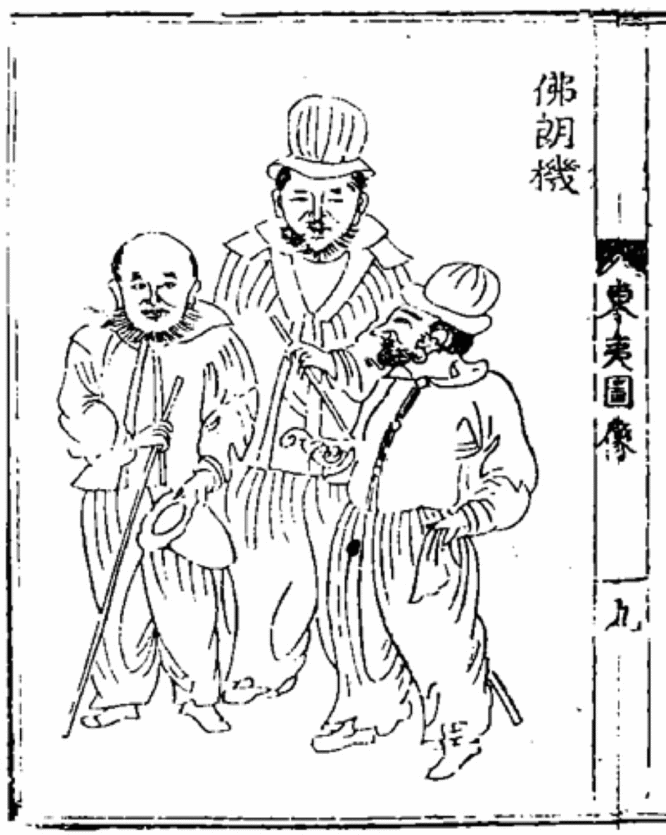
Despite the lack of strong criteria for distinguishing fictional or anachronistic descriptions from recent empirical observations, there was a cultural logic to this popularizing ethnology. One example that might help uncover this logic is the Record of Naked Creatures (Luo chong lu 臝虫录), recently studied by Yuming He.Footnote 57 As she notes, this extremely popular title assembled descriptions and illustrations of more than 100 types of yi 夷 (barbarians), humorously classified as ‘naked’ creatures—a zoological term that suggested a position below the fully human. The origins of the compilation lie in the fifteenth century, not long after the series of voyages, led by Zheng He, provided many different primary descriptions of distant lands and peoples (although in fact many of the textual sources used in the first version of the work were much older). However, the impact of the work was particularly strong in the late Ming period, with both appearing as separate editions under the new title and (perhaps more decisive) as ethnographic chapters in the popular encyclopedias that we have been discussing. The history of the text is therefore symptomatic of the sixteenth-century twin processes of the expansion of commercial publishing and the popularization of curious learning. What seems symptomatic is that the readers (and viewers) of this compilation would have been faced with a hybrid text in which any sense of the context of the original documents would have been lost. The updating of centuries-old information was either erratic or non-existent. By contrast, the ideological connotations of the descriptions would often be refreshed by reference to more recent developments, reinforcing the cultural hierarchies of the Ming state. Peoples were invariably judged according to their distance from a civilized (and civilizing) centre represented by China, with bothersome outsiders such as the Japanese and the Mongols associated with liminal spaces and animal-like customs. More distant peoples could be entirely fantastic and hardly human. The example suggests that in popular geographies the encounter with the marvellous could be playful, but it did not seek to challenge existing categories, nor was it driven by the spirit of evidential research apparent in other (often more original) productions.
The flowering of travel writing and geography in China at the turn of the seventeenth century was qualitative as well as quantitative. By the end of the Song period the Chinese genre had already developed many canonical forms, but it was during the Ming and Qing periods that a number of authors took travel writing to its greatest literary heights. As we have seen, the literary practice of these authors corresponded to the generalization of the social practice of travelling for the sake of knowledge and curiosity, that is, as a form of leisure. It was made possible by new objective conditions, from the textual mass of travel guides and gazetteers which, we could say, offered an information infrastructure, to the consolidation of a broad audience of educated people interested in reading about geography, ethnography, and the landscape. The apogee of this personal kind of travel writing required more than new economic conditions: it also relied on practical knowledge of routes, and, moreover, on cultural knowledge of the literary, spiritual, and historical resonance of particular places. In its literary vein, Chinese travel writing embodied a movement that was both spatial and temporal. It was, in effect, connected to antiquarianism, not unlike the educational travel of early modern Europe.
Perhaps the most celebrated travel writer in the Chinese literary tradition is the already mentioned Xu Xiake (1586–1641). From the age of 22 until his death at 56, he spent more than 30 years on the road. Xu's journeys took him through 16 provinces, and covered northern China, eastern China, the southeast coast, and Yunnan and Guilin. He dedicated his life to travelling and to writing about his experiences, and left 60,000 words to posterity describing the topography of China's mountains, the course of its rivers, and the climate of all the regions through which he passed. Going beyond the tendency in the more literary genre towards the mere cultivation of style, he displayed a tireless curiosity towards empirical details, and was attentive both to the registers of the landscape and to the ways in which people lived in the regions he visited. His journeys to the deep, undiscovered South, inhabited by ethnic groups removed from the dominant Han cultural conventions, were particularly insightful.
The singular importance of Xu Xiake invites a consideration of the impact of his work. The records of his travels, in fact, were compiled posthumously (as The Travel Diaries Xu Xiake) by his friend, Ji Mengliang. During his life the impact of his work was therefore, albeit significant, limited to his friends and circle of correspondents. Nonetheless, the fame of his writings rose steadily in the Qing period, following its first printing in 1776, and in the twentieth century it became a classic of reform-minded intellectuals. The first modern edition in 1928, by the prestigious geologist and social activist, Ding Wenjiang, had immediate resonance, and the following year, the influential intellectual and reformer, Liang Qichao, produced a volume of historical essays praising Xu Xiake's pragmatic and, indeed, proto-scientific spirit.Footnote 58 The fame of Xu Xiake has always oscillated between appreciation of its geographical information and its literary qualities.Footnote 59
The trajectory of modern assessments of travel writing have increased the resonance, but also occasionally distorted the original cultural significance, of texts produced in the early modern centuries. In Europe, this might be compared to the way in which Montaigne's travelogue, only published in 1774 (coincidentally, very close to the Qing publication of the writings of Xu Xiake), has also gathered more attention in recent times. In the particular case of Montaigne, however, it is the immediate impact of his essays—and the consequent Enlightenment cult of his ‘philosophical spirit’—that created the foundation for the posthumous recovery of a marginal text in the late eighteenth century, at the initiative of Meunier de Querlon. Xu Xiake, on the other hand, has become a classic name primarily because of his travel writing.
During this period, as famous as Xu Xiake is Wang Shixing, a civil servant who, after obtaining the Jinshi 进士 degree (one of the advanced levels of the Mandarin bureaucracy), transformed the obligation to follow three-year rotations in the public service into a pretext to travel. He wrote extensively about his impressions, visiting historic places, sacred mountains, and mythical landscapes. In his lifetime he visited almost the whole country, offering a kind of field survey about every province, its rivers and mountains, its history, its products and fiscal resources, and the customs of its people, noting in particular their diversity in the South. His descriptions combine scenic spots, strategic locations, popular costumes, and local dialects, in what amounts to an organic integration of geographical research with a personal travelogue. Wang Shixing also had singular ideas about travel: he advocated widespread pilgrimage and argued that real knowledge originated from personal experience, as opposed to hearsay. His perceptions of the regions of the South in the province of Yunnan and his Notes on Travels to the Five Sacred Mountains (Wu yue you cao 五嶽遊草, prefaced 1591) are particularly outstanding.
Although the people of the border regions could be classified by a man like Wang Shixing as being more or less culturally distant from mainstream Chinese norms, during the Ming period, exotic travel writing, that is, travel outside the imperial borders, was less common than these interior journeys. In order to analyse this tradition and evaluate its ethnographic aspect we need to clarify the Chinese concept of space, and indeed of the world, in that period.Footnote 60 Leaving essentialist and unhistorical visions of an ancestral ‘Chinese mentality’ to one side, we must examine the way in which different periods reinterpreted the concept of Tianxia 天下 (the world, literally ‘everything under heaven’), as well as how exotic, non-Chinese peoples were represented in relation to it.Footnote 61 As we have seen, these ethnological representations were often reflected in works that are not strictly travel books, but might be classified within the related genre of geographical encyclopedias. On the whole, we observe a notable continuity in the use of the ancient concept of Tianxia, which perpetuated a Sinocentric model where space and cultural difference were closely connected. Hence, in the period with which we are concerned, Tianxia continued to be used (as we noted in the case of the Luo chong lu) in order to emphasize a hierarchical separation between the ordered, civilized area of China, and a number of barbarian peripheries. The Chinese—the huaxia 华夏—installed in the centre of the cosmic order, were understood to be in a position of undoubted superiority with respect to those barbarians living outside the imperial borders and who lacked all civilization, that is, the yifan 夷番 or shengfan 生番, ‘tribal people without civilization’.Footnote 62 However, not all barbarians living abroad were equally distant from Chinese cultural norms, in the same way that not all the non-Han peoples within the empire were treated as equally ‘other’. The hierarchical principle was applied with a great deal of flexibility to distinguish different degrees of ‘civility’, very much like in Renaissance Europe in this period, where the notion of a hierarchy of civilizations increasingly gained currency against the mere opposition of the barbarians and the civilized.Footnote 63
The underlying persistence of the atavistic concept of the Chinese empire as Tianxia (that is, as the only existing civilization capable of exercising an orderly and beneficial influence both within and beyond its vast confines, which led to the pursuit of an ideal system of interactions with the exterior based on the recognition of this radical Chinese superiority) can be fruitfully compared with the nature of early modern Euro-centrism. While European imperialism was imbued with a religious universalism (especially in the Catholic world) that was often hard to disentangle from the notion of civilization—and in this respect Catholic imperialism needs to be distinguished from the mere practice of targeted commercial colonialism by the Dutch and English trading companies—the ideological pattern of Chinese imperialism under the Ming was, at least in its theoretical formulation, isolationist and defensive. The aims of Sino-centric ideologies were less to increase China's area of influence than to preserve the existing hierarchy between what was superior and what was inferior, between what was internal and what was external.Footnote 64 According to this idealized self-image, which often resisted imperialist and colonizing processes, Chinese territorial expansion was conceptualized as a case of voluntary assimilation, that is, the product of the cultural attraction derived from Chinese superiority as a civilization. Even after the Enlightenment, when a non-religious (but nonetheless hierarchical) idea of civilization came to underpin a new kind of cosmopolitan vision, European ideas of the global order continued to rely on the universalistic ambition to encompass the whole of mankind, in ways that contrast with the defensive nature of the dominant discourse in China. Nevertheless, behind this defensive ideology, the practice of Chinese ethnography was often more than a mere self-satisfied declaration of cultural superiority: accounts of journeys from the Ming and especially early Qing periods often placed descriptions of other peoples at the service of an active colonizing process.
As we have seen, the colonial ethnographies produced in this period describing border areas in territories such as the island of Taiwan, or Guangxi, Guizhou, Yunnan, and Xinjiang in the mainland often appeared in local gazettes, and in some cases exercised the greatest impact on other writers. They constitute a more consistent genre than the ambassadorial reports produced by the Ming in their relations with external powers, such as Timurid Persia in the ‘western regions’ (the account of a visit to the court of Shahruk at Herat by the civil servant, Zhen Zheng, who was there in 1414–1415, is especially notable), or the exceptional documents, also from the early fifteenth century, concerning the maritime expeditions of Zheng He. All these could be very empirical, but they lacked continuity, and eventually became anachronistic sources about ‘the other’.Footnote 65 It is true that their empirical detail and comparative potential implied a departure from a simplistic projection of traditional Sino-centric assumptions (even if they all remained, in one form or another, subtly ethnocentric). However, it was only in the nineteenth century, when Chinese ambassadors and travellers in Europe and North America began to write about the West in a new context of deep political and cultural crisis, that travel writing acquired a deep transformative power in the Chinese tradition. It became, in fact, an intellectual tool for the reformist and modernizing programmes that some advocated in that period.
It has often been noted that there are significant differences between European colonial imperialism in the early modern period and the Chinese imperial model. This imperial model, it must be noted, shared some fundamental traits across the period, despite the significant contrast between the nationalistic and defensive ideology of the Ming state and the multinational expansionism of the Qing. European colonial empires, which we should distinguish from dynastic composite monarchies (even if both could be combined under the same crown, as in Habsburg Spain), existed primarily overseas and developed in competition with each other. They reflected the very plurality of the European powers, so that they could focus on territorial and religious conquest or simply support commercial business, often on a monopolistic basis. By contrast with the global reach and political fragmentation of European colonialism, the Chinese imperial experience was built upon a vast territorial and cultural unity, and when the empire expanded—especially under the Qing—it did so by incorporating surrounding areas. And yet, despite these differences, recent historiography has been able to emphasize striking similarities in the way ethnography was placed at the service of colonialism. As Emma Jinhua Teng points out, adapting the language of Edward Said to a non-European empire, Qing imperialism may be defined as ‘a set of practices, policies and ideologies through which the Qing Empire was fashioned and maintained’.Footnote 66 From this perspective, the ethnographic representation of colonized territories and of the cultural peripheries reproduced an ‘Orientalist’ process, so that Dru Gladney talks about ‘oriental Orientalism’,Footnote 67 while Louisa Schein refers to ‘internal Orientalism’.Footnote 68 Leaving aside the case of Taiwan, where colonial dynamics were more explicit because of its maritime distance, the Ming and Qing continental expansion involved expanding borders towards new territories. Only anachronistically can ethnographies about the western and southern regions conquered in the eighteenth century be interpreted as the product of travels within China.
The parallels between European and Chinese ethnographies deserve a more systematic analysis than we can undertake here. It is interesting to note, however, that there were also cases of actual interactions, that is to say, culturally hybrid products. Undoubtedly the most fascinating example in this period is the Boxer Codex, an illustrated album of 306 folios with Spanish text and Chinese illustrations produced in Manila in the mid-1590s, probably for the Spanish governor of the Philippines, Luis Pérez Dasmariñas, who succeeded his father in that post in 1593.Footnote 69 The extensive text was assembled from a variety of Spanish and Portuguese sources, that is, various descriptions of the Ladrones Islands (modern Guam); the Tagalos, Zambales, Bisayas, and other inhabitants of the Philippines; peoples from Borneo, the Moluccas, Champa (a Hindu kingdom in present-day Vietnam), and elsewhere in South-East Asia; a roteiro (coastal itinerary) describing the coasts of ‘Lachen’, that is, Acheh in Sumatra, by the bishop of Malacca, João Ribeiro Gaio; a brief account of Siam by the same; an account of a voyage to the south of New Guinea by Miguel Rojo de Brito in 1581–1582; a brief account of Japan; and, finally, a copy of the famous relation of China written by the Augustinian, Martín de Rada, who was part of a Castilian embassy sent in 1575.
What makes this Codex exceptional are the 75 coloured drawings of the inhabitants of all these areas, that is, China, Japan, and South-East Asia; 88 smaller drawings of birds and fantastic animals; and a particularly beautiful double-fold drawing depicting the Manila Galleon off one of the Ladrones islands (later Marianas), surrounded by the small canoes of the natives. Many of the prints are headed with Chinese characters and were almost certainly painted by one or several Chinese artists, a conclusion that is reached on both stylistic grounds and because the paper, ink, and paints were all of Chinese origin. However, some of the visual conventions of the composition are also European—including the emphasis on representing ethnic couples across Asia, which has strong parallels in Portuguese and Dutch ethnographic albums of the same period (see Figure 1). The most likely scenario is that the governor himself, or some high official or ecclesiastic close to him, commissioned a Chinese artist, perhaps a Sangley from the parian (Chinese quarter) of Manila, to illustrate the Castilian and Portuguese texts, providing some specific guidance. The Chinese commercial diaspora in Manila was large enough to include men with refined artistic skills and, indeed, from the evidence of Bishop Domingo de Salazar we know that as early as 1590 there were skilled Chinese painters and ivory carvers in Manila who made exquisite religious images for the Christian churches.Footnote 70
Naturales Tagalos in the Boxer Codex, Manila, circa 1595. Source: Courtesy, The Lilly Library, Indiana University, Bloomington, Indiana.

To different degrees, the pictures in the Codex combine Chinese and European stylistic elements. For example, the decorated borders, with foxes, plants, and other motifs, are clearly Chinese. Indeed, the Chinese artist, or artists, did not simply paint pairs of ethnic types in order to illustrate the Spanish texts, but also had at his disposal a Chinese ethnographic album of the Ming period. Whether at his own initiative, or that of his patron, the painter integrated this pre-existing Chinese imagery, and even some brief ethnographic descriptions, into the Spanish compilation. Hence, the representations of Chinese emperors and government employees, of various fauna and mythological figures, and also the representation of the Tartars and other Asian peoples (some hard to identify), all seem to derive from this Chinese album. We have not yet identified a precise source. However, a very interesting and near contemporary book is Images and Descriptions of South-Eastern Barbarians (Dongyi tushuo 东夷图说), composed by an official of Guangdong Province, Cai Ruxian (a vice-commissioner of the jinshi degree) and published in Canton in 1586, only a few years before the Manila Codex.Footnote 71 The woodblocks of this book offered, for the first time in China, images of Europeans in print, alongside the more traditional peoples of China's maritime frontier, including Siam, Java, Vietnam, and Japan (see Figure 2). At that point, of course, the folangji 佛机郎, that is, the ‘Franks’ (as Latin Christians were universally known in the East after the Crusades), were primarily understood to be the Portuguese who had been allowed to settle in Macao as traders—and Cai Ruxian was in charge of supervising tribute/trade. Interestingly, rather than connect the Portuguese to learned Jesuits like Ruggieri and Ricci, who at the time, thanks to the patronage of the prefect of Zhaoqing, were beginning to gain some social acceptance, by means of a world map and some rudimentary knowledge of Mandarin Chinese (albeit they were still hard to distinguish from exotic Buddhist monks), Cai Ruxian seems to have been more curious about the black servants of the folangji, that is, the heigui 黑鬼, ‘black devils’ or ‘black ghosts’. In the corresponding descriptive passage they are understood as natural slaves, halfway between human and animal.Footnote 72 Clearly, any interpretation of cultural and racial diversity rested on hierarchies that assumed the civilizing power of the Middle Kingdom—in this respect, this work hardly departed from the Luo chong lu, one of its sources for more familiar ethnic types. In fact, in his preface Cai Ruxian emphasized that the important point was to facilitate comparisons. He also admitted that when dealing with the vast range of human diversity, perfect accuracy and comprehensiveness were hard to achieve. Although the book was clearly more oriented towards ‘the real’ (shi 实) than the popular compilations we examined earlier, verification was not its main concern.
Folangji 佛机郎 from Cai Ruxian's Dongyi tushuo 东夷图说 (Canton, 1586).
Cai Ruxian's 20 images might seem paltry compared to contemporary European depictions of China and the Chinese in this period, but they serve as a simple reminder of the reciprocal character of these kinds of ethnographic representations.Footnote 73
Conclusions
Recent historiography has been keen to emphasize the importance and complexity of the genres of travel writing and empirical ethnography in China, thereby questioning the image of a deeply ethnocentric, self-referential culture uninterested in the world outside its borders.Footnote 74 It has been argued, for example, that the lack of official recognition for overseas traders in the Ming period drove the genre of exotic travel writing underground, but this cannot be taken to imply that ethnographic curiosity was lacking. Nevertheless, although the idea of an entirely closed country certainly has to be dismissed, we find that, in comparison to the European early modern trajectory, this revisionism needs to be qualified.
We note, in particular, that in relation to the genres of travel writing, both Europe and China displayed a great variety of forms, ranging from the empirical to the allegorical. In the early modern centuries, both in China and Europe we find a stronger emphasis on empiricism, and in the two areas, travel grew as a cultural practice halfway between education and leisure. The sociology of leisure seems to be stronger in the case of seventeenth-century China, with its many unemployed literati which find no equivalent in Europe. In Europe, by contrast, the experience of religious persecution and exile was a contributing factor to the practice of travel, although what seems more decisive is the way in which the Grand Tour became a kind of rite of passage for the aristocracy. The emphasis on leisure may help to explain why the creativity of travel writers in China was particularly strong, and this led to the development of forms of subjectivity, for example, in relation to the landscape, which only came to predominate in Europe later on with the emergence of romantic travel writing. By contrast, the concerns for methodical observation, empirical verification, and textual criticism seem stronger in Europe from an early stage, following the contribution of humanist education. The practical importance of gathering up-to-date information on a regular basis, notably in connection with diplomacy, strengthened this tendency. The combination of practical uses and methodical reflection helps to explain the growing authority of the genre in the European cultural system, but without excluding an important ideological component. In this respect, the emergence of a global geographical consciousness after the oceanic navigations of the turn of the sixteenth century seems crucial.Footnote 75
This takes us back to reassessing the conditions of the production of original texts. Both China and Europe experienced a combination of antiquarian travel within their traditional borders and expanding frontiers which elicited novel ethnographies. In both Europe and China, the construction of images of frontier peoples as more or less savage (or barbarian) was connected to imperial ideologies that assumed an ethnocentric idea of civilization. In both places we find occasional examples of ‘primitivism’, by which the simple life of less civilized societies was used to question the moral corruption of modern ones.Footnote 76 However, only Europe experienced the combination of a rapidly developing system of rival colonial projects overseas with the hardening of internal national and religious frontiers, a hardening that was nevertheless compatible with the growth of an international Republic of Letters. This unique combination created the conditions for a more productive genre in Europe, one that was part of a new understanding of world history, and which brought about a fundamental revision of the idea of civilization. This new idea of civilization was enshrined in the cosmopolitanism of the Enlightenment, which was ideological rather than merely practical.
The greater importance of the genre in Europe is especially clear in relation to the production of exotic travel writing (as opposed to internal travel), which facilitated a deeper and more informed reflection upon cultural diversity. By contrast, although a text such as Ma Huan's remarkable Overall Survey of the Ocean's Shores (Yingyai Shenglan 瀛涯胜览, 1433) was not isolated but part of an early fifteenth-century tradition which included other related accounts, such as Fei Xin's Overall Survey of the Star Raft (Xingcha Shenglan 星槎胜览, 1436), in China the exotic empirical genre as a whole lacked continuity because (as is well known) the Ming government's support for the kind of imperial trading expeditions that Zheng He had led successfully between 1405 and 1433 was entirely withdrawn not long after the death of the Yung-Lo emperor in 1424. In that context, despite the existence of a few printed editions from the fifteenth to the seventeenth centuries, the impact of any individual texts was very limited (indeed, at the turn of the sixteenth century even the copies of the charts produced by Zheng He's expeditions were ordered to be burned by ministerial order).Footnote 77 The contrast with early modern Europe, where primary texts were continuously produced and reprinted and the genre steadily gained a strategic position in the Republic of Letters, seems clear-cut, even after we take account of the occasional revival of imperial frontier ethnographies in China. Hence we may conclude that the European genre of travel writing, with its strong emphasis on empirical geography and on ethnography, became more important to the process of intellectual change in Europe than any similar genre in China. Whether we look at cartography or at descriptions of different religions, customs, and political systems, we find that the concern with the accuracy of representations and their philosophical implications was very intense. By contrast, it was only in the nineteenth century that the implications of evidential travel writing were felt in China, in relation to a discourse of reform and regeneration.
The cultural logic underlying the popular encyclopedias that we considered earlier, which perpetuated the traditional ethnic stereotypes assembled in works such as the Record of Naked Creatures, exemplifies this important difference. The European equivalents in the same period did not have the same longevity. The Book of John Mandeville reached many audiences, including the humble Friulian miller, Menocchio, whose trial by the Inquisition was made famous by Carlo Ginzburg, but, as we have also seen, the fourteenth-century fictional travelogue was actually losing its authority throughout the sixteenth century.Footnote 78 While it is true that the humanist ethnological and cosmographical compilations, by the likes of Johannes Boemus, Sebastian Münster, and André Thévet, which replaced Mandeville's Book as a geographical encyclopedia, relied on classical sources no less than modern observations, often mixing the old and the new, within the genre of travel collections, the modernist ideology articulated by Ramusio and Hakluyt clearly triumphed in the following centuries.Footnote 79 This trend also affected the status of allegorical and satirical journeys. No cultural system was ever purely empirical—an element of literary fictionalization can be detected in even the most apparently sober travel accounts—but, in relative terms, transformative spiritual journeys (important in Christianity) clearly lost ground in the European genres of travel writing throughout the early modern period, and when literary and philosophical recreations of the theme of exotic travel persisted (such as in the case of utopian and dystopian writings), they did so by assuming the authoritative status of the modernist discourse. In China, by contrast, the two separate registers, ethnographic and subjective, continued to flourish separately, even as some of the literary emphases changed.
Although we are keen to emphasize that ethnographic curiosity in China did not generate an equally transformative dynamic, it remains important to avoid the image of a static cultural system in China. In part the problem is that, for all the global connections that emerged in the sixteenth and seventeenth centuries, the cultural rhythms of Europe and China were very different. The consolidation of the Qing dynasty, for example, led to higher levels of intellectual conservatism among the literati, precisely at the time when intellectual change in Europe accelerated and produced the important ruptures that we conveniently term the Enlightenment. If we were to look for a Chinese Renaissance accompanied by an empirical turn, by contrast, we would take as a starting point the flowering of neo-Confucianism in Song times, that is, we would focus on the period from the twelfth to the seventeenth centuries as a cycle of innovation. Many of the specific elements that define the cultural transformation of early modern Europe have parallels in that period, albeit not always with equivalent strength and persistence: new philosophical proposals that often emphasized the human dimension, new readings of the past supported by antiquarian techniques, a flourishing urban culture, the expansion of printing and literacy, the emergence and consolidation of new literary genres, often in the vernacular, a greater autonomy for literature and aesthetics in relation to moral and religious discourses, and—to return to our starting point—an empirical turn in the arts and sciences. The Manchu conquests created a new regime that, while taking advantage of some of these innovations when it suited the needs of empire, encouraged a more conservative cultural logic in many other fields. This is why one of the genres we have considered—the geographical gazetteers—could flourish in the eighteenth century without leading to significant cultural self-reflection and criticism. And yet, arguably, the Qing succession only deepened what was already a traditional tendency towards cultural self-assertion. In this respect, the institutional context of a centralized empire was a longue-durée condition that constrained the possibilities for intellectual independence and cultural innovation. The identification of civilization with Han customs and Confucian values was never seriously questioned, at least not until, faced with the catastrophic effects of Western intervention, a discourse of regeneration became imperative in the second half of the nineteenth century.
This cultural logic also helps to explain the limited impact of the contact with European scientific culture made possible by the Jesuit missionaries. In particular, the cosmography and cartography introduced by Matteo Ricci and his seventeenth-century successors, Giulio Aleni and Ferdinand Verbiest, had, despite its highly selective nature, a substantial transformative potential that might have widened the geographical perspective of the literati. Ricci's clever decision in 1584 to offer a Sino-centric version of Ortelius's world map was more than an example of Jesuit accommodation, comparable to his identification of Confucian ethics with a version of natural law: it also potentially facilitated the local acceptance of the new information in the name of ‘investigating things and extending knowledge’ without offending Chinese sensibilities. However, despite Ricci's success in some elite circles (the world map went through eight editions during his lifetime), on the whole, the proposal failed to have a revolutionary impact. In this respect, the later insistence of many Confucian scholars (notably the great champion of Western mathematics, Mei Wending) that European mathematics had evolved out of Chinese ideas is more symptomatic of the power of local chauvinism than of a successful indigenization of European science through the appeal to antiquity. The general attitude of the Chinese elites towards Jesuit science was to accept specific technical improvements that suited their own purposes, for example, in astronomy, geometry or artillery, while rejecting other philosophical and religious doctrines as irrelevant or even dangerous. When in doubt, traditional views re-emerged and controversies ensued that tended to marginalize the new ideas. Even the more acceptable uses—those that offered a proven practical advantage—were usually limited to imperial needs, notably calendar reform or cartography. Although some authors have continued to emphasize the ‘huge impact’ of the Jesuit contribution, more recent assessments have noted, at best, the persistence of traditional techniques (such as the grid system in cartography alongside latitudes and longitudes) in what appears as a pattern of domestic hybridization and, at worst, the fact that the increasing dependence on Manchu imperial patronage isolated the Jesuits from mainstream literati culture.Footnote 80 The great cartographic survey of the empire completed by French Jesuits for the Kangxi emperor in 1718 was more widely available in Europe than in China, where the Manchu court restricted access. Eventually, as Benjamin Elman has emphasized, Qing scholars took a decisive ‘inward’ turn towards native traditions of classical learning.Footnote 81 Jesuit accounts of China were more important in Europe than their accounts of Europe in China.
We can say therefore that rather than the appearance of evidential genres, what distinguished the kind of ‘modernity’ one finds in Europe from the fifteenth to the eighteenth centuries was its capacity to transform intellectual culture. This was greatly facilitated by the printing press through the reproduction of both texts and images, which created a continuous flow of new information that could be stored, consulted, and questioned—but when considering what went on in China in the sixteenth and seventeenth centuries, it is clear that the expansion of the book market alone did not generate a particular kind of intellectual change. It is also hard to see the relevance of movable types as opposed to Chinese woodblocks. In both China and Europe there was a marked growth in the production, circulation, and consumption of travel writing, but it was less the technology than its social use that mattered. In order to reassess the possibility of different paths to modernity, or indeed the great divergence between Europe and China, what we should be comparing further is the rapid transformation of the European Republic of Letters with the more conservative intellectual world of the Chinese literati, who may have travelled and read about travel, or not.