Clostridium difficile infection (CDI), with its resultant diarrhea and colitis, is the most common healthcare-associated infection in the United States.Reference Lessa, Mu and Bamberg 1 The main sources of healthcare C. difficile transmission include environmental contamination, healthcare worker hands, equipment, or apparel, and a reservoir of undetected colonized patients.Reference Weber, Rutala, Miller, Huslage and Sickbert-Bennett 2 , Reference Eyre, Cule and Wilson 3 Bone marrow transplant (BMT) recipients are particularly prone to CDI because of their prolonged hospital stays, immune-compromised status, chemotherapy-related mucosal damage, and high rate of antibiotic use.Reference Alonso, Treadway and Hanna 4 , Reference Cózar-Llistó, Ramos-Martinez and Cobo 5 The incidence of CDI among BMT patients ranges from 6% to 25% in recent studies.Reference Balletto and Mikulska 6 Novel, safe, and effective interventions are essential to reducing healthcare-associated CDI in this vulnerable population.
Hospitals typically place patients with known C. difficile infection under contact precautions to reduce subsequent transmission events.Reference Dubberke, Carling and Carrico 7 However, whole-genome studies have shown that many CDI cases cannot be attributed to transmission from known cases.Reference Eyre, Cule and Wilson 3 Thus, focusing only on symptomatic patients fails to control for the major asymptomatic reservoir of C. difficile transmission. Screening for asymptomatic C. difficile is not recommended as a routine practice in current CDI prevention guidelines because the impact of infection control interventions on asymptomatic patients with C. difficile is unknown.Reference Dubberke, Carling and Carrico 7 However, in very vulnerable populations such as BMT patients, where interventions are urgently needed, identifying patients with asymptomatic colonization may be an important mechanism for reducing CDIs. Screening for asymptomatic colonization is complex and labor intensive and may lead to undesirable consequences, such as unnecessary treatment. Therefore, assessment of the risks and benefits of such an intervention is essential.
Hospital-wide screening for asymptomatic C. difficile colonization at admission has previously been shown to reduce the rate of healthcare-associated CDI by up to 56%.Reference Lanzas and Dubberke 8 , Reference Longtin, Paquet-Bolduc and Gilca 9 Given the high rates of CDI among BMT patients and the promising results of existing studies, we implemented a screening program for BMT patients at our facility and evaluated the intervention’s feasibility and clinical effectiveness. We aimed to identify facilitators and barriers to intervention implementation and significantly reduce the rate of hospital-onset CDI in the BMT population.
METHODS
We conducted a mixed-methods study of an asymptomatic C. difficile screening intervention of patients on the BMT service at the 505-bed, tertiary-care, University of Wisconsin Hospital in Madison, Wisconsin. Between 180 and 200 bone marrow transplants are performed at the facility each year, of which roughly one-third are autologous and two-thirds are allogenic. The BMT unit is part of a mixed ward that also includes hematology and oncology patients; however, BMT patients are cared for in a separate wing of the ward. The study was considered a quality-improvement project and was exempt from review by the university’s institutional review board.
INTERVENTION
The screening intervention was implemented in December 2015 and is currently ongoing. We consider a 23-month preintervention period from January 1, 2014, to November 31, 2015, and a 14-month postintervention period from January 1, 2016, to February 28, 2017. Data from December 2015, the intervention phase-in period, were excluded. All 793 patients admitted as an inpatient to the hospital’s BMT, hematology, and oncology ward under the BMT clinical service were included in the intervention group. All 4,564 patients admitted as an inpatient to one of the hospital’s general internal medicine units were included in the control group, regardless of their clinical service.
Throughout the study, the presence of C. difficile was evaluated using a polymerase chain reaction (PCR) assay (GeneXpert, Cepheid, Sunnyvale, CA) for the tcdB gene. For BMT patients screened in the postintervention period, PCR analysis was conducted on a patient’s first stool collected within 48 hours of admission. Testing was done irrespective of whether the sample was formed, unformed, or watery. Patients who did not produce a stool sample within 48 hours were subsequently excluded from the study.
Patients identified with C. difficile colonization, as defined by a positive PCR result, were placed under contact precautions for the duration of their hospital stay. Hospital-wide policies for contact precautions included the use of gowns and gloves for all healthcare workers and visitors to the patient’s room and hand hygiene with soap and water. These policies were well established prior to initiation of the preintervention study period. No treatment was provided to asymptomatic patients, and no changes were made to infection control protocols for symptomatic patients.
A new hospital-wide testing algorithm was introduced during the study period and ran concurrently with the screening intervention. The algorithm details that in the first 48 hours, patients with unexplained loose stools prior to admission should be placed under contact precautions and tested for C. difficile. After 48 hours, high-risk patients experiencing ≥3 stools than their baseline may be tested for C. difficile if there is no other potential known cause of diarrhea. Testing is limited to once every 7 days.
Qualitative Methodology
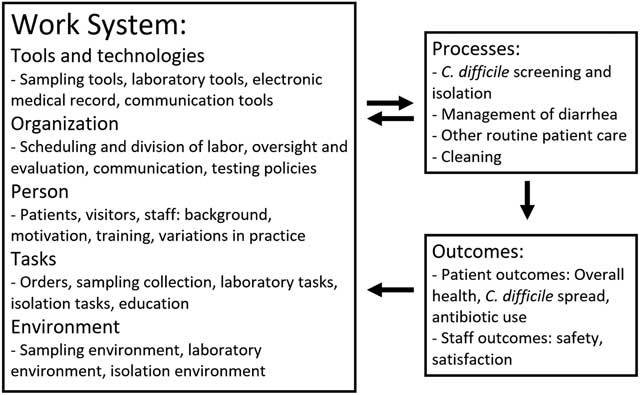
We used the Systems Engineering Initiative for Patient Safety (SEIPS) conceptual framework to evaluate the feasibility of the intervention.Reference Carayon, Hundt and Karsh 10 The SEIPS model conceptualizes hospitals in terms of interactions between processes, outcomes, and 5 work-system elements: person, task, technology and tools, environment, and organization. SEIPS has been widely used to evaluate infection control and other patient safety interventions, including implementation of C. difficile contact precautions.Reference Yanke, Zellmer, Van Hoof, Moriarty, Carayon and Safdar 11 The SEIPS model guided our development of interview questions and organization of the data.
We conducted 13 semistructured interviews to identify barriers and facilitators to the C. difficile screening intervention. Participants were selected by convenience sampling and included 3 attending physicians, 4 nurses, and 4 administrators selected from nursing, laboratory, and environmental services staff. Verbal informed consent was obtained from all interview participants before data were collected. Interview questions assessed participants’ perceptions of C. difficile risk, infection control policies, and intervention implementation.
Participants were interviewed individually, except for 2 environmental services administrators. All interviews were audio recorded and transcribed. Qualitative analysis was conducted using line-by-line structural coding.Reference Miles, Huberman and Saldana 12 Participant statements with supporting quotations were organized into key themes corresponding to the subcategories of the SEIPS conceptual framework.Reference Carayon, Hundt and Karsh 10
Quantitative Outcomes
The primary quantitative outcome was hospital-onset CDI (HO-CDI) per 10,000 patient days. HO-CDI was defined according to the Centers for Disease Control’s C. difficile reporting guidelines for laboratory identification events, 13 as a C. difficile positive diagnostic laboratory test result of a loose stool sample collected >3 days after facility admission. The HO-CDI rate was calculated from internal infection control data.
Secondary outcomes included length of stay and mortality rate, derived from administrative data extracted from our institution’s internal data warehouse, and oral vancomycin usage. These outcomes were selected because C. difficile prolongs a patient’s length of stay and causes mortality.Reference Stevens, Khader and Nelson 14 , Reference Hota, Achonu, Crowcroft, Harvey, Lauwers and Gardam 15 We sought to address both benefits of and potential harms from this intervention. Oral vancomycin usage was selected as a secondary outcome because it can disrupt the gastrointestinal microbiota, resulting in higher risks long-term of colonization by pathogenic organisms such as vancomycin-resistant enterococcus.Reference Lewis, Buffie and Carter 16 Oral vancomycin usage was calculated using internal pharmacy data as days of therapy per 1,000 patient days.
Statistical Analyses
Pairwise comparisons between aggregate pre- and postintervention measures were performed using the 2-sample t test. We conducted time series analyses to evaluate the effect of the screening intervention on the HO-CDI rate and oral vancomycin usage over time. We used the Prais-Winsten regression with robust standard errors estimated using the Huber–White variance estimator.Reference White 17 , Reference Huber 18 Prais-Winsten regression was utilized to account for first-order autocorrelation between monthly serial measurements. We considered statistical significance as a P-value ≤ .05. All statistical analyses were conducted using Stata version 14 software (StataCorp, College Station, TX).
RESULTS
Qualitative Results
Interview results were organized into the 5 elements of the work-system component of the SEIPS model: person, task, technology and tools, environment, and organization (Figure 1).
Conceptualization of the screening intervention using the SEIPS conceptual framework. The overall SEIPS model, including the 5 conceptual divisions of the work system and the relation of processes and outcomes to the work system is adopted from Carayon et al.Reference Carayon, Hundt and Karsh 10

Person Component
All participants identified CDI as a major concern, with transmission to patients considered a greater problem than transmission to clinical staff. Most study participants expressed support for the screening intervention, believing that it had reduced C. difficile transmission and improved patient health and worker safety. However, communicating screening and isolation policies to new hires or temporary staff was a barrier to success. It was particularly difficult to educate new team members during shift changes.
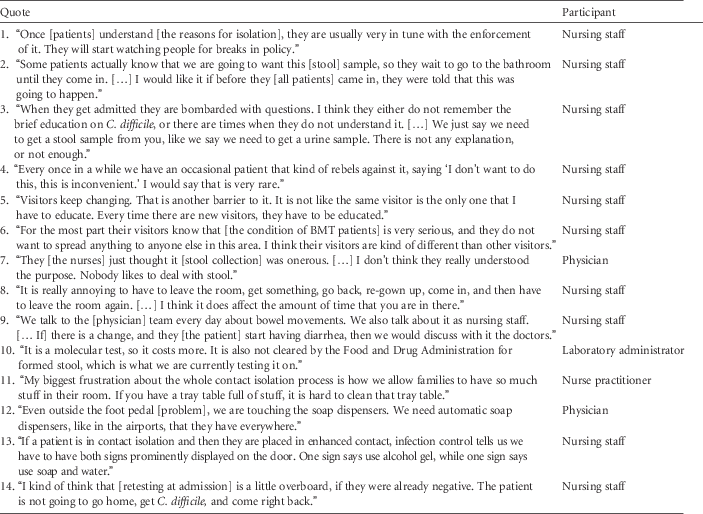
Patient engagement was a major facilitator to the intervention (Table 1, Quote 1). Some patients were informed of the screening procedure before their hospitalization, which made sample collection easier and more timely (Table 1, Quote 2). The C. difficile education component of the intervention was more difficult when conducted for the first time at admission (Table 1, Quote 3). Clinical staff reported that patient reactions to a positive screening result varied. Some felt dirty or blamed healthcare workers, straining patient–provider relationships. However, most patients were generally compliant (Table 1, Quote 4).
Representative Participant Quotes

Visitors were perceived to exhibit the least compliance with contact precautions after a positive screening result; glove use was especially difficult to enforce (Table 1, Quote 5). However, in general, visitors to BMT patients were thought to be more compliant with infection control policies than visitors to non-BMT patients (Table 1, Quote 6).
Task Component
Overall, most intervention-related tasks were positively received. All physician and nurse participants reported that sample collection was straightforward, although one physician described initial pushback to the policy (Table 1, Quote 7). Sample collection was most difficult in the case of constipated patients. There was variability regarding who was responsible for placing the sample collection order, although this task was not considered burdensome. Multiple nursing participants felt that screening should be added to standard admission order sets.
The most time-consuming intervention-related task was the introduction of contact precautions for asymptomatic positive patients. Both soap-and-water and gown-and-glove use were perceived to require additional time to preformed correctly (Table 1, Quote 8). Some nurses also believed that contact precautions strain the patient–provider relationship.
Tools and Technologies Component
The electronic health record was vital to facilitating order placement, communication between clinical providers and laboratory staff, and review of screening results. It also issued reminders for providers to collect stool samples that had been ordered but not collected. However, the electronic health record did not distinguish between C. difficile screening tests and diagnostic tests ordered in the context of patient symptoms. Positive laboratory results prompted an automatic best-practice alert that recommended initiating antibiotics, which required additional communication between staff to determine whether treatment was necessary (Table 1, Quote 9). Patients who screened positive were typically treated with oral vancomycin if any postchemotherapy diarrhea developed. Because of the high rate of noninfectious diarrhea in this population, several physicians expressed concerns about the impact of the screening intervention on inappropriate vancomycin usage on the unit. However, advance knowledge of a C. difficile–negative patient status was also credited with allowing faster symptomatic treatment with antimotility agents.
Increased stool processing was not reported to be a strain on laboratory facilities, as the additional burden from implementing the intervention on the BMT service alone was minimal. However, there is currently no standardized method for C. difficile testing on a formed stool. The laboratory administrator identified this lack of protocol and high cost as 2 barriers of implementing the screening intervention (Table 1, Quote 10).
Environment Component
The effect of C. difficile screening on daily cleaning practices was minimal, as all rooms in the hospital are already treated daily with sporicidal products as standard practice. The rooms of patients who screened positive, regardless of symptoms, were prioritized for ultraviolet light treatment as part of terminal cleaning upon patient discharge or room transfer.
The initiative of unit personnel to prepare a room for isolation prior to receiving an order facilitated the isolation process. However, once patients moved into a room, medical equipment and patient belongings made it became more difficult for staff to effectively clean (Table 1, Quote 11).
Sink location and accessibility were also reported concerns. Several participants were reluctant to clean their hands using sinks in patient rooms, out of respect for the patient or fear of contamination. The availability of pedal-operated sinks outside patient rooms is limited, and automatic soap dispensers were nonexistent (Table 1, Quote 12). A nursing staff member thought the signage on patient doors could be confusing and favored streamlining it (Table 1, Quote 13).
Organization Component
The hospital has prioritized clear communication between key intervention stakeholders. The screening status of each patient is communicated between nurses in verbal and written sign outs. Close communication between the BMT service and clinical laboratory enabled formed stools to be sent for C. difficile testing, despite hospital norms against this practice. Formed stools were required to be sent with a card explaining the screening nature of the sample. While participants reported that in practice these cards were not always included, no one was aware of an instance in which this had caused a significant problem with screening.
Nursing administration on the BMT unit provides oversight for the intervention and facilitates screening by monitoring order placement, sample collection, and the time limit on testing. A new C. difficile diagnostic testing algorithm was implemented hospital-wide and ran concurrently with the BMT screening intervention. This complicated screening-ordering decisions, especially in the context of repeat testing of discharged patients who were rapidly readmitted to the service (Table 1, Quote 14).
Quantitative Results
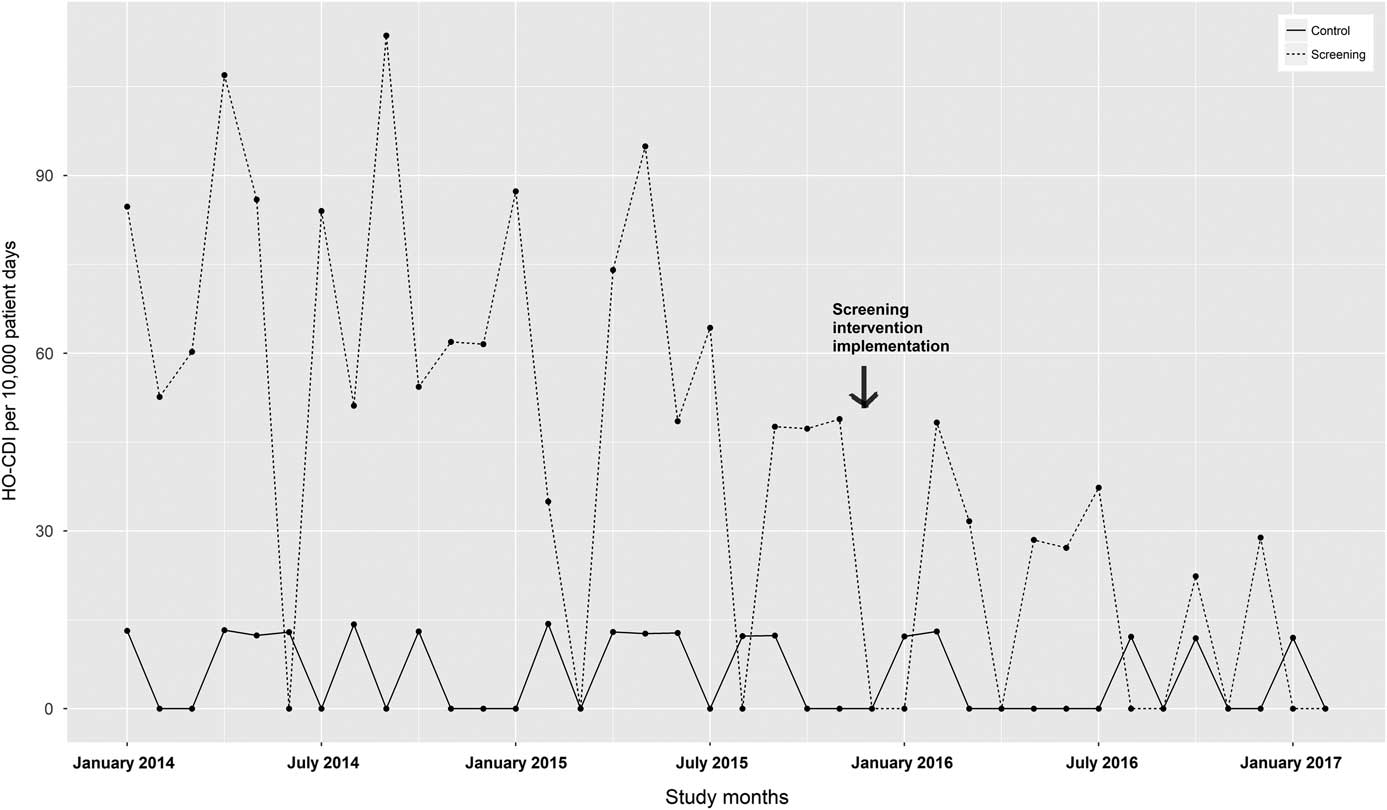
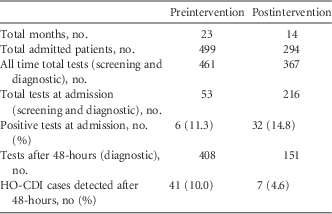
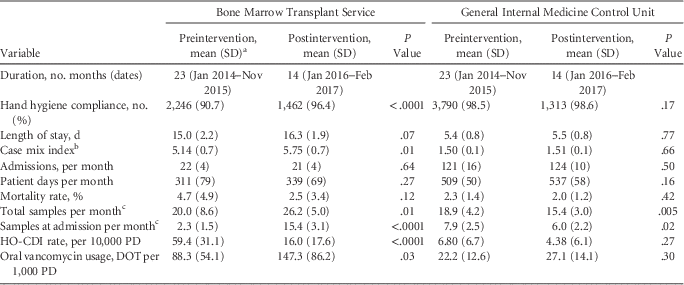
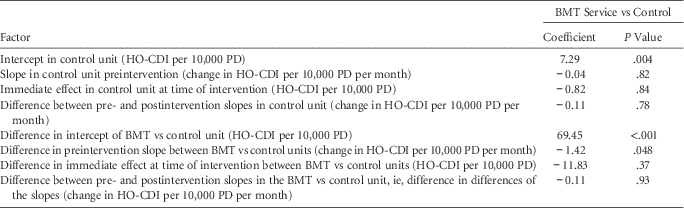
Before the intervention, 10.3% of BMT patients underwent diagnostic testing for C. difficile at the time of admission (Table 2). With the introduction of screening, the proportion of patients tested at admission increased to 74.5% (P<.0001). During the study period, the rate of HO-CDI ranged from 107.0 to 0.0 per 10,000 patient days on the BMT service and 14.3 to 0.0 per 10,000 patient days on general medicine control unit (Figure 2). The mean incidence of HO-CDI dropped significantly on the BMT service postintervention (P<.0001; Table 3), while it remained unchanged on the control ward. However, our time-series analysis showed that the effect of the change in the trend after the start of the intervention was not significantly different in the BMT service compared to the control ward (P=.93; Table 4).
Hospital-onset Clostridium difficile infection (CDI) rates pre- and post-intervention.

Results of Clostridium difficile Testing Among BMT Patients

NOTE. HO-CDI, hospital-onset Clostridium difficile infection.
Study Characteristics and Outcomes

NOTE. DOT, days of therapy; HO-CDI, hospital-onset Clostridium difficile infection; PD, patient days; SD, standard deviation.
a Unless otherwise specified.
b The case mix index reflects the complexity and resource needs of a given patient population, based on the average diagnosis-related group relative weight of population. Higher numbers reflect increased complexity and resource needs.
c Includes tests ordered for both screening and diagnostic purposes.
Time Series Analysis for Hospital-Onset Clostridium difficile Infection (HO-CDI) Rates

NOTE. BMT, bone marrow transplant; PD, patient days.
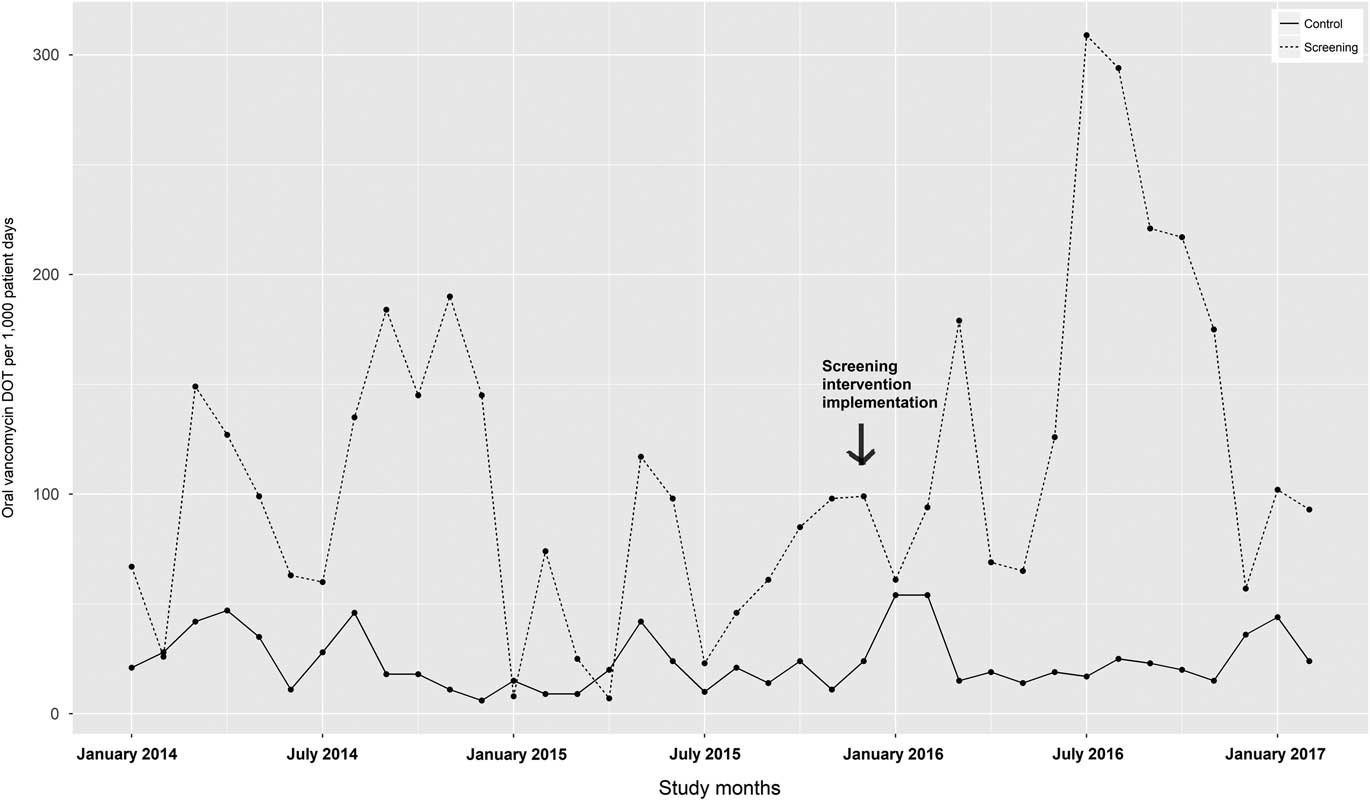
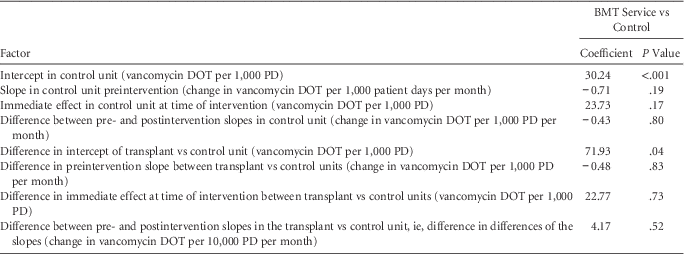
There was no significant change in length of stay or mortality rate on either unit after intervention implementation, despite a significant increase in the average case mix index on the BMT service. Average oral vancomycin usage increased on the BMT service in the postintervention period (P=.03), with no significant change on the control ward (Figure 3, Table 3). However, as with HO-CDI rate, the time-series analysis showed that the effect of the change in the trend of vancomycin usage after the start of the intervention was not significantly different on the BMT service compared to the control ward (P=.52; Table 5).
Oral vancomycin usage pre- and postintervention.

Time Series Analysis for Oral Vancomycin Usage on the Bone Marrow Transplant (BMT) Service

NOTE. DOT, days of therapy; PD, patient days.
DISCUSSION
We found that stakeholder engagement, at both the person and organizational level, facilitates standardization and optimization of intervention protocols prior to the implementation of a larger, hospital-wide intervention. While the screening intervention was generally well received, the tools and technology component of the work system was a source of concern. The implemented electronic medical record and ordering system did not differentiate between screening and diagnostic reasons for ordering a C. difficile test, which complicated subsequent follow-up of patient outcomes.
The implications of screening for future testing and empiric treatment of diarrhea recurred as major themes in these interviews. These aspects are crucially important because BMT patients are at high risk for developing chemotherapy-associated diarrhea.Reference Cózar-Llistó, Ramos-Martinez and Cobo 5 While there was a postintervention increase in vancomycin usage on the BMT unit, this occurred at a similar rate in our control unit. Thus, surveillance is unlikely to be related to changes in oral vancomycin usage, despite physician perceptions of increased overtreatment. In addition to vancomycin, BMT patients are frequently treated with other antibiotics that disrupt the gastrointestinal microbiome. This is especially problematic among colonized C. difficile patients because it may predispose them to symptomatic CDI.
In our study, screening did not prohibitively burden the microbiology laboratory, nursing staff, or environmental services. It is unknown whether isolation of patients colonized by C. difficile reduces transmission,Reference Dubberke, Carling and Carrico 7 but given that isolation policies were generally well received, we believe that patients found positive on surveillance screening should be placed under contact precautions. The burden of a screening intervention is likely to be greater in hospital-wide interventions than on specific wards, especially among institutions that do not routinely utilize sporicidal products for daily disinfection.
Unlike the previous hospital-wide screening study,Reference Longtin, Paquet-Bolduc and Gilca 9 we did not find the intervention to be significantly associated with HO-CDI reduction in our time-series analysis. The magnitude of HO-CDI reduction was similar between that study and this one when pre- and postintervention mean estimates were compared. However, the baseline preintervention trends in HO-CDI rates at our institution were much larger. Thus, we expected that the difference between pre- and postintervention reduction in our study would not be statistically significant.
The decrease in HO-CDI in our study is due in part to a recategorization of cases previously defined as HO-CDI, rather than a total decline in overall CDIs. Screening at admission allowed for a subset of infections to be more appropriately labeled as community acquired or recurrent. Correctly identifying the source of C. difficile is essential and has implications for CDI epidemiology and prevention.
This study has several limitations. By design, the generalizability of this study is limited. We aimed to assess the impact of C. difficile screening at admission for high-risk BMT patients. Thus, these findings may not be generalizable to a hospital-wide population. Given the time period of our study, we also did not account for seasonal effects in our analyses. Both C. difficile and antibiotic prescribing may be affected by seasonal variations, and it is possible that not accounting for these effects masks some of the reduction in HO-CDI due to the intervention. Future studies covering a longer period may benefit from accounting for seasonality in the analyses.
This mixed-methods study offers a unique perspective on intervention feasibility and provides critical insight to infection control practitioners developing similar C. difficile screening interventions. The positive nature in which the intervention was received by front-line clinical staff, laboratory staff, and administrators is promising for future implementation tudies.
ACKNOWLEDGMENTS
Financial support: A.K.B. received support as a predoctoral trainee from the National Institutes of Health (grant no. TL1TR000429) administered by the University of Wisconsin–Madison Institute for Clinical and Translational Research, funded by the National Institutes of Health (grant no. UL1TR000427). N.S. is supported by a VA funded patient safety center of inquiry.
Potential conflicts of interest: All authors report no conflicts of interest relevant to this article.