Introduction
Textbooks traditionally portray oropharyngeal cancer patients as older individuals with heavy alcohol and tobacco exposure. Over the past decade, however, oropharyngeal squamous cell carcinoma (OPSCC) has risen among younger, healthier patients due largely to human papillomavirus (HPV) infection. HPV‐associated OPSCC generally has better outcomes than HPV‐negative disease, with approximately 80 per cent three-year survival and 10–25 per cent recurrence.Reference Chera, Kumar, Shen, Amdur, Dagan and Green1, Reference Califano, Yousef, Mostafa, Valsamakis, Zhang and Batis2 Despite outcome differences, surveillance guidelines typically do not incorporate HPV status.Reference Mirghani, Troux, Leroy, El Bedoui, Aupérin and Garic3
HPV is a well-established carcinogen in cervical and anal cancers; of the high-risk HPV types, HPV16 causes most OPSCC.Reference Pytynia, Dahlstrom and Sturgis4 As in gynecologic HPV cancers, risk factors include lack of vaccination, early sexual debut and multiple partners—especially with oral sex.Reference Krasniqi, Barba, Venuti, Pizzuti, Cappuzzo and Landi5
Post-curative monitoring usually combines regular physical and endoscopic exams with a positron emission tomography/computed tomography (PET/CT) around 3 months.Reference Califano, Yousef, Mostafa, Valsamakis, Zhang and Batis2, Reference Krasniqi, Barba, Venuti, Pizzuti, Cappuzzo and Landi5, Reference Berger, Hanna, Posner, Genden, Lautersztain and Naber6 These strategies are costly, time-intensive, invasive and dependent on attendance, and they can miss early or asymptomatic recurrences. Distant metastases and late relapses—reported up to 10 years—further complicate follow-up.Reference Berger, Hanna, Posner, Genden, Lautersztain and Naber6
Liquid biopsy has emerged as a non-invasive tool to monitor cancer dynamics. Circulating free DNA (cfDNA) originates from normal and diseased cells; circulating tumour DNA (ctDNA) derives from dying cancer cells and can reveal tumour biomarkers across cancers, including OPSCC.Reference Ulz, Heitzer, Geigl and Speicher7 Repeated plasma sampling allows real-time tracking of molecular responses during and after therapy.Reference Chera, Kumar, Beaty, Marron, Jefferys and Green8 Elevated cfDNA often signals worse prognostic features (tumour size, nodal metastases and advanced stage), while ctDNA trends reflect treatment response and recurrence risk.Reference Mohammad, Ullah, Ali, Jan, Aleem and Khan9 Contemporary management increasingly prioritises organ and function preservation, particularly following transoral surgical approaches that demonstrate favourable speech and swallowing outcomes.Reference Cao, Banh, Kwok, Shi, Wu and Krakow11
Early translational work detected HPV DNA in plasma of HPV-positive tumour-bearing mice and humans, with levels correlating to tumour volume and falling on treatment—supporting a tumour origin and a role in relapse detection.Reference Cao, Banh, Kwok, Shi, Wu and Krakow11 Yet some HPV-positive patients had undetectable baseline ctHPV DNA, raising assay sensitivity concerns and limiting ctHPV DNA as a stand-alone biomarker.
Prospective studies increasingly support clinical utility. Chera et al.Reference Chera, Kumar, Beaty, Marron, Jefferys and Green8 linked ctHPV16 DNA kinetics during chemoradiotherapy (CRT) to outcomes: high pretreatment levels and rapid clearance by week 4 predicted excellent regional disease-free survival. Califano et al.Reference Califano, Yousef, Mostafa, Valsamakis, Zhang and Batis2 reported high positive and negative predictive values for HPV DNA in surveillance, particularly for identifying asymptomatic high-risk patients. ctHPV DNA levels correlate with disease burden and may be lower in bone-predominant metastases, implying anatomical variability and interpretive nuance.Reference Hanna, Supplee, Kuang, Mahmood, Lau and Haddad12
Serial monitoring appears especially valuable in higher-risk patients (stage II–III). Rising or falling ctHPV DNA can precede imaging-defined progression or response by days to weeks: some cohorts observed molecular change approximately two to three weeks before restaging scansReference Hanna, Supplee, Kuang, Mahmood, Lau and Haddad12 and undetectability after curative treatment.Reference Cao, Haring, Brummel, Bhambhani, Aryal and Lee13 Overall, integrating HPV ctDNA into routine follow-up could enable earlier intervention and more personalised, less invasive care.
Research questions
The primary question that will be explored: Is liquid biopsy a reliable tool for monitoring recurrence in patients after curative treatment for HPV-related oropharyngeal cancer?
Secondary questions to be explored include the following: Can liquid biopsy be utilised to stratify patients into high-recurrence risk categories based on pre-treatment levels of HPV DNA?
Materials and methods
Search strategy
Electronic searches of PubMed, Web of Science and Scopus (English, 2019–2024) using MeSH-guided terms: (“Oropharyngeal Cancer” OR synonyms) AND (“Circulating HPV DNA” OR “HPV DNA”) AND (“Liquid Biopsy”) were conducted between 15 June 2025 and 06 August 2025. Studies were retrieved via institutional access.
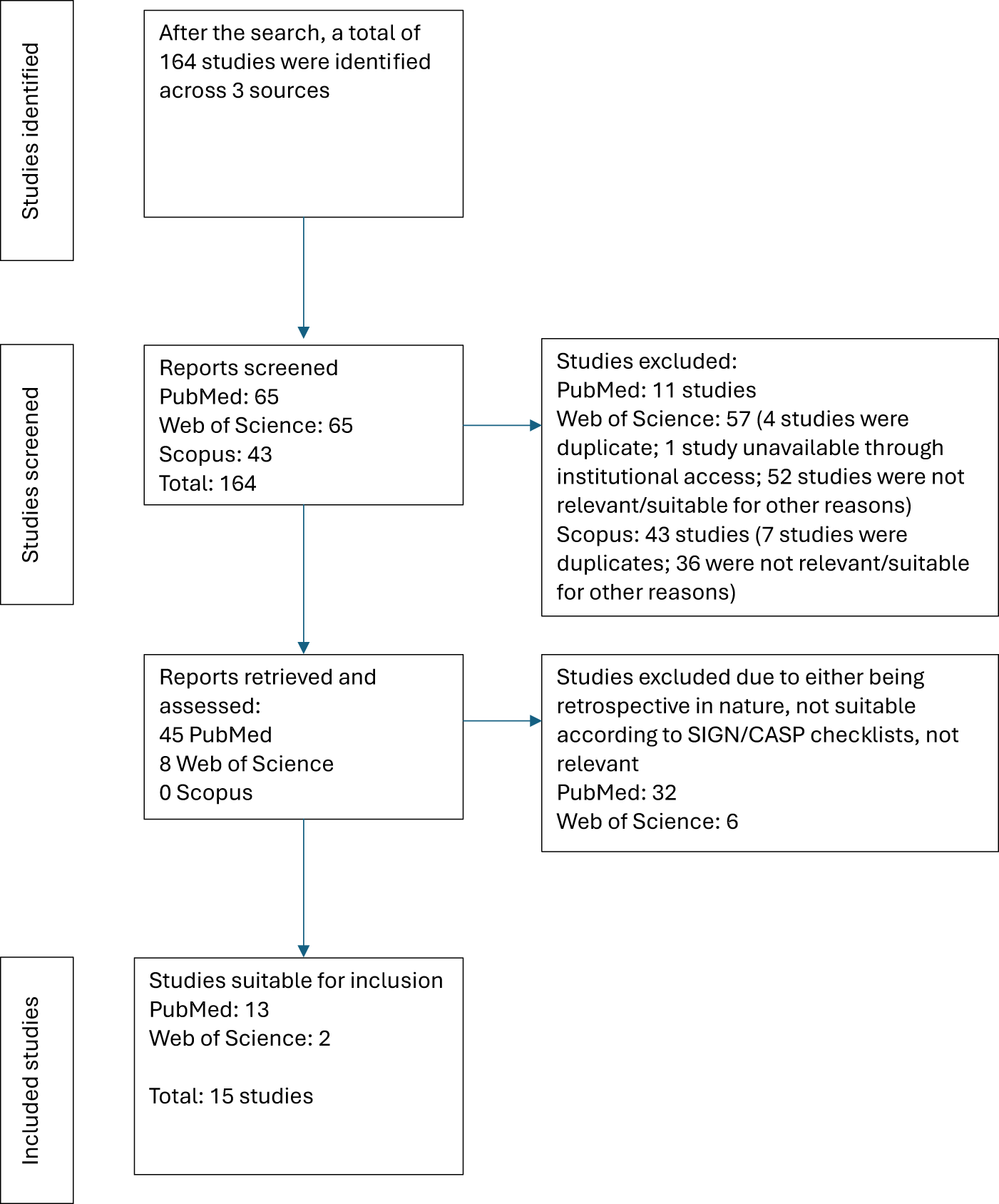
This review was not prospectively registered on PROSPERO or any other database. The full review protocol—including search strategy, eligibility criteria, data extraction and planned analyses—was developed a priori and is provided in Figure 1 for transparency.
Preferred Reporting Items for Systematic reviews and Meta-Analyses (PRISMA) style flow diagram of the study retrieval and selection process.

Inclusion criteria
Inclusion criteria included the following: prospective cohorts or randomised controlled trials (RCTs) of confirmed HPV-related OPSCC post-definitive treatment (radiotherapy [RT]/CRT); analytically validated HPV assays (quantitative polymerase chain reaction [qPCR], droplet digital PCR [ddPCR]); peer-reviewed English (2019–2024).
Exclusion criteria
Exclusion criteria included the following: non-oropharyngeal HPV cancers; saliva-only assays; non-English; pre-2019; predatory/lacking peer review; no full text; retrospective studies, reviews, case reports, abstracts or meta-analyses.
Quality assurance
Studies were appraised using CASP and SIGN; only moderate/good (CASP) and acceptable/high (SIGN) studies were included. Data were abstracted to a study overview (authors, year, N, design, follow-up, assay, targets, timing, accuracy and lead-times). Because few RCTs exist, high-quality prospective cohorts predominate.
Meta-analysis
Baseline detectability analysis
A quantitative meta-analysis was undertaken to estimate the pooled proportion of patients with detectable circulating tumour HPV DNA (ctHPV DNA) at baseline (i.e., pre-treatment diagnosis). For each eligible cohort, event counts for baseline detectability were extracted or inferred from reported percentages. Proportions were logit-transformed and pooled using a random-effects model (DerSimonian–Laird). Between-study heterogeneity was evaluated using Cochran’s Q, τ2 and I2. Prespecified sensitivity analyses included restriction to studies with greater than or equal to 30 patients and stratification by HPV16-only versus multi-genotype assays.
Surveillance performance and lead-time analysis
A separate analysis synthesised the post-treatment performance of ctHPV DNA during surveillance. Because definitions of sensitivity, specificity and sampling schedules varied widely, these outcomes were summarised descriptively. For studies reporting a clear interval between ctHPV DNA positivity and clinically/radiologically confirmed recurrence, lead-times were extracted and summarised (mean, median and range). These data were not pooled numerically due to inconsistent reporting but were analysed as a clinically focused surveillance performance metric.
Analyses were conducted in Python using custom scripts, and results are presented with 95 per cent confidence intervals and forest/funnel plots.
Significance of research
Rising HPV-driven OPSCC in younger patients demands surveillance approaches that are sensitive, accessible and tailored. Liquid biopsy—especially ctHPV DNA—offers a non-invasive, repeatable method that can detect minimal residual disease and anticipate relapse, potentially improving outcomes and reducing morbidity. Although ctHPV DNA demonstrates high predictive values in several studies, transient post-treatment spikes without recurrenceReference Chera, Kumar, Beaty, Marron, Jefferys and Green8 and financial conflicts of interest in some assay-development groups warrant caution. If validated broadly, ctHPV DNA could reduce reliance on imaging/endoscopy, enable risk-adapted follow-up and lower costs.
Results
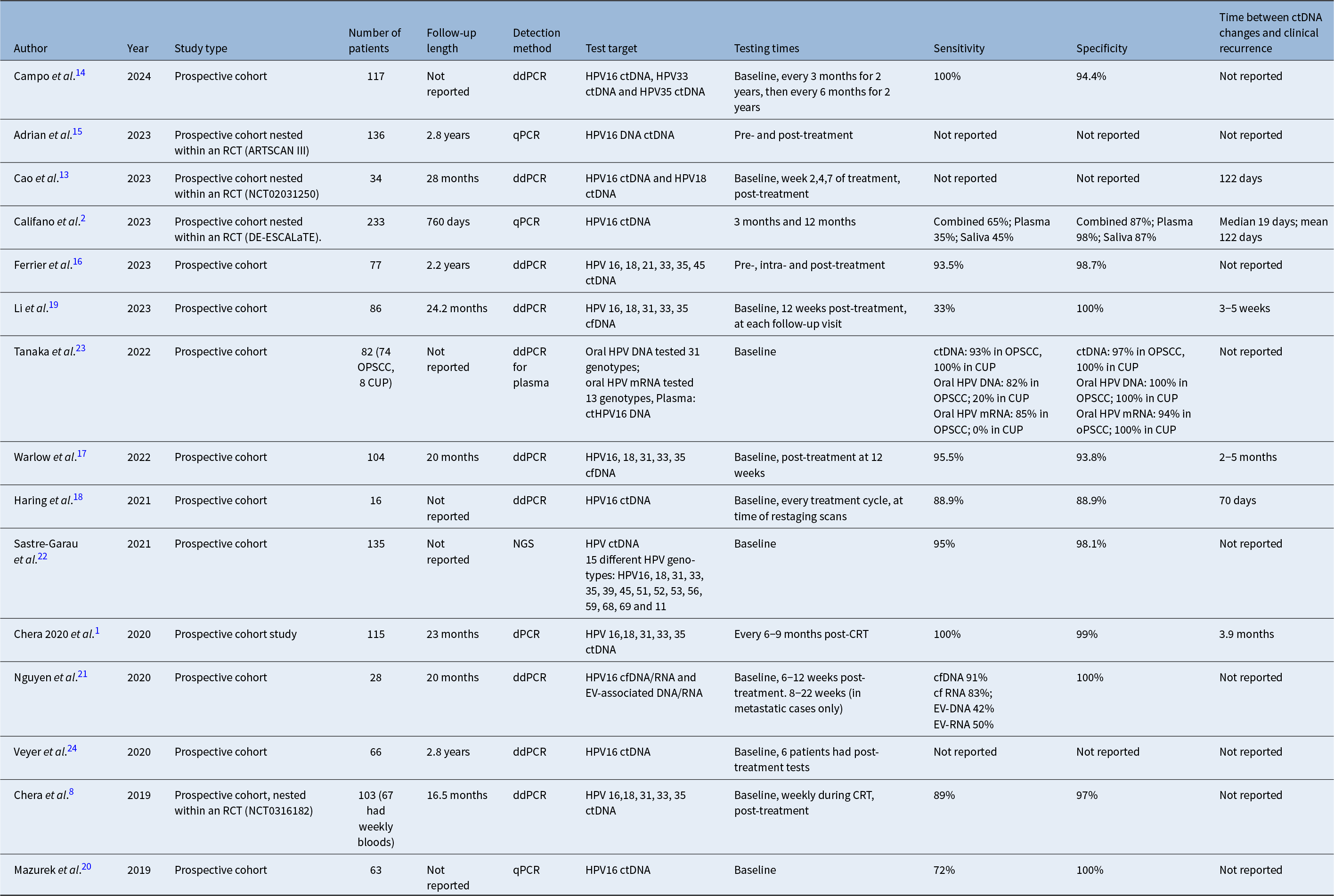
Database searches identified 56 (PubMed), 65 (Web of Science) and 43 (Scopus) records. After de-duplication (−11), 153 records were screened; 137 were excluded for eligibility/quality. Fifteen studies met the criteria and were entered into this review (Figure 1).Reference Chera, Kumar, Shen, Amdur, Dagan and Green1, Reference Califano, Yousef, Mostafa, Valsamakis, Zhang and Batis2, Reference Chera, Kumar, Beaty, Marron, Jefferys and Green8, Reference Cao, Haring, Brummel, Bhambhani, Aryal and Lee13–Reference Veyer, Wack, Mandavit, Garrigou, Hans and Bonfils24 Study characteristics are shown in Table 1.
Main characteristics of the included studies

CRT = chemoradiotherapy; CUP = cancer of unknown primary; dPCR = digital PCR; ddPCR = droplet digital PCR; EV-associated DNA/RNA = extracellular vesicle-associated DNA/RNA; HPV ctDNA = human papillomavirus circulating tumour DNA; cfDNA/RNA = cell-free DNA/RNA; OPSCC = oropharyngeal squamous cell carcinoma; PCR = polymerase chain reaction; qPCR = quantitative real-time PCR; RCT = randomised controlled trial.
Campo et al.Reference Campo, Paolini, Manciocco, Moretto, Pichi and Moretti14 evaluated the diagnostic and surveillance utility of ctHPV DNA in OPSCC and explored its relationship with magnetic resonance imaging (MRI) -derived tumour volumes. 117 suspected OPSCC patients had baseline ctHPV DNA testing via ddPCR (HPV16/33/35), which showed 100 per cent sensitivity and 94.4 per cent specificity versus tissue HPV DNA, outperforming p16 specificity. In surveillance, ctHPV DNA had 100 per cent sensitivity, 98.4 per cent specificity, positive predictive value (PPV) 90.9 per cent, negative predictive value (NPV) 100 per cent; molecular recurrence sometimes preceded imaging. ctDNA correlated with nodal and total tumour volume on MRI.
Cao et al.Reference Cao, Haring, Brummel, Bhambhani, Aryal and Lee13 enrolled 34 patients with stage 3 p16+ve OPSCC patients in their prospective cohort nested within a randomised controlled trial (NCT02031250). They have performed serial plasma ctDNA testing via ddPCR (baseline, weeks 2, 4, 7 of C-reactive protein [CRP] and post-treatment follow-ups) and imaging (MRI and PET). High baseline ctDNA and early week-2 drop were associated with progression risk; paradoxically, an early week-2 increase predicted better outcomes. Baseline ctDNA correlated with nodal volumes. A small, single-centre cohort limits generalisability.
CalifanoReference Califano, Yousef, Mostafa, Valsamakis, Zhang and Batis2 conducted a prospective study with one of the largest cohorts (233 patients) of HPV-positive OPSCC, during which they collected 1040 samples (saliva/plasma) before and after treatment. Combined plasma and salivary HPV DNA testing showed 65 per cent sensitivity and 87 per cent specificity. Plasma alone had 35 per cent sensitivity and 98 per cent specificity, while salivary rinse alone showed 45 per cent sensitivity and 87 per cent specificity. Median lead-time 19 days (mean 122) from test positivity to clinical recurrence. Only 38.5 per cent of positive post-treatment tests heralded later recurrence, indicating limited standalone use; infrequent sampling (3 and 12 months) likely reduced sensitivity.
Another study that was conducted by Chera et al.Reference Chera, Kumar, Beaty, Marron, Jefferys and Green8 tried to determine whether the kinetics of ctHPV16DNA clearance during chemoradiotherapy (CRT) can predict treatment response and disease control in HPV-associated OPSCC. Baseline ctHPV16DNA had high sensitivity (89 per cent) and specificity (97 per cent) for detecting HPV-associated OPSCC.
Baseline levels correlated with tumour burden and HPV genomic characteristics (copy number, integration status). Favourable clearance (>95 per cent by day 28 with a baseline of >200 copies/ml) predicted 100 per cent regional disease-free survival at 18 months. A small number of recurrences and de-intensified regimens temper the conclusion. Moreover, there is also a potential conflict of interest, as two senior authors have equity in a diagnostic company, which could introduce bias.
Chera et al.Reference Chera, Kumar, Shen, Amdur, Dagan and Green1 explored the suitability of ctHPV DNA as a sensitive and specific biomarker for recurrence in HPV-related OPSCC. The study analysed 115 patients with p16+ve, non-metastatic OPSCC. Blood samples were taken every six to nine months post-CRT to measure ctHPV DNA using a validated digital PCR assay.
Negative predictive value was 100 per cent, positive predictive value was 94 per cent for patients with two consecutive positive ctHPV DNA tests. There was a median of 3.9 months between ctHPV DNA detection and biopsy-confirmed recurrence. Sensitivity and specificity were 100 per cent and 99 per cent, respectively, with two consecutive positive tests.
Adrian et al.Reference Adrian, Forslund, Pedersen, Sjövall and Gebre-Medhin15 evaluated the prognostic value of circulating tumour HPV16 DNA in 136 patients with p16-positive OPSCC undergoing curative CRT. It uses plasma samples from the ARTSCAN III RCT (cisplatin + RT vs. cetuximab + RT). HPV16 DNA levels were measured before and at the end of treatment via qPCR. ctHPV16-DNA was detectable in 108 of 136 patients at baseline and cleared in 74 per cent post-treatment. Lower baseline ctHPV16-DNA and lower area-under-the-curve (AUC) values were associated with improved progression-free survival and overall survival; however, no significant link was found between ctHPV16-DNA levels and local control. Unfortunately, only two time points (pre- and post-treatment) were used to measure HPV16 DNA levels; more frequent sampling could better characterise ctHPV16-DNA kinetics.
Ferrier et al.Reference Ferrier, Tsering, Sadeghi, Zeitouni and Burnier16 explored blood and saliva ctDNA as a marker of residual disease after completion of treatment and its recurrence detection. A total of 77 patients (60 HPV +ve OPSCC patients and 17 HPV -ve OPSCC patients). ctDNA levels were compared before and after treatment and correlated with clinical findings and imaging/pathology. Pre-treatment ctDNA detected in 91 per cent; post-treatment positivity (8 per cent) strongly predicted residual/recurrent disease (sensitivity 93.5 per cent, specificity 98.7. Unfortunately, some patients were unable to provide sufficient saliva (mostly due to radiation-induced xerostomia), which may have affected detection sensitivity.
Warlow et al.Reference Warlow, Adamowicz, Thomson, Wescott, Robert and Carey17 conducted a prospective single-centre cohort study with 104 OPSCC patients. The study assessed baseline concordance between plasma cfDNA HPV detection by ddPCR and tumour p16 status, and prognostic value of serial post-treatment cfDNA-HPV. Baseline sensitivity/specificity vs p16 were 95.5 per cent/93.8 per cent. n HPV+ patients with longitudinal sampling, persistent/rising ctHPV DNA approximately 12 weeks post-treatment predicted earlier progression by two to five months.
A study by Haring et al.Reference Haring, Bhambhani, Brummel, Jewell, Bellile and Heft Neal18 also found that ddPCR assay successfully detected HPV16 ctDNA in 75 per cent of patients with p16 +ve tumours. Longitudinal changes in ctDNA levels correlated strongly with radiographic imaging results and were predictive of treatment response or progression.
Early increases in HPV16 ctDNA (≥60 per cent) predicted progressive disease with high sensitivity and specificity.
Changes in ctDNA were often observed earlier than imaging by an average of 70 days, and in some cases, even distinguished pseudo-progression from true progression during immunotherapy. The timing of imaging was not standardised, possibly affecting the precision of correlations between ctDNA changes and radiographic response. Moreover, the study had only 12 evaluable patients and 18 treatment courses.
Li et al.Reference Li, Adamowicz, Wescott, Warlow, Thomson and Robert19 in their study tried to assess whether HPV cfDNA can guide clinical decision making on salvage neck dissection in HPV-positive OPSCC patients with a partial response in neck disease after non-surgical treatment modalities on post-treatment imaging. Of 86 HPV-positive patients, 8 had an isolated partial neck response on imaging. One had detectable cfDNA and was later confirmed to have residual disease (PPV 100 per cent). Two of seven patients with undetectable cfDNA later developed recurrence (NPV 71 per cent).
A prospective cohort study by Mazurek et al.Reference Mazurek, Rutkowski, Śnietura, Pigłowski, Suwiński and Składowski20 evaluated 63 patients with oropharyngeal squamous cell carcinoma. ctHPV16 DNA was detectable in the blood of 38 per cent of patients, with 72 per cent sensitivity and 100 per cent specificity compared to tumour tissue positivity. Higher circulating HPV16 levels were significantly linked to higher tumour HPV16 viral loads, non-smoking status and advanced nodal disease (N2/N3).
Nguyen et al.Reference Nguyen, Meehan, Pereira, Mirzai, Lim and Leslie21 investigated and compared the detection sensitivity of HPV DNA and RNA in two liquid biopsy sources: cell-free (cf) DNA/RNA and extracellular vesicle (EV)-associated DNA/RNA—in patients with HPV-related OPSCC. This prospective study of 28 patients (22 with locally advanced disease and 6 with metastatic disease) with OPSCC found that cfDNA/RNA is significantly more sensitive than EV-associated DNA/RNA for detecting circulating HPV DNA/RNA (91 per cent vs. 42 per cent for DNA; 83 per cent vs. 50 per cent for RNA). Specificity was reported to be 100 per cent. cf-DNA levels correlated with treatment response in locally advanced cases but not in metastatic disease.
Sastre-Garau et al.Reference Sastre-Garau, Diop, Martin, Dolivet, Marchal and Charra-Brunaud22 conducted a prospective study involving 135 patients from France and Senegal with invasive carcinomas of the cervix, oropharynx, oral cavity, anus, or vulva. The next-generation sequencing (NGS) -based method was evaluated for its ability to detect and characterise circulating tumour HPV DNA from pre-treatment blood samples. Tumour HPV status was established using p16 immunohistochemistry, PCR and NGS, while plasma was independently analysed by NGS. HPV DNA was present in 60 per cent of tumours, representing 15 genotypes, with notable geographic variation in genotype prevalence. The blood test demonstrated a sensitivity of 95.0 per cent and specificity of 98.1 per cent compared with tumour HPV status, with detection rates increasing by tumour stage (72.7 per cent for T1 to 100 per cent for T3/T4).
Tanaka et al.Reference Tanaka, Suzuki, Takemoto, Fukusumi, Eguchi and Takai23 evaluated the performance of three separate biomarkers—oral HPV DNA, oral HPV mRNA and circulating tumour HPV16 DNA — in detecting HPV-related oropharyngeal cancer and cancer of unknown primary (CUP) in 82 patients (74 OPSCC, 8 CUP). ctHPV16 DNA had highest sensitivity (93–100 per cent) and specificity (97–100 per cent), correlating strongly with tumour burden.
Veyer et al.Reference Veyer, Wack, Mandavit, Garrigou, Hans and Bonfils24 evaluated 66 patients with HPV16-positive OPSCC. Baseline HPV16 ctDNA was detectable in 71 per cent of patients and correlated significantly with higher T/N classifications and AJCC stage. All stage IV and metastatic cases were ctDNA-positive, while undetectable ctDNA was predominantly associated with early-stage disease. Rising ctDNA levels predicted recurrence and mortality.
Baseline detectability
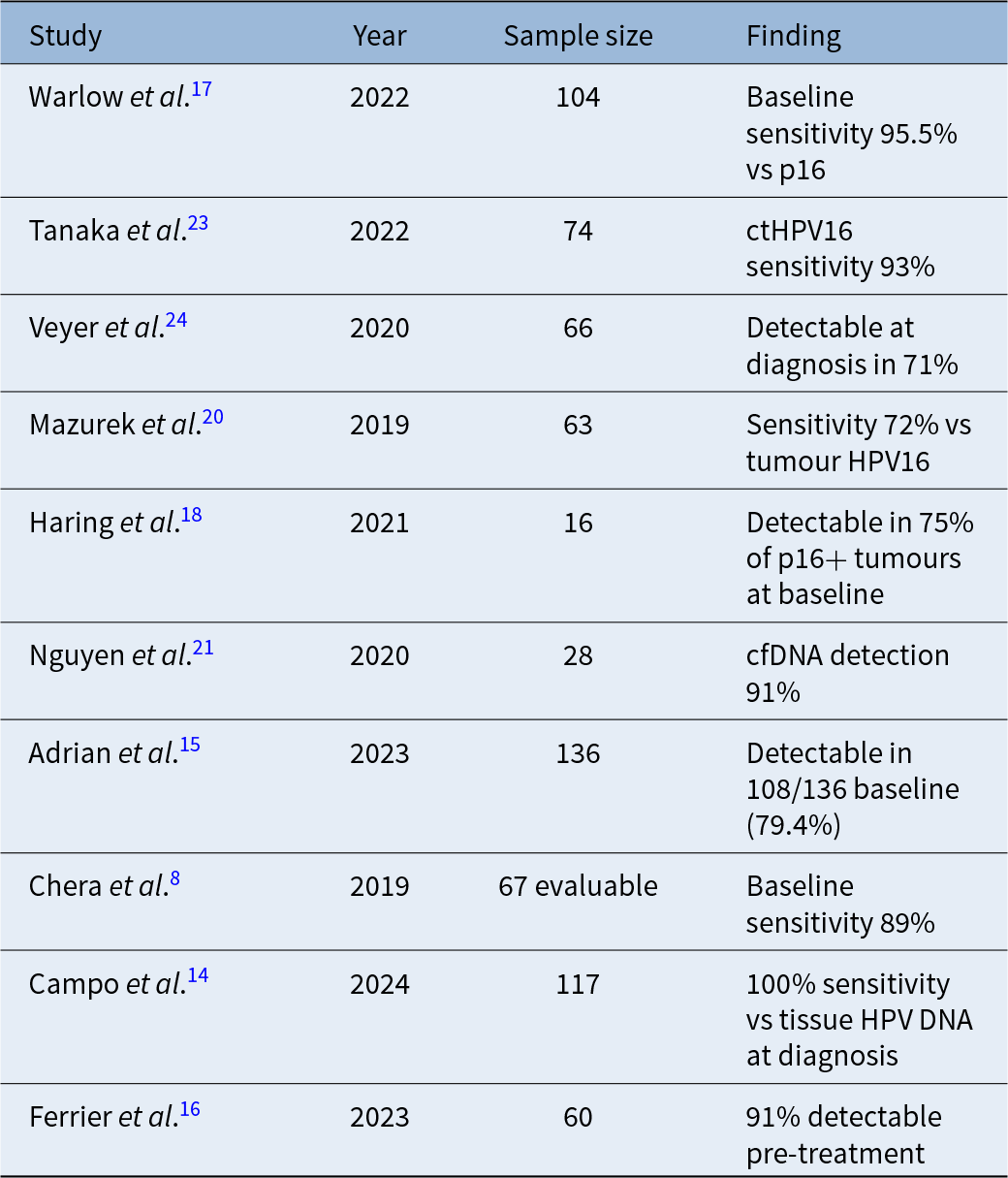
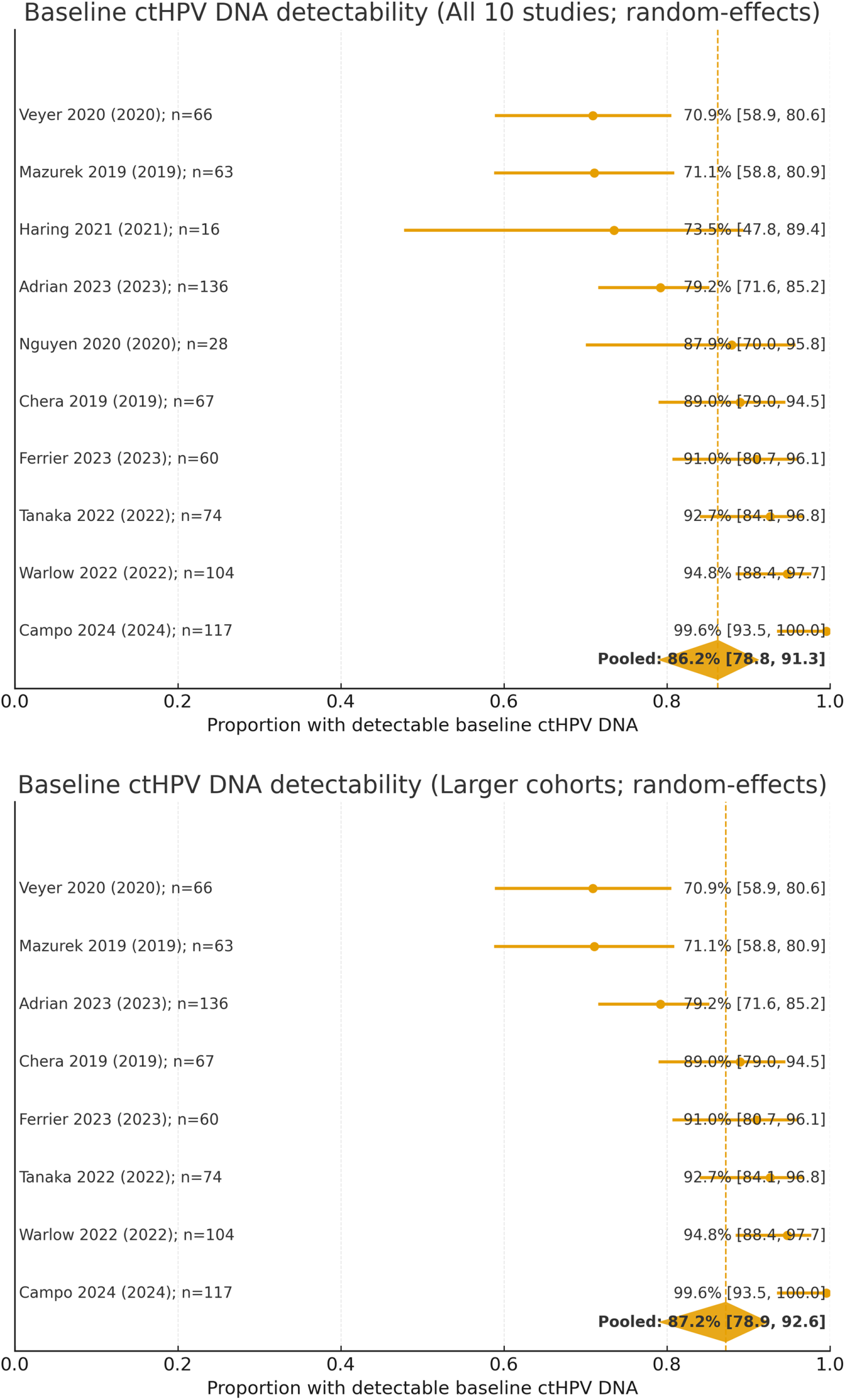
Ten eligible cohorts (n = 731) reported baseline ctHPV DNA detectability and met criteria for quantitative pooling (Table 2). The random-effects meta-analysis demonstrated a pooled detectability of 85.5 per cent (95 per cent CI 78.2–90.6), with substantial heterogeneity (I2 = 73.4 per cent; τ2 = 0.40). Restricting to larger cohorts (n ≥ 30) yielded a similar estimate (84.9 per cent, 95 per cent CI 77.2–90.3) (Figure 2). HPV16-only assays showed slightly lower detectability (80.1 per cent) compared with multi-genotype or unspecified panels (87.7 per cent). This heterogeneity is expected and likely reflects differences in assay platform, genotype coverage and sampling cadence; HPV16-only panels showed slightly lower detectability than multi-genotype assays.
Studies included in meta-analysis

ct = circulating tumour; HPV = human papillomavirus.
Forest plots with pooled random-effects estimate.

Surveillance performance and lead time
Six studies provided extractable surveillance data describing the timing and accuracy of ctHPV DNA after completion of curative treatment. Across these cohorts, ctHPV DNA positivity typically preceded clinical or radiologic recurrence by a mean of 76.8 days, median 87.5 days (range, 19–122 days). Surveillance sensitivity varied considerably across studies due to differences in assay platform, sampling intervals and the inclusion of saliva-based testing. Conversely, specificity and negative predictive value were consistently high, with several cohorts reporting 98–100 per cent NPV for persistent post-treatment negativity. These findings support ctHPV DNA as a reliable adjunctive tool for surveillance, particularly when used in serial sampling frameworks (e.g., consecutive positive tests).
Lead-times are influenced by sampling frequency and confirmation rules; more frequent serial sampling generally yields longer and more reliable molecular intervals than infrequent testing schedules.
Discussion
Across prospective cohorts, ctHPV DNA demonstrates high specificity and NPV, making it well-suited to rule out recurrence when undetectable. Sensitivity varies with platform, genotype coverage and sampling frequency, so ctHPV DNA is best used as an adjunct to standard surveillance rather than a replacement.
Chera et al.Reference Chera, Kumar, Shen, Amdur, Dagan and Green1 provides the most compelling surveillance signal: two consecutive positive tests predicted recurrence with high PPV and positivity often preceded imaging by months. In contrast, Califano et al.Reference Califano, Yousef, Mostafa, Valsamakis, Zhang and Batis2 reported moderate sensitivity and a lower PPV for any positive post-treatment test, likely affected by infrequent sampling and inclusion of saliva. More frequent, standardised samplingReference Campo, Paolini, Manciocco, Moretto, Pichi and Moretti14 appears to improve sensitivity and lead-time.
Longitudinal ctHPV DNA tracks tumour burden, correlating with nodal/metastatic volume and often anticipating radiologic change.Reference Chera, Kumar, Shen, Amdur, Dagan and Green1, Reference Califano, Yousef, Mostafa, Valsamakis, Zhang and Batis2, Reference Hanna, Supplee, Kuang, Mahmood, Lau and Haddad12–Reference Campo, Paolini, Manciocco, Moretto, Pichi and Moretti14, Reference Ferrier, Tsering, Sadeghi, Zeitouni and Burnier16 Kinetic profiling during CRT—rapid early clearance vs persistent elevation—may stratify risk and guide follow-up intensity.Reference Chera, Kumar, Beaty, Marron, Jefferys and Green8, Reference Cao, Haring, Brummel, Bhambhani, Aryal and Lee13 However, paradoxical early increases and transient spikes without recurrenceReference Chera, Kumar, Beaty, Marron, Jefferys and Green8 underscore the need to confirm persistent trends before acting.
Equally important are false negatives. Li et al.Reference Li, Adamowicz, Wescott, Warlow, Thomson and Robert19 found that undetectable ctDNA could not exclude residual neck disease (NPV 71 per cent), arguing for multimodal surveillance that integrates ctHPV DNA with clinical exam and imaging.
Small, single-centre designs and variable sampling schedules limit generalisability. Conflicts of interest in some assay-development studies reinforce the need for independent validation.
Clinically, ctHPV DNA can prioritise imaging/biopsy when positive, justify imaging de-escalation when persistently negative and potentially avoid unnecessary salvage surgeries when combined with anatomical assessment.Reference Ferrier, Tsering, Sadeghi, Zeitouni and Burnier16, Reference Li, Adamowicz, Wescott, Warlow, Thomson and Robert19 Feasibility data suggest incorporation into routine follow-up is practical.Reference Chera, Kumar, Shen, Amdur, Dagan and Green1, Reference Campo, Paolini, Manciocco, Moretto, Pichi and Moretti14 These principles align with function-preserving follow-up models, where unnecessary imaging or invasive procedures are minimised to protect long-term swallowing and speech outcomes.Reference Guarino, Chiari, Cordeschi, D’Alessio, Ingelido and Motta10
In contrast to previous systematic reviews, the present study offers two novel contributions. First, to our knowledge, it provides the most up-to-date pooled estimate of baseline ctHPV DNA detectability across prospective cohorts (85.5 per cent), with stratified exploration of assay platform and genotype coverage. Second, it synthesises quantitative lead-time data (mean, ∼77 days) from prospective surveillance cohorts, critically appraising how sampling frequency and confirmation rules influence observed molecular intervals. This focused dual-analysis—baseline detectability and surveillance lead-time—addresses a gap not fully resolved in prior systematic reviews and provides clinically actionable insight into how ctHPV DNA may be integrated into risk-adapted follow-up pathways.
What is already known
• Circulating tumour human papillomavirus DNA (ctHPV DNA) is detectable in most HPV-positive oropharyngeal squamous cell carcinoma (OPSCC) at diagnosis and generally shows high specificity and negative predictive value (NPV)
• Serial ctHPV DNA often turns positive weeks before clinical or radiologic confirmation of recurrence, offering a potential lead-time for intervention
What this paper adds
• A systematic review and meta-analysis of 15 prospective studies (n = 1,447) show a pooled baseline ctHPV DNA detectability of 85.5 per cent (95 per cent CI 78.2–90.6), with substantial but explainable heterogeneity.
• Across six cohorts, ctHPV DNA positivity preceded confirmed recurrence by a mean ∼77 days (median 87.5; range 19–122), quantifying a clinically meaningful surveillance lead-time.
• The synthesis clarifies drivers of variability (assay platform, genotype panel and follow-up cadence) and underscores that consistently high specificity/NPV supports ctHPV DNA as a reliable rule-out tool in follow-up
Conclusions
Liquid biopsy (ctHPV DNA and cfHPV DNA) shows high promise for post-treatment surveillance in HPV positive OPSCC. This meta-analysis showed that pooled baseline detectability is approximately 85 per cent across studies, with higher performance in multi-genotype or highly sensitive platforms.
There is potential to use liquid biopsy as an early warning. ctHPV DNA positivity often precedes radiological recurrence by two to three months. Lead-times are partly dependent on sampling frequency and confirmation rules; more frequent serial sampling generally yields longer and more reliable molecular intervals than infrequent testing schedules.
It is most effective as an adjunctive tool to refine patient risk stratification and guide the timing of more invasive assessments. Rapid early clearance during CRT is a sign of a favourable prognosis, while persistent/rising levels suggest residual disease or recurrence.
Collectively, these results highlight ctHPV DNA as a promising adjunct to current diagnostic and surveillance strategies in HPV-driven OPSCC. However, variability in platforms and limited availability of full diagnostic accuracy data underscore the need for standardised assays, larger multicentre prospective studies and integration into clinical trial frameworks before widespread clinical adoption
Limitations of the studies
Key limitations include substantial methodological heterogeneity (assay type, plasma vs saliva, sampling intervals and analytical platforms), which hinders cross-study comparability. Many studies focused solely on HPV16—the most prevalent OPSCC genotype—risking missed recurrence in tumours driven by other high-risk types (e.g., 18, 31, 33). Evidence quality is further limited by small, single-centre cohorts lacking control arms and randomisation, and by potential conflicts of interest in some investigations (notably Chera and colleagues) with disclosed financial ties to Naveris, the commercial ctHPV DNA assay developer.
Future directions
Future directions include standardising ctHPV DNA assays—harmonising PCR platforms, sampling schedules and positivity thresholds—to improve cross-study comparability and accelerate clinical/regulatory adoption; expanding genotype coverage with validated multi-genotype (NGS-based) panels beyond HPV16 to increase diagnostic inclusivity and accuracy; integrating ctHPV DNA kinetics with clinical factors (stage, nodal burden and smoking) and imaging in risk-stratified care pathways; validating performance through large, multicentre prospective studies with long-term follow-up across diverse populations and regimens; and developing evidence-based decision tools—clear action thresholds and decision trees—so rapid clearance supports de-intensification, while persistent or rising levels trigger timely imaging, biopsy or intervention.
Primary question answered
Liquid biopsy—especially plasma ctHPV DNA—is a reliable adjunct for monitoring recurrence after curative treatment for HPV-related OPSCC, offering high specificity/NPV and clinically meaningful lead-time. It should complement, not replace, clinical assessment and imaging until standardised, independently validated protocols confirm consistent sensitivity across settings.
Secondary question answered
Yes. Pretreatment ctHPV DNA levels and early on-treatment kinetics support risk stratification, identifying patients who might benefit from intensified monitoring or treatment modification.
Acknowledgement
This study was completed as part of the MCh in Otolaryngology programme at Canterbury Christ Church University, Canterbury, UK. The author declares no conflicts of interest or external funding.
Financial support
Not applicable.