

Introduction
Veterinary use of the non-steroidal anti-inflammatory drug (NSAID) diclofenac was banned in India, Pakistan, and Nepal in 2006 and in Bangladesh in 2010 because its toxicity to three species of resident Gyps vultures had pushed their global populations to the edge of extinction (Oaks et al. Reference Oaks, Gilbert, Virani, Watson, Meteyer and Rideout2004; Shultz et al. Reference Shultz, Baral, Charman, Cunningham, Das and Ghalsasi2004). Subsequently, following a court case in 2017, the ban was strengthened to include multi-dose vials (anything greater than 3 ml) of diclofenac ostensibly produced to treat humans, but convenient for the treatment of cattle. Diclofenac was commonly used to treat cattle throughout South Asia, and vultures died after consuming the carcasses of cattle that had been given the drug shortly before death. Surveys of cattle carcasses in India revealed a level of contaminated food sufficient to explain the observed rates of population decline (Green et al. Reference Green, Newton, Shultz, Cunningham, Gilbert and Pain2004, Reference Green, Taggart, Senacha, Raghavan, Pain and Jhala2007).
Since the bans, populations of the three Gyps vultures have stabilised or begun to recover in parts of South Asia. In Nepal, populations of both White-rumped G. bengalensis and Slender-billed Vultures G. tenuirostris have been increasing since about 2012 at the maximum rate allowed by their demographic parameters (Galligan et al. Reference Galligan, Bhusal, Paudel, Chapagain, Joshi and Chaudhary2020). However, in India, although populations of White-rumped, Indian G. indicus, and Slender-billed Vultures have stabilised, there is no evidence that they are beginning to recover (Prakash et al. Reference Prakash, Bajpal, Chakraborty, Mahadev, Mallord and Prakash2024). Populations remain at very low levels compared with those before the decline. The difference in population trends between Nepal and India is probably due to the differences in availability of diclofenac (Galligan et al. Reference Galligan, Mallord, Prakash, Bhusal, Alam and Anthony2021). Whereas in Nepal, where diclofenac has virtually ceased to be available throughout the country, in India, diclofenac still accounted for 10–46% of drugs offered as late as 2017 (Galligan et al. Reference Galligan, Mallord, Prakash, Bhusal, Alam and Anthony2021), although declines in availability were apparent in some states. In 2023, the Government of Nepal declared all districts diclofenac-free (Pandey Reference Pandey2023). Although banned in several countries outside South Asia due to its impact on vultures, e.g. Iran (Sabiniarz Reference Sabiniarz2015), Cambodia (Bowden Reference Bowden2019), and Oman (Davies Reference Davies2020), diclofenac remains a threat to Old World vultures globally. The first recorded instance of diclofenac poisoning outside Asia was recorded in 2020, when a nestling Cinereous Vulture Aegypius monarchus succumbed to poisoning in Spain (Herrero-Villar et al. Reference Herrero-Villar, Delepoulle, Suárez-Regalado, Solano-Manrique, Juan-Sallés and Iglesias-Lebrija2021). Subsequently, in 2021–2024, diclofenac poisoning has also been confirmed as the cause of death of several GPS-tagged Eurasian Griffons G. fulvus in Israel (N. Anglister, personal communication).
Given the difficulties of working at a scale that could impact exposure of vultures to toxic NSAIDs throughout their range, the concept of the Vulture Safe Zone (VSZ) was established (Mukherjee et al. Reference Mukherjee, Galligan, Prakash, Paudel, Khan and Prakash2014). VSZs are circular areas of 100-km radius, centred on an extant vulture breeding colony or an area earmarked for the release of vultures from the captive breeding population in similar VSZs (Mukherjee et al. Reference Mukherjee, Galligan, Prakash, Paudel, Khan and Prakash2014). Their extent is based on satellite tracking of White-rumped Vultures in Pakistan (Gilbert et al. Reference Gilbert, Watson, Ahmed, Asim and Johnson2007). VSZs are intended to provide a population of vultures with all their needs, i.e. nesting, roosting, and foraging, while being small enough that conservation actions can be concentrated so as to have the best chance of benefitting the vulture population (Mukherjee et al. Reference Mukherjee, Galligan, Prakash, Paudel, Khan and Prakash2014). Conservation actions deployed in VSZs include advocacy and education of local pharmacists, veterinarians, and livestock keepers, who are encouraged to supply or use vulture-safe NSAIDs rather than diclofenac (Bhusal Reference Bhusal2018). In Bangladesh, the country’s two VSZs have gained legal recognition through gazettement by the government (IUCN Bangladesh 2016). Only two NSAIDs (meloxicam and tolfenamic acid) have been confirmed by experimental treatment of captive vultures as being safe (Chandramohan et al. Reference Chandramohan, Mallord, Mathesh, Sharma, Mahendran and Kesavan2021; Swan et al. Reference Swan, Naidoo, Cuthbert, Green, Pain and Swarup2006). Based on evidence that diclofenac was no longer being supplied for veterinary use (Galligan et al. Reference Galligan, Mallord, Prakash, Bhusal, Alam and Anthony2021), rapidly increasing populations (Galligan et al. Reference Galligan, Bhusal, Paudel, Chapagain, Joshi and Chaudhary2020), high annual survival rates of GPS-tagged wild vultures, and a lack of evidence of NSAID-caused mortality (Mallord et al. Reference Mallord, Bhusal, Joshi, Karki, Chaudhary and Chapagain2024), the world’s first genuinely safe VSZ was declared in Nepal in 2021 (Sabiniarz Reference Sabiniarz2021).
In addition to diclofenac, several other toxic NSAIDs are a threat to vultures in South Asia (Galligan et al. Reference Galligan, Mallord, Prakash, Bhusal, Alam and Anthony2021). Wild vultures have been found dead in India with both visceral gout and residues of nimesulide in their tissues. In the period 2000–2004, all 13 vulture carcasses examined that had visceral gout also had detectable diclofenac residues in their tissues (Cuthbert et al. Reference Cuthbert, Taggart, Saini, Sharma, Das and Kulkarni2016). Residues of no other NSAIDs were found during this period. By contrast, 12 of the vulture carcasses examined since 2005 that had visceral gout had detectable diclofenac residues, but another eight birds with gout had nimesulide residues (Cuthbert et al. Reference Cuthbert, Taggart, Saini, Sharma, Das and Kulkarni2016; Nambirajan et al. Reference Nambirajan, Muralidharan, Ashimkumar and Jadhav2021). These findings suggested that nimesulide was toxic to vultures and had begun to affect them in the mid-2000s. Toxicity of nimesulide to vultures has since been confirmed by experimental safety testing (Galligan et al. Reference Galligan, Green, Wolter, Taggart, Duncan and Mallord2022; Mathesh et al. Reference Mathesh, Manickam, Mallord, Mahendran, Asok Kumar and Saikia2023). Pharmacokinetic studies of aceclofenac in domesticated cattle Bos taurus and water buffalo Bubalus bubalis (Chandramohan et al. Reference Chandramohan, Mathesh, Mallord, Naidoo, Mahendran and Kesavan2022; Galligan et al. Reference Galligan, Taggart, Cuthbert, Svobodova, Chipangura, Alderson, Prakash and Naidoo2016) have shown it to be rapidly metabolised into diclofenac and will thus have the same toxic effects as the latter drug. Residues of another NSAID, flunixin, have been found, associated with visceral gout, in wild Eurasian Griffons found dead in Spain (n = 3; Herrero-Villar et al. Reference Herrero-Villar, Velarde, Camarero, Taggart, Bandeira and Fonseca2020), and Israel (n = 4; N. Anglister, personal communication).
In this paper, we provide an update on previously reported (Galligan et al. Reference Galligan, Mallord, Prakash, Bhusal, Alam and Anthony2021) trends in the availability for veterinary use of diclofenac and other NSAIDs in pharmacies in India, Nepal, Bangladesh, and Pakistan. We extended our analyses to include new data collected during undercover pharmacy surveys between 2018 and 2024, lengthening the period over which trends were analysed, both inside and outside the VSZs, thus providing an opportunity to assess the efficacy of the conservation actions carried out within such zones.
Methods
This paper updates previously published results. Surveys were originally conducted in India from 2012 to 2017 (varying by regions; Tables 1 and 2), in Nepal from 2012 to 2018 (again, varying by region; Table 3), and in Bangladesh from 2014 to 2018 (Table 4; Galligan et al. Reference Galligan, Mallord, Prakash, Bhusal, Alam and Anthony2021). Repeated covert surveys of pharmacies were carried out in seven regions of India, four regions of Nepal, two regions in Bangladesh, and three regions of Pakistan (Figure 1). The same regions were surveyed repeatedly in Nepal (Eastern Terai, Western Terai, Western Mid-Hills, and Far Western Mid-Hills) throughout the survey period. In India, four regions were dropped from the areas surveyed by Galligan et al. (Reference Galligan, Mallord, Prakash, Bhusal, Alam and Anthony2021), leaving only Assam, Haryana, Madhya Pradesh, and Uttar Pradesh with continuing surveys. In addition, sporadic surveys were carried out from 2020 in three further states, Rajasthan, Tamil Nadu, and West Bengal. In Bangladesh, the first survey covered the whole country, while subsequent surveys were conducted in the country’s two provisional Vulture Safe Zones (pVSZs) centred on the Sylhet and Khulna Divisions (administrative regions). In Pakistan, surveys were conducted in the north-east (NE), south-east (SE), and south-west (SW) of the country. The years in which surveys were conducted varied by region (Tables 1, 3–5). Surveys were based upon sampling of settlements, which were towns, villages or clusters of small villages. Settlements were selected at random within each region. Data were generally collected from just one pharmacy in each settlement visited, thus avoiding possible pseudoreplication arising from potentially similar practices of pharmacies in the same settlement and also allowing a greater area to be surveyed. The exception was the single survey in Rajasthan in India in 2024, where multiple pharmacies were surveyed in each town (see Results). The name, address, and sometimes the geographical coordinates of each pharmacy were recorded by the survey team on the first survey and used to locate the same pharmacy in future years. In Bangladesh, Pakistan, and most regions of India, surveyors were employees of the organisations undertaking the surveys, whereas in Nepal, a local man was paid to visit a pharmacy and ask to purchase medicine for an injured or sick cow.
The percentage of pharmacies that offered NSAIDs for veterinary use in cattle, during covert (undercover) surveys in Vulture Safe Zones (VSZs) in four Indian states in 2012–2024. N = the number of pharmacies that offered an NSAID

* “Other” NSAIDs include: flunixin, metamizole (Analgin), ketoprofen, mefenamic acid and phenylbutazone.
** A different method was used in surveys in 2012 and 2013 in Uttar Pradesh (see Methods).
*** Included neighbouring areas of Himachal Pradesh and Punjab.
^ Included neighbouring districts of Assam and Meghalaya.
Superscripts identify drugs that are either toxic to (t), safe for (s) or of unknown toxicity (u) to vultures.
The percentage of pharmacies that offered NSAIDs for veterinary use in cattle, during covert (undercover) surveys in three Indian states in 2020–2024. N = the number of pharmacies that offered an NSAID

Superscripts identify drugs that are either toxic to (t), safe for (s) or of unknown toxicity (u) to vultures.
Trends in the proportion of four NSAIDs offered for sale for use in cattle during covert (undercover) surveys of pharmacies in four Vulture Safe/Release Zones of India between 2012 and 2024. Trends that are statistically significant at P <0.05 (two-tailed) are indicated in bold

1 Modelling of trends in prevalence of aceclofenac in Assam and Haryana
2 piroxicam in Madhya Pradesh and Uttar Pradesh.
The percentage of pharmacies that offered NSAIDs for veterinary use in cattle, during covert (undercover) surveys in four regions of Nepal in 2012–2024. N = the number of pharmacies that offered an NSAID

Superscripts identify drugs that are either toxic to (t), safe for (s) or of unknown toxicity (u) to vultures.
The percentage (of all NSAIDs stocked) of eight NSAIDs available for use on cattle, during covert (undercover) surveys of pharmacies in three regions of Bangladesh, 2014–2024. N = the total number of NSAIDs stocked by pharmacies; pVSZ = provisional Vulture Safe Zone. The first survey covered the whole of the country

Superscripts identify drugs that are either toxic to (t), safe for (s) or of unknown toxicity (u) to vultures.
The percentage of pharmacies that stocked different NSAIDs for veterinary use in cattle, during covert (undercover) surveys in three regions of Pakistan in 2024. N = the total number of NSAIDs stocked

Superscripts identify drugs that are either toxic to (t), safe for (s) or of unknown toxicity (u) to vultures.
Map showing the location of 16 regions where undercover pharmacy surveys were conducted in 2012–2024. The boundaries and names shown on this map do not imply official endorsement or acceptance. UP = Uttar Pradesh; FWP = Far Western Pahad.

In India, both veterinary and human drugs tend to be sold in the same pharmacies, whereas in Pakistan, Nepal, and Bangladesh, veterinary and human pharmacies tend to be separate. Generally, there are few other outlets for buying NSAIDs, although in some places they can be bought online or from a local convenience store. However, pharmacies are the prime source of the drugs. There appears to be no illegal market for veterinary NSAIDs.
Methods varied between countries. In most regions of India, a member of the survey team asked the pharmacist for “a painkiller for an injured cow”. During surveys in 2012 and 2013 in Uttar Pradesh, the standard method was not followed, with surveyors specifically asking for diclofenac. For this reason, these have been excluded from the modelling of trends over time (Galligan et al. Reference Galligan, Mallord, Prakash, Bhusal, Alam and Anthony2021). In Rajasthan, a surveyor telephoned the pharmacist and told him that he had a sick cow that had been treated with meloxicam, but that there had been no improvement in the animal’s condition and asked if the pharmacist could prescribe another drug. Subsequently, a second (local) surveyor visited the pharmacy to collect the drugs. In Tamil Nadu, a list of NSAIDs required for a veterinary camp was prepared and pharmacies asked to supply them. This list included all NSAIDs, including the banned diclofenac. Rural pharmacies, which often stock veterinary medicines due to demand from cattle owners, were targeted. In Nepal, a prescription written by a veterinarian for one vial of diclofenac and five tablets of deworming medication was presented to the pharmacist. In both India and Nepal, the first drug offered by the pharmacist was bought, regardless of what had been requested, although it was often the case that no drug was offered, because the pharmacist either did not stock, or had run out of, this type of drug. Although, in Nepal, veterinary drugs are sometimes sold in both “animal” and “human” pharmacies, previous surveys (Galligan et al. Reference Galligan, Mallord, Prakash, Bhusal, Alam and Anthony2021) have shown that this occurs only rarely in the latter, therefore here we report on surveys of “animal” pharmacies only. In Bangladesh and Pakistan, surveyors asked to see all NSAIDs in stock in each pharmacy. Data were collected from the packaging of the purchased (and in Bangladesh, stocked) drugs, including brand name, name and concentration of the active ingredient(s), vial size, and the manufacturer’s name and address.
That different methods were used in different countries (and some Indian states) precludes comparisons of the absolute levels of availability of drugs between countries/regions (Galligan et al. Reference Galligan, Mallord, Prakash, Bhusal, Alam and Anthony2021). However, as methods within a country or region were consistent over time, comparisons allow valid assessment of within-country changes over time.
Statistical analysis
Changes over time in the first NSAID offered for sale in India and Nepal were tested by fitting logistic regression models. Whether or not a particular NSAID was the first drug offered and subsequently bought during a pharmacy visit was the binary dependent variable (0 = drug offered; 1 = not offered) with binomial error and a log-link function and was modelled in relation to the calendar year, which was treated as a continuous variable. Only data from pharmacy visits in which an NSAID of some kind was offered were included in these analyses. Data for each region of India and Nepal were modelled separately. The same modelling approach was used to assess trends in the availability of all toxic drugs combined, with any toxic drug being offered or not offered first being treated as the binary dependent variable. Although individual VSZs were surveyed in Bangladesh after the first year, all surveys were grouped in each year to increase the length of the period for which we were analysing trends. After inspecting the data, the relationship between calendar year and the prevalence of nimesulide in the Western Terai region of Nepal did not appear to be linear, so we included the quadratic effect of calendar year (i.e. YEAR + YEAR2) when modelling this relationship. We report the slope of the fitted logistic regression (b) from these analyses and tested the statistical significance of its difference from zero using its asymptotic standard error and a two-tailed t-test. This coefficient represents the modelled mean change per year in the logarithm of the odds of a drug being offered under a model in which the log odds is assumed to be a linear function of year. Negative b values indicate declines over time and positive values represent increases. For the quadratic logistic regression model a positive coefficient for YEAR with a negative coefficient for YEAR2 indicates a hump-shaped relationship.
Human ethics
This study was a continuation of a previously published study. Ethical considerations and the justification for carrying out the work are the same (for details, see Galligan et al. Reference Galligan, Mallord, Prakash, Bhusal, Alam and Anthony2021). Briefly, pharmacists were acting in the public domain and were potentially involved in illegal behaviour, i.e. supplying diclofenac for veterinary use. Therefore, the use of a covert method was justified to identify such behaviour (Spicker Reference Spicker2011), which would have been impossible if the reasons for the survey had been made clear. The study was sanctioned by government-endorsed Vulture Conservation Action Plans, and a summary of our data was sent to the relevant authorities, although offending individuals were not reported and are not identified in this paper. Surveyors were either staff of conservation organisations (India, Bangladesh, and Pakistan) who, therefore, understood the reasons behind the surveys, or were local men (Nepal) who had been given full information regarding the survey and had the opportunity to not participate if they so wished.
Results
India
In the seven states surveyed (see Methods), a total of 2,586 covert pharmacy surveys were conducted, in 2114 (81.7%) of which NSAIDs were offered. No drug was offered on 9.7% of all visits (n = 250). An alternative drug, rather than an NSAID, was offered on 8.6% of visits (n = 222), usually an antibiotic. The proportion of pharmacies in which an NSAID was offered varied between regions: range 64.3% (Tamil Nadu) to 100% (Rajasthan). Meloxicam (32.9%) was the drug offered most frequently overall, followed by nimesulide (21.3%), piroxicam (18.2%), diclofenac (15.8%), and aceclofenac (6.6%). These five drugs accounted for the majority of NSAIDs sold (94.7%). The remainder consisted of eight other drugs: tolfenamic acid (1.5%), metamizole (tradename Analgin; 1.3%), flunixin (0.9%), ketoprofen (0.7%), ibuprofen (0.3%), mefenamic acid (0.2%), carprofen (0.1%), and phenylbutazone (0.1%) (Table 1).
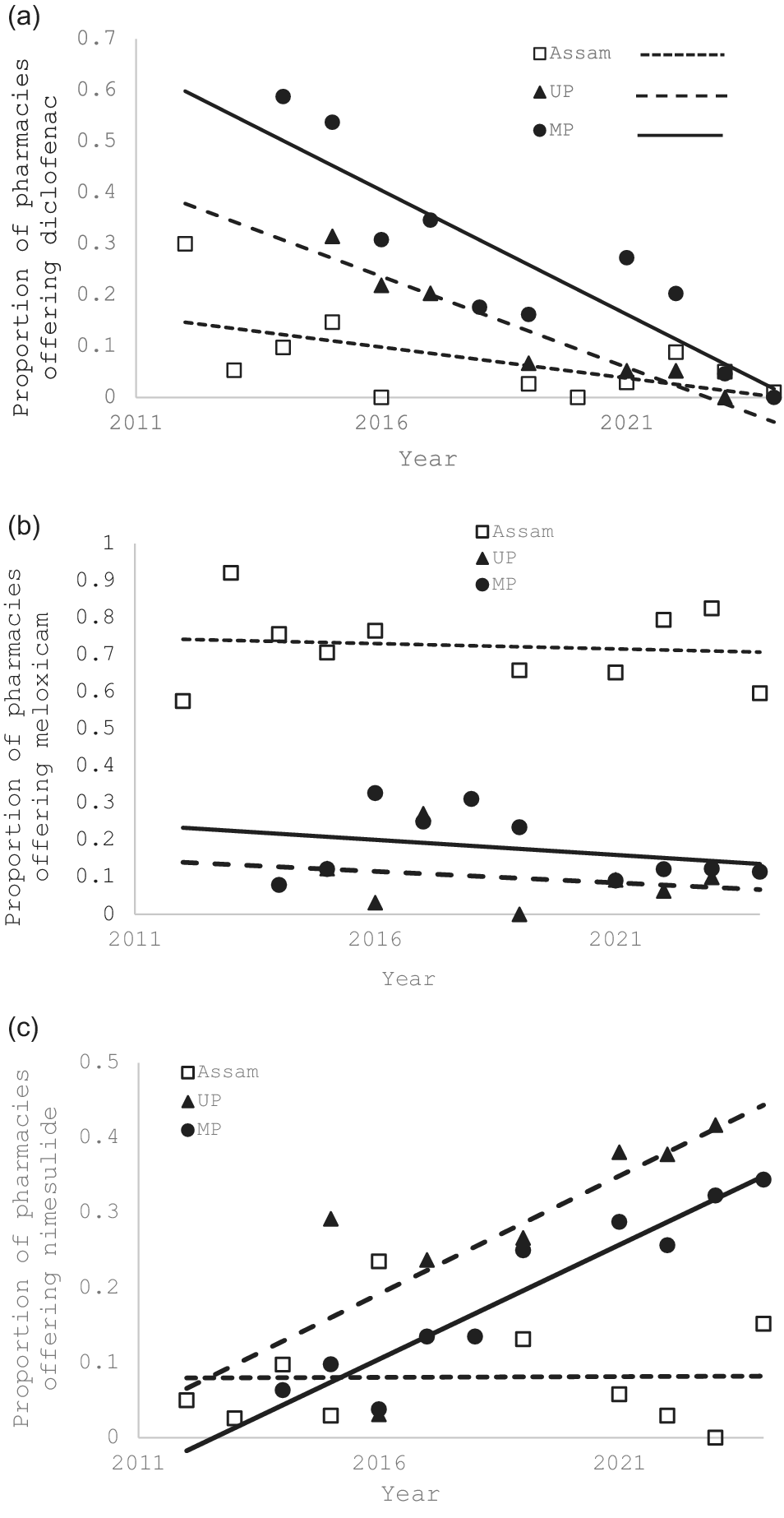
There were significant declines over the period 2012–2024 in the proportion of pharmacies that offered diclofenac in all three VSZs for which there were long enough time series data to analyse, i.e. Assam, Madhya Pradesh, and Uttar Pradesh (Figure 2a and Table 2). In all three regions, offers of diclofenac fell to zero or near zero by the end of the survey period, from peaks of c.30–60% in 2012–2015 (Table 1a). In the Haryana VRZ, sales of diclofenac declined (near-significantly; to 1.4% in 2021 (Table 1a). In the three states in which pharmacies were surveyed less frequently, diclofenac was offered to surveyors, across years, in 2.9–5.0% (West Bengal), 13.9% (Tamil Nadu), and 25.4% (Rajasthan) of surveys between 2020 and 2024 (Table 1b).
Proportion of pharmacies that offered for sale for use in cattle (a) diclofenac, (b) meloxicam, and (c) nimesulide during covert (undercover) surveys of pharmacies in three Vulture Safe Zones (VSZs) in India from 2012 to 2024. Regression lines included to illustrate trends in sales of NSAIDs in the three regions. Note varying scale of y-axis.

During 2018–2024, diclofenac was sold in both bolus (21.7%, n = 15) and injectable forms (77.1%, n = 54) in all surveyed regions combined for products in which the type was recorded, compared with 94% (n = 327) between 2012 and 2017. Injectable products were sold in 1-ml, 3-ml, and the illegal 30-ml vial sizes, and where noted (n = 50), all manufacturing companies were based in India (n = 23 companies). From 2018 to 2024, only three 30-ml vials were sold, all in Madhya Pradesh, two in 2018, and one in 2023. Of these, one had a pre-ban 2015 manufacturing date, while the other two were manufactured post-ban (March 2018 and February 2022).
There were no significant trends over the period 2012–2024 in the proportion of pharmacies that offered meloxicam in Assam, Madhya Pradesh, Uttar Pradesh, and Haryana (Figure 2b and Table 2). In all four regions, offers of meloxicam remained stable throughout the survey period (Table 1a and Figure 2b). The proportion of pharmacies offering meloxicam varied between regions across years: Assam 57.5–92.1%; Madhya Pradesh 7.9–32.7%; Uttar Pradesh 0–27.1%; and Haryana 43.4–69.7% (Table 1a). In the three states surveyed less frequently, meloxicam was offered to surveyors on 23.9% (Rajasthan), 27.8% (Tamil Nadu), and 31.7–39.1% (West Bengal) of pharmacy visits between 2020 and 2024 (Table 1b).
Across all regions, where reported (n = 292), during the update period (2018–2024), meloxicam was sold in both bolus (43.8%, n = 128) and injectable forms (56.2%, n = 164). Injectable products were sold in 15-, 30-, 99-, and 100-ml vial sizes, and where noted (n = 50), all manufacturing companies were based in India (n = 21).
There were significant positive trends during the period 2012–2024 in the proportion of pharmacies offering nimesulide in Madhya Pradesh and Uttar Pradesh (Table 2 and Figure 2c). There was also an increase, albeit non-significant, in Haryana VRZ. In the final surveys in these states, nimesulide was either the most (Uttar Pradesh, 2023, 41.7%), or second most common NSAID offered (Madhya Pradesh, 2024, 34.4%; Haryana, 2021, 44.6%; Table 1a). In those states surveyed less frequently, nimesulide was also the first or second most common drug in Tamil Nadu (19.4%) and West Bengal (31.9–40.0%) and was also present in Rajasthan (8.5%).
There was an increase in the proportion of pharmacies offering piroxicam in Madhya Pradesh (Tables 1a and 2), where it was the most common drug sold in 2024 (54.1%). In Uttar Pradesh, sales were fairly stable but it was either the most or second most common drug in most years, ranging from 14.0% (2015) to 71.9% (2016) (Table 1a). This drug was present at low prevalence in most other states (Table 1a and b). Sales of aceclofenac became more common later in the survey period (Table 1a and b) and peaked in Uttar Pradesh in 2022 (33.3%), West Bengal in 2023 (20.3%), and Assam in 2024 (15.3%). The increasing trend was statistically significant in Assam (Table 2). Tolfenamic acid was offered at low levels in most states (Tables 1a and b), ranging from 0 to 6.7%.
In the four states surveyed throughout the whole period, across all years the proportion of NSAIDs supplied that are known to be safe, i.e. meloxicam and tolfenamic acid, was 34.4% (n = 646, range: 27.5–75.5% per year), 43.7% (n = 821) were vulture-toxic, and 21.9% (n = 411) were of unknown toxicity to vultures. There was no trend during the period 2012–2024 in the proportion of pharmacies offering toxic drugs over time (t10 = 0.38, P = 0.71). In the other three states, overall, 34.3% (n = 81) were safe, 59.3% (n = 140) were toxic, and 6.4% (n = 15) were of unknown toxicity.
Nepal
Between 2012 and 2024, a total of 911 covert pharmacy surveys were conducted, in 703 (77.1%) of which NSAIDs were offered. No drug was offered on 22.6% of all visits (n = 206). A drug that was not an NSAID, dexamethasone sodium, was offered on 0.3% of visits (n = 2). The proportion of pharmacies in which an NSAID was offered was similar across regions: range 75.5% (Eastern Terai) to 80.7% (Mid-Hills). Meloxicam (93.5%) was the most commonly offered drug overall, followed by nimesulide (3.1%), tolfenamic acid (2.1%), diclofenac (1.1%), and piroxicam (0.1%) (Table 3).
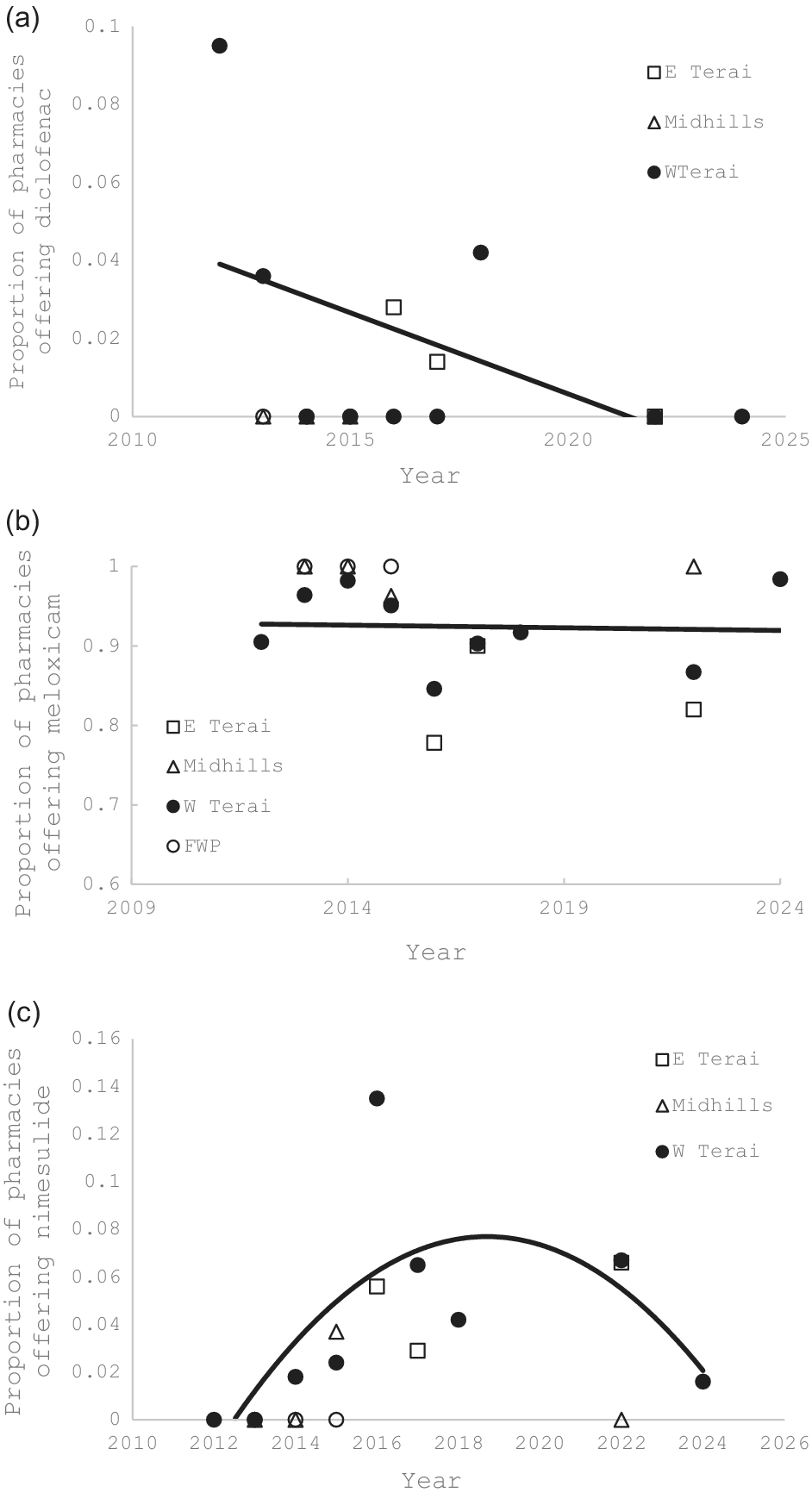
In all four regions, the proportion of pharmacies that offered diclofenac during the period 2012–2024 fell to zero by the end of the period, with peaks of 2.8% in the Eastern Terai in 2016, and 9.5% in the Western Terai in 2012 (Table 3). In the Western Terai, the trend was not statistically significant (b = -0.521, SE = 0.31, t7 = 1.69, P = 0.13) (Figure 3a).
Proportion of pharmacies that offered for sale for use in cattle (a) diclofenac, (b) meloxicam, and (c) nimesulide during covert (undercover) surveys of pharmacies in four regions of Nepal from 2012 to 2024. Regression line for the Western Terai region included to illustrate trends in sales of NSAIDs. Note varying scale of y-axis.

A total of eight vials of diclofenac were offered by pharmacies, all of which were in injectable form. Of these, seven were 30-ml vials, all manufactured prior to the ban on multi-dose vials in 2015, although sold in later years. One 3-ml (human formulation) vial was supplied in the Western Terai in 2018. All companies that manufactured diclofenac obtained in Nepal were based in India (n = 6 companies).
In all four regions, the proportion of pharmacies that offered meloxicam remained high throughout the period 2012–2024 (Table 3). In the region with the longest time series of data, Western Terai, there was a slight, but statistically significant, decline (b = -0.046, SE = 0.02, t7 = 2.35, P = 0.05 (Figure 3b).
Across all regions, where reported (n = 605), meloxicam was sold in both injectable (91.9%, n = 556) and bolus forms (8.1%, n = 49). Injectable products were sold in 10-, 30-, 50-, and 100-ml vial sizes, and where recorded (n = 616), 89% were manufactured in India (35 companies) and 11% in Nepal (10 companies).
Nimesulide was offered at a small proportion of pharmacies in three of the four regions surveyed (Table 3). In the region with the longest run of surveys, the Western Terai, after a marked rise in the proportion of pharmacies offering nimesulide in the early years of the surveys, there was a subsequent decline in sales (“YEAR”, b = 0.036 ± 0.01, t7 = 2.99, P = 0.02, “YEAR2”, b = -0.089 ± 0.03, t7 = 2.99, P = 0.02) (Figure 3c).
In all four regions combined, across all years the proportion of NSAIDs supplied that are known to be safe, i.e. meloxicam and tolfenamic acid, was 95.1% (n = 665, range: 87.5–99.2% per year), 4.7% (n = 33) were vulture-toxic, and just 0.1% (n = 1) were of unknown toxicity to vultures. There was no trend in the proportion of toxic drugs over time (t7 = 0.75, P = 0.48).
Bangladesh
During six surveys carried out between 2014 and 2024, covert surveys were conducted at a total of 839 pharmacies (mean (SD) = 139.8 (37.5) per year, range = 113–215), during which NSAIDs were offered at 72.1% (n = 605). Where recorded (n = 624 surveys), no drug was offered on 25.2% of visits (n = 157). An alternative drug, either an antihistamine, antibiotic or painkiller, rather than an NSAID, was offered on 1.9% of visits (n = 12).
The absolute number of NSAID product items stocked by pharmacies was 2,037 (mean (SD) = 340 (109) per year, range = 155–484 (Table 4). Ketoprofen (47.8%) was the most offered drug overall, followed by meloxicam (24.9%), tolfenamic acid (15.5%), flunixin (8.2%), diclofenac (1.4%), carprofen (1.2%), phenylbutazone (1.0%), and sodium salicylate (0.1%) (Table 4). In those pharmacies stocking NSAIDs, the maximum number of different products available was nine. Where the data were recorded (n = 2,032), 80.5% (n = 1,636) of NSAIDs were available in injectable, rather than bolus (n = 392) or suppository form (n = 4).
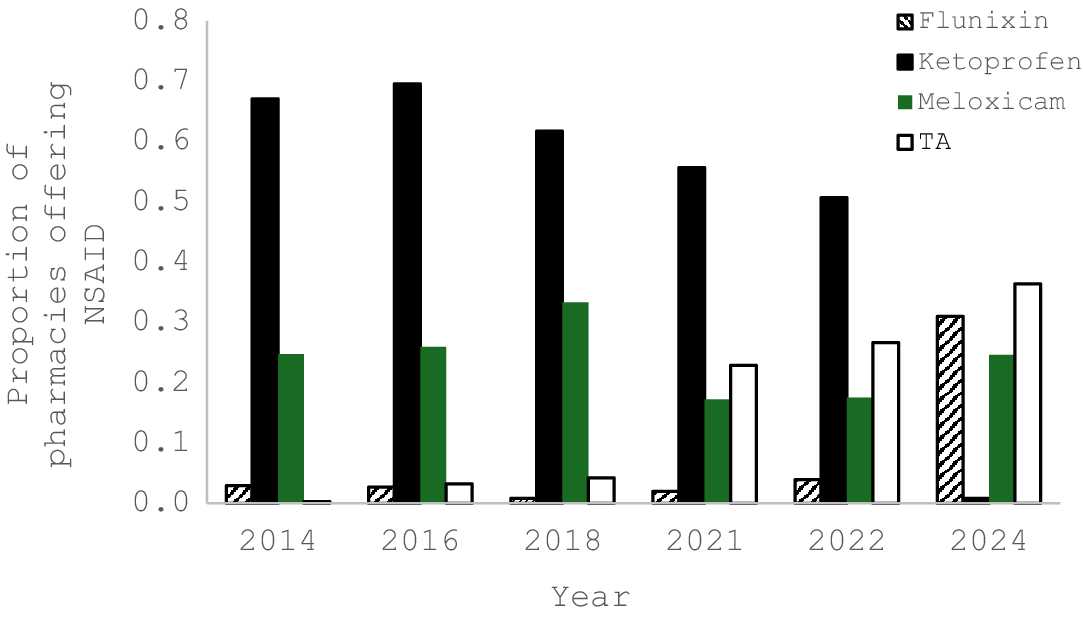
Combining regions together in each year, there was a significant decline in the proportion of ketoprofen available, which was especially marked in the final survey (b = -0.155, SE = 0.01, t4 = 12.7, P = 0.0002 (Figure 4). Stocks of meloxicam remained stable across the survey period (b = -0.019, SE = 0.01, t4 = 1.41, P = 0.23). There were significant increases in the proportion of both flunixin (b = 0.709, SE = 0.07, t4 = 9.80, P = 0.0006) and tolfenamic acid (b = 0.327, SE = 0.02, t4 = 13.2, P = 0.0002) stocked, the increase being especially marked in the final survey (Figure 4). The availability of other NSAIDs was low in all surveys. Stocks of diclofenac declined to zero by the time of the penultimate survey in 2022 (Table 4).
Proportion of pharmacies stocking four different NSAIDs for use in treating cattle during covert (undercover) surveys of pharmacies in two Vulture Safe Zones (VSZs) in Bangladesh from 2014 to 2024.

Where recorded (n = 23), diclofenac was available in both injectable (95.7%) and bolus forms (4.3%). Injectable forms were available in three vial sizes, 10 (n = 1), 30 (n = 13), and 50 ml (n = 8), and were manufactured by companies (n = 8) in Bangladesh and India. Where it was recorded (n = 1996), 50% of all NSAID items were manufactured by a single company and 75% by just four companies.
Across the whole country, in all years combined, the proportion of NSAIDs supplied that are known to be safe, i.e. meloxicam and tolfenamic acid, was 40.3% (n = 821, range: 25.0–61.0% per year), 58.6% (n = 1,193) were vulture-toxic, and 1.0% (n = 21) were of unknown toxicity to vultures. The proportion of NSAIDs that were vulture-toxic decreased over time (b = -0.063, t4 = 6.08, P = 0.004).
Pakistan
Covert surveys were conducted in three regions during 2024 at a total of 132 pharmacies (NE, n = 92; SE, n = 33; SW, n = 7); NSAIDs were offered at all pharmacies surveyed. In addition to NSAIDs, an antibiotic oxytetracycline, was also offered on 7.6% of visits (n = 10 pharmacies, all in NE).
The absolute number of NSAID product items stocked by pharmacies was 652 (Table 5). Meloxicam (44.5%) was the most offered drug overall, followed by ketoprofen (22.4%), flunixin (21.6%), aceclofenac (9.4%), phenylbutazone (1.8%), and diclofenac (0.3%) (Table 5). The only diclofenac stocked (n = 2) was in 3-ml vial human formulations. The maximum number of different products stocked by an individual pharmacy was nine (mean 5.0, SD = 2.8, range = 1–14). All NSAID formulations were available in injectable form only. The majority of NSAIDs were manufactured by just three companies (65.2%) and 99.1% of manufacturers were based in Pakistan.
Across all three regions, the proportion of NSAIDs supplied that are known to be safe, i.e. meloxicam and tolfenamic acid, was 44.5% (n = 290), 53.7% (n = 350) were vulture-toxic, and 1.8% (n = 12) were of unknown toxicity to vultures.
Discussion
Despite the veterinary use of diclofenac being banned for almost two decades, the drug continues to be supplied to treat sick cattle. However, the pattern of use varies across the region. Diclofenac has all but disappeared from pharmacies in Nepal and Bangladesh (Galligan et al. Reference Galligan, Mallord, Prakash, Bhusal, Alam and Anthony2021) and appears little used in Pakistan. Soon after it was banned, in both Nepal and Bangladesh, diclofenac was the subject of substitution schemes, led by conservation organisations and supported by government, that involved the cost-free replacement of pharmacies’ stocks of the vulture-toxic drug with the vulture-safe meloxicam. The stocks of collected diclofenac were subsequently burned, sometimes in official ceremonies (Himalayan News Service 2010). Subsequently, conservation organisations have supported the ban through advocacy and education as part of established VSZ programmes, highlighting the effect of diclofenac on vultures and its ban, while promoting alternative vulture-safe NSAIDs, such as meloxicam and tolfenamic acid. As a result, all districts in Nepal have recently been declared diclofenac-free (Pandey Reference Pandey2023).
In contrast, there is regional variation in the availability of diclofenac in India, where it has declined to near-zero in some states, while still being supplied at relatively high levels in others. Where there has been conservation advocacy and education (see above) associated with VSZs, i.e. Assam, Haryana, Madhya Pradesh, Uttar Pradesh, Tamil Nadu, and West Bengal, the declines in the supply of diclofenac (Galligan et al. Reference Galligan, Mallord, Prakash, Bhusal, Alam and Anthony2021) have continued. Although not directly comparable due to the different methods used to collect data, including the potential for pseudoreplication as more than one pharmacy was surveyed per settlement, in Rajasthan, where there has been no such intensive conservation work, the single survey in 2024 showed that diclofenac was supplied for veterinary use at a far higher rate, constituting a quarter of all drugs offered. As part of the VSZ work in Tamil Nadu, more than 100 court cases have been brought against suppliers, distributors, manufacturers, and retailers of diclofenac (Davies Reference Davies2022). Significantly, the only vials of diclofenac that were found in the Tamil Nadu VSZ were in pharmacies in the neighbouring state of Karnataka, in the outer area of the VSZ, where conservation advocacy has been less intensive (S. Barathidasan, personal communication).
Most of the diclofenac supplied was in the form of 3-ml vials, which are legal to stock for human use, but illegal to supply for veterinary use. However, during 2018–2024 (i.e. well after the ban on multi-dose vials began), three large, illegally manufactured vials were also found, all in Madhya Pradesh. Although one of these vials had a pre-2015-ban manufacturing date, constituting old stock, the other two vials were manufactured by Indian companies after the ban was introduced. This is in addition to other large vials (10 ml and 30 ml) that have been found in pharmacies in Uttar Pradesh, Chhattisgarh, Bihar, and Karnataka, all being illegally manufactured in India since the ban on multi-dose vials of diclofenac (R. Shringarpure, S. Barathidasan personal communication).
The discovery in 2005 that the NSAID meloxicam was not toxic to vultures at concentrations likely to be encountered by birds in the wild (Swan et al. Reference Swan, Naidoo, Cuthbert, Green, Pain and Swarup2006) played a part in the subsequent banning of diclofenac as a veterinary drug, as it provided veterinarians and livestock owners with an alternative with which to treat cattle. Although there were no statistically significant trends in the proportion of pharmacies offering meloxicam, the drug was the most available in both India and, especially, Nepal. In the latter country, this builds on the work by conservationists to reduce the availability of diclofenac partly by donating stocks of meloxicam to pharmacies free of charge (Paudel et al. Reference Paudel, Bhusal, Nepali, Sadaula and Chaudhary2013).
Although such a replacement scheme also operated in Bangladesh (A.B.M. Sarowar Alam, personal communication), meloxicam has not become the most common drug in that country. However, following the nationwide ban of ketoprofen (Davies Reference Davies2021), the gap in the market has been partially filled by tolfenamic acid. This drug was the subject of safety testing on vultures and was found to be safe at concentrations likely to be encountered in cattle following veterinary care (Chandramohan et al. Reference Chandramohan, Mallord, Mathesh, Sharma, Mahendran and Kesavan2021). This is only the second drug, after meloxicam, to be proven to be safe to vultures. It has also been shown to have therapeutic advantages over meloxicam for some conditions (Wavreille et al. Reference Wavreille, Danard, Servais, Art, Nicks and Laitat2012), so provides livestock owners who may be reluctant to use meloxicam with an effective (and vulture-safe) alternative. Although it is encouraging that there was a spike in its availability in Bangladesh, it has been offered in only a small proportion of pharmacies elsewhere in the region. It was absent from all pharmacies surveyed in Pakistan. It should be noted that all safety testing of NSAIDs to find new vulture-safe drugs has been funded by government and by conservation NGOs, with no support from pharmaceutical companies.
A total of 14 different NSAID active ingredients were found during the undercover surveys. In addition to diclofenac, a further four drugs are known to be nephrotoxic to Gyps vultures. Ketoprofen (Naidoo et al. Reference Naidoo, Wolter, Cromarty, Diekmann, Duncan and Mehrag2010), nimesulide (Galligan et al. Reference Galligan, Green, Wolter, Taggart, Duncan and Mallord2022; Mathesh et al. Reference Mathesh, Manickam, Mallord, Mahendran, Asok Kumar and Saikia2023), and carprofen (Naidoo et al. Reference Naidoo, Taggart, Duncan, Wolter, Chipangura and Green2018) have all been confirmed as being toxic in experimental safety testing on Gyps vultures. Aceclofenac has been shown to be a pro-drug of diclofenac, being rapidly metabolised to the latter drug in both domestic cattle (Galligan et al. Reference Galligan, Taggart, Cuthbert, Svobodova, Chipangura, Alderson, Prakash and Naidoo2016) and water buffalo (Chandramohan et al. Reference Chandramohan, Mathesh, Mallord, Naidoo, Mahendran and Kesavan2022) and should therefore be regarded as toxic to vultures, like diclofenac.
In addition to banning diclofenac, the importance of banning other vulture-toxic NSAIDs is highlighted by the trends in the availability of ketoprofen in Bangladesh. Initially, this drug was banned in just the two VSZs (Sylhet and Khulna), which appears to have had a moderate effect on the proportion of pharmacies stocking the drug, especially in Khulna (Table 5). However, following the extension of the ban to cover the whole country in 2023, ketoprofen all but stopped being stocked by pharmacies. Ketoprofen, aceclofenac (both 2023; Sarowar Alam Reference Sarowar Alam2023), and nimesulide (2024; Davies Reference Davies2025) have all been recently banned in India. It will be important to monitor how sales of these drugs are impacted, especially as they (especially nimesulide and aceclofenac) were increasingly being sold during our study period. Other governments should follow India’s lead and ban these drugs. In Pakistan, a substantial proportion of pharmacies supplied aceclofenac and ketoprofen, largely manufactured within the country, so bans on manufacture in neighbouring India may have little effect.
Although the increase in availability of tolfenamic acid in Bangladesh is a positive development, the gap in the market created by banning ketoprofen has also been partially filled by the NSAID flunixin. Although flunixin has not yet been the subject of experimental safety testing, residues of the drug along with typical symptoms of NSAID poisoning (i.e. visceral gout) have been found in both captive (Eleni et al. Reference Eleni, Neri, Gianetti, Grifoni, Meoli and Stravino2019) and wild (Herrero-Villar et al. Reference Herrero-Villar, Velarde, Camarero, Taggart, Bandeira and Fonseca2020; Zorrilla et al. Reference Zorrilla, Martinez, Taggart and Richards2014) Gyps vultures, so it is likely to be nephrotoxic to these species. It was also the second most commonly supplied drug in Pakistan.
Conservation implications
Experimental safety testing of NSAIDs remains vitally important to confirm the safety of drugs of unknown toxicity. This will enable the identification of more vulture-safe drugs, which will give veterinarians and livestock owners greater choice in how to treat their animals. It will also establish which other NSAIDs currently approved for veterinary use are toxic to vultures, and which pose an existential threat to their populations in South Asia. Based on the results of this study, the highest priority for testing is flunixin, for which there is already strong evidence that it is toxic to vultures. In contrast, nothing is known about the toxicity to vultures of other drugs, such as piroxicam and metamizole. Metamizole has been in circulation in India since before the decline in vulture populations (Cuthbert et al. Reference Cuthbert, Taggart, Prakash, Chakraborty, Deory and Galligan2014), so has the potential to be another vulture-safe drug. However, if a drug is found to be toxic to vultures, government bans should be rapidly instigated. Ketoprofen (2010), aceclofenac (2016), and nimesulide (2015) were known, or suspected, to be toxic to vultures for several years before they were finally banned, which is likely to have resulted in large numbers of vulture deaths. There also needs to be strong enforcement of the bans, which is highlighted by the continued availability of diclofenac and the discovery of illegally manufactured (in India) large, multi-dose vials of the drug. Offending suppliers, distributors, manufacturers, and retailers of diclofenac have rarely been prosecuted for contravening the bans (Davies Reference Davies2022). Finally, given the time it takes to ban drugs, the toxicity of drugs to vultures should be experimentally tested before they are licensed for veterinary use in vulture-range countries (Cook et al. Reference Cook, Green, Lieberherr, Bowden, Chaudhry and Alam2024).
The threat of toxic NSAIDs to vultures is a global issue, so all countries that are signatories need to fulfil their obligations under the Convention for Migratory Species (CMS) (Margalida and Green Reference Margalida and Green2025). CMS Resolution 11.15 (Rev.COP13) requires signatories to test the safety of drugs that are already on the market and to require data on safety to vultures before new-to-market drugs are licensed. This includes Spain, which is home to 90% of Europe’s vultures (Margalida et al. Reference Margalida, Donázar, Carrete and Sánchez-Zapata2010) and where diclofenac is still licensed for veterinary use (Margalida et al. Reference Margalida, Green, Hiraldo, Blanco, Sánchez-Zapata and Santangeli2021). Given the importance of India’s pharmaceutical industry in South Asia, and the (numerical) importance of India to the region’s vultures, it is imperative that the Government of India sets an example in fulfilling their obligations under CMS.
Acknowledgements
We would like to thank those who took part in the first set of surveys: Fergus Anthony, Ruchi Dave, Kartik Shastri, Yogesh Kumar, Devendra Chapagain, Toby Galligan, and Khadananda Paudel. We are grateful to the Bombay Natural History Society, Bird Conservation Nepal, IUCN Bangladesh, and WWF-Pakistan for logistic support. In India, we are grateful to the Ministry of Environment, Forest and Climate Change, and the governments of Assam, Madhya Pradesh, Uttar Pradesh, Haryana, Tamil Nadu, and West Bengal. In Nepal, we thank the Department of Drug Administration and Department of National Parks and Wildlife Conservation for their support. In Bangladesh, we are grateful for the support of the Forest Department, and in Pakistan, we thank the various state Forest, Wildlife and Fisheries/Livestock Departments for their support for the surveys. We also thank two anonymous reviewers for providing constructive comments on an earlier draft. Funding was received for undertaking undercover pharmacy surveys by the Royal Society for the Protection of Birds, Rio Tinto, Hawk Conservancy Trust, WWF-Pakistan, Bangladesh Forest Department, Fondation Segré, and the Government of India and its Ministry of Environment, Forest and Climate Change.