In the city there's a thousand men in uniforms…
The Jam, In the City.Introduction: an occupied city
Madrid, de corte a checa, a novel by the diplomat and aristocrat Agustín de Foxá, written over 80 years ago, is still part of the traumatic memory of the Spanish Civil War. In literary terms, this may be the best work to have emerged representing the rebels who staged the coup against the Second Republic on 17 July 1936. Foxá, a member of Falange Española, one of Spain's fascist parties, drew a realistic portrait, from a conservative perspective, of the tensions that had riddled Spain during the 1930s, including in its cities. In one of the novel's most famous passages, Foxá recalls the abolition of the monarchy, describing how the mob took over central Madrid, the capital of the state: ‘the environment in the city had changed. Other faces, other people. Workers dared come to the centre…14 April had taught them a road that they would never forget.’Footnote 1 Foxá wrote this popular work with that image vividly in mind, as he ran away from the Republican rearguard while Franco's staff prepared their plans to occupy Madrid, with all the problems involved in the conquest of a modern city. As the conflict drew on, Foxá's book created a powerful stereotype about the urban world in general and Madrid in particular.Footnote 2
In late March 1939, a few months after the novel's publication, the city was occupied by the Francoist army. It is important not to regard the post-war city as a clean slate, however. The military units that occupied the former capital of ‘¡No pasarán!’ participated in a process of both rupture and continuity, and the violence that was about to be unleashed by the new Francoist state did nothing but deepen the social chasm opened during the war. Recent debates have refined our understanding of post-war periods beyond the idea of a ‘year zero’, in which the ‘new’ stands over against the traumatic legacy of the past.Footnote 3 The setback suffered by the rebels in Madrid in July 1936 triggered a wide-ranging revolutionary process that totally transformed power relationships in the city. The proliferation of militias, committees and other petty authorities undermined the principle of state monopoly over legitimate violence, still theoretically the domain of the Second Republic, while also transferring violence from the streets to the basic unit of sociality: the household. Physical violence was only one expression of a broader phenomenon which was to become manifest at the most basic level of daily co-existence; house searches, pillage and denunciations turned violence against property into interpersonal violence, in the context of other realities such as the rehousing of refugees and the confiscation of properties in a besieged city.Footnote 4
In this regard, it is not a coincidence that recent approaches to Francoist violence have tended towards examining the attitudes and actions of the general population. As has been amply demonstrated, the ‘New State’ encouraged the population to become involved in state violence, but this must not obscure the fact that this co-operation was often a voluntary act, and that the state did nothing but create the channels through which this could be expressed. As such, violence is now also understood as a form of communication between state and society, and one of the ‘bottom-up’ mechanisms in the formation of European authoritarian regimes.Footnote 5 The analysis of informants’ reports in a variety of contexts has improved our understanding about the construction and reconstruction of social relationships seen through the prism of everyday violence, but this analysis has rarely taken into consideration the spaces in which this violence was expressed. Numerous ‘micro’ studies have examined this issue from a quantitative perspective, but have also included important qualitative variables, such as the reasons that motivated informants, the channels through which reports were submitted, the aims that informers hoped to achieve and the broadening of the traditional category of the ‘executioner’. As Eric Johnson's study of Cologne and two nearby towns demonstrated, most proceedings against the ‘internal enemy’ were triggered by denunciations of illegal political activity. This was a ground-breaking study, which displayed the active role played by women at the grassroots level for the Nazi regime; research carried out by Peter Anderson in the rural area of Los Pedroches (Córdoba) has reached parallel conclusions. In both examples, the percentage of the population accused by means of a report issued by another citizen was similar, although in absolute terms the Francoist regime prosecuted many more people overall. For his part, Robert Gellately has demonstrated that in Wurzburg (Bavaria), nearly all prosecutions against people accused of marrying Jews or listening to foreign radio stations began with an act of denunciation by another citizen; in other words, the co-operation of the public often complemented Gestapo-led investigations.Footnote 6
These three works, which focus on informers and those who suffered the consequence of their denunciations, illustrate the presence of violence in everyday life, but do not take into consideration the analytical value of considering social relationships in space. How did close personal contact and intimate acquaintance affect attitudes toward denunciation? What was the relationship between constructed (and ignored) affinities and the scale and nature of shared spaces and opportunities for shared leisure? What tensions facilitated the breakdown of peaceful co-existence, and how were these dynamics different from those attested in larger population centres?Footnote 7 These questions emphasize the value of qualitative approaches and will guide my analysis of Francoist repression in Madrid in the aftermath of the Spanish Civil War. My contribution enters a recent European historiographical debate which examines occupation during World War II from a series of suggestive points of view, such as the dissection of the body politic through the imposition–collaboration dichotomy in the context of management of hunger and scarcity.Footnote 8 But the study of occupation also provides an ideal setting in which to develop an argument focused fully on the urban context. In this perspective, the city presents a problem of public order for the army, whose role in both controlling the behaviour of the population and combating the ‘enemy within’ needs to be examined in the context of the struggle for control over urban space.Footnote 9
Based on these basic principles, I suggest outlining the relationship between Francoist violence and the city by using the example of Madrid, where the prosecution of the crimes defined by the New State faced three specifically urban challenges: breaking into neighbourly relationships; discovering spaces of sociality; and controlling movement in the city. In order to evaluate the urban implications of this process, I rely on the analytical strengths of the ‘Spatial Turn’ in order to examine various expressions of Francoist violence in the post-war city.Footnote 10 Although space has not received much consideration as an analytical variable for the study of violence, the complex reality of the military victory that defined Madrid in the aftermath of the Spanish Civil War has been the focus of approaches that combine cultural geography and urbanism to delineate the patterns of ‘New State' cultural imposition, through describing the representation of military triumph and through evaluation of the political use of war trauma in the city by means of urban reconstruction.Footnote 11 My analytical proposal also reintegrates historical facts into space, but it does so through the creation of cartographic sources to consider the different ways in which the occupation force was expressed, just as the post-war order was imposed on the city. Mapping quantitative and qualitative factors illustrates both the logics and challenges of controlling Madrid after the entry of the troops.Footnote 12
My ‘micro’ perspective thus focuses first on Chamberí, the second most populous district in pre-war Madrid. The district was home to 12 per cent of the city's inhabitants, and in 1936 it symbolized the complexity of the city in terms of size, economic structure and social-professional profile. This urban sector is also interesting because it lies between the city's historical centre to the south, and peripheral suburbs to the north. The district was characterized by social contrasts, the population ranging from a majority of skilled wage labourers to proletarianized day-labourers and including some better-off employees. These disparities were reflected in the urban infrastructure and fabric, turning Chamberí into a small-scale model of the city at large.Footnote 13 I also examine the violent imposition of the Francoist regime with the example of Tetuán, a suburb in northern Madrid, much more socially homogeneous than Chamberí but equally interesting in terms of tracing the breakdowns and continuities in the occupied city. From the late nineteenth century onwards, Tetuán had been consolidating its identity as a ‘rebel suburb’, whose urban development was autonomous from Madrid but at the same time connected to it. Tetuán can be seen as the proletarian city on the margins of the capital of the Spanish liberal state: as recent approaches from urban history have pointed out, this fact shaped the repertoires of collective action, the political cultures expressed there and the multiple links between identity and protest. By the time of the proclamation of the Second Republic, this suburb could be considered the epicentre of anarchism in Madrid. Its significance was clearly proved by the dispute over its political orientation: alongside the prevailing libertarianism, which had several athenaeums and other vehicles for anarchist politicization, there were other political groupings, including the PSOE, the social-democrat party, or even Falange Española, the leading Spanish fascist party.Footnote 14
Chamberí and Tetuán districts will appear recurrently in the following pages. The discussion is divided into three sections, in order to demonstrate how the logics of Francoist occupation violence were both guided and challenged by some characteristic urban realities and from very specific spaces. In the first section, I will be looking at neighbourhoods to consider how feasible it would have been to establish the attitudes of concierges and tenants, when required to do so by the new authorities. In order to do this, I will analyse the forms distributed by the Army Audit Office, the body in charge of the administration of justice in the ‘new time’, in both quantitative and qualitative ways. In the second section, the urban diversity of the spaces of sociability will be evaluated by analysing the place of origin of the ‘social and political reports’ (informes de conducta politico-social) produced by different control agencies concerning individuals connected with the Cinema Europa, which had been an anarchist centre during the war. Finally, the third section deals with urban mobility, a major challenge for occupation authorities and the post-conflict order established in Madrid. I will examine it by evaluating social participation in the post-war black market, which emerged as a response to the failure of the official supply system. The clandestine flows of supply took advantage of the different means of transport and spaces for trade, as well as variations in residential density between the city and the suburbs. These three approaches will allow me to describe how Francoist force spread out through the city in the post-war period and to consider the different ways in which violence was part of the Francoist military occupation of a city.
Neighbourly relations
The authorities of the so-called ‘occupation army’ were aware of the challenges posed by a city such as Madrid. In order to address them, they tried to enlist the co-operation of the local population, and on 1 April 1939, officially called ‘Victory Day’ by the Francoists, an edict was published by the Army Audit Office: ‘The serenity of our victory allows us to measure exactly the guilt of our enemies.’ This proclamation was directed at groups that were regarded as key to defining responsibilities in the capital of the New State, and to this end the text presented a complex and diverse ‘geography of scrutiny’. Civil servants, committee members and night watchmen (who occupied a space between the public and the private spheres, the streets and houses) were summoned for interrogation. The fifth article of the edict clearly displayed how the logic of urban control was being followed by the military occupants, by also summoning within 10 days the ‘two oldest male inhabitants’ in each building. According to the text itself, ‘the entire neighbourhood of Madrid is warned of the inescapable obligation to answer’. Should they not respond to these summonses, citizens could be ‘punished according to the war code’, the reach of which was ubiquitous during a time when each district had its own military tribunal. This reflected, at the punitive scale, the division of the city into militarized sectors, as part of a wider strategy to guarantee a successful occupation. Military justice was conducted in district mayoral offices, home to bodies that had traditionally regulated co-existence, and which were now made an instrument for the prosecution and punishment of their own citizens.Footnote 15
The Army Audit Office thus based its strategy on Madrid's district offices, where night watchmen and residents were to be interrogated. The aim was to limit the field of operations in a city whose occupation, only completed in March 1939, had already posed an enormous challenge for the occupiers during the hostilities.Footnote 16 In addition to Madrid's size, the occupiers had to find a solution to the traditional anonymity that pervades major cities, and which hampered the work of the military tribunals. The authorities also feared that breaking into the nexus of personal relationships at the local level would be difficult, and tried to invoke the ‘state of war’, the fourth article of which equated contempt with rebellion, to threaten people into complying with their wishes.Footnote 17
The interrogations that followed the edict were the first apparatus with which the new authorities aimed to control the population, with apparatus understood to mean ‘anything that has in some way the capacity to capture, orient, determine, intercept, model, control, or secure the gestures, behaviours, opinions, or discourses’.Footnote 18 The target was to penetrate local networks of sociality at the neighbourhood and even the building level, from which two types of testimony emerged: that of the residents, under oath, and concierges, who were summoned to collaborate and who, simultaneously, were regarded as suspects. This differential approach affected the way both groups of respondents reacted to interrogation. Although the questionnaires were different, everyone had to fill them in and return them within two days. In both models of questionnaire, most questions enquired directly about possible episodes of violence directed against property and persons within the building. Both residents and concierges had to tell the agents of the Audit Office what had happened in the past three years (questions 1–2 and 3, respectively), but if the concierges’ behaviour was under suspicion (questions 5–8) they were obliged to find two guarantors of their testimony and residents had to confirm the veracity of the concierge's testimony and evaluate his conduct. Despite this, as Daniel Oviedo has pointed out, the forced participation of concierges was only one of the many forms that post-war accusatory practices took in Madrid.Footnote 19
With the frontline of the war established inside Madrid itself, the questions reveal that the new authorities were concerned about violence among the rearguard during the war, but also about forms of sociality and leisure in public spaces, political attitudes and power relationships. Local communities became veritable echo chambers of urban life, dissolving anonymity and displaying what each resident thought should be considered an ‘offence’ according to the state of war. This was especially prominent in those areas which, before the war, best represented the complexity of urban experience in terms of social/spatial segregation, ‘post-code mobility’, distance between home and workplace and the occurrence of recreational areas.Footnote 20 The authorities also took advantage of neighbourly and domestic conflict in a city ravaged by war, turning neighbourhoods into primary sources of denuncation. The monitoring of individual behaviour became a hallmark of this apparatus, which used information and denunciation as direct mechanisms of control in post-war Madrid.Footnote 21
Before the war, Chamberí was a veritable social kaleidoscope, but during the conflict the district underwent profound changes, suffering the direct effect of violence; residents and doormen submitted 573 accusatory reports, 30 per cent of all the statements issued (Figure 1). In the list of accusers, house owners and members of the middle classes are over-represented, according to the data contained in the urban census. Therefore, it seems that the Army Audit Office of the occupying forces took advantage of social inequalities to give punitive expression to their manoeuvres to control the city.Footnote 22 The instructions given to the units that occupied Sector 3 (Chamberí) expressed their concern regarding the presence of very different social profiles in the same space. While middle-class areas were regarded as ‘peaceful’, working-class areas were looked upon with suspicion, a pattern seen later in European cities during World War II. Liminal areas, which separated and at the same time linked better-off and poorer areas, were closely monitored.Footnote 23
Accusatory reports issued by residents and concierges from Chamberí
Sources: Archivo Histórico Nacional, FC-Causa General, 1357, Exp. 1–4; Centro Documental de la Memoria Histórica, DNSD, Recuperación, Secretaría, Caja 11, Exp. 10; HISDI-MAD; and Rubén Pallol Trigueros, ‘El Madrid moderno: Chamberí (el Ensanche Norte), símbolo del nacimiento de una nueva capital, 1860–1931’, Complutense University of Madrid, doctoral thesis, 2011, 592.
Author's elaboration in co-operation with Chema Sánchez Laforet.

The populous area of Hipódromo was predominantly inhabited by well-to-do middle classes, and illustrates the need to understand social class as ‘a particular way of thinking about social identity’, rather than as ‘an observable or pre-existing topography of structurally distributed differences’.Footnote 24 Hipódromo was an area characterized by medium–high rental values, inhabited by practitioners of the liberal professions, office workers and even a few members of the real-estate-owning elites who had decided to abandon their traditional haunts in the city centre. The area can be used to exemplify the whole district, as it was situated between the richest areas in Alfonso X, to the south, and the proletarian-dominated sectors, such as Cuatro Caminos, to the north. It also stood as an emblem of the growth of pre-war Madrid, as the old hippodrome was transformed into the Nuevos Ministerios complex during the Second Republic, creating a launch pad for the concerted growth of the city towards the north.Footnote 25 The absolute number of accusatory reports that were issued in this area is, perhaps, a secondary matter. We do not yet know the exact number of forms that the authorities distributed, but we can outline the streets in which this distribution was most intense, and what its outcome was. Areas in which forms were distributed most widely include Raimundo Fernández Villaverde Street, which separated Hipódromo from Cuatro Caminos Square and where interrogations involved 12 buildings and 31 witnesses, resulting in 6 prosecutions. Along Ponzano Street, an axial road that linked the north of the neighbourhood with important thoroughfares such as Santa Engracia street to the west and, again, with Cuatro Caminos Square, forms were distributed to 22 buildings and found 60 respondents; the ‘success rate’ was similar, with 13 prosecutions.
The forms asked concierges and residents to rehearse a continuous narrative between July 1936, when the coup against the Republic was staged, and April 1939, when the war officially ended. On 6 April, Gaspar, concierge at 8 Ponzano Street, remembered the summer of three years earlier so vividly that he attached an additional statement to the form. He explained that on 28 July the shop on the ground floor was assaulted by a ‘large mob, forcing the owner to hand over his merchandise to them’. Madrid had become a de facto rearguard even before coming under siege, and this had a direct effect upon life inside its residential buildings. This made the testimony of concierges, located halfway between the public and the private sphere, a valuable asset to the military justice of the occupiers. A little further up the street, in number 65, residents Fernando López and Camilo Benabarre claimed that ‘the concierge's statement mentions a robbery of which we knew nothing’.Footnote 26
The apparatus of control was progressively introduced into the city's neighbourhoods through scrutinizing relationships between residents. Although the forms allowed for data to be cross-checked, it was not what would be called in Foucauldian terms a self-monitoring society. Collaboration and coercion defined a regime that was far from omnipotent, although the definition of what constituted a crime remained the exclusive prerogative of the signatories of the war code.Footnote 27 Although hard evidence is lacking, it can be reasonably assumed that the distribution of forms was targeted at those residents who were regarded as most likely to collaborate with the new authorities, based on reports provided by Franco's information services in the rearguard of Madrid. This was, however, not the only strategy, and the constant suspicion that hovered over the concierges was the real driver that kept the system running. Barely six doors down from 8 Ponzano Street in number 14, Emerenciano Barrajón, 60, felt compelled to clarify that he had joined the caretaker section of the socialist trade union UGT ‘under pressure from a propagandist of the union’. His story was full of holes, as immediately afterwards he denied knowing this person, but is an apt illustration of the situation in which concierges found themselves during and after the war. Along with their domestic service, they played a decisive role, either protecting the basic unit of co-existence or exposing it to violence against property and persons. In number 50, the residents did not hesitate to vouch for the personality of the female concierge ‘whose behaviour with all residents was always impeccable’.Footnote 28
The mechanisms implemented to facilitate co-operation crystallized in a wide range of stances towards violence. In urban terms and according to the authorities’ point of view, the city-scale itself could be considered as one of the primary grounds for suspicion. In this context, the forms were a reminder of the need to involve the population in these enquiries. Vicente and Plácido lived on the third and fourth floors of 24 Ponzano Street. Asked about residents who had been victims of robberies or other acts of violence, they recalled in detail the experience undergone by the ‘tenant on the 2nd floor, right-hand side door, Mr Julio Hernández, on 8 December 1936’. The sharpness of their recollections was a result of their wish to collaborate with the new authorities, since they had even carried out their own private enquiries, going from door to door:
Following the wishes of the tenant Mr Julio Hernández de la Peña, we take cognizance of the fact that he made enquiries to find out if anyone in the building had reported him, which had led to the search and seizure of belongings and of the flat of which he was to that date the occupant.
Before expanding this statement, the signatories visited all the residents personally, in case they had some information concerning the points raised by this questionnaire.Footnote 29
In 1 Raimundo Fernández Villaverde Street, at the northern end of the Hipódromo sector, Mariano and Julián tried to answer the questions as concisely as possible, and made a list of the residents who had been arrested, abducted or killed, in a sort of snap summary of how Madrid had turned from rearguard to warzone. The concierge endorsed the list made by her neighbours, while denying being related to any party; her actions, she said, had only aimed at helping ‘different residents’.Footnote 30 ‘Order’ was the priority for the occupiers, and the forms contributed to the consolidation of Francoist government measures by stimulating denuncation, in a dynamic that reflected urban social patterns.Footnote 31
Sociality
Alejandro Sirvent waited until 20 April to report those whom he suspected of killing his father and his brother-in-law. He had spent the two weeks that followed the occupation of the city investigating the whereabouts of these people. By the time he went to the Information Services and Military Police office (SIPM, in Spanish), the information collected by Francoist spies during the war had already resulted in numerous arrests. The details of Alejandro Sirvent's report were used by security officers, who were trying to adapt their experience as agents of punishment to the urban context. By early May, they had already arrested 20 people related to Alejandro's past, a great success for the Francoist police, which was still forming; by the time Alejandro submitted his complaint, the SIPM alone had arrested 2,921 people. From the perspective of the occupying army, managing information was crucial if acts committed during the previous regime were to be punished.Footnote 32
The interrogations held in the military police barracks in the south-east end of Chamberí district soon turned to forensic reconstruction of social spaces in the rearguard of the city under siege. Most detainees had a more-or-less direct connection with the Cinema Europa, a projection hall which had been used as a headquarters by the confederate militias of Confederación Nacional del Trabajo, and as a supply depot, seat of the Ateneo Libertario of the district of Tetuán and finally a checa (a detention centre). Most of them were not close neighbours, but the Cinema Europa was one of the main focuses of their union militancy, and that led to other social interactions elsewhere: sharing the same working space (some of the detainees had worked in the construction sector in the 1930s) or visiting the same locals. Ángel González knew the main executioners of the Cinema Europa checa, whom he saw ‘often in the bars and taverns of Cuatro Caminos’, in the southern side of the district. Santiago Vicente enlisted as a volunteer in an anarchist military column, with which he attended several frontlines, and then back in Madrid he was named in charge of the Comité de Defensa, the institution that co-ordinated the libertarian public order structure in the district.Footnote 33 The multiple activities taking place at the projection hall made it a perfect environment in which to find and summarize the sociality of anarchist militants and other people. Mercedes Velasco, receptionist at the Ateneo Libertario of Cuatro Caminos, went to the cinema every day to get milk and vegetables that could not be found anywhere else, and soon she gained the trust of committee members. For his part, Francisco Sánchez was reported for enlisting with the confederate militias based at the cinema. The investigations launched by the Francoist police not only revealed the anarchist geography of the pre-war neighbourhood, but also the emergence of the multiple micro-powers that, following the unsuccessful coup in Madrid, denuded the Second Republic of much of its effective authority. In addition, the investigation undertaken by the SIPM emphasized how difficult it was to infiltrate people's attitudes in a large city such as Madrid – by 1936 a modern metropolis – due to, among other reasons, its increasingly politicized population.Footnote 34
After the interrogations were over, the procedure reverted to a military court, whose magistrate decided whether further investigation into the social networks of the accused was required. In reality, the task of the military courts was to ‘conduct’ the investigation based on the state of war declaration, closing the gap between proven and presumed facts as necessary. In this sense, apparatuses such as denunciations, interrogations or statements made by concierges and residents never had the power to incriminate a person on their own. The task of the judges was to collect any kind of evidence, whether more or less specific, referring to the accused people, in order to define the limits of permitted behaviour in the occupied city and to find the roots of their guilt.Footnote 35 This is how the most hidden and diverse places in the city were key to the imposition of Francoist order in Madrid. The judge decided to send police agents door-to-door and targeted the same places where forms had been distributed among residents and concierges one month before. But, this time, the goal was to extend testimonies beyond the buildings, so as to find any detail that could prove their offence.
In late May 1939, Gerardo Heredia was asked to examine his memory and go back through the complex, shifting and often contradictory events that had taken place in the Madrid rearguard three years earlier. This suited his occupation as a waiter, a position where the lines that separated the public from the private sometimes became blurred. A shouted conversation in a bar or a reckless confession may have been his source when he accused Martín Gusi of being ‘an undesirable’, who ‘did not stop home day or night, and always carried his pistol on him’; ‘he frequented all the bad people in Tetuán and Cine Europa’. He even knew that Martín had scribbled the ‘No Pasarán’ slogan on a large board that he had at home. Whenever his memory failed in describing Martín's behaviour, he complemented it with a rumour: ‘there was talk about a phone conversation, in which he said that he had to go and get someone’. Just some weeks before, Julián Navarro had declared he ‘heard by hearsay that the Comité was responsible for confiscating many goods and objects’. Julián, who lived far away from that versatile projection hall during the war, was not among the regular people attending the Europa. All kinds of information were valuable for the occupiers’ justice, regardless of whether it could be proven or not. The new authorities controlled the city with the aid of what the city itself could say about its inhabitants.Footnote 36
The sociality of the committee members helped them to be known beyond the walls of the Europa. The bars on Bravo Murillo Street could certify this. El Leonés, right in front of the cinema, was one of the members’ favourite spots. It was common to see them there and everyone could observe how comfortable they were there during the summer when Madrid was becoming, in effect, the Republican rearguard and urban supply lines began to collapse. A little higher up, on the corner of Juan de Olías Street, was another tavern where they used to meet up. It was logical, because the former Cuatro Caminos police station was situated at number 15 of that same street. It was still operating after the coup d’état in July 1936, and the nearby bar was a key place in which to share news, check on new detainees or agree on the next defence committee registration while the frontlines were drawing closer to Madrid. In the post-war era, the memories shared by waiters with the police officers were essential sources in reconstructing such a distant context. Gerardo's statement complemented the answers given by the concierges at Martín's building. They said that he was ‘a bad fellow, very left wing, and president of the resident's committee’. The concierge of the building where Severino Sesmero lived linked him to the ‘Red militias of the checa in Cine Europa’, adding that when he arrived home he ‘used to tell his wife that his finger was sore, after so much shooting’. Severiana, a neighbour of Santiago Vicente Arrúe, claimed that ‘he belonged to the Ateneo Libertario of the CNT in Cine Europa’, from where he got much of the food that he brought home, and that ‘the rest he distributed in the anarchist Youth headquarters’. She must have been a rather nosy neighbour, for she claimed that she ‘saw in his house pieces of cloth that did not look like the sort of thing that he would buy’. Again, some jobs negated the distance between the public and private profiles of the accused. After military occupation, it was not only public spaces that were ruled by the new public order criteria, but the private sphere was also pervaded by them. Intimacy came under the scrutiny of the Audit Office, because all information could help the government to impose what they considered appropriate behaviour.
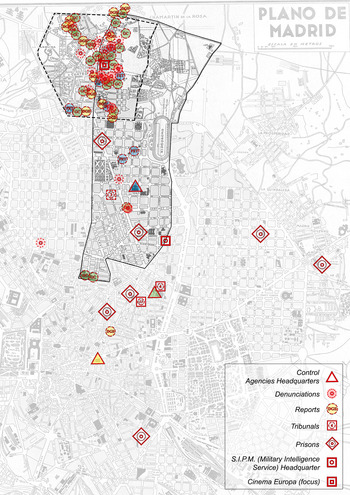
As Leif Jerram has pointed out, space is not an abstract category: it refers to a material environment, a relational element (which is defined by the author as ‘the situation’), and a place symbolically considered as significant. In the eyes of Francoist authorities and the police logic that guided their actions in the spring of 1939, everyday life could offer all those necessary details to establish guilt after military occupation. Words like ‘volunteer’, ‘Red militias’, ‘comité’, ‘ateneo’ and, of course, ‘checa’, showed up in several testimonies and were synonyms of ‘bad people’, just as a waiter defined one of the people arrested as being from the ‘Europa crowd’.Footnote 37 As a result, occupation became an occasion to evaluate the conduct of the population, and attention focused on networks of sociability in urban space. Statements, denunciations and door-to-door testimonies were just some of the means used by the Audit Office to impose order in Madrid during the aftermath of the Spanish Civil War: according to Julius Ruiz, by the end of 1939 this office presided over 17 military courts, the same number as there were of prisons, all over the city.Footnote 38 In their attempts to clear criminal responsibilities and proscribe some behaviours, Francoist authorities used spatial proximity as a punishment strategy. However, in contrast with what was to happen in other cities during World War II, the information did not come from the co-existence between occupiers and occupied and invasion forces did not co-operate with local police forces. As a result of this, although most of the information came from intimate circles, it did not refer only to primary forms of sociability; this is why Francoist authorities were obliged to diversify their sources of information.Footnote 39 The city could provide the protection of anonymity, but private spheres could yield wide-ranging information. In the neighbourhoods, the overlapping circles of sociability reflected the complexity that characterizes urban environments, turning judicial investigations into ‘life stories’ (Figure 2).
Density of denunciations and reports against the ‘Europa crowd’
Sources: Archivo General Histórico de la Defensa, Sumario 13769, Legajo 4110; Centro Documental de la Memoria Histórica, DNSD, Recuperación, Secretaría, Caja 11, Exp. 10; and HISDI-MAD.
Author's elaboration in co-operation with Chema Sánchez Laforet.

The map of denunciations and behaviour reports against people connected with Cinema Europa reveal the multiple directions of urban sociality. The Audit Office collected a large number of testimonies inquiring into their political past during the war and even before, throughout the 1930s, a decade marked by great social conflict. Of course, these testimonies and denunciations were submitted by the residents of the working-class neighbourhood of Tetuán, but also by mere acquaintances or people who had heard about their ‘rearguard’ responsibilities in terms of maintaining public order. For those under suspicion, their behaviour in public in the street or in the bar and their intimate conversations in the home were recovered by police officers following the multiple contacts that the city allowed, which mapped onto different levels of sociality, transcending the circles of residence and family. Within the logic of occupation violence, this meant that the authorities had to mobilize a wide range of police resources to identify attitudes charged in the state of war declaration. For this purpose, the Audit Office demanded reports to the agents of the Dirección General de Seguridad (Central Police Office), of the Jefatura Provincial de Información e Investigación (Central Provincial Information and Investigation Services) of Falange Española, the fascist party, and of the Guardia Civil, a traditional agency of social control established in the nineteenth century. Political reports went beyond the streets of Tetuán district and spread along the Chamberí district, and the Audit Office co-ordinated the action of three different tribunals while suspects were jailed in seven prisons. In urban terms, in post-war Madrid, the criminal responsibility of a single person might be declared in different places due to the extreme mobility allowed by the city.
Mobility
On 1 April 1939, after Franco's forces entered the city, the press began talking about normal life resuming. On the streets, the trucks of Auxilio Social, the charity organized in the rebel rearguard during the war, did their rounds distributing food among the famished population. These trucks followed the lead of the occupation forces; the division of the city into districts was only the first step in establishing control over the complex urban fabric. Control expanded, following the major avenues, from strategic locations in squares, at metro and train stations and at key road junctions. Machine-gun nests and snipers ensured public order, and traffic was restricted by strategically located barbed wire.Footnote 40 The occupation produced both metaphorical and physical spaces that made possible militarized control over some of the basic expressions of urban identity, such as anonymity and mobility. Public space expressions were replaced by public order criteria, which not only destroyed the streets as a communication axis, but as the ‘basic unit of life’ for large sectors of the population.Footnote 41 But, in terms of urban supply, that order was more fictitious than real.
According to the structure of military occupation, the Column of Order and Occupation Police was the highest body responsible for the control of Madrid after the entry of troops. It was also responsible for supplying the city, one of the several tasks commissioned to the ‘Services Branch’ of the Column.Footnote 42 The organization of the occupation seemed to be able to face the challenges of managing the city on a day-to-day basis. In the words of the new Francoist mayor, Alberto Alcocer, the occupation was going to ‘require a firm will, an inexhaustible spirit of work, a titanic effort, a boundless effort to restore as quickly as possible all the services of the city’. Alcocer was optimistic about the timing for reinstating normality: ‘in a matter of hours the problems that concern me most, which are the problem of the city's supply and the problem of health’ might be solved.Footnote 43 This public statement was made on 30 March. Nevertheless, the situation was much more complicated than the mayor's unrealistic ambition to establish some degree of normality. Barely six weeks later, on 17 May, the authorities imposed rationing throughout the country, continuing with their wartime policy.Footnote 44 Far from solving the problem of supply, this measure made matters worse, because the rations fell far short of meeting the population's needs. As a result, the inhabitants of Madrid sought ways to bypass official distribution systems. From the point of view of the occupying forces, participating in the black market was a severe offence, at the same level as military rebellion (and thus punishable by up to 30 years in jail, or even death).Footnote 45 Thus, from the outset, the distribution and consumption of resources was perceived as part of the regime's public-order apparatus.
From that point on, finding efficient ways to implement policies of control, including over people's daily lives, became one of the dictatorship's main concerns. The creation of a series of public bodies to organize production, distribution and consumption, as well as to prosecute transactions which contravened official price policies, was a reaction to the reality of the streets and a process that, rather than lasting months, as originally intended, spanned the central years of the post-war period. The system was set up by ‘technical’ bodies with links to the Francoist authorities, such as the Comisaría General de Abastecimientos y Transportes (CGAT, General Commissariat of Supply and Transport), along with others, the nature of which were openly punitive, such as the Fiscalía de Tasas (Price Prosecution Office), which prosecuted all forms of illegal trade. Both institutions collaborated with military tribunals, the logic being that stamping out illegal trade circuits was yet another way to control urban space. Although the population contravened the original restrictions on urban life, the occupying authorities demonstrated their ability to adapt successfully to these shifting conditions.Footnote 46
In this way, the occupation dealt with all infringements by the application of a single code: military law. Like most cities, Madrid needed to bring in supplies from the outside, so the new authorities were able to dominate the city by controlling supply and consumption circuits.Footnote 47 Out in the streets, however, people came into contact through various spaces, in settings which the authorities had not predicted, thus creating an urban geography beyond the official one. The investigation initiated against Emilio Marqués Prieto in mid-December 1941 is illustrative in this regard.Footnote 48 Emilio was a peddler, a trade which took him around the city, meeting numerous people and engaging in a wide variety of transactions. His house, in the northern suburb of Tetuán, was searched by the police. The report is eloquent: they found four hams which he had brought from his village, 16 kg of lentils, 10 kg of white beans, 8 kg of unroasted coffee and 5 kg of sugar, as well as two tins of oil, which together weighed over 30 kg. In addition, he had several sacks of barley for his own consumption, as well as 20 kg of oats to feed a ‘horse and seven chickens that he has in his house’. Emilio's property, which was clearly rural in nature, was one of his survival strategies, although his forms of sociality were clearly urban. In his godson's admission, with regard to the tobacco seized during the search:
He admits that he received this tobacco from an individual of whom he knows nothing other than his name, JUAN, whom he used to meet in INGLÉS bar in Glorieta de San Bernardo, who took him to his home in a taxi, for which he had to pay nothing. They agreed that the tobacco would be paid for once he could find purchasers for it among the sellers in Glorieta de Bilbao and Quevedo.
Bars were ideal settings for clandestine transactions, perfect places to move around the city while staying under the radar of the authorities. Juan, the middleman, decided to store the tobacco at Emilio's house, which was large and well suited to the task, and used a means of transport which was considered safer than the metro or the tram. The statement highlighted locales to be monitored and means of transport that facilitated the rapid distribution of illegal goods. The police also interrogated Emilio's neighbours. Neither Gregorio Barquilla nor Rafaela Molina had much to add, because they were ‘new in the neighbourhood’, but they knew of his dealings in the Rastro, a large flea market in the city centre. Francisco Cano, for his part, did have something to add to Emilio's police profile. He was summoned because Emilio claimed to have sold him some coffee. Francisco owned a textile shop in the same building where he lived, 18 Esparteros Street, in the city centre of Madrid. He denied Emilio's allegation. He had known the peddler ‘since 1930 or 1931’, and could only define Emilio ‘as an honest man, and reliable in his commercial dealings’; about his ‘private and political attitudes’, he could ‘say nothing’, because he knew ‘nothing at all’.
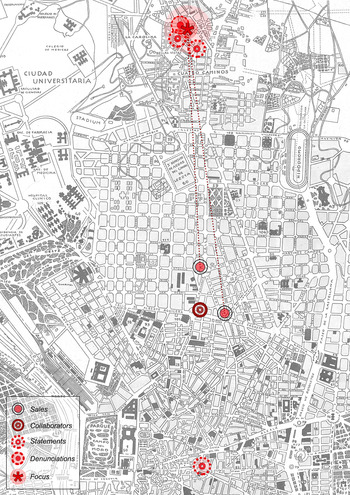
The provincial branch of the Price Prosecution Office conducted the investigation as a police affair, in a way that reveals the operation of official supply circuits. The institutions involved included again the Jefatura Provincial de Información e Investigación of Falange Española, the Dirección General de Seguridad and the urban police as well, which reported to the deputy mayor in charge of the district. The variety of agencies involved makes sense because the investigation against Emilio Marqués spanned very different urban settings owing to his occupation, the place where he lived, the spaces which he made his own and the social networks that he built. The city gave opportunities for personal agency; despite the occupying regime, some people showed themselves to be much more than merely passive subjects.Footnote 49 Tetuán's relatively low population density also explains why his own house, away from curious eyes, stood at the centre of his economic activity. As such, the police could only reconstruct his supply circuit far away from his house. Emilio inhabited a space halfway between the urban and the rural, and his reach was multiplied by acting in the glorietas of Bilbao and Quevedo, which were frequented by people from outside the neighbourhood. It was important to control these places, where not only illegal goods were exchanged, but also opinions, knowledge and experiences. In urban terms, the investigation against Emilio Marqués exposed a series of spaces where residents could organize themselves at the margins of officialdom and make use of urban connections.Footnote 50 As such, identifying these spaces as being in need of control was tantamount to controlling the social relations being woven in the occupied city (Figure 3).
Investigation against Emilio Marqués Prieto
Sources: Archivo General Histórico de la Defensa, Sumario 109268, Legajo 7062; Centro Documental de la Memoria Histórica, DNSD, Recuperación, Secretaría, Caja 11, Exp. 10; and HISDI-MAD.
Author's elaboration in co-operation with Chema Sánchez Laforet.

Re-evaluating the investigation against Emilio Marqués from the perspective of urban space reveals the wide scale of his ‘own city’ an the characteristics of the urban landscape of northern Tetuán. Means of transport that amplified his mobility within Madrid were combined with Emilio's extensive knowledge of the city, a kind of ‘urban cultural capital’ that was well suited to escaping from a regulated market.Footnote 51 Mentioning a taxi was a crucial part of Emilio's middleman statement, since the surveillance of the metro and tram represented an important part of the occupation instructions of the Francoist army, and was overseen by a military officer. The surveillance of the metro received very specific attention in the occupation instructions, which proved it was a challenging reality for the maintenance of militarized order. Controlling the subway was quite different from placing roadblocks in the outskirts, blocking the streets by means of wire fences or delimiting the boundaries between districts above ground. In fact, a special surveillance service was established at the end of the line that crossed the Chamberí district from the city centre to Tetuán.Footnote 52
Final considerations
The military occupation of Madrid in the aftermath of the Spanish Civil War presents a unique setting for analysis, from an urban perspective, of some of the characteristics of Francoist violence in the post-war years. The balance between imposition and collaboration cannot be interpreted as a strict dichotomy, but as a ‘creative tension’ that responded to some of the main challenges posed by urban settings and social relationships. The framework was defined by both rupture with the pre-war city and continuity of some of the processes that the war had triggered in the capital, as it turned into both rearguard and warzone for 28 months. As such, by 1 April, ‘Victory Day’, violence was a fact of everyday life in a Madrid ravaged by bombings, shrapnel, hunger and fear. The capital of the ‘New State’ posed a major challenge to the Audit Office of the occupying army. ‘The environment in the city had changed. Other faces, other people’, said the monarchist writer Agustín de Foxá to describe the agitated years of the Second Republic in Spanish cities. At the end of the 1930, and after the military occupation of Madrid, many of these faces, and many of these people, wore the uniform of collaboration with the newborn Francoist regime in the task of occupying and controlling the urban space.
In order to understand Francoist violence in the city, I selected three characteristic expressions of urban life: neighbourly relations, sociality and mobility. Inspired by the so-called ‘Spatial Turn’, widening the lens allows us to integrate a broad range of qualitative criteria, such as everyday attitudes, which are essential to understand the logic behind the violence unleashed upon the city. The study of denuncation in Chamberí, a district inhabited by people belonging to a diverse range of social classes and located in a peculiar position geographically, demonstrates the success, from the point of view of those who governed the city based on the war code of 1939, of policies aimed at taking advantage of intra-community tensions. This was the first step in the information-management task involved in subduing the city. The density of this urban-control operation is demonstrated in the pervasiveness of suspicion and in the closing of the gap separating the private and the public spheres: any form of information was valuable in terms of breaking the barrier of anonymity behind which crime hid. Suspicion was built upon testimonies that came from the residents themselves, based on public rumours and stereotypes which rendered invalid the difference between presumed and proven facts. This did nothing but reflect the sociality of a major city, which is described in this article through the judicial investigation and door-to-door police work in the working suburb of Tetuán. For future research on violence, space, in this case the urban space, should be considered as a relational element that allows diverse situations and behaviours in many places.
In this sense, the occupation also represented the will to control mobility, one of the most characteristic expressions of urban life. The control of space was only the first step in controlling the behaviour of Madrid's inhabitants, who reacted to the scarcity caused by rationing by developing an unofficial market, socializing in clandestine spaces and forging a city that operated outside the gaze of the authorities. This post-war subversion of order was produced by a combination of factors, including the use of means of communication, the variable density of urban landscape and the implementation of what I have defined as ‘urban cultural capital’, that is the body of knowledge, contacts and experiences offered by the city. The occupation was an expression of Francoist power, to be sure, but also flagged up the challenge posed by it, the difficulties involved in imposing public behaviour compliant with military law. The soldier positioned in the street and the policeman that knocked on people's doors wore uniforms that the residents of Madrid could recognize: they represented authority in the new era. But the city was soon to be inhabited by thousands of other uniforms, which took the shape of suspicion and rumour, even entering the private space. There is where the strength of Francoist dictatorship lay.