Introduction
The usual place to begin a history of neuropsychiatry would be in Greece, and with the writings of Hippocrates. He famously grasped the mettle by declaring that it was the not the gods that caused epilepsy, but “… men ought to know that from nothing else but thence (from the brain) comes joys, delights, laughter and sports, and sorrows, griefs, despondency and lamentations… And by the same organ we become mad and delirious, and fears and terrors assail us…”Reference Adams 1
Exactly how was unclear, and the main interest in the brain, at that time, and for the next perhaps 2,000 years, lay with the ventricles and the “spirits” within. The model of our sensory experiences, and the way they may impinge on memory, was essentially a passive one, impressions forming images like a seal in molten wax. Hippocrates emphasized that health related to the correct mixture of bodily humors; black and yellow bile, phlegm, and blood. Such humoral constructs echo throughout Western medicine, as do ideas of underlying treatments based on balance and harmony.
Two things are important. The discipline that I here refer to as neuropsychiatry has no great resonance with such historical models, and our conceptions of the way the brain interacts with the world around it have altered from being the passive receptor of sensations to the active molder of all that surrounds us and is within us—an active, seeking, creative brain. This paradigm shift in part underpins the development of modern neuropsychiatry, and did not really emerge until the 20th century. Another important factor for the emergence of neuropsychiatry as we know it today was clinical necessity. These ideas are explored in what follows.
Renaissance and Romanticism
The brain itself as an organ of scientific inquiry was of little interest until the Renaissance and the early Enlightenment. The first significant breakthrough came with Andreas Vesalius (1514–1564) who published De Humani Corporis Fabrica in 1543, the same year that Copernicus published his De revolutionibus orbium coelestium. The beautiful anatomical illustrations of Vesalius revealed the brain and its white matter, but he gave no good descriptions. It was Thomas Willis (1621–1675) who literally took the brain out of the skull, correcting many of the anatomical errors regarding the brain’s structure, which had been repeated since the time of Galen. Willis’s anatomy was much concerned with the basal ganglia and the cerebral circulation, and curiously ignored the cerebral cortex. Distinctions between epilepsy and some seizure variants, now referred to as psychogenic non-epileptic seizures (PNAS), preoccupied Willis as they had Hippocrates. But there was a problem that has echoed through the literature on the brain and its functions, which is still with us today, namely mind–brain interconnections, and the tricky question of the soul and its functions. Needless to say, the Greeks had no solutions, neither did the very religious Willis, but the one who changed our perspectives on this was the philosopher scientist René Descartes (1596–1650).
Famous for his “cogito ergo sum,” his broader scientific and philosophical scope is often ignored. Born in France, he was a devout Catholic, and was fearful that his writings might fall foul of the church, as had happened to his contemporary Galileo (1564–1642). A Discourse on Method was published in 1637, Meditations in 1641, and his Treatise on Man in 1664.
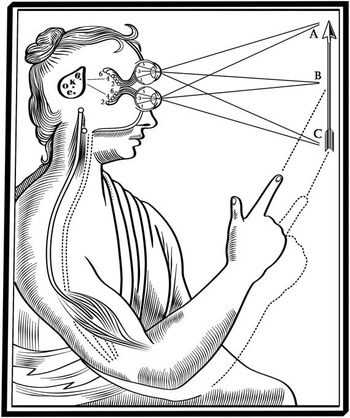
Descartes was after a new method of exploring the nature of the mind. By doubting everything, he came to the logical conclusion that it was not possible to doubt his own existence and as a mathematician he was seeking mathematical-like certainty to the non-mathematical. He considered the essence of matter to be extension in space, but thought was unrelated to matter; it was not extended, and required no place to exist. Humans he viewed as composed of 2 substances” res cogitans, thinking mind, and res extensa, the body: what makes us human could not be derived from the body, or more importantly from the brain. But he had no solution to the conundrum that has plagued neurology, psychiatry, and philosophy ever since, referred to as Cartesian dualism. He liberated the body for study by science, opening up a way for the future scientific exploration of the physical world free from theological prohibition, and his anatomical theories gave us the idea of the reflex (see Figure 1). Brilliant though he may have been, his views on both the mind and on reflex theory accentuated the discipline Willis referred to as neurologie. The passive brain, as a receptor of sensations leading to a muscular response (S -> R) dominated theoretical neuroscience for the next 300 years.
“Descartes’ illustration of the link between sensory perception muscle movement and the role of the pineal. The first illustration of reflex action related to the brain.”

Neural romanticism
It may surprise many that the first people who delivered a blow to the empiricist S -> R approach to understanding the brain were poets. Samuel Taylor Coleridge (1772–1834) was living in revolutionary times and had a revolutionary outlook. Suffering from neuralgia, he used opium and visited Kubla Khan, the land of milk and honey.
Coleridge realized that the materialist/empiricism of Enlightenment philosophy could not explain a Milton, Shakespeare, or a Wordsworth. The mind was not, as the philosopher John Locke (1632–1704) opined, a tabula rasa, but creative, with active powers to shape the world of individual experience. He introduced the English reader to the terms “unconscious” and “psychosomatic,” and to the notion that “thought is motion.”
These ideas that stimulated the poets’ imaginations were reflected in the ideas of some neuroscientists at this time. Alan Richardson discusses the origins of what he calls “neural Romanticism,” key scientists being Erasmus Darwin (1731–1802), Franz Gall (1758–1828), Pierre Cabanis (1757–1808), and Charles Bell (1774–1842).Reference Richardson 2
Early embodiment
Erasmus Darwin in his book Zoonomania covered what seems like nearly everything that was known at that time in medicine, including anatomy and physiology, natural science, and links with current philosophies. He made observations of visual afterimages, which suggested the brain’s active involvement in perception, and wrote about phantom phenomena. Such symptoms were proof that all ideas are excited in the brain, and not in the sense organs. Pace Descartes, the mind was embodied, a view which now has re-emerged in neuroscience and philosophy.
Bell’s Idea of a New Anatomy of the Brain (1811) was an early summary of his ideas of the functions of the brain and spinal cord, based on his own careful dissections. He stated that the cerebrum and cerebellum had different functions, and that the operations of the mind were seated in the former, which was the seat of the intellectual faculties.
The coming together by falling apart
Gall and his pupil and collaborator, the German physician Johann Spurzheim (1776–1832), are most famous for the development of “phrenology,” which became a trivialized and much misused practice in the public eye, but which profoundly altered neuroscience. Gall examined brains of animals, looking at the evolutionary development of brain shapes and sizes with differing naturalistic skills. He was impressed by the increasing complexity of the cerebral convolutions with phylogeny, and in his own dissections, instead of looking at horizontal and vertical brain slices, he dissected along the line of the white matter, showing that it issued from gray matter. He stated that the brain is the organ of the mind, which can be analyzed into independent faculties. These are innate and have their seat in the cortex of the brain. His downfall was that he went on to suggest a correspondence between the contour of the skull and the cortex of brains, such that the size of the individual brain organs and their potential role in the psychological makeup can be determined by cranial inspection.
Although he is today much maligned, as Richardson makes clear, Gall was perhaps the most Romantic of the neuroscientists of this era, as he sought to understand a unity of structure and function within diversity, not only from an evolutionary standpoint, but also within the individual brain. At this point in history, we have a clear development of a “modern-view of the mind … [which] unites mind and body, operating as a single activity/entity in which affect and thought are one in their encounter with experience.”Reference Harrington 4 This post-Kantian enterprise involved concessions to an unconscious edifice of uncertainty and an independence of the embodied mind from conscious control. Examining dreams, drugs, and disorders of the mind led scientists such as Erasmus Darwin and Gall to provide an entirely new view of the mind in which feeling and emotion became the focus, not reason.
Hughlings Jackson (1835–1911)—The First “Modern” Neuropsychiatrist
Central to Hughlings Jackson’s ideas are his 4 principles of nervous action, shown in Table 1. For him, the brain evolved from the undifferentiated, simple, and homogenous to the differentiated, complex, and heterogeneous with integration of differentiated parts. He conceptualized the structure and function of the brain in a hierarchical manner, with interactions between levels, the highest level being in the prefrontal cortex. This was an important principle that was based on inhibition and release, namely that clinical signs involved both processes simultaneously. This led to concepts of negative and positive symptoms, which he opined were present in every neuropsychiatric case. Lesions could never localize a function, only degrade a system, and the effects reflected the continued level of activity of the parts of the brain spared by the lesion. His studies on aphasia led him to reject the growing concepts of strict localization of function, and he thought that while the left hemisphere was the leading one, giving rise to propositionizing, acts which were accompanied by consciousness, the right hemisphere also played a significant role in language production, emphasizing emotionality. In short, “Mentation was a dual process, played out between the two hemispheres of the brain” (Italics in the original).Reference Harrington 4
Hughling Jackson’s 4 principles

Sigmund Freud was much influenced by Hughlings Jackson, as revealed in On Aphasia (1891), which was written in his pre-psychoanalytic time and now is largely neglected. Hughlings Jackson did not accept a “faculty” of language, and neither did Freud, who incorporated ideas of “dissolution” (the opposite of evolution) and of hierarchies of neurological and psychological processes into his theories. The ability of higher aspects of psychological function to be overwhelmed by lower ones became the idea of regression, fundamental to psychoanalysis. In On Aphasia, we find words such as “overdetermination,” “projection,” and “representation” as physiological concepts. Besetzung, which became translated as cathexis, became a central psychoanalytic theme for the way that the libido becomes invested in objects.
Wire Diagrams
The idea that mental diseases were related to brain pathology was being taken in a different direction by Theodore Meynert (1833–1892) and his student Carl Wernicke (1848–1905). The latter noted that not all cases of aphasia had lesions in the areas outlined earlier by Paul Broca (1824–1880), and he described a different form that occurred with lesions affecting the left superior temporal areas. This language disturbance, now referred to as Wernicke’s aphasia, contrasted with Broca’s aphasia, but once again concerned only the left hemisphere. He also described cases of alexia and agraphia. Wernicke’s classification of aphasic disorders became widely accepted, as other cortical syndromes were described. These included alexia without agraphia (Joseph Jules Dejerine, 1849–1917), ideomotor and other forms of apraxia (Hugo Liepmann 1863–1925), and visual agnosia (Heinrich Lissauer 1861–1891). These disorders were re-discovered in the 20th century, and became the basis of what became known as behavioral neurology.
Wernicke’s reduction of cortical functions to discrete brain areas depicted on box and wire-line diagrams did not impress Freud. During the course of his education, Freud had studied philosophy with Franz Brentano (1838–1917), who used the expression intentionality, meaning that every mental phenomenon has a content (intentional in-existence), which is directed toward an object (but not necessarily a thing)—the intentional object. Mentation is always about something and directed toward something, which was a basis of Freud’s object relations theory (in the development of the individual mental life, someone else is always involved), and hence Freud’s ideas of cathexis and libidinal investment. These ideas have important consequences for the developing neuropsychiatry of the 20th century.
The capitulation of our everyday behaviors, let alone psychiatric illness, to unconscious forces was a radical shift of understanding. It was completely alien to traditional Western philosophies, but also to neuroscience. Ideas of the “self” as a fixed moral entity were collapsing, and the philosophical shift from one of “being” to one of “becoming” was underway.
Freud’s split from neurology and his rejection by Vienna’s medical establishment are illuminated by his tussles with Julius Wagner-Jauregg (1857–1940), the most prominent neuropsychiatrist in Vienna at that time. He pursued physical treatments for psychiatric diseases, and was interested in pyrotherapy. His idea was to bring a resolution to the psychosis of dementia paralytica by inducing fevers using malaria. The treatment was partially effective, and rapidly introduced internationally. Since such psychoses at that time were considered incurable, he was awarded the Nobel Prize for medicine in 1927.
20th Century Neuropsychiatrists
The rise of Freudian psychoanalysis, along with the growing emphasis on neurological localization of function, could not but lead to a schism of both intellectual endeavor and clinical expertise. In the first half of the 20th century, there were several neuropsychiatrists who tried to keep a unity of understanding between the developing brain-based neurology and the Freudian psychologies. They included Smithy Ely Jelliffe (1866–1945) and William White’s (1870–1937) Diseases of the Nervous System: A Text-Book of Neurology and Psychiatry (1915), which was a compendium of up-to-date information in neuropsychiatry. Adolf Meyer (1866–1950) entered psychiatry through the autopsy room. He had a thorough acquaintance with European ideas of neurology and psychiatry, and his interest in patients’ social surroundings and personalities led him to his “psychobiological” approach to mental illness. Organization of the structure of the central nervous system needed an organization of function, the latter referring to conscious activity, bringing a “psychobiological” organization to the activity of a cerebrally integrated organism. This was about bringing the personality and known biological facts together. According to Meyer: “We want neuropsychiatrists—not merely neurologists and not merely psychologists, but primarily physicians able to study the entire organism and its functions and behavior and more especially the share of the nervous system and of the problems of adaptation.”Reference Lief 5
Paul Schilder (1886–1940), a protégé of Wagner-Jauregg but a supporter of psychoanalytic ideas, developed a philosophical and psychological background of phenomenology. He sought a methodological foundation for all realms of experience and being, but with a scientific and integrated biological framework. His theories embraced intentionality, a synthetic (active) psyche, and the importance of the body image for an understanding of psychopathology.
“The Disorder That Can Scarcely Be Forgotten”
These are the hopefully prophetic words of another of Wagner-Jauregg’s protégées, Constantin von Economo (1876–1931). In 1916 he reported on a number of patients who presented with an unusual variety of symptoms that followed an influenza-like prodrome. Some had marked lethargy and disturbance of eye movements, and at post-mortem had inflammatory changes almost exclusively confined to the gray matter of the midbrain. He referred to this disorder as encephalitis lethargica (von Economo’s disease), and it soon became recognized as an encephalitis secondary to the influenza pandemics that spread across Europe in the first few years of the 20th century. Survivors had a variety of clinical pictures, including motor disorders (dystonias and Parkinsonian) and anxiety, obsessive compulsive disorders, and psychoses.
Von Economo stated:
The dialectic combinations and the psychological constructions of many ideologists will collapse like a pack of cards if they do not in future take into account these new basic facts. Every psychiatrist who wishes to probe into the phenomena of disturbed motility and changes of character, the psychological mechanism of mental inaccessibility, of the neuroses, etc., must be thoroughly acquainted with the experience gathered from encephalitis lethargica. Every psychologist who in the future attempts to deal with psychological phenomena such as will, temperament, and fundamentals of character, such as self-consciousness, the ego, etc., and is not well acquainted with the appropriate observations on encephalitic patients, and does not read the descriptions of the psychological causes in the many original papers recording the severe mental symptoms, will build on sand.Reference Von Economo 6
An underlying neuroanatomy of neuropsychiatric disorders was being revealed, and a unity of movement and emotional disorders elaborated.
The “integrated action” of the human organism, brain, and mind was important to the neuroscientist Charles Sherrington (1857–1952). For him, the urge to live and procreate formulates the beginning of the mind, a drive which he referred to as “zest.” Sherrington’s investigations led him to study reflex action in particular. He was critical of Descartes’ vision of man as an automaton—a stimulus–response machine, happily disconnected from the mind and hence the soul. He showed that inhibition as well as excitation were parts of the reflex, which graded responses, and allowed adaptation, which was an underlying basis for homeostasis. Although Sherrington espoused a kind of dualism, the mind not being localizable, he was clear that the finite mind was embodied, interlinked with the energy system of the body. The romantic overtones of his views of the nervous system cannot be ignored.
Key Discoveries of the Mid-20th Century
EEG and epilepsy
Hans Berger (1873–1941) discovered that it was possible to record electrical brain potentials from the surface of the skull—the electroencephalogram. Technical developments soon allowed for more sophisticated recordings to be made, and crucial to the development of today’s neuropsychiatry were the contributions of pioneers such as Stanley Cobb (1887–1968), George Engel (1913–1999), Fred (1903–1992) and Erna (1904–1987) Gibbs, and John Romano (1908–1994).
Cobb’s book, Foundations of Neuropsychiatry (1936),Reference Cobb 7 went to four editions, each one adding new information about anatomy and physiology, and continually emphasizing the importance of maintaining integration between neurology and psychiatry: he considered dichotomies between “functional” and “organic” to be simply misleading, since the line between the “physical” and the “mental” was entirely arbitrary. He said, “New points of view are continually emerging and disturbing the neurologist and the psychiatrist who had too soon settled themselves into orthodoxy.”Reference Cobb 7
Fred and Erna Gibbs noted that anterior temporal lobe foci in epilepsy were associated with the highest frequency of psychiatric disorder, especially severe personality disorders and psychoses. Emphasizing the underlying neuroanatomy, Fred Gibbs stated, “The patient’s emotional reactions to his seizures, his family and to his social situation are less important determinants of psychiatric disorder than the site and type of the epileptic discharge.”Reference Gibbs and Stamps 8 The beginnings of the modern era of neuropsychiatry were by now well and truly laid.
Engel and Romano used the EEG to investigate organic brain syndromes, and were both influential in developing medical education with a broad neuropsychiatric emphasis.
Anatomical discoveries
Understanding more of the neuroanatomy of the temporal and frontal lobes and the basal ganglia, and also the descriptions of behavioral disorders associated with these brain areas, were guiding neuropsychiatry toward the independent discipline it is today. The James–Lange hypothesis of the emotions, namely that the afferent input to the brain from sensory and proprioceptive receptors was the basis of the emotion, was shown to be wrong, not only from the animal studies of Walter Cannon (1871–1945), but also from clinical investigations. The concept that certain brain structures could form the foundation of an “emotional brain” was a stunning departure for neurology. The development of new staining techniques allowed an exploration of the neuroanatomy of the basal forebrain by those such as Paul MacLean (1913–2007), as the full range of connectivity of the limbic structures was discovered. Along with others, he challenged the belief that cortical and subcortical systems were distinctly separated, and noted the strong connectivity between limbic structures, the basal ganglia, and the neocortex. These research efforts also revealed the extended influence of the limbic system on the midbrain and brainstem, including connecting with the cell structures that we now know are the origin of the ascending neurochemical systems, especially of monoamine neurotransmitters. The inputs to the limbic structures were thus both interoceptive (from within the body) and exteroceptive (conveying information about the immediate environment). Going further, Maclean discussed how the integration of limbic and neocortical activity were involved in the sense of self, and how the limbic cortex generates free-floating affective feelings, conveying a sense of what is real and true for the individual, but which cannot be expressed vocally. Feelings were “visceral”-—his early preferred term.
The Intentional Brain
As we move to the 21st century, it has been possible to follow the coalescence of ideas and investigations that have become central to an understanding of modern neuropsychiatry. In my introductory comments, I emphasized that this is an independent discipline, whose practitioners require special knowledge and skills, and it is not simply psychiatry with knobs on. The philosophical approach is very different from either conventional neurology (empiricist) or conventional psychiatry (muddled).
Anti-Cartesian concepts following the Kantian revolution, such as intentionality, dethroned the objective necessity of empirical philosophy, appealing for an understanding of our “inner” world and its relation to the external. This was not avowing introspection, but a quest to understand how the subject was connected to the object. Inner perception is immediate, ineffable, and self-evident; we are always conscious of something. Henri Bergson (1859–1941) discussed the élan vital in his Creative Evolution in 1907.Reference Bergson 9 Our actions are the outcome of a preceding series of anticipatory potentials to action, and action itself is involved with what he referred to as the body image of our conscious states. The present is charged with the past, but has a foot in the future: memory, as Bergson implied, is the past pushing into the present and not vice versa.
Action in the world implies anticipation of several possible actions, these being marked out before action itself. Moving beyond the moment of existence is the link to the future. Bergson frequently referred to the brain, which he called an instrument of action and not representation. Motor tendencies give us feelings of recognition, such that perception is no simple photographic reproduction.
Maurice Merleau-Ponty (1908–1961) took a scientific approach to philosophy, and his most celebrated work, The Phenomenology of Perception (1945 English translation 1962),Reference Merleau-Ponty 10 was grounded in a philosophy that emphasized the body and its engagement with the world; he was after the nature of the body–world dialogue. The body was for him the intermediary between mind and matter, with the “body subject” being anchored in a pre-cognitive, pre-objective, pre-reflexive world. He rejected the Cartesian perspective and considered the Lebenswelt, the lived world that our bodies move around in, as most relevant to interpreting the intra subjective world of individual consciousness. Perception as envisaged by Merleau-Ponty was not just the passive receiving of sensory stimuli, but an active process of exploration of the environment.
For Merleau-Ponty, the importance of perception was not to be found in the perceived object but in our experience of it. He concerned himself with the phenomenal field–that which is presented to and experienced by to the perceiver. But, and here is a crucial twist, included in those sensory perceptions are the proprioceptive ones—those which give us information about our own bodies, coming from our limbs and interior organs. We may be visual creatures, but we are also especially tactile: we feel our way in the world. One of the key ideas in The Phenomenology of Perception is motor intentionality. This, for Merleau-Ponty, is the way in which the body directs itself toward and “grasps” objects in a precognitive manner: perceiving is a motor skill. This is a fundamental change of perspective for philosophy, psychology, and neurology. The main line of thinking has always been the Cartesian reflex (S -> R), that stimulus leads to response, perception leads to action. But he inverts this relationship by putting the active seeking brain behind our perceptions.
These ideas are now rebounding in neuroscience, which has much interest in “the social brain,” Theory of Mind (that other people have minds like one’s own), empathy, mirror neurons, and mental time travel (how we see the possibility of future events based on past experiences). Most significantly, there is considerable debate about concepts of embodiment and motor pre-presentation-—a readiness or protension that guides not only what it is that we perceive, but even what it is that we might want to perceive. In effect, the brain anticipates the immediate Umwelt (actions are projacent as the philosopher John Searle coined it), and we use intentions in action, not reactions. Jeannerod refers to this as “motor cognition”: “the motor system (now) stands as a probe that explores the external world, for interacting with other people and gathering new knowledge.”Reference Jeannerod 11
The above ideas place the body’s physiological processes and anatomical structure as fundamental, not only for the rise of consciousness but also for knowledge, reasoning, and creativity. Rational thought is not disembodied, found in some ether-floating Cartesian ego; concept formation is embedded through the body during ontogeny. As Antonio Damasio’s theories imply, emotions are integral to this: “Our brains receive signals from deep in the living flesh and thus provide local as well as global maps of the intimate anatomy and intimate functional state of the living flesh.”Reference Damasio 12
Phenomenology
Karl Jaspers (1883–1969) published Allgemeine Psychopathogie in 1913 (General Psychopathology in English, 1963). His name is closely linked to phenomenology, a philosophical term much abused by psychiatrists. Jaspers wanted to examine the living connections of reality as experienced in the mind,and revealed through mental connections. The dichotomy can be summed up as follows: “We explain nature, but we understand mental life.”Reference Dilthey 13 His approach wanted to capture the essences of mental states, attempting an “objective” descriptive psychology of patients’ inner experiences, free from outmoded constructs and biases of psychology (including Freudian theories). Understanding required empathy-—to immerse oneself in the patient’s mental life with knowledge of our own experiences-—an exercise that was different from seeking causal, empirically founded explanations.
Jaspers’ text is full of descriptions of mental phenomena that are variously classified, and which still form the basis of many of our current psychopathological terms, feeding through to diagnostic manuals such as the later ICD and DSM publications. Sadly, the concept of phenomenology, and the elegant constructions of Jaspers’, of such relevance for neuropsychiatry, have become reduced to descriptions of signs and symptoms allocated to usually unvalidated ratings scales of psychopathology, and degraded further by requiring only a computer to print out the patient’s diagnosis. This is not the way of neuropsychiatry. “Neurophenomenology” is one term that emphasizes attempts to understand the connections, contradictions, and conundrums of the links between neurobiological findings and mental states well beyond the empirical constrictions of diagnoses compiled by committees.Reference Varela 14 As noted above, today’s neuropsychiatry is a special discipline within the clinical neurosciences, which requires special expertise gained through fundamental knowledge of the brain and its structure and functions; the consequences of alteration of these in health and disease; and a philosophy broadly based in phenomenology, embodiment, and empathy. Above all, modern neuropsychiatry has secured a place in the clinical neurosciences because of a clinical need that arose on account of the rift, which, in the 20th century, spilt apart the developing neurology and psychiatry, leaving many patients displaced from effective understanding and management.
Disclosures
Michael Trimble does not have anything to disclose.