Child maltreatment is a profoundly negative stressor that threatens relationship security, alters social and emotional processing, and is associated with increased risk for a number of pathological outcomes in childhood and into adulthood (Cicchetti & Valentino, Reference Cicchetti and Valentino2006; Vachon, Krueger, Rogosch, & Cicchetti, Reference Vachon, Krueger, Rogosch and Cicchetti2015). Adults who were maltreated as children have an increased risk for psychopathology, substance use problems, and physical health problems, including cardiovascular disease (CVD) and cancer (Anda et al., Reference Anda, Dong, Brown, Felitti, Giles, Perry and Dube2009; Cicchetti & Valentino, Reference Cicchetti and Valentino2006; Felitti et al., Reference Felitti, Anda, Nordenberg, Williamson, Spitz, Edwards and Marks1998; MacMillan et al., Reference MacMillan, Fleming, Streiner, Lin, Boyle, Jamieson and Beardslee2001; Miller, Chen, & Parker, Reference Miller, Chen and Parker2011). However, some individuals who were maltreated during childhood exhibit resilience, doing remarkably well outwardly despite having experienced severe stress that violates the expected caregiving environment of trust and support and deprives these children of socioemotional experiences that support positive development (Luthar, Cicchetti, & Becker, Reference Luthar, Cicchetti and Becker2000; Masten, Reference Masten2014).
Resilience in the face of adversities such as maltreatment involves a number of complex, dynamic processes that influence multiple biological and behavioral outcomes across development (Cicchetti & Garmezy, Reference Cicchetti and Garmezy1993; Luthar et al., Reference Luthar, Cicchetti and Becker2000; Masten, Best, & Garmezy, Reference Masten, Best and Garmezy1990; Masten & Tellegen, Reference Masten and Tellegen2012; Rutter, Reference Rutter2012). The processes of resilience are also multidimensional in that individuals may experience both positive and negative outcomes following early maltreatment, as exemplified by maltreated children who show competence in certain domains but not in others (Luthar, Doernberger, & Zigler, Reference Luthar, Doernberger and Zigler1993). For example, while some studies show that many adolescents who have experienced adversity are able to successfully adapt in overt ways, such as doing well in school, these same adolescents often battle covert problems such as depression and posttraumatic stress disorder, which may go relatively unnoticed due to outward successes (Gilbert et al., Reference Gilbert, Widom, Browne, Fergusson, Webb and Janson2009; Luthar, Reference Luthar1991; Luthar et al., Reference Luthar, Doernberger and Zigler1993; O'Dougherty-Wright, Masten, & Hubbard, Reference O'Dougherty-Wright, Masten, Hubbard, Cicchetti and Toth1997). Thus, there may be an underlying cost for striving to succeed. Striving has been broadly examined using a number of terms and concepts, including self-righting tendencies (Cicchetti & Rogosch, Reference Cicchetti and Rogosch1997; Waddington, Reference Waddington1957), self-organizing strivings (Cicchetti & Rogosch, Reference Cicchetti and Rogosch1997; Cicchetti & Tucker, Reference Cicchetti and Tucker1994), grit (Duckworth, Peterson, Matthews, & Kelly, Reference Duckworth, Peterson, Matthews and Kelly2007), active coping (Watson, Logan, & Tomar, Reference Watson, Logan and Tomar2008), and self-determination (Ryan & Deci, Reference Ryan and Deci2000), among others. The idea that there may be an underlying cost for striving is not often considered when examining only surface-level indicators of resilience (e.g., school/work performance, and social and cognitive functioning). The effects of maltreatment are usually examined by studies that focus on either behavioral and surface-level functioning or underlying risk, such as effects on physical health or physiological functioning. However, to our knowledge, no study has considered whether striving to succeed in the context of child maltreatment has hidden physiological and/or psychological costs. If striving to achieve outward outcomes, such as higher education, after experiencing child maltreatment actually increases risk for physical health problems or depression, this would indicate that resilience may only be “skin deep.” The current study aims to examine the hypothesis that striving to achieve following child maltreatment increases underlying risk for physiological and psychological functioning, even when increasing the likelihood of outward achievement.
Striving in the Context of Socioeconomic Adversity
One theory that centers around the idea of underlying costs for striving is John Henryism theory, which postulates that for some individuals, attaining psychosocial competence, an outwardly positive outcome, in the face of socioeconomic adversity may come at a physiological cost (James, Reference James1994). Specifically, if an individual has a high-effort coping style that prioritizes working hard and striving to succeed even when experiencing high stress, they may be more susceptible to this physiological cost even though it is often accompanied by more outward success (James, Reference James1994). Support for this idea that working hard and striving may come at a physiological cost has been demonstrated by studies of African Americans showing that adults of low socioeconomic status (SES) with high levels of striving having an increased risk of hypertension compared to both low-SES adults who show low levels of striving and high-SES adults who show high levels of striving (James, Keenan, Strogatz, Browning, & Garrett, Reference James, Keenan, Strogatz, Browning and Garrett1992; James, Strogatz, Wing, & Ramsey, Reference James, Strogatz, Wing and Ramsey1987; Subramanyam et al., Reference Subramanyam, James, Diez-Roux, Hickson, Sarpong, Sims and Wyatt2013). John Henryism theory and much of its empirical support centers around low SES and poverty as the stressful context that individuals strive to overcome. However, no one has examined whether striving to succeed following child maltreatment is associated with underlying costs similar to those that have been shown in the context of poverty.
Striving in the Context of Child Maltreatment
Unlike poverty, child maltreatment is specific to the caregiving environment and represents what is likely the greatest failure of caregivers to provide a predictable, safe environment with many opportunities for positive development (Cicchetti & Rogosch, Reference Cicchetti and Rogosch2009). In addition, there are likely different processes engaged in resilience in the face of child maltreatment compared to resilience in the face of poverty, with regard to later biological and behavioral outcomes. For example, research on resilience in maltreated versus nonmaltreated children has demonstrated that maltreated children who show resilient functioning (e.g., academic, social, and behavioral) have more self-reliance and self-determination, unlike nonmaltreated children with resilient functioning, who tend to rely more on relationships for this better functioning (Cicchetti & Rogosch, Reference Cicchetti and Rogosch1997, Reference Cicchetti and Rogosch2009). Understanding whether striving produces underlying costs for those who experienced maltreatment during childhood and how resilience processes may differ in the context of maltreatment versus poverty will inform interventions.
Although John Henryism theory has only rarely been used as a framework in the resilience literature, the idea of striving to succeed in the face of maltreatment is not new. Much of the literature on striving to overcome life stress or obstacles suggests that greater striving is associated with positive outcomes such as greater educational attainment/performance and better self-reported health (Bonham, Sellers, & Neighbors, Reference Bonham, Sellers and Neighbors2004; Brody, Yu, Miller, & Chen, Reference Brody, Yu, Miller and Chen2016; Duckworth et al., Reference Duckworth, Peterson, Matthews and Kelly2007; Haritatos, Mahalingam, & James, Reference Haritatos, Mahalingam and James2007). However, most studies have only examined outward indicators of functioning and do not consider potential costs of these more visible achievements. Often these children who outwardly succeed despite adversity are called “resilient,” implying that they are doing well in a wide range of domains. However, those who demonstrate psychosocial competence or academic achievement may not be physically healthy, and vice versa. These children may thrive in one or more domains including social, emotional, cognitive, academic, economic, or health domains, which would not be expected given the severity of their maltreatment experiences. However, previous studies suggest that individuals who experienced child maltreatment may be struggling with emotional problems such as depression while still excelling in behavioral, academic, economic, and social domains (Gilbert et al., Reference Gilbert, Widom, Browne, Fergusson, Webb and Janson2009; Luthar et al., Reference Luthar, Doernberger and Zigler1993). In the context of poverty for Blacks, striving does not appear to be helpful across both behavioral and biological domains (e.g., Brody et al., Reference Brody, Yu, Miller and Chen2016), and it is essential to understand whether this is the case in the context of maltreatment.
Despite the positive surface-level benefits of striving, a more nuanced understanding of potential underlying costs for striving for those who have experienced maltreatment is needed. Resilience at one or more levels may come at a cost for another level, which is important for caregivers, healthcare providers, and researchers specifically interested in resilience and interventions for maltreated children to consider. A unidimensional view of resilience ignores the heterogeneity of resilience processes across individuals and the possibility that achieving visibly positive outcomes may come with risk that may not be outwardly detected. In order to promote multifaceted resilience that is evident across multiple developmental outcomes, it is critical to identify which factors promote competent functioning across multiple biological and behavioral domains and which factors promote surface-level positive outcomes while increasing risk for covert negative outcomes. Thus, the goal of the current study was to examine whether adolescents who strived to succeed despite experiencing child maltreatment would show underlying costs to mental and cardiovascular health despite showing outward resilience as early as young adulthood.
Striving in Adolescence and Young Adult Outcomes
Considerably less work has investigated striving in adolescence compared to adulthood using the John Henryism framework of costs for outward resilience in the face of adversity, with only a few studies focusing on underlying risk that may already be emerging in early adulthood. One study of rural Black adolescents in the southern United States demonstrated that youth from low socioeconomic backgrounds who showed high psychosocial competence/self-control at ages 11–13 years demonstrated the highest level of allostatic load at age 19, compared to those with low competence/self-control or those with higher SES (Brody et al., Reference Brody, Yu, Chen, Miller, Kogan and Beach2013). In addition, a recent study using the National Longitudinal Study of Adolescent to Adult Health (Add Health) reported that lower SES Black adolescents who strived to succeed experienced higher rates of type 2 diabetes than higher SES Black strivers and lower SES Black nonstrivers (Brody et al., Reference Brody, Yu, Miller and Chen2016). However, these same high-striving adolescents experienced lower depressive symptoms, higher college graduation rates, and higher income in adulthood (Brody et al., Reference Brody, Yu, Miller and Chen2016). These outcomes (higher allostatic load and rate of type 2 diabetes) were measured in early adulthood, suggesting that these physiological costs may arise relatively early in life. These results also suggest that differences in striving can be seen as early as adolescence, which opens up the possibility that any harmful effects of striving could be reduced through early intervention. The current study will add to the literature on associations of striving in adolescence and child maltreatment with biological and behavioral outcomes that may appear as early as young adulthood.
CVD Risk as an Underlying Cost
In the current investigation, we examined CVD risk as a biological measure of physical health and physiological functioning in relation to child maltreatment and striving in adolescence. In the United States, CVD is the leading cause of death (Hoyert & Xu, Reference Hoyert and Xu2012; Mozaffarian et al., Reference Mozaffarian, Benjamin, Go, Arnett, Blaha, Cushman and Fullerton2016), and by the year 2030, approximately 40.5% of adults are expected to suffer from CVD in some form (Heidenreich et al., Reference Heidenreich, Trogdon, Khavjou, Butler, Dracup, Ezekowitz and Khera2011). Experiencing maltreatment as a child greatly increases the risk of developing CVD in adulthood (Dong et al., Reference Dong, Giles, Felitti, Dube, Williams, Chapman and Anda2004; Felitti et al., Reference Felitti, Anda, Nordenberg, Williamson, Spitz, Edwards and Marks1998), but it is unknown whether striving to succeed in the context of maltreatment has additional costs for cardiovascular health. Such knowledge may help us to understand who may be at greatest risk for physical health problems following child maltreatment, even if they are doing well in psychosocial domains.
Racial/Ethnic Differences
The majority of research testing the hypothesis that striving in the face of adversity comes with underlying costs has been conducted among exclusively Black samples (Bennett et al., Reference Bennett, Merritt, Sollers, Edwards, Whitfield, Brandon and Tucker2004; James et al., Reference James, Strogatz, Wing and Ramsey1987, Reference James, Keenan, Strogatz, Browning and Garrett1992; Miller, Yu, Chen, & Brody, Reference Miller, Yu, Chen and Brody2015; Subramanyam et al., Reference Subramanyam, James, Diez-Roux, Hickson, Sarpong, Sims and Wyatt2013), with a few studies comparing Black and White populations (Brody et al., Reference Brody, Yu, Miller and Chen2016; James et al., Reference James, Strogatz, Wing and Ramsey1987). Studies comparing Black and White individuals have found that these physiological costs for striving are generally found in Blacks but not in Whites, including higher rates of hypertension and Type 2 diabetes (Brody et al., Reference Brody, Yu, Miller and Chen2016; James et al., Reference James, Strogatz, Wing and Ramsey1987). The effects of striving on physiological stress and health may vary as a function of the social, biological, and environmental context of being a racial/ethnic minority in the United States, as many racial/ethnic barriers exist. It is currently unknown if the potential underlying effects of striving on health are unique to Black individuals or would similarly apply to other racial/ethnic minorities. Race/ethnicity may be another contextual level at which striving following child maltreatment needs to be assessed. Examining CVD risk specifically in relation to race/ethnicity is particularly relevant considering the marked disparities in CVD prevalence by race in the United States (Adler & Newman, Reference Adler and Newman2002). It could be that other racial/ethnic minority groups incur similar costs as Blacks for striving to succeed, a hypothesis that has been largely unconsidered as most of this literature has focused within Black populations, with a few comparisons between Black and White populations. Understanding how striving in the context of maltreatment operates in individuals of different races/ethnicities will be essential for tailoring individualized interventions. The current study adds Hispanic individuals to this body of literature in a cross-race/ethnicity comparison of Hispanics, Blacks, and Whites to examine whether Hispanics experience similar risk for striving or if this phenomenon is more specific to Black populations.
Current Study and Hypotheses
In the current study, we will examine whether there are underlying costs (increased CVD risk and depressive symptoms) for striving for those who have experienced child maltreatment, and whether striving predicts surface-level positive outcomes (adult income and college degree attainment). We hypothesize that striving to succeed following child maltreatment will come at a cost for underlying biological and psychological outcomes, increasing CVD risk and depressive symptoms, and we will examine whether these associations are moderated by race/ethnicity. For indicators of outward functioning, we predict there will be main effects of greater striving and lower levels of maltreatment increasing adult income and college degree attainment. We hypothesize that striving will be beneficial for education and income regardless of race/ethnicity or maltreatment status and that similarly, higher levels of maltreatment will be detrimental regardless of race/ethnicity or striving. However, we will examine the possibility that striving, maltreatment, and race/ethnicity interact to affect income and education. These analyses will elucidate whether striving is beneficial across multiple domains for those who have experienced child maltreatment and whether potential benefits, or risks, vary by individuals’ race/ethnicity.
Method
Participants
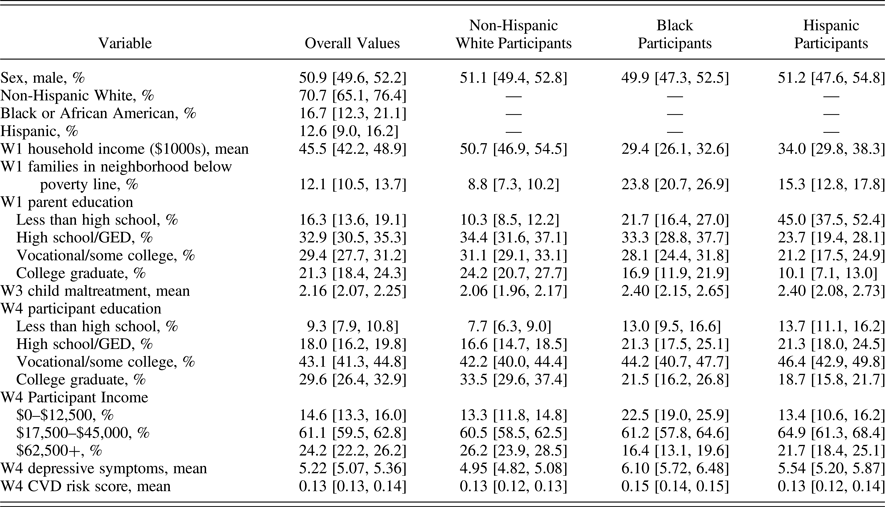
The current analyses include 13,341 participants from Add Health, a nationally representative sample of young adults who have been followed since adolescence. At each wave of the study, participants provided written informed consent in agreement with guidelines of the University of North Carolina School of Public Health Institutional Review Board. Within all United States high schools that had an 11th grade and 30 or more students, a stratified random sample was selected (N = 132 schools). This was done to ensure that the schools were nationally representative based on size, type, urbanicity, region, and ethnicity. These analyses include data from Waves 1, 3, and 4 (W1, W3, and W4). Participants who did not have a diagnosis of cancer or heart disease from a health provider, participated in W4, and reported their race/ethnicity as Black, Hispanic, or non-Hispanic White were included (see Table 1 for demographics). Data from Waves 1, 3, and 4 that are used in this study were collected during in-home interviews with trained research assistants. The mean age of participants was 15.9 years at W1, 95% confidence interval (CI) [15.7,16.1], range = 11–21 years; 21.8 years at W3, 95% CI [21.5, 22.0], range = 18–27; and 28.9 years at W4, 95% CI [28.6, 29.1], range = 24–34; when CVD risk was assessed.
Participant characteristics
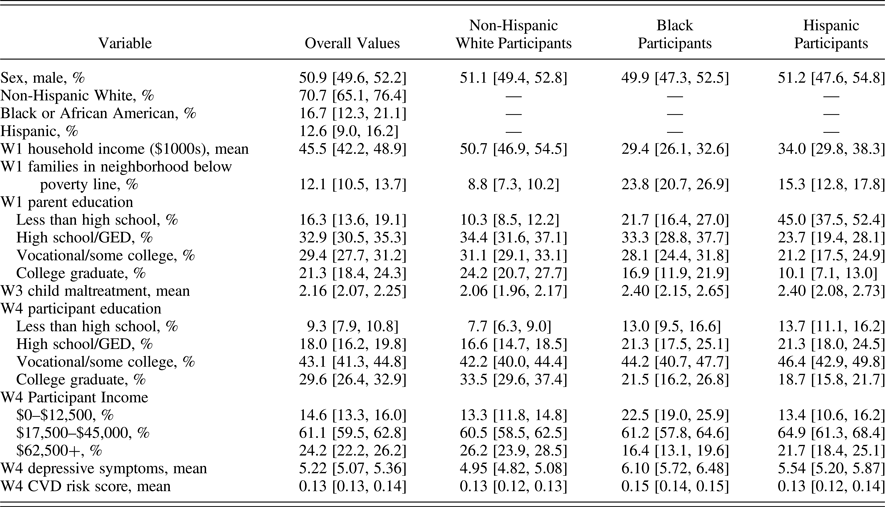
Note: N = 13,341. W1, Wave 1; W3, Wave 3; W4, Wave 4; CVD, cardiovascular disease. Means and percentages in each group are presented with 95% confidence intervals. W1 socioeconomic status (household income, neighborhood poverty, parent education) was examined as a latent variable.
Measures
Child maltreatment
Due to recent research reporting that different forms of child maltreatment have similar psychiatric and behavioral effects, which increase with the frequency, severity, and number of maltreatment subtypes (Vachon et al., Reference Vachon, Krueger, Rogosch and Cicchetti2015), we chose to broadly examine child maltreatment as the frequency of supervisory neglect, physical neglect, physical abuse, and sexual abuse, which have been used in prior studies with this data set (Hussey, Chang, & Kotch, Reference Hussey, Chang and Kotch2006). These types of child maltreatment were retrospectively assessed at Wave 3 when participants reported on child maltreatment experiences that occurred before the 6th grade. In Wave 3, participants were asked whether they (a) were left alone when an adult should be with you; (b) did not have caregivers take care of your basic needs, like providing food or clothing; (c) had a caregiver slap, hit, or kick you; or (d) had a caregiver touch you or forced you to touch them in a sexual way or forced sexual relations with you. Responses were coded as 0 = this has never happened, 1 = 1 time, 2 = 2 times, 3 = 3–5 times, 4 = 6–10 times, and 5 = more than 10 times. A maltreatment composite was computed by adding the responses from 0 to 5 for each of the four maltreatment categories, yielding a possible score from 0 to 20 (M = 2.12, SE = 0.05) with higher numbers indicating higher levels of maltreatment as this composite includes both type and frequency of maltreatment. This variable was log-transformed for analyses due to significant skewness. These Add Health questions have been previously used to assess health consequences of these child maltreatment subtypes, finding each subtype was associated with at least 8 of 10 health risks examined (Hussey et al., Reference Hussey, Chang and Kotch2006). The percentage of participants reporting no maltreatment in this sample was 48.4%, a score of 1–5 was 39.9%, 6–10 was 9.8%, 11–15 was 1.6%, and 16–20 was 0.3%.
Striving
The overall concept of striving has been used in a number of studies with different terminology to describe the personal trait of striving to succeed, future orientation, optimism, and believing in hard work as a pathway to success. The current large, nationally representative sample included questions that measure high educational aspirations, engagement in high school, optimism, and a belief in hard work, which may be particularly salient for adolescents as a measure of striving. The striving measure used in the current study is similar to a version used in previous analyses with Add Health data and was informed by the resilience literature (Brody, Kogan, & Grange, Reference Brody, Kogan, Grange, King and Maholmes2012; Brody et al., Reference Brody, Yu, Miller and Chen2016). Six indicators assessed at W1 were used to compute the striving index. Educational aspirations were measured by asking how much the adolescent wanted to go to college, and how likely it was that they would go to college. Each was measured on a scale of 1–5 with 1 being low and 5 being high. School engagement was measured by asking how often the adolescent had trouble paying attention in school and had trouble getting their homework done. Each was measured on a scale from 1 to 4, with 1 = every day and 4 = never. Optimism was assessed as in prior work by asking how often did the adolescent feel hopeful about the future in the last week. Responses ranged from 0 = rarely to 3 = all the time. A belief in hard work was measured by asking for agreement with the following sentence “When you get what you want, it is usually because you worked hard for it.” Adolescents rated their agreement from 1 = strongly disagree to 5 = strongly agree. Each variable was standardized, and the mean of the six variables was used as the measure of striving.
SES during adolescence
Three variables were used to create a latent adolescent SES variable: household income, parent education, and neighborhood poverty at W1 (descriptive statistics in Table 1). The parent who completed the demographics questionnaire (preferably the resident mother) reported the annual household income before taxes and their education level, which was categorized from 1 = less than high school, 2 = high school diploma/general educational development certificate, 3 = vocational/some college, to 4 = college graduate. The proportion of families in each participant's 1989 census block group with incomes below the poverty line was used for neighborhood poverty, which ranged from 0% to 86%. Neighborhood poverty was reverse scored for the SES variable so that higher values corresponded with lower poverty levels. The proportion of participants living in neighborhoods with ≥25% of families living below the poverty line was 14.6%, while 11.5% lived in neighborhoods with no families living in poverty.
CVD risk
W4 CVD risk data were collected when participants were 24–34 years old (M = 28.9 years). Data were collected by research assistants at home visits using personal interviews (computer-assisted) and physical assessments. Standard procedures were used to assess height and weight (Entzel et al., Reference Entzel, Whitsel, Richardson, Tabor, Hallquist, Hussey and Harris2009). Height was measured against a wall without shoes or hats/hairpieces to the nearest 0.5 cm. Weight was measured using a Health-o-Meter 844KL High Capacity Digital Bathroom Scale (Jarden Corporation; Rye, NY) on a hard, flat surface to the nearest 0.1 kg. Height and weight were used to calculate body mass index (BMI) with the following formula: BMI (kg/m2) = weight (kg)/height (m2). Systolic blood pressure (SBP) was measured after participants had been seated for 5 min with legs uncrossed using a Microlife BP3MC1-PC-IB oscillometric blood pressure monitor (MicroLife USA, Inc., Dunedin, FL) on the exposed right arm, absent contraindications (Entzel et al., Reference Entzel, Whitsel, Richardson, Tabor, Hallquist, Hussey and Harris2009). Research assistants took three measurements at 30-s intervals; the last two measurements were averaged to calculate resting SBP. Antihypertensive medication use in the past 4 weeks was assessed using a medication inventory (Tabor & Whitsel, Reference Tabor and Whitsel2010), and participants self-reported cigarette smoking in the past 30 days. Seven drops of capillary whole blood were collected via lancet on a capillary whole-blood collection card. For the purpose of assessment, participants were considered to have diabetes if they had a fasting blood glucose of ≥126 mg/dl, a nonfasting blood glucose of ≥200 mg/dl, an HbA1c of ≥6.5%, a health provider diagnosis of diabetes outside of pregnancy, or used any antidiabetic medication in the previous 4 weeks (Whitsel et al., Reference Whitsel, Tabor, Nguyen, Cuthbertson, Wener, Potter and Mullan Harris2012). Those who reported eating or drinking (other than water) in the past 8 hr were labeled as nonfasting, while those who had not were labeled as fasting.
CVD risk was calculated using a function that predicts the risk of developing CVD within a 30-year time frame (30-year Framingham Risk Score; Pencina, D'Agostino, Larson, Massaro, & Vasan, Reference Pencina, D'Agostino, Larson, Massaro and Vasan2009). Both the co-occurrence of risk factors and each factor's degree of strength in predicting CVD were considered in the prediction function. As a result, it is a better predictor of subsequent risk than each risk factor alone. Young adult risk factors have been demonstrated to be as good as or better than later assessments at predicting subclinical disease (Gidding et al., Reference Gidding, McMahan, McGill, Colangelo, Schreiner, Williams and Liu2006; Loria et al., Reference Loria, Liu, Lewis, Hulley, Sidney, Schreiner and Detrano2007), so assessing risk factors during this time period is especially informative for accurately predicting CVD risk. Currently, the 30-year Framingham Risk Score is the only prediction function for young adults. This longer time span has demonstrated better predictive power than shorter term functions for both overt and subclinical CVD (Berry et al., Reference Berry, Liu, Folsom, Lewis, Carr, Polak and Chan2009; Laing et al., Reference Laing, Smulevitz, Vatcheva, Rentfro, McPherson, Fisher-Hoch and McCormick2012; Pencina et al., Reference Pencina, D'Agostino, Larson, Massaro and Vasan2009). This predictive model also accounts for other causes of death (Pencina et al., Reference Pencina, D'Agostino, Larson, Massaro and Vasan2009), which is a strength, as young adults are more likely to die from causes other than CVD for most of the 30-year time span, and ignoring this would result in an overestimation of CVD risk (Pencina et al., Reference Pencina, D'Agostino, Larson, Massaro and Vasan2009). Age, sex, SBP, BMI, use of antihypertensive medications, smoking, and diabetic status are used to predict the 30-year risk of a composite CVD outcome, including myocardial infarction, angina pectoris, coronary death, coronary insufficiency, transient ischemic attack, intermittent claudication, stroke, and congestive heart failure (Pencina et al., Reference Pencina, D'Agostino, Larson, Massaro and Vasan2009). In this sample, mean risk was 0.13, or 13%, 95% CI [0.13, 0.14]. As the risk score was positively skewed, it was log-transformed for analysis. Greater detail is provided on the development and validation of the 30-year risk score in Pencina et al. (Reference Pencina, D'Agostino, Larson, Massaro and Vasan2009).
Depressive symptoms
Nine items from the Center for Epidemiological Studies Depression Scale were used to measure depressive symptoms experienced in the past 7 days at W4. These included “you were bothered by things that usually don't bother you”; “you felt that you could not shake off the blues, even with help from your family and friends”; “you felt that you were just as good as other people”; “you had trouble keeping your mind on what you were doing”; “you felt depressed”; “you felt too tired to do things”; “you enjoyed life”; “you felt sad”; and “you felt that people disliked you.” Participant responses ranged from 0 = never or rarely to 3 = most of the time or all of the time. Appropriate items were reverse-scored, and the responses to each question were summed to create a scale from 0 to 27, with higher numbers indicating higher depressive symptoms (M = 5.22, SE = 0.07). The final scale was log-transformed to correct for skewness. The scale demonstrated good internal consistency in this sample (α = 0.81) and has been used in previous papers utilizing Add Health data (Primack, Swanier, Georgiopoulos, Land, & Fine, Reference Primack, Swanier, Georgiopoulos, Land and Fine2009; Walsemann, Bell, & Goosby, Reference Walsemann, Bell and Goosby2011).
Income and education during young adulthood
The W4 constructed variable for midpoint personal earnings was used as the income variable. Participants reported their personal income before taxes in the past year, and these responses were divided into categories and reported as the midpoint for that category. Categories included the following: 0 = no earnings; 2,500 = less than $5,000; 7,500 = $5,000–$9,999; 12,500 = $10,000–$14,999; 17,500 = $15,000–$19,999; 22,500 = $20,000–$24,999; 27,500 = $25,000–$29,999; 35,000 = $30,000–$39,999; 45,000 = $40,000–$49,999; 62,500 = $50,000–$74,999; 87,500 = $75,000–$99,999; 125,000 = $100,000–$149,999; 150,000 = $150,000 or more. Anyone who did not know or refused to report their income was given a missing value, along with those who reported they were not currently working.
W4 college education was assessed by the participant reporting the highest level of education they had achieved to date. This was then coded into whether or not they had completed a college (bachelor's) degree: 0 = no college degree and 1 = college degree. At W4, 29.6% of participants reported having completed a bachelor's degree.
Covariates
Age in years at W4 was calculated for analyses. Sex was coded as male = 1 and female = 2. Race/ethnicity was reported by the participant at W1. Participants could report whether they were White, Black or African American, or another race. Any participants who indicated their ethnicity was Hispanic or Latino were categorized as Hispanic for the analyses, regardless of whether they selected they were Black, White, or another race. Non-Hispanic White individuals were categorized as White, and Black or African American participants were categorized as Black for the analyses. Black, non-Hispanic White, and Hispanic participants were included in these analyses in order to test specific hypotheses with large enough sample sizes within each group. Race/ethnicity was dummy-coded with non-Hispanic White as the reference group.
Data analytic plan
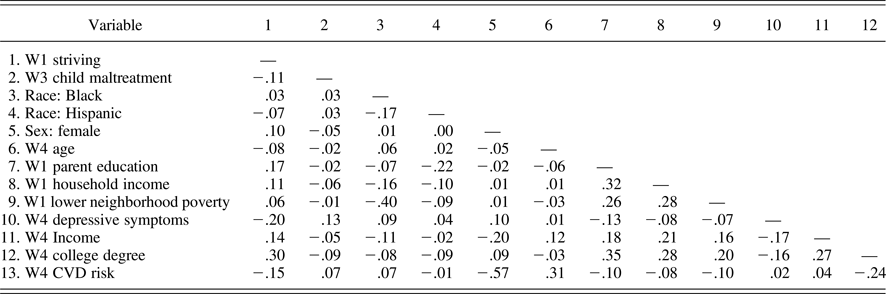
Descriptive statistics were calculated using SAS 9.4 (Table 1). Mplus Version 7.4 was used to calculate correlation coefficients among the study variables (Table 2). Regression models were conducted using Mplus with the following four W4 dependent variables: CVD risk, depressive symptoms, income, and college graduation. College graduation was a dichotomous variable, and thus a logistic regression with Monte Carlo integration was conducted to predict this outcome. For each outcome, there were three regression models conducted: a main model with main effects (striving, maltreatment, Black, and Hispanic), covariates, and no interactions; a model that adds all two-way interactions between striving, maltreatment, Black, and Hispanic; and a model that adds the three-way interactions between striving, maltreatment, Black, and Hispanic to the two-way interactions model. Variables in the main model included sex, W4 age, W1 SES (latent variable with household income, parent education, and neighborhood poverty), Black, Hispanic, W1 striving, and W3 child maltreatment. If interactions with continuous predictors were significant at p < .05, the Johnson–Neyman technique was used to probe interactions (Bauer & Curran, Reference Bauer and Curran2005; Hayes & Matthes, Reference Hayes and Matthes2009).
Correlation matrix computed by Mplus Version 7.4
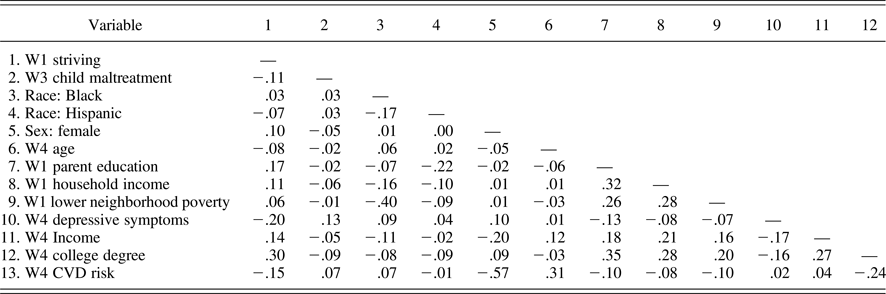
Note: N = 13,341. W1, Wave 1; W3, Wave 3; W4, Wave 4; CVD, cardiovascular disease. Mplus provides direction and magnitude of correlation coefficients but not significance values for correlation matrices. W1 household income, W1 neighborhood poverty, and W1 parent education were examined as a latent variable (W1 socioeconomic status) in the analyses.
The covariances of child maltreatment, race, and striving with age and sex were accounted for in the model as well as the covariances of maltreatment, race, and striving with each other. For CVD risk specifically, after conducting the model with the standard set of covariates, W4 college graduation and income were added to the model as covariates to account for potential confounding of the relationships between childhood/adolescent exposures and adult CVD risk by adult SES. Analyses accounted for unequal selection probability and survey design with weights, clustering, and stratification per Add Health user guidance (Chantala & Tabor, Reference Chantala and Tabor1999). Maximum likelihood with robust standard errors was used to account for missing data, which was from 0% to 5% for all variables except for W1 parent household income (23.0%), W1 parent education (13.1%), W3 child maltreatment (25.7%), and W4 adult income (21.6%). Alpha was fixed at 0.05 for determinations of statistical significance.
Results
CVD risk
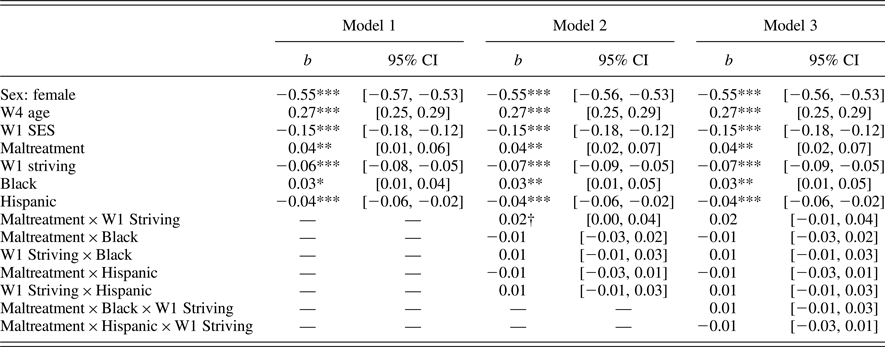
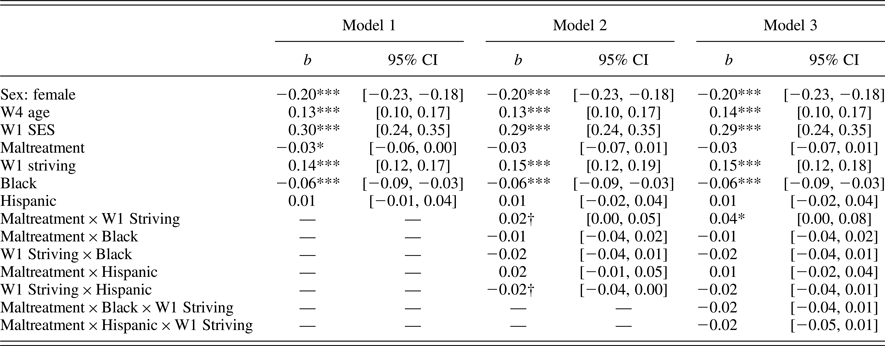
The interaction between child maltreatment and striving did not predict CVD risk, and there was no evidence that the association varied by race/ethnicity (all two-way and three-way interactions nonsignificant, ps > .05; see Table 3). There were main effects of adolescent striving, child maltreatment, and race/ethnicity on CVD risk. Higher CVD risk was demonstrated for individuals with lower striving (b = –0.07, SE = 0.01, p < .001), those with higher levels of maltreatment (b = 0.02, SE = 0.01, p = .003), and those who were Black, b = 0.04, SE = 0.02, p = .01. Hispanic individuals compared to Whites (b = –0.07, SE = 0.02, p < .001), females (b = –0.68, SE = 0.01, p < .001), younger participants at W4 (b = 0.09, SE = 0.00, p < .001), and those with higher W1 SES (b = –0.17, SE = 0.02, p < .001) had lower CVD risk in young adulthood. The main effects model explained 43% of the variance in CVD risk. In addition, after controlling for W4 income and college graduation, all the main effects remained significant predictors of W4 CVD risk (ps < .05).
Regression results predicting CVD risk at W4
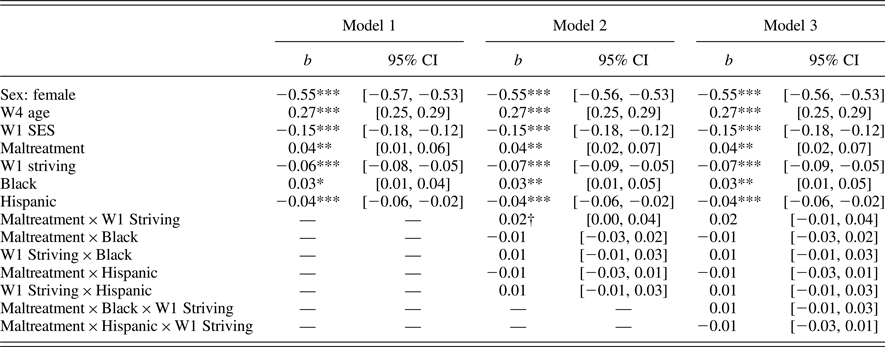
Note: CVD, cardiovascular disease; W4, Wave 4; W1, Wave 1; SES, socioeconomic status. Standardized estimates are provided for regression coefficients (b) and 95% confidence intervals. Black and Hispanic were dummy-coded with White participants as the reference group. W1 SES (household income, neighborhood poverty, parent education) was examined as a latent variable.
†p ≤ .10. *p ≤ .05. **p ≤ .01. ***p ≤ .001.
Depressive symptoms
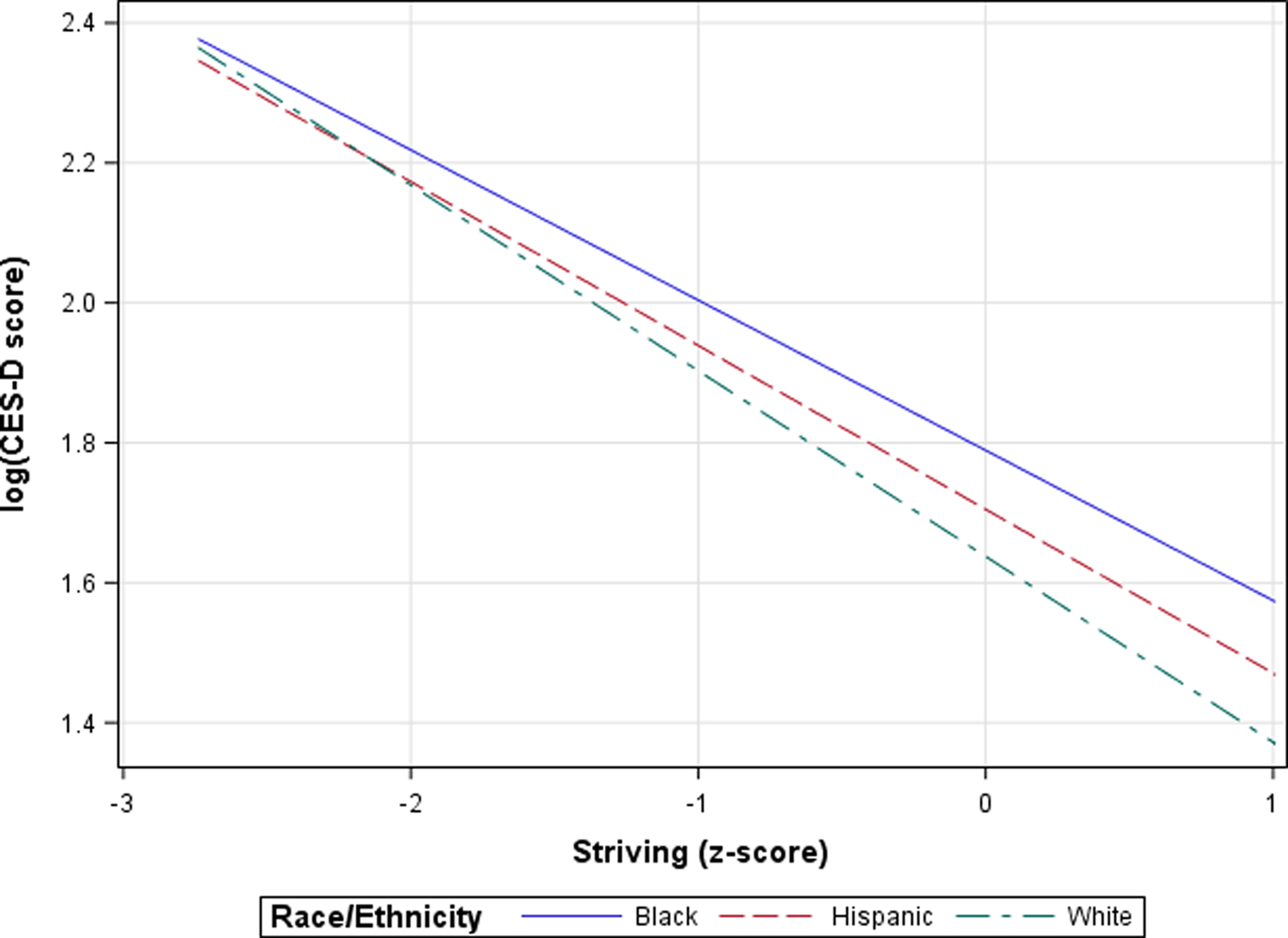
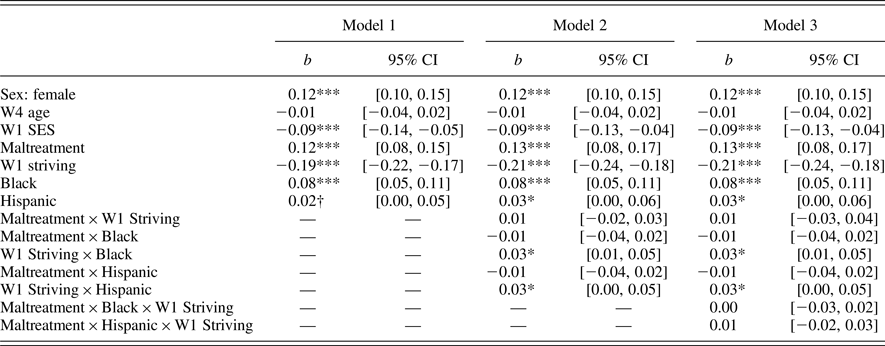
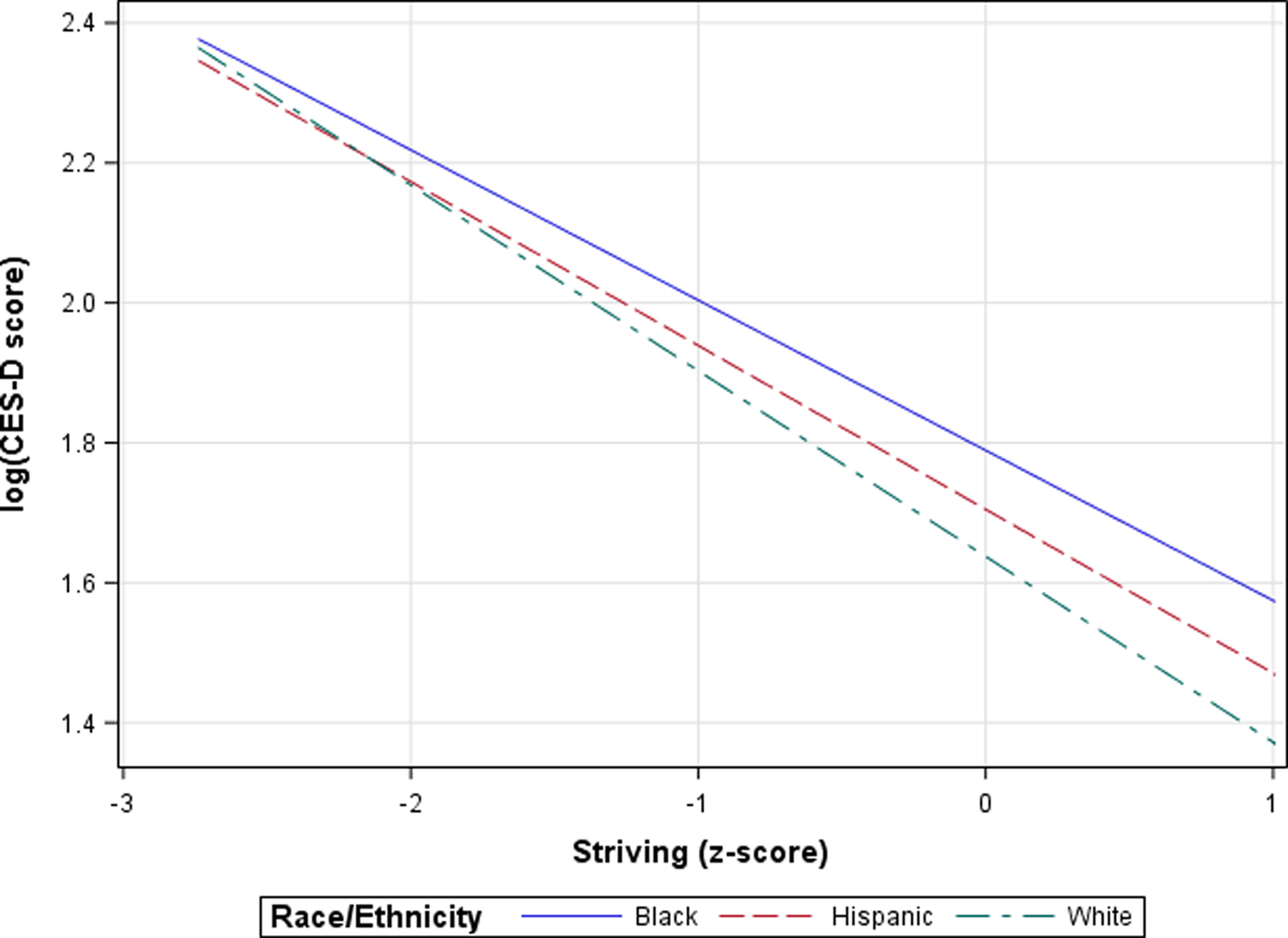
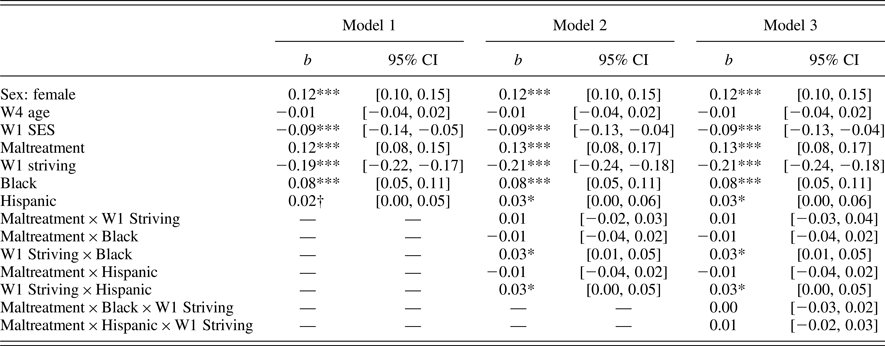
Neither the Maltreatment × Striving interaction nor the Race/Ethnicity × Maltreatment interaction were significant (ps > .05). The three-way Black × Striving × Maltreatment and Hispanic Ethnicity × Striving × Maltreatment interactions predicting depressive symptoms were also not significant (Table 4). The Striving × Black and Striving × Hispanic Ethnicity interactions were both significant predictors of depressive symptoms (b = 0.08, SE = 0.03, p = .02, and b = 0.09, SE = 0.04, p = .03, respectively; Figure 1). Being Black was associated with higher depressive symptoms than Whites at both 1 SD above and below the mean on striving. However, being Black showed a stronger positive association with depressive symptoms at 1 SD above the mean on striving (b = 0.24, SE = 0.05, p < .001) than 1 SD below (b = 0.08, SE = 0.04, p = .05). Being Hispanic was not associated with depressive symptoms at low levels of striving (1 SD below the mean; p = .56), but was associated with higher depressive symptoms than Whites at 1 SD above the mean on striving (b = 0.15, SE = 0.06, p = .008). Greater striving significantly predicted lower depressive symptoms in Whites (b = –0.26, SE = 0.02, p < .001), Blacks (b = –0.17, SE = 0.03, p < .001), and Hispanics (b = –0.16, SE = 0.04, p < .001).
(Color online) Predicted Wave 4 depressive symptoms (log-transformed) for individuals across Wave 1 striving scores (z scores) by race/ethnicity (Black, Hispanic, non-Hispanic White). The results are reported controlling for child maltreatment (reported at Wave 3), Wave 1 socioeconomic status, age at Wave 4, and sex.
Regression results predicting depressive symptoms at W4
Note: W4, Wave 4; W1, Wave 1; SES, socioeconomic status. Standardized estimates are provided for regression coefficients (b) and 95% confidence intervals. Black and Hispanic were dummy-coded with White participants as the reference group. W1 SES (household income, neighborhood poverty, parent education) was examined as a latent variable. W1, Wave 1; W4, Wave 4.
†p ≤ .10. *p ≤ .05. ***p ≤ .001.
The model with two-way interactions explained 9% of the variance in depressive symptoms. Lower striving (b = –0.23, SE = 0.02, p < .001), higher levels of maltreatment (b = 0.08, SE = 0.01, p < .001), and identifying as Black (b = 0.16, SE = 0.03, p < .001), all predicted greater depressive symptoms in young adulthood. Being female (b = 0.17, SE = 0.02, p < .001) and having lower SES at W1 (b = –0.11, SE = 0.03, p < .001) both predicted greater depressive symptoms, but W4 age did not (p = .55).
Income
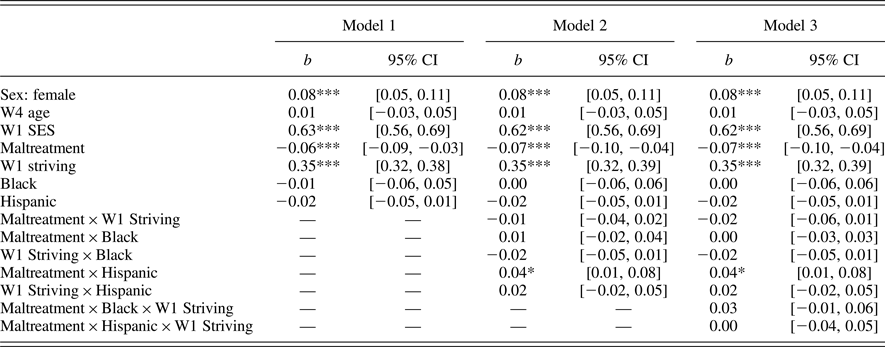
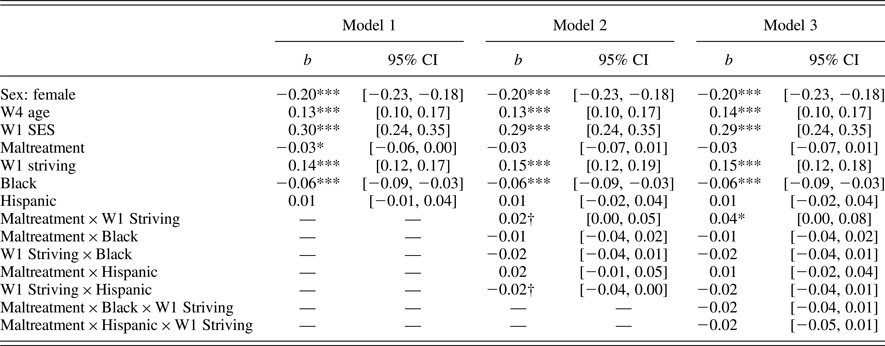
There were no significant two-way or three-way interactions predicting income (ps > .05; Table 5). Greater striving (b = 0.24, SE = 0.02, p < .001), lower levels of maltreatment (b = –0.03, SE = 0.01, p = .04), and being White compared to Black (b = –0.16, SE = 0.04, p < .001) predicted greater young adult income. Greater W1 SES predicted higher W4 income (b = 0.50, SE = 0.04, p < .001). Being male (b = –0.41, SE = 0.03, p < .001) and older at W4 (b = 0.07, SE = 0.01, p < .001) also predicted greater income. Being Hispanic was not associated with W4 income (b = 0.04, SE = 0.04, p = .30). The main effects model explained 17% of the variance in young adult income.
Regression results predicting income at W4
Note: W4, Wave 4; W1, Wave 1; SES, socioeconomic status. Standardized estimates are provided for regression coefficients (b) and 95% confidence intervals. Black and Hispanic were dummy-coded with White participants as the reference group. W1 SES (household income, neighborhood poverty, parent education) was examined as a latent variable.
†p ≤ .10. *p ≤ .05. ***p ≤ .001.
College degree
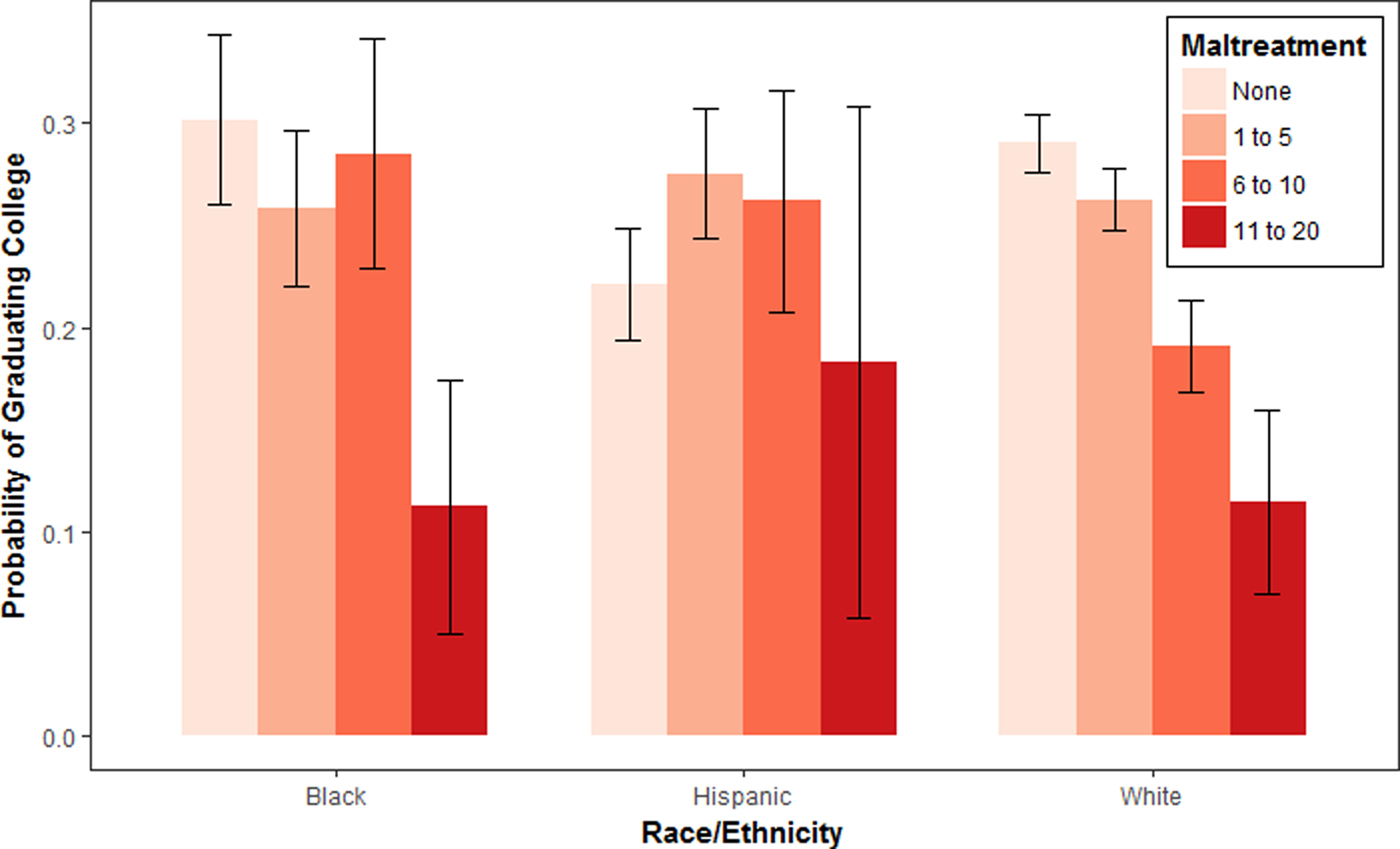
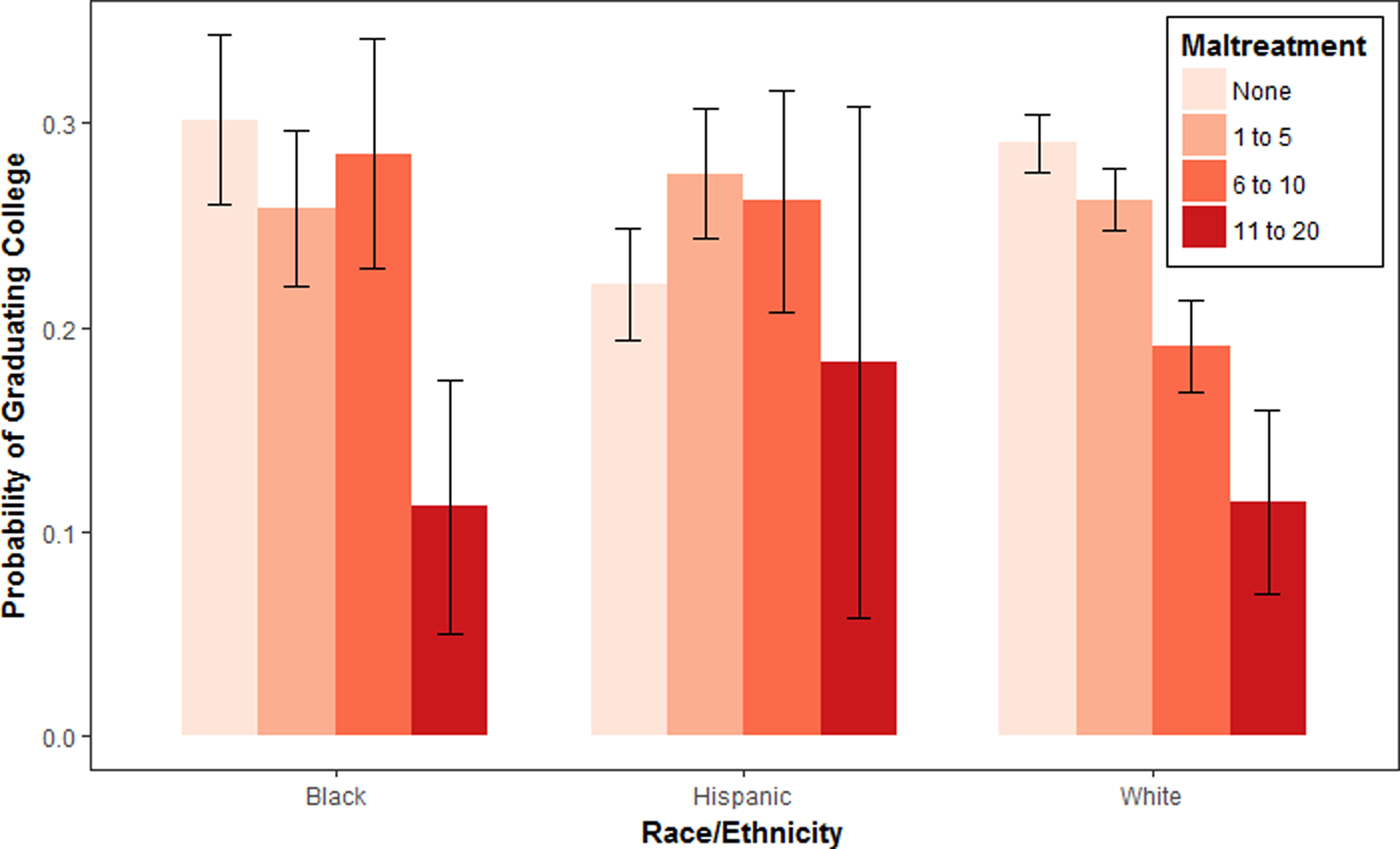
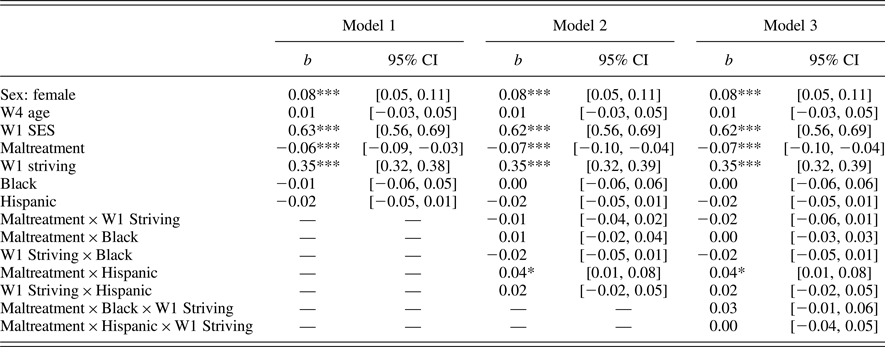
The only two-way interaction that predicted college degree attainment was Hispanic Ethnicity × Maltreatment (b = 0.33, SE = 0.14, p = .02; Figure 2). At low levels of maltreatment (1 SD below the mean), being Hispanic was associated with decreased likelihood of obtaining a college degree (b = –0.49, SE = 0.19, p = .009); but at high levels of maltreatment (1 SD above the mean), there was no association with being Hispanic (b = 0.16, SE = 0.19, p = .38). In addition, the association between maltreatment and college graduation was not significant in Hispanic individuals (b = 0.11, SE = 0.11, p = .32), but maltreatment was associated with lower likelihood of college graduation in Whites (b = –0.22, SE = 0.05, p < .001). All other two-way and three-way interactions predicting college degree attainment were not significant (ps > .05; Table 6).
(Color online) Predicted probability of graduating college by race/ethnicity and level of maltreatment subgroup with error bars. The results are reported controlling for level of striving at Wave 1, Wave 1 socioeconomic status, age at Wave 4, and sex.
Regression results predicting college degree attainment at W4
Note: W4, Wave 4; W1, Wave 1; SES, socioeconomic status. Standardized estimates are provided for regression coefficients (b) and 95% confidence intervals. Black and Hispanic were dummy-coded with White participants as the reference group. W1 SES (household income, neighborhood poverty, parent education) was examined as a latent variable.
*p ≤ .05. ***p ≤ .001.
Greater striving (b = 1.55, SE = 0.08, p < .001) and lower levels of maltreatment (b = –0.16, SE = 0.04, p < .001) were associated with a higher likelihood of attaining a college degree. Identifying as Black or Hispanic was not associated with attaining a college degree (ps > .05). Higher SES at W1 was associated with W4 college degree attainment (b = 2.95, SE = 0.20, p < .001). Females were more likely to have a college degree (b = 0.42, SE = 0.08, p < .001), and age at W4 did not predict whether individuals had a college degree (p = .60). The main effects model explained 53% of the variance in earning a college degree.
Discussion
Our results did not support the hypothesis that striving in the face of child maltreatment increases CVD risk and depressive symptoms. Rather, greater striving was associated with lower CVD risk and lower depressive symptoms regardless of race/ethnicity or maltreatment status, and higher levels of maltreatment were associated with higher CVD risk and depressive symptoms across the sample. Consistent with hypotheses, greater striving was associated with higher adult income and college graduation rates, while higher levels of maltreatment were associated with lower income and college graduation rates. The main effect of race/ethnicity was present for several outcomes, with Black adults showing higher CVD risk and depressive symptoms, as well as lower adult income. Finally, race/ethnicity and striving interacted to predict depressive symptoms, such that being Black or Hispanic was more strongly associated with depressive symptoms at higher levels of striving than lower levels of striving. In addition, at high levels of maltreatment, Hispanics did not differ from Whites in college graduation rate, but at low levels of maltreatment, Hispanics showed a lower graduation rate than Whites who experienced low levels of maltreatment. Among Hispanics, there was no association between level of maltreatment and college graduation, while for Whites, higher levels of maltreatment were associated with lower college graduation rates.
One of the most intriguing findings was that striving was protective for participants of all races/ethnicities included in the present study in all of the biological and behavioral domains that were examined. Although we expected greater striving to be associated with increased CVD risk for those who had experienced maltreatment, this was not the case. Consistent with previous studies, the striving factor predicted multiple psychological and functional benefits and furthermore provided objectively measured empirical support for studies where high strivers self-report their health as being better (Bonham et al., Reference Bonham, Sellers and Neighbors2004; Haritatos et al., Reference Haritatos, Mahalingam and James2007). This failure to find evidence for the hypothesis that striving in the face of adversity comes at a physiological cost may be due to our use of child maltreatment as the adverse experience of interest. Most evidence supporting John Henryism comes from the literature on poverty and SES, and it is quite possible that resilience processes operating in response to the trauma of child maltreatment are different than those involved in overcoming the stress of poverty. As a result, although child maltreatment was associated with increased CVD risk across young adults, striving may be a trait that results in a cardiovascular benefit regardless of maltreatment history. Striving could improve cardiovascular health through a number of pathways, including better health behaviors, higher adult SES, better access to medical care, more social support (Uchino, Reference Uchino2006), and greater optimism (Kubzansky, Sparrow, Vokonas, & Kawachi, Reference Kubzansky, Sparrow, Vokonas and Kawachi2001), among a number of other mechanisms. In this context, striving would not be viewed as a potential risk factor for physical health, and these data also provide further evidence that striving is associated with psychosocial competence. It is important to remember that striving was measured during adolescence in this study, which is an important time for making choices and developing habits and relationships that will impact mental and physical health during adulthood. A stronger future orientation, which was captured by our striving measure, may be particularly salient in adolescence when many decisions about the future are being made (Steinberg, Reference Steinberg2008; Steinberg et al., Reference Steinberg, Graham, O'Brien, Woolard, Cauffman and Banich2009). More research is needed to examine whether striving during adolescence in particular is predictive of later biological and behavioral outcomes, which will be especially informative for developmentally sensitive interventions.
Important considerations for the future of this work are adaptive and maladaptive developmental cascades (Masten & Cicchetti, Reference Masten and Cicchetti2010). For individuals who have been maltreated, it is important to promote healthy development as soon as possible so that development proceeds in a positive way over time and across domains. Resilience should not be viewed as static, but rather a progression over time that must deal with new challenges and opportunities that emerge, including those that are environmental, biological, social, and psychological (Egeland, Carlson, & Sroufe, Reference Egeland, Carlson and Sroufe1993; Luthar et al., Reference Luthar, Cicchetti and Becker2000). Resilience processes may operate differently at various times across development, so those who adapt successfully in certain domains at one time point may not at other time points, and vice versa (Coie et al., Reference Coie, Watt, West, Hawkins, Asarnow, Markman and Long1993; Kaplan, Reference Kaplan, Glantz and Johnson1999). In our analyses, striving may be viewed as a factor that promotes positive development across multiple levels of functioning, both biological and psychosocial. However, striving could interact with opportunities and challenges not examined here to produce an array of outcomes through developmental cascades. If someone who strives to succeed encounters many opportunities, he or she may have different biological and behavioral outcomes than someone who encounters many insurmountable challenges throughout development. The outcomes assessed in early adulthood in the current study may not be stable throughout adulthood (besides college degree attainment), and further research is needed to understand functioning throughout the life span. For example, although we did not observe increased CVD risk at this point in time for Blacks or Hispanics with greater striving following child maltreatment, it could be that there are sleeper effects that arise years later and increase CVD occurrence and/or severity. Evidence for this hypothesis comes from research demonstrating higher allostatic load scores for Blacks compared to Whites, with a greater racial disparity at ages 35–64 years compared to before 35 years (Geronimus, Hicken, Keene, & Bound, Reference Geronimus, Hicken, Keene and Bound2006). Although we did not observe three-way interactions between striving, race/ethnicity, and child maltreatment, Blacks did show the highest 30-year CVD risk in the current sample. This is unsurprising considering extensive research demonstrating that Blacks are more likely to develop CVD than Whites, often due to factors outside their control (Adler & Newman, Reference Adler and Newman2002). This disparity in CVD risk must be addressed in future studies and considered in interventions aiming to minimize health disparities.
There is a great deal of research that needs to be done on John Henryism theory and the multifaceted nature of resilience following early adversity. First, we need to understand how resilience processes may co-occur within an individual and under what conditions there could be costs for striving to succeed. The field of developmental psychopathology will greatly benefit from considering the John Henryism framework, which considers that striving in the face of stress, depending on the type of stress, may not always result in positive outcomes across domains. Although the current study does not support the hypothesis that there are hidden costs of striving following child maltreatment specifically, at least in cardiovascular health and depressive symptomology, it will be important to consider this possibility in future studies by measuring both biological and behavioral outcomes. Further, we need to understand how these processes may be operating in different sociological and risk contexts and how individual differences shape resilience processes in order to promote positive outcomes in biological and behavioral domains. It is possible that certain barriers present for those who experience poverty (e.g., structural barriers), but not for those who experience maltreatment, make striving costly for these individuals. Future research is needed to investigate factors that lead to diverse associations between striving and underlying outcomes across contexts.
Second, we need to have a more thorough understanding of how striving following early adversity may influence biobehavioral processes to produce differential outcomes across contexts. Although we hypothesize that the mechanisms between striving and health include better health behaviors and medical care, higher adult SES, greater social support, and beneficial alterations in inflammatory, neuroendocrine, and cardiometabolic processes (Bennett et al., Reference Bennett, Merritt, Sollers, Edwards, Whitfield, Brandon and Tucker2004), research is needed to test a variety of hypothesized mechanisms in multiple contexts. We must also investigate the nature of these processes at different points in development and at different time points following adverse events. Understanding these mechanisms across development will allow us to consider plasticity and identify potential sensitive periods during which we can reverse negative effects of early adversity, as we currently lack prospective research that targets sensitive periods years before the onset of disease or psychopathology (Doom & Gunnar, Reference Doom and Gunnar2013).
Third, we need to understand the neural mechanisms that contribute to biological and behavioral functioning following early adversity. Detailed explanations and models of how the brain processes early adverse experiences and interacts with other physiological systems are needed, as are theories of resilience that integrate developmental neuroscience (Doom & Gunnar, Reference Doom and Gunnar2013). Specific to the current study, neural mechanisms that support striving to succeed in response to or in spite of child maltreatment will be important to investigate. Understanding how these mechanisms operate in individuals of different races and ethnicities and for those with histories of maltreatment will be essential for increasing knowledge of normal and abnormal neurodevelopment and for tailoring individualized interventions. Fourth, multiple levels of analysis, including measures of behavior, physiological functioning, and physical health, are needed to appropriately investigate resilience processes (Cicchetti, Reference Cicchetti2013). Domains once thought of as unrelated (e.g., problem-focused coping and CVD risk) may actually interact in ways that shape acute and long-term responses to adversity. In addition, we need to have a better understanding of moderators of these processes, including, but not limited to, genetics, nutrition, and the environment. Fifth, we need to study both normal and abnormal development, including species-typical and atypical experiences (e.g., warm, stable caregiving vs. maltreatment) to understand normative processes that guide child development. We can also use these studies to better understand plasticity of the brain, which is a key focus when studying resilience. Any neurobiological or behavioral abnormalities resulting from harsh early experiences do not necessarily mean that the child will have lasting difficulties across the life span (Cicchetti & Curtis, Reference Cicchetti, Curtis, Cicchetti and Cohen2006). Instead, the brain is able to reshape its neural architecture in response to new experiences, and this reshaping must be central to our theories of brain development and resilience and to implementation of evidence-based interventions to improve functioning following early adversity (Luthar & Cicchetti, Reference Luthar and Cicchetti2000). Future research should focus on mapping changes in the brain that are associated with positive adaptation in observable domains as well as those domains that are harder to observe without careful measurement, including mental health and physiological functioning.
This work has multiple implications for developing and implementing evidence-based interventions following child maltreatment. These data suggest that rather than being a trait that incurs a physiological cost for Blacks and Hispanics, striving may actually promote cardiovascular health, even when coping with the stress of child maltreatment. Striving was associated with decreased CVD risk, lower depressive symptoms, increased income, and greater likelihood of receiving a college degree. Thus, striving may be seen as a protective factor that improves functioning across multiple biological and behavioral domains and potentially across various racial/ethnic populations. This type of problem-focused coping has been reported more frequently in “resilient” adolescents experiencing high stress but low depressive symptoms compared to “vulnerable” adolescents high on both stress and depressive symptoms (Dumont & Provost, Reference Dumont and Provost1999). If striving is a malleable factor, interventions may be able to enhance one's feelings of optimism toward the future and willingness to work hard and pursue greater education to achieve. Correlations in the current study indicate that those who had experienced higher levels of maltreatment had lower striving, so this may be a particularly important target for interventions for those who were maltreated during childhood. However, it will be important to also provide opportunities to succeed in addition to increasing striving in maltreated adolescents, as increasing optimism and aspirations without actually increasing opportunities could be detrimental for development if the individual is met with ceaseless disappointments. The positive youth development literature suggests that setting up youth to succeed when they strive is crucial, as it empowers them to succeed and to help others succeed (Zimmerman, Reference Zimmerman, Rappaport and Seidman2000). As a cautionary note, evidence is still mixed in the John Henryism research area, and it could be that striving for children growing up in poverty specifically, instead of experiencing maltreatment, is physiologically costly. In addition, there are likely differences between opportunities that optimize outcomes for children from low-SES backgrounds and those who have been maltreated based on their previous and/or current environments. Further research is needed to investigate these possibilities.
Another way that this study informs interventions is to highlight the potential for striving during adolescence as developmentally important across a range of young adult biological and behavioral outcomes. However, earlier assessment is needed to understand when these trajectories emerge so we can create developmentally appropriate interventions at crucial time points following adversity (Cicchetti, Reference Cicchetti2013; Toth, Gravener-Davis, Guild, & Cicchetti, Reference Toth, Gravener-Davis, Guild and Cicchetti2013). The current analyses suggest that higher striving capacity during adolescence may improve physical and mental health as well as SES in early adulthood. As a result, interventions involving striving during adolescence may be fruitful for producing positive outcomes, or there may be earlier periods where interventions may be even more effective. An important goal of this work is to investigate whether there are certain malleable factors that can be targeted to aid multiple outcomes, both biologically and psychologically. Many cognitive, emotional, social, and behavioral protective factors have been identified, but we must incorporate these interventions that significantly improve developmental outcomes at multiple levels over time. We must also find out the best developmental time periods to intervene to maximize positive impact. Striving during adolescence, and perhaps earlier, may be another protective factor that can be thoughtfully incorporated into interventions to aid positive development.
We must consider the interaction between striving and race/ethnicity for predicting depressive symptoms in young adulthood. Blacks and Hispanics demonstrated higher depressive symptoms than Whites, particularly at higher levels of striving, suggesting that Blacks and Hispanics may receive less psychological benefit from increases in striving than Whites. This could result from a number of reasons, including discrimination, racial/ethnic disparities in opportunities, institutional racism, or cultural differences in depression or striving beliefs (Brondolo, Gallo, & Myers, Reference Brondolo, Gallo and Myers2009). It will be crucially important for those creating interventions to prevent or reduce depressive symptoms to recognize this interaction in order to provide extra support or protections for these individuals. For example, increasing opportunities to succeed or emphasizing social support for Blacks and Hispanics with high striving may further reduce depressive symptoms so that striving is as psychologically protective for these racial/ethnic minority groups as it is for Whites. The current analyses also suggest that Hispanics have a lower college graduation rate than Blacks and Whites at lower levels of maltreatment and do not show the same association between maltreatment and college graduation. Further research is needed to understand the reasons behind these findings. Given the difficulties faced by individuals who are ethnic minorities, there may be ways to tailor interventions that are sensitive to differences in culture and context.
Strengths and limitations
The greatest strength of the study was testing these hypotheses in a large nationally representative sample with longitudinal data. The availability of biological data to be able to more objectively measure CVD risk as well as assessments of mental health and adult outcomes (income and education) allowed us to examine multilevel outcomes of maltreatment and potential moderators. However, there were limitations to the study that need to be addressed. First, the assessment of maltreatment was retrospective and was not cross-validated by other reports, such as Department of Human Services records. Although participants reported at W3 (M = 21.8 years), which is closer to childhood than the outcome variables, we would have even greater confidence in our findings if they were validated by other reports, reported prospectively, or included a deeper assessment of maltreatment type, duration, severity, and timing. Future research should use tools such as the Maltreatment Classification System (Barnett, Manly, & Cicchetti, Reference Barnett, Manly and Cicchetti1993) to systematically assess official records. However, we wanted to first test these hypotheses in a large, nationally representative sample so we consider this work a first step in this line of research. Second, the concept of striving is still broadly defined in the literature, so we chose questions from Add Health that most closely examined the belief in working hard and the positive future orientation central to striving, which have been used previously (Brody et al., Reference Brody, Yu, Miller and Chen2016). Future work will need to tighten the concept of striving across literatures and developmental stages so it can be best utilized to inform interventions. Third, the CVD risk prediction function was developed using the Framingham Offspring Cohort Study, which began in 1971 (Kannel, Feinleib, McNamara, Garrison, & Castelli, Reference Kannel, Feinleib, McNamara, Garrison and Castelli1979). Since then, underlying disease risk and risk factor prevalence have changed, which is why research is needed to validate this prediction function on contemporary cohorts. However, this function is still an improvement over examining risk factors individually.
The current work further demonstrates the negative multisystem impact of child maltreatment on development. However, striving to succeed proved to be a protective factor associated with decreased CVD risk and depressive symptoms, higher income, and greater educational attainment. Although greater striving was predicted to increase CVD risk and depressive symptoms for those who had experienced child maltreatment, we did not find any evidence that supported this hypothesis. Instead, findings indicate that striving may be an important focus of interventions that seek to promote multilevel positive outcomes for individuals regardless of race/ethnicity or maltreatment experiences. However, for outcomes like depressive symptoms, race/ethnicity appears to moderate the beneficial nature of striving, which must be taken into account when designing interventions. Future research must continue to target resilience processes at multiple levels, both biological and behavioral, in order to broadly promote positive outcomes over time. Evidence-based interventions informed by this literature are needed in order to improve physical and mental health, as well as socioeconomic outcomes, for individuals who have experienced child maltreatment.