





Introduction
Type 2 diabetes mellitus (T2DM) is a major public health challenge characterised by chronic hyperglycaemia resulting from insulin resistance and progressive pancreatic β-cell dysfunction (Kan et al., Reference Kan, Qu, Wang, Zhang and Xu2025). According to the International Diabetes Federation (IDF), the global burden of diabetes continues to increase annually, with the prevalence of diabetes-related complications rising in parallel with population ageing (IDF, 2025; Teufel, Reference Teufel, Orgutsova, Genitsaridi, Carrillo-Larco, Varghese, Marcus, Sacre, Sajjadi, Chiwanga, Manne-Goehler, Seiglie, Flood, Harding, Salpea, Salim, Boyko, Magliano and Ali2026). In addition to its well-established cardiovascular, renal, and neurovascular complications, T2DM is increasingly recognised as an important risk factor for cognitive decline, including mild cognitive impairment and dementia (Babenko et al., Reference Babenko, Mosikian, Lebedev, Khrabrova and Shlyakhto2019; Cao et al., Reference Cao, Yang, Li, Guo, Zhang, Gao, Sun, Zhou and Zhang2024; Kan et al., Reference Kan, Qu, Wang, Zhang and Xu2025). Evidence suggests that long-term metabolic disturbances associated with T2DM contribute to cognitive dysfunction through multiple pathophysiological pathways (Randväli et al., Reference Randväli, Toomsoo and Šteinmiller2024; Kan et al., Reference Kan, Qu, Wang, Zhang and Xu2025). As the main setting for the long-term management of individuals with T2DM, primary health care plays a pivotal role in monitoring disease progression, supporting diabetes self-management, and facilitating the early identification of cognitive difficulties that may adversely affect self-care and clinical outcomes (American Diabetes Association, 2023).
As life expectancy continues to increase, dementia has emerged as a major global
public health challenge due to its rapidly growing prevalence (World Health Organization [WHO], 2025; Liu et al., Reference Liu, Deng, Gong, Ou, Yu and Chen2025). It is estimated that approximately 55–57 million people worldwide are currently living with dementia, and this number is projected to reach 139 million by 2050 (Alzheimer’s Disease International, 2025). Dementia is a progressive neurological syndrome characterised by deterioration in multiple cognitive domains, including memory, attention, executive functioning, language, learning, and problem-solving, ultimately compromising an individual’s ability to perform activities of daily living independently (Emmady et al., Reference Emmady, Schoo and Tadi2022; Alzheimer’s Disease International, 2025). As the disease progresses, cognitive deterioration leads to functional decline, increased care dependency, and a substantial reduction in quality of life (Liu et al., Reference Liu, Deng, Gong, Ou, Yu and Chen2025; Sakurai et al., Reference Sakurai, Sugimoto and Arai2025). Furthermore, the growing ageing population is expected to markedly increase the economic and societal burden of dementia on healthcare systems worldwide (Chen et al., Reference Chen, Cao, Nandi, Counts, Jiao, Prettner, Kuhn, Seligman, Tortorice, Vigo, Wang and Bloom2024; Sakurai et al., Reference Sakurai, Sugimoto and Arai2025). Importantly, mild cognitive impairment is widely recognised as an intermediate stage between normal cognitive ageing and dementia, making the early identification of cognitive impairment particularly important. In individuals with T2DM, cognitive impairment may adversely affect diabetes self-management by reducing the ability to adhere to medication regimens, monitor blood glucose, follow dietary recommendations, and make appropriate self-care decisions, thereby contributing to poorer clinical outcomes (Kan et al., Reference Kan, Qu, Wang, Zhang and Xu2025; Zhao et al., Reference Zhao, Wang, Tang, Wang, Tian and Li2025). As the primary point of contact for individuals with T2DM, primary health care plays a key role in the early recognition and ongoing monitoring of cognitive changes that may interfere with effective diabetes self-management (American Diabetes Association, 2023).
Declining cognitive function in individuals with T2DM may adversely affect treatment adherence and diabetes self-management behaviours, thereby making disease management increasingly challenging. This bidirectional relationship may create a vicious cycle in which poor diabetes management accelerates cognitive impairment, while cognitive impairment further compromises effective self-management, ultimately leading to poorer health outcomes and reduced quality of life (Babenko et al., Reference Babenko, Mosikian, Lebedev, Khrabrova and Shlyakhto2019; Randväli et al., Reference Randväli, Toomsoo and Šteinmiller2024; Huang et al., Reference Huang, Chen and Su2025). In this context, diabetes self-management has emerged as a cornerstone of effective diabetes care. Diabetes self-management is a multidimensional process that encompasses medication adherence, healthy eating, regular physical activity, blood glucose monitoring, prevention of diabetes-related complications, and effective communication with healthcare professionals to optimise disease control (Maina et al., Reference Maina, Pienaar and Reid2023). Effective self-management has consistently been associated with improved glycaemic control, fewer diabetes-related complications, and better quality of life among individuals with T2DM (Maina et al., Reference Maina, Pienaar and Reid2023; Huang et al., Reference Huang, Chen and Su2025). However, evidence specifically examining the association between diabetes self-management skills and cognitive function among individuals with type 2 diabetes mellitus remains limited, as previous studies have largely focused either on cognitive decline in T2DM or on the effects of cognitive impairment on diabetes self-care behaviours. Previous studies have primarily focused either on the association between T2DM and cognitive decline (Randväli et al., Reference Randväli, Toomsoo and Šteinmiller2024; Kan et al., Reference Kan, Qu, Wang, Zhang and Xu2025) or on the influence of cognitive impairment on diabetes self-care behaviours (Chou et al., Reference Chou, Chen, Liao, Chen, Liu and Yeh2025; Pipatpiboon et al., Reference Pipatpiboon, Sripetchwandee and Bressington2025). The findings of the present study may contribute to improving diabetes management, facilitating the early identification of cognitive impairment, informing future research on the relationship between diabetes self-management and cognitive health, and supporting cognitive screening, individualised patient education, and tailored diabetes management strategies in primary health care settings (Herges et al., Reference Herges, Matulis, Kessler, Ruehmann, Mara and McCoy2022; American Diabetes Association, 2023). Primary health care plays a central role in the long-term management of individuals with T2DM through regular follow-up, patient education, and support for diabetes self-management (American Diabetes Association, 2023). Because primary care professionals maintain continuous contact with patients, they are well positioned to recognise early changes in cognitive function that may adversely affect self-management behaviours and treatment adherence. Identifying modifiable factors associated with cognitive function may therefore contribute to the development of targeted interventions within primary care settings to preserve cognitive health and improve diabetes outcomes. Accordingly, this study aimed to investigate the association between diabetes self-management skills and cognitive function in individuals with T2DM and to identify factors associated with cognitive function.
The research questions were as follows:
-
1. What are the levels of diabetes self-management and cognitive function among individuals with T2DM?
-
2. Is diabetes self-management associated with cognitive function among individuals with T2DM?
-
3. Are diabetes self-management and cognitive function associated with the sociodemographic and clinical characteristics of individuals with T2DM?
-
4. Which factors are independently associated with cognitive function among individuals with T2DM?
Methods
Design
This study employed a cross-sectional, correlational design.
Participants
This study was conducted at the Internal Medicine Outpatient Clinic of a public hospital in Ankara, Türkiye. The study population consisted of individuals with T2DM who attended the outpatient clinic during the study period.
The required sample size was calculated using the standard deviation of the Mini-Mental State Examination reported in a previous study (SD = 2.3) (Babenko et al., Reference Babenko, Mosikian, Lebedev, Khrabrova and Shlyakhto2019). The sample size was estimated using the formula n = (Z × SD/d)2 for studies with an unknown population size. A Z value of 1.96, corresponding to a 95% confidence level, and a margin of error (d) of 0.37 were used, resulting in a minimum required sample size of 150 participants. To compensate for potential participant loss or incomplete data, the target sample size was increased by 10% (Martínez-Mesa et al., Reference Martínez-Mesa, González-Chica, Bastos, Bonamigo and Duquia2014). Ultimately, 170 individuals with T2DM who met the eligibility criteria were included in the study using convenience sampling. The participant recruitment and selection process is presented in Figure 1. A convenience sampling strategy was used because the study was conducted among eligible individuals with T2DM who attended the outpatient clinic during the data collection period and met the inclusion criteria.
Flow diagram of participant recruitment and inclusion in the study.

The inclusion criteria were as follows: (1) voluntary agreement to participate in the study; (2) age 30 years or older; and (3) a diagnosis of T2DM for at least 1 year. The exclusion criteria were: (1) a previous diagnosis of dementia or another neurological disease; (2) severe psychiatric disorders (e.g., schizophrenia or bipolar disorder); (3) inability to complete or respond to the study instruments because of advanced communication difficulties or severe hearing or visual impairment; (4) chronic alcohol dependence or excessive alcohol consumption; (5) pregnancy; and (6) Non-Turkish speakers. Participants with incomplete or incorrectly completed questionnaires were excluded from the final analyses. The STROBE (Strengthening the Reporting of Observational Studies in Epidemiology) guidelines were followed in reporting this study.
Setting
The study was conducted in the Internal Medicine Outpatient Clinic of a public hospital, where adults with T2DM receive outpatient follow-up and diabetes management. Diabetes education is routinely provided by a diabetes nurse at the time of diagnosis and subsequently upon physician referral. Follow-up visits are recommended by physicians, while attendance is based on patients’ voluntary participation. During the study period, eligible individuals attending the outpatient clinic were informed about the study in the waiting area and invited to participate. Those who agreed were interviewed in a private consultation room. Information regarding diabetes-related complications and hypertension was based on participants’ self-report, and all study data were obtained exclusively through the study questionnaires without accessing hospital medical records.
Instruments
Data were collected using a Researcher-developed Participant Information Form, the Type 2 Diabetes Self-Management Scale (T2DM-SMS), and the Mini-Mental State Examination (MMSE).
Participant information form
The Participant Information Form was prepared based on the relevant literature and consisted of questions regarding participants’ sociodemographic characteristics (e.g., age, gender, marital status, educational level, employment status, and income level) and diabetes-related clinical characteristics, including duration of T2DM, treatment modality, medication adherence, regular blood glucose monitoring, dietary adherence, and diabetes-related complications (e.g., retinopathy, nephropathy, neuropathy, diabetic foot) (Babenko et al., Reference Babenko, Mosikian, Lebedev, Khrabrova and Shlyakhto2019; Maina et al., Reference Maina, Pienaar and Reid2023).
Type 2 diabetes-diabetes self-management scale (T2DM-SMS)
The scale developed by Koç and Özkan (Reference Koç and Özkan2020) assesses self-management in individuals with type 2 diabetes. The 5-point likert-type scale consists of 3 sub-dimensions as “Healthy Lifestyle Behaviors” (11 items), “Blood Glucose Management” (4 items), “Health Services Utilization” (4 items) and a total of 19 questions. The scale includes a total of 19 items, with possible scores ranging from 19 to 95. A higher score indicates better self-management, while a lower score suggests poor self-management. The Cronbach’s alpha for the total scale was reported as 0.856 by Koç and Özkan (Reference Koç and Özkan2020), whereas in this study (Koç and Özkan, Reference Koç and Özkan2020). It was determined to be 0.920.
Mini-mental state examination (MMSE)
The scale, developed by Folstein et al. (Reference Folstein, Folstein and McHugh1975), is one of the most widely used cognitive screening instruments for the assessment of global cognitive function and the detection of cognitive impairment. The Turkish validity and reliability study was conducted by Güngen et al. (Reference Gungen2002). The MMSE consists of 11 items and yields a total score ranging from 0 to 30, with higher scores indicating better cognitive function. The instrument assesses multiple cognitive domains, including orientation, registration, attention and calculation, recall, language, visuospatial abilities, and praxis. According to the Turkish validation study, scores of 24–30 indicate normal cognitive function, scores of 18–23 suggest mild cognitive impairment, and scores of 17 or below indicate severe cognitive impairment (Güngen et al., Reference Gungen2002).
Data collection procedure
Data were collected through face-to-face interviews by the researchers between June 2024 and January 2025, following approval from the institutional ethics committee and permission from the participating hospital. Eligible individuals were informed about the purpose and procedures of the study and invited to participate. Interviews were conducted in a private setting to ensure participants’ confidentiality and comfort. Before data collection, the researchers explained all study instruments, and additional clarification was provided whenever participants required further explanation. Completion of the study instruments required approximately 20–25 minutes.
Reducing the risk of bias
Before data collection, both researchers reviewed the study protocol and agreed on a standardised data collection procedure to ensure consistency in administering the study instruments. All participants received the same information about the study, and the questionnaires were administered in the same order using standardised instructions. Additional clarification was provided only when requested to ensure participants’ accurate understanding of the questionnaire items and to maintain consistency across interviews. All eligible individuals attending the outpatient clinic during the study period were invited to participate, and the same predefined inclusion and exclusion criteria were applied to all participants. To minimise measurement error, validated and reliable instruments were used throughout the study.
Data analysis
Statistical analyses were performed using IBM SPSS Statistics version 27.0 (IBM Corp., Armonk, NY, USA) and R software (R Core Team, 2025). The normality of continuous variables was assessed using skewness and kurtosis values. Because all skewness and kurtosis values were within the acceptable range of −2.0 to +2.0, the data were considered to be approximately normally distributed, and parametric statistical tests were performed (George and Mallery, Reference George and Mallery2024). Homogeneity of variances was assessed using Levene’s test. Descriptive statistics are presented as frequencies, percentages, means, and standard deviations. Differences between two independent groups were analysed using the independent-samples t-test, whereas comparisons among three or more groups were performed using one-way analysis of variance (ANOVA) with Tukey’s or Tamhane’s post hoc tests, as appropriate. Correlation analyses were performed using Pearson’s correlation coefficient because the continuous variables were approximately normally distributed based on skewness and kurtosis values. Correlation and regression results were visualised using the sjPlot package in R (Lüdecke, Reference Lüdecke2023). To identify factors associated with cognitive function, a multiple linear regression analysis was performed using MMSE scores as the dependent variable. Independent variables that were statistically significant in the univariate analyses (diabetes self-management, diabetes-related complications, age, and gender) were entered into the regression model. Prior to model estimation, the assumptions of multiple linear regression were assessed. Linearity and homoscedasticity were evaluated by visual inspection of residual plots, normality of residuals was assessed using normal probability (P–P) plots, independence of errors was examined using the Durbin–Watson statistic, and multicollinearity was assessed using the variance inflation factor (VIF). All VIF values were below 10, indicating no evidence of problematic multicollinearity, and the regression assumptions were considered to be adequately satisfied. A two-tailed p-value < 0.05 was considered statistically significant.
Ethical considerations
Ethical approval for the study was obtained from the Health Sciences Ethics Commission of XXX University (Approval Date: November 23, 2023; Approval No.: 09-429). Institutional permission was also obtained from the hospital where the study was conducted. Before data collection, all eligible participants were informed about the purpose and procedures of the study. Individuals who were able to understand the study procedures and provide informed consent were eligible for inclusion; those with severe cognitive impairment or communication difficulties that precluded informed consent were not included. Written and verbal informed consent was obtained from all participants prior to their enrollment. Participants were informed that their participation was entirely voluntary and that they could withdraw from the study at any time without any consequences. The study was conducted in accordance with the ethical principles of the Declaration of Helsinki.
Results
Of the 209 individuals invited to participate, 22 declined participation, eight were excluded because they were unable to speak Turkish, and nine were excluded because they were younger than 30 years of age. Consequently, a total of 170 individuals with T2DM who met the eligibility criteria were included in the final analysis (Figure 1).
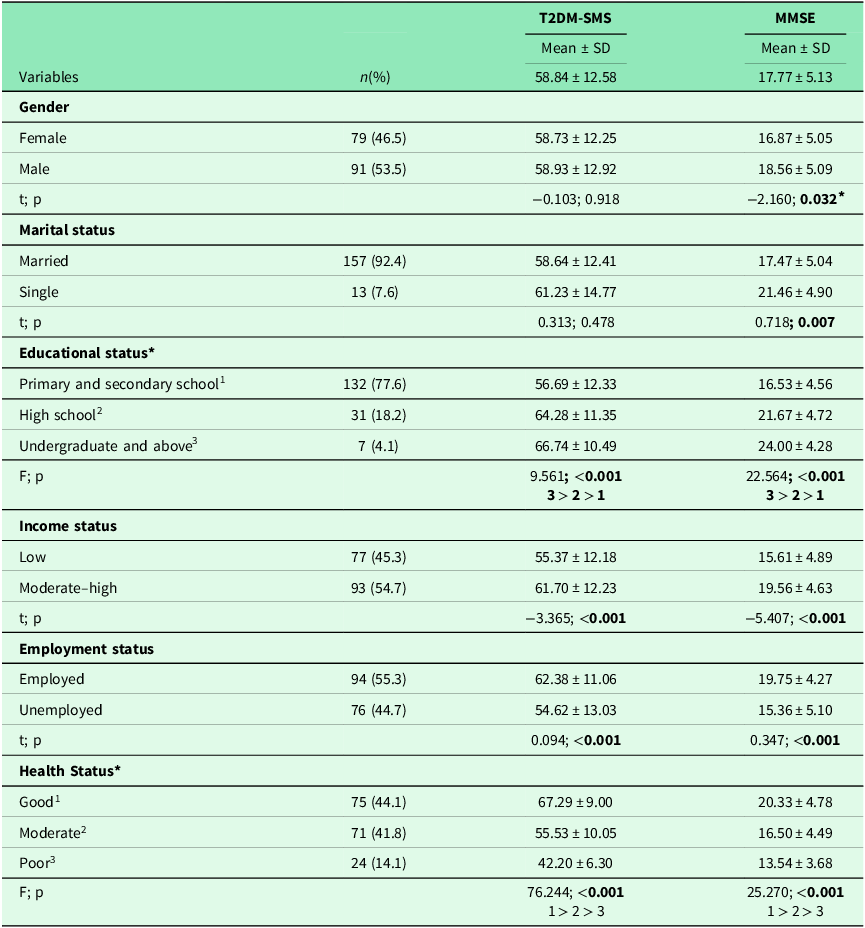
The participants had a mean age of 59.44 ± 15.30 years, and the mean duration of T2DM was 10.48 ± 6.77 years. Of the participants, 46.5% were female, 92.4% were married, 45.3% reported a low income, 55.3% were employed, and 41.8% perceived their health status as moderate (Table 1).
Comparison of T2DM-SMS and MMSE scores according to participants’ sociodemographic characteristics

Table 1. Long description
A table comparing sociodemographic characteristics with T2DM-SMS and MMSE scores across different variables. The table has 11 rows and 6 columns. Column headers are Variables, n(%), T2DM-SMS Mean ± SD, and MMSE Mean ± SD. Row labels include Gender, Marital status, Educational status, Income status, Employment status, and Health Status. Each row provides specific data points for these categories. For example, under Gender, 79 females (46.5%) have a T2DM-SMS mean of 58.73 ± 12.25 and an MMSE mean of 16.87 ± 5.05. The table also includes statistical values like t, p, and F for various comparisons.
M: Mean, SD: Standard deviation. %: Column percentage. *:tukey.
The mean Type 2 Diabetes Self-Management Scale (T2DM-SMS) score was 58.84 ± 12.58 (range: 31–85), whereas the mean MMSE score was 17.77 ± 5.13 (range: 6–30). Associations between participants’ sociodemographic characteristics and the total scores of the study instruments are presented in Table 1.
Significant differences in T2DM-SMS scores were observed according to educational level, income level, employment status, and perceived health status (p < 0.05). Participants with a higher educational level, moderate-to-high income, employment, and those who perceived their health as good had significantly higher T2DM-SMS scores than their counterparts (Table 1).
Significant differences in MMSE scores were also observed according to gender, marital status, educational level, income level, employment status, and perceived health status (p < 0.05). Lower MMSE scores were observed among female participants, married individuals, those with a lower educational level, low income, unemployment, and those who perceived their health as poor (Table 1).
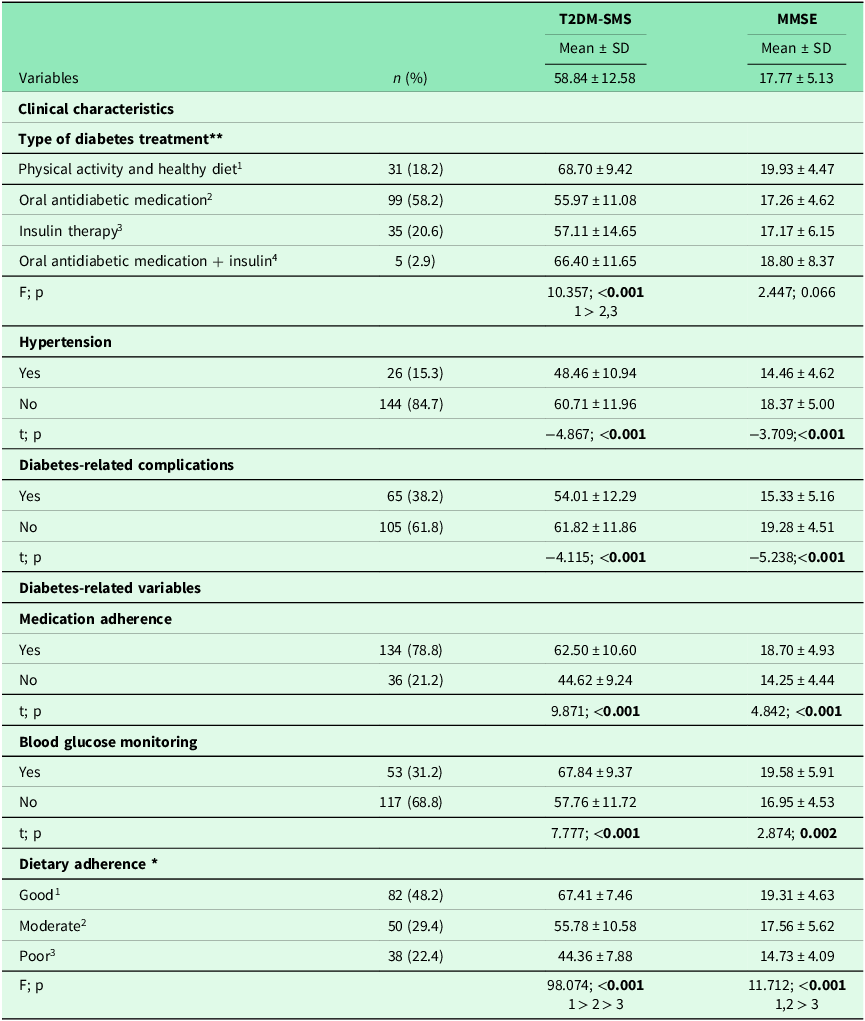
Associations between diabetes-related characteristics, behavioural factors, and the total scores of the study instruments are presented in Table 2. Significant differences in T2DM-SMS scores were observed according to treatment modality, medication adherence, regular blood glucose monitoring, hypertension status, physical activity, dietary adherence, and the presence of diabetes-related complications (p < 0.05). Participants whose diabetes was managed through lifestyle modification (healthy diet and regular physical activity), those who adhered to their prescribed medications and dietary recommendations, regularly monitored their blood glucose levels, had no hypertension, and had no diabetes-related complications demonstrated significantly higher T2DM-SMS scores (Table 2). Significant differences in MMSE scores were also observed according to medication adherence, regular blood glucose monitoring, hypertension status, dietary adherence, and the presence of diabetes-related complications (p < 0.05). Higher MMSE scores were observed among participants who regularly took their medications, routinely monitored their blood glucose levels, had no hypertension, reported good or moderate dietary adherence, and had no diabetes-related complications (Table 2).
Comparison of T2DM-SMS and MMSE scores according to diabetes-related characteristics and self-management behaviours

Table 2. Long description
A table comparing T2DM-SMS and MMSE scores across different diabetes-related characteristics and self-management behaviors. The table has 13 rows and 6 columns. The columns are labeled ‘Variables’, ‘n (%)’, ‘T2DM-SMS Mean ± SD’, and ‘MMSE Mean ± SD’. The rows are grouped under ‘Clinical characteristics’, ‘Hypertension’, ‘Diabetes-related complications’, and ‘Diabetes-related variables’. Each row provides specific data points for these categories. For example, under ‘Type of diabetes treatment’, the table lists categories like ‘Physical activity and healthy diet’, ‘Oral antidiabetic medication’, ‘Insulin therapy’, and ‘Oral antidiabetic medication + insulin’, with corresponding values for T2DM-SMS and MMSE scores. The table also includes statistical values like F, p, t, and p for various comparisons.
M: Mean, SD: Standard deviation. %: Column percentage. *:tukey **:tamhane.
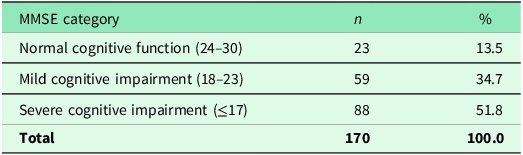
According to the MMSE classification, 23 (13.5%) participants had normal cognitive function, 59 (34.7%) had mild cognitive impairment, and 88 (51.8%) had severe cognitive impairment (Table 3).
Distribution of participants according to MMSE cognitive function categories

Table 3. Long description
A table showing the distribution of participants according to MMSE cognitive function categories. The table has four rows and three columns. The columns are labeled MMSE category, n, and %. The rows are labeled as follows: Row 1: Normal cognitive function (24-30), 23, 13.5 percent. Row 2: Mild cognitive impairment (18-23), 59, 34.7 percent. Row 3: Severe cognitive impairment (less than or equal to 17), 88, 51.8 percent. Row 4: Total, 170, 100.0 percent. The table indicates that the majority of participants, 51.8 percent, have severe cognitive impairment, while 34.7 percent have mild cognitive impairment, and 13.5 percent have normal cognitive function.
Figure 2 illustrates the correlation matrix among diabetes diagnosis period, diabetes self-management, cognitive function, and the study variables. A moderate positive correlation was observed between the total Type 2 Diabetes Self-Management Scale (T2DM-SMS) and MMSE scores (r = 0.50, p < 0.05), suggesting that better diabetes self-management was associated with better cognitive function. MMSE scores were moderately positively correlated with the Healthy Lifestyle Behaviours (r = 0.46, p < 0.05) and Blood Glucose Management (r = 0.51, p < 0.05) subscales of the T2DM-SMS, indicating that these self-management domains showed meaningful associations with cognitive function. MMSE scores were also weakly positively correlated with the Health Services Utilisation subscale (r = 0.21, p < 0.05). In contrast, MMSE scores were strongly negatively correlated with age (r = −0.63, p < 0.05), suggesting that increasing age was associated with lower cognitive function, and weakly to moderately negatively correlated with the duration of T2DM (r = −0.29, p < 0.05). In addition, the total T2DM-SMS score was weakly negatively correlated with the duration of T2DM (r = −0.26, p < 0.05), indicating that longer diabetes duration was associated with poorer diabetes self-management (Figure 2).
Correlations between T2DM-SMS and MMSE and its subscales. DDP: Diabetes Diagnosis Period, HLB: Healthy Lifestyle Behaviours, BGM: Blood Glucose Management, HSU: Health Services Utilisation, T2DM-SMS: Type 2 Diabetes-Diabetes Self-Management Scale, MMSE: Mini-Mental State Examination. Correlations are presented as Pearson’s correlation coefficients (r). p < 0.05.

Multiple linear regression analysis showed that diabetes self-management, age, and gender were significantly associated with MMSE scores (p < 0.05). (Figure 3). Higher T2DM-SMS scores were independently associated with higher MMSE scores (β = 0.12, p < 0.001). In contrast, age was negatively associated with MMSE scores, with each one-year increase in age corresponding to an average decrease of 0.17 points in the MMSE score (β = −0.17, p < 0.001). In addition, male gender was independently associated with higher MMSE scores, with male participants scoring, on average, 1.59 points higher than female participants (β = 1.59, p = 0.006) (Figure 3).
Multiple linear regression model of factors associated with MMSE scores. T2DM-SMS: Type 2 Diabetes-Diabetes Self-Management Scale DC: Diabetes Complication.

Discussion
Type 2 diabetes mellitus is one of the most prevalent chronic metabolic diseases worldwide and continues to impose a substantial burden on healthcare systems (Randväli et al., Reference Randväli, Toomsoo and Šteinmiller2024; Huang et al., Reference Huang, Chen and Su2025). Population ageing, urbanisation, physical inactivity, increasing obesity rates, and unhealthy dietary habits have all contributed to the growing prevalence of T2DM (Teufel et al., Reference Teufel, Orgutsova, Genitsaridi, Carrillo-Larco, Varghese, Marcus, Sacre, Sajjadi, Chiwanga, Manne-Goehler, Seiglie, Flood, Harding, Salpea, Salim, Boyko, Magliano and Ali2026). Beyond impaired glycaemic control, T2DM is associated with numerous microvascular and macrovascular complications, including cardiovascular disease, chronic kidney disease, diabetic retinopathy, neuropathy, and lower-extremity amputations, all of which adversely affect mortality, quality of life, and healthcare costs (Huang et al., Reference Huang, Chen and Su2025; Kan et al., Reference Kan, Qu, Wang, Zhang and Xu2025). Because the successful management of T2DM relies largely on patients’ day-to-day health behaviours, diabetes self-management is considered a cornerstone of effective diabetes care (Maina et al., Reference Maina, Pienaar and Reid2023). In the present study, the mean T2DM-SMS score was 58.84 ± 12.58, indicating a moderate level of diabetes self-management among the participants. This finding suggests that although participants generally engaged in essential diabetes self-management behaviours, including healthy eating, regular physical activity, blood glucose monitoring, and medication adherence, there remains considerable room for improvement to achieve optimal diabetes management (Chou et al., Reference Chou, Chen, Liao, Chen, Liu and Yeh2025; Bilgehan and Vardar Inkaya, Reference Bilgehan and Vardar İnkaya2025; Wang et al., Reference Wang, Qi, An, Zhao, Zhong, Wu, Wu and Gao2026). The moderate level of self-management observed may reflect the complexity of sustaining diabetes self-management over time (Herges et al., Reference Herges, Matulis, Kessler, Ruehmann, Mara and McCoy2022; American Diabetes Association, 2023). Diabetes self-management requires continuous behavioural adaptation and reinforcement, which may remain challenging despite access to specialist care, particularly among individuals with varying socioeconomic and educational backgrounds (American Diabetes Association, 2023; Maina et al., Reference Maina, Pienaar and Reid2023). Participants with higher educational attainment, moderate-to-high income, employment, and a better perceived health status demonstrated significantly higher diabetes self-management scores. These findings are consistent with previous research suggesting that individuals with greater educational and financial resources are more likely to possess the knowledge, skills, and resources necessary for effective diabetes self-management (Reinke et al., Reference Reinke2024). Furthermore, employed individuals may benefit from more structured daily routines, greater social engagement, and improved access to healthcare resources, all of which may facilitate adherence to diabetes self-management behaviours. These findings also highlight the importance of strengthening diabetes self-management support in primary health care, where regular follow-up, individualised patient education, and ongoing behavioural reinforcement can complement specialist care and help address persistent gaps in self-management (American Diabetes Association, 2023).
Effective diabetes self-management requires a broad range of behavioural skills, including self-monitoring of blood glucose, adherence to a healthy diet, regular physical activity, medication adherence, monitoring for diabetes-related complications, and blood pressure management (Maina et al., Reference Maina, Pienaar and Reid2023; Chou et al., Reference Chou, Chen, Liao, Chen, Liu and Yeh2025). In the present study, higher T2DM-SMS scores were observed among participants whose diabetes was managed through lifestyle modification, those who demonstrated good dietary adherence, regularly took their medications, routinely monitored their blood glucose levels, had no hypertension, and had no diabetes-related complications. In addition, diabetes self-management was negatively correlated with the duration of T2DM, indicating that self-management behaviours tended to decline as disease duration increased. These findings underscore the importance of sustained diabetes self-management in achieving optimal disease control. Individuals who consistently engage in healthy lifestyle behaviours and adhere to recommended treatment regimens are more likely to maintain effective self-management and experience better health outcomes. Conversely, the observed decline in self-management among individuals with longer diabetes duration may reflect reduced motivation, treatment fatigue, or insufficient reinforcement through ongoing diabetes education. The lower self-management scores observed among individuals with longer diabetes duration may reflect several factors, including the increasing complexity of diabetes management over time (Cho et al., Reference Cho, Kim and Park2018). However, these factors were not assessed in the present study. Similar observations have been reported in previous studies, suggesting that continuous patient education and regular professional support are essential for maintaining effective self-management behaviours over time (Chou et al., Reference Chou, Chen, Liao, Chen, Liu and Yeh2025). Conversely, evidence also indicates that structured diabetes self-management education and ongoing follow-up can maintain or improve self-management behaviours, even among individuals with long-standing T2DM (Reinke, Reference Reinke2024; Bilgehan and Vardar İnkaya, Reference Bilgehan and Vardar İnkaya2025). Collectively, these findings highlight the importance of promoting healthy lifestyle behaviours and providing long-term educational support to sustain diabetes self-management among individuals with T2DM.
Cognitive impairment is a major public health concern because of its profound effects on individuals’ cognitive, functional, and social well-being and its potential progression to dementia (Cao et al., Reference Cao, Yang, Li, Guo, Zhang, Gao, Sun, Zhou and Zhang2024; Chen et al., Reference Chen, Cao, Nandi, Counts, Jiao, Prettner, Kuhn, Seligman, Tortorice, Vigo, Wang and Bloom2024). Early identification of cognitive impairment is essential for implementing interventions that may delay cognitive decline, preserve functional independence, and improve quality of life (Emmady et al., Reference Emmady, Schoo and Tadi2022; Huang et al., Reference Huang, Chen and Su2025; Sakurai et al., Reference Sakurai, Sugimoto and Arai2025). Individuals with T2DM are particularly vulnerable to cognitive impairment because of the metabolic and vascular alterations associated with the disease (Kan et al., Reference Kan, Qu, Wang, Zhang and Xu2025; Pipatpiboon et al., Reference Pipatpiboon, Sripetchwandee and Bressington2025). Therefore, routine assessment of cognitive function has been recommended for individuals with T2DM and other chronic conditions associated with an increased risk of cognitive decline (Cao et al., Reference Cao, Yang, Li, Guo, Zhang, Gao, Sun, Zhou and Zhang2024; Randväli et al., Reference Randväli, Toomsoo and Šteinmiller2024; Huang et al., Reference Huang, Chen and Su2025). In the present study, the mean MMSE score was 17.77 ± 5.13, indicating generally poor cognitive performance among the study participants despite the exclusion of individuals with a previous diagnosis of dementia. Consistent with this finding, more than half of the participants (51.8%) had MMSE scores of ≤17, indicating severe cognitive impairment according to the MMSE classification. Furthermore, age was independently associated with lower MMSE scores, with each additional year of age corresponding to a 0.17-point decrease in cognitive function. Lower MMSE scores were also observed among female participants, married individuals, those with lower educational attainment, low income, unemployment, and poor perceived health status. These findings are consistent with previous studies identifying older age (Saldana and Guarnaccia, Reference Saldana and Guarnaccia2022; Reinke et al., Reference Reinke, Buchmann, Fink, Tegeler, Demuth and Doblhammer2022; Randväli et al., Reference Randväli, Toomsoo and Šteinmiller2024; Cao et al., Reference Cao, Yang, Li, Guo, Zhang, Gao, Sun, Zhou and Zhang2024; Messina et al., Reference Messina, Mezuk, Rosa, Iommi, Fantini, Lenzi and Di Bartolo2024; Kan et al., Reference Kan, Qu, Wang, Zhang and Xu2025; Zhao et al., Reference Zhao, Wang, Tang, Wang, Tian and Li2025), female gender (Reinke et al., Reference Reinke, Buchmann, Fink, Tegeler, Demuth and Doblhammer2022; Messina et al., Reference Messina, Mezuk, Rosa, Iommi, Fantini, Lenzi and Di Bartolo2024; Liu et al., Reference Liu, Deng, Gong, Ou, Yu and Chen2025; Zhao et al., Reference Zhao, Wang, Tang, Wang, Tian and Li2025), lower educational attainment (Saldana and Guarnaccia, Reference Saldana and Guarnaccia2022; Randväli et al., Reference Randväli, Toomsoo and Šteinmiller2024; Zhao et al., Reference Zhao, Wang, Tang, Wang, Tian and Li2025), and lower socioeconomic status (Randväli et al., Reference Randväli, Toomsoo and Šteinmiller2024) as factors associated with poorer cognitive function and an increased likelihood of cognitive impairment. Taken together, these findings suggest that cognitive impairment in individuals with T2DM is influenced not only by diabetes-related metabolic disturbances but also by sociodemographic characteristics that may affect health literacy, access to healthcare, and long-term disease management. Although the cross-sectional design of the present study does not allow causal inferences or definitive clinical recommendations, the findings support the potential value of considering cognitive assessment as part of comprehensive diabetes care, particularly for older individuals and those with identified risk factors. Given that primary health care is the main setting for the long-term follow-up of individuals with T2DM, incorporating cognitive screening into routine diabetes follow-up may facilitate the early recognition of cognitive difficulties (American Diabetes Association, 2023). Nurses and multidisciplinary primary care teams can use the results of cognitive screening to tailor diabetes self-management education, simplify educational materials when needed, involve family members or caregivers, reinforce key self-management behaviours during follow-up visits, and refer patients for further cognitive assessment when appropriate.
The findings are consistent with previous studies reporting that inadequate glycaemic monitoring and poor glycaemic control (HbA1c ≥ 7.5%) are associated with approximately a twofold increased risk of dementia and its progression (Randväli et al., Reference Randväli, Toomsoo and Šteinmiller2024). Similarly, an increased frequency of hypoglycaemic episodes has been associated with a higher risk of cognitive impairment and dementia (Gómez-Guijarro et al., Reference Gómez-Guijarro, Álvarez-Bueno, Saz-Lara, Sequí-Domínguez, Lucerón-Lucas-Torres and Cavero-Redondo2023; Cao et al., Reference Cao, Yang, Li, Guo, Zhang, Gao, Sun, Zhou and Zhang2024). Previous studies have also demonstrated that longer diabetes duration (Li et al., Reference Li, Yang, Zhou, Zheng, Chen, Wu, Zou, Wang, Fu and Wu2021; Reinke et al., Reference Reinke, Buchmann, Fink, Tegeler, Demuth and Doblhammer2022; Zhao et al., Reference Zhao, Wang, Tang, Wang, Tian and Li2025), the presence of comorbidities (Reinke et al., Reference Reinke, Buchmann, Fink, Tegeler, Demuth and Doblhammer2022; Messina et al., Reference Messina, Mezuk, Rosa, Iommi, Fantini, Lenzi and Di Bartolo2024;Zhao et al., Reference Zhao, Wang, Tang, Wang, Tian and Li2025), and poorer medication adherence (Babenko et al., Reference Babenko, Mosikian, Lebedev, Khrabrova and Shlyakhto2019) are associated with worse cognitive outcomes. Collectively, these findings suggest that sustained metabolic control and adherence to diabetes self-management behaviours may contribute to maintaining cognitive function in individuals with T2DM. Although current pharmacological therapies have shown limited effectiveness in preventing cognitive decline, accumulating evidence indicates that comprehensive lifestyle-based interventions, including effective diabetes self-management, may contribute to preserving neurocognitive function in individuals with T2DM (Kan et al., Reference Kan, Qu, Wang, Zhang and Xu2025). It is also possible that individuals with better cognitive function are more capable of maintaining effective diabetes self-management behaviours, including medication adherence, blood glucose monitoring, and healthy lifestyle practices. Therefore, the observed relationship may be bidirectional, and longitudinal studies are needed to clarify the temporal relationship between diabetes self-management and cognitive function. Accordingly, interventions aimed at improving medication adherence, blood glucose monitoring, dietary adherence, and long-term diabetes management may improve metabolic outcomes and have the potential to support cognitive health.
The most important finding of the present study was the significant positive association between diabetes self-management and cognitive function among individuals with T2DM. In addition to the positive correlation observed between the total T2DM-SMS and MMSE scores, multiple linear regression analysis demonstrated that diabetes self-management remained independently associated with MMSE scores after adjustment for age, gender, and diabetes-related complications. These findings suggest that better diabetes self-management is independently associated with better cognitive performance. Several biological and behavioural mechanisms may explain this relationship. Effective diabetes self-management promotes optimal glycaemic control, reduces glycaemic variability and hypoglycaemic episodes, and may attenuate chronic inflammation, oxidative stress, insulin resistance, and vascular injury, all of which have been implicated in cognitive decline (Kim et al., Reference Kim, Bronas, Quinn, Sharp, Park, Gruss and Fritschi2023; Kan et al., Reference Kan, Qu, Wang, Zhang and Xu2025; Wang et al., Reference Wang, Qi, An, Zhao, Zhong, Wu, Wu and Gao2026). Moreover, individuals with better self-management are more likely to adhere to healthy lifestyle behaviours and treatment recommendations, thereby reducing long-term diabetes-related complications that may adversely affect cognitive function. Our findings are consistent with previous studies reporting significant positive associations between MMSE scores and diabetes self-management behaviours (Świątoniowska-Lonc et al., Reference Świątoniowska-Lonc, Polański, Tański and Jankowska-Polańska2021). Likewise, Wang et al. (Reference Wang, Qi, An, Zhao, Zhong, Wu, Wu and Gao2026) demonstrated that better diabetes self-management and glycaemic control were associated with a lower likelihood of mild cognitive impairment. Furthermore, a recent systematic review and meta-analysis reported that individuals experiencing hypoglycaemic episodes had a 54% higher risk of dementia than those without hypoglycaemia (Gómez-Guijarro et al., Reference Gómez-Guijarro, Álvarez-Bueno, Saz-Lara, Sequí-Domínguez, Lucerón-Lucas-Torres and Cavero-Redondo2023), further emphasising the importance of effective diabetes self-management in maintaining cognitive health. However, not all studies have found consistent results (Kan, Reference Kan, Qu, Wang, Zhang and Xu2025). This suggests that factors such as differences in study design, participant characteristics, cognitive assessment methods, and the extent of adjustment for potential confounding factors may play a role. Collectively, these findings indicate that diabetes self-management may represent an important modifiable factor associated with cognitive function in individuals with T2DM. In primary health care, where individuals with T2DM receive regular long-term follow-up, these findings support the potential value of considering cognitive function when planning individualised diabetes self-management education. Nurses and multidisciplinary primary care teams may incorporate brief cognitive screening into routine diabetes follow-up visits and use the results to adapt educational strategies, determine the level of support required for diabetes self-management, involve family members or caregivers when appropriate, and coordinate referrals for further cognitive evaluation if cognitive impairment is suspected.
Conclusion
This study demonstrated that several sociodemographic and clinical characteristics, including age, gender, educational level, perceived health status, medication adherence, and hypertension, were associated with both diabetes self-management and cognitive function among individuals with type 2 diabetes mellitus (T2DM). Furthermore, diabetes self-management was positively associated with cognitive function and remained an independently associated with MMSE scores after adjustment for age, gender, and diabetes-related complications. These findings suggest that diabetes self-management and cognitive function are closely related in individuals with T2DM. In primary health care, where individuals with T2DM receive long-term follow-up, these findings may inform strategies to incorporate cognitive screening into routine diabetes care and to tailor diabetes self-management education and support according to patients’ cognitive needs through nurses and multidisciplinary primary care teams. In addition to routine monitoring of glycaemic control, healthcare professionals should regularly assess diabetes self-management behaviours while considering potential cognitive difficulties that may affect patients’ ability to effectively self-manage their diabetes. Future longitudinal and interventional studies are needed to clarify the temporal relationship between diabetes self-management and cognitive impairment and to determine whether interventions targeting diabetes self-management can help maintain cognitive function in individuals with T2DM.
Limitations
This study has several limitations that should be considered when interpreting the findings. First, the cross-sectional design precludes any conclusions regarding causal relationships between diabetes self-management and cognitive function. Therefore, it cannot be determined whether better diabetes self-management is associated with better cognitive function, whether cognitive function influences an individual’s ability to perform diabetes self-management, or whether both are influenced by shared socioeconomic and clinical factors. Second, because the study was conducted in a single public hospital using a convenience sample, the generalisability of the findings may be limited. The use of convenience sampling may have introduced selection bias and may limit the generalisability of the findings to the broader population of individuals with T2DM. Third, due to the relatively small sample size and group distribution in this study, the results should be interpreted with caution. Fourth, cognitive function was assessed using the MMSE, which is a screening instrument rather than a diagnostic tool for cognitive impairment or dementia. Although the Turkish validation study classifies MMSE scores according to dementia severity, contemporary literature increasingly interprets lower MMSE scores within the context of mild cognitive impairment and cognitive decline. Therefore, the findings should be interpreted as reflecting cognitive function and the likelihood of cognitive impairment rather than a clinical diagnosis of dementia. Future studies using comprehensive neuropsychological assessments together with longitudinal designs are warranted to confirm and extend these findings.
Data availability statement
Data available on request due to privacy/ethical restrictions.
Acknowledgements
The researchers would like to thank the adults who participated in the study.
Author contributions
Study conception and design: AA, TB; Data collection: AA, TB; Data analysis: TB; Drafting of the article: AA, TB; Critical revision of the article: AA, TB.
Funding statement
This research did not receive any specific grant from funding agencies in the public, commercial, or not-for-profit sectors.
Competing interests
The authors report no actual or potential conflict of interest. The authors declare that they have no known competing financial interests or personal relationships that could have appeared to influence the work reported in this paper.
Ethical approval
This study was approved by the Ethic Commission of Ankara Yıldırım Beyazıt University (23.11.2023, 09-429).
Declaration of generative AI and AI-assisted technologies in the manuscript preparation process
During the preparation of this work the authors used [Deepseek/AI] to grammar corrections and language improvements. After using this tool/service, the authors reviewed and edited the content as needed and took full responsibility for the content of the published article.



 Open access

