Introduction
Background
Caring for people with dementia requires specific skills in communication covering all settings in which people with dementia live (Rössler et al., Reference Rössler, Schwerdt and Renteln-Kruse2005). This applies to medical professionals, nurses, and other allied healthcare professionals working in inpatient and outpatient settings. A growing body of literature indicates that communication barriers between people with dementia and their caregivers have a significant negative impact on their quality of life, the quality of care received and given, and the relationships experienced (Kitwood, Reference Kitwood2008). Nevertheless, there are ways to facilitate meaningful interactions in dementia care (Adams and Gardiner, Reference Adams and Gardiner2005; Killick and Allan, Reference Killick and Allan2008). International reports emphasize that communication skills training and education are particularly important for staff working with people with dementia as well as for family caregivers (NHS, 2005; 2007; Doyle et al., Reference Doyle2009). The need for and importance of dementia care education has been shown for different professions such as aged care workers (Flemming and FitzGerald, Reference Fleming and FitzGerald2009), healthcare assistants in hospitals (Chapman and Law, Reference Chapman and Law2009), and primary care physicians (Cherry et al., Reference Cherry2009; Beer et al., Reference Beer2011). Nevertheless, healthcare professionals and family caregivers usually receive very little training and support to enable them to meet the specific communicative needs of people with dementia. There is a lack of evidence regarding educational interventions to improve communication in the most important care settings in which people with dementia are cared for.
Most previous systematic reviews have either evaluated data on specific therapeutic techniques such as Reminiscence Therapy (Woods et al., Reference Woods, Spector, Jones, Orrell and Davies2005), Validation Therapy© (Neal and Barton Wright, Reference Neal and Barton Wright2003), and Reality Orientation (Spector et al., Reference Spector, Davies, Woods and Orrell2000) or examined general dementia education programs in long-term care facilities (Kuske et al., Reference Kuske, Hanns, Luck, Angermeyer, Behrens and Riedel-Heller2007). There is a wealth of literature on creative, expressive, and stimulating interventions directly addressing people with dementia (Chung and Lai, Reference Chung and Lai2002; Holt et al., Reference Holt, Birks, Thorgrimsen, Spector, Wiles and Orrell2003; Vink et al., Reference Vink, Birks, Bruinsma and Scholten2003; Hansen et al., Reference Hansen Niels, Jørgensen and Ørtenblad2006; Hauer et al., Reference Hauer, Becker, Lindemann and Beyer2006; Schmitt and Frolich, Reference Schmitt and Frolich2007). Again, several systematic reviews on family caregivers’ strain point to the need for psychosocial interventions for informal caregivers to relieve their burden and improve depressive symptoms (Brodaty et al., Reference Brodaty, Green and Koschera2003; Burns et al., Reference Burns, Nichols, Martindale-Adams, Graney and Lummus2003; Selwood et al., Reference Selwood, Johnston, Katona, Lyketsos and Livingston2007; Zarit and Femia, Reference Zarit and Femia2008).
While previous systematic reviews on communication in dementia care have primarily focused on institutional settings (such as nursing or residential care facilities; Vasse et al., Reference Vasse, Vernooij-Dassen, Spijker, Rikkert and Koopmans2009), the majority of people with dementia are, in fact, cared for in their own homes (Davies and Higginson, Reference Davies and Higginson2004). Consequently, additional research is needed to increase our understanding of the efforts that can be made to improve communication in other relevant care settings. Apart from residential care, these settings include homecare and acute-care (Payne and Froggatt, Reference Payne and Froggatt2009). Family caregivers recount facing multiple challenges while caring for a family member with dementia; many of these problems are linked to communication issues. These problems may include a lack of knowledge of symptoms of dementia, of specific changes in communication with people with dementia, and of methods to achieve good communication. Furthermore, a lack of knowledge of challenging behavior and its possible causes often leads to communication breakdown, fear, and misunderstanding. Consequently, communication skills training in community-dwelling settings is highly desirable. Additionally, frail older people with dementia are prone to a deterioration of their health status. As a result, they might have to be admitted to acute-care units. Major problems in acute-care settings are the rigorous and fast clinical routine, a confusing new environment for people with dementia, and a lack of knowledge, skills, and competencies on the part of acute-care staff regarding the care of dementia patients.
To date, no comprehensive and systematic overview and analysis of effectiveness has looked at communication skills interventions in dementia care including the most relevant care settings.
Aims, inclusion criteria, and research questions
This review aims to evaluate interventions that have been designed to enhance communication or interaction in dementia care in any setting. For this purpose, an intervention was defined as communication skills training for professional or non-professional caregivers, aiming to improve communication or interaction of participants by means of face-to-face teaching in small groups or individualized hands-on training. Multi-component interventions had to include a communication component in order to qualify. Communication was defined as a reciprocal process of sharing and receiving verbal information by means of language. Interaction was defined as a reciprocal communicative action by means of non-verbal information, i.e. body language, gestures, facial expressions, rhythm, or sound.
We excluded all expressive and creative interventions, such as cognitive stimulation or walking and talking programs intended to enhance memory or physical functions. Also excluded were interventions underpinned by a specific theoretical approach, such as Validation Therapy©, Reminiscence Therapy, Dementia Care Mapping©, or Reality Orientation, due to the fact that evaluation of these is broadly covered by definite systematic reviews.
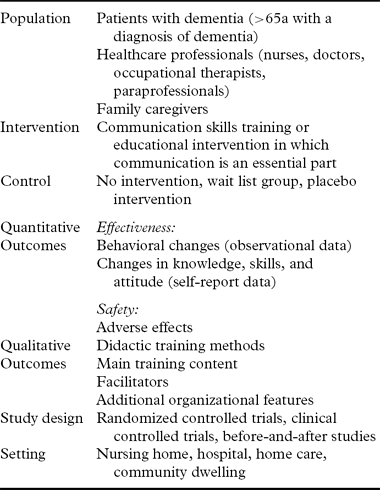
Randomized controlled trials (RCTs), clinical controlled trials (CCTs), and before-and-after studies (B&A) were considered for the review screening process. We included studies that examined interventions aimed at patients, family carers, or healthcare professionals. The relevant study population included people with dementia over the age of 65 who were either living in residential-care settings or community-dwelling settings, or had been admitted to acute-care settings (Adams and Gardiner, Reference Adams and Gardiner2005). The inclusion criteria required a diagnosis of dementia following the Diagnostic and Statistical Manual of Mental Disorders-IV (DSM-IV) criteria. Table 1 provides a summary of our inclusion criteria in the form of a review protocol.
Inclusion criteria
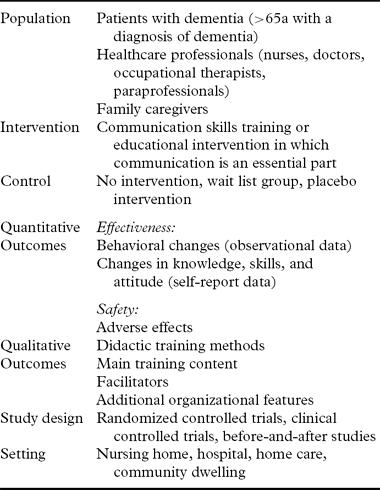
We examined effects of the interventions on quality of life of people with dementia, wellbeing, challenging behavior, observed communication skills and attitudes, carer burden, and stress. We furthermore examined self-report data on the knowledge, skills, and attitudes of family caregivers or staff. On a qualitative level, our purpose was to analyze the data with respect to the content of communication interventions, didactic methods, materials and organizational features, and facilitators conducting these interventions.
Leading research questions were:
• How effective is communication skills training for healthcare professionals and family caregivers in dementia?
• In what care settings does communication skills training take place? Do additional features of care settings influence organizational framework, sustainability, and development?
• What kind of didactic methods and structures are used within communication skills training in dementia care?
• What is the major content and theoretical input provided in communication skills training? Are there basic principles of good communication in dementia care?
Methods
We searched nine computerized databases [MEDLINE, AMED, EMBASE, PsychINFO, CINAHL, Cochrane Central Register of Controlled Trials (current issue), Cochrane Database of Systematic Reviews (current issue), Gerolit, Web of Science] from their respective inception to January 2010 for scientific articles in English and German. We were able to include German papers because of the language skills of the review team. The search strategy was defined by the principles of a systematic search and implied free-text keywords and thesaurus search engines, for instance with PubMed the Medical subject headings (Mesh terms). In the case of Gerolit, we used German keywords. A detailed account of the search strategy is available from the first author on request.
Screening process
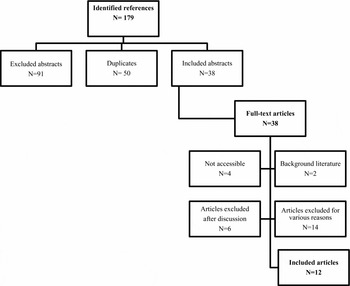
The initial and inclusive search retrieved 2,261 articles. Two independent reviewers (EE and KE) revised these studies for inclusion or exclusion. First decisions on whether or not a paper was relevant for the review were based on title and type of study. After initial exclusion, 179 potentially relevant studies were identified. Trials were excluded for several reasons, for instance: research design, such as case studies; theoretical or methodological background literature on communication issues in dementia care; interventions directed at patients with dementia focusing not on the improvement of communication skills of professional or non-professional caregivers (walking and talking programs, Alzheimer's café, storytelling, occupational therapy, speech therapy, or physiotherapy), but on direct improvement of speech, memory, and executive function difficulties of people with dementia, such as agnosia, apraxia, aphasia, decreased word fluency, word finding difficulties, cognitive dysfunction or dysphagia; interventions using telephone counseling, or booklets or memory books without face-to-face training; psychosocial interventions to reduce caregiver stress and burden; mixed patient population (including elderly with Morbus Parkinson, mentally disabled patients, or patients with strokes); interventions including students, undergraduates, or volunteers; etc. Both reviewers independently screened abstracts with abstract review forms. Diverging decisions on exclusion of articles were resolved by discussion and consensus. In total, 38 abstracts met the inclusion criteria for full text review. A reviewer (EE) and a co-reviewer (KE) assessed eligibility with a full-text review form. When necessary, a third reviewer was consulted (MB or KH). Finally, 12 trials were included. For an overview of the search process in the form of a quorum tree, see Figure 1.
Quorum tree.

Quality appraisal and data extraction
The methodological quality of the studies ultimately included was assessed by a reviewer (EE) and checked by a second reviewer (KH) using the following criteria, based on recommendations of the Cochrane Collaboration (Higgins and Green, Reference Higgins and Green2009): adequate method of sequence generation (i.e. randomization), adequate allocation concealment, blinding of participants, personnel and outcome assessors, adequate and complete outcome data report, similarity of groups at baseline, description of lost-to-follow-up, identification of potential confounding factors, and other potential threats to validity. Risk of bias was rated for selection-, performance-, detection-, and reporting bias as high, low, or unclear using Review Manager (REVMAN 5.1) software. Data was extracted by a reviewer (EE) and its accuracy checked independently by a co-reviewer (KE). Both used a standardized form. Data was extracted on characteristics of participants, content of communication skills intervention, didactic methods used, materials provided for participants, intervention facilitators, duration of the intervention, and various settings.
Results
Characteristics of included studies
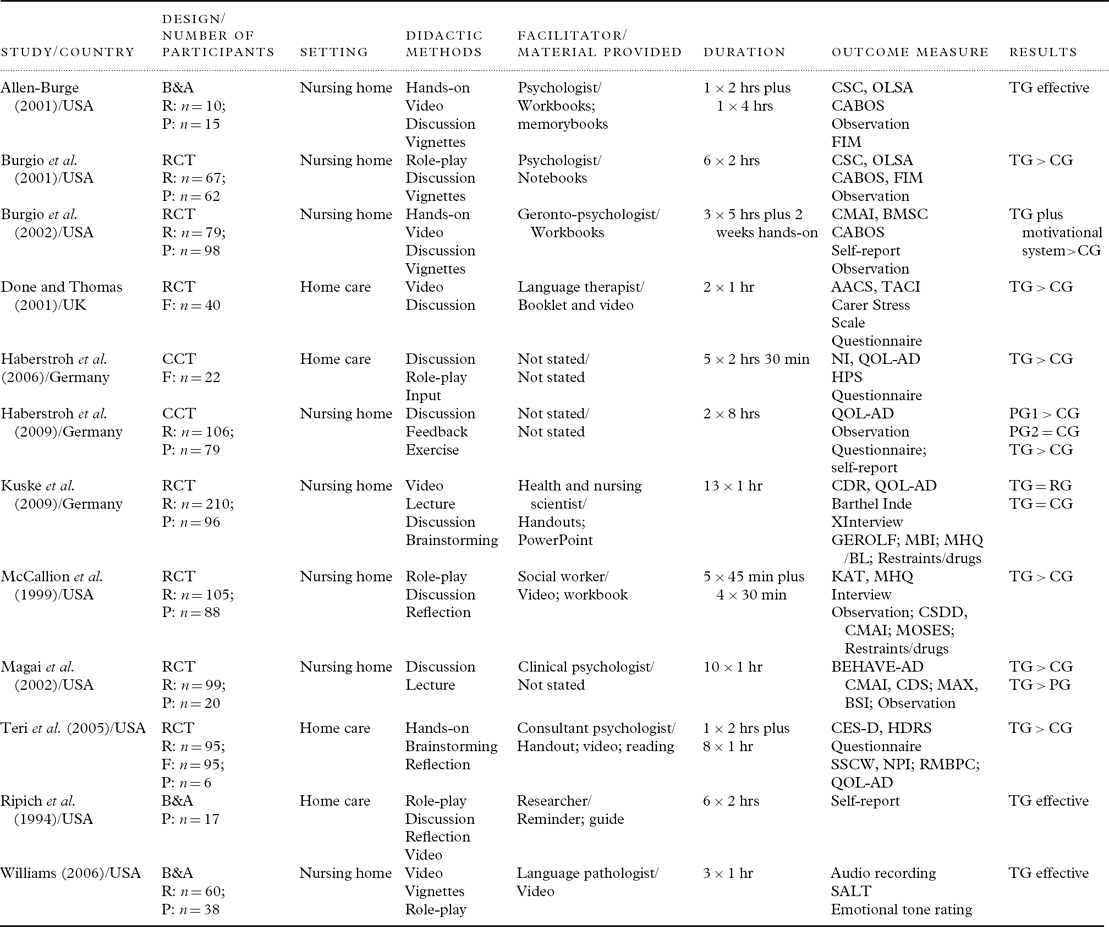
Of the 12 trials included, seven were RCTs (McCallion et al., Reference McCallion, Toseland, Lacey and Banks1999; Burgio et al., Reference Burgio2001; Done and Thomas, Reference Done and Thomas2001; Burgio et al., Reference Burgio, Stevens, Burgio, Roth, Paul and Gerstle2002; Magai et al., Reference Magai, Cohen and Gomberg2002; Teri et al., Reference Teri, McCurry, Logsdon and Gibbons2005; Kuske et al., Reference Kuske2009), two were CCTs (Haberstroh et al., Reference Haberstroh, Neumeyer, Schmitz, Perels and Pantel2006; Reference Haberstroh, Neumeyer, Schmitz and Pantel2009), and three were B&A studies (Ripich et al., Reference Ripich, Ziol, Fritsch and Durand1994; Allen-Burge, Reference Allen-Burge2001; Williams, Reference Williams2006). Eight studies were carried out in the USA, three in Germany (Haberstroh et al., Reference Haberstroh, Neumeyer, Schmitz, Perels and Pantel2006; Reference Haberstroh, Neumeyer, Schmitz and Pantel2009; Kuske et al., Reference Kuske2009), and one in the UK (Done and Thomas, Reference Done and Thomas2001). Six studies (McCallion et al., Reference McCallion, Toseland, Lacey and Banks1999; Burgio et al., Reference Burgio2001; Reference Burgio, Stevens, Burgio, Roth, Paul and Gerstle2002; Teri et al., Reference Teri, McCurry, Logsdon and Gibbons2005; Haberstroh et al., Reference Haberstroh, Neumeyer, Schmitz, Perels and Pantel2006; Reference Haberstroh, Neumeyer, Schmitz and Pantel2009) compared the communication skills intervention to routine care or no intervention and three studies used a placebo control group setting (Done and Thomas, Reference Done and Thomas2001; Magai et al., Reference Magai, Cohen and Gomberg2002; Kuske et al., Reference Kuske2009). The placebo intervention was either a booklet given to participants (Done and Thomas, Reference Done and Thomas2001), a relaxation group (Kuske et al., Reference Kuske2009), or a behavioral placebo group receiving instructions on behavioral aspects of dementia (Magai et al., Reference Magai, Cohen and Gomberg2002). Duration of follow-up varied from a complete lack of follow-up to nine months. In terms of setting, eight studies took place in nursing homes, whereas four studies were located in a home-care setting (Ripich et al., Reference Ripich, Ziol, Fritsch and Durand1994; Done and Thomas, Reference Done and Thomas2001; Teri et al., Reference Teri, McCurry, Logsdon and Gibbons2005; Haberstroh et al., Reference Haberstroh, Neumeyer, Schmitz, Perels and Pantel2006). None of the studies was conducted in an acute-care setting, e.g. a hospital inpatient ward. Table 2 provides details of the studies included.
Characteristics and details of included studies
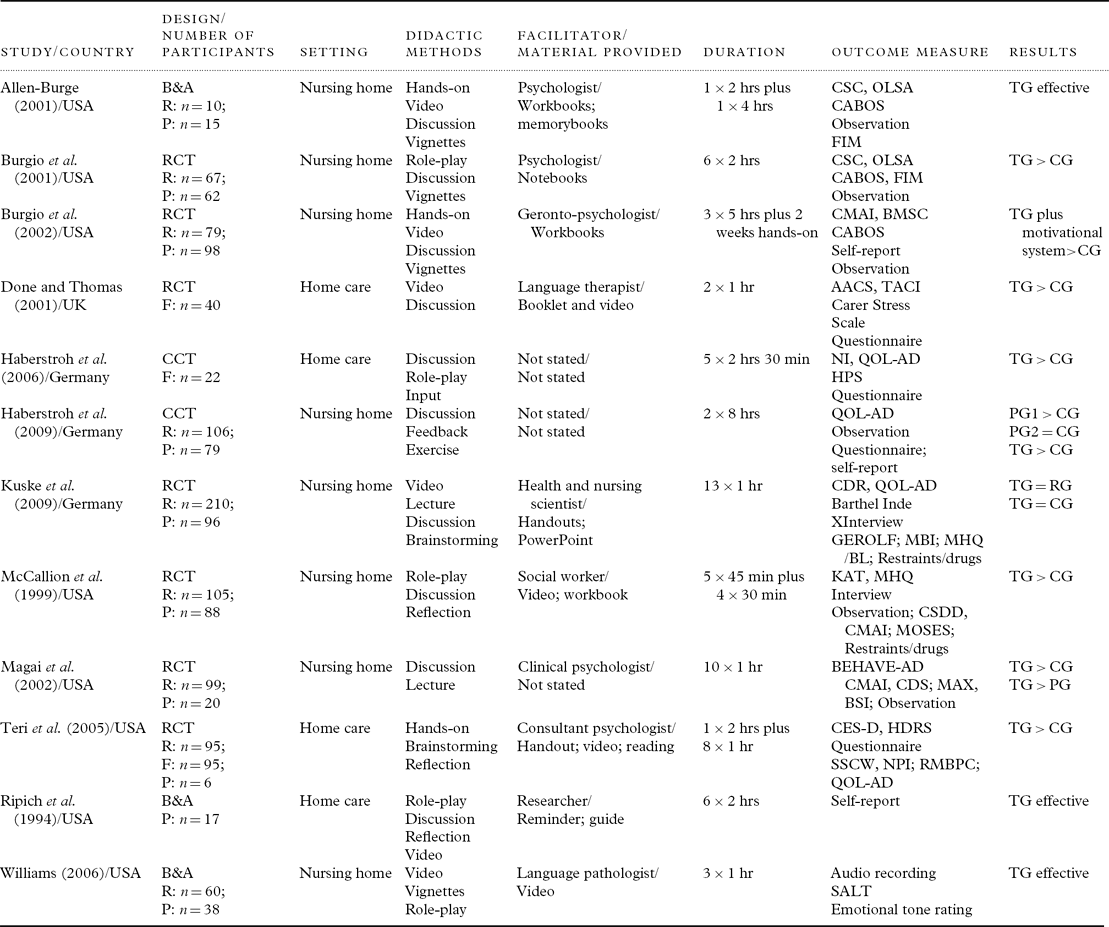
Note: RCT = randomized controlled trial; CCT = clinical controlled trial; B&A study = before-and-after observational study; CG = control group; PG = placebo group; R = residents; P = professionals; F = family carers. Measurement tools: CSC = Communication Skills Checklist; OLSA = Observation of the LPN's Supervisory Activities; CABOS = Computer-Assisted Behavioral Observation System; FIM = Functional Independence Measure; CMAI = Cohen Mansfield Agitation Inventory; BMSC = Behavior Management Skills Checklist; Restraints/drugs = usage of restraints and sedative drugs; AACS = Assessment of Awareness about Communication Strategies; TACI = The Thomas Assessment of Communication Inadequacy; RAGE = Rating Scale of Aggressive Behavior in the Elderly; BEHAVE-AD = Behavioral Pathology in Alzheimer's Disease Rating Scale; ZARIT burden interview = caregiver burden scale; NI = Neuropsychiatric Inventory; QOL-AD = Quality of Life in Alzheimer's Disease Questionnaire; HPS = Häusliche Pflege Skala (German instrument for nursing care); CDR = Clinical Dementia Rating; Barthel index = index of functional independency; GEROLF = German benchmarking instrument to measure the quality of life of geronto-psychiatric residents in nursing homes; MBI = Maslach Burnout Inventory; MHQ = Penn State Mental Health Questionnaire; BL = Beschwerdeliste (German instrument to measure health complaints of staff); KAT = Knowledge of Alzheimer's Test; CSDD or CDS = Cornell Scale for Depression in Dementia; MOSES = Multidimensional Observation Scale for Elderly Subjects; MAX = facial expressions of emotion during a semi-structured interview; BSI = Brief Symptom Inventory; NHHS = Nursing Home Hassles Scale; CES-D = Center for Epidemiologic Studies Depression Scale; HDRS = Hamilton Depression Rating Scale; SSCQ = Short Sense of Competence Questionnaire; RMBPC = Revised Memory and Behavior Problem Checklist; SALT = The Systematic Analysis of Language Transcripts.
Study participants
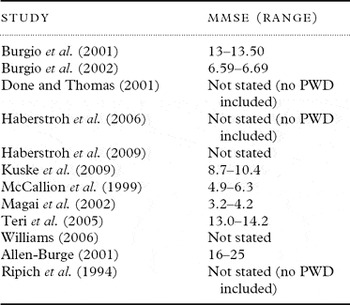
The 12 trials ultimately included in our review came to a total of 831 persons with dementia, 519 professional caregivers, and 162 family caregivers. Overall sample size varied from six (Teri et al., Reference Teri, McCurry, Logsdon and Gibbons2005) to 96 professional caregivers (Kuske et al., Reference Kuske2009). Most interventions included clinical nursing assistants (CNAs) and licensed practical nurses (LPNs). No intervention was found that aimed at training the communication skills of medical professionals. Only two studies used a multi-professional intervention design that also allowed para-professional staff, such as housekeepers (Williams, Reference Williams2006), or other staff, such as occupational therapists (Kuske et al., Reference Kuske2009), to participate. One study explicitly focused on training community consultants to train dementia patients’ family caregivers in home sessions (Teri et al., Reference Teri, McCurry, Logsdon and Gibbons2005). The number of informal caregivers ranged from 22 (Haberstroh et al., Reference Haberstroh, Neumeyer, Schmitz, Perels and Pantel2006) to 95 (Teri et al., Reference Teri, McCurry, Logsdon and Gibbons2005). The number of participating patients with dementia varied from ten (Allen-Burge, Reference Allen-Burge2001) to 210 (Kuske et al., Reference Kuske2009) with a mean Mini-Mental State Examination (MMSE) ranging from 3.2 to 16.25 points across the studies reviewed (Folstein et al., Reference Folstein, Folstein and McHugh1975). Three trials included patients with moderate dementia, four included patients with severe dementia, and the remaining five did not state MMSE data (see Table 3). Of the latter, three studies did not actually include patients with dementia and did not measure patients’ outcomes (Ripich et al., Reference Ripich, Ziol, Fritsch and Durand1994; Done and Thomas, Reference Done and Thomas2001; Haberstroh et al., Reference Haberstroh, Neumeyer, Schmitz, Perels and Pantel2006).
Range of MMSE of participants with dementia

Note: MMSE = Mini-Mental State Examination; PWD = people with dementia.
Intervention types
Overall, five different types of intervention were identified within the 12 studies. We qualitatively categorized interventions according to the following characteristics of skills training.
Trainings in Institutional Settings
• Communication skills training that focused on communication between professional caregivers and residents with dementia (McCallion et al., Reference McCallion, Toseland, Lacey and Banks1999; Burgio et al., Reference Burgio2001; Reference Burgio, Stevens, Burgio, Roth, Paul and Gerstle2002; Magai et al., Reference Magai, Cohen and Gomberg2002; Williams, Reference Williams2006; Kuske et al., Reference Kuske2009).
• Communication skills training that focused on communication between professional caregivers and residents with dementia and in addition focused on improving staff–staff interactions (Haberstroh et al., Reference Haberstroh, Neumeyer, Schmitz and Pantel2009).
• Communication interventions for professional caregivers that aimed at improving communication between staff and residents with dementia and additionally focused on fostering resident–resident and resident–visitor communication and interaction (Allen-Burge, Reference Allen-Burge2001).
Trainings in Home-Care Settings
• Communication skills training for family caregivers in community-dwelling settings (Ripich et al., Reference Ripich, Ziol, Fritsch and Durand1994; Done and Thomas, Reference Done and Thomas2001; Haberstroh et al., Reference Haberstroh, Neumeyer, Schmitz, Perels and Pantel2006).
• Communication interventions to train professional caregivers to then train family caregivers of persons with dementia (Teri et al., Reference Teri, McCurry, Logsdon and Gibbons2005).
Training methods, facilitators, and provided material
Interventions were either in-service trainings in small groups or face-to-face trainings conducted at the homes of patients and family caregivers. Hands-on training and feedback for observed interactions were used in both settings. In community-dwelling care settings, individualized training was most frequently used as a means of education. In in-service training, almost all interventions included a didactic input or mini-lecture by the facilitator. Duration of interventions varied from 2 × 2 hours to a number of single lessons (e.g. 13 × 1 hour) or a number of blocked trainings (e.g. 2 × 8 hours) with additional time spent for hands-on training and feedback. Small group discussions on frustration and self-experience, brainstorming sessions on successful and failed communication, and role-play were frequently chosen as means of learning. Problem-based learning techniques were used, such as case discussions of written or real-life vignettes and reflecting situations from daily care routine. Discussions included the perception of residents’ perspectives in vignettes and developing written behavior management plans. One study reviewed individual audiotapes as a means of individualized learning (Williams, Reference Williams2006). New media were included in the form of video depiction, video analysis of communication breakdown, and educational videotapes. In addition, video vignettes were analyzed for communication barriers and communication strategies.
Provided materials included workbooks, booklets, memory books, cards with communication techniques to memorize, caregivers’ guides, training video materials for clinical routine, handouts, PowerPoint presentations (PPTs), and recommendations for further reading. While many interventions included a wealth of material, others did not provide any material at all. In four studies, the intervention was delivered by members of the research team (Allen-Burge, Reference Allen-Burge2001; Burgio et al., Reference Burgio2001; Reference Burgio, Stevens, Burgio, Roth, Paul and Gerstle2002; Williams, Reference Williams2006). Other professionals acting as facilitators were specialist speech-and-language therapists, health and nursing scientists, licensed clinical psychologists, psychiatrists, consultants, and masters-level social workers with experience in working with people with dementia. Two studies did not state who delivered the communication skills intervention (Haberstroh et al., Reference Haberstroh, Neumeyer, Schmitz, Perels and Pantel2006, Reference Haberstroh, Neumeyer, Schmitz and Pantel2009).
Content of communication interventions
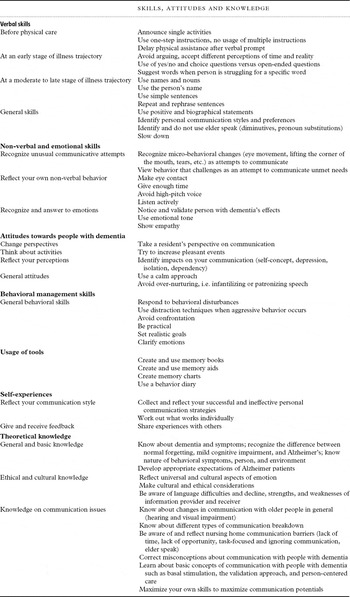
We identified seven distinct fields of content presented in the communication skills interventions. The contents were distinguished according to the following categories: (1) verbal skills, (2) non-verbal and emotional skills, (3) attitudes towards people with dementia, (4) behavioral management skills, (5) usage of tools, (6) self-individual experiences, and (7) theoretical knowledge. Table 4 provides a detailed account of the communicative competences and skills trained in the interventions. It can therefore be used as a tool listing attitudes, skills, and knowledge that can be considered beneficial for good communication in dementia care.
Content of communication skills trainings in dementia care

Additional training features
Five studies in residential-care settings (McCallion et al., Reference McCallion, Toseland, Lacey and Banks1999; Allen-Burge, Reference Allen-Burge2001; Burgio et al., Reference Burgio2001; Reference Burgio, Stevens, Burgio, Roth, Paul and Gerstle2002; Haberstroh et al., Reference Haberstroh, Neumeyer, Schmitz and Pantel2009) additionally implemented a staff motivational system with consistent feedback or self-evaluation tools. Another three studies used a gratification system either in the form of monetary compensation (Magai et al., Reference Magai, Cohen and Gomberg2002; Williams, Reference Williams2006) or a certificate of completion as a means of recognizing the participants’ efforts and accomplishments (McCallion et al., Reference McCallion, Toseland, Lacey and Banks1999). Written or oral feedback, ongoing support, self-monitoring, and supervision were used to reach sustainability and maintenance of trained skills. In the case of home-care settings, one study provided participants with ongoing supervision (Teri et al., Reference Teri, McCurry, Logsdon and Gibbons2005). Regarding family caregivers, the authors of one study encouraged participants to document their newly learned skills in a caregiver diary (Haberstroh et al., Reference Haberstroh, Neumeyer, Schmitz, Perels and Pantel2006).
Quality assessment and methodological challenges in the field
Methodological quality differed across the studies included in our review. For risk of bias assessment, REVMAN 5.1 software was used. Specifically, we analyzed the risk for selection bias, performance bias, detection bias, attrition bias, and reporting bias. A risk of bias table is available from the first author on request. The majority of the RCTs reported severe methodological challenges. In terms of randomization, randomized studies attempted to prevent selection bias by cluster randomization designs, allocating entire nursing homes (Kuske et al., Reference Kuske2009) or units (McCallion et al., Reference McCallion, Toseland, Lacey and Banks1999; Burgio et al., Reference Burgio2001; Reference Burgio, Stevens, Burgio, Roth, Paul and Gerstle2002) to intervention or control conditions. It was argued that blinding of participants and facilitators delivering the interventions was not possible due to informed consent as well as the need to know about content and the respective intervention's aims. Therefore, a trainer effect may be assumed. Blinding of outcome assessors, however, would have been feasible. Most studies reported high drop-out rates for persons with dementia due to death, relocation to another facility, and admission to hospital. Lost-to-follow-up was also high among professional caregivers as a result of high turnover rates, illnesses, lack of time, and high overall workload. High drop-out among professional caregivers points to the challenging work conditions in the field of dementia care. Attrition ranged from 1.8% to 34.6% in dementia patient participants and from 16.2% to 50% in professional and non-professional caregivers. This high range also indicates the difficulties of research in this area. Many studies did, in fact, not report the respective dropout rates (McCallion et al., Reference McCallion, Toseland, Lacey and Banks1999; Done and Thomas, Reference Done and Thomas2001; Haberstroh et al., Reference Haberstroh, Neumeyer, Schmitz, Perels and Pantel2006; Williams, Reference Williams2006). One study carried out intention-to-treat analysis (Teri et al., Reference Teri, McCurry, Logsdon and Gibbons2005).
Outcome measurements
Collection methods for outcome assessment varied widely across the studies reviewed. Most studies collected data by paper-and-pencil outcome measurements. Several questionnaires were tailor-made for measuring communication outcomes, for instance the Assessment of Awareness about Communication Strategies (AACS), the Thomas Assessment of Communication Inadequacy (TACI), the Communication Skills Checklist (CSC), and a Questionnaire about Knowledge on Communication Skills in Dementia Care, leading to low internal validity. Observational methods for data collection of interactions (Observation of Nurses’ Supervisory Activities, OLSA; Facial Expressions of Emotions, MAX) were used by five studies, three of which used computer-assisted observational systems (Computer Assisted Behavioral Observation System, CABOS) (Allen-Burge, Reference Allen-Burge2001; Burgio et al., Reference Burgio2001; 2002; Magai et al., Reference Magai, Cohen and Gomberg2002; Williams, Reference Williams2006).
Effectiveness of interventions
Four RCTs with best-quality ratings (McCallion et al., Reference McCallion, Toseland, Lacey and Banks1999; Burgio et al., Reference Burgio2001; Reference Burgio, Stevens, Burgio, Roth, Paul and Gerstle2002; Magai et al., Reference Magai, Cohen and Gomberg2002; Kuske et al., Reference Kuske2009) provide the main data used to analyze effectiveness of communication skills trainings in residential-care settings, while two good-quality RCTs and one CCT provide the main data to analyze effectiveness of trainings in home-care settings (Done and Thomas, Reference Done and Thomas2001; Teri et al., Reference Teri, McCurry, Logsdon and Gibbons2005; Haberstroh et al., Reference Haberstroh, Neumeyer, Schmitz, Perels and Pantel2006). Outcomes are presented for both residential care and home-care settings.
Residential-Care Settings
Almost all trials in institutional-care settings that used questionnaires in addition to observational measurements showed a positive influence on professional caregivers’ knowledge, skills, and attitudes.
Communication skills, attitudes, and knowledge of professional carers
Burgio et al. (Reference Burgio, Stevens, Burgio, Roth, Paul and Gerstle2002) showed that knowledge test scores increased significantly from a mean of 80.74 (SD 13.15) to a mean of 91.45 (SD 9.58, p < 0.001). The same RCT reported that participants’ behaviors in announcing single activities (rate per hour) significantly improved from 27.19 (SD 16.33) to 59.36 (SD 23.15, p < 0.001). Delayed physical assistance after a verbal prompt improved from 3.24 (SD 4.27) to 14.59 (SD 13.38, p < 0.001), and increase in positive statements improved from 8.50 (SD 11.49) to 48.13 (SD 43.27, p < 0.001). Two B&A studies also collected observational data on carers’ attitudes. These studies described a significant increase of emotional tone and a substantial increase of positive statements by staff directed at residents, from one per hour to six per hour (p < 0.03; Allen-Burge, Reference Allen-Burge2001). Staff used significantly less diminutives (F(1.35) = 12.95, p < 0.001; Williams, Reference Williams2006). A significant change in emotional tone rates occurred (F(3.22) = 10.87, p < 0.001). Post-training communication was more respectful (F(1.24) = 30.75, p < 0.001) and less controlling (F(1.24) = 7.56, p < 0.001; Williams, Reference Williams2006).
Carer burden and challenging behavior of residents with dementia
One RCT reported significantly improved caregivers’ affect after training intervention (eta squared effect size = 0.43; Magai et al., Reference Magai, Cohen and Gomberg2002). Another RCT reported a mean decrease in symptoms of depression from 3.18 (SD 2.26) to 2.75 (SD 2.23, p < 0.001), after six months of follow-up (McCallion et al., Reference McCallion, Toseland, Lacey and Banks1999). Results concerning challenging behavior (for instance, wandering, agitation, aggression, or withdrawal) were inconsistent, with four studies showing a significant reduction of challenging behavior (McCallion et al., Reference McCallion, Toseland, Lacey and Banks1999; Burgio; Reference Burgio, Stevens, Burgio, Roth, Paul and Gerstle2002; Teri et al., Reference Teri, McCurry, Logsdon and Gibbons2005). McCallion et al. (Reference McCallion, Toseland, Lacey and Banks1999), for instance, demonstrated a decrease of physical aggressive behavior from 15.16 (SD 9.81) to 12.21 (SD 8.31, p < 0.001), and a reduced mean occurrence of verbally aggressive behavior in patients with dementia from 16.22 (SD 10.31) to 12.88 (SD 8.39, p < 0.001). One RCT demonstrated a significant decrease of residents’ agitation during care routines (F(1.7 = 5.12, p < 0.05; Burgio et al., Reference Burgio, Stevens, Burgio, Roth, Paul and Gerstle2002). However, three studies reported no effect on challenging behavior of people with dementia (Burgio et al., Reference Burgio2001; Done and Thomas, Reference Done and Thomas2001; Magai et al., Reference Magai, Cohen and Gomberg2002). Results regarding the use of sedative drugs and physical restraints were equivocal, with one study showing a statistically relevant effect (Kuske et al., Reference Kuske2009) and one reporting no effect (McCallion et al., Reference McCallion, Toseland, Lacey and Banks1999).
Organizational framework and sustainability
Three studies (McCallion et al., Reference McCallion, Toseland, Lacey and Banks1999; Burgio et al., Reference Burgio, Stevens, Burgio, Roth, Paul and Gerstle2002; Magai, et al., Reference Magai, Cohen and Gomberg2002) additionally implemented ongoing feedback support, and motivational or gratification systems. One study used monetary compensation for filling in questionnaires (Magai et al., Reference Magai, Cohen and Gomberg2002). Verbal and written feedback as well as incentives for achieving performance criteria for the communication skills learned were used by another (Burgio et al., Reference Burgio, Stevens, Burgio, Roth, Paul and Gerstle2002). This study reported that newly learned communication skills were significantly better maintained in the intervention group that used the feedback system than in the group that did not at six-months’ follow-up (Burgio et al., Reference Burgio, Stevens, Burgio, Roth, Paul and Gerstle2002). Evaluation data revealed that providing periodic booster sessions would help with the implementation of new learned communication skills (McCallion et al., Reference McCallion, Toseland, Lacey and Banks1999).
Carer satisfaction with communication skills training
Anecdotal evaluation data regarding caregiver satisfaction with communication skills trainings were overwhelmingly positive. Staff reported high levels of satisfaction with trainings, a feeling of being more professional and rewarded (eta squared = 0.43; Magai et al., Reference Magai, Cohen and Gomberg2002), a deeper understanding of the problems faced by their patients, the improved ability to see through their patients’ eyes, and a higher level of satisfaction with communication with people with dementia (Ripich et al., Reference Ripich, Ziol, Fritsch and Durand1994).
Home-Care Settings
Two RCTs and one CCT demonstrated significant effects on family caregivers’ knowledge and competencies, especially concerning awareness of communication problems and communication strategies (Done and Thomas, Reference Done and Thomas2001; Teri et al., Reference Teri, McCurry, Logsdon and Gibbons2005; Haberstroh et al., Reference Haberstroh, Neumeyer, Schmitz, Perels and Pantel2006). Family caregivers’ reports of communication problems significantly decreased, whereas the reports of problem behaviors remained stable (F(1.39) = 10.2, p < 0.003; Done and Thomas, Reference Done and Thomas2001). Two studies showed an increase of quality of life for people with dementia cared for at home (Teri et al., Reference Teri, McCurry, Logsdon and Gibbons2005; Haberstroh et al., Reference Haberstroh, Neumeyer, Schmitz, Perels and Pantel2006). Haberstroh et al. reported a significant effect concerning overall life situation of people with dementia (d.f. = 1.2, F = 10.00, eta squared = 0.56; p < 0.005). At the same time, these two studies reported more pleasant activities and situations described by family caregivers (d.f. = 1.2, F = 10.00, eta squared = 0.56; p < 0.005). Included studies found no significant improvement of family caregiver burden, albeit one study reported a positive effect on burden and a mean decline of depression levels from 6.9 (SD 4.1) to 6.3 (SD 4.5; p < 0.041), on a depression scale (Teri et al., Reference Teri, McCurry, Logsdon and Gibbons2005). The latter RCT explicitly focused on training consultants to train family caregivers and showed a significant decrease in frequency (57%), severity of (52%), and reactivity to challenging behavior (62%; p < 0.001), compared to baseline ratings. Evaluation data of one RCT showed almost 100% caregiver satisfaction with the intervention, the most pertinent feedback being that caregivers wished that they had received the intervention at a far earlier stage of their relatives’ illness trajectory (Done and Thomas, Reference Done and Thomas2001).
Discussion
This review indicates that communication skills training in dementia care improves the quality of life and wellbeing of people with dementia cared for in both nursing homes and home-care settings. There is a clear benefit for the person with dementia, especially in terms of enhancing positive behavior and satisfying interactions. Professional and family caregivers’ communication skills, competencies, and knowledge significantly increases compared to those in non-intervention conditions. Communication skills training increases awareness of the viewpoint of the person with dementia and builds an understanding of challenges and opportunities of communicating with people with dementia. Professional caregivers overall report a greater feeling of control and greatly enjoying the opportunity to learn more about the patients they cared for. A newly gained enthusiasm regarding the importance of communication was noted (Ripich et al., Reference Ripich, Ziol, Fritsch and Durand1994). Qualitative data show overwhelmingly positive reactions to communication skills trainings of professional and family caregivers. This may be due to the attention given to a topic that is perceived of utmost importance by many professionals working in dementia care as well as family members. Data of one RCT indicate that communication problems cause even greater disturbance than behavioral problems (Done and Thomas, Reference Done and Thomas2001).
While the above-mentioned findings are encouraging, we also found inconsistent results and mixed evidence regarding challenging behavior, the use of restraints, and the use of sedative drugs. Recent research has demonstrated that educational incentives for healthcare professionals have no impact on neuropsychiatric symptoms and the prescription of sedative drugs (Vasse et al., Reference Vasse, Vernooij-Dassen, Spijker, Rikkert and Koopmans2009). However, within a person-centered care model, using restraints would be regarded as unethical. The authors of one study suggested that agitated behavior might occur too infrequently to be detected and consequently influenced. Generally, low incidence of negative affects in late-stage dementia patients was found (Magai et al., Reference Magai, Cohen and Gomberg2002). Research indicates that aggressive behavior may have multiple triggers such as pain, environmental factors, unmet needs, distress, or depression (Gormley et al., Reference Gormley, Lyons and Howard2001). Therefore, communication skills training might help to better deal with difficult situations, but will not prevent them. Further research will help to clarify these issues.
Weak evidence was also found for the effect on caregiver burden of professional and non-professional caregivers. However, there seem to be other specifically tailored interventions to reduce caregiver burden with a higher impact on caregiver stress and psychological complaints. Proxy outcome measurements are often used, putting additional stress on family carers or staff who do not enjoy filling in long and extensive questionnaires. Informant-based data may not lead to the desired results (Magai et al., Reference Magai, Cohen and Gomberg2002). Researchers have speculated that it would be wise to bypass caregiver reports and focus on more labor-intensive observational methods (Magai et al., Reference Magai, Cohen and Gomberg2002) or to include the perspective of the person with dementia. This would corroborate the enabling philosophy directed at making the voices of people with dementia heard (NICE, 2007).
We notably found no interventions tailored at improving communication between physicians and patients with dementia. This is surprising given the challenges faced by physicians working with people with dementia, such as the process of disclosure or communicative issues related to advanced care planning and end-of-life care. Furthermore, dementia patients are often admitted to general medical or geriatric wards during an acute deterioration of their illness. Precisely for that reason, there is a clear need for training incentives in hospital and day care units. Beyond this, communication skills training may be beneficial in hospices or palliative care units where people with dementia are a relatively new and growing group of patients cared for (Killick and Allan, Reference Killick and Allan2006; Payne and Froggatt, Reference Payne and Froggatt2009).
Previous systematic reviews in this field (Kruijver et al., Reference Kruijver, Kerkstra, Francke, Bensing and van de Wiel2000; Kuske et al., Reference Kuske, Hanns, Luck, Angermeyer, Behrens and Riedel-Heller2007) concluded that there are methodological weaknesses and shortcomings concerning study design and quality of performance. Our review found a slight improvement of methodological quality and a sufficient number of RCTs in residential care and home care suitable for inclusion. Overall quality improvement was assumed to be a result of growing interest in the issue of dementia care and associated challenges. Within the scope of this review, it was only feasible to give a first impression of which outcomes are used and which outcome measurements are used. It must be assumed that the heterogeneity of the studies included is high and has to be kept in mind when interpreting the results. Consistent use of validated outcome measures in future studies will allow more useful comparisons to be made between studies.
Some of the included studies demonstrated that educational interventions are more effective and sustainable when combined with additional supportive features/measures. Establishing a feedback culture ensures that communication becomes and remains a major topic within the facility in question. Training clinical nurses to provide feedback to nursing aides thus seems to be as important as the intervention itself. However, communication skills training must not be conceived as a single-dose intervention (Magai et al., Reference Magai, Cohen and Gomberg2002), but should be followed by refresher or periodic “booster” sessions to assist staff with continuing to implement new skills. Notably, this was the most important recommendation made by nursing aides themselves (McCallion et al., Reference McCallion, Toseland, Lacey and Banks1999). Without such follow-up measures, effects will not be maintained when the researchers are gone. While many care staff members have high levels of knowledge and skills, they need help, support, and structures to develop and improve these skills. It can be concluded that communication training by itself is insufficient to bring about change unless one also pays attention to organizational factors, obstacles, and influences. There is a strong need for an organizational framework that is supportive of communication as a crucial part of care and to facilitate changes in communication.
In conclusion, there is a need for more RCTs in this particular field in European countries. A retrieval bias might be assumed for this review, because we only included two European languages. However, regardless of the language of publication, researchers should aim at keeping rigid quality standards and using validated communication outcome measurements. Especially in hospitals, in day care units as well as in community-dwellings settings, such as sheltered housing or assisted living, more trials of such interventions are required.
Conflict of interest
None.
Description of authors’ roles
E. Eggenberger conceived the idea, designed the review, searched the literature, reviewed papers, undertook data extraction, analyzed the data, and wrote the first draft of the paper. M. Bennett and K. Heimerl supervised the project and provided adjudication, support, and advice.
Acknowledgments
This research was supported by the Austrian Federal Ministry of Health (BMG, project [GZ BMG-71603/0038-II/A/1/2009]), Division of Epidemiology of non-infectious Diseases, as part of a comprehensive project on person-centered and gender-sensitive communication with patients with dementia in various care settings. We thank Kerstin Egger for her support in data extraction and Michel Müller, Markus Rhendorf as well as Sören Craig-Müller for proof-reading the paper and technical support.