INTRODUCTION
Winter wheat (Triticum aestivum L.) is the main cereal crop grown in the North China Plain. From 1971 to 2008 the average annual rainfall at Tai'an in northern China was recorded as 696·6 mm, which occurred mainly in July and August. Due to the uneven temporal and spatial distribution of precipitation that occurs in the North China Plain (Deng et al. Reference Deng, Shan, Zhang and Turner2006), deficient water resources limit normal growth, development and yield of crops (Rampino et al. Reference Rampino, Pataleo, Gerardi, Mita and Perrotta2006); therefore, biological water saving has become an important topic. Generally, high leaf water use efficiency is an important criterion for a water-saving strategy for plant growth (Zhang et al. Reference Zhang, Shao, Xu, Chu, Lu and Tian2007). Leaf water use efficiency is calculated as the ratio of net photosynthetic rate to net transpiration rate (Condon et al. Reference Condon, Richards, Rebetzke and Farquhar2002). Net photosynthetic rate, stomatal conductance and net transpiration rate are the most important leaf water use efficiency parameters (Wu & Bao Reference Wu and Bao2012). Factors that affect crop photosynthesis and transpiration also affect leaf water use efficiency, including stomatal conductance, intercellular carbon dioxide (CO2) concentration, atmospheric CO2 concentration, relative air humidity and leaf temperature.
Stomatal conductance is important for determining the water use efficiency and productivity of crops (Fischer et al. Reference Fischer, Rees, Sayre, Lu, Condon and Saavedra1998). The greater stomatal conductance of triticale before anthesis does not imply greater soil water depletion because good water availability allows the development of dense canopies, exerting a relevant aerodynamic resistance on water vapour fluxes (Motzo et al. Reference Motzo, Pruneddu and Giunta2013). Bhagsari & Brown (Reference Bhagsari and Brown1986) illustrated that the high stomatal conductance of flag leaf improved net photosynthetic rate and leaf water use efficiency. Plants with high leaf water potential and reduced stomatal conductance and net transpiration rate are important for conserving water (Franca et al. Reference Franca, Thi, Pimentel, Rossiello, Zuily-Fodi and Laffray2000). Xia et al. (Reference Xia, Zhang, Guo, Rong and Zhang2015) found that when the leaf relative water content was >75%, with increasing leaf relative water content, the increase in net photosynthetic rate was less than that in net transpiration rate, which led to a rapid decrease in leaf water use efficiency.
The spatial distribution of a crop will affect individual plant growth, leading to changes in not only the population structure (Zhou et al. Reference Zhou, Chen and Ouyang2015) but also soil and crop water signals, such as the soil water content, leaf relative water content, leaf water potential and osmotic potential. Previous studies have shown that soil water content decreased with increasing row spacing, and the leaf relative water content and water potential at row spacing of 14 cm were greater than those at row spacings of 24·5 and 49 cm (Huang et al. Reference Huang, Chen, Zhou, Liu, Bi and Ouyang2013). Water loss from evapotranspiration in the row position was significantly greater than that in the inter-row position (Timlin et al. Reference Timlin, Pachepsky and Reddy2001). Wang et al. (Reference Wang, Han, Zhou, Chen and Ouyang2014) showed that the furrow planting pattern significantly increased soil water content, thousand grain weight and grain yield of winter wheat relative to conventional and uniform row planting patterns. Bed planting significantly improved yield of inter-cropped pulses, i.e. green gram and cowpea, and improved number of grains/spike and thousand grain weight of wheat (19·2%) over conventional planting. Bed planting also reduced irrigation by 19–24% and hence improved water productivity by 30% (Tanwar et al. Reference Tanwar, Rao, Regar, Datt, Praveen-Kumar, Jodha, Santra, Kumar and Ram2014). In a soil-plant-atmosphere continuum, leaf water potential in the furrow-planting pattern is enhanced, but the water transfer resistance between the soil-leaf and leaf-atmosphere interfaces are decreased.
In the North China Plain, evapotranspiration during the growing season of winter wheat (from October to June), is c. 400 to 500 mm, with <200 mm of precipitation in most years (Sacks et al. Reference Sacks, Deryng, Foley and Ramankutty2010). Inadequate soil moisture leads to water deficits in leaf tissues, which affect many physiological processes and ultimately reduces yield (Khakwani et al. Reference Khakwani, Dennett, Munir and Baloch2012). Reduced soil water availability will result in low plant leaf water potential, osmotic potential and relative water content (Martìınez et al. Reference Martìınez, Lutts, Schanck, Bajji and Kinet2004; Chowdhury et al. Reference Chowdhury, Marschner and Burns2011). Consequently, among the first plant responses to avoid excessive transpiration are loss of turgidity in the leaves, closure of stomata and cessation of cell elongation (Souza et al. Reference Souza, Meiado, Rodrigues and Santos2010). Stomatal conductance also decreases in response to the decrease of crop leaf water potential (Aasamaa & Sõber Reference Aasamaa and Sõber2011). Therefore, leaf water status is usually viewed as important for living plants (Yu et al. Reference Yu, Miwa, Nakayama, Matsuoka and Kon2000).
Irrigation is generally required to meet the growth of winter wheat in this region. Fahong et al. (Reference Fahong, Xuqing and Sayre2004) showed that using furrow irrigation rather than flood irrigation could reduce irrigation by up to 30% and enhance water use efficiency. In addition, irrigation improved crop leaf water potential and osmotic potential, protecting the important components of cytoplasm such as proteins and the overall stability of the cell membrane. Irrigation was also shown to be helpful for maintaining stable crop growth and high yield (Gunasekera & Berkowitz Reference Gunasekera and Berkowitz1992). Dandan et al. (Reference Dandan, Jiayin, Kun, Quanru and Quanqi2013) found that wide-row precision planting with 60·0 mm irrigation at the jointing and heading stages of winter wheat resulted in higher yield and spike numbers than the conventional cultivation planting.
The objectives of the current study were to determine the effects of planting pattern and irrigation on (i) the soil water content and leaf water status and (ii) the leaf water use efficiency of winter wheat in the North China Plain. Wide–narrow row spacings of 40 to 20 cm were used with different irrigation levels in field experiments to select the most suitable planting pattern and irrigation level for winter wheat. Water contents of the leaf and soil were determined to provide relevant information for selecting and managing planting patterns and irrigation in North China. The hypothesis was tested that combining planting patterns with irrigation could significantly increase wheat productivity in the North China Plain.
MATERIALS AND METHODS
Experimental site
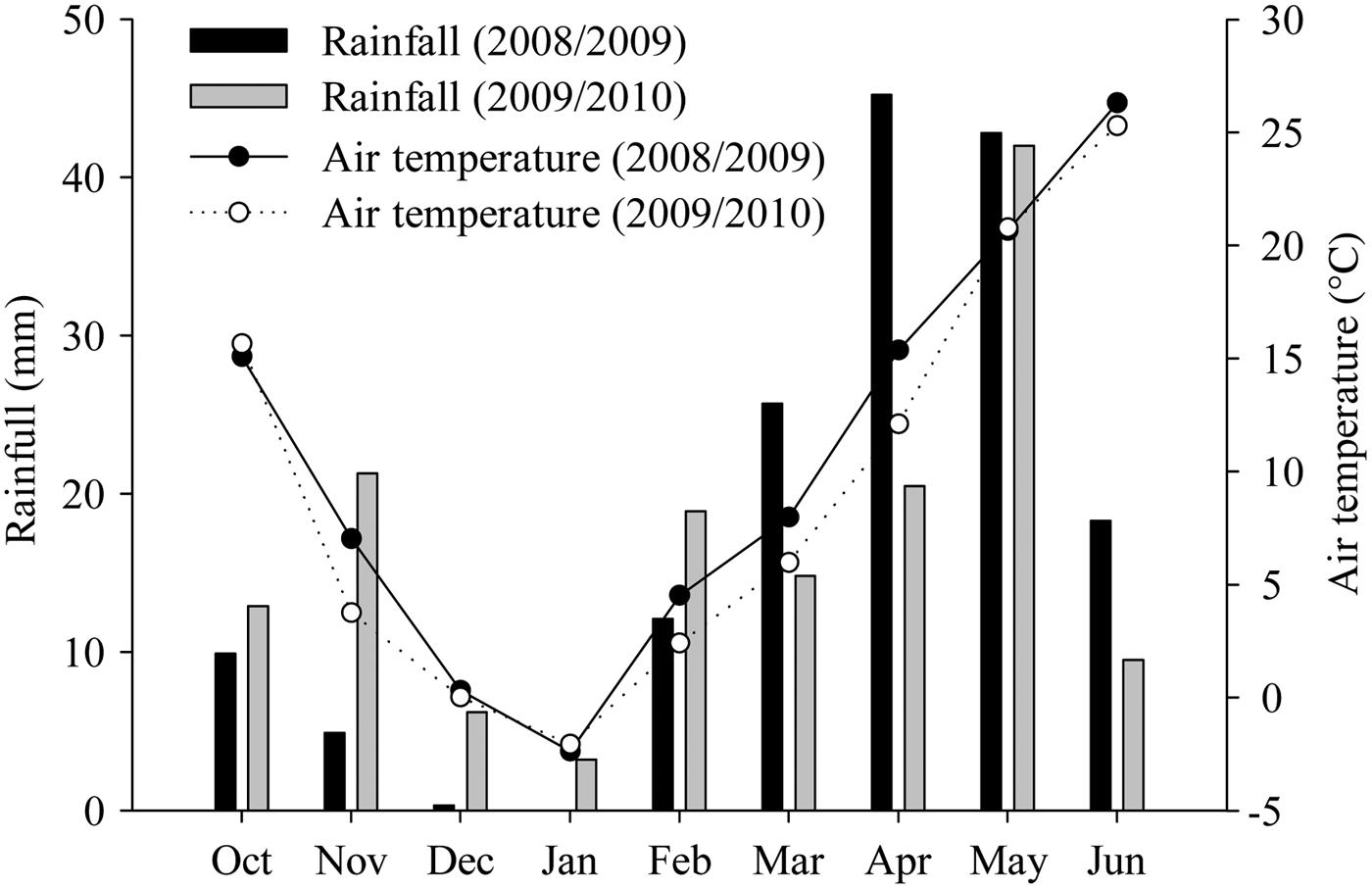
The experiment was conducted between 2008 and 2010 under field conditions at the Agronomy Experimental Station (36°09′N, 117°09′E, 134 m asl), Shandong Agricultural University, at Tai'an, Shandong Province, China. This site represents the main winter wheat growing region of the Huanghuaihai Plain in North China. This region lies in the warm temperate zone, with a continental monsoon climate and an annual precipitation of 697 mm. Long-term (1971–2008) mean temperature was 12·9 °C, with a maximum of 26·4 °C in July and minimum of −2·6 °C in January. Precipitation during the winter wheat growing season (from October to June) was 159·2 mm in 2008/09 and 149·3 mm in 2009/10: monthly air temperature and rainfall are shown in Fig. 1. The mean soil water content in 0–120 cm soil layer was 315 mm3/cm3 in 2008 and 314 mm3/cm3 in 2009 at crop emergence. The average annual sunshine duration was 2627 h, with 196 frost-free days. All weather data was collected from the Tai'an Agrometeorological Experimental Station, which is 500 m west of the experimental site. The soil at the study site is a silt loam with average soil organic matter content of 16·3 g/kg, 92·0 mg total nitrogen (N)/kg, 34·8 mg available phosphorus (P)/kg, 95·5 mg available potassium (K)/kg and a pH of 6·9. A composite soil sample was collected at a depth from 0 to 20 cm and air dried to determine soil organic matter content, total N and available P and K contents. The soil organic matter content was determined using the dichromate oxidation–titration method, and total soil N content was determined using the Kjeldahl method (Hawk et al. Reference Hawk, Oser and Summerson1954; Nelson & Sommers Reference Nelson, Sommers, Page, Miller and Keeney1982). The available P was extracted using 0·5 m sodium bicarbonate (NaHCO3), as described by Olsen et al. (Reference Olsen, Cole, Watanabe and Dean1954), and measured using the molybdenum–antimony anti-spectrophotography method (Anderson Reference Anderson1992). Extraction with ammonium acetate was performed to determine available K content of the soil (Pratt Reference Pratt and Black1965).
The monthly rainfall and air temperature through the winter wheat growing season in 2008/09 and 2009/10.

Experimental design
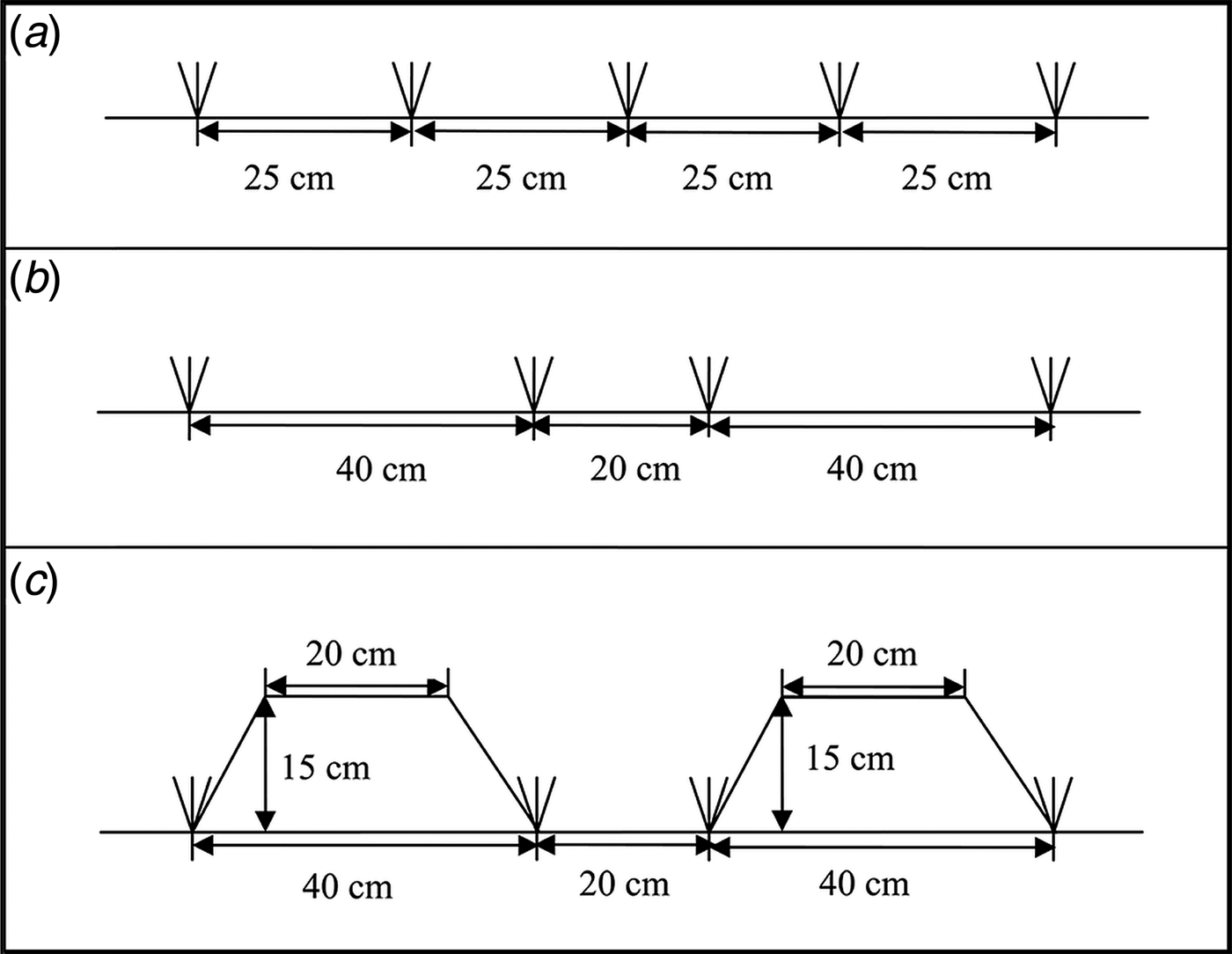
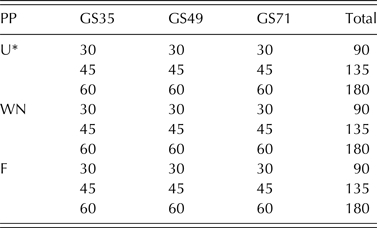
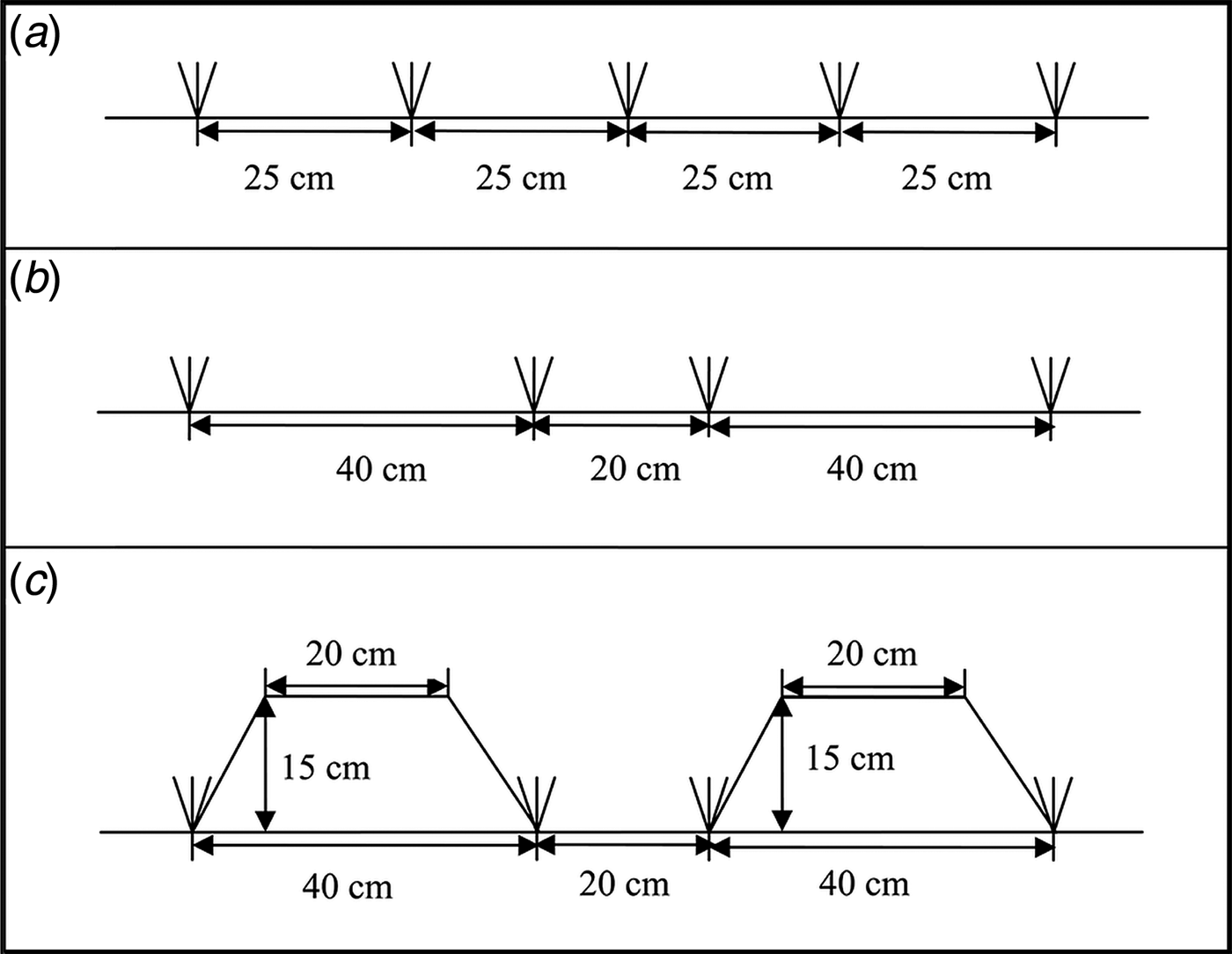
Three winter wheat planting patterns and three irrigation schedules were used with the same plant population densities (1·8 × 106 plant/ha). The high-yielding winter wheat cultivar ‘Jimai 22’, with wide adaptability and strong resistance to lodging, cold and disease was hand-planted on 14 October 2008 and 8 October 2009 after harvest (24 September 2008 and 22 September 2009) of soybean [Glycine max (L.) Merr.], and was harvested on 10 June 2009 and 13 June 2010. A traditional flat seedbed with uniform row spacing of 25 cm (U) was used as the control treatment. Two new planting patterns using an alternating wide–narrow row spacing of 40 and 20 cm were tested, using flat (WN) or furrow–ridge seedbeds (F) (Fig. 2). When F was used, double rows were planted in the furrow with a row spacing of 20 cm, a furrow spacing of 40 cm, and a ridge height of 15 cm. The plants in each planting pattern received irrigation of 30, 45 or 60 mm at growth stage (GS) 35 (stem elongation stage, 2 April 2009 and 2 April 2010), GS49 (booting stage, 24 April 2009 and 27 April 2010) and GS71 (milk development stage, 13 May 2009 and 15 May 2010), respectively (Zadoks et al. Reference Zadoks, Chang and Konzak1974). Water was supplied from the pump outlet to the plots using plastic pipes, and a flow meter was used to measure the amount of water applied. The treatments with planting patterns and amounts of irrigation are listed in Table 1. Each plot was 3 × 3 m in size. To prevent the lateral flow of soil water, 15-cm wide concrete slabs were inserted on all sides of each plot, reaching from the surface down to 200 cm. In addition, plastic film (0·1 mm thick) was placed along the concrete walls. Twelve rows of wheat were planted for the uniform row-planting pattern and ten for the wide–narrow row-planting pattern, in plots of the same size. Four replications of the experiment were conducted using a randomized complete block design. When sowing, 120 m3/ha of manure [78·8% water, 7·9% organic matter, 0·44% N, 0·33% phosphorus pentoxide (P2O5) and 0·33% potassium oxide (K2O)] plus 112·5, 120 and 105 kg/ha of N, P2O5 and K2O as base mineral fertilizers were added to the soil. In addition, 245 kg/ha urea (112·5 kg/ha pure N equivalent) was also applied as top-dressing at the stem elongation stage (GS30). Fertilizer was added intensively in the furrow for F and spread for U and WN. The following irrigation methods were used: furrow irrigation for the F treatment and flood irrigation for U and WN.
A schematic diagram showing (a) uniform row spacing of 25 cm, (b) wide–narrow row spacing of 40 and 20 cm flat seedbed and (c) wide–narrow row spacing of 40 and 20 cm furrow–ridge seedbed.
Treatments with planting pattern (PP) and amount of irrigation (mm) for winter wheat in 2008/09 and 2009/10
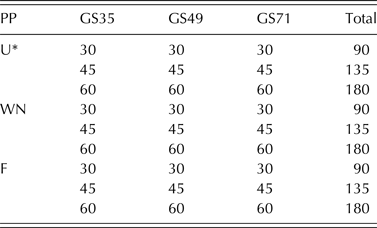
* U, uniform row spacing of 25 cm; WN, wide–narrow row spacing of 40 and 20 cm flat seedbed; F, wide–narrow row spacing of 40 and 20 cm furrow–ridge seedbed.
Measurements
Soil water content (mm3/cm3) was measured every 7 to 10 days after irrigation using a neutron moisture meter (CNC503B, Super Energy Nuclear Technology, Ltd., Beijing, China) throughout the winter wheat growing season to a depth of 120 cm at 10 cm intervals.
Flag leaf stomatal conductance, net photosynthetic rate and net transpiration rate were determined using a portable infrared gas analyser (LI-6400, LI-COR Inc., Lincoln, USA). Five flag leaves with consistent growth and similar light directions were used to measure stomatal conductance, net photosynthetic rate and net transpiration rate on a clear-sky day between 09:00 and 11:00 at GS47, GS50, GS65, GS73 and GS85.
Leaf water use efficiency of winter wheat was calculated using the following equation (Bousba et al. Reference Bousba, Ykhlef and Djekoun2009):
 $$\eqalign{&{\rm Leaf}\;{\rm water}\;{\rm use}\;{\rm efficiency} \cr & \qquad = {\rm net}\;{\rm photosynthetic}\;{\rm rate/net}\;{\rm transpiration}\;{\rm rate}}$$
The measurement of leaf relative water content (%) was performed at GS47, GS50, GS65, GS73 and GS85, on clear-sky days at 08:00–09:00 and 15 flag leaves were sampled from each treatment. Leaf relative water content was calculated using the equation below (Galmés et al. Reference Galmés, Flexas, Savé and Medrano2007; Aydi et al. Reference Aydi, Aydi, Gonzalez and Abdelly2008):
 $$\eqalign{&{\rm Leaf}\;{\rm relative}\;{\rm water}\;{\rm content}\;\left( \% \right) \cr & \qquad = \left( {Fw-Dw} \right)/\left( {Tw-Dw} \right) \times 100}$$
where Fw is the fresh weight, Dw is the dry weight and Tw is the turgid weight of leaf samples. The leaves were excised, weighed to determine fresh weight and placed in distilled water to rehydrate in the dark at 4 °C to minimize respiration losses until a constant weight was achieved (full turgor, typically after 12 h). The leaf turgid weight was measured and the leaves were placed in a drying oven at 105 °C for 30 min before drying at 80 °C to constant weight to determine the dry weight.
At the beginning of measurement for the above indices, the corresponding leaf water potential was also measured using a Psypro Water Potential System (Wescor, Inc., Logan, UT) with eight Model C-52-SF sample chambers [7 mm (diameter) × 1·25 mm (depth)]. Three flag leaves were measured for each treatment. Water loss was minimized during the transfer of leaves to the sample chamber by enclosing them in black plastic bags immediately after excision. One disc of c. 6 mm in diameter was cut from each leaf and sealed in the sample chamber. Samples were equilibrated for 20 min before the readings were recorded.
Avoiding plants in outer rows and ends of plots, grain yield was randomly measured in an area of 1 m2 in each plot on 10 June 2009 and 13 June 2010. The yield and yield components were dried at 75 °C to constant weight.
Statistical analyses
The data were analysed using analysis of variance (ANOVA) (Everitt & Hothorn Reference Everitt and Hothorn2010). A first-order linear model analysis was done using the PROC MIXED procedure of SAS 9.2 (SAS Institute 2009) to determine the treatment effect. The treatments (planting pattern and irrigation) and their interaction effects were considered as fixed effects, and replication was considered as a random effect. The effects were considered significant in all statistical calculations if P < 0·05 (Mishra et al. Reference Mishra, Rathore and Savita2001). Data were plotted using SigmaPlot 10.0 (SPSS Inc., Chicago, IL).
RESULTS
Soil water content at different growth stages
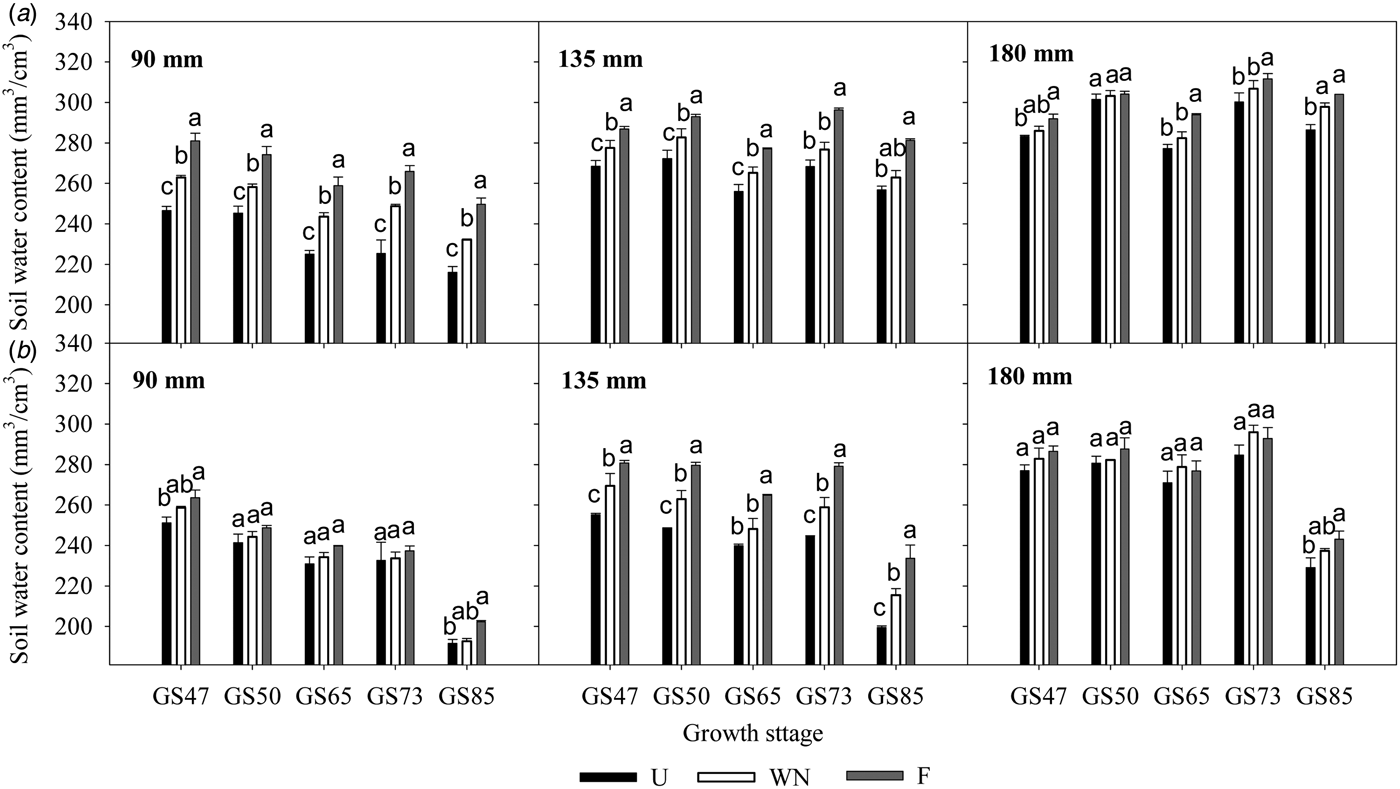
The changes in soil water content in 2008/09 and 2009/10 due to the planting pattern and the time of year were very similar between the different irrigation treatments (Fig. 3), with irrigation and planting pattern demonstrating a great impact on soil water content during growth. Soil water content gradually decreased during the growing season, but increased slightly following irrigation and rainfall at GS50 and GS73, especially in the 135 and 180 mm irrigation treatments. The mean soil water content in 0–120 cm soil layer was 315 mm3/cm3 in 2008 and 314 mm3/cm3 in 2009 at GS01 of winter wheat. However, mean soil water content was 273 mm3/cm3 in 2009 and 253 mm3/cm3 in 2010 from GS47 to GS85, so soil water content decreased with the growth of winter wheat. The soil water content in 2008/09 was higher than in 2009/10 due to higher rainfall. Under the same amounts of irrigation, the order of soil water content in the three planting patterns was F > WN > U: F enhanced soil water content by 7·2% compared with U. The average soil water content of 90, 135 and 180 mm irrigation treatments were 241, 263 and 285 mm3/cm3, respectively. The soil water content of the 135 mm irrigation treatment was 9·1% higher than that of the 90 mm irrigation treatment, and the soil water content of the 180 mm irrigation treatment was 8·4% higher than that of the 135 mm irrigation treatment. Planting pattern × irrigation interaction increased the soil water content significantly (P < 0·05). The soil water content was affected by planting pattern and irrigation as follows: the soil water content of the F × 135 mm interaction was 10·0% higher than that of the F × 90 mm interaction, while the soil water content of the F × 180 mm interaction only increased by 4·3% compared with that of the F × 135 mm interaction. Therefore, a greater response was seen between the F × 90 and F × 135 mm treatments than between the F × 135 and F × 180 mm treatments.
Changes in soil water content from GS47 to GS85 of winter wheat in (a) 2008/09 and (b) 2009/10. 90, 135 and 180 mm were irrigation amount; U, uniform row spacing of 25 cm; WN, wide–narrow row spacing of 40 and 20 cm flat seedbed; F, wide–narrow row spacing of 40 and 20 cm furrow–ridge seedbed; the error bars are s.e. Within a growth stage, the treatment means with the same lowercase letters are not significantly different according to LSD0·05.

Stomatal conductance of the flag leaf
Figure 4 shows the significant effects of planting pattern and irrigation on leaf stomatal conductance, leading to significant differences in stomatal conductance of the three planting patterns and irrigation treatments (P < 0·05). Specifically, stomatal conductance changed as the soil water content changed, and the correlation coefficient between stomatal conductance and soil water content was r = 0·9761 (P < 0·001), which indicated that stomatal conductance also gradually decreased during the growing season and slightly increased after irrigation at GS50 and GS73. Compared with U, stomatal conductance in F was 14·4% greater, the highest among the three planting patterns. The stomatal conductance of 90, 135 and 180 mm irrigation treatments were 0·51, 0·57 and 0·59 mm/m2/s, respectively, in 2008/09 and 0·39, 0·45 and 0·53 mm/m2/s, respectively, in 2009/10. Stomatal conductance increased as the amount of irrigation increased, and that of the 180 mm irrigation treatment was significantly higher than that of 90 mm irrigation treatment (P < 0·05), thus indicating that irrigation increased stomatal conductance. Stomatal conductance was also higher in 2008/09 than in 2009/10 because of the higher rainfall in 2008/09. The ANOVA showed that planting pattern and irrigation had a significant effect on stomatal conductance during GS47–GS85, but the planting pattern × irrigation interaction only affected stomatal conductance after GS47 (P < 0·05). The mean stomatal conductance of the 90, 135 and 180 mm irrigation treatments and U, WN and F were 0·45, 0·51 and 0·56 mm/m2/s and 0·47, 0·50 and 0·54 mm/m2/s, respectively, while that of the F × 90, F × 135 and F × 180 mm interactions were 0·49, 0·55 and 0·59 mm/m2/s, respectively. The F × 135 mm interaction increased stomatal conductance by 13·5% compared with the F × 90 mm interaction, and stomatal conductance of the F × 180 mm interaction was 6·3% higher than that of the F × 135 mm interaction.
The effects of planting pattern and irrigation on stomatal conductance (SC) of the flag leaf of winter wheat in (a) 2008/09 and (b) 2009/10. 90, 135 and 180 mm were irrigation amount; U, uniform row spacing of 25 cm; WN, wide–narrow row spacing of 40 and 20 cm flat seedbed; F, wide–narrow row spacing of 40 and 20 cm furrow–ridge seedbed; the error bars are s.e. Within a growth stage, the treatment means with the same lowercase letters are not significantly different according to LSD0·05.

Leaf relative water content
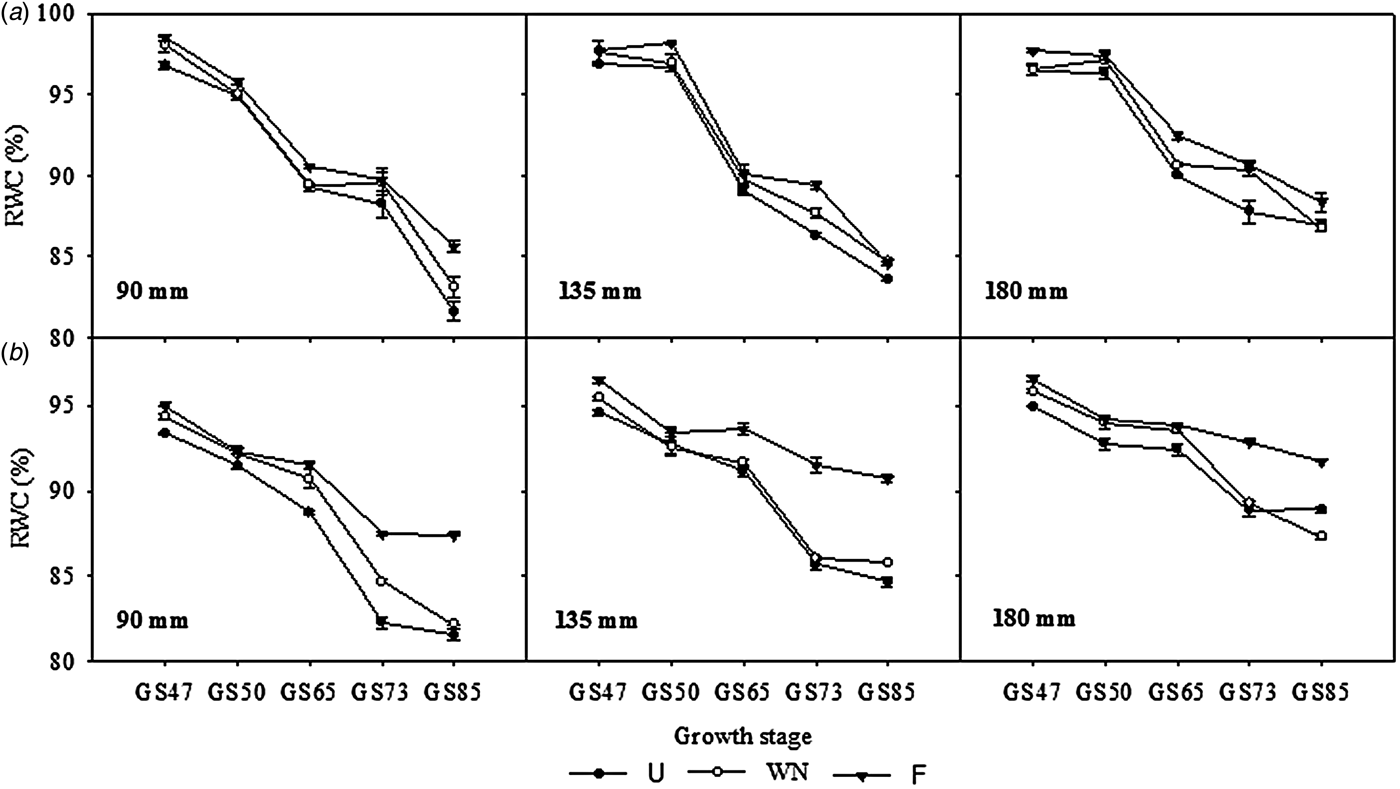
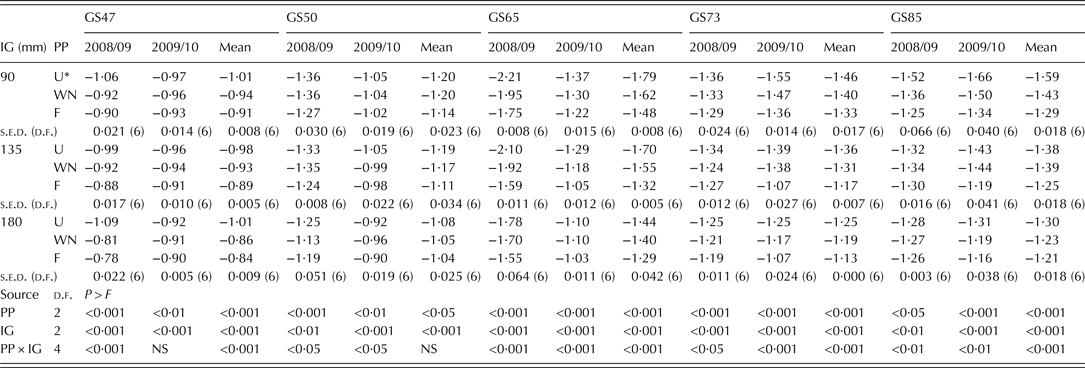
Figure 5 and Table 2 show the effects of planting pattern and irrigation on the leaf relative water content. A significant negative correlation relationship between leaf relative water content and GS (r = −0·9935, P < 0·001) was shown, which indicated that leaf relative water content gradually decreased during the winter wheat growing season. However, the leaf relative water content increased slightly after irrigation at GS50 and GS73 in 2008/09; the leaf relative water content at GS65 (12 May 2010) also increased slightly in 2009/10, perhaps because of the 13·6 mm of rainfall on 5 May 2010. Planting pattern significantly affected leaf relative water content, and significant differences were found among U, WN and F (P < 0·05). The leaf relative water content values were generally the highest when the F planting pattern was used, in both growing seasons. The leaf relative water content from the 90, 135 and 180 mm irrigation treatments were 91·40, 91·72 and 92·35% in 2008/09 and 89·01, 90·37 and 92·58% in 2009/10, respectively. Irrigation also affected leaf relative water content significantly (P < 0·05): the leaf relative water content increased as the amount of irrigation increased. Leaf relative water content of the 135 mm irrigation treatment was not significantly different from that of the 90 mm and 180 mm irrigation treatments, but leaf relative water content of the 180 mm irrigation was significantly different from that of the 90 mm irrigation (P < 0·05).
The changes in leaf relative water content (RWC) of winter wheat in (a) 2008/09 and (b) 2009/10. 90, 135 and 180 mm were irrigation amount; U, uniform row spacing of 25 cm; WN, wide–narrow row spacing of 40 and 20 cm flat seedbed; F, wide–narrow row spacing of 40 and 20 cm furrow–ridge seedbed; the error bars are s.e.

The ANOVA of leaf relative water content under different planting pattern (PP) and irrigation (IG) treatments

NS, not significant.
Leaf water potential
Table 3 shows that planting pattern, amount of irrigation and the interactions between them significantly affected leaf water potential (P < 0·05). As expected, changes in leaf water potential closely paralleled the trends that were observed for leaf relative water content. The correlation coefficient between leaf water potential and soil water content was r = 0·9382 (P < 0·001) and showed a positive correlation between leaf water potential and soil water content; therefore, leaf water potential gradually decreased with decreasing soil water content in both winter wheat growing seasons. However, leaf water potential recovered slightly at GS73 (17 May) in 2009 because of continuous rainfall (c. 21·2 mm) on 9–16 May 2009. Planting pattern significantly affected leaf water potential, as F exhibited an overall trend of higher leaf water potential values that were significantly different from those in the U planting pattern (P < 0·05). This difference indicated that F could increase leaf water potential to reduce water stress. The leaf water potential increased as the amount of available water increased and was significantly different from the 180 mm irrigation treatment relative to the 135 and 90 mm irrigation treatments (P < 0·05). The interaction between planting pattern and irrigation had a significant effect on leaf water potential (P < 0·05). The mean leaf water potential of the 90, 135 and 180 mm irrigation treatments and U, WN and F for both years were −1·30, −1·26 and −1·16 MPa and −1·33, −1·22 and −1·17 MPa, respectively. Therefore, the F × 135 and F × 180 mm interactions were better for increasing leaf water potential.
Leaf water potential (MPa) under different planting pattern (PP) and irrigation (IG) treatments
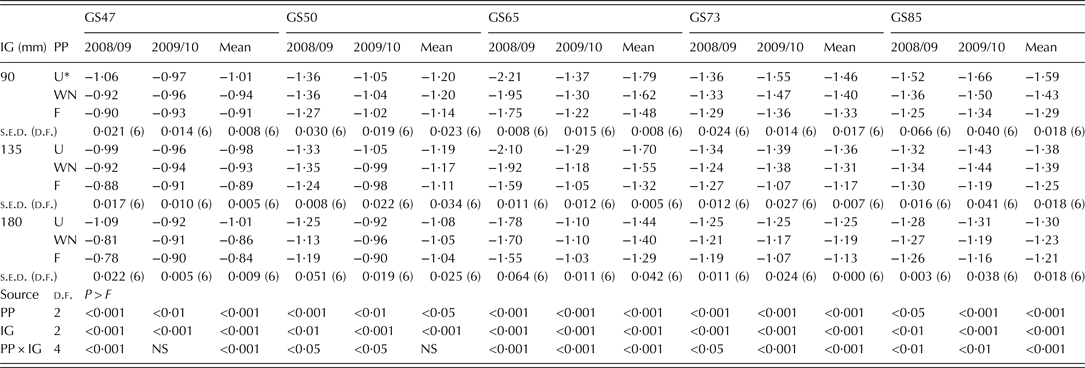
* U, uniform row spacing of 25 cm; WN, wide–narrow row spacing of 40 and 20 cm flat seedbed; F, wide–narrow row spacing of 40 and 20 cm furrow–ridge seedbed; 90, 135 and 180 mm were irrigation amount; NS, not significant.
Leaf water use efficiency
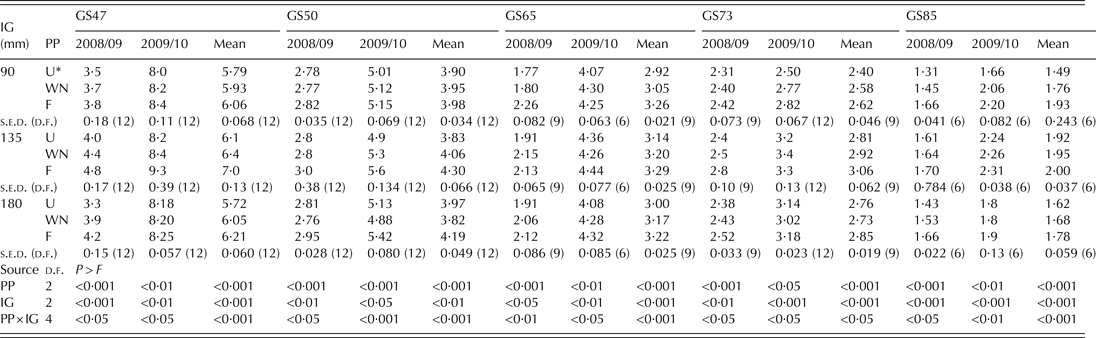
The average leaf water use efficiency at GS47, GS50, GS65, GS73 and GS85 was 6·15, 4·00, 3·14, 2·75 and 1·79 µm/mm (Table 4). The correlation coefficient between leaf water use efficiency and GS was r = −0·9084 (P < 0·05), showing a negative correlation between leaf water use efficiency and GS. Leaf water use efficiency gradually decreased during the winter wheat growth cycle. During the 2008/09 and 2009/10 growing seasons, the ranking based on leaf water use efficiency average values for the different planting pattern was F > WN > U, with the respective values being 3·72, 3·55 and 3·42 µm/mm. In addition, planting pattern had a significant effect on leaf water use efficiency, as that of the F planting pattern was significantly higher than that of the U planting pattern (P < 0·05). The leaf water use efficiency of the 135 mm irrigation treatment was higher than that of the 90 and 180 mm irrigation treatments (P < 0·05), which indicated that under the condition of 180 mm irrigation treatment, excessive water, instead, decreased leaf water use efficiency compared with 135 mm irrigation treatment. Therefore, the 135 mm irrigation treatment was better for increasing leaf water use efficiency. Leaf water use efficiency in 2008/09 was lower than that in 2009/10, which might be associated with the higher rainfall in 2008/09 than in 2009/10. The planting pattern × irrigation interaction increased leaf water use efficiency significantly (P < 0·05). The leaf water use efficiency of 135 and 180 mm irrigation treatments were 3·73 and 3·52 µm/mm, respectively, and the leaf water use efficiency of F was 3·72 µm/mm. The result showed that the F × 135 mm interaction resulted in the highest leaf water use efficiency.
Effects of planting pattern (PP) and irrigation (IG) on leaf water use efficiency (μm/mm )
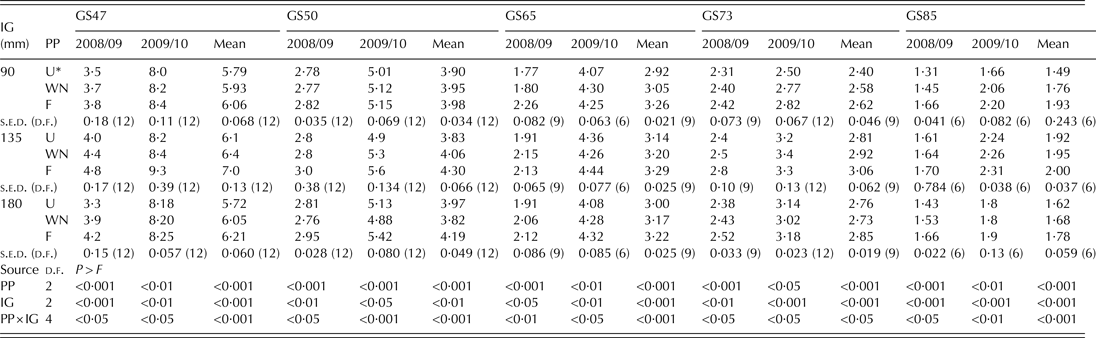
* U, uniform row spacing of 25 cm; WN, wide–narrow row spacing of 40 and 20 cm flat seedbed; F, wide–narrow row spacing of 40 and 20 cm furrow-ridge seedbed; 90, 135 and 180 mm were irrigation amount.
Yield components and yield
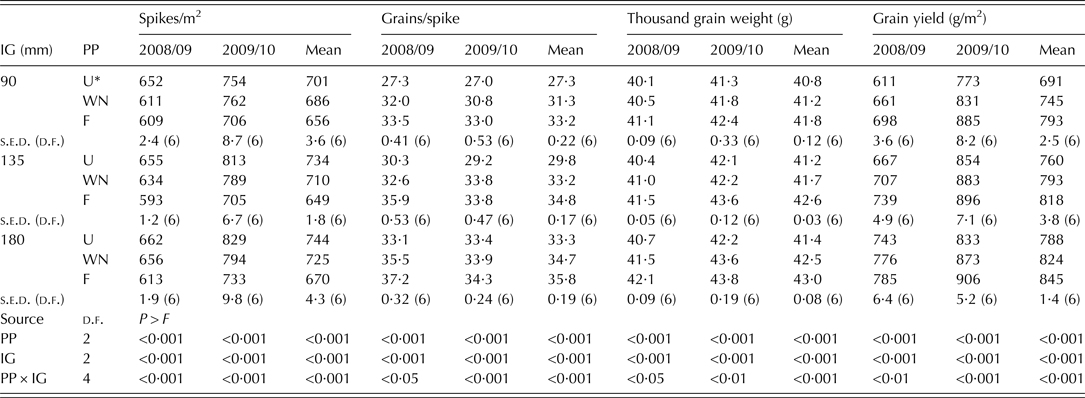
Table 5 shows the significant effects of planting pattern, irrigation and planting pattern × irrigation interaction on spike/m2, grains/spike, thousand grain weight and yield (P < 0·05). Grains/spike, thousand grain weight and grain yield of F were significantly higher than those of U and WN, but the spikes/m2 of F was significantly lower than that of U (P < 0·05), with the results indicating that yield was mainly related to grains/spike and thousand grain weight (Table 6). Spike/m2, grains/spike, thousand grain weight and yield increased with increasing irrigation amount, and those of the 180 mm irrigation treatment were significantly higher than those of 90 mm irrigation treatment (P < 0·05), but were not significantly different from those of the 135 mm irrigation treatment in 2009/10. Compared with the 90 mm irrigation treatment, the 135 mm irrigation treatment increased yield by 6·4%, due to increases in spike/m2 (2·5%), grains/spike (6·5%) and thousand grain weight (1·4%). Correspondingly, the 180 mm irrigation treatment increased yield by 3·6%, due to increases in spike/m2, grains/spike and thousand grain weight (by 2·2, 6·2 and 1·1%, respectively) compared with the 135 mm irrigation treatment. Therefore, the irrigation level of 135 mm could have a larger response in increasing yield and yield components.
Effects of planting pattern (PP) and irrigation (IG) on yield components and yield
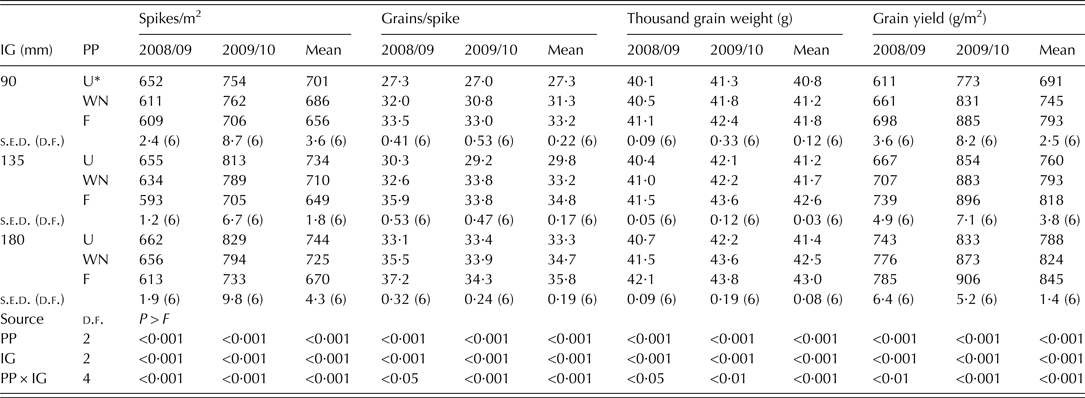
* U, uniform row spacing of 25 cm; WN, wide–narrow row spacing of 40 and 20 cm flat seedbed; F, wide–narrow row spacing of 40 and 20 cm furrow-ridge seedbed; 90, 135 and 180 mm were irrigation amount.
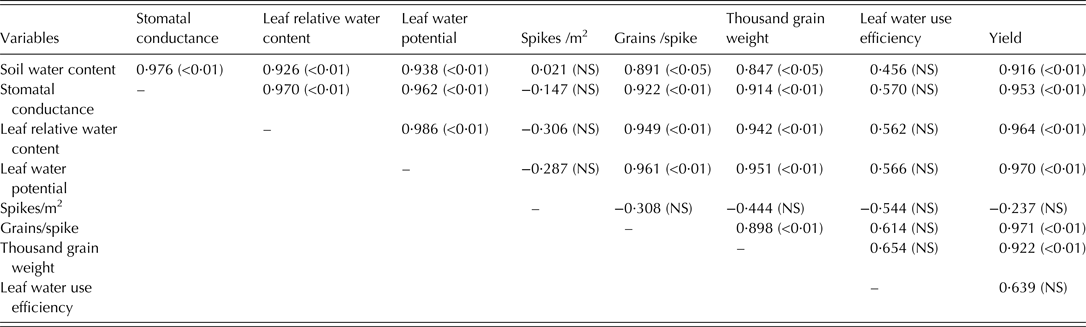
Correlation coefficients between soil water content, stomatal conductance, leaf relative water content, leaf water potential, spikes/m2, grains/spike, thousand grain weight, leaf water use efficiency and yield of winter wheat in 2008/09 and 2009/10
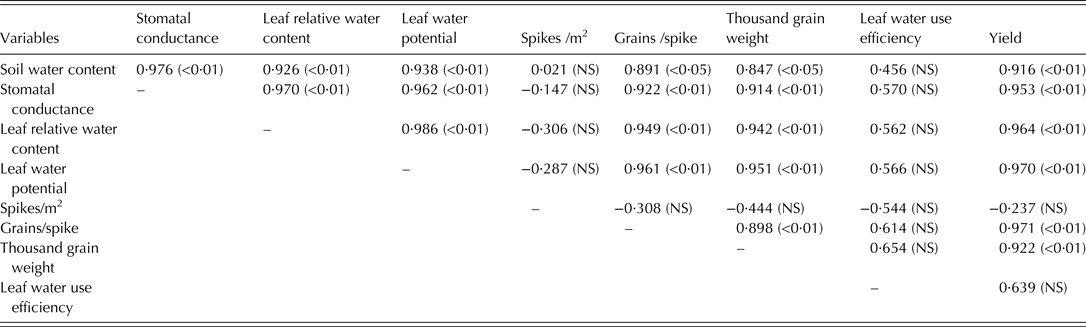
NS, not significant.
Planting pattern × irrigation interaction also had a significant effect on spike/m2, grains/spike, thousand grain weight and yield (P < 0·05). For planting pattern U, spikes/m2, grains/spike, thousand grain weight and yield of the 180 mm irrigation treatment were 6·1, 22·0, 1·6 and 14·1% higher, respectively, than the 90 mm irrigation treatment. Corresponding values for planting pattern F were 2·2, 7·9, 2·8 and 6·5%, respectively. Therefore, planting pattern × irrigation interaction for spikes/m2, grains/spike and grain yield appeared to relate mainly to a larger response to irrigation in planting pattern U than F, while the opposite was seen for thousand grain weight. This probably related in part to higher grain yield at the 90 mm irrigation treatment at F than at U. Therefore, the F × 135 and F × 180 mm interactions resulted in increasing grains/spike, thousand grain weight and yield but decreased spike/m2 compared with 135 and 180 mm irrigation treatments, respectively. Grains/spike, thousand grain weight and yield showed a larger response to F × 135 mm interaction than F × 180 mm interaction. The yield of all the treatments in 2008/09 were higher than that in 2009/10, which could be attributed to higher rainfall from October to February in 2009/10 (62·5 mm) than that in 2008/09 (27·2 mm) leading to high spikes/m2 and thousand grain weight of winter wheat in 2009/10.
Relationships between water status, yield components and yield
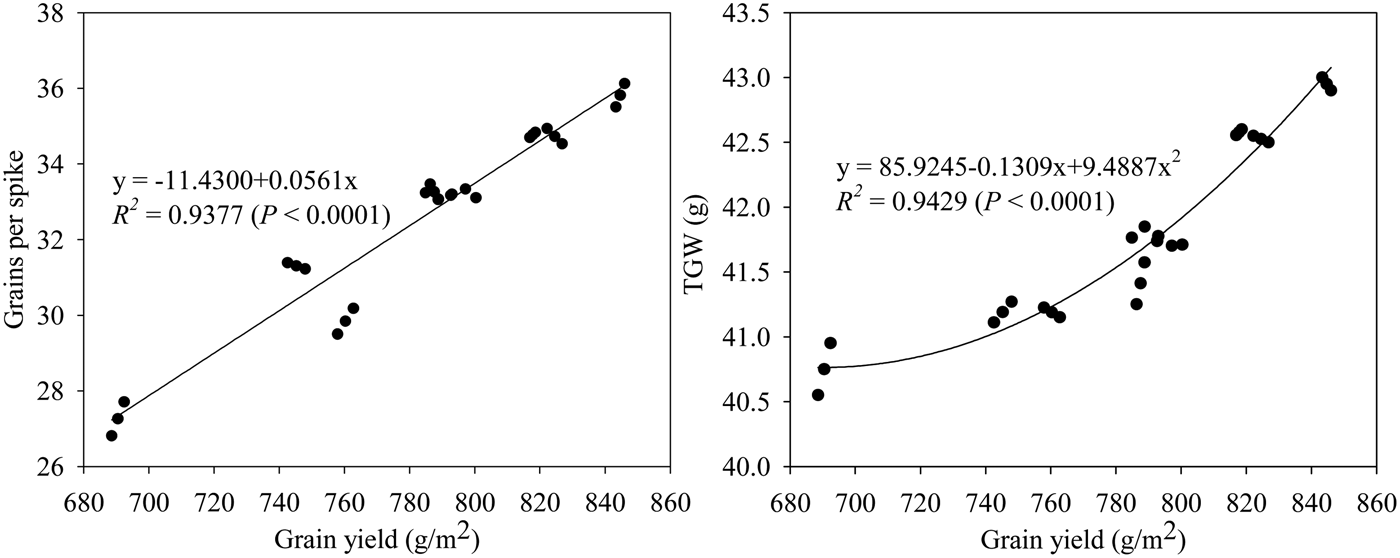
Stomatal conductance, leaf relative water content and leaf water potential were significantly and positively correlated with soil water content, and leaf relative water content and leaf water potential were positively correlated with stomatal conductance (Table 6) (P < 0·01). Grains/spike and thousand grain weight were significantly positively correlated with soil water content and increased significantly with increased soil water content (P < 0·05). Spikes/m2 was only positively correlated with soil water content: other variables decreased it and there were no significant differences between them. A non-significant positive correlation was observed between leaf water use efficiency and all variables except spikes/m2. There were significant positive correlations between soil water content, stomatal conductance, leaf relative water content, leaf water potential, grains/spike, thousand grain weight and yield (P < 0·01). Significant linear and quadratic regression relationships between grain yield with grains/spike and thousand grain weight are shown in Fig. 6, but there was no regression relationship between grain yield and spikes/m2; therefore, grain yield was closely related to grains/spike and thousand grain weight, which increased with increase of grains/spike and thousand grain weight. These results indicated that high soil water content increased stomatal conductance, leaf relative water content, leaf water potential, spikes/m2, grains/spike and thousand grain weight and resulted in high leaf water use efficiency and yield in winter wheat.
Regression analysis of grains/spike and thousand grain weight (TGW) v. grain yield of winter wheat. The values are the average of the 2008/09 and 2009/10 growing seasons.

DISCUSSION
The furrow–ridge seedbed planting pattern maintained a higher soil water content than the other planting patterns for winter wheat. Irrigation water and rainwater collected in the furrow and increased soil water content in the lower soil layer during the winter wheat growing season, which resulted in greater water penetration into the lower soil layer of the furrow with decreased surface runoff and higher water use efficiency. The water status of the soil profile significantly affected the density and depth of root penetration and often restricted full use of available soil water (Angadi & Entz Reference Angadi and Entz2002; Zuo et al. Reference Zuo, Shi, Li and Zhang2006). An upward hydraulic gradient and an upward capillary flux could occur in deeper layers of the root zone (Bandyopadhyay et al. Reference Bandyopadhyay, Mallick and Rana2005). Therefore, soil water content of furrow–ridge seedbed planting pattern increased, high soil water content increasing stomatal opening and improving plant transpiration without excessive loss of water (Santesteban et al. Reference Santesteban, Miranda and Royo2009; Álvarez et al. Reference Álvarez, Navarro, Nicolás and Sánchez-Blanco2011).
In the present study, planting pattern and irrigation had obvious effects on leaf water status. High soil water content increased leaf relative water content and leaf water potential, and stomatal conductance was increased with increasing photosynthetically available radiation (Xia et al. Reference Xia, Zhang, Guo, Rong and Zhang2015). In addition, stomatal conductance of furrow–ridge seedbed planting pattern and the 180 mm irrigation treatment were greater than in the other treatments. The soil water content, stomatal conductance, leaf relative water content and leaf water potential were positively correlated with leaf water use efficiency. Leaf stomatal conductance positively improved leaf water use efficiency, and leaf water potential and leaf relative water content were also related to leaf water use efficiency. Stomatal conductance, leaf relative water content and leaf water potential were significantly and positively correlated with soil water content. Therefore, variations of all of the leaf water indices corresponded with the soil water content changes. The leaf water indices decreased gradually during the growth process due to rapid crop growth, which resulted in increasingly fierce competition for water between the individuals of the group. Planting pattern, irrigation and the interactions between them significantly affected soil water content, leaf water status and leaf water use efficiency. The leaf relative water content, leaf water potential and leaf water use efficiency of furrow–ridge seedbed planting pattern were the highest. Irrigation increased soil water content and leaf water status significantly. However, leaf water use efficiency did not increase as the amount of irrigation increased. The leaf water use efficiency of the 135 mm irrigation treatment was significantly greater than the other treatments. The addition of excess water did not increase the leaf water use efficiency. The results showed that the high soil water content resulted in greater stomatal conductance, leaf relative water content, and leaf water potential, but did not lead to high leaf water use efficiency of winter wheat.
The wheat yield was significantly positively correlated with soil water content, stomatal conductance, leaf relative water content, leaf water potential, grains/spike and thousand grain weight, which corresponded with the results of Wang et al. (Reference Wang, Han, Zhou, Chen and Ouyang2014). The furrow–ridge seedbed planting pattern resulted in higher winter wheat yield, grains/spike and thousand grain weight when irrigated at 135 or 180 mm rather than the 90 mm irrigation treatment, and there were no significant differences between yield, spikes/m2, grains/spike and thousand grain weight of 135 mm with those of 180 mm irrigation treatment in 2009/10. However, the irrigation level of 135 mm resulted in a larger increase in yield than the 180 mm irrigation treatment (Wang et al. Reference Wang, Han, Zhou, Chen and Ouyang2014). Furthermore, leaf water use efficiency of the 135 mm irrigation treatment was greater than that of the 180 mm irrigation treatment. These findings suggest that the 135 mm irrigation treatment may have more potential for increasing wheat production than the 180 mm irrigation treatment in water-scarce regions. The results presented indicated that the interaction between the furrow–ridge seedbed planting pattern and 135 mm increased soil water content, leaf water indices, thousand grain weight and yield more than the furrow–ridge seedbed planting pattern and 135 mm irrigation treatment alone. However, water resources should be restricted until a suitable irrigation system is developed in the North China Plain. Therefore, the application of 135 mm irrigation amount with the furrow–ridge seedbed planting pattern should be used in water-scarce regions in North China. Correspondingly, 180 mm of irrigation combined with the furrow–ridge seedbed planting pattern can be used in areas with abundant water.
Sincere acknowledgments are due to Lin Qi, Yan Liu for field assistance. This research was supported by the National High Technology Research and Development Programme of China (Grant no. 2013AA102903) and Guangxi Natural Science Foundation (Grant no. 2015GXNSFAA139049).