




Global population ageing is accelerating, with the proportion of individuals aged ≥60 years projected to nearly double from 12% in 2015 to 22% by 2050(1). This shift increases healthcare utilisation, costs and pressures on health systems and economies(Reference Doody, Lord and Greig2). Ageing is further accompanied by higher prevalence of chronic diseases, such as cardiometabolic disease (CMD) and sarcopenia(Reference Izquierdo, de Souto Barreto and Arai3,4) .
Sarcopenia and CMD frequently coexist and share common pathophysiological pathways(4,Reference Sasaki and Fukumoto5) . Sarcopenia, defined as the age-related loss of skeletal muscle mass, strength and function, affects approximately 10–16% of older adults worldwide and progresses with declining muscle mass (∼1% per year) and strength (∼2.5–3% per year)(Reference Schutz6). As skeletal muscle is a primary site for glucose disposal, reductions in muscle mass contribute to decreased insulin sensitivity and impaired glycaemic control, key mechanisms underlying CMD such as cardiovascular disease (CVD) and type 2 diabetes (T2D)(Reference Umegaki7,Reference Shou, Chen and Xiao8) . In parallel, chronic low-grade inflammation, commonly observed in individuals with CMD, promotes anabolic resistance and may further accelerate muscle loss(Reference Zhang, Sergin and Evans9,Reference Burd, Gorissen and van Loon10) . Together, these processes create a vicious cycle in which declining muscle health and worsening metabolic function reinforce one another. Maintaining both muscle and cardiometabolic health is therefore critical for supporting functional capacity, reducing disease risk and promoting healthy ageing.
Dietary protein is a key modifiable determinant of muscle health, and insufficient intake accelerates the loss of muscle mass and strength, thereby increasing the risk of sarcopenia(Reference Morton, Murphy and McKellar11,Reference Tieland, van de Rest and Dirks12) . This is especially relevant in ageing, where anabolic resistance blunts muscle protein synthesis (MPS) in response to lower protein doses(Reference Cheng, Kong and Underwood13). Protein stimulates MPS through the provision of essential amino acids (EAAs), supporting muscle accretion and attenuating age-related decline(Reference van Vliet, Burd and van Loon14). As such, adequate protein intake is critical for maintaining skeletal muscle mass, strength and function in older adults. At the same time, dietary patterns are increasingly shifting towards plant-based protein diets, driven by both sustainability and health considerations(Reference Aschemann-Witzel, Futtrup Gantriis and Fraga15). In line with this, the EAT-Lancet Commission and several national authorities advocate for predominantly plant-based protein diets supported by sustainable food systems, consistent with the United Nations Sustainable Development Goals for 2030(Reference Willett, Rockström and Loken16). Such plant-based dietary patterns have been associated with favourable cardiometabolic outcomes, including lower blood pressure, improved lipid profiles, enhanced glycaemic control and reduced risk of obesity-related complications(Reference Benatar and Stewart17–Reference Tessier, Wang and Ardisson Korat19). These benefits are particularly important in older adults, where CMD is highly prevalent and diet represents a key modifiable factor for both prevention and management(Reference Milanesi, Bhat, Weinreb and Feingold20).
Despite this support, evidence on the protein transition towards plant-based diets on muscle health in older adults remains limited, particularly in institutionalised and long-term care populations where protein intake is often inadequate and muscle loss is prevalent(Reference Weijzen, Kouw and Geerlings21). This challenge is compounded by lower protein quality, characterised by reduced EAA content and digestibility(Reference Matthews, Arentson-Lantz and Moughan22), and age-related changes in appetite and eating behaviour that may limit total protein intake(Reference Alves, de Sousa Munduri and de Oliveira Mattos23–Reference van der Meij, Wijnhoven and Lee26).
Furthermore, the protein transition is not solely a nutritional challenge but also a behavioural and sensory one. Older adults’ taste preferences, established dietary habits and reduced appetite or eating capacity may constrain the consumption of plant-based protein sources, particularly when larger volumes are required to meet protein needs. These factors directly influence dietary adherence and, consequently, the effectiveness of plant-based dietary strategies in supporting muscle and cardiometabolic health(Reference Sobal and Bisogni27).
Therefore, the feasibility of the protein transition depends on the integration of protein quantity, quality and consumer acceptability. Addressing these interrelated biological and behavioural determinants is essential to mitigate sarcopenia risk, optimise cardiometabolic outcomes and ensure that dietary recommendations are both effective and implementable in real-world settings. Given these gaps, this review provides a comprehensive synthesis of current evidence on protein requirements, sources and quality, which is needed to clarify the role of plant-based protein diets in supporting healthy ageing.
Dietary protein intake and healthy ageing
Protein intake and recommendations for healthy ageing
Healthy ageing is defined by the World Health Organization as the process of developing and maintaining the functional ability that enables well-being in older age(28). It centres on a person’s ability to meet basic needs, remain mobile, think and make decisions, maintain relationships and contribute to society. This functional ability arises from the interaction between an individual’s intrinsic capacity (their physical and mental abilities, including mobility, cognition and sensory function) and the environment in which they live (social support, services and broader societal conditions)(28). Healthy ageing therefore goes beyond the absence of disease, focusing instead on sustaining capacity, independence and quality of life over time. Protein intake is closely linked to this framework, particularly through its role in preserving intrinsic capacity, for example, by supporting physical ability such as maintenance of muscle mass and strength(28).
Recommendation for protein quantity
Current protein intake guidelines include requirements and recommendations. The protein requirement refers to the physiological amount needed to maintain body function and prevent deficiency(Reference Groenendijk, de Groot and Tetens29). It is typically expressed as the estimated average requirement (EAR), defined as the intake sufficient to meet the needs of 50% of healthy adults. Protein recommendations such as the recommended dietary allowance (RDA) have been designed to meet the needs of approximately 97–98% of the population(Reference Rand, Pellett and Young30,31) .
Current global protein recommendations for adults (≥18 years), established by the Food and Agriculture Organization of the United Nations, World Health Organization and United Nations University, define a protein EAR of 0.66 grams per kilogram body weight per day (g/kg/day) and a protein RDA of 0.83 g/kg/day(32). These values are primarily derived from nitrogen balance studies conducted in young, healthy adults(Reference Rand, Pellett and Young30). While nitrogen balance methodology provides an estimate of the intake required to maintain whole-body protein equilibrium, it reflects the minimum intake necessary to prevent deficiency rather than to optimise physiological function or health outcomes(Reference Wolfe33,Reference Nishimura, Højfeldt and Breen34) . Since the publication of these guidelines, accumulating evidence has challenged their applicability to older populations. In particular, expert consensus statements and clinical guidelines increasingly advocate for higher protein intakes in older adults to counteract age-related anabolic resistance and preserve muscle mass and function. The European Society for Clinical Nutrition and Metabolism recommends protein intakes of 1.0–1.2 g/kg/day for healthy older adults, and 1.2–1.5 g/kg/day for those with acute or chronic illness or at risk of malnutrition(Reference Deutz, Bauer and Barazzoni35). Comparable recommendations have been proposed by the Nordic Nutrition Recommendations (≈1.2 g/kg/day) and the Food Safety Authority of Ireland (1.0–1.2 g/kg/day)(36,37) . These higher intakes are supported by evidence linking protein consumption to clinically relevant outcomes, including muscle mass, strength and physical function, and reflect physiological changes associated with ageing, such as reduced muscle protein synthetic sensitivity and increased catabolic burden(Reference Groenendijk, de Groot and Tetens29,Reference Nishimura, Højfeldt and Breen34) .
More recently, alternative methodologies such as Indicator Amino Acid Oxidation have been proposed to estimate protein requirements based on metabolic demand rather than nitrogen balance. Although this concept remains debated and requires further validation in older populations, it has contributed to the development of the concept of a ‘maximal anabolic intake’ (MAI), defined as the protein intake required to maximise whole-body protein synthesis(Reference Malowany, van Lieshout and Verdijk38). Initial Indicator Amino Acid Oxidation-derived estimates suggest values of about 1.2 g/kg/d in healthy adults, notably higher than the current RDA(Reference Malowany, van Lieshout and Verdijk38). However, the evidence base for MAI remains limited, particularly in older populations, and methodological considerations and variability across studies warrant cautious interpretation.
Despite growing evidence supporting protein intakes above the current estimated RDA, a substantial proportion of older adults fail to meet this level. For instance, a recent harmonised analysis of eight studies involving 814 Dutch community-dwelling older adults found that 28% of this population had a protein intake below the RDA of 0.83 g/kg/day, while only 21% achieved a protein intake above 1.2 g/kg/day, which is the level often suggested for optimal muscle health in older adults(Reference Koopmans, van Oppenraaij and Heijmans39). Similar results were seen in a meta-analysis across the Netherlands, UK, Canada and USA, with approximately 14–30% of the community-dwelling adults having an intake below the RDA of 0.83 g/kg/day. This proportion increased substantially to 65–76% when the value of 1.2 g/kg/day was applied(Reference Hengeveld, Boer and Gaudreau40). These findings highlight the need for further research to better define optimal protein intake levels in older adults, as well as effective strategies to ensure adequate protein consumption in ageing populations.
Recommendation for protein sources
Currently, there are no globally established guidelines defining the optimal split between plant and animal protein intake. However, various recommendations for sustainable diets emphasise increasing the proportion of plant-based protein sources. Currently, within a typical western diet, approximately 65% of total protein consumed is derived from animal sources, while the remaining 35% comes from plant-based sources(Reference Drewnowski and Hooker41). This distribution becomes particularly relevant in light of the rise in the protein transition, where shifts in protein sources from animal to plant may influence both the adequacy and quality of protein intake.
The protein transition
The protein transition refers to a global shift in dietary patterns, characterised by a move from animal-based to more plant-based protein sources. This shift has gained momentum in western countries, with a 2019 survey showing 40% of consumers trying to reduce their animal-based protein intake(Reference Aschemann-Witzel, Futtrup Gantriis and Fraga15).
Plant-based diets are associated with substantially lower greenhouse gas emissions, as well as reduced land and water use, biodiversity loss and pollution(Reference Fasolin, Pereira and Pinheiro42,Reference Springmann, Clark and Mason-D’Croz43) . Transitioning from a typical high-meat western diet to a more plant-based pattern has been estimated to reduce greenhouse gas emissions by up to 80% and water use by 50%(Reference Aleksandrowicz, Green and Joy44). In addition, reducing animal-based protein intake may improve animal welfare by decreasing demand for intensive livestock production systems, which are often linked to poor living conditions and compromised well-being for livestock animals(Reference Cronin, Rault and Glatz45).
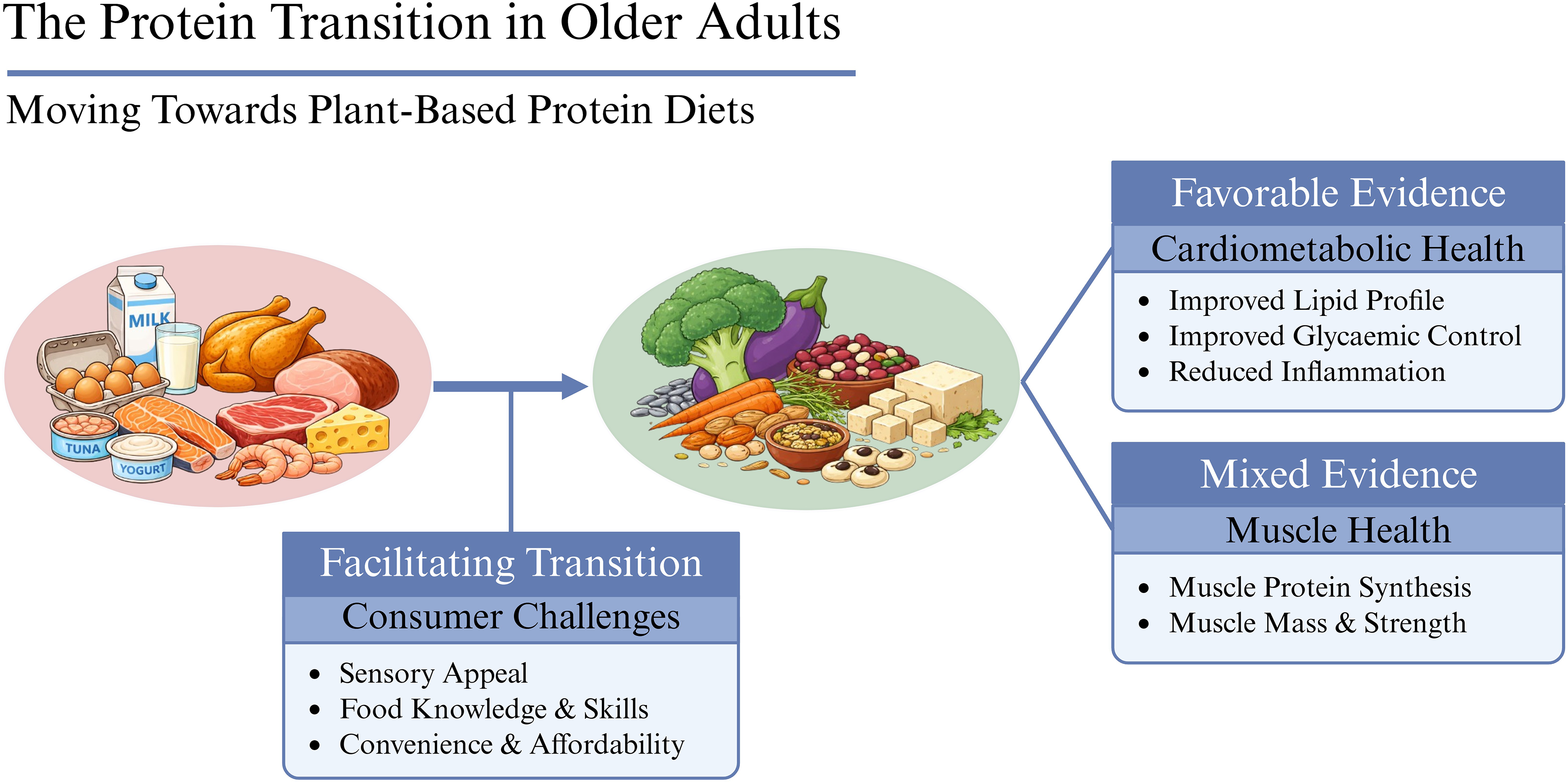
In light of these benefits, the current global recommendation for a sustainable diet by the updated EAT-Lancet Planetary Health Diet framework proposes a 70:30 plant-to-animal protein ratio(Reference Rockström, Haraksingh Thilsted and Willett46). This diet emphasises fruits, vegetables, whole grains, legumes, nuts, unsaturated fats and low-fat dairy products, while limiting red and processed meats, added sugars, sodium and trans fats(Reference Rockström, Haraksingh Thilsted and Willett46). Predominantly plant-based protein diets are often associated with higher intakes of fibre and polyunsaturated fatty acids, which have been linked to improvements in cardiometabolic factors such as lower body weight, reduced low-density lipoprotein cholesterol levels and increased glucose control (Figure 1)(Reference Pandey, AlQassab and Kanthajan47–Reference Armet, Deehan and Thöne49). However, the protein transition also introduces important challenges, particularly in relation to muscle health in older adults. Changes in protein source distribution may influence total protein intake, EAA availability and digestibility, which are critical determinants of MPS and the maintenance of muscle mass(Reference Mendes, Correia and Santos50). In this context, examining the implications of protein quantity, source and quality on age-related diseases becomes essential when shifting towards more plant-based dietary patterns(Reference van Oppenraaij, Verlaan and Weijs51).
Overview of the protein transition towards plant-based diets in older adults. The figure summarises key consumer-level challenges that need to be addressed to support the protein transition in older adults, alongside current physiological evidence related to cardiometabolic and muscle health outcomes.

The protein transition and age-related disease
Protein intake and cardiometabolic health
Protein quantity
Evidence on the relationship between protein quantity and cardiometabolic outcomes such as CVD, T2D and cardiometabolic mortality in older adults remains limited. In young adults, however, there are several systematic reviews and meta-analyses that show increased protein intake to have a beneficial impact on cardiometabolic outcomes. For example, a systematic review and meta-analysis of 54 randomised controlled trials (RCTs) by Vogtschmidt et al.(Reference Vogtschmidt, Raben and Faber52) in adults (≥18 years), found that compared to low-protein diets (10–23% total energy), high-protein diets (20–45% total energy) led to significantly greater weight loss (standardised mean difference (SMD): −0.13, 95% CI: −0.23, −0.03), greater reductions in fat mass (SMD: −0.14, 95% CI: −0.24, −0.04), systolic blood pressure (SMD: −0.12, 95% CI: −0.21, −0.02), total cholesterol (SMD: −0.11, 95% CI: −0.19, −0.02), triacylglycerol (SMD: −0.22, 95% CI: −0.21, −0.02) and insulin (SMD: −0.22, 95% CI: −0.30, −0.14) across a mean intervention period of 18 weeks(Reference Vogtschmidt, Raben and Faber52). Although the evidence did not focus on older adults, the sample (mean age: 46 ± 10 years) represented a relevant high-risk group, as cardiometabolic risk factors commonly emerge during middle age(Reference Vogtschmidt, Raben and Faber52). A previous systematic review and meta-analysis of twenty-four RCTs, supports these findings, showing that over a mean intervention period of 12 weeks, high-protein (25–35% total energy), low-fat diets led to significant decreases in weight (−0.79kg, 95% CI: −1.50, 0.08kg), fat mass (−0.87kg, 95% CI: −1.26, −0.48kg) and triacylglycerol (−0.23 mmol/l; 95% CI: −0.33, −0.12 mmol/l), compared to standard-protein low-fat diets (12–18% total energy)(Reference Wycherley, Moran and Clifton53).
Despite these findings, some evidence suggested neutral or even adverse associations between total protein intake and cardiometabolic outcomes. A meta-analysis by Naghshi et al.(Reference Naghshi, Sadeghi and Willett54) of 10 prospective cohort studies, totalling 427 005 participants showed that when comparing the highest and lowest protein intakes, there was no significant association between total protein intake and CVD mortality (summary effect size: 0.98; 95% CI 0.94, 1.03)(Reference Naghshi, Sadeghi and Willett54). Furthermore, eleven longitudinal cohort studies, including 483 174 participants demonstrated that compared to low protein intake, higher total protein had a relative risk (RR) of 1.12 (95% CI: 1.08–1.17) of developing T2D(Reference Tian, Xu and Jiang55). Supporting this, an analysis of the nationally representative American dietary survey named National Health and Nutrition Examination Survey, including 6 381 participants aged ≥50 years, found that among participants aged ≥66 years (n = 1 146 participants), higher protein intake was associated with increased T2D-related mortality (β = 3.93; CI: 0.73–21.07)(Reference Levine, Suarez and Brandhorst56). Importantly, this study noted that the high contribution from animal-based protein and smaller cohort sample size may contribute strongly to this association(Reference Levine, Suarez and Brandhorst56).
Overall, the RCT evidence suggests a beneficial association between higher protein intake and cardiometabolic health (Figure 1). Nonetheless, observational studies also indicate that higher protein intake may be associated with an increased risk of T2D-related mortality, with these associations potentially influenced, in part, by the contribution of animal-based proteins. This highlights the importance of considering not only the quantity of protein consumed, but also the source of protein when evaluating cardiometabolic health outcomes, particularly in the context of the ongoing protein transition towards more plant-based diets.
Protein source
There is evidence suggesting that higher intakes of animal-based protein are associated with poorer cardiometabolic health outcomes, including T2D. A meta-analysis of sixteen prospective cohort studies, including 615 125 participants (aged 18+ years) and 52 342 T2D cases, showed a dose–response relationship, whereby every additional 20 g of animal-based protein intake increased T2D risk by ∼7%(Reference Ardakani, Anjom-Shoae and Sadeghi57). This is further supported by a meta-analysis of 505 642 participants, aged 40–69 years, which found that the highest intakes of total and animal-based protein were associated with an increased risk of T2D, with RR of 1.09 (95% CI: 1.06, 1.13) and 1.19 (95% CI: 1.11, 1.28) respectively(Reference Shang, Scott and Hodge58). In addition to T2D risk, evidence also suggested potential implications for mortality. A pooled cohort analysis of 131 342 middle-aged participants (mean age 49 years) identified that while animal-based protein was not associated with all-cause mortality, there was an association with higher cardiovascular mortality (hazard ratio (HR) 1.08 per 10% energy increment; CI, 1.01–1.61)(Reference Song, Fung and Hu59).
In contrast, plant-based protein intake is generally associated with neutral or protective effects on cardiometabolic health outcomes such as T2D and CVD. For example, the meta-analysis of sixteen prospective cohort studies conducted by Ardakani et al.(Reference Ardakani, Anjom-Shoae and Sadeghi57), found no association between plant-based protein intake and T2D risk (pooled effect size: 0.98, 95% CI: 0.89–1.08). Despite this, replacing animal with plant-based protein (per each 20 g) was associated with a reduced risk of T2D (pooled effect size: 0.80, 95% CI: 0.76–0.84)(Reference Ardakani, Anjom-Shoae and Sadeghi57). Consistent with this, the meta-analysis of 505 642 participants, by Shang et al. (2016)(Reference Shang, Scott and Hodge58) reported an inverse, though not statistically significant, association between plant-based protein intake and T2D risk (RR 0.95; 95% CI: 0.89, 1.02)(Reference Shang, Scott and Hodge58). Furthermore, Song et al. (2016)(Reference Song, Fung and Hu59) demonstrated that higher plant-based protein intake was associated with reduced cardiovascular mortality in middle-aged adults (HR 0.88 per 3% energy increment; 95% CI: 0.80–0.97)(Reference Song, Fung and Hu59). These findings are further supported by a large, pooled analysis of the Nurses’ Health Study cohorts and the Health Professionals Follow-Up Study (n = 202 863), which reported that a higher plant-to-animal protein ratio was associated with a lower risk of total CVD and coronary artery disease (HR 0.81; 95% CI: 0.76–0.87 and HR 0.73; 95% CI: 0.67–0.79, respectively)(Reference Glenn, Wang and Tessier60). Overall, this suggests differing associations between protein source and cardiometabolic outcomes. While there is a lack of research centred on older adults, there is broad evidence supporting the cardiometabolic benefits of plant-based proteins. This extends not only to increasing plant-based food intake but also replacing animal-based proteins with plant-based proteins.
Isoenergetic substitution analyses consistently demonstrate improved cardiometabolic outcomes when animal-based protein is replaced with plant-based protein. A systematic review of thirteen RCTs and seven prospective cohort studies identified that replacing animal-based proteins such as dairy milk with plant-based proteins such as soy and/or lupin beverages resulted in reduced CVD mortality(Reference Lamberg-Allardt, Bärebring and Arnesen61). Additionally, a systematic review of 32 long-term prospective cohort studies found that replacing animal-based protein with plant-based protein was associated with reductions in several cardiometabolic risk factors(Reference Neuenschwander, Stadelmaier and Eble62). These associations were observed across a range of substitutions involving different plant and animal protein sources. For example, replacing processed meat (50 g/d) with nuts (28–50 g/d), legumes (50 g/d) or whole grains (30 g/d) was associated with a lower incidence of total CVD(Reference Neuenschwander, Stadelmaier and Eble62). Similarly, a reduced risk of T2D was observed when substituting red meat (50 g/day) with nuts (10 g/day) or whole grains and cereals (11–30 g/day)(Reference Neuenschwander, Stadelmaier and Eble62). Multiple large-scale prospective studies support these findings(Reference Salas-Salvadó, Bulló and Babio63–Reference Gardener, Wright and Gu65). Evidence from trials in middle- and older-aged adults indicates that plant-based protein diets are effective in the prevention of T2D and are associated with an approximately 30% reduction in cardiovascular events in high-risk populations(Reference Salas-Salvadó, Bulló and Babio63–Reference Gardener, Wright and Gu65). The benefits on T2D and CVD seen for plant-based protein intake may be partly attributed to the higher fibre content and lower levels of saturated and trans fats typically found in plant-based proteins compared with animal-based proteins. Increased fibre intake may contribute to improved glycaemic control and reductions in low-density lipoprotein cholesterol, while lower saturated and trans fat intake is associated with improved lipid profiles and reduced systemic inflammation(Reference Pandey, AlQassab and Kanthajan47–Reference Armet, Deehan and Thöne49). Together, these effects may lead to favourable changes in key cardiometabolic markers, including blood glucose, insulin sensitivity, lipid levels and inflammatory biomarkers, thereby reducing the risk of metabolic syndrome, cardiovascular events and T2D (Figure 1).
Collectively, this body of evidence suggests that the protein transition, shifting protein intake from animal- to plant-based sources, could provide meaningful improvements in cardiometabolic health. However, most findings are derived from observational studies, and there is a notable lack of RCTs specifically investigating a plant-based protein diet transition on cardiometabolic outcomes in older adults. As such, clinical trials are needed to establish causality and understand the mechanisms underlying these associations. Furthermore, it remains unclear whether these effects are driven solely by differences in overall dietary composition or whether intrinsic characteristics of the protein itself, particularly protein quality, including amino acid (AA) composition and digestibility, also contribute to these associations.
Protein quality
No studies have been found on the impact of protein quality on cardiometabolic health or its risk factors, regardless of age bracket. Protein quality is an important factor in determining the physiological effects of dietary protein, as it reflects the composition and digestibility of AA(Reference Matthews, Arentson-Lantz and Moughan22). Given that previous research has found differences in cardiometabolic health based on protein quantity and protein source, understanding the role of protein quality is essential. This information would provide insight into how different protein sources, AA profiles and AA combinations impact cardiometabolic health markers. Outcomes from this research would also provide further understanding of whether the beneficial impacts from plant-based proteins on cardiometabolic health are due to their favourable nutritional composition or other factors such as AA composition or animal vs plant source. These findings would have key implications for public health in the context of the protein transition, such as specific dietary recommendations for ageing populations and those at greater risk of CMD.
Protein intake and muscle health
Protein quantity
Dietary protein quantity is a key modifiable factor in muscle maintenance, though evidence in older adults remains limited and shows mixed results. Observational studies generally support a positive association between dietary protein and prevention of sarcopenia. For example, a systematic review of 3 353 community-dwelling older adults found that individuals with sarcopenia consumed significantly less protein than their non-sarcopenic peers, supporting a clear association between inadequate protein intake and increased sarcopenia prevalence(Reference Coelho-Junior, Calvani and Azzolino66). Further, a large systematic review and meta-analysis of twenty-three studies (including sixteen cross-sectional studies, five RCTs and two non-RCTs), including approximately 13 285 older adults (≥65 years), showed a higher risk of sarcopenia for those consuming <0.8 g/kg/day protein intake compared to both a 0.8–1.2 g/kg/day protein intake (odds ratio = 1.25; 95% CI, 1.10 to 1.42) and ≥1.2 g/kg/d protein intake (odds ratio = 1.79; 95% CI, 1.53 to 2.10)(Reference Han, Woo and Kim67).
These observational findings are supported by intervention studies using MPS as a proxy for muscle health. Dose–response studies consistently demonstrate a positive relationship between protein intake and MPS, while also highlighting age-related differences in responsiveness. In younger adults, maximal stimulation of MPS appears to occur with ∼20–25 g of high-quality protein per meal, whereas older adults typically require higher intakes of ∼30–40 g to achieve a comparable response(Reference Moore, Churchward-Venne and Witard68,Reference Moore, Robinson and Fry69) . This increased requirement is largely attributed to anabolic resistance, a phenomenon whereby older muscle shows a blunted sensitivity to protein ingestion. Supporting this, stable isotope tracer studies have shown that older adults (≈75 years) exhibit a ∼16% lower postprandial MPS response following 20 g of casein protein from dairy milk compared to younger adults (≈34 years), despite having similar basal MPS rates(Reference Wall, Gorissen and Pennings70). To overcome this anabolic resistance, greater stimulation of pathways regulating protein synthesis is required. The mammalian target of rapamycin signalling pathway plays a central role in this process and is activated by EAAs, particularly leucine(Reference Katsanos, Kobayashi and Sheffield-Moore71). Supporting this, a quantitative review of post-exercise studies found that leucine intake significantly predicts the magnitude of postprandial MPS in older adults, but not in younger individuals, suggesting that higher leucine availability may help overcome the blunted anabolic response in ageing muscle(Reference Wilkinson, Koscien and Monteyne72). This is further supported by findings from an RCT conducted by Katsanos et al.(Reference Katsanos, Kobayashi and Sheffield-Moore71), demonstrating that increasing the proportion of leucine within an EAA mixture restored the blunted MPS response in elderly individuals(Reference Katsanos, Kobayashi and Sheffield-Moore71). This effect was not observed in younger adults, further highlighting older adults’ need for a higher leucine intake to stimulate MPS. This suggests that leucine co-ingestion could be a practical dietary strategy to mitigate muscle mass loss in older adults consuming both adequate and insufficient protein. Despite these acute anabolic responses to leucine supplementation, a longer-term 12-week RCT by Verhoeven et al.(Reference Verhoeven, Vanschoonbeek and Verdijk73) in healthy elderly men (mean age 71 ± 4 years) found no measurable improvements using leucine supplementation (7.5 g/day) on muscle mass or strength compared to placebo(Reference Verhoeven, Vanschoonbeek and Verdijk73). Together, these findings suggest that while increasing leucine intake can acutely enhance MPS and partially overcome anabolic resistance, these short-term improvements do not consistently translate into long-term gains in muscle mass or strength.
When examining long-term outcomes such as muscle mass and strength, studies suggest a positive association with dietary protein intake. Evidence shows that this relationship strengthens, particularly when protein intake is combined with resistance exercise training (RET). Meta-analyses of RCT consistently show that protein supplementation enhances lean body mass and strength gains when combined with RET in younger adults. A meta-analysis by Morton et al.(Reference Morton, Murphy and McKellar74), reported that protein supplementation led to significant, though modest, increases in fat-free mass (∼0.30 kg) and strength (∼2.49 kg increase in one-repetition bench and leg press) across 49 studies involving 1 863 healthy adults (mean age 35 ± 20 years)(Reference Morton, Murphy and McKellar74). Other meta-analyses confirm this, with a more pronounced effect in those consuming protein at levels above approximately 1.6 g/kg/day(Reference Nunes, Colenso-Semple and McKellar75,Reference Lim, Pan and Toh76) . However, the evidence is less consistent in older populations, particularly in the absence of RET. For instance, a longitudinal cohort by Houston et al.(Reference Houston, Nicklas and Ding77) using data from the Health, Aging, and Body Composition Study, found that older adults consuming higher protein intakes (∼1.1 g/kg/day) showed approximately 40% less loss of total and appendicular lean mass over three years (measured by dual-energy X-ray absorptiometry) compared to those with lower intakes (∼0.7 g/kg/day)(Reference Houston, Nicklas and Ding77). In contrast, another longitudinal 5-year cohort using data from the same Health, Aging, and Body Composition Study reported no significant association between protein intake and changes in mid-thigh muscle cross-sectional area measured by computed tomography scans(Reference Verreijen, Engberink and Houston78). Neither total protein nor EAA (including leucine) intake was associated with muscle preservation(Reference Verreijen, Engberink and Houston78). These discrepancies likely reflect methodological differences. Dual-energy X-ray absorptiometry used in the Houston et al.(Reference Houston, Nicklas and Ding77) study, measures total lean mass but cannot distinguish between muscle and non-muscle components, whereas computed tomography imaging provides a more precise assessment of muscle tissue by accounting for fat infiltration. Additionally, differences in follow-up duration may contribute to the divergent findings.
Collectively, these findings indicate that increased protein intake, as well as leucine supplementation, may decrease the risk of sarcopenia and enhance acute MPS. However, evidence for sustained changes remains limited and inconsistent, particularly for older adults and in the absence of RET. Further research is needed to determine the long-term effects of higher protein intake on MPS, muscle mass, strength and functional outcomes, particularly in older adults (Figure 1).
Protein source
Beyond protein quantity, protein source is a key determinant of muscle health and should be evaluated in light of the real-world practicality of the protein transition. While evidence on protein source effects on muscle health in older adults remains limited, animal-based protein sources are generally considered superior for muscle maintenance. Animal-based protein sources generally exhibit higher protein quality due to their more complete EAA profile and greater digestibility(Reference van Vliet, Burd and van Loon14,Reference Ajomiwe, Boland and Phongthai79) . In contrast, plant-based proteins often exhibit poor protein quality due to incomplete EAA profiles and reduced digestibility, limiting their anabolic potential(Reference Matthews, Arentson-Lantz and Moughan22,Reference Domic, Grootswagers and van Loon80) . Acute studies have demonstrated benefit in MPS stimulation from animal-based protein isolates compared to plant(Reference Tang, Moore and Kujbida81–Reference Wilkinson and Tarnopolsky83). For example, a meta-analysis including 30 RCTs and 2 105 participants (≥60 years)(Reference Al-Rawhani, Nur’Asyura Adznam and Abu Zaid84) on the effect of whey protein supplementation in older adults showed that whey is more effective at stimulating MPS than soya protein, likely due to its higher anabolic potential. This meta-analysis also reported improvements in muscle strength and physical performance, particularly when whey protein is combined with RET(Reference Al-Rawhani, Nur’Asyura Adznam and Abu Zaid84). Furthermore, an RCT by Pinckaers et al.(Reference Pinckaers, Domić and Petrick85) including 16 older adults (65–85 years), investigating MPS following an omnivore or vegan meal found an approximately 47% higher postprandial MPS compared to the vegan meal over a 6-hour period, further supporting the increased MPS for animal-based compared to plant-based proteins(Reference Pinckaers, Domić and Petrick85).
Despite these findings, recent evidence suggests that the difference between plant- and animal-based protein sources may be minimised when protein intake is sufficient and carefully formulated. An RCT by Monteyne et al.(Reference Monteyne, Coelho and Murton86) including 22 healthy younger adults reported that vegan and omnivorous high-protein diets supported comparable MPS rates and muscle gains in young adults undergoing resistance training(Reference Monteyne, Coelho and Murton86). Similarly, an RCT by Pinckaers et al.(Reference Pinckaers, Kouw and Gorissen87) including 24 younger adults found no difference in MPS between ingestion of a plant-based protein blend and milk protein(Reference Pinckaers, Kouw and Gorissen87). This indicates that plant–based protein quality can be improved through complementary plant-based source combinations to achieve a balanced EAA profile. Comparable findings have also been observed in older populations, with a 10-day controlled feeding study reporting no differences in MPS between older adults consuming vegan and omnivorous diets(Reference Domic, Pinckaers and Grootswagers88). Collectively, this evidence suggests that, within the framework of the protein transition, well-designed plant-based diets can support muscle protein metabolism similarly to diets containing animal-derived proteins, even in older adults.
For longer-term changes in lean mass and strength, recent systematic reviews focusing on plant-based protein interventions reveal that plant proteins can effectively support muscle health outcomes such as muscle mass, strength and physical function in older adults. A comprehensive meta-analysis of thirteen RCTs in older adults aged ≥60 years found that plant protein interventions improved muscle mass over time and were generally comparable to control interventions, which included animal protein supplementation, exercise or no intervention(Reference Stoodley, Williams and Wood89). Although the meta-analysis suggested a slight favouring of animal proteins for knee extension strength and gait speed, these differences were not statistically significant. Additionally, the presence of other nutritional components in plant proteins, such as antioxidants and anti-inflammatory compounds, might contribute positively to muscle health by reducing inflammation and oxidative stress, factors relevant in ageing populations(Reference Stoodley, Williams and Wood89).
Overall, the current evidence indicates that animal-based proteins may elicit slightly greater acute MPS responses, likely due to their higher digestibility and more favourable EAA profile. However, these differences appear to be minimal when total protein intake is sufficient, and plant-based proteins are formulated to provide complementary EAA profiles, supporting a potential for the protein transition without compromising muscle health. Nevertheless, much of the available evidence is derived from short-term studies and predominantly healthy populations. Further long-term research, particularly in older adults, is required to clarify the implications of transitioning to a plant-based diet on skeletal muscle health.
Protein quality
Protein quality, defined by AA composition and digestibility, is an important determinant of the anabolic response to dietary protein(Reference Matthews, Arentson-Lantz and Moughan90,Reference Millward, Layman and Tomè91) . RCTs consistently demonstrate that higher-quality proteins, typically of animal origin, stimulate greater acute MPS compared with lower-quality proteins when consumed in equivalent doses(Reference Morgan, Harris and Marshall92). These effects are largely attributed to animal-based proteins having higher EAA content, particularly leucine, and greater protein digestibility. In relation to the protein transition, these differences become especially relevant, as shifting from animal- to plant-based protein sources may attenuate the anabolic response due to the generally lower EAA density and digestibility of plant-based proteins.
However, the relevance of protein quality appears to be context dependent. Evidence from longer-term or whole-day assessments suggests that when total protein intake is sufficient, differences in protein source and quality may have limited impact on integrated MPS. For example, Arentson-Lantz et al.(Reference Arentson-Lantz, Von Ruff and Connolly93) reported no differences in 24-hour MPS between meals differing in protein quality when protein intake was adequate and plant-based proteins were appropriately combined(Reference Arentson-Lantz, Von Ruff and Connolly93). This apparent discrepancy highlights the distinction between acute postprandial responses and whole-day protein metabolism.
Collectively, these findings suggest that while protein quality modulates acute anabolic responses, total daily protein intake is the primary determinant of muscle protein accretion. Protein quality becomes particularly relevant in situations of lower protein intake or when dietary patterns are restrictive, where optimising EAA composition may help maximise the anabolic response. From a practical perspective, well-planned diets that provide sufficient protein and include complementary plant-based sources can support muscle health comparably to animal-based diets, supporting the feasibility of the protein transition in healthy populations with adequate protein intake. However, in populations at risk of inadequate intake, such as older adults, both sufficient quantity and protein quality should be considered to overcome anabolic resistance and optimise muscle health.
Drivers and barriers of consumer acceptance
Beyond nutritional strategies, the successful implementation of the protein transition depends on a thorough understanding of behavioural determinants of food choice, leading to practical and behavioural strategies which could facilitate the protein transition in older adults (Figure 1). Currently, data from a nationally representative National Nutrition and Physical Activity Survey of the Australian population(94) suggests that older consumers’ dietary habits, contrary to those of younger adults, are not in line with the protein transition, despite the potential health and environmental benefits this transition could bring. Adults aged 30–49 years were the most likely to identify as vegetarian or vegan (5.1% of males and 9.5% of females). In contrast, this prevalence was lowest among older adults aged ≥75 years (2.7% of males and 2.4% of females), indicating an age-related gradient in vegetarian and vegan dietary patterns(94). Similar trends have been observed in the United Kingdom(Reference Whyton, Methven and Cohen Kadosh95) and other parts of Europe(Reference Deliens96). In these studies, plant-based eating was consistently associated with younger adults, female sex, higher education and urban living(Reference Deliens, Mullie and Clarys97). To change and support a shift in the diets of older Australians towards the protein transition, a systematic analysis of the determinants of food choice behaviour in this population is needed.
From a behavioural perspective, determinants influencing dietary change towards the protein transition can be analysed by investigating consumers’ Capability to change (e.g. consumers’ physical capacity, knowledge and skills), consumers’ Opportunity to change (e.g. accessibility to plant-based foods, social and cultural factors) and consumers’ Motivation to change (e.g. personal factors that drive change). Through this COM-B (Capability, Opportunity, Motivation - Behaviour) model(Reference Michie, van Stralen and West98), the following sections provide an overview of determinants which might impact older consumers’ protein transition.
Capability
A first key capability which influences food choice of older adults is related to reduced oral functioning (e.g. lower ability to control food in the mouth)(Reference Wu, Xu and Liu99), decline in sensory acuity(Reference Alves, de Sousa Munduri and de Oliveira Mattos23,Reference Methven, Jiménez-Pranteda and Ben Lawlor24) , altered digestions(Reference Hinssen, Mensink and Huppertz25) and changes in appetite(Reference van der Meij, Wijnhoven and Lee26). Older individuals commonly have a higher threshold for perceived sensations of taste and flavour, with sweetness and saltiness being most commonly affected(Reference Alves, de Sousa Munduri and de Oliveira Mattos23). It is estimated that more than half of adults aged 65–80 years experience reduced ability to smell. This decline becomes more pronounced with advancing age, with approximately three-quarters of adults aged 80 years and over affected(Reference Doty and Kamath100). Such reduction in sense of smell in older adults has previously been associated with a lower diet quality(Reference Gopinath, Russell and Sue101) and reduced preference for fruit and vegetables(Reference Duffy, Backstrand and Ferris102), which might make it difficult to adhere to a more plant-based diet. Further challenges arise for the consumption of certain textures due to the decline in dental status(Reference Roininen, Fillion and Kilcast103) and bite force(Reference Ikebe, Nokubi and Morii104). Certain plant-based foods, especially those high in fibre, have a tough, grainy or chewy texture which can present a challenge for older consumers and lead to rejection. A transition to plant-based diets should therefore be guided by sensory and consumer insight specifically focused on older adults. This creates the opportunity to align plant-based diets with consumer preferences and capabilities, leading to sustained adherence to plant-based diets(Reference Hoppu, Puputti and Sandell105).
A second key capability which influences food choice of older adults is the knowledge and skills related to preparing and incorporating plant-based protein foods. For example, a recent systematic review found that limited experience with preparing plant-based protein foods and uncertainty about how to substitute animal-based proteins for plant-based protein foods constrains movement towards the protein transition in middle-aged and older adults in high income countries(Reference Copp, Fu and Xiao106). Further, qualitative research in Canada found that 37% of adults aged 71.1 ± 4.8 years (n = 60) reported complexity of preparation as a main disadvantage to consuming plant-based protein foods(Reference Drolet-Labelle, Laurin and Bédard107). Supporting this, in a cross-sectional survey of hypertensive adults recruited from senior centres (n = 187), 84.5% agreed that they needed more information on plant-based diets(Reference Rosenstein and Song108). These capability-related factors, including sensory changes and food preparation knowledge, may constrain plant-based protein intake but also identify clear targets for interventions which may lead to increased plant-based protein consumption, including sensory optimisation of meals and skill development targeted towards older adults.
Opportunity
Opportunity refers to external factors that enable or constrain a behaviour(Reference Michie, van Stralen and West98), including interactions with the food environment. This encompasses perceived affordability and accessibility of foods, as well as social and cultural norms.
A scoping review of predominantly cross-sectional and qualitative studies investigating food choice in older adults, identified convenience and price as important considerations after health(Reference Shahrin, Omar and Daud109). Consistent with this, focus groups in the United Kingdom determined that price and convenience were important food choice determinants in 63–90 year old participants (n = 30), while New Zealand focus groups reported that convenience was most important for retirees aged ≥ 60 years (n = 12) and that social norms and affordability were less important than for younger adults and families(Reference Kemper110). Furthermore, a discrete choice experiment in Dutch adults aged 63.3 ± 8.5 years demonstrated a significant interaction between education and price, indicating stronger preference for lower-priced options among higher educated participants(Reference Kamphuis, de Bekker-Grob and van Lenthe111). However, focus groups in Dutch adults aged 55–74 (n = 30) found social and family expectations to be one of the five main influences on dietary choice in relation to adopting plant-based protein foods(Reference van Oppenraaij, Putker and van Schaik112). These findings suggest that choice of dietary protein in older adults is strongly shaped by practical constraints, particularly convenience and price, and social expectations, with the relative importance of these factors varying across population groups. Convenience and affordability represent clear and modifiable leverage points within the food system that could be targeted to support dietary change in specific subgroups of older adults.
Motivation
Motivation refers to processes that drive behaviour, including both automatic processes, such as habits and emotional responses, and reflective decision-making(Reference Michie, van Stralen and West98). A key motivator for food consumption is the hedonic value of food (i.e. liking of the food’s sensory properties)(Reference Choi and Seo113,Reference Jürkenbeck and Spiller114) . Studies with older adults consistently show that hedonic value has a large impact on food choice, mostly ahead of drivers such as health, price and convenience(Reference Pouyet, Cuvelier and Benattar115–Reference Falk, Bisogni and Sobal117). Although this may suggest that consumers are unlikely to consume food they don’t like, it does not mean they will always choose the foods they like most(Reference Giacalone, Llobell and Jaeger118). For example, a randomised experimental study in Italian adults aged 65–75 years (n = 311) found that familiarity was a stronger predictor of intention to consume plant-based foods than taste (β = 0.68, p < 0.001 vs β = 0.36, p = 0.002), suggesting that long-standing habits and emotional attachment to familiar foods may reinforce their existing dietary patterns(Reference Vanutelli, Adorni and Leone119). Consistent with this, a quantitative survey of Australian adults aged 50–75 years (n = 180) found that meat attachment, reflecting emotional attachment to meat, perceived entitlement, and resistance to reducing its intake, was a strong predictor of meat consumption (b = 6.76, SE = 1.11, p < 0.001), regardless of liking of meat. Moreover, meat attachment was negatively correlated with the consumption of plant-based foods(Reference Vanutelli, Adorni and Leone119), suggesting that high meat attachment could be a barrier to the protein transition.
In addition to taste preferences, habitual eating patterns and emotional attachment to familiar foods, older consumers appear to place greater value on the health benefits of food(Reference Shahrin, Omar and Daud109). This heightened health awareness may be driven by the increasing prevalence of health issues with ageing(120). The reflective decision-making around protein choices in older adults is strongly shaped by the perceived health consequences, with health being consistently identified as a key driver of food choice in this population. For example, in a scoping review, 9 out of 15 studies identified health as the most important factor determining food choice in older adults(Reference Shahrin, Omar and Daud109). This aligns with the Dutch focus group study(Reference van Oppenraaij, Putker and van Schaik112), which is more specific to plant-based food choice, where health and taste emerged as the most prominent factors, mentioned by almost all participants(Reference van Oppenraaij, Putker and van Schaik112). Along the same lines, pooled data from Australian cross-sectional surveys (n = 12 552), found that older adults were more likely to engage in healthy eating behaviours, with 43% higher odds compared to younger adults(Reference Alley, Duncan and Schoeppe121). These findings indicate that while automatic processes, such as familiarity and meat attachment, may reinforce existing patterns, health consciousness and sensory appeal remain consistent drivers of dietary change, which may be leveraged to enhance acceptance of plant-based protein foods.
The interacting capability, opportunity and motivation components of behaviour show that the choice of protein source in older adults is not only based on individual preferences and ideals, but also by practical constraints and the realities of the food environment. While multiple constraints exist, clear leverage points are also evident, particularly sensory appeal, health consciousness, food preparation knowledge and skills, and accessibility factors such as convenience and price, which can be harnessed to support the protein transition in older adults.
Final conclusions
Overall, while the protein transition offers benefits for cardiometabolic health and sustainability, its successful adoption in older adults requires careful consideration of protein quantity and quality for muscle health alongside consumer-related factors (capability, opportunity and motivation). When these aspects are addressed, a shift towards more plant-based protein diets appears both achievable and compatible with healthy ageing. Future research should prioritise long-term RCTs in older adults to determine whether predominantly plant-based dietary patterns can adequately support muscle health while improving cardiometabolic and sustainability outcomes. In addition, studies integrating protein quality, sensory optimisation and behavioural implementation strategies are needed to support real-world adoption of the protein transition in ageing populations.
Author contributions
Rikke Sand Andersen conceived and coordinated the review, conducted the literature search and evidence synthesis, drafted the majority of the manuscript and integrated and revised all sections. Anique Julien assisted in conceiving the review, contributed to the first draft of the manuscript and critically reviewed the manuscript. Liana Pace, Laura E Marchese and Bill Tiger Lam contributed to the section on cardiometabolic health. Djin Gie Liem, Emma Lundin and Tracey Van Grunsven contributed to the sections addressing behavioural perspectives. Hesti Retno Budi Arini critically reviewed the manuscript and provided intellectual input. Michael Tieland, as senior and supervising author, provided overall conceptual guidance, supervised the development of the manuscript and critically revised it. All authors reviewed and approved the final version of the manuscript.
Financial support
This research received no specific grant from any funding agency, commercial or not-for-profit sectors.
Competing interests
Authors LP, HRBA, BTL, TVG and MT are members of the Nutrition Society of Australia (NSA). Author LEM is a member of NSA Victorian regional group, the NSA Sustainability Special Interest group as well as is a committee member of the NSA. Authors DGL and MT have received grants from HORT Innovation Australia.

 Open access

