INTRODUCTION
Studies on diet and feeding strategy of fish species are fundamental to understand many aspects of their biology, ecology, physiology and behaviour (Gonçalves & Erzini, Reference Gonçalves and Erzini1998). Such studies are even more crucial when involving upper trophic level species, which are especially important due to their recent global declines and the potential for associated ecosystem-level effects on species composition and diversity (Pauly et al., Reference Pauly, Trites, Capuli and Christensen1998). In this context, stomach content analysis is the most widely used method for studying the diet of fish, allowing determination of the role of a species in the food chain (Hyslop, Reference Hyslop1980) and therefore contributes to the study of intra- and inter-specific relationships in the ecosystem.
The forkbeard Phycis phycis (Linnaeus, 1766) is a gadiform benthopelagic fish with a wide distribution in the North-east Atlantic (from the Bay of Biscay to Morocco, south to Cape Verde and the Azores) and in the Mediterranean Sea (Svetovidov, Reference Svetovidov, Whitehead, Bauchot, Hureau, Nielsen and Tortonese1986). The forkbeard lives on hard and sandy-muddy bottoms near rocks at depths up to 650 m (Svetovidov, Reference Svetovidov, Whitehead, Bauchot, Hureau, Nielsen and Tortonese1986), where it looks for shelter in holes during the day and becomes an active predator during the night, feeding mainly on fish but also on decapods (Papaconstantinou & Caragitsou, Reference Papaconstantinou and Caragitsou1989; Morato et al., Reference Morato, Solà, Grós and Menezes1999). In the southern NE Atlantic, forkbeard is an important commercial species, both in Portugal and Spain (Vieira et al., Reference Vieira, Neves, Sequeira, Paiva and Gordo2014a, Reference Vieira, Neves, Sequeira, Paiva and Gordob, Reference Vieira, Sequeira, Neves, Paiva and Gordo2016a, Reference Vieira, Rodrigues, Sequeira, Neves, Paiva, Paulo and Gordob), with Portuguese landings reaching about 800 tons per year (INE, 2014). In Portuguese waters, this species is mainly caught by a longline fishery (trawl, trammel net and traps fisheries contribute with a small percentage of the landings) in coastal waters and offshore seamounts, in the mainland area and around Azores and Madeira archipelagos (Vieira et al., Reference Vieira, Neves, Sequeira, Paiva and Gordo2014a, Reference Vieira, Neves, Sequeira, Paiva and Gordob). Despite its economic importance, little information is available on its biology (Silva, Reference Silva1986; Abecasis et al., Reference Abecasis, Canha, Reis, Pinho and Gil-Pereira2009; Matić-Skoko et al., Reference Matić-Skoko, Ferri, Škeljo, Bartulović, Glavić and Glamuzina2011; Glavić et al., Reference Glavić, Dobroslavić, Bartulović, Matić-Skoko and Glamuzina2014; Vieira et al., Reference Vieira, Neves, Sequeira, Paiva and Gordo2014a, Reference Vieira, Sequeira, Neves, Paiva and Gordo2016b).
This study aims to present new data on diet composition and feeding strategy of the forkbeard in the Portuguese continental waters focusing on differences in the feeding habits according to fish length, season and sex.
MATERIALS AND METHODS
Sampling
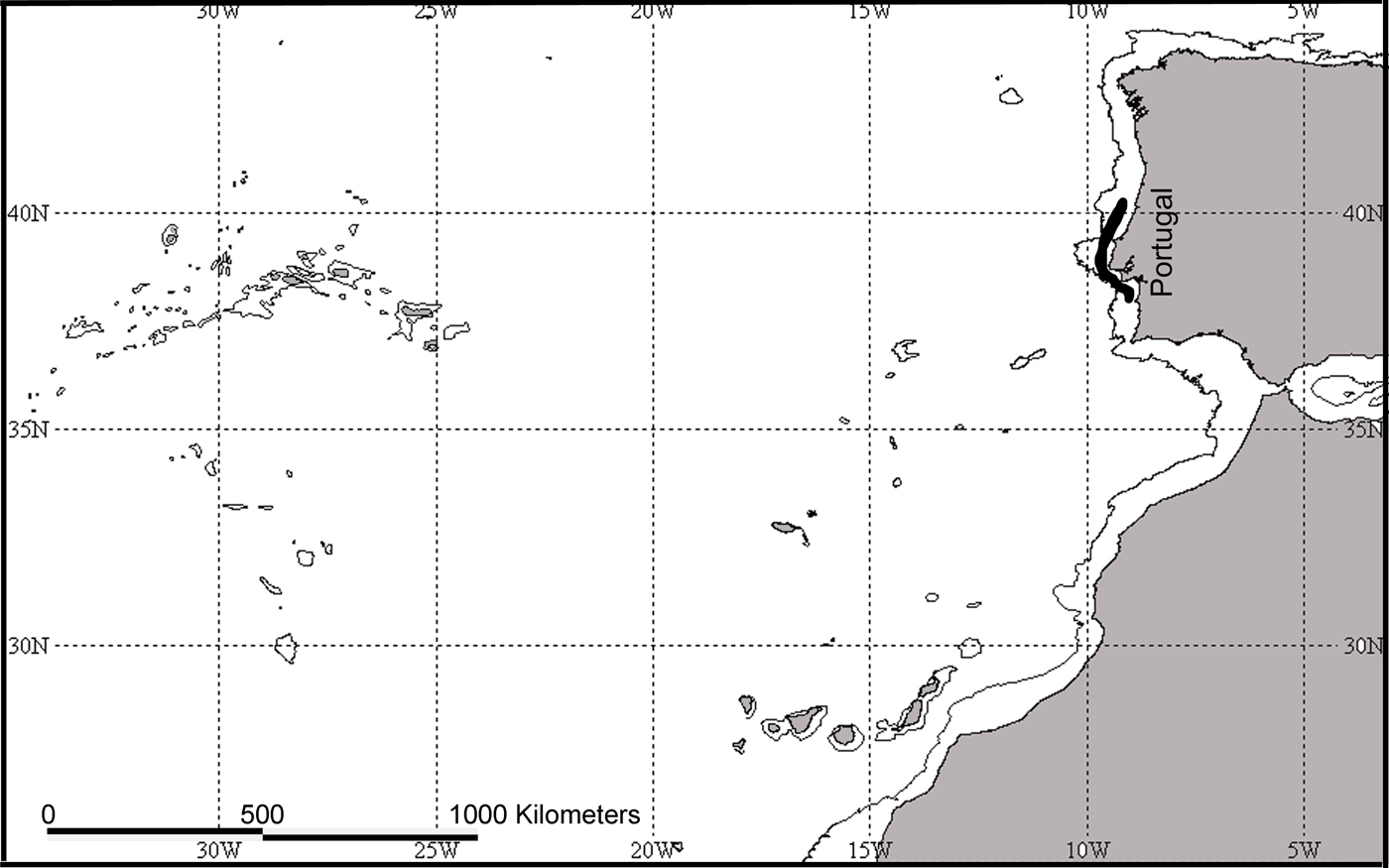
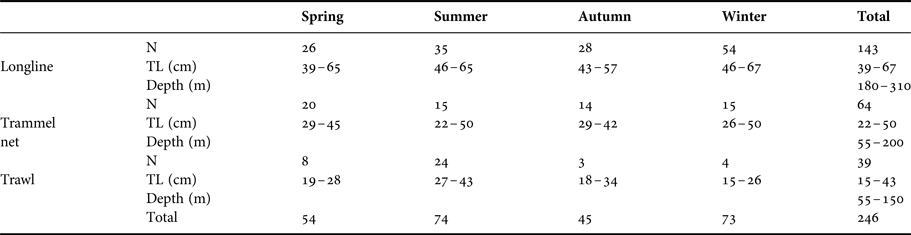
Forkbeard specimens were obtained monthly between May 2011 and April 2012 from commercial vessels operating off mainland Portugal (mainly in the central west coast) (Figure 1), from depths between 55 and 310 m using mainly longline but also bottom trawl and trammel nets and landed at Peniche. Table 1 shows the number of individuals and the length range of the specimens caught by each gear and season (winter: January–March; spring: April–June; summer: July–September; autumn: October–December). The depth interval at which specimens were caught is also shown.
Map of the southern NE Atlantic with the location of the sampling area (shaded). Black line represents the 1000 m isobath.

Number of specimens of Phycis phycis caught by total length range, gear, season and depth.

In the laboratory, total length (TL, to the nearest 0.1 cm), gutted weight (GW, to the nearest 0.01 g), stomach weight (to the nearest 0.01 g) and sex were recorded from each fish. The stomachs were removed and frozen for later analysis.
The food items in the stomach contents, after being defrosted and dried in absorbent paper, were carefully separated, identified to the lowest taxonomic level possible, counted and weighed (to the nearest 0.0001 g). Whenever parts of uncompleted individuals were found, the number of individuals was assumed as the smallest possible number from which fragments could have originated. Food items that might have been used as bait in longline, mainly Atlantic chub mackerel Scomber colias Gmelin, 1789 and European sardine Sardina pilchardus (Walbaum, 1792), were excluded from the analysis if they were found whole or lightly digested.
Feeding patterns
Dietary indices were used to quantify the prey relative importance (Hyslop, Reference Hyslop1980; Cortés, Reference Cortés1997) by prey item and prey items aggregated by major taxonomic groups. The indices used were (i) the frequency of occurrence (%O), (ii) the percentage by number (%N), (iii) the per cent by weight (%W), and (iv) the per cent index of relative importance (%IRI), described as:
(i)
 ${\rm \% O} = \displaystyle{{\hbox{number of stomachs with prey item}\;i} \over {\hbox{number of non empty stomachs}}} \times 100$
(ii)
${\rm \% N} = \displaystyle{{\hbox{number of prey item}\;i\;\hbox{in all stomachs}} \over {\hbox{total number of food items in all stomachs}}} \times 100$(iii)
${\rm \% W} = \displaystyle{{\hbox{total weight of prey item} \;i\;\hbox{in all stomachs}} \over {\hbox{total weight of stomach contents}}} \times 100$(iv)
${\rm \% IRI} = \left[ {\displaystyle{{{\rm \% O} \times ({\rm \% N} + {\rm \% W})} \over {\mathop \sum \nolimits^ ({\rm \% O} \times ({\rm \% N} + {\rm \% W}))}}} \right] \times 100$




The number of everted stomachs was estimated as well as the vacuity index (VI) considered as the percentage of empty stomachs in the sample (Ellis et al., Reference Ellis, Pawson and Shackley1996). Full regurgitation was not taken into account and was included in the number of empty stomachs.
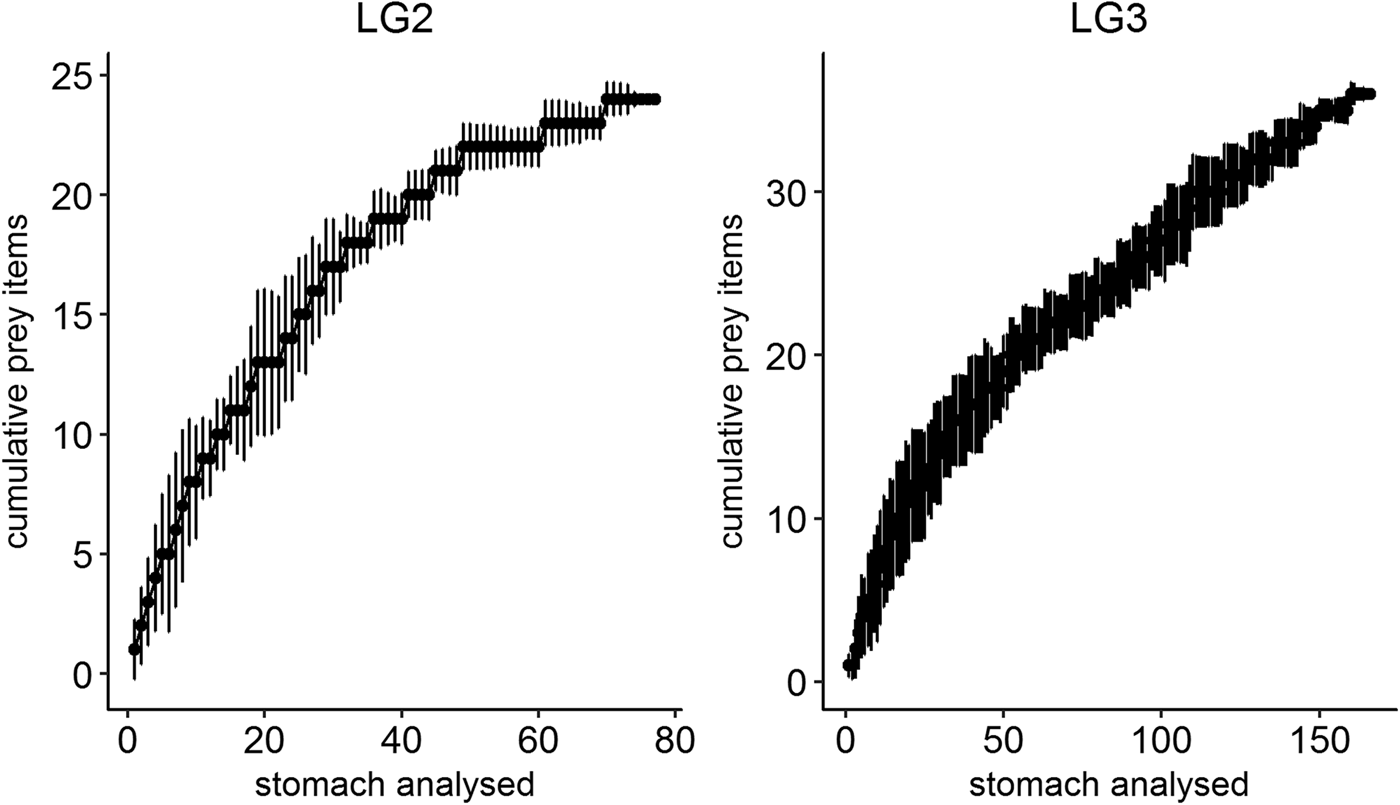
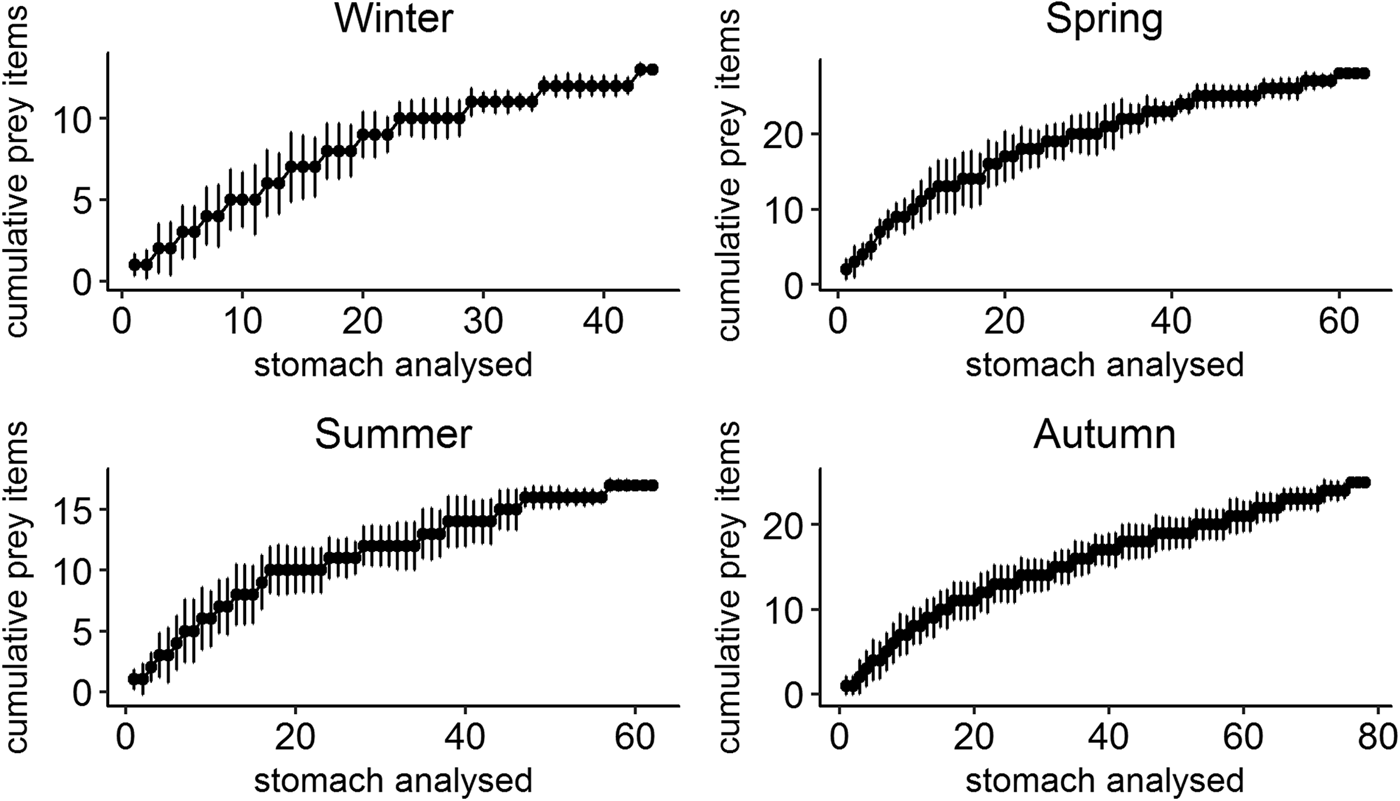
Cumulative prey curves were performed for each group and season to determine if the number of specimens used was adequate to describe precisely the diet of the forkbeard. The order in which stomachs were analysed was randomized 10 times and the mean number of new prey species found consecutively in the stomachs plotted against the number of stomachs analysed (Ferry et al., Reference Ferry, Clark and Cailliet1997). The presence of an asymptotic relationship, which indicates that enough samples had been analysed, was investigated by the method developed by Bizzarro et al. (Reference Bizzarro, Robinson, Rinewalt and Ebert2007). The mean coefficient of variation of the four last points was additionally calculated to provide a standard measure of precision.
To evaluate the degree of feeding intensity of each individual, the stomach fullness index (SFI), described as the percentage of the stomach content weight (SCW) in relation to the GW (Hyslop, Reference Hyslop1980) was estimated.
For the subsequent analyses, prey items were merged into major groups to avoid problems with low expected frequencies and the most common species/genera were included as separated items in these analyses. The higher taxonomic groups and the selected species/genera were as follows: non-decapod Crustacea, NDC; Caridea, CAR; Anomura, ANO; Munida spp., MUN; Processa spp., PRO; Brachyura, BRA; Pisces, PIS; Trisopterus luscus, TRI. Echinodermata and Mollusca appeared with extremely low frequency (<1%) and therefore were excluded from the analysis.
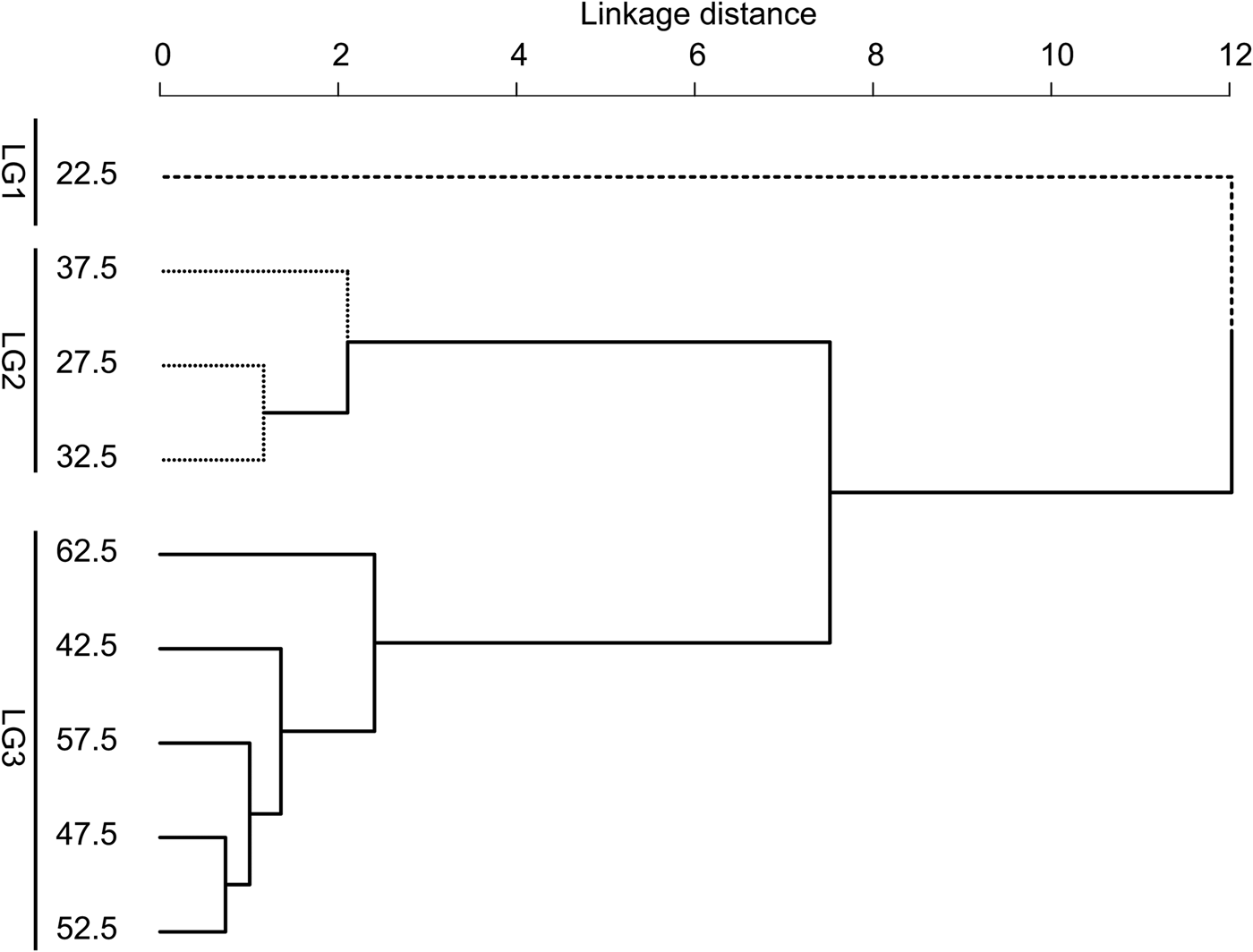
To investigate possible diet differences between fish size classes, a cluster analysis (Ward's method, Manhattan distance) was performed using the mean abundance of each prey group by forkbeard 5 cm length class and, as a result, three length groups, henceforward referred to as LGs, were obtained. To test the number of statistical different clusters produced by the cluster analysis, a Similarity Profile Analysis (Simprof) was conducted.
The non-parametric Kruskal–Wallis ANOVA and Mann–Whitney U-test were used to explore significant statistical differences in stomach fullness index by LG and season, and by sex, respectively. A three-factor crossed design permutational MANOVA (PERMANOVA) (Anderson, Reference Anderson2005) based on the Bray–Curtis distance measure was used to investigate statistical differences for the abundance of prey (diet) by LG, season, and sex. Since empty stomachs provide no valuable information for this analysis they were excluded. A simpler routine was performed to identify the most important species to discriminate among groups. The information on LG1 was also excluded since there were too few individuals in this group.
Feeding strategy by LG was analysed according to the graphical representation suggested by Cortés (Reference Cortés1997) using the most representative prey items aggregated by the major taxonomic group.
All statistical analyses were executed in R environment (R Core Team, 2015) with packages clustsig (Whitaker & Christman Reference Whitaker and Christman2015), vegan (Oksanen, Reference Oksanen2011) and scatterplot3d (Ligges & Mächler, Reference Ligges and Mächler2003).
RESULTS
A total of 521 specimens were sampled but 275 had everted stomachs, representing 53% of the total. The remaining 246 individuals were used for the diet study (144 females and 102 males) and ranged between 15.5 and 67.1 cm TL. Specimens were captured mainly by longline at depths ranging between 180 and 310 m. This gear also captured the largest individuals while trawl captured the smallest ones (Table 1).
Feeding patterns
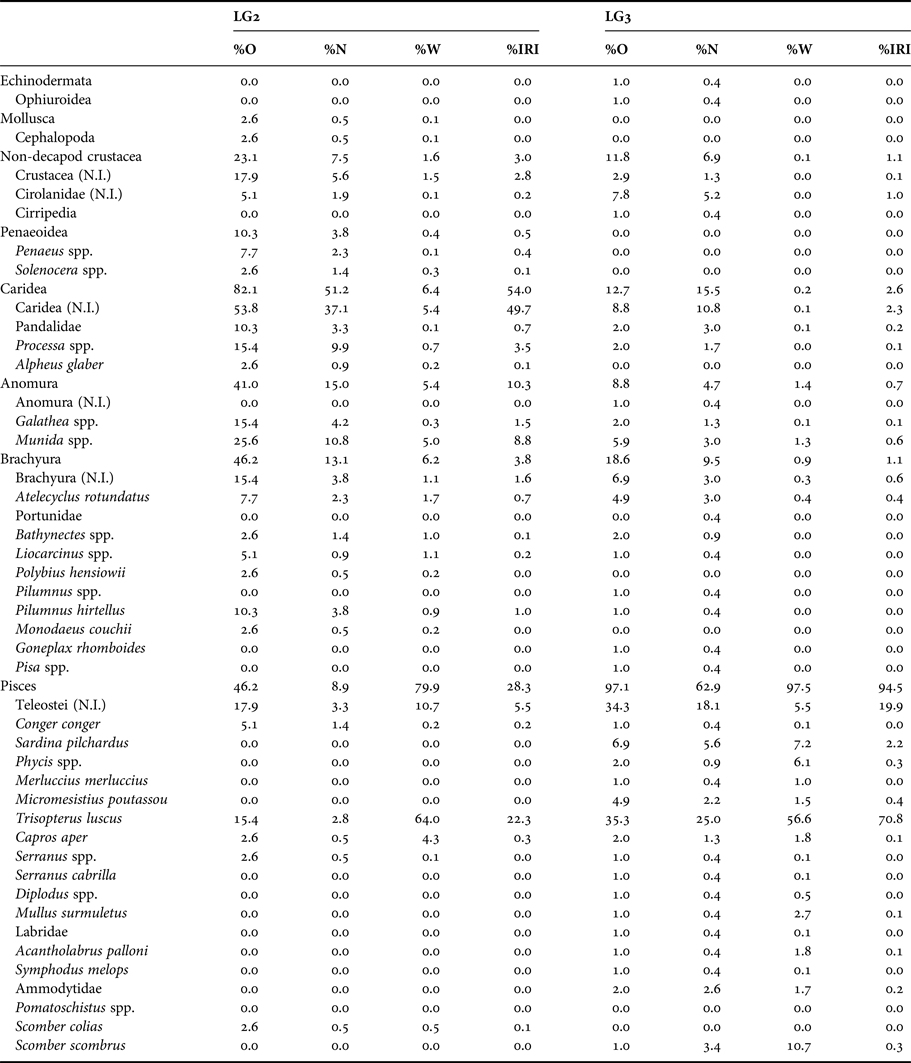
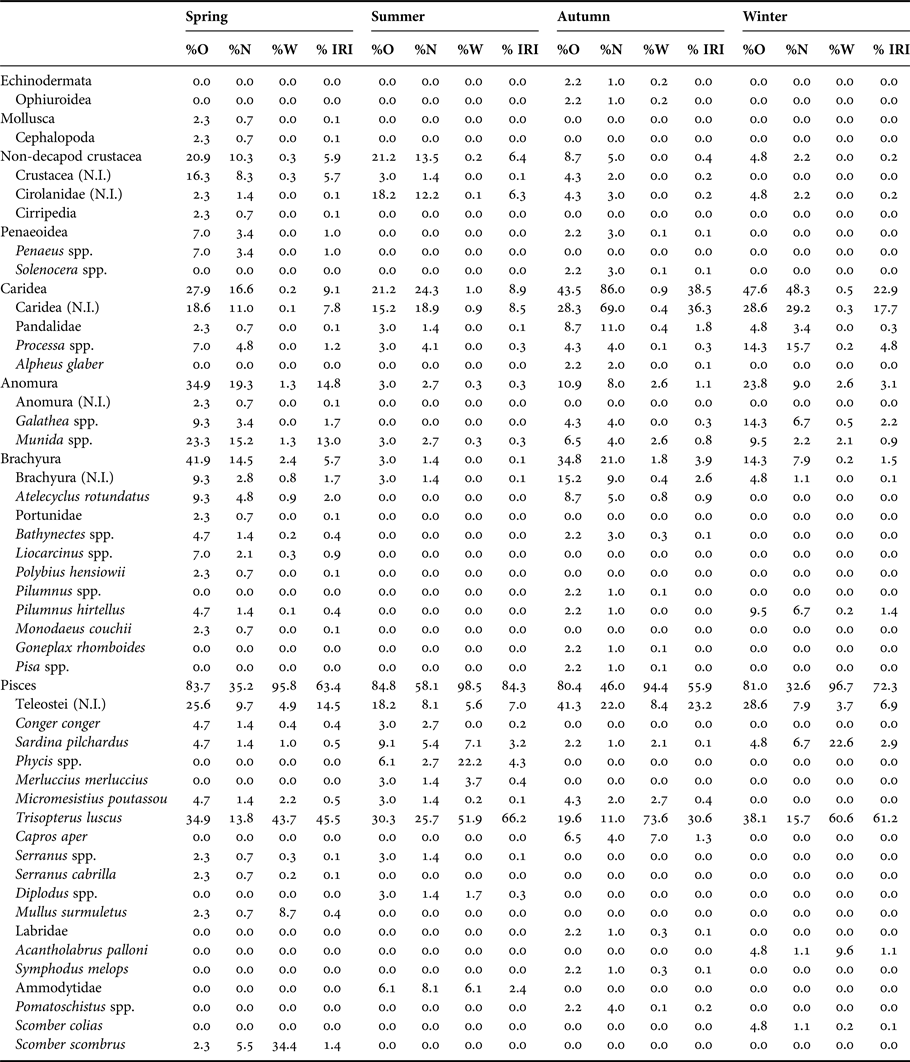
A total of 44 prey items were identified in the stomachs of the forkbeard (Tables 2 and 3). The species showed a high vacuity index with 42.1% of empty stomachs.
Diet composition of Phycis phycis by Length Group (LG) expressed as frequency of occurrence (%O), percentage by number (%N), percentage by weight (%W), and per cent index of relative importance (%IRI).

Diet composition of Phycis phycis by season expressed as frequency of occurrence (%O), percentage by number (%N), percentage by weight (%W), and per cent index of relative importance (%IRI).

The cluster analysis indicated the presence of three groups which are statistically distinct (Figure 2): LG1, <22.5 cm (N = 4); LG2, 27.5–37.5 cm (N = 77); and LG3, >42.5 cm (N = 166).
Dendrogram resulting from the hierarchical cluster analysis of the mean abundance of each prey group by forkbeard (Phycis phycis) length class of 5 cm using Ward's method and Manhattan distance. Results from Similarity Profile Analysis are defined with different line types. LG1 (dashed line) <22.5 cm; LG2 (dot line) 27.5–37.5 cm; LG3 (solid line) >42.5 cm.

Table 2 shows the diet of forkbeard by length group. LG1 was represented by four individuals that fed mainly on Caridea and secondly on Pisces, especially Pomatoschistus spp. No indices were calculated for LG1 due to the low number of specimens involved. LG2 individuals presented a diet where Caridea, Anomura and Brachyura were the most consumed prey with the highest %N and %O. Finally, LG3 specimens fed mainly on Pisces, especially the pout Trisopterus luscus (Linnaeus, 1758), and secondly on Brachyura. Analysing the forkbeard diet by season (Table 3), Pisces were the most important feeding item in all seasons, seen by the high values of IRI, while T. luscus was relevant in spring, summer and winter. Other important items were Caridae, showing high values of IRI in autumn and winter, non-decapod Crustacea in the summer and Brachyura in spring.
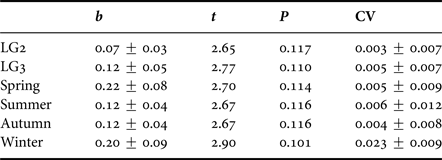
Cumulative prey curves were applied by LG (Figure 3) (except for LG1 that presented a low number of stomachs) and season (Figure 4) and the number of stomachs was considered adequate to describe the diet of the forkbeard. Table 4 shows the variability (CV) and the departure from zero slope of the four last points. The CV near 0 for both groups and seasons and the slope statistically equal to 0 (P > 0.1) showed that the number of prey sampled in the last stomach reached stability.
Randomized cumulative prey curves for the forkbeard Phycis phycis samples by length group (LG). Mean values are plotted and error bars represent ± SE.

Randomized cumulative prey curves for the forkbeard Phycis phycis samples by season. Mean values are plotted and error bars represent ± SE.

Results of the cumulative curves applied to the different length groups and seasons (b, last four points slope; t, t-test value; P, probability; CV, mean coefficient of variation and standard deviation of the four last points).

SFI show significant differences between LGs (W = 5261.0, P = 0.021), but not among seasons (H = 128.2, P = 0.773) and sex (W = 8067.5, P = 0.092).
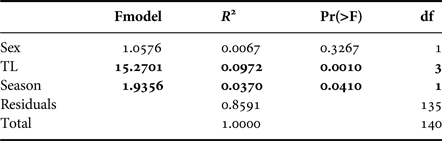
PERMANOVA revealed significant differences for the forkbeard diet among season and LG but no differences between sexes were found (Table 5). Discrimination among seasons and between LG was mainly due to Pisces, Caridea and Trisopterus luscus.
Statistical results for Phycis phycis diet comparison among sex, length groups and seasons with permutational multivariate analysis of variance.

Formula = Diet ~ Sex + LG + Season, permutations = 1000; Pr(>F) – statistic P value; df, degrees of freedom. Significant values are given in bold.
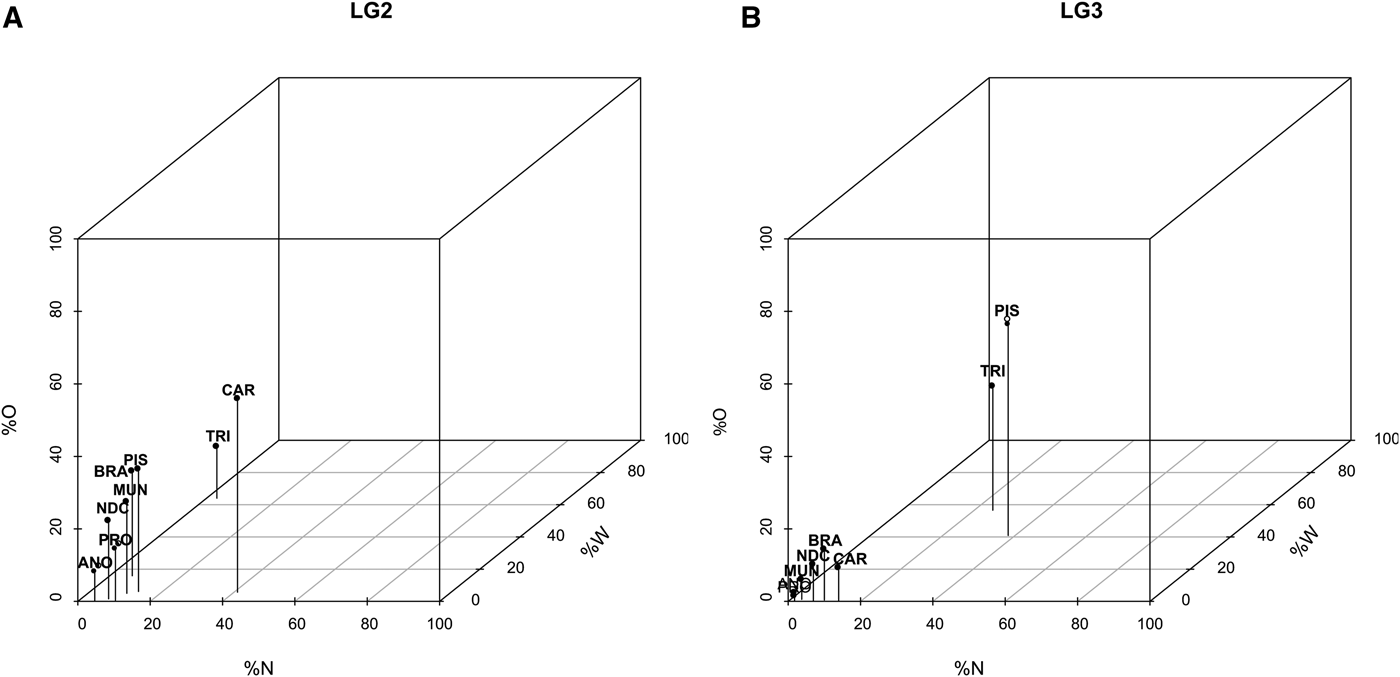
The three-dimensional graphical representation of the feeding strategy (Figure 5) reinforces the different food preferences of the forkbeard by group size. In LG2, Caridea present some significance both in occurrence and number and a particular fish species, the pout Trisopterus luscus, appears with an increasing importance in terms of biomass. The LG3 was the least generalist group, with Pisces and Trisopterus luscus being the main prey items.
Three-dimensional representation of feeding strategy of the forkbeard Phycis phycis by total length groups (LG). (A) LG2, (B) LG3. NDC, non-decapod Crustacea; CAR, Caridea; ANO, Anomura; MUN, Munida spp.; PRO, Processa spp.; BRA, Brachyura; PIS, Pisces; TRI, Trisopterus luscus.

DISCUSSION
Diet and feeding strategy is quite difficult to assess since a large number of samples is needed to correctly evaluate the species diet. In the present study, information was gathered using all fishing gears that capture the forkbeard. Longline, which operates at greater depths than bottom trawl and trammel nets, was the most important gear for capturing forkbeard. This can explain the high percentage of everted stomachs (similar to the one found by Morato et al., Reference Morato, Solà, Grós and Menezes1999) most probably caused by decompression shock. Also, the high percentage of empty stomachs found (42.1%), higher than those reported for the forkbeard from Azorean waters (Morato et al., Reference Morato, Solà, Grós and Menezes1999) and for Phycis blennoides (Brünnich, 1768) in the western Mediterranean (Morte et al., Reference Morte, Redón and Sanz-Brau2002), might be a result of regurgitation caused by stress, common in fishes caught by hook (Morato et al., Reference Morato, Solà, Grós and Menezes1999).
The longline may also affect the quality of stomach contents as the hauling can take several hours and the contents may become completely digested and non-identifiable (Morato et al., Reference Morato, Solà, Grós and Menezes1999). This fishing gear is also size selective and does not capture the smaller specimens (Vieira et al., Reference Vieira, Neves, Sequeira, Paiva and Gordo2014a), which explains the lack of small individuals in the study.
Cumulative prey curves were applied by LG and season with exception of LG1, due to the small number of specimens caught. However, we maintained LG1 data in the comparative analysis due to the lack of feeding information that exists for forkbeard smaller than 24 cm. In fact, Morato et al. (Reference Morato, Solà, Grós and Menezes1999) sampled individuals larger than 24 cm and Papaconstantinou & Caragitsou (Reference Papaconstantinou and Caragitsou1989) sampled specimens larger than 15 cm but they did not mention their number.
The forkbeard is a demersal active predator that can be generally described as having a diet consisting predominantly of teleost fishes and decapod crustaceans, as Morato et al. (Reference Morato, Solà, Grós and Menezes1999) and Papaconstantinou & Caragitsou (Reference Papaconstantinou and Caragitsou1989) have already reported. However, differences can be found considering the season and fish length.
According to the results of the present study, there was a significant difference in the forkbeard diet between seasons. In some species, high frequency occurrence index values are associated with a peak of abundance of the prey item in the environment as a result of a recent reproduction event of that prey item (Morte et al., Reference Morte, Redón and Sanz-Brau2002), possible migratory movements among prey and its predator, temporal changes in water column productivity (Cartes et al., Reference Cartes, Papiol and Guijarro2008), and physico-chemical variables and biological features of the species (Fanelli & Cartes, Reference Fanelli and Cartes2008). During the whole year, Pisces is by far the most important food item but differences can be noted on other important items. In the autumn and winter, Caridea group represent an important part of the diet, eventually because of a decrease in the abundance of Trisopterus luscus, especially in autumn. In spring and summer, there is an increase in consumption of T. luscus, which has a reproductive cycle during the whole year but with a peak in spring (Alonso-Fernández et al., Reference Alonso-Fernández, Domínguez-Petit, Bao, Rivas and Saborido-Rey2008). On the other hand, the fact that the forkbeard reproduces between September and January (Vieira et al., Reference Vieira, Sequeira, Neves, Paiva and Gordo2016b) can also explain the decrease in feeding activity during these months of the year, as occurs in the other gadiformes such as the silver hake Merluccius bilinearis (Bowman, Reference Bowman1984).
Besides the diet variation between seasons, the forkbeard diet varied with fish size. The feeding strategy analysis confirmed the increasing consumption of Teleost and a decreasing consumption of the other prey groups, such as Caridea, with increase of fish length, which might be related to the large prey size preference as the predator grows (Morato et al., Reference Morato, Solà, Grós and Menezes1999; Carrassón & Cartes, Reference Carrassón and Cartes2002). Furthermore, the depth where the individuals of different LG occur coincides with the depth of the most important prey in each group. Similarly to Phycis chesteri Goode & Bean, 1878 (Wenner, Reference Wenner1983), smaller forkbeard specimens were found in the shallower part of the depth distribution range. Larger forkbeard specimens were found at higher depths (Wenner, Reference Wenner1983) where they predate species such as conger eel Conger conger (Linnaeus, 1758), blue whiting Micromesistius poutassou (Risso, 1827) and European hake Merluccius merluccius (Linnaeus, 1758). Individuals belonging to LG2 eventually make the transition between LG1 and LG3, with a diet including items from the two adjacent length groups.
According to the results of the present study, no significant differences were found for the forkbeard diet between sexes. The same results were also obtained by Morato et al. (Reference Morato, Solà, Grós and Menezes1999) for forkbeard from Azorean waters.
Although SFI did not show significant differences among sex, season and LGs, it is important to note that there was an increase in the mean SFI values as fish became larger. The absence of significant differences may be related to the great variability of the data particularly the small number of individuals caught in LG1. The positive relationship between SFI and fish length was found in ambush piscivorous species like the Cygnodraco mawsoni Waite, 1916 (Pakhomov, Reference Pakhomov1988), however a standard behaviour for all piscivorous species is difficult to find. In fact, in cod Gadus morhua Linnaeus, 1758 both a decreasing and increasing trend of SFI with length could be found (Lilly, Reference Lilly1983) and in bluemouth Helicolenus dactylopterus (Delaroche, 1809), it was the middle length class specimens that presented the highest SFI values (Neves et al., Reference Neves, Sequeira, Paiva, Vieira and Gordo2011).
The results of this study demonstrated the change in diet preference of the forkbeard during its life cycle, which is conditioned by their growth, the season and the depth. Forkbeard feeding behaviour may be characterized as presenting a shift pattern from a more generalist diet (small Crustacea, mainly Caridea) in the young adults to a more specialist strategy (teleosts) in the adults. This shift of feeding pattern has also been related to the different energy content and evacuation rate between crustacean and fish prey (Andersen, Reference Andersen1999).
ACKNOWLEDGEMENTS
The authors would like to thank Pedro Gomes and the crew of the trawler ‘Sagittarius’ for providing smaller specimens of forkbeard used in this study.
FINANCIAL SUPPORT
This study was partially supported by the project PROMAR 31-03-05-FEP-8, and by Fundação para a Ciência e a Tecnologia (FCT), through the strategic project UID/MAR/04292/2013 granted to MARE and the grants attributed to Ana Rita Vieira (SFRH/BD/73506/2010), Vera Sequeira (SFRH/BPD/108917/2015), Ana Neves (SFRH/BD/92769/2013) and Rafaela Barros Paiva (SFRH/BD/80268/2011).