Introduction
Let no one think that real gardening is a bucolic and meditative occupation. It is an insatiable passion, like everything else to which a man gives his heart. (Karel Čapek [Reference Čapek1929] 1939)
Gardens have been associated with pleasure throughout history. From the Paradise Gardens of ancient Persia through the monastic gardens of the Middle Ages and the first public gardens of the Renaissance (Turner Reference Turner2005), people have historically appreciated gardens for their aesthetics. Maintenance of this aesthetic appeal through gardening represents a key leisure pursuit in society, and is one of the most popular leisure activities for people aged 65 years and over (Ashton-Shaeffer and Constant Reference Ashton-Shaeffer and Constant2006; Patterson and Chang Reference Patterson and Chang1999). These older adults have relatively more leisure hours available and spend more time in their home and immediate surroundings than younger adults (Baltes et al. Reference Baltes, Maas, Wilms, Borchelt, Little, Baltes and Mayer1999). At an individual level, close contact with nature yields numerous psychological and physiological benefits, ranging from increased pain tolerance, recovery from stress and anxiety (Ulrich Reference Ulrich1984; Ulrich et al. Reference Ulrich, Simons, Losito, Fiorito, Miles and Zelson1991) through to relaxation and enhanced wellbeing (Kaplan Reference Kaplan and Relf1992; Kaplan and Kaplan Reference Kaplan and Kaplan1989). These benefits may be particularly important for older adults, many of whom experience chronic health conditions (Hoffman, Rice and Sung Reference Hoffman, Rice and Sung1996) that can result in anxiety and depression (Fiske, Wetherell and Gatz Reference Fiske, Wetherell and Gatz2009). Good functional health is a critical factor in determining older adults' ability to remain active in the community and to enjoy a high quality of life. However, despite intuitive understandings of the pleasures of being in a garden, few studies have systematically examined the perceived effects of regular contact with nature through domestic gardens and gardening activities for older adults (Holbrook Reference Holbrook2008).
Background
Gardening is a key leisure pursuit of older adults in Australia (Patterson and Chang Reference Patterson and Chang1999) and an important activity comprising elements suggested to increase the quality of later life, such as social engagement, productive activity and exercise. Although participation in many active leisure pursuits often declines with ageing (Lawton Reference Lawton, Lawton and Maddox1987), interest in gardening seems to increase with age according to self-report data and cross-sectional studies (Holbrook Reference Holbrook2008).
The aim of the current study was to explore the reasons for, and importance of, leisure gardening for older Australian adult gardeners residing in the community. The concept of leisure used in this study employs a broad definition of time spent engaging in activity that is free from responsibilities such as work (paid or voluntary) and the necessity of caring for oneself and one's dependants (Kelly Reference Kelly1996). In the following sections of this paper, we present evidence in support of the benefits of leisure gardening for older adults. First, we review the literature that suggests the psychological benefits of contact with nature, such as restoration and stress reduction; and the healthy ageing benefits of actively gardening, such as engagement in life activities and exercise. Next, we outline the current study in which a large sample of older adult gardeners in Australia responded to open and closed questions about the reasons for, and benefits of, gardening – in their own homes and in gardening groups. Using a positive ageing framework (Baltes and Baltes Reference Baltes, Baltes, Baltes and Baltes1990), we sought to determine if, and how, these older adults adapted their gardening activities in the face of any age-related limitations so as to continue gardening.
Previous research has focused on the restorative and rehabilitative aspects of gardening activities for many different groups, such as children and adolescents with developmental disabilities (Kuo and Faber Taylor Reference Kuo and Faber Taylor2004; Pentz and Straus Reference Pentz, Strauss, Simson and Strauss1998), adults with disabilities (Pachana, Kidd and Alpass Reference Pachana, Kidd and Alpass2000) and disease (Cimprich and Ronnis Reference Cimprich and Ronnis2003), adolescents and adults residing in institutions (Rice, Remy and Whittlesey Reference Rice, Remy, Whittlesey, Simson and Strauss1998; Richards and Kafimi Reference Richards and Kafami1999), or gardening in communal gardening settings (Hawkins et al. Reference Hawkins, Thirlaway, Backx and Clayton2011). Fewer studies have examined the psychological benefits of gardening specifically for older adults who reside in the community, where maintaining a well-functioning mind and body is key to ageing in place (Wiles et al. Reference Wiles, Leibing, Guberman, Reeve and Allen2011). Studies that included older adults have been limited to cross-sectional studies with a small number of older adults who have varied greatly in age (Clayton Reference Clayton2007; Freeman et al. Reference Freeman, Dickinson, Porter and van Heezik2012; Gross and Lane Reference Gross and Lane2007).
While these studies show that gardening is an activity that can be enjoyed at any point in one's life, in Australia participation rates for gardening increase for older adults, compared to population levels (Patterson and Chang Reference Patterson and Chang1999). As such, gardening may represent an important activity through which the health and wellbeing of older adults can be maintained. Further, how older adults interact with their gardens and whether they adapt their gardening practices to continue to garden as they age is relatively unexplored in research. Although the current study does not allow us to make comparisons with non-gardeners, or to ‘retired’ gardeners, the results of this research that samples a large number of older adult gardeners could result in important information for planners of retirement homes and residential care facilities who wish to accommodate older adults' desire to continue to garden as they age. Further, the results may help inform health-promotion interventions to increase life satisfaction and physical activity for older adults (Bijnen et al. Reference Bijnen, Feskens, Caspersen, Saris, Mosterd and Kromhout1998; Bird et al. Reference Bird, Radermacher, Feldman, Sims, Kurowski, Browning and Thomas2009; Chaudhury and Shelton Reference Chaudhury and Shelton2010).
Psychological benefits of contact with nature
Viewing plants and gardens through a window (Ulrich Reference Ulrich1984) or in images (Kaplan Reference Kaplan2001; Ulrich et al. Reference Ulrich, Simons, Losito, Fiorito, Miles and Zelson1991) has been linked to benefits such as lowered blood pressure, stress reduction, better immune functioning and increased subjective vitality. For example, research has demonstrated that being able to observe nature – through view of trees from their hospital bed – had physiological and psychological healing benefits for patients recovering from surgery when compared to patients who had a view of a brick building wall (Ulrich Reference Ulrich1984).
While views of nature have healing benefits, additional benefits accrue for people who have direct contact with nature – specifically in the form of rejuvenation, inner peace, and anxiety and stress reduction (Cimprich and Ronnis Reference Cimprich and Ronnis2003; Kaplan Reference Kaplan and Relf1992; Kohlleppel, Bradley and Jacob Reference Kohlleppel, Bradley and Jacob2002; Ulrich Reference Ulrich, Kellert and Wilson1993), as well as improved cognition (Berman, Jonides and Kaplan Reference Berman, Jonides and Kaplan2008). Domestic gardens provide regular access to sunshine and fresh air, which regulate circadian rhythms that control sleeping and eating patterns (Park, Shoemaker and Haub Reference Park, Shoemaker and Haub2009). For some – including older adults – gardening can provide an opportunity for self-expression, self-sufficiency and enhanced self-esteem (Bhatti et al. Reference Bhatti, Church, Claremont and Stenner2009; Freeman et al. Reference Freeman, Dickinson, Porter and van Heezik2012). For older adults, this avenue may be particularly important as other opportunities for self-expression and self-esteem enhancement decline with a move out of the workplace and/or full-time parenting roles. Post-retirement, the garden can become part of the daily lives and homemaking of older adults. As such, it becomes a part of their identity (Bhatti et al. Reference Bhatti, Church, Claremont and Stenner2009), and an expression of themselves, reflecting their personal values about being productive and actively contributing to environmental renewal (Freeman et al. Reference Freeman, Dickinson, Porter and van Heezik2012). Specifically, older adults may see themselves as contributing to the renewal of the environment when they plant saplings and raise shrubs and trees that also encourage wildlife such as birds and insects to visit.
Benefits of gardening for older adults
Research shows that gardening is one way to encourage fruit and vegetable consumption (Sommerfeld et al. Reference Sommerfeld, McFarland, Waliczek and Zajicek2010). A productive kitchen garden provides a source of fresh produce – such as fruits, vegetables and herbs – and thus opportunities for nutritional wellbeing. This is especially important for older adults who are more likely to experience greater nutritional risk due to changing dietary needs and alterations in metabolic rate (Quandt et al. Reference Quandt, Arcury, Bell, McDonald and Vitolins2001; Sommerfeld et al. Reference Sommerfeld, McFarland, Waliczek and Zajicek2010). For older adults actively engaged in the upkeep of their home gardens, gardening provides an opportunity for increased physical activity and exercise (Park, Shoemaker and Haub Reference Park, Shoemaker and Haub2009). Wannamethee, Shaper and Walker (Reference Wannamethee, Shaper and Walker2000) found that regular, moderate to heavy intensity gardening activity resulted in a significantly reduced risk of morbidity and lowered mortality rates in a sample of older adults with cardiovascular disease.
Successful ageing and gardening activities
Growing older has traditionally been characterised as a time of inevitable loss and decline in functioning (Hill Reference Hill2005). However, an alternative perspective has focused on identifying a set of ideal behaviours that can result in optimal ageing (Rowe and Kahn Reference Rowe and Kahn1987, Reference Rowe and Kahn1998). One of these behaviours comprises ongoing engagement in life activities (Rowe and Kahn Reference Rowe and Kahn1987, Reference Rowe and Kahn1998). As one ages, active engagement may evolve to comprise alternative ways of maintaining engagement that compensate for a loss of capacity. For example, in the context of gardening, an older adult may choose to garden in raised beds and use ergonomically sound tools to assist them to garden more comfortably.
Having a garden to engage in actively provides an outlet for purposeful activity, which is associated with increased self-esteem, creativity and mental stimulation (Lampinen et al. Reference Lampinen, Heikkinen, Kauppinen and Heikkinen2006). Gardening provides older adults with opportunities for nurturing the environment and the responsibility of caring for and raising plants, and for being creative (Ashton-Shaeffer and Constant Reference Ashton-Shaeffer and Constant2008), e.g. in the planning and design of gardens or the choice of suitable plants. When older adult gardeners are driven to learn about new plants, or plan new gardening projects, it is an opportunity for mental stimulation as well. Further, membership of gardening societies or groups that e.g. focus on learning about new plants, a history of gardening or learning the Latin names of plants (Garden Clubs of Australia 2012) provide opportunities for cognitive enhancement and social engagement for the older adult gardener.
Maintaining the aesthetics of gardens requires regular and continuous care (Relf and Lohr Reference Relf and Lohr2003); for older adults actively engaged in the upkeep of their home gardens, gardening provides opportunities for increased physical activity and exercise. Increased physical activity can prevent osteoporosis, and reduce the risk of some cancers, Type 2 diabetes, depression and heart disease (Mathers, Vos and Stevenson Reference Mathers, Vos and Stevenson1999), all of which are significant contributors to health-care costs worldwide (Mathers, Vos and Stevenson Reference Mathers, Vos and Stevenson1999; Roberts and Barnard Reference Roberts and Barnard2005). Therefore, increasing older adults' physical activity through such activities as gardening may have important implications for rising health-care costs, particularly in countries where the population is ageing. However, according to one study conducted in the United Kingdom, while the motivation and desire to continue gardening did not lessen with diminishing physical health, there was a peak at which participation declined. At this point the garden became unmanageable for the older adult and feelings of powerlessness and depression ensued (Bhatti Reference Bhatti2006). The present study explores the ways in which older Australian adult gardeners report that they adapt their gardening practices as they age.
Theoretical framework
One theory of successful ageing that may inform this issue is Selective Optimization with Compensation (SOC; Baltes Reference Baltes1987; Baltes and Baltes Reference Baltes, Baltes, Baltes and Baltes1990), a life management strategy that focuses on goal setting and achievement by means of adaptation and compensation. SOC considers the process of ageing within a framework of development. The theory proposes that older adults possess enormous reserves of capacity in terms of functioning. As such, healthy adaptation to ageing involves a shifting balance between losses and gains, and the congruence between the individual's goals and behaviour and their personal resources or environmental support for that behaviour (Baltes Reference Baltes1987; Baltes and Baltes Reference Baltes, Baltes, Baltes and Baltes1990). That is, the individual needs to set realistic goals (selection) and then allocate or refine their resources, either personal or environmental (optimisation), and make adjustments or use substitutive processes (compensation) that achieve the desired behaviour or goal (Freund and Baltes Reference Freund and Baltes1998).
Engagement in social and leisure activities is consistently positively correlated with satisfaction in later life (Lawton Reference Lawton, Lawton and Maddox1987). However, the frequency of participation in many leisure pursuits often declines with increasing age; this decline is most acutely experienced by frail older adults (Lawton Reference Lawton, Lawton and Maddox1987). In the context of gardening, SOC theory would suggest that the cessation of gardening is not an inevitable consequence of ageing, but that engagement can be maintained if older adults adapt. For example, the older gardener who finds himself or herself unable to lift heavy objects may request assistance to manoeuvre heavy objects, such as bags of soil, while still gaining enjoyment from those aspects of gardening that do not require physical strength (such as the planting of seeds or weeding). A failure to adapt will result in the loss of an important leisure activity and potentially the neglect and inevitable decline of their garden, which may then serve as a powerful reminder of their functional decline (Bhatti Reference Bhatti2006). Therefore, SOC is a theory which can be usefully applied to understand the strategies that older adults use to maintain a desired level of participation in gardening. Knowing the factors that combine to support continued participation in leisure gardening despite aged-related limitations is potentially important in helping older adults maintain some form of gardening and therefore life satisfaction.
Aims of the current study
Gardening is a key leisure pursuit of older adults in Australia, which can yield positive psychological and physiological effects (Patterson and Chang Reference Patterson and Chang1999). In addition to the benefits accrued through merely interacting with nature (Kaplan Reference Kaplan and Relf1992; Kaplan and Kaplan Reference Kaplan and Kaplan1989; Ulrich Reference Ulrich1984; Ulrich et al. Reference Ulrich, Simons, Losito, Fiorito, Miles and Zelson1991), gardening can provide a compensatory avenue for self-expression and self-esteem enhancement and can maintain physical activity levels for older adults. This in turn can reduce the risk of chronic disease, morbidity and mortality (Strawbridge et al. Reference Strawbridge, Deleger, Roberts and Kaplan2002). However, while the motivation to continue gardening may be high, it is unclear how age-related losses may impact older adults' continued pursuit of leisure gardening. The aim of the current study was thus twofold: first, to explore the benefits of regular contact with nature through domestic gardens for Australian community-dwelling older adults; second, to examine the effects of ageing on older adults' continued pursuit of gardening activities. In doing so, we sought to address a gap in the literature with regard to our extant knowledge of how older adults interact with their gardens.
Method
Qualitative and quantitative data were collected from self-identified gardeners who responded to a survey delivered either online or via a mail-out. The survey comprised a series of open questions relating to what respondents felt were the most satisfying aspects of their gardening activities and the importance of these activities to their overall wellbeing, including: What is the main reason you garden? What do you consider the benefits to be, for you? Have you had to adjust or limit your gardening activities (since first gardening) in order to continue to garden? If so, please tell us how and why you have had to adjust or limit your gardening activities? Participants were provided with lined space to write up to a half-page response in the mailed version while equivalent space was provided in the online version of the survey. Demographic information including respondents' age, gender, the size and type of their garden, the time they spent gardening, the age at which they had started gardening and their self-rated health status was collected. A gardening activity inventory (Pachana, Kidd and Alpass 2001) was also included to measure participants' involvement in a range of gardening activities, including wandering through gardens, tending a vegetable or herb garden, or tending house-plants.
Participants were recruited through various seniors' groups, community gardening groups, and via a community mid-aged and older adult research participation database held at the Ageing Mind Initiative, The University of Queensland. Participants were volunteers; they received no reimbursement for their involvement. The survey responses were collected from March to February 2012, which resulted in the return of 129 online surveys and 202 mailed surveys.
Statistical and content analyses
Statistical analysis was undertaken of both quantitative and qualitative data. The quantitative data, which included frequencies, were analysed using the PASW Statistics 18.0 package. The qualitative data, which included responses to open questions, were analysed through summative content analysis, and Leximancer version 4 text analytics software (Smith Reference Smith2000). From a grounded theory approach, we used Leximancer to conduct an automatic analysis of the conceptual content of the participants' responses to open questions. Leximancer is an innovative statistical data-mining tool that uses word association information to elicit concepts, extracting the most important, grouping these according to themes and assigning interpretive labels on a concept map as theme circles. Theme labels automatically assigned by Leximancer represent the most salient concept in that cluster of concepts. The size and location of the theme circles on the map indicates their centrality in the data-set. For example, concepts that co-occur within the raw data appear closer together on the thematic map. Representative excerpts from the data-set are included in the output for each theme to assist with interpretation of the themes. Further, the researcher can tailor the system parameters to suit the data, e.g. words with little semantic meaning can be excluded as potential concepts. Leximancer analyses have been validated through comparison with expert manual coding and other best practice methods; and have demonstrated face validity, stability and reliability (Smith and Humphreys Reference Smith and Humphreys2006). One of the benefits of Leximancer compared with other methods of content analysis such as hand-coding is that it allows the analysis of much larger data-sets. The benefit of using Leximancer compared with other qualitative content analysis programs (e.g. NVivo) is that is allows automatic analysis of the conceptual content of the data and thus gives greater reliability and validity to the research results. However, while the program conducts an automatic analysis of the conceptual content of the data-set, interpretation of this requires researcher input.
Leximancer can create file tags according to particular categories, to discover any differences among the categories based on whether concepts and themes cluster close to a particular tag on the concept map. Tags were created for the age categories 60–74, 75–84 and 85 years and over to compare participants ‘reasons’ for gardening. These ranges were chosen according to the United Nations (2013) definition of ‘older adult’ as being 60 years plus in the developed world and the Australian Bureau of Statistics (2012) categories: ‘young-old’, 60–75 years (N=264); ‘old-old’, 75–84 years (N=62); and ‘oldest-old’, 85 plus years (N=12).
Sample characteristics
The sample comprised 331 predominantly female (83%), retired (82.90%) participants who met the inclusion criteria of being aged 60 years plus (range 60–90 years, mean=68.86, standard deviation (SD)=7.36) and who took part in regular gardening activities in their own gardens. Gardens were defined to include a balcony garden and mostly containers or pots (21.8%) through to an average house block (up a quarter of an acre) in Australia (55.9%) or larger house block (22.3%). The median time per week that participants engaged in gardening activities was 8.00 hours (range 0.25–40.00). The majority of participants (60.9%) reported that they desired to spend more time gardening than they currently did (mean=6.41, SD=3.93 more hours per week). The majority of participants had started gardening in their adulthood: 46.5 per cent were aged 20–49 years, 9.4 per cent were aged 50+ years; while 41.2 per cent had been gardening since childhood or adolescence (aged up to 19 years). A further 2.9 per cent of participants omitted to respond as to when they began gardening.
The majority of participants rated their health as good to excellent: 14.6 per cent said excellent, 39.9 per cent very good, 36.3 per cent good, 7.3 per cent fair and 1.8 per cent poor. Seventy per cent of participants reported that their health was ‘about the same’ compared to one year ago. Approximately half of the sample (52%) reported that that they belonged to a gardening club or group.
Results
Gardening activity inventory
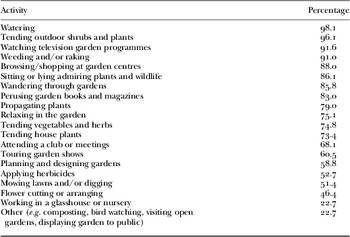
Participants were asked to report whether or not they took part in a range of 19 different gardening activities. They were given the opportunity to include any other gardening activities not shown in the list provided. Table 1 shows the percentages of the sample that reported their involvement in each of these activities. The most popular of these activities, as reported by over 90 per cent of the sample were (in rank order): watering, tending plants, watching gardening programmes on television, and weeding and raking.
The range of gardening activities and the percentage of older adults who reported being involved in them, in rank order

Notes: N=324.
Reasons for gardening
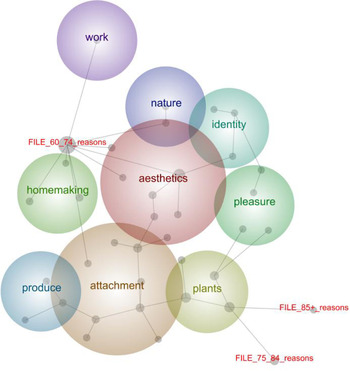
Participants identified a number of different reasons they engaged in gardening activities. Figure 1 shows the most salient themes derived from the concepts that emerged through the Leximancer analysis. The closeness of the theme circles shows the semantic relationship between the concepts. Any overlap of the theme circles shows that some of the concepts that defined the themes also overlapped. The size and colour of the theme circles indicate their importance. The themes were rank ordered by Leximancer and the most important across all participants was aesthetics, followed by attachment, plants, homemaking, pleasure, identity, produce, nature and work. Figure 1 also shows the age group tags 60–74, 75–84 and 85+ years, and the themes that tended to cluster near these age tags. This indicates some differences among the age groups related to the salient themes for the reasons for gardening.
Leximancer concept map of the themes that related to participants' main reasons for gardening, and showing the themes that clustered around each of the age category file tags.

The most important reason for gardening in the sample as a whole was related to the aesthetics of gardens, or as one respondent stated the reason for gardening: ‘for its beauty’. Gardens are consistently in transition and participants noted the changing seasons, ‘the anticipation of the changing seasons with the associated plants is a constant joy’; the changing colours in a garden, ‘with the seasons comes the change of colour and shape’; and novelty of daily experiences characterised in the statements: ‘there is always something different to see every day’ and ‘taking and planting seeds and seeing new life results’. The theme is related to the majority of the other themes mentioned and shares concepts with the themes nature, identity, pleasure and attachment. As Figure 1 shows, the theme aesthetics lies at the centre of the concept map and the age file tags created in Leximancer: 65–74, 75–84 and 85+ years; aesthetics is central to the reasons for gardening across each of the age groups.
The second most frequent reason given for gardening can be summed up as being for the love of it; being attached to the garden, or to the elements in one's garden. Example statements included: ‘I just love to remember (and talk to) plants that people have given me’ and ‘keeping plants … from my childhood home’. The deep emotional bond with gardens is illustrated in the statement: ‘I just love every minute I spend in my garden’. This theme was closely related to the concepts that underpinned plants and produce, e.g. ‘I love plants, and the beauty of flowers is awe-inspiring’ and ‘I love seeing the small trees that I planted, now huge (I think I have helped the environment)’.
To connect with nature was also an important reason for gardening. This theme represented respondents' statements about encouraging a space for wildlife and enjoying the visiting birds, butterflies, bees, insects, possums, brush turkeys (Alecturalathami) and lizards, and included strong positive sentiments about connecting with nature and enjoying the outdoor environment, exemplified in the statements: ‘my love of nature’, ‘the generosity of nature’, ‘for the perfume, birds, serenity, breeze, sunshine, shadows, softness of the lawn…’ and to ‘feel close to nature and close to God’. In addition, participants reported the challenges posed by nature, ‘a lot of work seems for nothing sometimes because weather and insects and cats can destroy’, and struggling with nature, ‘fighting brush turkeys, grasshoppers and assorted other vermin … it is all trial and error sometimes’.
The representative statements underlying the theme plants showed that respondents' reasons for gardening included simply being in the garden and being surrounded by plants, or cultivating, propagating and tending plants, and watching plants grow. For example, ‘I like to be surrounded by beautiful plants, and I find great satisfaction in planting out a bed and watching it grow’, and ‘I like the challenge of growing “hard to grow” plants'. This theme was the third most important reason given for gardening, however, it was more salient to the age groups 75–84 and 85+ years, as shown by the location of this theme in relation to these age tags on the concept map (see Figure 1).
The theme homemaking related to creating a more appealing living environment for the inhabitants of the house, characterised by the statements: ‘the garden creates a beautiful frame for my home’, ‘to enhance the surrounds of the house both for passers-by and dwellers’ and ‘a house is lonely without a garden’. This theme was more likely to be endorsed by participants in the age group 60–74 than those 75 years and older, according to where the theme homemaking was situated on the concept map, as shown in Figure 1.
Pleasure represented an emotional experience that was derived from gardening that was distinct from the theme attachment according to the location of these theme circles on the concept map. Whereas attachment was characterised by an emotional bond with the garden, pleasure was characterised by feelings derived from doing and seeing. The following statements illustrate this sentiment: ‘I garden for the sheer pleasure of it … taking and planting cuttings and giving them a chance at new life’ and ‘gardening makes me feel more alive and it stops depression … entirely for my own pleasure, you feel better for having had your fingers in the soil’.
The theme identity related to doing gardening for the achievement of something worthwhile and creative, and is typified by such statements as: ‘propagating plants contributes greatly to my feelings of achievement, purpose and enjoyment. If no one chops them down, the trees I have planted may contribute to helping with relieving, in a small way, the climate problem long after I am gone!’ and ‘I feel a satisfaction when I look from my lounge and bedroom and admire the flowers, or rushing from the kitchen for my fresh herbs'.
Produce related to gardening for the tangible rewards that it provided, such as growing flowers to cut and display in the home, harvesting fresh fruit, vegetables and herbs for consumption or to share with others, e.g. ‘I am a keener cook than gardener, so having fresh herbs and salad greens is important’. Respondents said that they gardened to ‘provide a ready source of vegetables and indoor flowers’ and to save cost: ‘we appreciate the fact that we can grow some herbs and green vegetables ourselves, it reduces the costs because we have a very, very limited budget’.
Finally, the theme work related to gardening being viewed as important physical work, e.g. ‘to be outside and doing physical work’ and ‘the need to work to maintain good muscle condition (doctor's orders)’. In addition, some respondents mentioned gardening as being more fulfilling work than housework: ‘housework is the same each day but gardening is not’, and an antidote to the stress of paid work: ‘gardening for me is a therapy, after a busy day working with people’. This theme was independent of all others and was more likely to be endorsed by participants aged 60–74 years according to its location on the concept map (see Figure 1).
The perceived benefits of gardening activities
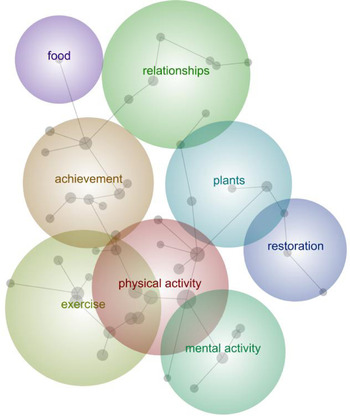
Participants were asked to indicate what they believed was the most beneficial aspect of being involved in gardening activities. However, the vast majority of participants named several benefits, so for clarity purposes these responses were analysed across all participants using Leximancer 4. The interpretative theme labels, as shown in Figure 2, were included in rank order of importance beginning with the most important: physical activity, achievement, exercise, relationships, mental activity, plants, restoration and food.
Leximancer concept map of the themes relevant to the important benefits derived from participation in gardening activities according to participants.

The most frequently cited benefit of gardening could be summed up as: activity – including rejuvenation, vitalisation or mental stimulation. Physical activity was the most salient theme. This theme was underpinned by concepts such as physical, active, health, ability, control and rejuvenated. Example statements included ‘gardening keeps you active’, ‘my health increases with the activity’, ‘it helps to keep me active, both physically and mentally’ and ‘it just makes me feel well’. Participants noted an experience of independence or some level of control in their lives from gardening despite ageing, ‘gardening helps keep me moving’, or ailing health, ‘it is a rewarding physical activity and as I suffer with arthritis it helps to keep me moving’. The themes exercise and mental activity were closely related to this theme, as illustrated by the following statement: ‘they say use it or lose it and I intend to keep active as long as I am able’. The theme exercise, although closely related to physical activity, was also differentiated from it by statements indicating that gardening was viewed as an outlet for exercise, ‘I continue to mow the lawn for exercise’, ‘it contributes to maintaining a very good level of health considering my age’, ‘I am surprised by the exercise derived from dragging around a hose full of water’ and ‘a good morning or afternoon in the garden equals a good workout’. The theme mental activity included the concepts mind, brain and healthy. Example statements included ‘it keeps my mind active’, ‘is a very important stress release’, ‘time to myself and to quiet my mind’ and ‘gardening provides me with a healthy mind and body’.
The theme achievement was underpinned by concepts related to psychological benefits derived from gardening such as identity, accomplishment, pride and wellbeing, illustrated in the following example statements: ‘it is critical to my sense of wellbeing’, ‘it gives me a sense of accomplishment’, ‘a sense of purpose and something to do with my day and something to plan for the future’, ‘I have a sense of freedom; an escape from the pressures of the world’ and ‘doing everything myself reinforces my sense of independence’.
The theme relationships related to the variety of emotional experiences that participants reported about their relationships with and in their gardens. That is, responses conveyed an emotional attachment to their garden and to the memories their garden evoked of loved ones, living or deceased. The concepts that underpinned the theme relationships included feel, family, parents, friends and memories. Example statements included: ‘the plants accept me as I am’, ‘I have always suffered low self-esteem, in the garden I don't have to measure up’, ‘it [the garden] is as important to me as my family and my cats’, ‘I feel connected to them [parents] in the garden’ and ‘after my husband passed away, it helped me in coping with my grief’.
The theme plants encompassed a number of benefits which related to seeing, doing and knowing, as well as appreciating plants. Some example statements that characterised this theme included: ‘caring for plants, buying new ones and tending to seedlings is always a positive experience’, ‘without my plants my life would be a lot greyer’ and ‘knowing the correct botanical names for plants … is satisfying’. The theme restoration was characterised by the concepts peace, contemplation and stress reduction. Some example statements included: ‘I feel a sense of peace and meaning in my life from gardening’, ‘mainly I feel relaxed and the stress just drops away’ and ‘when I am not feeling “top of the pops” a Butcher Bird will always come and sing to me’.
The theme food was related to the tangible benefits, which were the outcome of labouring in the garden. That is, cultivating and harvesting fresh and chemical-free fruit, vegetables, herbs and eggs from chickens. For example, the health benefits of eating home-grown produce: ‘fresh chemical-free food provides optimal nutritional benefits’, ‘growing my own vegetables organically’, and the mental health benefits of being in the garden ‘when I was having radiation treatment, I spent days in my garden … it is a good antidote for low/depressed feelings'; as well as the benefits of growing fruit, vegetables and herbs to share with, or gift to neighbours, family and friends, as illustrated by the statement, ‘it is satisfying to produce some of the fruits and vegetables my family use’.
The effect of ageing on gardening activitiy
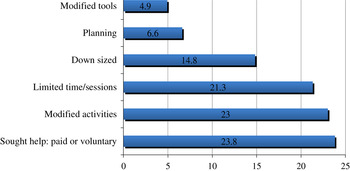
Of the 314 participants who responded to the question ‘have you had to adjust or limit your gardening activities since first gardening’, 52.9 per cent of participants – the majority of whom had been gardening for most of their adult life – reported that they had made some adjustment. The reasons that these participants reported for having to adjust their activities were because of a particular health problem such as arthritis or hip and back problems, or as the majority of participants said it was because of an awareness that if they engaged in gardening activities to the same intensity with which they had when they first started gardening, it would be to the detriment of their physical health. A further few participants stated that they had not adjusted or limited their gardening activities despite certain health issues or discomfort, e.g. one participant stated that she ‘just worked through the pain’ to achieve the goal of gardening. Participants were asked to nominate the single, most important way that they had adjusted their gardening activities. These responses were content analysed by manually coding the answers according to discrete categories (such as reducing the time spent gardening or the size of the garden) and then summing these, as shown in Figure 3.
Frequencies of the ways in which participants had adjusted or limited their gardening activities since first gardening, according to the 52.9 per cent of the sample of participants that had reported doing so, and the percentages of these respondents reporting each method.

Discussion
The primary aim of the current study was to examine systematically the importance of domestic gardens and related gardening activities to the wellbeing of community-dwelling older adults and to explore the effect that ageing might have had on their continued pursuit of gardening activities. The richness of the data obtained from respondents evidenced a deep attachment to their gardens and commitment to the pursuit of gardening activities.
Defining gardens
Participants' definition of their ‘gardens’ varied in size and function. That is, their gardens might have comprised a balcony with potted plants, or some raised planter beds in a courtyard. However, for the majority of the sample their garden was a large quarter-acre house block. Watering the garden was the most common gardening activity reported by almost all of the participants, regardless of the size or type of garden. Approximately half the sample reported that they engaged in mowing lawns and/or digging, suggesting that the majority of these participants were still very active gardeners. However, there were many activities that participants were involved in, such as wandering through or relaxing in the garden, watching gardening programmes on television and propagating plants, which could still be pursued by older adults, despite physical limitations. This has important implications for an ageing population. If physical limitations prevent active gardening, older adults could be encouraged to engage in passive gardening pursuits, such as propagating plants or wandering through a garden. Some level of involvement in gardening, as it relates to sources of meaning in later life (Lampinen et al. Reference Lampinen, Heikkinen, Kauppinen and Heikkinen2006), may be especially important to an individual's continuity of identity and sense of wellbeing.
Reasons for gardening
Participants gave a variety of reasons for why they participated in gardening activities. Consistent with the historical view of the benefit of gardens (Turner Reference Turner2005), the primary reasons given by participants related to the aesthetics of gardens, such as plants, flowers, birds and nature, and for the pleasure of being surrounded by, and viewing, the beauty of gardens. Older adults in our sample participated in gardening because of the positive way that it made them feel. In particular for this group of mostly retired adults, gardening provided a form of meaningful engagement and purposeful activity. For these respondents, gardening had an important place in their daily lives. This engagement in meaningful activity is particularly important in later life because of the demonstrated positive association between having a sense of purpose and increased life satisfaction (Rowe and Kahn Reference Rowe and Kahn1987, Reference Rowe and Kahn1998).
While the aesthetics of gardens was a primarily important reason for gardening across participants, for those in the categories older-old (75–85 years) and oldest-old (85 years and over) being around plants was particularly important. Whereas participants also gardened to create an attractive home environment, this was a more important reason for gardening according to the ‘young-old’ adults (60–75 years). One plausible explanation for this difference is that a love of plants may become more focal as one ages. That is, it may be that for ‘young-old’ adults doing gardening is important, whereas simply being in a garden or being around the elements of a garden (i.e. plants) is more relevant to the reasons for gardening for these older- and oldest-old adults. Given the satisfaction derived from continued gardening reported by this sample of self-identified gardeners, having access to a garden and plants may be vital to older adult gardeners' wellbeing should they ever have to relocate to a new place of residence or residential care.
Benefits of gardening
In relation to the benefits of gardening, the results support the idea that gardening provides older adults with numerous psychological, physiological and tangible rewards. Evidence for the psychological benefits of gardening activities is seen in the emotional benefits that were noted in the themes restoration and relationships; the aesthetic benefits emerging in the theme plants; and the identity benefits documented in the theme achievement. Evidence for the tangible benefits obtained from gardening activities were referred to in the theme food. The data support the conclusion that gardening not only provided older adults with aesthetic pleasure but also the possibility of rejuvenation, meaningful activity and engagement. This, in turn, was related to enhanced self-esteem and a sense of achievement in participants as evidenced by the overlap of the themes exercise, mental activity, physical activity and achievement.
Evidence for the physical benefits of gardening activities emerged in the themes physical activity and exercise. These results suggest that gardening is seen as an important and accessible form of regular physical activity and exercise for older adults. Physical activity reduces the risk of chronic illnesses such as anxiety, depression (Strawbridge et al. Reference Strawbridge, Deleger, Roberts and Kaplan2002) and morbidity (Kahana et al. Reference Kahana, Lawrence, Kahana, Kercher, Wisniewski, Stoller, Tobin and Stange2002), and increases mobility (Fiatrarone et al. Reference Fiatarone, O'Neill, Ryan, Clements, Solares, Nelson, Roberts, Kehayias, Lipsitz and Evans1994). However, to date, specific attention has not been paid to the potential vitalising effects of gardening for older adults. Given that physical activity is important in promoting and maintaining functional health for older adults and that participation in physical activities declines as one ages (Bird et al. Reference Bird, Radermacher, Feldman, Sims, Kurowski, Browning and Thomas2009; Chaudhury and Shelton Reference Chaudhury and Shelton2010), the identification of gardening as a potential population-wide strategy to encourage activity in older adults is of key importance (Maller et al. Reference Maller, Townsend, Pryor, Brown and St Leger2006). Participation in gardening increases in older adults, compared to population levels (Patterson and Chang Reference Patterson and Chang1999), and as such it may represent a key activity through which the health and wellbeing of older adults can be maintained. Improving the health of older adults helps to moderate demand for health and aged care services and, as such, has been recognised as a national priority within the Australian context.
Adaptation and compensation
The data provided an understanding of respondents' desire to continue to engage in gardening activities as they age. The responses expressed a conviction to continue gardening despite age-related physical limitations. However, it is also evident that the majority of this sample of older adults acknowledged the need to adapt or modify certain activities in order to continue gardening. This is a key component of successful ageing according to SOC theory – creating goals that are optimistic as well as realistic (Baltes and Baltes Reference Baltes, Baltes, Baltes and Baltes1990). Further, the congruence between the individuals' goals in relation to gardening and their available resources (personal, social, functional) should determine goal attainment (Baltes and Baltes Reference Baltes, Baltes, Baltes and Baltes1990). The results of the current analysis showed older adults successfully using selection strategies and restructuring their goals in favour of more realistic ones. For example, participants indicated that they had more frequent but shorter gardening sessions, that they carefully planned how they would manage a task successfully, and downsized to smaller homes and thus to smaller gardening areas. One of the key features of SOC theory is the dynamic between balancing functional losses through compensation strategies, and this is evident in relation to the way that older adults reported they had used modified tools to assist with tasks, and also by seeking assistance, either paid or voluntary from family or friends, with tasks that they could no longer accomplish on their own, such as heavy lifting and digging. Although not assessed in the current study, the negative effects of functional loss are hypothesised to be more pronounced in individuals with fewer available personal resources (Baltes and Lang Reference Baltes and Lang.1997). For example, enlisting external help is very difficult for someone with limited financial and social support. Further research is needed to examine how older adults cope with having limited personal and functional resources in relation to the goal of gardening. Given that older adults desire to remain in their own homes as they age (Wiles et al. Reference Wiles, Leibing, Guberman, Reeve and Allen2011) and the proximal benefit of one's home garden, these results suggest that benefits may be accrued through the establishment of community-funded support networks for older adults who desire to continue gardening. Providing tangible assistance with certain tasks that they can no longer manage may be an effective way to support older adults' continuity of engagement in gardening activities, which in turn will maintain those older adults' physical and emotional wellbeing.
Limitations
The results showed that for this sample of gardeners a number of benefits were obtained through regular contact with nature in their gardens. The home garden may provide an outlet for mental and physical activity as well as engagement in social and productive activity. However, these results should be interpreted in light of the fact that participants self-selected to complete the survey. As such, the sample is not representative and causality cannot be determined: an obvious limitation of qualitative research. Older adults may derive physiological and psychological benefits from their residential gardens and activities, or conversely it could be that only those who are physiologically and psychologically robust participate in gardening. Notwithstanding that the patterns of the participants who self-selected to respond may have varied in some way from the wider population (Neuman Reference Neuman2006), it was the aim of this study to examine gardeners and the ways in which they adapted their gardening practices as they aged, not to examine non-gardeners. However, further research should explore the differences between gardeners and non-gardeners and specifically compare gardeners to other hobbyists to establish the range of therapeutic effects of gardening compared to other leisure activities that older adults may devote their time to; as reflected in the statement from one respondent: ‘As a retiree, I am not good at having [not] much to do, so a growing evolving garden keeps me interested, physically active, happy and contented and it fits in well with my other activities.’ Gardeners enter into a dynamic, evolving and mutually challenging relationship with their gardens (Freeman et al. Reference Freeman, Dickinson, Porter and van Heezik2012; Power Reference Power2005), and as such gardening relates to sources of meaning in later life (Lampinen et al. Reference Lampinen, Heikkinen, Kauppinen and Heikkinen2006), such as personal growth and achievement, aesthetic value, creative activity and leaving a legacy to the next generation (planting trees, encouraging biodiversity). In addition to the individual benefits of gardening activities, communal gardening offers a context for social interaction and collaboration, which could support the psychological wellbeing of socially isolated older adults.
Conclusions
This study sampled older adult gardeners with the aim of exploring the perceived effects of regular contact with nature through gardens and the effects of ageing on the continued pursuit of gardening activities. Participants reported numerous psychological, physiological and tangible positive benefits of gardening, together with the ways in which they had successfully adapted or limited their activities to continue gardening. While participants did not note any potential risks or disadvantages of continuing to garden, this may, in part, have been determined by the valence of the research question, that is, participants may have viewed the question positively and thus responded positively. This limitation should be addressed by future research that features a sample of non-gardeners and more importantly retired (i.e. no longer) gardeners. Future research that examines a group of older adults who have been forced to discontinue gardening due to activity-limiting health issues would provide valuable information about the effects of seeing one's garden deteriorate as a consequence of not being able to maintain it. Given the effect of an ageing population on future health-care costs, knowledge of the health benefits of gardening could be used to develop interventions that encourage gardening at a population level. Having an understanding of the role that gardening plays in promoting psychological and physical health of older adults may shape more effective and well-informed policy and practice in relation to supporting ageing in place and thus reduce the demand for health and aged care services. Even for those unable to remain at home, knowledge of the key benefits of gardening identified by older adults could assist in developing location-appropriate interventions within care homes and hospitals, e.g. engaging in passive gardening pursuits such as wandering through a garden, watering a garden or outdoor potted plants to reduce mental fatigue, or caring for indoor plants to provide engagement and activity. For older adults in this study, it emerges that gardening is not just a meditative pastime but rather an endeavour, pursued with passion and resolve (see Čapek [Reference Čapek1929] 1939).
Acknowledgements
This study was approved by the Human Ethics Committee of The University of Queensland, St Lucia, Queensland, Australia.